Security lapse leaves sensitive information and contact details of 51 government officials exposed for 40 hours
The public body in charge of the UK’s state investments has been pushed to improve its internal security after a data breach left “high-level management information” publicly accessible for nearly two days.
UK Government Investments (UKGI), the agency that manages the taxpayers’ interest in a swathe of companies including Channel 4 and the Post Office, said the security failure also left more than 50 government officials’ personal details exposed for nearly 40 hours.
Since early May 2026, Microsoft Threat Intelligence has observed Storm-2945, a sub-cluster of Midnight Blizzard, conducting widespread but targeted traffic manipulation attacks involving hospitality sector networks served by captive portals worldwide. Despite some tactic, technique, and procedure (TTP) similarities to the Forest Blizzard DNS hijacking operation that we publicly disclosed in April 2026, we attribute this campaign, which we call CaptiveCrunch, to Storm-2945. As reported by ReliaQuest on July 23, a portion of this activity leverages doppelganger domains mimicking Microsoft online services to conduct follow-on adversary-in-the-middle (AitM) phishing operations that abuse the device code authentication flow in Microsoft Entra ID. Microsoft Threat Intelligence has also identified active traffic manipulation attacks leading to the delivery of malware on impacted systems. Microsoft has observed Storm-2945 leveraging AI to support a significant portion of these operations.
Today, we are sharing our findings on these ongoing intrusions to raise awareness of this threat and enable customers to protect their devices, especially while traveling. We provide our assessment of Storm-2945’s relationship to Midnight Blizzard and analysis of the CaptiveCrunch campaign, detailing the malware and tradecraft used in these operations. We also provide mitigation, detection, and hunting guidance to help organizations identify and defend against Storm-2945 and related activity.
Microsoft Threat Intelligence would like to thank our partners at Anthropic and OpenAI for their collaboration and support during this investigation.
The CaptiveCrunch campaign
Since February 2026, Storm-2945 has conducted AI-augmented operations including targeted device code and OAuth code phishing campaigns leading to Entra device registration and subsequent data collection from Microsoft 365. Since early May 2026, Microsoft Threat Intelligence has observed Storm-2945 manipulating DNS and HTTP traffic from networks served by captive portals to redirect user traffic through actor-controlled infrastructure. Although our investigation into the initial compromise vector for the captive portal networks is ongoing, we have observed notable commonalities in the equipment and management systems used across multiple affected networks. These similarities suggest that the activity might not be limited to isolated compromises of individual venues and could reflect access to shared services within portions of the captive portal ecosystem.
Figure 1. Overview of the CaptiveCrunch attack flow
As part of the CaptiveCrunch campaign, Storm-2945 has leveraged their AitM position to redirect users through actor-controlled phishing infrastructure and has also delivered malware purporting to be browser or operating system updates in response to automated connectivity checks issued by users’ browsers. Multiple variants have been delivered, including fully-featured Windows remote access trojans (RAT) in compiled Golang, with functionality to conduct system enumeration, collect files and keystrokes, steal credentials and session tokens, conduct audio and video surveillance, monitor for removable media, and provide the threat actor a remote shell on infected systems.
The threat actor infrastructure leverages a variety of ClickFix techniques to elicit the user into downloading and executing the malware:
Figure 2. ClickFix prompt with manual user instructionsFigure 3. ClickFix prompt with additional user instructions after verification failure
In addition to variants of malware targeting Windows systems, Microsoft Threat Intelligence is also aware of indications that the threat actor might be targeting Android devices with similar techniques as the ClickFix landings also include instructions for Android devices to download and install an APK file.
To date, Microsoft has identified widespread compromise of Wi-Fi networks at hospitality-related organizations and other networks serviced by captive portal equipment in several countries. ReliaQuest has identified this activity not only at hotels, but also conference centers and other shared venues, and assesses that the goal of this activity is to access the accounts of corporate travelers.
Storm-2945 and Midnight Blizzard
Microsoft Threat Intelligence assesses that Storm-2945 is an operational sub-cluster of Midnight Blizzard based on distinctive technical and operational overlaps. These include technical similarities to Storm-2372, a Midnight Blizzard initial access operations sub-cluster, also notable for their device code and OAuth code phishing operations tracked throughout 2025, Microsoft Graph-based email exfiltration, social engineering delivered via commercial messaging apps, and significant similarities in victimology.
Midnight Blizzard is a Russia-based threat actor attributed by the US and UK governments to the Foreign Intelligence Service of the Russian Federation, also known as the SVR. This threat actor is known to primarily target governments, diplomatic entities, non-governmental organizations (NGOs), and information technology (IT) service providers, primarily in the US and Europe. Midnight Blizzard is consistent and persistent in their operational targeting, and their objectives rarely change. Their focus is to collect intelligence through longstanding and dedicated espionage in support of Russian foreign policy interests.
Midnight Blizzard operations often involve compromise of valid accounts and, in some highly targeted cases, advanced techniques to compromise authentication mechanisms within an organization to expand access and evade detection. They utilize diverse initial access methods, and Midnight Blizzard is also adept at identifying and abusing OAuth applications to move laterally across cloud environments and for post-compromise activity, such as email collection.
CaptiveCrunch tradecraft and tooling
CornFlake: Remote access and infostealer implant
CornFlake is a full-featured Windows RAT written in Go that serves as Storm-2945’s primary persistent implant. Microsoft has observed the threat actor rapidly iterating on this malware layer, which features customizable capabilities from the social engineering user interface and data collection capabilities to anti-detection and evasion techniques.
On initial execution, CornFlake operates in dropper mode: it displays a convincing fake progress window designed to occupy the victim’s attention while the binary copies itself to %APPDATA%\svchost32\svchost32.exe and establishes persistence.
Fake window options configurable by the threat actor at build time:
winupdate — A Windows Update screen displaying “Working on updates… Don’t turn off your computer”
defender — A Windows Security virus scan
directx — A DirectX End-User Runtime Web Installer
vcredist — A Microsoft Visual C++ 2015-2022 Redistributable installer
sysopt — A disk optimization utility
netfix — A Windows Network Diagnostics tool
browser — A browser update prompt
pdfview — A document viewer installer
Figure 4. False update window
CornFlake registers as a Windows service named svchost32 with the display name “Cloud Sync Service” and description “Synchronizes files with the cloud storage provider”, deliberately mimicking the legitimate svchost.exe process. It establishes redundant persistence mechanisms: Windows service registrations, Registry Run keys, named scheduled tasks, and a persistence watchdog routine that runs continuously to restore any persistence mechanism that is removed by defenders or endpoint protection.
For command and control (C2), CornFlake performs an Elliptic Curve Diffie-Hellman (ECDH) P-256 ephemeral key exchange with the C2 server, derives a session key via SHA-256, and communicates over a custom JSON protocol framed within the encrypted channel. This provides an encrypted channel to the C2 server, with each C2 session using a unique ephemeral key, making decryption of captured traffic impossible without the session-specific private key. The runtime configuration file sync.dat supports hot reconfiguration of C2 servers, watched directories, file targeting patterns, and Transport Layer Security (TLS) settings without requiring redeployment.
Once established on a victim system, CornFlake provides the operator with a comprehensive collection toolkit, gated by configuration flags that allow selective activation post-deployment:
Capability
Description
Keylogging
Raw input API-based keylogger capturing all keystrokes, including password fields
Clipboard monitoring
Captures clipboard changes with SHA-256 deduplication and records the active window title at time of capture
Screenshot capture
Idle-triggered and on-demand screenshots with configurable idle threshold
Audio surveillance
Windows Audio Session API (WASAPI)-based microphone capture, encoded as WAV files
Video surveillance
Media Foundation-based webcam capture, encoded as JPEG
Browser credential theft
ChromeKatz-derived module supporting live cookie extraction from process memory (Chromium browsers) and stored password extraction from on-disk databases, including Chrome App-Bound Encryption (ABE) bypass and Firefox NSS/SDR decryption
File exfiltration
Targets files based on file extensions with real-time file system monitoring and an upload throttle (1,000 files or 500 MB per cycle). File extensions are categorized as Documents, Archives, Images, Code, Data, Emails, and Keys
USB drive monitoring
Detects and scans removable media when inserted
Security posture sweep
Collects 18 categories of host intelligence including installed software, antivirus (AV)/endpoint detection and response (EDR) products, Defender exclusions, User Account Control (UAC) level, Remote Desktop Protocol (RDP) history, Office most recently used (MRU) files, and credential hints
Remote shell
Arbitrary command execution via cmd.exe or PowerShell (with -NoP flag to suppress profile-based detection)
CornFlake also exposes a localhost HTTP API server (/upload, /reload, /status) that transforms the RAT into a modular platform: companion or next-stage payloads such as ChocoShell could task file exfiltration, trigger configuration hot reloads or check C2 connectivity using the pre-established secure C2 channel for communication.
ChocoShell: PowerShell infostealer
ChocoShell is the campaign’s Powershell-based infostealer, delivered and executed entirely in-memory. Its primary objective is the high-volume theft of browser session cookies, saved passwords, Microsoft 365 Single Sign-On (SSO) tokens, and Wi-Fi credentials from compromised systems. Where CornFlake provides the operator with a persistent, long-running foothold on the device, ChocoShell is designed to extract the most operationally valuable credentials, giving the operator access to victim cloud environments.
The ChocoShell script was authored with full developer comments that reveal the operator’s intent behind each code decision, including explicit references to Microsoft detection signatures and the reasoning behind specific evasion choices. The consistent coding standard and descriptive commentary suggest the author might have leveraged AI-assisted code generation.
Defense evasion. Upon execution, ChocoShell beacons to a hardcoded C2 server at 213.145.86[.]112 and implements several evasion techniques in sequence. It disables the Antimalware Scan Interface (AMSI) via .NET reflection to prevent ScriptBlock scanning and evades Microsoft behavioral detection that triggers on suspicious PowerShell web request cmdlets. A timing-based sandbox detection check is also employed as a virtual machine (VM) detection mechanism, silently exiting without performing any collection if detected.
C2 communication. ChocoShell communicates with its C2 server using HTTPS with URI paths designed to blend in with legitimate web traffic. Beacons use /t/pixel.gif?m=<status>, mimicking an image tracking pixel. Additional tooling is fetched from /cdn/chunks/polyfill-7e2b.min.js, disguised as a JavaScript polyfill file. This downloaded module is Base64-decoded and executed in memory via [ScriptBlock]::Create(), providing browser encryption key extraction capabilities, SYSTEM token impersonation, and Defender signature locking. Exfiltrated data is sent by POST to /t/event as GZip-compressed, Base64-wrapped JSON.
Privilege escalation. ChocoShell requires administrative privileges for its most impactful capabilities: SYSTEM token impersonation for Chrome ABE decryption, Volume Shadow Copy Service (VSS) shadow copy creation, Defender signature locking. It implements three silent UAC bypass techniques with ordered fallback:
SilentCleanup task hijack: Writes a malicious command to HKCU\Environment\windir, then triggers the built-in SilentCleanup scheduled task, which resolves %windir% from the user’s environment, executing the threat actor’s command at elevated privilege. The registry value is cleaned up after two seconds to avoid cloud detection.
wsreset.exe COM hijack: Creates a COM handler key in HKCU\Software\Classes and launches the auto-elevating Windows Store reset tool.
sdclt.exe folder hijack: Hijacks HKCU\Software\Classes\Folder\shell\open\command and launches the Windows Backup utility with the /KickOffElev flag.
If none of the silent bypasses succeed (for example, the user is not a local administrator), ChocoShell falls back to a visible UAC prompt via Start-Process -Verb RunAs. Notably, the script also contains a variant designed to execute within the WinGet Desired State Configuration (DSC) host process (ConfigurationRemotingServer), suggesting an attack vector through malicious WinGet DSC configuration used in Windows machine provisioning.
Credential and session theft. Once running with elevated permissions, ChocoShell locks Defender signature updates and systematically harvests data from multiple sources. For Chromium-based browsers (Chrome, Edge, Brave, Opera, Opera GX, Vivaldi), it extracts the master encryption key from the browser’s Local State file, handling both the modern ABE scheme (Chrome v127+) and the legacy data protection API (DPAPI)-only scheme. ABE decryption requires SYSTEM-level DPAPI access, which the malware obtains by impersonating a SYSTEM process token borrowed from winlogon.exe, wininit.exe, or services.exe. Locked browser SQLite databases are accessed through three strategies: shared file access, Volume Shadow Service snapshots, and direct copy as a fallback.
As a parallel collection path, ChocoShell launches Chrome, Edge, and Brave with the –remote-debugging-port flag and issues Network.getAllCookies through the Chrome DevTools Protocol (CDP). This completely bypasses ABE, enabling the browser to perform its own internal decryption and returns plaintext cookie values. To handle privilege issues (SYSTEM-launched browsers inherit the wrong token), the malware creates transient scheduled tasks with TASK_LOGON_INTERACTIVE_TOKEN to launch the browser under the signed-in user’s session. After extraction, the browser is stopped and relaunched with –restore-last-session to avoid alerting the user.
For Firefox family browsers (Firefox, Waterfox, LibreWolf, Floorp, Zen), the malware copies unencrypted cookies.sqlite databases from each profile. Additionally, ChocoShell collects Microsoft 365 and Azure Active Directory (AD) access tokens, refresh tokens, and Web Account Manager (WAM) tokens from .tbres files in the Token Broker cache. Collection of these tokens represents a significant threat to enterprise environments, as threat actors could replay SSO sessions without browser cookies. Additionally, Wi-Fi credentials are harvested via netsh wlan show profile with key=clear.
Exfiltration and cleanup. All collected data is aggregated into a JSON structure, GZip-compressed, Base64-encoded, and sent by POST to the C2’s /t/event endpoint. After exfiltration, all collected data variables are nulled, garbage collection is forced, VSS shadow copies are deleted via Windows Management Instrumentation (WMI), temporary elevation scripts are removed, and all UAC bypass registry keys (already cleaned during escalation) are verified removed.
FruitStone: Operator C2 panel
FruitStone is the web-based C2 panel that Storm-2945 operators use to manage the entire CaptiveCrunch campaign infrastructure. Implemented as a single-page application (HTML and JavaScript) serving as the front-end of the C2 server with all functionality exposed without authentication, FruitStone provides a centralized dashboard for managing compromised endpoints, building and deploying new campaign payloads, and reviewing all collected data (such as screenshots, keystrokes, browser credentials).
Operational cover. The panel is branded as “CloudSync Console” with a footer reading “Acuity Systems, Inc. — Cloud Infrastructure Portal v3.2.1,” designed to appear as legitimate enterprise cloud management software if the panel URL is discovered by defenders or hosting providers. This masquerading extends to the CornFlake agent’s service name (Cloud Sync Service) and description (“Synchronizes files with the cloud storage provider”), creating a consistent cover story across the toolchain.
Figure 5. CloudSync Console panel masquerade
Session management and multi-operator support. FruitStone uses JSON Web Token (JWT)-based authentication, session revocation, and rate limiting with IP blocking to prevent brute force attacks against the panel sign in. Multiple operators could be provisioned with individual accounts, and all active sessions are visible with IP address, user-agent, and creation time to enable operational security awareness across the operators.
Agent management. The panel displays all registered CornFlake agents in a dashboard with real-time status updates via Server-Sent Events (SSE). Each agent card shows comprehensive system information including hostname, username, OS version, CPU, RAM, disk usage, screen resolution, timezone, domain membership, and camera/microphone presence, all collected during the CornFlake posture sweep. Agents are grouped by country and subnet, with geographic distribution visualized on a map.
Operators could interact with individual agents through:
Remote shell — Interactive cmd.exe or PowerShell command execution with command history
File system browser — Live directory traversal and arbitrary file download from compromised hosts
Collection tasking — On-demand screenshot, process list, keylog buffer flush, clipboard dump, security posture survey, ChromeKatz cookie/password extraction, camera capture, and audio recording
Configuration push — Live runtime reconfiguration of C2 servers, watch paths, and C2 beacon timing
Agent update — In-place implant update by pushing a new CornFlake build to a running agent
Agent kill — Remote termination of the CornFlake implant
Campaign builder. A step-by-step wizard enables operators to configure and build new CornFlake payloads directly from the panel:
Identity — Campaign ID, C2 host and port, HTTP base URL, executable file name (svchost32.exe by default), and dropper type (C dropper at ~19 KB, Go stub at ~8 MB, or standalone self-installer)
File Paths — Configure targeted directories and file extensions by category (documents, archives, images, code, data, emails, encryption keys)
Figure 8. File paths tab
Evasion — Enable garble symbol randomization (for GoLang payloads), XOR string encoding, GZip upload compression, and debug mode
Figure 9. Evasion tab
Infrastructure management. FruitStone provides management interfaces for three layers of supporting infrastructure:
Proxy relays — Multi-proxy C2 relay architecture with TLS certificate tracking (fingerprint, expiry), health checks, connection counts, bytes forwarded, and rotation capabilities that push updated server lists to all online agents
Beacon profiles — Configurable timing profiles controlling agent sleep intervals, reconnection delays, TLS Server Name Indication (SNI) spoofing (like teams.microsoft.com), and DNS fallback domains
Staging servers — External payload hosting infrastructure with push-to-deploy, file listing, and health monitoring
Figure 10. View of the CloudSync staging servers interface
Device code abuse for cloud access
Since July 16, Microsoft has observed a portion of CaptiveCrunch landing pages redirecting users to device code authentication flow experiences. In these cases, users served these landings might be instructed to enter a device code into a legitimate Microsoft sign-in page, a technique commonly referred to as device code phishing.
Device code authentication is a legitimate OAuth workflow designed for devices that cannot support a traditional sign-in experience. However, threat actors could abuse this flow by initiating an authentication request on behalf of a user then convincing the user to enter an actor-controlled device code into a legitimate Microsoft authentication page. When successful, the victim authenticates the threat actor’s session rather than their own.
This activity is consistent with previously reported device code phishing operations conducted by Midnight Blizzard since August 2024. The observed technique does not appear fundamentally novel; however, integrating device code phishing into captive portal and traffic manipulation operations might increase the likelihood that users perceive the authentication request as legitimate. For additional details on Midnight Blizzard-related device code phishing techniques, see: Storm-2372 conducts device code phishing campaign. To understand other threat actors’ use of device code phishing and associated mitigations, see Inside an AI‑enabled device code phishing campaign.
How to protect against CaptiveCrunch activity
Minimize trust in hospitality and guest networks
When traveling, users should treat hotel, conference, airport, and other guest wireless networks as untrustworthy.
Prefer private connectivity (including mobile hotspots, satellite, and eSIM-based cellular data connections) over public Wi‑Fi whenever practical.
Consider using enterprise-managed travel routers or hotspot devices that establish encrypted tunnels back to trusted corporate infrastructure before accessing sensitive resources.
Avoid downloading software updates, certificates, browser updates, network troubleshooting tools, or security utilities presented through captive portals or other unexpected web prompts.
Verify update requests through trusted operating system mechanisms rather than pop-up messages or website prompts.
Strengthen identity and access controls
Organizations should assume that public and hospitality network infrastructure might not be trustworthy and should adopt controls that limit exposure to traffic manipulation, credential theft, and device code phishing.
Educate users to recognize ClickFix-style prompts, fake verification checks, and paste-and-run instructions as malicious, especially when they invoke command interpreters or script hosts such as cmd.exe, PowerShell, rundll32.exe, or mshta.exe.
Use passwordless solutions like passkeys and implement multifactor authentication (MFA).
Only allow device code flow where necessary. Microsoft recommends blocking device code flow wherever possible. Where necessary, configure Microsoft Entra ID’s device code flow in your Conditional Access policies.
Implement a sign-in risk policy to automate response to risky sign-ins. A sign-in risk represents the probability that a given authentication request is not authorized by the identity owner. A sign-in risk-based policy can be implemented by adding a sign-in risk condition to Conditional Access policies that evaluates the risk level of a specific user or group. Based on the risk level (high/medium/low), a policy can be configured to block access or force MFA.
When a user is a high risk and Conditional access evaluation is enabled, the user’s access is revoked, and they are forced to re-authenticate.
For regular activity monitoring, use Risky sign-in reports, which surface attempted and successful user access activities where the legitimate owner might not have performed the sign-in.
Use a Security Service Edge (SSE) solution like Global Secure Access to secure access to any app or resource using network, identity, and endpoint access controls.
Reduce exposure during captive portal registration
Organizations should review what information employees provide to hospitality providers when connecting to guest networks.
Do not reuse corporate credentials on hotel, conference, or guest-network registration pages.
Where possible, organizations should evaluate whether venue-provided wireless is required for corporate events and conferences.
Organizations should minimize unnecessary disclosure of employee identities, organizational affiliations, and travel details when booking accommodations or registering for guest network access, consistent with corporate policy and applicable local requirements.
Microsoft Defender detections and hunting guidance
Microsoft Defender customers can refer to the list of applicable detections below. Microsoft Defender coordinates detection, prevention, investigation, and response across endpoints, identities, email, apps to provide integrated protection against attacks like the threat discussed in this blog.
Microsoft Defender for Endpoint detects Storm-2945 activity under the detection Suspicious activity linked to a Russian state-sponsored threat actor has been detected. However, these alerts might be triggered by unrelated threat actor activity. The following chart lists Microsoft Defender detections specific to the TTPs utilized by Storm-2945 in this attack.
CornFlake registers a Windows service, a Registry Run key, a scheduled task
Microsoft Defender for Endpoint – Suspicious Scheduled Task Process Launched – Suspicious scheduled task – Suspicious file added to run key – Suspicious service registration
Microsoft Defender XDR – User account compromise via OAuth device code phishing – Malicious sign in from an IP address associated with recognized attacker infrastructure – Suspicious Azure authentication through possible device code phishing
Microsoft Security Copilot is embedded in Microsoft Defender and provides security teams with AI-powered capabilities to summarize incidents, analyze files and scripts, summarize identities, use guided responses, and generate device summaries, hunting queries, and incident reports.
Security Copilot is also available as a standalone experience where customers can perform specific security-related tasks, such as incident investigation, user analysis, and vulnerability impact assessment. In addition, Security Copilot offers developer scenarios that allow customers to build, test, publish, and integrate AI agents and plugins to meet unique security needs.
Threat intelligence reports
Microsoft Defender XDR customers can use the following threat analytics reports in the Defender portal (requires license for at least one Defender XDR product) to get the most up-to-date information about the threat actor, malicious activity, and techniques discussed in this blog. These reports provide the intelligence, protection information, and recommended actions to prevent, mitigate, or respond to associated threats found in customer environments.
Microsoft Security Copilot customers can also use the Microsoft Security Copilot integration in Microsoft Defender Threat Intelligence, either in the Security Copilot standalone portal or in the embedded experience in the Microsoft Defender portal to get more information about this threat actor.
Hunting queries
Microsoft Defender XDR
Microsoft Defender XDR customers can run the following advanced hunting queries to find related activity in their networks:
Detect file creation after Wi-Fi connectivity test on devices
The following query checks for a file creation on a device within two minutes of the device performing built‑in Network Connectivity Status Indicator (NCSI) test, which occurs when network connectivity is established to a Wi-Fi network with a captive portal. This activity might indicate an attacker’s initial access file presence on a device.
Please note that not all files discovered through this query might be malicious or related to this threat activity.
let ncsi_endpoints = dynamic(["msftconnecttest.com","edge-http.microsoft.com","msftncsi.com","captive.apple.com","clients1.google.com",
    "clients3.google.com","clients4.google.com","clients6.google.com","connectivitycheck.gstatic.com","connectivitycheck.android.com",
    "android.clients.google.com","www.gstatic.com","detectportal.firefox.com","detectportal.brave-http-only.com","cloudflareportal.com",
    "cloudflarecp.com","cloudflareok.com","connectivity-check.warp-svc","connectivity.cloudflareclient.com","spectrum.s3.amazonaws.com",
    "nmcheck.gnome.org"]);
let NCSIEvents = DeviceNetworkEvents
    | where Timestamp > ago(7d)
    | where RemoteUrl has_any (ncsi_endpoints)
    | project NCSI_Timestamp = Timestamp, DeviceId, DeviceName, RemoteUrl, NCSI_ReportId = ReportId, NCSI_InitiatingProcessFileName = InitiatingProcessFileName, NCSI_InitiatingProcessCommandLine = InitiatingProcessCommandLine, NCSI_AccountName = InitiatingProcessAccountName;
let FileDownloadEvents = DeviceFileEvents
    | where Timestamp > ago(7d)
    | where ActionType == "FileCreated"
    | where FileName has_any (".exe",".msi",".zip",".rar",".7z")
    | project Download_Timestamp = Timestamp, DeviceId, FileName, FolderPath, Download_ReportId = ReportId, Download_InitiatingProcessFileName = InitiatingProcessFileName, Download_InitiatingProcessCommandLine = InitiatingProcessCommandLine, Download_AccountName = InitiatingProcessAccountName;
NCSIEvents
| join kind=inner (
    FileDownloadEvents
) on DeviceId
| where Download_Timestamp >= NCSI_Timestamp and Download_Timestamp
Detect connectivity to Storm-2945 infrastructure
The following query checks for connectivity to Storm-2945 infrastructure observed in this attack activity.
let target_domains = dynamic(["ms365-device.com", "ms365-live.com", "m365-owa.com", "owa-ms365.com"]);
let target_ips = dynamic(["31.57.243.154", "38.146.28.75", "38.146.28.132", "104.194.159.150", "107.189.26.194", "213.145.86.112"]);
DeviceNetworkEvents
| where RemoteUrl has_any(target_domains) or RemoteIP in (target_ips)
| project
    Timestamp,
    DeviceName,
    DeviceId,
    RemoteUrl,
    RemoteIP,
    LocalIP,
    InitiatingProcessFileName,
    InitiatingProcessCommandLine,
    AccountName = InitiatingProcessAccountName,
    ReportId
Detect CornFlake RAT presence on affected systems
The following query checks for the presence of the CornFlake RAT binary.
The following query checks for the CornFlake RAT Windows service registration.
DeviceRegistryEvents
| where RegistryKey has @"\SYSTEM\CurrentControlSet\Services\svchost32"
| where ActionType == "RegistryValueSet"
| where (RegistryValueName == "DisplayName" and RegistryValueData == "Cloud Sync Service")
    or (RegistryValueName == "Description" and RegistryValueData == "Synchronizes files with the cloud storage provider")
| project
    Timestamp,
    DeviceName,
    DeviceId,
    RegistryKey,
    RegistryValueName,
    RegistryValueData,
    ActionType,
    InitiatingProcessFileName,
    InitiatingProcessCommandLine,
    InitiatingProcessAccountName,
    ReportId
Microsoft Sentinel
Microsoft Sentinel customers can use the TI Mapping analytics (a series of analytics all prefixed with ‘TI map’) to automatically match the malicious domain indicators mentioned in this blog post with data in their workspace. If the TI Map analytics are not currently deployed, customers can install the Threat Intelligence solution from the Microsoft Sentinel Content Hub to have the analytics rule deployed in their Sentinel workspace.
Detect network IP and domain indicators of compromise using ASIM
The following query checks IP addresses and domain IOCs across data sources supported by ASIM network session parser:
//IP list and domain list- _Im_NetworkSession
let lookback = 30d;
let ioc_ip_addr = dynamic(["213.145.86.112"]);
let ioc_domains = dynamic(["213.145.86.112/t/pixel.gif", "213.145.86.112/cdn/chunks/polyfill-7e2b.min.js", "213.145.86.112/t/event"]);
_Im_NetworkSession(starttime=todatetime(ago(lookback)), endtime=now())
| where DstIpAddr in (ioc_ip_addr) or DstDomain has_any (ioc_domains)
| summarize imNWS_mintime=min(TimeGenerated), imNWS_maxtime=max(TimeGenerated),
  EventCount=count() by SrcIpAddr, DstIpAddr, DstDomain, Dvc, EventProduct, EventVendor
Detect web sessions IP and file hash indicators of compromise using ASIM
The following query checks IP addresses, domains, and file hash IOCs across data sources supported by ASIM web session parser:
//IP list - _Im_WebSession
let lookback = 30d;
let ioc_ip_addr = dynamic(["213.145.86.112"]);
let ioc_sha_hashes =dynamic([“918fa52ae45ed60ba7cc8bdc99c3cbe9ab92e0375ec31fc05d0d4513be11c593”, “be99857449d2856dd5a84e21c8a3d5e0e01456adb44062ddec5a6b4970d8d42c”]);
_Im_WebSession(starttime=todatetime(ago(lookback)), endtime=now())
| where DstIpAddr in (ioc_ip_addr) or FileSHA256 in (ioc_sha_hashes)
| summarize imWS_mintime=min(TimeGenerated), imWS_maxtime=max(TimeGenerated),
  EventCount=count() by SrcIpAddr, DstIpAddr, Url, Dvc, EventProduct, EventVendor
Detect domain and URL indicators of compromise using ASIM
The following query checks domain and URL IOCs across data sources supported by ASIM web session parser:
// file hash list - imFileEvent
// Domain list - _Im_WebSession
let ioc_domains = dynamic(["https://213.145.86.112/t/pixel.gif", "https://213.145.86.112/cdn/chunks/polyfill-7e2b.min.js", "https://213.145.86.112/t/event"]);
_Im_WebSession (url_has_any = ioc_domains)
ChocoShell C2 communications
The following query detects ChocoShell communications with its C2 server using HTTPS with URI paths designed to blend in with legitimate web traffic. Beacons use /t/pixel.gif?m=<status>, mimicking an image tracking pixel.
let lookback = 30d;
let ioc_url_artifacts = dynamic(["/t/pixel.gif?m="]);
_Im_WebSession(starttime=todatetime(ago(lookback)), endtime=now())
| where DstDomain  in (ioc_url_artifacts)
| summarize imWS_mintime=min(TimeGenerated), imWS_maxtime=max(TimeGenerated),
  EventCount=count() by SrcIpAddr, DstIpAddr, Url, Dvc, EventProduct, EventVendor
To hear stories and insights from the Microsoft Threat Intelligence community about the ever-evolving threat landscape, listen to the Microsoft Threat Intelligence podcast.
Amazon Inspector is an automated vulnerability management service that continually scans Amazon Web Services (AWS) workloads for software vulnerabilities. The vulnerability management capabilities of Amazon Inspector are powered by an asset inventory engine known as the Amazon Inspector SBOM Generator (inspector-sbomgen), a standalone command-line tool that produces a software bill of materials (SBOM) from container images, directories, archives, local systems, compiled binaries, and more. Over the past two years, we’ve expanded inspector-sbomgen’s coverage across dozens of programming language ecosystems, operating systems, and widely deployed applications.
We’re pleased to announce a new capability for builders using inspector-sbomgen: a plugin system for writing your own custom package collectors that you can use right away, without requiring source code compilation nor waiting for an official release.
In this post, we walk you through what the inspector-sbomgen plugin system does, why we built it, and how you can write your first plugin in a few minutes. Along the way, we also cover how plugin-generated package components integrate with Amazon Inspector for vulnerability scanning, and we explore the plugin safety model, which helps ensure security-hardened and predictable plugin behavior.
Why we built a plugin system
Software ecosystems are dynamic. New language package managers, lockfile formats, and end user applications ship constantly, and many are adopted quickly, in some cases with little security scrutiny. That leaves security teams with a visibility gap: production workloads running software that their SBOM tooling doesn’t yet recognize. Customers have asked us to inventory many of these ecosystems directly, and until recently, the only path to support was to open a feature request and wait for the inspector-sbomgen team to onboard the ecosystem and deploy a new release.
The inspector-sbomgen plugin system changes that. With plugins, you can:
Onboard ecosystems that inspector-sbomgen doesn’t support out of the box. New open source ecosystems, niche or fast-moving package formats, and internal or proprietary tooling can all be inventoried without modifying inspector-sbomgen.
Prototype detection for an ecosystem quickly. We designed a plugin system that is friendly to developers and AI coding assistants alike. Plugins are written in Lua, loaded at runtime, and require no Go toolchain nor compilation. You can use the built in test harness to iterate on a plugin and see results immediately.
Build on a stable foundation. The plugin API abstracts away artifact-type differences, so you write your detection logic once and it works seamlessly across container images, archives, local systems, and more. And because plugins stay decoupled from the internals of sbomgen, the core tool’s regression surface stays small.
Internally, we’ve used the plugin system to ship new ecosystem coverage faster than before. In our 1.13 release, more than 20 ecosystems that were previously implemented in Go, including Apache Tomcat, NGINX, MySQL, Redis, WordPress, and the OpenSSH toolchain, are now embedded as plugins inside the sbomgen binary. The same release also added more than ten brand-new ecosystems as plugins, including Apache Cassandra, Apache Struts, Conda, Swift packages, and AI-agent collectors (Amazon Q Developer, Kiro CLI, Claude Code, GitHub Copilot, and Ollama).
How inspector-sbomgen plugins work
Sbomgen plugins follow a two-step pipeline:
Discovery – Scan the artifact’s file system to identify files that contain installed package metadata.
Collection –Open each discovered file, parse file contents, and publish findings into the SBOM.
Under the hood, an event bus connects discovery and collection plugins. Discovery plugins publish events listing discovered files, and one or more collection plugins subscribe to these events, triggering package collection. Developers might recognize this behavior as the observer pattern.
This decoupling lets a single discovery plugin feed multiple collectors, for example, one extracting package metadata, another scanning for secrets, and another checking policy. Each collection plugin works from the same file list without re-walking the artifact filesystem, a computationally expensive operation.
Write your first plugin in 5 minutes
Inspector-sbomgen makes it straightforward to bootstrap a plugin environment. The plugin new command tells sbomgen to create a new plugin workspace, and the —-with-example flag populates the workspace with a discovery-collection plugin pair, that you can run immediately.
inspector-sbomgen plugin new --with-example
After invoking the preceding command, you will be prompted to provide a plugin name and a directory that will contain your plugin workspace. You can provide custom values or use the default values:
Plugin name (identifies the software ecosystem your plugin will inventory, e.g. debian-dpkg, rhel-rpm, python-pip, cmake) [my-custom-ecosystem]: <enter>
Project directory [my-sbomgen-plugins]: <enter>

Created plugin "my-custom-ecosystem" in my-sbomgen-plugins/
Note that you can skip interactive prompts by specifying the plugin name and directory using the corresponding command line interface (CLI) arguments:
After creating your plugin workspace, inspector-sbomgen will display a next steps screen, which guides developers and AI code assistants to the source files they need to change and to supporting documentation:
Next steps:

  Get started:
    1. Open plugin folder in a code editor (VS Code recommended)
    2. Add test files that your plugin will discover and parse
       (e.g., config files, lockfiles, binaries, etc.):
       my-sbomgen-plugins/discovery/cross-platform/extra-ecosystems/my-custom-ecosystem/_testdata/

  Develop:
    3. Edit discovery:    my-sbomgen-plugins/discovery/cross-platform/extra-ecosystems/my-custom-ecosystem/init.lua
    4. Edit collection:   my-sbomgen-plugins/collection/cross-platform/extra-ecosystems/my-custom-ecosystem/init.lua

  Test:
    5. Write unit tests:  my-sbomgen-plugins/discovery/cross-platform/extra-ecosystems/my-custom-ecosystem/init_test.lua
    6. Run unit tests:    inspector-sbomgen plugin test --path my-sbomgen-plugins

  Deploy:
    7. Distribute your plugin directory wherever you run inspector-sbomgen:
       inspector-sbomgen <arguments> --plugin-dir /path/to/my-sbomgen-plugins

       Example:
       inspector-sbomgen container --image alpine:latest -o /tmp/sbom.json --plugin-dir /path/to/my-sbomgen-plugins

For code completion, install the VS Code Lua language server extension:
  https://luals.github.io/#vscode-install

For more information:
  - Plugin guide:    my-sbomgen-plugins/docs/sbomgen-plugin-developer-guide.md
  - Testing guide:   my-sbomgen-plugins/docs/sbomgen-plugin-testing-guide.md
  - API reference:   my-sbomgen-plugins/docs/sbomgen-plugin-api-reference.md
  - Documentation:   https://docs.aws.amazon.com/inspector/latest/user/sbom-generator.html
Now that you have a plugin workspace, let’s explore its contents in greater detail:
The scaffolded project includes a working discovery and collection plugin pair, passing unit tests with test fixtures under _testdata/, a .vscode/settings.json for integrated development environment (IDE) integration, and a local copy of the developer documentation.
The scaffolding is deliberately succinct and complete, so it reads well for both humans and AI coding assistants. Every file has clear comments that explain what each function does and what the plugin author needs to fill in.
To test a plugin, you first need something to scan, such as a package lock file or a compiled binary. The example plugin inventories a fictional example.lock with the following contents:
The provided discovery plugin knows how to look for instances of example.lock within the artifact file system:
-- my-custom-ecosystem discovery plugin
-- Discovers example.lock files in the artifact file list.

function discover()
    return sbomgen.find_files_by_name({"example.lock"})
end
And the provided collection plugin knows how to parse the contents of example.lock and publish package findings to the output SBOM.
-- my-custom-ecosystem collection plugin
-- Parses example.lock files and extracts package name and version.

function collect(file_path)
    local content = sbomgen.read_file(file_path)
    if content == nil then
        return
    end

    for line in content:gmatch("[^\n]+") do
        local name, ver = line:match("^(.+)==(.+)$")
        if name and ver then
            sbomgen.push_package({
                name = name,
                version = ver,
                purl_type = "generic",
                namespace = "my-custom-ecosystem",
                component_type = sbomgen.component_types.APPLICATION,
            })
        end
    end
end
Run the tests
Plugins ship with a built-in test framework so you can validate your logic before scanning a real artifact. Tests are written in Lua, live next to the plugin in init_test.lua, and reference fixture data in _testdata/:
function test_discovers_packages()
    local result = testing.scan_directory("_testdata")
    testing.assert_equals(3, #result.findings)
    testing.assert_equals("my-package-alpha", result.findings[1].name)
    testing.assert_equals("1.0.0", result.findings[1].version)
end

function test_no_findings_for_empty_directory()
    local result = testing.scan_directory("_testdata/empty")
    testing.assert_equals(0, #result.findings)
end
Run the tests with the following command:
inspector-sbomgen plugin test --path my-sbomgen-plugins -v

=== RUN   my-custom-ecosystem/discovery/init_test/test_discovers_packages
--- PASS: my-custom-ecosystem/discovery/init_test/test_discovers_packages (0.04s)
=== RUN   my-custom-ecosystem/discovery/init_test/test_no_findings_for_empty_directory
--- PASS: my-custom-ecosystem/discovery/init_test/test_no_findings_for_empty_directory (0.04s)
ok    2 tests passed
This is the tightest development loop we could design: no Go toolchain, no rebuild, no container spin-up. Write a test, run it, iterate.
Scan a real artifact
For plugins to produce findings, inspector-sbomgen needs an artifact that contains the files your plugin looks for. For the example plugin, any directory with an example.lock file works. The fixture we generated earlier is a good stand-in:
The --plugin-dir flag tells inspector-sbomgen where to load your Lua plugins from. The resulting SBOM contains a CycloneDX component for each of the three packages in example.lock, for example:
Every plugin-generated component carries an amazon:inspector:sbom_generator:source_path property that records the file the component was collected from, so you can always trace a component back to the artifact that produced it.
Vulnerability scanning with Amazon Inspector
Plugin-generated findings are first-class SBOM components. They work with every downstream consumer that reads CycloneDX SBOMs, including Amazon Inspector. To send an SBOM to Amazon Inspector for vulnerability analysis, add the --scan-sbom flag (this requires an active AWS account):
An important caveat when you onboard a brand-new ecosystem: Plugin authors can inventory arbitrary ecosystems, but Amazon Inspector can only report vulnerabilities for components it has advisories for. When you point Amazon Inspector at a component whose ecosystem isn’t in its advisory feeds yet, Inspector will return the component with a property, Component skipped: no supported rules found. For example:
This is expected behavior, not an error. The SBOM is still generated correctly, the component is still tracked, and the source_path tells you exactly which file produced it. If and when Amazon Inspector adds advisory coverage for the ecosystem, the same SBOM will start producing vulnerability findings without any change to your plugin. For ecosystems Inspector already supports, plugin-generated components are indistinguishable from components produced by built-in scanners.
First class IDE support
We care about productivity and efficiency when writing plugins. Writing Lua without modern conveniences such as autocomplete isn’t fun, so every plugin project scaffolded with the plugin new command ships with a library/sbomgen.lua definition file and a .vscode/settings.json that automatically wires it up to the Lua Language Server extension for VS Code.
For code completion and IDE support, first install the sumneko.lua extension, open your plugin project in VS Code, and every sbomgen.* function will get:
Parameter hints with types.
Hover documentation.
Autocomplete for constants (sbomgen.component_types.*, sbomgen.groups.*, sbomgen.platform.*).
Type checking on function calls.
Inline warnings when required fields are missing from push_package().
The same definition file makes plugin development work well with AI coding assistants. The types and documentation are embedded in a form that tools can read, so assistants can generate correct plugin code with far less monitoring than writing against a raw language would require.
A safe foundation
Plugins run real code inside the same process as inspector-sbomgen, so we designed the execution environment to keep that code stable and security-hardened. Every Lua plugin runs in an isolated sandbox. Every Lua virtual machine (VM) has access to a restricted subset of the Lua standard library to ensure only safe operations are permitted:
No direct filesystem access. The Lua io library isn’t loaded. All file operations go through sbomgen.* functions, which route through sbomgen’s internals so your plugin behaves identically whether it’s scanning a directory on disk, a container image, a compressed archive, or a mounted volume.
No subprocess execution or environment mutation. The Lua os library is blocked, so plugins can’t spawn processes, modify environment variables, or touch files outside the artifact.
No VM introspection. The Lua debug library is blocked.
No unbounded code loading.dofile, loadfile, and loadstring are removed. require() is available but restricted to the plugin’s own directory tree, so plugins can share helper modules with themselves but cannot load code from other plugins or system paths.
If a plugin raises an unhandled Lua error, inspector-sbomgen logs a warning and continues with the next file or plugin; one faulty plugin does not prevent other plugins from running. Plugins never override inspector-sbomgen’s built-in package collectors. Every plugin must declare a unique name. If a custom plugin uses a name that’s already claimed by an official built-in plugin, the custom plugin is skipped with a warning. Built-in plugins always take precedence, so a custom plugin can never silently replace or shadow the tool’s own detection behavior.
Whether you’re adding support for an internal lockfile format, prototyping detection for a new open source ecosystem, or replacing a home-grown scanner with something your whole organization can run at scale, the plugin system is designed to make the path from idea to working SBOM as short as possible. We can’t wait to see what you build with it. If you have feedback about this post, submit comments in the Comments section below. If you have questions about this post, contact AWS Support.
Understanding Illicit Ecosystems: How Dark Web Forums Structure Cybercrime
As part of our ongoing series, we analyze how dark web forums operate, breaking down Flashpoint’s tiered classification system and examining how specialized, hybrid platforms function together as an interconnected cybercrime supply chain.
When a high-profile data breach hits headlines, the default assumption is often to view the dark web as a single, centralized marketplace where any illicit service or tool can be bought. While many illicit forums aspire to be seen as a “one-stop shop,” the reality is that the underground economy relies on an interconnected network of specialized hubs that each align with distinct phases of the cybercrime lifecycle.
To understand how cybercrime thrives, it is vital to learn how these online spaces survive and how they play their parts in graduating threat actors from entry-level novices to sophisticated adversaries.
Navigating the Cybercrime Ecosystem: Entry Barriers and Forum Tiering
An illicit community’s survival hinges on its operational value and culture, which is ultimately created by its supporters. In a low-trust environment filled with cybercriminals, hidden law enforcement, and security researchers, these digital spaces are inherently defensive. To protect their communities from competitors’ attacks, surveillance, and eventual takedowns, forums implement rigorous gatekeeping mechanisms.
As such, Flashpoint organizes the cybercrime ecosystem into a tiered structure, separating them into low, mid, or top-tier forums, defined by several key factors such as:
Entry Barriers: The financial or reputational requirements for a user to join the community, indicating the forum’s exclusivity.
Technical Expertise: The collective technical skills and proficiency of the forum’s members.
Trade Quality: The quality and value of illicit goods and services exchanged, such as advanced hacking tools or high-value data leaks.
Operational Security (OP SEC): The extent to which the community upholds strict security protocols and practices.
By analyzing these vectors, the ecosystem naturally separates into three distinct operational tiers.
Low-Tier Forums
These communities are easily accessible, often requiring a small fee or completely free registration with little to no vetting. They host less sophisticated users, beginner hackers, and minor data brokers seeking free material. Because the technical barrier is low, these spaces primarily share low-cost, high-volume data, including large data leaks, generic phishing guides, unchecked stolen accounts, and cracked software.
Consequently, these environments face a persistently high risk of scams and poor quality data. Within low-tier forums, reputation is often built by sharing free data or purchasing a rank or upgrade which is viewable by other users.
Mid-Tier Forums
Moderately accessible via both Tor and the clearnet, entry into these spaces typically require a vouch from an existing member, a minimal registration fee, or an initial deposit. These platforms concentrate on large-scale fraudulent activity and the exchange of various datasets—including bulk carding data, stolen credentials, stealer logs, phishing kits, botnets, and various malware.
The user base includes a mix of vendors, experienced threat actors, affiliates of larger groups, and aspiring cybercriminals looking for training. To protect users from internal fraud, these forums heavily prioritize integrated escrow services and reputation systems, which can be improved by purchasing an internal high-tier status.
Top-Tier Forums
These are highly exclusive platforms dedicated to high-value, highly technical, and targeted criminal operations. New applicants face a stringent vetting process, typically demanding either a formal invitation or a substantial registration payment. This exclusive layer hosts highly skilled, professional threat actors, malware developers, and key decision-makers within major illicit groups.
This is the ecosystem where adversaries build trust through valuable technical contributions or community reputation points and execute complex money laundering schemes, trade zero-day exploits, facilitate ransomware-as-a-service (RaaS) partnerships, and conduct large-scale initial access broker sales.
What Are the Different Types of Dark Web Forums?
Once a community establishes its tier, it usually functions as a specialized hub linked to a specific stage in the overall cybercrime lifecycle. They do this to cultivate talent and expertise, which naturally bridges communities together, creating a supply chain where different forums handle distinct operational and structural needs.
General Information and Community Boards
Modeled after surface-web sites like Reddit, these platforms serve as social and informational hubs. Discussions prioritize coordination, reputation management, and the propagation of best practices regarding OPSEC. Users share news about cybercriminal arrests, look for advice on how to remain anonymous, report potential exit-scams, and provide detailed reviews of specific vendors, particularly those selling illicit drugs.
Financial Theft and Carding Forums
These semi-structured environments blend marketplaces with social networks, utilizing a professionalized supply chain for selling stolen cards, dumps, and fullz. To reduce internal fraud, they rely heavily on reputation-building tools like verified seller statuses and integrated refund systems for invalid data. To ensure operational longevity, they are typically hosted on bulletproof infrastructure located in states that do not comply with international takedown requests, such as the Russian Federation.
Data Leak Forums
Depositories for stolen databases where raw breach information is structured into a tradeable commodity. Leaks are listed by victim name and sector, allowing actors to quickly find credentials or corporate records to repurpose for credential stuffing, extortion, or identity fraud.
Cracking and Hacking Tutorials (Knowledge Bases)
Existing entirely for knowledge exchange and offensive techniques, threat actors share methods, tutorials, fraudulent schemes, and bypass techniques, often encouraging educational sharing through competitions.
High-Skill Exploit and Access Forums
Top-tier platforms hosting the “upper echelons” of the community, such as initial access brokers, exploit developers, and malware creators. They rely heavily on strict arbitration systems, mandatory vendor deposits, and escrow mechanisms to safely conduct high-impact transactions and corporate intrusions.
Low-Barrier Retail Forum
High-traffic segments trading mass-market digital goods like cracked subscription accounts, premium software, and online gaming assets. Characterized by an exceedingly low barrier to entry and a relatively young user base seeking quick profit without the capability for advanced, complex operations.
Map the Illicit Pipeline Using Flashpoint
What makes the cybercriminal ecosystem truly cohesive is that the lines between these various types of forums and communities constantly blur. Most illicit communities are hybrid and transitional, intentionally or naturally blending categories to cater to each other’s needs and boost monetization.
Hybrid forums frequently connect the how-to tutorials with actual stolen data and network access, effectively creating a structural pipeline for threat actor progression. Platforms like BreachForums combine the attention-grabbing aspect of a data leak site with a structured marketplace for selling logs and other sensitive data. This type of hybridization allows a threat actor to progress from a beginner reading tutorials to an active criminal deploying stolen data.
Monitoring these fluid structures and transitions is the only way to understand how threat actors develop, and how the interconnected cybercrime landscape shifts over time. Therefore, it is essential for security teams to look beyond cyber threats as isolated, and recognize the multi-platform strategies these actors employ. Request a demo to gain visibility into these threat actor communities and proactively defend your organization from across the entire cybercrime supply chain.
Check out the rest of our “Understanding Illicit Ecosystems” series:
Unmasking the Digital Trail: Essential Techniques for Vetting AI-Generated Content
In our latest on-demand webinar, we outline the practical, human-driven techniques threat intelligence teams must deploy to detect synthetic media, protect corporate RAG ecosystems, and filter through the noise of AI-polluted networks.
In the era of generative artificial intelligence (AI), threat intelligence is facing a profound signal-to-noise challenge. AI has introduced a massive paradigm shift to threat actor operations—making execution extremely easy while simultaneously dramatically complicating the task of verification for security teams.
In our latest on-demand webinar, Matt Edmonson, SANS Senior Instructor and founder of Argelius Labs, joined Flashpoint to discuss the intersection of Open Source Intelligence (OSINT) and AI. Drawing from his vast federal law enforcement experience, he shared actionable, human-driven techniques for detecting and vetting AI-generated online content.
Neutralizing the Automated RAG and Vector Database Trap
Before deploying any human-driven vetting techniques, an analyst must understand the specific structural trap threat actors are laying. Adversaries are no longer just using AI to spin up isolated phishing copy; they are using it to corrupt the automated defense pipelines that security teams rely on.
Modern threat intelligence workflows utilize automated ingestion to feed open-source data directly into local vector databases and Retrieval-Augmented Generation (RAG) models. Aware of this, sophisticated threat actors deploy a coordinated infrastructure strategy: they register multiple lookalike domains simultaneously to broadcast the exact same AI-generated disinformation narrative.
When automated security tools ingest this data, the system flags multiple distinct “sources” confirming the story as truth. This structural echo chamber completely bypasses automated verification safeguards, polluting corporate databases with validated lies. We have seen this play out via:
Long-Game Credibility Building: Edmonson highlighted an active Foreign Malicious Influence (FMI) campaign utilizing a French lookalike news site called Verite Cache (“The Hidden Truth”). The threat actors scrape legitimate Western news, use AI to rewrite it to build structural domain authority over time, and then manipulate narrative outcomes the moment a critical geopolitical event or election occurs.
Simultaneous Infrastructure Deployment: This pattern was mirrored in Southeast Asia, where Singapore recently banned six lookalike news sites targeting regional discourse. Upon technical inspection, five of those six distinct domains had been registered on the exact same day to broadcast a unified narrative.
Organic-Looking Algorithmic Surges: The scale of these operations can shift political landscapes in a matter of days. Romania recently took the extreme step of canceling and restarting its presidential election due to a covert, highly coordinated Russian-backed social media campaign. The operation used synthetic assets to trigger algorithmic recommendation engines, driving an intense, seemingly organic surge for an underdog candidate.
Triangulating AI Flaws and Anomalies Across Modalities
Vetting AI content relies on compiling a cluster of intersecting indicators across text, images, audio, and video until a definitive analytical confidence level is reached. While generative tools have grown highly sophisticated, they are still bound by mathematical constraints and architectural limitations. Catching these errors and inconsistencies requires analysts to identify a cluster of intersecting indicators across text, images, audio, and video:
Textual Analytics (Linguistic Quirks and Filler Text): Large Language Models (LLMs) leave distinct behavioral footprints. Analysts should look for commonly-used AI wordings and “portable sentences”, as well as automated translation leakage that reveals a threat actor’s native language mechanics.
Visual Logic Flaws (Physics and Seams): AI models frequently fail to grasp the fundamental physics of the real world. Analysts should closely inspect image logic for anatomical blunders (such as inverted hand structures), impossible geometry, or objects with extreme structural flaws. Additionally, AI struggles with “texture seams”—the exact boundaries where distinct textures meet.
Auditory and Video Glitches (Cadence and Duration): Human speech is inherently messy, characterized by breathing pauses, environmental background noise, and shifting cadences. Synthetic speech is often locked into a perfectly uniform, monotone rhythm. Furthermore, high-fidelity deepfakes are incredibly resource-intensive to sustain over long durations. While an actor can fake 10 to 15 seconds of synthetic video convincingly, a five-minute video will almost always display jarring cuts, visual artifacting, or avatars clipping out of frame.
Empowering the Human Layer | Watch the Full Webinar
Human analysts remain the most critical layer of defense against illicit uses of AI. Empowered by comprehensive threat intelligence, OSINT, and AI technologies, security teams can hunt for clusters of intersecting indicators across text, images, audio, and video to assess authenticity. To learn more and to gain more essential techniques, watch the full on-demand webinar. Using Flashpoint, organizations can filter through noise, execute critical data premortems, and neutralize sophisticated disinformation campaigns.
US legislation covering federal datacenters is set to expire in September and it appears that the Trump administration is simply going to allow it to lapse without replacement. The Federal Data Center Enhancement Act (FDCEA) of 2023 covers certain standards that are to be adhered to for facilities that are wholly or partially owned, operated, or maintained by a federal agency. It includes requirements relating to availability and uptime of the facility; the use of sustainable energy sources; protection against power failure; protections against physical intrusion and natural disasters; plus IT security protections. We understand that the legislation will sunset on September 30, 2026, and according to Wired, neither the US Congress nor the Trump administration appears to be making any move to extend the act, or put alternate legislation in place. The danger is that if the FDCEA is not renewed or superseded by similar legislation, then federal agencies across the US may cease to follow the requirements and simply act as they see fit when procuring new datacenter infrastructure. We asked the White House and Congress for comment. According to implementation guidance issued by the Office of Management and Budget (OMB) under the previous administration, agency datacenters “must provide secure and highly available computing infrastructure to enable reliable access to Federal information and information systems.” It notes that the "needs of the federal government with respect to data access and data processing systems have evolved since 2014,” when the Federal Data Center Consolidation Initiative (FDCCI) was established, and hence the latter was not renewed but replaced by the FDCEA. The OMB states that effective operation of datacenters requires regular monitoring, and optimization of resources by operators, and directs agencies to incorporate automated tools into the management of all new facilities, including tools that monitor metrics such as electrical consumption. It also states that the “cost, scarcity, and environmental impact of energy and water consumption necessitates that agencies evaluate datacenters against resource consumption metrics and best practices when making their decisions” regarding new datacenter builds. Perhaps most importantly, it requires that federal facilities “must be able to meet the reliability and resiliency needs of their hosted information and information systems through implementation of the appropriate information security and physical security protections.” It is widely known that the Trump administration does not look kindly on regulations, especially those relating to environmental protection. Instead, policy has focused on fast-tracking the federal permitting process for datacenters, particularly those dedicated to training and developing AI models. A recent report from Politico stated that the Trump administration was not inclined to set nationwide environmental requirements or recommendations for the datacenter industry. Instead, Environmental Protection Agency (EPA) Administrator Lee Zeldin said that while there are technologies and practices that reduce air pollution and water usage, individual states and communities know what works best for them. At the same time, opposition to datacenter construction is growing across the US, precisely because of public fears over factors such as air pollution, water usage, and the prospect of spiking energy bills. A recent survey found more than 70 percent of respondents said that they would be against the construction of an AI datacenter in their neighborhood. ®
Palo Alto Networks is pleased to announce the successful completion of a new Cloud Medium security assessment conducted by the Canadian Centre for Cyber Security (Cyber Centre), significantly expanding the number of Palo Alto Networks cloud services assessed for Protected B / Medium Integrity / Medium Availability (PBMM) environments. This assessment includes a broad range of capabilities across our Cortex®, Cortex Cloud and Strata™ platforms. By achieving this milestone, Palo Alto Networks enables organizations handling Canada’s most sensitive data to leverage a unified, AI-driven security architecture without compromising on compliance or operational resilience.
For years, many organizations viewed PBMM as something that only mattered to the Canadian federal government. It was often seen as a procurement requirement—a framework tied to public sector cloud adoption, relevant for departments handling Protected B information, but not necessarily for the private sector.
That assumption is changing.
The reality is that the challenges driving PBMM are no longer unique to government environments. Banks, energy providers, transportation networks, healthcare organizations, crown corporations, and other critical infrastructure operators are now facing many of the same pressures:
Expanding attack surfaces across hybrid and multi-cloud environments.
Increased regulatory scrutiny and privacy obligations.
Greater operational dependence on cloud and AI technologies.
Increased reliance on third-party providers and software supply chains.
The need to maintain operational resilience during cyber incidents and disruptions.
A growing expectation that organizations can demonstrate—not just claim—security maturity.
That is why PBMM matters far beyond Ottawa. At its core, PBMM represents a rigorous approach to validating whether enterprise-grade security platforms can operate securely in environments where trust, resilience, and operational continuity are critical.
Increasingly, that level of assurance matters to everyone.
What PBMM Really Represents
PBMM, a rigorous cybersecurity and data classification standard used by the Canadian Centre for Cyber Security, stands for Protected B / Medium Integrity / Medium Availability. While often associated with federal cloud security requirements, PBMM is not simply a checkbox exercise. It is a comprehensive assessment framework aligned to Canadian cybersecurity guidance and operational security expectations.
What makes PBMM important is that it evaluates whether platforms and services can securely support sensitive and mission-critical workloads in real-world environments.
Palo Alto Networks meeting these rigorous PBMM requirements through three core pillars:
Strata (Network Security): Secures data resiliency and zero trust connectivity, driving robust perimeter and cloud edge protection.
Cortex Cloud (Cloud Security): Provides complete visibility, security governance, and data protection across complex cloud-native architectures.
Cortex (Security Operations): Powers the agentic SOC, combining unified data, AI, and automation to detect and respond to threats in real time.
These are not theoretical requirements. They are practical operational expectations designed for environments where downtime, visibility gaps, or security failures can have significant consequences.
Organizations today are no longer evaluating cybersecurity solely based on features. They are evaluating whether platforms can be trusted to support critical operations at scale.
Why Security Expectations Are Changing
The cybersecurity landscape has evolved dramatically. Infrastructure is distributed across cloud providers, SaaS applications, remote users, third-party integrations, operational technology (OT), AI platforms, and interconnected supply chains. At the same time, attacks have become faster, more automated, and more disruptive.
In this environment, security can no longer be treated as a compliance exercise. Organizations need confidence that their platforms, operational processes, and security controls can function effectively under pressure.
This is why Palo Alto Networks has undertaken independent PBMM assessments across its portfolio, providing customers with greater assurance and trust. By meeting these rigorous standards into Strata and Cortex, we enable non-government entities—like financial institutions and utility providers—to deploy the same defensive rigor used to protect national security systems.
Transforming Critical Infrastructure with a Unified Platform
To effectively manage risk, critical infrastructure operators require a platform approach that helps eliminate security silos, reduce manual intervention, and accelerate threat mitigation.
Key Portfolio Advantages for Critical Infrastructure & Enterprise:
AI-Driven Threat Detection & Response:Cortex XSIAM® and Cortex XDR® unify telemetry across endpoints, network, and cloud to deliver unparalleled visibility and automated threat stitching, neutralizing advanced cyberthreats before they disrupt operations.
Comprehensive Cloud Native Protection:Cortex Cloud secures applications from code to cloud to SOC, offering posture security, data protection, and continuous compliance monitoring tailored to stringent Canadian data standards.
Zero Trust Network Security:Strata enables secure access and consistent policy enforcement across campus, branch, and data center environments, protecting critical OT and IT systems from lateral threat movement.
Elite Incident Response: Backed by Unit 42®, organizations gain access to threat intelligence and rapid incident response services to augment their teams and build long-term cyber resilience.
Operational Resilience Is Becoming a Strategic Requirement
One of the most significant shifts occurring across industries today is the growing focus on operational resilience. Organizations are increasingly asking questions that extend beyond traditional cybersecurity controls:
Can we maintain critical services during a cyber attack?
Do we have visibility across our cloud environments and supply chain dependencies?
Can we rapidly detect, respond to, and recover from disruptions?
Are our governance processes keeping pace with cloud adoption and AI innovation?
As organizations adopt cloud-native architectures, AI-driven technologies, and interconnected digital ecosystems, resilience has become a board-level concern. The ability to prevent incidents remains important, but organizations are equally focused on their ability to withstand, respond to, and recover from them.
This is where frameworks like PBMM provide value. Beyond evaluating security controls, PBMM assesses the governance, operational processes, monitoring capabilities, and risk management practices that help organizations operate securely.
For critical infrastructure operators, resilience is no longer simply an IT objective—it is a business imperative. Increasingly, the organizations that earn trust are those that can demonstrate they are prepared to operate effectively when disruption occurs.
Final Thoughts: PBMM Reflects the Future of Trust
PBMM may have started solely as a government assessment framework, but its relevance now extends far beyond federal environments. It represents something universal: the ability to operate securely, reliably, and transparently in environments where trust matters most.
By expanding our PBMM-assessed offerings across Cortex and Strata, Palo Alto Networks underscores its commitment to securing Canada's digital future. We provide the validated foundation organizations need to innovate with confidence, protect sensitive data, and maintain operational continuity under any circumstance.
Ready to modernize your defenses with PBMM-assessed solutions? Schedule a demo with our team or contact Unit 42 to learn how we can help elevate your organization's resilience against emerging cyber threats.
The UK government has set up an advisory board for its digital ID project, intended "to challenge the government on emerging ideas or policy decisions to ensure the system works for everyone," says the Cabinet Office. The board includes David Rogers, an Internet of Things security expert and CEO of security consultancy Copper Horse. He is no stranger to government advisory panels, having previously sat on a group formed in 2020 to consider telecoms diversification. A year later, as chairman of the GSMA's fraud and security group, he backed the then-Conservative government's Product Security and Telecommunications Infrastructure Act 2022. Rogers has provided El Reg with comments over the years, and in 2014 discussed iPhone 6 biometric security, arguing that better usability would cut data loss overall because most people found PIN locks too cumbersome. Justine Roberts, founder and chief executive of UK parenting forum Mumsnet, is also on the board. The site experienced a data breach in 2019 due to a cloud migration affecting 46 user accounts, leading Roberts to apologize. More recently, some Mumsnet posters have been unimpressed by the government's digital ID plans, with one responding to the prime minister's October 2025 announcement with "Honestly, who is he kidding?" and "Desperate stuff to justify this authoritative bs." During the public consultation, some posters promoted the Sex Matters campaign to let Brits include their sex in their digital IDs. Another board member, Victor Dominello, has relevant experience as the minister who launched New South Wales' digital driver's license in 2019, saying it was more secure than the physical equivalent. In 2022, a researcher at security company Dvuln found numerous security flaws in the Service NSW app that hosts the license and other government services, although the state government said these did not pose a risk to customer information. Other members include John Fallon, former chief executive of Pearson and the lead non-executive board member of the Cabinet Office; Anne-Marie Imafidon, who runs social enterprise Stemettes, which encourages people to consider jobs in tech and science; and digital regulation lawyer Emma Wright. The board will meet quarterly for as long as the digital ID program lasts. The government is also setting up engagement exercises with the digital verification and financial services sectors. It is currently running a People's Panel with around 100 to 120 participants meeting in Birmingham and on Zoom to hear from experts and ministers before producing recommendations, in return for £550 in cash or vouchers. ®
Understanding Illicit Ecosystems: Weaponizing Mainstream Apps and Social Infrastructure
As part of our ongoing series, we focus on the shared infrastructure that fuels threat actors; the intersection of mainstream social media, open-source messaging platforms, and gaming communities.
Threat actors and their illicit communities do not exist in a vacuum. To scale their operations, coordinate financial fraud, deploy malware, and recruit new talent, threat actors must interface with the broader digital world. This means leveraging everyday, public digital spaces to facilitate illicit activity, effectively hiding in plain sight.
The Clearnet Threat Landscape: Hiding in Plain Sight
When conceptualizing the cybercriminal underground, it is easy to focus exclusively on Tor-based onion sites or restricted-access dark web forums and marketplaces. However, a massive portion of modern illicit activity thrives on the clearnet. Threat actors heavily utilize commercial social media and public messaging networks to coordinate fraud, deploy malware, and run public relations campaigns for their operations.
At first glance, conducting illicit operations on highly monitored, mainstream platforms seems counterintuitive. However, the massive, continuous volume of legitimate traffic on the clearnet provides a form of operational security. By blending into the noise, threat actors can maintain a highly accessible digital presence. This visibility is crucial for their business models: it allows them to maintain a low barrier to entry for potential recruits and targets who know exactly what markers to look for, or who are systematically funneled into these spaces.
How Threat Actors Weaponize Consumer Platforms
The misuse of mainstream communication tools has changed how threat actors interact. Rather than waiting for users to seek out the dark web, cybercriminals are actively meeting their targets or co-conspirators on platforms designed for daily socialization.
Discord
Originally built to connect gaming communities, Discord’s rapid growth and robust infrastructure have inadvertently made it a target for malicious activity. Cybercriminals treat the platform as a multi-functional tool for both technical infrastructure, social engineering, and radicalization.
On a technical level, advanced persistent threats (APTs) and other threat actors exploit Discord’s content delivery network (CDN) to host and distribute malware. Because traffic to Discord domains is generally trusted by corporate networks, threat actors can potentially use it to deliver payloads—such as infostealers and remote access trojans (RATs)—bypassing standard security perimeters.
Beyond hosting malware, extremist groups across various ideological spectrums often target the platform’s demographic, which skews heavily towards younger tech-savvy users. This group provides an impressionable pool of adolescents who may be susceptible to grooming, indoctrination, and recruitment into illicit operations.
Case Study: The Targeting and Recruitment Mechanics of “The Com”
While monitoring The Com, Flashpoint analysts have observed the systematic use of platforms like Discord, Roblox, and Minecraft to run predatory extortion pipelines. The mechanics of this ecosystem takes place through a multi-phase methodology:
Platform Scouting: Recruiters patrol servers on popular youth-centric gaming platforms, such as Discord, Roblox, and Minecraft. They look for minors showing signs of social isolation, depression, disordered eating, or a desire to belong.
Building Trust and “Love Bombing”: Initial engagements are seemingly harmless. However, trust is built quickly to establish a sense of indebtedness. Recruiters offer gifts such as in-game perks/currency, premium subscriptions, or other digital items. In some cases, a romantic facade is used to establish a connection. In either scenario, “love bombing” creates an immediate feeling of psychological obligation in the target.
Platform Migration: Once rapport is established, the recruiter moves the target away from the game and into an encrypted app or private Discord server, following a public-to-private strategy. By moving the interaction away from the original platform’s safety controls, the recruiter can isolate the target in a more controlled environment.
Once isolated, perpetrators coerce victims into sending sensitive imagery or CSAM. This material is immediately compiled and weaponized as leverage for blackmail via doxxing. This creates a severe psychological trap in which the victim feels compelled to partake in escalating illegal activity to keep their previous actions hidden. This drives the victim to transition from a victim into an aggressor to escape their own abuse.
Telegram
While many social media and messaging platforms can serve as an initial funnel for engagement, Telegram has been known to be used from time to time as an operational hub for the broader illicit ecosystem. Since the arrest of Pavel Durov, Telegram has begun working more closely with law enforcement, leading to several key arrests and major disruptions due to their cooperation.
The platform occupies a unique space in threat intelligence and open source intelligence (OSINT). While the vast majority of its user base is entirely benign, its minimal moderation policy and robust channel architecture have made it vital to public and private intelligence gathering.
Telegram functions as an open marketplace and real-time coordination center for a vast spectrum of threat actors. Flashpoint has observed it being used by:
State-sponsored APT groups and hacktivists
Geopolitical actors and mercenary groups distributing battlefield intelligence and propaganda
Cybercriminal syndicates coordinating financial fraud schemes, check fraud, and the sale of compromised data.
Furthermore, threat actors routinely use other public-facing platforms like X (formerly Twitter) alongside Telegram to amplify their impact. They leverage the broad reach of social media to broadcast proof of their compromises, hype up ransomware leaks, and exert public pressure on corporate victims during extortion cycles. Concurrently, Telegram often acts as the backend repository where the stolen data is hosted, discussed, and monetized.
Monitor the Clearnet Using Flashpoint
The evolution of illicit ecosystems demonstrates that the lines between the dark web and the clearnet have intersected. Whether analyzing the activities of extremist and threat actor groups or tracking the predatory pipelines of The Com, defenders must look beyond traditional intelligence sources.
Because malicious actors rely heavily on consumer messaging apps and social platforms to coordinate attacks, leak data, and target people, monitoring these public-to-private pipelines is an essential component of threat intelligence. Uncovering these physical and cyber threats requires best-in-class threat intelligence and OSINT investigations capable of parsing the massive noise of the clearnet to find the signals of illicit coordination.
Request a demo to see how Flashpoint empowers security teams to monitor these decentralized threat landscapes to proactively protect their critical assets.
Check out the rest of our “Understanding Illicit Ecosystems” series:
For more than two decades, XSS was the gathering ground for the Russian-speaking cybercriminal underground. Evolving from its former name, DaMaGeLaB, XSS evolved from a mid-tier message board into a top-tier hacking forum.
XSS is home to vendors of various crime types, including loaders, phishing, scamming, carding, malware development, distributed denial-of-service (DDoS) bots, and related services. It also facilitates the trade of illicit goods and services, while simultaneously serving as a networking and recruitment hub for threat actors.
XSS forum content falls within the following main sections:
“Programming, Development”: Includes posts and articles about programming languages and administration.
“Library”: Includes news articles, databases, and discussions around software and tools. Users also post about vulnerabilities and exploits.
“Business Decisions”: Users discuss different investments, the sale of digital goods, trading, start-ups of fraudulent businesses, and news about cryptocurrencies.
“Lounge Zone, Resting”: Content involves lifestyle discussions, hobbies, and cybercriminal community rumors and scandals.
“Trading Platform”: Users sell and look to buy network access, malware, counterfeit documents, and advertise their services. This is where users hire and look for work or partners.
“People’s Court”: Used for complaints and arbitration and contains lists of phishing forums and scammers.
“Ours”: Contains information about the XSS project, discussions on issues, suggestions, and initiatives for forum improvement.
“Private: Underground”: Closed section for only forum members.
XSS forum main sections (Source: XSS)
XSS Disruption: July 2025 Takedown
On July 23, 2025, law enforcement organizations reportedly seized XSS as part of a multinational operation with Ukrainian authorities, French police, and Europol. Alongside the domain seizure, French authorities reported the arrest of XSS’s longtime administrator in Ukraine.
This arrest triggered an immediate chain reaction that has had lasting effects on the Russian-speaking underground—with the XSS ecosystem splintering into several competing factions.
The Current State of the Russian-Speaking Underground
While the original XSS architecture was severely disrupted, the surrounding Russian-speaking cybercriminal ecosystem remains intensely active. However, instead of a centralized hub, the XSS ecosystem is spread out through competing environments that emerged directly from the fallout of the takedown.
DamageLib
Launched by the legacy moderators of XSS, DamageLib represents a structural pivot away from standard illicit forums. Concluding that the old XSS site was compromised by law enforcement, the moderators launched a new model that completely abandons commerce—shutting down all buying, selling, and auctions entirely—-to eliminate user tracking and surveillance. Instead, it focuses strictly on technical materials and tutorials.
Rehub
Recognizing that displaced cybercriminals still required a commercial venue to trade, a former XSS moderator launched Rehub quickly after the emergence of DamageLib. Rehub immediately integrated a commercial platform, successfully recruiting prominent threat actors into its moderation team to establish underground credibility.
The forum is still in its development stage, with its content being populated, and an active member base being built.
XSS[.pro]
In early August 2025, an unknown entity launched an alleged resurrection of the forum on a new domain [.pro], utilizing old backups that preserved legacy user data, threads, and forum deposits. However, this new version has been met with significant distrust from Exploit and DamageLib, believing the [.pro] domain to be a honeypot controlled by law enforcement.
XSSF Forum
Started by a pro-Russian Telegram hacking group, this community actively targets EU and Ukrainian digital infrastructure. According to user discussions on DamageLib, this forum is not related to XSS. In addition, Flashpoint analysts note that targeting Ukrainian infrastructure directly contradicts its original community rules. The authenticity of this forum and its ownership has not been verified.
Monitor a Fractured Underground Using Flashpoint
While law enforcement achieved a significant victory over XSS, they did not eliminate the Russian-speaking cybercriminal underground. Instead, they broke the foundational trust mechanics that had kept it centralized for twenty years.
This has left the Russian-speaking underground in a deeply fractured state that is still intensely active and highly adaptive. For defenders and analysts, this threat has not diminished—it has diversified. Tracking this ecosystem no longer means watching a single centralized community, but rather actively mapping out the live migrations, shifting rules, and behavioral patterns across these splintered groups.
Request a demo to learn how Flashpoint helps security teams aggregate intelligence from these scattered factions into a single source of truth, empowering your organization to proactively monitor and intercept emerging threats.
If you thought US Immigration and Customs Enforcement’s widespread use of face recognition apps was a privacy violation, you’re about to get eye-rate over a new $25 million contract. According to a largely unreported contract summary published last week by ICE parent agency the Department of Homeland Security, US immigration cops have doled out about $25.1 million to a company called Bi2 Technologies for 1,570 biometric recognition devices able to identify people through fingerprints, iris scans, and facial recognition. Additional procurement data indicates that the devices can be used in the field in both mobile and stationary configurations, and they provide ICE agents with access to Bi2’s Inmate Recognition and Identification System (IRIS), which matches biometrics to a database of more than five million booking, arrest, and incarceration records from 47 US states. The Bi2 system is also able to access driver’s license and vehicle plate info. The deal was made without seeking any competing bids, and ICE justified the sole-source acquisition by pointing not only to Bi2’s capabilities being “unmatched by any competitor,” but also to a contract from last year in which it paid the company $4.6 million for what now appears to have been a one-year trial run of its technology on a much smaller scale. Per the FY 2025 contract, which expires at the end of this coming September, ICE got similar access to the IRIS database and mobile/stationary biometric scanning technology as this year’s award, but only 200 devices were deployed across the US. With the addition of this contract, 1,770 of the devices could now be on American streets by the end of May 2027. While the Bi2 contracts have yet to cause a stir on the level of other ICE biometric surveillance technologies, the widespread deployment of eyeball scanners linked to law enforcement databases and other forms of government documentation could end up stirring up more controversy. Senate Democrats have been railing against ICE’s use of biometric identification technology like Mobile Fortify, an app reportedly used by DHS under the Trump administration’s immigration enforcement push to identify people suspected of immigration violations and, potentially, protesters. In a letter last September, senators demanded ICE immediately cease using Mobile Fortify over concerns that the app could be inaccurate, biased, and might have a chilling effect on the legal expression of protected civil rights in the US. Neither ICE nor DHS responded to questions for this story. ®
How Nations Hack, Why Attribution Fails, and What AI Changes
Executive Summary: Code War author Allie Mellen, argues that cyberwarfare must be understood through a human and geopolitical lens to close the knowledge gap between the security community and the public.
Disclaimer:
This post reflects the perspectives shared in the book Code War: How Nations Hack, Spy, and Shape the Digital Battlefield, and does not represent the views of the publisher of this blog.
The summer of 1983, President Reagan watched WarGames at Camp David and couldn't get it out of his head. A week later, he walked into a White House meeting with cabinet members and Congress and launched into a detailed plot summary of a Matthew Broderick movie about a teenager who nearly hacks the world into nuclear war. The room full of defense experts sat uncomfortably, suppressing smirks. Then Reagan turned to General John Vessey, Chairman of the Joint Chiefs, and asked if something like that could actually happen.
Vessey came back a week later with an answer: "Mr. President, the problem is much worse than you think."
Fifteen months after that, Reagan signed a classified presidential directive titled "National Policy on Telecommunications and Automated Information Systems Security" – the first federal policy of its kind. A movie had done what years of expert warnings hadn't: It made the most powerful person in the world stop and ask the right question.
Allie Mellen, author of Code War: How Nations Hack, Spy, and Shape the Digital Battlefield, loves to tell this story, and it captures exactly why she wrote the book. In a conversation recorded at RSA 2025, Mellen joined Threat Vector host, David Moulton, to talk about nation-state threats, attribution pitfalls, and why the security industry's biggest problem isn't technical.
"They're human stories, and if we can communicate them that way to the general public, then we'll get more people interested in cybersecurity, invested in cybersecurity, and invested in protecting their data."
That gap, between what the security community understands and what everyone else grasps, is the core problem Mellen set out to solve. And in today's geopolitical moment, closing it has never been more urgent.
Every Nation Hacks Differently
One of the central arguments in Code War is that you can't understand a nation's cyber behavior without understanding its history, doctrine and social contract. China, Russia, Iran, North Korea and the U.S. each approach offensive and defensive cyber operations from completely different starting points, and those differences matter enormously to defenders.
China operates with patience. Its attacks tend to be low and slow, focused on long-term espionage rather than loud disruption. But that changes sharply in its own region, where operations targeting Taiwan are aggressive and relentless. Russia, by contrast, is bombastic; they want you to know it was Russia. Its influence operations have been some of the most effective in modern history, studied and imitated by Iran and others.
Interestingly, the very system China built to protect itself has become a liability in one specific domain. Because Chinese operators live behind the Great Firewall, without access to western social media, they lack the cultural fluency that makes Russian disinformation so effective. "They try to use memes, but it's like ‘uncanny valley’," Mellen explains. "They just slightly miss every time and so it doesn't go viral." The walled garden that gives China control over its own population makes it harder to manipulate everyone else's.
Attribution Is a Geopolitical Tool, Not Just a Technical One
Mellen is careful about attribution, and she wants defenders to be too. The standard technical signals (coding language, infrastructure patterns, operational hours) are necessary but not sufficient. Nation-states, especially the U.S., have developed tools specifically designed to mimic other actors' signatures. AI will make that problem significantly worse.
But the bigger issue is motivation. Mellen walks through a case from the Olympics where an attack was initially attributed to North Korea, even though North Korea was actively trying to normalize relations at the time by sending Kim Jong Un's sister to the games. The actual perpetrator was Russian, using a false flag to obscure its involvement. The lesson: Attribution requires asking not just "who has the technical capability?" but "who has the motive right now, given everything happening geopolitically?"
The pitfalls are real:
Tools once used exclusively by intelligence agencies are now publicly available, making code signatures unreliable.
Working-hours analysis is easy to spoof, especially for sophisticated actors.
Government-controlled research in adversarial nations can deliberately skew attribution findings.
False flag operations are increasingly sophisticated and harder to disentangle.
Why Your Data Is a Geopolitical Asset
One of the more powerful sections of the conversation centers on a question Mellen hears constantly: why would China care about my data?
Her answer cuts through the dismissiveness. These nations aren't collecting data out of idle curiosity. They're willing to constrain companies for it, invest billions in infrastructure for it, and in some cases, far worse. "Whether you wanna be involved in that system or not, you are involved in that system," she says. "And so you can either choose to take control of your information in that environment, or you can just pretend like it's not your problem."
The historical context she offers is striking. One of the driving forces behind GDPR in the EU was the collective memory of how Nazi Germany used data to target Jewish people during the Holocaust. Europe built privacy protections into law because it had seen what happens when governments gain unrestricted access to population data. That's not an abstract concern. It's a lesson written in history that the rest of the world is still catching up to.
AI Makes Everything Harder
Mellen isn't optimistic about the trajectory. Attribution is about to get much harder. Attacks are about to get much more dynamic. And AI is the reason for both.
She points to research on Chinese state-sponsored actors using AI to orchestrate attacks across the full kill chain, with only a couple of human checkpoints in the loop. The implication isn't just faster attacks. It's more adaptive malware that can adjust to different operating environments, more convincing disinformation that clears the cultural context bar, and reconnaissance-to-exploitation cycles that move faster than most defenders can process.
The constraints that have always slowed sophisticated attackers – understanding the operating system, identifying vulnerabilities, crafting exploits, mimicking attribution – all get easier with AI. All of that becomes more dynamic. And most enterprises, Mellen acknowledges, are not yet equipped to respond effectively.
The investment required is in the basics the industry has always struggled to get right, executed now at a pace and scale that demands automation and AI on the defensive side. Fighting AI with AI isn't a vendor talking point. It's the only math that works.
Vietnam has decided to develop its own cloud platform, so its government agencies can stop using foreign-owned services. Prime Minister Le Minh Hung last week announced the plan in Decision 808/QD-TTg, which lists 20 strategic technologies Vietnam wants to develop to improve its technological self-reliance and give its government the tools to tackle national challenges. Developing a national cloud computing platform is number 13 on the list. Machine translation of Decision 808 yields the following goals for the project: “Ensuring national data sovereignty and cybersecurity for the digital government and key digital economic infrastructures; forming a centralized, secure, and reliable digital and data infrastructure to serve national digital transformation; gradually replacing foreign cloud services in state agencies, reducing the risk of data leaks and breaches of state secrets.” The move is a sign that Vietnam’s government, like many others, fears entanglements with cloud providers that may struggle to escape edicts from their home jurisdictions. Yet major hyperscalers Microsoft, Google, and Tencent Cloud are yet to build facilities in Vietnam. AWS will bring one of its lightweight Local Zones to Hanoi, Alibaba Cloud intends to build a datacenter, and Huawei Cloud has expressed interest in doing likewise. Vietnam’s government wants more love from hyperscalers – the nation’s Deputy PM recently met with AWS officials and called for greater co-operation. Yet any Vietnamese government workloads currently operating in a major hyperscaler violate the nation’s own laws that require local storage of personal information! Other technologies Vietnam wants to develop include a large-scale Vietnamese language model, virtual assistants, and AI to power applications including cameras, credit risk management, and something that translates as “a national smart education platform applying controlled AI.” The nation also wants its own next-generation firewall; anti-malware software, a next-generation SIEM system, and an “AI-integrated security operations center platform.” Quantum-resistant encryption also makes the list, as does a “user and entity behavior analysis system.” Rare earth processing is another capability Vietnam desires, as are 5G expertise, the ability to build and operate autonomous and industrial robots, and improved semiconductor design skills. Vietnam is in a hurry: Decision 808 set a 2030 deadline to get this all done. According to a Tuesday post to a government news platform, 2030 is also the year in which Hanoi expects all core government services will be online, and digital infrastructure enables outcomes such as “Ensuring social welfare and supporting crime prevention and control, national security, and social order and safety” plus “Supporting scientific research and innovation.” And in 2035, Vietnam “will become a developed digital nation” in which “National databases, with population data serving as the core, will be interconnected, shared, and effectively utilized to support the development of a smart government, enabling data-driven decision-making based on real-time information.” Smart government will mean “Citizens will benefit from personalized, automated, and convenient digital services tailored to different life events.” What a time to be alive. ®
If you’re looking to strengthen your organization’s security posture on Amazon Web Services (AWS) but aren’t sure where to start, then we’re here to help. Security Activation Days are complimentary, virtual, hands-on workshops designed to help you get practical experience with AWS security services in a single session.
What to expect
Each Security Activation Day is a 3–6 hour virtual workshop where you work directly with AWS security services in real-world scenarios. Through a combination of presentations, demos, and workshops, you will get hands-on practice guided by AWS security specialists either in your own environment or in an AWS-provided sandbox.
Topics rotate across the full spectrum of AWS security, identity, and governance services, including threat detection and response, identity and access management, network and application protection, data protection, and governance and compliance. You will leave with actionable knowledge you can apply to your workloads immediately—not a to-do list of things to research later.
Who should attend
Security Activation Days are made for builders—security engineers, cloud architects, and DevOps teams who want to go deeper on specific AWS security capabilities. Whether you’re evaluating a service for the first time or looking to operationalize something you’ve already deployed, these sessions meet you where you are.
What attendees are saying
With over 6,400 attendees across 90 events so far in 2026, Security Activation Days consistently earn a 4.8 out of 5 satisfaction rating. Participants tell us the hands-on format is what makes the difference: there’s no substitute for actually configuring a service and seeing the results in real time.
How to register
We run Security Activation Days year-round across all time zones, with new sessions added regularly. Find a session, show up ready to learn, and start building today.
If you have feedback about this post, submit comments in the Comments section below.
Not hours. Not days. It takes thirty-nine seconds from initial access to data exfiltration.
That stat, pulled from Unit 42® research, isn't hypothetical. It's what defenders are up against right now, while most organizations are still building security teams around manual detection and response workflows that were never designed to operate at machine speed.
Wendi Whitmore, Chief Security Intelligence Officer at Palo Alto Networks, put it plainly in a recent conversation on the Threat Vector podcast, recorded live at RSA this year:
If you're applying a manual detection and response capability, you are going to be beat by the attacker every day.
It's the kind of sentence that should make security budgets move faster.
The Threat Landscape Doesn't Wait for Organizational Consensus
Whitmore has spent nearly 25 years tracking nation-state actors, and she's unequivocal about what's changed. The adversaries today aren't just better funded and more sophisticated. They're faster, and increasingly AI-powered.
Consider what's converging right now:
Chinese nation-state groups like Volt Typhoon and Salt Typhoon have been operating with near-surgical patience inside critical infrastructure, leveraging existing administrative tools to avoid detection. Volt Typhoon is focused on military prepositioning in power grids, water systems and telecommunications. Salt Typhoon has been systematically collecting intelligence from those same networks. Neither group announces itself with novel malware. They disappear into environments using the tools already there.
Meanwhile, threat actors tied to Iran are operating with entirely different objectives: tactical disruption and destruction. And financially motivated cybercriminal groups are automating ransomware campaigns at a pace that has compressed attack timelines from weeks to minutes.
Every CISO is being asked to defend against all of them simultaneously, while also managing their organization's AI expansion, and doing it without adding headcount.
Speed Is the New Perimeter
When Whitmore references the 39-second exfiltration window, she's pointing at something structural, not just alarming. It reflects how completely the attacker's operational tempo has shifted.
The 72-minute data breach figure from Unit 42 Incident Response data is equally striking: From initial access to full data theft in the time it takes to sit through a decent movie. A 400-times year-over-year increase in exfiltration speed isn't a trend. It's a fundamental change in the physics of an attack.
"There is no way that we are going to defeat these adversaries if we are working at manual speed," Whitmore explained. The answer isn't just more analysts. It's fighting AI with AI, letting machines handle the volume and velocity, so humans can focus on the problems that actually require human judgment.
Two Sides of the Same AI Problem
Here's where the conversation gets more nuanced and more important.
Most of the AI-in-security conversation focuses on the offensive side: adversaries using generative AI to craft convincing phishing lures, accelerate reconnaissance and automate attack sequences. That's real, and it's accelerating.
But Whitmore raised the other half of the problem, one that gets far less attention: The attack surface that organizations are creating by deploying AI without securing it.
Innovation of AI doesn't so far outpace the security of AI.
This is the outcome she wants to see. Right now, that's not what's happening. Business pressure to deploy AI quickly is outrunning the security architecture required to protect it. Every new AI deployment touching production data, cloud APIs and enterprise systems expands the attack surface. Shadow AI, prompt injection, model poisoning: These are not future threat vectors. They're present tense.
The distinction Whitmore draws is useful: AI for cybersecurity (faster detection, automated response, reduced analyst burden) needs to advance in parallel with cybersecurity for AI (securing the models, prompts and data pipelines that organizations are building on). One without the other creates exactly the kind of asymmetry attackers will exploit.
Visibility Is Where It Starts
Whether the conversation is about defending against nation-state actors or securing AI deployments, Whitmore keeps returning to the same foundation of visibility.
Not complexity. Not more tools. Visibility is a single, unified view of what's happening across endpoints, networks, cloud and AI systems, that’s fast enough to matter when the window is measured in seconds, not days.
For SOC teams, that means being able to detect and contain a threat before a compromise of one system becomes an enterprise-wide event. For CISOs thinking about AI governance, it means understanding what's being deployed, what's being prompted, and where the data is going before an incident surfaces for them.
The organizations Whitmore sees succeeding aren't the ones with the largest security budgets. They're the ones with the clearest picture of their environment, and the architecture to act on it in real time.
The Win Looks Different Now
Perhaps the most important reframe in the conversation is that the objective is no longer to prevent every attack. That goal is not achievable against adversaries operating at AI speed with nation-state resources.
The win is resilience. Detecting fast and containing fast. Keeping one compromised endpoint from becoming an enterprise-wide breach.
That shift in framing, from prevention to rapid recovery, has significant implications for how security teams are built, how AI is integrated into workflows, and how CISOs make the case for investment to leadership that still thinks in terms of keeping attackers out.
The adversaries already know the perimeter is gone. The question is whether your defense strategy has caught up.
The Unit 42 2026 Global Incident Response Report goes deep on the threat trends shaping how modern attacks unfold. If you want the data behind the headlines, start here. Download the Report →
It’s only been a few weeks since Anthropic announced the Claude Mythos Preview model and launched Project Glasswing with AWS and other leading organizations. This has generated a lot of discussion about the future of cybersecurity and what the ever-increasing capabilities of foundation models mean to organizations.
As AWS CISO Amy Herzog pointed out in the Project Glasswing announcement, “At AWS, we build defenses before threats emerge, from our custom silicon up through the technology stack. Security isn’t a phase for us; it’s continuous and embedded in everything we do.”
While the discussion around the future of cybersecurity is important, the only thing we know for certain is that organizations need to be able to react quickly to the rapid changes AI is bringing to technology and business in general. And you can’t react quickly if your security fundamentals aren’t dialed in.
The security hygiene gap
It’s easy to assume you have the foundational security elements covered, or to overlook some completely. Basic security use cases like identity management, threat detection, vulnerability management, data protection, and network security can be inconsistently implemented across cloud environments. While AI is reshaping the security landscape, strong security fundamentals continue to be essential for every organization, regardless of size or industry.
These are the security basics that matter whether or not you’re adopting AI: patching consistently, enforcing least-privilege access, enabling logging and monitoring, encrypting data at rest and in transit, and reviewing security configurations regularly. When these fundamentals are in place, you’re better positioned to take advantage of AI-driven tools and respond to newly discovered vulnerabilities, wherever they come from.
While the concepts that drive security fundamentals are universal, implementing them in your environment is best done with an understanding of the context unique to your organization. That’s why we have a multitude of freely available materials—like the AWS Well-Architected Framework—that you can use to help ask the right questions and implement changes in your environment. We also offer programs like the Security Health Improvement Program (SHIP) to help you improve your security posture through prescriptive guidance and continuous improvement.
What is the Security Health Improvement Program (SHIP)?
SHIP is a no-cost program available to every AWS customer, regardless of support tier. SHIP provides a proven, data-driven methodology to:
Assess your current security posture using data from your AWS environment
Identify specific opportunities to improve across 10 core security use cases
Build a prioritized action plan tailored to your environment
Establish a mechanism for continuous security improvement
The program is led by AWS Solutions Architects and Technical Account Managers who take you through a personalized report, contextualize findings for your environment, and help you build a prioritized action plan.
Why SHIP matters in the AI era
Project Glasswing highlights an important shift: AI-powered tools are accelerating the pace of vulnerability discovery, which means organizations need to be prepared to assess and respond to findings and changing situations faster than before. In addition to external factors, as organizations adopt AI—whether deploying foundation models, building agentic workflows, or using AI-powered services—how they implement their security controls must change as well. A strong security foundation is what makes confident AI adoption possible.
Here’s how SHIP helps:
Address foundational security gaps proactively
SHIP uses a data-driven methodology to identify opportunities to improve and optimize across 10 core security use cases: threat detection, cloud security posture management, application security testing, configuration management, access governance, vulnerability management, application protection, network security, encryption, and secrets management. The program includes a SHIP assessment to identify critical security findings related to your current security posture, so your team can build a prioritized roadmap for improvement tailored to your environment.
Establish the security baseline AI workloads require
Before you deploy your first model on Amazon Bedrock or build agentic workflows with Amazon Bedrock AgentCore, you need confidence that your underlying infrastructure follows security best practices. SHIP uses actual data from your environment to provide prescriptive, specific guidance rather than generic security recommendations. This is especially relevant as AI-driven vulnerability discovery tools become more widely available: organizations with strong baselines will be able to act on new findings quickly and effectively.
Build a mechanism for continuous security improvement
As AI capabilities evolve, organizations benefit from having a repeatable process to assess and strengthen their security posture over time. SHIP establishes the methodology and mechanisms for your team to continuously assess, prioritize, and improve. By building this operational capability, you’re strengthening your organization’s ability to adapt and contributing to broader industry resilience. As the cybersecurity community integrates AI into defense strategies, SHIP helps you maintain foundational best practices so you can adopt these innovations effectively and with confidence.
Getting started is straightforward
SHIP is available today, at no cost, to every AWS customer. Here’s how to get started:
Talk to your AWS account team. Ask about scheduling a SHIP engagement, or request one directly on the SHIP page.
Attend a SHIPActivation Day. AWS regularly hosts hands-on workshops where you can run the SHIP assessment with AWS Solutions Architects and start building your improvement plan.
Explore the prescriptive guidance. Consult the AWS Well-Architected Framework – Security Lens for documentation, reference architectures, and implementation guides you can start using today.
Take the next step together
AWS is committed to being the most secure cloud, from our participation in Project Glasswing to the security embedded in every layer of our infrastructure. Security is a shared responsibility, and programs like SHIP give customers the tools, guidance, and support to strengthen their security foundations so they can build confidently, no matter what comes next.
Ready to improve your security posture? Contact your AWS account team to schedule a SHIP engagement, or visit the SHIP resources page to learn more.
Our Commitment to Data Autonomy and National Resilience
The United Kingdom has established itself as a leading global cyber power. Over the last decade, Palo Alto Networks has been proud to work alongside British institutions to protect the digital borders of a highly innovative economy. As UK organisations navigate an evolving threat landscape and adopt transformative technologies, like AI, the need for security partners who understand British operational realities has never been greater.
The Path to Digital Autonomy, Resilience and Control
Organisations today require more than a technology provider. They need a partner that understands the specific legal frameworks and strategic priorities of the British landscape. We are reaffirming our deep commitment to the UK, safeguarding British data as a core part of national resilience, even as both technology and cyber adversaries evolve.
The targeting of UK infrastructure is a daily operational reality. According to our Unit 42 2026 Global Incident Response Report, attackers are moving at unprecedented speed, with exfiltration speeds for the fastest attacks quadrupling in 2025. Identity weaknesses played a material role in almost 90% of Unit 42® investigations, as attackers increasingly exploit stolen credentials and fragmented identity systems to escalate privileges and move laterally. These threats span across all sectors, from NHS patient data to local government systems and energy networks.
UK organisations need partners who understand their unique requirements. While our broader European commitments provide a strong foundation, we recognise that the UK requires a dedicated focus across data protection, critical infrastructure security and public-private collaboration. This includes a deep-rooted local presence, aligning our operations with national standards of protection to support British ingenuity and ambition.
Control Over Your Data
Genuine data control requires two things: understanding exactly how and under which laws your information is handled and having the technical capabilities to enforce that control.
For UK customers, we provide the capability to host data within UK-based infrastructure, ensuring that critical data can be stored in regions that align with UK data protection requirements. Additionally, for applicable products and services, we offer Bring Your Own Encryption Keys (BYOK) capabilities, giving you direct control over the encryption protecting your data.
Our agreements are built to comply with UK GDPR requirements and include the necessary protections for any cross-border data transfers. But beyond contractual obligations, we operate on a fundamental principle: Your data serves only the purpose for which you’ve engaged us.
How we handle different data categories:
1. Customer and Personal Data Are Processed Only to Serve You
We process your Customer Data and Personal Data exclusively to deliver the services you have purchased. This includes the content of your communications and files uploaded for support. The purpose is singular: delivering the security and protection you’ve contracted us to provide.
2. Systems Data Is Used to Enhance Functionality and Collective Defence
To provide effective security, our products generate Systems Data, which includes technical logs, performance metrics and threat indicators. This information serves three main purposes: ensuring the day-to-day functionality of your services, enabling our teams to provide expert technical support and troubleshooting, and powering our global threat research capabilities.
When a new threat is detected against a specific UK sector, our entire network receives updated protection within minutes. This allows British organisations to benefit from global threat intelligence. We handle Systems Data in ways that preserve your operational privacy, ensuring the intelligence value comes from understanding threat patterns, not identifying individual organisations.
We publish a biannual Transparency Report detailing all government and law enforcement data requests we receive. This isn’t simply about compliance. It’s about providing UK organisations with verifiable evidence of how we handle requests, enabling informed risk assessment and governance oversight. For more information, please visit the Privacy Section in our Trust Center.
Securing Critical National Infrastructure
The UK’s 13 sectors of Critical National Infrastructure represent the backbone of society. These sectors require security solutions built with an understanding of their unique threat models, from the specific requirements of an NHS trust to the challenges facing an energy provider.
We currently serve hundreds of UK public sector organisations across government, health and critical infrastructure sectors, which include the UK Government, UK Home Office and the Ministry of Justice.
Operational Resilience
For the UK’s most critical services, operational resilience is paramount. Our security platforms are designed for high availability and reliability, helping organisations maintain continuous protection even during disruptions.
Trust and Transparency
Palo Alto Networks is deeply integrated into the UK’s security ecosystem, ensuring our solutions exceed national benchmarks for resilience and transparency.
We hold Cyber Essentials Plus certification and align with the NCSC Cloud Security Principles, providing assurance to customers that we adhere to the highest security protocols to protect their most critical assets. As a Software Security Ambassador and a committed supporter of the NCSC Telecom Vendor Assessment, we are committed to enhancing the security of the UK’s telecommunications and software supply chains.
Beyond compliance, our Unit 42 team serves as an NCSC-assured Cyber Incident Response (CIR) Enhanced Level provider, offering specialised incident support to help UK organisations navigate and recover from the most complex incidents. For customers with specific requirements, particularly in defence and national security, we can provide support from personnel in countries with compatible security standards and legal frameworks. We are committed to the Telecommunications Security Act (TSA) Code of Practice, supporting the resilience of the UK’s public telecommunications networks.
Strengthening Local Expertise with National Impact
Our investment in the UK extends across our people, infrastructure and local expertise. Operating from our London hub, we remain deeply connected to the communities we serve and make a direct and indirect contribution to the UK economy. Our UK-based teams span engineering, threat research, professional services, policy and security strategy, and have a deep understanding of the UK market and the requirements of our customers. We also partner with NCSC CyberFirst and others on developing the next generation of cyber talent, and our Cyber Academy Program partners with universities and colleges all over the UK to train the next generation of cyber defenders.
A Partnership Built on Trust and Verifiable Commitments
The UK’s digital autonomy increasingly depends on its ability to secure both cyber infrastructure and the emerging AI economy. This requires partnerships that serve the UK’s long-term national interests, grounded in trusted institutions, local expertise and transparency that enables commitments to be verified, not simply asserted.
We recognise that the UK’s cyber landscape is shaped by its legal framework, strategic priorities and threat environment. From protecting critical infrastructure to enabling the secure adoption of AI, organisations across the UK need to trust their security partner to deliver on their commitments. Palo Alto Networks is committed to maintaining and increasing that trust through verifiable action, transparency, accountability and an enduring partnership.
To learn more about our comprehensive commitment to digital trust, privacy and security, visit the Palo Alto Networks Trust Center.
The Language of Emojis in Threat Intelligence: How Adversaries Signal, Obfuscate, and Coordinate Online
In this post, we examine how threat actors use emojis across illicit communities, how these symbols function as a form of coded language, and why understanding this form of communication is increasingly critical for threat intelligence teams.
As threat actor activity continues to shift toward informal, fast-moving communication platforms such as Telegram and Discord, the way adversaries communicate is evolving. Emojis, often dismissed as casual or nontechnical, have become a meaningful part of that evolution.
Across illicit forums, messaging apps, and closed communities, emojis are used not just for expression, but for signaling intent, categorizing activity, and, in some cases, obscuring meaning from outsiders. For analysts, this introduces an additional layer of context that can influence how communications are interpreted, prioritized, and actioned.
Emojis as a Functional Layer of Communication
Within threat actor communities, emoji usage is often structured and repeatable.
Rather than replacing language entirely, emojis act as a functional overlay — reinforcing key concepts, highlighting important information, and accelerating communication in high-volume environments.
This is especially common in:
Telegram fraud channels
Phishing and carding communities
Service marketplaces and access broker groups
In these environments, speed and clarity matter. Emojis allow actors to quickly scan messages, identify relevant content, and engage without parsing long text-based posts.
Common Emoji Categories and What They Signal
Flashpoint analysis of illicit communities shows that emoji usage tends to cluster around a set of recurring categories. While meanings can vary slightly by group, several patterns appear consistently.
Financial Activity and Monetization
Emojis related to money are among the most frequently used.
Common examples include:
/ — Profit, successful fraud, or payouts
— Credit cards, carding activity, or stolen payment data
— Banks or financial institutions
— Cryptocurrency-related activity
These symbols often appear in sales posts, fraud logs, or success claims, helping actors quickly identify opportunities tied to financial gain.
Access, Credentials, and Compromise
Another cluster of emoji usage centers on access and account compromise, where symbols are used to signal the availability of credentials, successful intrusions, or control over compromised systems.
Examples include:
— Credentials or account access
— Successful breach or unlocked account
/ — Data exfiltration or transfer
— Databases or collections of stolen data
In many cases, these emojis are used in combination with minimal text, allowing actors to advertise access or share results without detailed descriptions.
Tools, Automation, and Services
Emojis are also used to signal tooling and service offerings.
Examples include:
— Bots, automation tools, or malware
— Configuration, setup, or infrastructure
— Toolkits or bundled services
— Infrastructure, communication channels, or delivery mechanisms
These are commonly seen in phishing-as-a-service, SMS gateway services, and malware distribution communities.
Targets and Geography
Threat actors frequently use emojis to represent targets or regions.
Examples include:
— Corporate or enterprise targets
— Targeting or “hits”
— Specific targets, drop locations, or points of interest
— Global campaigns
Country flags — Specific geographic targeting
This allows actors to signal targeting scope quickly, particularly in multilingual or international groups.
Urgency, Success, and Status
Some emojis are used to communicate momentum or importance.
Examples include:
— High-value or trending activity
— Verified success or working method
— Urgent update or active campaign
— Growth or increased results
These signals are particularly important in fast-moving channels where actors compete for attention.
Emojis as a Tool for Obfuscation
Beyond signaling, emojis are also used to evade detection.
Threat actors may substitute emojis for keywords associated with:
Fraud techniques
Financial activity
Specific platforms or services
For example, replacing “credit card” with or “bank” with can help bypass basic keyword filters or reduce visibility in automated moderation systems.
When combined with slang, abbreviations, and multilingual phrasing, this creates a layered form of obfuscation that complicates large-scale monitoring efforts.
Building Identity and Reputation Through Emoji Patterns
Emoji usage is not just functional. It can also be behavioral.
Over time, actors often develop recognizable patterns in how they use emojis:
Consistent combinations in sales posts
Repeated formatting styles
Unique ways of structuring messages
These patterns can serve as lightweight identifiers, helping analysts:
Track the same actor across different channels
Identify reposted or syndicated content
Link activity between platforms
In ecosystems where aliases frequently change, these subtle patterns can provide additional attribution signals.
Cross-Language Communication in Global Threat Ecosystems
Illicit communities are inherently global, spanning multiple languages and regions.
Emojis provide a shared visual layer that allows actors to communicate core concepts without relying entirely on text. This is particularly valuable in:
Large Telegram channels with international membership
Cross-border fraud operations
Decentralized marketplaces
For example, a combination of + + can communicate “global carding opportunity” without requiring a shared language.
This ability to compress meaning into visual shorthand helps scale operations and coordination across diverse actor networks.
Context Still Determines Meaning
Despite these patterns, emoji usage is not universal or fixed.
The same emoji can carry different meanings depending on:
The platform (Telegram vs. Discord vs. forums)
The specific community
The surrounding text and context
For example, may indicate “high value” in one group, but simply “active discussion” in another.
For analysts, this reinforces the need to treat emojis as contextual signals, not standalone indicators. Accurate interpretation depends on understanding the broader communication environment.
What This Means for Threat Intelligence Teams
Emoji usage reflects a broader shift in how threat actors communicate toward faster, more visual, and more adaptive forms of interaction.
Flashpoint assesses that incorporating emoji analysis into intelligence workflows can enhance:
Detection of emerging campaigns
Identification of high-value activity
Attribution and actor tracking
Interpretation of intent and sentiment
While emojis alone are not decisive indicators, they provide an additional layer of signal that can strengthen overall analysis.
Supporting Security Teams with Threat Intelligence
Understanding how threat actors communicate down to the symbols they use provides critical context for identifying and interpreting emerging threats.
Flashpoint delivers intelligence that helps organizations monitor illicit communities, track evolving communication patterns, and translate raw data into actionable insights. Within the Flashpoint platform, analysts can search across environments like Flashpoint Ignite and Echosec using emojis alongside keywords—enabling more precise discovery of relevant conversations, signals, and emerging activity that might otherwise be missed.
This approach allows teams to capture nuance in how threat actors communicate, improving detection, attribution, and overall situational awareness.
To learn how Flashpoint can support your team with real-time intelligence and analysis, request a demo.

 Login
Login




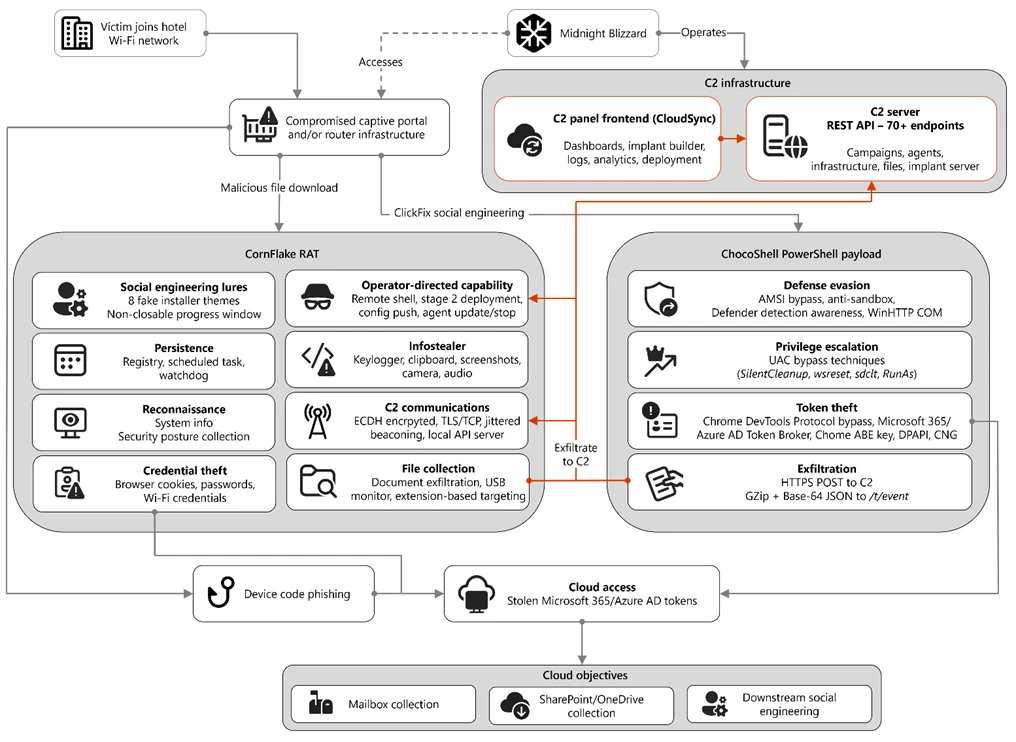
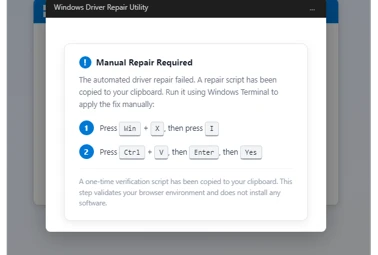
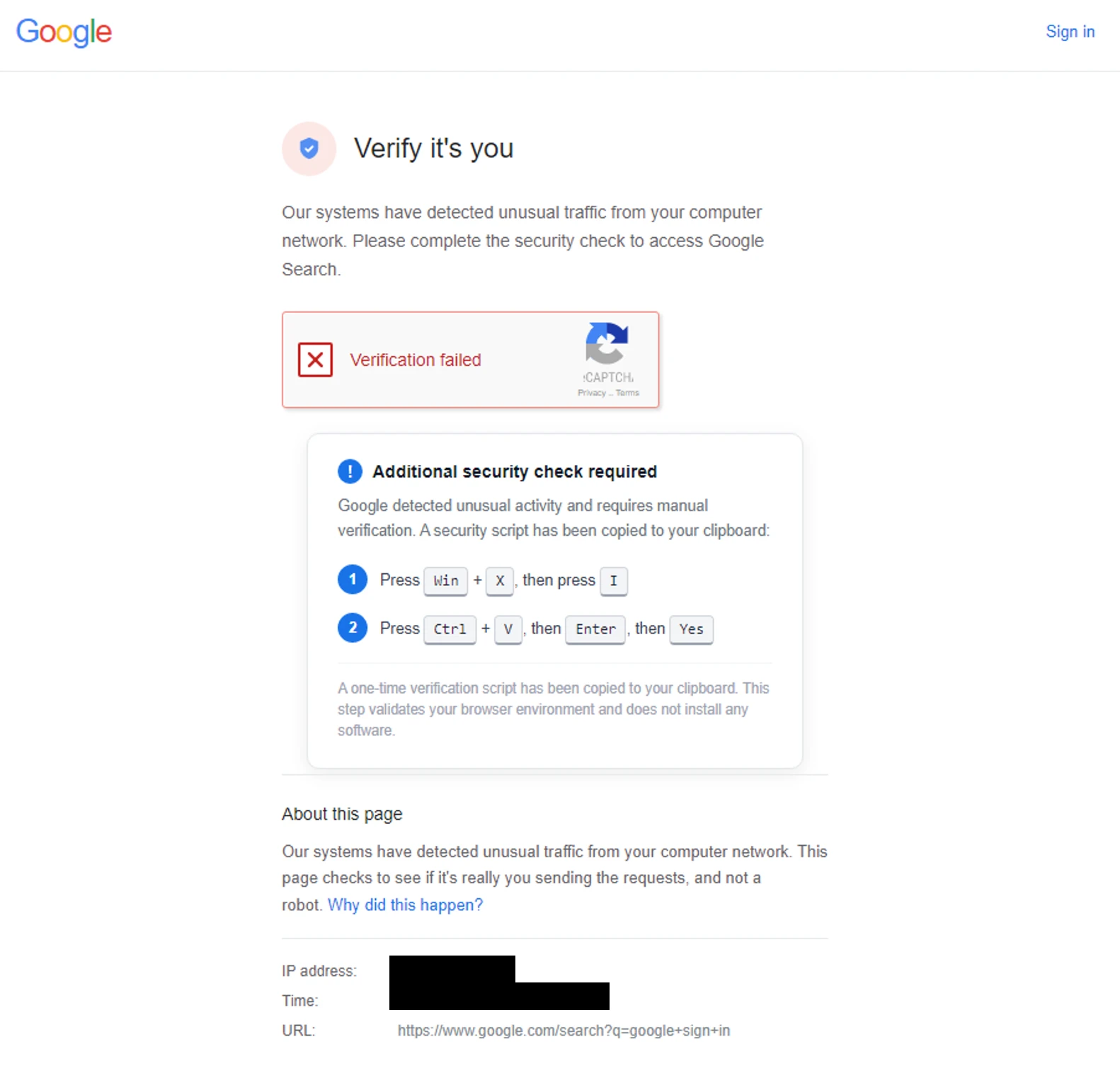

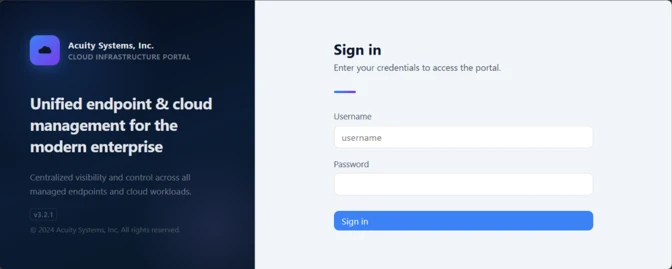
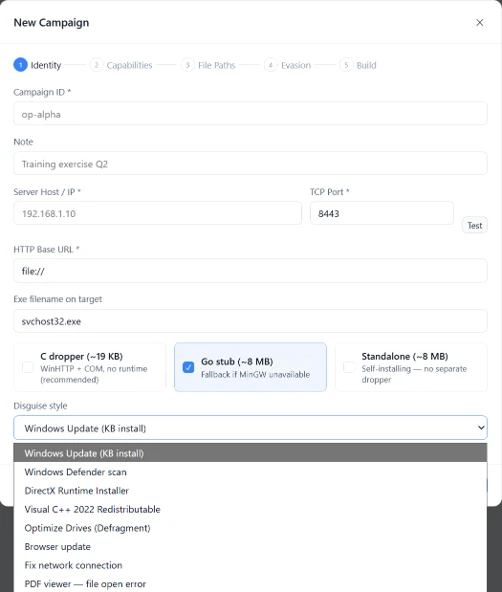
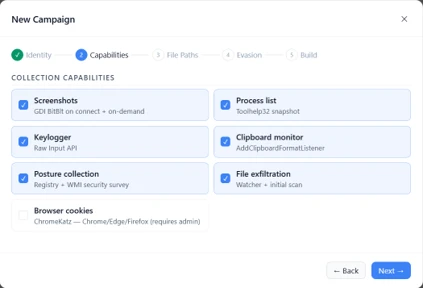

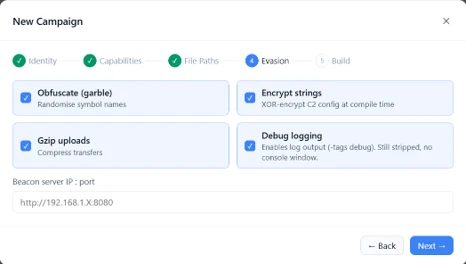


 Table Of Contents
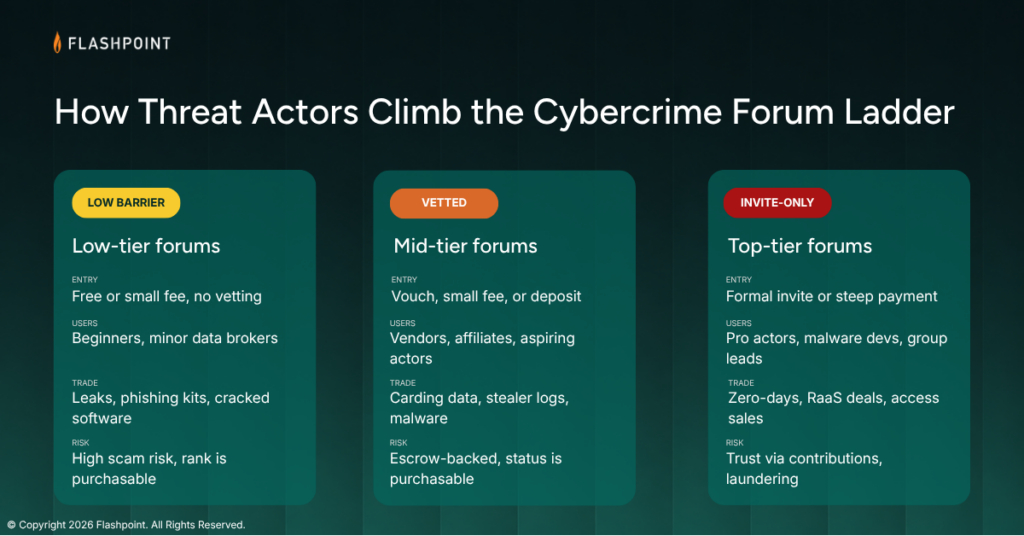





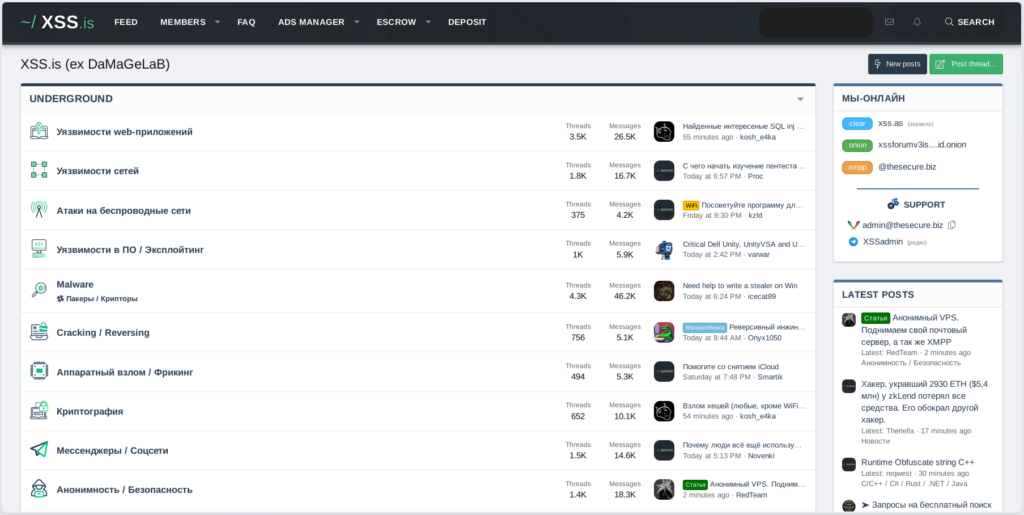
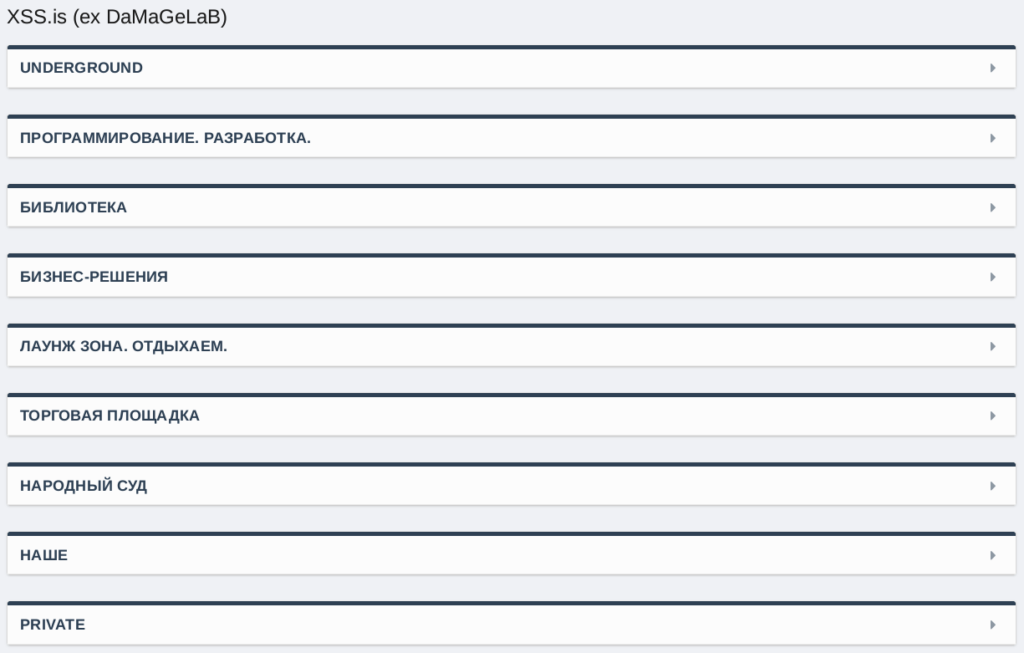
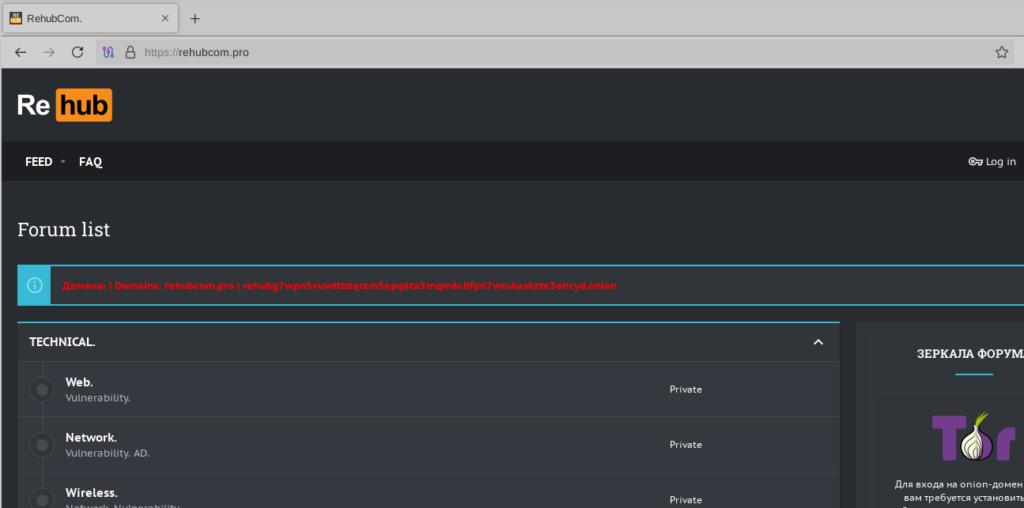




 /
/  — Profit, successful fraud, or payouts
 — Credit cards, carding activity, or stolen payment data
 — Banks or financial institutions
 — Cryptocurrency-related activity
 — Credentials or account access
 — Successful breach or unlocked account
 /
/  — Data exfiltration or transfer
 — Databases or collections of stolen data
 — Bots, automation tools, or malware
 — Configuration, setup, or infrastructure
 — Toolkits or bundled services
 — Infrastructure, communication channels, or delivery mechanisms
 — Corporate or enterprise targets
 — Targeting or “hits”
 — Specific targets, drop locations, or points of interest
 — Global campaigns
 — High-value or trending activity
 — Verified success or working method
 — Urgent update or active campaign
 — Growth or increased results
 can communicate “global carding opportunity” without requiring a shared language.