Researchers at a stealth startup in Israel scanned 6,214 live domains belonging to defense contractors, Fortune 500, and Big Tech companies. Of the 8,265 llms.txt and llms-full.txt files they found (many sites hosted both an llms.txt and an llms-full.txt file), 120 of them, each on a different site, pointed to one or more code packages or domain names that weren’t registered. To test what happens when an AI agent processes such files, the researchers registered a handful of the unclaimed names and hosted packages that caused any machine executing them to reach out to their server. Within an hour, the researchers received a phone-home response from a Fortune 500 company. Over time, they got a few dozen more, some from more Fortune 500 companies and others from startups. Their beacon also recorded the chain of parent processes that spawned each install, ultimately revealing that coding agents, including Claude, OpenAI’s Codex, and Nous Research’s Hermes, were involved. Anthropic, OpenAI, and Nous Research did not respond to requests for comment by the time of publication.
This kind of thing will be exploited. Think Solar Winds–style supply chain attacks.
“The trust model is broken,” Alon Hertz, one of the researchers, wrote in an interview. “Agents treat vendor docs as ground truth and don’t question themand neither do the humans supervising them. Agentic AI usage is exploding, and agents are spreading across every layerSaaS, cloud, endpoint. As they multiply, so does the supply-chain surface, and today’s guards don’t cover it.”
Healthcare organizations seeking HITRUST i1 certification increasingly rely on Amazon Web Services (AWS) as their cloud foundation. The HITRUST i1 assessment covers 182 curated controls at the Implemented level and is the most widely required HITRUST certification tier in healthcare vendor contracts and Business Associate Agreements required by health plans, hospital systems, and business associates as a condition of working with them.
This guide is designed to close the gap between understanding what HITRUST i1 requires and knowing how to implement it on AWS. It walks cloud architects, security engineers, compliance leads, and assessment preparation teams through the full lifecycle of an i1 engagement from defining the assessment boundary to implementing controls across each technical domain.
What the guide covers
The guide addresses 11 HITRUST i1 technical control domains, with supporting AWS implementation components relative to these domains. The domains include access control, endpoint protection, configuration management, vulnerability management, network protection, transmission protection, incident management, data protection and privacy, audit logging and monitoring, password management, and business continuity and disaster recovery.
The guidance is grounded in a fictional but realistic connected healthcare platform deployed on AWS Landing Zone Accelerator. The scenario is used to make abstract HITRUST concepts concrete, not to suggest that the same architecture or control choices apply universally. HITRUST i1 scoping is inherently organization-specific. The assessment boundary, applicable controls, and evidence requirements are determined by each organization’s system scope and delivered through the HITRUST MyCSF portal. Readers should treat the guidance as a starting point and work with a HITRUST Authorized External Assessor to validate what applies to their specific environment. This guide doesn’t constitute a compliance certification advisory.
AWS HITRUST assurance documentation and the Customer Responsibility Matrix are available through AWS Artifact. For assessment readiness support, visit AWS Security Assurance Services.
If you have feedback about this post, submit comments in the Comments section below.
Palo Alto Networks is pleased to announce the successful completion of a new Cloud Medium security assessment conducted by the Canadian Centre for Cyber Security (Cyber Centre), significantly expanding the number of Palo Alto Networks cloud services assessed for Protected B / Medium Integrity / Medium Availability (PBMM) environments. This assessment includes a broad range of capabilities across our Cortex®, Cortex Cloud and Strata™ platforms. By achieving this milestone, Palo Alto Networks enables organizations handling Canada’s most sensitive data to leverage a unified, AI-driven security architecture without compromising on compliance or operational resilience.
For years, many organizations viewed PBMM as something that only mattered to the Canadian federal government. It was often seen as a procurement requirement—a framework tied to public sector cloud adoption, relevant for departments handling Protected B information, but not necessarily for the private sector.
That assumption is changing.
The reality is that the challenges driving PBMM are no longer unique to government environments. Banks, energy providers, transportation networks, healthcare organizations, crown corporations, and other critical infrastructure operators are now facing many of the same pressures:
Expanding attack surfaces across hybrid and multi-cloud environments.
Increased regulatory scrutiny and privacy obligations.
Greater operational dependence on cloud and AI technologies.
Increased reliance on third-party providers and software supply chains.
The need to maintain operational resilience during cyber incidents and disruptions.
A growing expectation that organizations can demonstrate—not just claim—security maturity.
That is why PBMM matters far beyond Ottawa. At its core, PBMM represents a rigorous approach to validating whether enterprise-grade security platforms can operate securely in environments where trust, resilience, and operational continuity are critical.
Increasingly, that level of assurance matters to everyone.
What PBMM Really Represents
PBMM, a rigorous cybersecurity and data classification standard used by the Canadian Centre for Cyber Security, stands for Protected B / Medium Integrity / Medium Availability. While often associated with federal cloud security requirements, PBMM is not simply a checkbox exercise. It is a comprehensive assessment framework aligned to Canadian cybersecurity guidance and operational security expectations.
What makes PBMM important is that it evaluates whether platforms and services can securely support sensitive and mission-critical workloads in real-world environments.
Palo Alto Networks meeting these rigorous PBMM requirements through three core pillars:
Strata (Network Security): Secures data resiliency and zero trust connectivity, driving robust perimeter and cloud edge protection.
Cortex Cloud (Cloud Security): Provides complete visibility, security governance, and data protection across complex cloud-native architectures.
Cortex (Security Operations): Powers the agentic SOC, combining unified data, AI, and automation to detect and respond to threats in real time.
These are not theoretical requirements. They are practical operational expectations designed for environments where downtime, visibility gaps, or security failures can have significant consequences.
Organizations today are no longer evaluating cybersecurity solely based on features. They are evaluating whether platforms can be trusted to support critical operations at scale.
Why Security Expectations Are Changing
The cybersecurity landscape has evolved dramatically. Infrastructure is distributed across cloud providers, SaaS applications, remote users, third-party integrations, operational technology (OT), AI platforms, and interconnected supply chains. At the same time, attacks have become faster, more automated, and more disruptive.
In this environment, security can no longer be treated as a compliance exercise. Organizations need confidence that their platforms, operational processes, and security controls can function effectively under pressure.
This is why Palo Alto Networks has undertaken independent PBMM assessments across its portfolio, providing customers with greater assurance and trust. By meeting these rigorous standards into Strata and Cortex, we enable non-government entities—like financial institutions and utility providers—to deploy the same defensive rigor used to protect national security systems.
Transforming Critical Infrastructure with a Unified Platform
To effectively manage risk, critical infrastructure operators require a platform approach that helps eliminate security silos, reduce manual intervention, and accelerate threat mitigation.
Key Portfolio Advantages for Critical Infrastructure & Enterprise:
AI-Driven Threat Detection & Response:Cortex XSIAM® and Cortex XDR® unify telemetry across endpoints, network, and cloud to deliver unparalleled visibility and automated threat stitching, neutralizing advanced cyberthreats before they disrupt operations.
Comprehensive Cloud Native Protection:Cortex Cloud secures applications from code to cloud to SOC, offering posture security, data protection, and continuous compliance monitoring tailored to stringent Canadian data standards.
Zero Trust Network Security:Strata enables secure access and consistent policy enforcement across campus, branch, and data center environments, protecting critical OT and IT systems from lateral threat movement.
Elite Incident Response: Backed by Unit 42®, organizations gain access to threat intelligence and rapid incident response services to augment their teams and build long-term cyber resilience.
Operational Resilience Is Becoming a Strategic Requirement
One of the most significant shifts occurring across industries today is the growing focus on operational resilience. Organizations are increasingly asking questions that extend beyond traditional cybersecurity controls:
Can we maintain critical services during a cyber attack?
Do we have visibility across our cloud environments and supply chain dependencies?
Can we rapidly detect, respond to, and recover from disruptions?
Are our governance processes keeping pace with cloud adoption and AI innovation?
As organizations adopt cloud-native architectures, AI-driven technologies, and interconnected digital ecosystems, resilience has become a board-level concern. The ability to prevent incidents remains important, but organizations are equally focused on their ability to withstand, respond to, and recover from them.
This is where frameworks like PBMM provide value. Beyond evaluating security controls, PBMM assesses the governance, operational processes, monitoring capabilities, and risk management practices that help organizations operate securely.
For critical infrastructure operators, resilience is no longer simply an IT objective—it is a business imperative. Increasingly, the organizations that earn trust are those that can demonstrate they are prepared to operate effectively when disruption occurs.
Final Thoughts: PBMM Reflects the Future of Trust
PBMM may have started solely as a government assessment framework, but its relevance now extends far beyond federal environments. It represents something universal: the ability to operate securely, reliably, and transparently in environments where trust matters most.
By expanding our PBMM-assessed offerings across Cortex and Strata, Palo Alto Networks underscores its commitment to securing Canada's digital future. We provide the validated foundation organizations need to innovate with confidence, protect sensitive data, and maintain operational continuity under any circumstance.
Ready to modernize your defenses with PBMM-assessed solutions? Schedule a demo with our team or contact Unit 42 to learn how we can help elevate your organization's resilience against emerging cyber threats.
Abstract: As Large Language Models (LLMs) integrate into our social and economic interactions, we need to deepen our understanding of how humans respond to LLMs opponents in strategic settings. We present the results of the first controlled monetarily-incentivised laboratory experiment looking at differences in human behaviour in a multi-player p-beauty contest against other humans and LLMs. We use a within-subject design in order to compare behaviour at the individual level. We show that, in this environment, human subjects choose significantly lower numbers when playing against LLMs than humans, which is mainly driven by the increased prevalence of ‘zero’ Nash-equilibrium choices. This shift is mainly driven by subjects with high strategic reasoning ability. Subjects who play the zero Nash-equilibrium choice motivate their strategy by appealing to perceived LLM’s reasoning ability and, unexpectedly, propensity towards cooperation. Our findings provide foundational insights into the multi-player human-LLM interaction in simultaneous choice games, uncover heterogeneities in both subjects’ behaviour and beliefs about LLM’s play when playing against them, and suggest important implications for mechanism design in mixed human-LLM systems.
At the NDSS Symposium 2026 in San Diego in February, a group of respected researchers presented a study unveiling the AirSnitch attack, which bypasses the Wi-Fi client isolation feature — also commonly known as guest network or device isolation. This attack allows connecting to a single wireless network via an access point, and then gaining access to other connected devices, including those using entirely different service set identifiers (SSIDs) on that same hardware. Targeted devices could easily be running on wireless subnets protected by WPA2 or WPA3 protocols. The attack doesn’t actually break encryption; instead, it exploits the way access points handle group keys and packet routing.
In practical terms, this means that a guest network provides very little in the way of real security. If your guest and employee networks are running on the same physical device, AirSnitch allows a connected attacker to inject malicious traffic into neighboring SSIDs. In some cases, they can even pull off a full-blown man-in-the-middle (MitM) attack.
Wi-Fi security and the role of isolation
Wi-Fi security is constantly evolving; every time a practical attack is made against the latest generation of protection, the industry shifts toward more complex algorithms and procedures. This cycle started with the FMS attacks used to crack WEP encryption keys, and continues to this day: recent examples include the KRACK attacks on WPA2, and the FragAttacks, which impacted every security protocol version from WEP all the way through WPA3.
Attacking modern Wi-Fi networks effectively (and quietly) is no small feat. Most professionals agree that using WPA2/WPA3 with complex keys and separating networks based on their purpose is usually enough for protection. However, only specialists really know that client isolation was never actually standardized within the IEEE 802.11 protocols. Different manufacturers implement isolation in completely different ways — using Layer 2 or Layer 3 of network architecture; in other words, handling it at either the router or the Wi-Fi controller level — meaning the behavior of isolated subnets varies wildly depending on your specific access point or router model.
While marketing claims that client isolation is perfect for keeping restaurant or hotel guests from attacking one another — or ensuring corporate visitors can’t access anything but the internet — in reality, isolation often relies on people not trying to hack it. This is exactly what the AirSnitch research highlights.
Types of AirSnitch attacks
The name AirSnitch doesn’t just refer to a single vulnerability, but a whole family of architectural flaws found in Wi-Fi access points. It’s also the name of an open-source tool used to test routers for these specific weaknesses. However, security professionals need to keep in mind that there’s only a very thin line between testing and attacking.
The model for all these attacks is the same: a malicious client is connected to an access point (AP) where isolation is active. Other users — the targets — are connected to the same SSID or even different SSIDs on that same AP. This is a very realistic scenario; for example, a guest network might be open and unencrypted, or an attacker could simply get the guest Wi-Fi password by posing as a legitimate visitor.
For certain AirSnitch attacks, the attacker needs to know the victim’s MAC or IP address beforehand. Ultimately, how effective each attack is depends on the specific hardware manufacturer (more on that below).
GTK attack
After the WPA2/WPA3 handshake, the access point and the clients agree on a Group Transient Key (GTK) to handle broadcast traffic. In this scenario, the attacker wraps packets destined for a specific victim inside a broadcast traffic envelope. They then send these directly to the victim while spoofing the access point’s MAC address. This attack only allows for traffic injection, meaning the attacker won’t receive a response. However, even that is enough to deliver malicious ICMPv6 routing advertisements, or DNS and ARP messages to the client — effectively bypassing isolation. This is the most universal version of the attack working on any WPA2/WPA3 network that uses a shared GTK. That said, some enterprise-grade access points support GTK randomization for each individual client, which renders this specific method ineffective.
Broadcast packet redirection
This version of the attack doesn’t even require the attacker to authenticate at the access point first. The attacker sends packets to the AP with a broadcast destination address (FF:FF:FF:FF:FF:FF) and the ToDS flag set to 1. As a result, many access points treat this packet as legitimate broadcast traffic; they encrypt it using the GTK, and blast it out to every client on the subnet, including the victim. Just like in the previous method, traffic specifically meant for a single victim can be pre-packaged inside.
Router redirection
This attack exploits an architectural gap between Layer 2 and Layer 3 security found in some manufacturers’ hardware. The attacker sends a packet to the access point, setting the victim’s IP address as the destination at the network layer (L3). However, at the wireless layer (L2), the destination is set to the access point’s own MAC address, so the isolation filter doesn’t trip. The routing subsystem (L3) then dutifully routes the packet back out to the victim, bypassing the L2 isolation entirely. Like the previous methods, this is another transmit-only attack where the attacker can’t see the reply.
Port stealing to intercept packets
The attacker connects to the network using a spoofed version of the victim’s MAC address, and floods the network with ARP responses claiming, “this MAC address is on my port and SSID”. The target network’s router updates its MAC tables, and starts sending the victim’s traffic to this new port instead. Consequently, traffic intended for the victim ends up with the attacker — even if the victim is connected to a completely different SSID.
In a scenario where the attacker connects via an open, unencrypted network, this means traffic meant for a client on a WPA2/WPA3-secured network is actually broadcast over the open air, where not only the attacker but anyone nearby can sniff it.
Port stealing to send packets
In this version, the attacker connects directly to the victim’s Wi-Fi adapter, and bombards it with ARP requests spoofing the access point’s MAC address. As a result, the victim’s computer starts sending its outgoing traffic to the attacker instead of the network. By running both stealing attacks simultaneously, an attacker can, in several scenarios, execute a full MitM attack.
Practical consequences of AirSnitch attacks
By combining several of the techniques described above, a hacker can pull off some pretty serious moves:
Complete bidirectional traffic interception for a MitM attack. This means they can snatch and modify data moving between the victim and the access point without the victim ever knowing.
Hopping between SSIDs. An attacker sitting on a guest network can reach hosts on a locked-down corporate network if both are running off the same physical access point.
Attacks on RADIUS. Since many companies use RADIUS authentication for their corporate Wi-Fi, an attacker can spoof the access point’s MAC address to intercept initial RADIUS authentication packets. From there, they can brute-force the shared secret. Once they have that, they can spin up a rogue RADIUS server and access point to hijack data from any device that connects to it.
Exposing unencrypted data from “secure” subnets: Traffic that’s supposed to be sent to a client under the protection of WPA2/WPA3 can be retransmitted onto an open guest network, where it’s essentially broadcast for anyone to hear.
To pull off these attacks effectively, a hacker needs a device capable of simultaneous data transmission and reception with both the victim’s adapter and the access point. In a real-world scenario, this usually means a laptop with two Wi-Fi adapters running specifically configured Linux drivers. It’s worth noting that the attack isn’t exactly silent: it requires a flood of ARP packets, it can cause brief Wi-Fi glitches when it starts, and network speeds might tank to around 10Mbps. Despite these red flags, it’s still very much a practical threat in many environments.
Vulnerable devices
As part of the study, several enterprise and home access points and routers were put to the test. The list included products from Cisco, Netgear, Ubiquiti, Tenda, D-Link, TP-Link, LANCOM, and ASUS, as well as routers running popular community firmware like DD-WRT and OpenWrt. Every single device tested was vulnerable to at least some of the attacks described here. Even more concerning, the D-Link DIR-3040 and LANCOM LX-6500 were susceptible to every single variation of AirSnitch.
Interestingly, some routers were equipped with protective mechanisms that blocked the attacks, even though the underlying architectural flaws were still present. For example, the Tenda RX2 Pro automatically disconnects any client whose MAC address appears on two BSSIDs simultaneously, which effectively shuts down port stealing.
The researchers emphasize that any network administrator or IT security team serious about defense should test their own specific configurations. That’s the only way to pinpoint exactly which threats are relevant to your organization’s setup.
How to protect your corporate network from AirSnitch
The threat is most immediate for organizations running guest and corporate Wi-Fi networks on the same access points without additional VLAN segmentation. There are also significant risks for companies using RADIUS with outdated settings or weak shared secrets for wireless authentication.
The bottom line is that we need to stop viewing client isolation on an access point as a real security measure, and start seeing it as just a convenience feature. Real security needs to be handled differently:
Segment the network using VLANs. Each SSID should have its own VLAN, with strict 802.1Q packet tagging maintained all the way from the access point to the firewall or router.
Implement stricter packet inspection at the routing level — depending on the hardware capabilities. Features like Dynamic ARP Inspection, DHCP snooping, and limiting the number of MAC addresses per port help defend against IP/MAC spoofing.
Enable individual GTK keys for each client, if your equipment supports it.
Use more resilient RADIUS and 802.1X settings, including modern cipher suites and robust shared secrets.
Log and analyze EAP/RADIUS authentication anomalies in your SIEM. This helps track many attack attempts beyond just AirSnitch. Other red flag events to watch for include the same MAC address appearing on different SSIDs, spikes in ARP requests, or clients rapidly jumping between BSSIDs or VLANs.
Apply security at higher levels of the network topology. Many of these attacks lose their punch if the organization has universally implemented TLS and HSTS for all business application traffic, requires an active VPN for all Wi-Fi connections, or has fully embraced a Zero Trust architecture.
To implement effective cybersecurity programs and keep the security team deeply integrated into all business processes, the CISO needs to regularly demonstrate the value of this work to senior management. This requires speaking the language of business, but a dangerous trap awaits those who try. Security professionals and executives often use the same words, but for entirely different things. Sometimes, a number of similar terms are used interchangeably. As a result, top management may not understand which threats the security team is trying to mitigate, what the company’s actual level of cyber-resilience is, or where budget and resources are being allocated. Therefore, before presenting sleek dashboards or calculating the ROI of security programs, it’s worth subtly clarifying these important terminological nuances.
By clarifying these terms and building a shared vocabulary, the CISO and the Board can significantly improve communication and, ultimately, strengthen the organization’s overall security posture.
Why cybersecurity vocabulary matters for management
Varying interpretations of terms are more than just an inconvenience; the consequences can be quite substantial. A lack of clarity regarding details can lead to:
Misallocated investments. Management might approve the purchase of a zero trust solution without realizing it’s only one piece of a long-term, comprehensive program with a significantly larger budget. The money is spent, yet the results management expected are never achieved. Similarly, with regard to cloud migration, management may assume that moving to the cloud automatically transfers all security responsibility to the provider, and subsequently reject the cloud security budget.
Blind acceptance of risk. Business unit leaders may accept cybersecurity risks without having a full understanding of the potential impact.
Lack of governance. Without understanding the terminology, management can’t ask the right — tough — questions, or assign areas of responsibility effectively. When an incident occurs, it often turns out that business owners believed security was entirely within the CISO’s domain, while the CISO lacked the authority to influence business processes.
Information security risks are often lumped in with IT concerns like uptime and service availability. In reality, cyberrisk is a strategic business risk linked to business continuity, financial loss, and reputational damage.
IT risks are generally operational in nature, affecting efficiency, reliability, and cost management. Responding to IT incidents is often handled entirely by IT staff. Major cybersecurity incidents, however, have a much broader scope; they require the engagement of nearly every department, and have a long-term impact on the organization in many ways — including as regards reputation, regulatory compliance, customer relationships, and overall financial health.
Compliance vs. security
Cybersecurity is integrated into regulatory requirements at every level — from international directives like NIS2 and GDPR, to cross-border industry guidelines like PCI DSS, plus specific departmental mandates. As a result, company management often views cybersecurity measures as compliance checkboxes, believing that once regulatory requirements are met, cybersecurity issues can be considered resolved. This mindset can stem from a conscious effort to minimize security spending (“we’re not doing more than what we’re required to”) or from a sincere misunderstanding (“we’ve passed an ISO 27001 audit, so we’re unhackable”).
In reality, compliance is meeting the minimum requirements of auditors and government regulators at a specific point in time. Unfortunately, the history of large-scale cyberattacks on major organizations proves that “minimum” requirements have that name for a reason. For real protection against modern cyberthreats, companies must continuously improve their security strategies and measures according to the specific needs of the given industry.
Threat, vulnerability, and risk
These three terms are often used synonymously, which leads to erroneous conclusions made by management: “There’s a critical vulnerability on our server? That means we have a critical risk!” To avoid panic or, conversely, inaction, it’s vital to use these terms precisely and understand how they relate to one another.
A vulnerability is a weakness — an “open door”. This could be a flaw in software code, a misconfigured server, an unlocked server room, or an employee who opens every email attachment.
A threat is a potential cause of an incident. This could be a malicious actor, malware, or even a natural disaster. A threat is what might “walk through that open door”.
Risk is the potential loss. It’s the cumulative assessment of the likelihood of a successful attack, and what the organization stands to lose as a result (the impact).
The connections among these elements are best explained with a simple formula:
Risk = (Threat × Vulnerability) × Impact
This can be illustrated as follows. Imagine a critical vulnerability with a maximum severity rating is discovered in an outdated system. However, this system is disconnected from all networks, sits in an isolated room, and is handled by only three vetted employees. The probability of an attacker reaching it is near zero. Meanwhile, the lack of two-factor authentication in the accounting systems creates a real, high risk, resulting from both a high probability of attack and significant potential damage.
Incident response, disaster recovery, and business continuity
Management’s perception of security crises is often oversimplified: “If we get hit by ransomware, we’ll just activate the IT Disaster Recovery plan and restore from backups”. However, conflating these concepts — and processes — is extremely dangerous.
Incident Response (IR) is the responsibility of the security team or specialist contractors. Their job is to localize the threat, kick the attacker out of the network, and stop the attack from spreading.
Disaster Recovery (DR) is an IT engineering task. It’s the process of restoring servers and data from backups after the incident response has been completed.
Business Continuity (BC) is a strategic task for top management. It’s the plan for how the company continues to serve customers, ship goods, pay compensation, and talk to the press while its primary systems are still offline.
If management focuses solely on recovery, the company will lack an action plan for the most critical period of downtime.
Security awareness vs. security culture
Leaders at all levels sometimes assume that simply conducting security training guarantees results: “The employees have passed their annual test, so now they won’t click on a phishing link”. Unfortunately, relying solely on training organized by HR and IT won’t cut it. Effectiveness requires changing the team’s behavior, which is impossible without the engagement of business management.
Awareness is knowledge. An employee knows what phishing is and understands the importance of complex passwords.
Security culture refers to behavioral patterns. It’s what an employee does in a stressful situation or when no one’s watching. Culture isn’t shaped by tests, but by an environment where it’s safe to report mistakes and where it’s customary to identify and prevent potentially dangerous situations. If an employee fears punishment, they’ll hide an incident. In a healthy culture, they’ll report a suspicious email to the SOC, or nudge a colleague who forgets to lock their computer, thereby becoming an active link in the defense chain.
Detection vs. prevention
Business leaders often think in outdated “fortress wall” categories: “We bought expensive protection systems, so there should be no way to hack us. If an incident occurs, it means the CISO failed”. In practice, preventing 100% of attacks is technically impossible and economically prohibitive. Modern strategy is built on a balance between cybersecurity and business effectiveness. In a balanced system, components focused on threat detection and prevention work in tandem.
Prevention deflects automated, mass attacks.
Detection and Response help identify and neutralize more professional, targeted attacks that manage to bypass prevention tools or exploit vulnerabilities.
The key objective of the cybersecurity team today isn’t to guarantee total invulnerability, but to detect an attack at an early stage and minimize the impact on the business. To measure success here, the industry typically uses metrics like Mean Time to Detect (MTTD) and Mean Time to Respond (MTTR).
Zero-trust philosophy vs. zero-trust products
The zero trust concept — which implies “never trust, always verify” for all components of IT infrastructure — has long been recognized as relevant and effective in corporate security. It requires constant verification of identity (user accounts, devices, and services) and context for every access request based on the assumption that the network has already been compromised.
However, the presence of “zero trust” in the name of a security solution doesn’t mean an organization can adopt this approach overnight simply by purchasing the product.
Zero trust isn’t a product you can “turn on”; it’s an architectural strategy and a long-term transformation journey. Implementing zero trust requires restructuring access processes and refining IT systems to ensure continuous verification of identity and devices. Buying software without changing processes won’t have a significant effect.
Security of the cloud vs. security in the cloud
When migrating IT services to cloud infrastructure like AWS or Azure, there’s often an illusion of a total risk transfer: “We pay the provider, so security is now their headache”. This is a dangerous misconception, and a misinterpretation of what is known as the Shared Responsibility Model.
Security of the cloud is the provider’s responsibility. It protects the data centers, the physical servers, and the cabling.
Security in the cloud is the client’s responsibility.
Discussions regarding budgets for cloud projects and their security aspects should be accompanied by real life examples. The provider protects the database from unauthorized access according to the settings configured by the client’s employees. If employees leave a database open or use weak passwords, and if two-factor authentication isn’t enabled for the administrator panel, the provider can’t prevent unauthorized individuals from downloading the information — an all-too-common news story. Therefore, the budget for these projects must account for cloud security tools and configuration management on the company side.
Vulnerability scanning vs. penetration testing
Leaders often confuse automated checks, which fall under cyber-hygiene, with assessing IT assets for resilience against sophisticated attacks: “Why pay hackers for a pentest when we run the scanner every week?”
Vulnerability scanning checks a specific list of IT assets for known vulnerabilities. To put it simply, it’s like a security guard doing the rounds to check that the office windows and doors are locked.
Penetration testing (pentesting) is a manual assessment to evaluate the possibility of a real-world breach by exploiting vulnerabilities. To continue the analogy, it’s like hiring an expert burglar to actually try and break into the office.
One doesn’t replace the other; to understand its true security posture, a business needs both tools.
Managed assets vs. attack surface
A common and dangerous misconception concerns the scope of protection and the overall visibility held by IT and Security. A common refrain at meetings is, “We have an accurate inventory list of our hardware. We’re protecting everything we own”.
Managed IT assets are things the IT department has purchased, configured, and can see in their reports.
An attack surface is anything accessible to attackers: any potential entry point into the company. This includes Shadow IT (cloud services, personal messaging apps, test servers…), which is basically anything employees launch themselves in circumvention of official protocols to speed up or simplify their work. Often, it’s these “invisible” assets that become the entry point for an attack, as the security team can’t protect what it doesn’t know exists.
Zero Trust is not a thing; it is an idea. It is not a product; it is a concept – it is a destination that has no precise route and may never be reached.
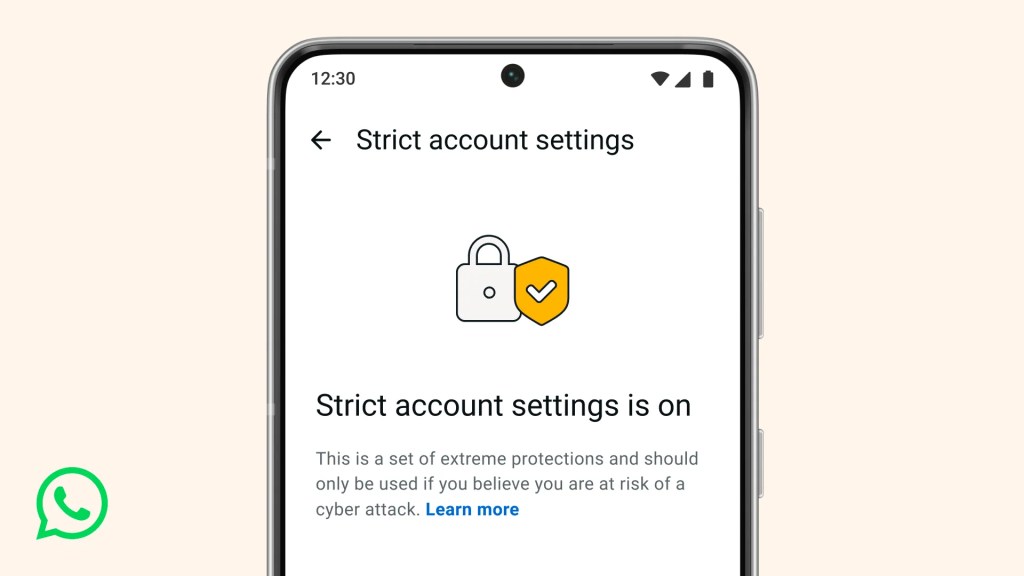
WhatsApp is quietly rolling out a new safety layer for photos, videos, and documents, and it lives entirely under the hood. It won’t change how you chat, but it will change what happens to the files that move through your chats—especially the kind that can hide malware.
The new feature, called Strict Account Settings, is rolling out gradually over the coming weeks. To see whether you have the option—and to enable it—go to Settings > Privacy > Advanced.
Image courtesy of WhatsApp
Yesterday, we wrote about a WhatsApp bug on Android that made headlines because a malicious media file in a group chat could be downloaded and used as an attack vector without you tapping anything. You only had to be added to a new group to be exposed to the booby-trapped file. That issue highlighted something security folks have worried about for years: media files are a great vehicle for attacks, and they do not always exploit WhatsApp itself, but bugs in the operating system or its media libraries.
In Meta’s explanation of the new technology, it points back to the 2015 Stagefright Android vulnerability, where simply processing a malicious video could compromise a device. Back then, WhatsApp worked around the issue by teaching its media library to spot broken MP4 files that could trigger those OS bugs, buying users protection even if their phones were not fully patched.
What’s new is that WhatsApp has now rebuilt its core media-handling library in Rust, a memory-safe programming language. This helps eliminate several types of memory bugs that often lead to serious security problems. In the process, it replaced about 160,000 lines of older C++ code with roughly 90,000 lines of Rust, and rolled the new library out to billions of devices across Android, iOS, desktop apps, wearables, and the web.
On top of that, WhatsApp has bundled a series of checks into an internal system it calls “Kaleidoscope.” This system inspects incoming files for structural oddities, flags higher‑risk formats like PDFs with embedded content or scripts, detects when a file pretends to be something it’s not (for example, a renamed executable), and marks known dangerous file types for special handling in the app. It won’t catch every attack, but it should prevent malicious files from poking at more fragile parts of your device.
For everyday users, the Rust rebuilt and Kaleidoscope checks are good news. They add a strong, invisible safety net around photos, videos and other files you receive, including in group chats where the recent bug could be abused. They also line up neatly with our earlier advice to turn off automatic media downloads or use Advanced Privacy Mode, which limits how far a malicious file can travel on your device even if it lands in WhatsApp.
WhatsApp is the latest platform to roll out enhanced protections for users: Apple introduced Lockdown Mode in 2022, and Android followed with Advanced Protection Mode last year. WhatsApp’s new Strict Account Settings takes a similar high-level approach, applying more restrictive defaults within the app, including blocking attachments and media from unknown senders.
However, this is no reason to rush back to WhatsApp, or to treat these changes as a guarantee of safety. At the very least, Meta is showing that it is willing to invest in making WhatsApp more secure.
We don’t just report on phone security—we provide it
WhatsApp is quietly rolling out a new safety layer for photos, videos, and documents, and it lives entirely under the hood. It won’t change how you chat, but it will change what happens to the files that move through your chats—especially the kind that can hide malware.
The new feature, called Strict Account Settings, is rolling out gradually over the coming weeks. To see whether you have the option—and to enable it—go to Settings > Privacy > Advanced.
Image courtesy of WhatsApp
Yesterday, we wrote about a WhatsApp bug on Android that made headlines because a malicious media file in a group chat could be downloaded and used as an attack vector without you tapping anything. You only had to be added to a new group to be exposed to the booby-trapped file. That issue highlighted something security folks have worried about for years: media files are a great vehicle for attacks, and they do not always exploit WhatsApp itself, but bugs in the operating system or its media libraries.
In Meta’s explanation of the new technology, it points back to the 2015 Stagefright Android vulnerability, where simply processing a malicious video could compromise a device. Back then, WhatsApp worked around the issue by teaching its media library to spot broken MP4 files that could trigger those OS bugs, buying users protection even if their phones were not fully patched.
What’s new is that WhatsApp has now rebuilt its core media-handling library in Rust, a memory-safe programming language. This helps eliminate several types of memory bugs that often lead to serious security problems. In the process, it replaced about 160,000 lines of older C++ code with roughly 90,000 lines of Rust, and rolled the new library out to billions of devices across Android, iOS, desktop apps, wearables, and the web.
On top of that, WhatsApp has bundled a series of checks into an internal system it calls “Kaleidoscope.” This system inspects incoming files for structural oddities, flags higher‑risk formats like PDFs with embedded content or scripts, detects when a file pretends to be something it’s not (for example, a renamed executable), and marks known dangerous file types for special handling in the app. It won’t catch every attack, but it should prevent malicious files from poking at more fragile parts of your device.
For everyday users, the Rust rebuilt and Kaleidoscope checks are good news. They add a strong, invisible safety net around photos, videos and other files you receive, including in group chats where the recent bug could be abused. They also line up neatly with our earlier advice to turn off automatic media downloads or use Advanced Privacy Mode, which limits how far a malicious file can travel on your device even if it lands in WhatsApp.
WhatsApp is the latest platform to roll out enhanced protections for users: Apple introduced Lockdown Mode in 2022, and Android followed with Advanced Protection Mode last year. WhatsApp’s new Strict Account Settings takes a similar high-level approach, applying more restrictive defaults within the app, including blocking attachments and media from unknown senders.
However, this is no reason to rush back to WhatsApp, or to treat these changes as a guarantee of safety. At the very least, Meta is showing that it is willing to invest in making WhatsApp more secure.
We don’t just report on phone security—we provide it
Using generative AI, scammers can now craft phishing emails that overcome language barriers, respond in real time, and quickly automate large-scale personalized campaigns, making it simpler to impersonate domains and access sensitive information.
Heather Doerges // Of all the services we offer at BHIS, Social Engineering is the most interesting to me. It’s something (and quite possibly the only thing) I completely understand […]
Logan Lembke // Living in the information age is great, isn’t it? With just a visit to the internet you can learn what happened in London on September 2nd, 1666, […]

 Login
Login