

โŒ

Normal view

Idira โ€” Our Journey to Democratize Privilege Controls

12 May 2026 at 15:55

Key Takeaways

  • Built on the Pioneers of PAM (privileged access management): Idiraโ„ข is Palo Alto Networks next-generation identity security platform, extending privileged access controls to every human, machine and AI agent identity in the AI enterprise.
  • Zero Standing Privilege by Default: Idira replaces static, always-on access with dynamic privilege, granted just-in-time on a single control plane.
  • AI-Driven Identity: AI runs natively inside Idira to surface hidden entitlements, unmanaged accounts, recommend least privilege, and remediate to close the gap between attackers who move in 72 minutes and defenders who historically took days.

Since Palo Alto Networks and CyberArk came together in February, customers have been asking me the same question: What does the future of identity security actually look like?

At IMPACT, I got to answer that question.

I am proud to introduce Idiraโ„ข, the next-generation identity security platform from Palo Alto Networks. Idira secures every identity in the AI enterprise (human, machine, AI agent) on a single control plane that discovers risk, applies privilege dynamically, and governs the full lifecycle from first access to last session.

Idira begins with a belief shaped by more than 20 years of working on this problem. Privilege is the most challenging aspect of identity security. For a generation, the industry learned how to manage it well for a small population โ€“ administrators inside the most security-sensitive organizations in the world. That was necessary. But it is no longer enough.

The moment has come to extend that same rigor to every identity, because every identity today carries the power to move the business, or enable an attacker. That is the journey Idira takes us on. From privilege controls for administrators, to privilege controls for every identity.

Attackers Are Not Breaking In. They Are Logging In.

For most of the last two decades, identity security was built on a comfortable assumption: One can maintain a firm divide between a small number of powerful administrators and a much larger number of ordinary users; that is enough to secure the organization. That assumption no longer holds.

Our Chairman and CEO, Nikesh Arora, calls it the โ€œIAM fallacy,โ€ and the data in the 2026 Identity Security Landscape Report makes clear why it is time to retire this assumption.

Based on responses from 2,930 cybersecurity decision-makers worldwide:

  • Machine identities now outnumber humans by 109 to 1. Of those, 79 are AI agents.
  • 91% of organizations already run autonomous agents in production.
  • 90% of organizations suffered an identity-related breach in the past 12 months. 83% of organizations suffered two or more incidents.

The old model is not failing because identity became less important. It is failing because identity and privilege became universal and ubiquitous.

Every major breach I have studied over the last two years follows the same pattern. An attacker steals a credential. They move laterally using standing access that should have expired. They escalate privilege. They reach the data, the infrastructure or the business systems they came for: Okta, MGM, Microsoft. Different industries. Different scales. The same pattern.

One overprivileged identity unlocks the entire enterprise.

And when defenders have a chance to respond, they are already behind and disadvantaged. 97% of practitioners tell us that fragmented tools add 12 hours to every identity incident response time. All while Unit 42ยฎ has observed the fastest attackers move from a first foothold to exfiltration in as little as 72 minutes.

Identity is now the enterprise perimeter. And the perimeter was built for a threat model that no longer exists.

Every Identity Is Privileged โ€” Idiraโ€™s First Fundamental Principle

The premise of Idira is simple. Every identity in your organization is privileged.

Every login, every token, every service account, every workload, every AI agent can trigger a workflow, call an API, or reach sensitive data. Some can create and destroy infrastructures, direct organizational spend, or create new identities. Privilege is no longer reserved for a small class of administrators. It is distributed across the enterprise, quietly and continuously, every second of the day.

The controls that protect privilege cannot be reserved for the few, either.

Idira changes three things from day one.

First, We Discover

Idira continuously finds every identity, every entitlement and every access path across your entire environment: humans, machines, workloads, secrets, certificates and AI agents everywhere โ€“ on the network, in the cloud, on servers and endpoints, in the browser. If someone or something can authenticate, Idira knows it is there, knows what it can reach, and evaluates how much of that access is actually necessary.

Second, We Control

Idira replaces static, always-on accounts attackers rely on with dynamic privileges that exist only in the moment of use. Zero standing privilege moves from aspiration to default, and it applies equally to the administrator logging into production, the developer deploying code, and the AI agent calling a tool. This is the shift to identity-centric active security.

Third, We Govern

Idira automates the identity lifecycle end-to-end. Governance stops being a quarterly compliance exercise and becomes a continuous enforcement loop. The 12-hour fragmentation tax closes.

This is what I mean when I say we are democratizing privilege controls. We are not loosening them. We are extending the strongest privilege controls the industry has ever built to every identity that now carries the weight of the business, without penalizing these identities for the powers they carry.

Already Better Together

Idira is not launching into an empty runway. We have been executing against this roadmap since the day we joined Palo Alto Networks, and the early results give us real confidence in what comes next.

Earlier this year at the RSA Conference, we launched Next-Generation Trust Securityย (NGTS), the first network-native platform to automate certificate lifecycle management and accelerate post-quantum readiness. That matters because 71% of organizations have not yet automated certificate renewal. As public TLS lifetimes compress to 47 days and manual workloads multiply, that gap becomes more than an operational burden. It becomes a business continuity risk.

NGTS closes it in the network itself.

As one of the core platforms of Palo Alto Networks along with Strataยฎ and Cortexยฎ, Idira is providing deep identity integrations across the entire portfolio to enhance platform value for customers. Prismaยฎ Browserโ„ข delivers privileged access directly in the place where enterprise users work. Prisma AIRSโ„ข 3.0 natively integrates with Idira to extend deep identity security and privilege controls to AI agents. Cortex will receive first-party identity signals to sharpen detection and take automatic identity- and privilege-driven response actions when indicators of compromise are detected.

Customers are already seeing the impact. Northern Trust improved password compliance by 137 percent. Panasonic Information Systems rebuilt its security operations around identity. Healthfirst grounded its zero trust program in identity-first controls. PDS Health secured clinical access for more than 900 practices. They had different problems with the same answer.

Different challenges. One answer. One platform. Consistent privilege controls applied to every identity that matters.

AI Makes This Urgent. AI Makes This Possible.

AI has changed the speed, scale and economics of identity risk.

Frontier models have crossed a threshold. Anthropic's Claude Mythos Preview has already identified thousands of zero-day vulnerabilities across the operating systems and browsers that businesses rely on every day. Every exposed secret, every standing admin path, every forgotten service account can now be discovered, validated and weaponized faster than most security teams can respond. 55% of the decision-makers in our 2026 survey named AI-enabled threats as their top identity concern.

Our answer is clear: We fight AI with AI.

If frontier models are rewriting the economics of attack, the only credible response is to rewrite the economics of defense with the same technology.

Idira is how we do that in identity. AI is built into the platform to surface hidden entitlements, identify risky access combinations, recommend the least privilege automatically, and drive surgical remediation. That same intelligence lets attackers find the weakest link in 72 minutes and helps defenders close it in seconds.

When code cannot be patched fast enough, identity becomes the control plane that can still adapt at machine speed.

Same Mission, Stronger Together

For more than two decades, the pioneers of privileged access have management-built controls trusted to safeguard the world's most critical environments. That mission created a category and earned the trust that made today possible.

Idira carries that mission forward and expands it to match the scale of the problem we now face.

This is the first wave, not the last. The roadmap extends privilege controls to workforce identity, advances machine and agentic identity security, and unifies a fragmented market into one platform. We are building it in the open, shaped by the customers in the room with us at IMPACT and by the realities they face every day.

The future of identity security will not be defined by access alone. It will be defined by control. See what Idira is built to deliver.


Forward-Looking Statements

This blog contains forward-looking statements that involve risks, uncertainties and assumptions, including, without limitation, statements regarding the benefits, impact, or performance or potential benefits, impact or performance of our products and technologies or future products and technologies. Any unreleased services, integrations or features (and any services or features not generally available to customers) referenced in this or other press releases or public statements are not currently available (or are not yet generally available to customers) and may not be delivered when expected or at all. Customers who purchase Palo Alto Networks applications should make their purchase decisions based on services and features currently generally available.

The post Idira โ€” Our Journey to Democratize Privilege Controls appeared first on Palo Alto Networks Blog.

Security posture improvement in the AI era

1 May 2026 at 22:58

Itโ€™s only been a few weeks since Anthropic announced the Claude Mythos Preview model and launched Project Glasswing with AWS and other leading organizations. This has generated a lot of discussion about the future of cybersecurity and what the ever-increasing capabilities of foundation models mean to organizations.

As AWS CISO Amy Herzog pointed out in the Project Glasswing announcement, โ€œAt AWS, we build defenses before threats emerge, from our custom silicon up through the technology stack. Security isnโ€™t a phase for us; itโ€™s continuous and embedded in everything we do.โ€

Read more from Amy about this in Building AI defenses at scale: Before the threats emerge.

While the discussion around the future of cybersecurity is important, the only thing we know for certain is that organizations need to be able to react quickly to the rapid changes AI is bringing to technology and business in general. And you canโ€™t react quickly if your security fundamentals arenโ€™t dialed in.

The security hygiene gap

Itโ€™s easy to assume you have the foundational security elements covered, or to overlook some completely. Basic security use cases like identity management, threat detection, vulnerability management, data protection, and network security can be inconsistently implemented across cloud environments. While AI is reshaping the security landscape, strong security fundamentals continue to be essential for every organization, regardless of size or industry.

These are the security basics that matter whether or not youโ€™re adopting AI: patching consistently, enforcing least-privilege access, enabling logging and monitoring, encrypting data at rest and in transit, and reviewing security configurations regularly. When these fundamentals are in place, youโ€™re better positioned to take advantage of AI-driven tools and respond to newly discovered vulnerabilities, wherever they come from.

While the concepts that drive security fundamentals are universal, implementing them in your environment is best done with an understanding of the context unique to your organization. Thatโ€™s why we have a multitude of freely available materialsโ€”like the AWS Well-Architected Frameworkโ€”that you can use to help ask the right questions and implement changes in your environment. We also offer programs like the Security Health Improvement Program (SHIP) to help you improve your security posture through prescriptive guidance and continuous improvement.

What is the Security Health Improvement Program (SHIP)?

SHIP is a no-cost program available to every AWS customer, regardless of support tier. SHIP provides a proven, data-driven methodology to:

  • Assess your current security posture using data from your AWS environment
  • Identify specific opportunities to improve across 10 core security use cases
  • Build a prioritized action plan tailored to your environment
  • Establish a mechanism for continuous security improvement

The program is led by AWS Solutions Architects and Technical Account Managers who take you through a personalized report, contextualize findings for your environment, and help you build a prioritized action plan.

Why SHIP matters in the AI era

Project Glasswing highlights an important shift: AI-powered tools are accelerating the pace of vulnerability discovery, which means organizations need to be prepared to assess and respond to findings and changing situations faster than before. In addition to external factors, as organizations adopt AIโ€”whether deploying foundation models, building agentic workflows, or using AI-powered servicesโ€”how they implement their security controls must change as well. A strong security foundation is what makes confident AI adoption possible.

Hereโ€™s how SHIP helps:

Address foundational security gaps proactively

SHIP uses a data-driven methodology to identify opportunities to improve and optimize across 10 core security use cases: threat detection, cloud security posture management, application security testing, configuration management, access governance, vulnerability management, application protection, network security, encryption, and secrets management. The program includes a SHIP assessment to identify critical security findings related to your current security posture, so your team can build a prioritized roadmap for improvement tailored to your environment.

Establish the security baseline AI workloads require

Before you deploy your first model on Amazon Bedrock or build agentic workflows with Amazon Bedrock AgentCore, you need confidence that your underlying infrastructure follows security best practices. SHIP uses actual data from your environment to provide prescriptive, specific guidance rather than generic security recommendations. This is especially relevant as AI-driven vulnerability discovery tools become more widely available: organizations with strong baselines will be able to act on new findings quickly and effectively.

Build a mechanism for continuous security improvement

As AI capabilities evolve, organizations benefit from having a repeatable process to assess and strengthen their security posture over time. SHIP establishes the methodology and mechanisms for your team to continuously assess, prioritize, and improve. By building this operational capability, youโ€™re strengthening your organizationโ€™s ability to adapt and contributing to broader industry resilience. As the cybersecurity community integrates AI into defense strategies, SHIP helps you maintain foundational best practices so you can adopt these innovations effectively and with confidence.

Getting started is straightforward

SHIP is available today, at no cost, to every AWS customer. Hereโ€™s how to get started:

  1. Talk to your AWS account team. Ask about scheduling a SHIP engagement, or request one directly on the SHIP page.
  2. Attend a SHIP Activation Day. AWS regularly hosts hands-on workshops where you can run the SHIP assessment with AWS Solutions Architects and start building your improvement plan.
  3. Explore the prescriptive guidance. Consult the AWS Well-Architected Framework โ€“ Security Lens for documentation, reference architectures, and implementation guides you can start using today.

Take the next step together

AWS is committed to being the most secure cloud, from our participation in Project Glasswing to the security embedded in every layer of our infrastructure. Security is a shared responsibility, and programs like SHIP give customers the tools, guidance, and support to strengthen their security foundations so they can build confidently, no matter what comes next.

Ready to improve your security posture? Contact your AWS account team to schedule a SHIP engagement, or visit the SHIP resources page to learn more.

Celeste Bishop

Celeste Bishop

Celeste is a Senior Security Specialist at AWS, based in Austin, Texas. Over the past five years, she has held a range of security-focused roles spanning field and product marketing, developer relations, and executive engagement. She partners closely with customers, security leaders, and field teams to help organizations operate securely in the cloud. Celeste holds a Bachelorโ€™s in Economics from the University of Texas at Austin.

The AI Ecosystem Edge โ€” Introducing Our Frontier AI Alliance

17 April 2026 at 21:00

Acting swiftly with intent, together with Accenture, Deloitte, IBM, NTT DATA and PwC

With the imminent release of unbounded frontier models, the barrier to entry for sophisticated cyberattacks has vanished. Anthropicโ€™s Mythos represents a 50% leap in coding capability over previous models. Itโ€™s a leap that, as Lee Klarich stated, translates into autonomous agents capable of both surfacing a massive surge of vulnerabilities and exploiting them faster than weโ€™ve ever seen or imagined.

In this new era, business continuity requires more than just better tools; it requires a unified ecosystem of experts capable of orchestrating a defense that matches this new pace of attack.

As we drive the industry standard for addressing these emerging risks with our Unit 42ยฎ Frontier AI Defense, weโ€™ve united an alliance of global transformation leaders, starting with Accenture, Deloitte, IBM, NTT DATA and PwC, and will continue to scale these alliances to ensure every enterprise has a rapid path to AI resilience.

Frontier AI Alliance: Palo Alto Networks, Accenture, Deloitte, IBM, NTT Data, pwc.

By combining the worldโ€™s most advanced AI security platform with deep industry expertise, we are delivering the security assessment and rapid protection needed to help customers stop emerging threats and keep their business resilient.

Rex Thexton,
Chief Technology Officer, Accenture Cybersecurity:

As AI-driven attacks accelerate to machine speed, organizations must rethink how they protect critical assets. Together with Palo Alto Networks, we're helping clients automate protection and reduce risk. By enabling an autonomous defense posture that detects and responds in minutes, we can empower organizations to scale their AI innovation with confidence.

Deborah Golden,
principal, Deloitte:

As AI-driven threats accelerate, our mission is to help clients move even faster. By combining Deloitte's implementation experience with Palo Alto Networks' AI blueprint, we are rapidly delivering more complete security coverage to clients with near-real-time responsiveness, turning potential vulnerabilities into a foundation for resilient innovation.

Mark Hughes,
Global Managing Partner of Cybersecurity Services, IBM Consulting:

In an environment where frontier models let attackers move faster than ever, organizations need defenses that can keep up. Joining the Frontier AI Alliance strengthens our commitment to helping organizations prepare for this new class of agentic, machine speed threats. IBM Autonomous Security plus Palo Alto Networks technologies bring together interoperable, vendor-agnostic digital workers that operate across an organization's full security stack, enabling security programs to act as a system rather than a collection of disconnected tools.

Sandip Gupta,
Head of Global Strategic Alliances, NTT DATA:

Frontier AI is reshaping the economics of cyber defense. As threat actors move faster and operate with greater automation, organizations need a more resilient and adaptive approach to protecting business continuity. Through the Frontier AI Alliance, NTT DATA is combining Palo Alto Networks' innovation with its global cybersecurity solutions and deep industry experience to help clients close critical security gaps, reduce complexity and strengthen resilience against AI-powered threats.

Morgan Adamski,
Principal and Cyber, Data, & Technology Risk Leader, PwC:

As AI-enabled cyber risk accelerates in both speed and scale, organizations cannot remediate issues fast enough through traditional approaches. Palo Alto Networks Unit 42 Frontier AI Defense combines Palo Alto Networks innovation in vulnerability discovery with PwC's expertise to prioritize what matters, accelerate remediation, and build governance and resilience frameworks that operate at machine speed.

01/05

By engaging directly with Palo Alto Networks, or working with our partners through the Frontier AI Alliance, our customers can move past the complexity of building an AI-ready defense from scratch and gain:

  • Accelerated Immunity: Go from a high-exposure state to a hardened posture using a prevalidated AI Defense Blueprint, delivering coverage in weeks, not years.
  • On-Demand Expertise: Our partners provide the specialized prompting and verification required to make the latest AI Frontier models work for the defender.
  • Operational Resilience: While Unit 42 provides the Frontier AI Exposure Analysis, our ecosystem partners provide the boots on the ground to remediate those findings and leverage our product portfolio to deliver AI-readiness to your enterprise.

The threat of Mythos-class models is imminent, but the path to resilience is clear. Whether you are looking for an immediate strategic assessment or a deep operational overhaul, the Frontier AI Alliance is ready to move at the speed of your business.

The post The AI Ecosystem Edge โ€” Introducing Our Frontier AI Alliance appeared first on Palo Alto Networks Blog.
Defender's Guide to the Frontier AI Impact on Cybersecurity

17 April 2026 at 15:51

The release of the newest frontier AI models marks a turning point for cybersecurity. Palo Alto Networks has conducted early testing of the latest frontier AI models, including Anthropicโ€™s Mythos model as part of Project Glasswing and OpenAIโ€™s latest models as part of Trusted Access for Cyber program. The conclusion is clear: They are extraordinarily capable at finding vulnerabilities and generating corresponding exploits.

This generational improvement in coding ability directly translates to a significant advance in vulnerability discovery and exploit generation. These capabilities, however guardrailed, will not stay contained. Similar advances will appear across other major AI labs, Chinese models, and open source models. Attackers will find the seams in those guardrails. They will use advanced AI to discover zero-day vulnerabilities at scale, generate exploits in near real time, and develop autonomous attack agents unlike anything the industry has faced.

Within six months, advanced AI models with deep cybersecurity capabilities will become commonplace. Organizations that have not put appropriate safeguards in place will face an entirely new class of risk across their enterprise and critical infrastructure.

Frontier AI: A Quantum Leap in Code Fluency

As you have probably already seen, the latest unbounded models like Mythos represent roughly a 50% improvement in coding efficiency over Anthropicโ€™s previous leading model. Palo Alto Networks has had early access to unbounded models and weโ€™ve been able to leverage this vast improvement in coding to a quantum leap in scanning and offensive capability.

Hundreds of our best security engineers have been assessing these capabilities and developing best practices for using it effectively. The results revealed several core truths:

  • Vulnerability discovery at scale: Frontier AI is exceptionally effective at identifying vulnerabilities in code. In less than three weeks, it accomplished the equivalent of a full yearโ€™s worth of penetration testing effort.
  • Attack path determination: Perhaps more impressive than finding individual vulnerabilities, Frontier AI excels at vulnerability chaining, combining multiple lower-severity issues into critical-level exploit paths. For example, linking two medium-severity and one low-severity vulnerability into a single critical exploit.
  • Full-stack logic analysis: Frontier AI can analyze the full exposure surface of applications, including SaaS and public-facing platforms, identifying logic-based vulnerabilities that traditional tools miss.

Impacts on the Cyber Landscape

Attackers have been using LLMs for years, but based on our testing of frontier AI models, there are three key areas where they will have a significant impact on the cybersecurity landscape:

  1. The Vulnerability Deluge: Frontier AI models will dramatically accelerate the rate at which vulnerabilities are discovered, by defenders and attackers alike. This will be particularly acute in open source and critically, the flood of patches that follows will itself create risk. Every patch that is not applied immediately becomes a known, targetable vulnerability. Organizations will need to accelerate and automate their patching programs, rethink how they prioritize and apply patches, and ensure best-in-class protections are in place to mitigate vulnerability until they can be remediated.
  2. Rise of Inside-Out Attacks: Recent supply chain attacks on tools like LiteLLM and Trivy demonstrate a growing pattern where attacks land adversaries inside an organizationโ€™s infrastructure, bypassing multiple conventional attack steps and reducing the number of prevention opportunities available to defenders. The rapid deployment of AI infrastructure has made this problem more acute as the AI supply chain, including runtime environments, communication infrastructure, and model dependencies, is often insufficiently protected. While open source usage and patching practices must become significantly more robust, organizations will need structural containment of potential attacks through zero trust, identity modernization, outbound connection restrictions and lateral movement protections.
  3. Faster AI-Assisted Attack Cycles: I expect the most consequential shift with frontier AI models is the move from AI-assisted to AI-driven attacks. Attackers will build autonomous attack agents that dramatically compress attack cycle times. What once took days or weeks of skilled manual effort will soon be executed in minutes. This democratization of advanced attack capabilities means that defenders must match that speed with near-real-time detection and response, which is only possible with extensive AI and automation throughout security operations. Organizations whose Mean Time to Detection and Mean Time to Response are not measured in low single-digit minutes will be outpaced.

The Defenders Guide: Assessment, Protection, Platformization

The framework for defending against AI-driven threats is not completely new, but the standard for execution must be absolute. Organizations that are โ€œmostly protectedโ€ are effectively unprotected. What follows is a phased approach โ€“ assessment, protection and platformization โ€“ that organizations should pursue in parallel to close gaps before attackers exploit them.

Assessment: Every organization should use the latest AI models to assess its entire code and application landscape and build a comprehensive asset and exposure inventory.

Key priorities:

  • Leverage AI models to identify vulnerabilities across your codebase, applications and infrastructure before attackers do.
  • Evaluate exposure with full context, including how vulnerabilities chain together to form critical exploit paths.
  • Audit your open source supply chain, including AI infrastructure, runtime environments and model dependencies.
  • Map your current sensor coverage. Detection, prevention and telemetry gaps represent critical blind spots.

Protect & Remediation: Remediating and reducing exposure is table-stakes. What in the past may have been difficult due to cross-organizational friction of finding and fixing at pace should now be accelerated with the c-suite attention of these new AI models. But this must go further and extend to comprehensive deployment of best-in-class attack prevention capabilities where the new standard is 100% coverage and optimization.

  • XDR everywhere, with emphasis on real-time ML-based detection and prevention of attacks; all hosts on prem and cloud included.
  • Agentic endpoint security to secure wide-scale adoption of vibe coding and AI security across the enterprise (e.g. Prisma AIRS and our recent acquisition of Koi is now a necessity for securing the agentic endpoint).
  • With an average of 85% of work now happening in the browser, secure enterprise browsers with real-time security become a must-have for attack prevention.
  • Zero trust and identity security are foundational to securing every user and every connection.

Real-Time Security Operations: With attack cycle times shrinking rapidly, the legacy approach to security operations simply doesnโ€™t work. Disparate tools analyzing data in silos overlaid with manual processes must be replaced with AI and automation throughout. Cortex XSIAM, our AI-driven SOC platform, is what I consider to be the gold standard for how to take a next-generation approach to deliver MTTD and MTTR in single digit minutes.

  • Attack detections must be AI/ML driven to detect even frequently-changing and novel attacks at scale.
  • These AI detections must operate against a wide range of 1st party and 3rd party data sources โ€“ a best in class AI SOC must operate on ALL relevant data sources.
  • Automation both natively integrated and throughout the SOC lifecycle is necessary to achieve single digit MTTR; this automation will increasingly be agentic.
  • This must be delivered as a platform to remove the seams and gaps between point solutions.

Weโ€™re Here to Help

Achieving this level of resilience requires the right platforms and the right expertise.

To help you navigate this shift, we are introducing Unit 42 Frontier AI Defense. This new offering is designed to discover and remediate your current exposure before attackers do, strengthen controls that reduce exposure and contain impact and modernize operations so teams can detect and respond at machine speed.

This is the moment weโ€™ve been preparing for. The threat has never been more sophisticated, but the path forward has never been clearer, and weโ€™re here to partner with you on what comes next.

The post Defender's Guide to the Frontier AI Impact on Cybersecurity appeared first on Palo Alto Networks Blog.
Introducing Unit 42 Frontier AI Defense

17 April 2026 at 15:13

Frontier AI models have given the security industry a preview of what comes next. As they become weaponized, attackers will automate the discovery and chaining of vulnerabilities in near real-time โ€“ compressing timelines, increasing scale and outpacing human-led defense.

Zero-day discovery at scale, immediate exploitation, defense-in-depth evasion, systemic supply chain exposure, autonomous attack execution.

Until now, defenders have had time to detect activity, investigate signals and contain threats before exposures were chained into full attacks. AI is quickly closing this window.

Defending against AI-driven threats means engineering a resilient architecture that limits how easily attackers can exploit discovered weaknesses, that contains the blast radius when they do, and enables faster response at scale. It also means using AI to accelerate the security program itself, from vulnerability discovery and code review to triage, remediation and incident response.

The transition should cover three areas. First, discover and remediate your current exposure before attackers do. Second, strengthen controls that reduce exposure and contain impact. Third, modernize operations so teams can detect and respond in real-time.

To help organizations make this shift, Palo Alto Networks is launching Unit 42ยฎ Frontier AI Defense.

Powered by the latest AI models, Unit 42 Frontier AI Defense helps organizations answer a critical question: Are your defenses ready for AI-powered attacks?

Unit 42 Frontier AI Defense combines three core components delivered by expert consultants, coupled with 6 months of complimentary access to Cortexยฎ XDR, Cortex Xpanseยฎ and Koi Agentic Security.

Frontier AI Exposure Analysis: Identify and validate the exposures most likely to be chained into real attacks before attackers weaponize them.

Actions

    • Use the latest frontier models, Unit 42 offensive security expertise, threat telemetry and Unit 42 Threat Intelligence to assess your environment.
    • Identify the vulnerabilities, misconfigurations and posture gaps most likely to be exploited across infrastructure, applications, code, identity and cloud.
    • Validate the attack paths most likely to matter in real-world attacks.

Outputs

    • A prioritized view of vulnerabilities and attack paths that matter most
    • Clear actions to fix the exposures that matter first

Autonomous Security Blueprint: Benchmark current capabilities and define the changes required for machine-speed defense.

Actions

    • Assess current-state capabilities across attack surface, identity, software supply chain, zero trust containment, as well as real-time detection and response.
    • Identify where AI-powered threats create the greatest exposure and where current controls are most likely to fail.
    • Define the technical and operational changes required to close those gaps.

Outputs

    • A clear blueprint for immediate action
    • A prioritized roadmap to reduce exposure, strengthen containment and modernize security for the AI era

Agentic Defense Transformation: Implement the prioritized architecture, control and operating changes needed to modernize defenses for AI-driven threats.

Actions

    • Implement the architectural, operational and control changes required to defend against AI-driven threats.
    • Modernize exposure management, harden the software supply chain, and advance zero trust architecture.
    • Build response capabilities that can keep pace with autonomous attacks.

Outputs

    • Accelerated implementation of the changes that matter most
    • A more modern security architecture, built to reduce exposure and improve containment

The Window Is Still Open, for Now

AI is the biggest security inflection point since enterprises moved to the cloud. Organizations that act now will be the ones that are ready. Those that wait will be forced to respond under maximum pressure on the worst possible day.

Frontier AI is changing what is possible for attackers. In the hands of defenders, it can become a decisive advantage.

Human-speed security is no longer enough. A modern security approach is required. Get started with Unit 42 Frontier AI Defense today.

*The complimentary offer is not available to public sector customers or current Cortex XDR, Cortex Xpanse or Koi customers.

The post Introducing Unit 42 Frontier AI Defense appeared first on Palo Alto Networks Blog.

Building AI defenses at scale: Before the threats emerge

7 April 2026 at 20:02

At AWS, weโ€™ve spent decades developing processes and tools that enable us to defend millions of customers simultaneously, wherever they operate around the world. AI has been an extremely helpful addition to the automation our security and threat intelligence teams do every day, and weโ€™re still early in this journey. Our AI-powered log analysis system has reduced the time SecOps engineers spend analyzing security logs from an average of six hours to just seven minutes, a 50x productivity increase that lets us detect and respond to threats faster than ever. Across AWS, we analyze over 400 trillion network flows per day to detect patterns that signal emerging threats. In 2025 alone, we blocked over 300 million attempts to maliciously encrypt customer files hosted on Amazon S3. At this scale, every improvement in our operations helps protect all customers. AI is already helping us make our defenses stronger for everyone, and Iโ€™m excited to see that improvement continue.

A new class of AI for cybersecurity

Today, Anthropic announced Project Glasswing, a cybersecurity initiative designed to secure the worldโ€™s most critical software and advance the cybersecurity practices the industry will need as AI grows more capable. Organizations that build or maintain critical digital infrastructure are getting early access to Claude Mythos Preview, a new class of AI model, to find and patch vulnerabilities in the systems the world depends on. Given our role in securing some of the worldโ€™s most essential infrastructure, AWS is playing an integral part in advancing this work.

As part of Project Glasswing, weโ€™ve already applied Claude Mythos Preview to critical AWS codebases that undergo continuous AI-powered security reviews, and even in those well-tested environments, itโ€™s helped us identify additional opportunities to strengthen our code. In our internal testing, Claude Mythos Preview has proven more productive than previous models at surfacing security findings, requiring less manual guidance from our engineers to deliver actionable results. Weโ€™ve also given early access to a select group of AWS customers, who are deploying Claude Mythos Preview in their own security workflows and helping shape how the model evolves.

As AI tools grow more powerful in their ability to identify security issues, so must our ability to use them defensively. To that end, weโ€™ve been working closely with Anthropic to help ensure Claude Mythos Preview is ready for enterprise use. AWS is Anthropicโ€™s primary cloud provider for mission-critical workloads, safety research, and foundation model development. More broadly, AWS provides the foundational infrastructure that the worldโ€™s leading AI companies rely on to build, train, and deploy their most advanced models. Weโ€™re bringing decades of security experience to this partnership, helping to ensure Claude Mythos Preview is ready for even more organizations to build upon and operate securely at scale.

Claude Mythos Preview signals an upcoming wave of models that can find vulnerabilities and build working exploits at a scale and speed we havenโ€™t seen before. Anthropic and AWS are taking a deliberately cautious approach to release. Access begins with a small number of organizations, prioritizing internet-critical companies and open-source maintainers whose software and digital services impact hundreds of millions of users. The goal: find and fix vulnerabilities in the worldโ€™s most critical software. Claude Mythos Preview is available in gated research preview through Amazon Bedrock with enterprise-grade security controls, including customer-managed encryption, VPC isolation, and detailed logging, so your team can explore Claude Mythos Previewโ€™s capabilities without exposing production assets to unnecessary risk.

AWS architects services with security at the core

Our work with Project Glasswing is grounded in a philosophy weโ€™ve developed over two decades of securing mission-critical workloads: you canโ€™t wait for threats to materialize before building your defenses. You have to look around corners, adopt new technologies, build protections first, deploy them in your own operations at scale, and refine them based on what you learn.

Thatโ€™s exactly what weโ€™ve done at AWS with AI and security. Our approach spans the full spectrum: proactive defense through threat hunting and vulnerability research, dynamic response to active campaigns, and third-party certifications that verify our security practices meet the highest industry standards. This operational experience has taught us where AI accelerates security work and where human judgment remains essential. And itโ€™s reinforced that security innovation must be pragmatic: proven in production before we ask you to rely on it.

Thatโ€™s also why we help define what secure AI looks like. We became the first major cloud provider to achieve ISO 42001 certification for AI services. Weโ€™re active participants in OWASP, the Coalition for Secure AI, and the Frontier Model Forum. And we co-founded the Open Cybersecurity Schema Framework (OCSF) to enable better threat intelligence sharing across the ecosystem. The AWS Nitro System provides mathematically proven isolation for workloads. Systems and services like KMS, Nitro, EKS, and Lambda are designed with zero-operator access architectures, meaning AWS personnel canโ€™t access your data. These arenโ€™t aspirational goals. Theyโ€™re how we operate today, at scale, every day.

Amazon Bedrock is where these principles come to life for AI. Bedrock provides policy-enforced access controls, built-in evaluation tools to measure how effectively models identify and validate vulnerabilities, and the ability to run workloads inside your own virtual private cloud. AWS is also the first cloud provider to achieve FedRAMP High and Department of Defense Security Requirements Guide Impact Level 4 and 5 authorizations for generally available Claude foundation models. Amazon Bedrock is already where the most security-sensitive organizations trust Anthropicโ€™s technology, and it makes perfect sense for Claude Mythos Preview.

How to get started today

The same principles that guide our work at AWS scale apply regardless of which AI tools youโ€™re using: comprehensive observability, defense in depth, automation where it adds value, and human judgment where itโ€™s essential. Hereโ€™s how to put them into practice.

Prepare for the next generation of AI security. Claude Mythos Preview signals an upcoming wave of AI models that will transform cybersecurity. Start strengthening your security posture now so your organization is ready as these capabilities become more broadly available. Claude Mythos Preview is available in gated preview through Amazon Bedrock, and access is limited to an initial allow-list of organizations. If your organization has been allow-listed, your AWS account team will reach out directly.

Run on-demand penetration testing with AWS Security Agent. Now generally available, AWS Security Agent delivers autonomous penetration testing that operates 24/7 at a fraction of the cost of manual penetration tests. It transforms penetration testing from a periodic bottleneck into an on-demand capability that scales with your development velocity across AWS, Azure, GCP, other cloud providers, and on-premises. AWS Security Agent represents a new class of frontier agents: autonomous systems that work independently to achieve goals, scale to tackle concurrent tasks, and run persistently without constant human oversight. It deploys specialized AI agents to discover, validate, and report security vulnerabilities through sophisticated multi-step scenarios. Unlike traditional scanners that generate findings without validation, AWS Security Agent identifies potential vulnerabilities, then attempts to exploit them with targeted payloads and attack chains to confirm they are legitimate security risks. Each finding includes CVSS risk scores, application-specific severity ratings, detailed reproduction steps, and remediation suggestions. The result: penetration testing that once took weeks now completes in hours, scales across your entire application portfolio, and helps you get started with remediation instead of leaving you with a report. New customers can explore AWS Security Agent with a 2-month free trial.

Build AI applications you can trust with Amazon Bedrock. For teams building with generative AI, the challenge isnโ€™t just making AI work, itโ€™s making AI work safely. Amazon Bedrock provides the security and safety controls you need to deploy AI responsibly. Its Automated Reasoning capability is the first and only AI safeguard to use formal logic to help prevent factual errors from hallucinations, providing verifiable explanations with 99% accuracy, a capability weโ€™ve refined over more than a decade of applying formal methods across AWS storage, identity, and networking. Amazon Bedrock also provides customizable guardrails that block harmful content and enforce your content policies, along with comprehensive observability to track AI behavior and detect anomalies across your workloads.

The threat landscape isnโ€™t waiting

The threat landscape isnโ€™t waiting for us to catch up. Nation-state actors, ransomware operators, and supply chain attackers are already using AI to scale their operations. Our job is to stay ahead by building defenses first, deploying them at scale, and sharing what we learn so the entire community benefits.

Thatโ€™s what we do every day at AWS. We build in security from the start, ensuring it works and scales before we ask customers to rely on it. We set standards rather than follow them. And we look around corners to address tomorrowโ€™s challenges today.

As AI capabilities continue to evolve, this approach wonโ€™t change. Weโ€™ll keep building defenses first, refining them at scale, and working with partners like Anthropic to ensure the next generation of AI security tools meets the real-world needs of enterprises defending at this scale.

Learn More

If you have feedback about this post, submit comments in the Comments section below.

Amy Herzog

Amy Herzog is Vice President and Chief Information Security Officer (CISO) at Amazon Web Services (AWS) where she leads a global organization of cloud security professionals in a company in which security is the top priority. Prior to joining AWS, Amy served as CISO for Amazonโ€™s Devices and Services, Media and Entertainment, and Advertising businesses, overseeing the security of consumer technology offerings such as Alexa+ and Ring, and playing a key role in the secure development of Project Kuiper, Amazonโ€™s initiative to provide fast, reliable broadband to customers and communities around the world through low earth orbit satellites.

Announcing Prisma AIRS Availability in Singapore Region

Forging Secure AI Threat Protection for Singapore

Singapore is currently undergoing a decisive transition toward an AI-enabled economy. National initiatives are focused on driving large-scale transformation through the National AI Missions and integrating advanced technologies, including generative AI and autonomous agents across key sectors. This rapid technological evolution, however, also introduces a sophisticated threat landscape characterized by AI-specific risks, like prompt injection, model manipulation and sensitive data leakage. As enterprises scale AI adoption, the need for robust, AI-native and locally hosted cybersecurity solutions becomes essential to ensure data residency, regulatory alignment and operational resilience.

Strategic Imperatives for an Emerging AI Security Landscape

Singaporeโ€™s highly integrated digital ecosystem presents both significant opportunities for leadership as well as distinct security challenges. As the nation executes its National AI Strategy 2.0, the focus has shifted from high-level experimentation to the pervasive deployment of AI across the economy. This evolution requires a security posture that is not only AI-native but locally grounded to satisfy the data residency expectations of a global financial and innovation hub.

Palo Alto Networks is pleased to announce a strategic investment designed to enhance Singaporeโ€™s cyber resilience โ€“ the establishment of our new cloud landing for Prismaยฎ AIRSโ„ข. This launch demonstrates a commitment to providing organizations in the region with an AI-powered cybersecurity platform that aligns with the National AI Councilโ€™s whole-of-government mission. This initiative optimizes operational efficiency and facilitates the secure adoption of advanced digital transformation projects, allowing organizations to Deploy Bravely.

Comprehensive AI Security Platform

The new regional expansion in Singapore now hosts Prisma AIRS, our most comprehensive AI security platform, specifically engineered to deliver robust security across the entire AI lifecycle. This localized landing provides Singaporean organizations with domestic, high-performance access to critical AI security capabilities:

AI Model Security
Enable the safe adoption of third-party AI models by scanning them for vulnerabilities and secure your AI ecosystem against risks, such as model tampering, malicious scripts and deserialization attacks.

AI Red Teaming
Uncover potential exposure and lurking risks before bad actors do. Perform automated penetration tests on your AI apps and models using our Red Teaming agent that stress tests your AI deployments. Our agent learns and adapts like a real attacker.

AI Runtime Securityโ„ข
Protect your LLM-powered AI apps, models and data against runtime threats, such as prompt injection, malicious code, toxic content, sensitive data leaks, resource overload, hallucinations and more.

AI Agent SSPM (SaaS Security Posture Management)
Secure AI agents (including those built on no-code/low-code platforms) against new agentic threats, such as identity impersonation, memory manipulation and tool misuse.

Commitment to Singapore's AI Future

Our new region expansion into Singapore signifies the long-term commitment of Palo Alto Networks to the nationโ€™s digital transformation journey and its cybersecurity resilience. By bringing advanced, AI-native platforms closer to regional organizations, Palo Alto Networks helps enterprises achieve data residency and national data sovereignty needs, enhance performance and strengthen security posture. This localized presence simplifies operations and accelerates the safe adoption of generative AI and agentic workflows.

As Singapore continues its trajectory toward an AI-driven and secure future, Palo Alto Networks stands as a trusted partner, empowering organizations to innovate and thrive securely within an evolving threat landscape. The establishment of this new cloud landing reinforces the ongoing promise to deliver the best-in-class cybersecurity platforms that the country requires to lead on the global stage.

Please visit the regional cloud locations of Palo Alto Networks for more information.

The post Announcing Prisma AIRS Availability in Singapore Region appeared first on Palo Alto Networks Blog.

How the National Cyber Strategy Secures Our Digital Way of Life

6 March 2026 at 21:59

A Pivotal Moment for National Security

As the digital landscape undergoes profound shifts, the recently released National Cyber Strategy provides the essential foundation for enduring American leadership. By prioritizing the disruption of hostile actors, future-proofing networks, accelerating quantum readiness, and securing the AI frontier, the strategy provides the strategic clarity necessary to protect our digital way of life from sophisticated adversaries. Palo Alto Networks commends National Cyber Director Sean Cairncross for his leadership and looks forward to working with the administration to operationalize this strategy.

Each pillar of the strategy galvanizes meaningful action to advance our collective defense:

Shape Adversary Behavior (Pillar 1)

This signals a decisive shift toward the proactive disruption of malicious actors. The Trump Administration has made clear that the U.S. Government should impose real costs on adversaries to change their behavior. While the private sector is already executing discrete disruptions against malicious actors, coordination has historically been fragmented. The strategy identifies that increased collaboration with private sector entities, who possess unique insight into adversary behavior, can in turn enable more impactful deterrence.

Promote Common Sense Regulation (Pillar 2)

The strategy appropriately recognizes that complexity is the enemy of security. A focus on measurable improvements in cyber outcomes (versus check-the-box compliance exercises) collectively makes us all safer. While much attention is rightfully paid toward harmonizing incident reporting requirements, which Palo Alto Networks wholeheartedly supports, letโ€™s not stop there. The federal government can lead by example by consolidating and streamlining federal government software compliance certifications. For example, there should be logical reciprocity between FedRAMP High and DoW IL-5 certifications.

Modernize and Secure Federal Government Networks (Pillar 3)

In addition to the necessary attention on AI-powered cyber defense, cloud security and zero trust network architecture, Palo Alto Networks applauds the discrete focus on quantum-safe security ahead of โ€œQ-Day,โ€ the point where quantum computing capabilities will compromise legacy public key encryption that has underpinned cybersecurity for decades. As Federal CISO Mike Duffy recently stated, "Modernization without considering PQC readiness or cryptographic agility is really creating technical debt in the future, something that we donโ€™t want to see ever.โ€

To address this challenge, Palo Alto Networks provides a structured quantum-safe framework organized into four stages:

  • Continuous Discovery โ€“ Automating ecosystem ingestion to identify cryptographic dependencies.
  • Risk Assessment & Prioritization โ€“ Evaluating vulnerabilities to establish a data-driven remediation roadmap.
  • Comprehensive Remediation โ€“ Executing the transition to post-quantum algorithms across the architecture.
  • Governance & Crypto-Hygiene โ€“ Maintaining long-term visibility and management.

The bottom line is that 2035 is too late. Quantum readiness must accelerate today, and this strategy will set a critical North Star to drive the necessary urgency.

Secure Critical Infrastructure (Pillar 4)

Critical infrastructure resilience is central to our homeland security, economic security, public health and safety. Unfortunately, critical infrastructure entities are increasingly under assault from emboldened cyber adversaries.

In fact, Palo Alto Networks research shows some form of operational disruption in up to 86% of major cyber incidents. Our 2026 Global Incident Response Report underscores another sobering reality: These entities are under assault from all angles. In 87% of cyber incidents, attacks targeted multiple attack surfaces, which spanned the network, cloud, endpoints and identity.

Recognizing that you canโ€™t secure what you canโ€™t see, we need a national-level effort to identify, prioritize and harden the critical infrastructure that the American people depend upon. This strategy puts an important marker in the ground to revitalize those efforts.

Sustain Superiority in Critical and Emerging Technologies (Pillar 5)

Palo Alto Networks was pleased to see the strategy reinforces the core tenets of the AI Action Plan, emphasizing that "secure-by-design" principles for AI technologies are non-negotiable and that AI adoption and AI security can and must be inexorably linked.

Enterprises should be able to deploy AI confidently without fear of data leakage, model tampering or rogue AI agents. However, despite our research showing an 88% success rate of โ€œjailbreakingโ€ techniques against widely deployed AI models, only 6% of organizations currently have an AI security strategy. Itโ€™s time to flip this paradigm and put defenders back in the driverโ€™s seat in this AI-first moment.

To support this emerging consensus around the importance of promoting AI security, we developed the Secure AI by Design Policy Roadmap. This framework provides a four-part construct to evaluate the evolving dimensions of threats to AI systems. Palo Alto Networks is also proud to make its comprehensive AI security suite, Prismaยฎ AIRSโ„ข, available to all federal agencies at substantial discounts through GSAโ€™s OneGov Initiative.

Build Talent and Capacity (Pillar 6)

Recognizing Americaโ€™s cyber workforce as a โ€œstrategic asset,โ€ the strategy calls for a pragmatic and accessible pipeline for developing talent. The explicit recognition that we should take advantage of existing avenues across government, industry and academia is important. For example, Palo Alto Networks is proud of the impact of its Cybersecurity Academy โ€“ that provides free, NIST Framework-aligned curricula covering essential domains, such as cybersecurity fundamentals, enterprise and network security, cloud security, security operations and the AI/cybersecurity nexus.

Resources like this, and those for other entities, can form the basis of a renewed focus on cyber talent development.

Turning Strategic Vision Into Action

Palo Alto Networks views itself as more than a cybersecurity vendor. We see ourselves as an integrated national security partner of the federal government at a moment when defending our digital way of life demands all of us working together. To that end, we are ready to do our part to turn strategic vision into action.

This strategy should be applauded. Letโ€™s roll up our sleeves and get to work.

The post How the National Cyber Strategy Secures Our Digital Way of Life appeared first on Palo Alto Networks Blog.

Why Service Providers Must Become Secure AI Factories

The Pivot to Large-Scale Intelligence

For decades, Telecommunications Service Providers have been the central nervous system of the global economy, tasked with a singular, critical mission: connecting people.

The industry spent vast amounts of capital building networks that moved voice, then text and finally high-speed mobile data. We succeeded. According to GSMA's most recent report, there are 5.8 billion unique subscriptions. The world is connected.

But the mission is changing fast. We are no longer just moving data; we are now expected to host intelligence.

Todayโ€™s enterprises are drowning in data and desperate for AI-led capabilities to analyze and process the information. They are struggling with the immense capital costs, the scarcity of GPUs, and complex data sovereignty regulations that make public cloud options difficult for sensitive workloads.

We are no longer living in the communications age, or the internet age, or the social network era, not even in the generative AI era. We are entering the Agentic Era. In this new era, data is the raw resource, and AI agents and models are the machinery that refines it into value. The infrastructure required to do this โ€“ from massive data ingestion to complex training and high-volume real-time inference โ€“ is called the "AI Factory.โ€

And these AI factories are not being designed for human-speed operations, but rather for machine-speed operations.

This creates a generational opportunity for telecommunications service providers (SP). By building new (or transforming existing) data centers and edge locations into AI factories, SPs can offer hosted AI services that are high-performance, low-latency and compliant with regional requirements.

However, building an AI factory isn't just about racking GPUs. It is about realizing that an AI infrastructure presents a fundamentally new threat landscape that legacy security cannot handle. If the SPโ€™s AI factory is compromised (if models are poisoned, identities hijacked, training data exfiltrated) the damage to reputation and national infrastructure is incalculable.

To capture the AI opportunity, service providers need more than computing power; they need a blueprint for a secure AI architecture. At Palo Alto Networks, we view the security of the AI factory as a three-tiered layer cake, requiring holistic, integrated protection from the physical infrastructure up to the AI agents themselves.

The AI Threat Model Is a Structural Shift

For service providers building AI Factories, the challenge is not simply adding another workload to the data center. AI changes the risk equation entirely. It introduces new traffic patterns, new identities and new forms of autonomy that traditional network and core security architectures were never designed to govern.

  • Data Gravity Becomes Attack Surface: AI training and inference environments ingest massive volumes of data from distributed enterprise customers, partners and edge environments. This scale creates a new exposure layer. Malicious payloads, embedded model manipulation, and command-and-control traffic can hide within high-throughput AI data flows. Inspection models built for deterministic traffic patterns struggle when confronted with dynamic, AI-driven pipelines.
  • Non-Human Identities at Scale: An AI Factory is more than just infrastructure; it will be populated by autonomous agents. These agents retrieve data, call APIs, invoke tools and trigger workflows across networks and cloud environments. They require elevated privileges to function. For service providers, this means managing not just subscriber identities, but fleets of machine identities operating with delegated authority.
  • Agentic and Adversarial Threats: Attackers are also operationalizing AI. They probe for weaknesses faster, automate exploitation and increasingly target the AI systems themselves. Prompt injection can redirect an agentโ€™s mission. Data poisoning can subtly degrade model integrity. Rogue agents can be manipulated to access external tools or escalate privileges. These are not traditional perimeter attacks; they are attacks on reasoning, behavior and autonomy.

For service providers offering AI-as-a-Service, the implication is clear: Securing the AI Factory requires more than network defense. It requires real-time governance of models, agents and data flows, ensuring that autonomous systems operate within defined policy boundaries while maintaining performance and scale.

Next-gen platforms enable transformation.
The security of the AI factory required holistic, integrated protection from the physical infrastructure up to the AI agents themselves.

The Foundation โ€” Securing the High-Performance Infrastructure

The base of our cybersecurity stack is the physical and virtual infrastructure of the AI factory itself. This is a high-stakes environment. In a multitenant SP data center, you might have a financial institution fine-tuning a fraud detection model on one rack, and a government agency running inference on satellite imagery on the next. The barriers between these tenants must be absolute.

Foundational cybersecurity has two critical components: perimeter defense and internal segmentation.

The ML-Powered Perimeter

The front door of the AI factory must handle unprecedented throughput while performing deep inspection. Traditional firewalls, relying on static signatures, become bottlenecks and fail to catch novel threats hidden in massive data streams.

Palo Alto Networks addresses this with our flagship ML-Led Next-Generation Firewalls (NGFW). We have embedded machine learning directly into the core of the firewall. Instead of waiting for a patient zero to be identified and a signature created, our NGFWs analyze traffic patterns in real-time to identify and block unknown threats instantly. For an SP, this means you can provide the massive bandwidth required for AI data ingestion without compromising on security inspection at the edge.

Zero Trust Segmentation Inside the Factory

The perimeter is just the start. Once inside the data center, the biggest risk is the lateral movement threats and malware. If an attacker compromises a low-security tenant or a peripheral IoT device, they must not be able to jump to the sensitive GPU clusters or the model storage arrays.

In an AI factory, workloads are highly dynamic and virtualized. We provide robust segmentation across both hardware and software environments. We can enforce granular policies between virtual instances, containers and different stages of the AI pipeline (e.g., isolating training environments from inference operations). This allows a breach in one segment to be contained instantly, protecting the integrity of the entire factory.

The Engine โ€“ Securing AI Agents, Apps and Identities

The middle layer of the security stack is where the actual "work" of AI happens โ€“ the models, the LLMs, the agents. This is the newest frontier of cybersecurity and where traditional tools are most deficient.

This layer faces two distinct challenges: Protecting the integrity of the AI interaction and managing the identities of the nonhuman actors.

Securing AI Apps and Agents

As enterprises evolve from standalone LLMs to agentic AI systems that reason, call tools, access data, and take action across workflows, the challenge is no longer just what a model says; it is what an AI agent does.

How do you validate that an LLM powering your AI factory does not expose sensitive information, and that autonomous agents cannot be manipulated through jailbreak prompts, tool injection or malicious instructions? How do you prevent an AI agent from accessing unauthorized systems, escalating privileges, or executing unintended actions?

This is the role of Prismaยฎ AIRSโ„ขย โ€“ our security and governance platform for AI agents, apps, models and data. Prisma AIRS operates directly in the execution path of AI applications and autonomous agents. It enforces policy in real time, validates agent behavior, and blocks prompt injection, model manipulation and agent hijacking before they can impact the business.

Beyond filtering outputs, Prisma AIRS governs agent communications, tool access and data flows to prevent credential leakage, mission drift and unauthorized actions. For service providers delivering AI-as-a-Service, or enterprises deploying AI agents internally, Prisma AIRS enables integrity, compliance and continuous control as intelligent systems move from experimentation into mission-critical operations.

Built in alignment with emerging standards like the OWASP Agentic Top 10 Survival Guide, Prisma AIRS operationalizes best practices to defend against real-world agentic threats.

Governing Nonhuman Identity

Perhaps the most profound shift in the AI factory is who or what is doing the work. We are rapidly moving toward ecosystems of autonomous AI Agents. These agents need to authenticate to databases, authorize API calls to other services, and access privileged information just like a human employee.

If an attacker steals the credentials of a high-privilege AI agent, they own the factory.

This is why the Palo Alto Networks acquisition of CyberArk, the global leader in Identity Security, is so strategic for the AI era. CyberArk specializes in protecting privileged access, and crucially managing nonhuman identities. By integrating CyberArkโ€™s capabilities, we can ensure that every AI agent operating within the SPโ€™s factory is robustly authenticated, authorized for minimum necessary access, and its activities are monitored. We are securing the new digital workforce.

The Overwatch โ€“ Holistic, AI-Driven Threat Management

The top layer of the stack is about visibility and speed. An AI factory generates a deafening amount of telemetry data from networks, endpoints, clouds and identity systems. No human security operations center (SOC) can sift through this noise manually to find a sophisticated attack.

To fight AI-driven threats, you need AI-driven defense.

This is the role of Cortexยฎ, our flagship platform for holistic threat management. Cortex is designed to ingest billions of data points from across the entire Palo Alto Networks product portfolio and hundreds of types of third-party equipment, normalizing it into a single source of truth.

Cortex applies advanced AI and machine learning to this vast data lake to detect anomalies that signal a complex attack spanning different threat vectors. It might correlate an unusual login event from an AI agent (detected by the identity layer) with a subtle change in outbound traffic patterns at the firewall (layer 1), recognizing it as data exfiltration in progress.

For a Service Provider, Cortex provides the "single pane of glass" view over their entire AI factory operations, allowing them to detect, investigate and automatically respond to threats at machine speed, vastly reducing Mean Time to Respond (MTTR).

Building the Trust Foundation for the Agentic Era

The transition to becoming an AI factory is a necessary evolution for Service Providers seeking growth in the coming decade. Your ability to offer localized, sovereign, high-performance AI services will differentiate you from those who large-scale and cement your role as an indispensable partner to enterprises and governments.

But this opportunity is inextricably linked to trust. Your customers will not move their most sensitive data and IP into your AI factory unless they are certain it is secure against modern threats.

Security cannot be an afterthought bolted onto an AI infrastructure. It must be woven into the fabric of the factory, from the silicon to the software agents. By adopting a layered approach (securing the high-performance infrastructure with ML-led NGFWs, protecting models and identities with Prisma AIRS and CyberArk, while managing the entire landscape with Cortex) Service Providers can build the trusted foundations the AI era demands.

This week weโ€™ll be at Mobile World Congress talking about our security platform for AI Factories, along with five solutions and ecosystem partners. Come see us at in Hall 4, Stand #4D55.

The post Why Service Providers Must Become Secure AI Factories appeared first on Palo Alto Networks Blog.

Palo Alto Networks Announces Support for NVIDIA Enterprise AI Factory

6 January 2026 at 00:01

Artificial intelligence has shifted to being the primary engine for market leadership. To compete, enterprises are shifting from general-purpose computing to AI factories, specialized infrastructures designed to manage the entire lifecycle of AI. However, this transition requires robust security without sacrificing performance and efficiency.

We are proud to announce that Palo Alto Networks Prismaยฎ AIRSโ„ข, accelerated on the NVIDIA BlueField data processing unit (DPU), is now part of the NVIDIA Enterprise AI Factory validated design.

The integrated solution embeds zero trust security directly into the AI infrastructure, providing comprehensive protection without impacting AI performance. By deploying Palo Alto Networks Prismaยฎ AIRSโ„ข Network Intercept directly onto the NVIDIA BlueField and extending to the cloud, Prisma AIRS establishes an essential zero trust governance fabric for the AI factory, enabling enterprises to accelerate innovation while maintaining control.

This critical architectural shift enables optimal AI performance and infrastructure efficiency by offloading security processing to an isolated domain, while leveraging the DPU's hardware acceleration via NVIDIA DOCA to enforce security policies at line speed. The implementation also leverages real-time workload information captured using DOCA Argus, which is then passed to Cortex XSIAMยฎ where it is used for AI-driven responses using the Cortex XSOARยฎ orchestration platform.

Rich Campagna, SVP Product Management, Palo Alto Networks said:

The AI Factory is the new engine for value creation, and securing it is a board-level imperative. The validation of Palo Alto Networks Prisma AIRS accelerated with NVIDIA BlueField within the NVIDIA Enterprise AI Factory enables a new security architecture for the AI era. We are embedding trust directly into the infrastructure, giving leaders the confidence to safeguard their proprietary intelligence and deploy AI bravely.

Kevin Deierling, senior vice president of Networking at NVIDIA said:

AI is transforming every industry and security must evolve to protect AI factories. To be scalable, security must be distributed and embedded within the AI infrastructure. This is achieved with NVIDIA BlueField running Palo Alto Networks Prisma AIRS to deliver robust, runtime security for the AI factory, with optimal AI performance and efficiency.

Deploy AI Bravely with a Future-Proof Foundation

The Future of Secure AI Factories

NVIDIA AI Factory with Prisma AIRS and Strata.

In addition to deploying Palo Alto Networks Prisma AIRS on NVIDIA BlueField in a distributed model, itโ€™s essential to maintain a centralized Hyperscale Security Firewall (HSF) cluster at the ingress and egress points of the AI factory to enforce a defense-in-depth strategy. Beyond network segmentation, individual workloads can selectively route traffic through hyperscale clusters to detect advanced application-layer threats and prevent lateral movement. These hyperscale firewall clusters scale elastically with demand, delivering session resiliency and the high availability required for critical AI operations.

This architecture fundamentally improves the Total Cost of Ownership (TCO) for AI infrastructure. By isolating security functions on BlueField, enterprises enable 100% of host computing resources to be dedicated to AI applications. This elimination of resource contention allows the AI Factory to maximize token throughput and capital efficiency.

This validated design is the blueprint for immediate efficiency. It provides a seamless path for enterprises to shift from general-purpose clusters to secure AI factory infrastructure without costly overhauls. More importantly, this collaboration establishes an unparalleled roadmap for future-proofing your investment. By securing operations with the high-performance NVIDIA BlueField-3 today, the architecture is inherently ready for the next generation, NVIDIA BlueField-4. This forward compatibility helps AI factories immediately handle gigascale demands, scaling up to 6X the compute power and doubling the bandwidth when BlueField-4 becomes available.

The inclusion of the Palo Alto Networks Prisma AIRS platform in the NVIDIA Enterprise AI Factory Validated Design bolsters enterprise AI security. By establishing the zero trust governance fabric of Prisma AIRS runtime security on NVIDIA BlueField, organizations gain a comprehensive defense. Proprietary and sensitive data is secured throughout the entire stack, and models are protected from adversarial threats, such as prompt injection attacks. With Prisma AIRS, the world's most comprehensive AI security platform, leaders gain the confidence to innovate and deploy AI bravely. This validated design is the essential blueprint for securely accelerating your market leadership without compromising security.

Join our "How to Secure the AI Factory" breakout session atย NVIDIA GTC 2026, March 16-19, in San Jose, CA to hear more about this transformative solution and accelerate your AI innovation securely.

The post Palo Alto Networks Announces Support for NVIDIA Enterprise AI Factory appeared first on Palo Alto Networks Blog.
From the Hill: The AI-Cybersecurity Imperative in Financial Services

18 December 2025 at 15:00

The transformative potential of artificial intelligence (AI) across industries is undeniable. But realizing AI's true value hinges on three cybersecurity imperatives: Understanding the AI-cybersecurity nexus, harnessing AI to supercharge cyber defense, and embedding security into AI tools from the ground up through Secure AI by Design.

Nowhere is this convergence more urgent than in financial services. Sitting at the center of our global economy, financial institutions face a dual mandate: Embrace AI for cybersecurity and cybersecurity for AI.

I was honored to cover these key principals in my testimony before the House Committee on Financial Services, led by Chairman French Hill. The hearing, entitled โ€œFrom Principles to Policy: Enabling 21st Century AI Innovation in Financial Servicesโ€ convened witnesses from Palo Alto Networks, Google, NASDAQ, Zillow and Public Citizen. Together, we examined AI use cases in the financial services and housing sectors, including those specific to cybersecurity. We assessed how existing laws and frameworks apply in the age of AI.

The Defense Advantage Is AI-Powered Security Operations

Attacks have become faster, with the time from compromise to data exfiltration now 100 times faster than four years ago. The financial sector bears disproportionate risk, given the value of its data and interconnected systems, while firms contend with evolving regulatory expectations, talent shortages and the persistent tendency to elevate cybersecurity only after an incident.

Generative and agentic AI intensify these pressures by accelerating every phase of the attack chain, from deepfake-driven fraud to tailored spear phishing campaigns. Our researchers at Unit 42ยฎ have found that agentic AI, autonomous systems that can reason and act without human intervention, can compress what was once a multiday ransomware campaign into roughly 25 minutes.

To keep pace, financial institutions must pivot to AI-driven defenses that operate at machine speed.

Security operations centers (SOC) have long been overwhelmed by traditional alerts and fragmented data. Security teams, forced into manual triage across dozens of disparate tools, face an inefficient model that leaves vulnerabilities exposed, burns out analysts and makes it impossible to operate at the speed necessary to outpace modern attacks.

The average enterprise SOC ingests data from 83 security solutions across 29 vendors. In 75% of breaches, logging existed that should have flagged anomalous behavior, but critical signals were buried. With 90% of SOCs still relying on manual processes, adversaries have the clear advantage.

AI-driven SOCs flip this paradigm, acting as a force multiplier to substantially reduce detection and response times. To illustrate the scale of this necessity, consider our own security operations. Palo Alto Networks SOC analyzes over 90 billion events daily. Without AI, this would be an impossible task for human analysts. But by applying AI, we distill that down to a single actionable incident.

Financial institutions migrating to AI-driven SOC platforms are seeing transformative results:

  • One customer reduced the Mean Time to Respond (MTTR) from one day to 14 minutes.
  • Another prevented 22,831 threats and processed 113,271 threat indicators in less than 5 seconds.
  • A large bank saved 180 hours per year by automating security information and event management reporting; 500 hours through automated data collection; 360 hours by automating four Chief Technology Officer playbooks; and 240 hours with automated threat intelligence enrichment.

These improvements are critical to stopping threat actors. But none of this would be possible without AI.

Securing the New AI Attack Surface

As AI adoption grows, it will further expand the attack surface, creating new vectors targeting training data and model environments. AI's rapid growth is outpacing the adoption of security measures designed to protect it. Nearly three-quarters of S&P 500 companies now flag AI as a material risk in their public disclosures, up from just 12% in 2023.

Traditional security tools rely on static rules that miss advanced attacks, like multistep prompt injections or adversarial manipulations. Autonomous AI agents can take unpredictable actions that are difficult to monitor with legacy methods.

Rapid AI adoption has exposed organizations' infrastructure, data, models, applications and agents to unique threats. Unlike traditional cyber exploits that target software vulnerabilities, AI-specific attacks can manipulate the foundation of how an AI system learns and operates.

A Secure AI by Design

Even with an understanding of the risks, many organizations struggle with the lack of clarity on what effective AI security looks like in practice. Recognizing the gap between intent and execution, Palo Alto Networks developed a Secure AI by Design policy roadmap that provides organizations with a comprehensive roadmap that integrates security throughout the entire AI lifecycle.

A proactive stance ensures security is a feature, not an afterthought, crucial for building trust, maintaining compliance and mitigating risks. The approach addresses four imperatives organizations most pressingly face in AI adoption:

1. Secure the use of external AI tools.

2. Secure the underlying AI infrastructure and data.

3. Safely build and deploy AI applications.

4. Monitor and control AI agents.

The Path Forward

For financial institutions, Secure AI by Design must be anchored in enterprise governance. Institutions should maintain risk-tiered AI inventories, enforce strict access controls and implement testing commensurate with risk. Governance structures should enable board oversight and align with established model risk practices.

Policymakers also have a critical role to play in promoting AI-driven security operations, championing voluntary Secure AI by Design frameworks, ensuring policies safeguard innovation, enabling controlled experimentation and strengthening public-private collaboration.

Ultimately, the financial institutions that will thrive will recognize cybersecurity as the foundation that makes innovation possible. By embracing AI-driven defenses and securing AI systems from the ground up, the sector can confidently unlock AI's transformative potential while safeguarding the trust and stability that underpin the global economy.

Read the full testimony to learn more about how cybersecurity can enable AI innovation in financial services.

The post From the Hill: The AI-Cybersecurity Imperative in Financial Services appeared first on Palo Alto Networks Blog.
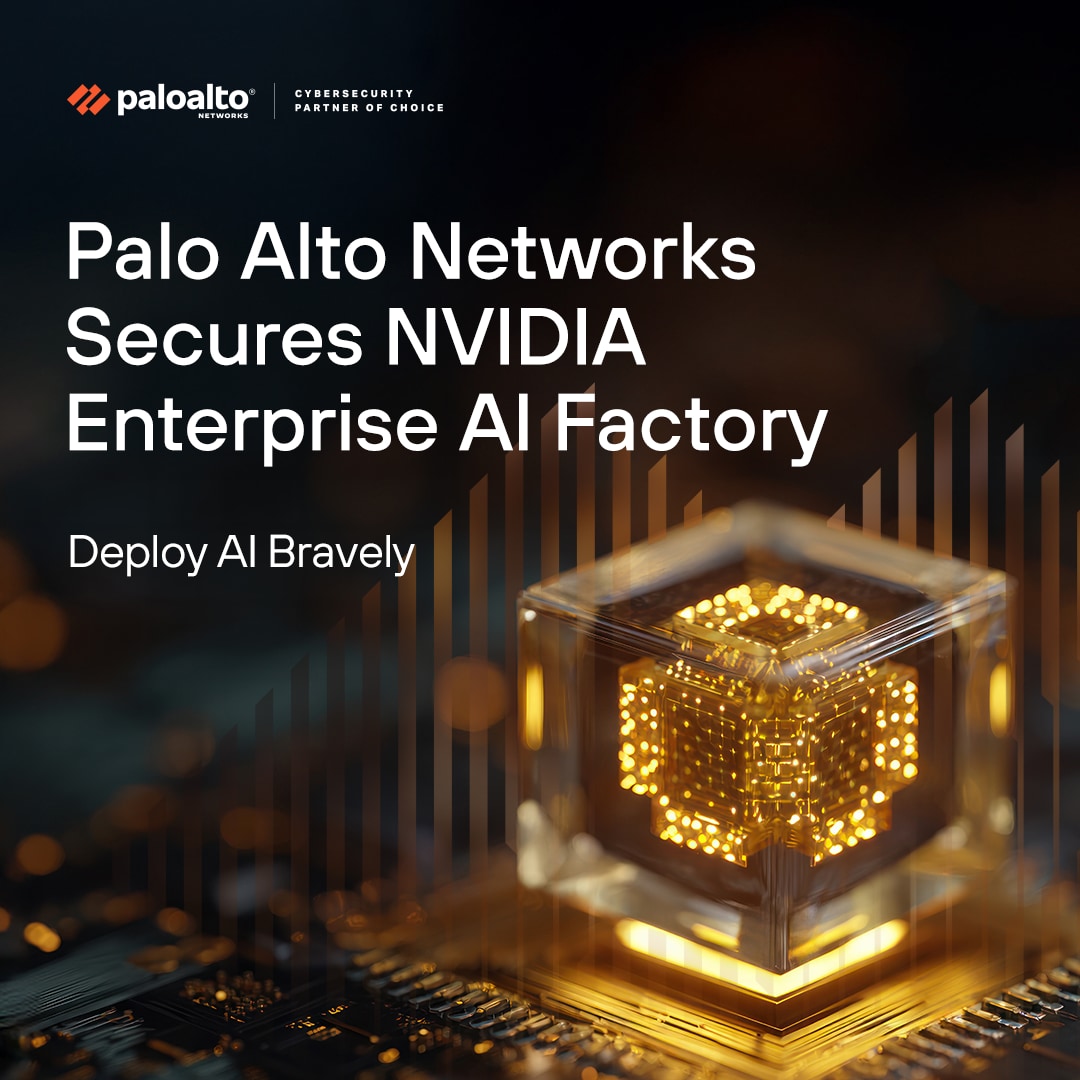
GRC for Security Managers: From Checklists to Influence

By: BHIS
27 January 2025 at 17:00

This webcast was originally aired on January 16, 2025. In this video, Kelli K. Tarala and CJ Cox discuss the challenges and strategies for improving governance, risk, and compliance (GRC) [โ€ฆ]

The post GRC for Security Managers: From Checklists to Influence appeared first on Black Hills Information Security, Inc..

Cyber Risk Lessons We Can Learn From Hurricane Preparedness

By: BHIS
14 November 2024 at 16:00

Risk is real. To better understand cybersecurity risk, letโ€™s compare cyber risks to risks in the natural world from hurricanes. We can learn lessons from hurricanes and unnamed storms in [โ€ฆ]

The post Cyber Risk Lessons We Can Learn From Hurricane Preparedness appeared first on Black Hills Information Security, Inc..

โŒ