Apple schroeft zijn plannen voor nieuwe gezondheidsfuncties terug, meldt Bloomberg. Het bedrijf was van plan een nieuwe AI-coach te introduceren, maar die plannen worden in de ijskast gezet. Sommige onderdelen van de coach verschijnen nog wel als losstaande functies.
Nvidia onderzoekt problemen met zijn gpu's, die beeldfouten en zwarte schermen veroorzaken tijdens het spelen van games. Volgens het bedrijf zijn die problemen begonnen na Windows 11-update KB5074109. De gpu-maker raadt gebruikers voorlopig aan die update te verwijderen.
De Belgische consumentenelektronicawinkelketen Krëfel wil vijf winkels sluiten en ongeveer 180 werknemers ontslaan. Het bedrijf zegt last te hebben van een moeilijke financiële situatie en een uitdagende markt.
De eerder aangekondigde Halo: Combat Evolved-remake komt naar verwachting deze zomer uit. Dat zegt The Verge-journalist Tom Warren op basis van bronnen. De nog niet aangekondigde Fallout 3-remake is ook nog in ontwikkeling, zeggen de bronnen.
Many modern attacks happen entirely inside the browser, leaving little evidence for traditional security tools. Keep Aware shows why EDR, email, and SASE miss browser-only attacks and how visibility changes prevention. [...]
De Nederlandse Rechtspraak is getroffen door een beveiligingsincident. Een woordvoerder van de Rechtspraak bevestigt dat aan Tweakers. Mogelijk zijn daarbij gegevens van werknemers gestolen, zoals namen en zakelijke contactgegevens.
It started with an email that looked boringly familiar: Apple logo, a clean layout, and a subject line designed to make the target’s stomach drop.
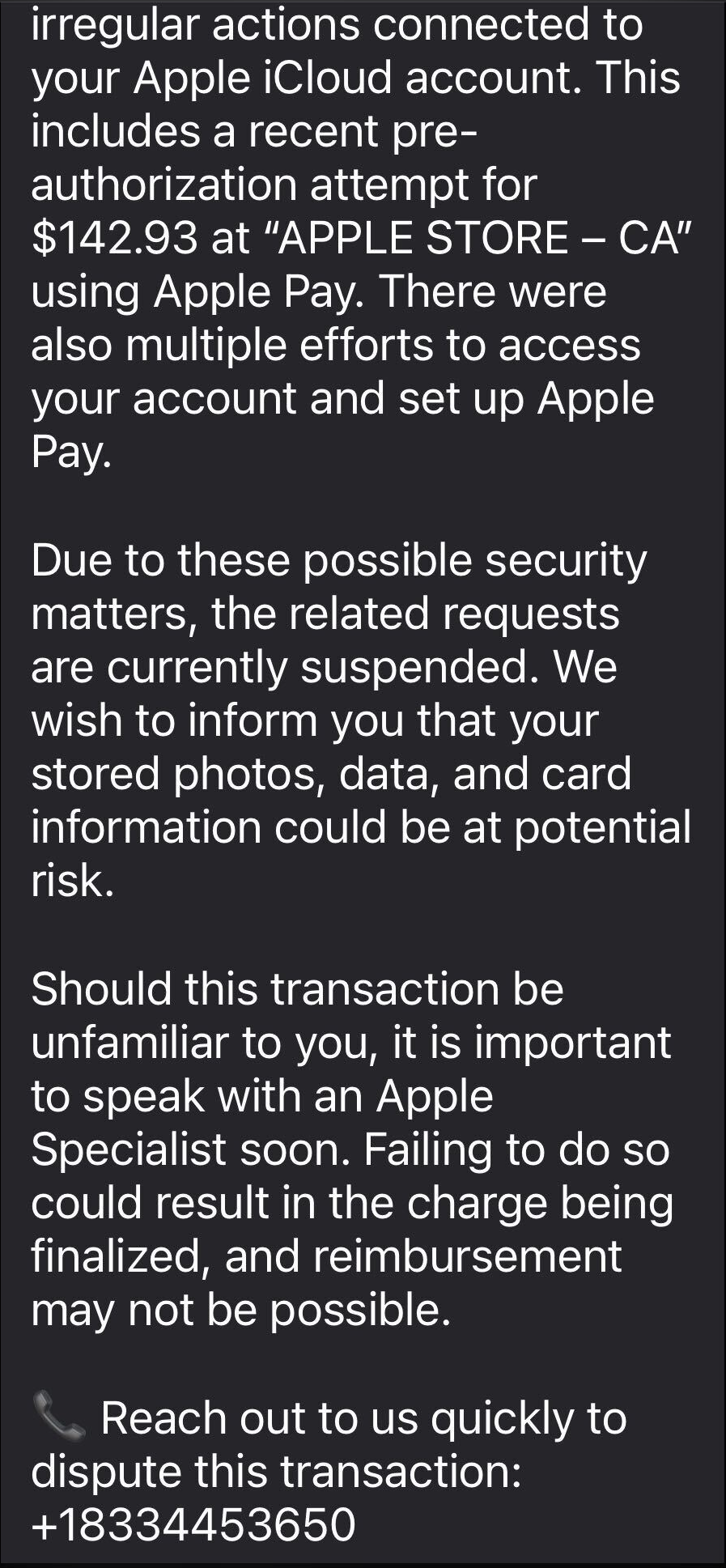
The message claimed Apple has stopped a high‑value Apple Pay charge at an Apple Store, complete with a case ID, timestamp, and a warning that the account could be at risk if the target doesn’t respond.
In some cases, there was even an “appointment” booked on their behalf to “review fraudulent activity,” plus a phone number they should call immediately if the time didn’t work. Nothing in the email screams amateur. The display name appears to be Apple, the formatting closely matches real receipts, and the language hits all the right anxiety buttons.
The email warns recipients not to Apple Pay until they’ve spoken to “Apple Billing & Fraud Prevention,” and it provides a phone number to call.
After dialing the number, an agent introduces himself as part of Apple’s fraud department and asks for details such as Apple ID verification codes or payment information.
The conversation is carefully scripted to establish trust. The agent explains that criminals attempted to use Apple Pay in a physical Apple Store and that the system “partially blocked” the transaction. To “fully secure” the account, he says, some details need to be verified.
The call starts with harmless‑sounding checks: your name, the last four digits of your phone number, what Apple devices you own, and so on.
Next comes a request to confirm the Apple ID email address. While the victim is looking it up, a real-looking Apple ID verification code arrives by text message.
The agent asks for this code, claiming it’s needed to confirm they’re speaking to the rightful account owner. In reality, the scammer is logging into the account in real time and using the code to bypass two-factor authentication.
Once the account is “confirmed,” the agent walks the victim through checking their bank and Apple Pay cards. They ask questions about bank accounts and suggest “temporarily securing” payment methods so criminals can’t exploit them while the “Apple team” investigates.
The entire support process is designed to steal login codes and payment data. At scale, campaigns like this work because Apple’s brand carries enormous trust, Apple Pay involves real money, and users have been trained to treat fraud alerts as urgent and to cooperate with “support” when they’re scared.
One example submitted to Malwarebytes Scam Guard showed an email claiming an Apple Gift Card purchase for $279.99 and urging the recipient to call a support number (1-812-955-6285).
Another user submitted a screenshot showing a fake “Invoice Receipt – Paid” styled to look like an Apple Store receipt for a 2025 MacBook Air 13-inch laptop with M4 chip priced at $1,157.07 and a phone number (1-805-476-8382) to call about this “unauthorized transaction.”
What you should know
Apple doesn’t set up fraud appointments through email. The company also doesn’t ask users to fix billing problems by calling numbers in unsolicited messages.
Closely inspect the sender’s address. In these cases, the email doesn’t come from an official Apple domain, even if the display name makes it seem legitimate.
Never share two-factor authentication (2FA) codes, SMS codes, or passwords with anyone, even if they claim to be from Apple.
Ignore unsolicited messages urging you to take immediate action. Always think and verify before you engage. Talk to someone you trust if you’re not sure.
Malwarebytes Scam Guard helped several users identify this type of scam. For those without a subscription, you can use Scam Guard in ChatGPT.
If you’ve already engaged with these Apple Pay scammers, it is important to:
Change the Apple ID password immediately from Settings or appleid.apple.com, not from any link provided by email or SMS.
Check active sessions, sign out of all devices, then sign back in only on devices you recognize and control.
Rotate your Apple ID password again if you see any new login alerts, and confirm 2FA is still enabled. If not, turn it on.
In Wallet, check every card for unfamiliar Apple Pay transactions and recent in-store or online charges. Monitor bank and credit card statements closely for the next few weeks and dispute any unknown transactions immediately.
Check if the primary email account tied to your Apple ID is yours, since control of that email can be used to take over accounts.
We don’t just report on scams—we help detect them
Cybersecurity risks should never spread beyond a headline. If something looks dodgy to you, check if it’s a scam using Malwarebytes Scam Guard, a feature of our mobile protection products. Submit a screenshot, paste suspicious content, or share a text or phone number, and we’ll tell you if it’s a scam or legit. Download Malwarebytes Mobile Security for iOS or Android and try it today!
OpenAI heeft GPT-5.3-Codex aangekondigd, een verbeterde versie van de programmeeragent. De 5.3-versie is tot 25 procent sneller en kan grotere taken aan dan de voorgaande versie. De nieuwe variant geeft ook meer updates tijdens het verwerken van opdrachten.
De ontwikkelomgevingen (ide's) van IntelliJ voor Linux gaan in de toekomst standaard gebruikmaken van Wayland. Het gaat om IntelliJ IDEA en andere op IntelliJ gebaseerde software, zoals Android Studio en WebStorm. X11 is momenteel nog de standaard, maar Wayland neemt die rol over. X11 blijft daarbij voorlopig wel ondersteund.
Michael suspects personal information he submitted to rent application platforms was leaked online. And analysis shows millions of documents may also be at risk
Michael* has spent the past two months trying to get his digital identity back.
The 47-year-old Victorian schoolteacher was in the process of moving to a new town and applying for rental properties online. Around this time – and unbeknown to him – his mobile phone number was transferred to someone else.
The European Commission said today that TikTok is facing a fine because its addictive features, including infinite scroll, autoplay, push notifications, and personalized recommendation systems, are breaching the EU's Digital Services Act (DSA). [...]
Outbound Email Security Matters for Deliverability and Routing. Especially for organizations that need to deliver a large set of emails, and frequently (Transactional Emails) regarding, for instance, transaction receipts and payment notifications.
De privacygerichte fotocloudopslagdienst Ente krijgt meerdere functies waardoor de app meer gaat lijken op populaire alternatieve fotodiensten zoals Google Foto's. Gebruikers kunnen voortaan reacties achterlaten, adminrollen toewijzen en albums downloaden. Ook is het instellingenmenu aangepast.
De Europese Commissie vindt dat TikTok te verslavend is voor gebruikers, bijvoorbeeld doordat ze 'oneindig kunnen scrollen'. De Commissie wil daarom dat TikTok hiermee stopt, maar het platform is hiertoe nog niet meteen verplicht.
An Illinois man pleaded guilty to hacking nearly 600 women's Snapchat accounts to steal nude photos that he kept, sold, or traded online, including accounts he compromised at the request of a former university track coach who was later convicted of sextortion. [...]
Gebruikers met een eigen website waarop Googles reCaptcha draait, moeten vanaf april hun privacybeleid aanpassen. Ze worden dan namelijk zelf verwerkingsverantwoordelijke, een cruciaal onderscheid in de AVG dat implicaties heeft voor hoe ze met persoonsgegevens om moeten gaan.
404Media is reporting that the FBI could not access a reporter’s iPhone because it had Lockdown Mode enabled:
The court record shows what devices and data the FBI was able to ultimately access, and which devices it could not, after raiding the home of the reporter, Hannah Natanson, in January as part of an investigation into leaks of classified information. It also provides rare insight into the apparent effectiveness of Lockdown Mode, or at least how effective it might be before the FBI may try other techniques to access the device.
“Because the iPhone was in Lockdown mode, CART could not extract that device,” the court record reads, referring to the FBI’s Computer Analysis Response Team, a unit focused on performing forensic analyses of seized devices. The document is written by the government, and is opposing the return of Natanson’s devices.
The FBI raided Natanson’s home as part of its investigation into government contractor Aurelio Perez-Lugones, who is charged with, among other things, retention of national defense information. The government believes Perez-Lugones was a source of Natanson’s, and provided her with various pieces of classified information. While executing a search warrant for his mobile phone, investigators reviewed Signal messages between Pere-Lugones and the reporter, the Department of Justice previously said.
Living off the AI isn’t a hypothetical but a natural continuation of the tradecraft we’ve all been defending against, now mapped onto assistants, agents, and MCP.
Other noteworthy stories that might have slipped under the radar: AT&T and Verizon response to Salt Typhoon, AI agents solve security challenges, man arrested in Poland for DDos Attacks.

 Login