❌

Normal view

In an age of AI, deciding what to trust is a foundational skill. Here’s how we’re helping educators teach it.

27 October 2026 at 19:30

Launching the expanded AI Classroom Toolkit with Cyberlite during Global Media and Information Literacy Week 

AI is opening new pathways to information, giving people faster access to answers, ideas, and knowledge. At the same time, it’s making it harder to know whether the content we see is authentic. 

Companies that build AI have a responsibility to make it reliable and trustworthy, and that responsibility doesn’t shift to the people who use it. But AI is already shaping how people search, learn, and encounter information. Helping people navigate that reality means building media and AI literacy (MAIL): the judgment to decide whether and how to use AI and what information to trust. These skills are as foundational as AI safety, and educators are asking for help teaching them. 

That’s why, during Global Media and Information Literacy Week, we’re launching the expanded AI Classroom Toolkit: Unlocking Generative AI Safely and Responsibly, created with the online safety organization Cyberlite. It’s part of Microsoft’s broader commitment to make sure AI strengthens human thinking rather than replaces it. It also reflects Microsoft’s focus on education and empowerment, a core pillar of our Safe Participation Framework. 

Title slide: "Classroom Toolkit – Unlocking Generative AI Safely and Responsibly, 2026 Edition," with Microsoft and Cyberlite logos.

What’s new in the AI Classroom Toolkit

The expanded toolkit adds a deeper focus on critical thinking, verification, and media and AI literacy, helping students judge AI outputs and make informed decisions about what to trust online. Together with the original modules, it’s now a single, classroom-ready resource that covers the core of AI safety and literacy. Realistic, scenario-based lessons and activities help students practice these skills in situations they may encounter online: 

  • The Climate Campaign: Gina enters an online challenge to make a campaign for a cause she cares about and finds that some winning entries use AI to show events that never happened. Students sort a feed of real and AI-made posts and practice lateral reading. The lesson: whether a post was made with AI doesn’t decide whether it’s trustworthy. What it claims, and who is behind it, does. 
  • The Helpful Bot: Alex creates an AI help bot inside his online game, then catches it inventing details and collecting players’ personal information. Students learn why AI can get things wrong, how to trace claims to reliable sources, and why they’re responsible for AI-generated content they act on or share. 
  • What Kind of AI User Are You?: An interactive quiz, hosted by Cyberlite, helps students identify their AI habits, strengths, and potential blind spots, and gives them an AI Type to reflect on and discuss. 

“When we created the first Classroom Toolkit: Unlocking Generative AI Safely and Responsibly with Microsoft in 2023, most of the conversation was about using AI safely. Today, the questions young people ask about AI have grown sharper and more personal, like what to believe online or how far to trust a chatbot’s answer,” said Michelle Yao, cofounder of Cyberlite. 

The toolkit also reflects what young people in our co-design sessions with Cyberlite told us: they want to learn by doing, through games, real-life scenarios, and peer discussion. Teachers don’t need to be AI experts, and students don’t need an AI tool in hand to start. 

That approach builds on the reach and results of the original toolkit. Since 2023, the first version has reached educators in 10 countries and 11 languages, including through government and partner learning platforms. In South Korea, 93% of participating educators reported improved knowledge and understanding of ethical issues, privacy, and bias related to AI. 

“Our hope is that every student leaves a little surer of their own judgment, and that everyone feels more confident deciding how AI fits into their lives,” said Yao. 

Section 2 title slide: "Gina's Fight for the Ocean," with an illustration of a young woman wearing a "Skip Straws" T-shirt.

Literacy works alongside product design and policy

Education is one part of the equation. Our commitment to media and AI literacy also shows up in how we design products and the policies we support.  

Last month, we set out five principles for AI in education, including “AI designed to support students’ learning, not replace their thinking.” We also committed to enforceable privacy, safety, and transparency protections for qualifying educational AI products in US school districts. These protections help schools and families understand how these tools work and the controls available to them. 

Media and AI literacy is now a global priority

The Organisation for Economic Co-operation and Development has released a framework for a MAIL assessment beginning in 2029. As part of its Programme for International Student Assessment (PISA), it will examine how students reflect on, analyze, and evaluate information, including AI-generated information. This week in New Delhi, UNESCO is also launching an AI extension of its “Think Critically, Click Wisely” global curriculum, which Microsoft advised on. 

This growing global focus makes the need for support urgent—educators want help, and many aren’t getting it. In Microsoft’s 2026 AI in Education report, 53% of educators and 77% of students say they haven’t had AI training.  

Closing this skills gap matters beyond the classroom. Healthy societies depend on a shared basis of facts, informed public debate, and confident civic participation. As authenticity gets harder to judge, there’s a risk that people start doubting everything, creating what the Digital Inquiry Group calls a “dangerous declaration of permanent uncertainty.” MAIL offers a way through. It builds the confidence to decide what to trust. 

Media and AI literacy for every age

Across Microsoft, we’re helping people build these skills wherever they learn and find information: 

  • In classrooms: Students debate whether to accept, question, or rework an AI tool’s answers in an AI and Critical Thinking lesson from The Economist Educational Foundation, supported by Microsoft. Available alongside other media literacy lessons in Microsoft Learning Zone, the lesson has reached students in 116 countries. 
  • For content creators: UNESCO, with Microsoft’s support, is developing resources to help creator associations train their members in MAIL and is testing them with creators in Nairobi this week.  
  • In our products: Search Progress, built with input from the Digital Inquiry Group, turns research assignments into source-checking practice in Microsoft Teams for Education. 

What’s next 

Through Microsoft Elevate for Educators and local partners, we’ll bring the AI Classroom Toolkit to new audiences, with more languages and localized content rolling out through 2027. We’ll keep evolving it as technology and educators’ needs change. 

Explore the toolkit and supporting resources for educators today.  

AI will keep changing how people find information and the content they encounter. Our goal is to help people meet that change with confident, informed judgment about the AI they use and the information they trust so they can fully take part in civic and democratic life. 

The post In an age of AI, deciding what to trust is a foundational skill. Here’s how we’re helping educators teach it. appeared first on Microsoft On the Issues.

Learning Curves: The future of education, from classrooms to careers, in an AI-driven world

26 October 2026 at 16:00

The rapid diffusion of AI globally and the pace at which AI is developing put us at a societal crossroads. The choices we’re making now will determine who has access to AI and the opportunity it affords. There is perhaps no more important tool than our education systems for addressing the uneven diffusion of AI we’re seeing currently: national adoption runs above 70% in countries such as the United Arab Emirates and falls to low single digits across much of sub-Saharan Africa, close to a tenfold difference. 

The way we teach AI and learn with it will have long-lasting impacts on jobs, the workforce, and our broader economy. Learning Curves: Rethinking Education from Classrooms to Careers in an AI-Driven World is a collection of research-driven essays that can help guide those choices. This book brings together the body of work from the second cohort of Senior Fellows from the Microsoft AI Economy Institute (AIEI), a flagship think tank that produces research and convenes experts to generate insights into how AI is reshaping work, education, and the broader economy. 

In Learning Curves, researchers consider how AI is reshaping the earliest stages of learning and work, from K–12 classrooms and community and technical colleges to college‑to‑work transitions and entry‑level jobs, and what it will take for that transformation to widen opportunity rather than deepen divides across institutions, communities, and countries.  

Below, I share a few of my own reflections that informed my contributions to Learning Curves, a collaborative effort that wouldn’t have been possible without the truly talented, diverse cohort of researchers who contributed to this book.  

The good, the bad, and the ugly: Laying the foundation for AI in K–12 classrooms

Before delving into the specifics of how to incorporate AI in classrooms, we need to ask ourselves whether we’re teaching for knowledge, or for learning.  

The book, the calculator, the personal computer, the internet, the search engine, and the smartphone all arrived in classrooms carrying real promise alongside the worry that they would hollow out young minds. Usually the truth landed somewhere in between, and where it landed depended less on the tool than on the choices the adults made about how to use it. 

The fact is that the AI-native generation is already here, and its members are in classrooms around the world. More than half of US teenagers already use AI chatbots for schoolwork. I’ve personally seen the promise of AI as a force for good in education up close in my own classroom, where I teach a computer science class to elementary school students.  

But of course, the good is only part of the story. We can’t shy away from the downsides of incorporating AI into classrooms. While AI can help with accessibility and individualized learning, it can also create over–reliance, contribute to student cheating, or prevent students from recognizing when information may be false. 

The rapid deployment of AI in K–12 classrooms needs to come with a sober assessment of how that technology impacts all students. This assessment must go beyond the technology itself to encompass how students, teachers, parents, and society use AI.   

AI literacy is only part of the solution

If classrooms are where students learn how to think, teachers are the conduit through which this learning happens. In Learning Curves, Joseph Orero, Senior Researcher in AI at Strathmore University’s School of Computing and Engineering Science, posits that teachers aren’t resistant to AI in classrooms; they just need proper training to help them adequately adapt and teach their students critical skills. His research contribution explores game-based learning with AI-enabled African languages. 

AI usage and adoption worldwide are also dependent on accessibility. Another chapter of the book looks at barriers and opportunities in Arabic education and finds that the primary barrier teachers encountered when introducing AI writing assistants into classrooms was Arabic digital literacy, particularly students’ typing ability.  

Researchers often circled around a similar theme: there is no one-size-fits-all approach to developing AI competency; instead, such an approach must be sensitive to local knowledge and contextualized teaching and learning practices. This means that teachers, in turn, must have training that makes sense for the unique contexts in which their students are learning.  

Frank Nagle, now Microsoft’s Chief AI Economist, Sarah Rodriguez, Associate Professor of Engineering Education at Virginia Tech, and other researchers in Learning Curves make the case that, in many ways, nontraditional pathways such as apprenticeships and two-year-degree programs, particularly those that are virtual, are more nimble and thus better able to adapt their curricula to the rapidly changing field of AI.  

AI Is taught in the classroom, but then what?

Education has never been about simply preparing people for the future of work so they can thrive in the labor market. When considered holistically, it is about teaching students not what to think but how to think. In our AI era, education is one of the core institutions through which the future of work will be built, distributed, and made more (or less) equitable. Successful AI integration remains human-centered by focusing on organizational change, durable human skills like empathy and judgment, strong employer partnerships, and learner needs. 

As research from Laura Nuriski, Head of Program on the Future of Work at the Centre for European Policy Studies (CEPS), highlights, access to AI alone does not ensure successful integration. Technology transfer, data infrastructure, organizational readiness, and a human-centered approach to building and deploying AI are also key indicators of success.  

Whether we’re talking about the classroom or the boardroom, it’s worth keeping in mind that AI tends to do the most good when it strengthens human capability and the most harm when it substitutes for it. That holds as true in a fourth- grade reading lesson as in a software team or a hospital ward. 

The children in our schools deserve tools that serve their learning rather than stand in for it, and that is within our power to provide. Our most successful future with AI will be one that is human-centered, inclusive, and designed to help people thrive. 

The post Learning Curves: The future of education, from classrooms to careers, in an AI-driven world appeared first on Microsoft On the Issues.

Closing the Cyber Skills Gap with 300 Academic Partnerships

23 October 2026 at 15:01

How 300 Academic Partnerships Are Helping Close the Cyber Skills Gap Check Point’s SecureAcademy has reached 300 academic partnerships across more than 80 countries, connecting educational institutions with industry-aligned cyber security training and resources. While the milestone reflects the program’s continued growth, it also highlights a broader shift: educational institutions are increasingly looking for ways to align cyber security education with the skills employers need today. Turning Classrooms into Career Pathways Organizations worldwide continue to face a shortage of cyber security professionals, while educational institutions are under pressure to keep pace with rapidly evolving technologies and threats. Through SecureAcademy, institutions […]

The post Closing the Cyber Skills Gap with 300 Academic Partnerships appeared first on Check Point Blog.

Expanding AI literacy with the Public Library Association and community-based programs

22 October 2026 at 16:00

The people and institutions closest to a community understand their needs best. Libraries, small businesses, nonprofits, and schools see firsthand where AI can create opportunity and where people need support to navigate change. At Microsoft, our role is to help these trusted institutions lead by providing practical resources, training, and clear safeguards that strengthen local capacity and put communities at the center of AI literacy and adoption. 

Public libraries have served as trusted centers of community learning across the United States for generations. Today, we are announcing a new initiative with the Public Library Association, a division of the American Library Association, to expand resources and no-cost AI literacy and skills training for public library workers and their patrons.  

This work delivers on the commitment we made earlier this year through our Community-First AI Infrastructure initiative: to expand access to AI learning and opportunity by investing directly in local training. We’re committed to neighborhood learning through libraries, free literacy training, and certification opportunities, age-appropriate learning in schools and colleges, and support for nonprofit and small-business workforces. This new library initiative is the latest example of our broader work to help trusted local institutions serve as entry points for AI learning, skills development, and opportunity. This program comes alongside small business accelerator programs in TechSpark, our new Elevate for Changemakers platform connecting nonprofits to resources, and our ongoing national and statewide work to bring safe and responsible AI to education. 

Illustration of the Microsoft logo with arrows pointing to four icons labeled Libraries, Schools, Nonprofits and Small Businesses, above a banner reading "AI Literacy."

Local libraries lead AI learning in their communities 

The Public Library Association AI literacy initiative we are announcing today, Building AI Skills and Agency Through Libraries, is designed to build practical skills, critical awareness, and the judgment to use AI safely and appropriately. It will pair Microsoft’s AI skilling resources with PLA’s national network of expert practitioners to support library workers and community patrons as they navigate this rapidly evolving technology.  

The initiative will expand practical resources and training for library workers, create opportunities to learn from one another through a Community of Practice, and offer free webinars and guidance to support their work with patrons.  

Library workers help people navigate information, find learning resources, and make informed decisions for themselves and their families. Supporting those workers is a practical way to bring AI learning closer to people, while respecting the independence of the institutions they trust. 

The approach reflects a broader view of AI literacy: people need more than instructions for using AI tools; they also need the knowledge and judgment to decide whether, when and how those tools should be used. The training will help library workers and patrons understand how AI works and expand their skills, while also evaluating potential risks, protecting personal and confidential information, critically evaluating AI-generated claims and sources, and better understanding considerations related to safety and bias.   

Equipping trusted local institutions to lead responsible AI adoption 

Last July, we launched Microsoft Elevate, a company-wide initiative that brings together our work to help people and institutions build the skills and capacity to navigate AI responsibly. Under the Elevate charter, each year, Microsoft supports nearly one million nonprofit organizations and education systems worldwide with technology, training, grants and discounts. Microsoft Elevate for Educators, our global community of over 100,000 teachers and school leaders, recently recognized our inaugural group of 20 Beacon Schools and School Systems that are leading examples of AI transformation in education, bringing together effective AI practices while keeping educators and students first. They are powerful examples of what happens when you combine committed educators, AI-powered technology, and intentional, no-cost staff training.

In Washington, our Elevate commitment has included a $3 million, two-year investment supporting 10 school districts and 10 community and technical colleges with grants, coaching, and communities of practice. To date, the initiative has reached 29,375 educators, with early pilots in Kennewick and Everett helping teachers explore practical uses of AI while keeping professional judgment at the center. 

Skills and access must be matched by strong safeguards. In September, Microsoft joined the American Federation of Teachers to establish a national AI Safety & Privacy Standard for Schools, with enforceable protections for student and educator data, human oversight, and transparency for families. Beginning November 1, every US school district can request Microsoft to add these protections to a new or existing agreement, without waiting for renewal or renegotiation. 

That same commitment extends to nonprofit staff and leaders. The Elevate for Changemakers program has already supported over 18,000 learners, helping them build practical AI skills, connect with peers, and earn recognition for turning learning into tangible outcomes for their organizations. And today we are expanding the program and introducing a new, connected experience that brings training, resources, and community together.  

Together, these efforts reflect a simple principle: responsible adoption requires more than technology. Educators, nonprofit changemakers, and community leaders need time, training, trusted connections, practical support, and clear guardrails so they can decide when AI strengthens learning and, equally important, when it does not. 

Investing in locally led economic opportunity across all 50 states

For nearly a decade, Microsoft has partnered with local nonprofits and small businesses across the U.S. through our TechSpark program. 

Through Fellows grants, TechSpark pairs local expertise with Microsoft coaching and a national peer network to help nonprofits expand their impact in their local community and drive accelerated innovation for local small businesses. Today, Microsoft is announcing the new 2027 TechSpark Fellows across all 50 states and releasing the 2026 Fellows Impact Report showing what a locally led model can make possible.  

YouTube Video

Over the last three years, the Fellows cumulatively report access to more than $298 million in community funding, 59,600 people trained and upskilled in AI literacy, and more than 1,500 nonprofit partners mobilized to advance their missions within their communities. These numbers tell an important story: no single organization can create lasting opportunity on its own, and local context matters.  

In Virginia, Rosie Riveters Executive Director Brittany Greer is showing what it looks like to build the human capabilities that innovation requires. Through hands-on STEM experiences, students build, test, and troubleshoot to develop the critical thinking, persistence, and independent judgment they will need to use AI thoughtfully. Her work is the kind of learning these partnerships are designed to strengthen.  

Community institutions know their neighbors, understand the barriers they face, and are best positioned to decide how new resources can serve them. 

An ongoing journey

The thread connecting a library worker, a job seeker, a TechSpark Fellow, and a teacher is not a particular product. It is the ability to make informed decisions with support from people and institutions they trust. Our responsibility is to make that support more useful, accessible, and human-centered, while being candid about what we have yet to learn. 

As we navigate the rapid pace of innovation in this AI era, our aim is not simply to bring AI into more places. It is to help people retain a stronger voice in what happens next, in their workplaces, their classrooms, and their communities. 

The post Expanding AI literacy with the Public Library Association and community-based programs appeared first on Microsoft On the Issues.

“Cybersecurity. Entry Level”: a free course for university students taught by Kaspersky experts | Kaspersky official blog

30 September 2026 at 17:11

You can find plenty of stories online from students in technical fields sharing their worries about school and their career path. One computer engineering student complained about the lack of hands-on experience, saying he was so used to learning theory that he had no idea how to apply it at work. Another student, a sophomore in mechanical engineering, worried that he hadn’t picked up any of the practical skills employers actually want, and joking that McDonald’s is the only place he’ll be able to get a job.

Students, especially those at technical universities, often don’t see the practical value in what they’re learning. As a result, many don’t know what to do next or how to find a job. Here’s a look at where that anxiety comes from, what steps can help overcome it, and why knowing the basics of cybersecurity can come in handy for anyone starting out in a technical field.

Where the anxiety comes from, and what to do about it

The most important thing to know about the fear of not living up to your potential is that it’s completely normal to feel it. American clinical psychologist, Meg Jay, in her book The Defining Decade: Why Your Twenties Matter — And How to Make the Most of Them Now, argues that the years between 20 and 30 are some of the toughest. A person not only runs into their first, often unsuccessful, work experiences and makes bad decisions (“many firsts and worsts”), but also feels unsure of themselves. Reasons may vary. For example, according to Harvard’s Making Caring Common project, 34% of young people aged 18–25 reported feeling lonely, while 58% said they felt their lives lacked “meaning or purpose”. Half of respondents said not knowing what to do with their lives was hurting their mental wellbeing.

That said, Meg Jay writes that this decade plays a key role, since it’s when people make 80% of their major life decisions. According to the psychologist, many young people believe they need to work out what to do with their lives before they can start taking action. Jay, however, disagrees with this approach. She offers the concept of identity capital: the combination of education, work experience, skills, and connections that makes young people valuable professionals. Even without full confidence in a career choice, taking small steps like applying for an internship or taking an extra course can help build a meaningful path for professional growth. On top of that, it’s important for young people to figure out what they enjoy doing, what they’re good at, what the world needs, and, of course, what people are willing to pay them for.

Which skills are sure to come in handy

The concept of identity capital is especially relevant for students in technical fields. According to the World Economic Forum, an average of 39% of workers’ current skills will be transformed or become outdated by 2030. That’s why one should not only stick to one’s chosen field of study, but also build skills in adjacent fields. The same report highlights fast-growing areas like AI, big data, computer literacy, and cybersecurity. Cybersecurity, among others, has its own advantages.

Experts note that the digital landscape is changing rapidly, and cybercriminals are taking advantage of this. Indeed, a recent study of ours found that more than half (56%) of internet users encountered scams or phishing over the past year, and the attacks themselves have become more frequent. In 2025, Kaspersky solutions detected an average of half-a-million new malicious files per day, which is 7% more than the year before.

Human error remains a leading cause of security incidents. For this reason, employers want to make sure all their staff have at least a basic knowledge of cybersecurity: it lowers risk and reduces the cost of dealing with incidents. Knowing the basics of cybersecurity is becoming not just a competitive advantage, but also an integral part of training for professionals in every technical field.

For students, a basic understanding of cybersecurity opens the door to professional development in a wide range of consulting roles. Such professions are quite widespread — especially among young professionals with modest work experience. Against the backdrop of an acute shortage of cybersecurity professionals, these consulting services are in high demand, which is a good sign for graduates with some level of cybersecurity in their background.

The cybersecurity knowledge and practical skills of the specialists of the future are of great importance for their potential employers. For these businesses, a cyber-savvy workforce reduces the need for expensive third-party cybersecurity consultants. Even professionals who lack dedicated technical training but have reasonable digital literacy can significantly reduce the risks of security incidents — in particular in cases involving human error.

Pavel Laskov, Professor for Data and Application Security at the University of Liechtenstein

What’s more, the spread of digital resilience skills benefits not only employers, but also employees themselves: learning the basics of cybersecurity helps develop systems thinking and the ability to see the elements of a structure not as disconnected objects but as a unified whole. It also allows professionals to work across different roles and protect their personal and work data from scammers.

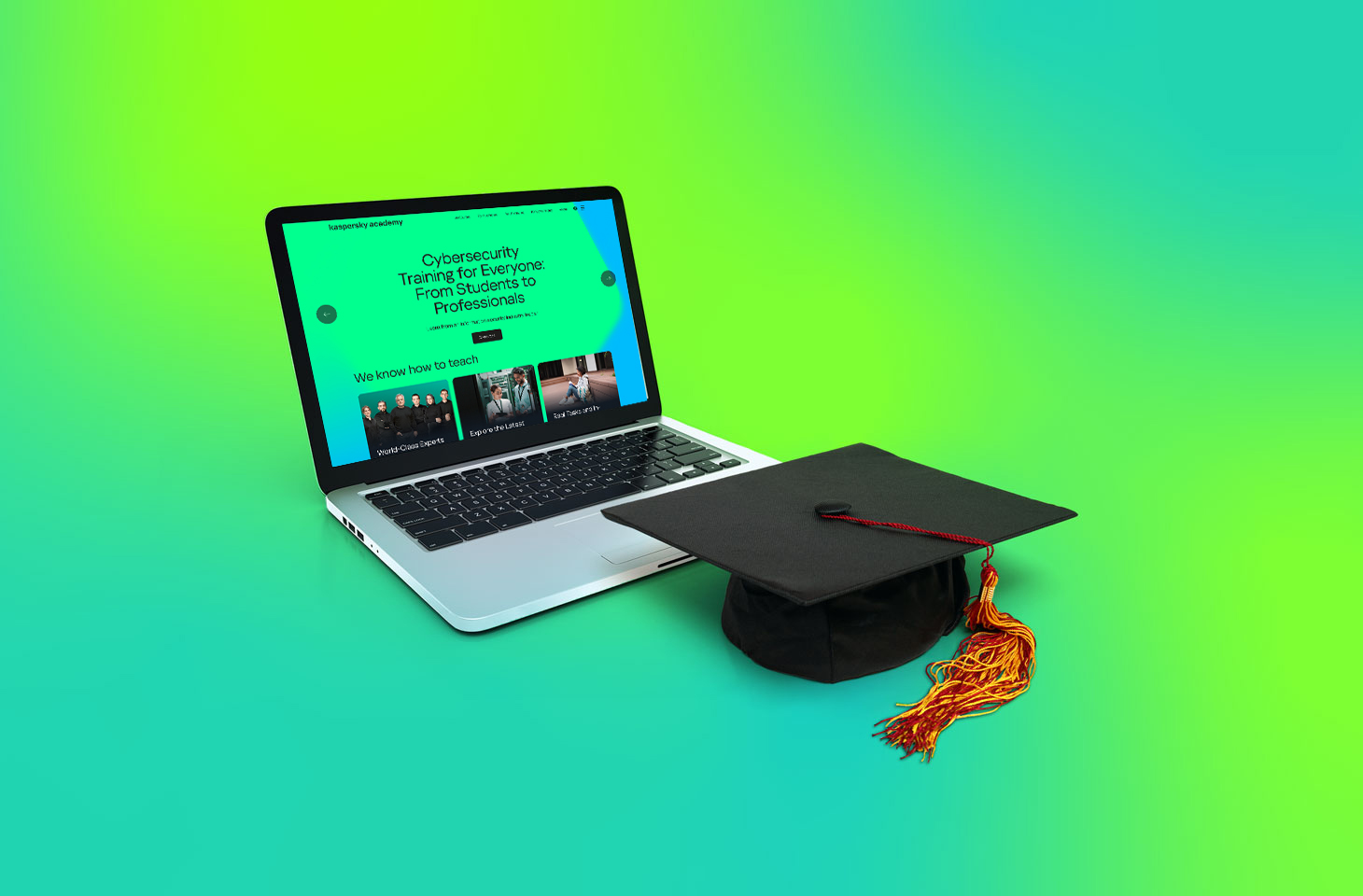
With that in mind, a logical step toward building your identity capital could be Kaspersky Academy’s free online course Cybersecurity. Entry Level. The course is designed for first and second-year students at colleges and universities. It helps them understand what cybersecurity is, what tools cybercriminals use, what fields and specialties information-security professionals work in, and what the future holds for the industry and those working in it.

The program was recently expanded with a new module, Security by Design, which covers information-security architecture and design of inherently secure systems.

Kaspersky’s leading experts cover every topic in the course in plain, easy-to-follow language with examples, so students get a comprehensive view of cybersecurity straight from practitioners. The course lasts one month, and students who pass the final test receive a Kaspersky Academy certificate.

The main goal of the course is to raise students’ awareness of cybersecurity, and teach them how to protect themselves against the most common types of cyber-incidents. During the course, students will gain knowledge and skills that will serve them well — no matter what field of study they choose.

The course is available as video lessons on the Kaspersky Academy learning platform. To get access to the course, submit a request on the program’s website providing your academic email address (with a university or college domain).

Educational institutions can easily integrate the course into their curriculum: it’s available in SCORM — a standard e-learning format — to institutions that join our Kaspersky Academy Alliance partner program.

Getting AI for schoolwork right: 25 helpful prompts + usage tips | Kaspersky official blog

2 September 2026 at 15:40

Artificial intelligence has gone from a technological novelty to a tool so ordinary that kids in elementary school are already using it. Trying to ban children from using AI at this point makes about as much sense as it once did to ban search engines or Wikipedia.

Today we’re breaking down how chatbots actually work, and how to teach your kid to use AI as a study aid rather than a substitute for thinking for themselves

Explain to your child (and yourself) how AI works

Before explaining anything about artificial intelligence to your child, it helps to understand how it actually works and where its limits are.

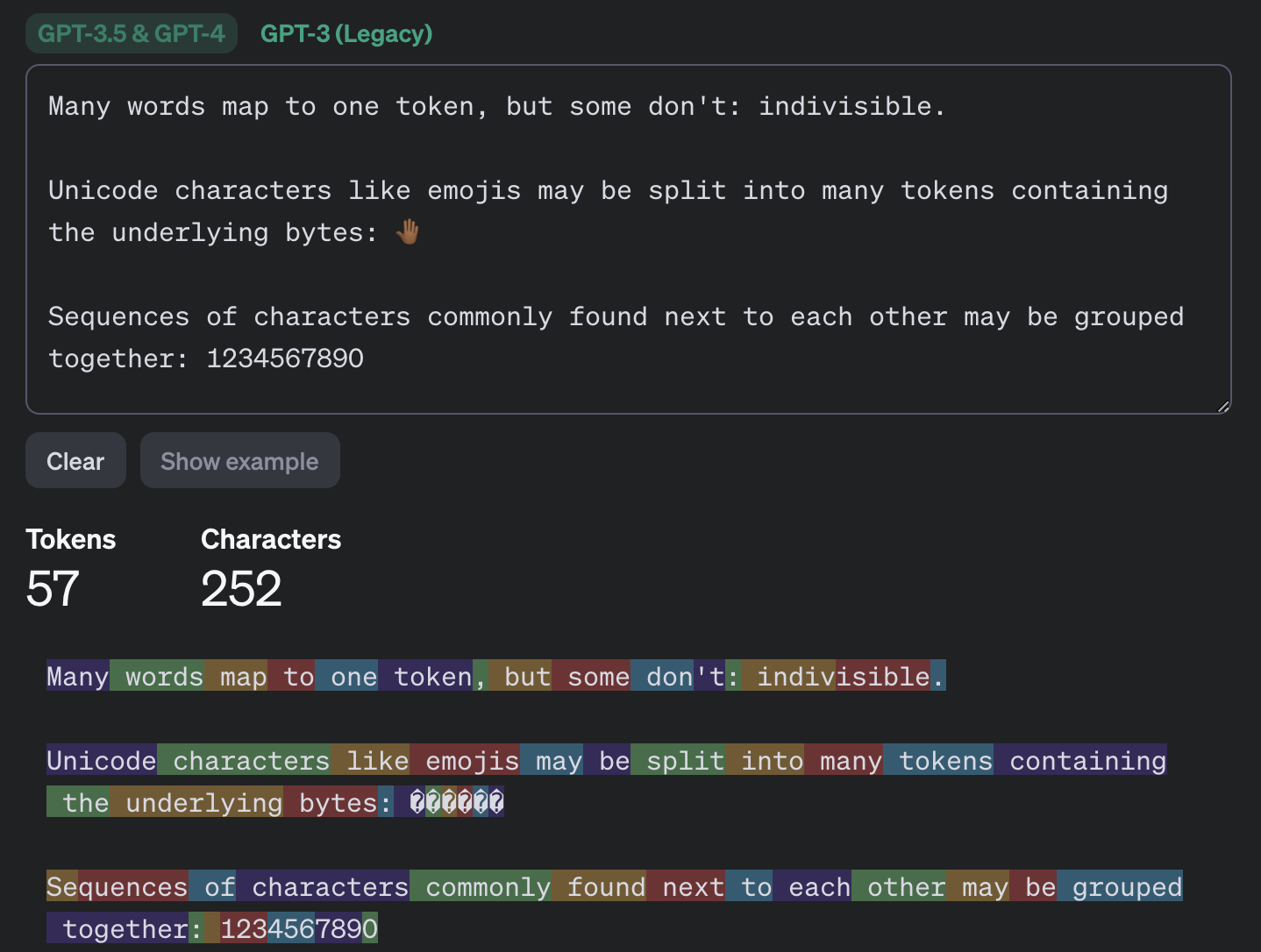
Most of the popular chatbots that kids (as well as adults) use are what’s known as large language models, or LLMs. To build such a model, researchers train it to spot patterns across huge amounts of text. The model breaks text down into small units called tokens (each token can be a sequence of words, a punctuation mark, a single word or character, or a whole sentence), then predicts which token is most likely to come next.

An example of how GPT-3.5 and GPT-4 break text into tokens

This example shows how the GPT-3.5 and GPT-4 models split messages into tokens. Source

The same thing happens when a chatbot converses with a person. A language model doesn’t actually reason on its own. It’s calculating which words and phrases are most likely to follow one another in order to produce a response that fits your query. That means chatbots will sometimes give incomplete or flat-out wrong answers, no matter how often they’re updated or retrained. A vivid example: just two years ago, popular chatbots confidently assured users that the word “strawberry” has two letters “r” instead of three. Mistakes like these are commonly known as hallucinations.

Many chatbots can also search the internet for information. In that case, the AI pulls in data from an outside source, but it still uses its own internal algorithms to put the answer together. And search results themselves can include outdated posts, advertising content, tabloids, and other questionable sources.

How to help your child use AI wisely

Talk to them about how AI can get things wrong

We’ve already seen that artificial intelligence isn’t immune to errors. Unfortunately, hallucinations aren’t the only issue. Even when a chatbot is working from accurate information, it can still present it in a misleading way by leaving something out, putting the emphasis in the wrong place, or drawing a questionable conclusion. Sometimes the result depends on factors a user would never think to consider when asking a question.

One surprising factor is simply what language you’re using. Most of the data that major models are trained on is in English, so these systems tend to perform better in English. The same AI model might answer a question correctly in English but get it wrong when asked the exact same thing in, say, Serbian. This gap shows up most in fields such as science, medicine, technology, and law, where there’s simply far more high-quality English-language material for the model to draw on.

Another quirk of chatbots is that they get worse as you feed them more information. Studies show that the more text and data a model has to work with, the harder it is for it to keep track of details, connect information from different parts of a conversation, and answer questions that require real depth of understanding. Therefore, uploading an entire book to a chatbot and asking detailed questions about it is a surefire way to trigger hallucinations.

It’s also worth questioning not just what the AI tells you, but the way you ask your questions in the first place. Chatbots often try to please the user, and will shape their answer to match the user’s apparent point of view. For example, the same chatbot might give opposite answers to “Why is the Earth overpopulated?” and “Why isn’t the Earth overpopulated?”, each time building its response around the assumption baked into the question. One recent study found that even the most advanced language models failed to challenge false premises in 26–42% of cases.

Let AI help with learning, not do the learning

Many a former student knows that copying others’ work is an art unto itself — one that takes exceptional skill and at least some engagement with the material (sometimes even a fair amount). These days, unfortunately, even that skill is at risk of disappearing: the temptation to copy an answer that took only a few seconds to generate is simply too strong. But chatbots are far from straight-A students themselves.

In one study, researchers had three popular chatbots sit a chemistry exam, and compared their scores to those of real students from 2009–2023. The students came out ahead. Chatbots will sometimes land on the correct answer, but arrive at it via a chain of flawed reasoning, so their answers could just as easily be wrong.

So it’s worth explaining to your child that having AI write essays from scratch, or solve equations without then double-checking them, is a dead end. On top of that, in a real job they’ll be judged on actual skills and knowledge, and chatbots won’t help them fake the expertise. What AI can genuinely help with, without getting in the way of learning, is explaining difficult topics and working through mistakes. Here are some examples:

If a topic is hard to make sense of

  • “Explain this topic in simple terms: {insert topic}”
  • “Explain this topic using a real-life example: {insert topic}“
  • “Here’s the part I don’t understand: {insert text}. Walk me through it step by step”
  • “Explain this topic in simple terms first, then in more technical terms: {insert topic}“
  • “Here’s a question: {insert question}. Don’t give me the answer. Ask me guiding questions so I can work it out myself”

Math and other exact sciences

  • “Give me a hint for the first step, but don’t solve the whole problem: {insert problem}“
  • “Look at my solution and tell me where I made a mistake, but don’t fix it for me: {insert problem and solution}“
  • “Come up with a similar problem for me to try: {insert problem}“
  • “Here’s my answer: {answer}. Ask me questions so I can check whether I solved it correctly”
  • “Explain why this formula applies here: {insert problem}“

Essays and written assignments

  • “Ask me five questions on this topic so I can come up with my own thesis and arguments: {insert topic}“
  • “Here’s a draft of my essay. Try to find gaps in my logic or places that need more detail: {insert draft text}“
  • “Look at my essay outline and tell me what’s missing: {insert essay outline}”
  • “Point out places in my writing where the idea isn’t clear, but don’t rewrite it for me: {insert text}“
  • “Pretend you’re an experienced teacher and try challenging my argument: {insert text}“

Language learning

  • “Have a conversation with me in {insert language} at an A2 level. After I respond, correct my mistakes”
  • “Give me five sentences to translate using this grammar structure: {insert grammar structure}“
  • “Explain this grammar rule and give me some examples: {insert grammar rule}“
  • “I’ll write a sentence, and you tell me if it has a mistake. Give me a hint first, and only show me the correct version after my second attempt. {insert sentence}“
  • “Write a short dialogue in {insert language} where I have to answer as one of the characters”

Knowledge testing

  • “Quiz me with 20 questions on this topic: {insert topic}. Ask one question at a time, and don’t show the answer right away”
  • “After each answer, only explain what I got wrong”
  • “Start with five easy questions, then ask five hard ones”
  • “Make the questions harder each time I answer correctly”
  • “Based on my mistakes, tell me which topics I should review”

Fact-check AI responses together

Make sure your child understands that they shouldn’t blindly trust what a chatbot tells them — even when it cites other sources. And asking the same chatbot to double-check its own work isn’t a great idea either; there’s a real chance it will make the same mistakes twice, or even pile up the errors.

Take any chatbot answer and go through it together, breaking it down into individual statements and asking questions about each one. Where did that date or number come from? Is the AI citing a specific person, publication, or study? Is the quote actually something that person said? If the chatbot includes a link, open it and check how accurately the AI actually represented it.

While you’re at it, take a look at the quality of the source itself. If something is written in an overly emotional tone or makes bold claims without backing them up, that’s a good sign to look for information somewhere else.

Protect your child and their accounts

Anything your child shares with a chatbot ends up on that company’s servers, and it’s used to further train the model by default. Over the past few years we’ve seen that even the biggest companies aren’t immune to bugs and data leaks. To lower the risk of your child’s information leaking and to keep their account secure, follow a few simple rules:

  • Make sure your child understands that AI isn’t a private diary. Tell them not to share their name, home address, school, or any other sensitive information with a chatbot.
  • Adjust the chatbot’s privacy settings. At the very least, turn off memory and any “improve the model” or training features. It’s also worth reading our detailed guides on setting up privacy and security in ChatGPT and DeepSeek.
  • Update the password. Most chatbots require an account, so to keep your child’s from being hacked, set a strong password that isn’t reused anywhere else. Whether your child’s password follows the classic “mother’s maiden name plus birth year” formula or uses popular meme words like “skibidi”, we have some bad news: passwords like these get cracked really fast. Instead of coming up with and memorizing passwords, it’s better to let an encrypted password manager generate and store them.
  • Turn on two-factor authentication. This adds an extra hurdle for anyone trying to break into your child’s account. Rather than using a phone number as the second factor, it’s better to use login codes generated and automatically refreshed in a password manager.
  • Use anti-phishing protection. Beyond fake websites that impersonate legitimate AI services, there’s another risk: chatbots sometimes hand users links to phishing sites (fake pages designed to steal personal information). Kaspersky Premium blocks access to suspicious sites and keeps scammers from stealing your family’s data and money.
  • Know what your child is doing online. Along with a password manager and protection from malware and phishing, Kaspersky Premium includes Kaspersky Safe Kids, which lets you set up parental controls, restrict unwanted content, and keep track of how much time your child spends online.

What else to read about keeping kids safe online and at school:

Building an AI-Ready America: Teaching in the AI age

On Tuesday, February 23rd, Microsoft Senior Director of Education and Workforce Policy Allyson Knox testified before the House Education & Workforce Subcommittee on Early Childhood, Elementary, and Secondary Education. To view the proceedings, visit the committee’s website.

STATEMENT OF ALLYSON KNOX

SENIOR DIRECTOR OF EDUCATION AND WORKFORCE POLICY

MICROSOFT CORPORATION

BEFORE THE

EDUCATION AND WORKFORCE COMMITTEE

SUBCOMMITTEE ON EARLY CHILDHOOD, ELEMENTARY, AND SECONDARY EDUCATION

UNITED STATES HOUSE OF REPRESENTATIVES

“BUILDING AN AI-READY AMERICA: TEACHING IN THE AI AGE”

TUESDAY, FEBRUARY 24, 2026

WASHINGTON, D.C.

Good afternoon and thank you, Chairman Kiley, Ranking Member Bonamici, Members of the Subcommittee for inviting me to testify today. My name is Allyson Knox. I am Senior Director of Education and Workforce Policy at Microsoft, and I am pleased to have this opportunity to discuss issues related to artificial intelligence and its impact on teachers.

Today, I will share insights we have gathered from teachers about their experiences, challenges, and needs as they integrate AI in education; outline the steps Microsoft and other organizations are taking to facilitate this transition; and recommend legislative approaches to help policymakers strengthen these efforts. These legislative approaches include supporting professional development for teachers; encouraging public-private partnerships; promoting AI literacy; providing guidance on responsible AI use; and supporting innovation.

I would like to begin by quoting from Microsoft’s vice-chair and president, Brad Smith, in his recent foreword to Degrees of Change: What AI Means for Education and the Next Generation[i]:

“Generative AI has become the fastest-spreading technology in human history, adopted at a pace that even the most seasoned technologists could scarcely imagine. This speed is breathtaking, but it also compels us to pause and ask, “Are we ready for what comes next?” AI’s promise is extraordinary. It can help solve problems that have challenged humanity for decades—improving health outcomes, advancing education, and unlocking new opportunities for economic growth. But, like every transformative technology before it, AI brings new questions and new responsibilities.”

This thought-provoking quote is apt for today’s conversation on how AI is impacting teachers. The speed of AI adoption in our nation’s schools and classrooms is indeed breathtaking. Just three years ago, AI had barely made a mark in education. However, our 2025 Study on AI in Education found that 80% of U.S. K-12 teachers have used AI in their roles or for school-related purposes at least once or twice and one-fifth report daily use of AI. Additionally, 58% of K-12 teachers think AI usage at their school/district will increase in the next year.[ii]

What we are hearing from teachers on the impact of AI:

The breadth of adoption has been profound. We have heard directly from teachers who are using AI to streamline lesson planning, curriculum development, and personalize student learning in ways that were unimaginable a few years ago.[iii] AI is also reducing the time it takes to carry out administrative tasks, allowing more time for teachers to focus on their students.

Despite these benefits, we know teachers face challenges when it comes to AI in the classroom. We found roughly one in three teachers lack confidence in using AI effectively and responsibly. Many teachers also express concerns about how AI can exacerbate cheating and are worried about issues such as data privacy and student safety.

Teachers know AI is here to stay, and based upon countless surveys, forums, and focus groups, teachers are ready to tackle these challenges and ask for support in three main areas:

  1. AI literacy – Teachers want the skills, knowledge, and support to build AI literacy and critical thinking in their students;
  2. AI guardrails – Teachers want students to use AI responsibly and safely; and
  3. AI tools – Teachers want classroom-ready AI tools and opportunities to provide feedback that improve them.

I’m excited to share a few ways Microsoft, along with many of our partners, are committed to providing teachers with the support they are requesting.

1.AI literacy – Teachers want the skills, knowledge, and support to build AI literacy and critical thinking in their students

At the core of this support is listening to and learning from teachers and understanding what they want and need to become AI literate themselves and teach AI literacy to their students. These conversations have resulted in exciting initiatives, including the recent launch of the Microsoft Elevate for teachers program, part of the company’s broader commitment[iii] to help schools and educators build skills, expand opportunities, and ensure everyone benefits from AI.

Microsoft Elevate for Educators

The Microsoft Elevate for Educators program equips educators and school leaders with access to one of the world’s largest and most connected peer educator networks and offers free professional development resources. It will provide free access to a new industry-recognized credential for educators, developed in partnership with one of the leading national nonprofit focused on technology and innovation (ISTE+ASCD).[vi] This partnership is aligned to the AI Literacy Framework, which is intended to help educators gain confidence and expertise in integrating AI into their teaching and learning. As part of this work, we also support ISTE+ASCD in advancing AI in teacher preparation programs.

National Academy for AI Instruction

Along with OpenAI and Anthropic, we are supporting the National Academy for AI Instruction, through a partnership with the American Federation of Teachers and the United Federation of Teachers. The Academy describes itself as a national training hub designed by educators – shaping the future of AI in public education, grounded in safety and people-first technology, and improving student learning. From everything we have heard from teachers, this is exactly the type of support they need to promote AI literacy. The Academy also focuses on building critical thinking skills for students and educators.

Rob Weil, who heads up the Academy, recently shared an update on their work with me. He noted through direct engagement with teachers, they listen to what the primary concerns teachers have around using AI in the classroom are, and then work with them to design trainings that are directly responsive to their concerns and meet them where they are – including using whatever technology they are already using in their classroom.

Their goal is to train 400,000 teachers over the next 5 years. The Academy is centered around a “train the trainer” model, building capacity to provide AI literacy to teachers at scale – providing the potential of millions of teachers to benefit from this initiative. Weil noted that interest and participation in the Academy has been taking off, largely due to word of mouth. This month, 1,000 teachers showed up for a virtual session, and another in-person session was overprescribed had to turn away a hundred interested teachers.

Why the interest? Teachers want to learn from their peers and trusted partners; they also want to ensure they are using AI effectively and safely. Weil explained that one of the most popular aspects of the training is centered around the Academy’s Commonsense Guardrails for Using Advanced Technology in Schools,[v] which helps empower teachers to address the challenges they are facing in implementing AI. Some teachers describe AI as the wild-wild west, and this guide has helped provide a roadmap for understanding how to navigate bringing this technology into the classroom.

The trainings also provide real-world, hands-on experiences with using technology which teachers themselves are bringing to the table. At the trainings, teachers are asked what they could use the most help with and then have time to experiment with different tools to do things like start a draft of a lesson plan or an outline for a rubric – allowing them more time and flexibility to incorporate their expertise. In addition, the Academy creates opportunities for educators to influence the development of AI for schools.

Support for Special Education Teachers

We also recognize the potential that AI holds to support students with disabilities – and the need to ensure special education teachers have the support and resources to fully unlock this technology.

Recently, we launched a course to support educators in exploring how Microsoft AI tools can be thoughtfully used in special education environments to reduce administrative demands, strengthen accessibility, and support clear communication with families. Throughout the learning path, responsible use of AI, privacy, and transparency are emphasized so educators can determine when and how AI fits into their practice in ways that align with student needs and professional values.

After our engagements, we tailored our trainings to special education teachers by incorporating their direct feedback. Key topics included privacy with sensitive medical information and using AI to assist parents and caregivers in IEP meetings. We emphasized clear communication, parental inclusion, and ensuring parents understand the meeting’s goals and how best to support their children.

Finally, special education involves a collaborative team beyond just teachers, and we’ve revised our approach to address the needs of occupational therapists, physical therapists, and all other members involved in special education.

Support for Teachers in Rural America

We have found there’s a significant gap in daily AI usage by urban teachers versus their rural and suburban counterparts (39% vs. 24%).[iv] This gap underscores why ensuring AI tools, resources, and professional development are attuned to the needs of rural teachers is critical.

For the last five years, we’ve been working with the National Future Farmers of America (FFA) and agricultural science teachers to develop FarmBeats for Students and ensure it is responsive to agricultural science teachers’ needs. We engaged in an iterative process with them – collaboratively designing and building curriculum and training with agricultural science teachers from the very beginning of development.

FarmBeats for Students brings AI to agricultural education through a hands-on educational program that brings precision agriculture directly into the classroom. The program consists of an affordable hardware kit and a free curriculum aligned with rigorous educational standards. Activities give students direct experience with topics like digital sensors, data analysis, and AI.

We brought FarmBeats for Students to the National FFA convention and held a series of workshops with teachers across the country. They experimented with the kits and provided input to ensure this technology was directly responsive to what they wanted to see in the classroom.

In addition to our partnership with the National FFA, Microsoft helps meet the needs of rural teachers by deploying the online content referenced above through Elevate, as well as supporting community-based organizations that help facilitate activities and events which promote AI literacy in rural communities.

AI Literacy Frameworks, Standards, and Guidance

Teachers want frameworks that help them integrate AI into their classrooms. We are pleased there is bipartisan interest in establishing strong frameworks around AI and education, especially highlighting the need for widespread AI literacy. Microsoft has provided support, guidance, and input to organizations and initiatives such as Code.org and TeachAI who work to develop and promote frameworks, guidance, and standards.

Microsoft encourages state and local policymakers to review and leverage these resources as they incorporate AI in education:

  • The TeachAI Foundational Policies[vii]: This resource, endorsed by dozens of policy organizations and associations, provides practical guidance for national, state, and local leaders to harness AI’s benefits in teaching and learning while mitigating risks. The policies focus on five priorities—fostering leadership, promoting AI literacy, providing clear guidance, building educator capacity, and supporting responsible innovation—to ensure AI strengthens education systems and prepares learners for an AI‑enabled workforce.
  • The TeachAI AI Guidance for Schools Toolkit[viii]: The Toolkit helps education authorities, school leaders, and educators develop clear, responsible guidance for using AI in K–12 education, balancing potential benefits with risks such as privacy, bias, and academic integrity. It provides a practical framework, principles, sample policies, and communication templates to support safe and human‑centered AI adoption across school systems. The Toolkit has been used by the majority of states in constructing guidance for schools.
  • The AI Literacy Framework[ix]: The AI Literacy Framework defines the knowledge, skills, and attitudes students and educators need to understand, use, and critically evaluate AI in education. It is organized around four core domains—Engaging with AI, Creating with AI, Managing AI, and Designing AI—and emphasizes critical thinking, ethics, and human judgment alongside technical understanding. It also emphasizes the foundational computer science concepts that prepare students to not just use AI but understand how AI works and its societal impacts. The framework is designed to be interdisciplinary, practical, and durable, helping schools integrate AI literacy into curriculum, professional learning, and policy in age‑appropriate ways.

2.AI guardrails – Teachers want students to use AI responsibly and safely

We have heard from teachers that one of the greatest hesitations they have with AI is around safety for students. This includes ensuring AI tools used in the classroom protect student privacy, don’t collect their information, and are safe from a mental health perspective.

Some of the strategies teachers use to promote safety are a significant focus in the professional development referenced earlier. In addition, the frameworks include key components to help teachers understand responsible AI use.

Microsoft takes our responsibility as a developer and deployer of AI technology very seriously. Paramount to deploying this technology in classrooms is ensuring it is responsible. Microsoft has identified six principles that we believe should guide AI development and use.

  • Fairness: AI systems should treat all people fairly.
  • Reliability and Safety: AI systems should perform reliably and safely.
  • Privacy and Security: AI systems should be secure and respect privacy.
  • Inclusiveness: AI systems should empower everyone and engage all people.
  • Transparency: AI systems should be understandable.
  • Accountability: People should be accountable for AI systems.

These principles are the foundation for other tools and resources we share with teachers to provide guidelines for them to deploy AI in the classroom.

As another example of our commitment to safety, earlier this month, on Safer Internet Day, we launched our new Microsoft Education Security Toolkit,[x] which provides educators and IT teams with practical guidance tailored to the realities of modern education.

3. AI tools – Teachers want classroom-ready AI tools and opportunities to provide feedback that improve them

Teachers often lack the right AI tools tailored to their needs for boosting student achievement. It’s essential to develop AI solutions based on teacher input rather than just delivering generic options. Microsoft strives to meet this responsibility by designing tools and partnerships that address educators’ needs. We believe this approach creates a critical feedback loop that will allow us to constantly evolve our tools to maximize their benefit in the classroom over time.

In fact, at Microsoft, our engineering teams collaborate closely with educators and students to advance the development of AI tools for classroom use. We partner with teacher organizations and directly engage with the disability community to better understand instructional requirements and design technology that enhance student learning outcomes.  Some examples include:

Reading Progress

One of the tools we offer to teachers is called Reading Progress, which helps teachers analyze students’ fluency and generates reading passages and comprehension questions.

From the beginning of development, we worked with individual teachers through our Educator Insiders program and with entire schools or districts through our Technology Adoption Preview, where educators test prototypes of our products and provide feedback.

For example, teachers asked for a tool that could generate tailored passages to meet the needs of their students. We incorporated that feedback and now, teachers can get as specific as saying they want a passage generated about sports that is for a third-grade reading level and includes specific words their class is learning.

Teachers also told us they wanted reading comprehension questions generated faster and better. With AI, it’s easy to do this in a high-quality way.

Teachers report increased comprehension, higher reading fluency, and higher scores, especially for struggling or reluctant readers.

Teach for America (TFA)

Microsoft has been a proud supporter of TFA’s efforts to improve the education system and expand opportunities for children across the U.S. It has been great to see all of the ways in which TFA has worked to equip their teachers with AI fluency in order to help them integrate this technology into the classroom.

TFA recently completed a cloud migration to Microsoft Azure, unlocking countless avenues to improve program design and delivery, direct the most possible funds toward its mission to ensure all kids have access to an excellent education, and evolve to offer the best learning options inside and outside the classroom.

Where do we go from here

What is both exciting and daunting about AI is that while we can take lessons learned from previous technological transformations in the classroom, much of the book has not been written on AI adoption. Meaning tech companies, teachers, government, and other stakeholders have the opportunity to shape where AI goes in education and beyond.

I want to conclude my remarks today with policy recommendations for the Committee to consider:

  • Support professional development for teachers to effectively teach about AI and responsibly integrate AI tools in the classroom.
    • At the Federal level, this means providing priorities for competitive grant programs, such as those recently proposed by the U.S. Department of Education.
  • Encourage public-private partnerships.
    • Incentivize and prioritize Federal funds and grants that support partnerships between technology companies and educational programs, including apprenticeship and credentialed organizations, to develop up to-date AI curriculum.
  • Promote AI literacy across the U.S.
    • Integrate AI skills and concepts, including their foundational principles, social impacts, and ethical concerns, into existing curriculum and instruction.
  • Provide guidance.
    • Equip schools with guidance on the safe, effective, and responsible use of AI, including considerations related to student privacy, data security, accessibility, transparency, and appropriate human oversight.
  • Invest in innovation.
    • Support research and evaluation to better understand the impacts of AI in education, including its effects on teaching and learning and student outcomes, and to identify effective, scalable practices that mitigate the digital divide.


[i] Smith, Brad. “Foreword.” Degrees of Change: What AI Means for Education and the Next Generation, by Juan M. Lavista Ferres, John Wiley & Sons, 2026.
[ii] See Microsoft 2025 AI in Education Survey Details, August 2025
[iii] See Microsoft 2025 AI in Education Survey Details, August 2025
[iv] See Microsoft Elevate: Putting people first, July 2025
[v] See Commonsense Guardrails for Using Advanced Technology in Schools, March 2025
[vi] See Microsoft 2025 AI in Education Survey Details, August 2025
[vii] See TeachAI Foundational Policies
[viii] See TeachAI AI Guidance for Schools Toolkit
[ix] See AI Literacy Framework
[x] See Microsoft Education Security Toolkit, February 2026

[1] ISTE (International Society for Technology in Education) + ASCD (Association for Supervision and Curriculum Development)


The post Building an AI-Ready America: Teaching in the AI age appeared first on Microsoft On the Issues.

The Courage to Learn

By: BHIS
18 April 2016 at 15:52

Sierra Ward // Last year I listened to a podcast* from Freakonomics that has stuck with me – in fact, I think it’s changed the way I think – powerful stuff […]

The post The Courage to Learn appeared first on Black Hills Information Security, Inc..

Warning: This Post Contains Macros

By: BHIS
11 February 2016 at 22:45

Lisa Woody // On the 23rd of December, a cyber attack left hundreds of thousands of people in the Ukrainian region of Ivano-Frankivsk without power. This was the first confirmed […]

The post Warning: This Post Contains Macros appeared first on Black Hills Information Security, Inc..

❌