
Normal view

One privacy change I made for 2026 (Lock and Code S07E02)

26 January 2026 at 14:31

This week on the Lock and Code podcast…

When you hear the words “data privacy,” what do you first imagine?

Maybe you picture going into your social media apps and setting your profile and posts to private. Maybe you think about who you’ve shared your location with and deciding to revoke some of that access. Maybe you want to remove a few apps entirely from your smartphone, maybe you want to try a new web browser, maybe you even want to skirt the type of street-level surveillance provided by Automated License Plate Readers, which can record your car model, license plate number, and location on your morning drive to work.

Importantly, all of these are “data privacy,” but trying to do all of these things at once can feel impossible.

That’s why, this year, for Data Privacy Day, Malwarebytes Senior Privacy Advocate (and Lock and Code host) David Ruiz is sharing the one thing he’s doing different to improve his privacy. And it’s this: He’s given up Google Search entirely.

When Ruiz requested the data that Google had collected about him last year, he saw that the company had recorded an eye-popping 8,000 searches in just the span of 18 months. And those 8,000 searches didn’t just reveal what he was thinking about on any given day—including his shopping interests, his home improvement projects, and his late-night medical concerns—they also revealed when he clicked on an ad based on the words he searched. This type of data, which connects a person’s searches to the likelihood of engaging with an online ad, is vital to Google’s revenue, and it’s the type of thing that Ruiz is seeking to finally cut off.

So, for 2026, he has switched to a new search engine, Brave Search.

Today, on the Lock and Code podcast, Ruiz explains why he made the switch, what he values about Brave Search, and why he also refused to switch to any of the major AI platforms in replacing Google.

Tune in today to listen to the full episode.

Show notes and credits:

Intro Music: “Spellbound” by Kevin MacLeod (incompetech.com)
Licensed under Creative Commons: By Attribution 4.0 License
http://creativecommons.org/licenses/by/4.0/
Outro Music: “Good God” by Wowa (unminus.com)


Listen up—Malwarebytes doesn’t just talk cybersecurity, we provide it.

Protect yourself from online attacks that threaten your identity, your files, your system, and your financial well-being with our exclusive offer for Malwarebytes Premium Security for Lock and Code listeners.
One privacy change I made for 2026 (Lock and Code S07E02)

26 January 2026 at 14:31

This week on the Lock and Code podcast…

When you hear the words “data privacy,” what do you first imagine?

Maybe you picture going into your social media apps and setting your profile and posts to private. Maybe you think about who you’ve shared your location with and deciding to revoke some of that access. Maybe you want to remove a few apps entirely from your smartphone, maybe you want to try a new web browser, maybe you even want to skirt the type of street-level surveillance provided by Automated License Plate Readers, which can record your car model, license plate number, and location on your morning drive to work.

Importantly, all of these are “data privacy,” but trying to do all of these things at once can feel impossible.

That’s why, this year, for Data Privacy Day, Malwarebytes Senior Privacy Advocate (and Lock and Code host) David Ruiz is sharing the one thing he’s doing different to improve his privacy. And it’s this: He’s given up Google Search entirely.

When Ruiz requested the data that Google had collected about him last year, he saw that the company had recorded an eye-popping 8,000 searches in just the span of 18 months. And those 8,000 searches didn’t just reveal what he was thinking about on any given day—including his shopping interests, his home improvement projects, and his late-night medical concerns—they also revealed when he clicked on an ad based on the words he searched. This type of data, which connects a person’s searches to the likelihood of engaging with an online ad, is vital to Google’s revenue, and it’s the type of thing that Ruiz is seeking to finally cut off.

So, for 2026, he has switched to a new search engine, Brave Search.

Today, on the Lock and Code podcast, Ruiz explains why he made the switch, what he values about Brave Search, and why he also refused to switch to any of the major AI platforms in replacing Google.

Tune in today to listen to the full episode.

Show notes and credits:

Intro Music: “Spellbound” by Kevin MacLeod (incompetech.com)
Licensed under Creative Commons: By Attribution 4.0 License
http://creativecommons.org/licenses/by/4.0/
Outro Music: “Good God” by Wowa (unminus.com)


Listen up—Malwarebytes doesn’t just talk cybersecurity, we provide it.

Protect yourself from online attacks that threaten your identity, your files, your system, and your financial well-being with our exclusive offer for Malwarebytes Premium Security for Lock and Code listeners.

Are we ready for ChatGPT Health?

9 January 2026 at 13:26

How comfortable are you with sharing your medical history with an AI?

I’m certainly not.

OpenAI’s announcement about its new ChatGPT Health program prompted discussions about data privacy and how the company plans to keep the information users submit safe.

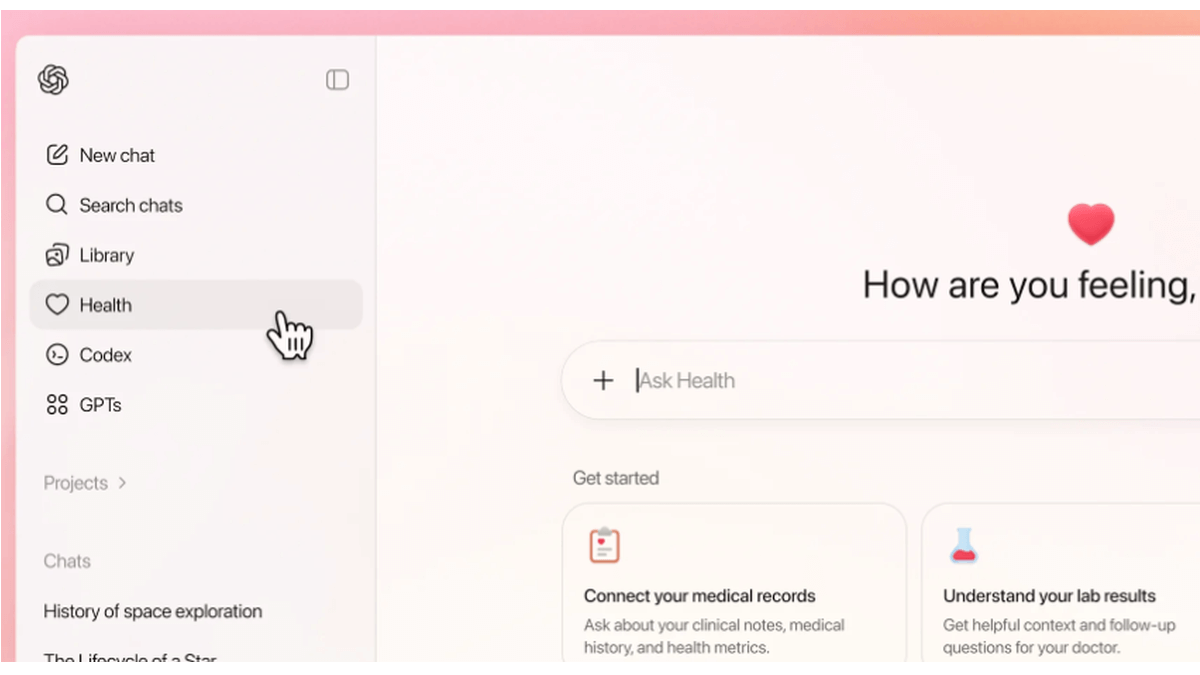
ChatGPT Health is a dedicated “health space” inside ChatGPT that lets users connect their medical records and wellness apps so the model can answer health and wellness questions in a more personalized way.

ChatGPT health

OpenAI promises additional, layered protections designed specifically for health, “to keep health conversations protected and compartmentalized.”

First off, it’s important to understand that this is not a diagnostic or treatment system. It’s framed as a support tool to help understand health information and prepare for care.

But this is the part that raised questions and concerns:

“You can securely connect medical records and wellness apps to ground conversations in your own health information, so responses are more relevant and useful to you.”

In other words, ChatGPT Health lets you link medical records and apps such as Apple Health, MyFitnessPal, and others so the system can explain lab results, track trends (e.g., cholesterol), and help you prepare questions for clinicians or compare insurance options based on your health data.

Given our reservations about the state of AI security in general and chatbots in particular, this is a line that I don’t dare cross. For now, however, I don’t even have the option, since only users with ChatGPT Free, Go, Plus, and Pro plans outside of the European Economic Area, Switzerland, and the United Kingdom can sign up for the waitlist.

OpenAI only uses partners and apps in ChatGPT Health that meet OpenAI’s privacy and security requirements, which, by design, shifts a great deal of trust onto ChatGPT Health itself.

Users should realize that health information is very sensitive and as Sara Geoghegan, senior counsel at the Electronic Privacy Information Center told The Record: by sharing their electronic medical records with ChatGPT Health, users in the US could effectively remove the HIPAA protection from those records, which is a serious consideration for anyone sharing medical data.

She added:

“ChatGPT is only bound by its own disclosures and promises, so without any meaningful limitation on that, like regulation or a law, ChatGPT can change the terms of its service at any time.”

Should you decide to try this new feature out, we would advise you to proceed with caution and take the advice to enable 2FA for ChatGPT to heart. OpenAI claims 230 million users already ask ChatGPT health and wellness questions each week. I’d encourage them to do the same.


We don’t just report on data privacy—we help you remove your personal information

Cybersecurity risks should never spread beyond a headline. With Malwarebytes Personal Data Remover, you can scan to find out which sites are exposing your personal information, and then delete that sensitive data from the internet.

Are we ready for ChatGPT Health?

9 January 2026 at 13:26

How comfortable are you with sharing your medical history with an AI?

I’m certainly not.

OpenAI’s announcement about its new ChatGPT Health program prompted discussions about data privacy and how the company plans to keep the information users submit safe.

ChatGPT Health is a dedicated “health space” inside ChatGPT that lets users connect their medical records and wellness apps so the model can answer health and wellness questions in a more personalized way.

ChatGPT health

OpenAI promises additional, layered protections designed specifically for health, “to keep health conversations protected and compartmentalized.”

First off, it’s important to understand that this is not a diagnostic or treatment system. It’s framed as a support tool to help understand health information and prepare for care.

But this is the part that raised questions and concerns:

“You can securely connect medical records and wellness apps to ground conversations in your own health information, so responses are more relevant and useful to you.”

In other words, ChatGPT Health lets you link medical records and apps such as Apple Health, MyFitnessPal, and others so the system can explain lab results, track trends (e.g., cholesterol), and help you prepare questions for clinicians or compare insurance options based on your health data.

Given our reservations about the state of AI security in general and chatbots in particular, this is a line that I don’t dare cross. For now, however, I don’t even have the option, since only users with ChatGPT Free, Go, Plus, and Pro plans outside of the European Economic Area, Switzerland, and the United Kingdom can sign up for the waitlist.

OpenAI only uses partners and apps in ChatGPT Health that meet OpenAI’s privacy and security requirements, which, by design, shifts a great deal of trust onto ChatGPT Health itself.

Users should realize that health information is very sensitive and as Sara Geoghegan, senior counsel at the Electronic Privacy Information Center told The Record: by sharing their electronic medical records with ChatGPT Health, users in the US could effectively remove the HIPAA protection from those records, which is a serious consideration for anyone sharing medical data.

She added:

“ChatGPT is only bound by its own disclosures and promises, so without any meaningful limitation on that, like regulation or a law, ChatGPT can change the terms of its service at any time.”

Should you decide to try this new feature out, we would advise you to proceed with caution and take the advice to enable 2FA for ChatGPT to heart. OpenAI claims 230 million users already ask ChatGPT health and wellness questions each week. I’d encourage them to do the same.


We don’t just report on data privacy—we help you remove your personal information

Cybersecurity risks should never spread beyond a headline. With Malwarebytes Personal Data Remover, you can scan to find out which sites are exposing your personal information, and then delete that sensitive data from the internet.

What is MTA-STS and why does it matter

The email security landscape is increasingly shaped by robust protocols for authentication, data protection, and secure communication. Among these, MTA-STS is emerging as a critical standard, strengthening the enforcement of encrypted channels for email delivery. 

❌