❌

Reading view

Over 100 European Stores Hit as Supermarket Fridge Attacks Return

Attackers again tampered with internet-exposed refrigeration controllers, this time at stores in Belgium, Sweden, Ireland and beyond.

The post Over 100 European Stores Hit as Supermarket Fridge Attacks Return appeared first on SecurityWeek.

  •  

AWS European Sovereign Cloud: Demonstrating an independent operation

On Saturday, October 24, 2026, we will conduct an exercise demonstrating that the AWS European Sovereign Cloud can operate without depending on any infrastructure outside of the European Union (EU).

For several hours, the AWS European Sovereign Cloud will operate without a connection to the AWS Global Network backbone. The backbone is the private network that moves authorized AWS operational data between AWS locations without using the public internet. During the exercise, this traffic will securely reroute over the public internet.

The exercise will not affect service availability within the AWS European Sovereign Cloud, other AWS Regions, or private connectivity through AWS Direct Connect. Customers may experience brief connectivity disruptions as traffic moves onto a separate network route at the beginning or the end of the exercise, after which normal connectivity resumes.

The operational team, composed entirely of EU residents within the EU, will execute the exercise using only the hardware and software resources of the AWS European Sovereign Cloud. The AWS European Sovereign Cloud Managing Directors called for this exercise to showcase its operational independence.

An independent cloud for Europe

The AWS European Sovereign Cloud is a new, independent cloud for Europe. Located in Brandenburg, Germany, its data centers are physically and logically separate from other AWS Regions, with a local in-EU copy of the source code. All customer content and customer-created metadata stay in the EU. It has no critical dependencies on non-EU infrastructure and is operated exclusively by EU residents.

In standard operations, the AWS European Sovereign Cloud uses two global systems. The first is the AWS Global Network backbone. The second is a dedicated system that the local EU team controls and supervises to securely manage limited, controlled transfers of operational AWS data.

Neither is operation-critical, and neither affects the sovereignty assurance of the AWS European Sovereign Cloud. The AWS European Sovereign Cloud can operate independently at any time without a connection to these global systems, and on October 24 that’s what the team will demonstrate.

Built to meet regulatory standards

This exercise will produce verifiable technical and operational evidence that the AWS European Sovereign Cloud can operate independently within the EU. The exercise is designed to be consistent with the objectives of the European Commission’s EU Cloud Sovereignty Framework (CSF) and the criteria of the C3A framework from Germany’s Federal Office for Information Security (BSI). These frameworks set out objectives and criteria for assessing whether cloud services can be provided independently and autonomously.

We designed the AWS European Sovereign Cloud for regulated customers and the public sector across the EU. The AWS European Sovereign Cloud: Sovereign Reference Framework (ESC-SRF) gives our customers and partners a comprehensive set of evidence points, maps to controls, artifacts, and other elements regulators and compliance authorities need to accelerate their adoption of the AWS European Sovereign Cloud. The results of this exercise will provide additional evidence for their compliance and assurance packages.

Standalone and fully secure

The AWS European Sovereign Cloud runs connected to the AWS Global Network backbone because it delivers superior performance, capacity, reliability, security, and cost savings to customers. That includes always-on encryption and distributed denial of service (DDoS) defenses; and the backbone can’t decrypt or see the encrypted data that AWS European Sovereign Cloud customers send and receive. While the backbone delivers these benefits day-to-day, the AWS European Sovereign Cloud can continue to operate independently, with the appropriate security controls in place.

During the exercise, instead of using the AWS Global Network backbone, the AWS European Sovereign Cloud will exclusively use its dedicated internet connectivity from European internet service providers. This will provide connectivity to the worldwide internet.

Whenever traffic moves between internet links, there’s a small window of limited disruption called convergence, a short time when other non-AWS networks change their routing information to reflect the change. This could happen at the beginning of the exercise, when traffic moves to dedicated AWS European Sovereign Cloud internet providers, and at the end of the exercise, when traffic moves back to the AWS Global Network backbone.

Customer data stays in the EU

AWS has committed to not moving AWS European Sovereign Cloud customer content and customer-created metadata outside of the EU. Only certain data, which is neither customer content nor customer-created metadata, such as AWS operational data, leaves the EU. We use a dedicated system to securely manage these limited, controlled transfers under the control and supervision of the local EU team. We’re rigorous about what the system transfers. It accepts vetted source code mirroring and software updates, and transfers out very limited and approved routine information. During the exercise, the AWS European Sovereign Cloud team will disable the system entirely, confirming that the AWS European Sovereign Cloud continues to operate independently without it.

Learn more

AWS will share an update after the exercise with regulators and customers. To learn more about the AWS European Sovereign Cloud’s design and digital sovereignty controls, visit aws.eu. If you have questions about this exercise or would like to discuss how it may impact your workloads, reach out to AWS Support or contact your AWS Account team.

Stephane Israel

Stéphane Israël

Stéphane is the leader and Managing Director of the AWS European Sovereign Cloud. He is responsible for the management and operations of the AWS European Sovereign Cloud, including infrastructure, technology, and services, in addition to broader digital sovereignty efforts at AWS. Prior to AWS, he was the CEO of Arianespace, where he oversaw numerous successful space missions, including the launch of the James Webb Space Telescope.

  •  

Run open weight models on Amazon Bedrock in AWS European Sovereign Cloud

European organizations can run AI workloads on Amazon Web Services (AWS) while keeping data within the European Union (EU) and meeting regulatory requirements. You can now run generative AI workloads on open weight models on Amazon Bedrock in the AWS European Sovereign Cloud. We’re excited to announce the general availability of the first open weight model family, Gemma 4, on the Amazon Bedrock next-generation inference engine in the AWS European Sovereign Cloud. Gemma 4, released under the Apache 2.0 license, on Amazon Bedrock benefits from the same data residency and operational controls that define the AWS European Sovereign Cloud so you can build, iterate, and scale generative AI applications while meeting digital sovereignty requirements.

The AWS European Sovereign Cloud is an independent cloud for Europe, located entirely within the EU, designed to help customers meet their most stringent digital sovereignty requirements. It runs entirely within the EU and is independently operated with strong technical controls, sovereign assurances and legal protections. Only AWS employees who reside in the EU control day-to-day operations, including access to data centers, technical support, and customer service.

In this post, we explain how the Amazon Bedrock inference engine protects your inference data when running Gemma 4 models, how the AWS European Sovereign Cloud keeps it within the EU, and then walk through the available Gemma 4 models and your first inference request.

Next generation inference engine for Amazon Bedrock

The inference engine is a distributed engine for serving large-scale machine learning models, built for high performance, reliability, and security. You reach it through the bedrock-mantle endpoint, which supports OpenAI-compatible APIs (the Responses and Chat Completions APIs). You can bring an existing OpenAI SDK codebase to Amazon Bedrock by changing only the base URL and API key. The Responses API supports stateful conversation management, which rebuilds context without you passing conversation history with each request. Stored responses are scoped by Amazon Bedrock project, a logical boundary that represents a workload for access control, cost tracking, and usage monitoring.

The engine applies the same operational security practices you rely on across AWS. Access follows a least privilege model, where each operator has access only to the systems a specific task requires, and only for the time that privilege is needed. Any access to systems that store or process customer data or metadata is logged, monitored for anomalies, and audited. All your prompts and responses are kept private during inference.

How your inference data is protected

Amazon Bedrock uses a zero operator access data security model, meaning no service operators can access model input or output during inference. It also uses a zero data retention model, so by default it doesn’t store your inputs or outputs. For certain models, limited retention might apply for abuse detection (see the Amazon Bedrock abuse detection documentation). Your prompts and responses are encrypted in transit and, by default, are not shared with the model provider.

All inference stays within the eusc-de-east-1 AWS Region as described in the following section on data residency. Combined with the data residency and EU-based operations of the AWS European Sovereign Cloud, this gives organizations in highly regulated industries the confidence to run their most sensitive AI workloads in the cloud.

Data residency and regional availability

The AWS European Sovereign Cloud became generally available in January 2026, with its first Region in Brandenburg, Germany (eusc-de-east-1). It’s a separate, independently operated cloud, with infrastructure located entirely within the EU and no critical dependencies on non-EU personnel or infrastructure. All your content remains within the Region you select unless you choose otherwise. Beyond content, customer-created metadata including roles, permissions, resource labels, and configurations also stays within the EU. The AWS European Sovereign Cloud is operated exclusively by EU residents located in the EU. We’re also gradually transitioning the AWS European Sovereign Cloud to be operated exclusively by EU citizens located in the EU. During this transition period we will continue to work with a blended team of EU residents and EU citizens located in the EU.

All Amazon Bedrock inference requests, including Gemma 4, use in-Region inference in eusc-de-east-1, which keeps every request within the AWS European Sovereign Cloud. Global cross-Region inference, which routes requests across commercial AWS Regions worldwide, isn’t available in the AWS European Sovereign Cloud.

Control over who can access your data

With AWS Identity and Access Management (IAM), you decide which principals in your account can call the inference API and which models they can use. Fine-grained permissions let you grant only the access each workload needs, following least privilege, and we recommend short-lived credentials over long-term keys.

For auditing, every call to the endpoint is recorded in AWS CloudTrail, giving your security and compliance teams an audit trail of who invoked inference and when. You can also monitor usage with Amazon CloudWatch and set alarms on patterns that matter to you, such as unexpected spikes in request volume.

Open weight models in the AWS European Sovereign Cloud

Organizations adopting open weight foundation models (FMs) for production face a constant challenge: how to access the leading models without compromising on data protection, regulatory alignment, or operational control. Amazon Bedrock removes that challenge. It gives you leading open weight FMs through a fully managed service, with inference running entirely on infrastructure operated by AWS and the security and privacy controls you expect from Amazon Bedrock. Because the models are open weight, you can independently evaluate the model architecture and training methodology, benchmark your own workloads, and fine-tune on proprietary data when customization is required.

Gemma 4 is a family of open weight models, released under the Apache 2.0 license. It’s available in three instruction-tuned variants, so you can evaluate and choose the model that fits your workload. The following table provides guidance on which model to choose based on your use case:

Model

Use case

Specifications

Gemma 4 31B (google.gemma-4-31b-it)

Reasoning-heavy or coding-heavy with a single dense model

30.7 billion parameter dense model with a 256 K token context window

Gemma 4 26B-A4B (google.gemma-4-26b-a4b-it)

Cost-sensitive at high throughput, with knowledge breadth requirements

Mixture-of-experts model with 25.2 billion total parameters and 3.8 billion active per token, with a 256 K token context window

Gemma 4 E2B

(google.gemma-4-e2b-it)

Latency-sensitive, on-device-style, or multimodal classification

Compact model with 5.1 billion total parameters and 2.3 billion effective parameters using per-layer embeddings (PLE), with a 128 K token context window

All three variants offer built-in reasoning, native function calling, and multimodal input across text and image.

Get started with Gemma 4 models on Amazon Bedrock

Gemma 4 is served through the bedrock-mantle endpoint, the OpenAI-compatible API for the next-generation inference engine, so you can call it with the OpenAI Python and TypeScript SDKs. Use the following steps to use the OpenAI Python SDK to send your first request to Gemma 4 31B in the AWS European Sovereign Cloud.

Prerequisites

To follow this example, you need an AWS account with access to the AWS European Sovereign Cloud and an IAM principal with permissions to call the bedrock-mantle endpoint. Create an IAM policy that grants the two actions this walkthrough uses, then attach it to your IAM principal. The bedrock-mantle:CreateInference action runs inference, and the bedrock-mantle:CallWithBearerToken action authenticates with an Amazon Bedrock API key. The following sample policy grants the actions this example needs. Scope the resources further for your environment as described after the policy.

{
  "Version": "2012-10-17",
  "Statement": [
    {
      "Sid": "GemmaMantleInference",
      "Effect": "Allow",
      "Action": "bedrock-mantle:CreateInference",
      "Resource": "arn:aws-eusc:bedrock-mantle:eusc-de-east-1:<account-id>:project/<project-id>"
    },
    {
      "Sid": "GemmaMantleBearerToken",
      "Effect": "Allow",
      "Action": "bedrock-mantle:CallWithBearerToken",
      "Resource": "*"
    }
  ]
}

Replace <account-id> and <project-id> with your own values.

Install the OpenAI SDK and the Amazon Bedrock token generator with the command pip install “openai>=2.45.0" aws-bedrock-token-generator.

Authenticate

You authenticate with an Amazon Bedrock API key. Amazon Bedrock offers two types of API keys. Short-term keys expire automatically within 12 hours and inherit the permissions of the IAM principal that generated them, which makes them the recommended choice for production. Long-term keys last until a configured expiration and are intended for development and exploration. For production, use the auto-refreshing short-term key shown in the following example, or store the key in AWS Secrets Manager.

from aws_bedrock_token_generator import provide_token
from openai import BedrockOpenAI

region = "eusc-de-east-1"

client = BedrockOpenAI(
    aws_region=region,
    base_url="https://bedrock-mantle.eusc-de-east-1.api.amazonwebservices.eu/v1",
    bedrock_token_provider=lambda: provide_token(region=region),
)

Alternatively, you can pass a short-term API key through an environment variable. This key isn’t refreshed and expires after at most 12 hours.

import os
from openai import OpenAI

client = OpenAI(
    base_url="https://bedrock-mantle.eusc-de-east-1.api.amazonwebservices.eu/v1",
    api_key=os.environ["AWS_BEARER_TOKEN_BEDROCK"],
)

Run your first inference with the Responses API

The Responses API uses a single input field and returns the generated text in output_text. Setting store to false means Amazon Bedrock doesn’t retain the request or response.

response = client.responses.create(
    model="google.gemma-4-31b-it",
    input="Explain the benefits of open-weight models for regulated industries.",
    max_output_tokens=512,
    store=False,
)
print(response.output_text)

Call the Chat Completions API

You can also call the OpenAI-compatible Chat Completions endpoint directly. If you use AWS credentials instead of an API key, sign the request with AWS Signature Version 4 (SigV4), as in the following example.

export ENDPOINT=https://bedrock-mantle.eusc-de-east-1.api.amazonwebservices.eu
export AWS_REGION=eusc-de-east-1

curl -X POST ${ENDPOINT}/v1/chat/completions \
  --aws-sigv4 "aws:amz:${AWS_REGION}:bedrock" \
  --user "${AWS_ACCESS_KEY_ID}:${AWS_SECRET_ACCESS_KEY}" \
  -H "x-amz-security-token: ${AWS_SESSION_TOKEN}" \
  -H "Content-Type: application/json" \
  -d '{
    "model": "google.gemma-4-31b-it",
    "messages": [{"role": "user", "content": "Hello!"}]
  }'

Clean up

This walkthrough creates no persistent resources, so there’s nothing to delete. The short-term API keys used here expire automatically within 12 hours.

Pricing and availability

Gemma 4 is available in Amazon Bedrock in the AWS European Sovereign Cloud. You pay per token with no upfront commitment, and usage counts toward your existing AWS commitments. For current pricing, see Amazon Bedrock pricing. For model and Regional availability, see Regional availability by models.

Commitment to innovation

Beyond the technical integration, running AI workloads in a sovereign context raises important questions about requirements. As you plan AI workloads for a sovereign context, evaluate them against your organization’s requirements for data residency, model governance, and operational control. The AWS European Sovereign Cloud is designed to help you meet these requirements in the EU.

AWS is committed to making AWS the best place for European organizations to innovate with AI, without compromise. To learn more about AWS European Sovereign Cloud visit aws.eu.

If you have feedback about this post, submit comments in the Comments section below.


Author

Marta Taggart

Marta is a Principal Product Marketing Manager focused on digital sovereignty and the AWS European Sovereign Cloud in AWS Product Marketing. She helps customers navigate complex digital sovereignty requirements and understand how AWS solutions can help address their needs so they can build and innovate with confidence. Outside of work, she enjoys yoga and coffee.

Zohreh Norouzi

Zohreh Norouzi

Zohreh is a Senior Security Solutions Architect at Amazon Web Services (AWS). She helps customers make good security choices and accelerate their journey to the AWS Cloud. She has been actively involved in AI security initiatives, using her expertise to help customers build secure AI solutions at scale.

  •  

Architecting a secure landing zone in the AWS European Sovereign Cloud

The AWS European Sovereign Cloud is a new, independent cloud for Europe, physically and logically separate from existing AWS Regions and operated within the European Union (EU). It provides the same services, features, and APIs as AWS commercial Regions, but runs as a distinct AWS partition (aws-eusc), with its own control plane, AWS Identity and Access Management (IAM), billing, console, and service endpoints. Understanding the partition boundary is the key that unlocks correct answers to questions about billing roll-ups, single sign-on (SSO), cross-account roles, AWS Direct Connect, and image distribution. In this post, we show you how to architect a secure, scalable landing zone in the AWS European Sovereign Cloud. We cover account structure and governance, identity managed as infrastructure as code (IaC), centralized logging to a security and event management (SIEM) tool, data protection, network and perimeter design, secure continuous integration and delivery (CI/CD) and artifact distribution, and incident response. Throughout, we map the design to the AWS Security Reference Architecture (AWS SRA) and the AWS Well-Architected Framework, and we call out which behaviors are platform boundaries of a sovereign partition and which are configuration choices you can adapt.

If you are evaluating compliance readiness alongside your landing zone build-out, see the companion post Landing Zone Accelerator Independent Assessment Report for C5:2020 now available on AWS Artifact. This post covers how to align with C5:2020 criteria and provides an independent assessment report and compliance workbook, resources that complement the architectural patterns described here.

The foundational concept: EUSC is a partition

AWS groups Regions into partitions. Every Region is in exactly one partition, and each partition has one or more Regions. Partitions have independent instances of AWS Identity and Access Management (IAM) and provide a hard boundary between Regions in different partitions. AWS commercial Regions are in the aws partition, Regions in China are in the aws-cn partition, and AWS GovCloud Regions are in the aws-us-gov partition. The AWS European Sovereign Cloud is the aws-eusc partition, with its first Region in Brandenburg, Germany (eusc-de-east-1).

Some AWS services provide cross-Region functionality, such as Amazon S3 Cross-Region Replication or AWS Transit Gateway Inter-Region peering. These capabilities work only between Regions in the same partition. You can’t use IAM credentials from one partition to interact with resources in a different partition. There are practical differences that impact your architecture, shown in the following table:

Dimension Commercial AWS (aws) AWS European Sovereign Cloud (aws-eusc)
ARN prefix arn:aws: arn:aws-eusc:
Console or endpoint domain amazonaws.com amazonaws.eu
AWS Organizations One organization in the partition A separate, independent organization
AWS IAM Identity Center Instance in the partition A separate instance in the partition
Billing Consolidated in the partition’s payer A separate payer and billing system (EUR currency)
Cross-partition features and services such as: sts:AssumeRole, VPC peering, Transit Gateway, AWS RAM, Amazon S3 replication Cross-Region features and functionality Not available across the aws and aws-eusc boundary

Every AWS Region is sovereign by design: if you find yourself architecting across Regions, note that this partition boundary means that the centralization—one organization, one logging account, one identity source, one billing roll-up—is achievable within each partition. In the EUSC you operate an independent landing zone in aws-eusc that mirrors your commercial operating model. Where you need to bridge the two clouds (for example, a standard application CI/CD system in an AWS commercial Region deploying into EUSC), you integrate at the network or API layer with separate credentials for each partition, not with cross-partition trust. With these partition fundamentals in mind, the remainder of this post walks you through the considerations to build a production-ready landing zone in the EUSC. Each section addresses a critical layer of the architecture, starting with how to write partition-aware infrastructure code that works across both aws and aws-eusc, then moving into the organizational and governance controls that underpin everything else.

Cross-partition IaC

These Terraform and AWS CloudFormation IaC snippets demonstrate partition-aware Amazon Resource Name (ARN) construction—a pattern that helps ensure your infrastructure code works unchanged across AWS partitions (such as standard aws, GovCloud aws-us-gov, or European Sovereign Cloud aws-eusc).

In the case of using the same Terraform script from a commercial Region, ensure that arn:aws isn’t hard coded. This Terraform script derives the partition at deploy time so the same modules work in both AWS commercial Regions and the EUSC.

# Terraform: partition-aware ARNs (works unchanged in aws and aws-eusc)data "aws_partition""current" {}
data "aws_partition" "current" {}
data "aws_region" "current" {}
data "aws_caller_identity" "current" {}
data "aws_organizations_organization" "current" {}

locals {
partition = data.aws_partition.current.partition# "aws" or "aws-eusc"
account_id = data.aws_caller_identity.current.account_id
org_id= data.aws_organizations_organization.current.id
ecs_task_execution_policy_arn = "arn:${local.partition}:iam::aws:policy/service-role/AmazonECSTaskExecutionRolePolicy"
central_logs_bucket_arn= "arn:${local.partition}:s3:::${local.org_id}-central-logs"
}

resource "aws_iam_role" "amazon_ecs_role" {
  name = "AmazonECSrole"
  assume_role_policy = jsonencode({
    Version = "2012-10-17"
    Statement = [
      {
        Action = "sts:AssumeRole"
        Effect = "Allow"
        Sid= ""
        Principal = {
          # IAM service principals are "amazonaws.com" across all partitions,
          # this stays literal (do NOT use ${AWS::URLSuffix} here).
          Service = "ecs-tasks.amazonaws.com"
        }
      },
    ]
  })
}

resource "aws_iam_role_policy_attachment" "amazon_ecs_role_attach" {
  role= "AmazonECSrole"
  # Use ${local.partition } rather than hardcoding "aws" in the ARN.
  policy_arn = "arn:${local.partition}:iam::aws:policy/service-role/AmazonECSTaskExecutionRolePolicy"
}
# CloudFormation: use the AWS::Partition pseudo parameter, never a literal "aws"

AWSTemplateFormatVersion: "2010-09-09"

Description: >-
Creates an ECS task execution role. Demonstrates using the
${AWS::Partition} pseudo parameter in ARNs instead of hardcoding "aws",
so the template works across partitions (aws, aws-cn, aws-us-gov, aws-eusc).

Resources:
  ExecRole:
    Type: AWS::IAM::Role
    Properties:
      RoleName: AmazonECSroleCF
      AssumeRolePolicyDocument:
        Version: "2012-10-17"
        Statement:
          - Effect: Allow
            Principal:
              Service:
                # IAM service principals are "amazonaws.com" across all partitions,
                # so this stays literal (do NOT use ${AWS::URLSuffix} here).
                - "ecs-tasks.amazonaws.com"
            Action: "sts:AssumeRole"
      ManagedPolicyArns:
        # Use ${AWS::Partition} rather than hardcoding "aws" in the ARN.
        - !Sub "arn:${AWS::Partition}:iam::aws:policy/service-role/AmazonECSTaskExecutionRolePolicy"

Outputs:
  ExecRoleArn:
    Description: ARN of the created ECS task execution role
    Value: !GetAtt ExecRole.Arn

Account structure and governance

AWS Control Tower offers a straightforward way to set up and govern an AWS multi-account environment, following prescriptive best practices. AWS Control Tower orchestrates the capabilities of several other AWS services, including AWS Organizations, AWS Service Catalog, and AWS IAM Identity Center, to build a landing zone in less than an hour. Resources are set up and managed on your behalf.

We recommend following the AWS Security Reference Architecture (AWS SRA) multi-account model structure for a EUSC deployment. Use the management account only for governance, deploy universal security guardrails through service control policies (SCPs), resource control policies (RCPs), and service deployments (such as AWS CloudTrail) that will affect all member accounts in the organization.

Region-deny SCPs are commonly applied in commercial Regions, but aren’t required (at this time) in the EUSC because of the physically and logically separated nature of its design.

Other possible SCPs for the management OU:

  • Service-level guardrails – Restrict which AWS services can be used, based on your compliance posture.
  • Network perimeter controls – Enforce virtual private cloud (VPC) endpoints, deny public access patterns, and restrict egress.
  • Encryption and key management – Require AWS Key Management Service (AWS KMS) managed keys for all data-at-rest services and enforce key policies aligned with your sovereignty requirements.

Note: As additional EUSC Regions or Local Zones become available, the partition boundary continues to enforce isolation from non-EUSC Regions. If you need to restrict usage to a subset of EUSC Regions (for example, only eusc-de-east-1 but not a future eusc-de-west-1), a Region-deny SCP would become relevant at that point.

Identity: IAM Identity Center as IaC, no direct payer access

IAM Identity Center is available in the AWS European Sovereign Cloud as an independent instance within the partition. You can connect it to your external identity provider (IdP)—Microsoft Entra ID, Okta, and so on—using SAML/SCIM, exactly as in AWS commercial Regions. If you already use Identity Center to federate in the commercial partition, you can point a second Identity Center integration at the same corporate IdP, so users keep one set of credentials. You manage permission sets, groups, and account assignments separately for each partition.

Manage permission sets and assignments as code

The following Terraform defines a permission set with both an AWS managed policy and an inline least-privilege policy, then assigns a group to a target account. Reproduce the aws_ssoadmin_account_assignment for each account or organizational unit (OU) mapping.

Because group membership comes from your IdP over SCIM, the IdP handles joiner, mover, and leaver, and access in EUSC updates automatically. No one receives direct access to the management account; all human access flows through IAM Identity Center permission sets assigned to non-management accounts.

data "aws_ssoadmin_instances" "this" {}
data "aws_partition" "current" {}

# Workload account the group is assigned to.
variable "analytics_workload_account_id" {
  type        = string
  description = "Account ID of the workload account to assign the permission set to"
}

locals {
  sso_instance_arn  = tolist(data.aws_ssoadmin_instances.this.arns)[0]
  identity_store_id = tolist(data.aws_ssoadmin_instances.this.identity_store_ids)[0]
}

resource "aws_ssoadmin_permission_set" "analytics_operator" {
  name             = "AnalyticsOperator"
  description      = "Operate analytics workloads; no IAM or billing"
  instance_arn     = local.sso_instance_arn
  session_duration = "PT4H"
}

# Attach an AWS managed policy
resource "aws_ssoadmin_managed_policy_attachment" "analytics_ro" {
  instance_arn       = local.sso_instance_arn
  permission_set_arn = aws_ssoadmin_permission_set.analytics_operator.arn
  managed_policy_arn = "arn:${data.aws_partition.current.partition}:iam::aws:policy/ReadOnlyAccess"
}

# Add a least-privilege inline policy (note the partition-aware ARNs)
resource "aws_ssoadmin_permission_set_inline_policy" "analytics_inline" {
  instance_arn       = local.sso_instance_arn
  permission_set_arn = aws_ssoadmin_permission_set.analytics_operator.arn
  inline_policy = jsonencode({
    Version = "2012-10-17"
    Statement = [{
      Sid      = "OperateAnalyticsData"
      Effect   = "Allow"
      Action   = ["s3:GetObject", "s3:PutObject", "s3:ListBucket"]
      Resource = [
        "arn:${data.aws_partition.current.partition}:s3:::analytics-*",
        "arn:${data.aws_partition.current.partition}:s3:::analytics-*/*"
      ]
      Condition = { StringEquals = { "aws:RequestedRegion" = "eusc-de-east-1" } }
    }]
  })
}

# Group for analytics operators.
# In production this is typically synced from your IdP via SCIM; here we
# manage it directly so the config is self-contained.
resource "aws_identitystore_group" "analytics" {
  identity_store_id = local.identity_store_id
  display_name      = "analytics-operators"
  description       = "Analytics operators"
}

# Assign the group to a workload account with the permission set
resource "aws_ssoadmin_account_assignment" "analytics_to_workload" {
  instance_arn       = local.sso_instance_arn
  permission_set_arn = aws_ssoadmin_permission_set.analytics_operator.arn
  principal_id       = aws_identitystore_group.analytics.group_id
  principal_type     = "GROUP"
  target_id          = var.analytics_workload_account_id
  target_type        = "AWS_ACCOUNT"
}

Cross-account roles for governance, logging, and tooling

Cross-account roles within the EUSC partition work normally; this is how the logging and security-tooling accounts collect from workload accounts. Scope each trust policy to a specific principal and harden it with an external ID (for third-party tooling) and partition-aware ARNs.

{
  "Version": "2012-10-17",
  "Statement": [{
    "Effect": "Allow",
    "Principal": {
      "AWS": "arn:${AWS::Partition}:iam::<SECURITY_TOOLING_ACCOUNT_ID>:role/SecurityAuditCollector"
    },
    "Action": "sts:AssumeRole",
    "Condition": {
      "StringEquals": { "sts:ExternalId": "eusc-sec-audit" },
      "ArnLike": { "aws:PrincipalArn": "arn:${AWS::Partition}:iam::*:role/SecurityAuditCollector" }
    }
  }]
}

A role in the aws partition can’t assume a role in aws-eusc (or the reverse).

Logging and monitoring: centralized in EUSC, exported to your SIEM

A sovereign logging architecture requires three things:

  • A single, immutable store for all audit and operational logs
  • A central security account that runs detective controls and correlates findings
  • A reliable, in-partition path that feeds everything into your SIEM without data ever leaving the boundary.

In the subsections that follow, we walk through each layer: Centralized log collection in the Log Archive account, Amazon GuardDuty and AWS Security Hub administration through the Security Tooling account, and the pull-based SIEM integration pattern that keeps telemetry inside the EUSC partition.

Centralize logs in the Log Archive account

The Log Archive account holds the organization trail and a central log bucket as part of the landing zone. In the commercial AWS partition, global services like IAM route their CloudTrail events to us-east-1. In the EUSC, global services events are logged within the EUSC partition because the control plane is independent and located entirely within the EU.

Organization level detective services

GuardDuty and Security Hub are available in EUSC, but organization-wide auto-enable and some newer features might differ from commercial AWS features at any given time. Design the Security Tooling account as the delegated administrator where supported. If org-level auto-enable isn’t yet available, enable per-account through your IaC (AWS CloudFormation StackSets) so coverage is complete and code-managed. Treat the EUSC service and feature list as the source of truth and gate optional features behind a partition flag.

Network security and perimeter, including AWS Direct Connect

The AWS European Sovereign Cloud has its own sovereign AWS Direct Connect points of presence (PoPs), with dedicated networking infrastructure and connectivity from European providers, providing customers an autonomous network path into the partition. You terminate Direct Connect in a dedicated Network account and share connectivity to workload VPCs using Transit Gateway (with AWS RAM). A Direct Connect connection or Direct Connect gateway in the commercial partition can’t be extended into aws-eusc. To reach EUSC VPCs, you provision a separate Direct Connect connection that lands in the EUSC partition’s Network account. If your on-premises network already backhauls to AWS commercial Regions, you connect that network to EUSC with its own virtual interface or connection, or a site-to-site VPN. You don’t bridge the two AWS partitions through a shared Direct Connect gateway.

The following figure shows the recommended perimeter design in EUSC.
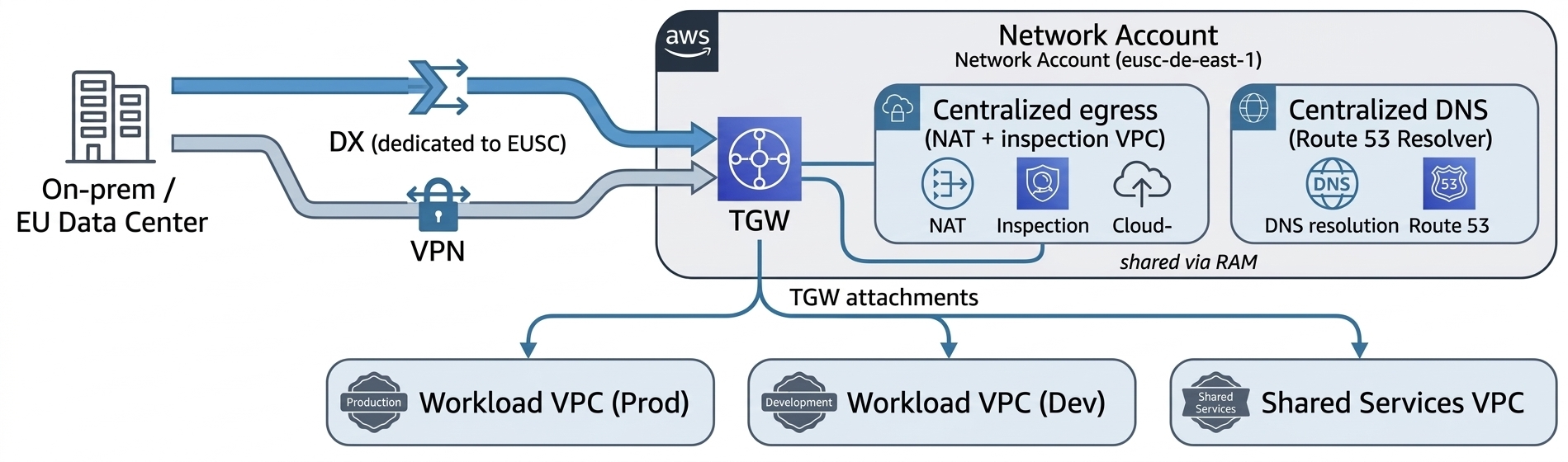
Figure 1: Recommended perimeter design in EUSC

Figure 1: Recommended perimeter design in EUSC

The perimeter design includes:

  • Centralized egress and inspection – Route workload egress through an inspection VPC in the Network account (gateway load balancer with your firewall of choice, or AWS Network Firewall. Keep workload VPCs private with no internet gateway.
  • Private service access – Use VPC interface endpoints (VPCe) for AWS service calls so traffic stays on the AWS network within the partition. VPCe doesn’t cross partitions; expose any commercial-partition service to EUSC consumers over DX/VPN and an in-EUSC load balancer.
  • DNS – EUSC has its own Amazon Route 53. For names that must resolve across clouds, use subdomain delegation or Resolver forwarding rules over your DX or VPN link rather than expecting hosted zones to be visible across partitions.
  • Segmentation as code – Express segmentation with security groups referencing prefix lists and keep the EUSC IP ranges current from the partition’s published ip-ranges file in your firewall automation.

Data protection

AWS Key Management Service (AWS KMS) is available in EUSC; use customer managed keys for all sensitive data stores and enforce their use with SCPs and key policies. Where your residency or operational-autonomy requirements call for it, evaluate AWS KMS external and imported key material options available in the partition.

For workloads where regulation mandates that key material never resides within the cloud provider’s infrastructure, configure an AWS KMS External Key Store (XKS) in the EUSC Region. The XKS proxy connects AWS KMS to your EU-based hardware security module (HSM) (on-premises or hosted with an EU trust service provider); all encrypt and decrypt operations are performed by your external key manager. Note the trade-offs: increased latency, reduced availability SLA, and added operational burden. Reserve XKS for the subset of data where regulatory or contractual obligations explicitly require it.

The EUSC Region has achieved SOC 2, BSI C5 Type 1 attestation, and seven ISO certifications, including ISO 27001, 27017, 27018, and 27701. Reference these in your data protection evidence packages when demonstrating encryption-at-rest and key management controls to EU regulators.

Secure CI/CD and distributing images across the partition boundary

If you need to deploy existing images or binaries into EUSC (aws-eusc) from existing AWS commercial (aws) accounts, you can’t use cross-partition Amazon Elastic Container Registry (Amazon ECR) replication, Amazon Machine Image (AMI) copy, or Amazon Simple Storage Service (Amazon S3) replication. Instead, treat EUSC as an independent supply-chain destination:

  • Container images – Build (or re-tag and re-sign) images and push to an Amazon ECR registry inside EUSC. ECR cross-Region replication works within the partition (useful as EUSC adds Regions or Local Zones), but the initial crossing from commercial is an explicit pipeline push using EUSC credentials. Sign images with a sovereign signing key and verify at deploy time.
  • AMIs and images – Rebuild golden images in EUSC with EC2 Image Builder (run the pipeline natively in EUSC), or import virtual machine (VM) images using Amazon S3 in EUSC and aws ec2 import-image. There is no direct cross-partition AMI copy.
  • Binaries and artifacts – Stage in an artifact bucket in the EUSC Shared Services account. Move packages across the boundary with aws s3 sync or AWS DataSync over your DX or VPN, or using controlled export, then distribute within the partition using in-partition S3 replication to other EUSC Regions or Local Zones as they come online.
# Push a container image to ECR inside EUSC (note the .eu endpoint).
# Credentials/profile must be for the aws-eusc partition.
aws ecr get-login-password --region eusc-de-east-1 --profile eusc-shared-services \
  | docker login --username AWS --password-stdin \
    111122223333.dkr.ecr.eusc-de-east-1.amazonaws.eu

docker tag company/runtime:7.x \
  111122223333.dkr.ecr.eusc-de-east-1.amazonaws.eu/company/runtime:7.x
docker push \
  111122223333.dkr.ecr.eusc-de-east-1.amazonaws.eu/company/runtime:7.x

Remember that endpoints and ARNs use amazonaws.eu in the EUSC partition. IAM service principals always use amazonaws.com regardless of partition.

Replicating deployment code and pipelines

Run a native deployment plane in EUSC (AWS CodePipeline, AWS CodeBuild, AWS CodeDeploy, or your existing tool deployed in-partition) in the Shared Services account, with cross-account deploy roles into workload accounts. If a commercial-partition continuous-integration system must deploy into EUSC, give it separate credentials for each partition; the clean pattern is OIDC federation with two trust configurations, one for each partition, because no cross-partition role assumption exists.

// Deploy role in an EUSC workload account, trusted by the EUSC Shared Services pipeline role
{
  "Version": "2012-10-17",
  "Statement": [{
    "Effect": "Allow",
    "Principal": { "AWS": "arn:aws-eusc:iam::<SHARED_SERVICES_ACCT>:role/PipelineDeployRole" },
    "Action": "sts:AssumeRole",
    "Condition": { "StringEquals": { "sts:ExternalId": "EUSC-deploy" } }
  }]
}

For account vending and landing-zone-as-code, use Account Factory for Terraform (AFT) deployed in EUSC. AFT pipelines create accounts through AWS Control Tower, apply baseline guardrails, bootstrap the preceding partition-aware modules, and register OUs, giving you the accounts and account groups as code. Keep Terraform state for each partition in an in-EUSC Amazon S3 backend with an Amazon DynamoDB lock table; don’t share state across partitions.

The Landing Zone Accelerator on AWS (LZA) solution is an alternative deployment method that provisions a baseline security architecture and includes customizations for each partition, with consideration for service availability. A customized configuration baseline for European Sovereign Cloud was recently released and is accompanied by the LZA Compliance Workbook, which maps regional European security standards and international frameworks to over 200 security settings deployed by LZA.

Supported compared to by-design boundaries: A quick reference

Capability Status in EUSC What to do
AWS Control Tower account vending, controls Supported in-partition Govern the EUSC Region; drive vending with AFT; re-register OUs after Region changes
AWS Control Tower–managed or self-managed IAM Identity Center Configuration choice Choose self-managed to own permission sets as code
Permission set creation and assignment as IaC Supported Manage with SCIM groups from your IdP
Identity Center single home and delegated admin for each partition By-design behavior Administer from one Region; non-issue in single-Region EUSC
Cross-account roles (governance, logging, tooling) Supported within partition Scope trust to specific principals and ExternalId
Cross-partition AssumeRole, VPC peering, TGW, RAM, Amazon S3 replication Not available (security boundary) Integrate at network or API layer with separate per-partition credentials
Billing roll-up across accounts and Regions Supported within the EUSC org Aggregate in a finance or governance account in-partition
Billing roll-up across the aws and aws-eusc boundary Separate billing systems (EUR payer) Keep cost analysis in-partition or in an EU-resident tool
Multi-Region image distribution (Amazon ECR, AMI, and Amazon S3) Supported within partition Push into EUSC first, then replicate in-partition
GuardDuty and Security Hub Available—some org-auto-enable and features vary Delegate admin where supported; per-account enable using IaC otherwise
CloudFront, Shield Advanced, Firewall Manager, Inspector In planning at time of publication Follow on AWS Builder Center (capabilities) for release updates

Billing and cost governance

Roll up within the EUSC organization, not across partitions. Enable consolidated billing in the EUSC management account and deliver AWS Data Exports (Cost and Usage Report 2.0) to an S3 bucket in a dedicated finance or governance account in the Security or Infrastructure OU.

Set permissions so workload teams can query the curated data in that account; no one should be able to access the management or payer account directly. You can’t replicate billing data into the commercial partition; the EUSC has a separate payer (billed in EUR through the EU contracting entity).

Conclusion

Architecting in the AWS European Sovereign Cloud is, in most respects, architecting a second well-run AWS landing zone with one organizing principle that resolves nearly every design question: it’s an independent partition. Centralization of governance, identity, logging, and billing is fully achievable, but within the EUSC partition. The boundaries you encounter between commercial AWS and EUSC—no cross-partition roles, peering, replication, or billing roll-up—are the sovereignty guarantees doing their job.

Build the foundation as code. Use an AWS Control Tower landing zone driven by AFT, IAM Identity Center permission sets and assignments in Terraform federated to your corporate IdP, an immutable central log store, customer managed encryption keys constrained to the sovereign Region, and a Network account terminating a dedicated Direct Connect. Add a CI/CD plane that pushes images and artifacts into the partition with per-partition credentials. Keep every ARN partition-aware and every optional service behind a feature flag, and the same modules will serve both clouds.

To accelerate your build with additional enablement from AWS, explore the LZA Universal Configuration for European Sovereign Cloud on GitHub, which packages many of the patterns described in this post into a ready-to-deploy baseline. To complement your deployment with compliance readiness, the LZA Independent Assessment Report for C5:2020 evaluates how LZA’s security baseline maps to C5:2020 technical requirements, and you can download the report and the LZA Compliance Workbook from AWS Artifact.

Further reading

If you have feedback about this post, submit comments in the Comments section below or start a thread on AWS re:Post.


Pablo Pagani

Pablo Pagani

Pablo is a Systems Development Manager for AWS European Sovereign Cloud, based in Madrid, Spain. He has previously held roles within Enterprise Support and Professional Services. An active member of the Security Technical Field Community, he helps customers build a secure journey on AWS. Pablo developed his passion for computers while writing his first lines of code in BASIC on an MSX computer with 64 KB of RAM.

Margo Cronin

Margo is an EMEA Principal Solutions Architect specializing in Security & Compliance and is based out of Zurich Switzerland. Her interests include security, privacy, cryptography, and compliance. She is passionate about her work unblocking security challenges for AWS customers, enabling their successful cloud journeys. She is an author of the “AWS User Guide to Financial Services Regulations and Guidelines in Switzerland”.

  •  

One year on: Progress on our European digital commitments 

Europe is moving fast to capture the benefits of artificial intelligence, recognizing its potential to raise productivity, strengthen competitiveness, and help modernize public services. At the same time, organizations across Europe are focused on digital sovereignty and resilience: retaining control over their data and critical operations in a period of geopolitical volatility.

These priorities go together. That is why one year ago, we announced a set of European digital commitments to respond to these expectations. They focused on five areas:

  1. Help build a broad AI and cloud ecosystem across Europe
  2. Uphold Europe’s digital resilience even when there is geopolitical volatility
  3. Continue to protect the privacy of European data
  4. Help protect and defend Europe’s cybersecurity
  5. Help strengthen Europe’s economic competitiveness, including for open source

Together, they reflect a simple principle: Europe should be able to use global technology at scale, under European rules, with confidence that it will remain available, secure, and under customer control.

One year on, we take stock of how we’ve put those commitments into practice.

1. Building a broad AI and cloud ecosystem across Europe

A year ago, we detailed plans to increase our European datacenter capacity by 40%, expand cloud operations across 16 European countries, and reach more than 200 datacenters on the continent by 2027. Since then, we have announced new multi-billion euro investments in Portugal, Norway, and the UK, adding to the increased investments announced in Denmark, Germany, France, Italy, Sweden, Spain, Poland, and Switzerland. We also launched new cloud regions in Austria, Denmark, and Belgium. Together, this growing capacity is helping European organizations access cloud and AI capabilities closer to home while supporting sustainable growth through investments such as matching 100% of our annual global electricity consumption with renewable energy.

We emphasize now, as we did when first announcing our digital commitments, that European laws apply to our business practices in Europe, just as local laws govern local practices elsewhere in the world. We remain committed not only to building digital infrastructure for Europe, but also to respecting the role that laws across Europe play in regulating our products and services.

2. Upholding Europe’s digital resilience in a volatile geopolitical environment

For many customers, digital sovereignty is now about more than where data is stored. Institutions and businesses across Europe also want to know whether they can rely on critical digital services when geopolitical pressures rise, and whether they can adopt advanced AI capabilities without losing control.

We have made our Digital Resilience Commitment legally binding in contracts with European national governments and the European Commission, including a commitment to promptly and vigorously contest in court any order by any government to suspend or cease cloud operations in Europe.

We also committed to continuity measures, including expanded partnerships with European cloud partners that can support our customers’ operational continuity in extreme scenarios. Reinforcing this approach, we launched a European resiliency partnership with Delos Cloud to safeguard business continuity in Europe in times of crisis. This work also supports closer cooperation among Europe’s sovereign cloud providers, including crisis response coordination and continuity options designed to help customers maintain operations even in the event of geopolitical disruptions.

We also expanded our strategic partnership with Capgemini to offer fully integrated, managed sovereign cloud services. In addition, we are deepening our collaboration with Accenture to help organizations design and implement sovereign cloud and AI solutions, supporting customers in highly regulated sectors as they balance innovation with control, compliance, and resilience.

To further strengthen governance and operational oversight in Europe, Microsoft’s European activities are now overseen by a board of directors composed exclusively of European nationals, reinforcing regional accountability and our commitments to cybersecurity, resilience, and compliance under European law.

3. Protecting the privacy of European data

Privacy, transparency, and customer control remain central to Europe’s expectations for cloud and AI. That’s why over the past year we have built a portfolio of sovereign cloud options, spanning public cloud, private cloud, and national partner solutions, so that customers can choose the level of control and oversight that best fits their legal, operational, and risk requirements. This portfolio spans infrastructure, productivity, and AI workloads across cloud, hybrid, or fully local deployments.

We have continued to implement our Defending Your Data Initiative, including our commitment to challenge government data requests for EU public‑sector or commercial customers where we have a lawful basis to do so.

We also completed the EU Data Boundary, enabling European customer data to be stored and processed within the EU. We have since expanded these commitments to cover AI-powered productivity services, so that the processing of customer data for tools like Copilot can also take place within Europe.

In order to further reinforce transparency and oversight, we announced Data Guardian, which ensures that all remote access by Microsoft engineers to systems that store and process customer data in Europe is approved and monitored by personnel residing in Europe and logged in a tamper-evident ledger.

Over the past year, we have strengthened our sovereign solutions through new contractual assurances, closer partnerships with European providers, and expanded customer support.

The Microsoft Sovereign Cloud has been enhanced to help customers meet Europe’s growing expectations for control, resilience, and compliance without slowing down innovation. Recent updates add new governance and operational controls, expand productivity options for regulated environments, and strengthen encryption, while making it easier to use advanced AI capabilities that are fully customer-controlled. This includes solutions where AI models can run on customer-owned infrastructure with limited connectivity or even in fully disconnected environments. Earlier this week, we added new capabilities to our private cloud offering allowing organizations to run much larger workloads locally.

Sovereign Landing Zone provides a cloud architecture that embeds governance, compliance, and sovereign controls, helping European organizations deploy cloud environments that align with European regulatory requirements, with less complexity.

External validation of this approach continues to grow. Microsoft was named a leader in Forrester’s latest assessment of sovereign cloud platforms, recognizing the strength of our public cloud, private cloud, and partner-operated approach.

To help customers put this into practice, we opened our first three European Sovereignty and Resilience Studios in Munich, Brussels, and Amsterdam, where governments and enterprises work side by side with Microsoft’s engineers, policy experts, and security teams to capture the full promise of cloud and AI. Additional studios are planned to open in Microsoft’s nine other Innovation Hubs across Europe.

4. Helping protect and defend Europe’s cybersecurity

Cyber threats don’t stop at national borders, and Europe’s security depends on strong public‑private cooperation. During the last year, we have rolled out our European Security Program (ESP), an offering available at no cost to governments across the UK, EU, EFTA, and EU accession countries. It expands threat intelligence sharing and prioritizes new partnerships and investments to help protect critical infrastructure, disrupt cybercrime, and strengthen Europe’s collective ability to respond to attacks.

This program is live across 27 countries across Europe, providing support at no cost within a clear scope through structured briefings, early warnings, and tailored information sharing relevant to each country’s environment.

We have provided cybersecurity support to NATO, Ukraine, and other European governments, including threat intelligence, election protection, and disrupting attacks targeting European governments, companies, and citizens.

Since the start of Russia’s full-scale invasion of Ukraine in 2022, when we helped move critical data and services to secure datacenters across Europe and defend against sustained cyberattacks and eventual kinetic attacks, Microsoft has continued to support the country without interruption, providing more than $600 million in free technology, security, and financial assistance.

We have also expanded collaboration by embedding investigators with Europol’s European Cybercrime Centre (EC3). Together, we are translating technical threat intelligence into coordinated operational action, linking visibility into cybercriminal infrastructure with law enforcement’s ability to investigate, coordinate, and disrupt. This model underpinned recent cybercrime takedowns, including Tycoon 2FA, Lumma Stealer, and RedVDS. And, through our partnership with CyberPeace Institute, more than 300 European nonprofits are receiving cybersecurity support.

All of this work was reinforced in July with the appointment of Freddy Dezeure as Deputy Chief Information Security Officer, a European national based in Europe, who is coordinating Microsoft’s compliance with European cybersecurity regulations. Our European executive cybersecurity presence and oversight  are closely aligned with Microsoft’s broader cybersecurity governance, combining European guidelines with globally consistent security practices.

5. Strengthening Europe’s economic competitiveness, including for open source

We continue to support open ecosystems, including open source, to keep our AI and cloud platforms accessible and interoperable, and to give customers deployment options that fit their needs. There are almost 25 million European software developers active on GitHub, making more than 155 million contributions to public projects in the last year alone. Through Microsoft Foundry, customers can choose from more than 11,000 AI models, both open source and commercial, and run them in sovereign public or private clouds from cloud to the edge. This enables customers to deploy the same Microsoft Foundry model catalog within sovereignty‑aligned infrastructure.

But it is also vital that we support AI solutions that are more multilingual and attuned to cultural context. As part of our commitment to advance European commerce and culture, we launched LINGUA in September 2025 to support projects that collect high‑quality speech and text datasets for Europe’s underrepresented languages. Following an open call, we selected 12 projects spanning 16 languages and dialects across 10 countries, bringing together universities, nonprofits, a government language center, and a public broadcaster to create and digitize open datasets, preserve heritage languages, and develop new evaluation resources for multilingual AI.

We have new AI for Culture projects to digitally preserve iconic European sites and artifacts, including a digital replica of Notre Dame with the French Institut du Patrimoine and Iconem, and we are working with leading institutions to digitize historic cinematic model opera sets and enable access to metadata associated with millions of artifacts. We are also working with the Vatican Library on digitization and AI analysis of historic documents. All of this builds on preservation efforts underway since 2019 for landmarks such as St. Peter’s Basilica in Rome, Mont Saint Michel in France, and Ancient Olympia in Greece.

Relatedly, Céline Geissmann was chosen to lead our Microsoft Open Innovation Center in Strasbourg to work at the intersection of AI, languages, culture, open data, and innovation.

Staying accountable as Europe’s digital landscape evolves

These commitments are our North Star for how we engage in Europe, grounded in European law and values, shaped by European priorities, and designed to progress over time.

As Europe’s digital and geopolitical context continues to evolve, we will keep engaging with policymakers, regulators, customers, and partners to test whether what we are delivering matches what Europe needs. Where it does not, we will adapt.

Trust cannot be claimed. It needs to be earned through our actions, day by day. We are committed to earning that trust by listening, acting, and delivering for Europe.

The post One year on: Progress on our European digital commitments  appeared first on Microsoft On the Issues.

  •  

AWS European Sovereign Cloud achieves first compliance milestone: SOC 2 and C5 reports plus seven ISO certifications

In January 2026, we announced the general availability of the AWS European Sovereign Cloud, a new, independent cloud for Europe entirely located within the European Union (EU), and physically and logically separate from all other AWS Regions. The unique approach of the AWS European Sovereign Cloud provides the only fully featured, independently operated sovereign cloud backed by strong technical controls, sovereign assurances, and legal protections designed to meet the sensitive data needs of European governments and enterprises.

One of the foundational components of how AWS European Sovereign Cloud enables verifiable trust of technical controls and delivers assurance is through our compliance programs and assurance frameworks. These programs help customers understand the robust controls in place at AWS European Sovereign Cloud to maintain security and compliance of the cloud. To meet the needs of our customers, we committed that the AWS European Sovereign Cloud will maintain key certifications such as ISO/IEC 27001:2022, System and Organization Controls (SOC) reports, and Cloud Computing Compliance Criteria Catalogue (C5) attestation, all validated regularly by independent auditors to assure our controls are designed appropriately, operate effectively, and can help customers satisfy their compliance obligations.

Today, AWS European Sovereign Cloud is pleased to announce that SOC 2 and C5 Type 1 attestation reports, along with seven key ISO certifications (ISO 27001:2022, 27017:2015, 27018:2019, 27701:2019, 22301:2019, 20000-1:2018, and 9001:2015) are now available. The attestation reports cover 69 AWS services operating within the AWS European Sovereign Cloud, while the certificates have integrated the AWS European Sovereign Cloud region into the global AWS Management Systems. This achievement marks a pivotal first step in our journey to establish the AWS European Sovereign Cloud as a trusted and compliant cloud for European organizations. By securing these foundational certifications and attestation reports early in our implementation, we are demonstrating our commitment to earning customer trust. AWS European Sovereign Cloud customers in Germany and across Europe can now run their applications with enhanced assurance and confidence that our infrastructure aligns with internationally recognized security standards and the AWS European Sovereign Cloud: Sovereign Reference Framework (ESC-SRF). These certifications and attestation reports provide independent validation of our security controls and operational practices, demonstrating our commitment to meeting the heightened expectations towards cloud service providers. Beyond compliance, these certifications and reports help customers meet regulatory requirements and innovate with confidence.

SOC 2 Type 1 report

SOC reports are independent third-party examinations that show how AWS European Sovereign Cloud meets compliance controls and sovereignty objectives. The AWS European Sovereign Cloud SOC 2 report addresses three critical AICPA Trust Services Criteria: Security, Availability, and Confidentiality and includes internal controls mapped to the ESC-SRF. The ESC-SRF establishes sovereignty criteria across key domains including governance independence, operational control, data residency, and technical isolation. As part of the SOC 2 Type 1 attestation, independent third-party auditors have validated suitability of the design and implementation of our controls addressing measures such as independent European Union (EU) corporate structures, operation by EU-resident AWS personnel, strict residency requirements for Customer Content and Customer-Created Metadata, and separation from all other AWS Regions. The ESC-SRF controls in our SOC 2 report show customers how AWS delivers on its sovereignty commitments.

C5 Type 1 report

C5 is a German Government-backed attestation scheme introduced in Germany by the Federal Office for Information Security (BSI) and represents one of the most comprehensive cloud security standards in Europe. The AWS European Sovereign Cloud C5 Type 1 report provides customers with independent third-party attestation on the suitability of the design and implementation of our controls to meet both C5 basic criteria and C5 additional criteria.

The basic criteria establish fundamental security requirements for cloud service providers, covering areas such as organization of information security, human resources security, asset management, access control, cryptography, physical security, operations security, communications security, system acquisition and development, supplier relationships, incident management, business continuity, and compliance. The additional criteria address enhanced requirements for handling sensitive data and critical applications, making this attestation particularly valuable for AWS European Sovereign Cloud customers with stringent data security and sovereignty requirements.

Key ISO certifications

AWS European Sovereign Cloud region has achieved successful onboarding to seven key ISO certifications that collectively demonstrate comprehensive operational excellence:

These certifications confirm that AWS European Sovereign Cloud region has been integrated into comprehensive frameworks for managing security, privacy, continuity, service delivery, and quality, helping to ensure sensitive information remains secure, services remain available, and operations meet the highest standards through systematic risk management processes and continuous improvement practices.

How to access the reports

To access SOC 2, C5 reports and ISO certifications, customers should sign in to their AWS European Sovereign Cloud account and navigate to AWS Artifact in the AWS Management Console. AWS Artifact is a self-service portal that provides on-demand access to AWS compliance reports and certifications.

We recognize that compliance is not a destination but a continuous journey, and these initial SOC 2, C5 reports and ISO certifications represent the beginning of our certification portfolio. They lay the essential groundwork upon which we will continue to build to meet AWS European Sovereign Cloud customers’ compliance needs as they continue to evolve. As we expand our compliance coverage in the months ahead, customers can be confident that security, transparency, and regulatory alignment have been part of the very DNA of the AWS European Sovereign Cloud design from day one. To learn more about our compliance and security programs, visit AWS European Sovereign Cloud Compliance, or reach out to your AWS European Sovereign Cloud account team.

Security and compliance is a shared responsibility between AWS European Sovereign Cloud and the customer. For more information, see the AWS Shared Security Responsibility Model.

If you have feedback about this post, submit comments in the Comments section below.

Julian Herlinghaus

Julian Herlinghaus

Julian is a Manager in AWS Compliance & Security Assurance based in Berlin, Germany. He is the third-party audit program lead for EMEA and has worked on compliance and assurance for the AWS European Sovereign Cloud. He previously worked as an information security department lead of an accredited certification body and has multiple years of experience in information security and security assurance and compliance.

Tea Jioshvili

Tea Jioshvili

Tea is a Manager in AWS Compliance & Security Assurance based in Berlin, Germany. She leads various third-party audit programs across Europe. She previously worked in security assurance and compliance, business continuity, and operational risk management in the financial industry for 20 years.

Atul Patil

Atulsing Patil
Atulsing is a Compliance Program Manager at AWS. He has 29 years of consulting experience in information technology and information security management. Atulsing holds a Master of Science in Electronics degree and professional certifications such as CCSP, CISSP, CISM, ISO 42001 Lead Auditor, ISO 27001 Lead Auditor, HITRUST CSF, Archer Certified Consultant, and AWS CCP.

  •  

Unified AI-Powered Security

Strengthening Cyber Resilience Across Northern Europe

Across Northern Europe, organizations are redefining how they work, innovate and compete. From the Netherlands’ smart logistics hubs to Finland’s AI-driven public services and the UK’s digital-first financial sector, this region is setting the global pace for responsible, data-driven transformation.

Yet behind this progress lies a growing challenge: security complexity.

According to the IBM Institute for Business Value (IBV), the average enterprise now manages 83 security tools from 29 vendors, leading to fragmented visibility, slower responses and rising risk exposure. In contrast, 96% of organizations that have unified their security platforms say they now view cybersecurity as a driver of business value, not a barrier to it.

That’s where the IBM and Palo Alto Networks partnership is making an impact. Together they are helping Northern European enterprises simplify, secure and accelerate their digital transformation with unified, AI-powered cybersecurity.

From Fragmented Tools to an Integrated Security Foundation

Northern Europe’s strength lies in its strong culture of trust and transparency, advanced digital infrastructure, as well as progressive regulatory frameworks. But as the EU NIS2 Directive, DORA and the AI Act come into force, achieving both compliance and cyber resilience require board-level oversight.

IBM and Palo Alto Networks are helping organizations lead this change. They combine IBM’s deep consulting and industry expertise with Palo Alto Networks market-leading security platforms and solutions, including Cortex XSIAM®, Cortex® Cloud™ and Prisma® Access. This integrated approach protects innovation, enables compliance efforts, and enhances operational efficiency.

The partnership not only secures organizational estates, but empowers faster decision-making, measurable ROI and sustainable transformation.

Five Capabilities Powering Secure Transformation

Organizations want to strengthen cyber resilience without slowing innovation. IBM and Palo Alto Networks help them do just that, through five connected capabilities that turn complex challenges into measurable outcomes.

1. Unified Security Platform: Simplify and See More

The Challenge: Too many tools, too little visibility.
The Reality: Most enterprises run more than 80 security tools from nearly 30 vendors.

By consolidating with IBM’s unified security approach and the Palo Alto Networks platforms, organizations are cutting total product costs by up to 19.4% and gaining a single, trusted view of their security posture.

The Outcome: Streamlined operations, faster decision-making and improved compliance enablement for frameworks like NIS2, all while reducing the energy footprint of sprawling infrastructure.

2. Cloud Security: Innovate Without the Risk

The Challenge: Cloud transformation introduces new risks and blind spots.
The Reality: 82% of breaches now involve cloud data, and nearly 40% span multiple environments.

IBM and Palo Alto Networks secure the journey from code to cloud to SOC, embedding security early in design and automating protection across environments. IBM’s AI deployment accelerators slash rollout time, while Cortex Cloud™ provides continuous visibility and compliance enablement.

The Outcome: Faster innovation with cloud operations that are secure by design, from day one.

3. Security for AI: Build Trust in Every Algorithm

The Challenge: Rapid AI adoption without consistent oversight.
The Reality: 82% of executives say trustworthy AI is critical to success, yet few have the controls in place.

IBM and Palo Alto Networks help organizations govern and protect their use of AI, securing data pipelines, scanning models and preventing adversarial attacks.

The Outcome: Confident AI adoption aligned to the EU AI Act requirements, where innovation can move forward without compromising data integrity or customer trust.

4. Security Service Edge (SSE): Connect People Securely, Anywhere

The Challenge: Hybrid work models demand reliable secure access everywhere.
The Reality: Human risk, not technology alone, is now the dominant factor in breaches, with 95% of data breaches involving human error, such as insider missteps, credential misuse and careless actions, underscoring how remote and hybrid workers’ behaviors significantly expand exposure.

With Palo Alto Networks Prisma Access and IBM’s consulting expertise, enterprises across Europe are simplifying secure connectivity through a unified zero trust framework.

The Outcome: Simpler, more efficient policy management and stronger protection across hybrid environments, where risk exposure is reduced, visibility is enhanced, and a seamless user experience is delivered.

5. SOC Transformation: Detect Earlier, Respond Faster

The Challenge: SOC teams are overwhelmed, missing as many as two thirds of daily alerts due to alert fatigue and limited resources.
The Reality: Over half of organizations report they can’t hire or retain enough skilled analysts, leaving gaps in coverage and consistency.

By combining IBM’s Autonomous Threat Operations Machine (ATOM) with Palo Alto Networks Cortex XSIAM, organizations can streamline and automate core SOC workflows, reducing response times by more than half and enabling analysts to focus on the most critical incidents.

The Outcome: Faster detection, shorter resolution times and a more proactive, resilient security posture. AI-driven automation not only boosts accuracy but can also shorten breach lifecycles by more than 100 days, helping teams defend smarter.

Built for Northern Europe’s Next Decade of Growth

As Northern Europe is a leader in digital innovation, the stakes for cybersecurity have never been higher. Trust, transparency and compliance are not simply checkboxes, but are competitive advantages.

IBM and Palo Alto Networks are helping organizations across the region turn that reality into action. By uniting AI-powered automation, cloud-native security and deep industry expertise, they’re enabling enterprises to move faster, reduce complexity and strengthen resilience. This is achieved while enabling alignment with the region’s evolving frameworks, such as NIS2, DORA and the EU AI Act.

To stay ahead, security can no longer be a fragmented layer sitting outside transformation; it must be the foundation that powers it. With IBM and Palo Alto Networks, organizations gain a unified security platform built for the next decade of digital progress – one that protects every connection, every line of code and every moment of innovation.

Resilient. Compliant. Unified.

That’s the future of cybersecurity in Northern Europe.

Learn how IBM and Palo Alto Networks can help your organization simplify complexity and strengthen resilience.

The post Unified AI-Powered Security appeared first on Palo Alto Networks Blog.

  •  

‘All brakes are off’: Russia’s attempt to rein in illicit market for leaked data backfires

Russian state has tolerated parallel probiv market for its convenience but now Ukrainian spies are exploiting it

Russia is scrambling to rein in the country’s sprawling illicit market for leaked personal data, a shadowy ecosystem long exploited by investigative journalists, police and criminal groups.

For more than a decade, Russia’s so-called probiv market – a term derived from the verb “to pierce” or “to punch into a search bar” – has operated as a parallel information economy built on a network of corrupt officials, traffic police, bank employees and low-level security staff willing to sell access to restricted government or corporate databases.

Continue reading...

© Photograph: Alexander Zemlianichenko/AP

© Photograph: Alexander Zemlianichenko/AP

© Photograph: Alexander Zemlianichenko/AP

  •  

UK ‘woefully’ unprepared for Chinese and Russian undersea cable sabotage, says report

CSRI finds China and Russia may be coordinating ‘grey zone’ tactics against vulnerable western infrastructure

China and Russia are stepping up sabotage operations targeting undersea cables and the UK is unprepared to meet the mounting threat, according to new analysis.

A report by the China Strategic Risks Institute (CSRI) analysed 12 incidents in which national authorities had investigated alleged undersea cable sabotage between January 2021 and April 2025. Of the 10 cases in which a suspect vessel was identified, eight were directly linked to China or Russia through flag-state registration or company ownership.

Continue reading...

© Photograph: John Leicester/AP

© Photograph: John Leicester/AP

© Photograph: John Leicester/AP

  •  

European journalists targeted with Paragon Solutions spyware, say researchers

Citizen Lab says it found ‘digital fingerprints’ of military-grade spyware that Italy has admitted using against activists

The hacking mystery roiling the Italian prime minister Giorgia Meloni’s rightwing government is deepening after researchers said they had found new evidence that two more journalists were targeted using the same military-grade spyware that Italy has admitted to using against activists.

A parliamentary committee overseeing intelligence confirmed earlier this month that Italy had used mercenary spyware made by Israel-based Paragon Solutions against two Italian activists.

Continue reading...

© Photograph: Matteo Ciambelli/Reuters

© Photograph: Matteo Ciambelli/Reuters

© Photograph: Matteo Ciambelli/Reuters

  •  

Russian-led cybercrime network dismantled in global operation

Arrest warrants issued for ringleaders after investigation by police in Europe and North America

European and North American cybercrime investigators say they have dismantled the heart of a malware operation directed by Russian criminals after a global operation involving British, Canadian, Danish, Dutch, French, German and US police.

International arrest warrants have been issued for 20 suspects, most of them living in Russia, by European investigators while indictments were unsealed in the US against 16 individuals.

Continue reading...

© Photograph: Andrew Brookes/Getty Images/Image Source

© Photograph: Andrew Brookes/Getty Images/Image Source

© Photograph: Andrew Brookes/Getty Images/Image Source

  •  
❌