Forget the runaway train thrillingly shot in Buster Keaton’s 1926 film “The General,” and never mind the charging locomotive rescued by actors Denzel Washington and Chris Pine in the 2010 film “Unstoppable,” as there’s a far more frequent (and far less heart-pounding) railcar drama happening across California’s Bay Area: The repeated breakdown of the Bay Area Rapid Transit (BART) system, all because of a few networking errors.
Opened in 1972, BART today carries about 175,000 people every weekday on five separate lines to 50 different stations placed across dozens of cities in the Bay Area, including San Francisco, Oakland, Berkeley, Daly City, Fremont, Richmond, and more. Its tracks and railcars travel both above ground and below, and it is one of the only public transit systems in the US that goes underwater—traveling through what is called the TransBay tube. It is likely the region’s largest public project, spanning 131 miles of track, with a fleet of more than 700 cars, proving vital to workers and residents everywhere, and on May 9, 2025, it all came grinding to a halt, due to what BART officials called a “computer networking problem.”
At the Glen Park station in San Francisco, would-be travelers found yellow caution tape at the entry gates. At the El Cerrito Plaza station, BART staff and police informed visitors that the system was down. And at the Rockridge station in Oakland, a reporter for The San Francisco Chronicle witnessed a small group of people sprinting up the stairs to try and catch a train that never came.
It was the kind of meltdown for public infrastructure that puts an entire system in peril.
And it happened again just months later.
In September, a network crash brought BART to a halt, repeating almost the exact same frustrations and delays for travelers left without transportation to work.
That’s the end of it, right? Wrong. In February 2026, another computer failure caused another outage.
So, in one of the wealthiest regions in America, the subway doesn’t always run, its network is prone to crash, and any money for technology often goes elsewhere.
Today, on the Lock and Code podcast with host David Ruiz, we speak with San Francisco Chronicle transportation report Rachel Swan about what the BART outages revealed about the state of the system’s aging technology, why public infrastructure so often struggles to modernize, and what exactly went wrong in the three prior outages.
“One piece of equipment—and again, this is old equipment—one piece breaks down and they completely lose visibility, so they don’t know where any of the trains are.”
On February 8, during the Super Bowl in the United States, countless owners of one of the most popular smart products today got a bit of a wakeup call: Their Ring doorbells could be used to see a whole lot more than they knew.
In a commercial that was broadcast to one of most reliably enormous audiences in the country, Amazon, which owns the company Ring, promoted a new feature for its smart doorbells called “Search Party.” By scouring the footage of individual Ring cameras across a specific region, “Search Party” can implement AI-powered image recognition technology to find, as the commercial portrayed it, a lost dog. But immediately after the commercial aired, people began wondering what else their Ring cameras could be used to find.
“Ring’s Super Bowl ad exposed a scary truth: the technology in its doorbell cameras could be used to hunt down a lost pet…or a person. Amazon must discontinue its dystopian monitoring features.”
These “dystopian monitoring features” aren’t entirely new, but that’s not to say that most Ring owners knew what they were allowing when they originally bought their devices.
Bought by Amazon in 2018, Ring is the most popular manufacturer of a product that, as of 15 years ago, didn’t really exist. And while other “smart” innovations failed, smart doorbells have become a fixture of American neighborhoods, providing a mixture of convenience and security. For instance, a Ring owner away from home can verify and buzz in their mailman dropping off a package behind a gated entrance. Or, a Ring owner can see on their phone that the person knocking at their door is a salesman and choose to avoid talking to them. Or, a Ring owner can help police who are investigating a crime in their area by handing over relevant footage. Even the presence of a Ring doorbell, and its variety of motion-detecting alerts, could possibly serve as a deterrent to crime.
What has seemingly upset so many of those same owners, then, is learning exactly how their personal devices might be used for a company’s gains.
Today, on the Lock and Code podcast with host David Ruiz, we speak with Matthew Guariglia, senior policy analyst at Electronic Frontier Foundation, about Ring’s long history of partnering with—and sometimes even speaking directly for—police, who can access Ring doorbell footage both inside the company and outside it, and what people really open themselves up to when purchasing a Ring device.
”There’s this impression, a myth practically, that ‘I buy a ring doorbell to put on my house, I control the footage… But there is [an] entire secondary use of this device, which is by police that you don’t really get a lot of say in.”
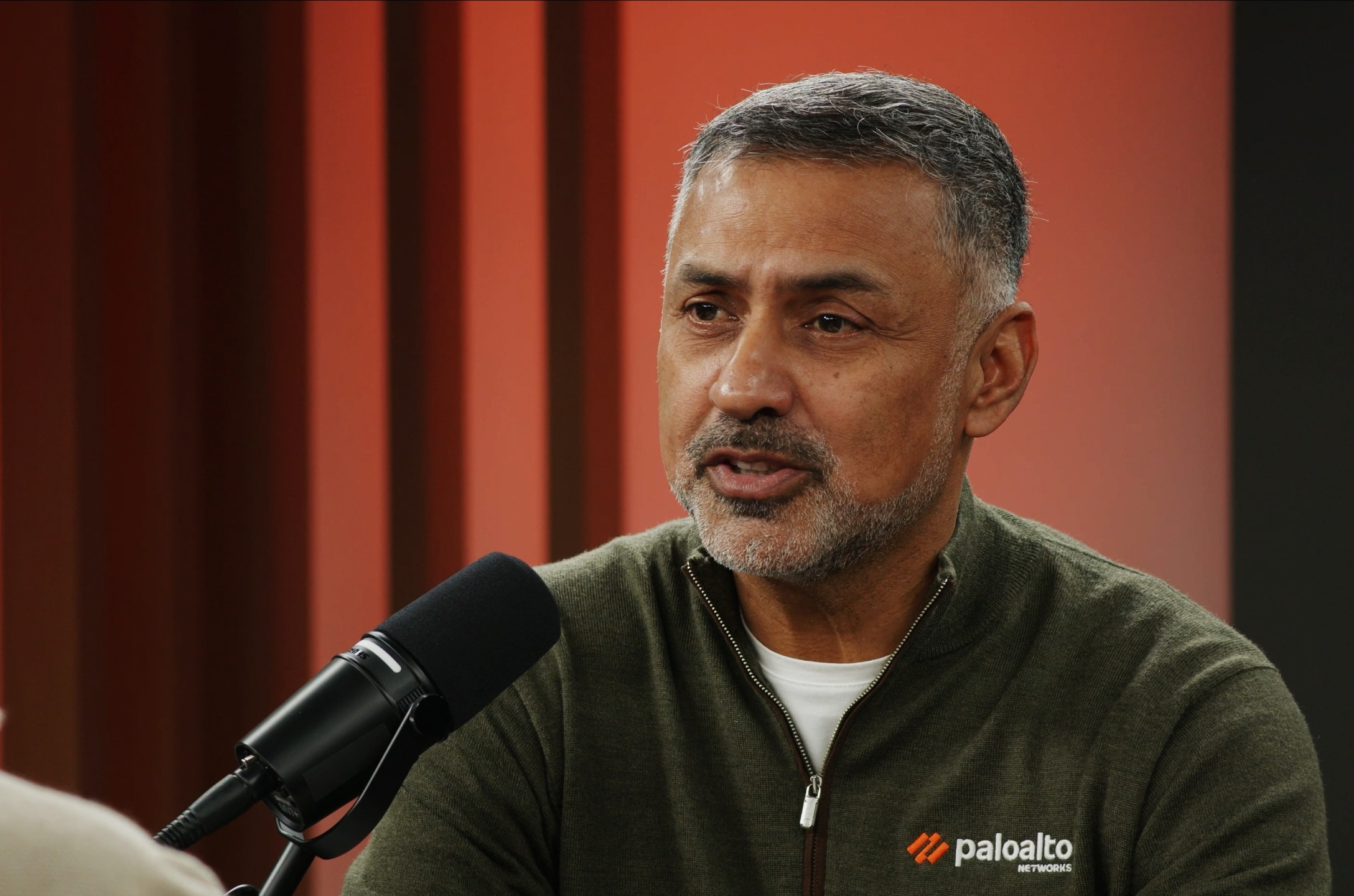
This article is based on a conversation with Nikesh Arora on the 100th episode of the Threat Vector podcast.
David Moulton interviews Nikesh Arora on the Threat Vector podcast.
"Most technologists think about technology, not about cybersecurity," Nikesh Arora says. "Cybersecurity is kind of like insurance. Let's go make great things happen, and let's make sure on the way we purchase insurance."
Coming from the CEO of the world's largest cybersecurity company, it's the quiet part said out loud, and it explains why AI deployment is racing ahead while security scrambles to keep up.
Earlier this year, Arora spoke with a CIO entirely focused on AI deployment challenges: building viable products, training models, measuring customer impact. Security never came up once. "If you're still going through the motion, trying to understand, ‘Can I actually make this thing work?’ You're not worried about security," Arora notes. The logic is brutal but consistent: Why secure something that might not even function?
Why the gap between innovation and security keeps widening.
How to read inflection points before they're obvious.
What separates organizations that prepare from those that scramble.
The Gap That Keeps Growing
The disconnect isn't new. It's the same psychology that makes airport security feel like overhead – necessary friction that slows down what should be seamless. But with AI, the gap is widening at an unprecedented pace.
Consider the infrastructure buildup happening right now. Nvidia has become a $4 trillion company selling chips that can't stay in stock. Hundreds of billions of dollars are flowing into AI-computer infrastructure. Cloud providers are buying out entire methane gas companies to power their data centers.
Yet organizations are treating AI security as something to bolt on later. That same CIO told Arora: "We worked on some stuff ourselves, and we're just jerry-rigging some things to make sure this happens securely."
Arora's response:
Jerry rig, production, and security don't work together as three terms.
Reading Signals Before They're Obvious
Arora has watched enough technology cycles to recognize the pattern. "You start seeing signs early, and then you look around, you don't see enough impact. You say, okay, maybe this is going to be just a passing shower. But you don't realize that over time this thing's getting more and more momentum."
The signs around AI are adding up:
Individual behavior has shifted.
Arora went from never talking to ChatGPT or Gemini to conducting 10-15 conversations daily. During a recent Tokyo trip, he used Gemini as his primary navigation tool, asking it to rank sumo wrestling shows for his kids rather than "trying to go read 14 websites and figure out what makes sense."
The spend is massive and accelerating.
Not just chips, entire energy infrastructures are being rebuilt to support AI compute needs.
Consumer and enterprise adoption are both surging.
From coding assistants to business analysis, use cases are expanding faster than security models can adapt.
"This thing's going to change our life fundamentally," Arora tells Moulton. "We're not seeing it at scale in our customers just yet. That doesn't mean we can sit back and wait."
Arora understands the risks involved in being late to new technology.
You have to not just anticipate where the trend is going. You have to prepare your organization and the resources to get there. Otherwise, the risk is that Silicon Valley will go fund those people who are thinking purely about the new world... and one of them's going to hit. Then you'll be two years behind with no organization, no resources deployed against it.
The Bets That Paid Off
When Arora joined Palo Alto Networks seven and a half years ago, he wrote two words on a piece of paper: cloud and AI. The company was a firewall business. Those two inflection points would require fundamental transformation, and, just as with AI now, being late was not an option.
If you don't get the network transformation right, 80% of our business will falter.
That insight drove a strategic bet on moving from point products to platform thinking, consolidating security tools rather than adding to the sprawl.
The platform approach wasn't about vendor consolidation for its own sake. It was about correlation. Unit 42® data shows that 70% of incidents now span three or more attack surfaces. When attacks move across endpoints, networks, cloud services and applications simultaneously, fragmented security creates gaps that attackers exploit ruthlessly.
Today we have coverage for 80 plus percent of the industry, which means our customers can come talk to us about a myriad of problems, and we can actually cross-correlate across all the different things we do.
With AI deployments touching every part of the technology stack, that cross-correlation becomes essential. Data flows between training environments and production systems. Models access APIs across cloud and on premises infrastructure. Applications consume AI services from multiple providers. Security that can't see and correlate across that entire landscape will miss the threats that matter most.
First Principles Over Tradition
What drives Arora's ability to spot inflection points isn't just pattern recognition, it's his refusal to accept how things have always been done.
His pet peeve: "Somebody said, well, this is how we've traditionally done it." The response reveals his approach: "You use the word traditional. I use the historical context saying, yeah, sure, they used to dig fields with picks and shovels, and now they use tractors."
This thinking drove Palo Alto Networks to reimagine SOC performance. The industry accepted four days as the normal time to detect and remediate security incidents. Arora called that unacceptable. "We need to get it to be real time."
The result was a fundamentally different architecture that analyzes data as it arrives rather than waiting for problems to appear, enabling 1-minute detection and response instead of four days.
Traditionally, SOCs would analyze the problem when the problem appeared. We said forget it. We're going to analyze everything to see if there's a problem. That architecture fundamentally transformed what we do compared to everybody else in the market.
The same first-principles approach needs to apply to AI security. Organizations can't simply extend existing security models and hope they work.
What Comes Next
With ransomware attacks now completing in as little as 25 minutes (100 times faster than just three years ago, according to Unit 42 research) reactive security simply can't keep pace. Organizations need security that thinks and responds at machine speed, built into AI deployments from day one.
"AI has become the biggest inflection point in current technology," Arora observes. Organizations are too busy deploying to worry about security. That's human nature. But it's also the moment when security teams need to stay in lockstep.
The question isn't whether to secure AI, it's whether security will be designed in or bolted on. The former takes strategic thinking now. The latter takes crisis management later.
Our job at Palo Alto and our industry is to make sure as they go build these experimental ideas into real production capability that we're staying in lockstep with them and saying, ‘Oh, by the way, here's something that can secure what you just built in a way that is not gonna get you into trouble.’
Listen to the full conversation between Nikesh Arora and David Moulton, senior director of thought leadership for Cortex® and Unit 42, on the 100th episode of Threat Vector.
In January, Google settled a lawsuit that pricked up a few ears: It agreed to pay $68 million to a wide array of people who sued the company together, alleging that Google’s voice-activated smart assistant had secretly recorded their conversations, which were then sent to advertisers to target them with promotions.
Google denied any admission of wrongdoing in the settlement agreement, but the fact stands that one of the largest phone makers in the world decided to forego a trial against some potentially explosive surveillance allegations. It’s a decision that the public has already seen in the past, when Apple agreed to pay $95 million last year to settle similar legal claims against its smart assistant, Siri.
Back-to-back, the stories raise a question that just seems to never go away: Are our phones listening to us?
This week, on the Lock and Code podcast with host David Ruiz, we revisit an episode from last year in which we tried to find the answer. In speaking to Electronic Frontier Foundation Staff Technologist Lena Cohen about mobile tracking overall, it becomes clear that, even if our phones aren’t literally listening to our conversations, the devices are stuffed with so many novel forms of surveillance that we need not say something out loud to be predictably targeted with ads for it.
“Companies are collecting so much information about us and in such covert ways that it really feels like they’re listening to us.”
When you hear the words “data privacy,” what do you first imagine?
Maybe you picture going into your social media apps and setting your profile and posts to private. Maybe you think about who you’ve shared your location with and deciding to revoke some of that access. Maybe you want to remove a few apps entirely from your smartphone, maybe you want to try a new web browser, maybe you even want to skirt the type of street-level surveillance provided by Automated License Plate Readers, which can record your car model, license plate number, and location on your morning drive to work.
Importantly, all of these are “data privacy,” but trying to do all of these things at once can feel impossible.
That’s why, this year, for Data Privacy Day, Malwarebytes Senior Privacy Advocate (and Lock and Code host) David Ruiz is sharing the one thing he’s doing different to improve his privacy. And it’s this: He’s given up Google Search entirely.
When Ruiz requested the data that Google had collected about him last year, he saw that the company had recorded an eye-popping 8,000 searches in just the span of 18 months. And those 8,000 searches didn’t just reveal what he was thinking about on any given day—including his shopping interests, his home improvement projects, and his late-night medical concerns—they also revealed when he clicked on an ad based on the words he searched. This type of data, which connects a person’s searches to the likelihood of engaging with an online ad, is vital to Google’s revenue, and it’s the type of thing that Ruiz is seeking to finally cut off.
So, for 2026, he has switched to a new search engine, Brave Search.
Today, on the Lock and Code podcast, Ruiz explains why he made the switch, what he values about Brave Search, and why he also refused to switch to any of the major AI platforms in replacing Google.
There’s a bizarre thing happening online right now where everything is getting worse.
Your Google results have become so bad that you’ve likely typed what you’re looking for, plus the word “Reddit,” so you can find discussion from actual humans. If you didn’t take this route, you might get served AI results from Google Gemini, which once recommended that every person should eat “at least one small rock per day.” Your Amazon results are a slog, filled with products that have surreptitiously paid reviews. Your Facebook feed could be entirely irrelevant because the company decided years ago that you didn’t want to see what your friends posted, you wanted to see what brands posted, because brands pay Facebook, and you don’t, so brands are more important than your friends.
But, according to digital rights activist and award-winning author Cory Doctorow, this wave of online deterioration isn’t an accident—it’s a business strategy, and it can be summed up in a word he coined a couple of years ago: Enshittification.
Enshittification is the process by which an online platform—like Facebook, Google, or Amazon—harms its own services and products for short-term gain while managing to avoid any meaningful consequences, like the loss of customers or the impact of meaningful government regulation. It begins with an online platform treating new users with care, offering services, products, or connectivity that they may not find elsewhere. Then, the platform invites businesses on board that want to sell things to those users. This means businesses become the priority and the everyday user experience is hindered. But then, in the final stage, the platform also makes things worse for its business customers, making things better only for itself.
This is how a company like Amazon went from helping you find nearly anything you wanted to buy online to helping businesses sell you anything you wanted to buy online to making those businesses pay increasingly high fees to even be discovered online. Everyone, from buyers to sellers, is pretty much entrenched in the platform, so Amazon gets to dictate the terms.
Today, on the Lock and Code podcast with host David Ruiz, we speak with Doctorow about enshittification’s fast damage across the internet, how to fight back, and where it all started.
”Once these laws were established, the tech companies were able to take advantage of them. And today we have a bunch of companies that aren’t tech companies that are nevertheless using technology to rig the game in ways that the tech companies pioneered.”
There’s an entire surveillance network popping up across the United States that has likely already captured your information, all for the non-suspicion of driving a car.
Automated License Plate Readers, or ALPRs, are AI-powered cameras that scan and store an image of every single vehicle that passes their view. They are mounted onto street lights, installed under bridges, disguised in water barrels, and affixed onto telephone poles, lampposts, parking signs, and even cop cars.
Once installed, these cameras capture a vehicle’s license plate number, along with its make, model, and color, and any identifying features, like a bumper sticker, or damage, or even sport trim options. Because nearly every ALPR camera has an associated location, these devices can reveal where a car was headed, and at what time, and by linking data from multiple ALPRs, it’s easy to determine a car’s daylong route and, by proxy, it’s owner’s daily routine.
This deeply sensitive information has been exposed in recent history.
But there’s another concern with ALPRs besides data security and potential vulnerability exploits, and that’s with what they store and how they’re accessed.
ALPRs are almost uniformly purchased and used by law enforcement. These devices have been used to help solve crime, but their databases can be accessed by police who do not live in your city, or county, or even state, and who do not need a warrant before making a search.
In fact, when police access the databases managed by one major ALPR manufacturer, named Flock, one of the few guardrails those police encounter is needing to type a single word in a basic text box. When Electronic Frontier Foundation analyzed 12 million searches made by police in Flock’s systems, they learned that police sometimes filled that text box with the word “protest,” meaning that police were potentially investigating activity that is protected by the First Amendment.
Today, on the Lock and Code podcast with host David Ruiz, we speak with Will Freeman, founder of the ALRP-tracking project DeFlock Me, about this growing tide of neighborhood surveillance and the flimsy protections afforded to everyday people.
“License plate readers are a hundred percent used to circumvent the Fourth Amendment because [police] don’t have to see a judge. They don’t have to find probable cause. According to the policies of most police departments, they don’t even have to have reasonable suspicion.”
Download slides: https://www.activecountermeasures.com/presentations In this webcast we walk through the step-by-step defenses to stop the attackers in every step of the way we showed in Attack Tactics Part 5!!! Originally recorded […]
Take a good look at Bitcoin right now… these are the unlucky ones. These are the unfortunate souls who jumped on another overinflated balloon. But, does this Bitcoin crash completely […]
For this podcast we cover a couple of different topics. First, we talk about how to password spray in a non-attributable sort of way. Beau found a way to obfuscate […]
In this webcast we cover some of the core tools we use all the time at Black Hills Information Security. However, there’s a twist. We don’t talk about Nessus, Nmap, […]
Yes.. Ethical Hacker Kids. The holidays are coming up! Here John & Jordan cover the different games, tools and gifts we can give kids that help teach them the trade. […]
Over the past few months, we have discovered a couple trends that organizations seem to be missing. No silver bullets, just some general vulnerability issues we are seeing again and […]
John Strand shares some of his own journey into information security and also his ideas and tips for those wanting to get into the industry from the start, or those […]
Join special guest Chris Brenton, COO of Active Countermeasures, as he discusses the anatomy of beacons and why you need to be looking for them during a threat hunt. He […]

 Login
Login