Normal view

Happy 9th Anniversary, CTA: A Celebration of Collaboration in Cyber Defense

24 January 2026 at 01:00

Unit 42 celebrates 9 years of the Cyber Threat Alliance, tracing its journey from a bold idea to a global leader in collaborative cyber defense.

The post Happy 9th Anniversary, CTA: A Celebration of Collaboration in Cyber Defense appeared first on Unit 42.

Unit 42 Incident Response Retainer for AWS Security Incident Response

2 December 2025 at 14:00

Palo Alto Networks Unit 42 and AWS Announce Expanded Collaboration, Launching No-Cost Retainer for AWS Security Incident Response available in AWS Marketplace

Speed is everything in today’s security landscape. From Unit 42®’s frontline experience responding to more than 500 incidents last year, we've seen that in nearly one in five incidents, attackers go from initial compromise to data exfiltration in less than an hour. It leaves almost no time to react.

The challenge is compounded by the distributed nature of the modern IT environment; cyberattacks are rarely confined to one location. In fact, 70 percent of incidents now span three or more attack surfaces, from endpoints and networks to multiple cloud environments. This complexity increases vulnerabilities, which is a key reason why 86 percent of major incidents disrupt business operations.

When a breach moves at this speed and crosses complex silos, an enterprise has two immediate, critical needs:

  1. Rapid, integrated expertise to contain the threat at its source within the cloud.
  2. Holistic, end-to-end investigation to determine the full scope of the attack, tracing the attacker's path wherever it leads, across all systems and environments.

The No-Cost Unit 42 IR Retainer Available on AWS Marketplace

Recognizing customers need a faster, more comprehensive incident response strategy in the cloud, Palo Alto Networks Unit 42 is expanding our partnership with Amazon Web Services (AWS) Security Incident Response service. The collaboration introduces a no-cost Unit 42 Incident Response Retainer, which is now available to qualified customers in AWS Marketplace. Our value-added offer provides qualified customers with rapid access to Unit 42’s world-class investigative expertise and dramatically minimizes the critical time between an alert and full containment.

For qualified customers, here's what the no-cost Unit 42 Incident Response Retainer offers:

  • 250 hours of initial Unit 42 Incident Response services at no cost.
  • A 2-hour response time agreement for incident response.
  • 24/7/365 access to the Unit 42 Incident Response team.

As an AWS Security Incident Response Service Ready partner, this collaboration is designed to deliver seamless, end-to-end incident response and proactive security services. By combining Unit 42’s deep experience in managing complex, legally privileged investigations with the rapid engagement of AWS Security Incident Response, organizations can resolve critical incidents faster and more comprehensively.

Unit 42 also offers preferred pricing to AWS Security Incident Response customers for proactive services through paid retainer offerings, also available in AWS Marketplace.

Hart Rossman, Vice President of Global Services Security, AWS:

When cyberattacks move at cloud speed, customers need immediate access to comprehensive expertise. By integrating Unit 42's end-to-end investigative capabilities with AWS Security Incident Response, we're delivering a unified response that helps customers contain threats faster and minimize business disruption. The no-cost retainer ensures they can activate the full scope of resources they need within minutes, not hours.

Effective response to a cloud breach demands deep technical skill and the ability to manage complexity under pressure. Unit 42 excels at managing high-stakes incidents. By coupling our expertise with AWS Security Incident Response’s capabilities to prepare, respond and recover from security incidents, Unit 42 offers customers a unified defense. Streamlining the entire process, from initial alert to final resolution, allows organizations to get back to business faster and limit operational disruption.

A Unified Front Against Complex Cloud Incidents

The collaboration is designed to solve a critical customer problem: Reduce the time and complexity of responding to incidents that span both AWS resources and the broader enterprise.

The combined offering delivers three key benefits, providing customers with a holistic and agile defense strategy:

  • Comprehensive Investigation: Unit 42’s expertise enables an investigation across multiple environments, including endpoints, networks and other enterprise data sources, complementing AWS’s incident response technologies and expertise.
  • Rapid, 24/7 Access to Experts: AWS Security Incident Response provides direct, 24/7 access to the AWS Customer Incident Response Team (CIRT), capable of engaging within minutes. Unit 42 is skilled at serving in the incident command role, coordinating efforts among internal stakeholders, other forensic and recovery vendors, as well as legal counsel.
  • Response Readiness with No-Cost Retainer: The offering removes the typical administrative and procurement overhead of incident response engagements. The added value ensures qualified customers can activate the full resources of Unit 42 instantly, often at the direction of counsel.

Availability

The Unit 42 Incident Response and proactive service offerings are available in AWS Marketplace today. More information on the partnership will be shared during AWS re:Invent 2025 (December 1-5, 2025).

To learn more, visit the Unit 42 listing available in AWS Marketplace.

The post Unit 42 Incident Response Retainer for AWS Security Incident Response appeared first on Palo Alto Networks Blog.

Patch Tuesday, January 2026 Edition

14 January 2026 at 01:47

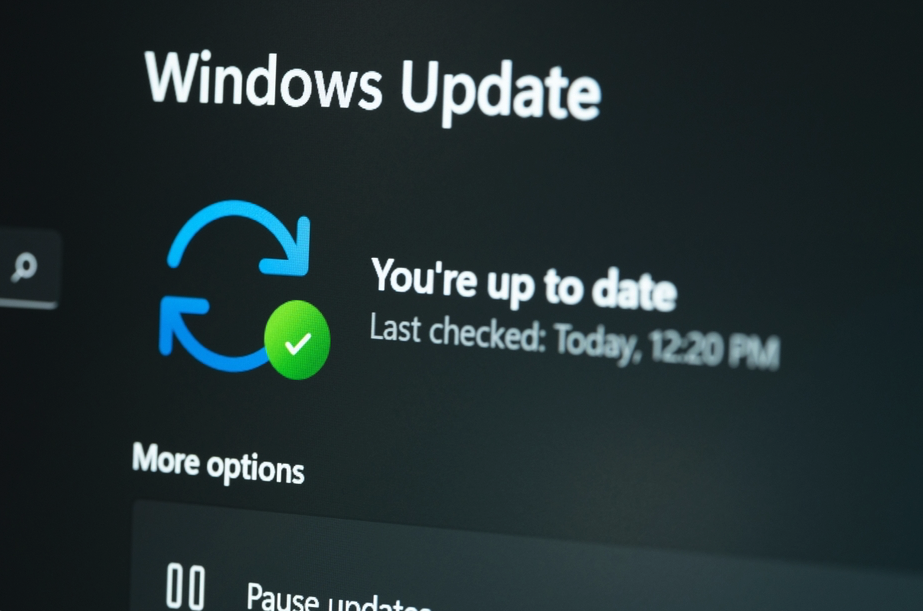
Microsoft today issued patches to plug at least 113 security holes in its various Windows operating systems and supported software. Eight of the vulnerabilities earned Microsoft’s most-dire “critical” rating, and the company warns that attackers are already exploiting one of the bugs fixed today.

January’s Microsoft zero-day flaw — CVE-2026-20805 — is brought to us by a flaw in the Desktop Window Manager (DWM), a key component of Windows that organizes windows on a user’s screen. Kev Breen, senior director of cyber threat research at Immersive, said despite awarding CVE-2026-20805 a middling CVSS score of 5.5, Microsoft has confirmed its active exploitation in the wild, indicating that threat actors are already leveraging this flaw against organizations.

Breen said vulnerabilities of this kind are commonly used to undermine Address Space Layout Randomization (ASLR), a core operating system security control designed to protect against buffer overflows and other memory-manipulation exploits.

“By revealing where code resides in memory, this vulnerability can be chained with a separate code execution flaw, transforming a complex and unreliable exploit into a practical and repeatable attack,” Breen said. “Microsoft has not disclosed which additional components may be involved in such an exploit chain, significantly limiting defenders’ ability to proactively threat hunt for related activity. As a result, rapid patching currently remains the only effective mitigation.”

Chris Goettl, vice president of product management at Ivanti, observed that CVE-2026-20805 affects all currently supported and extended security update supported versions of the Windows OS. Goettl said it would be a mistake to dismiss the severity of this flaw based on its “Important” rating and relatively low CVSS score.

“A risk-based prioritization methodology warrants treating this vulnerability as a higher severity than the vendor rating or CVSS score assigned,” he said.

Among the critical flaws patched this month are two Microsoft Office remote code execution bugs (CVE-2026-20952 and CVE-2026-20953) that can be triggered just by viewing a booby-trapped message in the Preview Pane.

Our October 2025 Patch Tuesday “End of 10” roundup noted that Microsoft had removed a modem driver from all versions after it was discovered that hackers were abusing a vulnerability in it to hack into systems. Adam Barnett at Rapid7 said Microsoft today removed another couple of modem drivers from Windows for a broadly similar reason: Microsoft is aware of functional exploit code for an elevation of privilege vulnerability in a very similar modem driver, tracked as CVE-2023-31096.

“That’s not a typo; this vulnerability was originally published via MITRE over two years ago, along with a credible public writeup by the original researcher,” Barnett said. “Today’s Windows patches remove agrsm64.sys and agrsm.sys. All three modem drivers were originally developed by the same now-defunct third party, and have been included in Windows for decades. These driver removals will pass unnoticed for most people, but you might find active modems still in a few contexts, including some industrial control systems.”

According to Barnett, two questions remain: How many more legacy modem drivers are still present on a fully-patched Windows asset; and how many more elevation-to-SYSTEM vulnerabilities will emerge from them before Microsoft cuts off attackers who have been enjoying “living off the land[line] by exploiting an entire class of dusty old device drivers?”

“Although Microsoft doesn’t claim evidence of exploitation for CVE-2023-31096, the relevant 2023 write-up and the 2025 removal of the other Agere modem driver have provided two strong signals for anyone looking for Windows exploits in the meantime,” Barnett said. “In case you were wondering, there is no need to have a modem connected; the mere presence of the driver is enough to render an asset vulnerable.”

Immersive, Ivanti and Rapid7 all called attention to CVE-2026-21265, which is a critical Security Feature Bypass vulnerability affecting Windows Secure Boot. This security feature is designed to protect against threats like rootkits and bootkits, and it relies on a set of certificates that are set to expire in June 2026 and October 2026. Once these 2011 certificates expire, Windows devices that do not have the new 2023 certificates can no longer receive Secure Boot security fixes.

Barnett cautioned that when updating the bootloader and BIOS, it is essential to prepare fully ahead of time for the specific OS and BIOS combination you’re working with, since incorrect remediation steps can lead to an unbootable system.

“Fifteen years is a very long time indeed in information security, but the clock is running out on the Microsoft root certificates which have been signing essentially everything in the Secure Boot ecosystem since the days of Stuxnet,” Barnett said. “Microsoft issued replacement certificates back in 2023, alongside CVE-2023-24932 which covered relevant Windows patches as well as subsequent steps to remediate the Secure Boot bypass exploited by the BlackLotus bootkit.”

Goettl noted that Mozilla has released updates for Firefox and Firefox ESR resolving a total of 34 vulnerabilities, two of which are suspected to be exploited (CVE-2026-0891 and CVE-2026-0892). Both are resolved in Firefox 147 (MFSA2026-01) and CVE-2026-0891 is resolved in Firefox ESR 140.7 (MFSA2026-03).

“Expect Google Chrome and Microsoft Edge updates this week in addition to a high severity vulnerability in Chrome WebView that was resolved in the January 6 Chrome update (CVE-2026-0628),” Goettl said.

As ever, the SANS Internet Storm Center has a per-patch breakdown by severity and urgency. Windows admins should keep an eye on askwoody.com for any news about patches that don’t quite play nice with everything. If you experience any issues related installing January’s patches, please drop a line in the comments below.

Why iPhone users should update and restart their devices now

13 January 2026 at 13:55

If you were still questioning whether iOS 26+ is for you, now is the time to make that call.

Why?

On December 12, 2025, Apple patched two WebKit zero‑day vulnerabilities linked to mercenary spyware and is now effectively pushing iPhone 11 and newer users toward iOS 26+, because that’s where the fixes and new memory protections live. These vulnerabilities were primarily used in highly targeted attacks, but such campaigns are likely to expand over time.

WebKit powers the Safari browser and many other iOS applications, so it’s a big attack surface to leave exposed and isn’t limited to “risky” behavior. These vulnerabilities allowed an attacker to execute arbitrary code on a device after exploitation via malicious web content.

Apple has confirmed that attackers are already exploiting these vulnerabilities in the wild, making installation of the update a high‑priority security task for every user. Campaigns that start with diplomats, journalists, or executives often lead to tooling and exploits leaking or being repurposed, so “I’m not a target” is not a viable safety strategy.

Due to public resistance to new features like Liquid Glass, many iPhone users have not yet upgraded to iOS 26.2. Reports suggest adoption of iOS 26 has been unusually slow. As of January 2026, only about 4.6% of active iPhones are on iOS 26.2, and roughly 16% are on any version of iOS 26, leaving the vast majority on older releases such as iOS 18.

However, Apple only ships these fixes and newer protections, such as Memory Integrity Enforcement, on iOS 26+ for supported devices. Users on older, unsupported devices won’t be able to access these protections at all.

Another important factor in the upgrade cycle is restarting the device. What many people don’t realize is that when you restart your device, any memory-resident malware is flushed—unless it has somehow gained persistence, in which case it will return. High-end spyware tools tend to avoid leaving traces needed for persistence and often rely on users not restarting their devices.

Upgrading requires a restart, which makes this a win-win: you get the latest protections, and any memory-resident malware is flushed at the same time.

For iOS and iPadOS users, you can check if you’re using the latest software version, go to Settings > General > Software Update. It’s also worth turning on Automatic Updates if you haven’t already. You can do that on the same screen.

How to stay safe

The most important fix—however painful you may find it—is to upgrade to iOS 26.2. Not doing means missing an accumulating list of security fixes, leaving your device vulnerable to more and more newly found vulnerabilities.

 But here are some other useful tips:

  • Make it a habit to restart your device on a regular basis. The NSA recommends doing this weekly.
  • Do not open unsolicited links and attachments without verifying with the trusted sender.
  • Remember, Apple threat notifications will never ask users to click links, open files, install apps or ask for account passwords or verification code.
  • For Apple Mail users specifically, these vulnerabilities create risk when viewing HTML-formatted emails containing malicious web content.
  • Malwarebytes for iOS can help keep your device secure, with Trusted Advisor alerting you when important updates are available.
  • If you are a high-value target, or you want the extra level of security, consider using Apple’s Lockdown Mode.

We don’t just report on phone security—we provide it

Cybersecurity risks should never spread beyond a headline. Keep threats off your mobile devices by downloading Malwarebytes for iOS, and Malwarebytes for Android today.

Microsoft Patch Tuesday, December 2025 Edition

10 December 2025 at 00:18

Microsoft today pushed updates to fix at least 56 security flaws in its Windows operating systems and supported software. This final Patch Tuesday of 2025 tackles one zero-day bug that is already being exploited, as well as two publicly disclosed vulnerabilities.

Despite releasing a lower-than-normal number of security updates these past few months, Microsoft patched a whopping 1,129 vulnerabilities in 2025, an 11.9% increase from 2024. According to Satnam Narang at Tenable, this year marks the second consecutive year that Microsoft patched over one thousand vulnerabilities, and the third time it has done so since its inception.

The zero-day flaw patched today is CVE-2025-62221, a privilege escalation vulnerability affecting Windows 10 and later editions. The weakness resides in a component called the “Windows Cloud Files Mini Filter Driver” — a system driver that enables cloud applications to access file system functionalities.

“This is particularly concerning, as the mini filter is integral to services like OneDrive, Google Drive, and iCloud, and remains a core Windows component, even if none of those apps were installed,” said Adam Barnett, lead software engineer at Rapid7.

Only three of the flaws patched today earned Microsoft’s most-dire “critical” rating: Both CVE-2025-62554 and CVE-2025-62557 involve Microsoft Office, and both can exploited merely by viewing a booby-trapped email message in the Preview Pane. Another critical bug — CVE-2025-62562 — involves Microsoft Outlook, although Redmond says the Preview Pane is not an attack vector with this one.

But according to Microsoft, the vulnerabilities most likely to be exploited from this month’s patch batch are other (non-critical) privilege escalation bugs, including:

CVE-2025-62458 — Win32k
CVE-2025-62470 — Windows Common Log File System Driver
CVE-2025-62472 — Windows Remote Access Connection Manager
CVE-2025-59516 — Windows Storage VSP Driver
CVE-2025-59517 — Windows Storage VSP Driver

Kev Breen, senior director of threat research at Immersive, said privilege escalation flaws are observed in almost every incident involving host compromises.

“We don’t know why Microsoft has marked these specifically as more likely, but the majority of these components have historically been exploited in the wild or have enough technical detail on previous CVEs that it would be easier for threat actors to weaponize these,” Breen said. “Either way, while not actively being exploited, these should be patched sooner rather than later.”

One of the more interesting vulnerabilities patched this month is CVE-2025-64671, a remote code execution flaw in the Github Copilot Plugin for Jetbrains AI-based coding assistant that is used by Microsoft and GitHub. Breen said this flaw would allow attackers to execute arbitrary code by tricking the large language model (LLM) into running commands that bypass the user’s “auto-approve” settings.

CVE-2025-64671 is part of a broader, more systemic security crisis that security researcher Ari Marzuk has branded IDEsaster (IDE  stands for “integrated development environment”), which encompasses more than 30 separate vulnerabilities reported in nearly a dozen market-leading AI coding platforms, including Cursor, Windsurf, Gemini CLI, and Claude Code.

The other publicly-disclosed vulnerability patched today is CVE-2025-54100, a remote code execution bug in Windows Powershell on Windows Server 2008 and later that allows an unauthenticated attacker to run code in the security context of the user.

For anyone seeking a more granular breakdown of the security updates Microsoft pushed today, check out the roundup at the SANS Internet Storm Center. As always, please leave a note in the comments if you experience problems applying any of this month’s Windows patches.

Why You Got Hacked – 2025 Super Edition

By: BHIS
19 November 2025 at 18:50

This article was written to provide readers with an overview of a selection of our pentest results from the last 15 months. This data was gathered toward the end of September 2025. Shockingly, the data does not differ much from our prior analyses conducted at the end of 2022 or 2023.

The post Why You Got Hacked – 2025 Super Edition appeared first on Black Hills Information Security, Inc..

Proxying Your Way to Code Execution – A Different Take on DLL Hijacking 

By: BHIS
26 September 2024 at 17:00

While DLL hijacking attacks can take on many different forms, this blog post will explore a specific type of attack called DLL proxying, providing insights into how it works, the potential risks it poses, and briefly the methodology for discovering these vulnerable DLLs, which led to the discovery of several zero-day vulnerable DLLs that Microsoft has acknowledged but opted to not fix at this time.

The post Proxying Your Way to Code Execution – A Different Take on DLL Hijacking  appeared first on Black Hills Information Security, Inc..

POGS at Wild West Hackin’ Fest! 

Ean Meyer // This post is for attendees of Wild West Hackin’ Fest: Deadwood 2022 POGs? Yes, POGs! If you aren’t familiar with POGs, this game started decades ago, reaching […]

The post POGS at Wild West Hackin’ Fest!  appeared first on Black Hills Information Security, Inc..

Rogue RDP – Revisiting Initial Access Methods

Mike Felch // The Hunt for Initial Access With the default disablement of VBA macros originating from the internet, Microsoft may be pitching a curveball to threat actors and red […]

The post Rogue RDP – Revisiting Initial Access Methods appeared first on Black Hills Information Security, Inc..

❌