When we give our private information to the government to pay taxes, apply for a job, or vote, we should be able to trust that our data won't later be used against us. But in a betrayal of that trust, the federal government has been pooling the information it has about us on an unprecedented scale—and using it for purposes we never agreed to.
For over 35 years, EFFector has been your guide to understanding the intersection of technology, civil liberties, and the law. This issue covers our free tracker blocker coming to Safari, a call to action for net neutrality in California, and a big win in our lawsuit against the DOGE data grab.
Prefer to listen in? EFFector is now available on all major podcast platforms. This time we're talking to EFF's F. Mario Trujillo about the dangers of government data grabs—and what defenders of privacy are doing to stop it. You can find the episode and subscribeon your podcast platform of choice:
Want to protect your right to digital privacy? Sign up for EFF's EFFector newsletter for updates, ways to take action, and new merch drops. You can also fuel the fight for privacy and free speech online when you support EFF today!
The massive funding round comes just days after reports emerged that Upwind had attracted acquisition interest from several companies, including Datadog
This week, Axios reported that major US banks were detecting third-party AI agents operating inside customer accounts. In many cases, customers have given the agents their usernames and passwords so they could act on their behalf. This kind of access can violate a bank’s rules.
“Are you protecting me, or are you protecting your own profits?”
Bianco described traditional finance’s business model as “based on laziness.” Customers may leave idle cash in low- or no-interest bank accounts rather than move it into a money market fund. An AI agent could make that move for them. “Now that you’re able to do it, the banks are afraid they’re gonna lose that revenue stream,” he said.
The banks offer a different explanation. JPMorgan Chase CEO Jamie Dimon said the bank wouldn’t allow just any outside agent into its systems because doing so was “too risky for clients and for JPMorgan.”
Both explanations can be true: banks can want to retain deposits while also facing real security problems when software acts through customers’ accounts.
Handing over your banking login introduces another service into the security chain. A vulnerability in that service could expose your credentials or allow your account to be misused. And as Bank of America reportedly pointed out:
“If you do share your credentials, keep in mind that you’re responsible for activity resulting from that access.”
That’s the bank’s stated position, not a universal ruling on consumers’ legal rights. Still, it’s a warning worth taking seriously.
Pros and cons
An AI agent with permission to make purchases might find and buy an item at a lower price. But giving an agent access to your bank account also means sharing sensitive banking information with a third party. We’ve seen shared AI chats become searchable online too.
Axios reported that many banks allow, or are moving toward allowing, read-only access. This can let a tool analyze transactions without giving it permission to move money.
That’s an important boundary, but it doesn’t make the information harmless. An agent that can read bank statements may still disclose them if it’s compromised or manipulated. Preventing transactions and protecting confidentiality are separate security goals.
How to keep control of your money
For consumers, the practical question is not whether banks have perfectly selfless motives. It’s what access you’re giving away, and what could happen if the agent makes a mistake.
Don’t paste banking passwords or security codes into a general-purpose AI assistant. Major banks have explicitly warned customers against sharing their credentials.
Use your bank’s approved connection methods rather than giving an agent your login. Where supported, choose read-only access if all you need is analysis or budgeting help.
Give agents access to as little sensitive information as possible. An assistant comparing publicly advertised savings rates doesn’t need your bank statements. OpenAI recommends limiting agents to the data and credentials they need for the task.
Review consequential actions yourself. If an agent asks for confirmation, check exactly what it intends to do and what information it will share. Don’t treat a confirmation prompt as a formality.
AI can make it easier to compare financial products and spot opportunities you might otherwise miss. But an assistant that finds a better rate and an agent that can act inside your account are different propositions.
Let it help with the homework, but be cautious about handing it the keys.
Let’s face it, an incognito window can only do so much.
Breaches, dark web trading, credit fraud. Malwarebytes Identity Theft Protection monitors for all of it, alerts you fast, and comes with identity theft insurance.
Threat actors are beginning to probe for a newly patched critical vulnerability in Oracle E-Business Suite (EBS), according to threat intelligence firm Defused Cyber.
The vulnerability in question is CVE-2026-101767 (CVSS score: 9.8) in the Oracle Application Object Library of Oracle E-Business Suite. It was patched by Oracle last week as part of its Critical Patch Update.
Security researchers
Cisco has open sourced a behavior detection engine that watches AI agents, to help security teams prevent rogue agents from going off the rails like they did with the Hugging Face hack – or worse. It’s called Project Quarry, and it aims to provide a “shared language” for evaluating agent behavior, along the lines of what Snort, which Cisco also maintains, did for detecting malicious network traffic and what YARA did for rule-based malware identification. Most detection tools rely on specific interactions with an AI model or agent. Did it attempt prompt injection? Or did the agent call an attack tool? “But what is missing is the entire context under which something may occur,” Amy Chang, head of AI threat and security research at Cisco, said in an exclusive interview with The Register. She likened this to credit card fraud detection. Without context, individual transactions such as a small test charge or a single purchase in a location far away from a card-holder's usual location may not raise any flags. “And then you try again,” making another fraudulent purchase, “and that went through, too. So now I’m gonna buy the PS5,” Chang said. “Those are the things that Quarry addresses by taking into consideration the entire agent session,” she explained. “One tool call may seem in-scope until you realize that that next step is taking that information and sending it to an attacker-controlled inbox or server.” Even data theft is a sequence and not a single agentic action. Agentic AI security firm Invariant Labs demonstrated this with a proof-of-concept attack against GitHub's MCP server that hijacked a user's agent via a malicious GitHub Issue, and coerced it into leaking data from private repositories. Simply reading a configuration file, or sending a request to an external endpoint may be legitimate agentic actions. However, combining the two can lead to data exfiltration – and shows “why action relationships matter,” wrote Chang and fellow Cisco researchers Adam Swanda, Ravikumar Balakrishnan, and Konstantin Berlin in a blog post about Quarry shared with The Register ahead of publication “A policy can produce a finding when the trace shows a sensitive file read followed within a defined window by an external send,” they wrote. “The risk comes from the relationship between the two actions, so the finding should preserve evidence from both." Quarry covers single- and multi-turn large language model conversations, agents, tool use, Model Context Protocol (MCP) interactions, and multimodal inputs. In addition to the open source code itself, the project’s GitHub repository includes installation instructions, supported Python versions, plugins for Claude Code, Codex and other MCP-compatible agents, configuration examples, rule-writing guidance, and a rule starter pack. For instance, with the rule pack, “If a base-64 encoded malware is somewhere in the tool call, that would result in a block,” Chang said. The rule format looks similar to a YARA or Snort rule, with a header that details the traffic to examine, content to match, and metadata for tracking the rule. Here’s a Quarry rule that flags an agent that reads a credentials file: While the Cisco Ai researchers have not run Quarry against data describing the OpenAI-Hugging Face incident, they suggest that if the intrusion had been read as a complete, step-by-step record of a single session, there were several points where the AI agents’ steps would have given a Quarry rule something to act on and flag for humans. For example, Quarry would probably have flagged internet access from a sandbox. “The rule can flag specific tool calls that reach an external server asset that wasn’t in the task’s allow list,” Chang said. “Another one would be credentials found and used somewhere else.” According to OpenAI’s technical report about the Hugging Face intrusion, this is exactly what happened on July 10, when an agent validated 14 exposed Hugging Face tokens with write access and shared them. “The rule would flag that there was a credential in the tool result that then called an outside service, which is likely not within the parameters of what you would want to do in this case,” Chang said. “We don't want you to go and search for credentials that may have been leaked or inadvertently exposed and then utilize them to conduct a task.” The Cisco team is quick to say that rules along are not a substitute for chain-of-thought monitors, or other forms of human oversight – but they do help record a pattern that other teams can then “review, test, and apply to their own agents,” they wrote. Herein also lies the benefit of open source, and a collective approach to defending against adversarial use of AI, Chang said. “Do we have all the answers? No,” Chang said. “We all see slices of the problem, and it’s important for us to share what we see.”®
A critical 16-year-old flaw in EDK II, the open-source code that most hardware makers use to build UEFI firmware, can allow an attacker to run code on a machine before its operating system loads, but only while the machine is booting over the network.
UEFI firmware is the software that runs first when a computer is switched on, before the operating system. An attacker who can reach the machine
UK domain registrar 123 Reg (no relation – Ed) says it was the victim of an “AI-driven cyberattack” that exposed customer data. Customers began receiving their notification emails this week, informing them that their contact information, "related customer relationship data," company VAT numbers, and "product information from an application programming interface (API)" were compromised. A company spokesperson elaborated, saying this means that names, phone numbers, countries, language and currency preferences, account creation dates, the products on the account, and marketing preferences were affected. 123 Reg described the September 18 intrusion as "the first known AI-driven cyberattack against our company," and told The Register that early signs point toward a China-nexus attacker. "Our investigation identified IP addresses that we assessed to be the core attacker infrastructure, which were hosted in China and Singapore, indicating a strong Chinese nexus," the spokesperson said. "Our investigation further identified AI cyberattack 'skills' hosted on Chinese infrastructure, including copies of skills open sourced by Anthropic and several other AI exploitation frameworks and scripts." They went on to say that many of the artefacts left behind led 123 Reg to suspect that a Chinese state-sponsored group, known for abusing Claude Code in attacks against at least 30 organizations, could be behind the break-in. There is also a suspicion that the same group that hit a number of South Korea’s financial institutions using open-source Chinese AI tool ARTEX, was behind the attack on 123 Reg too. "The TA's mirror of 'anthropic_skills,' and the account naming conventions found on the Chinese servers are consistent with preparation of this class of AI-augmented operation," the spokesperson told us. "In addition, on October 7, 2026, CrowdStrike published CSA-261162, describing an unknown, likely Chinese-speaking actor that targeted several South Korean financial organizations starting in late September 2026, which is the same period during which we were attacked. "That actor used ARTEX, an open-source Chinese-developed agentic penetration-testing tool released in July 2026, which was also observed to be used in the attack that targeted us." The GoDaddy-owned registrar reported the attack to law enforcement agencies, brought in outside cybersecurity support, and notified the FTC, as well as the data protection authorities in the UK and EU. The company spokesperson added that it worked with Singapore-based ISPs to shut down the attacker's servers in the region, which helped disrupt the attack, in addition to "other actions by us and industry partners." 123 Reg's email to customers stated the attacker's activity "was limited to reading" customer data, although the spokesperson told us "it's possible they created copies of the information," and that this is what prompted the notification. The registrar urged customers to stay alert to the potential misuse of their data, and to treat communications appearing to come from the company with caution. "If you receive a message or call and aren't sure it's from 123 Reg, go directly to our website and log in," the email said. "We will never contact you to request your password, payment details, or verification codes by email, text, or phone. "We also strongly recommend turning on two-step verification (2SV), which helps keep your account protected even if someone tricks you into sharing your password. You can find instructions for setting up 2SV in your 123 Reg account. "We apologize for any inconvenience this may have caused." ®
Artificial Intelligence (AI) has become one of this decade's defining technologies. From healthcare and finance to manufacturing and education, organizations increasingly rely on AI to automate repetitive tasks, uncover patterns hidden within large datasets, and support faster decision-making. Cybersecurity has experienced a similar transformation. While attackers employ AI to automate
Adobe has released patches to address multiple critical security flaws in Campaign Classic that, if successfully exploited, could result in arbitrary code execution, security feature bypass, and privilege escalation.
The list of eight vulnerabilities is as follows -
CVE-2026-104351 (CVSS score: 9.9) - A code injection vulnerability that could lead to arbitrary code execution.
On October 27, Google issued a new Stable channel update for Chrome.
Most users are on Chrome’s Stable channel. The desktop update brings Chrome to versions 156.0.8078.73/.74 for Windows and Mac and 156.0.8078.73 for Linux. The update includes 52 security fixes, including four rated Critical.
On the same day, Mozilla issued Security Advisory 2026-118, which fixes 167 vulnerabilities. Firefox 159 also introduces several new features.
Both updates will roll out over the coming days and weeks.
How to update Chrome
The easiest option is to allow Chrome to update automatically. But you can end up lagging behind on updates if you never close your browser or if something goes wrong, such as an extension preventing the update.
If you don’t want to wait for the rollout to reach you, manually updating is easy. Open About Google Chrome from Chrome’s settings or Help menu. Chrome will check for updates. If one is available, click Relaunch to apply it.
To update Firefox, open the browser and click the menu button at the right side of the Firefox toolbar, then go to Help and select About Firefox. The About Mozilla Firefox window will open.
Firefox will automatically check for updates. If one is available, it will be downloaded. Once done, you’ll be prompted to click Relaunch. After Firefox restarts, it will be up to date.
After the update, the version should be 159.0 or later
Technical details
These Chrome and Firefox updates address a familiar problem: browser code mishandling memory while processing web content. Both releases fix use-after-free vulnerabilities, including flaws in page layout, JavaScript processing, and SVG graphics.
A use-after-free vulnerability occurs when a program attempts to access a memory location after it has been freed. That can cause crashes or, in some cases, allow an attacker to run their own code.
There’s another connection between these updates: both Google and Mozilla credit OpenAI Codex Security with finding bugs fixed in these releases. AI can help security teams examine browser code for weaknesses, alongside human code reviews and automated tests that check how software handles unexpected inputs.
Mozilla’s collaboration with Anthropic shows how AI-discovered findings can lead to fixes: researchers validated vulnerabilities before reporting them, giving Mozilla’s team reproducible bugs to investigate, repair, and deliver to users.
Browse like no one’s watching.
Malwarebytes Privacy VPN encrypts your connection and never logs what you do, so the next story you read doesn’t have to feel personal. Try it free →
Modern phishing campaigns can compromise American businesses without relying on traditional credential theft. Attackers can abuse legitimate cloud services, authentication mechanisms, and trusted business workflows to gain access to corporate accounts while leaving fewer obvious signs behind.
ANY.RUN's analysis of Skyw4lker, a device code phishing campaign primarily targeting U.S. organizations
The process that gates nearly every B2B deal is a self-assessment the sender distrusts and the receiver accepts. There is finally a better basis for trust between companies.
Network-connected surveillance cameras are now widespread in both home and enterprise environments, so securing them is essential to safeguarding physical spaces and sensitive assets. As these devices continue to gain new features and network connectivity capabilities, vulnerabilities in their implementation can have significant security implications.
During our research, we discovered a denial-of-service vulnerability that affects Intelbras IP cameras systems. The flaw resides in a firmware update endpoint that is accessible without authentication and allows anyone with access to the local Wi-Fi network to knock cameras offline. A single request disrupts the camera for only about a minute, but sending periodic requests keeps the device offline indefinitely. We reported the issue to Intelbras, monitored the remediation process, validated the fix in the new firmware, and will now demonstrate the exploitation procedure step-by-step.
Following our notification, Intelbras patched the vulnerability and released updated firmware (R.260804) along with update instructions. A candidate ID of CAN-2026-2035970 has been assigned by MITRE following submission, pending the final CVE assignment. Additionally, the Intelbras team recently informed us that MITRE has classified the vulnerability as Medium, assigning it a score of 5.1 under the CVSS 4.0 framework. The issue discussed in this article is no longer present in the latest firmware version.
Firmware
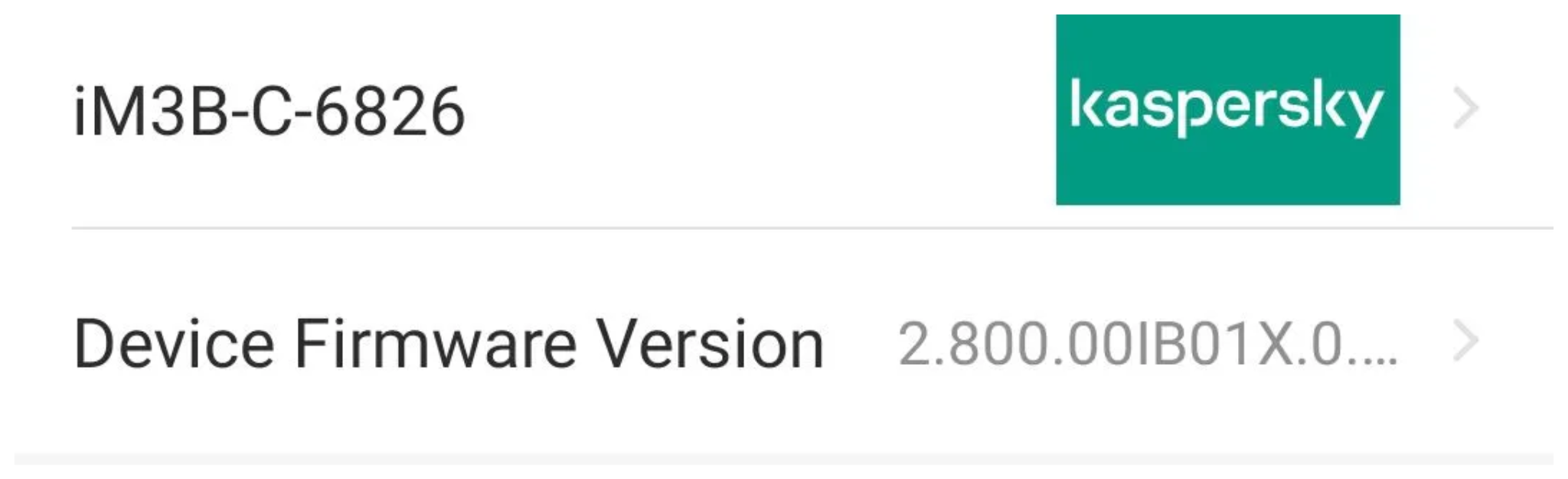
Intelbras provides firmware files on its official website. While users can manually install these updates via an SD card, the cameras also natively support firmware upgrades over the local network via their web interface and mobile app. We obtained the firmware version v240927 for the iM3B-C camera, which was the latest available version at the time of our research. According to Intelbras, the same firmware is also compatible with the iMX C, iM4 C, iM5 SC, iME 360 C, and iM7+ FC models. Below, we can view the firmware version and the camera model used as an example.
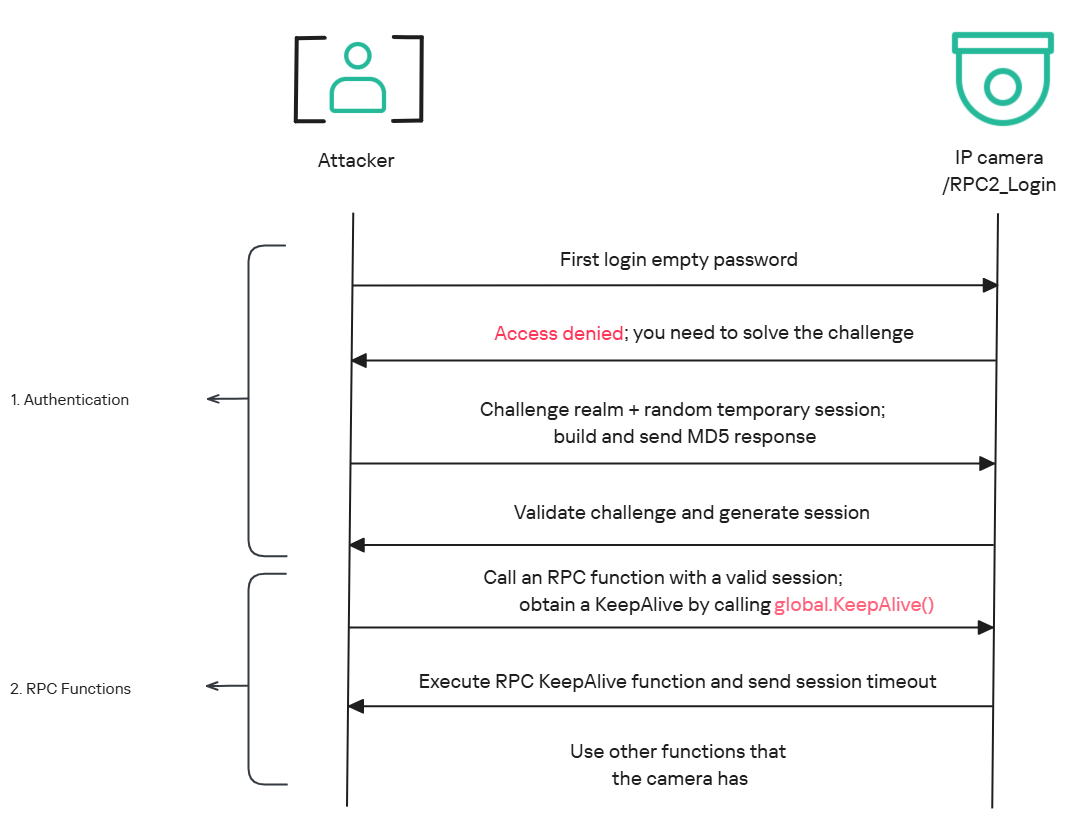
To provide context, we will explain how the camera’s authentication mechanism works and why it is relevant to accessing the camera’s endpoints. The main firmware component is an ARM binary named sonia, responsible for controlling the kernel drivers used by the camera hardware, authentication, and livestream recording, among other things.
How authentication works
The global.login RPC method handles authentication at the /RPC2_Login endpoint. First, the client, such as the mobile app or a custom script, sends the username and an empty password. The camera responds with an authentication challenge (a set of values to verify the password without transmitting it). This response returns a temporary session, the encryption type in the encryption field, a random value, and a realm (authentication scope). At this stage, a false response is normal and does not indicate a failed login, as the authentication process is not yet complete.
Next, the client calculates the response password from the authentication challenge. It first generates an MD5 (username:realm:original_password) hash as the base. It then calculates a second MD5 (username:random:first_md5) hash, where first_md5 is the result of the previous step. To complete the authentication, the client sends this final result back to /RPC2_Login in a second global.login call, passing the username, calculated password, and temporary session ID.
If the login is accepted, the camera returns true and a new, authenticated session. This session must be used for all subsequent RPC calls, including the camera’s other endpoints, for example, the one that reboots the device or those that expose sensitive information.
Affected endpoint
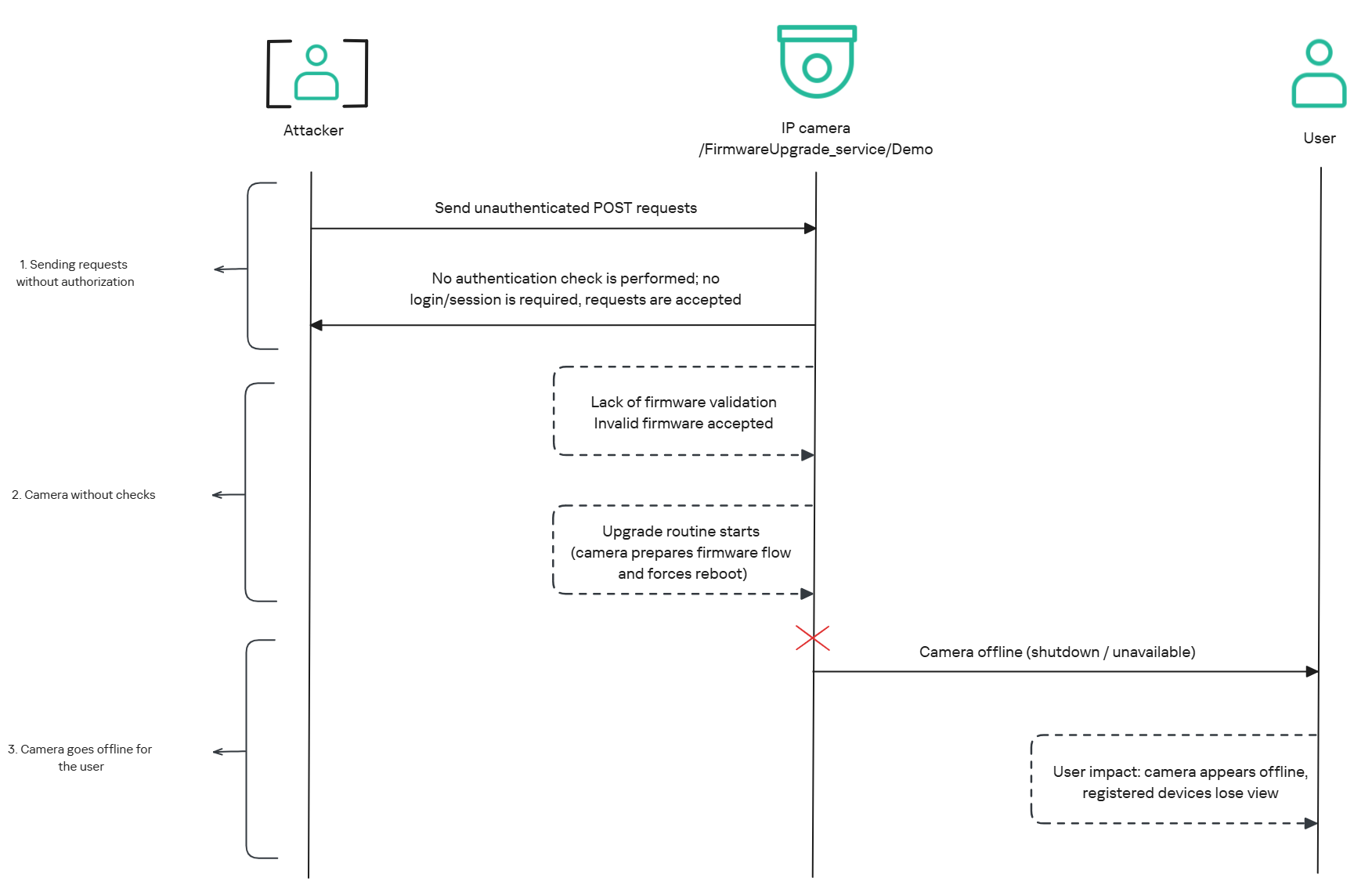
The affected endpoint is the firmware upgrade route http://<ip_address>/firmwareUpgrade_service/Demo, which lacks authentication checks; furthermore, it fails to verify whether the firmware is actually valid before initiating the upgrade process. This creates a serious issue because the upgrade requires the camera to reboot, and that is precisely when the problem occurs: the camera enters reboot mode and eventually shuts down, appearing offline to the user and anyone who has the camera registered on their device.
PoC: vulnerability exploitation
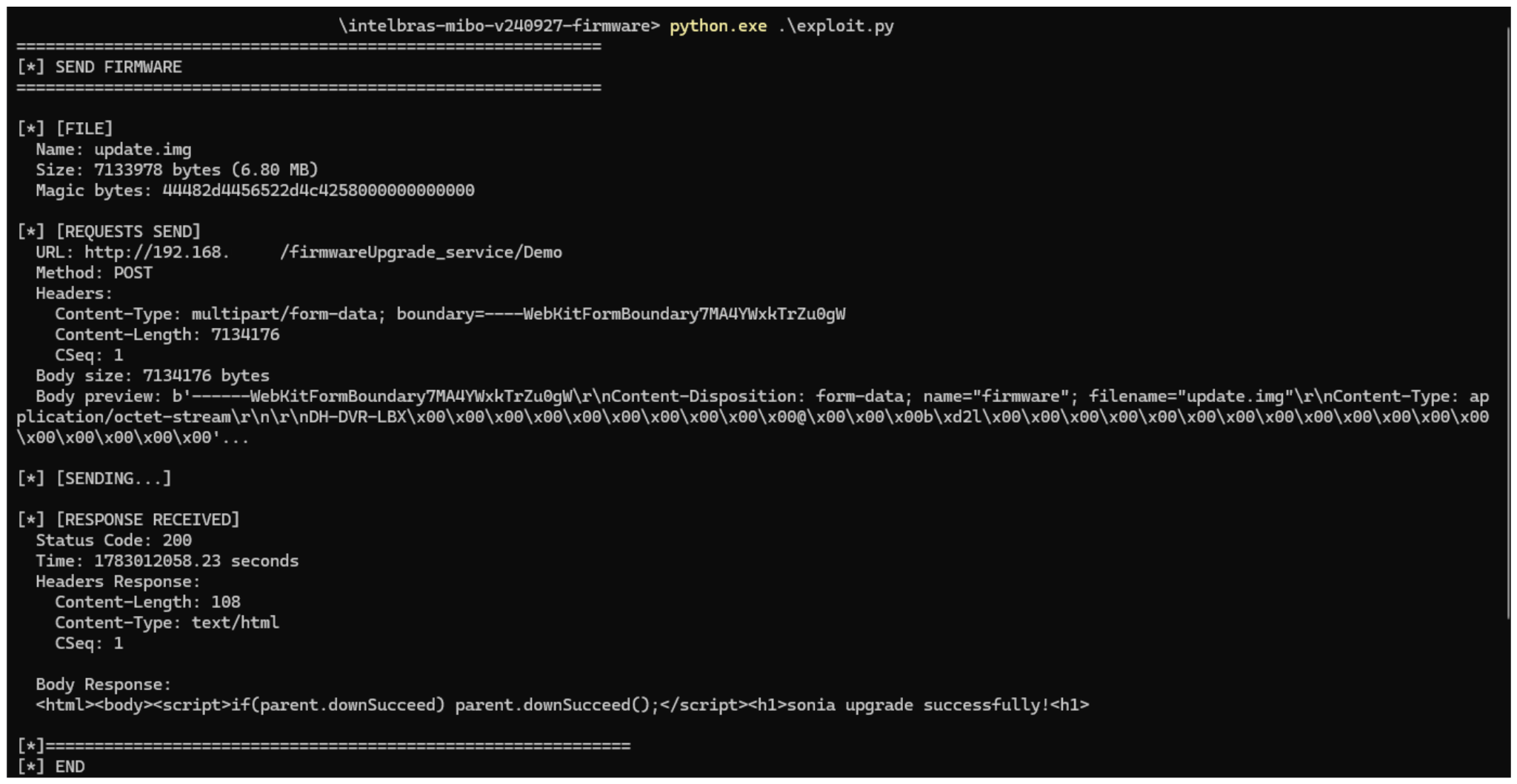
Now that we have outlined how the vulnerability works, we will use a Python script on an iM3B-C camera to exploit it for demonstration purposes. The exploit contacts the camera’s endpoint to upload firmware. Below, we can see sonia creating the endpoint responsible for the firmware upgrade.
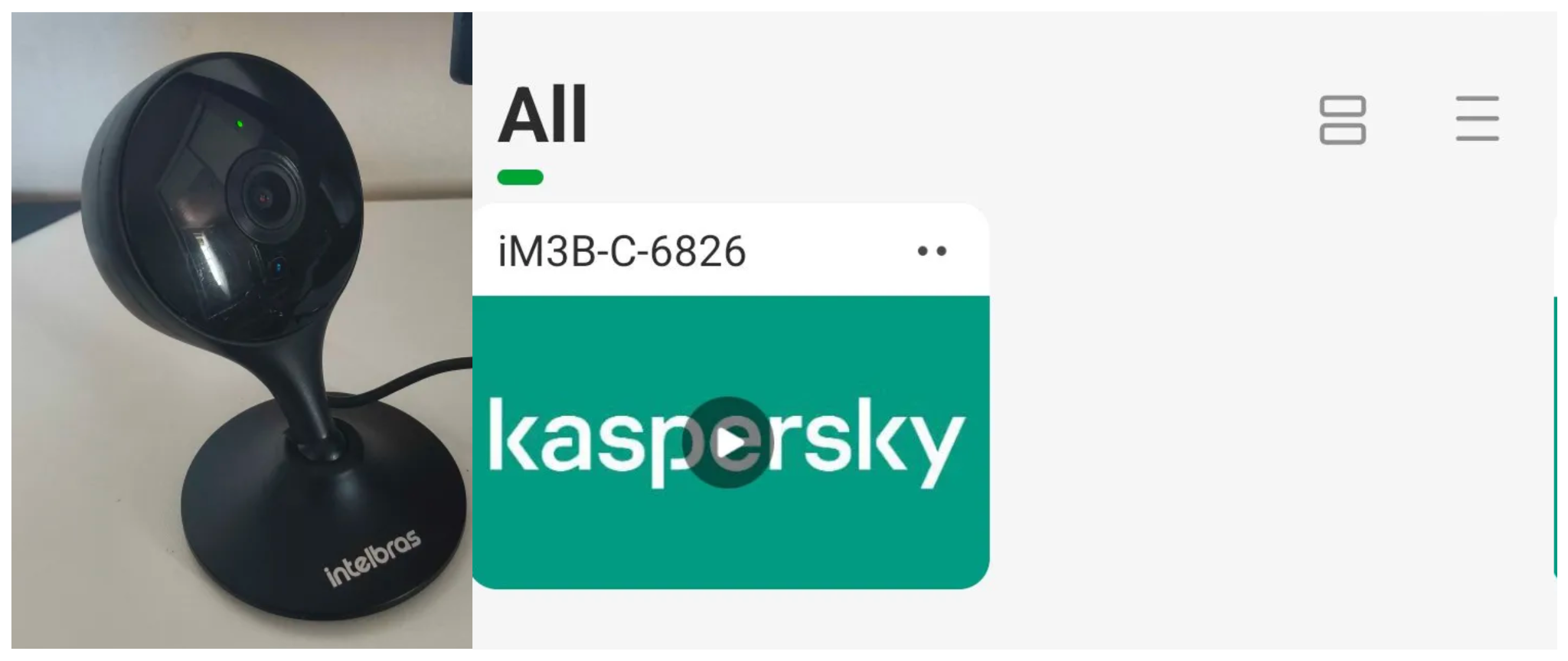
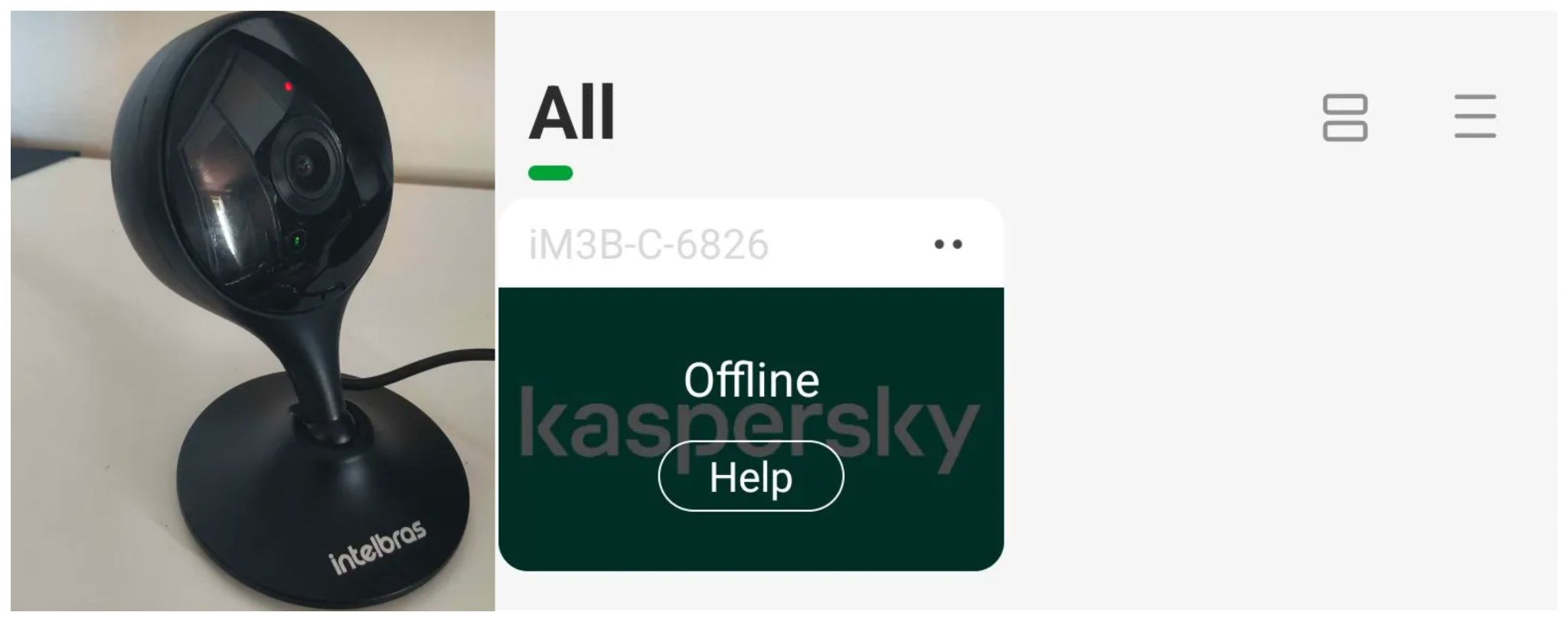
Next, the exploit will hit the endpoint and cause the camera to reboot. Consequently, mobile phones running the Intelbras app will lose connection with the registered device. Below, we can see the camera operating normally: the green light is on and the app is showing it is available for viewing.
The camera is online
After the exploit executes, we can see the effects: the camera goes offline and loses connection to the registered devices.
The camera is offline
The exploit is quite simple: it sends an HTTP POST request with the firmware, which causes the camera to accept the request and initiate the reboot process. It does not matter whether the firmware is original; the reboot process will start regardless.
New firmware version
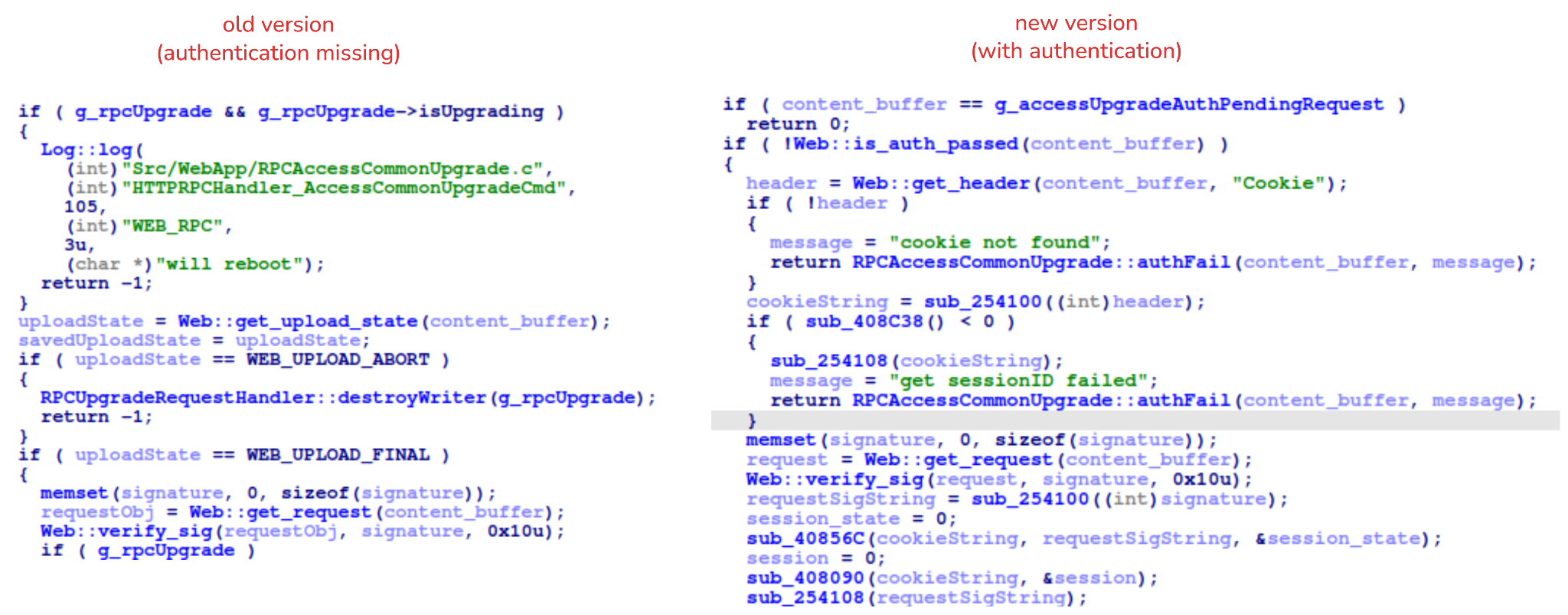
After we notified Intelbras about this flaw in the endpoint implementation, the company contacted the OEM vendor. As a result, a new firmware version was released that requires authentication to initiate an update through this endpoint.
Below, we can compare the new firmware, which validates cookies and session data, with the old firmware, which performed no authentication checks and proceeded directly to the update routine.
Real risk
An attacker can remotely trigger the camera firmware upgrade and reboot process without authenticating or supplying a valid firmware image. This may cause the device to go offline, which results in a denial-of-service condition preventing legitimate users from accessing live monitoring or managing the camera.
The potential impact is significant due to the number of affected users. The Intelbras Mibo Smart app, which the company provides to connect and manage the devices mentioned in this report, has over 4,000,000 downloads. Brazil represents the largest user base, followed by Paraguay, Ecuador, Colombia, Argentina, Chile, Peru, Bolivia, Uruguay, and Venezuela. As a result, exploitation of this issue affects a large number of users.
Takeaways
This is a medium-severity vulnerability that Intelbras is already aware of. The issue has been addressed in a newer firmware release (R.260804 along with update instructions), which mitigates this attack vector. Because the vulnerability directly affects the availability and normal operation of the affected cameras, it is highly recommended that users verify the firmware version currently installed on their devices and update to the latest available version as soon as possible. Keeping the firmware up to date is an essential security practice, especially for internet-connected surveillance devices, as outdated versions may remain exposed to known vulnerabilities.

 Login