When it comes to protecting voice calls, security professionals typically focus on the security of the data carrying the audio — above all on encryption. Sooner or later though, the voice data stops being a stream of bits and becomes an analog signal that goes straight to the speakers. You might think that if someone is using headphones, nobody can listen in. But headphones are electronic devices, and their components have physical characteristics that can give away closely guarded secrets without any cyberattack at all. In a recent paper, researchers from two Hong Kong universities came up with InjectEave — an attack that exploits these properties to intercept the already-decoded analog audio signal.
How the InjectEave attack works
The electronic components in headphones convert data into analog form and amplify the signal to drive the speakers. This process generates weak electromagnetic emissions. Capturing those emissions and extracting information from them is a field unto itself, with many experts working in it. The main issue those experts face lies in the fact that stray emissions from headphones are too faint to intercept and analyze in practice.
The authors of InjectEave propose adding a radio transmitter that beams a signal at a specific frequency toward the target device. Those weak emissions from the headphones’ analog components modulate the transmitter’s signal. The altered signal can be intercepted from several meters away — provided the receiving antenna is sensitive enough. The attacker then analyzes the changes in the signal to reconstruct the original audio.
Technical details of the InjectEave attack
The main obstacle to intercepting electromagnetic emissions directly — without an external transmitter — is the relatively low signal frequency. For example, the audio amplifier in headphones operates at frequencies from 20Hz to 20kHz. By contrast, electromagnetic emissions are easiest to intercept at frequencies measured in megahertz. The researchers were able to find a transmitter frequency that would also “amplify” the low-frequency signal of interest.
The researchers ran a series of experiments. They used antennas to transmit the “amplifying” signal and receive the result, and a spectrum analyzer to capture and process the data. The authors have posted the raw recordings of the intercepted signals on a dedicated microsite, so anyone can check how well the attack works. In most cases, getting a usable result didn’t even require complex processing or recognition. Conversations picked up from wireless headphones are clearly intelligible despite the elevated noise level.
In total, the authors tested three models of wireless headphones and two models of basic wired headsets. The effective eavesdropping distance varied from one to six meters depending on the model. With a wired telephone, they were able to demonstrate two-way interception. They could hear not only the sound from the speakers but also the potential victim’s speech, which the headset’s built-in microphone and analog-to-digital converter had captured.
Advantages and limitations of the method
Any attack that requires getting very close to the target is challenging by definition. The need to tune the frequency of the “amplifying” radio signal for each specific device makes the attack even harder. In their experiments, the researchers had to use frequencies from one to eight megahertz.
Despite these caveats, the main achievement of this attack is its being able to target the quirks of the analog components in an electronic device. These components inherently produce stray emissions, and there’s almost no way to reduce them.
Similar surveillance methods that intercept a digital signal can be stopped by adding a layer of encryption. When it comes to the analog side of a device, protecting the signal itself is much harder. This research is another reminder of how complex and unpredictable even very simple, familiar devices can be. Sometimes even the strongest protection for digital data is powerless once that information is converted to analog form.
For security researchers studying unconventional side-channel attacks, acoustic keylogging is something of a Hello World: a foundational problem that’s been tackled many times. A recent paper authored by researchers across three Japanese universities cites six previous studies on the topic that date as far back as 2004. While earlier experiments showed theoretical promise, they came with real-world caveats so severe that it made them all but impractical for actual espionage. The authors of this latest study, however, claim to have overcome most of those limitations. Today, we look at how they pulled it off, and assess whether their method holds up in real-world scenarios.
What makes this new approach different?
Previous acoustic keylogging techniques were fundamentally flawed. Best-case scenarios required prior training on the target’s specific keyboard model. Worst-case scenarios required a complex microphone array to isolate the subtle acoustic differences between keystrokes. Crucially, almost all prior models failed outside silent environments, which rendered the attack vector virtually useless.
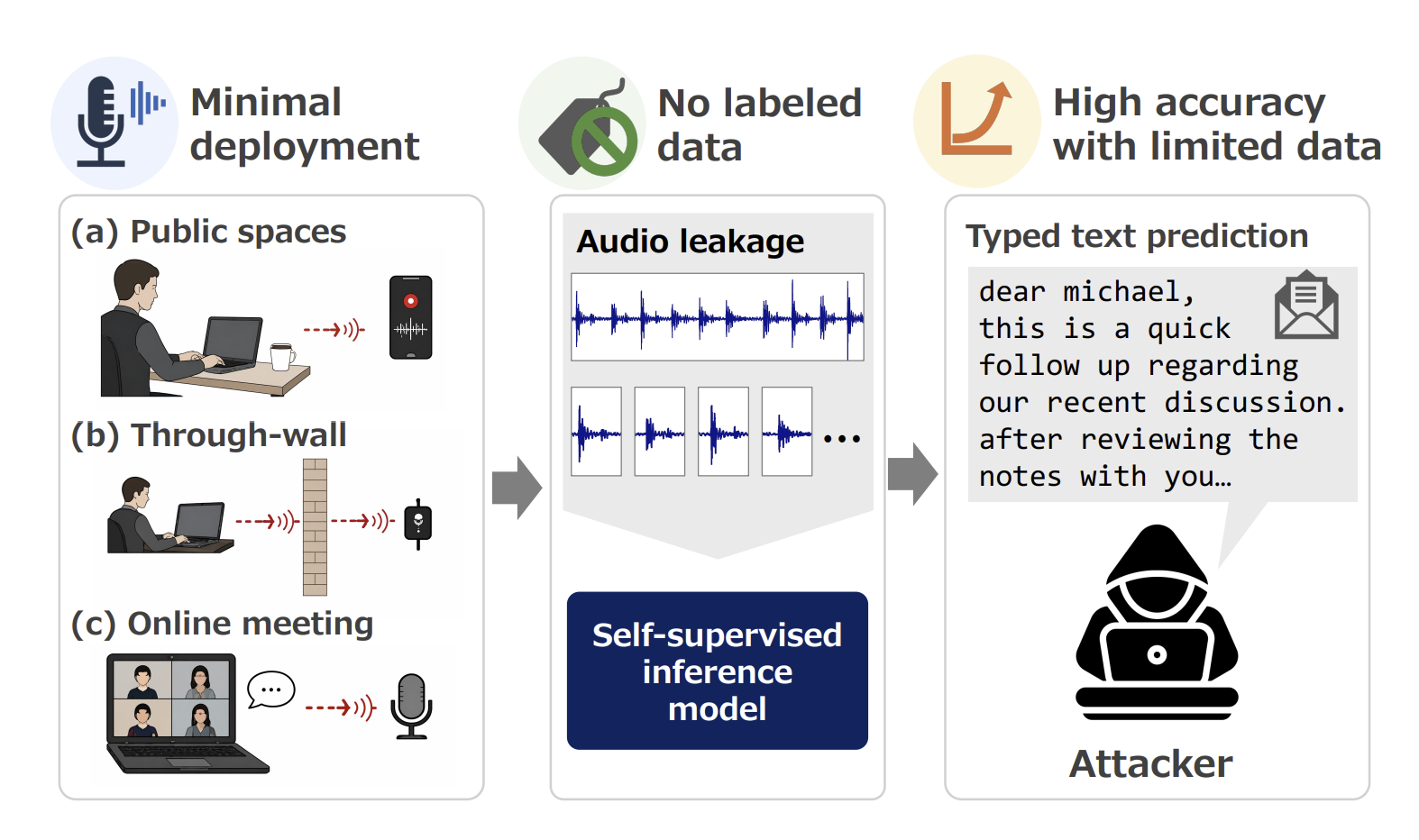
The Japanese research team demonstrated reliable keystroke interception even if the target was sitting nearby in a public space, sound was being recorded in an online meeting, or the researchers were using a contact microphone to eavesdrop through a wall. All this with strong model accuracy and a minimal training dataset. Their process needs a sample of just 150 to 200 keystrokes to reach a 99% accuracy rate for subsequent typing.
Attack scenarios and core methodology proposed by the Japanese researchers. Source
How to crack 200 keystrokes in under 50 iterations
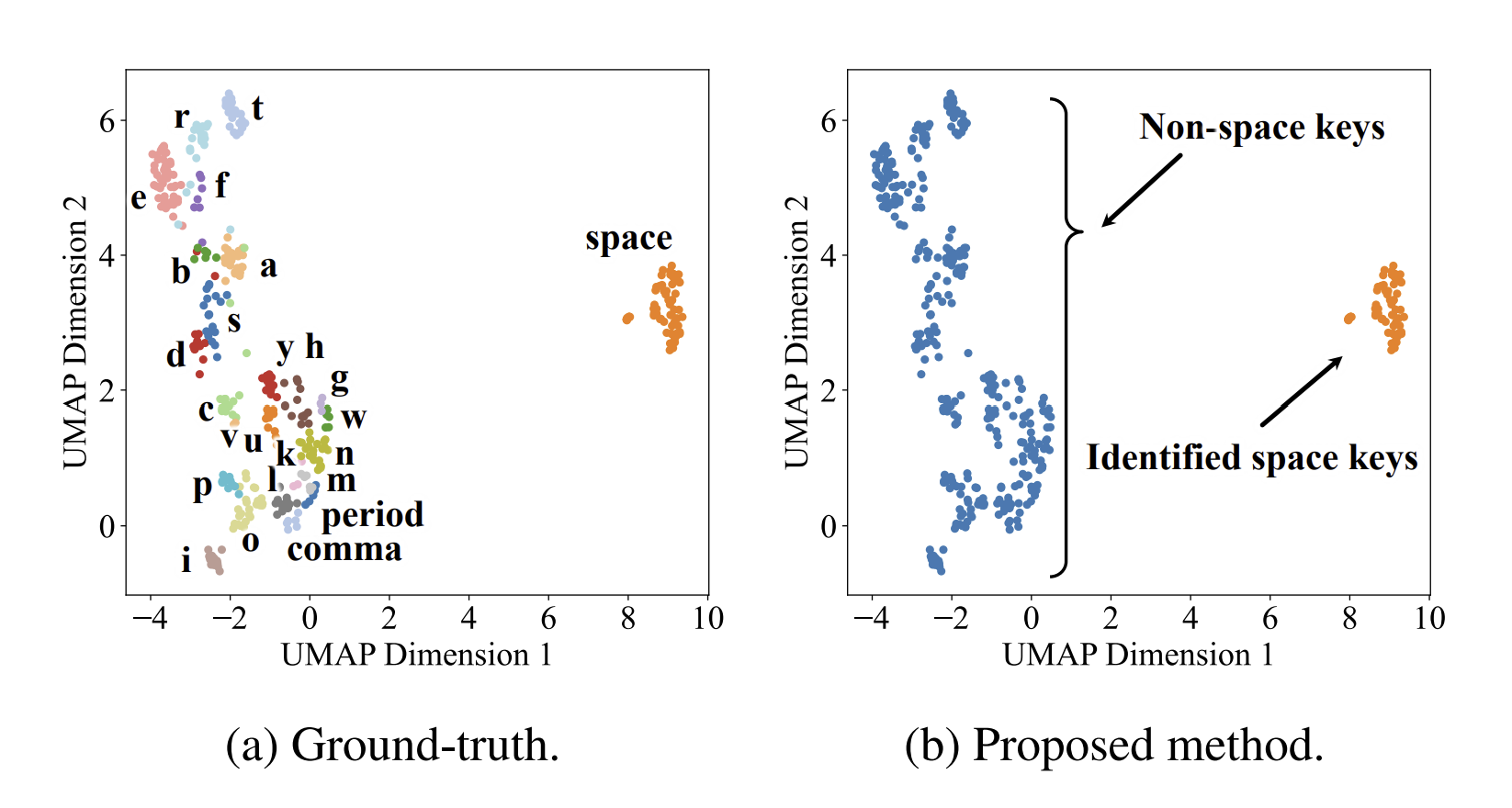
To understand how the researchers achieved such high accuracy and adaptability, we have to look at their audio processing pipeline. Their analysis begins by automatically segmenting a raw recording into discrete keystrokes. This data is then passed through a specialized algorithm that simplifies the subsequent audio analysis. Next, the system clusters together acoustically similar signals. The assumption is that the members of one cluster map to the exact same key. One particularly intriguing takeaway was isolating the spacebar sound from all the rest. Because the spacebar produces a distinctly unique sound profile compared to other keys, identifying it provides reliable word boundaries. This streamlines the next phase: feeding the preprocessed acoustic data into specialized language models for inference.
Yes, the method relies on not one but two language models. The first model performs multiple passes over the audio stream to map acoustic signatures to potential keyboard characters. During each pass, the model leverages dictionaries to hypothesize character mapping, and check whether the resulting text aligns with standard words. The second model handles the final refinement pass: it ingests thoroughly pre-processed data rather than raw inputs. The method doesn’t stop there: unrecognized keystrokes undergo manual analysis, with analysts injecting educated guesses before re-running the recognition pipeline once again. The goal of looping through these multiple iterations is to achieve complete recognition across the keyboard from an ultra-compact dataset of ideally no more than 200 captured keystrokes. This marks a major shift from legacy methods, which relied on massive training datasets.
Clustering the sounds of keystrokes permits grouping similar acoustic profiles together prior to recognition. Notice how distinctly the spacebar sounds stand out: they make subsequent text reconstruction vastly simpler. Source
Research results
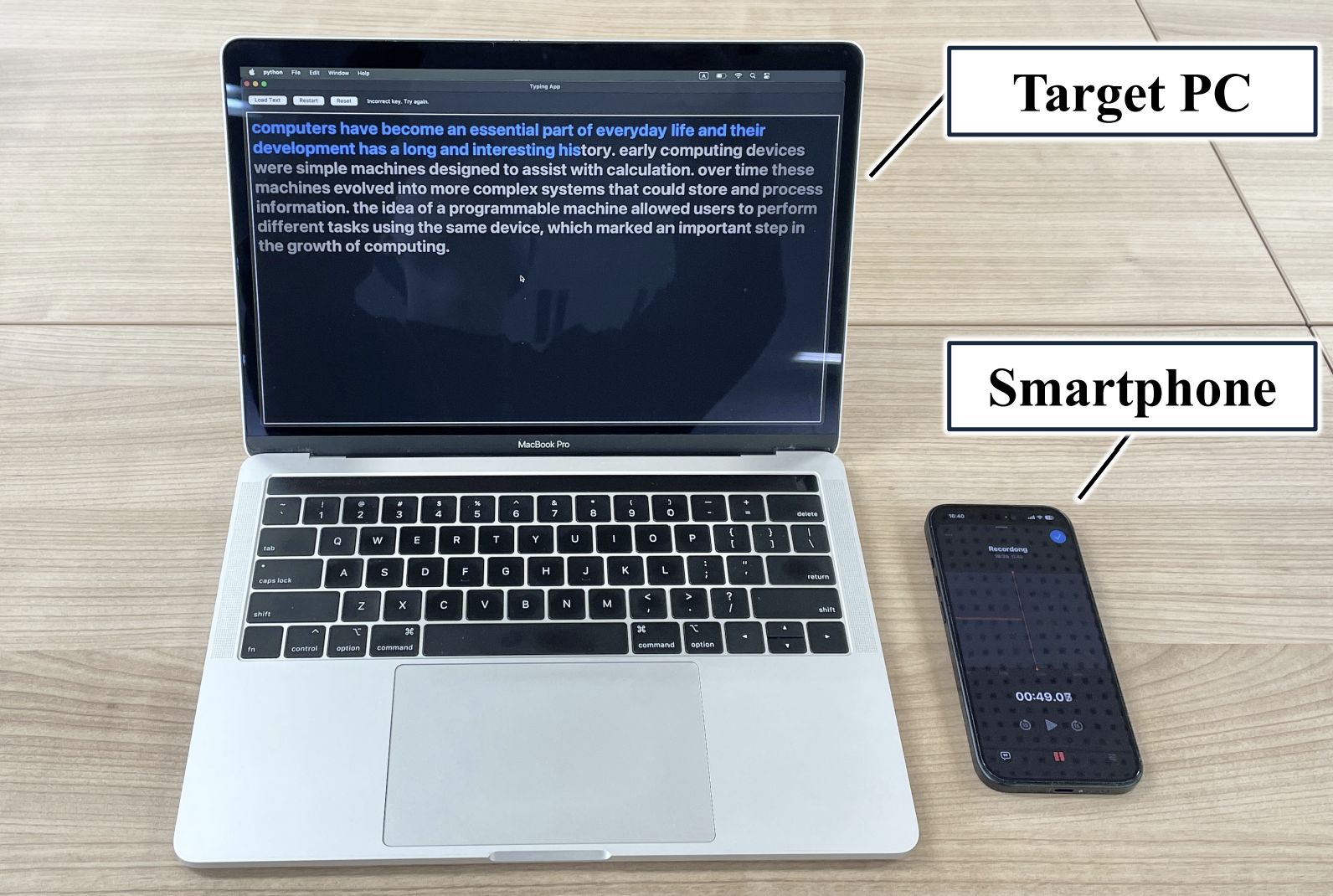
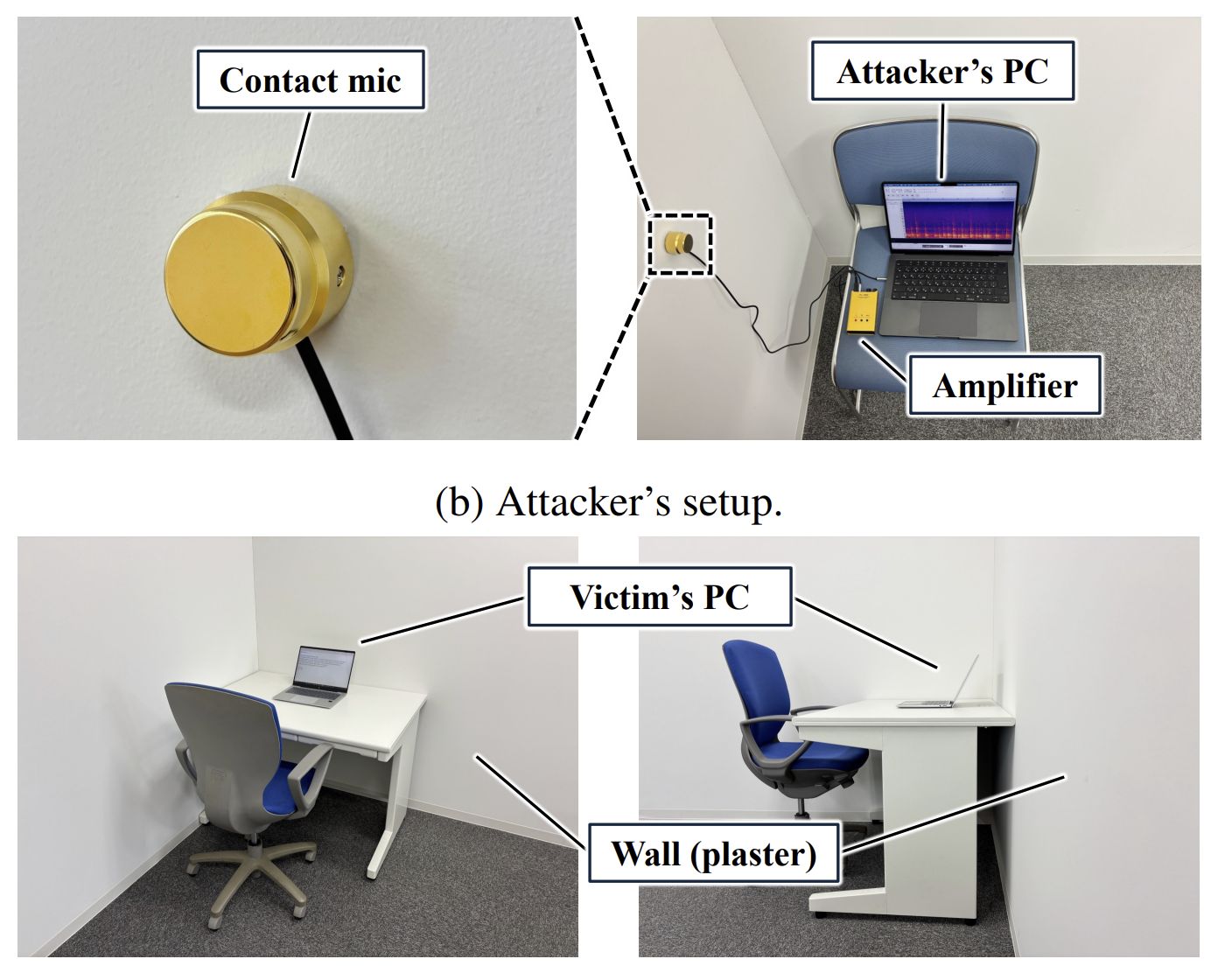
To validate their theoretical model, the researchers created an experimental testing setup:
Clustering the sounds of keystrokes permits grouping similar acoustic profiles together prior to recognition. Notice how distinctly the spacebar sounds stand out: they make subsequent text reconstruction vastly simpler. Source
The team tested four distinct laptop models, each producing unique acoustic keyboard signatures. Participants typed 2400 characters per experiment, with analysts extracting audio samples ranging from 50 to 400 keystrokes. Across all devices, the system reliably reconstructed typed text from a baseline sample of just 150 keystrokes or more. Recognition accuracy exceeded 80% at 150 keystrokes, and approached 100% once the sample reached 200 keystrokes.
The researchers achieved nearly identical results in field-like conditions with the microphone placed three meters away from the target device. Going a step further, the team successfully tested an even higher-friction scenario: using a specialized contact microphone to eavesdrop through a physical wall.
A target laptop and the attacker’s smartphone. Source
Under these conditions, accuracy dipped slightly for certain laptop models. Dell and Lenovo devices yielded roughly 80% accuracy over a 200-keystroke sample, while Apple and HP ones maintained nearly 100% recognition rates.
Remote interception during videoconferencing presented an additional variable: results depended on both the target laptop model and the specific web conferencing software used. Even so, most test scenarios yielded reliable character recognition, though a few edge cases required expanding the sample size from 200 to at least 250 keystrokes.
Reasonable critique
Despite these impressive results, the technique has clear limitations. First, all experiments were conducted strictly on lowercase English text. The target dataset was capped at just 29 characters: the standard alphabet, spacebar, period, and comma — even number keys were excluded. As a result, capturing randomized character strings like complex passwords remains a major hurdle. Yet these are precisely the targets threat actors care about most.
However, the Japanese research team didn’t ignore passwords. While recognition accuracy was predictably low, the authors proposed assessing success through a more realistic lens. For starters, attackers can almost always capture audio of other typing activity alongside password entry. This provides a stream of natural language with minimal special characters. Factoring this broader acoustic context into the password analysis significantly improves the odds of a successful guess.
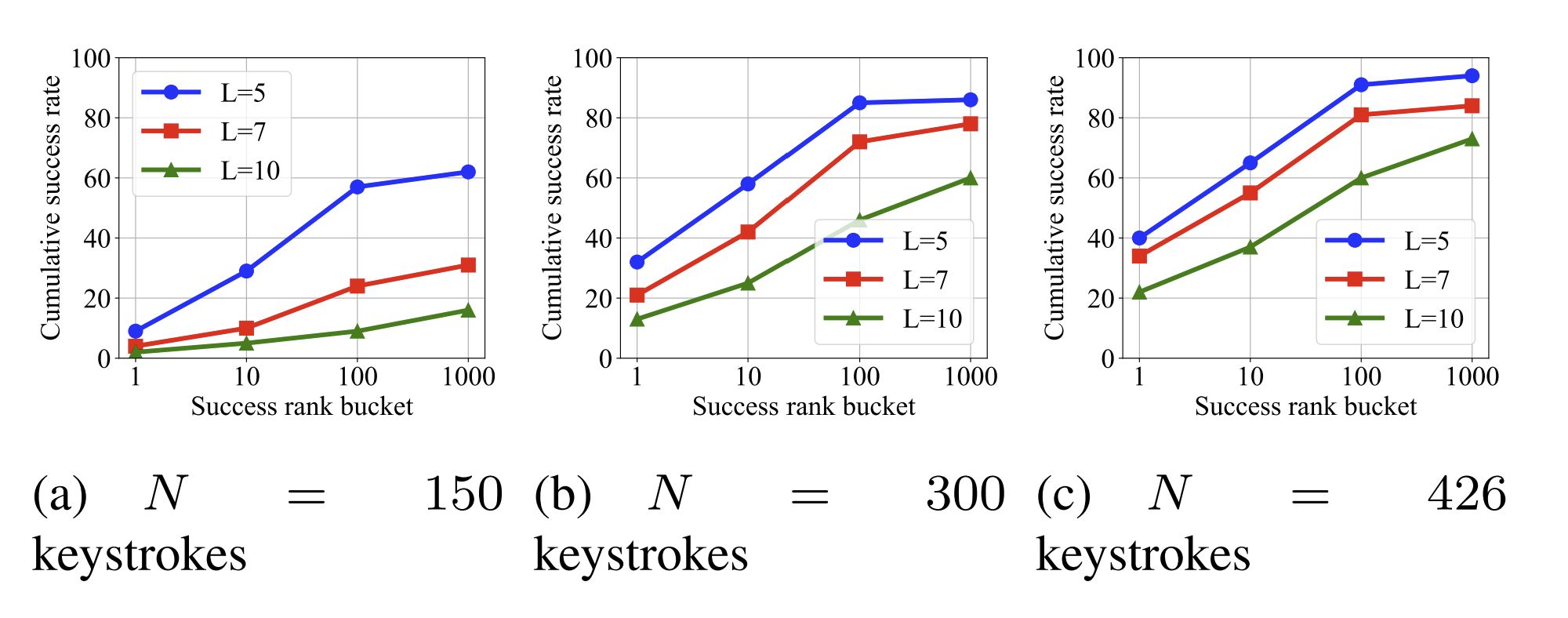
Next, the researchers rightly noted that even a list of several candidate passwords increases the chances of compromising a target account. As shown in the graph above, when ample data (426 keystrokes) is captured, a short five-character password can be successfully cracked within 100 attempts with a 90% success rate. Naturally, longer passwords proved far more resistant to eavesdropping.
Despite its limitations, this study represents a major breakthrough in acoustic side-channel attacks. It demonstrates a highly practical threat scenario: an attacker captures a brief audio recording of typing activity, then uses iterative analysis and targeted manual adjustments to process and refine the data offsite.
While eavesdropping in a noisy restaurant or through a wall is likely difficult to scale, capturing keystrokes during virtual meetings for offline decoding represents a realistic attack scenario. Ultimately, this research offers a compelling proof-of-concept: modern algorithms can drastically improve the accuracy of acoustic reconnaissance.
Scientists at Graz University of Technology in Austria recently published a paper detailing a new method for tracking users’ activity through their web browsers. The most fascinating thing about this new technique — which they’ve named FROST — is that it relies on a computer’s solid-state drive (SSD) to do the spying. Without getting bogged down in technical details, here’s how the attack works: a hacker lures a victim to a specially crafted website; as long as the site is kept open, the attacker can track exactly what apps the user is launching, and what other web pages they’re visiting.
So, how do they pull this off? The first instinct is naturally to blame the browser. But in modern web browsers, every website runs in an isolated sandbox and is generally locked out from touching other tabs — let alone the computer’s actual hardware. While hackers do find loopholes in these defenses from time to time, that’s not what’s happening here. The FROST attack doesn’t need to break the browser; it works perfectly even with all standard security measures in place. Instead, it hijacks a completely legitimate browser feature called the origin private file system (OPFS), which gives websites their own virtual storage space to store data. However, while this storage is digitally isolated, the data is still physically written to the exact same SSD that every other app and website opened on the computer is using. The researchers discovered that if a malicious page constantly bombards the SSD with data requests, the microscopic delays in data access can help map out what else is running on the PC. Before we dive into the details of how they manage this, let’s take a quick look at the theory behind the attack.
A quick primer on side-channel attacks
The term “side-channel” refers to a method of spying on a computer — or even a single microchip — indirectly. Instead of intercepting the data itself, an attacker might analyze fluctuations in power consumption, monitor the temperature of specific components, or listen in on electromagnetic radiation, among other things. In theory, this means that someone could eavesdrop on a conversation in a room just by using a computer mouse, since the optical sensor can pick up sound vibrations. Similarly, watching a CPU’s clock speed fluctuate could allow a hacker to steal an encryption key. Even a simple LED light on a badge reader can leak enough data about the device’s inner workings for an attacker to clone a smart card.
The beauty of these indirect data leaks — at least from a hacker’s perspective — is that they’re not easy to spot. Device manufacturers rarely account for them when building security systems. The downside, however, is just as obvious: extracting information through a mechanism that was never meant for data transmission is often complex, slow, and laborious. The Austrian researchers focused on a specific subtype known as a contention side-channel attack. This is where a leak occurs because multiple processes are competing for the same resource. In this case, that contested resource is the storage drive’s bandwidth.
Inside the FROST attack
This specific side channel has actually been studied before, including in a 2025 research paper. Back then, however, the setup was rather straightforward: the researchers ran one program on a computer to act as the data source, while a second program running on the same machine tried to intercept that data. While that’s fine for a theoretical academic study, the attack model wasn’t exactly groundbreaking. After all, if a hacker can already run any program they wish, they don’t need to rely on complex side channels — they have plenty of direct ways to steal the data.
Still, last year’s study wasn’t a complete waste of time. It proved that the resolution obtained from monitoring an SSD is quite high, the data leak is real, and the captured information can actually be useful. The FROST attack is essentially a logical continuation of the same idea.
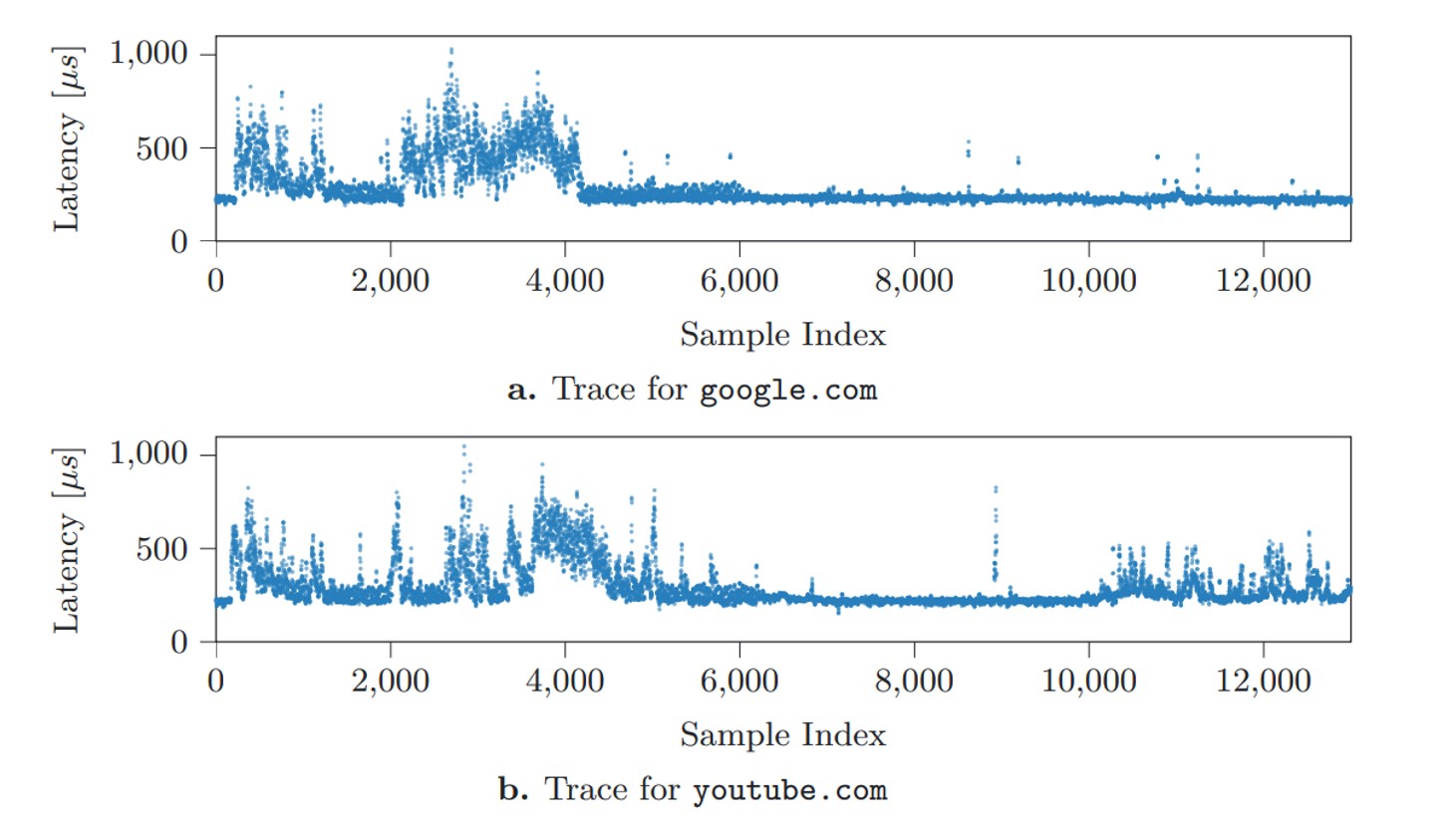
Here’s how it works in practice. Let’s say there’s a fairly large file on an SSD packed with random data. A specific process reads this data at regular intervals and clocks how fast it gets a response. This speed fluctuates depending on how busy the drive is with other tasks. These access delays are the telltale signs of the drive’s activity. The Austrian researchers demonstrated that plotting these delays over time can help pinpoint with reasonable accuracy what other task is running on the computer at that very moment.
Distinct latency patterns generated when opening specific websites Source
The researchers mapped out latency graphs, like the ones shown above, for a wide variety of websites and locally running apps. What they found were distinct patterns — or digital fingerprints — generated every single time a specific site loads, or an app launches. Capturing these split-second launch or load windows requires monitoring the SSD continuously over a long period of time. However, these patterns proved to be remarkably consistent across different systems; the authors successfully tested their method on both a Linux desktop and an Apple Mac Mini. From there, the next step sounds simple enough: take a catalog of known fingerprints, measure real-world SSD delays, match the two up, and you know exactly what apps the user is opening, and what sites they’re visiting. But how to actually pull off this kind of surveillance under the radar, without planting malware on the victim’s computer?
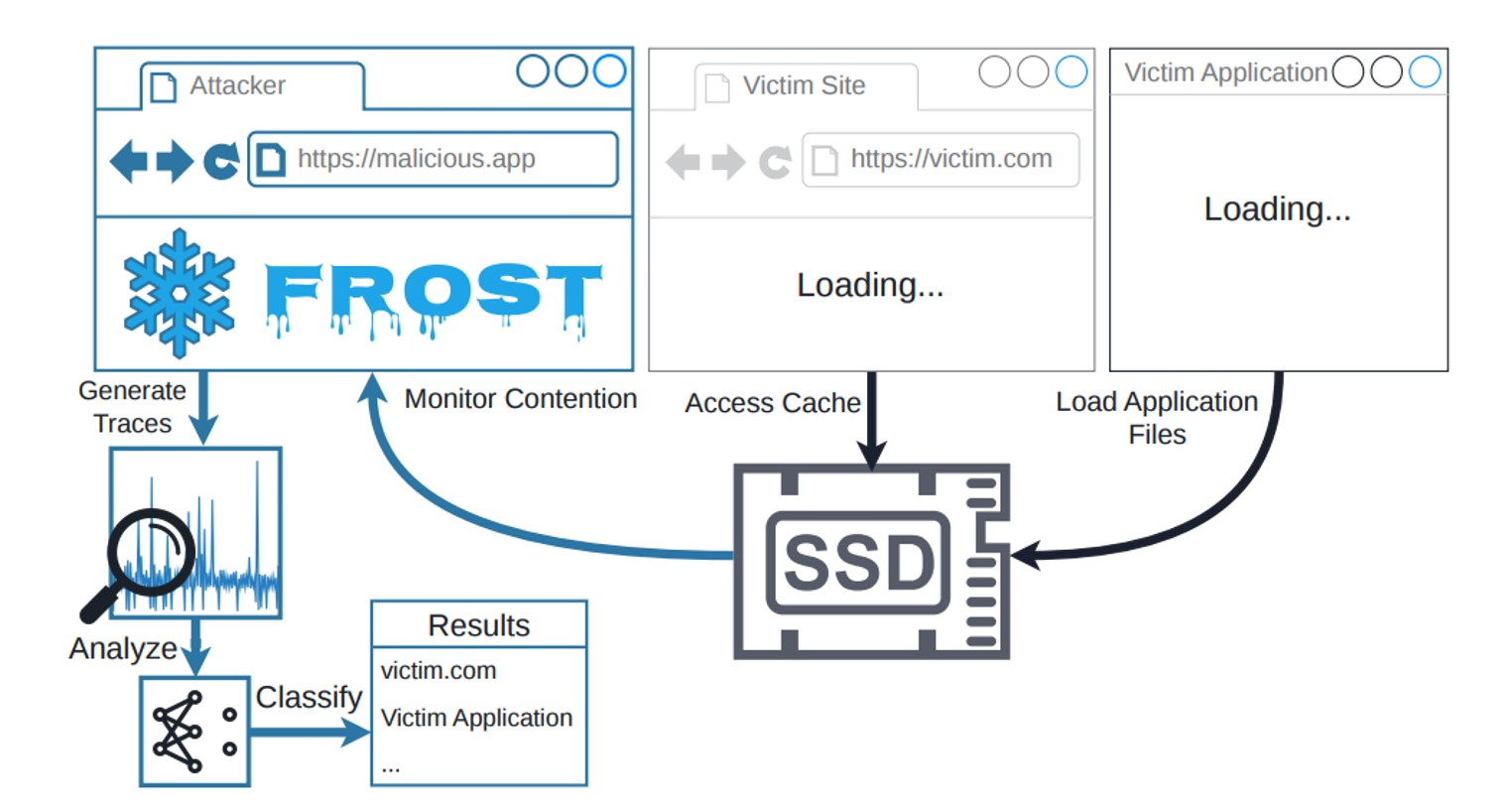
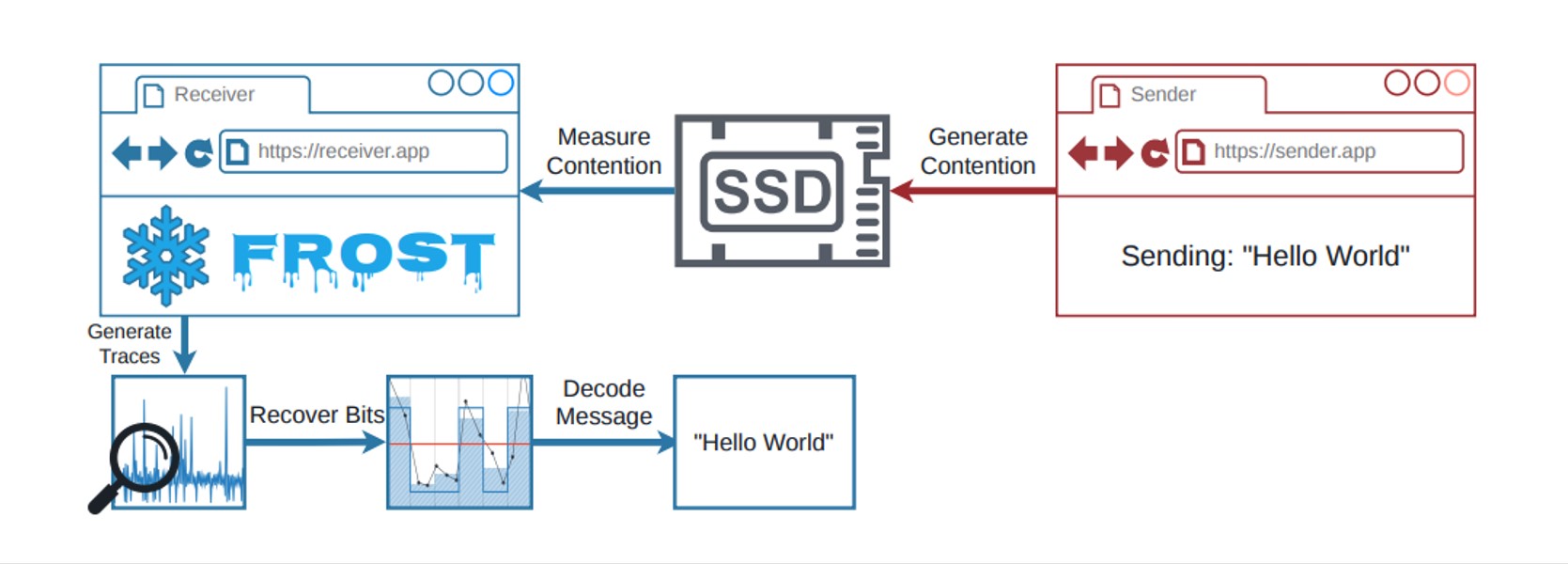
And that’s where a relatively new browser feature called the origin private file system (OPFS) comes into play. A hypothetical attacker doesn’t have to trick the user into downloading a shady Trojan. All they need do is have the victim visit a specially crafted webpage, and that page will leverage OPFS to quietly track the SSD’s activity. The clever acronym brings all these moving parts together: FROST stands for Fingerprinting Remotely using OPFS-based SSD Timing. Here’s the step-by-step breakdown of how the entire attack plays out:
How the FROST method can be used to spy on a computer’s activity Source
Method limitations
Like any side-channel attack, FROST isn’t exactly built for speed. It’s a slow, methodical process. To figure out just how slow, the researchers built a dedicated testbed to measure it.
The testbed setup for measuring the speed of data extraction through OPFS Source
The team ran a program on a computer to transmit data indirectly. Think of it as a digital spy broadcasting a secret message by changing how it interacts with the hard drive. For instance, a 1 in the binary message code could mean the program is actively using the SSD, while a 0 means it’s sitting idle. At the same time, they set up a receiver inside the web browser that accessed the storage drive via OPFS. Because both the browser receiver and the transmitter program were competing for the SSD’s bandwidth, the browser experienced tiny speed delays whenever the transmitter was actively sending data.
This bizarre setup managed to transmit data at 661 bits per second, with nearly 90% accuracy on a Linux desktop with an AMD processor. On an Apple Mac Mini running macOS, the transfer rate hit 719 bits per second, also hovering around 90% accuracy. While these numbers are slightly lower than those in last year’s study — which relied on apps installed directly on the computer — the gap isn’t actually that huge.
That said, the real threat of the FROST attack isn’t raw data transmission; it’s tracking what the user does. Even if a hacker has a database of digital fingerprints for specific apps and websites, the information leaked through a malicious site using OPFS is too noisy. After all, a computer is constantly reading and writing data from/to the SSD in the background. To slice through that digital noise, the researchers turned to a tool that’s becoming standard practice in modern cyberattacks: a neural network. AI trained on known SSD fingerprints could confidently pick out user activity even from a chaotic mess of background data. The final results are eye-opening. On the Apple Mac Mini, the AI accurately identified which website the user opened 89% of the time, and nailed local app launches with 96% accuracy. Crucially, it could even detect what websites were opened in a completely different browser than the one running in the malicious tab. It sounds like a total home run for hackers — except for a massive list of real-world catches.
Is the FROST attack a real-world threat?
Simply knowing which apps are opened or what websites are visited doesn’t give an attacker much leverage. This kind of data is usually useful to advertisers looking to build a user’s digital profile without their permission; however, rolling out this tracking method on a massive scale is hardly realistic. The roadblock comes down to the fundamental way computers handle data: the system regularly dumps frequently accessed data into its RAM. Because the entire FROST attack relies on measuring the relatively slow bandwidth of the physical SSD, the data in RAM is effectively invisible to this method. To bypass this hurdle, the malicious webpage would have to force the OPFS to create a massive file — well over a gigabyte in size. Needless to say, a website that hogs hard drive resources in such an aggressive way would immediately raise red flags. EDR or XDR solutions will most likely flag it as anomalous activity.
Ultimately, this means the FROST attack — like most side-channel spying methods — is only practical for highly targeted operations. But that brings us right back to square one: knowing what apps someone opens or what web pages they browse is a pretty measly reward for the massive effort required to pull off such a sophisticated stunt.
Even so, FROST is light-years ahead of most academic side-channel attacks when it comes to real-world practicality. It doesn’t require preinstalled malware, and the victim doesn’t have to do anything more than open a malicious page. If nothing else, this research is a stark reminder of just how complex modern computers are, and how many unexpected blind spots can lead to data leaks. When building ultra-secure systems for highly classified data, one absolutely has to consider hardware peculiarities. If the prize is big enough, a determined attacker will gladly invest the time to build a hyper-specific complex attack. Research like this serves as proof that, in the world of cybersecurity, that scenario isn’t impossible.
Abstract: Scaling up language models has significantly increased their capabilities. But larger models are slower models, and so there is now an extensive body of work (e.g., speculative sampling or parallel decoding) that improves the (average case) efficiency of language model generation. But these techniques introduce data-dependent timing characteristics. We show it is possible to exploit these timing differences to mount a timing attack. By monitoring the (encrypted) network traffic between a victim user and a remote language model, we can learn information about the content of messages by noting when responses are faster or slower. With complete black-box access, on open source systems we show how it is possible to learn the topic of a user’s conversation (e.g., medical advice vs. coding assistance) with 90%+ precision, and on production systems like OpenAI’s ChatGPT and Anthropic’s Claude we can distinguish between specific messages or infer the user’s language. We further show that an active adversary can leverage a boosting attack to recover PII placed in messages (e.g., phone numbers or credit card numbers) for open source systems. We conclude with potential defenses and directions for future work.
Abstract: Deployed large language models (LLMs) often rely on speculative decoding, a technique that generates and verifies multiple candidate tokens in parallel, to improve throughput and latency. In this work, we reveal a new side-channel whereby input-dependent patterns of correct and incorrect speculations can be inferred by monitoring per-iteration token counts or packet sizes. In evaluations using research prototypes and production-grade vLLM serving frameworks, we show that an adversary monitoring these patterns can fingerprint user queries (from a set of 50 prompts) with over 75% accuracy across four speculative-decoding schemes at temperature 0.3: REST (100%), LADE (91.6%), BiLD (95.2%), and EAGLE (77.6%). Even at temperature 1.0, accuracy remains far above the 2% random baseline—REST (99.6%), LADE (61.2%), BiLD (63.6%), and EAGLE (24%). We also show the capability of the attacker to leak confidential datastore contents used for prediction at rates exceeding 25 tokens/sec. To defend against these, we propose and evaluate a suite of mitigations, including packet padding and iteration-wise token aggregation.
Abstract: Large Language Models (LLMs) are increasingly deployed in sensitive domains including healthcare, legal services, and confidential communications, where privacy is paramount. This paper introduces Whisper Leak, a side-channel attack that infers user prompt topics from encrypted LLM traffic by analyzing packet size and timing patterns in streaming responses. Despite TLS encryption protecting content, these metadata patterns leak sufficient information to enable topic classification. We demonstrate the attack across 28 popular LLMs from major providers, achieving near-perfect classification (often >98% AUPRC) and high precision even at extreme class imbalance (10,000:1 noise-to-target ratio). For many models, we achieve 100% precision in identifying sensitive topics like “money laundering” while recovering 5-20% of target conversations. This industry-wide vulnerability poses significant risks for users under network surveillance by ISPs, governments, or local adversaries. We evaluate three mitigation strategies – random padding, token batching, and packet injection – finding that while each reduces attack effectiveness, none provides complete protection. Through responsible disclosure, we have collaborated with providers to implement initial countermeasures. Our findings underscore the need for LLM providers to address metadata leakage as AI systems handle increasingly sensitive information.

 Login