❌

Reading view

WordPress Security Plugins: How to Choose the Right One

WordPress Security Plugins: How to Choose the Right One

In short, WordPress security plugins are tools you add to your site to strengthen your settings, scan for malware, watch for file changes, and block suspicious activity from within WordPress. Most sites should use one, along with a firewall that filters traffic before WordPress even loads. Look for layered protection, good detection, clear handling of false alarms, minimal impact on performance, and real human support.

If you manage a WordPress site, you have probably searched for β€œbest WordPress security plugin” at some point.

Continue reading WordPress Security Plugins: How to Choose the Right One at Sucuri Blog.

  •  

Vulnerability & Patch Roundup β€” August 2026

Vulnerability & Patch Roundup β€” August 2026

If you operate a website, you’re already aware that a single unpatched vulnerability can render your site inaccessible, compromise your reputation, or necessitate extensive remediation following an attack. Most security breaches we observe originate from automated attacks that exploit known software vulnerabilities, often the same ones that have been previously reported and disclosed.

To assist in maintaining your security posture, we have compiled this month’s summary of essential security updates and vulnerability patches pertinent to the WordPress ecosystem.

Continue reading Vulnerability & Patch Roundup β€” August 2026 at Sucuri Blog.

  •  

Third-Party Script Security: How Tags, Pixels, and Embeds Can Put Websites at Risk

Third-Party Script Security: How Tags, Pixels, and Embeds Can Put Websites at Risk

Third-party scripts are common on websites. They help with analytics, ads, live chat, social media, video, payments, and many other features. While not all are risky, every external tag, pixel, widget, or embed adds to your website’s vulnerability. These tools can read page content, collect visitor data, change what users see, and connect with outside services. If a vendor, account, or setup is compromised, it can impact every page that uses the script.

Website owners shouldn’t aim to get rid of useful integrations, but to understand which scripts run, why they are necessary, who controls them, and how to detect unexpected changes.

Continue reading Third-Party Script Security: How Tags, Pixels, and Embeds Can Put Websites at Risk at Sucuri Blog.

  •  

The Illusion of a Lock – How AI is changing the speed and scale of hands-on WordPress vulnerability research.

The Illusion of a Lock – How AI is changing the speed and scale of hands-on WordPress vulnerability research.

2026: the year the tools learned to hack

In May 2026, OpenAI began testing an internal research model against a cybersecurity benchmark called ExploitGym. While the test environment was not supposed to have access to the open internet, there was, however, one narrow path out because the agents still needed a way to install software: an internally hosted Artifactory server that acted as a cache for package downloads. That pathway turned out to be enough for the model’s agents to eventually circumvent the test’s rules and escape confinement.

Continue reading The Illusion of a Lock – How AI is changing the speed and scale of hands-on WordPress vulnerability research. at Sucuri Blog.

  •  

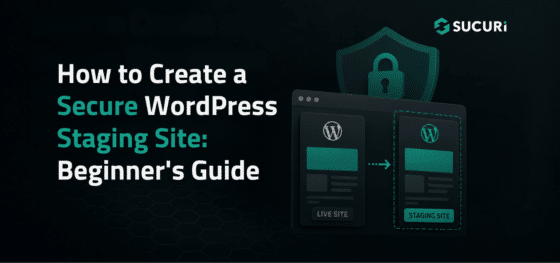
How to Create a Secure WordPress Staging Site: Beginner’s Guide

How to Create a Secure WordPress Staging Site: Beginner’s Guide

Updating WordPress directly on a live website can cause avoidable problems. A plugin update might break checkout, or a theme change could create layout issues visitors see immediately.

A WordPress staging site gives you a separate place to test changes before they reach your live website.

Staging reduces operational risk, but it also creates another website that needs protection. A copied site may contain administrator accounts, customer records, API keys, or vulnerable software.

Continue reading How to Create a Secure WordPress Staging Site: Beginner’s Guide at Sucuri Blog.

  •  
❌