❌

Reading view

Why iPhone users should update and restart their devices now

If you were still questioning whether iOS 26+ is for you, now is the time to make that call.

Why?

On December 12, 2025, Apple patched two WebKit zero‑day vulnerabilities linked to mercenary spyware and is now effectively pushing iPhone 11 and newer users toward iOS 26+, because that’s where the fixes and new memory protections live. These vulnerabilities were primarily used in highly targeted attacks, but such campaigns are likely to expand over time.

WebKit powers the Safari browser and many other iOS applications, so it’s a big attack surface to leave exposed and isn’t limited to β€œrisky” behavior. These vulnerabilities allowed an attacker to execute arbitrary code on a device after exploitation via malicious web content.

Apple has confirmed that attackers are already exploiting these vulnerabilities in the wild, making installation of the update a high‑priority security task for every user. Campaigns that start with diplomats, journalists, or executives often lead to tooling and exploits leaking or being repurposed, so β€œI’m not a target” is not a viable safety strategy.​

Due to public resistance to new features like Liquid Glass, many iPhone users have not yet upgraded to iOS 26.2. Reports suggest adoption of iOS 26 has been unusually slow. As of January 2026, only about 4.6% of active iPhones are on iOS 26.2, and roughly 16% are on any version of iOS 26, leaving the vast majority on older releases such as iOS 18.

However, Apple only ships these fixes and newer protections, such as Memory Integrity Enforcement, on iOS 26+ for supported devices. Users on older, unsupported devices won’t be able to access these protections at all.

Another important factor in the upgrade cycle is restarting the device. What many people don’t realize is that when you restart your device, any memory-resident malware is flushedβ€”unless it has somehow gained persistence, in which case it will return. High-end spyware tools tend to avoid leaving traces needed for persistence and often rely on users not restarting their devices.

Upgrading requires a restart, which makes this a win-win: you get the latest protections, and any memory-resident malware is flushed at the same time.

For iOS and iPadOS users, you can check if you’re using the latest software version, go to Settings > General > Software Update. It’s also worth turning on Automatic Updates if you haven’t already. You can do that on the same screen.

How to stay safe

The most important fixβ€”however painful you may find itβ€”is to upgrade to iOS 26.2. Not doing means missing an accumulating list of security fixes, leaving your device vulnerable to more and more newly found vulnerabilities.

Β But here are some other useful tips:

  • Make it a habit to restart your device on a regular basis. The NSA recommends doing this weekly.
  • Do not open unsolicited links and attachments without verifying with the trusted sender.
  • Remember, Apple threat notifications will never ask users to click links, open files, install apps or ask for account passwords or verification code.
  • For Apple Mail users specifically, these vulnerabilities create risk when viewing HTML-formatted emails containing malicious web content.
  • Malwarebytes for iOS can help keep your device secure, with Trusted Advisor alerting you when important updates are available.
  • If you are a high-value target, or you want the extra level of security, consider using Apple’s Lockdown Mode.

We don’t just report on phone securityβ€”we provide it

Cybersecurity risks should never spread beyond a headline. Keep threats off your mobile devices byΒ downloading Malwarebytes for iOS, and Malwarebytes for Android today.

  •  

Exploitation of Critical Vulnerability in React Server Components (Updated December 12)

We discuss the CVSS 10.0-rated RCE vulnerability in the Flight protocol used by React Server Components. This is tracked as CVE-2025-55182.

The post Exploitation of Critical Vulnerability in React Server Components (Updated December 12) appeared first on Unit 42.

  •  

Microsoft Patch Tuesday, December 2025 Edition

Microsoft today pushed updates to fix at least 56 security flaws in its Windows operating systems and supported software. This final Patch Tuesday of 2025 tackles one zero-day bug that is already being exploited, as well as two publicly disclosed vulnerabilities.

Despite releasing a lower-than-normal number of security updates these past few months, Microsoft patched a whopping 1,129 vulnerabilities in 2025, an 11.9% increase from 2024. According to Satnam Narang at Tenable, this year marks the second consecutive year that Microsoft patched over one thousand vulnerabilities, and the third time it has done so since its inception.

The zero-day flaw patched today is CVE-2025-62221, a privilege escalation vulnerability affecting Windows 10 and later editions. The weakness resides in a component called the β€œWindows Cloud Files Mini Filter Driver” β€” a system driver that enables cloud applications to access file system functionalities.

β€œThis is particularly concerning, as the mini filter is integral to services like OneDrive, Google Drive, and iCloud, and remains a core Windows component, even if none of those apps were installed,” said Adam Barnett, lead software engineer at Rapid7.

Only three of the flaws patched today earned Microsoft’s most-dire β€œcritical” rating: Both CVE-2025-62554 and CVE-2025-62557 involve Microsoft Office, and both can exploited merely by viewing a booby-trapped email message in the Preview Pane. Another critical bug β€” CVE-2025-62562 β€” involves Microsoft Outlook, although Redmond says the Preview Pane is not an attack vector with this one.

But according to Microsoft, the vulnerabilities most likely to be exploited from this month’s patch batch are other (non-critical) privilege escalation bugs, including:

–CVE-2025-62458 β€” Win32k
–CVE-2025-62470 β€” Windows Common Log File System Driver
–CVE-2025-62472 β€” Windows Remote Access Connection Manager
–CVE-2025-59516 β€” Windows Storage VSP Driver
–CVE-2025-59517 β€” Windows Storage VSP Driver

Kev Breen, senior director of threat research at Immersive, said privilege escalation flaws are observed in almost every incident involving host compromises.

β€œWe don’t know why Microsoft has marked these specifically as more likely, but the majority of these components have historically been exploited in the wild or have enough technical detail on previous CVEs that it would be easier for threat actors to weaponize these,” Breen said. β€œEither way, while not actively being exploited, these should be patched sooner rather than later.”

One of the more interesting vulnerabilities patched this month is CVE-2025-64671, a remote code execution flaw in the Github Copilot Plugin for Jetbrains AI-based coding assistant that is used by Microsoft and GitHub. Breen said this flaw would allow attackers to execute arbitrary code by tricking the large language model (LLM) into running commands that bypass the user’s β€œauto-approve” settings.

CVE-2025-64671 is part of a broader, more systemic security crisis that security researcher Ari Marzuk has branded IDEsaster (IDEΒ  stands for β€œintegrated development environment”), which encompasses more than 30 separate vulnerabilities reported in nearly a dozen market-leading AI coding platforms, including Cursor, Windsurf, Gemini CLI, and Claude Code.

The other publicly-disclosed vulnerability patched today is CVE-2025-54100, a remote code execution bug in Windows Powershell on Windows Server 2008 and later that allows an unauthenticated attacker to run code in the security context of the user.

For anyone seeking a more granular breakdown of the security updates Microsoft pushed today, check out the roundup at the SANS Internet Storm Center. As always, please leave a note in the comments if you experience problems applying any of this month’s Windows patches.

  •  

Why You Got Hacked – 2025 Super Edition

This article was written to provide readers with an overview of a selection of our pentest results from the last 15 months. This data was gathered toward the end of September 2025. Shockingly, the data does not differ much from our prior analyses conducted at the end of 2022 or 2023.

The post Why You Got Hacked – 2025 Super Edition appeared first on Black Hills Information Security, Inc..

  •  

Anatomy of an Akira Ransomware Attack: When a Fake CAPTCHA Led to 42 Days of Compromise

Unit 42 outlines a Howling Scorpius attack delivering Akira ransomware that originated from a fake CAPTCHA and led to a 42-day compromise.

The post Anatomy of an Akira Ransomware Attack: When a Fake CAPTCHA Led to 42 Days of Compromise appeared first on Unit 42.

  •  

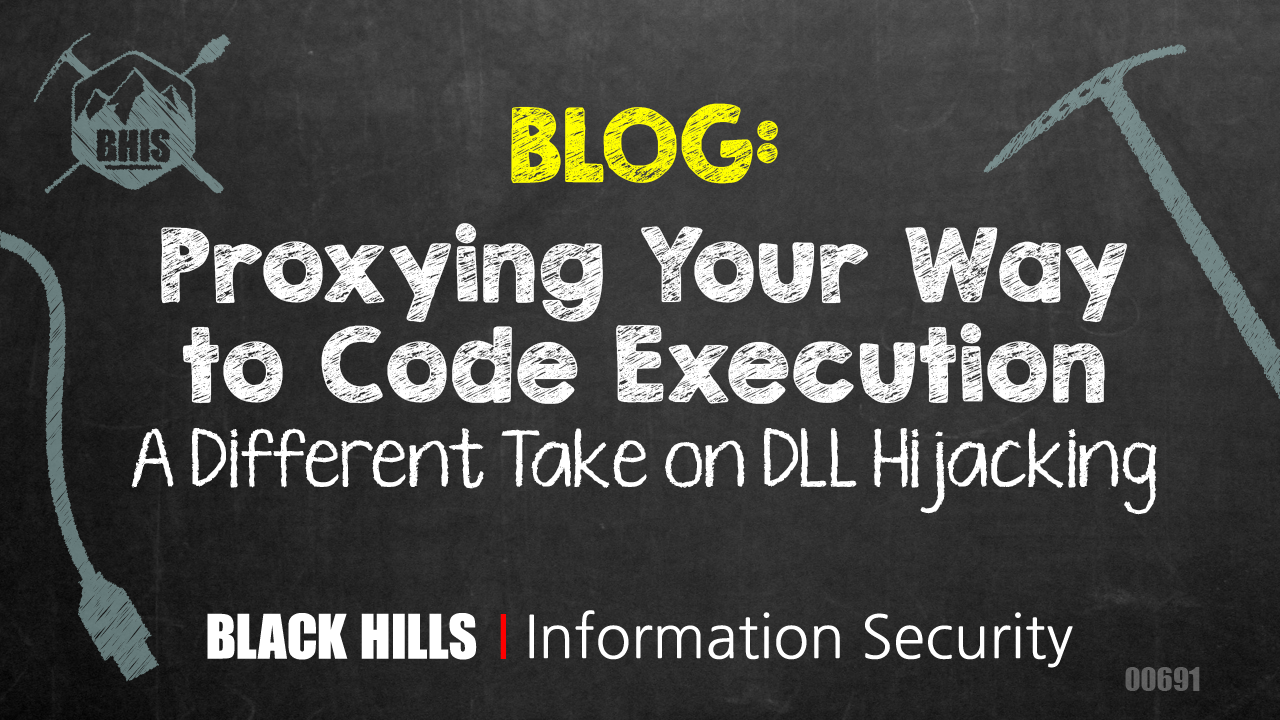
Proxying Your Way to Code Execution – A Different Take on DLL HijackingΒ 

While DLL hijacking attacks can take on many different forms, this blog post will explore a specific type of attack called DLL proxying, providing insights into how it works, the potential risks it poses, and briefly the methodology for discovering these vulnerable DLLs, which led to the discovery of several zero-day vulnerable DLLs that Microsoft has acknowledged but opted to not fix at this time.

The post Proxying Your Way to Code Execution – A Different Take on DLL HijackingΒ  appeared first on Black Hills Information Security, Inc..

  •  

Wrangling the M365 UAL with SOF-ELK on EC2 (Part 2 of 3)

Patterson Cake // In PART 1 of β€œWrangling the M365 UAL,” we talked about the value of the Unified Audit Log (UAL), some of the challenges associated with acquisition, parsing, […]

The post Wrangling the M365 UAL with SOF-ELK on EC2 (Part 2 of 3) appeared first on Black Hills Information Security, Inc..

  •  

Ssh… Don’t Tell Them I Am Not HTTPS: How Attackers Use SSH.exe as a Backdoor Into Your Network

Derek Banks // Living Off the Land Binaries, Scripts, and Libraries, known as LOLBins or LOLBAS, are legitimate components of an operating system that threat actors can use to achieve […]

The post Ssh… Don’t Tell Them I Am Not HTTPS: How Attackers Use SSH.exe as a Backdoor Into Your Network appeared first on Black Hills Information Security, Inc..

  •  

Rogue RDP – Revisiting Initial Access Methods

Mike Felch // The Hunt for Initial Access With the default disablement of VBA macros originating from the internet, Microsoft may be pitching a curveball to threat actors and red […]

The post Rogue RDP – Revisiting Initial Access Methods appeared first on Black Hills Information Security, Inc..

  •  

Securing the Cloud: A Story of Research, Discovery, and Disclosure

Jordan Drysdale // tl;dr BHIS made some interesting discoveries while working with a customer to audit their Amazon Web Services (AWS) infrastructure. At the time of the discovery, we found […]

The post Securing the Cloud: A Story of Research, Discovery, and Disclosure appeared first on Black Hills Information Security, Inc..

  •  

Using CloudFront to Relay Cobalt Strike Traffic

Brian Fehrman // Many of you have likely heard of Domain Fronting. Domain Fronting is a technique that can allow your C2 traffic to blend in with a target’s traffic […]

The post Using CloudFront to Relay Cobalt Strike Traffic appeared first on Black Hills Information Security, Inc..

  •  

Webcast: Attack Tactics 5 – Zero to Hero Attack

Timecode links take you to YouTube: 4:11 – Infrastructure & Background8:28 – Overview & Breakdown of Attack Methodology and Plans11:35 – Start of Attack (Gaining Access), Password Spraying Toolkit15:24 – […]

The post Webcast: Attack Tactics 5 – Zero to Hero Attack appeared first on Black Hills Information Security, Inc..

  •  

BHIS Webcast: Py2k20 – Transitioning from Python2 to Python3

Joff Thyer// In this webcast, we talk about the 2020 End of Life for Python2. We address what the short and medium term impacts will likely be. Key language differences […]

The post BHIS Webcast: Py2k20 – Transitioning from Python2 to Python3 appeared first on Black Hills Information Security, Inc..

  •  

BHIS PODCAST: Endpoint Security Got You Down? No PowerShell? No Problem.

Do your PowerShell scripts keep getting caught? Tired of dealing with EDRs & Windows Defender every time you need to pop a box?Β  In this one-hour podcast, originally recorded as […]

The post BHIS PODCAST: Endpoint Security Got You Down? No PowerShell? No Problem. appeared first on Black Hills Information Security, Inc..

πŸ’Ύ

  •  
❌