❌

Reading view

DNSSEC: The Extra Security Layer That Can Break Your Padlock
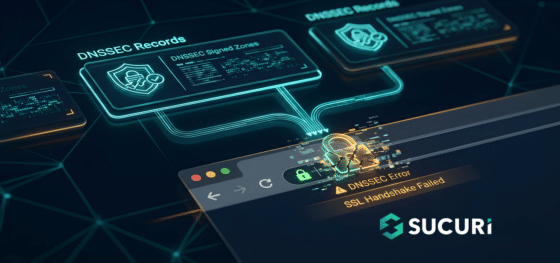
DNSSEC: The Extra Security Layer That Can Break Your Padlock

Turning on DNSSEC makes your domain more secure β€” but if it’s misconfigured, newer certificate validation rules can stop SSL renewals in their tracks.

Hey there,

You know that satisfying click when you finally turn on DNSSEC? It feels like adding a shiny new deadbolt to your domain’s front door. You’re doing the responsible thing: locking down your DNS against spoofing and hijacks, and making the internet just a bit safer.

Continue reading DNSSEC: The Extra Security Layer That Can Break Your Padlock at Sucuri Blog.

  •  

Vulnerability & Patch Roundup β€” April 2026

Vulnerability & Patch Roundup β€” April 2026

Vulnerability reports and responsible disclosures are essential for website security awareness and education. Automated attacks targeting known software vulnerabilities are one of the leading causes of website compromises.

To help educate website owners about potential threats to their environments, we’ve compiled a list of important security updates and vulnerability patches for the WordPress ecosystem this past month.

The vulnerabilities listed below are virtually patched by the Sucuri Firewall and existing clients are protected.

Continue reading Vulnerability & Patch Roundup β€” April 2026 at Sucuri Blog.

  •  

What is online gambling spam and what can I do about it?

What is online gambling spam and what can I do about it?

Online gambling spam thrives on dreams of easy money and high stakes. Beating the house at an exotic casino. Splitting sevens. Going all in on the flop. A baccarat dealer calling La grande! For most people, though, the reality falls far short of Monte Carlo and an Aston Martin.

So they turn to online gambling. And bad actors harness that allure to create their scams. They think they’re buying credits at a hot new online casino.

Continue reading What is online gambling spam and what can I do about it? at Sucuri Blog.

  •  

My Website Is Hosting a Phishing Page – Now What?

My Website Is Hosting a Phishing Page – Now What?

Most phishing advice is written for the person staring at a suspicious email. This guide is for the other kind of victim: The website owner whose legitimate site has been quietly turned into the attacker’s weapon.

You didn’t send the message or build the fake login page. You just woke up to a browser warning, a suspended hosting account, or a polite note from someone’s security team asking why your domain is requesting Apple ID credentials.

Continue reading My Website Is Hosting a Phishing Page – Now What? at Sucuri Blog.

  •  

WordPress DDoS Protection: How to Keep Your Site Online

WordPress DDoS Protection: How to Keep Your Site Online

WordPress powers over 40% of the web, which makes it one of the most attractive targets for Distributed Denial of Service (DDoS) attacks. If your site goes down for an hour, you lose revenue, search rankings, and visitor trust. If it goes down repeatedly, you lose much more.

A DDoS attack floods your website with fake traffic until it slows to a crawl or crashes entirely. Unlike hacks that steal data, DDoS attacks are about disruption.

Continue reading WordPress DDoS Protection: How to Keep Your Site Online at Sucuri Blog.

  •  

Joomla SEO Spam Injector: Obfuscated PHP Backdoor Hijacking Site Visitors

Joomla SEO Spam Injector: Obfuscated PHP Backdoor Hijacking Site Visitors

Overview

During a recent malware cleanup investigation, we encountered a compromised Joomla website where the site owner reported a strange issue. Their website displayed a large number of suspicious product links that had nothing to do with their business. These products were not added by the website owner and did not exist in their catalog.

Visitors and search engines were seeing pages that promoted unrelated products, raising immediate concerns about spam injection or remote content manipulation.

Continue reading Joomla SEO Spam Injector: Obfuscated PHP Backdoor Hijacking Site Visitors at Sucuri Blog.

  •  

Why 2FA SMS is a Bad Idea in 2026

Why 2FA SMS is a Bad Idea in 2026

What is 2FA?

Two-factor authentication (2FA) offers a second layer of security to help protect an account from brute force, phishing, and social engineering attacks.

2FA requires an extra step for a user to prove their identity, which reduces the chance of a bad actor gaining access to their account or data. And since notifications are sent to verify the initial authentication via username and passwords, it also gives users and business the ability to monitor for potential indicators of a compromise.

Continue reading Why 2FA SMS is a Bad Idea in 2026 at Sucuri Blog.

  •  

Vulnerability & Patch Roundup β€” March 2026

Vulnerability & Patch Roundup β€” March 2026

Vulnerability reports and responsible disclosures are essential for website security awareness and education. Automated attacks targeting known software vulnerabilities are one of the leading causes of website compromises.

To help educate website owners about potential threats to their environments, we’ve compiled a list of important security updates and vulnerability patches for the WordPress ecosystem this past month.

The vulnerabilities listed below are virtually patched by the Sucuri Firewall and existing clients are protected.

Continue reading Vulnerability & Patch Roundup β€” March 2026 at Sucuri Blog.

  •  

How to Fix β€œNot Secure” Warnings and SSL Issues in WordPress (8 Steps)

How to Fix β€œNot Secure” Warnings and SSL Issues in WordPress (8 Steps)

If you own a WordPress website and ever encountered the β€œNot Secure” warning, you might have worried that visitors would perceive your site as spam or fraudulent. Not only does this warning impact user trust, but it can also create technical search issues when both HTTP and HTTPS versions of your pages remain accessible or when redirects, canonicals, and sitemaps point to different URL versions. Browsers show the visible security warning, while search engines rely on permanent redirects, canonical URLs, and updated sitemaps to understand your preferred HTTPS pages.

Continue reading How to Fix β€œNot Secure” Warnings and SSL Issues in WordPress (8 Steps) at Sucuri Blog.

  •  

The Security Risks of Using Nulled WordPress Plugins

The Security Risks of Using Nulled WordPress Plugins

Every year, thousands of WordPress sites get compromised, and a surprising number of those infections trace back to a single decision: installing a nulled plugin.

Nulled plugins promise premium features for little or no money. The problem is that the β€œsavings” often come attached to malware, broken update paths, SEO damage, and legal headaches that cost far more than a legitimate license ever would. It might seem like a harmless shortcut, but it’s one that can unravel everything you’ve built online.

Continue reading The Security Risks of Using Nulled WordPress Plugins at Sucuri Blog.

  •  

Web Shells: Types, Mitigation & Removal

Web Shells: Types, Mitigation & Removal

Web shells are malicious scripts that give attackers persistent access to compromised web servers, enabling them to execute commands and control the server remotely. These scripts exploit vulnerabilities like SQL injection, remote file inclusion (RFI), and cross-site scripting (XSS) to gain entry.

Once deployed, web shells allow attackers to manipulate the server, leading to data theft, website defacement, or serving as a launchpad for further attacks. They are especially dangerous because they are also a post-compromise access mechanism (backdoor) rather than a standalone infection.

Continue reading Web Shells: Types, Mitigation & Removal at Sucuri Blog.

  •  

Vulnerability & Patch Roundup β€” February 2026

Vulnerability & Patch Roundup β€” February 2026

Vulnerability reports and responsible disclosures are essential for website security awareness and education. Automated attacks targeting known software vulnerabilities are one of the leading causes of website compromises.

To help educate website owners about potential threats to their environments, we’ve compiled a list of important security updates and vulnerability patches for the WordPress ecosystem this past month.

The vulnerabilities listed below are virtually patched by the Sucuri Firewall and existing clients are protected.

Continue reading Vulnerability & Patch Roundup β€” February 2026 at Sucuri Blog.

  •  

Beyond Login Screens: Why Access Control Matters

Beyond Login Screens: Why Access Control Matters

As breach costs go up and attackers focus on common web features like dashboards, admin panels, customer portals, and APIs, weak access control quickly leads to lost data, broken trust, and costly incidents. The worst part is that many failures are not rare technical flaws but simple mistakes, such as missing permission checks, roles with too much power, or predictable IDs in URLs.

This post aims to help you control who can access different parts of your website and explain why it matters.Β 

Continue reading Beyond Login Screens: Why Access Control Matters at Sucuri Blog.

  •  

Vulnerability & Patch Roundup β€” January 2026

Vulnerability & Patch Roundup β€” January 2026

Vulnerability reports and responsible disclosures are essential for website security awareness and education. Automated attacks targeting known software vulnerabilities are one of the leading causes of website compromises.

To help educate website owners about potential threats to their environments, we’ve compiled a list of important security updates and vulnerability patches for the WordPress ecosystem this past month.

The vulnerabilities listed below are virtually patched by the Sucuri Firewall and existing clients are protected.

Continue reading Vulnerability & Patch Roundup β€” January 2026 at Sucuri Blog.

  •  

Shadow Directories: A Unique Method to Hijack WordPress Permalinks

Shadow Directories: A Unique Method to Hijack WordPress Permalinks

Last month, while working on a WordPress cleanup case, a customer reached out with a strange complaint: their website looked completely normal to them and their visitors, but Google search results were showing something very different.

Instead of normal titles and descriptions, Google was displaying casino and gambling-related content. We have been seeing rising cases of spam on WordPress websites. What made this even more confusing was where the spam was appearing.

Continue reading Shadow Directories: A Unique Method to Hijack WordPress Permalinks at Sucuri Blog.

  •  

How to Run a Security Test and Set Up Continuous Monitoring

How to Run a Security Test and Set Up Continuous Monitoring

Many website owners follow a similar β€œsecurity plan,” even if they don’t call it that. They launch the site, add a couple of plugins, and just hope nothing goes wrong.

The issue is that modern website hacks don’t make themselves obvious. Instead, they show up as small signs, like a redirect that only affects mobile users, a hidden credit card skimmer in a template file, silent SEO spam that hurts your rankings, or a DNS change that quietly reroutes your email.

Continue reading How to Run a Security Test and Set Up Continuous Monitoring at Sucuri Blog.

  •  

Malware Intercepts Googlebot via IP-Verified Conditional Logic

Malware Intercepts Googlebot via IP-Verified Conditional Logic

Some attackers are increasingly moving away from simple redirects in favor of more β€œselective” methods of payload delivery. This approach filters out regular human visitors, allowing attackers to serve malicious content to search engine crawlers while remaining invisible to the website owner.

What did we find?

During a malware investigation, we identified a selective content injection attack inside the main index.php file of a WordPress website.

Instead of always loading WordPress normally, this modified file checks who is visiting the site.

Continue reading Malware Intercepts Googlebot via IP-Verified Conditional Logic at Sucuri Blog.

  •  

Google Sees Spam, You See Your Site: A Cloaked SEO Spam Attack

Google Sees Spam, You See Your Site: A Cloaked SEO Spam Attack

We recently handled a case where a customer reported strange SEO behavior on their website. Regular visitors saw a normal site. No popups. No redirects. No visible spam.

However, when they checked their site on Google, the search results were flooded with eBay-type-looking websites and β€œSitus Toto” gambling spam.

This is a professional-grade SEO cloaking attack. The malware turns the application into a double agent: it serves your genuine website content to real people but swaps it for a massive list of gambling ads the second a search engine bot crawls the page.

Continue reading Google Sees Spam, You See Your Site: A Cloaked SEO Spam Attack at Sucuri Blog.

  •  

Fake Browser Updates Targeting WordPress Administrators via Malicious Plugin

Fake Browser Updates Targeting WordPress Administrators via Malicious Plugin

We recently investigated a case involving a WordPress website where a customer reported persistent fake pop-up notifications appearing on their site. The warnings were urging them to update their browser (Chrome or Firefox), even though their software was already fully up-to-date.

What made this case particularly unique was the targeting. The fake alerts were not visible to regular visitors on the public-facing site. They only appeared when the site owner was logged into the wp-admin dashboard.

Continue reading Fake Browser Updates Targeting WordPress Administrators via Malicious Plugin at Sucuri Blog.

  •  

Vulnerability & Patch Roundup β€” December 2025

Vulnerability & Patch Roundup β€” December 2025

Vulnerability reports and responsible disclosures are essential for website security awareness and education. Automated attacks targeting known software vulnerabilities are one of the leading causes of website compromises.

To help educate website owners about potential threats to their environments, we’ve compiled a list of important security updates and vulnerability patches for the WordPress ecosystem this past month.

The vulnerabilities listed below are virtually patched by the Sucuri Firewall and existing clients are protected.

Continue reading Vulnerability & Patch Roundup β€” December 2025 at Sucuri Blog.

  •  
❌