
Normal view

AI is distorting the Holocaust (Lock and Code S07E10)

18 May 2026 at 03:51

This week on the Lock and Code podcast…

In May of last year, a warning about AI came from somewhere unexpected: The Auschwitz-Birkenau State Museum.

Posting publicly on social media, the museum warned about a Facebook account using generative AI to create fake images of people who died in the Holocaust. Despite using AI to generate fake images, the people in said images were sometimes real. They had real names, birthplaces, and stories of deportation that the Auschwitz-Birkenau State Museum itself had shared before. They had real faces captured in real surviving photographs, which were likely abused to generate the false images. 

In other words, someone, or some team of people online, was deepfaking the Holocaust.

As the Auschwitz museum wrote online:

“These are not real photos of the victims. They are digital inventions, often stylized or sanitized, that risk turning remembrance into fictionalized performance. The history of Auschwitz is a well-documented story. Altering its visual record with AI imagery introduces distortion, no matter the intent.”

Months later, the public found out what that intent was: money.

A BBC investigation found an international network of Facebook accounts posting AI-generated images to earn money from those images’ potential virality. It’s a problem sometimes referred to as “AI slop” but it comes with a major incentive. When accounts that make these kinds of images are invited to Facebook’s content monetization program, they can make $1,000 a month for posting anything that gets clicks.

And on Facebook, the BBC found, that means several accounts posting AI-generated images about the Holocaust. As the BBC reported:

“AI spammers have posted fake images purporting to be from inside [Auschwitz], such as a prisoner playing a violin or lovers meeting at the boundaries of fences—attracting tens of thousands of likes and shares.”

The economics of lying are concrete today. People can use AI to make fake images that make people feel good about terrible things or feel scared about untrue things, and they can make money until shut down by the Big Tech platforms themselves, which, in this case, only happened because of the BBC’s investigation. In fact, it’s that type of inaction from social media platforms that compelled the German government and multiple Holocaust memorial institutions to send an open letter earlier this year that asked for better controls and restrictions against this type of content.

As the signatories warned in their letter, the economic appeal for these accounts to distort history is too high a risk to allow. You can read the full letter here.

Today, on the Lock and Code podcast with host David Ruiz, we speak with Clara Mansfeld, a historian working on digital communications at one of the institutions signed onto the open letter—the Foundation of Hamburg Memorials and Learning Centers Commemorating the Victims of Nazi Crimes. In their conversation, Mansfeld discusses digital access to history, the manipulation of factual records through AI-generated imagery, and the threat that society faces when it becomes harder to evaluate the truth.

“What happens when the first thought we have with every historical image is, ‘Is that even real or is that AI?’ I don’t think we have really grasped what that means for us as a society.”

Tune in today to listen to the full conversation.

Show notes and credits:

Intro Music: “Spellbound” by Kevin MacLeod (incompetech.com)
Licensed under Creative Commons: By Attribution 4.0 License
http://creativecommons.org/licenses/by/4.0/
Outro Music: “Good God” by Wowa (unminus.com)


Listen up—Malwarebytes doesn’t just talk cybersecurity, we provide it.

Protect yourself from online attacks that threaten your identity, your files, your system, and your financial well-being with our exclusive offer for Malwarebytes Premium Security for Lock and Code listeners.
AI is distorting the Holocaust (Lock and Code S07E10)

18 May 2026 at 03:51

This week on the Lock and Code podcast…

In May of last year, a warning about AI came from somewhere unexpected: The Auschwitz-Birkenau State Museum.

Posting publicly on social media, the museum warned about a Facebook account using generative AI to create fake images of people who died in the Holocaust. Despite using AI to generate fake images, the people in said images were sometimes real. They had real names, birthplaces, and stories of deportation that the Auschwitz-Birkenau State Museum itself had shared before. They had real faces captured in real surviving photographs, which were likely abused to generate the false images. 

In other words, someone, or some team of people online, was deepfaking the Holocaust.

As the Auschwitz museum wrote online:

“These are not real photos of the victims. They are digital inventions, often stylized or sanitized, that risk turning remembrance into fictionalized performance. The history of Auschwitz is a well-documented story. Altering its visual record with AI imagery introduces distortion, no matter the intent.”

Months later, the public found out what that intent was: money.

A BBC investigation found an international network of Facebook accounts posting AI-generated images to earn money from those images’ potential virality. It’s a problem sometimes referred to as “AI slop” but it comes with a major incentive. When accounts that make these kinds of images are invited to Facebook’s content monetization program, they can make $1,000 a month for posting anything that gets clicks.

And on Facebook, the BBC found, that means several accounts posting AI-generated images about the Holocaust. As the BBC reported:

“AI spammers have posted fake images purporting to be from inside [Auschwitz], such as a prisoner playing a violin or lovers meeting at the boundaries of fences—attracting tens of thousands of likes and shares.”

The economics of lying are concrete today. People can use AI to make fake images that make people feel good about terrible things or feel scared about untrue things, and they can make money until shut down by the Big Tech platforms themselves, which, in this case, only happened because of the BBC’s investigation. In fact, it’s that type of inaction from social media platforms that compelled the German government and multiple Holocaust memorial institutions to send an open letter earlier this year that asked for better controls and restrictions against this type of content.

As the signatories warned in their letter, the economic appeal for these accounts to distort history is too high a risk to allow. You can read the full letter here.

Today, on the Lock and Code podcast with host David Ruiz, we speak with Clara Mansfeld, a historian working on digital communications at one of the institutions signed onto the open letter—the Foundation of Hamburg Memorials and Learning Centers Commemorating the Victims of Nazi Crimes. In their conversation, Mansfeld discusses digital access to history, the manipulation of factual records through AI-generated imagery, and the threat that society faces when it becomes harder to evaluate the truth.

“What happens when the first thought we have with every historical image is, ‘Is that even real or is that AI?’ I don’t think we have really grasped what that means for us as a society.”

Tune in today to listen to the full conversation.

Show notes and credits:

Intro Music: “Spellbound” by Kevin MacLeod (incompetech.com)
Licensed under Creative Commons: By Attribution 4.0 License
http://creativecommons.org/licenses/by/4.0/
Outro Music: “Good God” by Wowa (unminus.com)


Listen up—Malwarebytes doesn’t just talk cybersecurity, we provide it.

Protect yourself from online attacks that threaten your identity, your files, your system, and your financial well-being with our exclusive offer for Malwarebytes Premium Security for Lock and Code listeners.

From WarGames to Cyberwar

13 May 2026 at 15:00

How Nations Hack, Why Attribution Fails, and What AI Changes

Executive Summary:
Code War author Allie Mellen, argues that cyberwarfare must be understood through a human and geopolitical lens to close the knowledge gap between the security community and the public.

Disclaimer:
This post reflects the perspectives shared in the book Code War: How Nations Hack, Spy, and Shape the Digital Battlefield, and does not represent the views of the publisher of this blog.


The summer of 1983, President Reagan watched WarGames at Camp David and couldn't get it out of his head. A week later, he walked into a White House meeting with cabinet members and Congress and launched into a detailed plot summary of a Matthew Broderick movie about a teenager who nearly hacks the world into nuclear war. The room full of defense experts sat uncomfortably, suppressing smirks. Then Reagan turned to General John Vessey, Chairman of the Joint Chiefs, and asked if something like that could actually happen.

Vessey came back a week later with an answer: "Mr. President, the problem is much worse than you think."

Fifteen months after that, Reagan signed a classified presidential directive titled "National Policy on Telecommunications and Automated Information Systems Security" – the first federal policy of its kind. A movie had done what years of expert warnings hadn't: It made the most powerful person in the world stop and ask the right question.

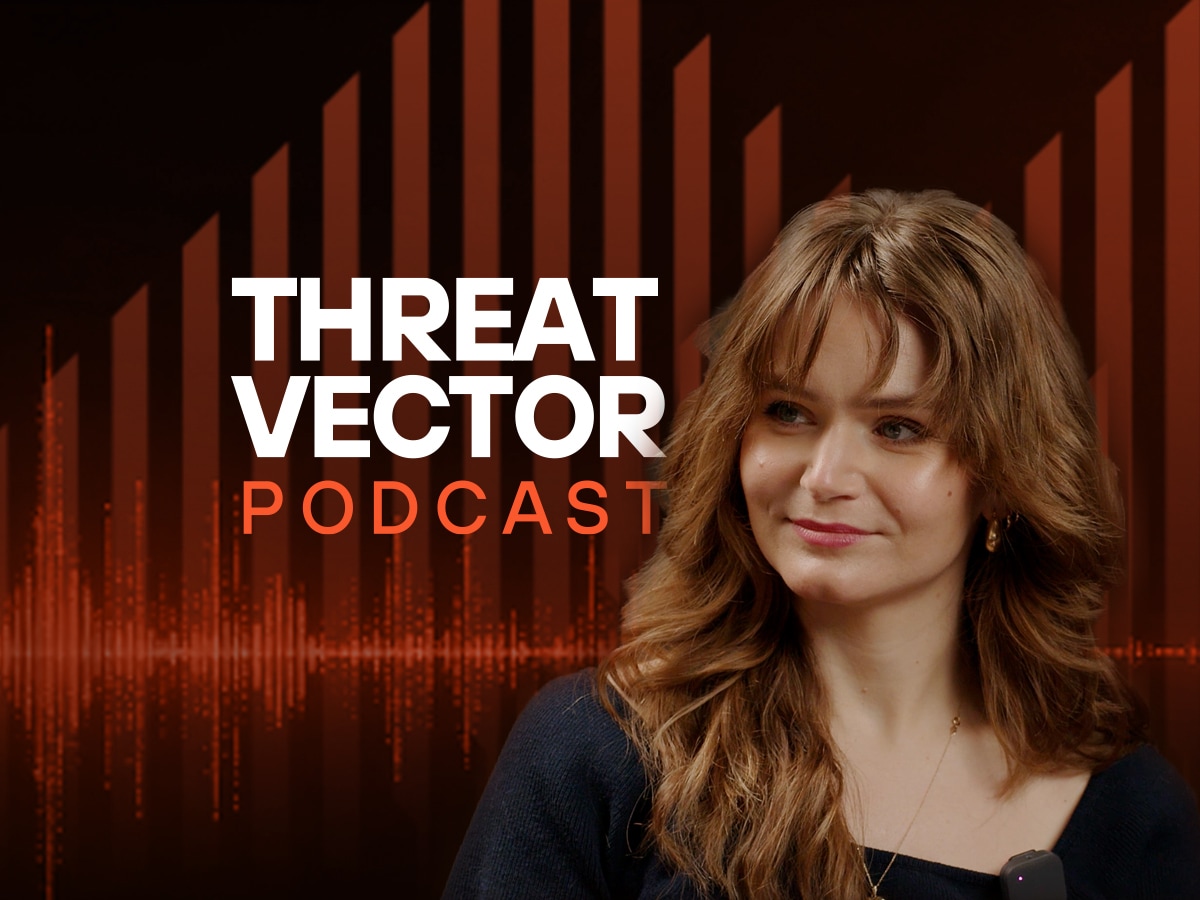
Allie Mellen, author of Code War: How Nations Hack, Spy, and Shape the Digital Battlefield, loves to tell this story, and it captures exactly why she wrote the book. In a conversation recorded at RSA 2025, Mellen joined Threat Vector host, David Moulton, to talk about nation-state threats, attribution pitfalls, and why the security industry's biggest problem isn't technical.

"They're human stories, and if we can communicate them that way to the general public, then we'll get more people interested in cybersecurity, invested in cybersecurity, and invested in protecting their data."

That gap, between what the security community understands and what everyone else grasps, is the core problem Mellen set out to solve. And in today's geopolitical moment, closing it has never been more urgent.

Every Nation Hacks Differently

One of the central arguments in Code War is that you can't understand a nation's cyber behavior without understanding its history, doctrine and social contract. China, Russia, Iran, North Korea and the U.S. each approach offensive and defensive cyber operations from completely different starting points, and those differences matter enormously to defenders.

China operates with patience. Its attacks tend to be low and slow, focused on long-term espionage rather than loud disruption. But that changes sharply in its own region, where operations targeting Taiwan are aggressive and relentless. Russia, by contrast, is bombastic; they want you to know it was Russia. Its influence operations have been some of the most effective in modern history, studied and imitated by Iran and others.

Interestingly, the very system China built to protect itself has become a liability in one specific domain. Because Chinese operators live behind the Great Firewall, without access to western social media, they lack the cultural fluency that makes Russian disinformation so effective. "They try to use memes, but it's like ‘uncanny valley’," Mellen explains. "They just slightly miss every time and so it doesn't go viral." The walled garden that gives China control over its own population makes it harder to manipulate everyone else's.

Attribution Is a Geopolitical Tool, Not Just a Technical One

Mellen is careful about attribution, and she wants defenders to be too. The standard technical signals (coding language, infrastructure patterns, operational hours) are necessary but not sufficient. Nation-states, especially the U.S., have developed tools specifically designed to mimic other actors' signatures. AI will make that problem significantly worse.

But the bigger issue is motivation. Mellen walks through a case from the Olympics where an attack was initially attributed to North Korea, even though North Korea was actively trying to normalize relations at the time by sending Kim Jong Un's sister to the games. The actual perpetrator was Russian, using a false flag to obscure its involvement. The lesson: Attribution requires asking not just "who has the technical capability?" but "who has the motive right now, given everything happening geopolitically?"

The pitfalls are real:

  • Tools once used exclusively by intelligence agencies are now publicly available, making code signatures unreliable.
  • Working-hours analysis is easy to spoof, especially for sophisticated actors.
  • Government-controlled research in adversarial nations can deliberately skew attribution findings.
  • False flag operations are increasingly sophisticated and harder to disentangle.

Why Your Data Is a Geopolitical Asset

One of the more powerful sections of the conversation centers on a question Mellen hears constantly: why would China care about my data?

Her answer cuts through the dismissiveness. These nations aren't collecting data out of idle curiosity. They're willing to constrain companies for it, invest billions in infrastructure for it, and in some cases, far worse. "Whether you wanna be involved in that system or not, you are involved in that system," she says. "And so you can either choose to take control of your information in that environment, or you can just pretend like it's not your problem."

The historical context she offers is striking. One of the driving forces behind GDPR in the EU was the collective memory of how Nazi Germany used data to target Jewish people during the Holocaust. Europe built privacy protections into law because it had seen what happens when governments gain unrestricted access to population data. That's not an abstract concern. It's a lesson written in history that the rest of the world is still catching up to.

AI Makes Everything Harder

Mellen isn't optimistic about the trajectory. Attribution is about to get much harder. Attacks are about to get much more dynamic. And AI is the reason for both.

She points to research on Chinese state-sponsored actors using AI to orchestrate attacks across the full kill chain, with only a couple of human checkpoints in the loop. The implication isn't just faster attacks. It's more adaptive malware that can adjust to different operating environments, more convincing disinformation that clears the cultural context bar, and reconnaissance-to-exploitation cycles that move faster than most defenders can process.

The constraints that have always slowed sophisticated attackers – understanding the operating system, identifying vulnerabilities, crafting exploits, mimicking attribution – all get easier with AI. All of that becomes more dynamic. And most enterprises, Mellen acknowledges, are not yet equipped to respond effectively.

The investment required is in the basics the industry has always struggled to get right, executed now at a pace and scale that demands automation and AI on the defensive side. Fighting AI with AI isn't a vendor talking point. It's the only math that works.

More to Explore

The nation-state threats Mellen describes aren't theoretical. Unit 42 responded to more than 750 major incidents in 2025. See what they found. Download the 2026 Global Incident Response Report.

Listen to the full conversation with Allie Mellen, author of Code War, on the Threat Vector podcast

The post From WarGames to Cyberwar appeared first on Palo Alto Networks Blog.

❌