Google meldt dat het twee zero-day beveiligingsekken in Android gaat dichten. Telefoonfabrikanten brengen binnenkort de updates uit om deze kwetsbaarheden te verhelpen.
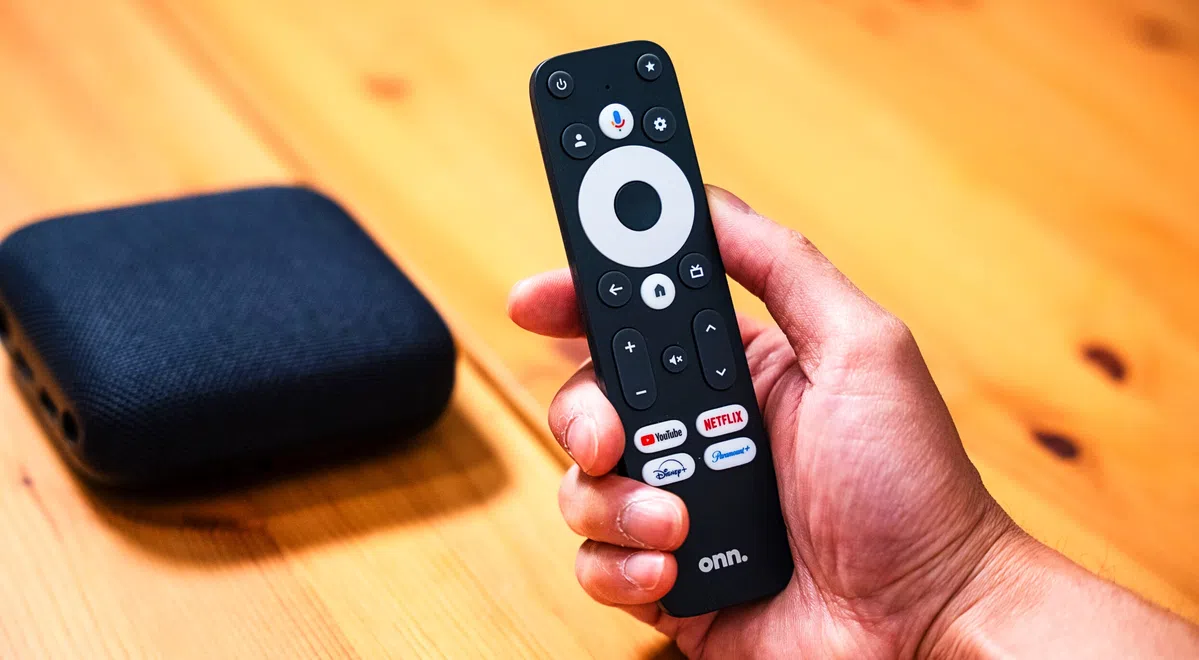
Goedkope apparaatjes met Android blijken niet zo onschuldig als ze lijken. Allerlei apparaten, waaronder Android TV-mediaspelers, tablets en projectoren, blijken malware te bevatten, waardoor de gadgets ongemerkt door oplichters kunnen worden gebruikt.
This blog is part of a series highlighting new and concerning trends we noticed over the last year. Trends matter because they almost always provide a good indication of what’s coming next.
If there’s one thing that became very clear in 2025, it’s that malware is no longer focused on Windows alone. We’ve seen some major developments, especially in campaigns targeting Android and macOS. Unfortunately, many people still don’t realize that protecting smartphones, tablets, and other connected devices is just as essential as securing their laptops.
Android
Banking Trojans on Android are not new, but their level of sophistication continues to rise. These threats continue to be a major problem in 2025, often disguising themselves as fake apps to steal credentials or stealthily take over devices. A recent wave of advanced banking Trojans, such as Herodotus, can mimic human typing behaviors to evade detection, highlighting just how refined these attacks have become. Android malware also includes adware that aggressively pushes intrusive ads through free apps, degrading both the user experience and overall security.
Several Trojans were found to use overlays, which are fake login screens appearing on top of real banking and cryptocurrency apps. They can read what’s on the screen, so when someone enters their username and password, the malware steals them.
macOS
One of the most notable developments for Mac users was the expansion of the notorious ClickFix campaign to macOS. Early in 2025, I described how criminals used fake CAPTCHA sites and a clipboard hijacker to provide instructions that led visitors ro infect their own machines with the Lumma infostealer.
ClickFix is the name researchers have since given to this type of campaign, where users are tricked into running malicious commands themselves. On macOS, this technique is being used to distribute both AMOS stealers and the Rhadamanthys infostealer.
Cross-platform
Malware developers increasingly use cross-platform languages such as Rust and Go to create malware that can run on Windows, macOS, Linux, mobile, and even Internet of Things (IoT) devices. This enables flexible targeting and expands the number of potential victims. Malware-as-a-Service (MaaS) models are on the rise, offering these tools for rent or purchase on underground markets, further professionalizing malware development and distribution.
We’ve also seen consistent growth in Remote Access Trojan (RAT) activity, often used as an initial infection method. There’s also been a rise in finance-focused attacks, including cryptocurrency and banking-related targets, alongside widespread stealer malware driving data breaches.
What does this mean for 2026?
Taken together, these trends point to a clear shift. Cybercriminals are increasingly focusing on operating systems beyond Windows, combining advanced techniques and social engineering tailored specifically to mobile and macOS.
We don’t just report on threats—we remove them
Cybersecurity risks should never spread beyond a headline. Keep threats off your devices by downloading Malwarebytes today.
Posted by Liz Prucka, Hamzeh Zawawy, Rishika Hooda, Android Security and Privacy Team
Last year, Google's Android Red Team partnered with Arm to conduct an in-depth security analysis of the Mali GPU, a component used in billions of Android devices worldwide. This collaboration was a significant step in proactively identifying and fixing vulnerabilities in the GPU software and firmware stack.
While finding and fixing individual bugs is crucial, and progress continues on eliminating them entirely, making them unreachable by restricting attack surface is another effective and often faster way to improve security. This post details our efforts in partnership with Arm to further harden the GPU by reducing the driver's attack surface.
The Growing Threat: Why GPU Security Matters
The Graphics Processing Unit (GPU) has become a critical and attractive target for attackers due to its complexity and privileged access to the system. The scale of this threat is significant: since 2021, the majority of Android kernel driver-based exploits have targeted the GPU. These exploits primarily target the interface between the User-Mode Driver (UMD) and the highly privileged Kernel-Mode Driver (KMD), where flaws can be exploited by malicious input to trigger memory corruption.
Partnership with Arm
Our goal is to raise the bar on GPU security, ensuring the Mali GPU driver and firmware remain highly resilient against potential threats. We partnered with Arm to conduct an analysis of the Mali driver, used on approximately 45% of Android devices. This collaboration was crucial for understanding the driver’s attack surface and identifying areas that posed a security risk, but were not necessary for production use.
The Right Tool for the Job: Hardening with SELinux
One of the key findings of our investigation was the opportunity to restrict access to certain GPU IOCTLs. IOCTLs act as the GPU kernel driver’s user input and output, as well as the attack surface. This approach builds on earlier kernel hardening efforts, such as those described in the 2016 post Protecting Android with More Linux Security. Mali ioctls can be broadly categorized as:
Unprivileged: Necessary for normal operation.
Instrumentation: Used by developers for profiling and debugging.
Restricted: Should not be used by applications in production. This includes IOCTLs which are intended only for GPU development, as well as IOCTLs which have been deprecated and are no longer used by a device’s current User-Mode Driver (UMD) version.
Our goal is to block access to deprecated and debug IOCTLs in production. Instrumentation IOCTLs are intended for use by profiling tools to monitor system GPU performance and are not intended to be directly used by applications in production. As such, access is restricted to shell or applications marked as debuggable. Production IOCTLs remain accessible to regular applications.
A Staged Rollout
The approach is iterative and is a staged rollout for devices using the Mali GPU. This way, we were able to carefully monitor real-world usage and collect data to validate the policy, minimizing the risk of breaking legitimate applications before moving to broader adoption:
Opt-In Policy: We started with an "opt-in" policy. We created a new SELinux attribute, gpu_harden, that disallowed instrumentation ioctls. We then selectively applied this attribute to certain system apps to test the impact. We used the allowxperm rule to audit, but not deny, access to the intended resource, and monitored the denial logs to ensure no breakage.
Opt-Out Policy: Once we were confident that our approach was sound, we moved to an "opt-out" policy. We created a gpu_debug domain that would allow access to instrumentation ioctls. All applications were hardened by default, but developers could opt-out by:
Running on a rooted device.
Setting the android:debuggable="true" attribute in their app's manifest.
Requesting a permanent exception in the SELinux policy for their application.
This approach allowed us to roll out the new security policy broadly while minimizing the impact on developers.
Step by Step instructions on how to add your Sepolicy
To help our partners and the broader ecosystem adopt similar hardening measures, this section provides a practical, step-by-step guide for implementing a robust SELinux policy to filter GPU ioctls. This example is based on the policy we implemented for the Mali GPU on Android devices.
The core principle is to create a flexible, platform-level macro that allows each device to define its own specific lists of GPU ioctl commands to be restricted. This approach separates the general policy logic from the device-specific implementation.
Official documentation detailing the added macro and GPU security policy is available at:
Step 1: Utilize the Platform-Level Hardening Macro
The first step is to use a generic macro that we built in the platform's system/sepolicy that can be used by any device. This macro establishes the framework for filtering different categories of ioctls.
In the file/sepolicy/public/te_macros, a new macro is created. This macro allows device-specific policies to supply their own lists of ioctls to be filtered. The macro is designed to:
Allow all applications (appdomain) access to a defined list of unprivileged ioctls.
Restrict access to sensitive "instrumentation" ioctls, only permitting them for debugging tools like shell or runas_app when the application is debuggable.
Block access to privileged ioctls based on the application's target SDK version, maintaining compatibility for older applications.
Step 2: Define Device-Specific IOCTL Lists
With the platform macro in place, you can now create a device-specific implementation. This involves defining the exact ioctl commands used by your particular GPU driver.
Create an ioctl_macros file in your device's sepolicy directory (e.g., device/your_company/your_device/sepolicy/ioctl_macros).
Define the ioctl lists inside this file, categorizing them as needed. Based on our analysis, we recommend at least mali_production_ioctls, mali_instrumentation_ioctls, and mali_debug_ioctls. These lists will contain the hexadecimal ioctl numbers specific to your driver.
For example, you can define your IOCTL lists as follows:
Arm has provided official categorization of their IOCTLs in Documentation/ioctl-categories.rst of their r54p2 release. This list will continue to be maintained in future driver releases.
Step 3: Apply the Policy to the GPU Device
Now, you apply the policy to the GPU device node using the macro you created.
Create a gpu.te file in your device's sepolicy directory.
Call the platform macro from within this file, passing in the device label and the ioctl lists you just defined.
Step 4: Test, Refine, and Enforce
As with any SELinux policy development, the process should be iterative. This iterative process is consistent with best practices for SELinux policy development outlined in the Android Open Source Project documentation.
Conclusion
Attack surface reduction is an effective approach to security hardening, rendering vulnerabilities unreachable. This technique is particularly effective because it provides users strong protection against existing but also not-yet-discovered vulnerabilities, and vulnerabilities that might be introduced in the future. This effort spans across Android and Android OEMs, and required close collaboration with Arm. The Android security team is committed to collaborating with ecosystem partners to drive broader adoption of this approach to help harden the GPU.
Acknowledgments
Thank you to Jeffrey Vander Stoep for his valuable suggestions and extensive feedback on this post.
Posted by Aden Haussmann, Associate Product Manager and Sumeet Sharma, Play Partnerships Trust & Safety Lead
Android uses the best of Google AI and our advanced security expertise to tackle mobile scams from every angle. Over the last few years, we’ve launched industry-leading features to detect scams and protect users across phone calls, text messages and messaging app chat notifications.
These efforts are making a real difference in the lives of Android users. According to a recent YouGov survey1 commissioned by Google, Android users were 58% more likely than iOS users to report they had not received any scam texts in the prior week2.
But our work doesn’t stop there. Scammers are continuously evolving, using more sophisticated social engineering tactics to trick users into sharing their phone screen while on the phone to visit malicious websites, reveal sensitive information, send funds or download harmful apps. One popular scam involves criminals impersonating banks or other trusted institutions on the phone to try to manipulate victims into sharing their screen in order to reveal banking information or make a financial transfer.
When you launch a participating financial app while screen sharing and on a phone call with a number that is not saved in your contacts, your Android device3 will automatically warn you about the potential dangers and give you the option to end the call and to stop screen sharing with just one tap. The warning includes a 30-second pause period before you’re able to continue, which helps break the ‘spell’ of the scammer's social engineering, disrupting the false sense of urgency and panic commonly used to manipulate you into a scam.
Bringing in-call scam protections to more users on Android
The UK pilot of Android’s in-call scam protections has already helped thousands of users end calls that could have cost them a significant amount of money. Following this success, and alongside recently launched pilots with financial apps in Brazil and India, we’ve now expanded this protection to most major UK banks.
We’ve also started to pilot this protection with more app types, including peer-to-peer (P2P) payment apps. Today, we’re taking the next step in our expansion by rolling out a pilot of this protection in the United States4 with a number of popular fintechs like Cash App and banks, including JPMorganChase.
We are committed to collaborating across the ecosystem to help keep people safe from scams. We look forward to learning from these pilots and bringing these critical safeguards to even more users in the future.
Notes
Google/YouGov survey, July-August, n=5,100 (1,700 each in the US, Brazil and India), with adults who use their smartphones daily and who have been exposed to a scam or fraud attempt on their smartphone. Survey data have been weighted to smartphone population adults in each country. ↩
Among users who use the default texting app on their smartphone. ↩
Posted by Dave Kleidermacher, VP, Platforms Security & Privacy, Google
Technology should bring people closer together, not create walls. Being able to communicate and connect with friends and family should be easy regardless of the phone they use. That’s why Android has been building experiences that help you stay connected across platforms.
As part of our efforts to continue to make cross-platform communication more seamless for users, we've made Quick Share interoperable with AirDrop, allowing for two-way file sharing between Android and iOS devices, starting with the Pixel 10 Family. This new feature makes it possible to quickly share your photos, videos, and files with people you choose to communicate with, without worrying about the kind of phone they use.
Most importantly, when you share personal files and content, you need to trust that it stays secure. You can share across devices with confidence knowing we built this feature with security at its core, protecting your data with strong safeguards that have been tested by independent security experts.
Secure by Design
We built Quick Share’s interoperability support for AirDrop with the same rigorous security standards that we apply to all Google products. Our approach to security is proactive and deeply integrated into every stage of the development process. This includes:
Threat Modeling: We identify and address potential security risks before they can become a problem.
Internal Security Design and Privacy Reviews: Our dedicated security and privacy teams thoroughly review the design to ensure it meets our high standards.
Internal Penetration Testing: We conduct extensive in-house testing to identify and fix vulnerabilities.
This Secure by Design philosophy ensures that all of our products are not just functional but also fundamentally secure.
This feature is also protected by a multi-layered security approach to ensure a safe sharing experience from end-to-end, regardless of what platform you’re on.
Secure Sharing Channel: The communication channel itself is hardened by our use of Rust to develop this feature. This memory-safe language is the industry benchmark for building secure systems and provides confidence that the connection is protected against buffer overflow attacks and other common vulnerabilities.
Built-in Platform Protections: This feature is strengthened by the robust built-in security of both Android and iOS. On Android, security is built in at every layer. Our deep investment in Rust at the OS level hardens the foundation, while proactive defenses like Google Play Protect work to keep your device safe. This is complemented by the security architecture of iOS that provides its own strong safeguards that mitigate malicious files and exploitation. These overlapping protections on both platforms work in concert with the secure connection to provide comprehensive safety for your data when you share or receive.
You’re in Control: Sharing across platforms works just like you're used to: a file requires your approval before being received, so you're in control of what you accept.
The Power of Rust: A Foundation of Secure Communication
A key element of our security strategy for the interoperability layer between Quick Share and AirDrop is the use of the memory-safe Rust programming language. Recognized by security agencies around the world, including the NSA and CISA, Rust is widely considered the industry benchmark for building secure systems because it eliminates entire classes of memory-safety vulnerabilities by design.
Rust is already a cornerstone of our broader initiative to eliminate memory safety bugs across Android. Its selection for this feature was deliberate, driven by the unique security challenges of cross-platform communication that demanded the most robust protections for memory safety.
The core of this feature involves receiving and parsing data sent over a wireless protocol from another device. Historically, when using a memory-unsafe language, bugs in data parsing logic are one of the most common sources of high-severity security vulnerabilities. A malformed data packet sent to a parser written in a memory-unsafe language can lead to buffer overflows and other memory corruption bugs, creating an opportunity for code execution.
This is precisely where Rust provides a robust defense. Its compiler enforces strict ownership and borrowing rules at compile time, which guarantees memory safety. Rust removes entire classes of memory-related bugs. This means our implementation is inherently resilient against attackers attempting to use maliciously crafted data packets to exploit memory errors.
Secure Sharing Using AirDrop's "Everyone" Mode
To ensure a seamless experience for both Android and iOS users, Quick Share currently works with AirDrop's "Everyone for 10 minutes" mode. This feature does not use a workaround; the connection is direct and peer-to-peer, meaning your data is never routed through a server, shared content is never logged, and no extra data is shared. As with "Everyone for 10 minutes" mode on any device when you’re sharing between non-contacts, you can ensure you're sharing with the right person by confirming their device name on your screen with them in person.
This implementation using "Everyone for 10 minutes” mode is just the first step in seamless cross-platform sharing, and we welcome the opportunity to work with Apple to enable “Contacts Only” mode in the future.
Tested by Independent Security Experts
After conducting our own secure product development, internal threat modeling, privacy reviews, and red team penetration tests, we engaged with NetSPI, a leading third-party penetration testing firm, to further validate the security of this feature and conduct an independent security assessment. The assessment found the interoperability between Quick Share and AirDrop is secure, is “notably stronger” than other industry implementations and does not leak any information.
Based on these internal and external assessments, we believe our implementation provides a strong security foundation for cross-platform file sharing for both Android and iOS users. We will continue to evaluate and enhance the implementation’s security in collaboration with additional third-party partners.
To complement this deep technical audit, we also sought expert third-party perspective on our approach from Dan Boneh, a renowned security expert and professor at Stanford University:
“Google’s work on this feature, including the use of memory safe Rust for the core communications layer, is a strong example of how to build secure interoperability, ensuring that cross-platform information sharing remains safe. I applaud the effort to open more secure information sharing between platforms and encourage Google and Apple to work together more on this."
The Future of File-Sharing Should Be Interoperable
This is just the first step as we work to improve the experience and expand it to more devices. We look forward to continuing to work with industry partners to make connecting and communicating across platforms a secure, seamless experience for all users.
Last year, we wrote about why a memory safety strategy that focuses on vulnerability prevention in new code quickly yields durable and compounding gains. This year we look at how this approach isn’t just fixing things, but helping us move faster.
The 2025 data continues to validate the approach, with memory safety vulnerabilities falling below 20% of total vulnerabilities for the first time.
Updated data for 2025. This data covers first-party and third-party (open source) code changes to the Android platform across C, C++, Java, Kotlin, and Rust. This post is published a couple of months before the end of 2025, but Android’s industry-standard 90-day patch window means that these results are very likely close to final. We can and will accelerate patching when necessary.
We adopted Rust for its security and are seeing a 1000x reduction in memory safety vulnerability density compared to Android’s C and C++ code. But the biggest surprise was Rust's impact on software delivery. With Rust changes having a 4x lower rollback rate and spending 25% less time in code review, the safer path is now also the faster one.
In this post, we dig into the data behind this shift and also cover:
How we’re expanding our reach: We're pushing to make secure code the default across our entire software stack. We have updates on Rust adoption in first-party apps, the Linux kernel, and firmware.
Our first rust memory safety vulnerability...almost: We'll analyze a near-miss memory safety bug in unsafe Rust: how it happened, how it was mitigated, and steps we're taking to prevent recurrence. It’s also a good chance to answer the question “if Rust can have memory safety issues, why bother at all?”
Building Better Software, Faster
Developing an operating system requires the low-level control and predictability of systems programming languages like C, C++, and Rust. While Java and Kotlin are important for Android platform development, their role is complementary to the systems languages rather than interchangeable. We introduced Rust into Android as a direct alternative to C and C++, offering a similar level of control but without many of their risks. We focus this analysis on new and actively developed code because our data shows this to be an effective approach.
When we look at development in systems languages (excluding Java and Kotlin), two trends emerge: a steep rise in Rust usage and a slower but steady decline in new C++.
Net lines of code added: Rust vs. C++, first-party Android code. This chart focuses on first-party (Google-developed) code (unlike the previous chart that included all first-party and third-party code in Android.) We only include systems languages, C/C++ (which is primarily C++), and Rust.
The chart shows that the volume of new Rust code now rivals that of C++, enabling reliable comparisons of software development process metrics. To measure this, we use the DORA1 framework, a decade-long research program that has become the industry standard for evaluating software engineering team performance. DORA metrics focus on:
Throughput: the velocity of delivering software changes.
Stability: the quality of those changes.
Cross-language comparisons can be challenging. We use several techniques to ensure the comparisons are reliable.
Similar sized changes: Rust and C++ have similar functionality density, though Rust is slightly denser. This difference favors C++, but the comparison is still valid. We use Gerrit’s change size definitions.
Similar developer pools: We only consider first-party changes from Android platform developers. Most are software engineers at Google, and there is considerable overlap between pools with many contributing in both.
Track trends over time: As Rust adoption increases, are metrics changing steadily, accelerating the pace, or reverting to the mean?
Throughput
Code review is a time-consuming and high-latency part of the development process. Reworking code is a primary source of these costly delays. Data shows that Rust code requires fewer revisions. This trend has been consistent since 2023. Rust changes of a similar size need about 20% fewer revisions than their C++ counterparts.
In addition, Rust changes currently spend about 25% less time in code review compared to C++. We speculate that the significant change in favor of Rust between 2023 and 2024 is due to increased Rust expertise on the Android team.
While less rework and faster code reviews offer modest productivity gains, the most significant improvements are in the stability and quality of the changes.
Stability
Stable and high-quality changes differentiate Rust. DORA uses rollback rate for evaluating change stability. Rust's rollback rate is very low and continues to decrease, even as its adoption in Android surpasses C++.
For medium and large changes, the rollback rate of Rust changes in Android is ~4x lower than C++. This low rollback rate doesn't just indicate stability; it actively improves overall development throughput. Rollbacks are highly disruptive to productivity, introducing organizational friction and mobilizing resources far beyond the developer who submitted the faulty change. Rollbacks necessitate rework and more code reviews, can also lead to build respins, postmortems, and blockage of other teams. Resulting postmortems often introduce new safeguards that add even more development overhead.
In a self-reported survey from 2022, Google software engineers reported that Rust is both easier to review and more likely to be correct. The hard data on rollback rates and review times validates those impressions.
Putting it all together
Historically, security improvements often came at a cost. More security meant more process, slower performance, or delayed features, forcing trade-offs between security and other product goals. The shift to Rust is different: we are significantly improving security and key development efficiency and product stability metrics.
Expanding Our Reach
With Rust support now mature for building Android system services and libraries, we are focused on bringing its security and productivity advantages elsewhere.
Firmware: The combination of high privilege, performance constraints, and limited applicability of many security measures makes firmware both high-risk, and challenging to secure. Moving firmware to Rust can yield a major improvement in security. We have been deploying Rust in firmware for years now, and even released tutorials, training, and code for the wider community. We’re particularly excited about our collaboration with Arm on Rusted Firmware-A.
First-party applications: Rust is ensuring memory safety from the ground up in several security-critical Google applications, such as:
Nearby Presence: The protocol for securely and privately discovering local devices over Bluetooth is implemented in Rust and is currently running in Google Play Services.
MLS: The protocol for secure RCS messaging is implemented in Rust and will be included in the Google Messages app in a future release.
Chromium: Parsers for PNG, JSON, and web fonts have been replaced with memory-safe implementations in Rust, making it easier for Chromium engineers to deal with data from the web while following the Rule of 2.
These examples highlight Rust's role in reducing security risks, but memory-safe languages are only one part of a comprehensive memory safety strategy. We continue to employ a defense-in-depth approach, the value of which was clearly demonstrated in a recent near-miss.
Our First Rust Memory Safety Vulnerability...Almost
We recently avoided shipping our very first Rust-based memory safety vulnerability: a linear buffer overflow in CrabbyAVIF. It was a near-miss. To ensure the patch received high priority and was tracked through release channels, we assigned it the identifier CVE-2025-48530. While it’s great that the vulnerability never made it into a public release, the near-miss offers valuable lessons. The following sections highlight key takeaways from our postmortem.
Scudo Hardened Allocator for the Win
A key finding is that Android’s Scudo hardened allocator deterministically rendered this vulnerability non-exploitabledue to guard pages surrounding secondary allocations. While Scudo is Android’s default allocator, used on Google Pixel and many other devices, we continue to work with partners to make it mandatory. In the meantime, we will issue CVEs of sufficient severity for vulnerabilities that could be prevented by Scudo.
In addition to protecting against overflows, Scudo’s use of guard pages helped identify this issue by changing an overflow from silent memory corruption into a noisy crash. However, we did discover a gap in our crash reporting: it failed to clearly show that the crash was a result of an overflow, which slowed down triage and response. This has been fixed, and we now have a clear signal when overflows occur into Scudo guard pages.
Unsafe Review and Training
Operating system development requires unsafe code, typically C, C++, or unsafe Rust (for example, for FFI and interacting with hardware), so simply banning unsafe code is not workable. When developers must use unsafe, they should understand how to do so soundly and responsibly
To that end, we are adding a new deep dive on unsafe code to our Comprehensive Rust training. This new module, currently in development, aims to teach developers how to reason about unsafe Rust code, soundness and undefined behavior, as well as best practices like safety comments and encapsulating unsafe code in safe abstractions.
Better understanding of unsafe Rust will lead to even higher quality and more secure code across the open source software ecosystem and within Android. As we'll discuss in the next section, our unsafe Rust is already really quite safe. It’s exciting to consider just how high the bar can go.
Comparing Vulnerability Densities
This near-miss inevitably raises the question: "If Rust can have memory safety vulnerabilities, then what’s the point?"
The point is that the density is drastically lower. So much lower that it represents a major shift in security posture. Based on our near-miss, we can make a conservative estimate. With roughly 5 million lines of Rust in the Android platform and one potential memory safety vulnerability found (and fixed pre-release), our estimated vulnerability density for Rust is 0.2 vuln per 1 million lines (MLOC).
Our historical data for C and C++ shows a density of closer to 1,000 memory safety vulnerabilities per MLOC. Our Rust code is currently tracking at a density orders of magnitude lower: a more than 1000x reduction.
Memory safety rightfully receives significant focus because the vulnerability class is uniquely powerful and (historically) highly prevalent. High vulnerability density undermines otherwise solid security design because these flaws can be chained to bypass defenses, including those specifically targeting memory safety exploits. Significantly lowering vulnerability density does not just reduce the number of bugs; it dramatically boosts the effectiveness of our entire security architecture.
The primary security concern regarding Rust generally centers on the approximately 4% of code written within unsafe{} blocks. This subset of Rust has fueled significant speculation, misconceptions, and even theories that unsafe Rust might be more buggy than C. Empirical evidence shows this to be quite wrong.
Our data indicates that even a more conservative assumption, that a line of unsafe Rust is as likely to have a bug as a line of C or C++, significantly overestimates the risk of unsafe Rust. We don’t know for sure why this is the case, but there are likely several contributing factors:
unsafe{} doesn't actually disable all or even most of Rust’s safety checks (a common misconception).
The practice of encapsulation enables local reasoning about safety invariants.
The additional scrutiny that unsafe{} blocks receive.
Final Thoughts
Historically, we had to accept a trade-off: mitigating the risks of memory safety defects required substantial investments in static analysis, runtime mitigations, sandboxing, and reactive patching. This approach attempted to move fast and then pick up the pieces afterwards. These layered protections were essential, but they came at a high cost to performance and developer productivity, while still providing insufficient assurance.
While C and C++ will persist, and both software and hardware safety mechanisms remain critical for layered defense, the transition to Rust is a different approach where the more secure path is also demonstrably more efficient. Instead of moving fast and then later fixing the mess, we can move faster while fixing things. And who knows, as our code gets increasingly safe, perhaps we can start to reclaim even more of that performance and productivity that we exchanged for security, all while also improving security.
Acknowledgments
Thank you to the following individuals for their contributions to this post:
Ivan Lozano for compiling the detailed postmortem on CVE-2025-48530.
Chris Ferris for validating the postmortem’s findings and improving Scudo’s crash handling as a result.
Dmytro Hrybenko for leading the effort to develop training for unsafe Rust and for providing extensive feedback on this post.
Alex Rebert and Lars Bergstrom for their valuable suggestions and extensive feedback on this post.
Peter Slatala, Matthew Riley, and Marshall Pierce for providing information on some of the places where Rust is being used in Google's apps.
Finally, a tremendous thank you to the Android Rust team, and the entire Android organization for your relentless commitment to engineering excellence and continuous improvement.
Notes
The DevOps Research and Assessment (DORA) program is published by Google Cloud. ↩
Posted by Lyubov Farafonova, Product Manager, Phone by Google; Alberto Pastor Nieto, Sr. Product Manager Google Messages and RCS Spam and Abuse; Vijay Pareek, Manager, Android Messaging Trust and Safety
As Cybersecurity Awareness Month wraps up, we’re focusing on one of today's most pervasive digital threats: mobile scams. In the last 12 months, fraudsters have used advanced AI tools to create more convincing schemes, resulting in over $400 billion in stolen funds globally.¹
For years, Android has been on the frontlines in the battle against scammers, using the best of Google AI to build proactive, multi-layered protections that can anticipate and block scams before they reach you. Android’s scam defenses protect users around the world from over 10 billion suspected malicious calls and messages every month2. In addition, Google continuously performs safety checks to maintain the integrity of the RCS service. In the past month alone, this ongoing process blocked over 100 million suspicious numbers from using RCS, stopping potential scams before they could even be sent.
To show how our scam protections work in the real world, we asked users and independent security experts to compare how well Android and iOS protect you from these threats. We're also releasing a new report that explains how modern text scams are orchestrated, helping you understand the tactics fraudsters use and how to spot them.
Survey shows Android users’ confidence in scam protections
Google and YouGov3 surveyed 5,000 smartphone users across the U.S., India, and Brazil about their scam experiences. The findings were clear: Android users reported receiving fewer scam texts and felt more confident that their device was keeping them safe.
Android users were 58% more likely than iOS users to say they had not received any scam texts in the week prior to the survey. The advantage was even stronger on Pixel, where users were 96% more likely than iPhone owners to report zero scam texts4.
At the other end of the spectrum, iOS users were 65% more likely than Android users to report receiving three or more scam texts in a week. The difference became even more pronounced when comparing iPhone to Pixel, with iPhone users 136% more likely to say they had received a heavy volume of scam messages4.
Android users were 20% more likely than iOS users to describe their device’s scam protections as “very effective” or “extremely effective.” When comparing Pixel to iPhone, iPhone users were 150% more likely to say their device was not effective at all in stopping mobile fraud.
YouGov study findings on users’ experience with scams on Android and iOS
Security researchers and analysts highlight Android’s AI-driven safeguards against sophisticated scams
In a recent evaluation by Counterpoint Research5, a global technology market research firm, Android smartphones were found to have the most AI-powered protections. The independent study compared the latest Pixel, Samsung, Motorola, and iPhone devices, and found that Android provides comprehensive AI-driven safeguards across ten key protection areas, including email protections, browsing protections, and on-device behavioral protections. By contrast, iOS offered AI-powered protections in only two categories. You can see the full comparison in the visual below.
Counterpoint Research comparison of Android and iOS AI-powered protections
Cybersecurity firm Leviathan Security Group conducted a funded evaluation6 of scam and fraud protection on the iPhone 17, Moto Razr+ 2025, Pixel 10 Pro, and Samsung Galaxy Z Fold 7. Their analysis found that Android smartphones, led by the Pixel 10 Pro, provide the highest level of default scam and fraud protection.The report particularly noted Android's robust call screening, scam detection, and real-time scam warning authentication capabilities as key differentiators. Taken together, these independent expert assessments conclude that Android’s AI-driven safeguards provide more comprehensive and intelligent protection against mobile scams.
Leviathan Security Group comparison of scam protections across various devices
Why Android users see fewer scams
Android’s proactive protections work across the platform to help you stay ahead of threats with the best of Google AI.
Here’s how they work:
Keeping your messages safe: Google Messages automatically filters known spam by analyzing sender reputation and message content, moving suspicious texts directly to your "spam & blocked" folder to keep them out of sight. For more complex threats, Scam Detection uses on-device AI to analyze messages from unknown senders for patterns of conversational scams (like pig butchering) and provide real-time warnings6. This helps secure your privacy while providing a robust shield against text scams. As an extra safeguard, Google Messages also helps block suspicious links in messages that are determined to be spam or scams.
Combatting phone call scams:Phone by Google automatically blocks known spam calls so your phone never even rings, while Call Screen5 can answer the call on your behalf to identify fraudsters. If you answer, the protection continues with Scam Detection, which uses on-device AI to provide real-time warnings for suspicious conversational patterns6. This processing is completely ephemeral, meaning no call content is ever saved or leaves your device. Android also helps stop social engineering during the call itself by blocking high-risk actions7like installing untrusted apps or disabling security settings, and warns you if your screen is being shared unknowingly.
These safeguards are built directly into the core of Android, alongside other features like real-time app scanning in Google Play Protect and enhanced Safe Browsing in Chrome using LLMs. With Android, you can trust that you have intelligent, multi-layered protection against scams working for you.
Android is always evolving to keep you one step ahead of scams
In a world of evolving digital threats, you deserve to feel confident that your phone is keeping you safe. That’s why we use the best of Google AI to build intelligent protections that are always improving and work for you around the clock, so you can connect, browse, and communicate with peace of mind.
2: This total comprises all instances where a message or call was proactively blocked or where a user was alerted to potential spam or scam activity. ↩
3: Google/YouGov survey, July-August, n=5,100 (1,700 each in the US, Brazil and India), with adults who use their smartphones daily and who have been exposed to a scam or fraud attempt on their smartphone. Survey data have been weighted to smartphone population adults in each country. ↩
4: Among users who use the default texting app on their smartphone ↩
5: Google/Counterpoint Research, “Assessing the State of AI-Powered Mobile Security”, Oct. 2025; based on comparing the Pixel 10 Pro, iPhone 17 Pro, Samsung Galaxy S25 Ultra, OnePlus 13, Motorola Razr+ 2025. Evaluation based on no-cost smartphone features enabled by default. Some features may not be available in all countries. ↩
6: Google/Leviathan Security Group, “October 2025 Mobile Platform Security & Fraud Prevention Assessment”, Oct. 2025; based on comparing the Pixel 10 Pro, iPhone 17 Pro, Samsung Galaxy Z Fold 7 and Motorola Razr+ 2025. Evaluation based on no-cost smartphone features enabled by default. Some features may not be available in all countries. ↩↩
Posted by Dave Kleidermacher, VP Engineering, Android Security & Privacy
Today marks a watershed moment and new benchmark for open-source security and the future of consumer electronics. Google is proud to announce that protected KVM (pKVM), the hypervisor that powers the Android Virtualization Framework, has officially achieved SESIP Level 5 certification. This makes pKVM the first software security system designed for large-scale deployment in consumer electronics to meet this assurance bar.
Supporting Next-Gen Android Features
The implications for the future of secure mobile technology are profound. With this level of security assurance, Android is now positioned to securely support the next generation of high-criticality isolated workloads. This includes vital features, such as on-device AI workloads that can operate on ultra-personalized data, with the highest assurances of privacy and integrity.
This certification required a hands-on evaluation by Dekra, a globally recognized cybersecurity certification lab, which conducted an evaluation against the TrustCB SESIP scheme, compliant to EN-17927. Achieving Security Evaluation Standard for IoT Platforms (SESIP) Level 5 is a landmark because it incorporates AVA_VAN.5, the highest level of vulnerability analysis and penetration testing under the ISO 15408 (Common Criteria) standard. A system certified to this level has been evaluated to be resistant to highly skilled, knowledgeable, well-motivated, and well-funded attackers who may have insider knowledge and access.
This certification is the cornerstone of the next-generation of Android’s multi-layered security strategy. Many of the TEEs (Trusted Execution Environments) used in the industry have not been formally certified or have only achieved lower levels of security assurance. This inconsistency creates a challenge for developers looking to build highly critical applications that require a robust and verifiable level of security. The certified pKVM changes this paradigm entirely. It provides a single, open-source, and exceptionally high-quality firmware base that all device manufacturers can build upon.
Looking ahead, Android device manufacturers will be required to use isolation technology that meets this same level of security for various security operations that the device relies on. Protected KVM ensures that every user can benefit from a consistent, transparent, and verifiably secure foundation.
A Collaborative Effort
This achievement represents just one important aspect of the immense, multi-year dedication from the Linux and KVM developer communities and multiple engineering teams at Google developing pKVM and AVF. We look forward to seeing the open-source community and Android ecosystem continue to build on this foundation, delivering a new era of high-assurance mobile technology for users.
Posted by Dave Kleidermacher, VP Engineering, Android Security and Privacy
Android’s intelligent protections keep you safe from everyday dangers. Our dedication to your security is validated by security experts, who consistently rank top Android devices highest in security, and score Android smartphones, led by the Pixel 9 Pro, as leaders in anti-fraud efficacy.
Android is always developing new protections to keep you, your device, and your data safe. Today, we’re announcing new features and enhancements that build on our industry-leading protections to help keep you safe from scams, fraud, and theft on Android.
Smarter protections against phone call scams
Our research shows that phone scammers often try to trick people into performing specific actions to initiate a scam, like changing default device security settings or granting elevated permissions to an app. These actions can result in spying, fraud, and other abuse by giving an attacker deeper access to your device and data. To combat phone scammers, we’re working to block specific actions and warn you of these sophisticated attempts. This happens completely on device and is applied only with conversations with non-contacts.
Android’s new in-call protections1 provide an additional layer of defense, preventing you from taking risky security actions during a call like:
Disabling Google Play Protect, Android’s built-in security protection, that is on by default and continuously scans for malicious app behavior, no matter the download source.
Sideloading an app for the first time from a web browser, messaging app or other source – which may not have been vetted for security and privacy by Google.
Granting accessibility permissions, which can give a newly downloaded malicious app access to gain control over the user's device and steal sensitive/private data, like banking information.
And if you’re screen sharing during a phone call, Android will now automatically prompt you to stop sharing at the end of a call. These protections help safeguard you against scammers that attempt to gain access to sensitive information to conduct fraud.
Piloting enhanced in-call protection for banking apps
Screen sharing scams are becoming quite common, with fraudsters often impersonating banks, government agencies, and other trusted institutions – using screen sharing to guide users to perform costly actions such as mobile banking transfers. To better protect you from these attacks, we’re piloting new in-call protections for banking apps, starting in the UK.
When you launch a participating banking app while screen sharing with an unknown contact, your Android device will warn you about the potential dangers and give you the option to end the call and to stop screen sharing with one tap.
This feature will be enabled automatically for participating banking apps whenever you're on a phone call with an unknown contact on Android 11+ devices. We are working with UK banks Monzo, NatWest and Revolut to pilot this feature for their customers in the coming weeks and will assess the results of the pilot ahead of a wider roll out.
Making real-time Scam Detection in Google Messages even more intelligent
We recently launched AI-powered Scam Detection in Google Messages and Phone by Google to protect you from conversational scams that might sound innocent at first, but turn malicious and can lead to financial loss or data theft. When Scam Detection discovers a suspicious conversation pattern, it warns you in real-time so you can react before falling victim to a costly scam.
AI-powered Scam Detection is always improving to help keep you safe while also keeping your privacy in mind. With Google’s advanced on-device AI, your conversations stay private to you. All message processing remains on-device and you’re always in control. You can turn off Spam Protection, which includes Scam Detection, in your Google Messages at any time.
Prior to targeting conversational scams, Scam Detection in Google Messages focused on analyzing and detecting package delivery and job seeking scams. We’ve now expanded our detections to help protect you from a wider variety of sophisticated scams including:
Toll road and other billing fee scams
Crypto scams
Financial impersonation scams
Gift card and prize scams
Technical support scams
And more
These enhancements apply to all Google Messages users.
Fighting fraud and impersonation with Key Verifier
To help protect you from scammers who try to impersonate someone you know, we’re launching a helpful tool called Key Verifier. The feature allows you and the person you’re messaging to verify the identity of the other party through public encryption keys, protecting your end-to-end encrypted messages in Google Messages. By verifying contact keys in your Google Contacts app (through a QR code scanning or number comparison), you can have an extra layer of assurance that the person on the other end is genuine and that your conversation is private with them.
Key Verifier provides a visual way for you and your contact to quickly confirm that your secret keys match, strengthening your confidence that you’re communicating with the intended recipient and not a scammer. For example, if an attacker gains access to a friend’s phone number and uses it on another device to send you a message – which can happen as a result of a SIM swap attack – their contact's verification status will be marked as no longer verified in the Google Contacts app, suggesting your friend’s account may be compromised or has been changed. Key Verifier will launch later this summer in Google Messages on Android 10+ devices.
Comprehensive mobile theft protection, now even stronger
Physical device theft can lead to financial fraud and data theft, with the value of your banking and payment information many times exceeding the value of your phone. This is one of the reasons why last year we launched the mobile industry’s most comprehensive suite of theft protection features to protect you before, during, and after a theft. Since launch, our theft protection features have helped protect data on hundreds of thousands of devices that may have fallen into the wrong hands. This includes devices that were locked by Remote Lock or Theft Detection Lock and remained locked for over 48 hours.
Most recently, we launched Identity Check for Pixel and Samsung One UI 7 devices, providing an extra layer of security even if your PIN or password is compromised. This protection will also now be available from more device manufacturers on supported devices that upgrade to Android 16.
Coming later this year, we’re further hardening Factory Reset protections, which will restrict all functionalities on devices that are reset without the owner’s authorization. You'll also gain more control over our Remote Lock feature with the addition of a security challenge question, helping to prevent unauthorized actions.
We’re also enhancing your security against thieves in Android 16 by providing more protection for one-time passwords that are received when your phone is locked.In higher risk scenarios2, Android will hide one-time passwords on your lock screen, ensuring that only you can see them after unlocking your device.
Advanced Protection: Google’s strongest security for mobile devices
Protecting users who need heightened security has been a long-standing commitment at Google, which is why we have our Advanced Protection Program that provides Google’s strongest protections against targeted attacks.
To enhance these existing device defenses, Android 16 extends Advanced Protection with a device-level security setting for Android users. Whether you’re an at-risk individual – such as a journalist, elected official, or public figure – or you just prioritize security, Advanced Protection gives you the ability to activate Google’s strongest security for mobile devices, providing greater peace of mind that you’re protected against the most sophisticated threats.
Advanced Protection is available on devices with Android 16. Learn more in our blog.
More intelligent defenses against bad apps with Google Play Protect
One way malicious developers try to trick people is by hiding or changing their app icon, making unsafe apps more difficult to find and remove. Now, Google Play Protect live threat detection will catch apps and alert you when we detect this deceptive behavior. This feature will be available to Google Pixel 6+ and a selection of new devices from other manufacturers in the coming months.
Google Play Protect always checks each app before it gets installed on your device, regardless of the install source. It conducts real-time scanning of an app, enhanced by on-device machine learning, when users try to install an app that has never been seen by Google Play Protect to help detect emerging threats.
We’ve made Google Play Protect’s on-device capabilities smarter to help us identify more malicious applications even faster to keep you safe. Google Play Protect now uses a new set of on-device rules to specifically look for text or binary patterns to quickly identify malware families. If an app shows these malicious patterns, we can alert you before you even install it. And to keep you safe from new and emerging malware and their variants, we will update these rules frequently for better classification over time.
This update to Google Play Protect is now available globally for all Android users with Google Play services.
Always advancing Android security
In addition to new features that come in numbered Android releases, we're constantly enhancing your protection on Android through seamless Google Play services updates and other improvements, ensuring you benefit from the latest security advancements continuously. This allows us to rapidly deploy critical defenses and keep you ahead of emerging threats, making your Android experience safer every day.
Through close collaboration with our partners across the Android ecosystem and the broader security community, we remain focused on bringing you security enhancements and innovative new features to help keep you safe.
Notes
In-call protection for disabling Google Play Protect is available on Android 6+ devices. Protections for sideloading an app and turning on accessibility permissions are available on Android 16 devices. ↩
When a user’s device is not connected to Wi-Fi and has not been recently unlocked ↩
Posted by Il-Sung Lee, Group Product Manager, Android Security
Protecting users who need heightened security has been a long-standing commitment at Google, which is why we have our Advanced Protection Program that provides Google’s strongest protections against targeted attacks.
To enhance these existing device defenses, Android 16 extends Advanced Protection with a device-level security setting for Android users. Whether you’re an at-risk individual – such as a journalist, elected official, or public figure – or you just prioritize security, Advanced Protection gives you the ability to activate Google’s strongest security for mobile devices, providing greater peace of mind that you’re protected against the most sophisticated threats.
Simple to activate, powerful in protection
Advanced Protection ensures all of Android's highest security features are enabled and are seamlessly working together to safeguard you against online attacks, harmful apps, and data risks.
Advanced Protection activates a powerful array of security features, combining new capabilities with pre-existing ones that have earned top ratings in security comparisons, all designed to protect your device across several critical areas.
We're also introducing innovative, Android-specific features, such as Intrusion Logging. This industry-first feature securely backs up device logs in a privacy-preserving and tamper-resistant way, accessible only to the user. These logs enable a forensic analysis if a device compromise is ever suspected.
Advanced Protection gives users:
Best-in-class protection, minimal disruption: Advanced Protection gives users the option to equip their devices with Android’s most effective security features for proactive defense, with a user-friendly and low-friction experience.
Easy activation: Advanced Protection makes security easy and accessible. You don’t need to be a security expert to benefit from enhanced security.
Defense-in-depth: Once a user turns on Advanced Protection, the system prevents accidental or malicious disablement of the individual security features under the Advanced Protection umbrella. This reflects a "defense-in-depth" strategy, where multiple security layers work together.
Seamless security integration with apps: Advanced Protection acts as a single control point that enables important security settings across many of your favorite Google apps, including Chrome, Google Message, and Phone by Google. Advanced Protection will also incorporate third-party applications that choose to integrate in the future.
How your Android device becomes fortified with Advanced Protection
Advanced Protection manages the following existing and new security features for your device, ensuring they are activated and cannot be disabled across critical protection areas:
Continuously evolving Advanced Protection
With the release of Android 16, users who choose to activate Advanced Protection will gain immediate access to a core suite of enhanced security features. Additional Advanced Protection features like Intrusion Logging, USB protection, the option to disable auto-reconnect to insecure networks, and integration with Scam Detection for Phone by Google will become available later this year.
We are committed to continuously expanding the security and privacy capabilities within Advanced Protection, so users can benefit from the best of Android’s powerful security features.
This blog will cover how to root an AVD emulator and a physical Pixel 6. But before we cover those topics, let's cover what it is we will be doing and some of the pro/cons of rooting an Android phone.
Hey guys, my name is Connor. I am a web developer here at BHIS who also loves hacking phones. Particularly, Android phones! Today, I am going to show you the basics […]
Every Android application has a “manifest.xml” file located in the root directory of the APK. (Remember APKs are just zip files.) The manifest file is like a guide to the application.
Jeff Barbi // *Guest Post Background Unless you’re pentesting mobile apps consistently, it’s easy for your methodologies to fall out of date. Each new version of Android brings with it […]
Joff Thyer// Mobile is everywhere these days. So many applications in our daily life are being migrated towards a cloud deployment whereby the front end technology is back to the […]
Joff Thyer // Editor’s Note: This is part 2 of a 3 part series. Part 1 discussed configuring your virtual machine engine and virtual hardware emulation. Part 2 (this part) covers […]
Joff Thyer // Editor’s Note: This is part 1 of a 3 part series. Part 1 will discuss configuring your virtual machine engine and virtual hardware emulation. Part 2 covers installing […]

 Login
Login