❌

Normal view

Attackers leveraging Google AppSheet notifications to hijack accounts | Kaspersky official blog

27 May 2026 at 18:06

Phishing campaigns have become significantly more sophisticated and convincing in recent years. Sender addresses are now nearly identical to the real deal, emails are flawlessly written, and users are called by their names. But what do you do when a suspicious email comes from a clearly legitimate email address?

Lately, phishers have been exploiting the Google AppSheet platform to set up email blasts that originate from an official Google-linked address. Following a successful attack, they walk away with their victims’ accounts and sensitive data.

In this post, we break down how this new data theft scheme works, and how to protect yourself from these sneaky phishing attacks.

Google is offering you a job. Or Coca-Cola. Or maybe Volvo. Or are they?

AppSheet is a Google service for building apps without any coding skills. It’s frequently used by small businesses to automate routine workflows. Unfortunately, it’s precisely this simplicity that makes AppSheet so attractive to cybercriminals. All it takes to pull off a phishing scam these days are a few dollars and an app quickly thrown together using pre-made commands and blocks.

The playbook for AppSheet phishing attacks is pretty run-of-the-mill. The victim receives an email on behalf of a major companyΒ β€” and these messages often begin by addressing the recipient by name. It appears the attackers are parsing leaked data to match names with specific email addresses.

Next, the attackers play on the recipient’s emotions β€” employing either stick or carrot. They might panic the victim with urgent warnings that demand immediate actionΒ β€” think β€œYour account will be disabled soon” or β€œSuspicious activity detected”. Alternatively, they lure them in with irresistible bait, like the promise of a verified badge or an interview invitation from a tech giant. These fake HR emails are engineered to give victims an immediate rush. They make it look like the recipient’s application was already fast-tracked and highly rated, teasing a job offer that could drop as early as tomorrow.

For most people, these messages don’t raise a single red flag. The email bypasses the spam folder completely, and the From field displays the exact name of the company they expect to see. Unfortunately, none of it means the email is authentic: attackers can put whatever they want in the display name. And let’s be honest: very few people actually stop to scrutinize the sender’s email address.

In AppSheet-based phishing campaigns, the sender is always the same: noreply{@}appsheet.com. But here’s the real kicker: that address is 100% legitimate. Because it’s tied directly to Google’s own infrastructure, there’s a good chance that standard anti-spam filters greenlight these emails without blinking.

Naturally, to secure that coveted interview or fix their account, the victim clicks the linkΒ β€” and then voluntarily hands over their entire digital identity on a copycat website: full name, address, phone number, etc. From there, the attackers can sell the harvested data on the dark web, or weaponize it for secondary, targeted attacks. To top it all off, the victim is redirected to a phishing login page, which allows the attackers to steal their accounts.

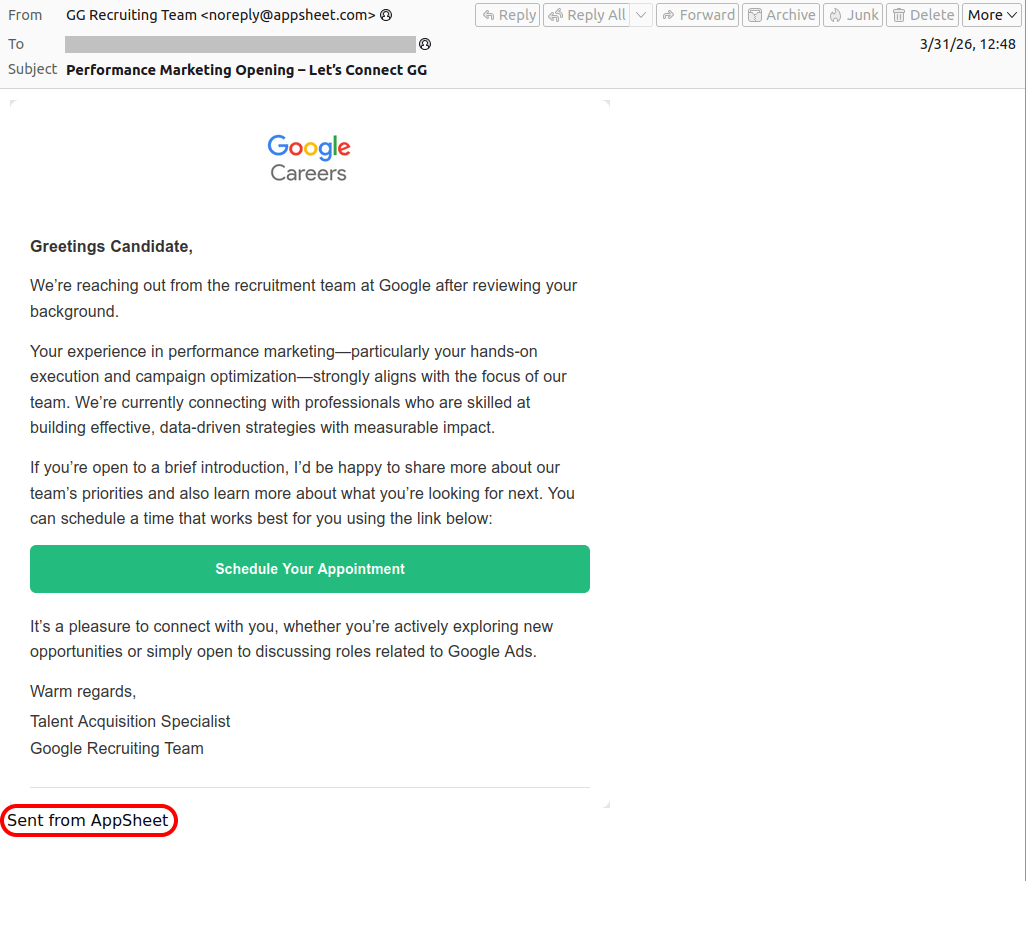
Here’s a step-by-step breakdown of how a victim goes from receiving a fake Google Careers portal email to having their account completely compromised:

Phishing email alleging to be from Google Careers, sent via the AppSheet platform
Greetings, Candidate! Why don't you click the link to our fake Google site to schedule an interview?
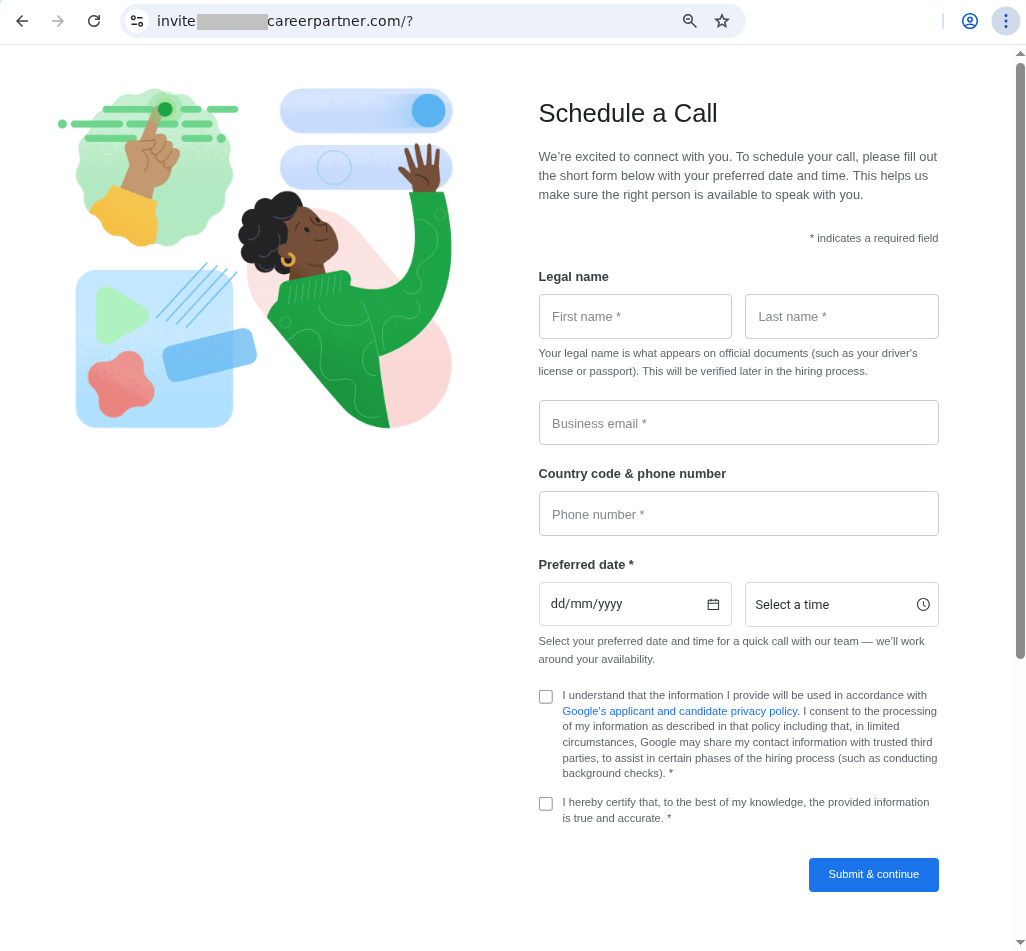
A spoofed site with a design indistinguishable from the original
The link in the email leads to a spoofed site with a design indistinguishable from the original. The user is prompted to fill out a form: provide their full name, work email, phone number, and preferred date for interview…
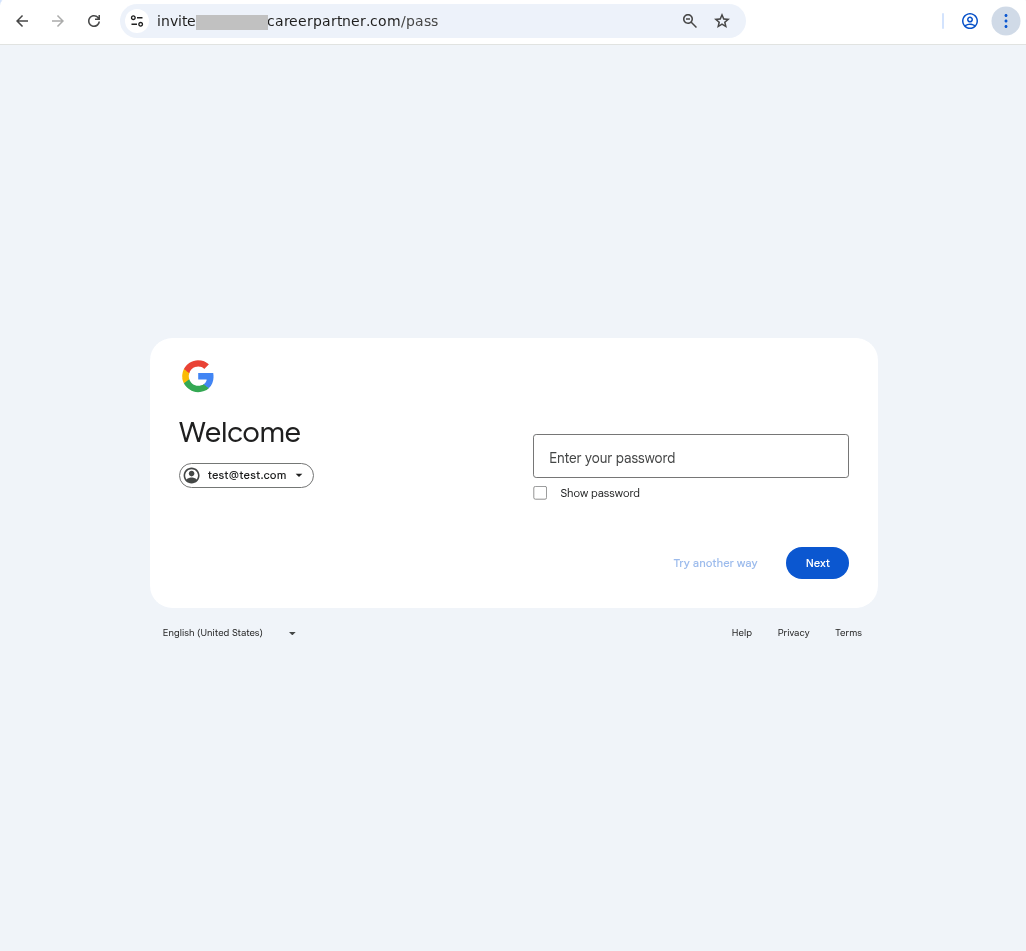
A prompt asking victim to log in with their Google credentials
…Once the victim completes the form, they see a prompt asking them to log in with their Google credentials. All of this data goes straight to the attackers.

Similar phishing campaigns are launched on behalf of other major tech brandsΒ β€” and the users who hand over their Apple account data risk losing not just their account but also control of all their Apple devices. The attackers might pressure the victim into signing out of their personal Apple ID, and in to a β€œcorporate account” for verificationΒ β€” which is in reality an Apple account they own. The moment the victim does so, the criminals take complete remote control of the used device, often using Lost Mode to lock the victim out and hold their phone to ransom.

To make matters worse, attackers don’t always drop a malicious link in the initial email. Instead, they play the long gameΒ β€” hooking the target into a conversation by asking them to reply and confirm their interest. This pretexting creates an illusion of chatting with a real recruiter. And this playbook isn’t reserved exclusively for Silicon Valley, either. Attackers frequently impersonate globally recognized household names, like Volvo or Coca-Cola. Of course, it’s highly unlikely that attackers want someone’s Coca-Cola accountΒ β€” if the user even has one to begin with. Most likely, the goal is to steal sensitive data or convince the user to log in to a phishing form using their Google/Apple/Facebook, etc. credentials.

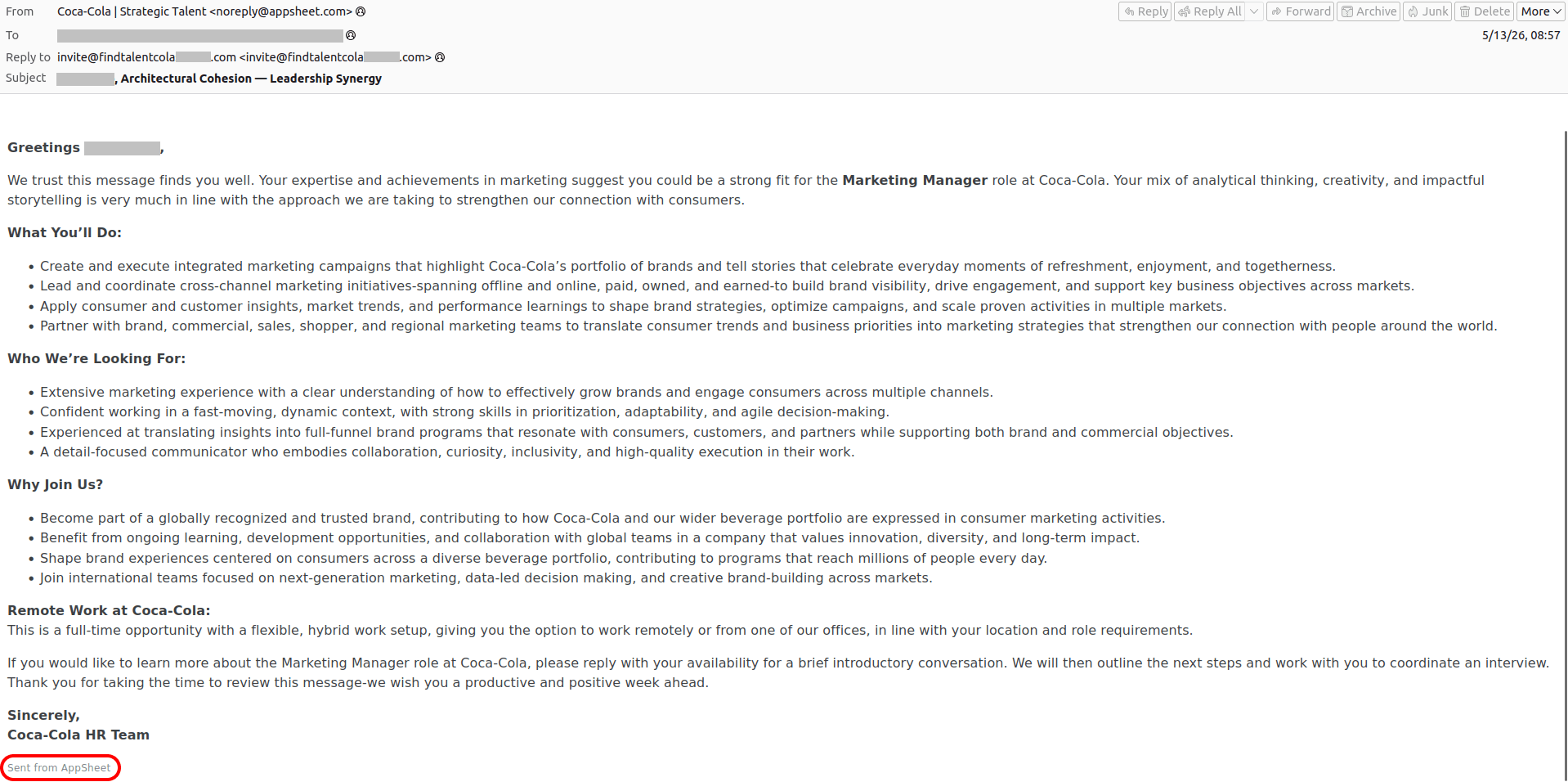
Fraudulent email supposedly from Coca-Cola, sent via the AppSheet platform
An "HR team member" from Coca-Cola reaches out to praise the victim, laying it on thick about their expertise and achievements, analytical thinking, and creativity… The attackers intentionally keep the endgame under wraps β€” whether that means routing the victim to a phishing site, orchestrating a full account takeover, or pulling off a straight-up financial scam
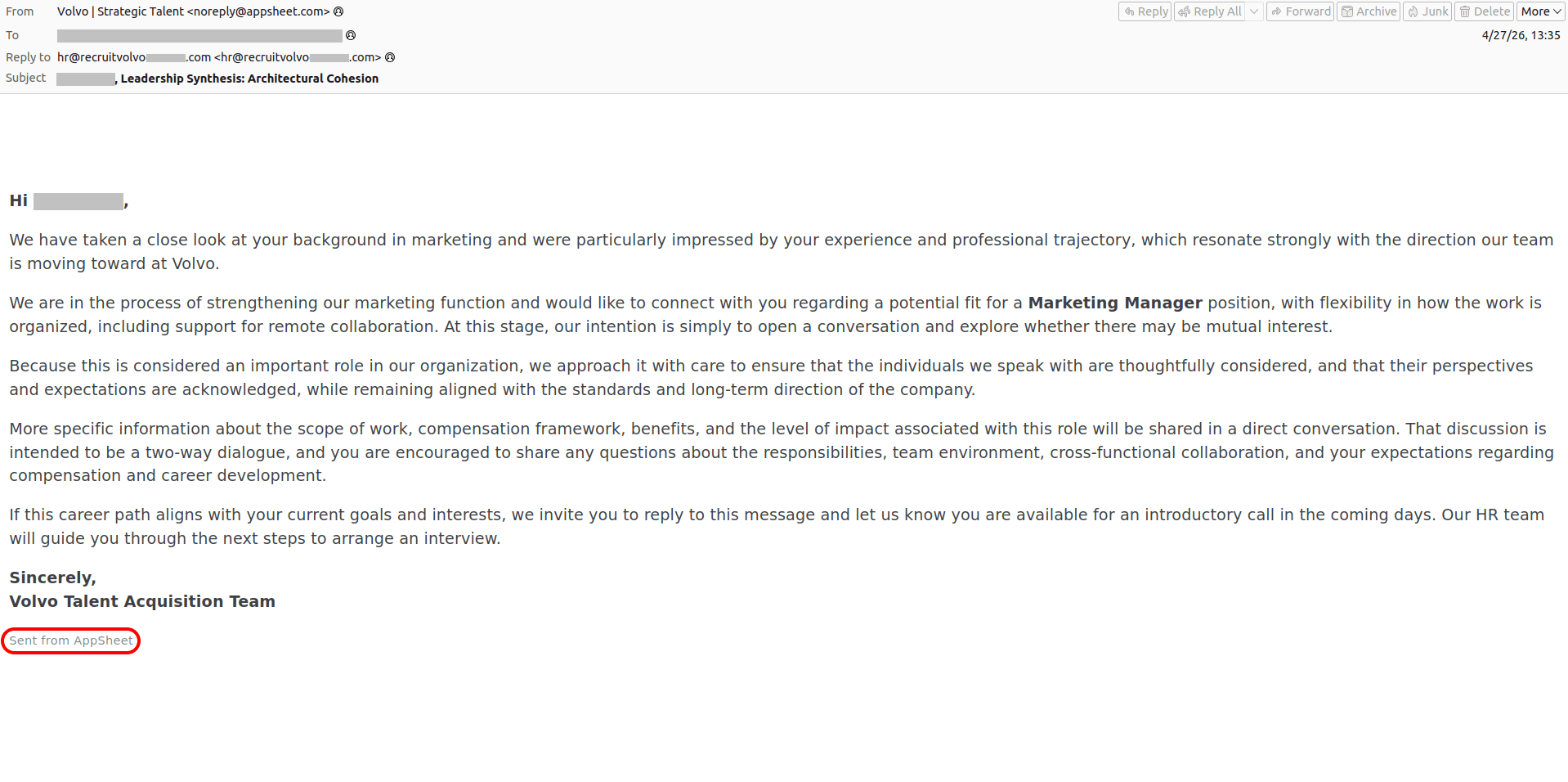
Fraudulent email purporting to be from Volvo, sent via the AppSheet platform
A similar email pretending to be from the Volvo talent acquisition team

Do you want to become Meta-verified?

Of course, β€œdream jobs” aren’t the only bait used. We’ve seen campaigns where β€œFacebook Support” reaches out to tell a user they’ve been deemed eligible for the prestigious Meta Verified badge β€” a blue checkmark normally reserved for top-tier celebrities and global brands. To secure the coveted blue checkmark, the victim is directed to a phishing page where they’re asked to complete an identity formΒ β€” before handing over the ultimate prize: their Facebook username and password. And it’s all in the name of security, naturally!

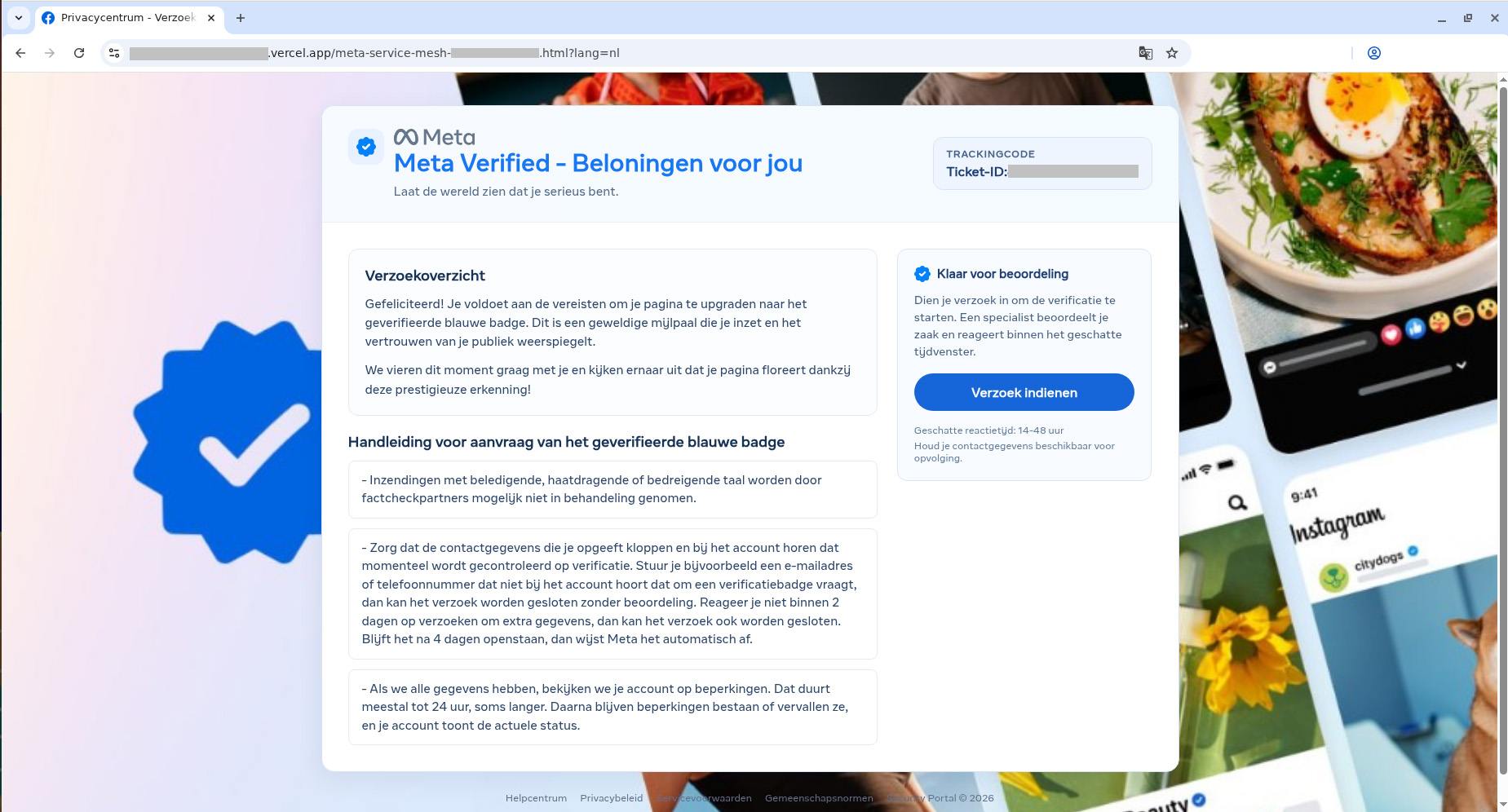
These spoofed sites are created in a wide variety of languages, and tailored to users in different countries. Below is the Dutch version.

Fake Facebook site offering to qualify for a Meta Verified badge
To get the blue checkmark, the user is required to provide "additional information". Miss the deadline by just a few days and the offer expires
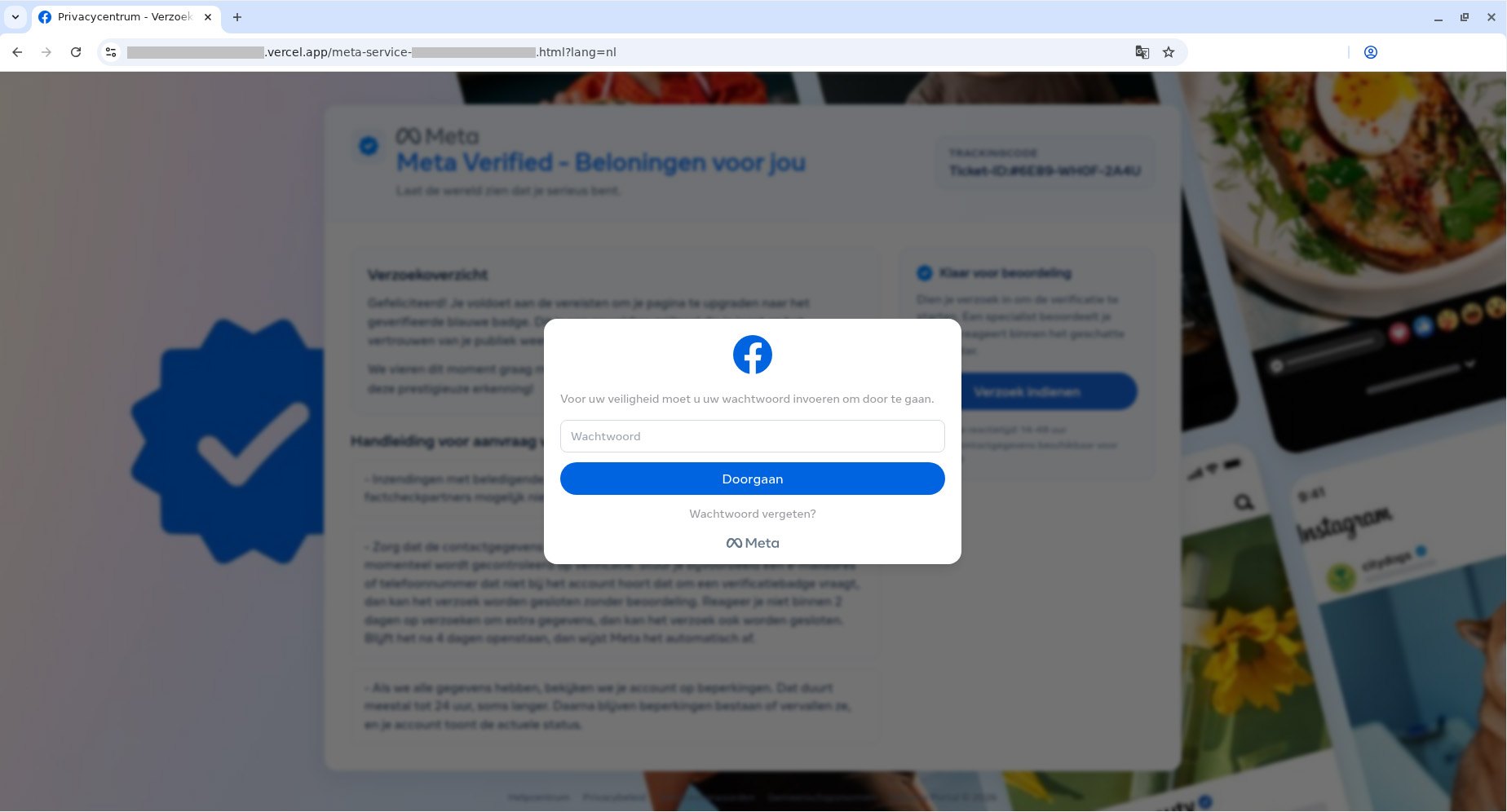
Fake Facebook site offering to qualify for a Meta Verified badge
After the victim fills out the standard fields β€” name, phone number, personal and work emails, and birthdate β€” a prompt appears asking for their Facebook password

In other campaigns, attackers abuse Google’s AppSheet to weaponize sheer panic, trying to unsettle the user with claims that they’ve violated Meta’s intellectual property policy β€” and threatening to permanently close their Facebook account. To appeal, the victim must click a link to… a phishing site, provide their personal information, and, of course, enter their Facebook username and password.

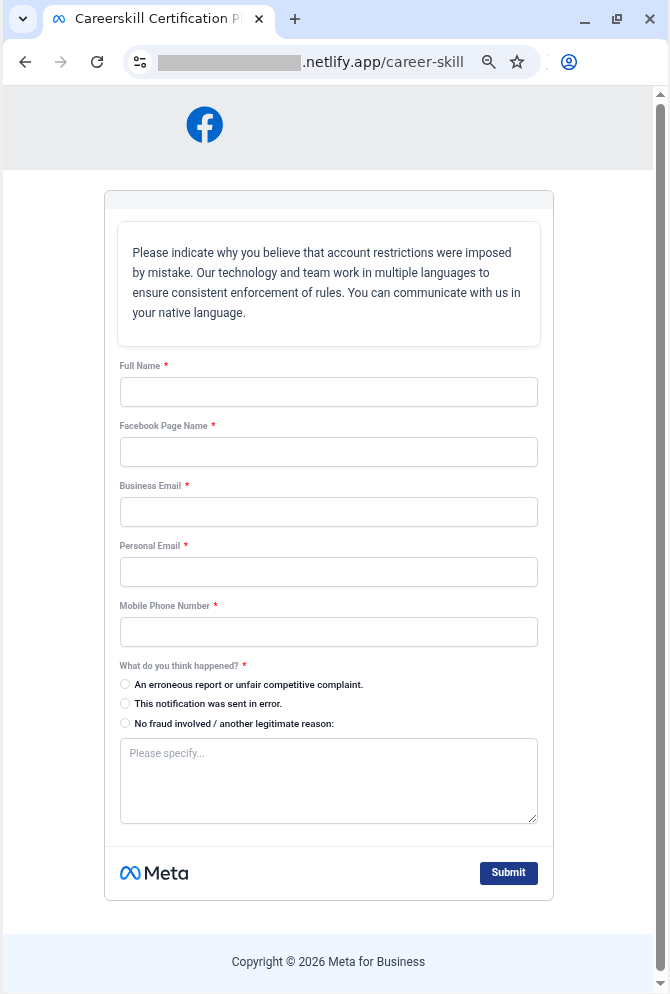
Fake Meta site where the user can appeal their account deactivation
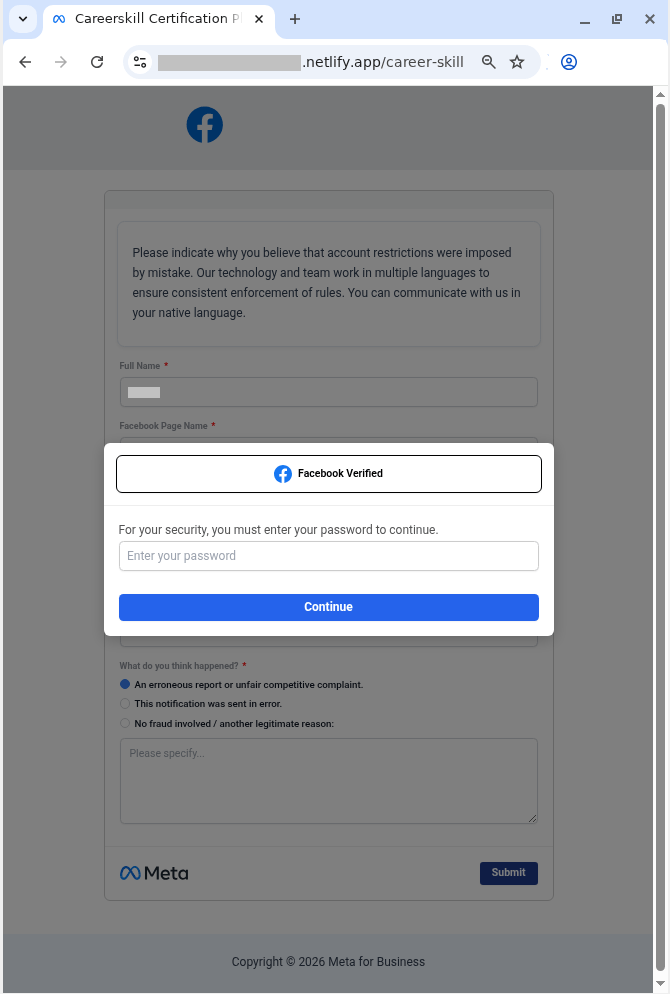
For the sake of plausibility, the user is not only asked to fill out fields with personal information, but also to describe in detail why the decision to close the account was a mistake
Fake Meta site where the user can appeal their account deactivation
Finally, the user is prompted to confirm their appeal request by signing in to β€œFacebook”. In reality, the victim is simply handing their credentials over to the attackers

How to spot phishing and protect your accounts

Sadly, phishing attacks are becoming increasingly sophisticated, with attackers routinely hijacking the reputation of legitimate services and domains. Here’s how to keep from falling into their traps, and safeguard your data:

  • Remember: not all phishing emails end up in the spam folder. Standard spam filters in email clients often fail to detect advanced attacks β€” and the AppSheet case is a prime example. To avoid accidentally taking the bait, use Kaspersky PremiumΒ on all your devices. It intercepts phishing emails and instantly blocks links to spoof websites β€” even if the attacker is hiding behind a completely legitimate domain. Additionally, the Android versionΒ can detect malicious and phishing links in messages from any app.
  • Check the email for odd typos. To keep their messages from setting off alarms, attackers frequently resort to sneakily inserting extra spaces or swapping out characters. Take this example from one of the emails we found: Facβ€Šebβ€Šoβ€Šok β€ŠSβ€Šuβ€Šppoβ€Šrβ€Št instead of Facebook Support.
  • Before taking any action on a website, carefully check its domain name against the official address. Bad actors frequently create addresses that only appear to be the real thing until you look close enough. Install Kaspersky PremiumΒ to always be sure you don’t land on a spoofed site.
  • Look at the sender’s address first, not just the display name. If an email claims to be from Google Careers, Apple HR, or Facebook Support, but the sender address points to AppSheet or another unrelated service, don’t even bother reading this message. That domain mismatch is a dead giveaway that you’re looking at a trap. Cross-reference email addresses with the ones listed on the companies’ official websites.
  • Check for email signatures. For instance, all emails sent via AppSheet include a disclosure note at the very bottom. You are much more likely to receive a legitimate AppSheet notification from a small company or business, but definitely not from a tech giant. Major corporations typically use their own domains for their emails.
  • UseΒ a password manager. Even if you land on a spoofed site and try to enter your password, a reliable password manager will notify you about the domain mismatch and refuse to autofill your username and password.
  • Don’t forget about two-factor authentication. If it’s enabled, just having your username and password won’t help the attackers access your accountΒ β€” they’ll also need a one-time code. However, they might still try to trick you into giving that up too, so be doubly careful whenever you enter two-factor authentication codes anywhere.
  • Use passkeys instead of passwords whenever possible. This technology provides excellent protection against phishing: even if you visit a malicious site and try to sign in, the passkey won’t work on the spoofed domain. You can store and sync passkeys across different devices in Kaspersky Password Manager. Read our post on the subject to learn more about how passkeys work.

Phishing attacks are growing increasingly sophisticated. Here’s what else you should know about phishing:

The Evolution of Kaspersky SIEM | Kaspersky official blog

To put it simply, the classic logic of a SIEM system works as follows: if event A occurs, followed by event B, this may be a sign of an attack, and an information security specialist should be notified. But in today’s environment, this simple scenario is increasingly failing. Just recently, our experts analyzed a high-profile incident: attackers compromised the update infrastructure of the popular Notepad++ software, and distributed malware via the update mechanism. It’s simply impossible to have rules in place in advance that are specifically designed to counter such scenarios.

The attacks themselves have become more sophisticated: attackers use legitimate tools, they attack through the supply chain by compromising software outside the corporate perimeter, stretch out their scenarios over time, and disguise their actions as normal activity. In other words, they do not β€œbreak into” the infrastructure; more often than not, they log in and use legitimate software. As a result, the classic fixed rules of the past either fail to trigger, or generate too many false alerts. This is what prompted the shift toward more flexible correlation scenarios.

Dynamically updated SIEM content

Correlation content today isn’t a static set of rules, but a process: it’s constantly evolving and adapting to current threats. In 2025 alone, we released 55 rule-package updates for different versions and languages of our Kaspersky SIEM system. In just one year, we added 10 new rule packs, as well as 250 detection rules and numerous improvements to existing content. This year, we’ve already added 43 new rules and refined another 63. In total, this amounts to over 850 rules covering a significant portion of the MITRE ATT&CK framework.

Kaspersky SIEM rules are written based on insights from our experts who analyze real-world, recent attacks: we primarily draw on the findings of our managed detection and response (MDR) service and our threat research. As a result, our rules cover scenarios β€” from reconnaissance to privilege escalation β€” that involve the latest approaches used by attackers. For example, we detect the use of new attack techniques such as ToolShell.

In addition to scheduled updates, the team regularly releases so-called emergency content β€” rule sets for rapid response to new and unexpected attack techniques. In February, for example, detection rules were released for authentication bypass in Fortinet products via the SSO mechanism: attackers used specially crafted SAML requests to gain access to systems without credentials.

From events to attack chains

Moreover, modern SIEM rules no longer describe individual events, but rather sequences of actions. Scenarios are built around the stages of an attack: from initial access, to privilege escalation and persistence. Kaspersky SIEM’s effectiveness is enhanced through integration with Kaspersky EDR and dedicated rule sets for Active Directory, which implement dozens of attack detection scenarios at various stages. This approach allows us to see not just individual signals, but the full picture.

Integration and internal visibility

Another way to improve the effectiveness of an SIEM system is to expand data sources. A classic SIEM aggregates events from different levels of the infrastructure: from logs to telemetry from endpoints and internal systems. In addition to this, our SIEM system includes specialized rule sets for our other solutions (Kaspersky Security Center, Kaspersky Security for Mail Groups, K Anti-Targeted Attack platform), which allow monitoring of administrator actions, authentication, and service status. As a result, the system becomes a tool not only for detecting attacks, but also for monitoring internal activity.

Β 

Overall, SIEM is no longer just a set of rules, but has evolved into a continuously updated detection system. Its effectiveness is determined not by the number of detections, but by their relevance, coherence, and how accurately they reflect the actual actions of attackers. Stay up to date regarding our Kaspersky Unified Monitoring and Analysis Platform (SIEM) on its official product page.

Kaspersky SIEM 4.2 update β€” what’s new? | Kaspersky official blog

31 January 2026 at 11:25

A significant number of modern incidents begin with account compromise. Since initial access brokers have become a full-fledged criminal industry, it’s become much easier for attackers to organize attacks on companies’ infrastructure by simply purchasing sets of employee passwords and logins. The widespread practice of using various remote access methods has made their task even easier. At the same time, the initial stages of such attacks often look like completely legitimate employee actions, and remain undetected by traditional security mechanisms for a long time.

Relying solely on account protection measures and password policies isn’t an option. There’s always a chance that attackers will get hold of employees’ credentials using various phishing attacks, infostealer malware, or simply through the carelessness of employees who reuse the same password for work and personal accounts and don’t pay much attention to leaks on third-party services.

As a result, to detect attacks on a company’s infrastructure, you need tools that can detect not only individual threat signatures, but also behavioral analysis systems that can detect deviations from normal user and system processes.

Using AI in SIEM to detect account compromise

As we mentioned in our previous post, to detect attacks involving account compromise, we equipped our Kaspersky Unified Monitoring and Analysis Platform SIEM system with a set of UEBA rules designed to detect anomalies in authentication processes, network activity, and the execution of processes on Windows-based workstations and servers. In the latest update, we continued to develop the system in the same direction, adding the use of AI approaches.

The system creates a model of normal user behavior during authentication, and tracks deviations from usual scenarios: atypical login times, unusual event chains, and anomalous access attempts. This approach allows SIEM to detect both authentication attempts with stolen credentials, and the use of already compromised accounts, including complex scenarios that may have gone unnoticed in the past.

Instead of searching for individual indicators, the system analyzes deviations from normal patterns. This allows for earlier detection of complex attacks while reducing the number of false positives, and significantly reduces the operational load on SOC teams.

Previously, when using UEBA rules to detect anomalies, it was necessary to create several rules that performed preliminary work and generated additional lists in which intermediate data was stored. Now, in the new version of SIEM with a new correlator, it’s possible to detect account hijacking using a single specialized rule.

Other updates in the Kaspersky Unified Monitoring and Analysis Platform

The more complex the infrastructure and the greater the volume of events, the more critical the requirements for platform performance, access management flexibility, and ease of daily operation become. A modern SIEM system must not only accurately detect threats, but also remain β€œresilient” without the need to constantly upgrade equipment and rebuild processes. Therefore, in version 4.2, we’ve taken another step toward making the platform more practical and adaptable. The updates affect the architecture, detection mechanisms, and user experience.

Addition of flexible roles and granular access control

One of the key innovations in the new version of SIEM is a flexible role model. Now customers can create their own roles for different system users, duplicate existing ones, and customize a set of access rights for the tasks of specific specialists. This allows for a more precise differentiation of responsibilities among SOC analysts, administrators, and managers, reduces the risk of excessive privileges, and better reflects the company’s internal processes in the SIEM settings.

New correlator and, as a result, increased platform stability

In release 4.2, we introduced a beta version of a new correlation engine (2.0). It processes events faster, and requires fewer hardware resources. For customers, this means:

  • stable operation under high loads;
  • the ability to process large amounts of data without the need for urgent infrastructure expansion;
  • more predictable performance.

TTP coverage according to the MITRE ATT&CK matrix

We’re also systematically continuing to expand our coverage of the MITRE ATT&CK matrix of techniques, tactics, and procedures: today, Kaspersky SIEM covers more than 60% of the entire matrix. Detection rules are regularly updated and accompanied by response recommendations. This helps customers understand which attack scenarios are already under control, and plan their defense development based on a generally accepted industry model.

Other improvements

Version 4.2 also introduces the ability to back up and restore events, as well as export data to secure archives with integrity control, which is especially important for investigations, audits, and regulatory compliance. Background search queries have been implemented for the convenience of analysts. Now, complex and resource-intensive searches can be run in the background without affecting priority tasks. This speeds up the analysis of large data sets.

Β 

We continue to regularly update Kaspersky SIEM, expanding detection capabilities, improving architecture, and adding AI functionality so that the platform best meets the real-world conditions of information security teams, and helps not only to respond to incidents, but also to build a sustainable protection model for the future. Follow the updates to our SIEM system, the Kaspersky Unified Monitoring and Analysis Platform, on the official product page.

❌