❌

Normal view

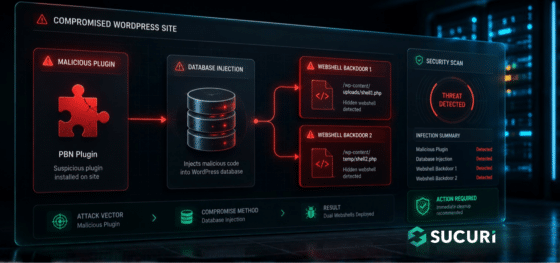
WordPress PBN Plugin Drops Dual Webshells via Database Injection

16 June 2026 at 19:58
WordPress PBN Plugin Drops Dual Webshells via Database Injection

During a recent incident response engagement, our team uncovered a multi-stage WordPress infection that goes beyond the usual file-based malware. The attacker combined a fake plugin, a remote command-and-control server, and two PHP web shells stored directly inside the WordPress database.

The campaign is operated by a Turkish-speaking threat actor and is built around a classic SEO monetization scheme: hidden backlink injection for a Private Blog Network (PBN), most likely tied to the gambling and adult affiliate niche.

Continue reading WordPress PBN Plugin Drops Dual Webshells via Database Injection at Sucuri Blog.


Joomla SEO Spam Injector: Obfuscated PHP Backdoor Hijacking Site Visitors

16 April 2026 at 20:45
Joomla SEO Spam Injector: Obfuscated PHP Backdoor Hijacking Site Visitors

Overview

During a recent malware cleanup investigation, we encountered a compromised Joomla website where the site owner reported a strange issue. Their website displayed a large number of suspicious product links that had nothing to do with their business. These products were not added by the website owner and did not exist in their catalog.

Visitors and search engines were seeing pages that promoted unrelated products, raising immediate concerns about spam injection or remote content manipulation.

Continue reading Joomla SEO Spam Injector: Obfuscated PHP Backdoor Hijacking Site Visitors at Sucuri Blog.

The Security Risks of Using Nulled WordPress Plugins

By: Sucuri
30 March 2026 at 23:10
The Security Risks of Using Nulled WordPress Plugins

Every year, thousands of WordPress sites get compromised, and a surprising number of those infections trace back to a single decision: installing a nulled plugin.

Nulled plugins promise premium features for little or no money. The problem is that the β€œsavings” often come attached to malware, broken update paths, SEO damage, and legal headaches that cost far more than a legitimate license ever would. It might seem like a harmless shortcut, but it’s one that can unravel everything you’ve built online.

Continue reading The Security Risks of Using Nulled WordPress Plugins at Sucuri Blog.

Web Shells: Types, Mitigation & Removal

26 March 2026 at 20:00
Web Shells: Types, Mitigation & Removal

Web shells are malicious scripts that give attackers persistent access to compromised web servers, enabling them to execute commands and control the server remotely. These scripts exploit vulnerabilities like SQL injection, remote file inclusion (RFI), and cross-site scripting (XSS) to gain entry.

Once deployed, web shells allow attackers to manipulate the server, leading to data theft, website defacement, or serving as a launchpad for further attacks. They are especially dangerous because they are also a post-compromise access mechanism (backdoor) rather than a standalone infection.

Continue reading Web Shells: Types, Mitigation & Removal at Sucuri Blog.

Malware Intercepts Googlebot via IP-Verified Conditional Logic

14 January 2026 at 00:48
Malware Intercepts Googlebot via IP-Verified Conditional Logic

Some attackers are increasingly moving away from simple redirects in favor of more β€œselective” methods of payload delivery. This approach filters out regular human visitors, allowing attackers to serve malicious content to search engine crawlers while remaining invisible to the website owner.

What did we find?

During a malware investigation, we identified a selective content injection attack inside the main index.php file of a WordPress website.

Instead of always loading WordPress normally, this modified file checks who is visiting the site.

Continue reading Malware Intercepts Googlebot via IP-Verified Conditional Logic at Sucuri Blog.

Google Sees Spam, You See Your Site: A Cloaked SEO Spam Attack

8 January 2026 at 22:58
Google Sees Spam, You See Your Site: A Cloaked SEO Spam Attack

We recently handled a case where a customer reported strange SEO behavior on their website. Regular visitors saw a normal site. No popups. No redirects. No visible spam.

However, when they checked their site on Google, the search results were flooded with eBay-type-looking websites and β€œSitus Toto” gambling spam.

This is a professional-grade SEO cloaking attack. The malware turns the application into a double agent: it serves your genuine website content to real people but swaps it for a massive list of gambling ads the second a search engine bot crawls the page.

Continue reading Google Sees Spam, You See Your Site: A Cloaked SEO Spam Attack at Sucuri Blog.

Fake Browser Updates Targeting WordPress Administrators via Malicious Plugin

8 January 2026 at 02:54
Fake Browser Updates Targeting WordPress Administrators via Malicious Plugin

We recently investigated a case involving a WordPress website where a customer reported persistent fake pop-up notifications appearing on their site. The warnings were urging them to update their browser (Chrome or Firefox), even though their software was already fully up-to-date.

What made this case particularly unique was the targeting. The fake alerts were not visible to regular visitors on the public-facing site. They only appeared when the site owner was logged into the wp-admin dashboard.

Continue reading Fake Browser Updates Targeting WordPress Administrators via Malicious Plugin at Sucuri Blog.

Slot Gacor: The Rise of Online Casino Spam

7 November 2025 at 20:18
Slot Gacor: The Rise of Online Casino Spam

Online casino spam has been without a doubt one of the most prevalent types of spam content that we’ve seen on infected websites in recent years. An extremely common method of promoting low-quality or otherwise undesirable websites is for spammers to hack websites and fill them full of backlinks to pump their SEO. Historically this has been most common with pharma spam as well as essay writing services, knockoff designer goods and others. However, in the last period there’s been an unmistakable shift to online casinos.

Continue reading Slot Gacor: The Rise of Online Casino Spam at Sucuri Blog.

❌