

โŒ

Normal view

Received โ€” 18 June 2026 โญ Palo Alto Networks Blog

Securing Canadaโ€™s Digital Future: Why PBMM Matters Beyond Government

12 June 2026 at 17:09

Palo Alto Networks is pleased to announce the successful completion of a new Cloud Medium security assessment conducted by the Canadian Centre for Cyber Security (Cyber Centre), significantly expanding the number of Palo Alto Networks cloud services assessed for Protected B / Medium Integrity / Medium Availability (PBMM) environments. This assessment includes a broad range of capabilities across our Cortexยฎ, Cortex Cloud and Strataโ„ข platforms. By achieving this milestone, Palo Alto Networks enablesย  organizations handling Canadaโ€™s most sensitive data to leverage a unified, AI-driven security architecture without compromising on compliance or operational resilience.

For years, many organizations viewed PBMM as something that only mattered to the Canadian federal government. It was often seen as a procurement requirementโ€”a framework tied to public sector cloud adoption, relevant for departments handling Protected B information, but not necessarily for the private sector.

That assumption is changing.

The reality is that the challenges driving PBMM are no longer unique to government environments. Banks, energy providers, transportation networks, healthcare organizations, crown corporations, and other critical infrastructure operators are now facing many of the same pressures:

  • Expanding attack surfaces across hybrid and multi-cloud environments.
  • Increased regulatory scrutiny and privacy obligations.
  • Greater operational dependence on cloud and AI technologies.
  • Increased reliance on third-party providers and software supply chains.
  • The need to maintain operational resilience during cyber incidents and disruptions.
  • A growing expectation that organizations can demonstrateโ€”not just claimโ€”security maturity.

That is why PBMM matters far beyond Ottawa. At its core, PBMM represents a rigorous approach to validating whether enterprise-grade security platforms can operate securely in environments where trust, resilience, and operational continuity are critical.

Increasingly, that level of assurance matters to everyone.

What PBMM Really Represents

PBMM, a rigorous cybersecurity and data classification standard used by theย  Canadian Centre for Cyber Security, stands for Protected B / Medium Integrity / Medium Availability. While often associated with federal cloud security requirements, PBMM is not simply a checkbox exercise. It is a comprehensive assessment framework aligned to Canadian cybersecurity guidance and operational security expectations.

What makes PBMM important is that it evaluates whether platforms and services can securely support sensitive and mission-critical workloads in real-world environments.

Palo Alto Networks meeting these rigorous PBMM requirements through three core pillars:

  • Strata (Network Security): Secures data resiliency and zero trust connectivity, driving robust perimeter and cloud edge protection.
  • Cortex Cloud (Cloud Security): Provides complete visibility, security governance, and data protection across complex cloud-native architectures.
  • Cortex (Security Operations): Powers the agentic SOC, combining unified data, AI, and automation to detect and respond to threats in real time.

These are not theoretical requirements. They are practical operational expectations designed for environments where downtime, visibility gaps, or security failures can have significant consequences.

Organizations today are no longer evaluating cybersecurity solely based on features. They are evaluating whether platforms can be trusted to support critical operations at scale.

Why Security Expectations Are Changing

The cybersecurity landscape has evolved dramatically. Infrastructure is distributed across cloud providers, SaaS applications, remote users, third-party integrations, operational technology (OT), AI platforms, and interconnected supply chains. At the same time, attacks have become faster, more automated, and more disruptive.

In this environment, security can no longer be treated as a compliance exercise. Organizations need confidence that their platforms, operational processes, and security controls can function effectively under pressure.

This is why Palo Alto Networks has undertaken independent PBMM assessments across its portfolio, providing customers with greater assurance and trust. By meeting these rigorous standards into Strata and Cortex, we enable non-government entitiesโ€”like financial institutions and utility providersโ€”to deploy the same defensive rigor used to protect national security systems.

Transforming Critical Infrastructure with a Unified Platform

To effectively manage risk, critical infrastructure operators require a platform approach that helps eliminate security silos, reduce manual intervention, and accelerate threat mitigation.

Key Portfolio Advantages for Critical Infrastructure & Enterprise:

  • AI-Driven Threat Detection & Response: Cortex XSIAMยฎ and Cortex XDRยฎ unify telemetry across endpoints, network, and cloud to deliver unparalleled visibility and automated threat stitching, neutralizing advanced cyberthreats before they disrupt operations.
  • Comprehensive Cloud Native Protection: Cortex Cloud secures applications from code to cloud to SOC, offering posture security, data protection, and continuous compliance monitoring tailored to stringent Canadian data standards.
  • Zero Trust Network Security: Strata enables secure access and consistent policy enforcement across campus, branch, and data center environments, protecting critical OT and IT systems from lateral threat movement.
  • Elite Incident Response: Backed by Unit 42ยฎ, organizations gain access to threat intelligence and rapid incident response services to augment their teams and build long-term cyber resilience.

Operational Resilience Is Becoming a Strategic Requirement

One of the most significant shifts occurring across industries today is the growing focus on operational resilience. Organizations are increasingly asking questions that extend beyond traditional cybersecurity controls:

  • Can we maintain critical services during a cyber attack?
  • Do we have visibility across our cloud environments and supply chain dependencies?
  • Can we rapidly detect, respond to, and recover from disruptions?
  • Are our governance processes keeping pace with cloud adoption and AI innovation?

As organizations adopt cloud-native architectures, AI-driven technologies, and interconnected digital ecosystems, resilience has become a board-level concern. The ability to prevent incidents remains important, but organizations are equally focused on their ability to withstand, respond to, and recover from them.

This is where frameworks like PBMM provide value. Beyond evaluating security controls, PBMM assesses the governance, operational processes, monitoring capabilities, and risk management practices that help organizations operate securely.

For critical infrastructure operators, resilience is no longer simply an IT objectiveโ€”it is a business imperative. Increasingly, the organizations that earn trust are those that can demonstrate they are prepared to operate effectively when disruption occurs.

Final Thoughts: PBMM Reflects the Future of Trust

PBMM may have started solely as a government assessment framework, but its relevance now extends far beyond federal environments. It represents something universal: the ability to operate securely, reliably, and transparently in environments where trust matters most.

By expanding our PBMM-assessed offerings across Cortex and Strata, Palo Alto Networks underscores its commitment to securing Canada's digital future. We provide the validated foundation organizations need to innovate with confidence, protect sensitive data, and maintain operational continuity under any circumstance.

Read the Assessment Summary Report

To learn more about the Palo Alto Networks Cloud Medium security assessment, review the publicly available assessment summary report issued by the Canadian Centre for Cyber Security.

Ready to modernize your defenses with PBMM-assessed solutions? Schedule a demo with our team or contact Unit 42 to learn how we can help elevate your organization's resilience against emerging cyber threats.

The post Securing Canadaโ€™s Digital Future: Why PBMM Matters Beyond Government appeared first on Palo Alto Networks Blog.

Received โ€” 19 May 2026 โญ Palo Alto Networks Blog

From WarGames to Cyberwar

13 May 2026 at 15:00

How Nations Hack, Why Attribution Fails, and What AI Changes

Executive Summary:
Code War author Allie Mellen, argues that cyberwarfare must be understood through a human and geopolitical lens to close the knowledge gap between the security community and the public.

Disclaimer:
This post reflects the perspectives shared in the book Code War: How Nations Hack, Spy, and Shape the Digital Battlefield, and does not represent the views of the publisher of this blog.


The summer of 1983, President Reagan watched WarGames at Camp David and couldn't get it out of his head. A week later, he walked into a White House meeting with cabinet members and Congress and launched into a detailed plot summary of a Matthew Broderick movie about a teenager who nearly hacks the world into nuclear war. The room full of defense experts sat uncomfortably, suppressing smirks. Then Reagan turned to General John Vessey, Chairman of the Joint Chiefs, and asked if something like that could actually happen.

Vessey came back a week later with an answer: "Mr. President, the problem is much worse than you think."

Fifteen months after that, Reagan signed a classified presidential directive titled "National Policy on Telecommunications and Automated Information Systems Security" โ€“ the first federal policy of its kind. A movie had done what years of expert warnings hadn't: It made the most powerful person in the world stop and ask the right question.

Allie Mellen, author of Code War: How Nations Hack, Spy, and Shape the Digital Battlefield, loves to tell this story, and it captures exactly why she wrote the book. In a conversation recorded at RSA 2025, Mellen joined Threat Vector host, David Moulton, to talk about nation-state threats, attribution pitfalls, and why the security industry's biggest problem isn't technical.

"They're human stories, and if we can communicate them that way to the general public, then we'll get more people interested in cybersecurity, invested in cybersecurity, and invested in protecting their data."

That gap, between what the security community understands and what everyone else grasps, is the core problem Mellen set out to solve. And in today's geopolitical moment, closing it has never been more urgent.

Every Nation Hacks Differently

One of the central arguments in Code War is that you can't understand a nation's cyber behavior without understanding its history, doctrine and social contract. China, Russia, Iran, North Korea and the U.S. each approach offensive and defensive cyber operations from completely different starting points, and those differences matter enormously to defenders.

China operates with patience. Its attacks tend to be low and slow, focused on long-term espionage rather than loud disruption. But that changes sharply in its own region, where operations targeting Taiwan are aggressive and relentless. Russia, by contrast, is bombastic; they want you to know it was Russia. Its influence operations have been some of the most effective in modern history, studied and imitated by Iran and others.

Interestingly, the very system China built to protect itself has become a liability in one specific domain. Because Chinese operators live behind the Great Firewall, without access to western social media, they lack the cultural fluency that makes Russian disinformation so effective. "They try to use memes, but it's like โ€˜uncanny valleyโ€™," Mellen explains. "They just slightly miss every time and so it doesn't go viral." The walled garden that gives China control over its own population makes it harder to manipulate everyone else's.

Attribution Is a Geopolitical Tool, Not Just a Technical One

Mellen is careful about attribution, and she wants defenders to be too. The standard technical signals (coding language, infrastructure patterns, operational hours) are necessary but not sufficient. Nation-states, especially the U.S., have developed tools specifically designed to mimic other actors' signatures. AI will make that problem significantly worse.

But the bigger issue is motivation. Mellen walks through a case from the Olympics where an attack was initially attributed to North Korea, even though North Korea was actively trying to normalize relations at the time by sending Kim Jong Un's sister to the games. The actual perpetrator was Russian, using a false flag to obscure its involvement. The lesson: Attribution requires asking not just "who has the technical capability?" but "who has the motive right now, given everything happening geopolitically?"

The pitfalls are real:

  • Tools once used exclusively by intelligence agencies are now publicly available, making code signatures unreliable.
  • Working-hours analysis is easy to spoof, especially for sophisticated actors.
  • Government-controlled research in adversarial nations can deliberately skew attribution findings.
  • False flag operations are increasingly sophisticated and harder to disentangle.

Why Your Data Is a Geopolitical Asset

One of the more powerful sections of the conversation centers on a question Mellen hears constantly: why would China care about my data?

Her answer cuts through the dismissiveness. These nations aren't collecting data out of idle curiosity. They're willing to constrain companies for it, invest billions in infrastructure for it, and in some cases, far worse. "Whether you wanna be involved in that system or not, you are involved in that system," she says. "And so you can either choose to take control of your information in that environment, or you can just pretend like it's not your problem."

The historical context she offers is striking. One of the driving forces behind GDPR in the EU was the collective memory of how Nazi Germany used data to target Jewish people during the Holocaust. Europe built privacy protections into law because it had seen what happens when governments gain unrestricted access to population data. That's not an abstract concern. It's a lesson written in history that the rest of the world is still catching up to.

AI Makes Everything Harder

Mellen isn't optimistic about the trajectory. Attribution is about to get much harder. Attacks are about to get much more dynamic. And AI is the reason for both.

She points to research on Chinese state-sponsored actors using AI to orchestrate attacks across the full kill chain, with only a couple of human checkpoints in the loop. The implication isn't just faster attacks. It's more adaptive malware that can adjust to different operating environments, more convincing disinformation that clears the cultural context bar, and reconnaissance-to-exploitation cycles that move faster than most defenders can process.

The constraints that have always slowed sophisticated attackers โ€“ understanding the operating system, identifying vulnerabilities, crafting exploits, mimicking attribution โ€“ all get easier with AI. All of that becomes more dynamic. And most enterprises, Mellen acknowledges, are not yet equipped to respond effectively.

The investment required is in the basics the industry has always struggled to get right, executed now at a pace and scale that demands automation and AI on the defensive side. Fighting AI with AI isn't a vendor talking point. It's the only math that works.

More to Explore

The nation-state threats Mellen describes aren't theoretical. Unit 42 responded to more than 750 major incidents in 2025. See what they found. Download the 2026 Global Incident Response Report.

Listen to the full conversation with Allie Mellen, author of Code War, on the Threat Vector podcast

The post From WarGames to Cyberwar appeared first on Palo Alto Networks Blog.
Received โ€” 11 May 2026 โญ Palo Alto Networks Blog

39 Seconds โ€” That's How Long It Takes to Lose Your Data

6 May 2026 at 15:00

Not hours. Not days. It takes thirty-nine seconds from initial access to data exfiltration.

That stat, pulled from Unit 42ยฎ research, isn't hypothetical. It's what defenders are up against right now, while most organizations are still building security teams around manual detection and response workflows that were never designed to operate at machine speed.

Wendi Whitmore, Chief Security Intelligence Officer at Palo Alto Networks, put it plainly in a recent conversation on the Threat Vector podcast, recorded live at RSA this year:

If you're applying a manual detection and response capability, you are going to be beat by the attacker every day.

It's the kind of sentence that should make security budgets move faster.

The Threat Landscape Doesn't Wait for Organizational Consensus

Whitmore has spent nearly 25 years tracking nation-state actors, and she's unequivocal about what's changed. The adversaries today aren't just better funded and more sophisticated. They're faster, and increasingly AI-powered.

Consider what's converging right now:

Chinese nation-state groups like Volt Typhoon and Salt Typhoon have been operating with near-surgical patience inside critical infrastructure, leveraging existing administrative tools to avoid detection. Volt Typhoon is focused on military prepositioning in power grids, water systems and telecommunications. Salt Typhoon has been systematically collecting intelligence from those same networks. Neither group announces itself with novel malware. They disappear into environments using the tools already there.

Meanwhile, threat actors tied to Iran are operating with entirely different objectives: tactical disruption and destruction. And financially motivated cybercriminal groups are automating ransomware campaigns at a pace that has compressed attack timelines from weeks to minutes.

Every CISO is being asked to defend against all of them simultaneously, while also managing their organization's AI expansion, and doing it without adding headcount.

Speed Is the New Perimeter

When Whitmore references the 39-second exfiltration window, she's pointing at something structural, not just alarming. It reflects how completely the attacker's operational tempo has shifted.

The 72-minute data breach figure from Unit 42 Incident Response data is equally striking: From initial access to full data theft in the time it takes to sit through a decent movie. A 400-times year-over-year increase in exfiltration speed isn't a trend. It's a fundamental change in the physics of an attack.

"There is no way that we are going to defeat these adversaries if we are working at manual speed," Whitmore explained. The answer isn't just more analysts. It's fighting AI with AI, letting machines handle the volume and velocity, so humans can focus on the problems that actually require human judgment.

Two Sides of the Same AI Problem

Here's where the conversation gets more nuanced and more important.

Most of the AI-in-security conversation focuses on the offensive side: adversaries using generative AI to craft convincing phishing lures, accelerate reconnaissance and automate attack sequences. That's real, and it's accelerating.

But Whitmore raised the other half of the problem, one that gets far less attention: The attack surface that organizations are creating by deploying AI without securing it.

Innovation of AI doesn't so far outpace the security of AI.

This is the outcome she wants to see. Right now, that's not what's happening. Business pressure to deploy AI quickly is outrunning the security architecture required to protect it. Every new AI deployment touching production data, cloud APIs and enterprise systems expands the attack surface. Shadow AI, prompt injection, model poisoning: These are not future threat vectors. They're present tense.

The distinction Whitmore draws is useful: AI for cybersecurity (faster detection, automated response, reduced analyst burden) needs to advance in parallel with cybersecurity for AI (securing the models, prompts and data pipelines that organizations are building on). One without the other creates exactly the kind of asymmetry attackers will exploit.

Visibility Is Where It Starts

Whether the conversation is about defending against nation-state actors or securing AI deployments, Whitmore keeps returning to the same foundation of visibility.

Not complexity. Not more tools. Visibility is a single, unified view of what's happening across endpoints, networks, cloud and AI systems, thatโ€™s fast enough to matter when the window is measured in seconds, not days.

For SOC teams, that means being able to detect and contain a threat before a compromise of one system becomes an enterprise-wide event. For CISOs thinking about AI governance, it means understanding what's being deployed, what's being prompted, and where the data is going before an incident surfaces for them.

The organizations Whitmore sees succeeding aren't the ones with the largest security budgets. They're the ones with the clearest picture of their environment, and the architecture to act on it in real time.

The Win Looks Different Now

Perhaps the most important reframe in the conversation is that the objective is no longer to prevent every attack. That goal is not achievable against adversaries operating at AI speed with nation-state resources.

The win is resilience. Detecting fast and containing fast. Keeping one compromised endpoint from becoming an enterprise-wide breach.

That shift in framing, from prevention to rapid recovery, has significant implications for how security teams are built, how AI is integrated into workflows, and how CISOs make the case for investment to leadership that still thinks in terms of keeping attackers out.

The adversaries already know the perimeter is gone. The question is whether your defense strategy has caught up.

Want to Dig in More?

Listen to the full interview here.

The Unit 42 2026 Global Incident Response Report goes deep on the threat trends shaping how modern attacks unfold. If you want the data behind the headlines, start here. Download the Report โ†’

The post 39 Seconds โ€” That's How Long It Takes to Lose Your Data appeared first on Palo Alto Networks Blog.
Received โ€” 23 April 2026 โญ Palo Alto Networks Blog

Securing the UKโ€™s Digital Future

16 April 2026 at 10:00

Our Commitment to Data Autonomy and National Resilience

The United Kingdom has established itself as a leading global cyber power. Over the last decade, Palo Alto Networks has been proud to work alongside British institutions to protect the digital borders of a highly innovative economy. As UK organisations navigate an evolving threat landscape and adopt transformative technologies, like AI, the need for security partners who understand British operational realities has never been greater.

The Path to Digital Autonomy, Resilience and Control

Organisations today require more than a technology provider. They need a partner that understands the specific legal frameworks and strategic priorities of the British landscape. We are reaffirming our deep commitment to the UK, safeguarding British data as a core part of national resilience, even as both technology and cyber adversaries evolve.

The targeting of UK infrastructure is a daily operational reality. According to our Unit 42 2026 Global Incident Response Report, attackers are moving at unprecedented speed, with exfiltration speeds for the fastest attacks quadrupling in 2025. Identity weaknesses played a material role in almost 90% of Unit 42ยฎ investigations, as attackers increasingly exploit stolen credentials and fragmented identity systems to escalate privileges and move laterally. These threats span across all sectors, from NHS patient data to local government systems and energy networks.

UK organisations need partners who understand their unique requirements. While our broader European commitments provide a strong foundation, we recognise that the UK requires a dedicated focus across data protection, critical infrastructure security and public-private collaboration. This includes a deep-rooted local presence, aligning our operations with national standards of protection to support British ingenuity and ambition.

Control Over Your Data

Genuine data control requires two things: understanding exactly how and under which laws your information is handled and having the technical capabilities to enforce that control.

For UK customers, we provide the capability to host data within UK-based infrastructure, ensuring that critical data can be stored in regions that align with UK data protection requirements. Additionally, for applicable products and services, we offer Bring Your Own Encryption Keys (BYOK) capabilities, giving you direct control over the encryption protecting your data.

Our agreements are built to comply with UK GDPR requirements and include the necessary protections for any cross-border data transfers. But beyond contractual obligations, we operate on a fundamental principle: Your data serves only the purpose for which youโ€™ve engaged us.

How we handle different data categories:

1. Customer and Personal Data Are Processed Only to Serve You

We process your Customer Data and Personal Data exclusively to deliver the services you have purchased. This includes the content of your communications and files uploaded for support. The purpose is singular: delivering the security and protection youโ€™ve contracted us to provide.

2. Systems Data Is Used to Enhance Functionality and Collective Defence

To provide effective security, our products generate Systems Data, which includes technical logs, performance metrics and threat indicators. This information serves three main purposes: ensuring the day-to-day functionality of your services, enabling our teams to provide expert technical support and troubleshooting, and powering our global threat research capabilities.

When a new threat is detected against a specific UK sector, our entire network receives updated protection within minutes. This allows British organisations to benefit from global threat intelligence. We handle Systems Data in ways that preserve your operational privacy, ensuring the intelligence value comes from understanding threat patterns, not identifying individual organisations.

For detailed technical information on how we categorise and handle data, see our Customer Data, Personal Data and Systems Data whitepapers.

Transparency in Practice

We publish a biannual Transparency Report detailing all government and law enforcement data requests we receive. This isnโ€™t simply about compliance. Itโ€™s about providing UK organisations with verifiable evidence of how we handle requests, enabling informed risk assessment and governance oversight. For more information, please visit the Privacy Section in our Trust Center.

Securing Critical National Infrastructure

The UKโ€™s 13 sectors of Critical National Infrastructure represent the backbone of society. These sectors require security solutions built with an understanding of their unique threat models, from the specific requirements of an NHS trust to the challenges facing an energy provider.

We currently serve hundreds of UK public sector organisations across government, health and critical infrastructure sectors, which include the UK Government, UK Home Office and the Ministry of Justice.

Operational Resilience

For the UKโ€™s most critical services, operational resilience is paramount. Our security platforms are designed for high availability and reliability, helping organisations maintain continuous protection even during disruptions.

Trust and Transparency

Palo Alto Networks is deeply integrated into the UKโ€™s security ecosystem, ensuring our solutions exceed national benchmarks for resilience and transparency.

We hold Cyber Essentials Plus certification and align with the NCSC Cloud Security Principles, providing assurance to customers that we adhere to the highest security protocols to protect their most critical assets. As a Software Security Ambassador and a committed supporter of the NCSC Telecom Vendor Assessment, we are committed to enhancing the security of the UKโ€™s telecommunications and software supply chains.

Beyond compliance, our Unit 42 team serves as an NCSC-assured Cyber Incident Response (CIR) Enhanced Level provider, offering specialised incident support to help UK organisations navigate and recover from the most complex incidents. For customers with specific requirements, particularly in defence and national security, we can provide support from personnel in countries with compatible security standards and legal frameworks. We are committed to the Telecommunications Security Act (TSA) Code of Practice, supporting the resilience of the UKโ€™s public telecommunications networks.

Strengthening Local Expertise with National Impact

Our investment in the UK extends across our people, infrastructure and local expertise. Operating from our London hub, we remain deeply connected to the communities we serve and make a direct and indirect contribution to the UK economy. Our UK-based teams span engineering, threat research, professional services, policy and security strategy, and have a deep understanding of the UK market and the requirements of our customers. We also partner with NCSC CyberFirst and others on developing the next generation of cyber talent, and our Cyber Academy Program partners with universities and colleges all over the UK to train the next generation of cyber defenders.

A Partnership Built on Trust and Verifiable Commitments

The UKโ€™s digital autonomy increasingly depends on its ability to secure both cyber infrastructure and the emerging AI economy. This requires partnerships that serve the UKโ€™s long-term national interests, grounded in trusted institutions, local expertise and transparency that enables commitments to be verified, not simply asserted.

We recognise that the UKโ€™s cyber landscape is shaped by its legal framework, strategic priorities and threat environment. From protecting critical infrastructure to enabling the secure adoption of AI, organisations across the UK need to trust their security partner to deliver on their commitments. Palo Alto Networks is committed to maintaining and increasing that trust through verifiable action, transparency, accountability and an enduring partnership.

To learn more about our comprehensive commitment to digital trust, privacy and security, visit the Palo Alto Networks Trust Center.

The post Securing the UKโ€™s Digital Future appeared first on Palo Alto Networks Blog.

Closing the Gap by Enhancing Visibility and Mitigating Risks

1 April 2026 at 10:00

In the race to digitise public services, the UKโ€™s digital estate has grown into a vast, borderless ecosystem that manual audits can no longer track. For UK Government departments, local authorities and NHS trusts, it is a sprawling, shifting landscape of cloud workloads, legacy infrastructure, shadow IT and third-party supplier connections.

This complexity creates blind spots that modern threats exploit. Recognising this vulnerability, the UK Government is moving toward a secure-by-design digital infrastructure, with the 2026 Government Cyber Action Plan (GCAP) setting a high bar for resilience. A central theme of the GCAP is the urgent need for the government to have better visibility of cyber security and resilience risk. Fundamentally, organisations cannot secure what they cannot see. As the GCAP explicitly states, the Government will use โ€œdata sources from across the government to truly understand government-wide and departmental cyber risks.โ€

The Challenge: Visibility in a โ€œLandscapeโ€

Many public sector organisations rely on a complex web of spreadsheets, data calls, legacy tools and manually curated lists to create an inventory of their internet-connected assets. But attackers do not look at an organisation's internal lists; they scan the internet for what they have forgotten to secure. Whether it is an unpatched server from a legacy project or a misconfigured database in a department, these "unknown unknowns" are the primary entry points for attackers.

The Strategic Mission: Empowering the Public Sector and Critical Industries

Palo Alto Networks Cortex Xpanseยฎ is an active external attack surface management (EASM) solution that provides an outside-in view of organisations' entire digital footprint. It helps leaders meet national resilience goals:

  • Comprehensive, Continuous Visibility: Xpanse scans the global internet space continuously and identifies every asset associated with an organisation, without requiring software agents to be installed on your systems.
  • Accelerate Response: Leveraging automation, the solution streamlines response processes and enhances collaboration across dispersed teams from the sharing of findings to tracking actions and remediation.
  • Supply Chain Integrity: Inline with the new Cyber Security and Resilience Bill (bringing managed service providers and critical third parties into scope), Xpanse allows organisations to assess the internet-facing security posture of third-party partners and suppliers, ensuring a weak link elsewhere doesn't compromise the broader mission.
  • Alignment with GovAssure: Xpanse provides a consolidated risk profile and inventory for all internet-facing and cloud assets required for GovAssure assessments, turning a manual, months-long audit process into a continuous, data-driven cycle.
  • Investment prioritisation: Xpanse provides that much needed visibility to help executive committees and boards prioritise investment decisions on legacy IT and technical debt.

Aligning to National Cybersecurity Centre (NCSC) Guidance

How external attack surface management products work.

Palo Alto Networks Cortex Xpanse aligns with the National Cyber Security Centre (NCSC) external attack surface management (EASM) buyer's guide by providing automated discovery, continuous monitoring and risk prioritisation of internet-facing assets. It replaces manual, point-in-time audits with a proactive, agentless solution. By automating the discovery of all internet-accessible assets (including shadow IT and unmanaged cloud operations) the platform fulfills the NCSCโ€™s core requirement for continuous global monitoring and rapid attribution. This data-driven approach allows for the automated prioritisation of critical exposures, such as RDP, and integrates seamlessly with multiple third-party automation and visualisation tools, including Cortex XSOARยฎ and XSIAM, to accelerate remediation with national incident response standards.

In fact, with Palo Alto Networks deployment of Cortex Xpanse, we were able to achieve a 95% reduction in external vulnerability management spending across more than 700,000 cloud instances, while improving coverage and outcomes.

Palo Alto Networks Cortex Xpanse Capabilities
  • Discover Assets: Leveraging organisations' known asset inventory and other data points, Xpanse performs continual, automated discovery of all internet-accessible assets, effectively eliminating blind spots created by shadow IT and unmanaged cloud operations.
  • Obtain Information: Always-on, continuous monitoring of an organisation's entire attack surface through daily scans of the global IP address space, ensuring that newly exposed services are identified quickly and accurately.
  • Perform Analysis: Xpanse automates and prioritises alerts on all identified risks by severity, enabling organisations to optimise resolution and risk management, allowing teams to properly allocate resources and focus on the most critical risks to the organisation.
  • Display Information and Provide Advice: Leveraging a unified view of the internet facing and cloud-based estate, Xpanse provides specific resolver guidance for every identified issue, supporting and monitoring automated resolution through multiple native integrations.
  • Monitor Risk: Always on, discreet continual monitoring provides an independent real time status of the digital estate. Leveraging the threat intelligence capabilities of Palo Alto Networks, Xpanse is uniquely positioned to provide rapid coverage for newly discovered vulnerabilities, exploits or misconfigurations.

Securing the public sector requires a move from manual, point in time assessments to data-driven intelligence. Cortex Xpanse provides the foundations to remove blind spots, secure the supply chain and prevent unknown vulnerabilities in the face of sophisticated threats.

For further information and case studies, visit the links below, or schedule a demo.

  • Palo Alto Networks: Slash false positives, remediation time budget with Cortex attack surface management.
  • U.S. Pentagon: Palo Alto Networks Cortex Xpanse supercharge the Cyber Defences for the Department of Defense.
  • Accenture: Secure rapid growth with Cortex Xpanse.

The post Closing the Gap by Enhancing Visibility and Mitigating Risks appeared first on Palo Alto Networks Blog.

Received โ€” 12 March 2026 โญ Palo Alto Networks Blog

How the National Cyber Strategy Secures Our Digital Way of Life

6 March 2026 at 21:59

A Pivotal Moment for National Security

As the digital landscape undergoes profound shifts, the recently released National Cyber Strategy provides the essential foundation for enduring American leadership. By prioritizing the disruption of hostile actors, future-proofing networks, accelerating quantum readiness, and securing the AI frontier, the strategy provides the strategic clarity necessary to protect our digital way of life from sophisticated adversaries. Palo Alto Networks commends National Cyber Director Sean Cairncross for his leadership and looks forward to working with the administration to operationalize this strategy.

Each pillar of the strategy galvanizes meaningful action to advance our collective defense:

Shape Adversary Behavior (Pillar 1)

This signals a decisive shift toward the proactive disruption of malicious actors. The Trump Administration has made clear that the U.S. Government should impose real costs on adversaries to change their behavior. While the private sector is already executing discrete disruptions against malicious actors, coordination has historically been fragmented. The strategy identifies that increased collaboration with private sector entities, who possess unique insight into adversary behavior, can in turn enable more impactful deterrence.

Promote Common Sense Regulation (Pillar 2)

The strategy appropriately recognizes that complexity is the enemy of security. A focus on measurable improvements in cyber outcomes (versus check-the-box compliance exercises) collectively makes us all safer. While much attention is rightfully paid toward harmonizing incident reporting requirements, which Palo Alto Networks wholeheartedly supports, letโ€™s not stop there. The federal government can lead by example by consolidating and streamlining federal government software compliance certifications. For example, there should be logical reciprocity between FedRAMP High and DoW IL-5 certifications.

Modernize and Secure Federal Government Networks (Pillar 3)

In addition to the necessary attention on AI-powered cyber defense, cloud security and zero trust network architecture, Palo Alto Networks applauds the discrete focus on quantum-safe security ahead of โ€œQ-Day,โ€ the point where quantum computing capabilities will compromise legacy public key encryption that has underpinned cybersecurity for decades. As Federal CISO Mike Duffy recently stated, "Modernization without considering PQC readiness or cryptographic agility is really creating technical debt in the future, something that we donโ€™t want to see ever.โ€

To address this challenge, Palo Alto Networks provides a structured quantum-safe framework organized into four stages:

  • Continuous Discovery โ€“ Automating ecosystem ingestion to identify cryptographic dependencies.
  • Risk Assessment & Prioritization โ€“ Evaluating vulnerabilities to establish a data-driven remediation roadmap.
  • Comprehensive Remediation โ€“ Executing the transition to post-quantum algorithms across the architecture.
  • Governance & Crypto-Hygiene โ€“ Maintaining long-term visibility and management.

The bottom line is that 2035 is too late. Quantum readiness must accelerate today, and this strategy will set a critical North Star to drive the necessary urgency.

Secure Critical Infrastructure (Pillar 4)

Critical infrastructure resilience is central to our homeland security, economic security, public health and safety. Unfortunately, critical infrastructure entities are increasingly under assault from emboldened cyber adversaries.

In fact, Palo Alto Networks research shows some form of operational disruption in up to 86% of major cyber incidents. Our 2026 Global Incident Response Report underscores another sobering reality: These entities are under assault from all angles. In 87% of cyber incidents, attacks targeted multiple attack surfaces, which spanned the network, cloud, endpoints and identity.

Recognizing that you canโ€™t secure what you canโ€™t see, we need a national-level effort to identify, prioritize and harden the critical infrastructure that the American people depend upon. This strategy puts an important marker in the ground to revitalize those efforts.

Sustain Superiority in Critical and Emerging Technologies (Pillar 5)

Palo Alto Networks was pleased to see the strategy reinforces the core tenets of the AI Action Plan, emphasizing that "secure-by-design" principles for AI technologies are non-negotiable and that AI adoption and AI security can and must be inexorably linked.

Enterprises should be able to deploy AI confidently without fear of data leakage, model tampering or rogue AI agents. However, despite our research showing an 88% success rate of โ€œjailbreakingโ€ techniques against widely deployed AI models, only 6% of organizations currently have an AI security strategy. Itโ€™s time to flip this paradigm and put defenders back in the driverโ€™s seat in this AI-first moment.

To support this emerging consensus around the importance of promoting AI security, we developed the Secure AI by Design Policy Roadmap. This framework provides a four-part construct to evaluate the evolving dimensions of threats to AI systems. Palo Alto Networks is also proud to make its comprehensive AI security suite, Prismaยฎ AIRSโ„ข, available to all federal agencies at substantial discounts through GSAโ€™s OneGov Initiative.

Build Talent and Capacity (Pillar 6)

Recognizing Americaโ€™s cyber workforce as a โ€œstrategic asset,โ€ the strategy calls for a pragmatic and accessible pipeline for developing talent. The explicit recognition that we should take advantage of existing avenues across government, industry and academia is important. For example, Palo Alto Networks is proud of the impact of its Cybersecurity Academy โ€“ that provides free, NIST Framework-aligned curricula covering essential domains, such as cybersecurity fundamentals, enterprise and network security, cloud security, security operations and the AI/cybersecurity nexus.

Resources like this, and those for other entities, can form the basis of a renewed focus on cyber talent development.

Turning Strategic Vision Into Action

Palo Alto Networks views itself as more than a cybersecurity vendor. We see ourselves as an integrated national security partner of the federal government at a moment when defending our digital way of life demands all of us working together. To that end, we are ready to do our part to turn strategic vision into action.

This strategy should be applauded. Letโ€™s roll up our sleeves and get to work.

The post How the National Cyber Strategy Secures Our Digital Way of Life appeared first on Palo Alto Networks Blog.

When Security Becomes an Afterthought

12 February 2026 at 14:00

Why AI's Biggest Risk Isn't Technical

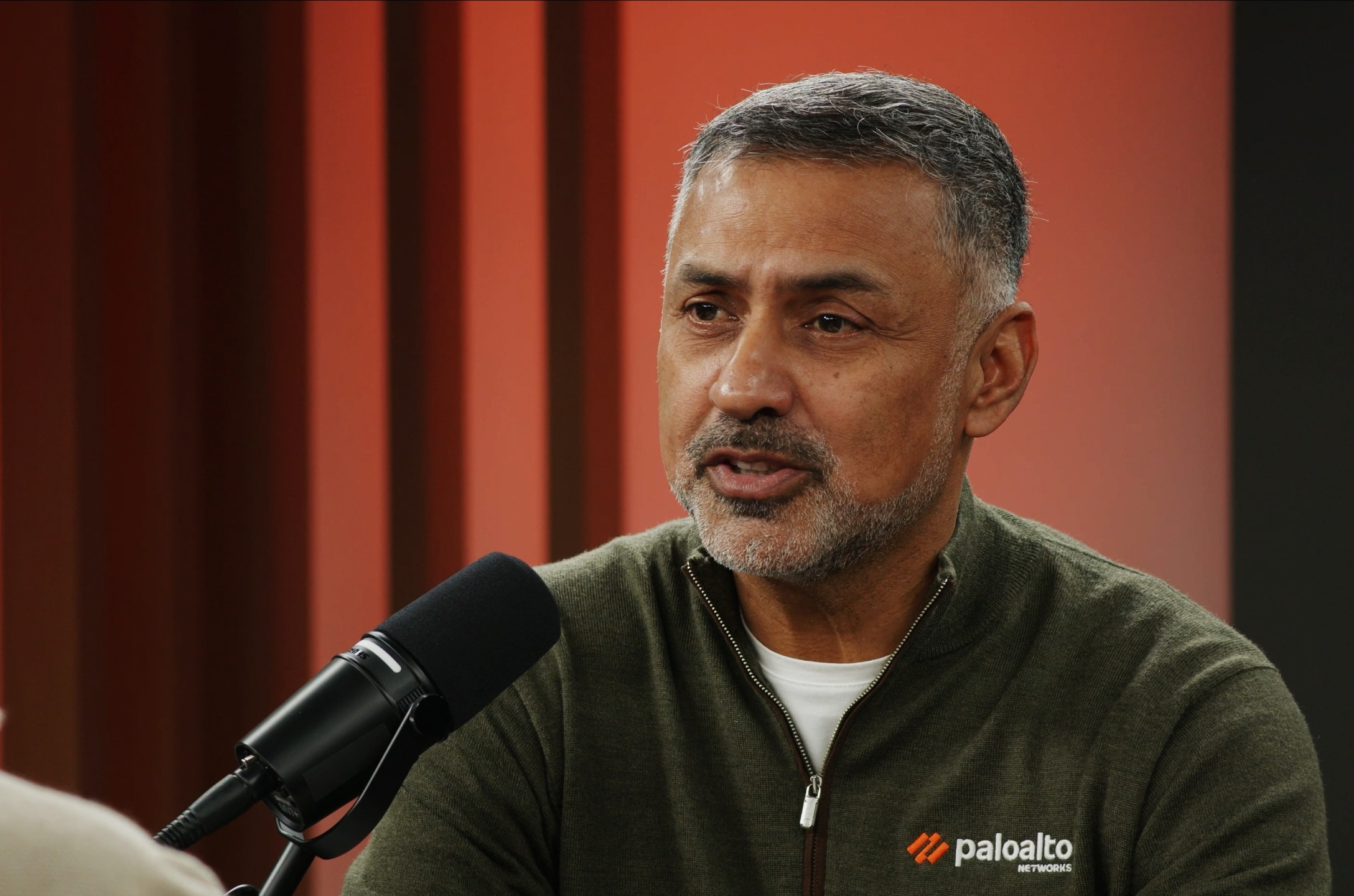
This article is based on a conversation with Nikesh Arora on the 100th episode of the Threat Vector podcast.

David Moulton interviews Nikesh Arora
David Moulton interviews Nikesh Arora on the Threat Vector podcast.

"Most technologists think about technology, not about cybersecurity," Nikesh Arora says. "Cybersecurity is kind of like insurance. Let's go make great things happen, and let's make sure on the way we purchase insurance."

Coming from the CEO of the world's largest cybersecurity company, it's the quiet part said out loud, and it explains why AI deployment is racing ahead while security scrambles to keep up.

Earlier this year, Arora spoke with a CIO entirely focused on AI deployment challenges: building viable products, training models, measuring customer impact. Security never came up once. "If you're still going through the motion, trying to understand, โ€˜Can I actually make this thing work?โ€™ You're not worried about security," Arora notes. The logic is brutal but consistent: Why secure something that might not even function?

In the Threat Vector podcastโ€™s 100th episode milestone, Arora speaks with host David Moulton:

  • Why the gap between innovation and security keeps widening.
  • How to read inflection points before they're obvious.
  • What separates organizations that prepare from those that scramble.

The Gap That Keeps Growing

The disconnect isn't new. It's the same psychology that makes airport security feel like overhead โ€“ necessary friction that slows down what should be seamless. But with AI, the gap is widening at an unprecedented pace.

Consider the infrastructure buildup happening right now. Nvidia has become a $4 trillion company selling chips that can't stay in stock. Hundreds of billions of dollars are flowing into AI-computer infrastructure. Cloud providers are buying out entire methane gas companies to power their data centers.

Yet organizations are treating AI security as something to bolt on later. That same CIO told Arora: "We worked on some stuff ourselves, and we're just jerry-rigging some things to make sure this happens securely."

Arora's response:

Jerry rig, production, and security don't work together as three terms.

Reading Signals Before They're Obvious

Arora has watched enough technology cycles to recognize the pattern. "You start seeing signs early, and then you look around, you don't see enough impact. You say, okay, maybe this is going to be just a passing shower. But you don't realize that over time this thing's getting more and more momentum."

The signs around AI are adding up:

  • Individual behavior has shifted.
    Arora went from never talking to ChatGPT or Gemini to conducting 10-15 conversations daily. During a recent Tokyo trip, he used Gemini as his primary navigation tool, asking it to rank sumo wrestling shows for his kids rather than "trying to go read 14 websites and figure out what makes sense."
  • The spend is massive and accelerating.
    Not just chips, entire energy infrastructures are being rebuilt to support AI compute needs.
  • Consumer and enterprise adoption are both surging.
    From coding assistants to business analysis, use cases are expanding faster than security models can adapt.

"This thing's going to change our life fundamentally," Arora tells Moulton. "We're not seeing it at scale in our customers just yet. That doesn't mean we can sit back and wait."

Arora understands the risks involved in being late to new technology.

You have to not just anticipate where the trend is going. You have to prepare your organization and the resources to get there. Otherwise, the risk is that Silicon Valley will go fund those people who are thinking purely about the new world... and one of them's going to hit. Then you'll be two years behind with no organization, no resources deployed against it.

The Bets That Paid Off

When Arora joined Palo Alto Networks seven and a half years ago, he wrote two words on a piece of paper: cloud and AI. The company was a firewall business. Those two inflection points would require fundamental transformation, and, just as with AI now, being late was not an option.

If you don't get the network transformation right, 80% of our business will falter.

That insight drove a strategic bet on moving from point products to platform thinking, consolidating security tools rather than adding to the sprawl.

The platform approach wasn't about vendor consolidation for its own sake. It was about correlation. Unit 42ยฎ data shows that 70% of incidents now span three or more attack surfaces. When attacks move across endpoints, networks, cloud services and applications simultaneously, fragmented security creates gaps that attackers exploit ruthlessly.

Today we have coverage for 80 plus percent of the industry, which means our customers can come talk to us about a myriad of problems, and we can actually cross-correlate across all the different things we do.

With AI deployments touching every part of the technology stack, that cross-correlation becomes essential. Data flows between training environments and production systems. Models access APIs across cloud and on premises infrastructure. Applications consume AI services from multiple providers. Security that can't see and correlate across that entire landscape will miss the threats that matter most.

First Principles Over Tradition

What drives Arora's ability to spot inflection points isn't just pattern recognition, it's his refusal to accept how things have always been done.

His pet peeve: "Somebody said, well, this is how we've traditionally done it." The response reveals his approach: "You use the word traditional. I use the historical context saying, yeah, sure, they used to dig fields with picks and shovels, and now they use tractors."

This thinking drove Palo Alto Networks to reimagine SOC performance. The industry accepted four days as the normal time to detect and remediate security incidents. Arora called that unacceptable. "We need to get it to be real time."

The result was a fundamentally different architecture that analyzes data as it arrives rather than waiting for problems to appear, enabling 1-minute detection and response instead of four days.

Traditionally, SOCs would analyze the problem when the problem appeared. We said forget it. We're going to analyze everything to see if there's a problem. That architecture fundamentally transformed what we do compared to everybody else in the market.

The same first-principles approach needs to apply to AI security. Organizations can't simply extend existing security models and hope they work.

What Comes Next

With ransomware attacks now completing in as little as 25 minutes (100 times faster than just three years ago, according to Unit 42 research) reactive security simply can't keep pace. Organizations need security that thinks and responds at machine speed, built into AI deployments from day one.

"AI has become the biggest inflection point in current technology," Arora observes. Organizations are too busy deploying to worry about security. That's human nature. But it's also the moment when security teams need to stay in lockstep.

The question isn't whether to secure AI, it's whether security will be designed in or bolted on. The former takes strategic thinking now. The latter takes crisis management later.

Our job at Palo Alto and our industry is to make sure as they go build these experimental ideas into real production capability that we're staying in lockstep with them and saying, โ€˜Oh, by the way, here's something that can secure what you just built in a way that is not gonna get you into trouble.โ€™

Listen to the full conversation between Nikesh Arora and David Moulton, senior director of thought leadership for Cortexยฎ and Unit 42, on the 100th episode of Threat Vector.

The post When Security Becomes an Afterthought appeared first on Palo Alto Networks Blog.
Received โ€” 3 February 2026 โญ Palo Alto Networks Blog

Empowering the RAF Association with Next-Generation Cyber Resilience

3 February 2026 at 19:00

Palo Alto Networks is proud to enter a strategic partnership with the RAF Association.

For over 90 years, the Royal Air Forces Association (RAFA) has championed a simple yet profound belief: No member of the RAF community should ever be left without the help they need. Serving personnel, veterans and their families, the RAF Association provides crucial welfare support, responding to increasingly complex needs in an era of operational changes and challenges, including persistent global deployment.

Delivering on their mission today requires not only compassion and expertise but also resilient digital foundations. To strengthen and future-proof its operations, RAFA has entered into a strategic partnership with Palo Alto Networks. Together, we are modernising the Association's cyber security posture through a secure-by-design, zero trust architecture to enhance organisational resilience, secure sensitive beneficiary data, and improve operational agility. This helps ensure they can focus on their mission of support, not security management.

As Nick Bunting OBE, Secretary General at the RAF Association, puts it:

Cybersecurity is essential to safeguarding the trust people place in our organisation. This transformation will give us greater protection for our data and systems, ensuring that our services remain dependable and that our organisation is secure, resilient and ready for the future. Strong digital security is not just a technical requirement, it is a fundamental part of how we uphold our duty of care to every individual who relies on us.

RAFA and Palo Alto Networks team.
RAF Association & Palo Alto Networks Team (left to right): Gareth Turner, Tom Brookes, Nick Bunting OBE, Phil Sherwin, Ali Redfern, Darren Bisbey, Alistair Wildman

Securing the Mission

The RAF Association operates in a distributed environment comprising headquartersโ€™ functions, remote caseworkers, and more than 20 RAFAKidz nursery sites, supported by a growing portfolio of cloud-based services. In this context, cybersecurity is not simply an IT concern. It is a safeguarding imperative.

Disruption to systems or a compromise of sensitive beneficiary data could directly impact RAFAโ€™s ability to deliver services and maintain the trust of the communities it supports. By consolidating fragmented legacy tools into a unified platform, this partnership ensures the Associationโ€™s digital evolution aligns security controls with GDPR obligations and safeguarding requirements.

Digital Resilience with a Unified Platform for Visibility and Control

To support RAFA's lean IT operational model, this transformation will move them away from fragmented legacy tools toward a unified platform approach. The deployment of Prismaยฎ SASE (secure access service edge) and Cortex XDRยฎ will provide RAFA with consistent visibility and control across users, devices, applications and data, regardless of location. This consolidation replaces complexity with clarity, allowing the organisation to inspect traffic for threats in real-time. Security policies are now enforced continuously, threats are detected and contained faster, and access to critical systems is governed by zero trust principles without compromising the user experience.

As Phil Sherwin, Chief Information Officer, at the RAF Association states:

Our data is one of our most valuable assets and the protection of that data, as we continue to provide life-changing support to members of the RAF community, is our most important priority. This partnership will move us into the next generation of security tools that adopt zero trust principles and is a crucial step on our journey to providing a layered approach to data protection.

One of the most critical aspects of this modernisation is supporting RAFAโ€™s diverse workforce, particularly within the RAFAKidz nursery sites. These environments rely on nondesk-based staff using iPads and mobile devices to get their critical work done.

Using zero touch provisioning and the Prisma Browserโ„ข, we are enabling secure, seamless connectivity for unmanaged devices. This ensures that nursery staff can access necessary SaaS applications safely without complex login hurdles or manual configuration, improving their agility and allowing them to focus on caring for children rather than troubleshooting technology.

Creating Operational Advantage by Scaling Operations with AI and Automation

As a charity, RAFA has a responsibility to ensure resources are used efficiently. A critical goal of this partnership is to improve productivity and allow the organisation to scale its services without increasing the IT burden.

By adopting Strataโ„ข Cloud Manager with AIOps (artificial intelligence for IT operations), RAFA is shifting from reactive security operations to proactive, automated management. Machine learning helps identify configuration risks and performance issues before they affect users, while standardized policies enable the secure, consistent onboarding of new sites. This shift is projected to significantly reduce operational overhead, enabling RAFA to scale its support network cost-effectively. This shift is projected to reduce operational overhead by 40โ€“50%.

A Resilient Future

This partnership is about more than deploying technology. It is about ensuring RAFA remains resilient, trusted and capable of supporting the RAF community for decades to come.

As Darren Bisbey, Head of Group Information Security for the RAF Association, puts it:

We live in an era where digital threats are accelerating in both scale and sophistication, creating unprecedented challenges for organisations. Our partnership with Palo Alto is a statement of intent, reflecting our unwavering commitment to building the most secure environments possible for our data.

At Palo Alto Networks, we are honored to support RAFA in this journey, providing the digital armour and operational advantage necessary to protect those who serve and have served.

As Alistair Wildman, Palo Alto Networks CEO for Northern Europe states:

For over 90 years, RAFA has been a lifeline for the RAF community; it is our privilege to ensure that legacy endures in a digital-first world. By embracing a unified, AI-driven platform, RAFA is moving beyond complex, fragmented security to a posture that is Secure by Design. This partnership allows them to navigate todayโ€™s threat landscape with confidence, ensuring their resources remain focused where they belong: on the families who need them.


Key Takeaways

  1. Digital Resilience โ€“ Strategic Shift to Zero Trust Architecture: RAFA is modernizing its cybersecurity posture by implementing a comprehensive zero trust architecture. This transition involves moving from fragmented legacy tools to a unified platform approach, deploying Prismaยฎ SASE and Cortex XDR for 360-degree visibility and complete control over access and traffic.
  2. Interoperability โ€“ Secure, Seamless Access for Diverse Workforce: The partnership ensures operational agility by simplifying security for nondesk-based staff, particularly at the RAFAKidz nursery sites. Solutions like Zero-Touch Provisioning and the Prisma Access Browser enable secure, seamless connectivity for unmanaged devices, allowing nursery staff to focus on their critical work without complex login or configuration issues.
  3. Creating Operational Advantage โ€“ Efficiency and Scalability through AI and Automation: RAFA is leveraging technology to scale services efficiently and reduce operational overhead. By using Strata Cloud Manager with AIOps (Artificial Intelligence for IT Operations), the organization can shift to proactive management and automating remediation, which is projected to reduce operational overhead by 40โ€“50%.

The post Empowering the RAF Association with Next-Generation Cyber Resilience appeared first on Palo Alto Networks Blog.

Received โ€” 29 January 2026 โญ Palo Alto Networks Blog

2026 Public Sector Cyber Outlook: Identity, AI and the Fight for Trust

28 January 2026 at 15:00

The early weeks of 2026 have already made one thing clear: Government cybersecurity is in a new phase, shaped not by incremental change, but by the rapid integration of AI into core public-sector missions. AI systems are now embedded in critical infrastructure, federal service delivery, research environments, as well as state and local operations. At the same time, nation-state adversaries are leveraging AI to accelerate intrusion, scale deception and manipulate trusted systems in ways not possible even a year ago.

As Senior Vice President of Public Sector at Palo Alto Networks, I see a decisive shift underway. Defending the public sector in 2026 means navigating a world where security depends on verifying identity, securing data and governing AI-driven systems that act without human intervention. Success now hinges on architectures that assume automation, operations that prioritize coordination, and governance frameworks capable of managing AI at mission scale.

Here are the developments that will define the year ahead.

Federal Government

1. AI-Native Security Must Become Integral to Federal Operations

AI in federal environments is no longer an experiment. Agencies are now designing workflows, SOC missions and cloud architectures around AI-driven detection and response. The emphasis is shifting from supplementing human analysts to building systems that maintain visibility, correlate threats, and respond autonomously when human capacity is limited. This builds on what we forecasted last year, when federal cybersecurity teams began using AI to replace manual workflows and drive down detection and response times.

The shift will be practical. Federal teams must plan to deploy AI systems that correlate logs, identify behavioral anomalies, prioritize threats, and suppress noise before analysts ever see an alert. Manual, ticket-based workflows will no longer meet federal timelines for investigation or reporting, particularly as adversaries automate more phases of attack.

2. Identity Emerges as the Central Federal Security Challenge

The biggest shift in 2026 will be the collapse between โ€œidentityโ€ and โ€œattack surface.โ€ Deepfake technologies now operate in real time. AI-generated voices and video can impersonate senior leaders at a level undetectable by traditional controls. Machine identities continue to proliferate; they will outnumber human identities this year. And autonomous agents can initiate high-impact actions without human oversight. This reflects a broader crisis of authenticity now reshaping how enterprises defend identity itself.

Identity abuse will no longer be limited to credential theft. This turns identity into a systemic risk. One compromised identity (human, machine or agent) can cascade through automated systems with little friction. Federal programs will need to prioritize continuous identity verification, stronger proofing and governance frameworks that validate the legitimacy of both human and AI-driven activity.

3. AI Systems Must Be Secure-by-Design

Stemming from the clear mandate in the AI Action Plan (and subsequent work by NIST to develop an AI/Cyber Profile on top of the existing Cybersecurity Framework) agencies will steadily integrate AI security into their deployment of AI technologies.

This imperative is critical as AI systems are susceptible to novel threats. Data poisoning of training sets, manipulated inputs and hidden instructions in untrusted datasets compromise the intelligence that agencies rely on for analysis, planning and mission support. To support the security of this AI-first moment, Palo Alto Networks was proud to make its AI security platform, Prismaยฎ AIRSโ„ข, available through the GSA OneGov initiative.

4. Nation-State Operations Expand Through AI Automation

Adversaries will use AI to compress the time between reconnaissance, exploitation and lateral movement. We expect rapidly increasing the use of AI to chain vulnerabilities, tailor social engineering campaigns, and generated malware variants that adapt in real time.

The focus will broaden beyond IT networks. AI will be used to disrupt OT systems and target sensitive research environments. Foreign intelligence services will weaponize AI to blur the line between intrusion and information operations, producing hybrid campaigns that attack both systems and the legitimacy of institutions.

5. Autonomous SOC Capabilities Become Essential

Federal SOCs will evolve from human-centered command centers to hybrid operations where autonomous agents run major components of the detection and response mission. These agents will triage alerts, enforce containment, and initiate predefined responses.

This evolution comes with risk. AI agents with broad authority can be misused or manipulated if not properly governed. Agencies will need safeguards to track agent behavior, enforce least privilege on agents, and prevent misuse through runtime monitoring and โ€œAI firewallโ€ controls designed to stop malicious prompts and unauthorized actions. The same pressures are shaping enterprise security, where controls like AI firewalls and circuit breaker mechanisms are becoming standard practice. Automation will only strengthen federal security if paired with rigorous oversight and continuous validation of agent activity.

6. Shared and Federated SOC Structures Gain Momentum

As threats scale, agencies will increasingly operate through shared or federated security structures. Instead of isolated SOCs, agencies will adopt analytics layers capable of correlating activity across departments and exchanging findings in real time.

This shift will reduce redundancy and provide faster insight into nation-state campaigns that cross federal boundaries. Early adopters will establish shared analytic and response frameworks that allow agencies to coordinate without sacrificing mission-specific control. Civilian agencies will lead early adoption with broader participation across defense and national security stakeholders expected later in the year.

7. The Post-Quantum Deadline Becomes Immediate

In 2026, post-quantum cryptography planning will move to implementation. Accelerated advances in quantum computing and AI-based cryptanalysis will push agencies to transition from pilot efforts to mandated modernization.

Agencies will focus on discovering where vulnerable algorithms are used, replacing outdated libraries, and implementing crypto-agility so systems can evolve without major redesigns. Systems with unpatchable cryptographic components will be flagged for full replacement, forcing agencies to reconcile years of accumulated โ€œcrypto debt.โ€

8. Data Trust and Cloud Workload Protection Become Priority Missions

The rise of AI workloads will force agencies to rethink how they protect data. Infrastructure controls alone cannot detect when training data has been manipulated or when model outputs no longer reflect real-world conditions.

Agencies will unify developer and security workflows and use tools like Data Security Posture Management and AI security posture management (AI-SPM) to track data lineage and enforce protections at runtime. Enterprises are addressing the same issue by bringing development and security teams together under shared data governance models. Ensuring model trustworthiness will become a mission-support requirement, not just a security objective.

9. Platform Consolidation Becomes Necessary

Fragmented tools cannot support the visibility and oversight required for AI governance. Executives will push for platform consolidation to unify network, identity, cloud, endpoint and AI security. Integrated platforms will gain favor because they enable consistent policy enforcement and a single operational picture across increasingly automated environments.

State, Local and Educational Institutions

1. AI Adoption Splits SLED into Distinct Tiers

In 2026, disparities in funding and technical capacity will widen. Some states will deploy AI across security operations, citizen services and identity verification. Others will struggle to maintain legacy systems.

Well-resourced jurisdictions will reduce response times and improve resilience. Underfunded ones will remain exposed to ransomware and disruption. Without targeted modernization efforts, a national divide in SLED cybersecurity maturity will deepen.

2. Regional Models Become the Practical Path Forward

Silos are no longer sustainable. SLED organizations will rely on shared SOCs, regional threat intelligence hubs and coordinated incident response agreements. States will formalize partnerships to share expertise, reduce costs and defend interconnected systems. This evolution represents the maturation of the โ€œteam sportโ€ mentality we predicted in 2025. These models reflect operational reality: Compromised data or infrastructure in one jurisdiction often creates immediate risk for its neighbors.

3. Higher Education Redesigns Its Security Baseline

Universities will classify cybersecurity alongside energy, research infrastructure and physical security as essential institutional functions. Secure browser adoption, stronger vendor oversight and centralized identity governance will become the norm.

AI research environments will receive increased scrutiny, and universities participating in federally funded research will face stricter compliance requirements to prevent data poisoning and model manipulation. Institutions with large research portfolios will prioritize securing lab environments where AI models are trained and evaluated.

4. Kโ€“12 Systems Enter a New Phase of Security Oversight

States will introduce new security mandates for Kโ€“12 environments, covering MFA, network segmentation, secure browsers, identity verification and foundational zero trust principles. AI-enabled ransomware will remain a threat. Smaller districts will adopt managed services or regional support structures as they confront growing operational and compliance demands. Districts that modernize identity controls and browser security will significantly reduce their exposure compared to those reliant on legacy tools. Building on the regulatory momentum we predicted in 2025, Kโ€“12 institutions will continue moving from defensive posture to proactive security adoption.

5. Local Governments Face Escalating AI-Driven Ransomware

Municipal governments remain high-value targets due to limited staffing and aging infrastructure. AI gives threat actors the ability to automate reconnaissance, craft targeted phishing messages, and identify vulnerabilities with little effort.

Attacks timed to public safety incidents or weather emergencies will increase, meaning local governments will need stronger identity controls, automated endpoint protection and access to managed detection and response. Operational continuity will depend on reducing time-to-detect and time-to-contain, capabilities that smaller municipalities cannot achieve without external support.

6. Managed Services and Platform Consolidation Become Standard

As technical demands grow, SLED organizations will move toward managed SOC models and consolidated vendor ecosystems. Platforms that integrate data protection, threat detection, identity governance and AI oversight will gain traction. Point tools without interoperability will decline. Budget-constrained environments will favor comprehensive platforms that reduce operational burden and simplify compliance.

7. Identity and Data Trust Become Central SLED Priorities

SLED organizations manage sensitive student records, election data and social services information. These environments are increasingly strained by the rapid growth of machine identities and AI-driven applications.

Synthetic identities and AI-generated credentials will be used to infiltrate systems with limited oversight. Continuous identity verification, data lineage tracking and posture management will become essential to prevent fraud, service disruption and data manipulation. Identity assurance and data integrity will become the foundation of public trust at the state and local level.

The post 2026 Public Sector Cyber Outlook: Identity, AI and the Fight for Trust appeared first on Palo Alto Networks Blog.

Received โ€” 19 January 2026 โญ Palo Alto Networks Blog

Securing the AI Frontier

4 December 2025 at 15:14

Why the GSA OneGov Agreement Is a Game-Changer for Federal Cybersecurity

The mission to modernize government IT is accelerating at lightning speed, largely thanks to the transformative power of artificial intelligence (AI). Federal agencies are strategically leveraging AI to boost efficiency, enhance citizen services, and strengthen national security โ€“ a vision fully supported by the administrationโ€™s AI Action Plan.

At Palo Alto Networks, we are all-in on helping agencies deploy AI bravely and securely. Because the challenge isn't just about using AI for cyberdefense, but also about defending AI itself. We appreciate the U.S. General Services Administration (GSA) recognizing the critical need for scalable, efficient solutions.

That is precisely why the GSA OneGov Initiative is a massive, game-changing step forward. We are proud to be the first pure-play cybersecurity vendor to secure a OneGov agreement with the GSA. This strategic alliance simplifies and standardizes the process for agencies to access our world-class, AI-powered security platform, ensuring security is foundational to this crucial modernization mission.

The Wake-Up Call: The Silent Threat of AI Agent Corruption

If you needed a clear sign that AI has fundamentally shifted the cybersecurity landscape, our own Unit 42 research provides it. The new reality isn't just about hackers using AI in their attacks; itโ€™s also about how internal AI provides another attack surface for threat actors.

The most insidious new threat we've observed is AI Agent Smuggling, where malicious attackers use AI agents to exploit other agents. Our Unit 42 research highlights two major vectors:

  • Indirect Prompt Injection: A security risk in LLMs where a user crafts input containing deceptive instructions to manipulate the modelโ€™s behavior, which can lead to unauthorized data access or unintended actions.
  • Agent Session Smuggling: Exploit vulnerabilities in agent-to-agent communication, injecting malicious instructions into a conversation, hiding them among otherwise benign client requests and server responses.

This confirms our core belief as stated in a recent secure AI by Design blog: The AI ecosystem (the models, data and infrastructure) is now a complex, expanding attack surface that traditional perimeter defenses were simply not designed to protect.

As Iโ€™ve said before, โ€œIf youโ€™re deploying AI, you must deploy AI security.โ€

Secure AI by Design: A Strategic Alliance with GSA

The GSAโ€™s OneGov Initiative aims to streamline procurement and drive down costs by leveraging the purchasing power of the entire federal government. This is more than an agreement; itโ€™s a direct response to the call for a "secure-by-design" approach to federal AI adoption. This agreement simplifies and standardizes the process for agencies to access our world-class, AI-powered security platform, ensuring that security is foundational, not an afterthought. It provides industry leading AI security tools into the hands of our cyber defenders today.

Under the Hood: Technical Capabilities for the AI Ecosystem

To counter the autonomous threats weโ€™re seeing, we provide a platform that protects the entire AI lifecycle, from the developer's keyboard to the data center.

1. Runtime Protection for AI Workloads

Securing the AI supply chain requires visibility across every stage, especially during runtime when models are processing sensitive data.

  • Prismaยฎ AIRSโ„ข delivers comprehensive security for the entire AI lifecycle, in one unified platform. It allows organizations to deploy traditional apps as well as AI applications, models and agents with confidence by reducing risk from misuse, data loss and sophisticated AI-driven threats. Prisma AIRS provides a clear, connected view of assets in multicloud environments, so teams can eliminate silos, accelerate responses, as well as scale cloud and AI apps securely.
  • Our Cloud-Native Application Protection Platform (CNAPP) has achieved the FedRAMP High designation, making it the preferred Code to Cloudโ„ข solution to secure the entire application lifecycle from development to runtime. Our industry-leading CNAPP eliminates silos to deliver comprehensive visibility and best-in-class protection across multicloud environments.

2. Protecting Users and Data at the Edge

Even the most advanced AI defenses are undermined if users accessing applications and data are left vulnerable outside corporate security boundaries. The explosive growth of generative AI tools and the unseen behavior of AI agents are amplifying data exposure risks.

  • Prisma SASE (secure access service edge) secures all users, apps, devices and data, no matter where they are and no matter where applications reside.
    • Prisma Access (FedRAMP High Authorized) and Prisma Browserโ„ข (FedRAMP-Moderate Authorized) integrate security capabilities, like zero trust network access (ZTNA), secure web gateway (SWG) and cloud access security broker (CASB), to provide a unified policy framework and a consistent user experience.
  • This approach helps agencies outpace the speed of AI-driven threats, safeguarding critical data and simplifying operations for a frictionless user experience. It ensures that the human element interacting with the AI is protected by the most stringent security controls available.

Deploy AI Bravely

The GSA OneGov agreement is a pivotal moment that provides federal agencies with the cost-effective, streamlined access they need to deploy AI with confidence. By leveraging our unified, AI-powered platform, government organizations can stop reacting to threats and start building secure-by-design AI environments. We are committed to remaining a key partner in this strategic initiative and helping the government achieve its mission outcomes safely.

For more information and access to promotional offers for new contracts signed on or before January 31, 2028, federal agencies can visit the GSA OneGov website.

The post Securing the AI Frontier appeared first on Palo Alto Networks Blog.

Received โ€” 16 January 2026 โญ Palo Alto Networks Blog

Bridging Cybersecurity and AI

Modernizing Vulnerability Sharing for a New Class of Threats

In cybersecurity, vulnerability information sharing frameworks have long assumed that conventional threats exploit flaws in software or systems, and they can be resolved with patches or configuration updates. AI and machine learning (ML) models upend that premise as adversarial attacks, like poisoning and evasion, target the unique way AI models process information. Consequently, the risks for AI systems include tactics like model poisoning (from evasion attacks) in datasets and training, which are not conventional software vulnerabilities. These new vulnerabilities fall outside the scope of traditional cybersecurity taxonomies like the Common Vulnerabilities and Exposures (CVE) Program.

There is a need to bridge the gap between the existing cybersecurity vulnerability sharing structure and burgeoning efforts to catalog security risks to AI systems. Provisions in the White House AI Action Plan, which Palo Alto Networks supports, call for the creation of an AI Information Sharing and Analysis Center (AI-ISAC), reinforcing the importance of addressing that disconnect. This integration is essential, as leveraging the existing, widely adopted cybersecurity infrastructure will be the fastest path to ensuring these new standards are accepted and operationalized.

Established Construct for Vulnerability Management and Disclosure

The global cybersecurity community relies on a mature infrastructure for sharing standardized vulnerability intelligence. Central to this ecosystem is the CVE List, established in 1999 as the authoritative catalog of cybersecurity vulnerabilities. Through CVE IDs and a network of CVE Numbering Authorities (CNAs), this framework enables consistent vulnerability documentation and disclosure.

Similarly, the Common Vulnerability Scoring System (CVSS) provides standardized severity assessments, allowing security teams to prioritize responses. Together with resources like the National Vulnerability Database (NVD) and CISAโ€™s KEV Catalog catalog, these tools form the backbone of global vulnerability management, information sharing and coordinated disclosure.

Why AI Breaks the Traditional Model

While this infrastructure has served the cybersecurity community effectively for over two decades, it was designed around traditional threat models that AI systems substantially upend. Attacks on AI systems represent a critical departure from traditional cybersecurity threats as they operate insidiously, subtly corrupting core reasoning processes, causing persistent, systemic failures, some of which only become evident over time. Most traditional cybersecurity tools are not equipped to recognize those breakdowns because they assume deterministic behavior and rules-based logic. AI systems defy those assumptions because AI is probabilistic, not deterministic. Consequently, attacks on AI models may remain hidden for extended periods.

Unlike traditional cybersecurity threats that target code, adversarial AI attacks target the underlying data and algorithms that govern how AI systems learn, reason and make decisions. Consider the following predominant adversarial attack methodologies on machine learning:

  • Poisoning attacks inject malicious data into training datasets, corrupting the model's learning process and creating deliberate vulnerabilities or degraded performance.
  • Inference-related attacks exploit model outputs to extract sensitive information or learn about its training data. This includes model inversion, which reconstructs sensitive data from the model's outputs, as well as membership inference, which identifies whether specific data points were used in training.

The expansion of existing security frameworks and programs is necessary to cover the enumeration, disclosure and downstream management of security risks to AI systems.

Advancing AI Security Through the AI Action Plan

In July, the Administration unveiled the AI Action Plan, an innovation-first framework balancing AI advancement with security imperatives. The Plan prioritizes Secure-by-Design AI technologies and applications, strengthened critical infrastructure cybersecurity and protection of commercial and government AI innovations.

Notably, it recommends establishing an AI Information Sharing and Analysis Center (AI-ISAC) to facilitate threat intelligence sharing across U.S. critical infrastructure sectors and encourages sharing known AI vulnerabilities, โ€œtak[ing] advantage of existing cyber vulnerability sharing mechanisms.โ€ These provisions affirm that AI security underpins American leadership in the field and, where possible, should be built upon existing frameworks.

Redefining Boundaries for AI Threats

To position the CVE Program for the AI-driven future, Palo Alto Networks is engaging directly with industry and program stakeholders to chart the path forward. Traditionally, the CVE Program serves as an ecosystem-wide central warning system. It provides a unified source of truths for security risks. A security risk catalog and identification system are needed for AI systems, as they currently fall outside the traditional scope of the CVE Program that has focused exclusively on vulnerabilities rather than on malicious components. The historical aperture of the current CVE Program excludes harmful artifacts, such as backdoored AI models or poisoned datasets, which represent fundamentally different attack vectors, in turn creating security blind spots.

Securing AIโ€™s Promise

The United States leads in AI innovation and must equally lead in securing it. As momentum builds behind the AI Action Plan and the establishment of the AI-ISAC, we have a critical window to shape information sharing frameworks of the future. The goal is to ensure that cybersecurity and AI security infrastructure advance in unison with the technology itself. Integrating new AI vulnerability standards into trusted frameworks like the CVE Program aligns with industry focus and needs. Through proactive, coordinated action, we can unlock AIโ€™s full promise while safeguarding the models that are embedded in the critical systems on which our nation depends.

The post Bridging Cybersecurity and AI appeared first on Palo Alto Networks Blog.

Received โ€” 11 January 2026 โญ Palo Alto Networks Blog

From the Hill: The AI-Cybersecurity Imperative in Financial Services

18 December 2025 at 15:00

The transformative potential of artificial intelligence (AI) across industries is undeniable. But realizing AI's true value hinges on three cybersecurity imperatives: Understanding the AI-cybersecurity nexus, harnessing AI to supercharge cyber defense, and embedding security into AI tools from the ground up through Secure AI by Design.

Nowhere is this convergence more urgent than in financial services. Sitting at the center of our global economy, financial institutions face a dual mandate: Embrace AI for cybersecurity and cybersecurity for AI.

I was honored to cover these key principals in my testimony before the House Committee on Financial Services, led by Chairman French Hill. The hearing, entitled โ€œFrom Principles to Policy: Enabling 21st Century AI Innovation in Financial Servicesโ€ convened witnesses from Palo Alto Networks, Google, NASDAQ, Zillow and Public Citizen. Together, we examined AI use cases in the financial services and housing sectors, including those specific to cybersecurity. We assessed how existing laws and frameworks apply in the age of AI.

The Defense Advantage Is AI-Powered Security Operations

Attacks have become faster, with the time from compromise to data exfiltration now 100 times faster than four years ago. The financial sector bears disproportionate risk, given the value of its data and interconnected systems, while firms contend with evolving regulatory expectations, talent shortages and the persistent tendency to elevate cybersecurity only after an incident.

Generative and agentic AI intensify these pressures by accelerating every phase of the attack chain, from deepfake-driven fraud to tailored spear phishing campaigns. Our researchers at Unit 42ยฎ have found that agentic AI, autonomous systems that can reason and act without human intervention, can compress what was once a multiday ransomware campaign into roughly 25 minutes.

To keep pace, financial institutions must pivot to AI-driven defenses that operate at machine speed.

Security operations centers (SOC) have long been overwhelmed by traditional alerts and fragmented data. Security teams, forced into manual triage across dozens of disparate tools, face an inefficient model that leaves vulnerabilities exposed, burns out analysts and makes it impossible to operate at the speed necessary to outpace modern attacks.

The average enterprise SOC ingests data from 83 security solutions across 29 vendors. In 75% of breaches, logging existed that should have flagged anomalous behavior, but critical signals were buried. With 90% of SOCs still relying on manual processes, adversaries have the clear advantage.

AI-driven SOCs flip this paradigm, acting as a force multiplier to substantially reduce detection and response times. To illustrate the scale of this necessity, consider our own security operations. Palo Alto Networks SOC analyzes over 90 billion events daily. Without AI, this would be an impossible task for human analysts. But by applying AI, we distill that down to a single actionable incident.

Financial institutions migrating to AI-driven SOC platforms are seeing transformative results:

  • One customer reduced the Mean Time to Respond (MTTR) from one day to 14 minutes.
  • Another prevented 22,831 threats and processed 113,271 threat indicators in less than 5 seconds.
  • A large bank saved 180 hours per year by automating security information and event management reporting; 500 hours through automated data collection; 360 hours by automating four Chief Technology Officer playbooks; and 240 hours with automated threat intelligence enrichment.

These improvements are critical to stopping threat actors. But none of this would be possible without AI.

Securing the New AI Attack Surface

As AI adoption grows, it will further expand the attack surface, creating new vectors targeting training data and model environments. AI's rapid growth is outpacing the adoption of security measures designed to protect it. Nearly three-quarters of S&P 500 companies now flag AI as a material risk in their public disclosures, up from just 12% in 2023.

Traditional security tools rely on static rules that miss advanced attacks, like multistep prompt injections or adversarial manipulations. Autonomous AI agents can take unpredictable actions that are difficult to monitor with legacy methods.

Rapid AI adoption has exposed organizations' infrastructure, data, models, applications and agents to unique threats. Unlike traditional cyber exploits that target software vulnerabilities, AI-specific attacks can manipulate the foundation of how an AI system learns and operates.

A Secure AI by Design

Even with an understanding of the risks, many organizations struggle with the lack of clarity on what effective AI security looks like in practice. Recognizing the gap between intent and execution, Palo Alto Networks developed a Secure AI by Design policy roadmap that provides organizations with a comprehensive roadmap that integrates security throughout the entire AI lifecycle.

A proactive stance ensures security is a feature, not an afterthought, crucial for building trust, maintaining compliance and mitigating risks. The approach addresses four imperatives organizations most pressingly face in AI adoption:

1. Secure the use of external AI tools.

2. Secure the underlying AI infrastructure and data.

3. Safely build and deploy AI applications.

4. Monitor and control AI agents.

The Path Forward

For financial institutions, Secure AI by Design must be anchored in enterprise governance. Institutions should maintain risk-tiered AI inventories, enforce strict access controls and implement testing commensurate with risk. Governance structures should enable board oversight and align with established model risk practices.

Policymakers also have a critical role to play in promoting AI-driven security operations, championing voluntary Secure AI by Design frameworks, ensuring policies safeguard innovation, enabling controlled experimentation and strengthening public-private collaboration.

Ultimately, the financial institutions that will thrive will recognize cybersecurity as the foundation that makes innovation possible. By embracing AI-driven defenses and securing AI systems from the ground up, the sector can confidently unlock AI's transformative potential while safeguarding the trust and stability that underpin the global economy.

Read the full testimony to learn more about how cybersecurity can enable AI innovation in financial services.

The post From the Hill: The AI-Cybersecurity Imperative in Financial Services appeared first on Palo Alto Networks Blog.

โŒ