Normal view

Received — 18 June 2026 Kaspersky official blog

World Cup 2026: watch out for these scams | Kaspersky official blog

The World Cup attracts a great many fans — but also a great many scammers. While millions of fans tune in to watch the matches, cybercriminals are hard at work trying to get at their money and personal data. In fact, we’ve already flagged more than 336 fake websites designed to look exactly like the official World Cup page! As the biggest sporting event of the year heats up, here are the top red flags you need to watch out for.

Totally Legit Free Streams (No Scam)

Scoring a seat at WC26 has turned into quite the mission. Soccer fans are furious over ticket prices, which have officially been dubbed the highest in World Cup history. On top of lodging and travel costs, the situation is made even worse by America’s stringent immigration policies — where referees, team staff, and even players have faced major visa and entry headaches. But fans still want to watch the games, and that’s exactly where fake streaming platforms step in to “help”.

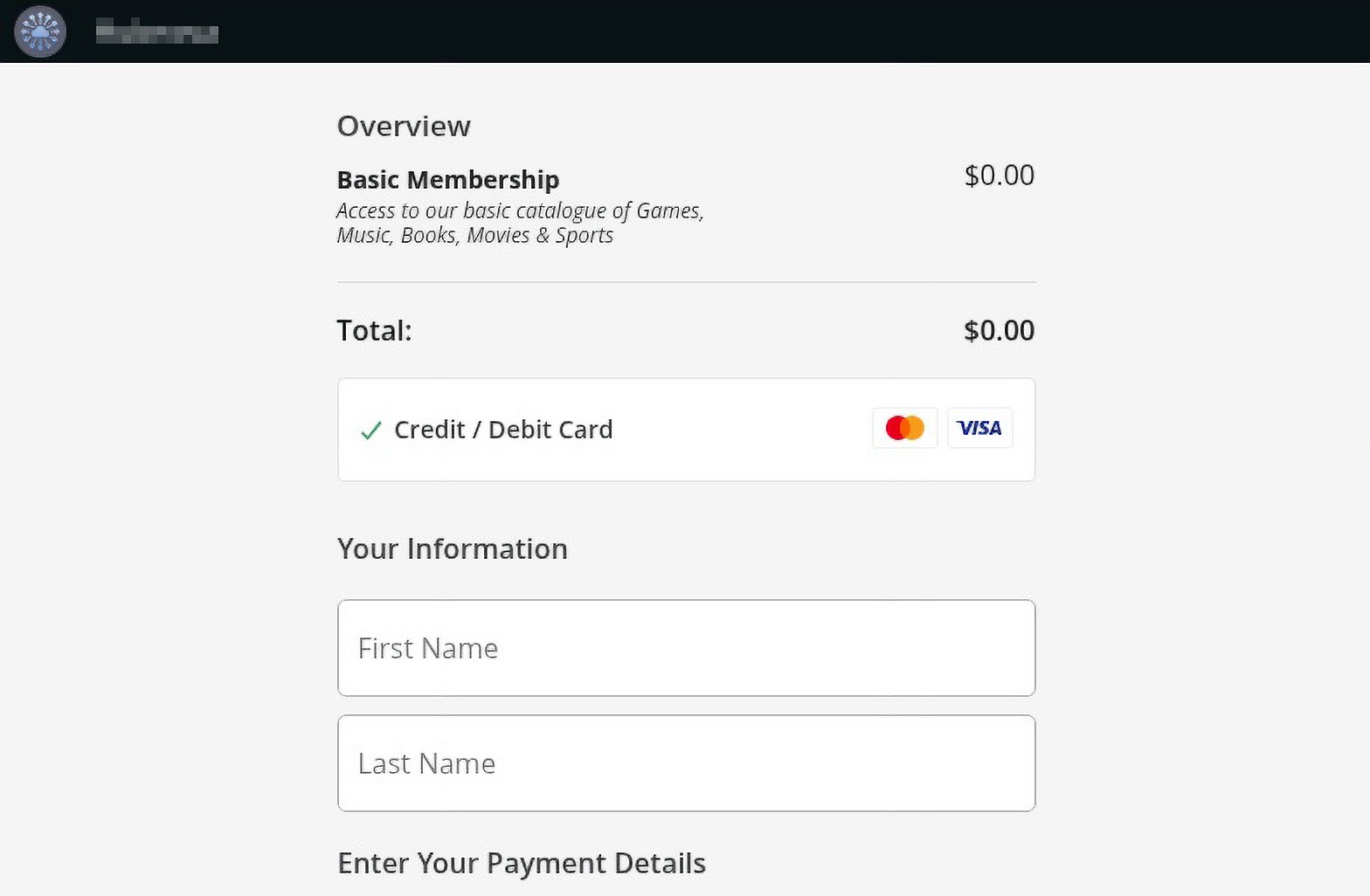
Here’s how the scam plays out: cybercriminals set up fake websites promising free access to World Cup match streams. But the moment you click Watch Now, you’re prompted to sign up and then pay for “lifetime access” to the entire tournament. In the example below, they’re asking for cryptocurrency — which is still a bit unusual, since scammers typically prefer good old-fashioned bank cards.

An example of a fake video streaming website requiring users to register and pay with cryptocurrency to watch all World Cup 2026 matches

An example of a fake video streaming website requiring users to register and pay with cryptocurrency to watch all World Cup 2026 matches

Fans who are desperate to catch their favorite teams live risk losing not just their money, but also their personal data, which hackers can later weaponize in targeted phishing attacks.

A losing bet

Match result predictions and sports betting always skyrocket in popularity during the World Cup, and scammers waste no time cashing in on the trend. And behind the flashy slogans lie classic scam tactics.

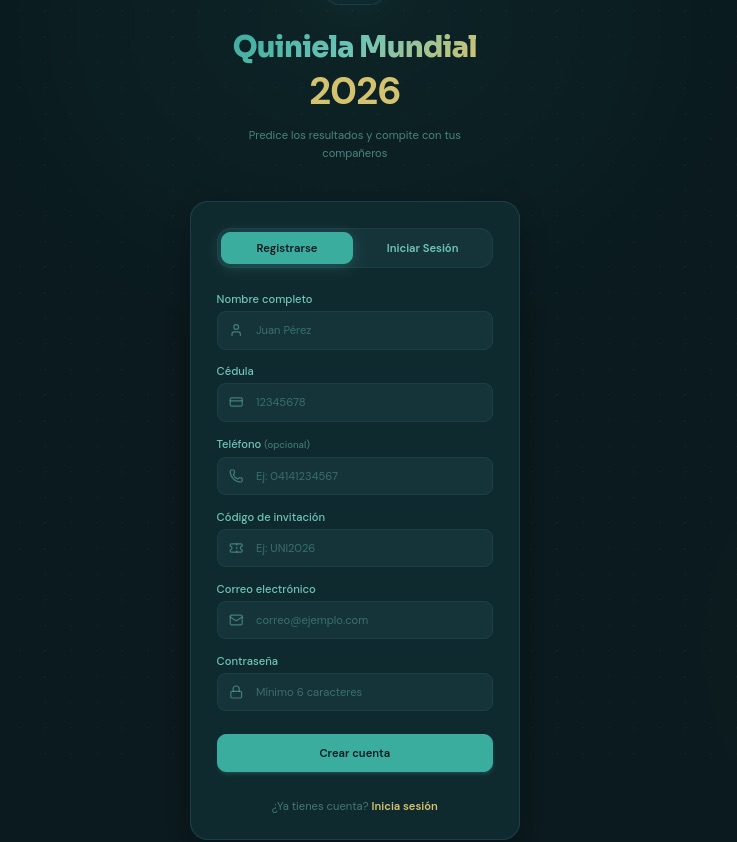
Take this beautifully designed Spanish-language website. To sign up, it demands a massive amount of personal information, including your full name, national ID number, email address, and phone number — and, of course, it asks you to create a password. If a victim uses the exact same password for multiple accounts, they’re essentially handing the keys to their digital life over to cybercriminals.

To guess match outcomes on this site, you have to hand over way too much personal info — everything short of biometrics

To guess match outcomes on this site, you have to hand over way too much personal info — everything short of biometrics

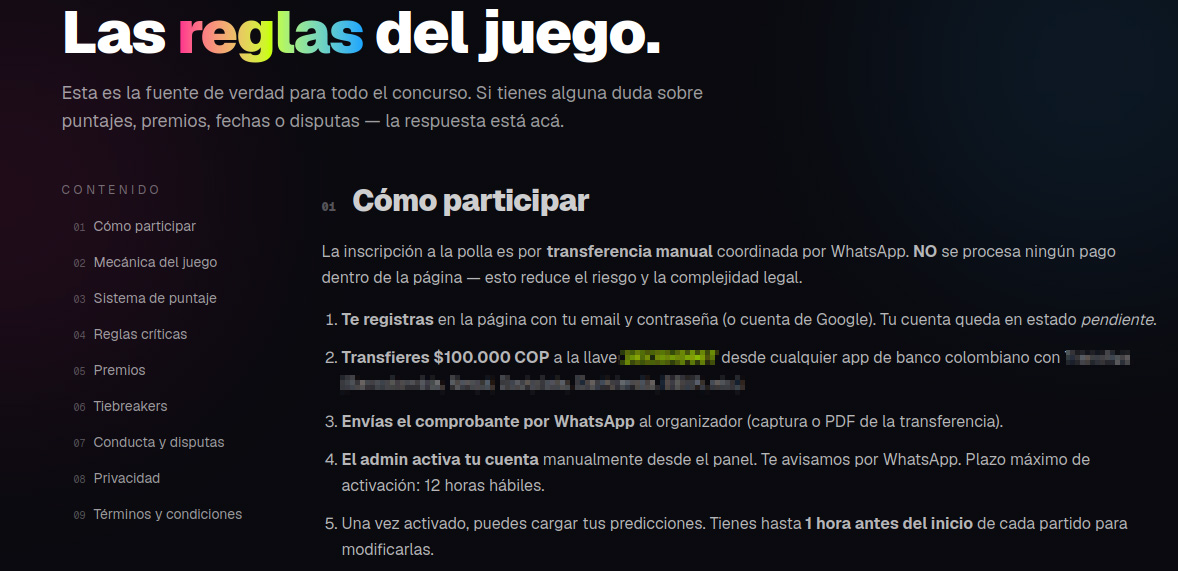
Another site, specifically targeting users in Colombia, turned the sign-up process into a paid ordeal — and it features every trick in the book.

  • To “verify” your profile, you’re forced to use WhatsApp under the guise of avoiding legal complications.
  • Before your account is activated, you must make a deposit. This means sending 100 000 Colombian pesos (about $29) to a specified account and texting the receipt to an “administrator” on WhatsApp.
  • Next, you’re told to wait 12 hours for the “administrator” to manually activate your profile.
  • Only after all of this do the scammers tell you can place unlimited bets (of course not true).
These scammers built a whole website, but they do all their business over WhatsApp. That's a red flag!

These scammers built a whole website, but they do all their business over WhatsApp. That’s a red flag!

In many countries — including Colombia — sports betting is strictly regulated. Only a handful of licensed operators are legally allowed to run these sites, and users are required by law to verify their identity. Because of this, these shady workarounds can look tempting to people who love to gamble but don’t want to — or can’t — go through the official verification process.

Unfortunately, the scammers always win in this scenario. They walk away with your initial deposit and every single bet you place on their site. At the end of the day, their only real goal is to drain their victims’ wallets for as much as they possibly can.

Discounts for collectors!

The World Cup isn’t just about the matches; it also drives record-breaking sales of collectible merchandise — stickers, scarves, team jerseys, official match balls, and more. Naturally, plenty of scammers are eager to get a piece of that action.

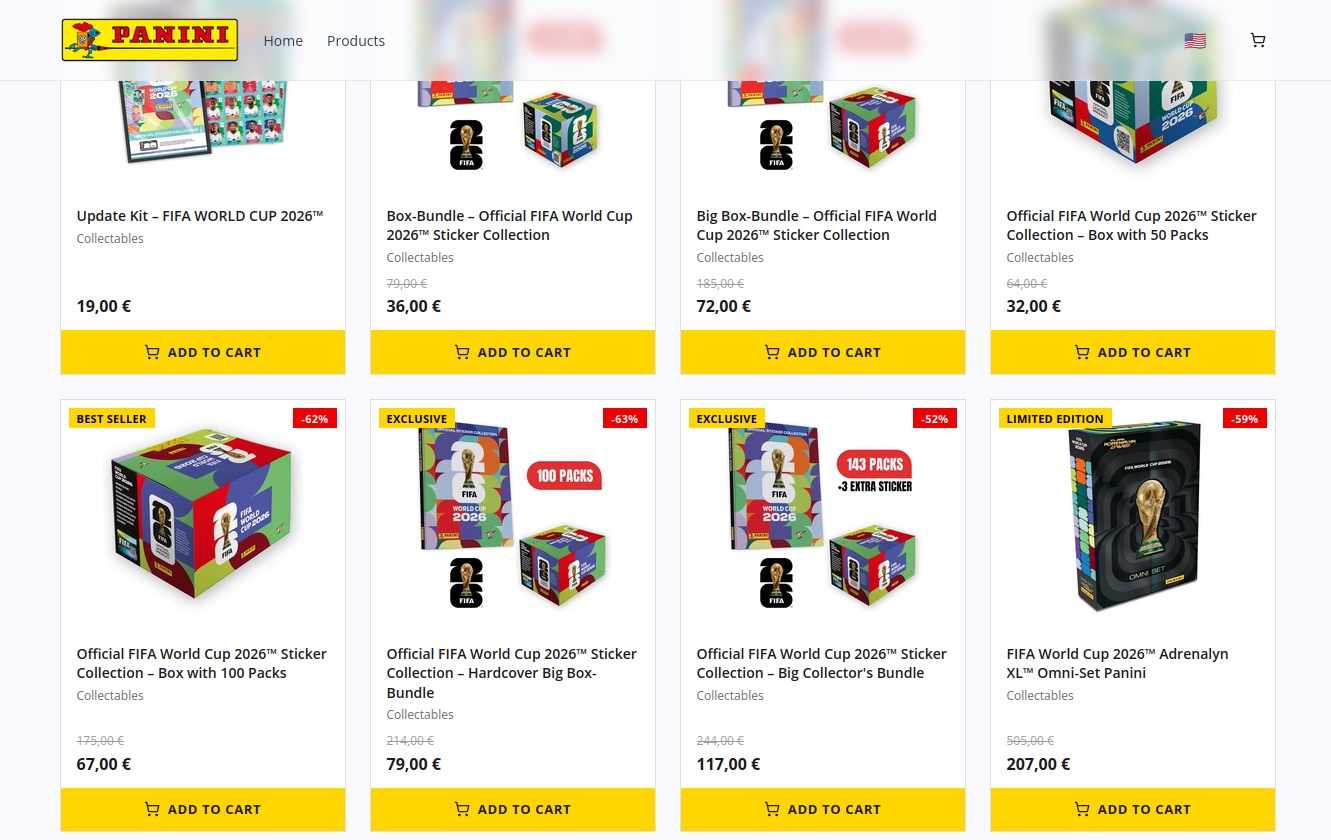
Take a look at this website offering “exclusive, limited-edition” stickers and albums. Notice anything suspicious?

Talk about a steal! Too bad the whole website is a scam

Talk about a steal! Too bad the whole website is a scam

Check out those prices: everything is heavily discounted, even though the tournament is in full swing. All it takes is a quick price check against the real deal to spot the trap. In the screenshot above, the scammers are charging 67 euros for a sticker collection. On actual online marketplaces, that exact same set goes for at least twice as much, and on the official Panini website, it’s three times the price.

Fake websites mimicking popular sporting goods stores also offer to sell you shin guards, socks, jerseys, and any other gear. Of course, you’ll never see the merchandise, and you’ll lose both your money and your bank card details.

When they've absolutely no intention of delivering any products, they can easily offer massive discounts and free shipping

When they’ve absolutely no intention of delivering any products, they can easily offer massive discounts and free shipping

Deals that seem too good to be true are one of the biggest red flags. To make matters worse, with the help of AI, fake websites now look just as professional as the real ones, making them harder than ever to spot. That’s why we recommend installing our security suite before you start shopping online. It blocks phishing sites in real time and uses the Safe Money feature to keep your financial data secure.

Soccer by mail

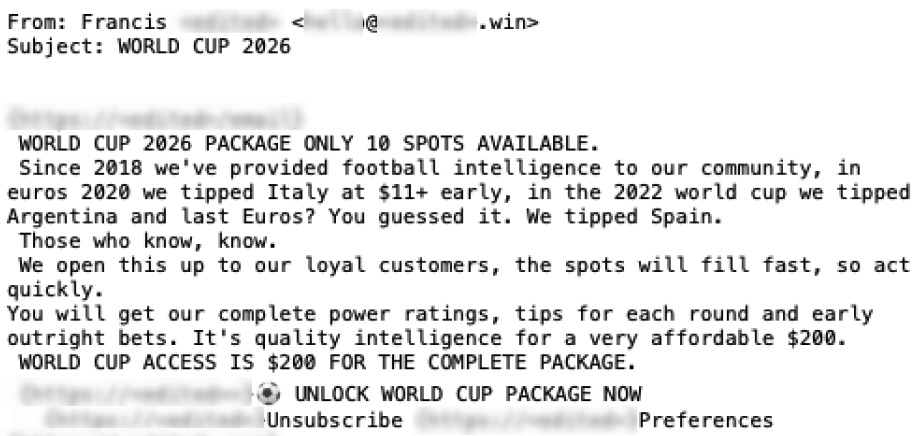
Another attack strategy involves spam campaigns centered around the World Cup. In one email, our experts uncovered an ad for a soccer analytics and betting-tips service. It uses the classic high-pressure playbook: “ONLY 10 SPOTS AVAILABLE” — so hurry up before they run out! Naturally, access comes with a price tag: AU$200.

Spammers hurrying the victim to make a decision as quickly as possible

Spammers hurrying the victim to make a decision as quickly as possible

This scheme targets fans who are into sports betting, and paying for these types of services usually ends one of two ways for them: they either lose their money with zero guarantee of getting actual predictions, or get sucked into an even deeper, multi-step financial trap.

How to avoid falling for the scams

Across all these scenarios, the World Cup is just another convenient pretext for cybercriminals. Once the tournament wraps up, they’ll most certainly pivot back to their usual tricks — like fake job offers or Telegram phishing scams — until the next Olympics or soccer tournament rolls around and they switch right back to sport.

Our research consistently shows that online fraud has evolved into a massive illegal enterprise. You aren’t just up against lone scammers anymore; you’re dealing with large criminal networks. When it comes to defense, the best approach is a proactive one. By installing Kaspersky Premium, you can safeguard all your devices from malware, phishing, spam, and malicious or lookalike websites. Plus, the included Kaspersky Password Manager will generate unique complex passwords, securely store your sensitive data — like documents and bank cards — and stop you from auto-filling your credentials on fake sites.

  • Watch the games only on legitimate streaming platforms. Don’t trust fake reviews and never enter your bank card information on unverified sites. Keep an eye out not just for sketchy streaming websites, but also for fake IPTV apps. As we’ve covered in detail before, scammers frequently use these to infect your devices with Trojans.
  • Shop smart. The best way to avoid getting ripped off is to buy merchandise exclusively through official channels (where you won’t see suspiciously deep discounts), or simply buy your gear in person at official retail locations.
  • Don’t click suspicious links. If a deal that’s too good to be true lands in your inbox — whether it’s exclusive betting tips or anything else — just ignore it and hit delete.
  • Avoid logging in through Telegram bots. At the very least, this saves you from future headaches and annoying spam. At best, it keeps your account from being hijacked and your crypto from being stolen.
  • Switch to passkeys wherever possible. Unlike traditional passwords, which are easily stolen and can be typed into any fake login page, a passkey is cryptographically tied to a specific website and won’t work on a phishing page. Kaspersky Password Manager can easily store and sync your passkeys across all your devices.

What other ruses do scammers use to make a quick buck? Check out our other posts:

Received — 23 April 2026 Kaspersky official blog

Fake BTS ARIRANG tour tickets: K-pop fans being targeted by scammers | Kaspersky official blog

9 April 2026 at 12:46

BTS, a global K-pop phenomenon, has recently made a comeback from an almost four-year hiatus: the members of the group were completing mandatory military service in South Korea. For this reason it comes as no surprise that cybercriminals have taken advantage of the band’s highly anticipated world-tour — ARIRANG — to launch a campaign of fake websites targeting fans eager to buy tickets.

We’ve identified at least 10 fraudulent domains that mimic the official pre‑sale pages for the band’s concerts in Argentina, Brazil, Chile, Colombia, France, Mexico, Peru, Portugal, and Spain — all created in early April. We explain how the scammers operate, and how to avoid buying fake tickets.

How the fake ticket scam works

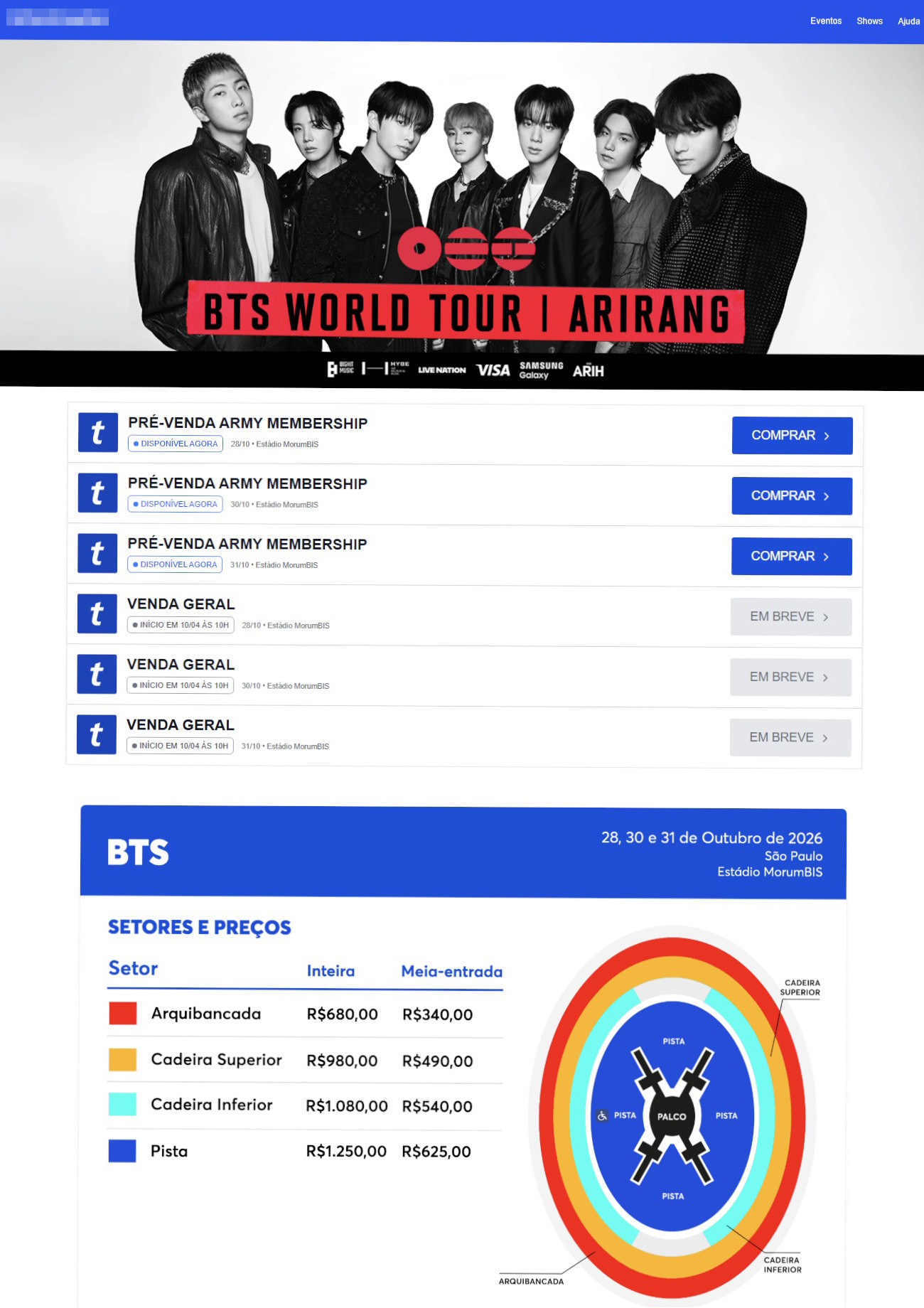
Due to the high demand for the world-tour tickets, some of the event organizers prepared additional measures to ensure there are no ticket scalpers. In Brazil, the ticketing services adopted a “pre‑booking” format: the user first makes an online reservation, and then pays in person at the box office. Although in essence a good idea, the change has caused confusion among fans and created an opportunity for criminals to commit fraud.

Scammers create pages that are nearly identical to the official ones, replicating the layout, design, and the entire purchasing journey. For ordinary users, the experience seems completely legitimate. The links to these websites are circulating on social media — mainly on Instagram.

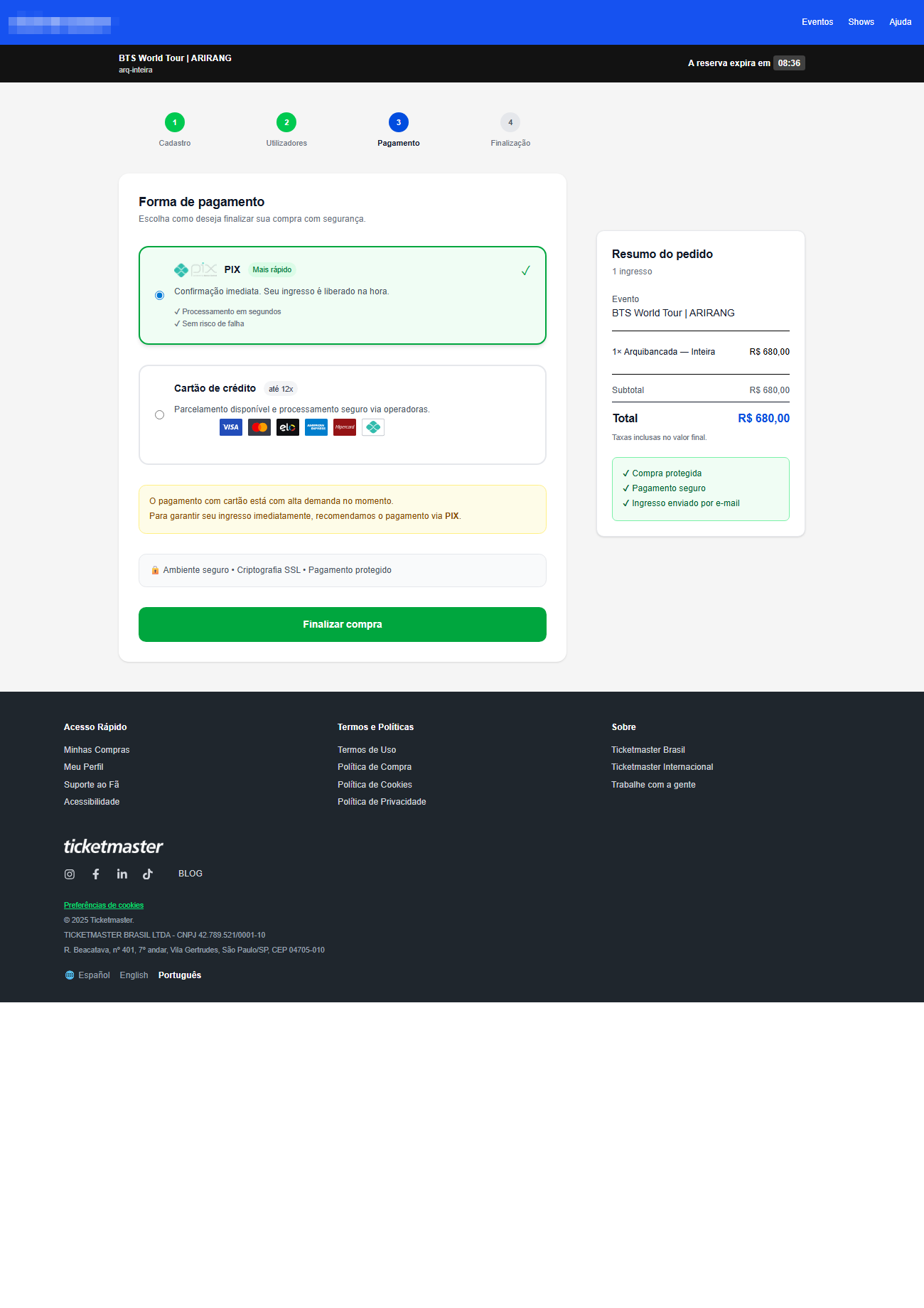
In Brazil, victims are prompted to make payments via PIX — an instant payment system operated by the Central Bank of Brazil. In some cases, the sites even simulate a card‑payment option, but claim high demand or system errors to pressure users into choosing PIX. PIX payments are then directed to money mule accounts — making it difficult to recover the funds.

Scam websites sell fake BTS tickets in Brazil
Fake website imitating the Brazilian Ticketmaster. The design is almost indistinguishable from the original
Scam websites sell fake BTS tickets in Brazil
This fake Brazilian website makes it seem as if the user can choose between card payment and instant payment. In reality, choosing the bank card option always results in fake “errors”. In the end, the victim is left with no choice but to pay via the PIX system
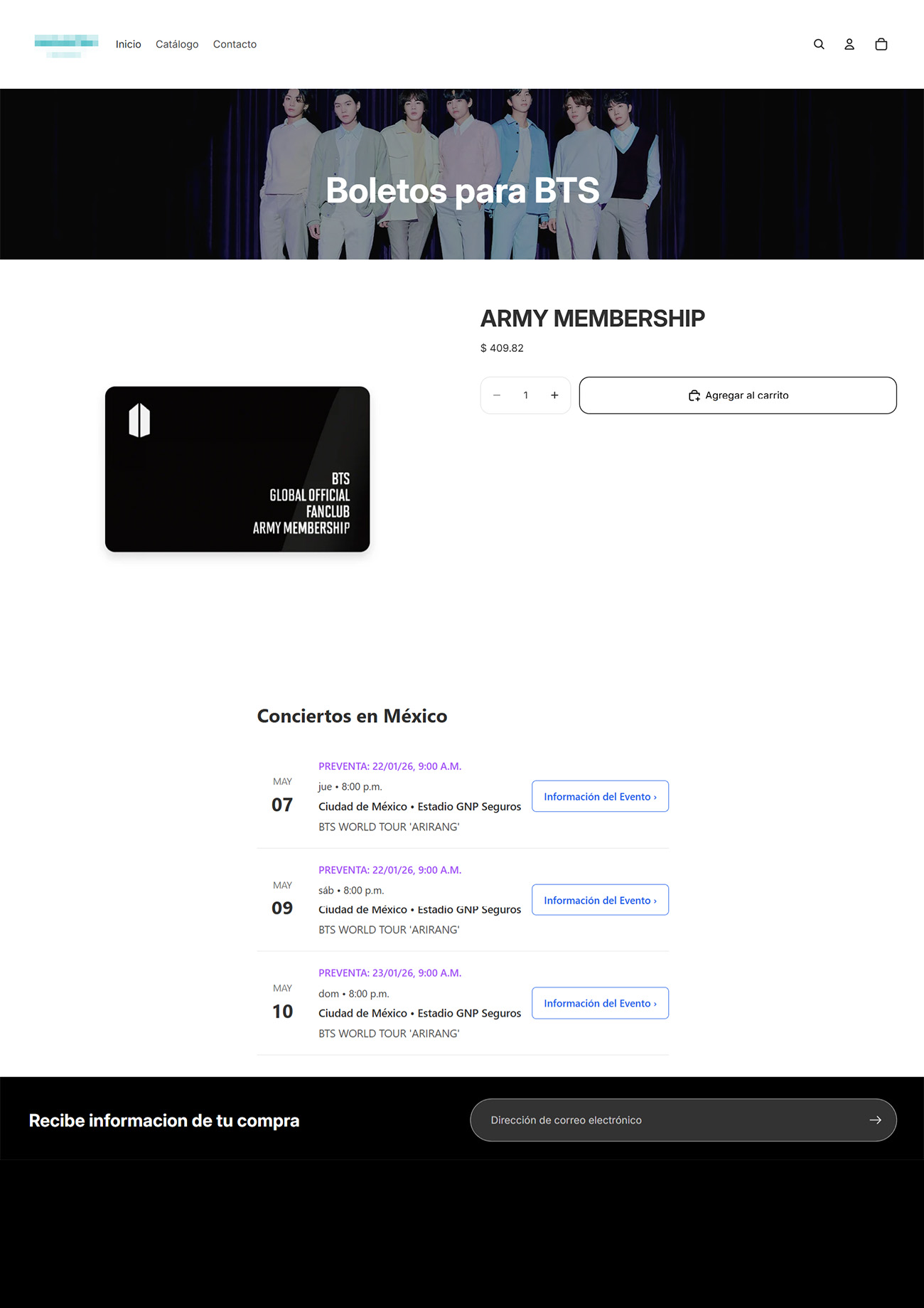
Weverse scam website targeted at Mexican fans
This scam page targeted at Mexican fans is selling a fake BTS membership. It’s a fraudulent copy of Weverse — a legitimate website that hosts K-pop communities and sells fan-club memberships
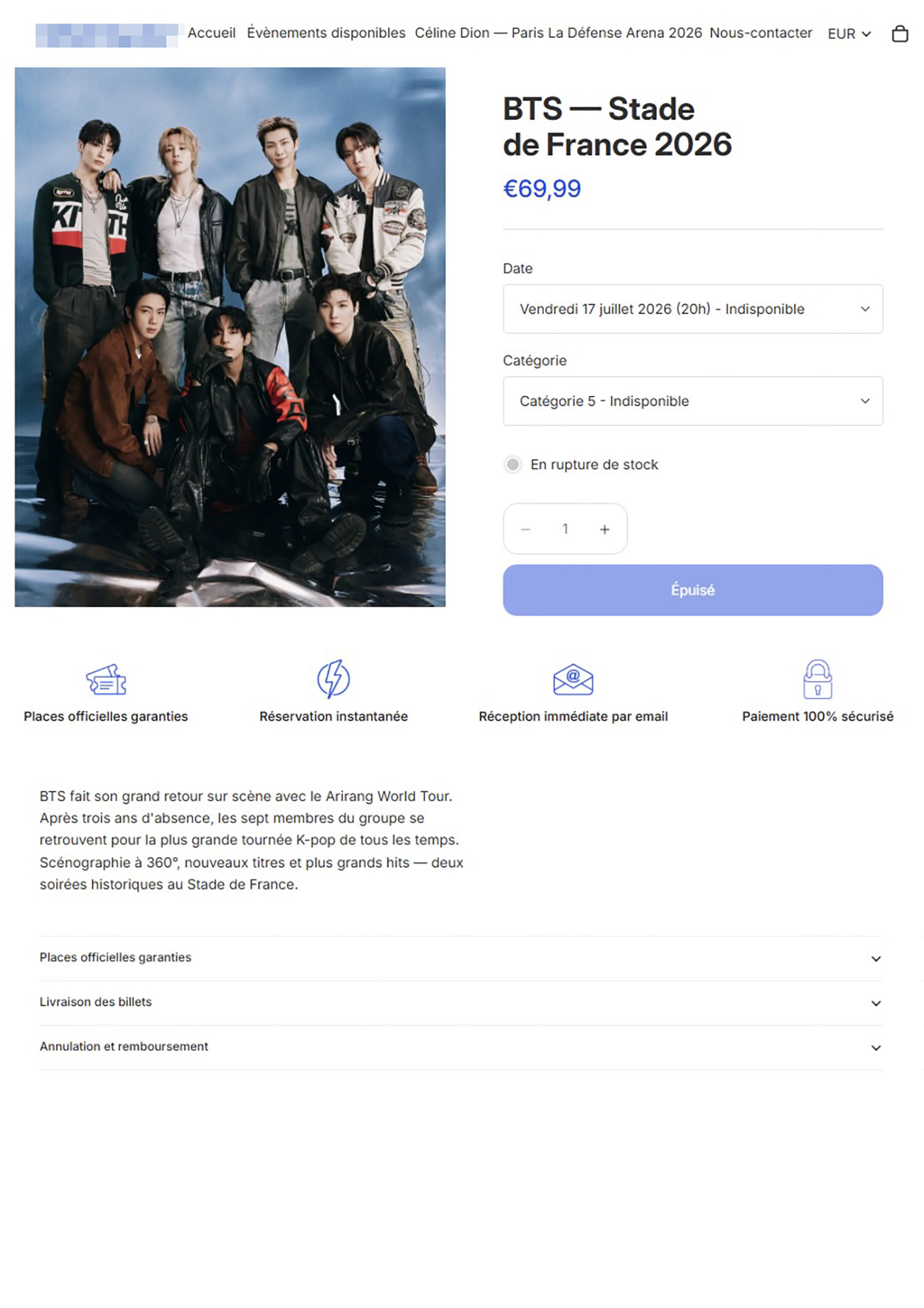
Fake tickets sold for BTS on a fraudulent Ticketmaster
This is the French version of a fake Ticketmaster

The scam is a perfect example of how social engineering works. It exploits a massive and highly engaged fanbase — leading many users to act impulsively. The fake “errors” that the website displays during payment create a sense of urgency and cause panic — the scammers are well aware of how quickly BTS tickets sell out. In addition, doubts about the new purchasing system established by the event organizers help criminals make fake websites even more convincing.

How to protect yourself from ticket scams

If you really want to get tickets to your favorite group’s concert but not fall victim to the scammers, it’s important to keep these basic cybersecurity rules in mind:

  • Access only official ticketing services, which you can find on the official page dedicated to BTS’s tour. Type the website address directly into your browser, and avoid links received via messages, social media, or email.
  • Check the domain carefully. Slight changes in the address often indicate fraud. This includes additional dashes, unusual territorial domains, and hardly-noticeable changes like replacing a lowercase “l” (L) with an uppercase “I” (i).
  • Check the website for Privacy Policy and Terms of Use pages. If they’re missing, you’re definitely visiting a fake website. But remember: their presence doesn’t guarantee that the site is legitimate. With modern AI, generating such pages takes only a few seconds.
  • Carefully check the sales format for each country. In Brazil, payment should only be made in person, so any request for online payment during the pre‑sale is a strong indication of a scam. Other countries and event organizers may offer online payments.
  • If you’ve been scammed, immediately contact your bank. If you provided bank card information to the criminals, you should reissue your card to prevent further unauthorized payments.
  • Enable banking alerts. Real-time notifications allow you to quickly identify suspicious transactions.
  • Use cybersecurity protection that detects and automatically blocks fraudulent websites. Kaspersky Premium, our robust cybersecurity solution, also shuts down phishing attempts, protects your personal data, and helps safeguard your identity.
  • Beware of “free” or “discounted” tickets. Ultimately, there’s never such a thing as a free lunch — especially when it comes to world‑famous music groups.

More on scams:

Received — 12 March 2026 Kaspersky official blog

Variations of the ClickFix | Kaspersky official blog

25 February 2026 at 16:14

About a year ago, we published a post about the ClickFix technique, which was gaining popularity among attackers. The essence of attacks using ClickFix boils down to convincing the victim, under various pretexts, to run a malicious command on their computer. That is, from the cybersecurity solutions point of view, it’s run on behalf of the active user and with their privileges.

In early uses of this technique, cybercriminals tried to convince victims that they need to execute a command to fix some problem or to pass a captcha, and in the vast majority of cases, the malicious command was a PowerShell script. However, since then, attackers have come up with a number of new tricks that users should be warned about, as well as a number of new variants of malicious payload delivery, which are also worth keeping an eye on.

Use of mshta.exe

Last year, Microsoft experts published a report on cyberattacks targeting hotel owners working with Booking.com. The attackers sent out fake notifications from the service, or emails pretending to be from guests drawing attention to a review. In both cases, the email contained a link to a website imitating Booking.com, which asked the victim to prove that they were not a robot by running a code via the Run menu.

There are two key differences between this attack and ClickFix. First, the user isn’t asked to copy the string (after all, a string with code sometimes arouses suspicion). It’s copied to the exchange buffer by the malicious site – probably when the user clicks on a checkbox that mimics the reCAPTCHA mechanism. Second, the malicious string calls the legitimate mshta.exe utility, which serves to run applications written in HTML. It contacts the attackers’ server and executes the malicious payload.

Video on TikTok and PowerShell with administrator privileges

BleepingComputer published an article in October 2025 about a campaign spreading malware through instructions in TikTok videos. The videos themselves imitate video tutorials on how to activate proprietary software for free. The advice they give boils down to a need to run PowerShell with administrator rights and then execute the command iex (irm {address}). Here, the irm command downloads a malicious script from a server controlled by attackers, and the iex (Invoke-Expression) command runs it. The script, in turn, downloads an infostealer malware to the victim’s computer.

Using the Finger protocol

Another unusual variant of the ClickFix attack uses the familiar captcha trick, but the malicious script uses the outdated Finger protocol. The utility of the same name allows anyone to request data about a specific user on a remote server. The protocol is rarely used nowadays, but it is still supported by Windows, macOS, and a number of Linux-based systems.

The user is persuaded to open the command line interface and use it to run a command that establishes a connection via the Finger protocol (using TCP port 79) with the attackers’ server. The protocol only transfers text information, but this is enough to download another script to the victim’s computer, which then installs the malware.

CrashFix variant

Another variant of ClickFix differs in that it uses more sophisticated social engineering. It was used in an attack on users trying to find a tool to block advertising banners, trackers, malware, and other unwanted content on web pages. When searching for a suitable extension for Google Chrome, victims found something called NexShield – Advanced Web Guardian, which was in fact a clone of real working software, but which at some point crashed the browser and displayed a fake notification about a detected security problem and the need to run a “scan” to fix the error. If the user agreed, they received instructions on how to open the Run menu and execute a command that the extension had previously copied to the clipboard.

The command copied the familiar finger.exe file to a temporary directory, renamed it ct.exe, and then launched it with the attacker’s address. The rest of the attack was the same as in the abovementioned case. In response to the Finger protocol request, a malicious script was delivered, which launched and installed a remote access Trojan (in this case, ModeloRAT).

Malware delivery via DNS lookup

The Microsoft Threat Intelligence team also shared a slightly more complex than usual ClickFix attack variant. Unfortunately, they didn’t describe the social engineering trick, but the method of delivering the malicious payload is quite interesting. Probably in order to complicate detection of the attack in a corporate environment and prolong the life of the malicious infrastructure, the attackers used an additional step: contacting a DNS server controlled by the attackers.

That is, after the victim is somehow persuaded to copy and execute a malicious command, a request is sent to the DNS server on behalf of the user via the legitimate nslookup utility, requesting data for the example.com domain. The command contained the address of a specific DNS server controlled by the attackers. It returns a response that, among other things, returned a string with malicious script, which in turn downloads the final payload (in this attack, ModeloRAT again).

Cryptocurrency bait and JavaScript as payload

The next attack variant is interesting for its multi-stage social engineering. In comments on Pastebin, attackers actively spread a message about an alleged flaw in the Swapzone.io cryptocurrency exchange service. Cryptocurrency owners were invited to visit a resource created by fraudsters, which contained full instructions on how to exploit this flaw, which can make up to $13,000 in a couple of days.

The instructions explain how the service’s flaws can be exploited to exchange cryptocurrency at a more favorable rate. To do this, a victim needs to open the service’s website in the Chrome browser, manually type “javascript:” in the address bar, and then paste the JavaScript script copied from the attackers’ website and execute it. In reality, of course, the script cannot affect exchange rates in any way; it simply replaces Bitcoin wallet addresses and, if the victim actually tries to exchange something, transfers the funds to the attackers’ accounts.

How to protect your company from ClickFix attacks

The simplest attacks using the ClickFix technique can be countered by blocking the [Win] + [R] key combination on work devices. But, as we see from the examples listed, this is far from the only type of attack in which users are asked to run malicious code themselves.

Therefore, the main advice is to raise employee cybersecurity awareness. They must clearly understand that if someone asks them to perform any unusual manipulations with the system, and/or copy and paste code somewhere, then in most cases this is a trick used by cybercriminals. Security awareness training can be organized using the Kaspersky Automated Security Awareness Platform.

In addition, to protect against such cyberattacks, we recommend:

Received — 12 February 2026 Kaspersky official blog

I bought, I saw, I attended: a quick guide to staying scam-free at the Olympics | Kaspersky official blog

12 February 2026 at 16:30

The Olympic Games are more than just a massive celebration of sports; they’re a high-stakes business. Officially, the projected economic impact of the Winter Games — which kicked off on February 6 in Italy — is estimated at 5.3 billion euros. A lion’s share of that revenue is expected to come from fans flocking in from around the globe — with over 2.5 million tourists predicted to visit Italy. Meanwhile, those staying home are tuning in via TV and streaming. According to the platforms, viewership ratings are already hitting their highest peaks since 2014.

But while athletes are grinding for medals and the world is glued to every triumph and heartbreak, a different set of “competitors” has entered the arena to capitalize on the hype and the trust of eager fans. Cyberscammers of all stripes have joined an illegal race for the gold, knowing full well that a frenzy is a fraudster’s best friend.

Kaspersky experts have tracked numerous fraudulent schemes targeting fans during these Winter Games. Here’s how to avoid frustration in the form of fake tickets, non-existent merch, and shady streams, so you can keep your money and personal data safe.

Tickets to nowhere

The most popular scam on this year’s circuit is the sale of non-existent tickets. Usually, there are far fewer seats at the rinks and slopes than there are fans dying to see the main events. In a supply-and-demand crunch, folks scramble for any chance to snag those coveted passes, and that’s when phishing sites — clones of official vendors — come to the “rescue”. Using these, bad actors fish for fans’ payment details to either resell them on the dark web or drain their accounts immediately.

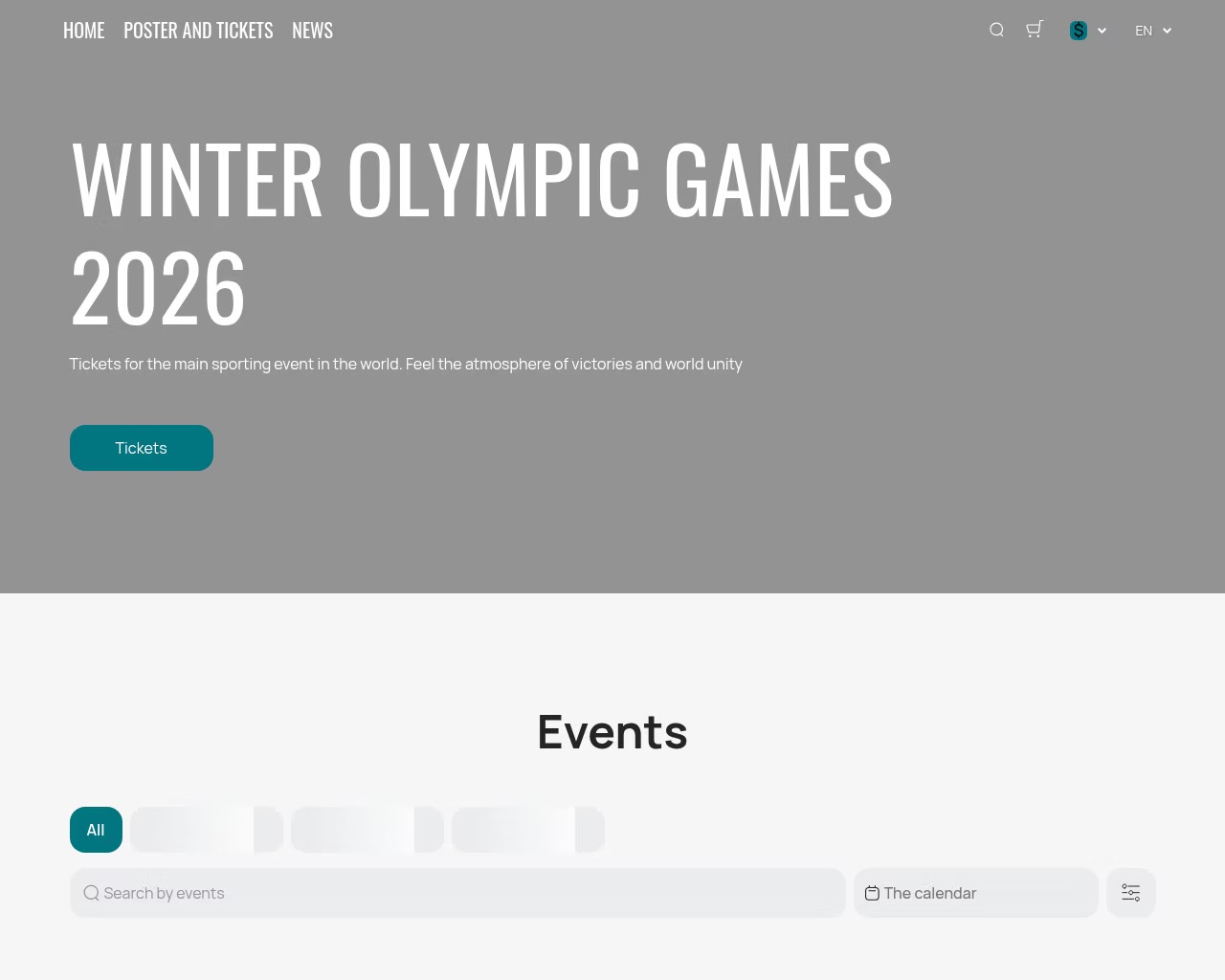
This is what a fraudulent site selling fake Olympic tickets looks like

This is what a fraudulent site selling fake Olympic tickets looks like

Remember: tickets for any Olympic event are sold only through the authorized Olympic platform or its listed partners. Any third-party site or seller outside the official channel is a scammer. We’re putting that play in the penalty box!

A fake goalie mitt, a counterfeit stick…

Dreaming of a Sydney Sweeney — sorry, Sidney Crosby — jersey? Or maybe you want a tracksuit with the official Games logo? Scammers have already set up dozens of fake online stores just for you! To pull off the heist, they use official logos, convincing photos, and padded rave reviews. You pay, and in return, you get… well, nothing but a transaction alert and your card info stolen.

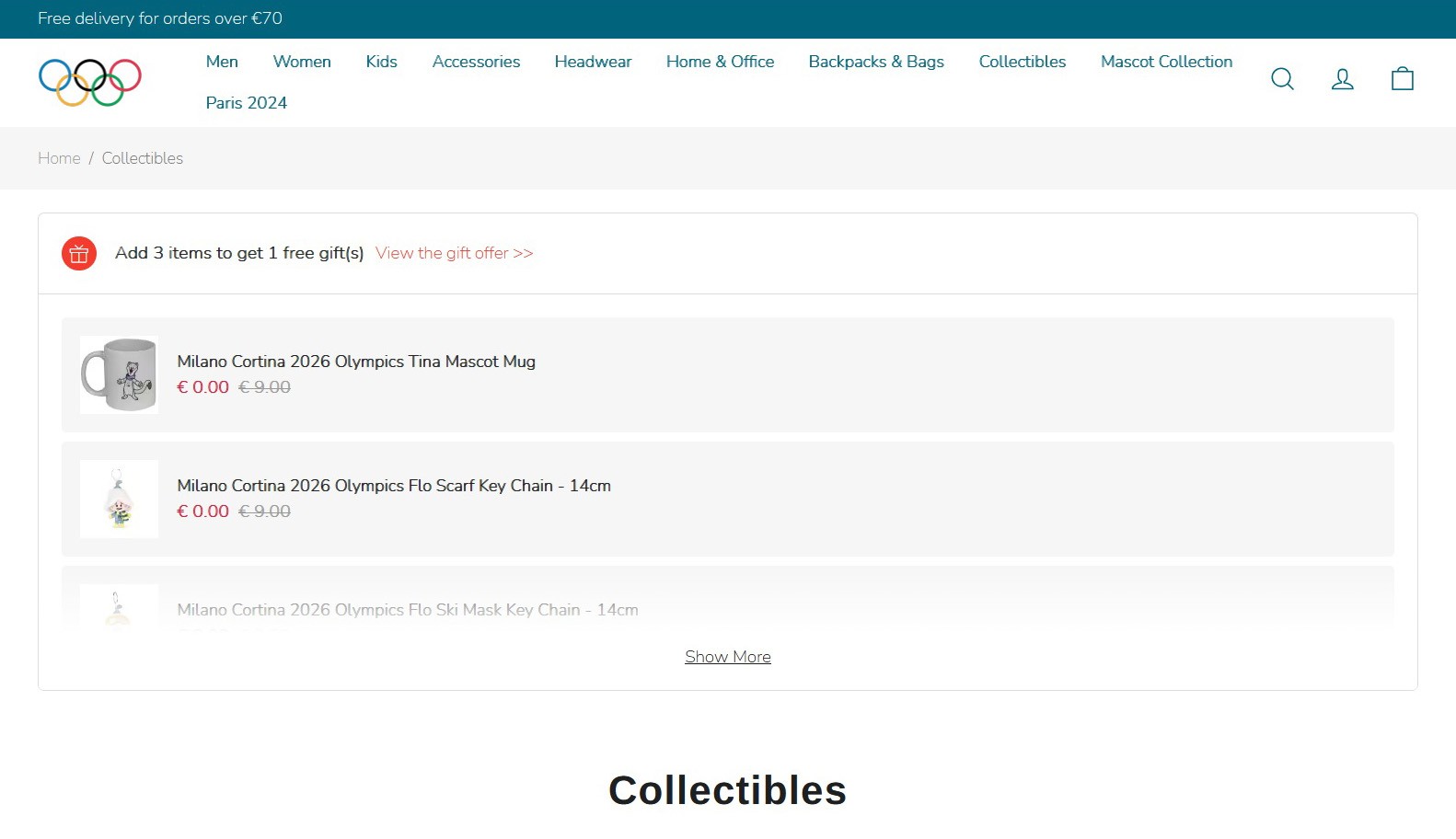
A fake online store for Olympic merchandise
Naive shoppers are being lured with gifts:
Naive shoppers are being lured with gifts: "free" mugs and keychains featuring the Olympic mascot
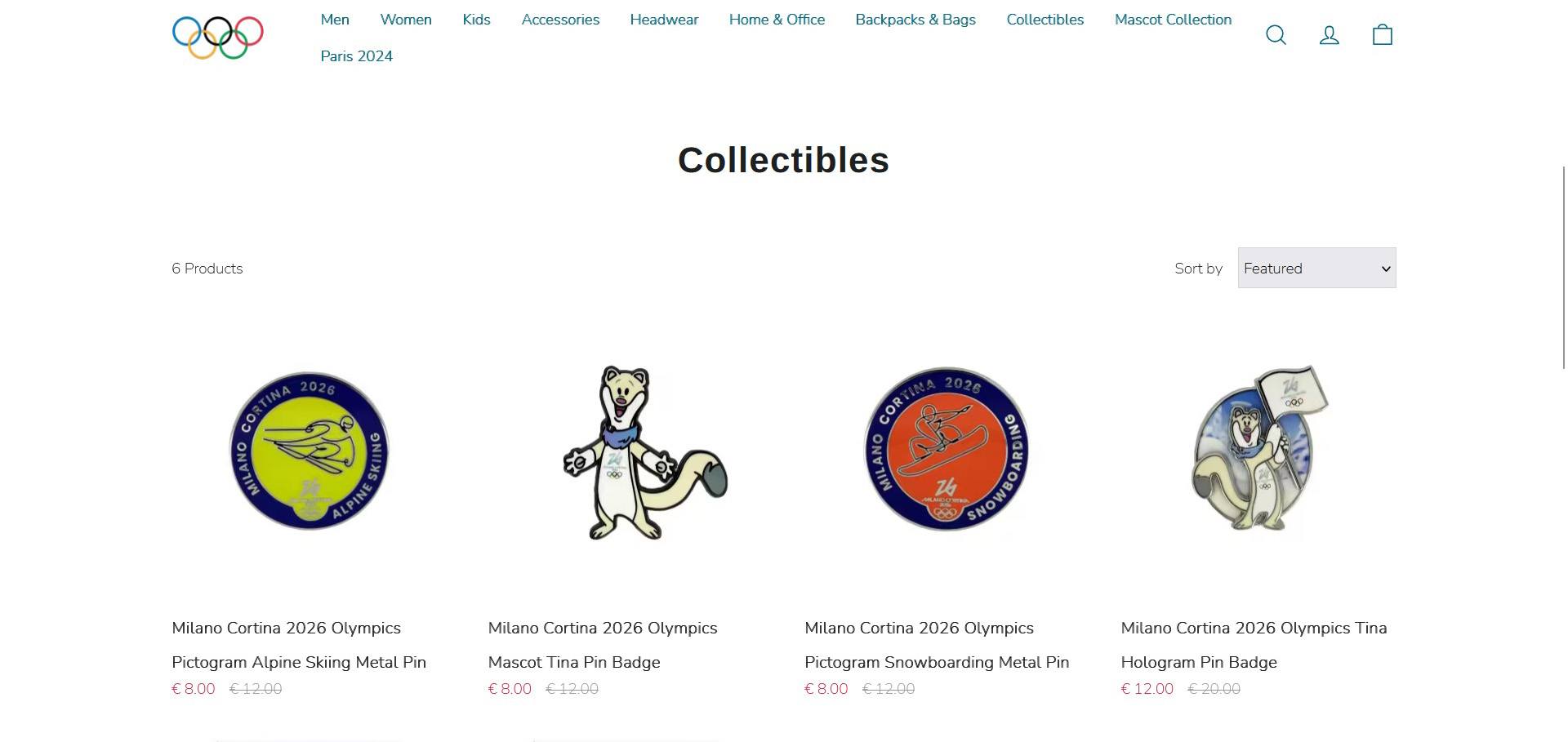
And a hefty
And a hefty "discount" on pins

I want my Olympic TV!

What if you prefer watching the action from the comfort of your couch rather than trekking from stadium to stadium, but you’re not exactly thrilled about paying for a pricey streaming subscription? Maybe there’s a free stream out there?

The bogus streaming service warns you right away that you can't watch just like that — you have to register. But hey, it's free!
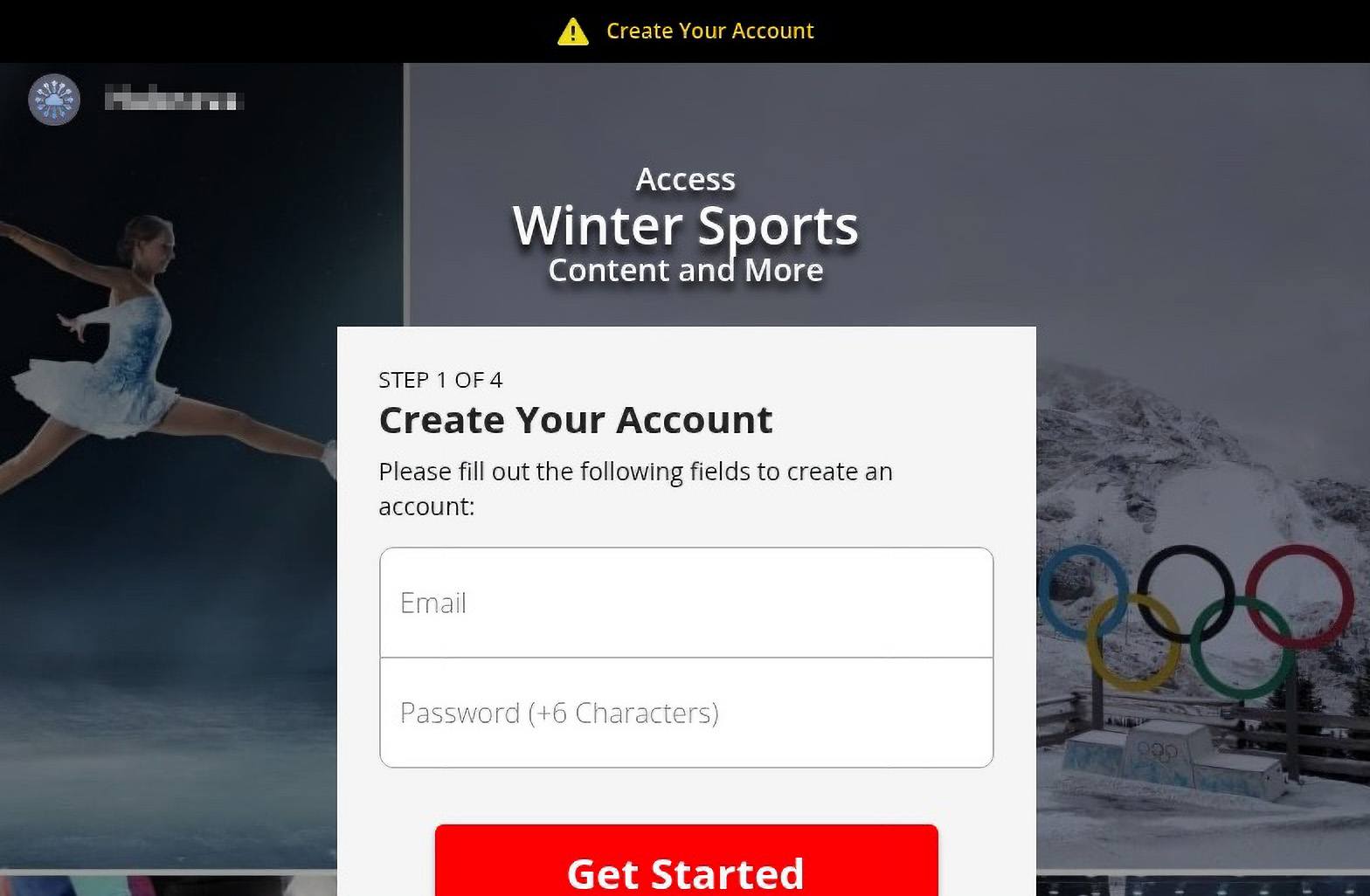
Another
Another "media provider" fishes for emails to build spam lists or for future phishing...
...But to watch the
...But to watch the "free" broadcast, you have to provide your personal data and credit card info

Sure thing! Five seconds of searching and your screen is flooded with dozens of “cheap”, “exclusive”, or even “free” live streams. They’ve got everything from figure skating to curling. But there’s a catch: for some reason — even though it’s supposedly free — a pop-up appears asking for your credit card details.

You type them in and hit “Play”, but instead of the long-awaited free skate program, you end up on a webcam ad site or somewhere even sketchier. The result: no show for you. At best, you were just used for traffic arbitrage; at worst, they now have access to your bank account. Either way, it’s a major bummer.

Defensive tactics

Scammers have been ripping off sports fans for years, and their payday depends entirely on how well they can mimic official portals. To stay safe, fans should mount a tiered defense: install reliable security software to block phishing, and keep a sharp eye on every URL you visit. If something feels even slightly off, never, ever enter your personal or payment info.

  • Stick to authorized channels for tickets. Steer clear of third-party resellers and always double-check info on the official Olympic website.
  • Use legitimate streaming services. Read the reviews and don’t hand over your credit card details to unverified sites.
  • Be wary of Olympic merch and gift vendors. Don’t get baited by “exclusive” offers or massive discounts from unknown stores. Only buy from official retail partners.
  • Avoid links in emails, direct messages, texts, or ads offering free tickets, streams, promo codes, or prize giveaways.
  • Deploy a robust security solution. For instance, Kaspersky Premium automatically shuts down phishing attempts and blocks dangerous websites, malicious ads, and credit card skimmers in real time.

Want to see how sports fans were targeted in the past? Check out our previous posts:

❌