Normal view

WordPress Site Down? Here’s How to Get Back Online

22 May 2026 at 02:05
WordPress Site Down? Here’s How to Get Back Online

If your WordPress site goes offline, every minute costs you lost sales, missed leads, and a dent in visitor trust. Search engines may start flagging errors, and customers see a blank page instead of your business. In that moment, the pressure is real:

What broke, and how do you get back online before the damage adds up?

The good news is that most WordPress outages are fixable. In most cases, your site isn’t lost, it’s blocked by something like a plugin conflict, server hiccup, database error, expired domain, SSL problem, sudden traffic spike, or malware infection.

Continue reading WordPress Site Down? Here’s How to Get Back Online at Sucuri Blog.

What to Do When a Third-Party Data Breach Puts Your Website at Risk

By: Sucuri
18 May 2026 at 22:04
What to Do When a Third-Party Data Breach Puts Your Website at Risk

Data breach notification letters have become a familiar routine. They usually start with “We value your privacy” and offer a year of free credit monitoring. But the most important part is often hidden in the middle:

A list of what actually got out.

A leaked email address is not a leaked admin password. A hashed credential is not a session token. There is no universal post-breach checklist. The right response depends on the data exposed, so read the notice carefully and match your response to the level of exposure.

Continue reading What to Do When a Third-Party Data Breach Puts Your Website at Risk at Sucuri Blog.

Canvas System Is Online After a Cyberattack Disrupted Thousands of Schools

11 May 2026 at 10:35

Tens of thousands of students studying for final exams around the world have regained access to a key online learning system after a cyberattack had earlier knocked it offline.

The post Canvas System Is Online After a Cyberattack Disrupted Thousands of Schools appeared first on SecurityWeek.

DNSSEC: The Extra Security Layer That Can Break Your Padlock

5 May 2026 at 02:59
DNSSEC: The Extra Security Layer That Can Break Your Padlock

Turning on DNSSEC makes your domain more secure — but if it’s misconfigured, newer certificate validation rules can stop SSL renewals in their tracks.

Hey there,

You know that satisfying click when you finally turn on DNSSEC? It feels like adding a shiny new deadbolt to your domain’s front door. You’re doing the responsible thing: locking down your DNS against spoofing and hijacks, and making the internet just a bit safer.

Continue reading DNSSEC: The Extra Security Layer That Can Break Your Padlock at Sucuri Blog.

What is online gambling spam and what can I do about it?

By: Sucuri
28 April 2026 at 21:12
What is online gambling spam and what can I do about it?

Online gambling spam thrives on dreams of easy money and high stakes. Beating the house at an exotic casino. Splitting sevens. Going all in on the flop. A baccarat dealer calling La grande! For most people, though, the reality falls far short of Monte Carlo and an Aston Martin.

So they turn to online gambling. And bad actors harness that allure to create their scams. They think they’re buying credits at a hot new online casino.

Continue reading What is online gambling spam and what can I do about it? at Sucuri Blog.

My Website Is Hosting a Phishing Page – Now What?

By: Sucuri
25 April 2026 at 05:24
My Website Is Hosting a Phishing Page – Now What?

Most phishing advice is written for the person staring at a suspicious email. This guide is for the other kind of victim: The website owner whose legitimate site has been quietly turned into the attacker’s weapon.

You didn’t send the message or build the fake login page. You just woke up to a browser warning, a suspended hosting account, or a polite note from someone’s security team asking why your domain is requesting Apple ID credentials.

Continue reading My Website Is Hosting a Phishing Page – Now What? at Sucuri Blog.

WordPress DDoS Protection: How to Keep Your Site Online

By: Sucuri
24 April 2026 at 00:23
WordPress DDoS Protection: How to Keep Your Site Online

WordPress powers over 40% of the web, which makes it one of the most attractive targets for Distributed Denial of Service (DDoS) attacks. If your site goes down for an hour, you lose revenue, search rankings, and visitor trust. If it goes down repeatedly, you lose much more.

A DDoS attack floods your website with fake traffic until it slows to a crawl or crashes entirely. Unlike hacks that steal data, DDoS attacks are about disruption.

Continue reading WordPress DDoS Protection: How to Keep Your Site Online at Sucuri Blog.

How Push Notifications Can Betray Your Privacy (and What to Do About It)

16 April 2026 at 18:41

Update April 22, 2026. Apple has reportedly addressed part of the issue with the notification database in iOS 26.4.2 and 18.7.8, released today. With this update, notifications marked for deletion should no longer be stored in the notification database.

A phone’s push notifications can contain a significant amount of information about you, your communications, and what you do throughout the day. They’re important enough to government investigations that Apple and Google now both require a judge’s order to hand details about push notifications over to law enforcement, and even with that requirement Apple shares data on hundreds of users. More recently, we also learned from a 404 Media report that law enforcement forensic extraction tools can unearth the text from deleted notifications, including those from secure messaging tools, like Signal. The good news is that you can mitigate some of this risk. 

There are two points where notifications may betray your privacy: when they’re transmitted over cloud servers and once they land on the device. Let’s start with the cloud. It might seem like push notifications come directly from an app, but they are typically routed through either Apple or Google’s servers first (depending on if you use iOS or Android). According to a letter sent to the Department of Justice by Senator Wyden, the content of those notifications may be visible to Apple and Google, and at the very least the companies collect some metadata about what apps send a notification and when. App providers have to make the decision to hide the content from Apple and Google and implement that functionality; Signal is one app that does this. 

Then, once the notifications land on your phone, depending on your settings, the notification content may be visible on your lock screen without needing to unlock the device. This can be dangerous if you lose your device, someone steals it, or it’s confiscated by law enforcement. 

You may clear notifications after looking at them. But it turns out the content notifications get recorded in your device’s internal storage, which then makes them susceptible to recovery with certain types of forensic tools. Notification content may even persist after the app is deleted, if the OS doesn’t fully purge the app’s notification data. 

We still have a lot of unanswered questions about how the notification databases work on devices. We do not know how long notifications are stored, or whether they’re backed up to the cloud, in which case the cloud provider could get backdoor access to the content of messages if the backups are enabled and not end-to-end encrypted. This may also make backups vulnerable to law enforcement demands for data. 

Which is all to say that there are myriad ways that law enforcement can access the content or metadata of push notifications. Let’s fix that.

Consider the Strongest Notification Protections for Your Secure Messaging Apps

Secure chat tools are designed to keep the content of the messages safe inside the app. So, for secure chat apps like WhatsApp and Signal, that means the company that makes those apps cannot see the content of your messages, and they’re only accessible on your and your recipients’ devices. Once messages land on a device, it’s still important to consider some privacy precautions, particularly with notifications. 

Signal
Signal offers three levels of information to include in notifications, all which are pretty self explanatory:

  • Name, Content, and Actions (Name and message on Android) shows the entirety of a message as well as who sent it (on iPhone you can also slide to reply, mark as read, or call back). 
  • Name only only shows the name of the sender. 
  • No Name or Content (No name or message on Android) will only show that you have a message from Signal, not who sent it or what it’s about. 

To change your settings:

  • On iPhone: Tap your profile picture, then Settings > Notifications > Show.
  • On Android: Tap your profile picture, then Notifications > Show

WhatsApp
WhatsApp only has one option for this, and it’s currently limited to iPhone, but you can at least tell the app not to include the content of a message in the notification:

  • Open WhatsApp for iPhone, tap the “You” bar, then Notifications, and disable the Show preview option.

Check your other apps to see if they offer similar settings.

Limit Your Notifications Device-Wide

Since Apple and Google manage push notifications for their respective devices, they also have some visibility into certain data. Push notification data can include certain types of metadata, like which app sent a notification and when, as well as the account ID associated with the phone. In some cases, Apple and Google may have access to unencrypted content, including the content of the text in a notification or other information from the app itself. 

For most app notifications, there’s no simple way to easily figure out what metadata might be gleaned from a notification, or if the notification is unencrypted or not. But some app developers have described details along these lines. For example, Signal president Meredith Whittaker explained on social media how the Signal app handles notifications entirely on-device. Searching online for an app name along with “notification privacy,” “notification encryption” or “notification metadata” may help answer your questions, or you may need to dig around in support forums for the app.

 push notifications for Signal NEVER contain sensitive unencrypted data & do not reveal the contents of any Signal messages or calls-not to Apple, not to Google, not to anyone but you & the people you're talking to. 1/ In Signal, push notifications simply act as a ping that tells the app to wake up. They don't reveal who sent the message or who is calling (not to Apple, Google, or anyone). Notifications are processed entirely on your device. This

It’s also good to reconsider whether any app should be sending you notifications to begin with. Aside from a potential decrease in the number of distractions you endure throughout the day, or the level of chaos on display on your lockscreen, limiting the apps that can send notifications and what content is visible in them can improve your privacy with respect to the sorts of metadata that may be gathered by the companies, as well as any content that may be viewable if someone has physically accessed your device.

To check and change your settings on iPhone

  • Open Settings > Notifications.
  • On the Show Previews option, you can choose whether to show the content of notifications on the lock screen, “Always,” which doesn’t require unlocking the device, “When Unlocked,” which does, and “Never,” which means notifications won’t have any details, just that you have a notification in an app. 
  • Alternatively, you can scroll down and change these settings per app. Just tap the app name, then the Show Previews menu, and choose how you’d like them to appear. Or, if you’ve decided you don’t want notifications from that app at all, uncheck the Allow Notifications option.

To check and change your settings on Android
The core version of Android relies on app developers to develop specific settings more than controlling them on a platform-wide level.

  • Open Settings > Notifications > App notifications to disable notifications from any app completely. Some apps may also offer internal notification options for specific types of notices, like new messages, that you can control in the app itself. Tap an app name, then tap the Addition settings in the app option to potentially customize it more.
  • You can also experiment with the sensitive content setting. This is up to the developer to set properly, but when done so, most notifications will require at least unlocking the device to see them. Open Settings > Notifications > Notifications on lock screen and disable “Show sensitive content.”

Control What Notifications AI Tools Can Access

In an attempt to make notifications easier to skim, both Android and iOS offer optional ways to get notification summaries using their AI tools that summarize the content of notifications. On an individual app level, WhatsApp offers this as well. Some of these summarization tools, like Apple’s, run on the device, while others, like WhatsApp’s, do not. This can all be a lot to keep track of, and sending data off device may create some level of risk for some messages.

Since this is a bit more complicated, we have another blog post that walks through the steps to take to protect messaging from accidentally ending up in AI tools built into Apple and Google's devices. For WhatsApp specifically, we have a blog detailing when you might want to turn on the app’s “Advanced Chat Privacy” feature, which can disable summaries for both yourself and others in the chat.

Balancing security, privacy, and usability with something like push notifications is a complicated task. At the very least, Apple and Google should better ensure that the content of these notifications isn’t transmitted over their servers in plain text. The companies need to also make sure that device operating systems don’t back up the notification database to the cloud, and when an app is deleted, that all notification data is purged.

We appreciate that apps like Signal allow you to control what’s visible with notifications on a per-app basis, and we’d like to see this level of granularity of choices in other secure messaging tools, like WhatsApp. Likewise, more apps should handle push notifications similarly to the way Signal does, where a ping is sent to wake up the app to check for messages, and the content of that message is never sent across servers.

Why 2FA SMS is a Bad Idea in 2026

By: Sucuri
9 April 2026 at 21:00
Why 2FA SMS is a Bad Idea in 2026

What is 2FA?

Two-factor authentication (2FA) offers a second layer of security to help protect an account from brute force, phishing, and social engineering attacks.

2FA requires an extra step for a user to prove their identity, which reduces the chance of a bad actor gaining access to their account or data. And since notifications are sent to verify the initial authentication via username and passwords, it also gives users and business the ability to monitor for potential indicators of a compromise.

Continue reading Why 2FA SMS is a Bad Idea in 2026 at Sucuri Blog.

How to Fix “Not Secure” Warnings and SSL Issues in WordPress (8 Steps)

31 March 2026 at 18:13
How to Fix “Not Secure” Warnings and SSL Issues in WordPress (8 Steps)

If you own a WordPress website and ever encountered the “Not Secure” warning, you might have worried that visitors would perceive your site as spam or fraudulent. Not only does this warning impact user trust, but it can also create technical search issues when both HTTP and HTTPS versions of your pages remain accessible or when redirects, canonicals, and sitemaps point to different URL versions. Browsers show the visible security warning, while search engines rely on permanent redirects, canonical URLs, and updated sitemaps to understand your preferred HTTPS pages.

Continue reading How to Fix “Not Secure” Warnings and SSL Issues in WordPress (8 Steps) at Sucuri Blog.

Web Shells: Types, Mitigation & Removal

26 March 2026 at 20:00
Web Shells: Types, Mitigation & Removal

Web shells are malicious scripts that give attackers persistent access to compromised web servers, enabling them to execute commands and control the server remotely. These scripts exploit vulnerabilities like SQL injection, remote file inclusion (RFI), and cross-site scripting (XSS) to gain entry.

Once deployed, web shells allow attackers to manipulate the server, leading to data theft, website defacement, or serving as a launchpad for further attacks. They are especially dangerous because they are also a post-compromise access mechanism (backdoor) rather than a standalone infection.

Continue reading Web Shells: Types, Mitigation & Removal at Sucuri Blog.

Beyond Login Screens: Why Access Control Matters

By: Sucuri
7 February 2026 at 04:01
Beyond Login Screens: Why Access Control Matters

As breach costs go up and attackers focus on common web features like dashboards, admin panels, customer portals, and APIs, weak access control quickly leads to lost data, broken trust, and costly incidents. The worst part is that many failures are not rare technical flaws but simple mistakes, such as missing permission checks, roles with too much power, or predictable IDs in URLs.

This post aims to help you control who can access different parts of your website and explain why it matters. 

Continue reading Beyond Login Screens: Why Access Control Matters at Sucuri Blog.

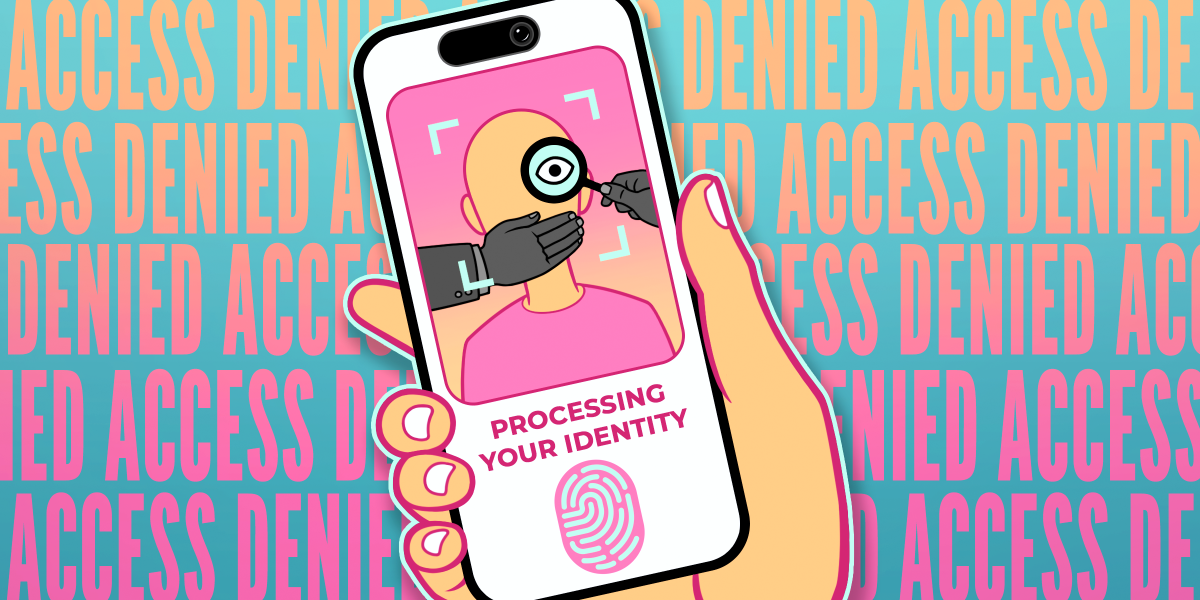
So, You’ve Hit an Age Gate. What Now?

14 January 2026 at 18:08

This blog also appears in our Age Verification Resource Hub: our one-stop shop for users seeking to understand what age-gating laws actually do, what’s at stake, how to protect yourself, and why EFF opposes all forms of age verification mandates. Head to EFF.org/Age to explore our resources and join us in the fight for a free, open, private, and yes—safe—internet.

EFF is against age gating and age verification mandates, and we hope we’ll win in getting existing ones overturned and new ones prevented. But mandates are already in effect, and every day many people are asked to verify their age across the web, despite prominent cases of sensitive data getting leaked in the process.

At some point, you may have been faced with the decision yourself: should I continue to use this service if I have to verify my age? And if so, how can I do that with the least risk to my personal information? This is our guide to navigating those decisions, with information on what questions to ask about the age verification options you’re presented with, and answers to those questions for some of the top most popular social media sites. Even though there’s no way to implement mandated age gates in a way that fully protects speech and privacy rights, our goal here is to help you minimize the infringement of your rights as you manage this awful situation.

Follow the Data

Since we know that leaks happen despite the best efforts of software engineers, we generally recommend submitting the absolute least amount of data possible. Unfortunately, that’s not going to be possible for everyone. Even facial age estimation solutions where pictures of your face never leave your device, offering some protection against data leakage, are not a good option for all users: facial age estimation works less well for people of color, trans and nonbinary people, and people with disabilities. There are some systems that use fancy cryptography so that a digital ID saved to your device won’t tell the website anything more than if you meet the age requirement, but access to that digital ID isn’t available to everyone or for all platforms. You may also not want to register for a digital ID and save it to your phone, if you don’t want to take the chance of all the information on it being exposed upon request of an over-zealous verifier, or you simply don’t want to be a part of a digital ID system

If you’re given the option of selecting a verification method and are deciding which to use, we recommend considering the following questions for each process allowed by each vendor:

    • Data: What info does each method require?
    • Access: Who can see the data during the course of the verification process?
    • Retention: Who will hold onto that data after the verification process, and for how long?
    • Audits: How sure are we that the stated claims will happen in practice? For example, are there external audits confirming that data is not accidentally leaked to another site along the way? Ideally these will be in-depth, security-focused audits by specialized auditors like NCC Group or Trail of Bits, instead of audits that merely certify adherence to standards. 
    • Visibility: Who will be aware that you’re attempting to verify your age, and will they know which platform you’re trying to verify for?

We attempt to provide answers to these questions below. To begin, there are two major factors to consider when answering these questions: the tools each platform uses, and the overall system those tools are part of.

In general, most platforms offer age estimation options like face scans as a first line of age assurance. These vary in intrusiveness, but their main problem is inaccuracy, particularly for marginalized users. Third-party age verification vendors Private ID and k-ID offer on-device facial age estimation, but another common vendor, Yoti, sends the image to their servers during age checks by some of the biggest platforms. This risks leaking the images themselves, and also the fact that you’re using that particular website, to the third party. 

Then, there’s the document-based verification services, which require you to submit a hard identifier like a government-issued ID. This method thus requires you to prove both your age and your identity. A platform can do this in-house through a designated dataflow, or by sending that data to a third party. We’ve already seen examples of how this can fail. For example, Discord routed users' ID data through its general customer service workflow so that a third-party vendor could perform manual review of verification appeals. No one involved ever deleted users' data, so when the system was breached, Discord had to apologize for the catastrophic disclosure of nearly 70,000 photos of users' ID documents. Overly long retention periods expose documents to risk of breaches and historical data requests. Some document verifiers have retention periods that are needlessly long. This is the case with Incode, which provides ID verification for Tiktok. Incode holds onto images forever by default, though TikTok should automatically start the deletion process on your behalf.

Some platforms offer alternatives, like proving that you own a credit card, or asking for your email to check if it appears in databases associated with adulthood (like home mortgage databases). These tend to involve less risk when it comes to the sensitivity of the data itself, especially since credit cards can be replaced, but in general still undermine anonymity and pseudonymity and pose a risk of tracking your online activity. We’d prefer to see more assurances across the board about how information is handled.

Each site offers users a menu of age assurance options to choose from. We’ve chosen to present these options in the rough order that we expect most people to prefer. Jump directly to a platform to learn more about its age checks:

Meta – Facebook, Instagram, WhatsApp, Messenger, Threads

Inferred Age

If Meta can guess your age, you may never even see an age verification screen. Meta, which runs Facebook, Threads, Instagram, Messenger, and WhatsApp, first tries to use information you’ve posted to guess your age, like looking at “Happy birthday!” messages. It’s a creepy reminder that they already have quite a lot of information about you.

If Meta cannot guess your age, or if Meta infers you're too young, it will next ask you to verify your age using either facial age estimation, or by uploading your photo ID. 

Face Scan

If you choose to use facial age estimation, you’ll be sent to Yoti, a third-party verification service. Your photo will be uploaded to their servers during this process. Yoti claims that “as soon as an age has been estimated, the facial image is immediately and permanently deleted.” Though it’s not as good as not having that data in the first place, Yoti’s security measures include a bug bounty program and annual penetration testing. Researchers from Mint Secure found that Yoti’s app and website are filled with trackers, so the fact that you’re verifying your age could be not only shared to Yoti, but leaked to third-party data brokers as well. 

You may not want to use this option if you’re worried about third parties potentially being able to know you’re trying to verify your age with Meta. You also might not want to use this if you’re worried about a current picture of your face accidentally leaking—for example, if elements in the background of your selfie might reveal your current location. On the other hand, if you consider a selfie to be less sensitive than a photograph of your ID, this option might be better. If you do choose (or are forced to) use the face check system, be sure to snap your selfie without anything you'd be concerned with identifying your location or embarrassing you in the background in case the image leaks.

Upload ID

If Yoti’s age estimation decides your face looks too young, or if you opt out of facial age estimation, your next recourse is to send Meta a photo of your ID. Meta sends that photo to Yoti to verify the ID. Meta says it will hold onto that ID image for 30 days, then delete it. Meanwhile, Yoti claims it will delete the image immediately after verification. Of course, bugs and process oversights exist, such as accidentally replicating information in logs or support queues, but at least they have stated processes. Your ID contains sensitive information such as your full legal name and home address. Using this option not only runs the (hopefully small, but never nonexistent) risk of that data getting leaked through errors or hacking, but it also lets Meta see the information needed to tie your profile to your identity—which you may not want. If you don’t want Meta to know your name and where you live, or rely on both Meta and Yoti to keep to their deletion promises, this option may not be right for you.

Google – Gmail, YouTube 

Inferred Age

If Google can guess your age, you may never even see an age verification screen. Your Google account is typically connected to your YouTube account, so if (like mine) your YouTube account is old enough to vote, you may not need to verify your Google account at all. Google first uses information it already knows to try to guess your age, like how long you’ve had the account and your YouTube viewing habits. It’s yet another creepy reminder of how much information these corporations have on you, but at least in this case they aren’t likely to ask for even more identifying data.

If Google cannot guess your age, or decides you're too young, Google will next ask you to verify your age. You’ll be given a variety of options for how to do so, with availability that will depend on your location and your age.

Google’s methods to assure your age include ID verification, facial age estimation, verification by proxy, and digital ID. To prove you’re over 18, you may be able to use facial age estimation, give Google your credit card information, or tell a third-party provider your email address.

Face Scan

If you choose to use facial age estimation, you’ll be sent to a website run by Private ID, a third-party verification service. The website will load Private ID’s verifier within the page—this means that your selfie will be checked without any images leaving your device. If the system decides you’re over 18, it will let Google know that, and only that. Of course, no technology is perfect—should Private ID be mandated to target you specifically, there’s nothing to stop it from sending down code that does in fact upload your image, and you probably won’t notice. But unless your threat model includes being specifically targeted by a state actor or Private ID, that’s unlikely to be something you need to worry about. For most people, no one else will see your image during this process. Private ID will, however, be told that your device is trying to verify your age with Google and Google will still find out if Private ID thinks that you’re under 18.

If Private ID’s age estimation decides your face looks too young, you may next be able to decide if you’d rather let Google verify your age by giving it your credit card information, photo ID, or digital ID, or by letting Google send your email address to a third-party verifier.

Email Usage

If you choose to provide your email address, Google sends it on to a company called VerifyMy. VerifyMy will use your email address to see if you’ve done things like get a mortgage or paid for utilities using that email address. If you use Gmail as your email provider, this may be a privacy-protective option with respect to Google, as Google will then already know the email address associated with the account. But it does tell VerifyMy and its third-party partners that the person behind this email address is looking to verify their age, which you may not want them to know. VerifyMy uses “proprietary algorithms and external data sources” that involve sending your email address to “trusted third parties, such as data aggregators.” It claims to “ensure that such third parties are contractually bound to meet these requirements,” but you’ll have to trust it on that one—we haven’t seen any mention of who those parties are, so you’ll have no way to check up on their practices and security. On the bright side, VerifyMy and its partners do claim to delete your information as soon as the check is completed.

Credit Card Verification

If you choose to let Google use your credit card information, you’ll be asked to set up a Google Payments account. Note that debit cards won’t be accepted, since it’s much easier for many debit cards to be issued to people under 18. Google will then charge a small amount to the card, and refund it once it goes through. If you choose this method, you’ll have to tell Google your credit card info, but the fact that it’s done through Google Payments (their regular card-processing system) means that at least your credit card information won’t be sitting around in some unsecured system. Even if your credit card information happens to accidentally be leaked, this is a relatively low-risk option, since credit cards come with solid fraud protection. If your credit card info gets leaked, you should easily be able to dispute fraudulent charges and replace the card.

Digital ID

If the option is available to you, you may be able to use your digital ID to verify your age with Google. In some regions, you’ll be given the option to use your digital ID. In some cases, it’s possible to only reveal your age information when you use a digital ID. If you’re given that choice, it can be a good privacy-preserving option. Depending on the implementation, there’s a chance that the verification step will “phone home” to the ID provider (usually a government) to let them know the service asked for your age. It’s a complicated and varied topic that you can learn more about by visiting EFF’s page on digital identity.

Upload ID

Should none of these options work for you, your final recourse is to send Google a photo of your ID. Here, you’ll be asked to take a photo of an acceptable ID and send it to Google. Though the help page only states that your ID “will be stored securely,” the verification process page says ID “will be deleted after your date of birth is successfully verified.” Acceptable IDs vary by country, but are generally government-issued photo IDs. We like that it’s deleted immediately, though we have questions about what Google means when it says your ID will be used to “improve [its] verification services for Google products and protect against fraud and abuse.” No system is perfect, and we can only hope that Google schedules outside audits regularly.

TikTok

Inferred Age

If TikTok can guess your age, you may never even see an age verification notification. TikTok first tries to use information you’ve posted to estimate your age, looking through your videos and photos to analyze your face and listen to your voice. By uploading any videos, TikTok believes you’ve given it consent to try to guess how old you look and sound.

If TikTok decides you’re too young, appeal to revoke their age decision before the deadline passes. If TikTok cannot guess your age, or decides you're too young, it will automatically revoke your access based on age—including either restricting features or deleting your account. To get your access and account back, you’ll have a limited amount of time to verify your age. As soon as you see the notification that your account is restricted, you’ll want to act fast because in some places you’ll have as little as 23 days before the deadline passes.

When you get that notification, you’re given various options to verify your age based on your location.

Face Scan

If you’re given the option to use facial age estimation, you’ll be sent to Yoti, a third-party verification service. Your photo will be uploaded to their servers during this process. Yoti claims that “as soon as an age has been estimated, the facial image is immediately and permanently deleted.” Though it’s not as good as not having that data in the first place, Yoti’s security measures include a bug bounty program and annual penetration testing. However, researchers from Mint Secure found that Yoti’s app and website are filled with trackers, so the fact that you’re verifying your age could be leaked not only to Yoti, but to third-party data brokers as well.

You may not want to use this option if you’re worried about third parties potentially being able to know you’re trying to verify your age with TikTok. You also might not want to use this if you’re worried about a current picture of your face accidentally leaking—for example, if elements in the background of your selfie might reveal your current location. On the other hand, if you consider a selfie to be less sensitive than a photograph of your ID or your credit card information, this option might be better. If you do choose (or are forced to) use the face check system, be sure to snap your selfie without anything you'd be concerned with identifying your location or embarrassing you in the background in case the image leaks.

Credit Card Verification

If you have a credit card in your name, TikTok will accept that as proof that you’re over 18. Note that debit cards won’t be accepted, since it’s much easier for many debit cards to be issued to people under 18. TikTok will charge a small amount to the credit card, and refund it once it goes through. It’s unclear if this goes through their regular payment process, or if your credit card information will be sent through and stored in a separate, less secure system. Luckily, these days credit cards come with solid fraud protection, so if your credit card gets leaked, you should easily be able to dispute fraudulent charges and replace the card. That said, we’d rather TikTok provide assurances that the information will be processed securely.

Credit Card Verification of a Parent or Guardian

Sometimes, if you’re between 13 and 17, you’ll be given the option to let your parent or guardian confirm your age. You’ll tell TikTok their email address, and TikTok will send your parent or guardian an email asking them (a) to confirm your date of birth, and (b) to verify their own age by proving that they own a valid credit card. This option doesn’t always seem to be offered, and in the one case we could find, it’s possible that TikTok never followed up with the parent. So it’s unclear how or if TikTok verifies that the adult whose email you provide is your parent or guardian. If you want to use credit card verification but you’re not old enough to have a credit card, and you’re ok with letting an adult know you use TikTok, this option may be reasonable to try.

Photo with a Random Adult?

Bizarrely, if you’re between 13 and 17, TikTok claims to offer the option to take a photo with literally any random adult to confirm your age. Its help page says that any trusted adult over 25 can be chosen, as long as they’re holding a piece of paper with the code on it that TikTok provides. It also mentions that a third-party provider is used here, but doesn’t say which one. We haven’t found any evidence of this verification method being offered. Please do let us know if you’ve used this method to verify your age on TikTok!

Photo ID and Face Comparison

If you aren’t offered or have failed the other options, you’ll have to verify your age by submitting a copy of your ID and matching photo of your face. You’ll be sent to Incode, a third-party verification service. In a disappointing failure to meet the industry standard, Incode itself doesn’t automatically delete the data you give it once the process is complete, but TikTok does claim to “start the process to delete the information you submitted,” which should include telling Incode to delete your data once the process is done. If you want to be sure, you can ask Incode to delete that data yourself. Incode tells TikTok that you met the age threshold without providing your exact date of birth, but then TikTok wants to know the exact date anyway, so it’ll ask for your date of birth even after your age has been verified.

TikTok itself might not see your actual ID depending on its implementation choices, but Incode will. Your ID contains sensitive information such as your full legal name and home address. Using this option not only runs the (hopefully small, but never nonexistent) risk of that data getting accidentally leaked through errors or hacking. If you don’t want TikTok or Incode to know your name, what you look like, and where you live—or if you don't want to rely on both TikTok and Incode to keep to their deletion promises—then this option may not be right for you.

Everywhere Else

We’ve covered the major providers here, but age verification is unfortunately being required of many other services that you might use as well. While the providers and processes may vary, the same general principles will apply. If you’re trying to choose what information to provide to continue to use a service, consider the “follow the data” questions mentioned above, and try to find out how the company will store and process the data you give it. The less sensitive information, the fewer people have access to it, and the more quickly it will be deleted, the better. You may even come to recognize popular names in the age verification industry: Spotify and OnlyFans use Yoti (just like Meta and Tiktok), Quora and Discord use k-ID, and so on. 

Unfortunately, it should be clear by now that none of the age verification options are perfect in terms of protecting information, providing access to everyone, and safely handling sensitive data. That’s just one of the reasons that EFF is against age-gating mandates, and is working to stop and overturn them across the United States and around the world.


Join EFF


Help protect digital privacy & free speech for everyone

Surveillance Self-Defense: 2025 Year in Review

2 January 2026 at 07:48

Our Surveillance Self-Defense (SSD) guides, which provide practical advice and explainers for how to deal with government and corporate surveillance, had a big year. We published several large updates to existing guides and released three all new guides. And with frequent massive protests across the U.S., our guide to attending a protest remained one of the most popular guides of the year, so we made sure our translations were up to date.

(Re)learn All You Need to Know About Encryption

We started this year by taking a deep look at our various encryption guides, which start with the basics before moving up to deeper concepts. We slimmed each guide down and tried to focus on making them as clear and concise as deep explainers on complicated topics can be. We reviewed and edited four guides in total:

And if you’re not sure where to start, we got you covered with the new Interested in Encryption? playlist.

New Guides

We launched three new guides this year, including iPhone and Android privacy guides, which walk you through all the various privacy options of your phone. Both of these guides received a handful of updates throughout their first year as new features were released or, in the case of the iPhone, a new design language was introduced. These also got a fun little boost from a segment on "Last Week Tonight with John Oliver" telling people how to disable their phone’s advertising identifier.

We also launched our How to: Manage Your Digital Footprint guide. This guide is designed to help you claw back some of the data you may find about yourself online, walking through different privacy options across different platforms, digging up old accounts, removing yourself from people search sites, and much more.

Always Be Updating

As is the case with most software, there is always incremental work to do. This year, that meant small updates to our WhatsApp and Signal guides to acknowledge new features (both are already on deck for similar updates early next year as well). 

We overhauled our device encryption guides for Windows, Mac, and Linux, rolling what was once three guides into one, and including more detailed guidance on how to handle recovery keys. Some slight changes to how this works on both Windows and Mac means this one will get another look early next year as well.

Speaking of rolling multiple guides into one, we did the same with our guidance for the Tor browser, where it once lived across three guides, it now lives as one that covers all the major desktop platforms (the mobile guide remains separate).

The password manager guide saw some small changes to note some new features with Apple and Chrome’s managers, as well as some new independent security audits. Likewise, the VPN guide got a light touch to address the TunnelVision security issue.

Finally, the secure deletion guide got a much needed update after years of dormancy. With the proliferation of solid state drives (SSDs, not to be confused with SSD), not much has changed in the secure deletion space, but we did move our guidance for those SSDs to the top of the guide to make it easier to find, while still acknowledging many people around the world still only have access to a computer with spinning disk drives. 

Translations

As always, we worked on translations for these updates. We’re very close to a point where every current SSD guide is updated and translated into Arabic, French, Mandarin, Portuguese, Russian, Spanish, and Turkish.

And with the help of Localization Lab, we also now have translations for a handful of the most important guides in Changana, Mozambican Portuguese, Ndau, Luganda, and Bengali.

Blogs Blogs Blogs

Sometimes we take our SSD-like advice and blog it so we can respond to news events or talk about more niche topics. This year, we blogged about new features, like WhatsApp’s “Advanced Chat Privacy” and Google’s "Advanced Protection.” We also broke down the differences between how different secure chat clients handle backups and pushed for expanding encryption on Android and iPhone.

We fight for more privacy and security every day of every year, but until we get that, stronger controls of our data and a better understanding of how technology works is our best defense.

This article is part of our Year in Review series. Read other articles about the fight for digital rights in 2025.

How to Protect Your Site From Content Sniffing with HTTP Security Headers

19 December 2025 at 00:58
How to Protect Your Site From Content Sniffing with HTTP Security Headers

Ever had a perfectly “safe” page or file turn into an attack vector out of nowhere? That can happen when browsers start guessing what your content is instead of listening to your server. Browsers sometimes try to figure out what kind of file they’re dealing with if the server doesn’t provide the Content-Type header or provides the wrong one, a process known as “content sniffing.” While this can be helpful, content sniffing is a security risk if an attacker can mess with the content.

Continue reading How to Protect Your Site From Content Sniffing with HTTP Security Headers at Sucuri Blog.

How to Protect Your WordPress Site From a Phishing Attack

13 December 2025 at 08:36
How to Protect Your WordPress Site From a Phishing Attack

If you run a website, manage a business inbox, or even just use online banking, you’ve already lived in the phishing era for a long time. The only thing that’s changed is the polish.

Phishing scams have moved past those obviously fake “please verify” requests to include convincing login pages, realistic invoices, and even bogus delivery updates. Some are mass-sent and easy to spot, others are customized precisely for the person they’re targeting, their job, company, tech, and everyday apps.

Continue reading How to Protect Your WordPress Site From a Phishing Attack at Sucuri Blog.

A Beginner’s Guide to the CVE Database

20 November 2025 at 02:47
A Beginner’s Guide to the CVE Database

Keeping websites and applications secure starts with knowing which vulnerabilities exist, how severe they are, and whether they affect your stack. That’s exactly where the CVE program shines. Below, we’ll cover some CVE fundamentals, including what they are, how to search and understand the data, and how to translate this information into actionable steps.

Introduction to the CVE database
So, what is CVE?

CVE stands for Common Vulnerabilities and Exposures, a community-driven program that assigns unique identifiers to publicly known vulnerabilities.

Continue reading A Beginner’s Guide to the CVE Database at Sucuri Blog.

How to Fix the ERR_TOO_MANY_REDIRECTS Error

13 November 2025 at 22:10
How to Fix the ERR_TOO_MANY_REDIRECTS Error

Encountering the ERR_TOO_MANY_REDIRECTS error (also called a redirect loop error) can be frustrating, especially when your website was working fine just moments ago. This issue is common across browsers such as Chrome, Firefox, and Edge and it typically means your site has entered a redirection loop.

In this post, you’ll learn what the error means, why it occurs, ways to identify where the redirect is coming from, and how to fix it effectively – including an important section on redirect types, which often play a direct role in causing this issue.

Continue reading How to Fix the ERR_TOO_MANY_REDIRECTS Error at Sucuri Blog.

❌