❌

Reading view

Remus Stealer: A New, Not-So-New Infostealer

Blogs

Blog

Remus Stealer: A New, Not-So-New Infostealer

In this post, we explore the emergence of Remus Stealer, analyzing its structural and behavioral similarities to the infamous Lumma malware.


SHARE THIS:

The underground marketplace rarely stays quiet for long. A new information-stealing malware dubbed Remus Stealer has surfaced in the cybercrime underground, exhibiting significant similarities to the notorious Lumma malware family across its administration panel, stolen log files, and core code structure.

Despite parallels in its code and functionality, threat actors are eagerly buying into the platform. In addition to its familiar features, it provides attackers with a distinct, modern command and control (C2) and networking infrastructure designed to slip past current security perimeters.

What We Know About Remus

Flashpoint first observed Remus appearing for sale within illicit communities in March 2026. The malware listing offers similar functionality to other popular Malware-as-a-Service (MaaS) offerings, including Google OAuth cookie restoration and Telegram channel integration for logs.

Much like the Lumma malware family, the Remus subscription service operates on a three-tiered access model:

  • Basic: US$250
  • Pro: US$500
  • Enterprise: US$1,000

At this time, Remus has no additional channels or automated bots associated with its sale or distribution. Despite undeniable similarities to Lumma, its developer claims to not be a rebrand of the Lumma project.

Since March 2026, Remus has continued its operations mostly unhindered by negative associations associated with Lummaβ€”particularly the doxxing of its panel in August 2025.

Similarities to Lumma

Similarities can be observed in the Remus and Lumma panels in both aesthetics and functionality. Both panels use similar assets for tab icons and have embedded advertisements for other illicit services such as packers and log clouds. Harvested logs also share extremely similar directory structures in log files, including unique identifiers.
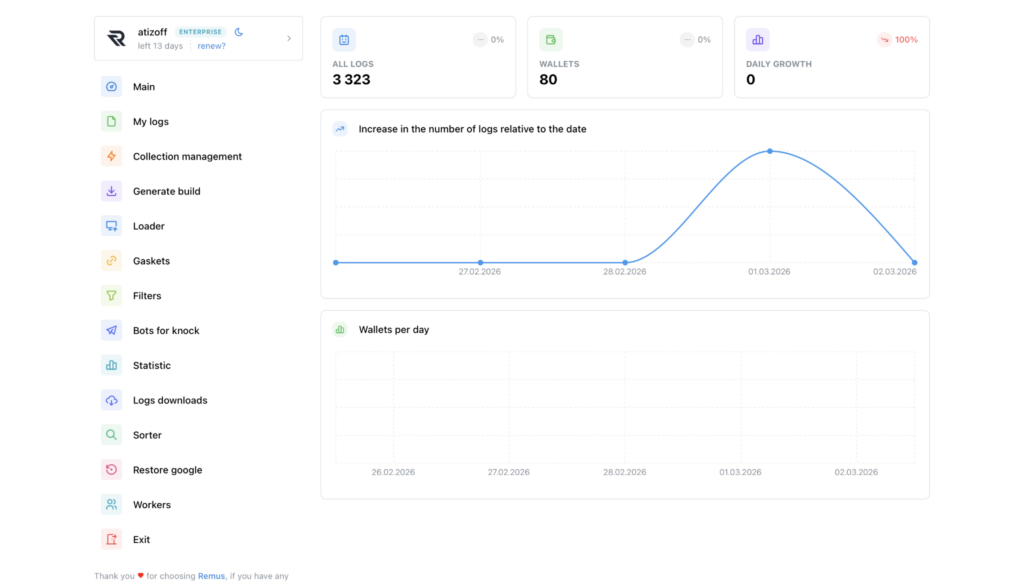
Remus Stealer panel (Source: Flashpoint Collections)

Code-Level Overlaps

Remus is a 64-bit compiled binary, and Lumma was a 32-bit binary. However, major similarities between the code bases of both malware can be observed.

Upon execution of an unpacked sample, both Remus and Lumma will send warning messages to the user that the build is unpacked. This was a unique phenomenon first established by Lumma several years ago. In both Remus and Lumma samples, the pack check and window message are performed before the main functionality of the malware.

In both Remus and Lumma, a function is used first to check if the sample is packed, and a second function is used to send the window error message.

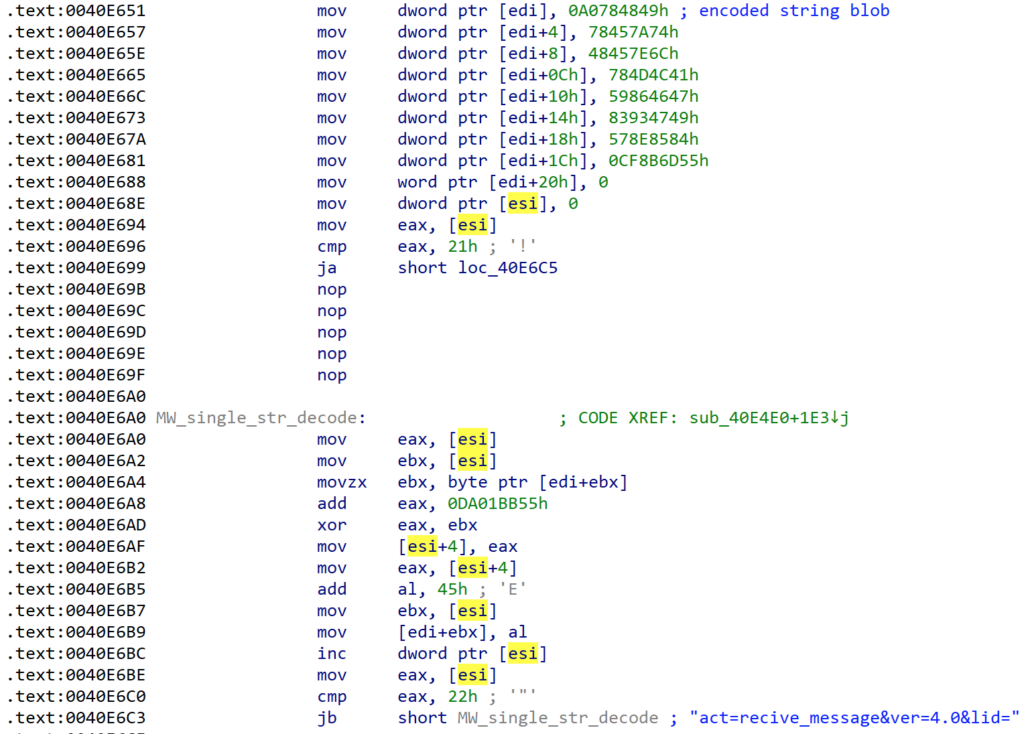
Remus uses similar string obfuscation methods to Lumma, in which each string has been uniquely encoded and then decoded during runtime. Deobfuscation occurs by looping byte by byte through encoded blobs. Each encoded string is obfuscated by a unique pattern. This can be seen in the code samples below:
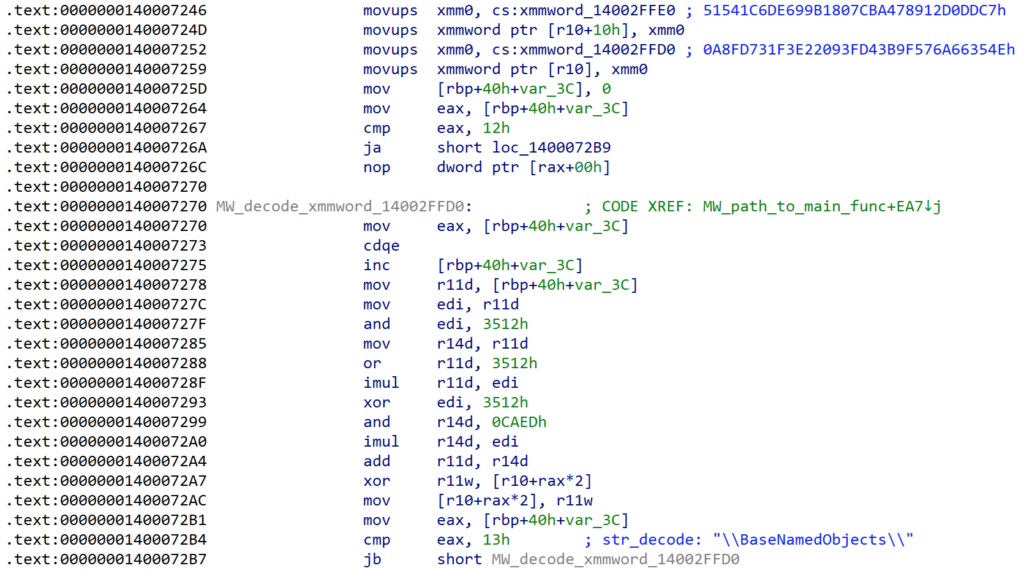
Remus inline string deobfuscation (Source: Flashpoint)
Lumma inline string deobfuscation. (Source: Flashpoint)

Of note, both samples have at least one NOP instruction between the encoded blob being moved onto the stack and the deobfuscation loop.

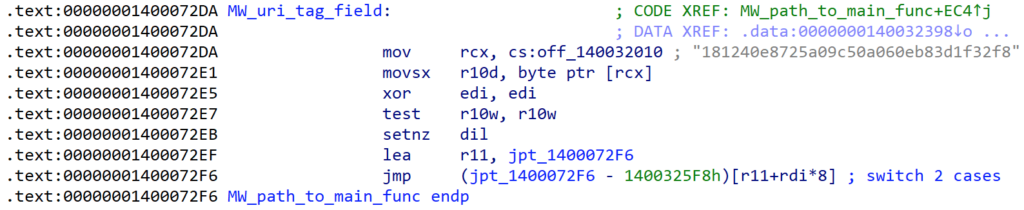
Another unique feature of Lumma is the presence of a plaintext identifier string used to link customers to specific build generations. In Lumma, this string was referred to as the LID (Lumma ID), and this ID method appears in Remus as well as a β€œtag.”

Lumma ID (Source: Flashpoint)
Remus tag (Source: Flashpoint)

Like the Lumma LID string, the Remus tag could be leveraged to attribute variant builds and campaigns to single threat actors or groups.

Additionally, both Remus and Lumma exhibit similar control flow obfuscation by replacing direct jumps with indirect jumps read from offsets that have been moved onto the stack, jumps computed from a jump table, and jumps resolved by a pointer.

Differentiators of Remus

Although Remus bears remarkable similarities to Lumma, its main differences lie in its C2 beaconing.

Before performing main stealer functionality, Remus will beacon out to its C2 infrastructure. It will attempt to resolve several domain:port combinations via POST requests, and attempt a final connection to find the C2 server using EtherHiding. If it is unable to connect, the malware will terminate.

After a connection is established, the stealer sends a POST request to the C2 in order to receive an access token. Once received and decoded, this access token is used to receive encrypted config data used by Remus to target assets on the victim system. Data collected for logs is then exfiltrated as encrypted POST data.
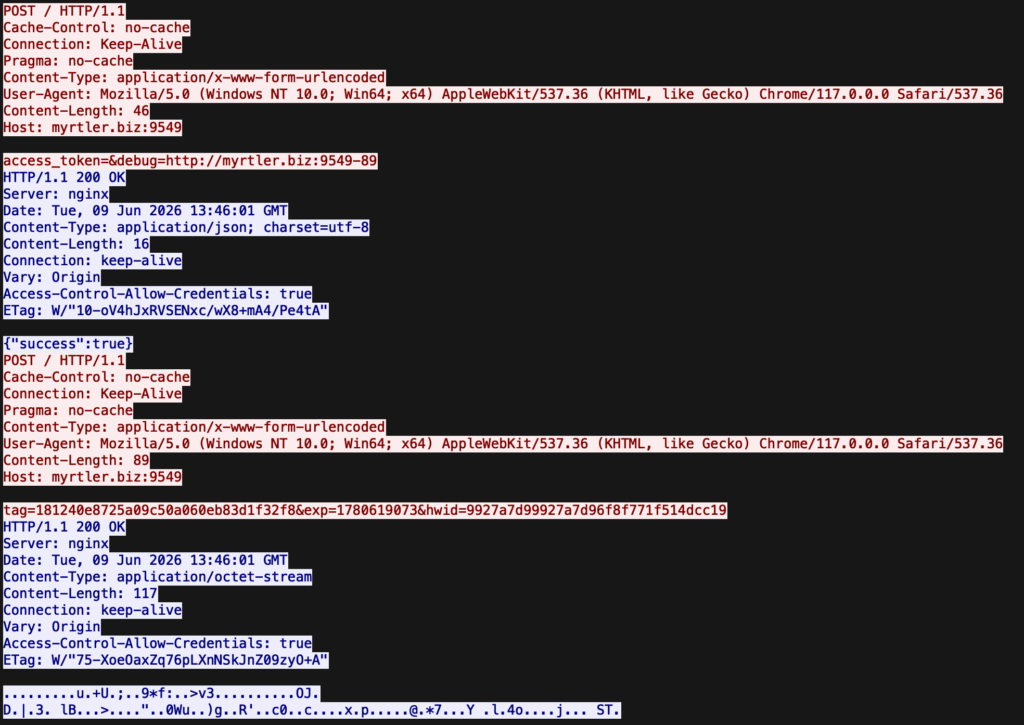
Network traffic from Remus sample (Source: Flashpoint)

Protect Against Infostealers Using Flashpoint

Remus stealer represents a sophisticated continuation of the MaaS infostealer model left behind by Lumma’s collapse. While the developer asserts independence, the overwhelming code overlaps, matching obfuscation techniques, and administrative panels indicate that Remus is either heavily inspired by, or derived from the Lumma codebase. These traits have allowed it to thrive, providing threat actors with a familiar, robust alternative that sidesteps the reputational baggage and law enforcement scrutiny of its predecessors.

Flashpoint continuously tracks the latest developments in illicit communities, hard-to-reach adversary spaces, and malware repositories to identify emerging threats. Request a demo to learn how Flashpoint’s primary source collections and analyst insights empowers your security teams.

See Flashpoint in Action

The post Remus Stealer: A New, Not-So-New Infostealer appeared first on Flashpoint.

  •  

America250 Fourth of July Threat Assessment

Blogs

Blog

America250 Fourth of July Threat Assessment

In this post we break down the intersecting cyber risks, physical security strains, and operational challenges shaping the security landscape for the historic Semiquincentennial celebrations.

SHARE THIS:
Default Author Image
June 30, 2026
Table Of Contents

The Complete Guide to OSINT for Executive Protection

As the United States prepares to mark its 250th anniversary this Fourth of July, the convergence of historic national celebrations, sprawling public events, and simultaneous high-profile sports tournaments is creating an exceptionally complex threat landscape. The multiyear national initiative β€œAmerica250,” features over 1,200 synchronized grassroots gatherings under the β€œAmerica’s Block Party” umbrella, with flagship events taking place in Washington DC, Philadelphia, Boston, New York, and Los Angeles.

Key Takeaways

While public sentiment surrounding America250 remains broadly positive, Flashpoint analysts have assessed the physical, cyber, and operational threat vectors that organizations, security teams, and municipalities must navigate during this high-visibility holiday weekend.

America250 Threats & Security Challenges:

  1. Distributed Physical & Infrastructure Strain: Massive tourism influxes will collide with ongoing 2026 FIFA World Cup matches in Houston and Philadelphia on July 4, putting historic operational pressure on metropolitan transit grids and soft targets.
  2. Elevated Iconicity and β€œCity of Concern” Status: Although no specific, credible plots have been confirmed, the National Mall events in Washington, DC have received their first-ever National Special Security Event (NSSE) designation. Meanwhile, the National Counterterrorism Center (NCTC) has officially designated Philadelphia a β€œcity of concern” due to the volume of synchronized events.
  3. Ideological Protest Dynamics: Activist groups are organizing a significant anti-authoritarian march in Philadelphia. While expected to be peaceful, open-source chatter indicates a portion of attendees plan to exercise their license to carry firearms.
  4. Disruption & Cyber Threat Vectors: Cyber threat groups, ransomware operators, and hacktivists are expected to attempt to exploit thin holiday IT staffing. Threat vectors range from mass public-transit ticketing fraud to high-consequence digital hoaxes involving rogue cellular infrastructure.

Physical Threat Vectors

Transportation and Infrastructure

Flashpoint assesses that β€œlone wolf” actors motivated by various ideological grievances, including those inspired by foreign terrorist organizations (FTOs), pose the most likely threat of disruptions to transportation infrastructure during America250 events. This threat is likely to apply to all major transport hubs during the event, including Washington DC, Philadelphia, New York City, and Boston. Attendees can expect to see an increased police and military presence near transit hubs at major events.

Event Threats

While no specific credible threats targeting America250 events have been identified, the July 4th events taking place on the National Mall in Washington DC, have been given a National Special Security Event designation, which is typically reserved for events deemed potential targets for terrorism or other criminal activity. This is the first time such a designation has been given to July 4th celebrations on the National Mall.

Memos released by the National Counterterrorism Center to security agencies also identified Philadelphia as a β€œcity of concern” regarding potential targets for terror attacks due to the number and scale of events taking place on July 4th. Law enforcement officials have indicated that while no specific threats have been identified, increased security measures will be in place throughout the city.

Planned Protest

The Fayetteville Resistance Coalition, alongside Veterans Against Fascism, and the Women’s March is organizing an anti-authoritatian protest march in Philadelphia on July 4thβ€”being the largest mobilization of military veterans in decades.

Flashpoint has identified chatter indicating that march attendees may be armed. However, Flashpoint has not identified any calls for violence at this protest and deem that actions will likely remain peaceful. Despite this, arrests may be possible if attendees gather in unauthorized areas or engage in civil disobedience.

Cyber Threat Vectors

Ransomware and Operational Technology (OT) Disruptions

Financially motivated threat actors frequently deploy ransomware during major US holiday weekends when corporate and municipal IT security staffing is historically thin.

Flashpoint analysts assess that attackers could target automated ticketing systems, regional rail signaling, and digital municipal transit grids. Disruption to public transit during the high-density travel window surrounding major events could induce logistical gridlock. Secondary targets include municipal water treatment facilities, local power grids, and emergency response (911) dispatch systems in primary host cities.

Hactivism

With hundreds of thousands of spectators gathering at prominent national landmarks, hacktivist groups seeking political leverage or global media visibility pose an elevated threat to public messaging infrastructure.

Compromising the digital billboards, stadium screens, or viewing decks used for America250 events presents an attractive vector for defacement. Adversaries may attempt to display political propaganda, anti-war messaging, or explicit content to captive, high-density crowds.

Event App Vulnerabilities and Data Harvesting

The decentralized nature of β€œAmerica’s Block Party,” featuring over 1,200 grassroots events managed via localized apps, introduces software supply chain vulnerabilities.

Cybercriminals may target the ticketing infrastructure of high-profile, restricted-access events. Phishing campaigns, credential stuffing, or application programming interface (API) vulnerabilities within event-specific mobile applications could result in mass ticketing fraud, legitimate attendees being locked out, or crowd-control issues at venue gates.

Additionally, malicious actors frequently deploy spoofed public Wi-Fi networks around high-density tourist hubs to harvest sensitive personal data, financial credentials, and biometric profiles from unsuspecting attendees.

Protect People Using Flashpoint

To ensure attendee safety, safeguard operations, and protect public-facing brands, Flashpoint recommends implementing the following proactive measures:

  1. Secure Public-Facing and Display Infrastructure: Implement strict access controls, multi-factor authentication (MFA), and offline fail-safes for all internet-connected digital signage, stadium screens, and public notification systems to prevent hacktivist defacements.
  2. Audit Event Applications and Mobile Endpoints: Conduct rigorous vulnerability scans on event-specific APIs and ticket validation platforms. Advise personnel and contractors against posting photographs of official credentials, badges, or operational passes on public social media channels.
  3. Establish Out-of-Band Incident Response Protocols: Prepare alternative communication channels and verified public-address messaging to immediately counter potential rogue emergency broadcasts, digital hoaxes, or localized telecom disruptions that could cause public panic.
  4. Monitor High-Risk Overlap Zones: Cross-reference physical security deployment schedules in cities like Philadelphia where World Cup traffic, official America250 parades, and armed protest routes intersect near major transit networks.

Ensure your security team has full visibility into the cyber and physical threat vectors shaping this historic holiday weekend. Request a demo and see how Flashpoint equips organizations with the intelligence needed to detect, analyze, and mitigate emerging risks.

See Flashpoint in Action

The post America250 Fourth of July Threat Assessment appeared first on Flashpoint.

  •  
❌