Reading view

Speaking Freely: Lizzie O'Shea

Lizzie O’Shea is an Australian lawyer, author, and the founder and chair of Digital Rights Watch, which advocates for freedom, fairness, and fundamental rights in the digital age. She sits on the board of Blueprint for Free Speech, and in 2019 was named a Human Rights Hero by Access Now.

Interviewer: Jillian York

Jillian York: Hi, good morning, or rather, good evening for you.

Lizzie O’Shea: Hi Jillian, it's great to be here. 

JY: I'm going to start with asking a question that I try to kick off every interview with, which is, what does free speech or free expression mean to you?

LO: Yes, so Digital Rights Watch, which is the organization I founded and I chair, is focused on fundamental rights and freedoms in the online world. And so freedom of speech is obviously a big part of that. It's obviously a very vexed right, partly because of its heritage and interpretation in places like the United States, which sometimes sits in contrast culturally to other parts of the world. Certainly, if you ask Australians about it, they do not want to have a culture of free speech that looks like the United States. 

Australians understand that freedom of expression is a really important component of democracy. So one of my jobs is to make the claim that curtailing freedom of speech, including in online settings, can have a real impact on democracy. And I think that's fundamentally true, and you don't want to wait until it's too late to be able to make that argument, to ensure that the policies are in place to protect that freedom. So I think it's a really important freedom. It's got a vexed history and expression in the modern online world, but many people still instinctively understand that those in power see speech as something that is important to challenging their authority, and so it can be a really important place to fight back and protect democracy and other rights from being impacted by those who hold power at the moment.

JY: I want to ask you about your book. You're a critic of techno-utopianism. Your book, Future Histories, came out right before the pandemic, if I recall, and it looks to the past for lessons for our technological and cultural future. I really appreciated your take on Elon Musk. So I guess what I want to ask you about is two things. What, in your view, has changed since you wrote it?

LO: Yeah, that's a really interesting question. I must admit, I was thinking about it the other day whether some of what I wrote really holds up. And I think the fundamentals are still true, in the sense that I still believe that a lot of the discussions and debates we have about technology today are presented as fundamentally novel when they are very old, ancient discussions and debates about how power should be distributed through society, and how technology enables that kind of power distribution or works against it, right? So I feel like that fundamental analysis, whatever contribution to the field, is still valid, of course. In some ways though, those technical systems have become more opaque, like the artificial intelligence industry and how that's been built off the back of years of exploitation of personal information and centralization of power in technology companies. Those things have become more powerful and concentrated and difficult to understand—if you're not deep in the weeds—beyond an instinctive understanding that something's going a bit wrong, perhaps. 

So in some ways those trends have exacerbated things in ways that I think many other contributors, yourself included, have brought a really important set of analyses to these discussions. More generally, though, one of my fundamental understandings of how I frame some of these arguments is that there are two sources of power, right? Government power and corporate power that really shape how the online world is developing. And post-pandemic, there's a lot greater skepticism, criticism, and outright distrust of government authorities seeking to do work to protect people from some of those corporate excesses. Now that's obviously something that is much more part of American culture as opposed to European culture, and in Australia, we sit somewhere in between. But that skepticism and that mistrust of institutions, I don't know that that serves us well. I'm somebody who does treat with criticism policies put forward by government, because I think it's our job as civil society people, as people part of a social movement that want to have rights at the center of our society, to be critical of those in power and make sure that they're being held accountable. But that mistrust has fundamentally shifted how possible it is to do that in an effective way. And I think that poses real challenges for people who want to see government policy look different to how it is and how you can bring people into a sense of trust, investing in a democratic rights based society, rather than rejection and cynicism being the overriding, overriding kind of factor in how they shape their political arguments. Which is a real challenge, I think, for people like us who rely on some of that mistrust and skepticism in order to fuel the fire of some of these campaigns, but do want to see people still invested in democratic processes.

JY: Yeah, absolutely. So speaking of policies, you're in Australia, where the government's enacted some of the strictest social media laws for minors in the world, I would say. In one of our most recent interviews, which was with Jacob Mchangama, we talked about how the comparison of social media to Big Tobacco is spreading, and this idea that there's no utility in social media for minors, that it's a net harm. I'm curious what your thoughts are on that, and then we can dive into the more nitty gritty bits of the Australian law.

LO: I think that's a great place to start, because the overwhelming sense in how this policy was presented to the public in Australia is that this is a very dangerous place for young people to be, and that desperate times call for desperate measures. “We don't have time to fix these spaces. We need to just restrict access.” It's described as a delay. Many, including me, describe it as a ban for under 16 year olds. So what has been very interesting in this discussion is who's been left out of the conversation. And if you talk to young people—and there are many organizations working with young people—and you talk to them about what they use social media for, they often say that they wish adults understood that they used it for different reasons, or they're scared about different things than what adults think they might be scared of. And so that kind of fundamental failure of communication, which I suppose is not a surprise, when these people don't actually have the power to vote, have the power to do things a normal legal person would do, is somewhat unsurprising.

But when you're making policy about these people, that can be quite impactful, it can have very detrimental impacts. And if you take a human rights approach, that is your job to think about the negative impact on human rights, and what you're going to do about it, it's not really good enough. And this has been an experiment that Australia has led on, very much, looking for headlines, for a perception of boldness. Some of that claim is legitimate in the sense that they want to be seen to be taking action, and a lot of people feel very concerned that governments aren't prepared to take action against big tech companies. So, some of that is a valid feeling. But I think in this context, we lose so much when we don't actually listen to the people affected, and listen to the myriad ways in which they use social media. Some things they're concerned about, some things they find harmful, some things they're really sick of. But there's so many ways in which they use it to find a sense of community, to find a sense of empowerment, to talk to people they would never otherwise be able to access, sometimes because they're isolated, socially, geographically, whatever it may be, and it's so disappointing to me that that kind of part of the conversation was not had as we debated this particular policy.

JY:  So, what do you think some of the harms are for youth who can't access social media? What are young people losing out on? Who is harmed by these laws?

LO:  It's a great question. When we do a human rights analysis, we have to think about who's harmed by a particular policy, even if we think it's overall justified on a utilitarian ground, say it's better off for everyone overall who's harmed, is a really important question, and so much of that has been absent from this discussion. So it's not just me. It's like hundreds and hundreds of experts in Australia and organizations that represent many, many people, have provided commentary and input into this process and expressed many concerns about this policy, and there's a few different ways in which people are harmed. 

So the first thing, of course, is that if you require that age verification occur, you're engaging in a privacy violation for many people, there are cyber security risks with collecting that kind of information. There's deterrent effects and the like. Now that may not concern you, or you may think that's a justifiable kind of infringement on privacy rights, but I think that's worth mentioning. It is quite significant, especially in a world in which age verification doesn't tend to work very well on any measure. There are very serious cybersecurity risks that have been associated with age verification processes and the like. So it's certainly not nothing. The other set of people that are harmed are particularly vulnerable people. 

There's a variety of people who are still accessing social media. So it looks like about seven in ten of young people on the early data who had social media accounts are still accessing social media now. Now these are early figures, so there's a lot to be said for looking at how this works in a year's time, for example. But I think one of the interesting things to think about is when those people, young people, who are on still on social media—in breach of this ban or in defiance of this ban, however you want to put it—might need to engage in help seeking behavior, there may be a deterrent there, because they know that the law is they're not supposed to be accessing social media. So that is a selection of young people that we're particularly concerned about. And then, more generally, of course, there's a whole cohort of people who are particularly vulnerable. Maybe they're LGBTIQ, maybe they're in an isolated geographic area, far away from a city. Maybe they're experiencing harm at home and have no one to talk to about it. There's all sorts of ways in which young people use social media to manage their own challenges, harms, difficulties, and very effectively. They find people to talk to about their problems when other people may not be available to them. And that is an issue that is hard to map, right? We know that there's been an increase in calls to things like Kids Helpline, which does what it says on the tin. So those kinds of things have seen an increase. But I think that is something that is harder to map, but still very, very important, and may result in people going to other parts of the internet as well to seek help in different ways that might also not be very safe for them. 

More generally it's worth remembering that if platforms can say with some confidence, from a policy perspective, that young people are no longer on their platform, there is less incentive to design for them as well, which is another associated problem. Now, it remains unclear as to how platforms are dealing with that issue, especially in light of the most recent data, which suggests that a lot of young people remain on the platforms. But that's an issue. Do we then allow platforms to no longer design in a way that respects the autonomy of young people, the safety of them, their security and the like, because they have special needs and interests and all those sorts of things. So that's another problem. There's lots of operational problems. There's lots of conceptual ones. I don't think many of these have been considered or accounted for in the process.

JY: Absolutely, those are the same things that worry me as well. Okay, let's talk about the campaign. So what has the pushback to this, to the law, looked like, and what changes were you calling for?

LO: Well, if I can Jillian, what I might start with is where the push came from. Because I think that's quite instructive. One of the key sets of institutions that were pushing for this ban were mainstream news organizations, and we're learning a bit more about this over time, but the Murdoch press and other large news organizations in Australia—Australia has one of the most concentrated media environments in the world—were pushing for this ban. There was a petition run on one of their websites that was gathering tens of thousands of signatures. There were also others. Then there was a lot of advocacy towards specific kinds of political leaders in the country, and then a kind of competitive race to see who could be the most extreme in terms of putting forward a policy. But it's certainly the case that this very powerful set of actors in our democracy, at least, were a key driver of this campaign for a social media ban for young people. Now, I think there's a sense of moralism about it, a sense of desperation about it, tapping into genuine fears from parents, you know, and the like. And you know, The Anxious Generation, the book by Jonathan Haidt, has obviously been very influential with many people, but the research is still a bit unclear, right? About what this all means. And lots and lots of researchers will tell you that that book isn't making a reasonable argument based on the data that we have, right? So, it's a very febrile environment for this kind of discussion, and those kinds of institutional actors were incredibly important in getting this on the political agenda.

We then had an electoral campaign, definitely a vision that conservative politics would push for this. So labor politics, you know, center left politics pushed for it, and won the election, right? Not on this issue alone, but it was in that environment in which this policy was developed. There was a very small amount of time for submissions, for policy discussion about it. Initially, the government had said they weren't going to do it because they were concerned that the age verification technology wasn't up to scratch. That changed very, very quickly, and then the policy was introduced. I think it was in six days, some very small amount of time. So many different child rights organizations, academics, institutions, filed policy submissions to discuss this, did a lot of advocacy work, but the passage of time between the announcement of the proposal and the passage of the legislation was extremely short, and what followed has been a year of discussion around whether this was a good thing, a year of testing age verification technology, often finding it wanting, but setting up a set of of preferred providers that platforms could use in order to satisfy the legislative requirements. A lot of lobbying from platforms as to whether they're in or out. There was a big discussion about whether YouTube should be in or out. And a lot of back room dealing between relevant politicians and big tech companies. So the whole thing is very unseemly, and we're now in the world where it's been introduced, a lot of failure for it to actually operationalize now. Now, it may be that that changes over time, but that's quite telling, right? 

It's telling also because I don't think all parents particularly like this proposal either. It's very popular, but there's certainly a section of parents that are facilitating their children's continued access to social media. And I think that's interesting in itself. Part of what it is—something we were talking about actually earlier in our conversation—people don't like governments telling them how to parent their children. That has taken some very negative expressions in parts of the world, you know, resistance to things like the availability of medicine and treatment for kids who might be trans. But in this context, it's like, “I'm not going to let the government tell me that I can't let my kid on social media.” So, I don't think it's clarified much in the debate in terms of understanding how platforms behave towards young people, what they could do better, of which there's many things, and then how we get to the world in which children are able to be online but better protected. I'm not sure this proposal has contributed to that. It's really muddied the waters about what the government is capable of doing, what it should be doing, and what platforms, you know, what should be the process that platforms go through when thinking about designing for children.

JY: That's such a great answer. Thank you. And actually, that brings me to another question, which is so in your ideal world, taking this law, being able to throw it out the window if you want…What would you what would you want to see, not just from social media, but from from the platforms, from governments, both for the sake of youth, but also, you know, for all of us.

LO: I think that is the exact right question to be asking, and it's a good time that we've managed to talk now, because actually, in the interim, what's come out is at the first draft that we've got of a Children's Online Privacy Code. And to me, that is really revealing, because it is designed to apply to all services that might be accessed by children, like all online services, and it has a really kind of sophisticated understanding of what consent might look like, where you need help with getting consent, when it comes to parents or adults that are supportive in your life. And then at different ages that might look a bit different, like you might get notified if consent has been refused by your caregiver, for example, if you've wanted to do something. So there's a more sophisticated understanding of what consent looks like, and a range of different restrictions on when private, when personal information can be collected and used.

It's got things in it that I don't particularly like. I would like to see a prohibition on the commercial exploitation of children's personal information, because I don't think any targeted advertising is justified, for example. And I think that kind of measure of that commercial exploitation is hugely problematic. I think we have to think about what deletion looks like. I think you should have a right to deletion, for example. But you know, we also have to respect that children grow into young adults, that making decisions at 16 might look quite different to when they're three. So what you do with their personal information, how they carry that forward into their adult lives might be different depending on the age and so that kind of privacy reform actually is the fundamental thing. I’m sure your listeners don’t need reminding of this.

That is my favorite right. Because I think restricting access to personal information is a rights-respecting way to improve the online environment for everybody. And what I think is really interesting about this Children's Online Privacy Code that is still in draft form, is that all these things should be available to adults as well. Like adults in Australia don't have the right to deletion at the moment. We don't have a right to comprehensively know where our information has traveled and to delete it. You know, look, we have fewer rights than Californians, for example, certainly fewer rights than Europeans. What this code has highlighted is that, in fact, all people should be enjoying this kind of protection that comes from restricting access and use of personal information and giving people more control over that, because that personal information is the raw material of the business model, and it leads to a very loose approach to its collection and leads to many negative downstream consequences, I would argue, including business models that prioritize engagement, that prioritize and monetize polarizing, extremist content, mis- and disinformation.

I think we could have a real crack at trying to ameliorate some of these problems, or certainly reduce their impact, if we started that fundamental raw material that fuels the business model. So that, I think, is a really telling alternative that we're now considering as a society, and I like to think that people will come to an understanding that you can you can find ways to elevate improve the online world, particularly for young people, without restricting their access to that online world in a way that is empowering for them, rather than patronizing or infantilizing. 

JY: I completely agree, and I think it's funny that people often see privacy and expression at odds with each other, when actually I think privacy enhances expression.

LO: I think it makes spaces safer, makes people freer to be able to say what they think, but also to have those discussions in ways that are more meaningful, that can help find connections, even across divisions, rather than exploiting that division for profit, which is so much of the current business model.

JY: Are there any other things happening in Australia that EFF’s readers should know about?

LO: Well, we're about to go through the second tranche of our privacy reform. So we did engage in our first tranche of privacy reform. We have a Privacy Act that was passed in 1988 and hasn't been meaningfully updated in the decades since. So we got a few small changes, which included the enabling provision to allow a Children's Online Privacy Code to be developed, which is why we're getting the benefit of that now. But we're about to see a range of different privacy laws introduced. What the content is, of course, will be the subject of a lot of discussion and debate. We're going to argue for the right to deletion, the right to a private right of action for privacy harms, better processes for consent, and improved definitions of personal information to really bring Australia in line with lots of other similar jurisdictions around the world. And we're really keen to advance that for all the reasons that I just mentioned. 

The other big change that I think is coming is that, you know, which is perhaps more on topic for this conversation, is that we've had this online safety policy that is constantly being touted as the first in the world, and world leading and this and that, and it's really been a very flawed and vexed process working out how we could develop codes that were designed to govern how certain services were provided in the digital age, in line with safety expectations. There’s been a lot of focus on complaints and take down notices and things like that, there's obviously been that vexed litigation with Elon Musk, trying to get him to take down a particular video, and ultimately, the failure of our regulators to succeed on that front, I think, probably correctly, because giving a regulator in Australia the right to take down content from anywhere in the world seems to me a very concerning development, if that was allowed to proceed. So this history of online safety, it's been a big part of successive Australian governments’ identities. We're about to see the introduction of a digital duty of care. So that's certainly the stated position of government. What that looks like in practice, I think will be really interesting. 

I like the idea of a digital duty of care. I like the idea of a flexible, overarching concept. What the content is, though, will be really important. So what I would like to see is proactive disclosure of harm or risk of harm, and then actions taken by platforms to do it. So more onus on platforms to provide transparency about what they know about how their online spaces are being used and what might be harmful. I mean, there's a question around whether we'll see an introduction of a civil right, something similar following from the litigation that’s taken place in California and New Mexico, and that is going to be leading, really, multiple claims that are being made all around the country in the US, against companies like Meta and Google and other social media platforms. So I think there may be a flow-on effect from that, as in, it might turn into a civil right to sue for failure to meet the requirements of digital duty of care. But I'm really interested to hear from any of your listeners, or anyone who's working in this space about what the content should be of that digital duty of care, because there's obviously limits as well. Like it can be not rights-respecting, and we're interested in making sure that's not the case. And I think there's probably a range in which it could be more protective or less and working out how to do that—there are examples from around the world, but that's going to be something I reckon we could use help with that we want to get right and make use of that opportunity as best we can. 

The last thing I'll say, I suppose, is that our government is always looking for ways to deal with mis- and disinformation, and that comes with real risks of censorship. And so, I think there's a strong argument to focus on privacy reform, because it's a rights-respecting reform as an antidote to mis- and disinformation. Greater transparency on platforms—I think about how they prioritize content in your feed, for example, can be useful, or reporting on what content is really popular, like ad libraries. There's all sorts of ways in which we can introduce greater transparency, but I do worry that as governments around the world feel emboldened to do so, they might look for more ways to to remove content, to be more involved in content moderation policies that have the real potential to to become censorship if we're not careful. So that's the other abiding concern I've got about Australian policy at the moment.

JY: One of my big concerns now too, is all of these authoritarian governments watching Australia, watching the UK, and enacting laws that are modeled on, but much more severe than than the ones in those places? Do you share that concern? 

LO:  Yeah. I mean, the other way in which it's come about in Australia, certainly like anti-doxxing laws, which, at the moment, we've got laws on our books that came about attached to a privacy reform. I'm hesitant to say it's a privacy reform, because it's not, but it's very egregious. It's a criminal offense to disclose basic details about someone online, if it's done with a set of intents and the like, about their particular status as a group, and that, I think you could drive a truck through in terms of how you could interpret it, right? There's such a wide variance, and bringing a proceeding against someone like prosecuting them for that is such a life altering experience. And I think if governments did want to focus on particular activists. And I'm particularly thinking of, you know, the way it was framed was certainly around the the discussion and debate about the genocide unfolding in Gaza. Like, I think, particularly about that movement, they're very vulnerable to crackdowns by government for speech that is perceived to be unacceptable by government. 

And I'm not even trying to debate it. I think there's certainly antisemitic commentary occurring in Australia, and indeed, there have been some people, like genuine Nazis arrested, which, you know is, is a different kettle of fish. But I think progressive movements, not just the defense of Palestine movement, but lots of other progressive movements are a particular risk of those kinds of laws. But I think mis- and disinformation is the other vehicle. So we have to be very careful about giving platforms, giving regulators both the mandate and then the authority to police content based on particular criteria. And often what they talk about, or they talked about in proposals that have now died in Australia, were things like public health issues. So, you know, that's a particular consent that drives a lot of people who are very concerned about the years of Covid up the wall. So it inspires a lot of reaction to it. But I think there's lots of ways in which undermining political stability is put forward as a proposal, as a justification for removing content. That's just so broad that I think you could really start to see censorship. It's just not good enough. I just don't think we can tolerate those kinds of proposals. I like to think that's not the case in Australia, but I just think there's a tendency among governments now to see this as an opportunity. It's an anxiety lots people have about mis- and disinformation, and so they draw on that as a mandate to act. And I think we should be very cautious about those proposals.

JY: Definitely. Okay, I’m going to ask the final question that I ask everyone. Who is your free speech or free expression hero? Or someone from history, or even someone personal who has influenced you?

LO: There’s a chapter in my book where I talk about the Paris Commune, which happened a long time ago, but I still think it’s a really interesting experiment in applied democracy. This is when a bunch of communauts took over Paris and started doing things differently in a variety of different ways. Gustave Coubert is this artist who’s leading the artist collective during this time, and I always found him entertaining because he would paint things that weren’t expected. So, often, nudes that were considered quite scandalous because they were everyday women who weren’t angelic or Madonna-esque in their style, but he’s got a very famous painting of female genitalia—

JY: Yes! Facebook took it down! [laughs]

LO: Exactly. It’s always been a very confrontational image. People find it sexist sometimes, because they think it’s very pornographic. I understood it differently. It’s called “The Origin of the World,” so I sort of see it as a force of giving life. Interpret however you like, the point is that Facebook couldn’t tolerate it and took it down. There’s a nice little bit of litigation where a schoolteacher had a page where he was teaching people that art, and Facebook could just not tolerate this art. In my mind, it was so telling that a communaut from hundreds of years before was basically revealing, as an expert troll almost, how conservatives—someone like Mark Zuckerberg—view, and how he shapes these platforms. And how they subtly reshape what we think is appropriate, what we think is free, what we think is within the realms of good society. And that you really do need artists telling you that that might not be true, and they’re some of the most effective actors at revealing that about those who hold power, like reshaping our understanding about what acceptable debate is, and how we can show power to be exercised in our online world, where in other circumstances it might be quite okay.

I love that story, and I love the communauts. There’s a lot of beautiful writing about them, there’s a beautiful book called Communal Luxury where they talk about all the different ways in which they were trying to reimagine their society and do it collectively, from things like having the first union of women but also having the design of clothes and furniture look different. I want to see a world in which people take that power in both the micro and macro and start to reshape their society in really creative ways. And I feel like digital technology has the real capability of allowing that to occur and I want to revive that sense of concrete democracy rather than just delegated democracy or deferred representative democracy where you tell someone else what you want but don’t have a say in a lot of decisions. And so, that really grassroots idea of democracy is something, and I think we’re in a world in which that could really occur with the assistance of digital technology. It’s a matter of working out how to bring it into being. And that’s what I see this movement as doing. People with digital rights as being their primary concern are trying to recreate that world so that there’s more communal, collective spaces for discussing what the future should look like.

  •  

Chinese attackers are pwning your infrastructure to use in attacks, 10 countries warn

All the Typhoons, everywhere, all at once

A majority of China-linked threat actors are using compromised routers and IoT devices worldwide, turning this gear into proxy networks to carry out further intrusions, steal sensitive data, and disrupt victim organizations’ operations, according to a joint 10-country advisory.…

  •  

Nederlandse overheid omarmt Duits cloudplatform Stackit voor onafhankelijkheid

De Nederlandse overheid heeft een 'raamovereenkomst' met de Duitse cloudplatformleverancier Stackit gesloten. Hierin staat onder welke voorwaarden overheidsorganisaties Stackit kunnen gebruiken. Hiermee maakt de Rijksoverheid het makkelijker voor organisaties om met een bedrijf samen te werken, in dit geval met het oog op digitale soevereiniteit.
  •  

Assassin's Creed Black Flag Resynced draait op nieuwe engine, release op 9 juli

Ubisoft heeft Assassin's Creed Black Flag Resynced officieel uit de doeken gedaan. De remake van Black Flag uit 2013 draait op de nieuwste versie van Ubisofts Anvil-engine. Het spel heeft een nieuw gevechtssysteem en drie nieuwe personages met eigen verhaallijnen. Assassin's Creed Black Flag Resynced komt op 9 juli uit voor de pc, PlayStation 5 en Xbox Series X en S.
  •  

Hacking Safari with GPT 5.4 

When Anthropic unveiled Mythos and Project Glasswing, the reaction was immediate and polarized. Some dismissed it as fear-driven marketing, while others treated it as a credible shift in the threat landscape.

Like with many things, the truth is probably somewhere in the middle. I wanted to test that for myself, and since I recently got access to OpenAI’s Trusted Access for Cyber program, I decided to take it for a spin.

GPT-5.4 identified the bugs and helped assemble a working exploit chain, but it wasn’t a simple “build me an exploit” prompt. Guiding it required domain knowledge, iterative probing, and knowing which paths were actually exploitable.

On modern browsers like Safari, exploitation is less about finding bugs and more about finding bugs that still matter after multiple layers of defense.

The bug I’m going to talk about today sits in a more interesting category. The bug itself looked contained, and in many ways it was. It did not provide a path to RCE or a sandbox escape. What it did instead was cross a different boundary entirely: it broke the Same-Origin Policy.

If you visited a malicious page from any Apple device, it could read authenticated cross-origin data from other sites you use, including access tokens and other sensitive data, making account takeover trivial.

The video below shows the PoC we sent Apple, demonstrating leakage of sensitive data from both Apple Connect and iCloud / Apple ID endpoints. Although this demo focuses on Apple services, the issue affects all websites. This means that by visiting a malicious website, sensitive data from other domains is at risk of being leaked.


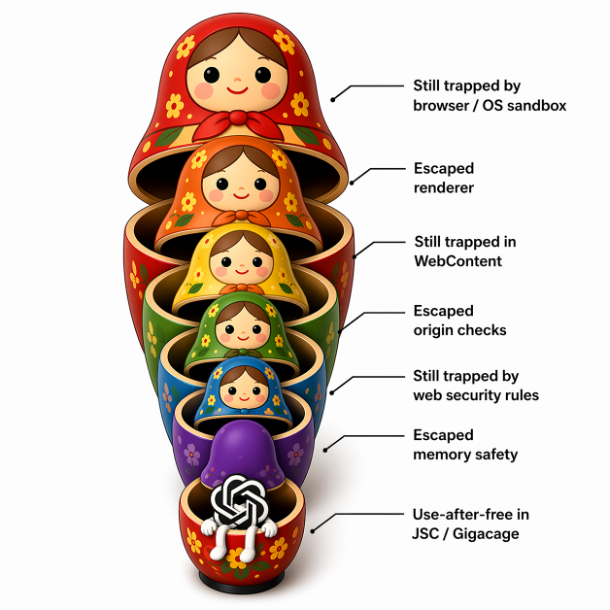
The Sandbox Russian Doll

Browser exploitation in 2026 is a lot like being trapped in a Russian doll.

You start in the smallest doll, and every time you escape one layer you discover you are still trapped inside another one.

Finding a low-level memory bug is not the same thing as finding an exploit. Most of these bugs die in the gap between “memory corruption happened” and “something meaningful crossed a security boundary.”

On the outside you have the browser process model. Even if renderer code goes wrong, the browser is trying very hard to keep that damage inside the web content process.

infographic

Inside that you have the web security model: Same-Origin Policy, CORS, opaque responses, cookie scoping, and credential modes. Even if a page can trigger a cross-origin request, the renderer, and especially the Gigacage, should not be able to access the response bytes. Right?…

The Bug

The original bug lives in the refresh logic for non-shared resizable WebAssembly memory.

When a non-shared WebAssembly.Memory grows in BoundsChecking mode, JavaScriptCore can replace the underlying memory handle. That part is not the bug. The bug is what happens after that to the JS-visible resizable buffer returned by memory.toResizableBuffer().

diagram

The bug is simple enough that once I saw it, it was hard to unsee it. Safari’s grow path effectively does this:

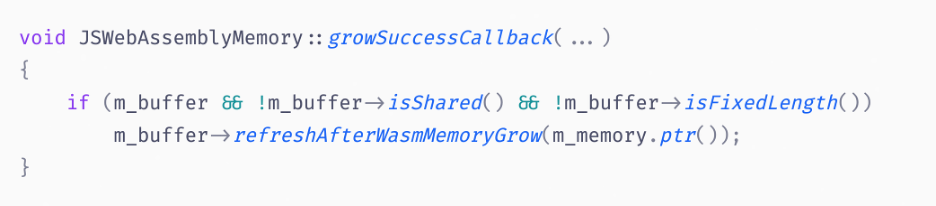
code1

And the refresh step effectively does this:

code2

After memory.grow(), WebKit updates the buffer metadata, but leaves m_data pointing at the old freed allocation.

So after a grow, JavaScript can hold a buffer whose reported size is new, whose handle is new, but whose actual data pointer still references the old freed Primitive Gigacage allocation.

That turns into a stale typed-array window over freed memory.

On its own, this is already a real bug. But we’re still stuck inside the JavaScriptCore gigacage, effectively sandboxed. Without a second bug to break out into the renderer, it doesn’t chain into anything meaningful. What we have is a solid first-stage primitive, but no real security impact on its own.

Why it did not look exploitable at first

The stale window is confined to the Primitive Gigacage, which immediately limits what you can do with it. Many typical targets either never land there, lack useful structure, or fail to produce any cross-boundary effect.

So early on, it had all the hallmarks of a bug that looks promising but rarely goes the distance:

  • easy source-level root cause
  • visible stale memory behavior
  • real reclaim
  • no clean escape path

This is where a lot of low-level browser bugs die.

What changed the problem was a very different framing: maybe I did not need to escape the cage at all.

Maybe I just needed the browser to place something valuable inside it.

The Pivot

Instead of asking “how do I get from my stale WASM view to some protected browser state?” I started asking a better question:

“What browser code takes data that JavaScript is not allowed to read, but still copies that data into normal renderer memory?”

Because that is all I need.

I don’t need to break the abstraction.

I just need the browser to break it for me.

That naturally narrows the search space to subsystems that:

  • handle sensitive cross-origin data, and
  • still allocate ArrayBuffer-backed memory as part of their internal pipeline

That points straight at Fetch. The Fetch API clearly indicates that the response is opaque, meaning that its headers and body are not available to JavaScript.

Opaque Responses Are Supposed to Be Opaque

At the API level, the Fetch model here is straightforward.

If I do a cross-origin request with:

fetch(url, { mode: “no-cors”, credentials: “include” });

The browser may send the request, including cookies depending on context, but JavaScript receives an opaque response.

That means:

  • I can hold the Response object
  • but I cannot read the body bytes

And WebKit enforces that in the obvious place:

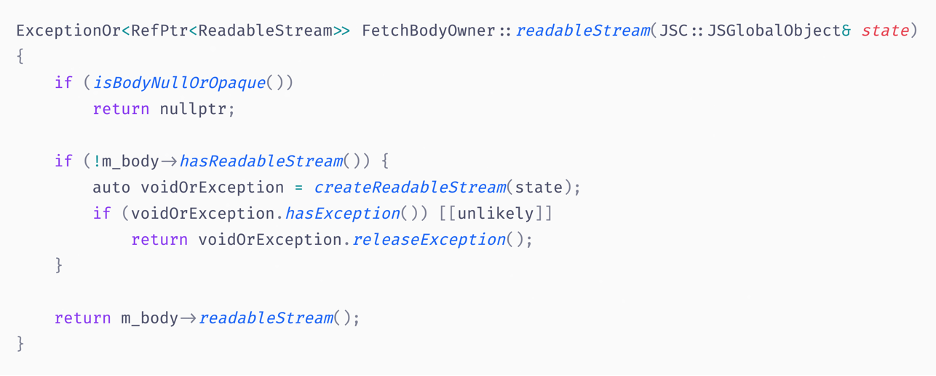
FetchBodyOwner::readableStream() blocks opaque bodies via isBodyNullOrOpaque().

So at first glance, everything looks fine. The body is hidden. The policy is enforced. Same-Origin Policy survives another day.

Except it does not.

The Fetch Behavior that Broke the Modal

The surprising part is Response.clone().

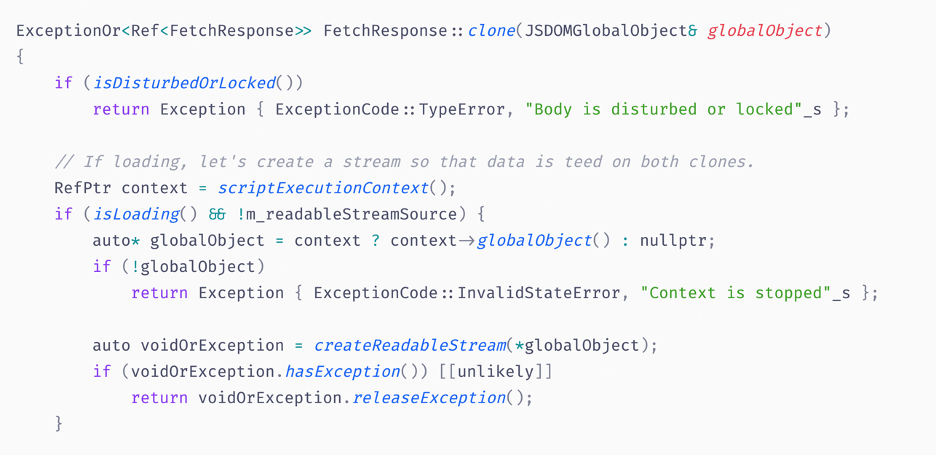
If FetchResponse::clone() is called while the response is still loading, WebKit will internally create a readable stream so it can tee the body between the original response and the clone.

That internal path does not apply the same opaque-body check first.

And once that happens, hidden response bytes start becoming very real renderer objects.

This is the part that made me stop and stare at the source, because the mismatch is right there.

The normal body path blocks opaque responses:

code3

But FetchResponse::clone() does this while the response is still loading:

code4

That is why it works.

The visible accessor path says “opaque bodies do not get a stream.” The clone path says “if it is still loading, create a stream so both clones can tee it.”

That second path is exactly what I needed.

The data flows through normal ArrayBuffer creation paths:

  • buffered chunks go through tryCreateArrayBuffer()
  • later chunks go through takeAsArrayBuffer()
  • shared buffer data gets copied into ordinary ArrayBuffer allocations inside the renderer

So the policy ends up split in two:

  • the public Fetch API says the body is opaque
  • the renderer still materializes the opaque body into readable byte arrays during clone-time streaming

Combined with the stale WASM window, it becomes a SOP break.

The Chain

At a high level, the exploit became:

  1. Force the target WASM memory into the BoundsChecking path.
  2. Call memory.toResizableBuffer().
  3. Grow the memory.
  4. Keep the stale resizable buffer whose pointer still targets freed Primitive Gigacage pages.
  5. Trigger a cross-origin fetch(…, { mode: “no-cors”, credentials: “include” }).
  6. Call response.clone() while the response is still loading.
  7. Let Fetch internals materialize the hidden body bytes into ordinary renderer ArrayBuffers.
  8. Reclaim the stale WASM-covered pages with those allocations.
  9. Read the cross-origin bytes through the stale view.

That is the entire trick.

I never needed response.text(). I never needed response.arrayBuffer(). I never needed the public API to hand me the body.

The browser copied the body into memory for its own internal bookkeeping, and the stale WASM view read it directly.

That is why this bug stopped being “some weird WASM UAF” and became “this completely breaks the Same-Origin Policy.”

The file:// Detour

One of the weirdest parts of the research was that the request side behaved differently depending on where I launched it from.

In my testing, cross-origin requests were much easier to get moving from file:// than from a normal https attacker page.

That sounds backwards until you look at WebKit’s handling of local origins.

Document.cpp has explicit special-casing around local documents and settings like:

  • allowUniversalAccessFromFileURLs
  • allowFileAccessFromFileURLs

MiniBrowser exposes those knobs too, which made file:// very useful as a research environment. It let me focus on the memory side and confirm the leak path before I had a clean web-facing story.

But I did not want a local-file party trick.

I wanted a real web exploit.

And from a normal https page, the same request pattern was not giving me the reliability I wanted.

That is where about:blank saved me.

Why about:blank saved the final POC

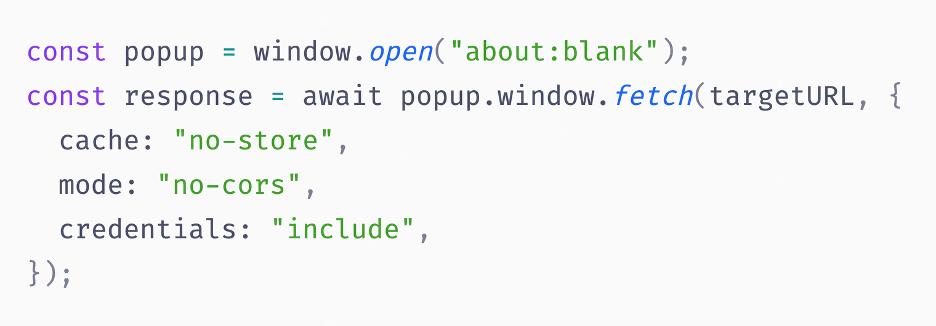
The final PoC opens an about:blank popup and performs the fetches from there:

code5

This ended up mattering a lot.

At first I thought this was just an origin-inheritance trick. That part is real:

code6

So about:blank does inherit the opener’s origin.

But that alone does not explain why the popup path behaved differently.

What actually seems to matter is Safari’s cookie / first-party bookkeeping. Fetch subresource requests copy document->firstPartyForCookies() into the request:

code7

And WebKit’s cookie blocking logic bails out immediately if that first-party domain is empty:

code8

That is a very different path from a normal attacker-controlled https page. From a regular https://attacker.example origin, the first party is the attacker site, so a request to the victim site looks third-party and Safari’s tracking-prevention logic can suppress cookies.

From the about:blank popup path, the security origin still comes from the opener, but the popup’s top-level URL / first-party context is no longer a normal registrable https site in the same way. In practice, that was enough to make credentials: “include” requests behave differently and get me the authenticated traffic pattern I needed.

So the important point is not “about:blank disabled CORS.” It did not. The important point is:

  • the popup kept the opener’s origin
  • the request still went through normal Fetch/CORS code
  • Safari’s first-party cookie logic treated that popup context differently

That was the difference between “cross-origin request happens but is useless” and “cross-origin request comes back with authenticated bytes worth stealing.”

Why this was fun

This is my favorite kind of browser bug.

Not because the root cause was complicated. It was not. The WASM bug was almost embarrassingly direct.

And not because the final chain was huge. It was not.

It was fun because it is exactly the kind of bug modern browser architecture is supposed to suppress.

A stale pointer inside a cage is supposed to stay a stale pointer inside a cage.

An opaque response is supposed to stay opaque.

Those are both reasonable assumptions.

The exploit works because both assumptions were true only locally.

JavaScriptCore gave me a stale view that looked hard to use. WebCore Fetch gave me sensitive bytes that looked impossible to read.

Put them together and Safari’s Same-Origin Policy fell apart.

Disclosure

We reported our findings to Apple. Shortly after, a fix shipped, suggesting the issue was already known internally.

The vulnerability (CVE-2026-20664) is addressed in iOS 26.4 and iPadOS 26.4 (23E6254 and later), and macOS Tahoe 26.4 (25E253 and later). Make sure your systems are up to date.

Closing Thoughts

The biggest thing on my mind after working with these models is the leverage they provide, and what that means for N-days. A security patch in popular software used to hide the underlying exploit behind time, effort, and expertise. Now that you can scale tokens instead of effort, that barrier is mostly gone.

This doesn’t turn exploitation into a trivial task. You still need someone who understands what they are looking at, can filter noise, and can steer the process when it stalls. But AI changes the unit of work. Instead of deep, sequential effort, you get parallel exploration and rapid iteration. The constraint shifts from raw effort to how effectively an operator can guide multiple lines of inquiry at once.
`

The post Hacking Safari with GPT 5.4  appeared first on Blog.

  •  

Private health records of half a million Britons offered for sale on Chinese website

Technology minister tells Commons ‘de-identified’ information from UK Biobank advertised for sale on Alibaba

The confidential health records of half a million British volunteers have been offered for sale on Chinese website Alibaba, the UK government has confirmed.

The “de-identified” data, belonging to participants in the UK Biobank project, was found for sale on three separate listings last week. Ian Murray, the technology minister, told the Commons on Thursday that, after working with the Chinese government and Alibaba, the records had now been removed. It is not believed any sales were made.

Continue reading...

© Photograph: Dave Guttridge/UK Biobank/PA

© Photograph: Dave Guttridge/UK Biobank/PA

© Photograph: Dave Guttridge/UK Biobank/PA

  •  

Spam and phishing targeting taxpayers | Kaspersky official blog

In many countries, spring is the traditional time for filing income tax returns. These documents are a goldmine for bad actors because they contain a wealth of personal data, such as employment history, income, assets, bank account details — the list goes on. It’s no surprise that scammers ramp up their efforts around this time; the internet is currently crawling with fake websites designed to look exactly like government resources and tax authorities.

With deadlines looming and numbers to crunch, the rush to get everything done in good time can cause people to let their guard down. In the shuffle, it’s easy to miss the signs that the site where you’re detailing your finances has zero connection to the revenue service, or that the file you just downloaded, supposedly from a tax inspector, is actually malware.

In this post, we break down how these fraudulent tax agency sites operate across different countries and what you should absolutely avoid doing to keep your money and sensitive information safe.

Taxpayer phishing

This season, attackers have been spoofing tax authority websites across numerous countries, including the official government portals of Germany, France, Austria, Switzerland, Brazil, Chile, and Colombia. On these fraudulent sites, scammers harvest credentials for legitimate services, and steal personal data before offering to process a tax deduction — provided the victim enters their credit card details. In some cases, they even charge a fee for this fraudulent service.

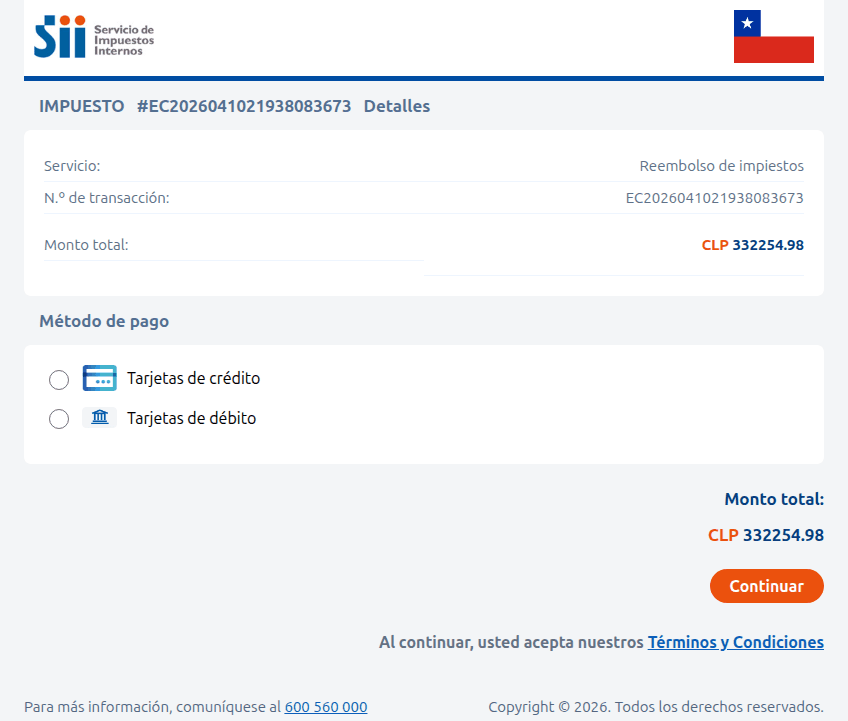
Fraudulent Chilean tax service website

A site imitating the Chilean tax authority. The victim is prompted to enter their credit card information to receive a substantial tax refund — roughly US$375. Instead, the funds are siphoned from the victim’s account directly to the scammers

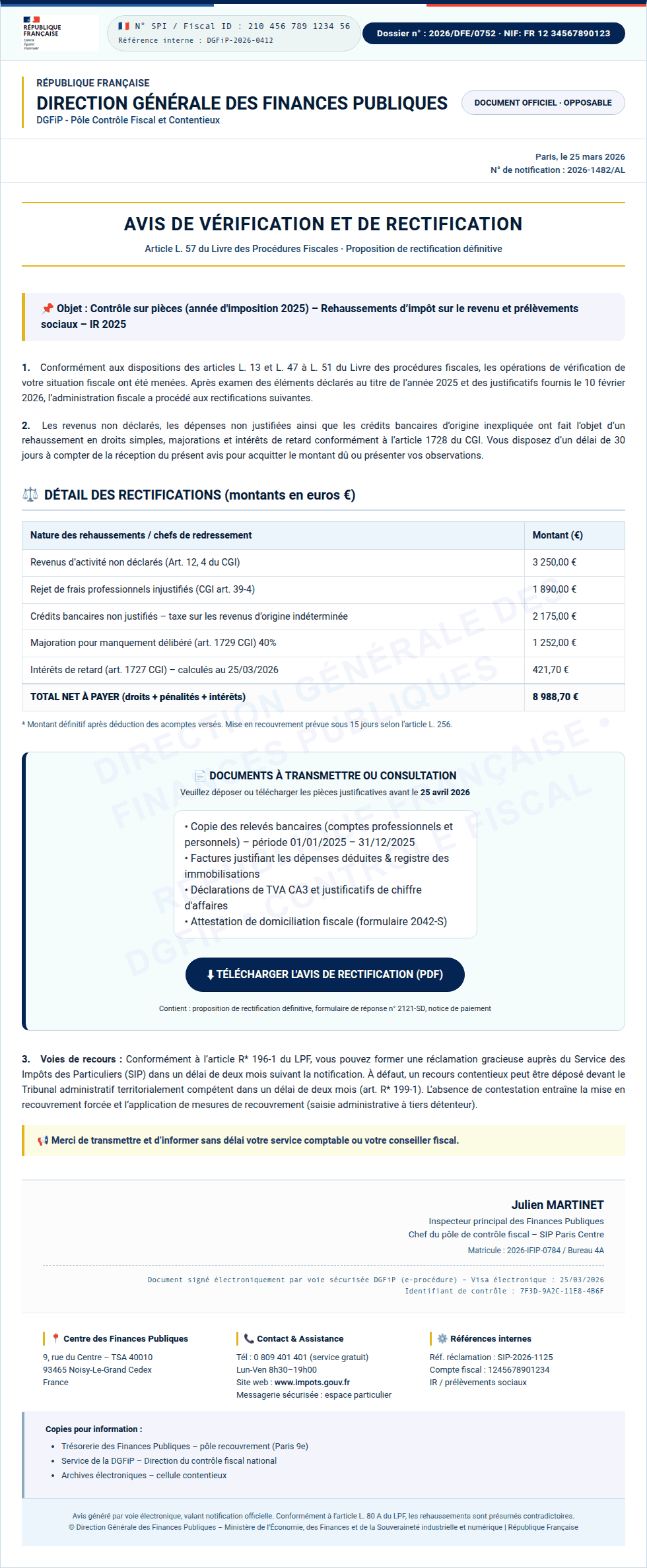
Sometimes, the tactic involves accusations issued on behalf of government bodies. In the image below, for example, a “head of tax audit” in Paris informs the victim that they provided incomplete income information. To avoid penalties, the user is told to download a document and make corrections immediately. However, the PDF file hides something much worse: malware.

Spoofed French tax portal (Impots.gouv)

Instead of an official document from the French tax service, the user finds malware waiting inside the PDF

In Colombia, a fake National Directorate of Taxes and Customs site similarly prompts users to download documents that must be “unlocked with a security key”. In reality, this is simply a password-protected, malicious ZIP archive.

Fake website impersonating the Colombian National Directorate of Taxes and Customs

After entering the password, the user opens a malicious archive that infects their device

Beyond phishing sites mimicking legitimate resources, our experts have discovered fraudulent websites promising paid services for filling out and auditing tax documents — and stealing high-value data, such as taxpayer identification numbers (TINs), instead.

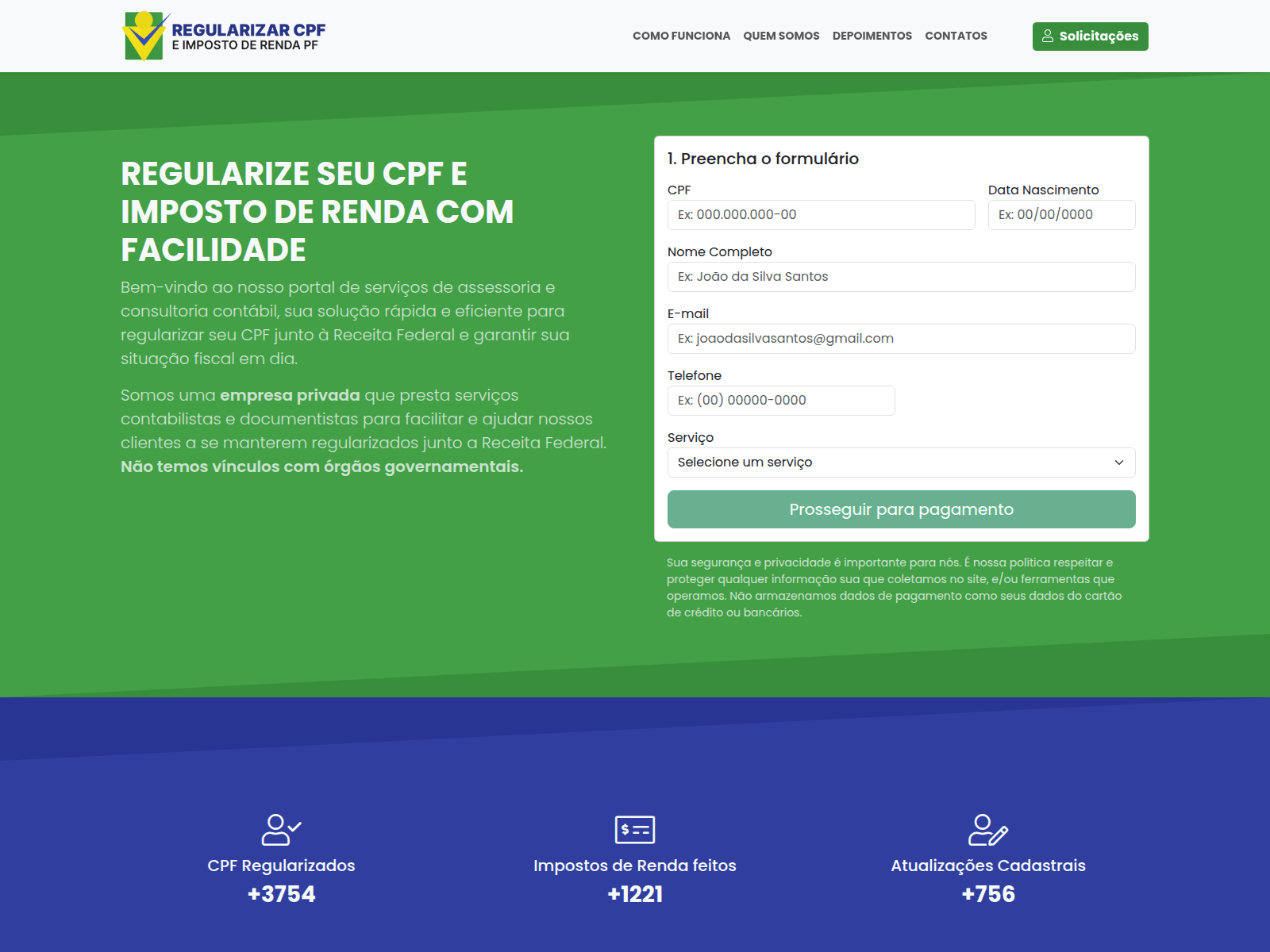
Scammers in Brazil offering tax prep assistance
Scammers in Brazil offer help with tax returns. To contact them, the user must provide their name, phone number, address, date of birth, email, and TIN in a special form. Handing over a TIN puts the victim at risk of fraudulent loan applications, hijacked government service accounts, and further social engineering attacks
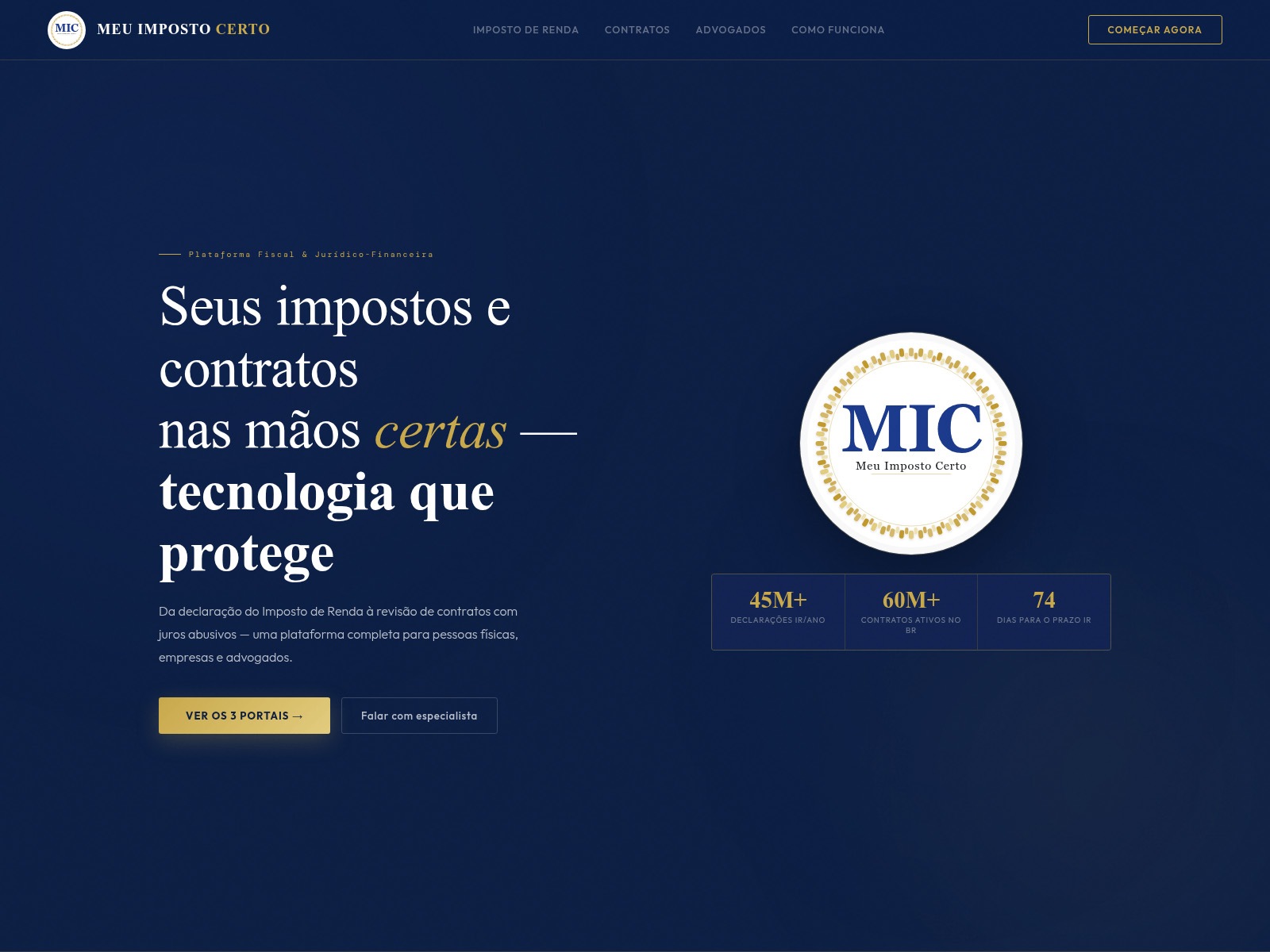
Scammers in Brazil offering tax prep assistance
Another Brazilian scam site. If you believe the attackers, they file 60 million tax returns annually — supposedly assisting a staggering 28% of the Brazilian population

Tax-free crypto earnings

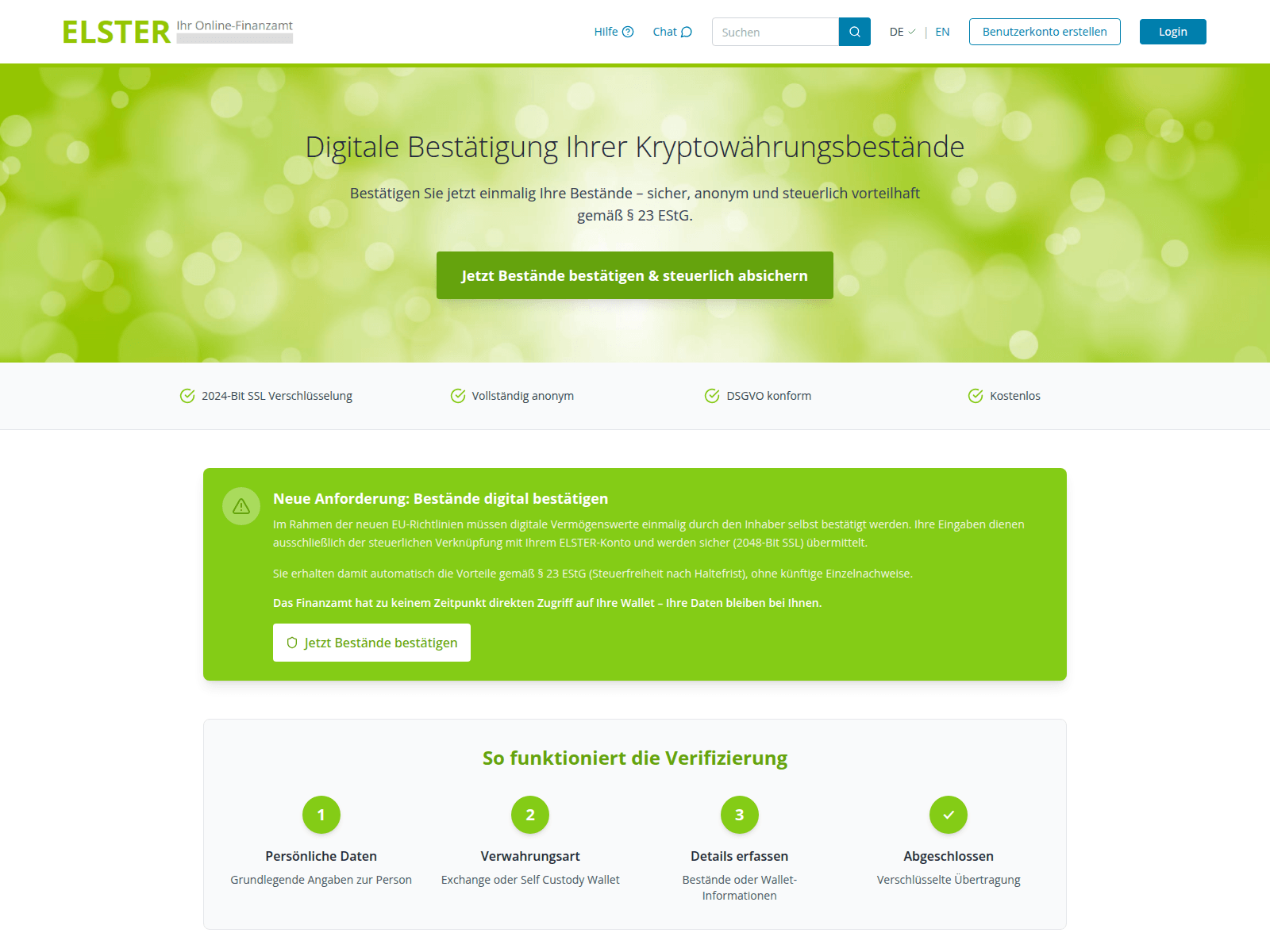
Cryptocurrency holders have emerged as a specific target for attackers. Fake German tax authorities are demanding that wallet owners “verify their digital asset holdings”, citing EU regulations for tax calculation purposes. And of course, there’s a “silver lining”: it turns out crypto earnings are supposedly tax-exempt! However, to claim this generous benefit, users must go through a “verification” procedure. The site even promises to encrypt data using a “2048-bit SSL protocol”.

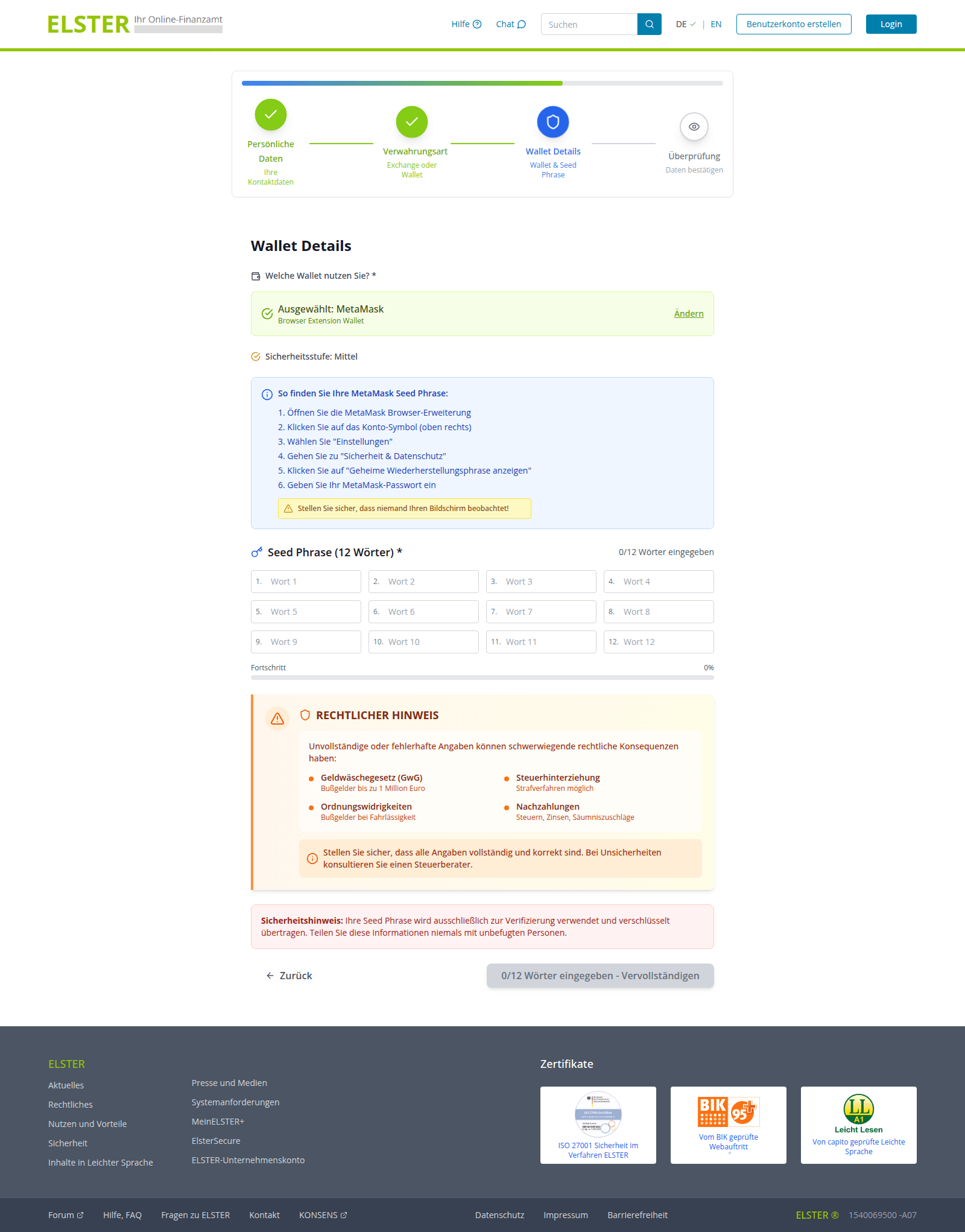
To complete the “verification” process, users are prompted to enter their seed phrase — the unique sequence of words tied to a crypto wallet that grants full recovery access. This request is paired with a threat: refusing to provide the data will lead to serious legal consequences, such as fines up to one million euros or criminal prosecution.

Spoofed German tax portal (ELSTER)
An announcement on the fake ELSTER portal claims that crypto earnings are tax-free following "verification" — and that the "tax service" has no direct access to users' wallets. Should we believe it?
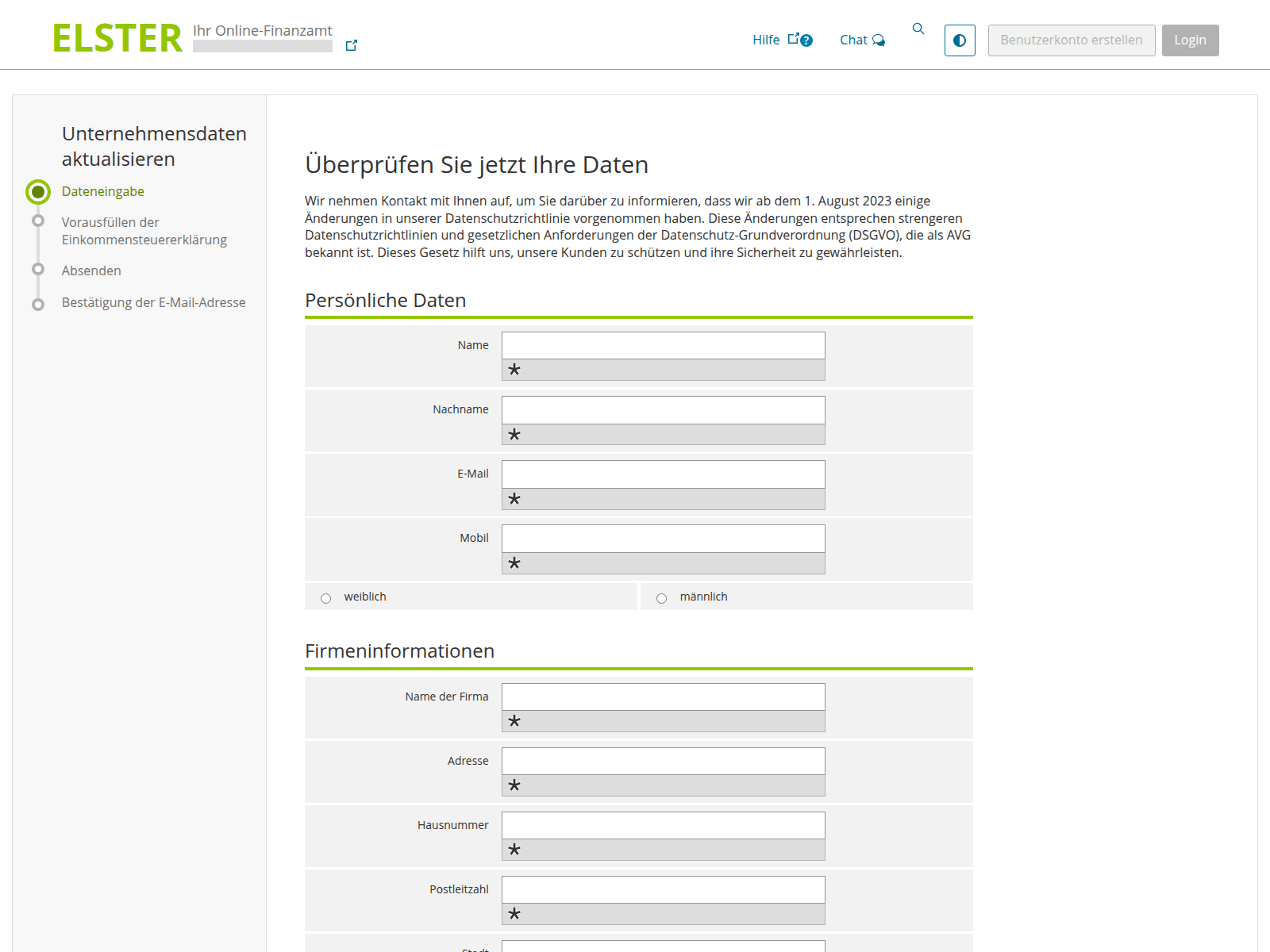
Spoofed German tax portal (ELSTER)
First, the user is prompted to enter their personal information…
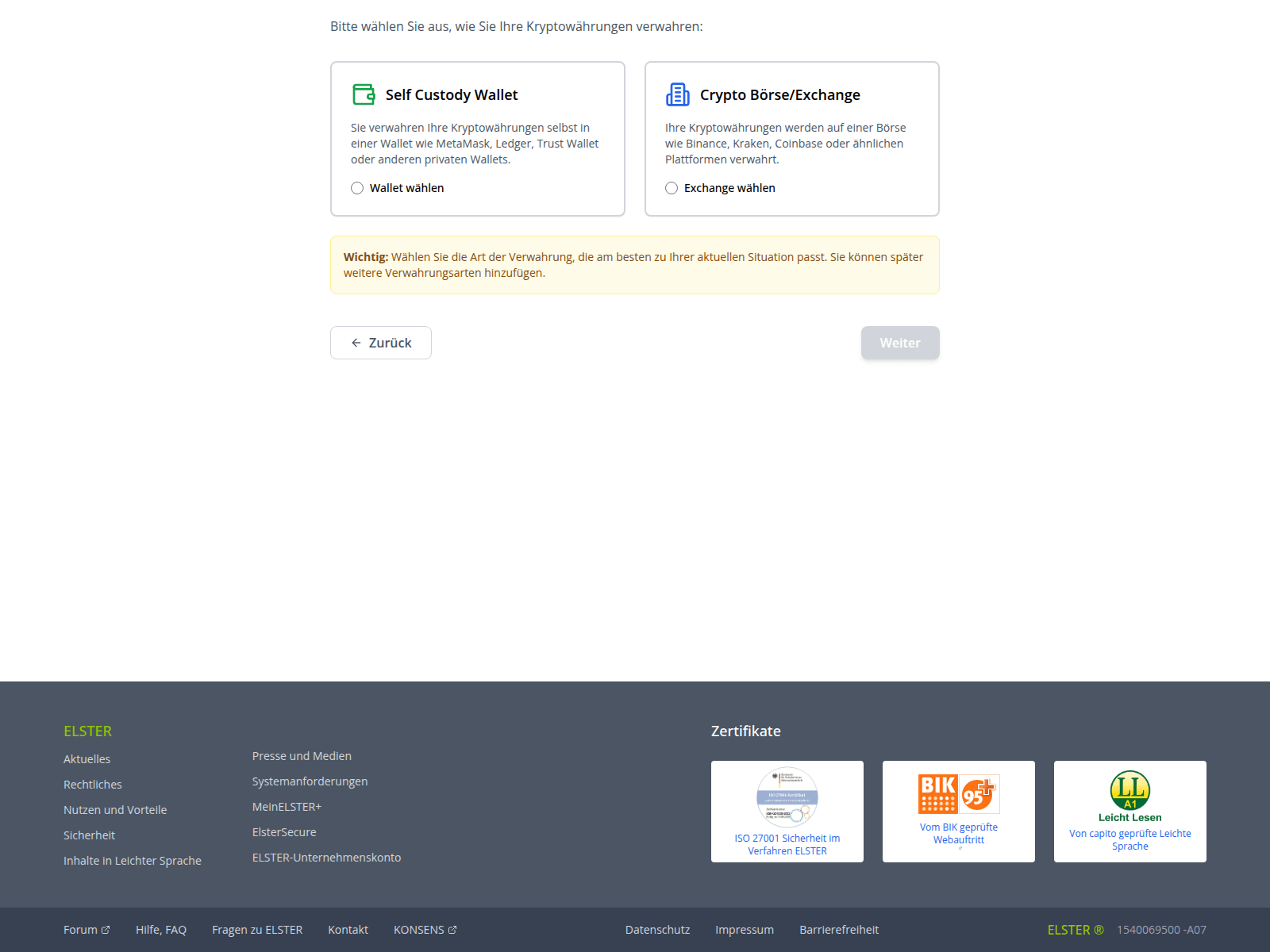
Spoofed German tax portal (ELSTER)
…And then they choose how to verify their crypto holdings: by linking a crypto wallet or an exchange account. Among the services targeted by these scammers are Ledger, Trezor, Trust Wallet, BitBox02, KeepKey, MetaMask, Phantom, and Coinbase
Spoofed German tax portal (ELSTER)
Finally, the victim is asked to provide their seed phrase, giving scammers total control over the wallet. The attackers kindly warn the victim to make sure no one is looking at their screen while they threaten them with non-existent legal penalties for non-compliance

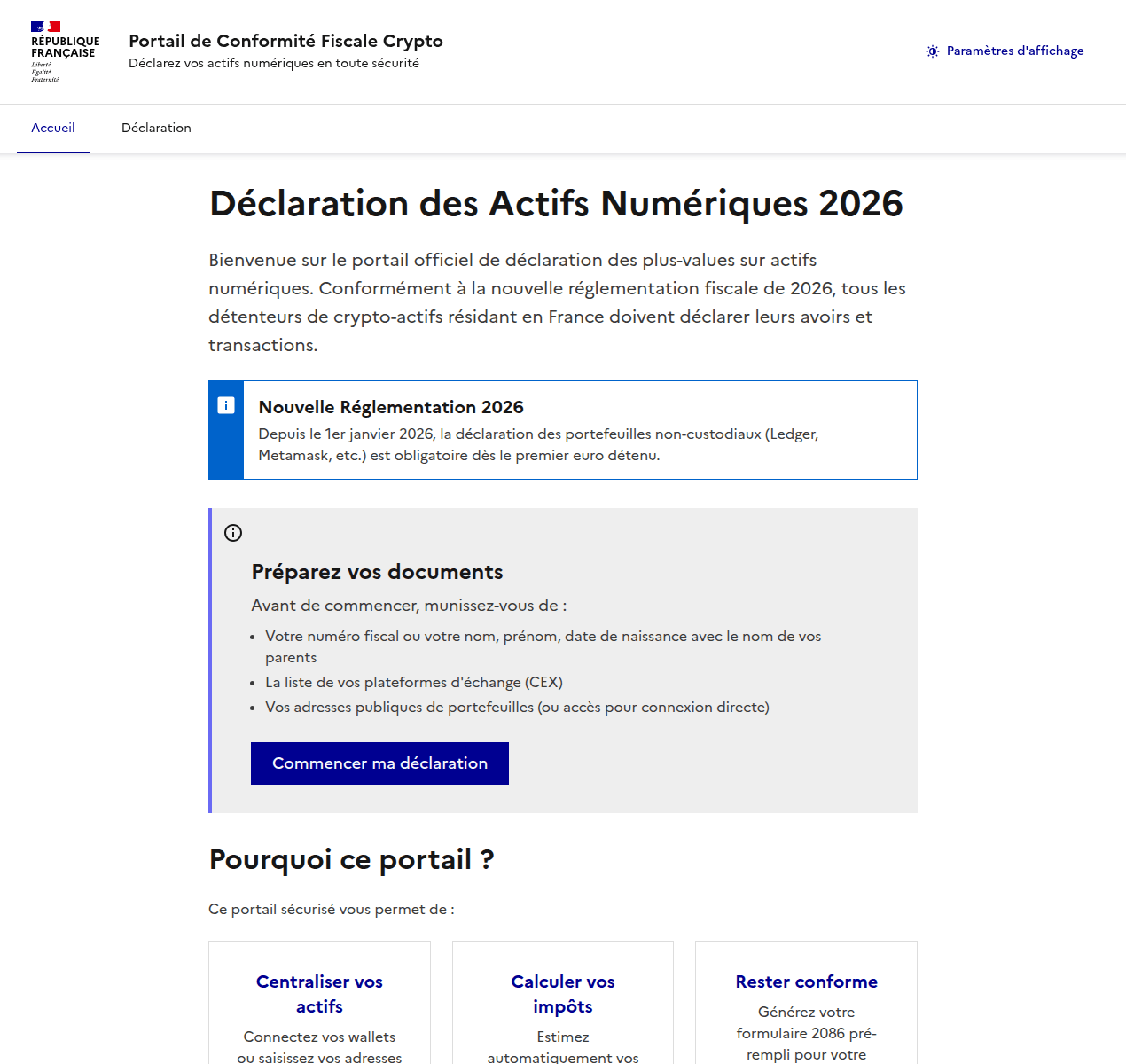
Attackers pulled a similar stunt on French users as well. They created a non-existent “Crypto Tax Compliance Portal”, which mimics the design of the French Ministry of Economy and Finance website. The phishing site aggressively demands that French residents submit a “digital asset declaration”.

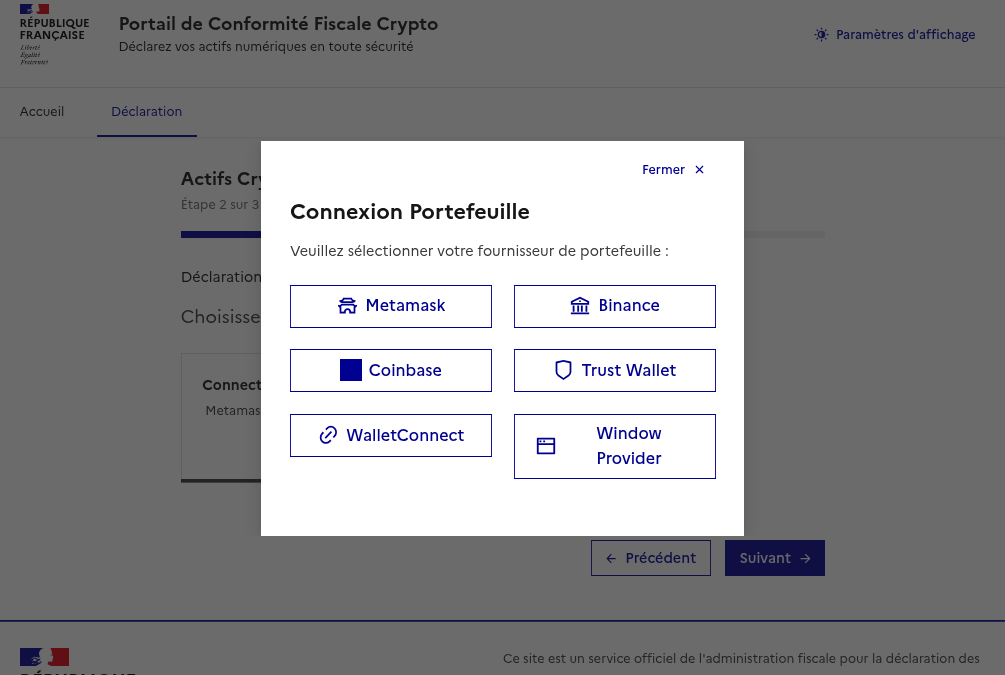
After the user enters their personal information, the scammers prompt them to either manually enter their seed phrase, or “link” their crypto wallet to the portal. If they go through with this, their MetaMask, Binance, Coinbase, Trust Wallet, or WalletConnect wallets will be drained.

Phishing website spoofing the French Ministry of Economy and Finance
The phishing site aggressively demands that French residents provide a "digital asset declaration" (translation: they want to hijack your crypto accounts)
Phishing website spoofing the French Ministry of Economy and Finance
Once personal data is entered, scammers offer the choice of manually entering a seed phrase or "linking" a wallet to the portal

Can AI help with your tax returns?

When you have AI at your fingertips that can instantly generate text and fill out spreadsheets, there’s a serious temptation to delegate everything to it. Unfortunately, this can lead to serious consequences. First, all popular chatbots process your data on their servers, which puts your sensitive information at risk of a leak. Second, they sometimes make incredibly foolish mistakes, and that can lead to actual trouble with the taxman.

Before you tell a chatbot or an AI agent how much money you made last year — complete with detailed personal and banking info — remember how frequently leaks occur within AI-powered services and consider the risks. Don’t discuss your income with AI, don’t give it personal details like your name or address, and under no circumstances should you upload photos or numbers of vital documents such as passports, insurance info, or social security numbers. Files containing confidential information should be kept in encrypted containers, such as Kaspersky Password Manager.

If you’re still determined to use AI tools, run them locally. This can be done for free even on a standard laptop, and we’ve previously covered how to set up local language models using DeepSeek as an example. However, the quality of the output from these models is often subpar. It’s quite possible that double-checking every digit in an AI-generated response will take more time than just filling out the paperwork manually. Remember, you’re the one accountable to the tax office for any errors — not the AI.

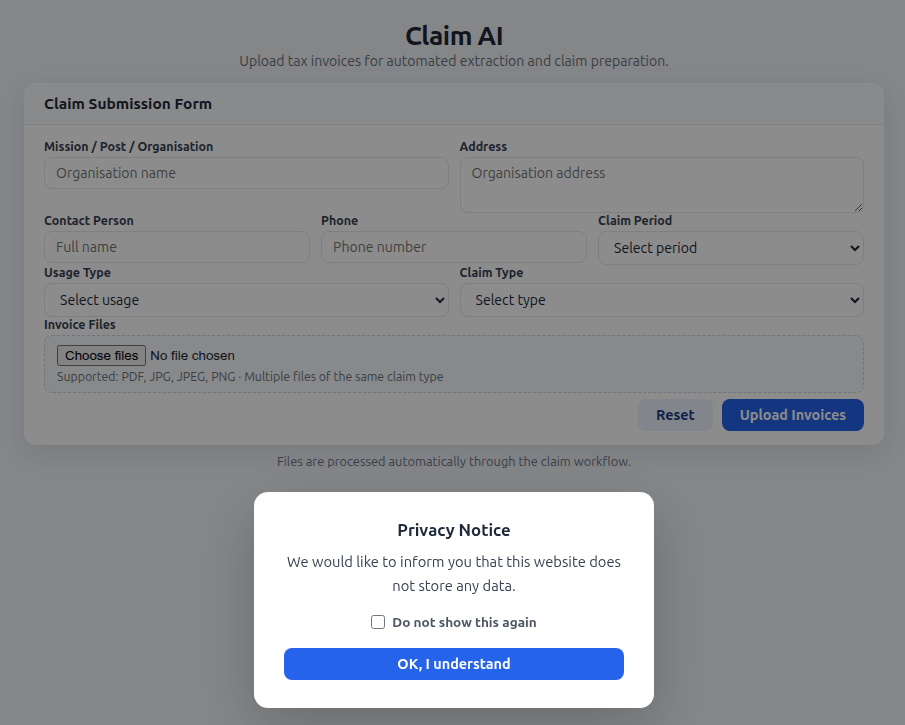
Finally, watch out for phishing AI models that offer “assistance” with tax filing. Kaspersky experts have discovered websites where users are prompted to upload tax invoices, supposedly for the automated generation of returns and deduction claims. Instead, attackers collect this personal data to resell on the dark web, or to use in future phishing attacks, blackmail, and extortion schemes.

Phishing AI steals data from taxpayers seeking filing assistance

The creators of a fake AI tool prompt users to upload tax documents, and kindly assure them that the site doesn’t store any user data. In reality, every piece of information entered — name, address, documents, contact person, phone number — ends up in the hands of cybercriminals

Remember that all legitimate AI services explicitly warn users not to share confidential data, and tax documents certainly fall into this category. Any AI tools promising to help you handle your tax paperwork are quite simply a scam.

How to protect yourself and your data

  • File your taxes yourself. The risk of running into scammers is extremely high. Even if a consulting firm is legitimate, you’re inevitably handing over a complete dossier on yourself: passport details, employment and income info, your address, and more. Remember that even the most honest services aren’t immune to hacks and data breaches.
  • Watch out for fake websites. Use a reliable security solution that prevents you from visiting phishing sites and blocks malicious file downloads.
  • Keep all important documents encrypted. Storing photos, notes, or files on your desktop, or starred messages in a messaging app isn’t a secure way to handle sensitive data. A secure vault like Kaspersky Password Manager can store more than just passwords and credit card info; it can also safeguard documents and even photos.
  • Don’t trust AI. Even the most advanced chatbots are prone to errors and hallucinations, and in theory, developers can read any conversation you have with their AI. If you absolutely must use AI, install and run a local version on your own computer.
  • Stick to official channels only. The “chief tax inspector” of your country or city is definitely not going to message you: high-ranking officials have more important things to do. Only contact tax authorities through official channels, and carefully verify the sender of any emails you receive. Most often, even a slight deviation in the name or address is a telltale sign of a phishing campaign.

Further reading on phishing and data security:

  •  

Warner-aandeelhouders steunen Paramount-deal maar weigeren 550 miljoen bonus ceo

Aandeelhouders van Warner Bros. Discovery hebben met een grote meerderheid voor de overname door Paramount gestemd. Hun aandelen worden volgens de huidige deal voor een meerprijs door Paramount overgekocht. De aandeelhouders hebben extra bonussen voor Warner Bros.-topmensen wel afgekeurd. De stemming is overigens niet bindend.
  •  

How cyberattacks on companies affect everyone

If you use the internet, you’ve likely been affected by cybercrime in some way. Even when an attack is aimed at a company, the fallout usually lands on ordinary people.

The most obvious harm is stolen data. When attackers break into a business, it is usually customer information that ends up in criminal hands, and that can lead to identity theft, tax fraud, credit card fraud, and a long tail of scam attempts that can continue for months or years. For consumers, the breach itself is often just the start of the cleanup.

That work is annoying, time-consuming, and sometimes expensive. People may have to freeze credit, replace cards, change passwords, be on the lookout for suspicious transactions, and dispute charges. The Federal Trade Commission (FTC) specifically advises consumers to use IdentityTheft.gov after a breach and recommends steps like credit freezes and fraud alerts to reduce the chance of further abuse.

When sensitive data is exposed, the harm is not only financial. Medical, insurance, and other deeply personal records can be used to create more convincing phishing or extortion attempts, and the stress of knowing that private information is circulating among criminals can linger long after the technical incident is over. In other words, breach victims are not just cleaning up a data problem, they are dealing with a loss of trust.


Breaches happen every day. Don’t be the last to know.


Cybercrime also hits consumers through service disruption. Ransomware and intrusion campaigns can interrupt payment systems, telecom services, shipping, energy distribution, booking platforms, and other infrastructure people rely on every day. In those cases, the consumer impact is immediate: you may not be able to pay, travel, call, buy, or even work normally. The CSIS timeline and Canada’s cyberthreat assessment both show that these disruptions are increasingly tied to high-value targets and can be part of broader state or criminal campaigns.

Not all these incidents are driven by cybercriminals. Recently, Britain’s cybersecurity chief warned that the UK is handling 4 nationally significant cyberincidents every week, with the majority now traced back to foreign governments rather than cybercriminal groups.

Another cost is easy to overlook: disinformation and confusion. When attackers steal data, disrupt services, or impersonate trusted brands, they can also flood the public with fake support messages, scam calls, refund schemes, and phishing emails pretending to be the breached company. The breach becomes a launchpad for more fraud, and consumers are left trying to separate legitimate notifications from those sent by attackers.

Then there is the security backlash. After a breach, companies usually tighten access rules, add more multi-factor authentication prompts, force reauthentication, shorten sessions, and increase fraud checks. Those measures are often necessary, but they also make ordinary digital life more cumbersome. The consumer ends up paying with time and frustration for security problems they did not create.

That is why company-targeted cybercrime is not really only a business problem. It is a consumer issue, a public-trust issue, and sometimes even a national security issue. A single breach can leak data, trigger fraud, interrupt essential services, amplify scams, and make using the internet more frustrating for everyone else. The real cost is rarely confined to the company that got hit.

Knowing this, it’s worth thinking carefully about which companies to trust with your data and how much you’re willing to share . You cannot stop every attack against every company you deal with, but you can limit the fallout by being more selective. Some considerations:

  • Do they need all the information they are asking for?
  • Would it hurt anything if you leave some fields blank or give less specific answers?
  • Has this company been breached in the past, and how did they handle it?
  • How long will they store the data you provide?
  • Can you easily have your data removed at your request?

Your name, address, and phone number are probably already for sale.  

Data brokers collect and sell your personal details to anyone willing to pay. Malwarebytes Personal Data Remover finds them and gets your information removed, then keeps watch so it stays that way. 

  •  

How cyberattacks on companies affect everyone

If you use the internet, you’ve likely been affected by cybercrime in some way. Even when an attack is aimed at a company, the fallout usually lands on ordinary people.

The most obvious harm is stolen data. When attackers break into a business, it is usually customer information that ends up in criminal hands, and that can lead to identity theft, tax fraud, credit card fraud, and a long tail of scam attempts that can continue for months or years. For consumers, the breach itself is often just the start of the cleanup.

That work is annoying, time-consuming, and sometimes expensive. People may have to freeze credit, replace cards, change passwords, be on the lookout for suspicious transactions, and dispute charges. The Federal Trade Commission (FTC) specifically advises consumers to use IdentityTheft.gov after a breach and recommends steps like credit freezes and fraud alerts to reduce the chance of further abuse.

When sensitive data is exposed, the harm is not only financial. Medical, insurance, and other deeply personal records can be used to create more convincing phishing or extortion attempts, and the stress of knowing that private information is circulating among criminals can linger long after the technical incident is over. In other words, breach victims are not just cleaning up a data problem, they are dealing with a loss of trust.


Breaches happen every day. Don’t be the last to know.


Cybercrime also hits consumers through service disruption. Ransomware and intrusion campaigns can interrupt payment systems, telecom services, shipping, energy distribution, booking platforms, and other infrastructure people rely on every day. In those cases, the consumer impact is immediate: you may not be able to pay, travel, call, buy, or even work normally. The CSIS timeline and Canada’s cyberthreat assessment both show that these disruptions are increasingly tied to high-value targets and can be part of broader state or criminal campaigns.

Not all these incidents are driven by cybercriminals. Recently, Britain’s cybersecurity chief warned that the UK is handling 4 nationally significant cyberincidents every week, with the majority now traced back to foreign governments rather than cybercriminal groups.

Another cost is easy to overlook: disinformation and confusion. When attackers steal data, disrupt services, or impersonate trusted brands, they can also flood the public with fake support messages, scam calls, refund schemes, and phishing emails pretending to be the breached company. The breach becomes a launchpad for more fraud, and consumers are left trying to separate legitimate notifications from those sent by attackers.

Then there is the security backlash. After a breach, companies usually tighten access rules, add more multi-factor authentication prompts, force reauthentication, shorten sessions, and increase fraud checks. Those measures are often necessary, but they also make ordinary digital life more cumbersome. The consumer ends up paying with time and frustration for security problems they did not create.

That is why company-targeted cybercrime is not really only a business problem. It is a consumer issue, a public-trust issue, and sometimes even a national security issue. A single breach can leak data, trigger fraud, interrupt essential services, amplify scams, and make using the internet more frustrating for everyone else. The real cost is rarely confined to the company that got hit.

Knowing this, it’s worth thinking carefully about which companies to trust with your data and how much you’re willing to share . You cannot stop every attack against every company you deal with, but you can limit the fallout by being more selective. Some considerations:

  • Do they need all the information they are asking for?
  • Would it hurt anything if you leave some fields blank or give less specific answers?
  • Has this company been breached in the past, and how did they handle it?
  • How long will they store the data you provide?
  • Can you easily have your data removed at your request?

Your name, address, and phone number are probably already for sale.  

Data brokers collect and sell your personal details to anyone willing to pay. Malwarebytes Personal Data Remover finds them and gets your information removed, then keeps watch so it stays that way. 

  •  

The Fortinet 2025 Sustainability Report

The Fortinet 2025 Sustainability Report outlines progress in securing the digital world, reducing environmental impact through energy-efficiency products and operations, expanding access to cybersecurity education, and strengthening responsible business practices.
  •  
❌