Reading view

Cheers to the Winners of EFF’s 18th Annual Cyberlaw Trivia Night! 

On a warm June evening in San Francisco, attorneys and other legally-minded friends of EFF gathered for our 18th Annual Cyberlaw Trivia Night, an annual test of tech-related legal knowledge, and the ability to remember some deeply obscure facts under pressure. 

Returning Quizmaster Kurt Opsahl once again guided competitors through six rounds of trivia covering everything from intellectual property and free speech to privacy, security, and artificial intelligence. Teams wrestled with questions about geofence warrants, AI copyright disputes, the SOPA/PIPA internet blackout, Section 230, and even a Senate hearing featuring a contestant who was herself present at cyberlaw trivia. 

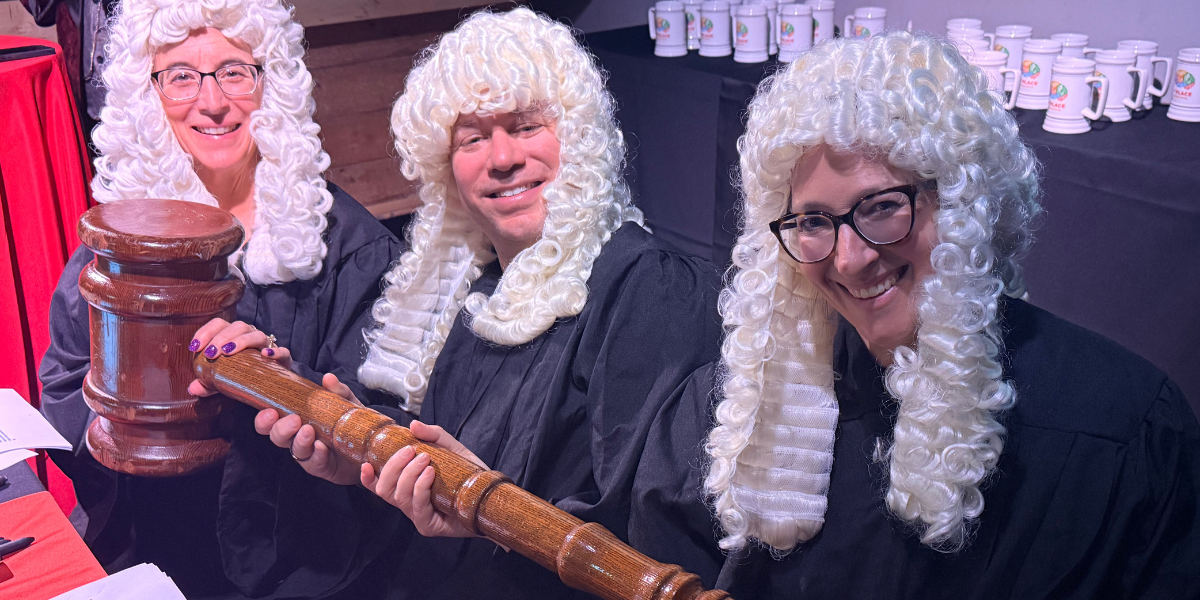
The judges’ table made it obvious that 2026 was a notable year. Weighing in on the toughest close calls were three folks with a deep history at our org: outgoing EFF Executive Director Cindy Cohn and new Executive Director Nicole Ozer both sat at as judges, joined by new cyberlaw judge Mike Masnick, founder of Techdirt and a recipient of an EFF Award in 2020

The food was hot, the drinks were cold, and the competition was fierce. Teams including Shady Docket, Byte Club, Flock U, This Is Why We Can't Have Nice Precedent, Nicky's Angels, and Betamaxxers battled through six rounds of challenging questions. 

When a question about Afroman's successful legal battle against Ohio sheriff's deputies came up, members of Byte Club offered to do more than name his most popular album: they offered to perform a rendition of “Lemon Pound Cake” (also the album name—tricky!) for the judges. This won no sway with the 3-judge Cyberlaw Judiciary, and the offer was politely declined. 

The teams racked their collective law-noggins about some of the details of recent legal battles over digital rights, and a round entitled “You Can Call Me AI.” After the IP round, which rewarded folks in the audience who could answer details about the server test, the trivia moved onto newsier questions, with questions about ICE apps, anti-ICE apps, recent defamation cases involving our sitting president, and the slogan of a mineral company that you might've heard on terrestrial radio anytime between the early aughts and this week. 

You don't have to wear a morning coat to win Supreme Court arguments, but knowing who did for 4 years might have helped you win the IP round. 

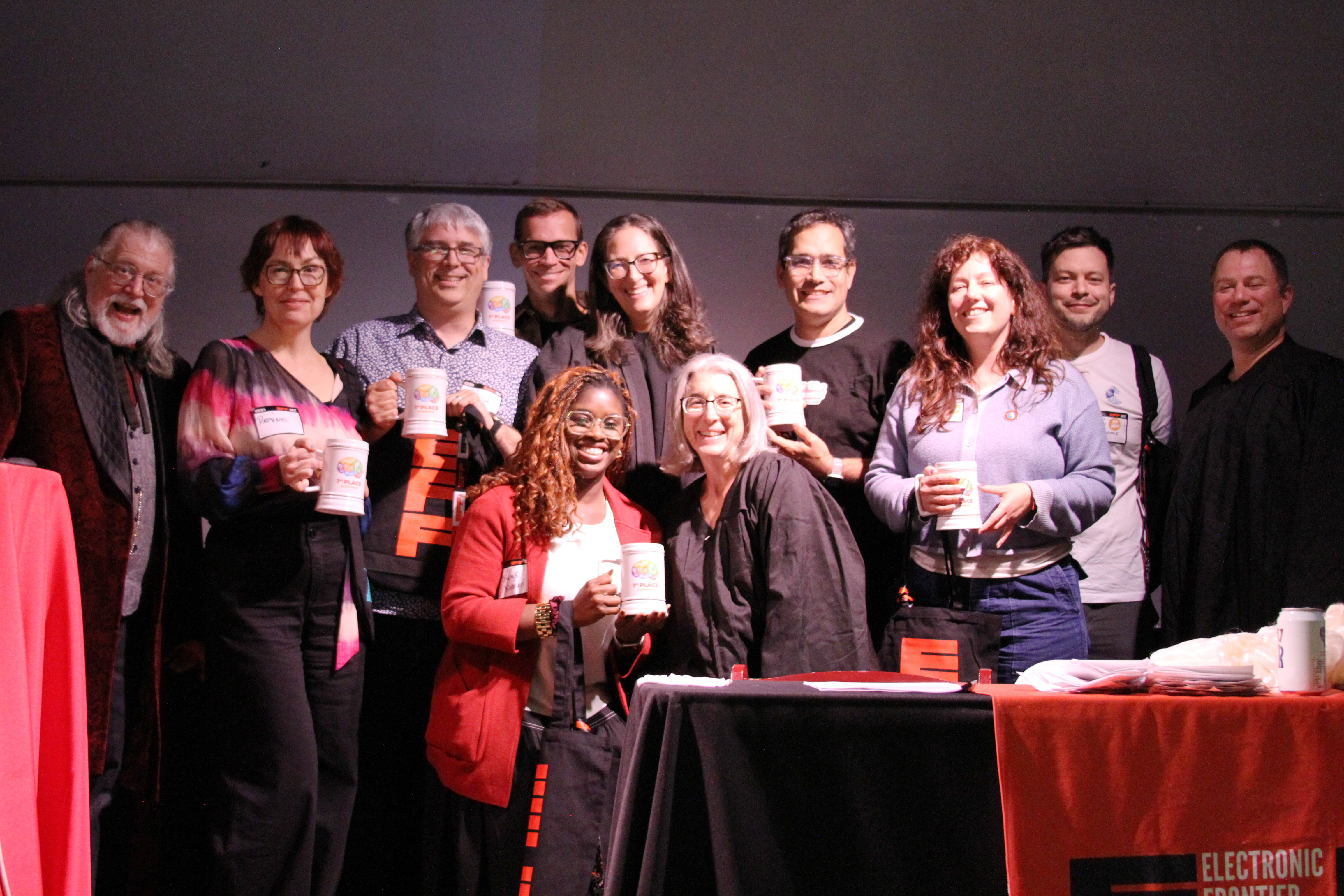
By the end of regulation play, the cyberlaw trivia competition was closer than we could have imagined. For the first time in Cyberlaw Trivia history, three teams finished tied for first place, sending the contest to two tiebreaker questions. 

The final question noted that Google had received more than 287,000 government information requests in the first half of 2025, and asked teams to estimate how many were received by OpenAI during the same period. Every team guessed over, but it was the victors, Shady Docket, who guessed the lowest: 260. (The real answer is 146.)

As Shady Docket team member Erin Simon explained after the win: "As much as we love EFF, what we love even more is crushing other trivia teams."

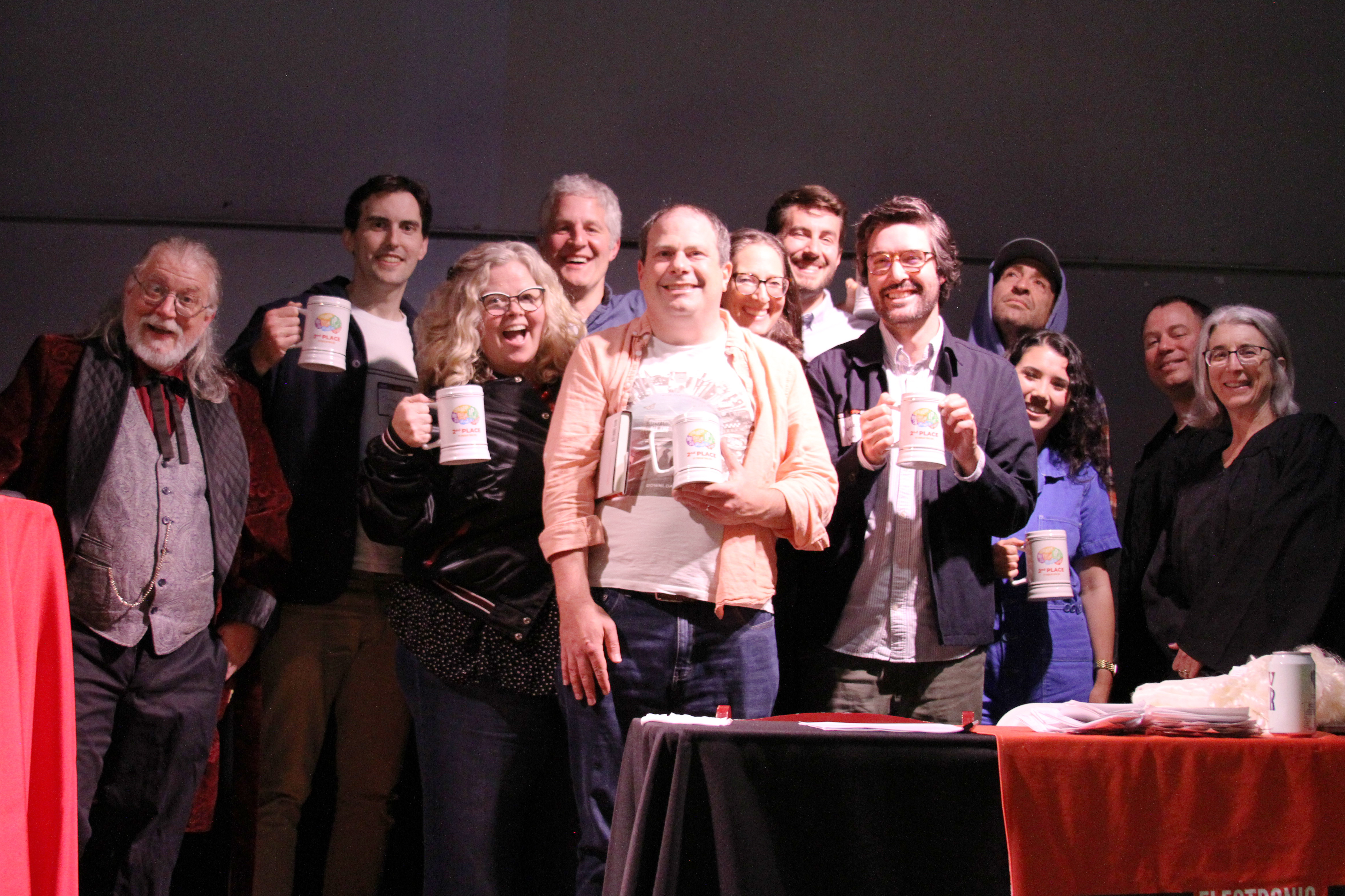
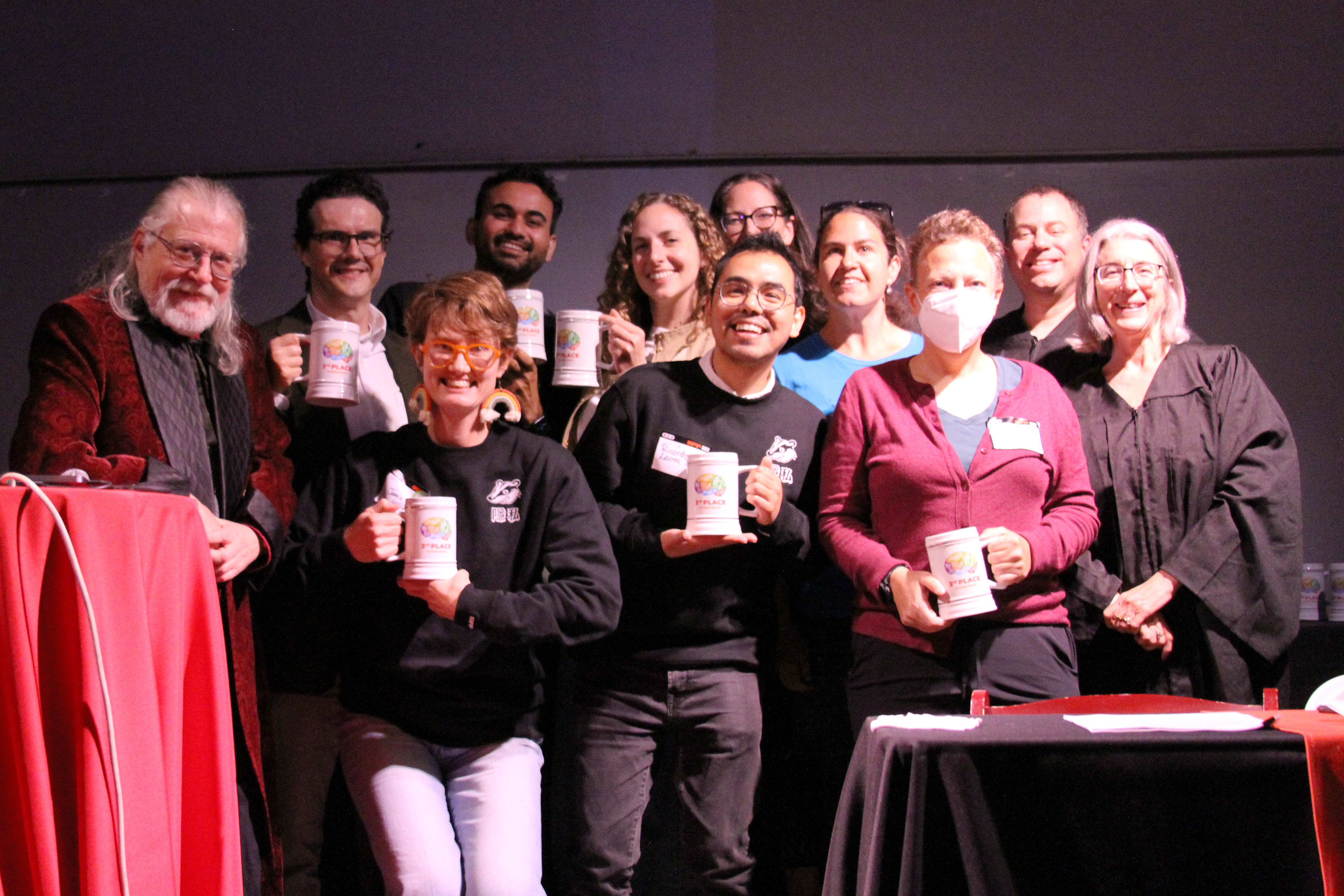
In second place were Nicky’s Angels. Rounding out the virtual podium in 3rd were the Betamaxxers, who jumped ahead early with a home-run run in the Free Speech round, getting every question correct. 

Each summer, EFF's Cyberlaw Trivia Night brings together the legal community that helps defend privacy, free expression, innovation, and digital rights. We want to especially thank this year Morrison Foerster, Fenwick, Wilson Sonsini, and Public Resource for supporting EFF's legal intern program.

Are you an attorney interested in defending civil liberties in the digital world? Consider joining EFF's Cooperating Attorneys list. This network helps EFF connect people to legal assistance when EFF is unable to provide direct assistance. 

Fighting for first place at EFF’s Cyberlaw Trivia Night helps us fight for your rights online! Sponsor one of our annual events and join the movement for digital privacy, free speech, and innovation. Please visit eff.org/thanks or contact tierney@eff.org for more information.

  •  

Former EFF Activism Director's New Book, Transaction Denied, Explores What Happens When Financial Companies Act like Censors

A U.S. citizen who teaches Persian poetry classes online is suddenly unable to receive payments or access funds when his account is flagged and frozen by Paypal and its subsidiary Venmo. A Muslim city councilwoman in New York City has a Venmo payment blocked because she uses the name of a Bangladeshi restaurant in the transaction. Online hubs for erotic storytelling repeatedly lose their payment accounts. Others active in drug legalization fights struggle to keep their bank accounts.

These may sound like one-off issues, but they are not. They occur with frightening regularity, as former EFF Activism Director and Chief Program Officer, Rainey Reitman, who left EFF in 2022, describes in her new book, Transaction DeniedThe book sheds new light on a serious problem that often hides in the shadows, and pushes us to ask an increasingly important question: Is it ever OK for financial intermediaries to act as the arbiters of online expression?"  

Both a storyteller and an advocate, Rainey exposes hidden systems of power that shape our choices, our speech, and, ultimately, our society. - Cindy Cohn

Reitman makes her case about the impact of financial institutions and payment intermediaries shutting down accounts and inhibiting transactions through compelling individual stories, some of which have not been shared before. The people impacted are diverse: authors, teachers, journalists, elected politicians, and more are suddenly unable to retrieve or receive funds, with little explanation, transparency, or recourse. Reitman shows the reasons are frequently speech-related, resulting often from arbitrary corporate policy, a broad (mis)interpretation of the law, or in response to pressure from anti-speech advocates. 

In the example of the Persian poetry teacher, the blocking is due to the highly risk averse interpretation of U.S. sanctions on Iran—sanctions aimed at deterring weapons development or terrorism instead snared a poetry professor and a New York city councilwoman. Reitman demonstrates how these sanctions, and others, have an outsized impact on Muslims.

But Transaction Denied is also a guide for those interested in fighting for free speech. The book covers over a decade of successful campaigns and shows that advocacy can win the day—and is sometimes necessary to counter pro-censorship campaigns. Reitman offers a behind-the-scenes view of the campaign to help restore the Stripe account of the Nifty Archive Alliance, a nonprofit which supports the Nifty Archive, a hub of erotic storytelling for the queer community since 1992. She covers EFF's successful coalition and campaign to restore the PayPal account of Smashwords, a hub for self-published fiction. And in what has become a critical moment for free speech and free press, she describes how several EFF staff members and two EFF board members became the seed for a new nonprofit, the Freedom of the Press Foundation, which continues to partner with EFF today in advancing the rights of journalists.

Transaction Denied bookcover

It’s a banner time for books by EFF staff members and friends. If you're concerned about how online privacy has changed over the last three decades, read EFF Executive Director Cindy Cohn's book, Privacy Defender, released in May. (All proceeds from the sale of hard copies of Privacy’s Defender are being donated to EFF, so your book order will help EFF continue fighting for the principles Cindy holds dear.) If you are worried about the individuals trapped in a system where massive financial companies can shut down their individual accounts, effectively locking up their access to money, based entirely on their speech, grab Transaction Denied, released earlier this month, at Beacon Press, Amazon, and Bookshop.org. (Half of the author proceeds go to Freedom of the Press Foundation.) 

More likely—you'll want both books on your shelf. Happy reading! 

  •  

Cindy Cohn on The Daily Show: Learn More About EFF, Privacy's Defender, and Watch the Interview

About EFF

The Electronic Frontier Foundation is the leading nonprofit defending civil liberties in the digital world. EFF’s work to protect your rights on the internet is supported by over 30,000 members who have joined our mission by donating just this year.

For over 35 years, our lawyers, activists, and technologists have been thinking about the next big thing in tech before anyone else—whether that’s age verification, AI, or Palantir. Whatever causes you fight for, EFF protects the internet infrastructure you rely on to do so.

JOIN EFF TODAY

To learn more about our work, follow EFF on social media and subscribe to EFF's EFFector newsletter below to learn about the ways the internet and online rights are changing and what that means for you. And join EFF to support our fight—because if you use technology, this fight is yours. 

Watch the Interview

play
Privacy info. This embed will serve content from youtube-nocookie.com

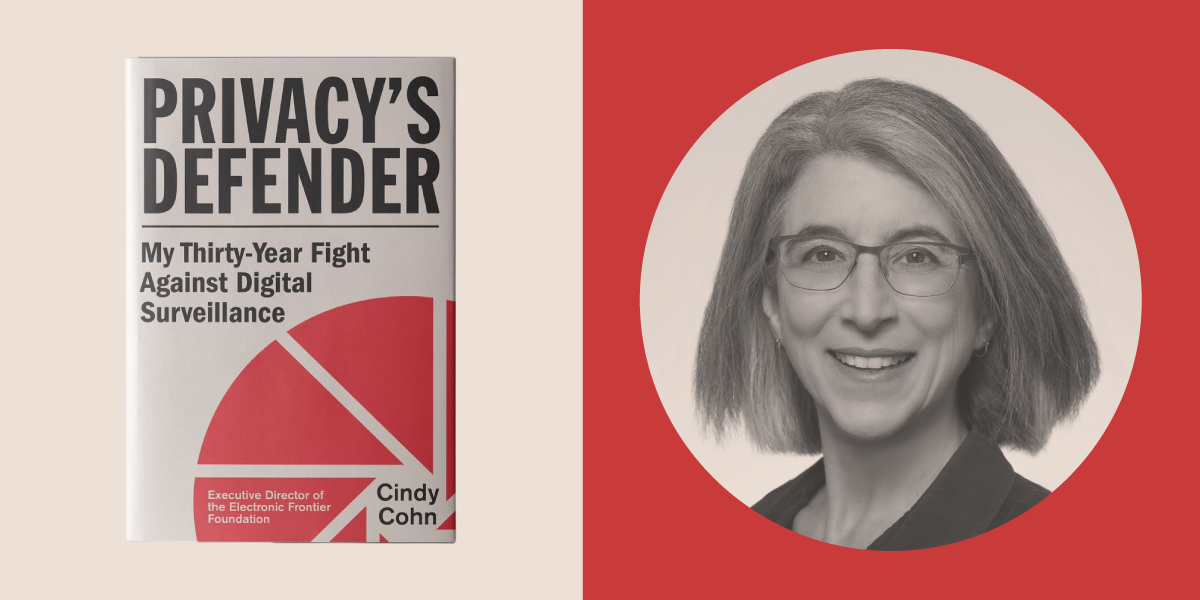
Privacy's Defender: My Thirty Year Fight Against Digital Surveillance, by Cindy Cohn

In Privacy’s Defender: My Thirty-Year Fight Against Digital Surveillance (MIT Press), EFF Executive Director Cindy Cohn weaves her own personal story with her role as a leading legal voice representing the rights and interests of technology users, innovators, whistleblowers, and researchers during the Crypto Wars of the 1990s, battles over NSA’s dragnet internet spying revealed in the 2000s, and the fight against FBI gag orders.

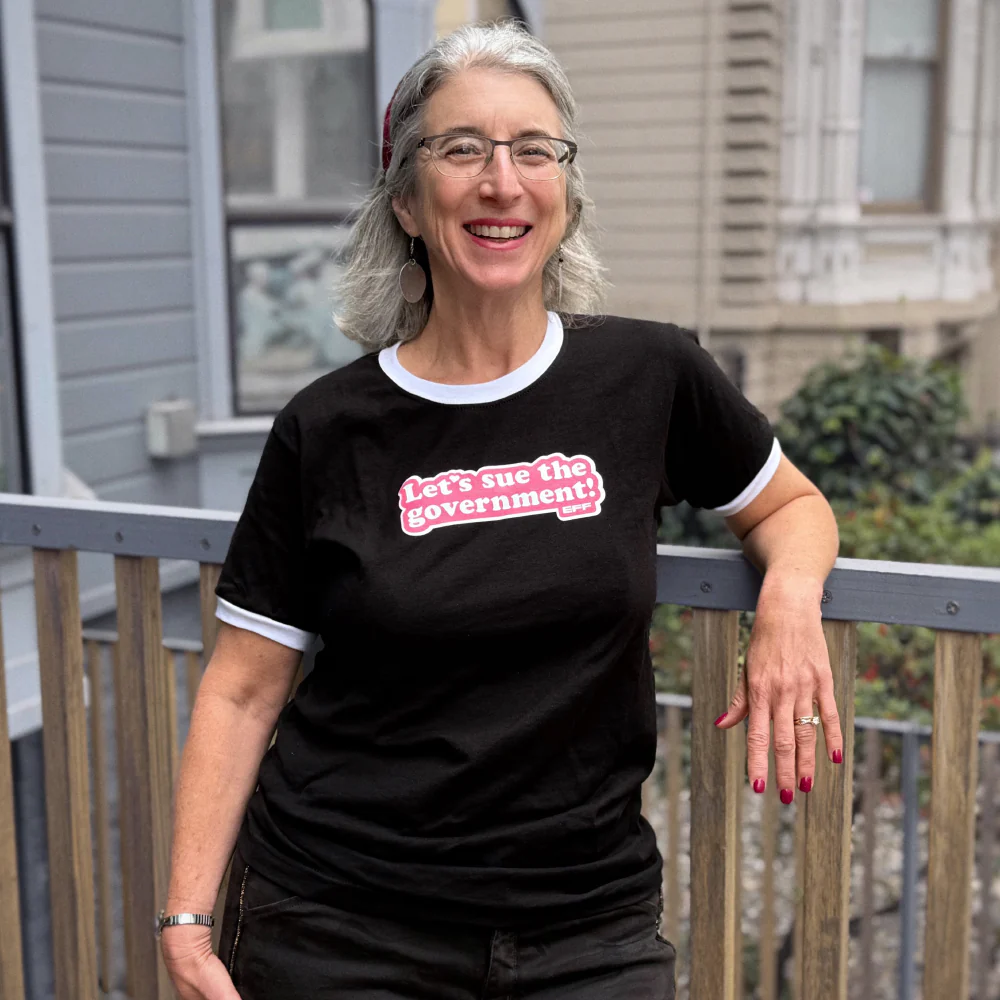
"Let's Sue the Government" T-Shirt

Sometimes our supporters call EFF a merch store with a law firm attached because our stickers, hoodies and shirts are so well known. Our "Let's Sue the Government" shirt tells people: When your rights are at risk, you don’t stay quiet.

Privacy First: A Better Way to Address Online Harms

Our lawmakers seem to be losing the forest for the trees, promoting scattered and disconnected proposals addressing whichever perceived harm is causing the loudest public anxiety in any given moment. Too often, those proposals do not carefully consider the likely unintended consequences or even whether the law will actually reduce the harms it’s supposed to target. 

The truth is many of the ills of today’s internet have a single thing in common: they are built on a system of corporate surveillance. Multiple companies, large and small, collect data about where we go, what we do, what we read, who we communicate with, and so on. They use this data in multiple ways and, if it suits their business model, may sell it to anyone who wants it—including law enforcement. Addressing this shared reality will better promote human rights and civil liberties, while simultaneously holding space for free expression, creativity, and innovation than many of the issue-specific bills we’ve seen over the past decade.

Read EFF's Privacy First: A Better Way to Address Online Harms.

EFF's History

In early 1990, the U.S. Secret Service conducted raids tracking the distribution of a document illegally copied from a telecom company’s computer; one of those targeted was an Austin, TX publisher named Steve Jackson, whose computers were seized but later returned without any charges filed. Jackson’s business had suffered, and he discovered that the government had read and deleted his customers’ emails. He sought a civil liberties organization to represent him for this violation of his rights, but no existing organization understood the technology well enough to grasp the free speech and privacy issues at hand.

But a few well-informed technologists did understand. Mitch Kapor, former president of Lotus Development Corp.; John Perry Barlow, a Wyoming cattle rancher and lyricist for the Grateful Dead; and John Gilmore, an early employee of Sun Microsystems, with help from Apple co-founder Steve Wozniak, decided to do something about it – and so the Electronic Frontier Foundation was born in July 1990. The Steve Jackson Games case turned out to be an extremely important one for the early internet: For the first time, a court held that electronic mail deserves at least as much protection as telephone calls.

EFF's original logo, in use from 1990-2018

EFF continued to take on cases that set important precedents for the treatment of rights in cyberspace. In our second big case, Bernstein v. U.S. Department of Justice, the United States government prohibited a University of California mathematics Ph.D. student from publishing online an encryption program he had created. Years earlier, the government had placed encryption on the United States Munitions List, alongside bombs and flamethrowers, as a weapon to be regulated for national security purposes; our lawsuit established that written software code is speech protected by the First Amendment, and the further ruled that the export control laws on encryption violated Bernstein's rights by prohibiting his constitutionally protected speech.  Now everyone has the right to "export" encryption software—by publishing it on the Internet—without prior permission from the U.S. government. 

Since then we’ve fought against government and corporate abuses of our Constitutional rights, on issues including warrantless wiretapping by intelligence agencies, the panopticon of street-level surveillance that seeks to track everything we do, and the corporate surveillance that turns our clicks into their commodity, as well as issues of antitrust and intellectual property, artificial intelligence, cybersecurity, and much more. We are lawyers, technologists, activists, and lobbyists who work every day for the privacy, security and dignity of all who use technology - and if you use technology, this fight is yours, too.

EFF's Greatest Hits

While many early battles over the right to communicate freely and privately stemmed from government censorship, today EFF is fighting for users on many other fronts as well.

Today, certain powerful corporations are attempting to shut down online speech, prevent new innovation from reaching consumers, and facilitating government surveillance. We challenge corporate overreach just as we challenge government abuses of power.

JOIN EFF TODAY

We also develop technologies that can help individuals protect their privacy and security online, which our technologists build and release freely to the public for anyone to use.

In addition, EFF is engaged in major legislative fights, beating back digital censorship bills disguised as intellectual property proposals, opposing attempts to force companies to spy on users, championing reform bills that rein in government surveillance, documenting police technology and where it's used, helping users protect themselves from surveillance, and much more.

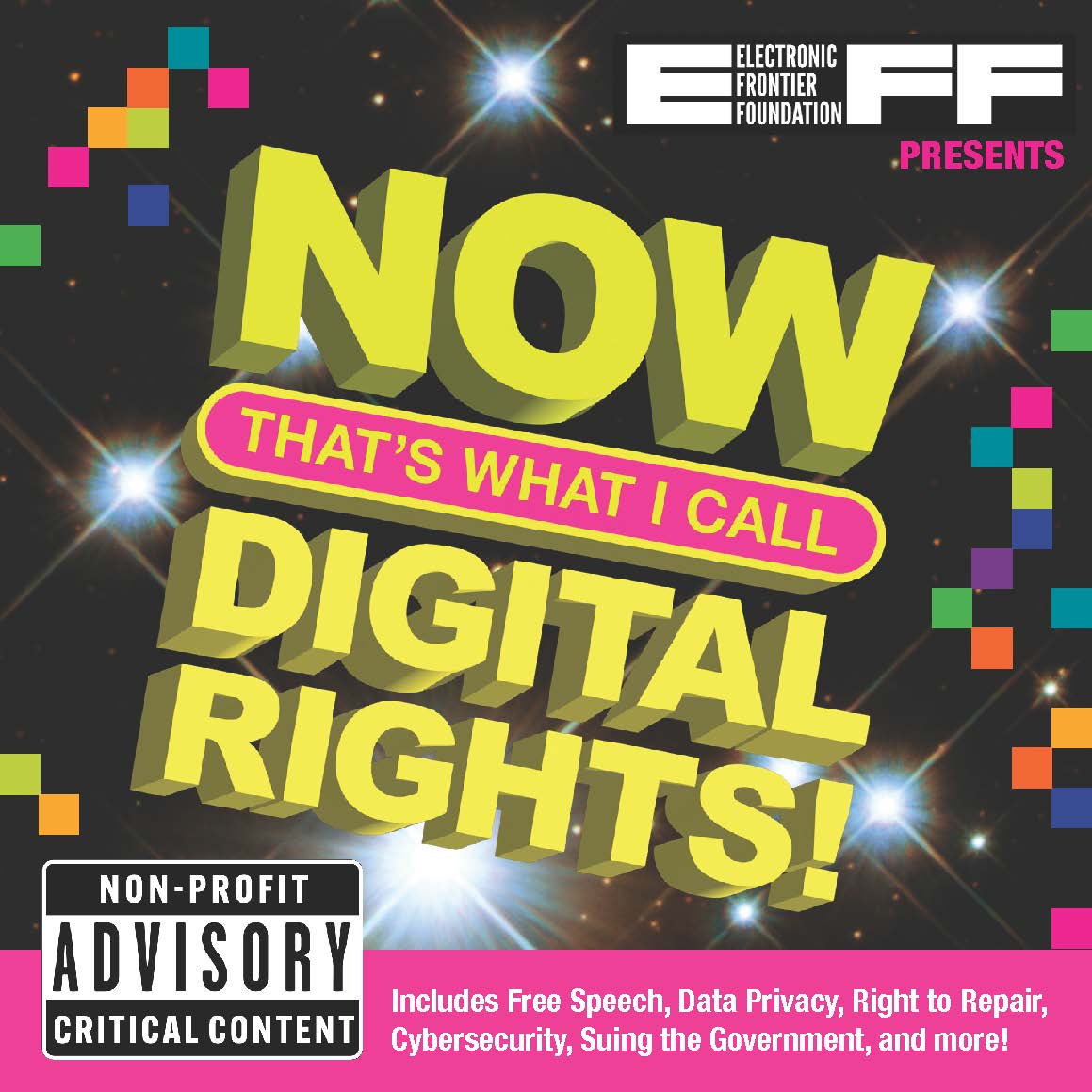
Learn more about some of EFF's most impactful work— Download a PDF of our new catalog, "Now That's What I Call Digital Rights!

  •  

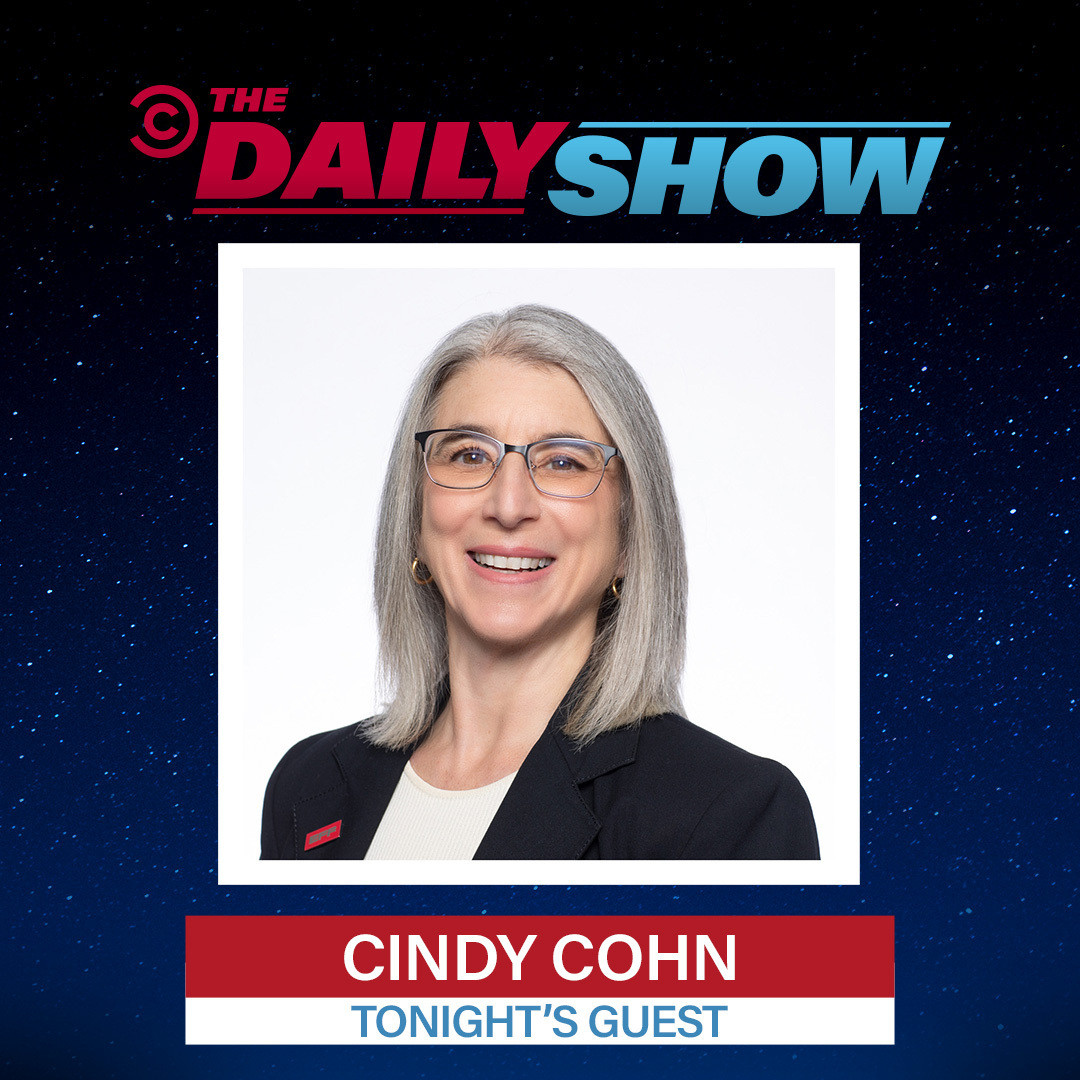
EFF's Cindy Cohn on The Daily Show! Tonight Monday, March 30

EFF Executive Director Cindy Cohn will be on The Daily Show tonight, Monday March 30, at 11 pm ET and PT, speaking with host Jon Stewart. Cindy will discuss her long history of fighting for privacy online and her new book, Privacy’s Defender: My Thirty-Year Fight Against Digital Surveillance (MIT Press). The book details her own personal story alongside her role representing the rights and interests of technology users, innovators, whistleblowers, and researchers during the Crypto Wars of the 1990s, battles over NSA’s dragnet internet spying revealed in the 2000s, and the fight against FBI gag orders. 

You can watch the interview below, and on Comedy Central, and extended episodes are released shortly thereafter on Paramount Plus as well as in segments on YouTube

play
Privacy info. This embed will serve content from youtube-nocookie.com

Tune in image for The Daily Show - Cindy Cohn picture with Text That says The Daily Show Cindy Cohn Tonights Guest

About The Daily Show

The Daily Show is a long-running comedy news show that covers the biggest headlines of the day. It has won 26 Primetime Emmy Awards and has introduced the world to now well-known actors and comedians such as Steve Carell, Samantha Bee, Ed Helms, and Trevor Noah, as well as hosts of their own current shows, Stephen Colbert and John Oliver. 

  •  

Admiring Our Heroes for International Women’s Day: Celebrating Women Who Have Received EFF Awards 

For the last hundred years, women have had pivotal and far too often unsung roles in building and shaping the technology that we now use every day. Many have heard of Ada Lovelace’s contributions to computer programming, but far fewer know Mary Allen Wilkes, a prominent modern programmer who wrote much of the software for the LINC, one of the world’s first interactive personal computers (it could fit in a single office and cost $40,000, but it was the 60’s). Decades earlier, when the first all-electronic, digital Eniac computer was built in the 40’s, the “software” for it was written by women: Kathleen McNulty, Jean Jennings, Betty Snyder, Marlyn Wescoff, Frances Bilas and Ruth Lichterman. 

It’s thankfully become more common knowledge that actor and inventor Hedy Lamarr co-created the concept of "frequency-hopping" that became a basis for radio systems from cell phones to wireless networking systems. But too few know Laila Ohlgren, who in the 1970’s solved a major problem with the development of mobile networks and phones by recognizing that dialed numbers could be stored and sent all at once with a “call button,” rather than sent one number at a time, which created connection issues before a call was even made. 

Women in tech deserve more and brighter spotlights. At EFF, we’ve had the honor of celebrating some of our heroes at our annual EFF Awards, including many women who are leading the digital rights community. For International Women’s Day, we’re highlighting the contributions of just a few of these recipients from the last decade, whose work to protect privacy, speech, and creativity online has had a global impact.

Carolina Botero (EFF Award Winner, 2024) 

Carolina Botero is a leader in the fight for digital rights in Latin America. For over a decade, she led the Colombia-based Karisma Foundation and cultivated its regional and international impact. Botero and Karisma helped connect indigenous peoples to the internet and made it possible to contribute content to Wikipedia in their native language, expanding access to both history and modern information. They built alliances to combat disinformation, pushed for legal tools to protect cultural and heritage institutions from digital blackholes, and were, and remain, a necessary voice speaking for human rights in the online world. EFF worked closely with Karisma and Botero to help free Colombian graduate student Diego Gomez, who shared another student’s Master’s thesis with colleagues over the internet. Diego’s story demonstrates what can go wrong when nations enact severe penalties for copyright infringement, and thanks to work from Karisma, many partners, and many EFF supporters, he was cleared of the criminal charges that he faced for this harmless act of sharing scholarly research.
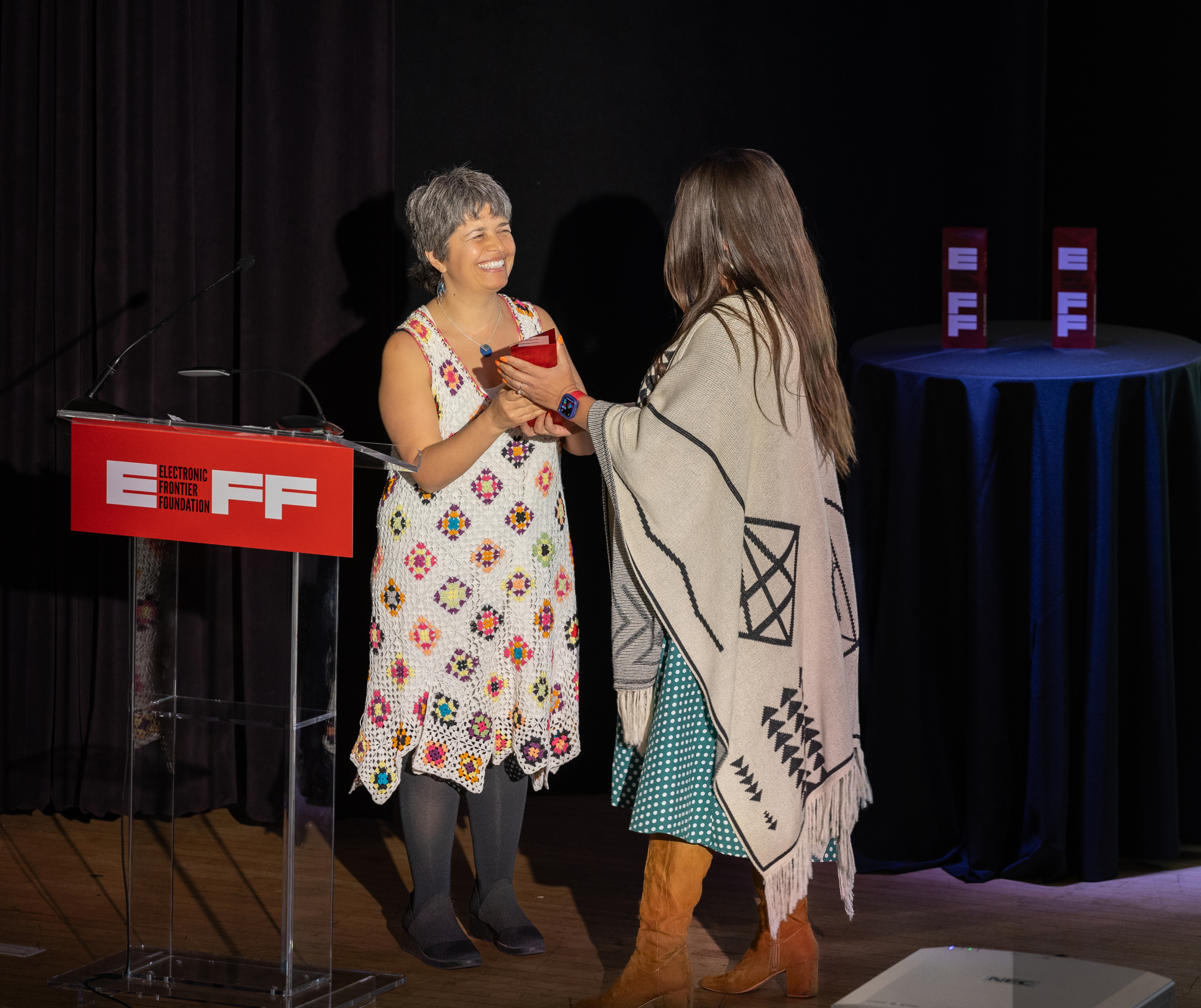
Carolina Botero receiving her EFF Award

Botero stepped down from the role in 2024, opening the door for a new generation. While her work continues—she’s currently on the advisory board of CELE, the Centro de Estudios en Libertad de Expresión—her EFF Award was well-deserved based on her strong and inspiring legacy for those in Latin America and beyond who advocate for a digital world that enhances rights and empowers the powerless. Learn more about Botero on her EFF Awards page and the recap of the 2024 event

Chelsea Manning (EFF Award Winner, 2017)

Chelsea Manning became famous as a whistleblower: In 2010, she disclosed classified Iraq War documents, including a video of the killings of Iraqi civilians and two Reuters reporters by U.S. troops. These documents exposed aspects of U.S. operations in Iraq and Afghanistan that infuriated the public and embarrassed the government. But she is also a transparency and transgender rights advocate, network security expert, author, and former U.S. Army intelligence analyst. 

Manning joined the military in 2007. Her role as an intelligence analyst to an Army unit in Iraq in 2009 gave her access to classified databases, but more importantly, it gave her a uniquely comprehensive view of the war in Iraq, and she became increasingly disillusioned and frustrated by what she saw, versus what was being shared. In 2010, she approached major news outlets hoping to give information to them that would reveal a new side of the war to the public. Ultimately, she shared the documents with Wikileaks. 

Manning’s bravery did not end there. When she was arrested a few months later, she endured "cruel, inhuman and degrading" treatment, according to the UN Special Rapporteur on torture. She was locked up alone for 23 hours a day over an 11-month period, before her trial. The mistreatment resulted in public outcry and advocacy by organizations like Amnesty International. Even a State Department spokesperson, Philip Crowley, criticized the treatment as "ridiculous, counterproductive, and stupid," and resigned. She was moved to a medium-security facility in April 2011. 

The government’s charges against Manning were outrageous, but in 2013 she was convicted of 19 of 22 counts as a result of her whistleblowing activities. She became one of fewerthan a dozen people prosecuted for espionage in the entire history of the United States, and she was sentenced to the longest punishment ever imposed on a whistleblower. Then, the day after her conviction, isolated from her community and in all likelihood expecting to remain in prison for years if not decades, she courageously issued a statement identifying herself as a trans woman, which she’d wanted to reveal for years. 

Over the next several years, while imprisoned, she became an advocate both for government transparency and for transgender rights. Her conviction and sentence pointed to the need for legal reform of both the Computer Fraud and Abuse Act (CFAA) and the Espionage Act.  EFF filed an amicus brief to the U.S. Army Court of Criminal Appeals arguing that the CFAA was never meant to criminalize violations of private policies like those of government systems, and EFF also pushed, and continues to fight for, narrower interpretations of the Espionage Act and stronger protections for whistleblowers, particularly to take into account both the motivation of individuals who pass on documents and the disclosure’s ramifications. 

Even after President Obama commuted her sentence in 2017, and EFF celebrated her work and her release with an EFF award in September, 2017, her fight wasn’t over. She was imprisoned again twice in 2019 and ultimately fined $256,000 for refusing to testify before grand juries investigating WikiLeaks founder Julian Assange. The U.N. Special Rapporteur on torture again criticized Manning’s treatment, writing that "the practice of coercive detention appears to be incompatible with the international human rights obligations of the United States." 

Manning was released in 2020 after having spent almost a decade in total imprisoned for her courage. She wrote a memoir, README.txt, in 2022, to take back control over her story.
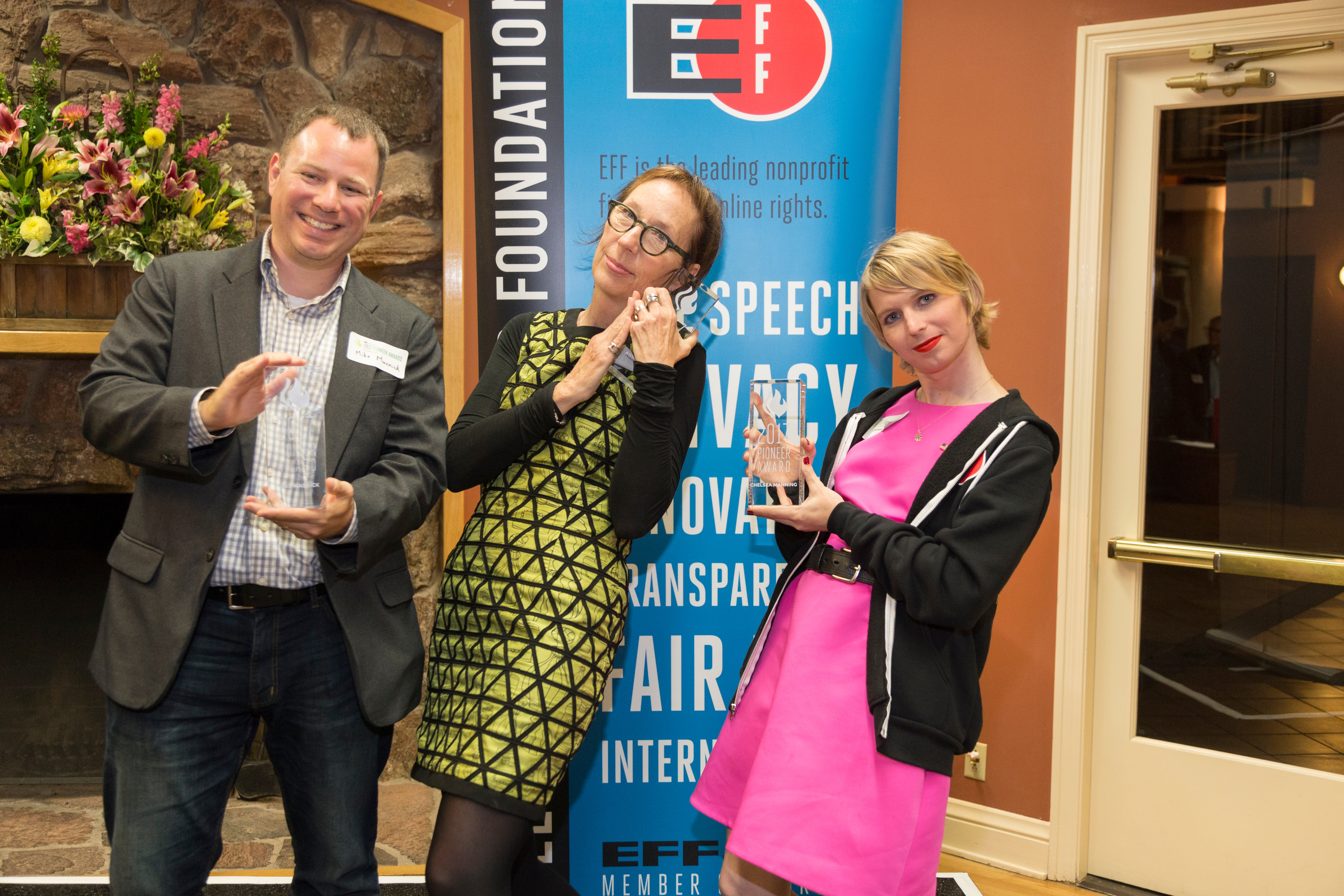
EFF Award Winners Mike Masnick, Annie Game, and Chelsea Manning

Annie Game (EFF Award Winner, 2017)

Annie Game spent over 16 years as the Executive Director of IFEX, a global network of journalism and civil liberties organizations working together to defend freedom of expression.  IFEX (formerly International Freedom of Expression Exchange) began in the 1990s, when a group of organizations and the Canadian Committee to Protect Journalists came together to consider how to respond as a single voice to free-expression violations around the world. IFEX now is a global hub for the protection of free speech and journalism. 

Game recognized early on that digital rights and freedom of expression groups needed one another. Under her leadership, IFEX paired more traditional free-expression organizations with their more digital counterparts, with a focus on building organizational security capacities. IFEX Initiatives under Game’s leadership have been expansive. For example, the International Day to End Impunity for Crimes against Journalists, November 2, has been an annual wake-up call and reminder for UN member states to live up to their commitments to protecting journalists. UNESCO observed more than 1,700 journalists were killed globally between 2006 and 2024, and nearly 90% of these cases went unsolved in the courts. 

Game and IFEX have also focused on high-profile cases of journalists threatened by governments for their work, such as Bahey eldin Hassan in Egypt. Bahey is the director of the Cairo Institute for Human Rights Studies (CIHRS) and has advocated for freedom of expression and the basic human rights of Egyptians, but has lived in exile since 2014. The charges against him, of “disseminating false information” and “insulting the judiciary,” are common tactics of intimidation and harassment. Bahey’s supposed crimes were sharing social media posts criticising the Egyptian judiciary’s lack of independence, and speaking about the killing in Egypt of Italian researcher Giulio Regeni. Bahey—an IFEX member—is just one of many reporters and human rights workers in danger when they speak. But when journalists and those defending their rights online speak out as one voice, as IFEX helps them do, it makes a difference. 

Another initiative has been the Faces of Free Expression project, a partnership between IFEX and the International Free Expression Project. If you’re looking for more heroes, this project details the stories of “risk-takers and change-makers – individuals who put their careers, their freedom, their safety, and sometimes even their lives on the line,” while reporting, or defending free expression and the right to information. 

Wherever authoritarianism and repression of speech have been on the rise, Game has unapologetically called out injustices and made it safer for journalists to do their work, while ensuring accountability when crimes are committed. The work is more critical now than ever, and since leaving IFEX in 2022, she’s remained an activist while focusing increasingly on environmental protection. 

Twelve More Heroes 

EFF has honored many more women with awards over the years—from Anita Borg and Hedy Lamarr to Amy Goodman and Beth Givens. This blog from 2012 looks back and acknowledges the important contributions from twelve more EFF Award winners. 

We’ve also asked five women at EFF about women in digital rights, freedom of expression, technology, and tech activism who have inspired us. You can read that here.

Donate to Support EFF's Work

Your donations empower EFF to do even more.

  •  
❌