โŒ

Reading view

From WarGames to Cyberwar

How Nations Hack, Why Attribution Fails, and What AI Changes

Executive Summary:
Code War author Allie Mellen, argues that cyberwarfare must be understood through a human and geopolitical lens to close the knowledge gap between the security community and the public.

Disclaimer:
This post reflects the perspectives shared in the book Code War: How Nations Hack, Spy, and Shape the Digital Battlefield, and does not represent the views of the publisher of this blog.


The summer of 1983, President Reagan watched WarGames at Camp David and couldn't get it out of his head. A week later, he walked into a White House meeting with cabinet members and Congress and launched into a detailed plot summary of a Matthew Broderick movie about a teenager who nearly hacks the world into nuclear war. The room full of defense experts sat uncomfortably, suppressing smirks. Then Reagan turned to General John Vessey, Chairman of the Joint Chiefs, and asked if something like that could actually happen.

Vessey came back a week later with an answer: "Mr. President, the problem is much worse than you think."

Fifteen months after that, Reagan signed a classified presidential directive titled "National Policy on Telecommunications and Automated Information Systems Security" โ€“ the first federal policy of its kind. A movie had done what years of expert warnings hadn't: It made the most powerful person in the world stop and ask the right question.

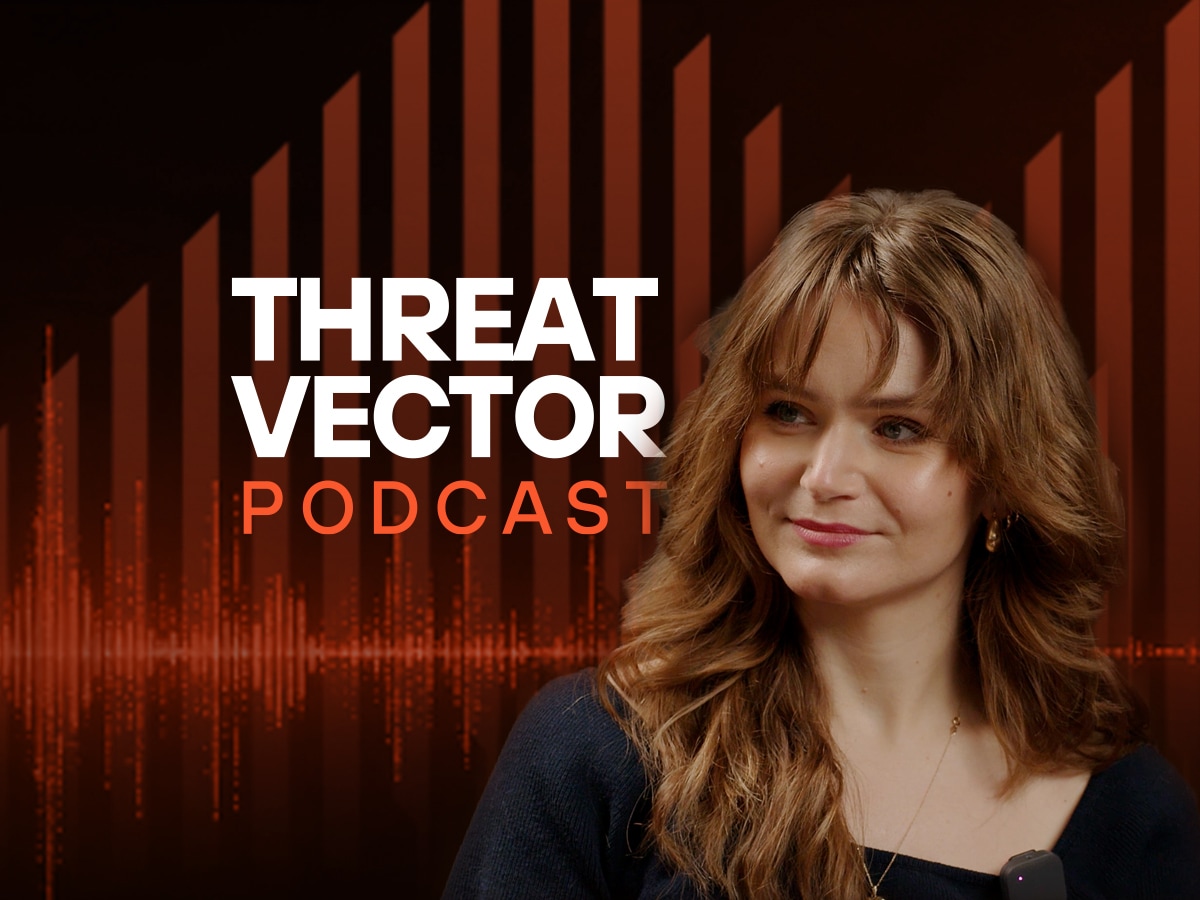
Allie Mellen, author of Code War: How Nations Hack, Spy, and Shape the Digital Battlefield, loves to tell this story, and it captures exactly why she wrote the book. In a conversation recorded at RSA 2025, Mellen joined Threat Vector host, David Moulton, to talk about nation-state threats, attribution pitfalls, and why the security industry's biggest problem isn't technical.

"They're human stories, and if we can communicate them that way to the general public, then we'll get more people interested in cybersecurity, invested in cybersecurity, and invested in protecting their data."

That gap, between what the security community understands and what everyone else grasps, is the core problem Mellen set out to solve. And in today's geopolitical moment, closing it has never been more urgent.

Every Nation Hacks Differently

One of the central arguments in Code War is that you can't understand a nation's cyber behavior without understanding its history, doctrine and social contract. China, Russia, Iran, North Korea and the U.S. each approach offensive and defensive cyber operations from completely different starting points, and those differences matter enormously to defenders.

China operates with patience. Its attacks tend to be low and slow, focused on long-term espionage rather than loud disruption. But that changes sharply in its own region, where operations targeting Taiwan are aggressive and relentless. Russia, by contrast, is bombastic; they want you to know it was Russia. Its influence operations have been some of the most effective in modern history, studied and imitated by Iran and others.

Interestingly, the very system China built to protect itself has become a liability in one specific domain. Because Chinese operators live behind the Great Firewall, without access to western social media, they lack the cultural fluency that makes Russian disinformation so effective. "They try to use memes, but it's like โ€˜uncanny valleyโ€™," Mellen explains. "They just slightly miss every time and so it doesn't go viral." The walled garden that gives China control over its own population makes it harder to manipulate everyone else's.

Attribution Is a Geopolitical Tool, Not Just a Technical One

Mellen is careful about attribution, and she wants defenders to be too. The standard technical signals (coding language, infrastructure patterns, operational hours) are necessary but not sufficient. Nation-states, especially the U.S., have developed tools specifically designed to mimic other actors' signatures. AI will make that problem significantly worse.

But the bigger issue is motivation. Mellen walks through a case from the Olympics where an attack was initially attributed to North Korea, even though North Korea was actively trying to normalize relations at the time by sending Kim Jong Un's sister to the games. The actual perpetrator was Russian, using a false flag to obscure its involvement. The lesson: Attribution requires asking not just "who has the technical capability?" but "who has the motive right now, given everything happening geopolitically?"

The pitfalls are real:

  • Tools once used exclusively by intelligence agencies are now publicly available, making code signatures unreliable.
  • Working-hours analysis is easy to spoof, especially for sophisticated actors.
  • Government-controlled research in adversarial nations can deliberately skew attribution findings.
  • False flag operations are increasingly sophisticated and harder to disentangle.

Why Your Data Is a Geopolitical Asset

One of the more powerful sections of the conversation centers on a question Mellen hears constantly: why would China care about my data?

Her answer cuts through the dismissiveness. These nations aren't collecting data out of idle curiosity. They're willing to constrain companies for it, invest billions in infrastructure for it, and in some cases, far worse. "Whether you wanna be involved in that system or not, you are involved in that system," she says. "And so you can either choose to take control of your information in that environment, or you can just pretend like it's not your problem."

The historical context she offers is striking. One of the driving forces behind GDPR in the EU was the collective memory of how Nazi Germany used data to target Jewish people during the Holocaust. Europe built privacy protections into law because it had seen what happens when governments gain unrestricted access to population data. That's not an abstract concern. It's a lesson written in history that the rest of the world is still catching up to.

AI Makes Everything Harder

Mellen isn't optimistic about the trajectory. Attribution is about to get much harder. Attacks are about to get much more dynamic. And AI is the reason for both.

She points to research on Chinese state-sponsored actors using AI to orchestrate attacks across the full kill chain, with only a couple of human checkpoints in the loop. The implication isn't just faster attacks. It's more adaptive malware that can adjust to different operating environments, more convincing disinformation that clears the cultural context bar, and reconnaissance-to-exploitation cycles that move faster than most defenders can process.

The constraints that have always slowed sophisticated attackers โ€“ understanding the operating system, identifying vulnerabilities, crafting exploits, mimicking attribution โ€“ all get easier with AI. All of that becomes more dynamic. And most enterprises, Mellen acknowledges, are not yet equipped to respond effectively.

The investment required is in the basics the industry has always struggled to get right, executed now at a pace and scale that demands automation and AI on the defensive side. Fighting AI with AI isn't a vendor talking point. It's the only math that works.

More to Explore

The nation-state threats Mellen describes aren't theoretical. Unit 42 responded to more than 750 major incidents in 2025. See what they found. Download the 2026 Global Incident Response Report.

Listen to the full conversation with Allie Mellen, author of Code War, on the Threat Vector podcast

The post From WarGames to Cyberwar appeared first on Palo Alto Networks Blog.
  •  

Securing the UKโ€™s Digital Future

Our Commitment to Data Autonomy and National Resilience

The United Kingdom has established itself as a leading global cyber power. Over the last decade, Palo Alto Networks has been proud to work alongside British institutions to protect the digital borders of a highly innovative economy. As UK organisations navigate an evolving threat landscape and adopt transformative technologies, like AI, the need for security partners who understand British operational realities has never been greater.

The Path to Digital Autonomy, Resilience and Control

Organisations today require more than a technology provider. They need a partner that understands the specific legal frameworks and strategic priorities of the British landscape. We are reaffirming our deep commitment to the UK, safeguarding British data as a core part of national resilience, even as both technology and cyber adversaries evolve.

The targeting of UK infrastructure is a daily operational reality. According to our Unit 42 2026 Global Incident Response Report, attackers are moving at unprecedented speed, with exfiltration speeds for the fastest attacks quadrupling in 2025. Identity weaknesses played a material role in almost 90% of Unit 42ยฎ investigations, as attackers increasingly exploit stolen credentials and fragmented identity systems to escalate privileges and move laterally. These threats span across all sectors, from NHS patient data to local government systems and energy networks.

UK organisations need partners who understand their unique requirements. While our broader European commitments provide a strong foundation, we recognise that the UK requires a dedicated focus across data protection, critical infrastructure security and public-private collaboration. This includes a deep-rooted local presence, aligning our operations with national standards of protection to support British ingenuity and ambition.

Control Over Your Data

Genuine data control requires two things: understanding exactly how and under which laws your information is handled and having the technical capabilities to enforce that control.

For UK customers, we provide the capability to host data within UK-based infrastructure, ensuring that critical data can be stored in regions that align with UK data protection requirements. Additionally, for applicable products and services, we offer Bring Your Own Encryption Keys (BYOK) capabilities, giving you direct control over the encryption protecting your data.

Our agreements are built to comply with UK GDPR requirements and include the necessary protections for any cross-border data transfers. But beyond contractual obligations, we operate on a fundamental principle: Your data serves only the purpose for which youโ€™ve engaged us.

How we handle different data categories:

1. Customer and Personal Data Are Processed Only to Serve You

We process your Customer Data and Personal Data exclusively to deliver the services you have purchased. This includes the content of your communications and files uploaded for support. The purpose is singular: delivering the security and protection youโ€™ve contracted us to provide.

2. Systems Data Is Used to Enhance Functionality and Collective Defence

To provide effective security, our products generate Systems Data, which includes technical logs, performance metrics and threat indicators. This information serves three main purposes: ensuring the day-to-day functionality of your services, enabling our teams to provide expert technical support and troubleshooting, and powering our global threat research capabilities.

When a new threat is detected against a specific UK sector, our entire network receives updated protection within minutes. This allows British organisations to benefit from global threat intelligence. We handle Systems Data in ways that preserve your operational privacy, ensuring the intelligence value comes from understanding threat patterns, not identifying individual organisations.

For detailed technical information on how we categorise and handle data, see our Customer Data, Personal Data and Systems Data whitepapers.

Transparency in Practice

We publish a biannual Transparency Report detailing all government and law enforcement data requests we receive. This isnโ€™t simply about compliance. Itโ€™s about providing UK organisations with verifiable evidence of how we handle requests, enabling informed risk assessment and governance oversight. For more information, please visit the Privacy Section in our Trust Center.

Securing Critical National Infrastructure

The UKโ€™s 13 sectors of Critical National Infrastructure represent the backbone of society. These sectors require security solutions built with an understanding of their unique threat models, from the specific requirements of an NHS trust to the challenges facing an energy provider.

We currently serve hundreds of UK public sector organisations across government, health and critical infrastructure sectors, which include the UK Government, UK Home Office and the Ministry of Justice.

Operational Resilience

For the UKโ€™s most critical services, operational resilience is paramount. Our security platforms are designed for high availability and reliability, helping organisations maintain continuous protection even during disruptions.

Trust and Transparency

Palo Alto Networks is deeply integrated into the UKโ€™s security ecosystem, ensuring our solutions exceed national benchmarks for resilience and transparency.

We hold Cyber Essentials Plus certification and align with the NCSC Cloud Security Principles, providing assurance to customers that we adhere to the highest security protocols to protect their most critical assets. As a Software Security Ambassador and a committed supporter of the NCSC Telecom Vendor Assessment, we are committed to enhancing the security of the UKโ€™s telecommunications and software supply chains.

Beyond compliance, our Unit 42 team serves as an NCSC-assured Cyber Incident Response (CIR) Enhanced Level provider, offering specialised incident support to help UK organisations navigate and recover from the most complex incidents. For customers with specific requirements, particularly in defence and national security, we can provide support from personnel in countries with compatible security standards and legal frameworks. We are committed to the Telecommunications Security Act (TSA) Code of Practice, supporting the resilience of the UKโ€™s public telecommunications networks.

Strengthening Local Expertise with National Impact

Our investment in the UK extends across our people, infrastructure and local expertise. Operating from our London hub, we remain deeply connected to the communities we serve and make a direct and indirect contribution to the UK economy. Our UK-based teams span engineering, threat research, professional services, policy and security strategy, and have a deep understanding of the UK market and the requirements of our customers. We also partner with NCSC CyberFirst and others on developing the next generation of cyber talent, and our Cyber Academy Program partners with universities and colleges all over the UK to train the next generation of cyber defenders.

A Partnership Built on Trust and Verifiable Commitments

The UKโ€™s digital autonomy increasingly depends on its ability to secure both cyber infrastructure and the emerging AI economy. This requires partnerships that serve the UKโ€™s long-term national interests, grounded in trusted institutions, local expertise and transparency that enables commitments to be verified, not simply asserted.

We recognise that the UKโ€™s cyber landscape is shaped by its legal framework, strategic priorities and threat environment. From protecting critical infrastructure to enabling the secure adoption of AI, organisations across the UK need to trust their security partner to deliver on their commitments. Palo Alto Networks is committed to maintaining and increasing that trust through verifiable action, transparency, accountability and an enduring partnership.

To learn more about our comprehensive commitment to digital trust, privacy and security, visit the Palo Alto Networks Trust Center.

The post Securing the UKโ€™s Digital Future appeared first on Palo Alto Networks Blog.

  •  

How the National Cyber Strategy Secures Our Digital Way of Life

A Pivotal Moment for National Security

As the digital landscape undergoes profound shifts, the recently released National Cyber Strategy provides the essential foundation for enduring American leadership. By prioritizing the disruption of hostile actors, future-proofing networks, accelerating quantum readiness, and securing the AI frontier, the strategy provides the strategic clarity necessary to protect our digital way of life from sophisticated adversaries. Palo Alto Networks commends National Cyber Director Sean Cairncross for his leadership and looks forward to working with the administration to operationalize this strategy.

Each pillar of the strategy galvanizes meaningful action to advance our collective defense:

Shape Adversary Behavior (Pillar 1)

This signals a decisive shift toward the proactive disruption of malicious actors. The Trump Administration has made clear that the U.S. Government should impose real costs on adversaries to change their behavior. While the private sector is already executing discrete disruptions against malicious actors, coordination has historically been fragmented. The strategy identifies that increased collaboration with private sector entities, who possess unique insight into adversary behavior, can in turn enable more impactful deterrence.

Promote Common Sense Regulation (Pillar 2)

The strategy appropriately recognizes that complexity is the enemy of security. A focus on measurable improvements in cyber outcomes (versus check-the-box compliance exercises) collectively makes us all safer. While much attention is rightfully paid toward harmonizing incident reporting requirements, which Palo Alto Networks wholeheartedly supports, letโ€™s not stop there. The federal government can lead by example by consolidating and streamlining federal government software compliance certifications. For example, there should be logical reciprocity between FedRAMP High and DoW IL-5 certifications.

Modernize and Secure Federal Government Networks (Pillar 3)

In addition to the necessary attention on AI-powered cyber defense, cloud security and zero trust network architecture, Palo Alto Networks applauds the discrete focus on quantum-safe security ahead of โ€œQ-Day,โ€ the point where quantum computing capabilities will compromise legacy public key encryption that has underpinned cybersecurity for decades. As Federal CISO Mike Duffy recently stated, "Modernization without considering PQC readiness or cryptographic agility is really creating technical debt in the future, something that we donโ€™t want to see ever.โ€

To address this challenge, Palo Alto Networks provides a structured quantum-safe framework organized into four stages:

  • Continuous Discovery โ€“ Automating ecosystem ingestion to identify cryptographic dependencies.
  • Risk Assessment & Prioritization โ€“ Evaluating vulnerabilities to establish a data-driven remediation roadmap.
  • Comprehensive Remediation โ€“ Executing the transition to post-quantum algorithms across the architecture.
  • Governance & Crypto-Hygiene โ€“ Maintaining long-term visibility and management.

The bottom line is that 2035 is too late. Quantum readiness must accelerate today, and this strategy will set a critical North Star to drive the necessary urgency.

Secure Critical Infrastructure (Pillar 4)

Critical infrastructure resilience is central to our homeland security, economic security, public health and safety. Unfortunately, critical infrastructure entities are increasingly under assault from emboldened cyber adversaries.

In fact, Palo Alto Networks research shows some form of operational disruption in up to 86% of major cyber incidents. Our 2026 Global Incident Response Report underscores another sobering reality: These entities are under assault from all angles. In 87% of cyber incidents, attacks targeted multiple attack surfaces, which spanned the network, cloud, endpoints and identity.

Recognizing that you canโ€™t secure what you canโ€™t see, we need a national-level effort to identify, prioritize and harden the critical infrastructure that the American people depend upon. This strategy puts an important marker in the ground to revitalize those efforts.

Sustain Superiority in Critical and Emerging Technologies (Pillar 5)

Palo Alto Networks was pleased to see the strategy reinforces the core tenets of the AI Action Plan, emphasizing that "secure-by-design" principles for AI technologies are non-negotiable and that AI adoption and AI security can and must be inexorably linked.

Enterprises should be able to deploy AI confidently without fear of data leakage, model tampering or rogue AI agents. However, despite our research showing an 88% success rate of โ€œjailbreakingโ€ techniques against widely deployed AI models, only 6% of organizations currently have an AI security strategy. Itโ€™s time to flip this paradigm and put defenders back in the driverโ€™s seat in this AI-first moment.

To support this emerging consensus around the importance of promoting AI security, we developed the Secure AI by Design Policy Roadmap. This framework provides a four-part construct to evaluate the evolving dimensions of threats to AI systems. Palo Alto Networks is also proud to make its comprehensive AI security suite, Prismaยฎ AIRSโ„ข, available to all federal agencies at substantial discounts through GSAโ€™s OneGov Initiative.

Build Talent and Capacity (Pillar 6)

Recognizing Americaโ€™s cyber workforce as a โ€œstrategic asset,โ€ the strategy calls for a pragmatic and accessible pipeline for developing talent. The explicit recognition that we should take advantage of existing avenues across government, industry and academia is important. For example, Palo Alto Networks is proud of the impact of its Cybersecurity Academy โ€“ that provides free, NIST Framework-aligned curricula covering essential domains, such as cybersecurity fundamentals, enterprise and network security, cloud security, security operations and the AI/cybersecurity nexus.

Resources like this, and those for other entities, can form the basis of a renewed focus on cyber talent development.

Turning Strategic Vision Into Action

Palo Alto Networks views itself as more than a cybersecurity vendor. We see ourselves as an integrated national security partner of the federal government at a moment when defending our digital way of life demands all of us working together. To that end, we are ready to do our part to turn strategic vision into action.

This strategy should be applauded. Letโ€™s roll up our sleeves and get to work.

The post How the National Cyber Strategy Secures Our Digital Way of Life appeared first on Palo Alto Networks Blog.

  •  
โŒ