Reading view

How and Why to Fight Back Against Social Media Bans

Several U.S. states are pushing to ban young people from social media entirely. This marks the latest wave of censorship bills masquerading as “children’s online safety” measures, with states like Massachusetts, Idaho, Minnesota, North Carolina, South Carolina, Illinois, and EFF’s home state of California leading the charge.

Just a few years ago, lawmakers supporting age-gating laws insisted their efforts were narrowly targeted at limiting young people’s access to adult content. At the time, we warned that they would not stop there: once the government established the authority and built the infrastructure to collect and “verify” massive troves of user data, it would inevitably sweep broader and broader categories of lawful speech into this mass surveillance and censorship system. 

Unfortunately, our predictions came true. As legislators across the country advance proposals that would block all young people from accessing the “modern public square,” the Overton window has shifted dramatically towards mass censorship—and the speed of this shift should concern all of us. 

This primer breaks down this dangerous wave of social media bans: how they work (and why they don’t), who they harm, and how we can fight back. 

How to Spot a Social Media Ban

The details of these bills vary from state to state. Some (like California’s AB 1709) are a flat-out social media ban for all young people under a certain age, while other states (like South Carolina and Minnesota) allow access to young users who hand over even more data to show verifiable parental consent. Many bills regulate certain social media features, too, including by setting default privacy settings, time limits, or notification preferences for all accounts that fail the age-gate.

As for the age-gating mechanism itself, most proposals fall into two broad categories: age verification bills and behavioral age estimation bills. 

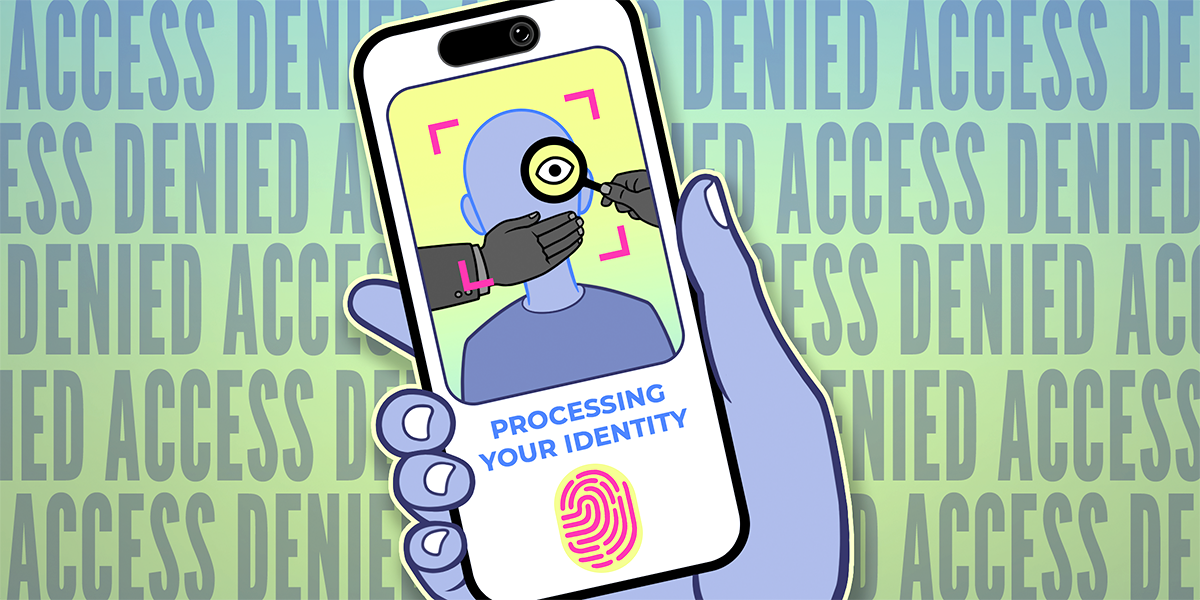
Age Verification Bills require online services to collect highly sensitive data, including government ID and biometric information, from all users before either restricting or allowing them access. 

For example, take California’s social media ban (AB 1709). Starting in January 2027, operating systems will be required to collect enough information from users to sort them into age groups, or “brackets.” Under AB 1709, social media apps would then use that age bracket information to completely block anyone under 16, while supposedly letting everyone else through. By contrast, Florida’s law (HB 3) takes a more aggressive route by forcing platforms to verify users' identities directly, usually by contracting with private third-party companies to perform verification services.

Behavioral Age Estimation Bills, on the other hand, are a more recent innovation of states like Minnesota (HF 1438) and South Carolina (H 4591). These bills require platforms to estimate the ages of users based largely on data that they already collect, including self-attested age, behavioral information, and account history and activity. In practice, these bills enable tech companies to use algorithms and/or AI to analyze our online behavior and estimate age based on that. 

Proponents of behavioral age estimation bills claim that their proposals avoid the massive security risks that come with mandatory age verification bills. However, much of the data that social media platforms collect from us “in the ordinary course of operation” is collected in order to serve us targeted behavioral ads. If we force platforms to use this imperfect data to make more important judgments about who can access their services, we risk entrenching those insidious data collection practices. Surely we don’t want to give social media companies more reasons to justify and sustain their reliance on this exploitative business model.

If you want to dig into the nuance here, our terminology guide sheds more light on the technical differences between age verification and age estimation bills. 

Overall, it’s a lose-lose scenario: either platforms collect new forms of our most sensitive and immutable data, or they unleash their AI and algorithms on our existing behavioral data to make creepy guesses about who we are and what we deserve to see. No matter which age-gating method your state chooses to execute its social media ban, there will be lots of error at the margins—and lots of users who will be blocked or chilled from access to lawful online speech.

Why Social Media Bans Are So Dangerous

Social media bans are unconstitutional, discriminatory, and deeply misguided. They reinforce existing structures of oppression, and they are broadly unsupported by young people, whose voices are conspicuously absent from this conversation. They undermine parental decision-making and replace tailored family-level solutions with a one-size-fits-all band-aid. And, in the places we have seen social media bans go into effect, early reports show that they don't even work

For example, in Australia, where a social media ban has been in effect since late 2025, a majority of young people can still access social media, those who can’t have lost their access to the news, and crisis helplines are reporting skyrocketing numbers of calls from youth left stranded without online community or resources.

We could go on and on about all of the inherent harms here, but we’ll try to keep this short as we walk through some of the major issues.

1. Security Risks and Privacy Harms

In order to ban some users, social media platforms first must confirm the ages of all users, regardless of age. Bans thus incentivize companies to force users of all ages to hand over government IDs, face scans, and other sensitive information. When parental consent is required, companies must collect even more verification data and often create explicit links between child and parent accounts—further destroying users’ anonymity. 

Both of these databases create massive data "honeypots" that invite identity theft and permanent surveillance. We’ve already seen repeated data breaches involving age- and identity-verification services. Yet these laws would force both adults and the youth they claim to protect to feed their most sensitive data into this growing surveillance ecosystem. 

If we don’t trust tech companies with our private information now, we shouldn't pass laws that force us to give them even more of it. 

2. Disproportionate Harm to Vulnerable Communities

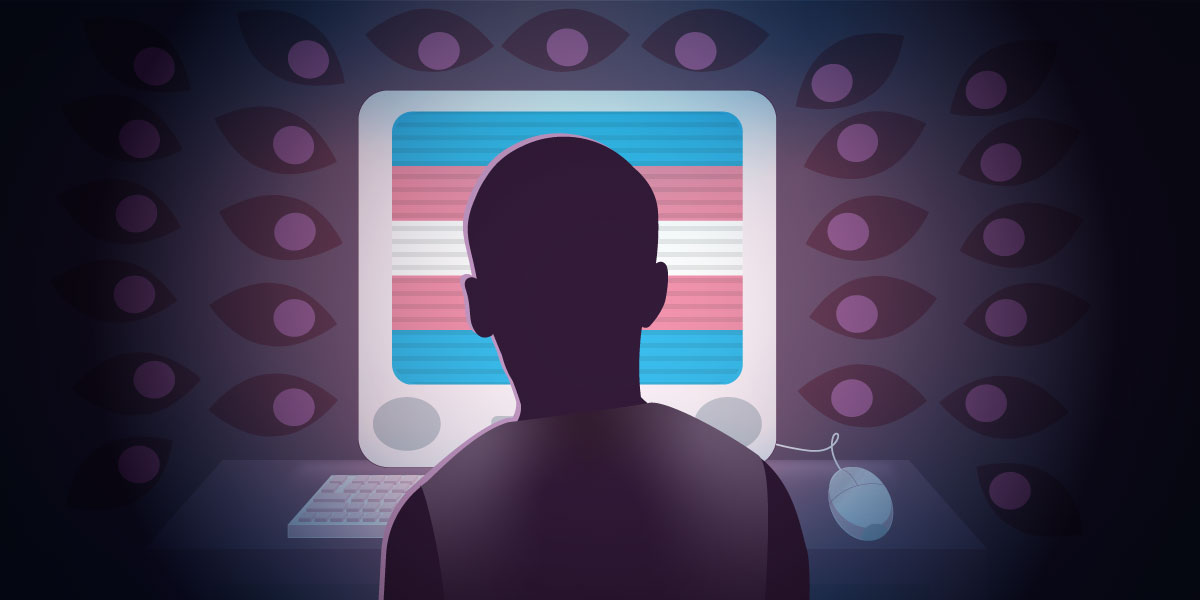
Age-verification technology is deeply flawed and prone to discrimination. These systems frequently misidentify or lock out people of color, people with disabilities, and trans or gender-nonconforming individuals whose IDs may not match their appearance. 

Where these bills require parental consent, they impose disproportionate access barriers on low-income, non-traditional, and immigrant families. These sorts of families are more likely to share a single family device or have strong reasons to not want the government to track family associations and ID documents. 

Beyond the technical failures, these bans cut off a vital lifeline. For LGBTQ+ youth, foster kids, and those stuck in unsupportive home environments, social media is often the only place to find community, explore their identity, or access life-saving resources. Forcibly removing young people isolates those who need connection the most, while creating massive new barriers for adults. 

You can read a breakdown of the diverse groups vulnerable to these laws here

3. Based on Shoddy Science

The current legislative push to ban young people from social media relies heavily on the idea that the "great rewiring" of the adolescent brain is a proven fact. This simply isn’t true.

Social science indicates that moderate internet use is a net positive for teens’ development, and negative outcomes are usually due to either lack of access or excessive use. For LGBTQ+ and marginalized youth in particular, social media offers an essential space to access support they might lack offline. By forcing youth into digital isolation, these bans cut off vital access to political news, community, and health resources. They also completely ignore the calls of young people themselves who favor digital literacy and education over restrictive government control.

Instead of cutting off these lifelines, we should support measures that arm all youth (and the adults in their lives) with the knowledge they need to navigate online spaces safely.

4. Reckless Free Speech Violations for Users of All Ages

No matter your age, the First Amendment protects your right to speak and access information. 

Blanket social media bans immensely and unconstitutionally chill all users’ exercise of this right. They cut off young people’s access to lawful speech, or ruin their privacy in the home by mandating parental consent and sometimes even parental access to their account activities and settings. They force all users (adults and young people alike) to hand private information over to tech companies before speaking or accessing information on social media platforms, imposing annoying obstacles on lawful online expression and wrongfully blocking some adults outright. 

Critically, these bans destroy our right to online anonymity—a cornerstone of our right to free expression that protects whistleblowers, journalists, activists, immigrants, and everyone who has ever used a private browser or account to ask the internet an embarrassing question.

How to Fight Back

Social media bans weaponize parents’ concerns about children’s safety to justify unprecedented levels of surveillance and censorship. In the process, these laws deny young people their rights, threaten online anonymity for everyone, expose our sensitive personal data to breach and abuse, and replace parental decision-making with state authority. This is a battle over the future of the open, private, and free internet, and we must act now to protect it.

Here’s how you can help us fight back: Talk to your community (including young people!) about what’s at stake. If you’re a parent, lean on open conversations and platforms’ existing tools to tailor your child’s experiences instead of handing that power over to the government. And no matter where you live, contact your government representatives and tell them clearly that social media bans are not the answer to kids’ online safety.

  •  

Internet Age Gates Are a Growing Global Threat

The internet is an essential resource for young people and adults to access information, explore community, and find themselves—both inside countries and across continents. Yet governments around the world continue to introduce and implement legislation requiring all online users to verify their ages before accessing the digital space. In some cases, politicians are going further, putting forth proposals to ban social media for younger users.  

In late 2025, Australia’s government rolled out the first complete ban on users under 16 from having social media accounts. In this sweeping regime, platforms are required to introduce age assurance tools to block under-16s, demonstrate that they have taken “reasonable steps” to deactivate accounts used by under-16s, and prevent any new accounts being created, or face fines of up to 49.5 million Australian dollars ($32 million USD). The 10 banned platforms—Instagram, Facebook, Threads, Snapchat, YouTube, TikTok, Kick, Reddit, Twitch, and X—have each said they’ll comply with the legislation, which led to young people losing access to their accounts overnight. Reddit is currently challenging the law in Australian courts on constitutional grounds. Recent research notes how the ban is preventing teenagers from accessing news in the country. 

In the United Kingdom, rules took effect in mid-2025 under the Online Safety Act that require all online services available in the country to assess whether they host content considered harmful to children; if so, these services must introduce age checks to prevent children from accessing such content. Online services are also required to change their algorithms and moderation systems to ensure that content defined as harmful, like violent imagery, is not shown to young people. 

This approach is reckless, short-sighted, and we’ve already seen it introduce more harm to the young people that it is trying to protect. The UK’s scramble to find an effective age verification method shows us that there isn't one, and we’ve spent years urging UK politicians to abandon any measures that require platforms to collect data or remove privacy protections around users’ identities. 

Earlier this year, Indonesia’s Communications and Digital Affairs Minister, Meutya Hafid, announced that users under 16 would have their accounts on “high risk” platforms deactivated from 28 March. The platforms subject to this ban are YouTube, TikTok, Facebook, Instagram, Threads, X, Bigo Live, and Roblox; with Hafid noting how this policy would make Indonesia “the first non-Western country to delay children's access to digital spaces according to age.”

Similarly, the Malaysian government has recently pushed forward with plans to ban users under 16 from having accounts on social media platforms with at least 8 million users in Malaysia, including Facebook, Instagram, TikTok, and YouTube. Users under the age of 16 are being told to download or transfer their data from these platforms in one month before the restrictions are applied. Platforms failing to comply with the ban may face penalties of up to $2.5 million USD.

In Latin America, Brazil approved a new law in 2025 establishing that providers of information technology products and services directed to children and teenagers, or likely to be accessed by them, must conduct age checks when their products and services offer risks to underage users. Regulation requires age assurance for products and services that are not allowed for children and adolescents in accordance with Brazilian legislation. App stores and operating systems are required to provide age signals for other providers. 

While the law is already in force, full compliance with its obligations is expected for early 2027, after the approval of further regulations and a transition period, and the authority responsible for enforcing the law is the Brazilian National Data Protection Agency. The list of concerns regarding the implementation of the law include: the wide scope of products and services that may fall within age-check obligations, how these obligations can affect non-proprietary operating systems and free software projects, and how effective the law's crucial data protection safeguards will be in a context of likely widespread age checks for accessing content online.

Similarly, the European Union has taken large steps towards mandatory age verification that could undermine privacy, expression, and participation rights for everyone. Politicians are promoting an EU-wide approach to age verification through its age verification “app,” which will be fully interoperable with the Digital Identity Wallet. While this mini-app has been announced as technically ready to be rolled out “for citizens to use,” it comes with its own realm of potential privacy and security concerns, such as long-term identifiers (which could result in tracking) and over-exposure of personal information. 

The European Commission also supports age verification in various legislative initiatives, from proposals that would allow or mandate companies to scan our communication (“Chat Control”) to non-binding guidelines of existing laws, such as the Digital Services Act. The EU Parliament, too, has proposed an EU digital minimum age of 16 for access to social media, a move that aligns with EU Commission’s president Ursula von der Leyen’s recent public support for measures inspired by Australia’s model. To all these initiatives EFF has provided one consistent response: mandatory age verification measures are not the right way to protect young people. 

These proposals restrict the fundamental rights of young people to speak to each other and to access information. They also force all internet users, not just those under a certain age, to upload private data—like a face scan or passport—in order to access a website or service. In considering the vast scope of privacy issues pertaining to the collection, storage, and sharing of this personal information, the problems of age verification in restricting free speech are compounded by these reckless and harmful approaches to verification. 

The problem of censorship and surveillance goes far beyond the borders of the internet. EFF continues to explore support for legislative and litigation challenges that recognize how these laws harm everyone’s rights to privacy, free expression and due process.

  •  

One Step Forward, Two Steps Back: CA's AB 1856 Exempts Open Source But Expands Age-Gating

After public outrage, California lawmakers are moving closer to exempting open-source operating systems from the sweeping age-bracketing regime mandated by last year’s Digital Age Assurance Act (AB 1043). Nonetheless, the current bill still jeopardizes internet users’ speech, privacy, and security.

While the open source exemption, if passed, would improve the law, the remaining amendments proposed by AB 1856 would require all web browsers and websites to request and collect users’ ages. This is an expansion of last year's AB 1043's age-bracketing system that compounds its constitutional harms to users’ speech, privacy, and security. As AB 1856 moves on to the Senate, EFF will continue fighting for amendments that reduce those harms.

AB 1856 Extends AB 1043’s Age-Gating Regime

Last year, California passed AB 1043, which requires all operating systems and app stores to create age-bracketing systems that segment users based on their ages. As we’ve written, that regime is a recipe for censorship: it creates unnecessary and unconstitutional barriers to accessing lawful online speech, threatens our right to anonymity, and pressures online services to collect troves of valuable and sensitive user data. On top of that, A.B. 1043’s wide-sweeping compliance burdens impose disproportionate harms on the open-source ecosystem that underpins much of the modern web. 

Given these flaws, lawmakers introduced AB 1856 this year as a supposed “clean-up” bill for AB 1043. But instead of sticking to fixing AB 1043’s unique and serious harms (like its impact on open-source operating systems), AB 1856 also expanded the regime even further—extending its age-bracketing requirements beyond operating systems and app stores to browsers and websites. 

EFF opposed AB 1856 on two grounds, which we explained in our opposition letter to the Assembly: 

  1. The harms that age-gating regimes pose to users’ speech, privacy, and anonymity; and
  2. The disproportionate harms that this particular regime imposes on open-source developers. 

Open Source Concerns Somewhat Alleviated By Amendment

On May 28th, AB 1856 passed the Assembly in a nearly unanimous vote (68-1). 

Before that vote, however, AB 1856 was amended to relieve the compliance burden on open-source operating systems. This is a meaningful improvement and a welcome relief for open-source developers, who have been loud and clear about how much of an existential threat A.B. 1043’s age-gating mandate would pose.

The new exception reads:

Operating system provider” does not mean a person or entity that distributes an operating system or application under license terms that permit a recipient to copy, redistribute, and modify the software.

EFF understands this amendment to exempt open-source operating systems from the requirement to collect and transmit users’ age-bracket data. That is a definite win for open-source developers. The bill is narrower now than it was before, and lawmakers clearly responded to concerns raised by EFF and the broader open-source community. 

Some important questions still remain—for example, it is unclear how the law would apply when an open-source operating system is incorporated into a commercial product or service. And, given the structure of where the exemption is placed under the “operating system provider” definition, lawmakers could stand to clarify that the exemption applies to open-source operating systems and applications.

Nonetheless, that ambiguity aside, this amendment does substantially reduce the threat that AB 1043 could have on many open-source developers. 

AB 1856 Still Expands the Problematic Age-Bracketing Regime

Don’t get us wrong—if this bill passes, we will be very happy that AB 1043 does not pose nearly the amount of harm to our friends behind open-source operating systems. But even after these amendments, EFF remains opposed to AB 1856 because it ultimately expands California’s sweeping age-bracketing framework far beyond the original scope of AB 1043. 

In AB 1856 and its amendments, the Assembly failed to address the core problem with AB 1043’s age-bracketing regime: mandated age-gating systems threaten users’ speech, privacy, anonymity, and security. 

Even after these amendments, EFF remains opposed to AB 1856 because it ultimately expands California’s sweeping age-bracketing framework far beyond the original scope of AB 1043. 

Even though AB 1043 does not explicitly require companies to perform age verification, it nonetheless imposes a liability structure that strongly pressures companies to verify users’ ages anyway. In practice, that could lead to more ID checks, more biometric scanning, more invasive data collection and risk of breach, and more barriers to adults’ and young people’s lawful speech.

In fact, instead of narrowing AB 1043’s wide net, AB 1856 expanded it to add browser providers and website operators to the list of entities that must comply with its age-bracketing requirements. This dramatically broadens the scope of AB 1043 and pulls more services, developers, and users into an anonymity- and privacy-destroying data collection framework that has not yet been implemented or evaluated. The result would make it nearly impossible for regular internet users to avoid AB 1043’s age gates.

The Fight Moves to the Senate

On those grounds, EFF will continue to oppose AB 1856. Though it has passed the Assembly, the fight is not over. As the bill moves through the Senate, we’ll continue to push for amendments that actually “clean up” and narrow the scope of AB 1043, and offer more protection to users from the harms of age-gating systems.

  •  

The Science is Not Settled: How Weak Evidence is Fueling a National Push to Ban Social Media for Youth

As statehouses ramp up for 2026, we’re seeing a familiar and concerning trend of lawmakers rushing to regulate the internet based on shockingly shaky science. From the California State Assembly to the Massachusetts and Minnesota legislatures, a wave of bills is crashing against the digital lives of young people, with proponents of these measures framing social media access as a "public health epidemic," or a "mental health crisis," even though we have yet to see any of the settled science that those labels usually invoke.

As a digital rights organization dedicated to the civil liberties of all users, EFF’s expertise lies in reminding lawmakers that young people enjoy largely the same free speech and privacy rights as adults. EFF is not a social science research shop, but we can read the emerging research. What that research shows is much more nuanced than what is claimed by those proposing to ban young people from social media, and it is clear that research and theories used to justify these sweeping bans is far from settled. The rush to ban access to digital platforms is being fueled by "pop psychology" narratives and a collection of statistically flawed studies that do not meet the rigorous standards required for such a massive infringement on youth autonomy and constitutional rights.

The Lie of A "Settled" Consensus

The current legislative push relies heavily on a specific, media-friendly narrative that the "great rewiring" of the adolescent brain is a proven fact. This theory suggests that smartphones and social media are the primary, if not sole, drivers of a global uptick in teen anxiety, depression, eating disorders, self harm, etc. While this narrative makes for a compelling airport-bookstore read, it quickly collapses under the scrutiny of the broader scientific community.

Independent researchers, including developmental psychologists from institutions like the University of California, Irvine, and Brown University, have repeatedly found that the evidence for such claims is mixed, blurry, and often contradictory. Large-scale meta-analyses covering dozens of countries have failed to show a consistent, measurable association between the rollout of social media and a decline in global well-being. In reality, we are seeing a classic case of what many of our middle school science teachers warned us about: "correlation" being sold as “causation."  

Additionally, the studies used to support these measures often fail to account for or exclude significant alternative explanations for rising teen anxiety and depression, such as the lasting impact of pandemic-era isolation, the persistent threat of school gun violence, and mounting economic or climate-related stress. By focusing narrowly on social media, these findings frequently overlook the broader societal factors that also impact youth mental health.

The Cult of the "Anxious" Expert

The current push for blanket social media bans relies almost exclusively on the work of Jonathan Haidt, particularly his book The Anxious Generation. While Haidt is an amiable and brilliant storyteller, he is not a clinical psychologist or a specialist in child development. He is a social psychologist who writes about moral psychology at a business school. Nonetheless, the book has made it to every Best Seller list, and with Haidt revered as an expert on podcasts with massive reach, like Oprah, Joe Rogan, Michelle Obama, and Trevor Noah—his message has been heard by a large subset of society, which primarily relies on: no smartphones or social media before age 16, phone-free schools, and more “unsupervised, real-world independence.”

To highlight Haidt’s reach when it comes to legislation banning social media: the California committee analysis for the proposed California social media ban mentions Haidt 20 times; the Governor of Utah promoted the book as a “must-read” months before signing the nation’s first social media ban; Haidt is cited in bill analysis for the bill banning social media in Florida; his work is mentioned in a federal bill aiming to ban phones in schools; and he provided formal testimony before the U.S. Senate Judiciary Committee (Subcommittee on Technology, Privacy, and the Law) in May 2022. 

While Haidt’s research has been paramount to legislation stripping millions of young people of their rights to expression and connection, his conclusions are not without challenge, and many experts in the field argue that the evidence is less than ironclad. 

The “Bad Science” Fueling Social Media Bans

While we can admit that Jonathan Haidt’s "great rewiring" theory makes for a gripping narrative, we cannot ignore that independent researchers and statisticians have identified significant flaws in the data used to justify it. Which means we are currently watching policymakers legislate blanket bans based on evidence that would be rejected in almost any other field of public health.

The reality is that research has consistently disproven the oft-assumed link between social media use and poor mental health in youth, and actually indicates that moderate internet use is a net positive for teens’ development, and negative outcomes are usually due to either lack of access or excessive use. In one major study of 100,000 adolescents, a “U-shaped association emerged where moderate social media use was associated with the best well-being outcomes, while both no use and highest use were associated with poorer well-being.” We also know that young people’s relationship with social media is complex, as it provides them essential spaces for civic engagement, identity exploration, and community building—particularly for LGBTQ+ and marginalized youth who may lack support in their physical environments. 

But again, the image Haidt presents in his book is increasingly at odds with the broader academic consensus. As mentioned, critics argue that the evidence for the mental health impacts of social media is mixed, blurry, and often misinterpreted. NYU statistics expert Aaron Brown, writing for Reason, notes that many of the studies in Haidt’s exhaustive reference list are statistically unreliable or fail to show a strong causal link. Prof. Candace Odgers, a leading voice in psychological science, explains the "selection effect" that legislators often ignore:

“Hundreds of researchers, myself included, have searched for the kind of large effects suggested by Haidt. Our efforts have produced a mix of no, small and mixed associations. Most data are correlative. When associations over time are found, they suggest not that social-media use predicts or causes depression, but that young people who already have mental-health problems use such platforms more often or in different ways from their healthy peers.”

This raises a fundamental question of legislative responsibility: If the science is not settled, how can legislators confidently declare a “public health crisis” to justify stripping away young people’s First Amendment rights? By bypassing the rigorous, nuanced findings of the scientific community in favor of a more convenient narrative, legislators are choosing emotion over evidence. Before imposing such draconian restrictions on young people’s access to information, policymakers have an obligation to do the heavy lifting: to dig into the actual research and listen to the experts who are sounding the alarm on oversimplified conclusions.

The Dangers of "Social Contagion" Narrative

Perhaps the most troubling aspect of Haidt’s crusade is its overlap with ideological rhetoric that pathologizes the identities of marginalized youth, and how that makes its way through efforts to ban social media for youth. A recurring theme in the literature favored by proponents of social media bans is the idea of "social contagion"—specifically regarding the rise in young people identifying as transgender or non-binary. Haidt dedicates an entire chapter of his book to this (ch.6, pt 3, p. 165), talking about “Why Social Media Harms Girls More Than Boys,” stating that: 

“The recent growth in diagnoses of gender dysphoria may also be related in part to social media trends, [...] the fact that gender dysphoria is now being diagnosed among many adolescents who showed no signs of it as children all indicate the social influence and sociogenic transmission may be at work as well.”

These harmful theories suggesting that social media is "infecting" young people with gender dysphoria are false and not supported by peer-reviewed clinical research. But by legitimizing "experts" who promote these debunked theories, legislators—especially those in states like California who pride themselves on being a sanctuary for LGBTQ+ youth—are inadvertently platforming the same rhetoric used in other states to ban gender affirming care for youth. This "social contagion" narrative is a tool of exclusion, not a scientific reality, and we must be wary of any "public health" argument that treats community-building and self-discovery among marginalized young people as a "purported mental illness" spread via TikTok.

A Better Path: Digital Wellness, Not Bans

Fortunately, there is a measured, evidence-based alternative already emerging. California's A.B. 2071, for instance, is a student-authored "digital wellness" bill that offers a measured, evidence-based alternative rather than prohibition. The bill advocates for a curriculum that teaches students how to manage algorithms, recognize cyberbullying, and regulate their own relationship with technology. Instead of trying to completely shield young people from social media, education-based approaches empower young people and have the benefit of providing skills that stay with a young person long after they leave the classroom. 

JustLeadershipUSA, a criminal justice organization, has a slogan that rings true in this instance too: “Those closest to the problem are closest to the solution.” So let’s start listening to what our young people are asking us for—more education—instead of imposing paternalistic, disempowering bans.

Legislating With Precision instead of Emotion 

Adolescent mental health struggles are a complex, multifaceted crisis. It is a crisis that has existed for as long as time, and has been driven by economic instability, the opioid epidemic, the threat of school violence, amongst other issues. To pin all of society's woes on a smartphone app is not just a scientific error; it is a policy failure that ignores the real, material needs of young people both online and off.

Legislators must stop legislating as "anxious parents" and start acting as measured policymakers. Because for some youth, social media platforms are a lifeline. UNICEF and other global human rights organizations have warned that age-related restrictions and blanket bans can backfire in three critical ways: isolating marginalized youth (like LGBTQ+ youth, students in rural areas, foster youth, or those with disabilities) who social media is often the only place they can find a supportive community; necessitating invasive mass collection of biometric data or government-issued IDs from all users, including adults; and pushing young people toward less-regulated, "darker" corners of the web where content moderation is non-existent and the risks of actual exploitation are significantly higher.

Legislators have a valid interest in protecting children, but that interest must be pursued through tailored, measured approaches. We cannot allow emotions or a collection of flawed data sets to justify a historic rollback of digital rights. 

  •  

Utah’s New Law Targeting VPNs Goes Into Effect May 6th

Update, May 11, 2026: Utah has agreed to not enforce the VPN law until Sept. 3, 2026 after Aylo, the parent company of Pornhub.com, challenged the law in court.

For the last couple of years, we’ve watched the same predictable cycle play out across the globe: a state (or country) passes a clunky age-verification mandate, and, without fail, Virtual Private Network (VPN) usage surges as residents scramble to maintain their privacy and anonymity. We've seen this everywhere—from states like Florida, Missouri, Texas, and Utah, to countries like the United Kingdom, Australia, and Indonesia

Instead of realizing that mass surveillance and age gates aren't exactly crowd favorites, Utah lawmakers have decided that VPNs themselves are the real issue.

On May 6, 2026, Utah will become, to EFF’s knowledge, the first state in the nation to target the use of VPNs to avoid legally mandated age-verification gates. While advocates in states like Wisconsin successfully forced the removal of similar provisions due to constitutional and technical concerns, Utah is proceeding with a mandate that threatens to significantly undermine digital privacy rights. 

What the Bill Does

Formally known as the “Online Age Verification Amendments,” Senate Bill 73 (SB 73) was signed by Governor Spencer Cox on March 19, 2026. While the majority of the bill consists of provisions related to a 2% tax on revenues from online adult content that is set to take effect in October, one of the more immediate concerns for EFF is the section regulating VPN access, which goes into effect this coming Wednesday.

The VPN Provisions

The new law explicitly addresses VPN use in Section 14, which amends Section 78B-3-1002 of existing Utah statutes in two primary ways:

  1. Regulation based on physical location: Under the law, an individual is considered to be accessing a website from Utah if they are physically located there, regardless of whether they use a VPN, proxy server, or other means to disguise their geographic location.
  2. Ban on sharing VPN instructions: Commercial entities that host "a substantial portion of material harmful to minors" are now prohibited from facilitating or encouraging the use of a VPN to bypass age checks. This includes providing instructions on how to use a VPN or providing the means to circumvent geofencing.

By holding companies liable for verifying the age of anyone physically in Utah, even those using a VPN, the law creates a massive "liability trap." Just like we argued in the case of the Wisconsin bill, if a website cannot reliably detect a VPN user's true location and the law requires it to do so for all users in a particular state, then the legal risk could push the site to either ban all known VPN IPs, or to mandate age verification for every visitor globally. This would subject millions of users to invasive identity checks or blocks to their VPN use, regardless of where they actually live. 

JOIN EFF

HELP US STOP THESE VPN BILLS ACROSS THE COUNTRY

"Don't Ask, Don't Tell"

In practice, SB 73 is different from the Wisconsin proposal in that it stops short of a total VPN ban. Instead, it discourages using VPNs by imposing the liability described above and by muzzling the websites themselves from sharing information about VPNs. This raises significant First Amendment concerns, as it prevents platforms from providing basic, truthful information about a lawful privacy tool to their users. 

Unlike previous drafts seen in other states, SB 73 doesn't explicitly ban the use of a VPN. Under a "don't ask, don't tell" style of enforcement, websites likely only have an obligation to ask for proof of age if they actually learn that a user is physically in Utah and using a VPN. If a site doesn’t know a user is in Utah, their broader obligation to police VPNs remains murky. So, while SB 73 isn’t as extreme as the discarded Wisconsin proposal, it remains a dangerous precedent.

Technical Feasibility

Then there is also the question of technical feasibility: Blocking all known VPN and proxy IP addresses is a technical whack-a-mole that likely no company can win. Providers add new IP addresses constantly, and no comprehensive blocklist exists. Complying with Utah’s requirements would require impossible technical feats.

The internet is built to, and will always, route around censorship. If Utah successfully hampers commercial VPN providers, motivated users will transition to non-commercial proxies, private tunnels through cloud services like AWS, or residential proxies that are virtually indistinguishable from standard home traffic. These workarounds will emerge within hours of the law taking effect. Meanwhile, the collateral damage will fall on businesses, journalists, and survivors of abuse who rely on commercial VPNs for essential data security.

These provisions won't stop a tech-savvy teenager, but they certainly will impact the privacy of every regular Utah resident who just wants to keep their data out of the hands of brokers or malicious actors.

Uncharted Territory

Lawmakers have watched age-verification mandates fail and, instead of reconsidering the approach, have decided to wage war on privacy itself. As the Cato Institute states: 

“The point is that when an internet policy can be avoided by a relatively common technology that often provides significant privacy and security benefits, maybe the policy is the problem. Age verification regimes do plenty of damage to online speech and privacy, but attacking VPNs to try to keep them from being circumvented is doubling down on this damaging approach."

Attacks on VPNs are, at their core, attacks on the tools that enable digital privacy. Utah is setting a precedent that prioritizes government control over the fundamental architecture of a private and secure internet, and it won’t stop at the state’s borders. Regulators in countries outside the U.S. are still eyeing VPN restrictions, with the UK Children’s Commissioner calling VPNs a “loophole that needs closing” and the French Minister Delegate for Artificial Intelligence and Digital Affairs saying VPNs are “the next topic on my list” after the country enacted a ban on social media for kids under 15.

As this law goes into effect, we are entering uncharted territory. Lawmakers who can’t distinguish between a security tool and a "loophole" are now writing the rules for one of the most complex infrastructures on Earth. And we can assure that the result won't be a safer internet, only an increasingly less private one.

SUPPORT EFF  

BECOME AN EFF MEMBER TODAY

  •  

Act Now to Stop California’s Paternalistic and Privacy-Destroying Social Media Ban

California lawmakers are fast-tracking A.B. 1709—a sweeping bill that would ban anyone under 16 from using social media and force every user, regardless of age, to submit sensitive personal information before accessing social platforms.

That means that under A.B. 1709, social media companies will have to enact age gates to prohibit minors from accessing their services. The services may decide that complying with this bill means that Californians have to submit highly sensitive government-issued ID or biometric information to prove they are adults. In the name of “safety,” this bill would destroy online anonymity, expose sensitive personal data to breach and abuse, and replace parental decision-making with state-mandated censorship.

A.B. 1709 has already passed out of the Assembly Privacy and Judiciary Committees with nearly unanimous support. Its next stop is the Assembly Appropriations Committee, followed by a floor vote—likely within the next week.

Take action

Tell Your Representative to OPPOSE A.B. 1709

California Is About to Set a Dangerous Precedent for Online Censorship

By banning access to social media platforms for young people under 16, California is emulating Australia, where early results show exactly what EFF and other critics predicted: overblocking by platforms, leaving youth without support and even adults barred from access; major spikes in VPN use and other workarounds ranging from clever to desperate; and smaller platforms shutting down rather than attempting costly compliance with these sweeping bills.

California should not be racing to replicate those failures. After all, when California leads—especially on tech—other states follow. There is no reason for California to lead the nation into an unconstitutional social media ban that destroys privacy and harms youth.

Take action

Tell Your Representative to OPPOSE A.B. 1709

What’s Wrong With A.B. 1709?

Just about everything.

A.B. 1709 weaponizes legitimate parental concerns by using them to hand over even more censorship and surveillance power to the government. Beneath its shiny “protect the children” rhetoric, this bill is misguided, unconstitutional, and deeply harmful to users of all ages.

A.B. 1709 Recklessly Violates Free Speech Rights

The First Amendment protects the right to speak and access information, regardless of age. But by imposing a blanket ban on social media access, A.B. 1709 would cut off lawful speech for millions of California teenagers, while also forcing all users (adults and kids alike) to verify their ages before speaking or accessing information on social media. This will immensely and unconstitutionally chill Californians’ exercise of their First Amendment.

These mandates ignore longstanding Supreme Court precedent that protects young people’s speech and consistently find these bans unconstitutional. Banning young people entirely from social media is an extreme measure that doesn’t match the actual risks of online engagement. California simply does not have a valid interest in overriding parents’ and young people’s rights to decide for themselves how to use social media.

After all, age-verification technology is far from perfect. A.B. 1709’s reliance on imperfect age-verification technology will disproportionately silence marginalized communities—those whose IDs don’t match their presentation, those with disabilities, trans and gender non-conforming folks, and people of color—who are most likely to be wrongfully denied access by discriminatory systems.  

Finally, many people will simply refuse to give up their anonymity in order to access social media. Our right to anonymity has been a cornerstone of free expression since the founding of this country, and a pillar of online safety since the dawn of the internet. This is for good reason: it allows creativity, innovation, and political thought to flourish, and is essential for those who risk retaliation for their speech or associations. A.B. 1709 threatens to destroy it.

AB 1709 Needlessly Jeopardizes Everyone’s Privacy

A.B. 1709’s age-gating mandate also creates massive security risks by incentivizing platforms to force all of their users to hand over immutable biometric data and government IDs to third-party vendors. By creating centralized "honeypots" of sensitive information, the bill invites identity theft and permanent surveillance rather than actual safety. If we don’t trust tech companies with our private information now, we shouldn't pass a law that mandates we give them even more of it. 

We’ve already seen repeated data breaches involving age- and identity-verification services. Yet A.B. 1709 would require millions more Californians—including the youth this bill claims to protect—to feed their most sensitive data into this growing surveillance ecosystem. 

This is not the answer to online safety.

Take action

Tell Your Representative to OPPOSE A.B. 1709

AB 1709 Harms the Youth It Claims to Protect

While framed as a safety measure, this bill serves as a blunt instrument of censorship, severing vital lifelines for California’s young people. Besides being unconstitutional, banning young people from the internet is bad public policy. After all, social media sites are not just sources of entertainment; they provide crucial spaces for young people to explore their identities—whether by creating and sharing art, practicing religion, building community, or engaging in civic life. 

Social science indicates that moderate internet use is a net positive for teens’ development, and negative outcomes are usually due to either lack of access or excessive use. Social media provides essential spaces for civic engagement, identity exploration, and community building—particularly for LGBTQ+ and marginalized youth who may lack support in their physical environments. By replacing access to political news and health resources with state-mandated isolation, A.B. 1709 ignores the calls of young people themselves who favor digital literacy and education over restrictive government control.

Young people have been loud and clear that what they want is access and education—not censorship and control. They even drafted their own digital literacy education bill, A.B. 2071, which is currently before the California legislature! Instead of cutting off vital lifelines, we should support education measures that would arm them (and the adults in their lives) with the knowledge they need to explore online spaces safely.

AB 1709 Is Misguided and Won’t Work

In case you needed more reasons to oppose this bill.

  • A.B. 1709 Replaces Parenting With Government Control. Families know there is no one-size-fits-all solution to parenting. But AB 1709 imposes one anyway, overriding parental decision-making with a blanket censorship prohibition. Parents who want to actively guide their children’s online experiences should be empowered, not relegated to the sidelines by a blunt state mandate.
  • A.B. 1709 Strengthens Big Tech Instead of Challenging It. Supporters claim that this bill will rein in the major tech companies, but in fact, steep fines and costly compliance regimes disproportionately harm smaller platforms. Where large corporations can afford to absorb legal risk and shell out for expensive verification systems, smaller forums and emerging platforms cannot. We’ve already seen platforms shut down or geoblock entire states in response to age-gating laws. And when the small platforms shutter, where do all of those users—and their valuable data—go? Straight back to the biggest companies.
  • A.B. 1709 Creates Expensive and Shady Bureaucracy During a Budget Crisis. California is facing a massive deficit, but A.B. 1709 would waste taxpayer dollars to fund a shadowy new "e-Safety Advisory Commission" to enforce this ban and dream up new ways to censor the internet. In addition, lawmakers in support of A.B. 1709 have already admitted that this bill is likely to follow the same path as other recent "child safety" laws that were struck down or blocked in court for First Amendment and privacy reasons. With A.B. 1709, taxpayers are being asked to hand over a blank check for millions in legal fees to defend a law that is unconstitutional on its face.

Californians: Act Now to Kill This Bill

A.B. 1709 is not an inevitability, as some supporters want you to believe. But we need to act now to support our youth and their right to participate in online public life.

Your representatives could vote on A.B. 1709 as soon as next week. If you’re a Californian, email your legislators now and tell them to vote NO on AB 1709.

Take action

Tell Your Representative to OPPOSE A.B. 1709

  •  

UK Politicians Continue to Miss the Point in Latest Social Media Ban Proposal

The UK is moving forward with its efforts to ban social media for young people. Ahead of this week’s House of Lords debate on the topic, we’re getting you situated with a primer on what’s been happening and what it all means.

What was the last vote about? 

On 9 March, the House of Commons discussed amendments tabled by the House of Lords in the government’s flagship legislation, the Children’s Wellbeing and Schools Bill. 

The House of Lords previously tabled an amendment to “prevent children under the age of 16 from becoming or being users” of “all regulated user-to-user services,” to be implemented by “highly-effective age assurance measures,” which effectively banned under-16s from social media. When this proposal came before the House of Commons, MPs defeated it by 307 votes to 173. 

Instead, the Commons proposed its own amendment: enabling the Secretary of State to introduce provisions “requiring providers of specified internet services” to prevent access by children, under age 18 rather than 16, to specified internet services or to specified features; and to restrict access by children to specified internet services which ministers provide. 

Who does this give powers to?

The Commons proposal redirects power from the UK Parliament and the UK’s independent telecom regulator Ofcom to the Secretary of State for Science, Innovation and Technology, currently Liz Kendall, who will be able to restrict internet access for young people and determine what content is considered harmful…just because she can. The amendment also empowers the Secretary of State to limit VPN use for under 18s, as well as restrict access to addictive features and change the age of digital consent in the country; for example, preventing under-18s from playing games online after a certain time.  

Why is this a problem? 

This process is devoid of checks or accountability mechanisms as ministers will not be required to demonstrate specific harms to young people, which essentially unravels years-long efforts by Ofcom to assess online services according to their risks. And given the moment the UK is currently in, such as refusing to protect trans and LGBTQ+ communities and flaming hostile and racist discourses, it is not unlikely that we’ll see ministers start restricting content that they ideologically or morally feel opposed to, rather than because the content is harmful based, as established by evidence and assessed pursuant to established human rights principles. 

We know from other jurisdictions like the United States that legislation seeking to protect young people typically sweeps up a slew of broadly-defined topics. Some block access to websites that contain some “sexual material harmful to minors,” which has historically meant explicit sexual content. But some states are now defining the term more broadly so that “sexual material harmful to minors” could encompass anything like sex education; others simply list a variety of vaguely-defined harms. In either instance, this bill would enable ministers to target LGBTQ+ content online by pushing this behind an under-18s age gate, and this risk is especially clear given what we already know about platform content policies. 

How will this impact young people? 

The internet is an essential resource for young people (and adults) to access information, explore community, and find themselves. Beyond being spaces where people can share funny videos and engage with enjoyable content, social media enables young people to engage with the world in a way that transcends their in-person realm, as well as find information they may not feel safe to access offline, such as about family abuse or their sexuality. In severing this connection to people and information by banning social media, politicians are forcing millions of young people into a dark and censored world. 

How did each party vote? 

The initial push to ban under-16s from social media came from the Conservative Party, who have since accused the UK’s Prime Minister Keir Starmer of “dither and delay” for not committing to the ban. The Liberal Democrats have also called this “not good enough.” The Labour Party itself is split, with 107 Labour Party MPs abstaining in the vote on the House of Lords amendment. 

But we know that the issue of young people’s online safety is a polarizing topic that politicians have—and will continue to—weaponize for public support, regardless of their actual intentions. This is why we will continue to urge policymakers and regulators to protect people’s rights and freedoms online at all moments, and not just take the easy route for a quick boost in the polls.

How does this bill connect to the Online Safety Act?

The draft Children’s Wellbeing and Schools Bill that came from the Lords provided that any regulation pertaining to the well-being of young people on social media “must be treated as an enforceable requirement” with the Online Safety Act. The Commons amendment, however, starts out by inserting a new clause that amends the Online Safety Act. 

For more than six years, we’ve been calling on the UK government to pass better legislation around regulating the internet, and when the Online Safety Act passed we continued to advocate for the rights of people on the internet—including young people—as Ofcom implemented the legislation. This has been a protracted effort by civil society groups, technologists, tech companies, and others participating in Ofcom's consultation process and urging the regulator to protect internet users in the UK.

The MPs amendment essentially rips this up. Technology Secretary Liz Kendall recently said that ministers intended to go further than the existing Online Safety Act because it was “never meant to be the end point, and we know parents still have serious concerns. That is why I am prepared to take further action.” But when this further action is empowering herself to make arbitrary decisions on content and access, and banning under-18s from social media, this causes much more harm than it solves. 

Is the UK alone in pushing legislation like this? 

Sadly, no. Calls to ban social media access for young people have gained traction since Australia became the first country in the world to enforce one back in December. On 5 March, Indonesia announced a ban on social media and other “high-risk” online platforms for users under 16. A few days later, new measures came into effect in Brazil that restricts social media access for under-16s, who must now have their accounts linked to a legal guardian. Other countries like Spain and the Philippines have this year announced plans to ban social media for under-16s, with legislation currently pending to implement this.

What are the next steps?

The Children's Wellbeing and Schools Bill returns to the House of Lords on 25 March for consideration of the new Commons amendments. The bill will only become law if both Houses agree to the final draft. 

We will continue to stand up against these proposals—not only to young people’ free expression rights, but also to safeguard the free flow of information that is vital to a democratic society. The issue of online safety is not solved through technology alone, especially not through a ban, and young people deserve a more intentional approach to protecting their safety and privacy online, not this lazy strategy that causes more harm than it solves. 

We encourage politicians in the UK to look into what is best, not what is easy, and explore less invasive approaches to protect all people from online harms. 

  •  

Rep. Finke Was Right: Age-Gating Isn’t About Kids, It’s About Control

When Rep. Leigh Finke spoke last month before the Minnesota House Commerce Finance and Policy Committee to testify against HF1434, a broad-sweeping proposal to age-gate the internet, she began with something disarming: agreement.

“I want to support the basic part of this,” she said, the shared goal of protecting young people online. Because that is not controversial: everyone wants kids to be safe. But HF1434, Minnesota’s proposed age-verification bill, simply won’t “protect children.” It mandates that websites hosting speech that is protected by the First Amendment for both adults and young people to verify users’ identities, often through government IDs or biometric data. As we’ve discussed before, the bill’s definition of speech that lawmakers deem “harmful to minors” is notoriously broad—broad enough to sweep in lawful, non-pornographic speech about sexual orientation, sexual health, and gender identity.

Rep. Finke, an openly transgender lawmaker, next raised a point that her critics have since tried to distort: age-verification laws like the Minnesota bill are already being used to block young LGBTQ+ people from exercising their First Amendment rights to access information that may be educational, affirming, or life-saving. Referencing the Supreme Court case Free Speech Coalition v. Paxton, she noted that state attorneys general have been “almost jubilant” about the ability to use these laws to restrict queer youth from accessing content. “We know that ‘prurient interest’ could be for many people, the very existence of transgender kids,” she added, referring to the malleable legal standard that would govern what content must be age-gated under the law. 

But despite years’ worth of evidence to back her up, Finke has faced a wave of attacks from countless media outlets and religious advocacy groups for her statements. Rep. Finke’s testimony was repeatedly mischaracterized as not having young people’s best interests in mind, when really she was accurately describing the lived reality of LGBTQ+ youth and advocating in support of their access to vital resources and community.

In fact, this backlash proves her point. Beyond attempting to silence queer voices and to scare other legislators from speaking up against these laws, it reveals how age-verification mandates are part of a larger effort to give the government much greater control of what young people are allowed to say, read, or see online. 

Rep. Finke was also right that these proposals are bad policy; they prevent all young people from finding community online, and that they violate young people and adults' First Amendment rights.

Why FSC v. Paxton Matters

Rep. Finke was similarly right to bring up the Paxton case, because beyond the troubling Supreme Court precedent it produced, Texas’s age-verification law also drew eager support from an extraordinary number of amicus briefs from anti-LGBTQ organizations (some even designated hate groups by the Southern Poverty Law Center). 

In FSC v. Paxton, the Supreme Court gave Texas the green light to require age verification for sites where at least one-third of the content is sexual material deemed “harmful to minors,” which generally means explicit sexual content. This ruling, based on how young people do not have a First Amendment right to access explicit sexual content, allows states to enact onerous age-verification rules that will block adults from accessing lawful speech, curtail their ability to be anonymous, and jeopardize their data security and privacy. These are real and immense burdens on adults, and the Court was wrong to ignore them in upholding Texas’ law. 

But laws enacted by other states and Minnesota HF 1434 go further than the Texas statute. Rather than restricting young people from accessing sexual content, these proposals expand what the state deems “harmful to minors” to include any speech that may reference sex, sexuality, gender, and reproductive health. But young people have a First Amendment right to both speak on those topics and to access information online about them.

We will continue to fight against all online age restrictions, but bills like Minnesota’s HF 1434, which seek to restrict young people from accessing speech about their bodies, sexuality, and other truthful information, are especially pernicious.

EFF and Rep. Finke are on the same page here: age verification mandates create immense harm to our First Amendment rights, our right to privacy, as well as our online safety and security. These proposals also fully ignore the reality that LGBTQ young people often rely on the internet for information they cannot get elsewhere. 

But the Paxton case, and the coalition behind it, illustrates exactly how these laws can be weaponized. They weren’t there just to stand up for young people’s privacy online—they were there to argue that the state has a compelling interest in shielding minors from material that, in practice, often includes LGBTQ content. Ultimately, these groups would like to age-gate not just porn sites, but also any content that might discuss sex, sexuality, gender, reproductive health, abortion, and more.

Using Children as Props to Enact Censorship 

The coalition of organizations that filed amicus briefs in support of Texas’s age verification law tells us everything we need to know about the true intentions behind legislating access to information online: censorship, surveillance, and control. After all, if the race to age-gate the internet was purely about child safety, we would expect its strongest supporters to be child-development experts or privacy advocates. Instead, the loudest advocates are organizations dedicated to policing sexuality, attacking LGBTQ+ folks and reproductive rights, and censoring anything that doesn’t fit within their worldview.

Below are some of the harmful platforms that the organizations supporting the age-gating movement are advancing, and how their arguments echo in the attacks on Rep. Finke today:

Policing sexuality, bodily autonomy, and reproductive rights

Many of the organizations backing age-verification laws have spent decades trying to restrict access to accurate sexual health information and reproductive care.

Groups like Exodus Cry, for example, who filed a brief in support of the Texas AG in the SCOTUS case, frame pornography as part of a broader moral crisis. Founded by a Christian dominionistactivist, Exodus Cry advocates for the criminalization of porn and sex work, and promotes a worldview that defines “sexual immorality” as any sexual activity outside marriage between one man and one woman. Its leadership describes the internet as a battleground in a “pornified world” that has to be reclaimed. Another brief in support of the age-verification law was filed by a group of organizations including the Public Advocate of the United States (an SPLC-designated hate group) and America’s Future. America’s Future is an organization that was formed to “revitalize the role of faith in our society” and fiercely advocates in favor of trans sports bans

These groups see age-verification laws as attractive solutions because they create a legal mechanism to wall off large swaths of content that merely mentions sex from not only young people but millions of adults, too.

Attacking LGBTQ+ Rights

Several of the most prominent legal advocates behind age-verification laws have also led the crusade against LGBTQ+ equality. The internet that these groups envision is one that heavily censors critical and even life-saving LGBTQ+ resources, community, and information. 

The Alliance Defending Freedom (ADF), for instance (which is another SPLC-designated hate group), built its reputation on litigation aimed at rolling back LGBTQ+ protections—including  allowing businesses to refuse service to same-sex couples, criminalizing same-sex relationships abroad, and restricting transgender rights

The internet that these groups envision is one that heavily censors critical and even life-saving LGBTQ+ resources, community, and information. 

Then there’s other groups like Them Before Us and Women’s Liberation Front, both of which submitted amici in support of the Texas Attorney General and are devoted to upending LGBTQ+ rights in the United States. Them Before Us says it’s “committed to putting the rights and well-being of children ahead of the desires and agendas of adults.” But it’s also running a campaign to “End Obergefell,” the 2015 Supreme Court case that upheld the right to same-sex marriage, and has been on the cutting edge of transphobic campaigning and pseudoscientific fearmongering about IVF and surrogacy. The Women’s Liberation Front, on the other hand, is an organization that has a long track record of supporting transphobic policies such as bathroom bills, bans on gender-affirming healthcare, and efforts to define “sex” strictly as the biological sex assigned at birth. 

Through cases like FSC v. Paxton, groups like these three continue to advance a vision of society that creates government mandates to enforce their worldviews over personal freedom, while hiding behind a shroud of concern for children’s safety. But when they also describe LGBTQ+ people as “evil” threats to children and run countless campaigns against their human rights, they are being clear about their intentions. This is why we continue to say: the impact of age verification measures goes beyond porn sites.

Expanding censorship beyond the internet into real-life public spaces

As we’ve said for years now, the push to age-gate the internet is part of a broader campaign to control what information people can access in public life both on- and offline. Many of the same organizations advancing these proposals claim to be acting on behalf of young people, but their arguments consistently use children as props to justify giving the government more control over speech and information.

Many of the organizations advocating for online age verification have also supported book bans, attacks on DEI policies and education, and efforts to remove LGBTQ+ materials from schools and libraries. Two of the organizations who supported the Texas Attorney General, Citizens Defending Freedom and Manhattan Institute, have led campaigns around the country to “abolish DEI” and ban classical books like “The Bluest Eye” by Toni Morrison from school libraries. These efforts are not different from the efforts to restrict access to the internet—they reflect a broader strategy to restrict access to ideas or information that these groups find objectionable. And they discourage free thought, inquiry, and the ability for people to decide how to live their lives. 

These campaigns rely on the same core argumentthat certain ideas are inherently dangerous to young people and must therefore be restricted. But that framing misrepresents an important reality: if lawmakers genuinely want to address harms that young people experience online, they should start by listening to young people themselves. When EFF spoke directly with young people about their online experiences, they overwhelmingly rejected restrictions on their access to the internet and came back with nuanced and diverse perspectives. Once that principle—that certain ideas are inherently dangerous—is accepted, the internet, once a symbol of free expression, connection, creativity, and innovation, becomes the next logical target. 

Once that principle—that certain ideas are inherently dangerous—is accepted, the internet, once a symbol of free expression, connection, creativity, and innovation, becomes the next logical target. 

This also wouldn’t be the first time a vulnerable group is used as a prop to advance internet censorship laws. We’ve seen this playbook during the debate over FOSTA/SESTA, where many of the same advocates claimed to speak for trafficking victims/survivors and sex workers, while pushing legislation that ultimately censored online speech and harmed the very communities it invoked. It’s a familiar pattern: you invoke a vulnerable group, frame certain speech as a threat, and use that as a way to expand government control over the flow of information. And as we said in the fight against FOSTA: if lawmakers are serious about addressing harms to particular communities, they should start by talking to those communities. This means that lawmakers seeking to address online harms to young people should be talking to young people, not groups who claim their interests. 

Rep. Finke Was Not Radical. She Was Right.

The Paxton case, and the coalition backing age verification laws in the U.S., shows us exactly why the messaging around these laws draws superficial support from parents and lawmakers. But we’ve heard the quiet part said out loud before. Marsha Blackburn, a sponsor of the federal Kids Online Safety Act, has said that her goal with the legislation was to address what she called “the transgender” in society. When lawmakers and advocacy groups frame queer existence itself as a threat to young people, age-verification laws become ideological enforcement instead of regulatory policy.

When lawmakers and advocacy groups frame queer existence itself as a threat to young people, age-verification laws become ideological enforcement instead of regulatory policy.

In defending free speech, privacy, and the right of young people to access truthful information about themselves, Rep. Leigh Finke was not radical—she was right. She was warning that broad, ideologically driven laws will be used to erase, silence, and isolate young people under the banner of child protection. 

What’s at stake in the fight against age verification is not just a single bill in a single state, or even multiple states, for that matter. It’s about whether “protecting children” becomes a legal pretext for embedding government control over the internet to enforce specific moral and religious judgments—judgments that deny marginalized people access to speech, community, history, and truth—into law. 

And more people in public office need the courage of Rep. Finke to call this out.

  •  

EFF to Wisconsin Legislature: VPN Bans Are Still a Terrible Idea

Update, February 25, 2026: In response to widespread pushback, Wisconsin lawmakers have removed the provision banning VPN services from S.B. 130 / A.B. 105. The bill now awaits Governor Tony Evers’ signature. While the removal of the VPN provision is a positive step, EFF continues to oppose the bill. Advocates and residents across Wisconsin are urged to maintain pressure and encourage Governor Evers to veto the bill.

Wisconsin’s S.B. 130 / A.B. 105 is a spectacularly bad idea.

It’s an age-verification bill that effectively bans VPN access to certain websites for Wisconsinites and censors lawful speech. We wrote about it last November in our blog “Lawmakers Want to Ban VPNs—And They Have No Idea What They're Doing,” but since then, the bill has passed the State Assembly and is scheduled for a vote in the State Senate tomorrow.

In light of this, EFF sent a letter to the entire Wisconsin Legislature urging lawmakers to reject this dangerous bill.

You can read the full letter here.

The short version? This bill both requires invasive age verification for websites that host content lawmakers might deem “sexual” and requires that those sites block any user that connects via a Virtual Private Network (VPN). VPNs are a basic cybersecurity tool used by businesses, universities, journalists, veterans, abuse survivors, and ordinary people who simply don’t want to broadcast their location to every website they visit.

As we lay out in the letter, Wisconsin’s mandate is technically unworkable. Websites cannot reliably determine whether a VPN user is in Wisconsin, a different state, or a different country. So, to avoid liability, websites are faced with an unfortunate choice: either resort to over-blocking IP addresses commonly associated with commercial VPNs, block all Wisconsin users’ access, or mandate nationwide restrictions just to avoid liability. 

The bill also creates a privacy nightmare. It pushes websites to collect sensitive personal data (e.g. government IDs, financial information, biometric identifiers) just to access lawful speech. At the same time, it broadens the definition of material deemed “harmful to minors” far beyond the narrow categories courts have historically allowed states to regulate. The definition goes far beyond the narrow categories historically recognized by courts (namely, explicit adult sexual materials) and instead sweeps in material that merely describes sex or depicts human anatomy. This approach invites over-censorship, chills lawful speech, and exposes websites to vague and unpredictable enforcement. That combination—mass data collection plus vague, expansive speech restrictions—is a recipe for over-censorship, data breaches, and constitutional overreach.

If you live in Wisconsin, now is the time for you to contact your State Senator and urge them to vote NO on S.B. 130 / A.B. 105. Tell them protecting young people online should not mean undermining cybersecurity, chilling lawful speech, and forcing residents to hand over their IDs just to browse the internet.

As we said last time: Our privacy matters. VPNs matter. And politicians who can't tell the difference between a security tool and a "loophole" shouldn't be writing laws about the internet.

  •  

Discord Voluntarily Pushes Mandatory Age Verification Despite Recent Data Breach

Update February 25, 2026: Discord announced yesterday that it will delay the global rollout of its age verification system to the "second half of 2026", instead of March. The company also said it has announced stricter requirements for partners offering facial age estimation, including that the process must be entirely on-device— Discord said one of its initial partners, Persona, "did not meet that bar."

Discord has begun rolling out mandatory age verification and the internet is, understandably, freaking out.

At EFF, we’ve been raising the alarm about age verification mandates for years. In December, we launched our Age Verification Resource Hub to push back against laws and platform policies that require users to hand over sensitive personal information just to access basic online services. At the time, age gates were largely enforced in polities where it was mandated by law. Now they’re landing in platforms and jurisdictions where they’re not required.

Beginning in early March, users who are either (a) estimated by Discord to be under 18, or (b) Discord doesn't have enough information on, may find themselves locked into a “teen-appropriate experience.” That means content filters, age gates, restrictions on direct messages and friend requests, and the inability to speak in “Stage channels,” which are the large-audience audio spaces that power many community events. Discord says most adults may be sorted automatically through a new “age inference” system that relies on account tenure, device and activity data, and broader platform patterns. Those whose age isn’t estimated due to lack of information or who are estimated to not be adults will be asked to scan their face or upload a government ID through a third-party vendor if they want to avoid the default teen account restrictions.

We’ve written extensively about why age verification mandates are a censorship and surveillance nightmare. Discord’s shift only reinforces those concerns. Here’s why:

The 2025 Breach and What's Changed Since

Discord literally won our 2025 “We Still Told You So” Breachies Award. Last year, attackers accessed roughly 70,000 users’ government IDs, selfies, and other sensitive information after compromising Discord’s third-party customer support system.

To be clear: Discord is no longer using that system, which involved routing ID uploads through its general ticketing system for age verification. It now uses dedicated age verification vendors (k-ID globally and Persona for some users in the United Kingdom).

That’s an improvement. But it doesn’t eliminate the underlying potential for data breaches and other harms. Discord says that it will delete records of any user-uploaded government IDs, and that any facial scans will never leave users’ devices. But platforms are closed-source, audits are limited, and history shows that data (especially this ultra-valuable identity data) will leak—whether through hacks, misconfigurations, or retention mistakes. Users are being asked to simply trust that this time will be different.

Age Verification and Anonymous Speech

For decades, we’ve taught young people a simple rule: don’t share personal information with strangers online.

Age verification complicates that advice. Suddenly, some Discord users will now be asked to submit a government ID or facial scan to access certain features if their age-inference technology fails. Discord has said on its blog that it will not associate a user’s ID with their account (only using that information to confirm their age) and that identifying documents won’t be retained. We take those commitments seriously. However, users have little independent visibility into how those safeguards operate in practice or whether they are sufficient to prevent identification.

Even if Discord can technically separate IDs from accounts, many users are understandably skeptical, especially after the platform’s recent breach involving age-verification data. For people who rely on pseudonymity, being required to upload a face scan or government ID at all can feel like crossing a line.

Many people rely on anonymity to speak freely. LGBTQ+ youth, survivors of abuse, political dissidents, and countless others use aliases to explore identity, find support, and build community safely. When identity checks become a condition of participation, many users will simply opt out. The chilling effect isn’t only about whether an ID is permanently linked to an account; it’s about whether users trust the system enough to participate in the first place. When you’re worried that what you say can be traced back to your government ID, you speak differently—or not at all.

No one should have to choose between accessing online communities and protecting their privacy.

Age Verification Systems Are Not Ready for Prime Time

Discord says it is trying to address privacy concerns by using device-based facial age estimation and separating government IDs from user accounts, retaining only a user’s age rather than their identity documents. This is meant to reduce the risks associated with retaining and collecting this sensitive data. However, even when privacy safeguards are in place, we are faced with another problem: There is no current technology that is fully privacy-protective, universally accessible, and consistently accurate. Facial age estimation tools are notoriously unreliable, particularly for people of color, trans and nonbinary people, and people with disabilities. The internet has now proliferated with stories of people bypassing these facial age estimation tools. But when systems get it wrong, users may be forced into appeals processes or required to submit more documentation, such as government-issued IDs, which would exclude those whose appearance doesn’t match their documents and the millions of people around the world who don’t have government-issued identity documents at all.

Even newer approaches (things like age inference, behavior tracking, financial database checks, digital ID systems) expand the web of data collection, and carry their own tradeoffs around access and error. As we mentioned earlier, no current approach is simultaneously privacy-protective, universally accessible, and consistently accurate across all demographics. 

That’s the challenge: the technology itself is not fit for the sweeping role platforms are asking it to play.

That’s the challenge: the technology itself is not fit for the sweeping role platforms are asking it to play.

The Aftermath

Discord reports over 200 million monthly active users, and is one of the largest platforms used by gamers to chat. The video game industry is larger than movies, TV, and music combined, and Discord represents an almost-default option for gamers looking to host communities.

Many communities, including open-source projects, sports teams, fandoms, friend groups, and families, use Discord to stay connected. If communities or individuals are wrongly flagged as minors, or asked to complete the age verification process, they may face a difficult choice: submit to facial scans or ID checks, or accept a more restricted “teen” experience. For those who decline to go through the process, the result can mean reduced functionality, limited communication tools, and the chilling effects that follow. 

Most importantly, Discord did not have to “comply in advance” by requiring age verification for all users, whether or not they live in a jurisdiction that mandates it. Other social media platforms and their trade groups have fought back against more than a dozen age verification laws in the U.S., and Reddit has now taken the legal fight internationally. For a platform with as much market power as Discord, voluntarily imposing age verification is unacceptable. 

So You’ve Hit an Age Gate. Now What?

Discord should reconsider whether expanding identity checks is worth the harm to its communities. But in the meantime, many users are facing age checks today.

That’s why we created our guide, “So You’ve Hit an Age Gate. Now What?” It walks through practical steps to minimize risk, such as:

  • Submit the least amount of sensitive data possible.
  • Ask: What data is collected? Who can access it? How long is it retained?
  • Look for evidence of independent, security-focused audits.
  • Be cautious about background details in selfies or ID photos.

There is unfortunately no perfect option, only tradeoffs. And every user will have their own unique set of safety concerns to consider. Amidst this confusion, our goal is to help keep you informed, so you can make the best choices for you and your community.

In light of the harms imposed by age-verification systems, EFF encourages all services to stop adopting these systems when they are not mandated by law. And lawmakers across the world that are considering bills that would make Discord’s approach the norm for every platform should watch this backlash and similarly move away from the idea.

If you care about privacy, free expression, and the right to participate online without handing over your identity, now is the time to speak up.

Join us in the fight.

  •  

Congress Wants To Hand Your Parenting to Big Tech

Lawmakers in Washington are once again focusing on kids, screens, and mental health. But according to Congress, Big Tech is somehow both the problem and the solution. The Senate Commerce Committee held a hearing today on “examining the effect of technology on America’s youth.” Witnesses warned about “addictive” online content, mental health, and kids spending too much time buried in screen. At the center of the debate is a bill from Sens. Ted Cruz (R-TX) and Brian Schatz (D-HI) called the Kids Off Social Media Act (KOSMA), which they say will protect children and “empower parents.” 

That’s a reasonable goal, especially at a time when many parents feel overwhelmed and nervous about how much time their kids spend on screens. But while the bill’s press release contains soothing language, KOSMA doesn’t actually give parents more control. 

Instead of respecting how most parents guide their kids towards healthy and educational content, KOSMA hands the control panel to Big Tech. That’s right—this bill would take power away from parents, and hand it over to the companies that lawmakers say are the problem.  

Kids Under 13 Are Already Banned From Social Media

One of the main promises of KOSMA is simple and dramatic: it would ban kids under 13 from social media. Based on the language of bill sponsors, one might think that’s a big change, and that today’s rules let kids wander freely into social media sites. But that’s not the case.   

Every major platform already draws the same line: kids under 13 cannot have an account. Facebook, Instagram, TikTok, X, YouTube, Snapchat, Discord, Spotify, and even blogging platforms like WordPress all say essentially the same thing—if you’re under 13, you’re not allowed. That age line has been there for many years, mostly because of how online services comply with a federal privacy law called COPPA

Of course, everyone knows many kids under 13 are on these sites anyways. The real question is how and why they get access. 

Most Social Media Use By Younger Kids Is Family-Mediated 

If lawmakers picture under-13 social media use as a bunch of kids lying about their age and sneaking onto apps behind their parents’ backs, they’ve got it wrong. Serious studies that have looked at this all find the opposite: most under-13 use is out in the open, with parents’ knowledge, and often with their direct help. 

A large national study published last year in Academic Pediatrics found that 63.8% of under-13s have a social media account, but only 5.4% of them said they were keeping one secret from their parents. That means roughly 90% of kids under 13 who are on social media aren’t hiding it at all. Their parents know. (For kids aged thirteen and over, the “secret account” number is almost as low, at 6.9%.) 

Earlier research in the U.S. found the same pattern. In a well-known study of Facebook use by 10-to-14-year-olds, researchers found that about 70% of parents said they actually helped create their child’s account, and between 82% and 95% knew the account existed. Again, this wasn’t kids sneaking around. It was families making a decision together.

A 2022 study by the UK’s media regulator Ofcom points in the same direction, finding that up to two-thirds of social media users below the age of thirteen had direct help from a parent or guardian getting onto the platform. 

The typical under-13 social media user is not a sneaky kid. It’s a family making a decision together. 

KOSMA Forces Platforms To Override Families 

This bill doesn’t just set an age rule. It creates a legal duty for platforms to police families.

Section 103(b) of the bill is blunt: if a platform knows a user is under 13, it “shall terminate any existing account or profile” belonging to that user. And “knows” doesn’t just mean someone admits their age. The bill defines knowledge to include what is “fairly implied on the basis of objective circumstances”—in other words, what a reasonable person would conclude from how the account is being used. The reality of how services would comply with KOSMA is clear: rather than risk liability for how they should have known a user was under 13, they will require all users to prove their age to ensure that they block anyone under 13. 

KOSMA contains no exceptions for parental consent, for family accounts, or for educational or supervised use. The vast majority of people policed by this bill won’t be kids sneaking around—it will be minors who are following their parents’ guidance, and the parents themselves. 

Imagine a child using their parent’s YouTube account to watch science videos about how a volcano works. If they were to leave a comment saying, “Cool video—I’ll show this to my 6th grade teacher!” and YouTube becomes aware of the comment, the platform now has clear signals that a child is using that account. It doesn’t matter whether the parent gave permission. Under KOSMA, the company is legally required to act. To avoid violating KOSMA, it would likely  lock, suspend, or terminate the account, or demand proof it belongs to an adult. That proof would likely mean asking for a scan of a government ID, biometric data, or some other form of intrusive verification, all to keep what is essentially a “family” account from being shut down.

Violations of KOSMA are enforced by the FTC and state attorneys general. That’s more than enough legal risk to make platforms err on the side of cutting people off.

Platforms have no way to remove “just the kid” from a shared account. Their tools are blunt: freeze it, verify it, or delete it. Which means that even when a parent has explicitly approved and supervised their child’s use, KOSMA forces Big Tech to override that family decision.

Your Family, Their Algorithms

KOSMA doesn’t appoint a neutral referee. Under the law, companies like Google (YouTube), Meta (Facebook and Instagram), TikTok, Spotify, X, and Discord will become the ones who decide whose account survives, whose account gets locked, who has to upload ID, and whose family loses access altogether. They won’t be doing this because they want to—but because Congress is threatening them with legal liability if they don’t. 

These companies don’t know your family or your rules. They only know what their algorithms infer. Under KOSMA, those inferences carry the force of law. Rather than parents or teachers, decisions about who can be online, and for what purpose, will be made by corporate compliance teams and automated detection systems. 

What Families Lose 

This debate isn’t really about TikTok trends or doomscrolling. It’s about all the ordinary, boring, parent-guided uses of the modern internet. It’s about a kid watching “How volcanoes work” on regular YouTube, instead of the stripped-down YouTube Kids. It’s about using a shared Spotify account to listen to music a parent already approves. It’s about piano lessons from a teacher who makes her living from YouTube ads.

These aren’t loopholes. They’re how parenting works in the digital age. Parents increasingly filter, supervise, and, usually, decide together with their kids. KOSMA will lead to more locked accounts, and more parents submitting to face scans and ID checks. It will also lead to more power concentrated in the hands of the companies Congress claims to distrust. 

What Can Be Done Instead

KOSMA also includes separate restrictions on how platforms can use algorithms for users aged 13 to 17. Those raise their own serious questions about speech, privacy, and how online services work, and need debate and scrutiny as well. But they don’t change the core problem here: this bill hands control over children’s online lives to Big Tech.

If Congress really wants to help families, it should start with something much simpler and much more effective: strong privacy protections for everyone. Limits on data collection, restrictions on behavioral tracking, and rules that apply to adults as well as kids would do far more to reduce harmful incentives than deputizing companies to guess how old your child is and shut them out.

But if lawmakers aren’t ready to do that, they should at least drop KOSMA and start over. A law that treats ordinary parenting as a compliance problem is not protecting families—it’s undermining them.

Parents don’t need Big Tech to replace them. They need laws that respect how families actually work.

  •  

So, You’ve Hit an Age Gate. What Now?

This blog also appears in our Age Verification Resource Hub: our one-stop shop for users seeking to understand what age-gating laws actually do, what’s at stake, how to protect yourself, and why EFF opposes all forms of age verification mandates. Head to EFF.org/Age to explore our resources and join us in the fight for a free, open, private, and yes—safe—internet.

EFF is against age gating and age verification mandates, and we hope we’ll win in getting existing ones overturned and new ones prevented. But mandates are already in effect, and every day many people are asked to verify their age across the web, despite prominent cases of sensitive data getting leaked in the process.

At some point, you may have been faced with the decision yourself: should I continue to use this service if I have to verify my age? And if so, how can I do that with the least risk to my personal information? This is our guide to navigating those decisions, with information on what questions to ask about the age verification options you’re presented with, and answers to those questions for some of the top most popular social media sites. Even though there’s no way to implement mandated age gates in a way that fully protects speech and privacy rights, our goal here is to help you minimize the infringement of your rights as you manage this awful situation.

Follow the Data

Since we know that leaks happen despite the best efforts of software engineers, we generally recommend submitting the absolute least amount of data possible. Unfortunately, that’s not going to be possible for everyone. Even facial age estimation solutions where pictures of your face never leave your device, offering some protection against data leakage, are not a good option for all users: facial age estimation works less well for people of color, trans and nonbinary people, and people with disabilities. There are some systems that use fancy cryptography so that a digital ID saved to your device won’t tell the website anything more than if you meet the age requirement, but access to that digital ID isn’t available to everyone or for all platforms. You may also not want to register for a digital ID and save it to your phone, if you don’t want to take the chance of all the information on it being exposed upon request of an over-zealous verifier, or you simply don’t want to be a part of a digital ID system

If you’re given the option of selecting a verification method and are deciding which to use, we recommend considering the following questions for each process allowed by each vendor:

    • Data: What info does each method require?
    • Access: Who can see the data during the course of the verification process?
    • Retention: Who will hold onto that data after the verification process, and for how long?
    • Audits: How sure are we that the stated claims will happen in practice? For example, are there external audits confirming that data is not accidentally leaked to another site along the way? Ideally these will be in-depth, security-focused audits by specialized auditors like NCC Group or Trail of Bits, instead of audits that merely certify adherence to standards. 
    • Visibility: Who will be aware that you’re attempting to verify your age, and will they know which platform you’re trying to verify for?

We attempt to provide answers to these questions below. To begin, there are two major factors to consider when answering these questions: the tools each platform uses, and the overall system those tools are part of.

In general, most platforms offer age estimation options like face scans as a first line of age assurance. These vary in intrusiveness, but their main problem is inaccuracy, particularly for marginalized users. Third-party age verification vendors Private ID and k-ID offer on-device facial age estimation, but another common vendor, Yoti, sends the image to their servers during age checks by some of the biggest platforms. This risks leaking the images themselves, and also the fact that you’re using that particular website, to the third party. 

Then, there’s the document-based verification services, which require you to submit a hard identifier like a government-issued ID. This method thus requires you to prove both your age and your identity. A platform can do this in-house through a designated dataflow, or by sending that data to a third party. We’ve already seen examples of how this can fail. For example, Discord routed users' ID data through its general customer service workflow so that a third-party vendor could perform manual review of verification appeals. No one involved ever deleted users' data, so when the system was breached, Discord had to apologize for the catastrophic disclosure of nearly 70,000 photos of users' ID documents. Overly long retention periods expose documents to risk of breaches and historical data requests. Some document verifiers have retention periods that are needlessly long. This is the case with Incode, which provides ID verification for Tiktok. Incode holds onto images forever by default, though TikTok should automatically start the deletion process on your behalf.

Some platforms offer alternatives, like proving that you own a credit card, or asking for your email to check if it appears in databases associated with adulthood (like home mortgage databases). These tend to involve less risk when it comes to the sensitivity of the data itself, especially since credit cards can be replaced, but in general still undermine anonymity and pseudonymity and pose a risk of tracking your online activity. We’d prefer to see more assurances across the board about how information is handled.

Each site offers users a menu of age assurance options to choose from. We’ve chosen to present these options in the rough order that we expect most people to prefer. Jump directly to a platform to learn more about its age checks:

Meta – Facebook, Instagram, WhatsApp, Messenger, Threads

Inferred Age

If Meta can guess your age, you may never even see an age verification screen. Meta, which runs Facebook, Threads, Instagram, Messenger, and WhatsApp, first tries to use information you’ve posted to guess your age, like looking at “Happy birthday!” messages. It’s a creepy reminder that they already have quite a lot of information about you.

If Meta cannot guess your age, or if Meta infers you're too young, it will next ask you to verify your age using either facial age estimation, or by uploading your photo ID. 

Face Scan

If you choose to use facial age estimation, you’ll be sent to Yoti, a third-party verification service. Your photo will be uploaded to their servers during this process. Yoti claims that “as soon as an age has been estimated, the facial image is immediately and permanently deleted.” Though it’s not as good as not having that data in the first place, Yoti’s security measures include a bug bounty program and annual penetration testing. Researchers from Mint Secure found that Yoti’s app and website are filled with trackers, so the fact that you’re verifying your age could be not only shared to Yoti, but leaked to third-party data brokers as well. 

You may not want to use this option if you’re worried about third parties potentially being able to know you’re trying to verify your age with Meta. You also might not want to use this if you’re worried about a current picture of your face accidentally leaking—for example, if elements in the background of your selfie might reveal your current location. On the other hand, if you consider a selfie to be less sensitive than a photograph of your ID, this option might be better. If you do choose (or are forced to) use the face check system, be sure to snap your selfie without anything you'd be concerned with identifying your location or embarrassing you in the background in case the image leaks.

Upload ID

If Yoti’s age estimation decides your face looks too young, or if you opt out of facial age estimation, your next recourse is to send Meta a photo of your ID. Meta sends that photo to Yoti to verify the ID. Meta says it will hold onto that ID image for 30 days, then delete it. Meanwhile, Yoti claims it will delete the image immediately after verification. Of course, bugs and process oversights exist, such as accidentally replicating information in logs or support queues, but at least they have stated processes. Your ID contains sensitive information such as your full legal name and home address. Using this option not only runs the (hopefully small, but never nonexistent) risk of that data getting leaked through errors or hacking, but it also lets Meta see the information needed to tie your profile to your identity—which you may not want. If you don’t want Meta to know your name and where you live, or rely on both Meta and Yoti to keep to their deletion promises, this option may not be right for you.

Google – Gmail, YouTube 

Inferred Age

If Google can guess your age, you may never even see an age verification screen. Your Google account is typically connected to your YouTube account, so if (like mine) your YouTube account is old enough to vote, you may not need to verify your Google account at all. Google first uses information it already knows to try to guess your age, like how long you’ve had the account and your YouTube viewing habits. It’s yet another creepy reminder of how much information these corporations have on you, but at least in this case they aren’t likely to ask for even more identifying data.

If Google cannot guess your age, or decides you're too young, Google will next ask you to verify your age. You’ll be given a variety of options for how to do so, with availability that will depend on your location and your age.

Google’s methods to assure your age include ID verification, facial age estimation, verification by proxy, and digital ID. To prove you’re over 18, you may be able to use facial age estimation, give Google your credit card information, or tell a third-party provider your email address.

Face Scan

If you choose to use facial age estimation, you’ll be sent to a website run by Private ID, a third-party verification service. The website will load Private ID’s verifier within the page—this means that your selfie will be checked without any images leaving your device. If the system decides you’re over 18, it will let Google know that, and only that. Of course, no technology is perfect—should Private ID be mandated to target you specifically, there’s nothing to stop it from sending down code that does in fact upload your image, and you probably won’t notice. But unless your threat model includes being specifically targeted by a state actor or Private ID, that’s unlikely to be something you need to worry about. For most people, no one else will see your image during this process. Private ID will, however, be told that your device is trying to verify your age with Google and Google will still find out if Private ID thinks that you’re under 18.

If Private ID’s age estimation decides your face looks too young, you may next be able to decide if you’d rather let Google verify your age by giving it your credit card information, photo ID, or digital ID, or by letting Google send your email address to a third-party verifier.

Email Usage

If you choose to provide your email address, Google sends it on to a company called VerifyMy. VerifyMy will use your email address to see if you’ve done things like get a mortgage or paid for utilities using that email address. If you use Gmail as your email provider, this may be a privacy-protective option with respect to Google, as Google will then already know the email address associated with the account. But it does tell VerifyMy and its third-party partners that the person behind this email address is looking to verify their age, which you may not want them to know. VerifyMy uses “proprietary algorithms and external data sources” that involve sending your email address to “trusted third parties, such as data aggregators.” It claims to “ensure that such third parties are contractually bound to meet these requirements,” but you’ll have to trust it on that one—we haven’t seen any mention of who those parties are, so you’ll have no way to check up on their practices and security. On the bright side, VerifyMy and its partners do claim to delete your information as soon as the check is completed.

Credit Card Verification

If you choose to let Google use your credit card information, you’ll be asked to set up a Google Payments account. Note that debit cards won’t be accepted, since it’s much easier for many debit cards to be issued to people under 18. Google will then charge a small amount to the card, and refund it once it goes through. If you choose this method, you’ll have to tell Google your credit card info, but the fact that it’s done through Google Payments (their regular card-processing system) means that at least your credit card information won’t be sitting around in some unsecured system. Even if your credit card information happens to accidentally be leaked, this is a relatively low-risk option, since credit cards come with solid fraud protection. If your credit card info gets leaked, you should easily be able to dispute fraudulent charges and replace the card.

Digital ID

If the option is available to you, you may be able to use your digital ID to verify your age with Google. In some regions, you’ll be given the option to use your digital ID. In some cases, it’s possible to only reveal your age information when you use a digital ID. If you’re given that choice, it can be a good privacy-preserving option. Depending on the implementation, there’s a chance that the verification step will “phone home” to the ID provider (usually a government) to let them know the service asked for your age. It’s a complicated and varied topic that you can learn more about by visiting EFF’s page on digital identity.

Upload ID

Should none of these options work for you, your final recourse is to send Google a photo of your ID. Here, you’ll be asked to take a photo of an acceptable ID and send it to Google. Though the help page only states that your ID “will be stored securely,” the verification process page says ID “will be deleted after your date of birth is successfully verified.” Acceptable IDs vary by country, but are generally government-issued photo IDs. We like that it’s deleted immediately, though we have questions about what Google means when it says your ID will be used to “improve [its] verification services for Google products and protect against fraud and abuse.” No system is perfect, and we can only hope that Google schedules outside audits regularly.

TikTok

Inferred Age

If TikTok can guess your age, you may never even see an age verification notification. TikTok first tries to use information you’ve posted to estimate your age, looking through your videos and photos to analyze your face and listen to your voice. By uploading any videos, TikTok believes you’ve given it consent to try to guess how old you look and sound.

If TikTok decides you’re too young, appeal to revoke their age decision before the deadline passes. If TikTok cannot guess your age, or decides you're too young, it will automatically revoke your access based on age—including either restricting features or deleting your account. To get your access and account back, you’ll have a limited amount of time to verify your age. As soon as you see the notification that your account is restricted, you’ll want to act fast because in some places you’ll have as little as 23 days before the deadline passes.

When you get that notification, you’re given various options to verify your age based on your location.

Face Scan

If you’re given the option to use facial age estimation, you’ll be sent to Yoti, a third-party verification service. Your photo will be uploaded to their servers during this process. Yoti claims that “as soon as an age has been estimated, the facial image is immediately and permanently deleted.” Though it’s not as good as not having that data in the first place, Yoti’s security measures include a bug bounty program and annual penetration testing. However, researchers from Mint Secure found that Yoti’s app and website are filled with trackers, so the fact that you’re verifying your age could be leaked not only to Yoti, but to third-party data brokers as well.

You may not want to use this option if you’re worried about third parties potentially being able to know you’re trying to verify your age with TikTok. You also might not want to use this if you’re worried about a current picture of your face accidentally leaking—for example, if elements in the background of your selfie might reveal your current location. On the other hand, if you consider a selfie to be less sensitive than a photograph of your ID or your credit card information, this option might be better. If you do choose (or are forced to) use the face check system, be sure to snap your selfie without anything you'd be concerned with identifying your location or embarrassing you in the background in case the image leaks.

Credit Card Verification

If you have a credit card in your name, TikTok will accept that as proof that you’re over 18. Note that debit cards won’t be accepted, since it’s much easier for many debit cards to be issued to people under 18. TikTok will charge a small amount to the credit card, and refund it once it goes through. It’s unclear if this goes through their regular payment process, or if your credit card information will be sent through and stored in a separate, less secure system. Luckily, these days credit cards come with solid fraud protection, so if your credit card gets leaked, you should easily be able to dispute fraudulent charges and replace the card. That said, we’d rather TikTok provide assurances that the information will be processed securely.

Credit Card Verification of a Parent or Guardian

Sometimes, if you’re between 13 and 17, you’ll be given the option to let your parent or guardian confirm your age. You’ll tell TikTok their email address, and TikTok will send your parent or guardian an email asking them (a) to confirm your date of birth, and (b) to verify their own age by proving that they own a valid credit card. This option doesn’t always seem to be offered, and in the one case we could find, it’s possible that TikTok never followed up with the parent. So it’s unclear how or if TikTok verifies that the adult whose email you provide is your parent or guardian. If you want to use credit card verification but you’re not old enough to have a credit card, and you’re ok with letting an adult know you use TikTok, this option may be reasonable to try.

Photo with a Random Adult?

Bizarrely, if you’re between 13 and 17, TikTok claims to offer the option to take a photo with literally any random adult to confirm your age. Its help page says that any trusted adult over 25 can be chosen, as long as they’re holding a piece of paper with the code on it that TikTok provides. It also mentions that a third-party provider is used here, but doesn’t say which one. We haven’t found any evidence of this verification method being offered. Please do let us know if you’ve used this method to verify your age on TikTok!

Photo ID and Face Comparison

If you aren’t offered or have failed the other options, you’ll have to verify your age by submitting a copy of your ID and matching photo of your face. You’ll be sent to Incode, a third-party verification service. In a disappointing failure to meet the industry standard, Incode itself doesn’t automatically delete the data you give it once the process is complete, but TikTok does claim to “start the process to delete the information you submitted,” which should include telling Incode to delete your data once the process is done. If you want to be sure, you can ask Incode to delete that data yourself. Incode tells TikTok that you met the age threshold without providing your exact date of birth, but then TikTok wants to know the exact date anyway, so it’ll ask for your date of birth even after your age has been verified.

TikTok itself might not see your actual ID depending on its implementation choices, but Incode will. Your ID contains sensitive information such as your full legal name and home address. Using this option not only runs the (hopefully small, but never nonexistent) risk of that data getting accidentally leaked through errors or hacking. If you don’t want TikTok or Incode to know your name, what you look like, and where you live—or if you don't want to rely on both TikTok and Incode to keep to their deletion promises—then this option may not be right for you.

Everywhere Else

We’ve covered the major providers here, but age verification is unfortunately being required of many other services that you might use as well. While the providers and processes may vary, the same general principles will apply. If you’re trying to choose what information to provide to continue to use a service, consider the “follow the data” questions mentioned above, and try to find out how the company will store and process the data you give it. The less sensitive information, the fewer people have access to it, and the more quickly it will be deleted, the better. You may even come to recognize popular names in the age verification industry: Spotify and OnlyFans use Yoti (just like Meta and Tiktok), Quora and Discord use k-ID, and so on. 

Unfortunately, it should be clear by now that none of the age verification options are perfect in terms of protecting information, providing access to everyone, and safely handling sensitive data. That’s just one of the reasons that EFF is against age-gating mandates, and is working to stop and overturn them across the United States and around the world.


Join EFF


Help protect digital privacy & free speech for everyone

  •  

EFFecting Change: The Human Cost of Online Age Verification

Age verification mandates are spreading fast, and they’re ushering in a new age of online surveillance, censorship, and exclusion for everyone—not just young people. Age-gating laws generally require websites and apps to collect sensitive data from every user, often through invasive tools like ID checks, biometric scans, or other dubious “estimation” methods, before granting them access to certain content or services. Lawmakers tout these laws as the silver-bullet solution to “kids’ online safety,” but in reality, age-verification mandates wall off large swaths of the web, build sweeping new surveillance infrastructure, increase the risk of data breaches and real-life privacy harms, and threaten the anonymity that has long allowed people to seek support, explore new ideas, and organize and build community online.

Join EFF's Rindala Alajaji and Alexis Hancock along with Hana Memon from Gen-Z for Change and Cynthia Conti-Cook from Collaborative Research Center for Resilience for a conversation about what we stand to lose as more and more governments push to age-gate the web. We’ll break down how these laws work, who they exclude, and how these mandates threaten privacy and free expression for people of all ages. The conversation will be followed by a live Q&A. 

EFFecting Change Livestream Series:
The Human Cost of Online Age Verification
Thursday, January 15th
12:00 PM - 1:00 PM Pacific
This event is LIVE and FREE!


RSVP Today


Accessibility

This event will be live-captioned and recorded. EFF is committed to improving accessibility for our events. If you have any accessibility questions regarding the event, please contact events@eff.org.

Event Expectations

EFF is dedicated to a harassment-free experience for everyone, and all participants are encouraged to view our full Event Expectations.

Upcoming Events

Want to make sure you don’t miss our next livestream? Here’s a link to sign up for updates about this series: eff.org/ECUpdates. If you have a friend or colleague that might be interested, please join the fight for your digital rights by forwarding this link: eff.org/EFFectingChange. Thank you for helping EFF spread the word about privacy and free expression online. 

Recording

We hope you and your friends can join us live! If you can't make it, we’ll post the recording afterward on YouTube and the Internet Archive!

  •  

Congress's Crusade to Age Gate the Internet: 2025 in Review

In the name of 'protecting kids online,' Congress pushed forward legislation this year that could have severely undermined our privacy and stifled free speech. These bills would have mandated invasive age-verification checks for everyone online—adults and kids alike—handing unprecedented control to tech companies and government authorities.

Lawmakers from both sides of the aisle introduced bill after bill, each one somehow more problematic than the last, and each one a gateway for massive surveillance, internet censorship, and government overreach. In all, Congress considered nearly twenty federal proposals.

For us, this meant a year of playing legislative whack-a-mole, fighting off one bad bill after another. But more importantly, it meant building sustained opposition, strengthening coalitions, and empowering our supporters—that's you!—with the tools you need to understand what's at stake and take action.

Luckily, thanks to this strong opposition, these federal efforts all stalled… for now.

So, before we hang our hats and prepare for the new year, let’s review some of our major wins against federal age-verification legislation in 2025.

The Kids Online Safety Act (KOSA)

Of the dozens of federal proposals relating to kids online, the Kids Online Safety Act remains the biggest threat. We, along with a coalition of civil liberties groups, LGBTQ+ advocates, youth organizations, human rights advocates, and privacy experts, have been sounding the alarm on KOSA for years now.

First introduced in 2022, KOSA would allow the Federal Trade Commission to sue apps and websites that don’t take measures to restrict young people’s access to certain content. There have been numerous versions introduced, though all of them share a common core: KOSA is an unconstitutional censorship bill that threatens the speech and privacy rights of all internet users. It would impose a requirement that platforms “exercise reasonable care” to prevent and mitigate a sweeping list of harms to minors, including depression, anxiety, eating disorders, substance use, bullying, and “compulsive usage.” Those prohibitions are so broad that they will sweep up online speech about the topics, including efforts to provide resources to adults and minors experiencing them. The bill claims prohibit censorship based on “the viewpoint of users,” but that’s simply a smokescreen. Its core function is to let the federal government sue platforms, big or small, that don’t block or restrict content that someone later claims contributed to one of these harms. 

In addition to stifling online speech, KOSA would strongly incentivize age-verification systems—forcing all users, adults and minors, to prove who they are before they can speak or read online. Because KOSA requires online services to separate and censor aspects of their services accessed by children, services are highly likely to demand to know every user’s age to avoid showing minors any of the content KOSA deems harmful. There are a variety of age determination options, but all have serious privacy, accuracy, or security problems. Even worse, age-verification schemes lead everyone to provide even more personal data to the very online services that have invaded our privacy before. And all age verification systems, at their core, burden the rights of adults to read, get information, and speak and browse online anonymously.

Despite what lawmakers claim, KOSA won’t bother big tech—in fact, they endorse it! The bill is written so that big tech companies, like Apple and X, will be able to handle the regulatory burden that KOSA will demand, while smaller platforms will struggle to comply. Under KOSA, a small platform hosting mental health discussion boards will be just as vulnerable as Meta or TikTok—but much less able to defend itself. 

The good news is that KOSA’s momentum this Congress was waning at best. There was a lot of talk about the bill from lawmakers, but little action. The Senate version of the bill, which passed overwhelmingly last summer, did not even make it out of committee this Congress.

In the House, lawmakers could not get on the same page about the bill—so much so that one of the original sponsors of KOSA actually voted against the bill in committee in December.

The bad news is that lawmakers are determined to keep raising this issue, as soon as the beginning of next year. So let’s keep the momentum going by showing them that users do not want age verification mandates—we want privacy.

TAKE ACTION

Don't let congress censor the internet

Threats Beyond KOSA

KOSA wasn’t the only federal bill in 2025 that used “kids’ safety” as a cover for sweeping surveillance and censorship mandates. Concern about possible harms of AI chatbots dominated policy discussion this year in Congress.

One of the most alarming proposals on the issue was the GUARD Act, which would require AI chatbots to verify all users’ ages, prohibit minors from using AI tools, and implement steep criminal penalties for chatbots that promote or solicit certain harms. As we wrote in November, though the GUARD Act may look like a child-safety bill, in practice it’s an age-gating mandate that could be imposed on nearly every public-facing AI chatbot—from customer-service bots to search-engine assistants. The GUARD Act could force countless AI companies to collect sensitive identity data, chill online speech, and block teens from using some of the digital tools that they rely on every day.

Like KOSA, the GUARD Act would make the internet less free, less private, and less safe for everyone. It would further consolidate power and resources in the hands of the bigger AI companies, crush smaller developers, and chill innovation under the threat of massive fines. And it would cut off vulnerable groups’ ability to use helpful everyday AI tools, further fracturing the internet we know and love.

With your help, we urged lawmakers to reject the GUARD Act and focus instead on policies that provide more transparency, options, and comprehensive privacy for all users.

Beating Age Verification for Good

Together, these bills reveal a troubling pattern in Congress this year. Rather than actually protecting young people’s privacy and safety online, Congress continues to push a legislative framework that’s based on some deeply flawed assumptions:

  1. That the internet must be age-gated, with young people either heavily monitored or kicked off entirely, in order to be safe;
  2. That the value of our expressive content to each individual should be determined by the state, not individuals or even families; and
  3. That these censorship and surveillance regimes are worth the loss of all users’ privacy, anonymity, and free expression online.

We’ve written over and over about the many communities who are immeasurably harmed by online age verification mandates. It is also worth remembering who these bills serve—big tech companies, private age verification vendors, AI companies, and legislators vying for the credit of “solving” online safety while undermining users at every turn.

We fought these bills all through 2025, and we’ll continue to do so until we beat age verification for good. So rest up, read up (starting with our all-new resource hub, EFF.org/Age!), and get ready to join us in this fight in 2026. Thank you for your support this year.

This article is part of our Year in Review series. Read other articles about the fight for digital rights in 2025.

  •  

Lawmakers Must Listen to Young People Before Regulating Their Internet Access: 2025 in Review

State and federal lawmakers have introduced multiple proposals in 2025 to curtail or outright block children and teenagers from accessing legal content on the internet. These lawmakers argue that internet and social media platforms have an obligation to censor or suppress speech that they consider “harmful” to young people. Unfortunately, in many of these legislative debates, lawmakers are not listening to kids, whose experiences online are overwhelmingly more positive than what lawmakers claim. 

Fortunately, EFF has spent the past year trying to make sure that lawmakers hear young people’s voices. We have also been reminding lawmakers that minors, like everyone else, have First Amendment rights to express themselves online. 

These rights extend to a young person’s ability to use social media both to speak for themselves and access the speech of others online. Young people also have the right to control how they access this speech, including a personalized feed and other digestible and organized ways. Preventing teenagers from accessing the same internet and social media channels that adults use is a clear violation of their right to free expression. 

On top of violating minors’ First Amendment rights, these laws also actively harm minors who rely on the internet to find community, find resources to end abuse, or access information about their health. Cutting off internet access acutely harms LGBTQ+ youth and others who lack familial or community support where they live. These laws also empower the state to decide what information is acceptable for all young people, overriding parents’ choices. 

Additionally, all of the laws that would attempt to create a “kid friendly” internet and an “adults-only” internet are a threat to everyone, adults included. These mandates encourage an adoption of invasive and dangerous age-verification technology. Beyond creepy, these systems incentivize more data collection, and increase the risk of data breaches and other harms. Requiring everyone online to provide their ID or other proof of their age could block legal adults from accessing lawful speech if they don’t have the right form of ID. Furthermore, this trend infringes on people’s right to be anonymous online, and creates a chilling effect which may deter people from joining certain services or speaking on certain topics

EFF has lobbied against these bills at both the state and federal level, and we have also filed briefs in support of several lawsuits to protect the First Amendment Rights of minors. We will continue to advocate for the rights of everyone online – including minors – in the future.

This article is part of our Year in Review series. Read other articles about the fight for digital rights in 2025.

  •  

Age Verification Threats Across the Globe: 2025 in Review

Age verification mandates won't magically keep young people safer online, but that has not stopped governments around the world spending this year implementing or attempting to introduce legislation requiring all online users to verify their ages before accessing the digital space. 

The UK’s misguided approach to protecting young people online took many headlines due to the reckless and chaotic rollout of the country’s Online Safety Act, but they were not alone: courts in France ruled that porn websites can check users’ ages; the European Commission pushed forward with plans to test its age-verification app; and Australia’s ban on under-16s accessing social media was recently implemented. 

Through this wave of age verification bills, politicians are burdening internet users and forcing them to sacrifice their anonymity, privacy, and security simply to access lawful speech. For adults, this is true even if that speech constitutes sexual or explicit content. These laws are censorship laws, and rules banning sexual content usually hurt marginalized communities and groups that serve them the most.

In response, we’ve spent this year urging governments to pause these legislative initiatives and instead protect everyone’s right to speak and access information online. Here are three ways we pushed back [against these bills] in 2025:

Social Media Bans for Young People

Banning a certain user group changes nothing about a platform’s problematic privacy practices, insufficient content moderation, or business models based on the exploitation of people’s attention and data. And assuming that young people will always find ways to circumvent age restrictions, the ones that do will be left without any protections or age-appropriate experiences.

Yet Australia’s government recently decided to ignore these dangers by rolling out a sweeping regime built around age verification that bans users under 16 from having social media accounts. In this world-first ban, platforms are required to introduce age assurance tools to block under-16s, demonstrate that they have taken “reasonable steps” to deactivate accounts used by under-16s, and prevent any new accounts being created or face fines of up to 49.5 million Australian dollars ($32 million USD). The 10 banned platforms—Instagram, Facebook, Threads, Snapchat, YouTube, TikTok, Kick, Reddit, Twitch and X—have each said they’ll comply with the legislation, leading to young people losing access to their accounts overnight

Similarly, the European Commission this year took a first step towards mandatory age verification that could undermine privacy, expression, and participation rights for young people—rights that have been fully enshrined in international human rights law through its guidelines under Article 28 of the Digital Services Act. EFF submitted feedback to the Commission’s consultation on the guidelines, emphasizing a critical point: Mandatory age verification measures are not the right way to protect minors, and any online safety measure for young people must also safeguard their privacy and security. Unfortunately, the EU Parliament already went a step further, proposing an EU digital minimum age of 16 for access to social media, a move that aligns with EU Commission’s president Ursula von der Leyen’s recent public support for measures inspired by Australia’s model.

Push for Age Assurance on All Users 

This year, the UK had a moment—and not a good one. In late July, new rules took effect under the Online Safety Act that now require all online services available in the UK to assess whether they host content considered harmful to children, and if so, these services must introduce age checks to prevent children from accessing such content. Online services are also required to change their algorithms and moderation systems to ensure that content defined as harmful, like violent imagery, is not shown to young people.

The UK’s scramble to find an effective age verification method shows us that there isn't one, and it’s high time for politicians to take that seriously. As we argued throughout this year, and during the passage of the Online Safety Act, any attempt to protect young people online should not include measures that require platforms to collect data or remove privacy protections around users’ identities. The approach that UK politicians have taken with the Online Safety Act is reckless, short-sighted, and will introduce more harm to the very young people that it is trying to protect.

We’re seeing these narratives and regulatory initiatives replicated from the UK to U.S. states and other global jurisdictions, and we’ll continue urging politicians not to follow the UK’s lead in passing similar legislation—and to instead explore more holistic approaches to protecting all users online.

Rushed Age Assurance through the EU Digital Wallet

There is not yet a legal obligation to verify users’ ages at the EU level, but policymakers and regulators are already embracing harmful age verification and age assessment measures in the name of reducing online harms.

These demands steer the debate toward identity-based solutions, such as the EU Digital Identity Wallet, which will become available in 2026. This has come with its own realm of privacy and security concerns, such as long-term identifiers (which could result in tracking) and over-exposure of personal information. Even more concerning is, instead of waiting for the full launch of the EU DID Wallet, the Commission rushed a “mini AV” app out this year ahead of schedule, citing an urgent need to address concerns about children and the harms that may come to them online. 

However, this proposed solution directly tied national ID to an age verification method. This also comes with potential mission creep of what other types of verification could be done in EU member states once this is fully deployed—while the focus of the “mini AV” app is for now on verifying age, its release to the public means that the infrastructure to expand ID checks to other purposes is in place, should the government mandate that expansion in the future.  

Without the proper safeguards, this infrastructure could be leveraged inappropriately—all the more reason why lawmakers should explore more holistic approaches to children's safety

Ways Forward

The internet is an essential resource for young people and adults to access information, explore community, and find themselves. The issue of online safety is not solved through technology alone, and young people deserve a more intentional approach to protecting their safety and privacy online—not this lazy strategy that causes more harm that it solves. 

Rather than weakening rights for already vulnerable communities online, politicians must acknowledge these shortcomings and explore less invasive approaches to protect all people from online harms. We encourage politicians to look into what is best, and not what is easy; and in the meantime, we’ll continue fighting for the rights of all users on the internet in 2026.

This article is part of our Year in Review series. Read other articles about the fight for digital rights in 2025.

  •  

Why Isn’t Online Age Verification Just Like Showing Your ID In Person?


This blog also appears in our Age Verification Resource Hub: our one-stop shop for users seeking to understand what age-gating laws actually do, what’s at stake, how to protect yourself, and why EFF opposes all forms of age verification mandates. Head to EFF.org/Age to explore our resources and join us in the fight for a free, open, private, and yes—safe—internet.

One of the most common refrains we hear from age verification proponents is that online ID checks are nothing new. After all, you show your ID at bars and liquor stores all the time, right? And it’s true that many places age-restrict access in-person to various goods and services, such as tobacco, alcohol, firearms, lottery tickets, and even tattoos and body piercings.

But this comparison falls apart under scrutiny. There are fundamental differences between flashing your ID to a bartender and uploading government documents or biometric data to websites and third-party verification companies. Online age-gating is more invasive, affects far more people, and poses serious risks to privacy, security, and free speech that simply don't exist when you buy a six-pack at the corner store.

Online age verification burdens many more people.

Online age restrictions are imposed on many, many more users than in-person ID checks. Because of the sheer scale of the internet, regulations affecting online content sweep in an enormous number of adults and youth alike, forcing them to disclose sensitive personal data just to access lawful speech, information, and services. 

Additionally, age restrictions in the physical world affect only a limited number of transactions: those involving a narrow set of age-restricted products or services. Typically this entails a bounded interaction about one specific purchase.

Online age verification laws, on the other hand, target a broad range of internet activities and general purpose platforms and services, including social media sites and app stores. And these laws don’t just wall off specific content deemed harmful to minors (like a bookstore would); they age-gate access to websites wholesale. This is akin to requiring ID every time a customer walks into a convenience store, regardless of whether they want to buy candy or alcohol.

There are significant privacy and security risks that don’t exist offline.

In offline, in-person scenarios, a customer typically provides their physical ID to a cashier or clerk directly. Oftentimes, customers need only flash their ID for a quick visual check, and no personal information is uploaded to the internet, transferred to a third-party vendor, or stored. Online age-gating, on the other hand, forces users to upload—not just momentarily display—sensitive personal information to a website in order to gain access to age-restricted content. 

This creates a cascade of privacy and security problems that don’t exist in the physical world. Once sensitive information like a government-issued ID is uploaded to a website or third-party service, there is no guarantee it will be handled securely. You have no direct control over who receives and stores your personal data, where it is sent, or how it may be accessed, used, or leaked outside the immediate verification process. 

Data submitted online rarely just stays between you and one other party. All online data is transmitted through a host of third-party intermediaries, and almost all websites and services also host a network of dozens of private, third-party trackers managed by data brokers, advertisers, and other companies that are constantly collecting data about your browsing activity. The data is shared with or sold to additional third parties and used to target behavioral advertisements. Age verification tools also often rely on third parties just to complete a transaction: a single instance of ID verification might involve two or three different third-party partners, and age estimation services often work directly with data brokers to offer a complete product. Users’ personal identifying data then circulates among these partners. 

All of this increases the likelihood that your data will leak or be misused. Unfortunately, data breaches are an endemic part of modern life, and the sensitive, often immutable, personal data required for age verification is just as susceptible to being breached as any other online data. Age verification companies can be—and already have been—hacked. Once that personal data gets into the wrong hands, victims are vulnerable to targeted attacks both online and off, including fraud and identity theft.

Troublingly, many age verification laws don’t even protect user security by providing a private right of action to sue a company if personal data is breached or misused. This leaves you without a direct remedy should something bad happen. 

Some proponents claim that age estimation is a privacy-preserving alternative to ID-based verification. But age estimation tools still require biometric data collection, often demanding users submit a photo or video of their face to access a site. And again, once submitted, there’s no way for you to verify how that data is processed or stored. Requiring face scans also normalizes pervasive biometric surveillance and creates infrastructure that could easily be repurposed for more invasive tracking. Once we’ve accepted that accessing lawful speech requires submitting our faces for scanning, we’ve crossed a threshold that’s difficult to walk back.

Online age verification creates even bigger barriers to access.

Online age gates create more substantial access barriers than in-person ID checks do. For those concerned about privacy and security, there is no online analog to a quick visual check of your physical ID. Users may be justifiably discouraged from accessing age-gated websites if doing so means uploading personal data and creating a potentially lasting record of their visit to that site.

Given these risks, age verification also imposes barriers to remaining anonymous that don't typically exist in-person. Anonymity can be essential for those wishing to access sensitive, personal, or stigmatized content online. And users have a right to anonymity, which is “an aspect of the freedom of speech protected by the First Amendment.” Even if a law requires data deletion, users must still be confident that every website and online service with access to their data will, in fact, delete it—something that is in no way guaranteed.

In-person ID checks are additionally less likely to wrongfully exclude people due to errors. Online systems that rely on facial scans are often incorrect, especially when applied to users near the legal age of adulthood. These tools are also less accurate for people with Black, Asian, Indigenous, and Southeast Asian backgrounds, for users with disabilities, and for transgender individuals. This leads to discriminatory outcomes and exacerbates harm to already marginalized communities. And while in-person shoppers can speak with a store clerk if issues arise, these online systems often rely on AI models, leaving users who are incorrectly flagged as minors with little recourse to challenge the decision.

In-person interactions may also be less burdensome for adults who don’t have up-to-date ID. An older adult who forgets their ID at home or lacks current identification is not likely to face the same difficulty accessing material in a physical store, since there are usually distinguishing physical differences between young adults and those older than 35. A visual check is often enough. This matters, as a significant portion of the U.S. population does not have access to up-to-date government-issued IDs. This disproportionately affects Black Americans, Hispanic Americans, immigrants, and individuals with disabilities, who are less likely to possess the necessary identification.

We’re talking about First Amendment-protected speech.

It's important not to lose sight of what’s at stake here. The good or service age gated by these laws isn’t alcohol or cigarettes—it’s First Amendment-protected speech. Whether the target is social media platforms or any other online forum for expression, age verification blocks access to constitutionally-protected content. 

Access to many of these online services is also necessary to participate in the modern economy. While those without ID may function just fine without being able to purchase luxury products like alcohol or tobacco, requiring ID to participate in basic communication technology significantly hinders people’s ability to engage in economic and social life.

This is why it’s wrong to claim online age verification is equivalent to showing ID at a bar or store. This argument handwaves away genuine harms to privacy and security, dismisses barriers to access that will lock millions out of online spaces, and ignores how these systems threaten free expression. Ignoring these threats won’t protect children, but it will compromise our rights and safety.

  •  

Age Verification Is Coming For the Internet. We Built You a Resource Hub to Fight Back.

Age verification laws are proliferating fast across the United States and around the world, creating a dangerous and confusing tangle of rules about what we’re all allowed to see and do online. Though these mandates claim to protect children, in practice they create harmful censorship and surveillance regimes that put everyone—adults and young people alike—at risk.

The term “age verification” is colloquially used to describe a wide range of age assurance technologies, from age verification systems that force you to upload government ID, to age estimation tools that scan your face, to systems that infer your age by making you share personal data. While different laws call for different methods, one thing remains constant: every method out there collects your sensitive, personal information and creates barriers to accessing the internet. We refer to all of these requirements as age verification, age assurance, or age-gating.

If you’re feeling overwhelmed by this onslaught of laws and the invasive technologies behind them, you’re not alone. It’s a lot. But understanding how these mandates work and who they harm is critical to keeping yourself and your loved ones safe online. Age verification is lurking around every corner these days, so we must fight back to protect the internet that we know and love. 

That’s why today, we’re launching EFF’s Age Verification Resource Hub (EFF.org/Age): a one-stop shop to understand what these laws actually do, what’s at stake, why EFF opposes all forms of age verification, how to protect yourself, and how to join the fight for a free, open, private, and yes—safe—internet. 

Why Age Verification Mandates Are a Problem

In the U.S., more than half of all states have now passed laws imposing age-verification requirements on online platforms. Congress is considering even more at the federal level, with a recent House hearing weighing nineteen distinct proposals relating to young people’s online safety—some sweeping, some contradictory, and each one more drastic and draconian than the last.

We all want young people to be safe online. However, age verification is not the silver bullet that lawmakers want you to think it is.

The rest of the world is moving in the same direction. We saw the UK’s Online Safety Act go into effect this summer, Australia’s new law barring access to social media for anyone under 16 goes live today, and a slew of other countries are currently considering similar restrictions.

We all want young people to be safe online. However, age verification is not the silver bullet that lawmakers want you to think it is. In fact, age-gating mandates will do more harm than goodespecially for the young people they claim to protect. They undermine the fundamental speech rights of adults and young people alike; create new barriers to accessing vibrant, lawful, even life-saving content; and needlessly jeopardize all internet users’ privacy, anonymity, and security.

If legislators want to meaningfully improve online safety, they should pass a strong, comprehensive federal privacy law instead of building new systems of surveillance, censorship, and exclusion.  

What’s Inside the Resource Hub

Our new hub is built to answer the questions we hear from users every day, such as:

  • How do age verification laws actually work?
  • What’s the difference between age verification, age estimation, age assurance, and all the other confusing technical terms I’m hearing?
  • What’s at stake for me, and who else is harmed by these systems?
  • How can I keep myself, my family, and my community safe as these laws continue to roll out?
  • What can I do to fight back?
  • And if not age verification, what else can we do to protect the online safety of our young people?

Head over to EFF.org/Age to explore our explainers, user-friendly guides, technical breakdowns, and advocacy tools—all indexed in the sidebar for easy browsing. And today is just the start, so keep checking back over the next several weeks as we continue to build out the site with new resources and answers to more of your questions on all things age verification.

Join Us: Reddit AMA & EFFecting Change Livestream Events

To celebrate the launch of EFF.org/Age, and to hear directly from you how we can be most helpful in this fight, we’re hosting two exciting events:

1. Reddit AMA on r/privacy

Next week, our team of EFF activists, technologists, and lawyers will be hanging out over on Reddit’s r/privacy subreddit to directly answer your questions on all things age verification. We’re looking forward to connecting with you and hearing how we can help you navigate these changing tides, so come on over to r/privacy on Monday (12/15), Tuesday (12/16), and Wednesday (12/17), and ask us anything!

2. EFFecting Change Livestream Panel: “The Human Cost of Online Age Verification

Then, on January 15th at 12pm PT, we’re hosting a livestream panel featuring Cynthia Conti-Cook, Director of Research and Policy at the Collaborative Research Center for Resilience; Hana Memon, Software Developer at Gen Z for Change; EFF Director of Engineering Alexis Hancock; and EFF Associate Director of State Affairs Rindala Alajaji. We’ll break down how these laws work, who they exclude, and how these mandates threaten privacy and free expression for people of all ages. Join us by RSVPing at https://livestream.eff.org/.

A Resource to Empower Users

Age-verification mandates are reshaping the internet in ways that are invasive, dangerous, and deeply unnecessary. But users are not powerless! We can challenge these laws, protect our digital rights, and build a safer digital world for all internet users, no matter their ages. Our new resource hub is here to help—so explore, share, and join us in the fight for a better internet.

  •  

Age Assurance Methods Explained

This blog also appears in our Age Verification Resource Hub: our one-stop shop for users seeking to understand what age-gating laws actually do, what’s at stake, how to protect yourself, and why EFF opposes all forms of age verification mandates. Head to EFF.org/Age to explore our resources and join us in the fight for a free, open, private, and yes—safe—internet.

EFF is against all mandatory age verification. Not only does it turn the internet into an age-gated cul-de-sac, but it also leaves behind many people who can’t get or don’t have proper and up-to-date documentation. While populations like undocumented immigrants and people experiencing homelessness are more obviously vulnerable groups, these restrictions also impact people with more mundane reasons for not having valid documentation on hand. Perhaps they’ve undergone life changes that impact their status or other information—such as a move, name change, or gender marker change—or perhaps they simply haven’t gotten around to updating their documents. Inconvenient events like these should not be a barrier to going online. People should also reserve the right to opt-out of unreliable technology and shady practices that could endanger their personal information.

But age restriction mandates threaten all of that. Not only do age-gating laws block adults and youth alike from freely accessing services on the web, they also force users to trade their anonymity—a pillar of online expression—for a system in which they are bound to their real-life identities. And this surveillance regime stretches beyond just age restrictions on certain content; much of this infrastructure is also connected to government plans for creating a digital system of proof of identity.

So how does age gating actually work? The age and identity verification industry has devised countless different methods platforms can purchase to—in theory—figure out the ages and/or identities of their users.  But in practice, there is no technology available that is entirely privacy-protective, fully accurate, and that guarantees complete coverage of the population. Full stop.

Every system of age verification or age estimation demands that users hand over sensitive and oftentimes immutable personal information that links their offline identity to their online activity, risking their safety and security in the process.

But in practice, there is no technology available that is entirely privacy-protective, fully accurate, and that guarantees complete coverage of the population. Full stop.

With that said, as we see more of these laws roll out across the U.S. and the rest of the world, it’s important to understand the differences between these technologies so you can better identify the specific risks of each method, and make smart decisions about how you share your own data.

Age Assurance Methods

There are many different technologies that are being developed, attempted, and deployed to establish user age. In many cases, a single platform will have implemented a mixture of methods. For example, a user may need to submit both a physical government ID and a face scan as part of a liveliness check to establish that they are the person pictured on the physical ID. 

Age assurance methods generally fall into three categories:

  1. Age Attestation
  2. Age Estimation
  3. ID-bound Proof

Age Attestation

Self-attestation 

Sometimes, you’ll be asked to declare your age, without requiring any form of verification. One way this might happen is through one-off self-attestation. This type of age attestation has been around for a while; you may have seen it when an alcohol website asks if you’re over 21, or when Steam asks you to input your age to view game content that may not be appropriate for all ages. It’s usually implemented as a pop-up on a website, and they might ask you for your age every time you enter, or remember it between site accesses. This sort of attestation provides an indication that the site may not be appropriate for all viewers, but gives users the autonomy and respect to make that decision for themselves.

An alternative proposed approach to declaring your own age, called device-bound age attestation, is to have you set your age on your operating system or on App Stores before you can make purchases or browse the web. This age or age range might then be shared with websites or apps. On an Apple device, that age can be modified after creation, as long as an adult age is chosen. It’s important to separate device-bound age attestation from methods that require age verification or estimation at the device or app store level (common to digital ID solutions and some proposed laws). It’s only attestation if you’re permitted to set your age to whatever you choose without needing to prove anything to your provider or another party—providing flexibility for age declaration outside of mandatory age verification.

Attestation through parental controls

The sort of parental controls found on Apple and Android devices, Windows computers, and video game consoles provide the most flexible way for parents to manage what content their minor children can access. These settings can be applied through the device operating system, third-party applications, or by establishing a child account. Decisions about what content a young person can access are made via consent-driven mechanisms. As the manager, the parent or guardian will see requests and activity from their child depending on how strict or lax the settings are set. This could include requests to install an app, make a purchase on an app store, communicate with a new contact, or browse a particular website. The parent or guardian can then choose whether or not to accept the request and allow the activity. 

One survey that collected answers from 1,000 parents found that parental controls are underutilized. Adoption of parental controls varied widely, from 51% on tablets to 35% on video game consoles. To help encourage more parents to make use of these settings, companies should continue to make them clearer and easier to use and manage. Parental controls are better suited to accommodating diverse cultural contexts and individual family concerns than a one-size-fits-all government mandate. It’s also safer to use native settings–or settings provided by the operating system itself–than it is to rely on third-party parental control applications. These applications have experienced data breaches and often effectively function as spyware.

Age Estimation

Instead of asking you directly, the system guesses your age based on data it collects about you.

Age estimation through photo and facial estimation

Age estimation by photo or live facial age analysis is when a system uses an image of a face to guess a person’s age.

A poorly designed system might improperly store these facial images or retain them for significant periods, creating a risk of data leakage. Our faces are unique, immutable, and constantly on display. In the hands of an adversary, and cross-referenced to other readily available information about us, this information can expose intimate details about us or lead to biometric tracking.

This technology has also proven fickle and often inaccurate, causing false negatives and positives, exacerbation of racial biases, and unprotected usage of biometric data to complete the analysis. And because it’s usually conducted with AI models, there often isn’t a way for a user to challenge a decision directly without falling back on more intrusive methods like submitting a government ID. 

Age inference based on user data and third party services

Age inference systems are normally conducted through estimating how old someone is based on their account information or querying other databases, where the account may have done age verification already, to cross reference with the existing information they have on that account.

Age inference includes but not limited to:

In order to view how old someone is via account information associated with their email, services often use data brokers to provide this information. This incentivizes even more collection of our data for the sake of age estimation and rewards data brokers for collecting a mass of data on people. Also, regulation of these age inference services varies based on a country’s privacy laws.

ID-bound Proof

ID-bound proofs, methods that use your government issued ID, are often used as a fallback for failed age estimation. Consequently, any government-issued ID backed verification disproportionately excludes certain demographics from accessing online services. A significant portion of the U.S. population does not have access to government-issued IDs, with millions of adults lacking a valid driver’s license or state-issued ID. This disproportionately affects Black Americans, Hispanic Americans, immigrants, and individuals with disabilities, who are less likely to possess the necessary identification. In addition, non-U.S. citizens, including undocumented immigrants, face barriers to acquiring government-issued IDs. The exclusionary nature of document-based verification systems is a major concern, as it could prevent entire communities from accessing essential services or engaging in online spaces.

Physical ID uploaded and stored as an image 

When an image of a physical ID is required, users are forced to upload—not just momentarily display—sensitive personal information, such as government-issued ID or biometric identifiers, to third-party services in order to gain access to age-restricted content. This creates significant privacy and security concerns, as users have no direct control over who receives and stores their personal data, where it is sent, and how it may be accessed, used, or leaked outside the immediate verification process.

Requiring users to digitally hand over government-issued identification to verify their age introduces substantial privacy risks. Once sensitive information like a government-issued ID is uploaded to a website or third-party service, there is no guarantee that it will be handled securely. The verification process typically involves transmitting this data across multiple intermediaries, which means the risk of a data breach is heightened. The misuse of sensitive personal data, such as government IDs, has been demonstrated in numerous high-profile cases, including the breach of the age verification company AU10TIX, which exposed login credentials for over a year, and the hack of the messaging application Discord. Justifiable privacy and security concerns may chill users from accessing platforms they are lawfully entitled to access.

Device-bound digital ID

Device-bound digital ID is a credential that is locally stored on your device. This comes in the form of government or privately-run wallet applications, like those offered by Apple and Google. Digital IDs are subject to a higher level of security within the Google and Apple wallets (as they should be). This means they are not synced to your account or across services. If you lose the device, you will need to reissue a new credential to the new one. Websites and services can directly query your digital ID to reveal only certain information from your ID, like age range, instead of sharing all of your information. This is called “selective disclosure."

There are many reasons someone may not be able to acquire a digital ID, preventing them from relying on this option. This includes lack of access to a smartphone, sharing devices with another person, or inability to get a physical ID. No universal standards exist governing how ID expiration, name changes, or address updates affect the validity of digital identity credentials. How to handle status changes is left up to the credential issuer.

Asynchronous and Offline Tokens

This is an issued token of some kind that doesn’t necessarily need network access to an external party or service every time you use it to establish your age with a verifier when they ask. A common danger in age verification services is the proliferation of multiple third-parties and custom solutions, which vary widely in their implementation and security. One proposal to avoid this is to centralize age checks with a trusted service that provides tokens that can be used to pass age checks in other places. Although this method requires a user to still submit to age verification or estimation once, after passing the initial facial age estimation or ID check, a user is issued a digital token they can present later to to show that they've previously passed an age check. The most popular proposal, AgeKeys, is similar to passkeys in that the tokens will be saved to a device or third-party password store, and can then be easily accessed after unlocking with your preferred on-device biometric verification or pin code.

Lessons Learned

With lessons pulled from the problems with the age verification rollout in the UK and various U.S. states, age verification widens risk for everyone by presenting scope creep and blocking web information access. Privacy-preserving methods to determine age exist such as presenting an age threshold instead of your exact birth date, but have not been mass deployed or stress tested yet. Which is why policy safeguards around the deployed technology matter just as much, if not more. 

Much of the infrastructure around age verification is entangled with other mandates, like deployment of digital ID. Which is why so many digital offerings get coupled with age verification as a “benefit” to the holder. In reality it’s more of a plus for the governments that want to deploy mandatory age verification and the vendors that present their implementation that often contains multiple methods. Instead of working on a singular path to age-gate the entire web, there should be a diversity of privacy-preserving ways to attest age without locking everyone into a singular platform or method. Ultimately, offering multiple options rather than focusing on a single method that would further restrict those who can’t use that particular path.

  •  

10 (Not So) Hidden Dangers of Age Verification

It’s nearly the end of 2025, and half of the US and the UK now require you to upload your ID or scan your face to watch “sexual content.” A handful of states and Australia now have various requirements to verify your age before you can create a social media account.

Age-verification laws may sound straightforward to some: protect young people online by making everyone prove their age. But in reality, these mandates force users into one of two flawed systems—mandatory ID checks or biometric scans—and both are deeply discriminatory. These proposals burden everyone’s right to speak and access information online, and structurally excludes the very people who rely on the internet most. In short, although these laws are often passed with the intention to protect children from harm, the reality is that these laws harm both adults and children. 

Here’s who gets hurt, and how: 

   1.  Adults Without IDs Get Locked Out

Document-based verification assumes everyone has the right ID, in the right name, at the right address. About 15 million adult U.S. citizens don’t have a driver’s license, and 2.6 million lack any government-issued photo ID at all. Another 34.5 million adults don't have a driver's license or state ID with their current name and address.

Specifically:

  • 18% of Black adults don't have a driver's license at all.
  • Black and Hispanic Americans are disproportionately less likely to have current licenses.
  • Undocumented immigrants often cannot obtain state IDs or driver's licenses.
  • People with disabilities are less likely to have current identification.
  • Lower-income Americans face greater barriers to maintaining valid IDs.

Some laws allow platforms to ask for financial documents like credit cards or mortgage records instead. But they still overlook the fact that nearly 35% of U.S. adults also don't own homes, and close to 20% of households don't have credit cards. Immigrants, regardless of legal status, may also be unable to obtain credit cards or other financial documentation.

   2.  Communities of Color Face Higher Error Rates

Platforms that rely on AI-based age-estimation systems often use a webcam selfie to guess users’ ages. But these algorithms don’t work equally well for everyone. Research has consistently shown that they are less accurate for people with Black, Asian, Indigenous, and Southeast Asian backgrounds; that they often misclassify those adults as being under 18; and sometimes take longer to process, creating unequal access to online spaces. This mirrors the well-documented racial bias in facial recognition technologies. The result is that technology’s inherent biases can block people from speaking online or accessing others’ speech.

   3.  People with Disabilities Face More Barriers

Age-verification mandates most harshly affect people with disabilities. Facial recognition systems routinely fail to recognize faces with physical differences, affecting an estimated 100 million people worldwide who live with facial differences, and “liveness detection” can exclude folks with limited mobility. As these technologies become gatekeepers to online spaces, people with disabilities find themselves increasingly blocked from essential services and platforms with no specified appeals processes that account for disability.

Document-based systems also don't solve this problem—as mentioned earlier, people with disabilities are also less likely to possess current driver's licenses, so document-based age-gating technologies are equally exclusionary.

   4.  Transgender and Non-Binary People Are Put At Risk

Age-estimation technologies perform worse on transgender individuals and cannot classify non-binary genders at all. For the 43% of transgender Americans who lack identity documents that correctly reflect their name or gender, age verification creates an impossible choice: provide documents with dead names and incorrect gender markers, potentially outing themselves in the process, or lose access to online platforms entirely—a risk that no one should be forced to take just to use social media or access legal content.

   5.  Anonymity Becomes a Casualty

Age-verification systems are, at their core, surveillance systems. By requiring identity verification to access basic online services, we risk creating an internet where anonymity is a thing of the past. For people who rely on anonymity for safety, this is a serious issue. Domestic abuse survivors need to stay anonymous to hide from abusers who could track them through their online activities. Journalists, activists, and whistleblowers regularly use anonymity to protect sources and organize without facing retaliation or government surveillance. And in countries under authoritarian rule, anonymity is often the only way to access banned resources or share information without being silenced. Age-verification systems that demand government IDs or biometric data would strip away these protections, leaving the most vulnerable exposed.

   6.  Young People Lose Access to Essential Information 

Because state-imposed age-verification rules either block young people from social media or require them to get parental permission before logging on, they can deprive minors of access to important information about their health, sexuality, and gender. Many U.S. states mandate “abstinence only” sexual health education, making the internet a key resource for education and self-discovery. But age-verification laws can end up blocking young people from accessing that critical information. And this isn't just about porn, it’s about sex education, mental health resources, and even important literature. Some states and countries may start going after content they deem “harmful to minors,” which could include anything from books on sexual health to art, history, and even award-winning novels. And let’s be clear: these laws often get used to target anything that challenges certain political or cultural narratives, from diverse educational materials to media that simply includes themes of sexuality or gender diversity. What begins as a “protection” for kids could easily turn into a full-on censorship movement, blocking content that’s actually vital for minors’ development, education, and well-being. 

This is also especially harmful to homeschoolers, who rely on the internet for research, online courses, and exams. For many, the internet is central to their education and social lives. The internet is also crucial for homeschoolers' mental health, as many already struggle with isolation. Age-verification laws would restrict access to resources that are essential for their education and well-being.

   7.  LGBTQ+ Youth Are Denied Vital Lifelines

For many LGBTQ+ young people, especially those with unsupportive or abusive families, the internet can be a lifeline. For young people facing family rejection or violence due to their sexuality or gender identity, social media platforms often provide crucial access to support networks, mental health resources, and communities that affirm their identities. Age verification systems that require parental consent threaten to cut them from these crucial supports. 

When parents must consent to or monitor their children's social media accounts, LGBTQ+ youth who lack family support lose these vital connections. LGBTQ+ youth are also disproportionately likely to be unhoused and lack access to identification or parental consent, further marginalizing them. 

   8.  Youth in Foster Care Systems Are Completely Left Out

Age verification bills that require parental consent fail to account for young people in foster care, particularly those in group homes without legal guardians who can provide consent, or with temporary foster parents who cannot prove guardianship. These systems effectively exclude some of the most vulnerable young people from accessing online platforms and resources they may desperately need.

   9.  All of Our Personal Data is Put at Risk

An age-verification system also creates acute privacy risks for adults and young people. Requiring users to upload sensitive personal information (like government-issued IDs or biometric data) to verify their age creates serious privacy and security risks. Under these laws, users would not just momentarily display their ID like one does when accessing a liquor store, for example. Instead, they’d submit their ID to third-party companies, raising major concerns over who receives, stores, and controls that data. Once uploaded, this personal information could be exposed, mishandled, or even breached, as we've seen with past data hacks. Age-verification systems are no strangers to being compromised—companies like AU10TIX and platforms like Discord have faced high-profile data breaches, exposing users’ most sensitive information for months or even years. 

The more places personal data passes through, the higher the chances of it being misused or stolen. Users are left with little control over their own privacy once they hand over these immutable details, making this approach to age verification a serious risk for identity theft, blackmail, and other privacy violations. Children are already a major target for identity theft, and these mandates perversely increase the risk that they will be harmed.

   10.  All of Our Free Speech Rights Are Trampled

The internet is today’s public square—the main place where people come together to share ideas, organize, learn, and build community. Even the Supreme Court has recognized that social media platforms are among the most powerful tools ordinary people have to be heard.

Age-verification systems inevitably block some adults from accessing lawful speech and allow some young people under 18 users to slip through anyway. Because the systems are both over-inclusive (blocking adults) and under-inclusive (failing to block people under 18), they restrict lawful speech in ways that violate the First Amendment. 

The Bottom Line

Age-verification mandates create barriers along lines of race, disability, gender identity, sexual orientation, immigration status, and socioeconomic class. While these requirements threaten everyone’s privacy and free-speech rights, they fall heaviest on communities already facing systemic obstacles.

The internet is essential to how people speak, learn, and participate in public life. When access depends on flawed technology or hard-to-obtain documents, we don’t just inconvenience users, we deepen existing inequalities and silence the people who most need these platforms. As outlined, every available method—facial age estimation, document checks, financial records, or parental consent—systematically excludes or harms marginalized people. The real question isn’t whether these systems discriminate, but how extensively.

  •  
❌