Reading view

pcTattletale founder pleads guilty as US cracks down on stalkerware

Reportedly, pcTattletale founder Bryan Fleming has pleaded guilty in US federal court to computer hacking, unlawfully selling and advertising spyware, and conspiracy.

This is good news not just because we despise stalkerware like pcTattletale, but because it is only the second US federal stalkerware prosecution in a decade. It could could open the door to further cases against people who develop, sell, or promote similar tools.

In 2021, we reported that “employee and child-monitoring” software vendor pcTattletale had not been very careful about securing the screenshots it secretly captured from victims’ phones. A security researcher testing a trial version discovered that the app uploaded screenshots to an unsecured online database, meaning anyone could view them without authentication, such as a username and password.

In 2024, we revisited the app after researchers found it was once again leaking a database containing victim screenshots. One researcher discovered that pcTattletale’s Application Programming Interface (API) allowed anyone to access the most recent screen capture recorded from any device on which the spyware is installed. Another researcher uncovered a separate vulnerability that granted full access to the app’s backend infrastructure. That access allowed them to deface the website and steal AWS credentials, which turned out to be shared across all devices. As a result, the researcher obtained data about both victims and the customers who were doing the tracking.

This is no longer possible. Not because the developers fixed the problems, but because Amazon locked pcTattletale’s entire AWS infrastructure. Fleming later abandoned the product and deleted the contents of its servers.

However, Homeland Security Investigations had already started investigating pcTattletale in June 2021 and did not stop. A few things made Fleming stand out among other stalkerware operators. While many hide behind overseas shell companies, Fleming appeared to be proud of his work. And while others market their products as parental control or employee monitoring tools, pcTattletale explicitly promoted spying on romantic partners and spouses, using phrases such as “catch a cheater” and “surreptitiously spying on spouses and partners.” This made it clear the software was designed for non-consensual surveillance of adults.

Fleming is expected to be sentenced later this year.

Removing stalkerware

Malwarebytes, as one of the founding members of the Coalition Against Stalkerware, makes it a priority to detect and remove stalkerware-type apps from your device.

It is important to keep in mind, however, that removing stalkerware may alert the person spying on you that the app has been discovered. The Coalition Against Stalkerware outlines additional steps and considerations to help you decide the safest next move.

Because the apps often install under different names and hide themselves from users, they can be difficult to find and remove. That is where Malwarebytes can help you.

To scan your device:

  1. Open your Malwarebytes dashboard
  2. Start a Scan

The scan may take a few minutes.

 If malware is detected, you can choose one of the following actions:

  • Uninstall. The threat will be deleted from your device.
  • Ignore Always. The file detection will be added to the Allow List, and excluded from future scans. Legitimate files are sometimes detected as malware. We recommend reviewing scan results and adding files to Ignore Always that you know are safe and want to keep.
  • Ignore Once: The detection is ignored for this scan only. It will be detected again during your next scan.

Malwarebytes detects pcTattleTale as PUP.Optional.PCTattletale.


We don’t just report on threats—we remove them

Cybersecurity risks should never spread beyond a headline. Keep threats off your devices by downloading Malwarebytes today.
  •  

pcTattletale founder pleads guilty as US cracks down on stalkerware

Reportedly, pcTattletale founder Bryan Fleming has pleaded guilty in US federal court to computer hacking, unlawfully selling and advertising spyware, and conspiracy.

This is good news not just because we despise stalkerware like pcTattletale, but because it is only the second US federal stalkerware prosecution in a decade. It could could open the door to further cases against people who develop, sell, or promote similar tools.

In 2021, we reported that “employee and child-monitoring” software vendor pcTattletale had not been very careful about securing the screenshots it secretly captured from victims’ phones. A security researcher testing a trial version discovered that the app uploaded screenshots to an unsecured online database, meaning anyone could view them without authentication, such as a username and password.

In 2024, we revisited the app after researchers found it was once again leaking a database containing victim screenshots. One researcher discovered that pcTattletale’s Application Programming Interface (API) allowed anyone to access the most recent screen capture recorded from any device on which the spyware is installed. Another researcher uncovered a separate vulnerability that granted full access to the app’s backend infrastructure. That access allowed them to deface the website and steal AWS credentials, which turned out to be shared across all devices. As a result, the researcher obtained data about both victims and the customers who were doing the tracking.

This is no longer possible. Not because the developers fixed the problems, but because Amazon locked pcTattletale’s entire AWS infrastructure. Fleming later abandoned the product and deleted the contents of its servers.

However, Homeland Security Investigations had already started investigating pcTattletale in June 2021 and did not stop. A few things made Fleming stand out among other stalkerware operators. While many hide behind overseas shell companies, Fleming appeared to be proud of his work. And while others market their products as parental control or employee monitoring tools, pcTattletale explicitly promoted spying on romantic partners and spouses, using phrases such as “catch a cheater” and “surreptitiously spying on spouses and partners.” This made it clear the software was designed for non-consensual surveillance of adults.

Fleming is expected to be sentenced later this year.

Removing stalkerware

Malwarebytes, as one of the founding members of the Coalition Against Stalkerware, makes it a priority to detect and remove stalkerware-type apps from your device.

It is important to keep in mind, however, that removing stalkerware may alert the person spying on you that the app has been discovered. The Coalition Against Stalkerware outlines additional steps and considerations to help you decide the safest next move.

Because the apps often install under different names and hide themselves from users, they can be difficult to find and remove. That is where Malwarebytes can help you.

To scan your device:

  1. Open your Malwarebytes dashboard
  2. Start a Scan

The scan may take a few minutes.

 If malware is detected, you can choose one of the following actions:

  • Uninstall. The threat will be deleted from your device.
  • Ignore Always. The file detection will be added to the Allow List, and excluded from future scans. Legitimate files are sometimes detected as malware. We recommend reviewing scan results and adding files to Ignore Always that you know are safe and want to keep.
  • Ignore Once: The detection is ignored for this scan only. It will be detected again during your next scan.

Malwarebytes detects pcTattleTale as PUP.Optional.PCTattletale.


We don’t just report on threats—we remove them

Cybersecurity risks should never spread beyond a headline. Keep threats off your devices by downloading Malwarebytes today.

  •  

Are we ready for ChatGPT Health?

How comfortable are you with sharing your medical history with an AI?

I’m certainly not.

OpenAI’s announcement about its new ChatGPT Health program prompted discussions about data privacy and how the company plans to keep the information users submit safe.

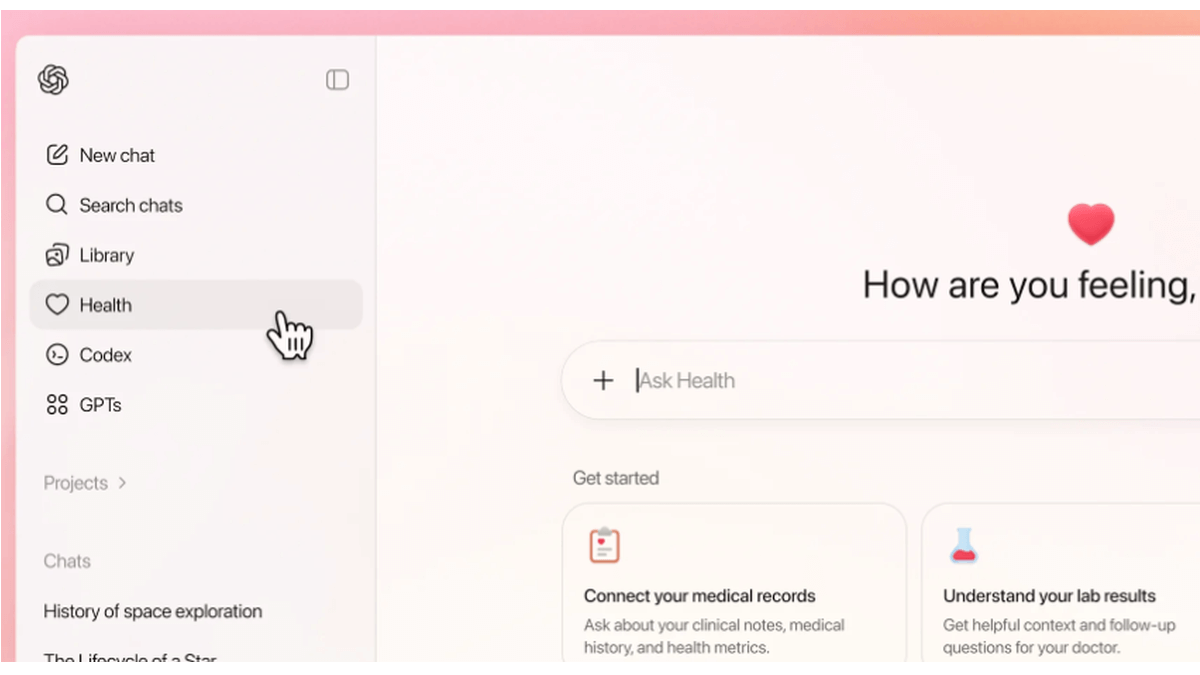
ChatGPT Health is a dedicated “health space” inside ChatGPT that lets users connect their medical records and wellness apps so the model can answer health and wellness questions in a more personalized way.

ChatGPT health

OpenAI promises additional, layered protections designed specifically for health, “to keep health conversations protected and compartmentalized.”

First off, it’s important to understand that this is not a diagnostic or treatment system. It’s framed as a support tool to help understand health information and prepare for care.

But this is the part that raised questions and concerns:

“You can securely connect medical records and wellness apps to ground conversations in your own health information, so responses are more relevant and useful to you.”

In other words, ChatGPT Health lets you link medical records and apps such as Apple Health, MyFitnessPal, and others so the system can explain lab results, track trends (e.g., cholesterol), and help you prepare questions for clinicians or compare insurance options based on your health data.

Given our reservations about the state of AI security in general and chatbots in particular, this is a line that I don’t dare cross. For now, however, I don’t even have the option, since only users with ChatGPT Free, Go, Plus, and Pro plans outside of the European Economic Area, Switzerland, and the United Kingdom can sign up for the waitlist.

OpenAI only uses partners and apps in ChatGPT Health that meet OpenAI’s privacy and security requirements, which, by design, shifts a great deal of trust onto ChatGPT Health itself.

Users should realize that health information is very sensitive and as Sara Geoghegan, senior counsel at the Electronic Privacy Information Center told The Record: by sharing their electronic medical records with ChatGPT Health, users in the US could effectively remove the HIPAA protection from those records, which is a serious consideration for anyone sharing medical data.

She added:

“ChatGPT is only bound by its own disclosures and promises, so without any meaningful limitation on that, like regulation or a law, ChatGPT can change the terms of its service at any time.”

Should you decide to try this new feature out, we would advise you to proceed with caution and take the advice to enable 2FA for ChatGPT to heart. OpenAI claims 230 million users already ask ChatGPT health and wellness questions each week. I’d encourage them to do the same.


We don’t just report on data privacy—we help you remove your personal information

Cybersecurity risks should never spread beyond a headline. With Malwarebytes Personal Data Remover, you can scan to find out which sites are exposing your personal information, and then delete that sensitive data from the internet.

  •  

Are we ready for ChatGPT Health?

How comfortable are you with sharing your medical history with an AI?

I’m certainly not.

OpenAI’s announcement about its new ChatGPT Health program prompted discussions about data privacy and how the company plans to keep the information users submit safe.

ChatGPT Health is a dedicated “health space” inside ChatGPT that lets users connect their medical records and wellness apps so the model can answer health and wellness questions in a more personalized way.

ChatGPT health

OpenAI promises additional, layered protections designed specifically for health, “to keep health conversations protected and compartmentalized.”

First off, it’s important to understand that this is not a diagnostic or treatment system. It’s framed as a support tool to help understand health information and prepare for care.

But this is the part that raised questions and concerns:

“You can securely connect medical records and wellness apps to ground conversations in your own health information, so responses are more relevant and useful to you.”

In other words, ChatGPT Health lets you link medical records and apps such as Apple Health, MyFitnessPal, and others so the system can explain lab results, track trends (e.g., cholesterol), and help you prepare questions for clinicians or compare insurance options based on your health data.

Given our reservations about the state of AI security in general and chatbots in particular, this is a line that I don’t dare cross. For now, however, I don’t even have the option, since only users with ChatGPT Free, Go, Plus, and Pro plans outside of the European Economic Area, Switzerland, and the United Kingdom can sign up for the waitlist.

OpenAI only uses partners and apps in ChatGPT Health that meet OpenAI’s privacy and security requirements, which, by design, shifts a great deal of trust onto ChatGPT Health itself.

Users should realize that health information is very sensitive and as Sara Geoghegan, senior counsel at the Electronic Privacy Information Center told The Record: by sharing their electronic medical records with ChatGPT Health, users in the US could effectively remove the HIPAA protection from those records, which is a serious consideration for anyone sharing medical data.

She added:

“ChatGPT is only bound by its own disclosures and promises, so without any meaningful limitation on that, like regulation or a law, ChatGPT can change the terms of its service at any time.”

Should you decide to try this new feature out, we would advise you to proceed with caution and take the advice to enable 2FA for ChatGPT to heart. OpenAI claims 230 million users already ask ChatGPT health and wellness questions each week. I’d encourage them to do the same.


We don’t just report on data privacy—we help you remove your personal information

Cybersecurity risks should never spread beyond a headline. With Malwarebytes Personal Data Remover, you can scan to find out which sites are exposing your personal information, and then delete that sensitive data from the internet.

  •  

Disney fined $10m for mislabeling kids’ YouTube videos and violating privacy law

Disney will pay a $10m settlement over allegations that it violated kids’ privacy rights, the Federal Trade Commission (FTC) said this week.

The agreement, first proposed in September 2025, resolves a dispute over Disney’s labeling of child-targeted content on YouTube. The thousands of YouTube videos it targets at kids makes it subject to a US law called the Children’s Online Privacy Protection Act (COPPA). Enacted in 1998, COPPA is designed to protect children under the age of 13 from having their data collected and used online.

That protection matters because children are far less able to understand data collection, advertising, or profiling, and cannot understandingfully consent to it. When COPPA safeguards fail, children may be tracked across videos, served targeted ads, or profiled based on viewing habits, all without parental knowledge or approval.

In 2019, YouTube introduced a policy to help creators comply with COPPA by labeling their content as made for kids (MFK) or not made for kids (NMFK). Content labeled MFK is automatically restricted. For example, it can’t autoplay into related content, appear in the miniplayer, or be added to playlists.

This policy came about after the YouTube’s own painful COPPA-related experience in 2019, when it settled for $170m with the FTC after failing to properly label content directed at children. That still ranks as the biggest ever COPPA settlement by far.

Perhaps the two most important restrictions for videos labeled MFK are these: MFK videos should only autoplay into other kid-appropriate content, preventing (at least in theory) kids from seeing inappropriate content. And advertisers are prohibited from collecting personal data from children watching those videos.

A chastened YouTube warned content creators, including Disney, that they could violate COPPA if they failed to label content correctly. They could do this in two ways: Creators could label entire channels (Disney has about 1,250 of these for its different content brands) or individual videos. So, a channel marked NMFK could still host MFK videos, but those individual videos needed to be labeled correctly.

According to the FTC, Disney’s efforts fell short and plenty of child-targeted videos were incorrectly labeled.

The court complaint stated that Disney applied blanket NMFK labels to entire YouTube channels instead of reviewing videos individually. As a result, some child-targeted videos were incorrectly labeled, allowing data collection and ad targeting that COPPA is meant to prevent. For example, the Pixar channel was labeled NMFK, but showed “very similar” videos from the Pixar Cars channel, which was labeled MFK.

The FTC said YouTube warned Disney in June 2020 that it had reclassified more than 300 of its videos as child-directed across channels including Pixar, Disney Movies, and Walt Disney Animation Studios.

This is not Disney’s first privacy rodeo

Disney has a history of tussles with child privacy laws. In 2011, its Playdom subsidiary paid $3 million (at that point the largest COPPA penalty ever) for collecting data from more than 1.2 million children across 20 virtual world websites. In 2021, Disney also settled a lawsuit that accused it and others of collecting and selling kids’ information via child-focused mobile apps.

In the current case, the FTC voted 3-0 to refer this current case to the Department of Justice, with Commissioners Ferguson, Holyoak, and Meador citing what they described as,

“Disney’s abuse of parents’ trust.”

Under the settlement, Disney must do more than pay up. It also has to notify parents before collecting personal information from children under 13 and obtain parents’ consent to use it. Disney must also review whether individual videos should be labeled as made for kids. However, the FTC provides a get-out clause: Disney won’t have to do this if YouTube implements age assurance technologies that determine a viewer’s age (or age category).

Age assurance is clearly something the FTC is pursuing, saying:

“This forward-looking provision reflects and anticipates the growing use of age assurance technologies to protect kids online.”


We don’t just report on privacy—we offer you the option to use it.

Privacy risks should never spread beyond a headline. Keep your online privacy yours by using Malwarebytes Privacy VPN.

  •  

Disney fined $10m for mislabeling kids’ YouTube videos and violating privacy law

Disney will pay a $10m settlement over allegations that it violated kids’ privacy rights, the Federal Trade Commission (FTC) said this week.

The agreement, first proposed in September 2025, resolves a dispute over Disney’s labeling of child-targeted content on YouTube. The thousands of YouTube videos it targets at kids makes it subject to a US law called the Children’s Online Privacy Protection Act (COPPA). Enacted in 1998, COPPA is designed to protect children under the age of 13 from having their data collected and used online.

That protection matters because children are far less able to understand data collection, advertising, or profiling, and cannot understandingfully consent to it. When COPPA safeguards fail, children may be tracked across videos, served targeted ads, or profiled based on viewing habits, all without parental knowledge or approval.

In 2019, YouTube introduced a policy to help creators comply with COPPA by labeling their content as made for kids (MFK) or not made for kids (NMFK). Content labeled MFK is automatically restricted. For example, it can’t autoplay into related content, appear in the miniplayer, or be added to playlists.

This policy came about after the YouTube’s own painful COPPA-related experience in 2019, when it settled for $170m with the FTC after failing to properly label content directed at children. That still ranks as the biggest ever COPPA settlement by far.

Perhaps the two most important restrictions for videos labeled MFK are these: MFK videos should only autoplay into other kid-appropriate content, preventing (at least in theory) kids from seeing inappropriate content. And advertisers are prohibited from collecting personal data from children watching those videos.

A chastened YouTube warned content creators, including Disney, that they could violate COPPA if they failed to label content correctly. They could do this in two ways: Creators could label entire channels (Disney has about 1,250 of these for its different content brands) or individual videos. So, a channel marked NMFK could still host MFK videos, but those individual videos needed to be labeled correctly.

According to the FTC, Disney’s efforts fell short and plenty of child-targeted videos were incorrectly labeled.

The court complaint stated that Disney applied blanket NMFK labels to entire YouTube channels instead of reviewing videos individually. As a result, some child-targeted videos were incorrectly labeled, allowing data collection and ad targeting that COPPA is meant to prevent. For example, the Pixar channel was labeled NMFK, but showed “very similar” videos from the Pixar Cars channel, which was labeled MFK.

The FTC said YouTube warned Disney in June 2020 that it had reclassified more than 300 of its videos as child-directed across channels including Pixar, Disney Movies, and Walt Disney Animation Studios.

This is not Disney’s first privacy rodeo

Disney has a history of tussles with child privacy laws. In 2011, its Playdom subsidiary paid $3 million (at that point the largest COPPA penalty ever) for collecting data from more than 1.2 million children across 20 virtual world websites. In 2021, Disney also settled a lawsuit that accused it and others of collecting and selling kids’ information via child-focused mobile apps.

In the current case, the FTC voted 3-0 to refer this current case to the Department of Justice, with Commissioners Ferguson, Holyoak, and Meador citing what they described as,

“Disney’s abuse of parents’ trust.”

Under the settlement, Disney must do more than pay up. It also has to notify parents before collecting personal information from children under 13 and obtain parents’ consent to use it. Disney must also review whether individual videos should be labeled as made for kids. However, the FTC provides a get-out clause: Disney won’t have to do this if YouTube implements age assurance technologies that determine a viewer’s age (or age category).

Age assurance is clearly something the FTC is pursuing, saying:

“This forward-looking provision reflects and anticipates the growing use of age assurance technologies to protect kids online.”


We don’t just report on privacy—we offer you the option to use it.

Privacy risks should never spread beyond a headline. Keep your online privacy yours by using Malwarebytes Privacy VPN.

  •  

Flock Exposes Its AI-Enabled Surveillance Cameras

404 Media has the story:

Unlike many of Flock’s cameras, which are designed to capture license plates as people drive by, Flock’s Condor cameras are pan-tilt-zoom (PTZ) cameras designed to record and track people, not vehicles. Condor cameras can be set to automatically zoom in on people’s faces as they walk through a parking lot, down a public street, or play on a playground, or they can be controlled manually, according to marketing material on Flock’s website. We watched Condor cameras zoom in on a woman walking her dog on a bike path in suburban Atlanta; a camera followed a man walking through a Macy’s parking lot in Bakersfield; surveil children swinging on a swingset at a playground; and film high-res video of people sitting at a stoplight in traffic. In one case, we were able to watch a man rollerblade down Brookhaven, Georgia’s Peachtree Creek Greenway bike path. The Flock camera zoomed in on him and tracked him as he rolled past. Minutes later, he showed up on another exposed camera livestream further down the bike path. The camera’s resolution was good enough that we were able to see that, when he stopped beneath one of the cameras, he was watching rollerblading videos on his phone.

  •  

In 2025, age checks started locking people out of the internet

If 2024 was the year lawmakers talked about online age verification, 2025 was the year they actually flipped the switch.​

In 2025, across parts of Europe and the US, age checks for certain websites (especially pornography) turned long‑running child‑protection debates into real‑world access controls. Overnight, users found entire categories of sites locked behind ID checks, platforms geo‑blocking whole countries, and VPN traffic surging as people tried to get around the new walls.​

From France’s hardline stance on adult sites to the UK’s Online Safety Act, to a patchwork of new rules across multiple US states, these “show me your ID before you browse” systems are reshaping the web. The stated goal is to “protect the children,” but in practice the outcome is frequently a blunt national block, followed by users voting with their VPN buttons.​

The core tension: safety vs privacy

The fundamental challenge for websites and services is not checking age in principle, but how to do it without turning everyday browsing into an identity check. Almost every viable method asks users to hand over sensitive data, raising the stakes if (or more likely when) that data leaks in a breach.​

For ordinary users, the result is a confusing mess of blocks, prompts, and workarounds. On paper, countries want better protection for minors. In practice, adults discover that entire platforms are unavailable unless they are prepared to disclose personal information or disguise where they connect from. No website wants to be the one blamed after an age‑verification database is compromised, yet regulators continue to push for stronger identity links.​

How age checks actually work

Regulators such as Ofcom publish lists of acceptable age‑verification methods, each with its own privacy and usability trade‑offs. None are perfect, and many shift risk from governments and platforms onto users’ most sensitive personal data.​

  • Facial age estimation: Users upload a selfie or short video so an algorithm can guess whether they look over 18, which avoids storing documents but relies on sensitive biometrics and imperfect accuracy.​
  • Open banking: An age‑check service queries your bank for a simple “adult or not” answer. It may be convenient on paper but it’s a hard sell when the relying site is an adult platform.​
  • Digital identity services: Digital ID wallets can assert “over 18” without exposing full credentials, but they add yet another app and infrastructure layer that must be trusted and widely adopted.​
  • Credit card checks: Using a valid payment card as a proxy for adulthood is simple and familiar, but it excludes adults without cards and does not cover lower age thresholds like “over 13.”​
  • Email‑based estimation: Systems infer age from where an email address has been used (such as banks or utilities), effectively encouraging cross‑service profiling and “digital snooping.”​
  • Mobile network checks: Providers indicate whether an account has age‑related restrictions. This can be fast, but is unreliable for pay‑as‑you‑go accounts, burner SIMs, or poorly maintained records.​
  • Photo‑ID matching: Users upload an ID document plus a selfie so systems can match faces and ages. This is effective, but concentrates highly sensitive identity data in yet another attractive target for attackers.​

My personal preference would be double‑blind verification: a third‑party provider verifies your age, then issues a simple token like “18+” to sites without revealing your identity or learning which site you visit, offering stronger privacy than most current approaches.​

In almost every case, users must surrender personal information or documents to prove their age, increasing the risk that identity data ends up in the wrong hands. This turns age gates into long‑lived security liabilities rather than temporary access checks.​

Geoblocking, VPNs, and cross‑border frictions

Right now, most platforms comply by detecting user location via IP address and then either demanding age checks or denying access entirely to users in specific regions. France’s enforcement actions, for example, led several major adult sites to geo-block the entire country in 2025, while the UK’s Online Safety Act coincided with a sharp rise in VPN use rather than widespread cross-border blocking.

European regulators generally focus on domestic ISPs, Digital Services Act reporting, and large platform fines rather than on filtering traffic from other countries, partly because broad traffic blocking raises net‑neutrality and technical complexity concerns. In the US, some state proposals have explicitly targeted VPN circumventions, signalling a willingness to attack the workarounds rather than the underlying incentives.​

Meanwhile, network‑level filtering vendors advertise “cross‑border” controls and VPN detection for governments, hinting at future scenarios where unregulated inbound flows or anonymity tools are aggressively throttled. If enforcement pressure grows, these capabilities could evolve from niche offerings into standard state infrastructure.​

A future of less anonymity?

A common argument is that eroding online anonymity will also curb toxic behavior and abuse on social media, since people act differently when their real‑world identity is at stake. But tying everyday browsing to identity checks risks chilling legitimate speech and exploration long before it delivers any proven civility benefits.​

A world where every connection requires ID is unlikely to arrive overnight. Still, the direction of travel is clear: more countries are normalizing age gates that double as identity checks, and more users are learning to route around them. Unless privacy‑preserving systems like robust double‑blind verification become the norm, age‑verification policies intended to protect children may end up undermining both privacy and open access to information.​


We don’t just report on privacy—we offer you the option to use it.

Privacy risks should never spread beyond a headline. Keep your online privacy yours by using Malwarebytes Privacy VPN.

  •  

In 2025, age checks started locking people out of the internet

If 2024 was the year lawmakers talked about online age verification, 2025 was the year they actually flipped the switch.​

In 2025, across parts of Europe and the US, age checks for certain websites (especially pornography) turned long‑running child‑protection debates into real‑world access controls. Overnight, users found entire categories of sites locked behind ID checks, platforms geo‑blocking whole countries, and VPN traffic surging as people tried to get around the new walls.​

From France’s hardline stance on adult sites to the UK’s Online Safety Act, to a patchwork of new rules across multiple US states, these “show me your ID before you browse” systems are reshaping the web. The stated goal is to “protect the children,” but in practice the outcome is frequently a blunt national block, followed by users voting with their VPN buttons.​

The core tension: safety vs privacy

The fundamental challenge for websites and services is not checking age in principle, but how to do it without turning everyday browsing into an identity check. Almost every viable method asks users to hand over sensitive data, raising the stakes if (or more likely when) that data leaks in a breach.​

For ordinary users, the result is a confusing mess of blocks, prompts, and workarounds. On paper, countries want better protection for minors. In practice, adults discover that entire platforms are unavailable unless they are prepared to disclose personal information or disguise where they connect from. No website wants to be the one blamed after an age‑verification database is compromised, yet regulators continue to push for stronger identity links.​

How age checks actually work

Regulators such as Ofcom publish lists of acceptable age‑verification methods, each with its own privacy and usability trade‑offs. None are perfect, and many shift risk from governments and platforms onto users’ most sensitive personal data.​

  • Facial age estimation: Users upload a selfie or short video so an algorithm can guess whether they look over 18, which avoids storing documents but relies on sensitive biometrics and imperfect accuracy.​
  • Open banking: An age‑check service queries your bank for a simple “adult or not” answer. It may be convenient on paper but it’s a hard sell when the relying site is an adult platform.​
  • Digital identity services: Digital ID wallets can assert “over 18” without exposing full credentials, but they add yet another app and infrastructure layer that must be trusted and widely adopted.​
  • Credit card checks: Using a valid payment card as a proxy for adulthood is simple and familiar, but it excludes adults without cards and does not cover lower age thresholds like “over 13.”​
  • Email‑based estimation: Systems infer age from where an email address has been used (such as banks or utilities), effectively encouraging cross‑service profiling and “digital snooping.”​
  • Mobile network checks: Providers indicate whether an account has age‑related restrictions. This can be fast, but is unreliable for pay‑as‑you‑go accounts, burner SIMs, or poorly maintained records.​
  • Photo‑ID matching: Users upload an ID document plus a selfie so systems can match faces and ages. This is effective, but concentrates highly sensitive identity data in yet another attractive target for attackers.​

My personal preference would be double‑blind verification: a third‑party provider verifies your age, then issues a simple token like “18+” to sites without revealing your identity or learning which site you visit, offering stronger privacy than most current approaches.​

In almost every case, users must surrender personal information or documents to prove their age, increasing the risk that identity data ends up in the wrong hands. This turns age gates into long‑lived security liabilities rather than temporary access checks.​

Geoblocking, VPNs, and cross‑border frictions

Right now, most platforms comply by detecting user location via IP address and then either demanding age checks or denying access entirely to users in specific regions. France’s enforcement actions, for example, led several major adult sites to geo-block the entire country in 2025, while the UK’s Online Safety Act coincided with a sharp rise in VPN use rather than widespread cross-border blocking.

European regulators generally focus on domestic ISPs, Digital Services Act reporting, and large platform fines rather than on filtering traffic from other countries, partly because broad traffic blocking raises net‑neutrality and technical complexity concerns. In the US, some state proposals have explicitly targeted VPN circumventions, signalling a willingness to attack the workarounds rather than the underlying incentives.​

Meanwhile, network‑level filtering vendors advertise “cross‑border” controls and VPN detection for governments, hinting at future scenarios where unregulated inbound flows or anonymity tools are aggressively throttled. If enforcement pressure grows, these capabilities could evolve from niche offerings into standard state infrastructure.​

A future of less anonymity?

A common argument is that eroding online anonymity will also curb toxic behavior and abuse on social media, since people act differently when their real‑world identity is at stake. But tying everyday browsing to identity checks risks chilling legitimate speech and exploration long before it delivers any proven civility benefits.​

A world where every connection requires ID is unlikely to arrive overnight. Still, the direction of travel is clear: more countries are normalizing age gates that double as identity checks, and more users are learning to route around them. Unless privacy‑preserving systems like robust double‑blind verification become the norm, age‑verification policies intended to protect children may end up undermining both privacy and open access to information.​


We don’t just report on privacy—we offer you the option to use it.

Privacy risks should never spread beyond a headline. Keep your online privacy yours by using Malwarebytes Privacy VPN.

  •  

EFF's Investigations Expose Flock Safety's Surveillance Abuses: 2025 in Review

Throughout 2025, EFF conducted groundbreaking investigations into Flock Safety's automated license plate reader (ALPR) network, revealing a system designed to enable mass surveillance and susceptible to grave abuses. Our research sparked state and federal investigations, drove landmark litigation, and exposed dangerous expansion into always-listening voice detection technology. We documented how Flock's surveillance infrastructure allowed law enforcement to track protesters exercising their First Amendment rights, target Romani people with discriminatory searches, and surveil women seeking reproductive healthcare.

Flock Enables Surveillance of Protesters

When we obtained datasets representing more than 12 million searches logged by more than 3,900 agencies between December 2024 and October 2025, the patterns were unmistakable. Agencies logged hundreds of searches related to political demonstrations—the 50501 protests in February, Hands Off protests in April, and No Kings protests in June and October. Nineteen agencies conducted dozens of searches specifically tied to No Kings protests alone. Sometimes searches explicitly referenced protest activity; other times, agencies used vague terminology to obscure surveillance of constitutionally protected speech.

The surveillance extended beyond mass demonstrations. Three agencies used Flock's system to target activists from Direct Action Everywhere, an animal-rights organization using civil disobedience to expose factory farm conditions. Delaware State Police queried the Flock network nine times in March 2025 related to Direct Action Everywhere actions—showing how ALPR surveillance targets groups engaged in activism challenging powerful industries.

Biased Policing and Discriminatory Searches

Our November analysis revealed deeply troubling patterns: more than 80 law enforcement agencies used language perpetuating harmful stereotypes against Romani people when searching the nationwide Flock Safety ALPR network. Between June 2024 and October 2025, police performed hundreds of searches using terms such as "roma" and racial slurs—often without mentioning any suspected crime.

Audit logs revealed searches including "roma traveler," "possible g*psy," and "g*psy ruse." Grand Prairie Police Department in Texas searched for the slur six times while using Flock's "Convoy" feature, which identifies vehicles traveling together—essentially targeting an entire traveling community without specifying any crime. According to a 2020 Harvard University survey, four out of 10 Romani Americans reported being subjected to racial profiling by police. Flock's system makes such discrimination faster and easier to execute at scale.

Weaponizing Surveillance Against Reproductive Rights

In October, we obtained documents showing that Texas deputies queried Flock Safety's surveillance data in what police characterized as a missing person investigation, but was actually an abortion case. Deputies initiated a "death investigation" of a "non-viable fetus," logged evidence of a woman's self-managed abortion, and consulted prosecutors about possible charges.

A Johnson County official ran two searches with the note "had an abortion, search for female." The second search probed 6,809 networks, accessing 83,345 cameras across nearly the entire country. This case revealed Flock's fundamental danger: a single query accesses more than 83,000 cameras spanning almost the entire nation, with minimal oversight and maximum potential for abuse—particularly when weaponized against people seeking reproductive healthcare.

Feature Updates Miss the Point

In June, EFF explained why Flock Safety's announced feature updates cannot make ALPRs safe. The company promised privacy-enhancing features like geofencing and retention limits in response to public pressure. But these tweaks don't address the core problem: Flock's business model depends on building a nationwide, interconnected surveillance network that creates risks no software update can eliminate. Our 2025 investigations proved that abuses stem from the architecture itself, not just how individual agencies use the technology.

Accountability and Community Action

EFF's work sparked significant accountability measures. U.S. Rep. Raja Krishnamoorthi and Rep. Robert Garcia launched a formal investigation into Flock's role in "enabling invasive surveillance practices that threaten the privacy, safety, and civil liberties of women, immigrants, and other vulnerable Americans."

Illinois Secretary of State Alexi Giannoulias launched an audit after EFF research showed Flock allowed U.S. Customs and Border Protection to access Illinois data in violation of state privacy laws. In November, EFF partnered with the ACLU of Northern California to file a lawsuit against San Jose and its police department, challenging warrantless searches of millions of ALPR records. Between June 5, 2024 and June 17, 2025, SJPD and other California law enforcement agencies searched San Jose's database 3,965,519 times—a staggering figure illustrating the vast scope of warrantless surveillance enabled by Flock's infrastructure.

Our investigations also fueled municipal resistance to Flock Safety. Communities from Austin to Evanston to Eugene successfully canceled or refused to renew their Flock contracts after organizing campaigns centered on our research documenting discriminatory policing, immigration enforcement, threats to reproductive rights, and chilling effects on protest. These victories demonstrate that communities—armed with evidence of Flock's harms—can challenge and reject surveillance infrastructure that threatens civil liberties.

Dangerous New Capabilities: Always-Listening Microphones

In October 2025, Flock announced plans to expand its gunshot detection microphones to listen for "human distress" including screaming. This dangerous expansion transforms audio sensors into powerful surveillance tools monitoring human voices on city streets. High-powered microphones above densely populated areas raise serious questions about wiretapping laws, false alerts, and potential for dangerous police responses to non-emergencies. After EFF exposed this feature, Flock quietly amended its marketing materials to remove explicit references to "screaming"—replacing them with vaguer language about "distress" detection—while continuing to develop and deploy the technology.

Looking Forward

Flock Safety's surveillance infrastructure is not a neutral public safety tool. It's a system that enables and amplifies racist policing, threatens reproductive rights, and chills constitutionally protected speech. Our 2025 investigations proved it beyond doubt. As we head into 2026, EFF will continue exposing these abuses, supporting communities fighting back, and litigating for the constitutional protections that surveillance technology has stripped away.

This article is part of our Year in Review series. Read other articles about the fight for digital rights in 2025.

  •  

2025 exposed the risks we ignored while rushing AI

This blog is part of a series where we highlight new or fast-evolving threats in the consumer security landscape. This one looks at how the rapid rise of Artificial Intelligence (AI) is putting users at risk.

In 2025 we saw an ever-accelerating race between AI providers to push out new features. We also saw manufacturers bolt AI onto products simply because it sounded exciting. In many cases, it really shouldn’t have.

Agentic browsers

Agentic or AI browsers that can act autonomously to execute tasks introduced a new set of vulnerabilities—especially to prompt injection attacks. With great AI power comes great responsibility, and risk. If you’re thinking about using an AI browser, it’s worth slowing down and considering the security and privacy implications first. Even experienced AI providers like OpenAI (the makers of ChatGPT) were unable to keep their agentic browser Atlas secure. By pasting a specially crafted link into the Omnibox, attackers were able to trick Atlas into treating a URL input as a trusted command.

Mimicry

The popularity of AI chatbots created the perfect opportunity for scammers to distribute malicious apps. Even if the AI engine itself worked perfectly, attackers have another way in: fake interfaces. According to BleepingComputer, scammers are already creating spoofed AI sidebars that look identical to real ones from browsers like OpenAI’s Atlas and Perplexity’s Comet. These fake sidebars mimic the real interface, making them almost impossible to spot.

Misconfiguration

And then there’s this special category of using AI in products because it sounds cooler with AI or you can ask for more money from buyers.

Toys

We saw a plush teddy bear promising “warmth, fun, and a little extra curiosity” that was taken off the market after researcher found its built-in AI responding with sexual content and advice about weapons. Conversations escalated from innocent to sexual within minutes. The bear didn’t just respond to explicit prompts, which would have been more or less understandable. Researchers said it introduced graphic sexual concepts on its own, including BDSM-related topics, explained “knots for beginners,” and referenced roleplay scenarios involving children and adults.

Misinterpretation

Sometimes we rely on AI systems too much and forget that they hallucinate. As in the case where a school’s AI system mistook a boy’s empty Doritos bag for a gun and triggered a full-blown police response. Multiple police cars arrived with officers drawing their weapons, all because of a false alarm.

Data breaches

Alongside all this comes a surge in privacy concerns. Some issues stem from the data used to train AI models; others come from mishandled chat logs. Two AI companion apps recently exposed private conversations because users weren’t clearly warned that certain settings would result in their conversations becoming searchable or result in targeted advertising.

So, what should we do?

We’ve said it before and we’ll probably say it again:  We keep pushing the limits of what AI can do faster than we can make it safe. As long as we keep chasing the newest features, companies will keep releasing new integrations, whether they’re safe or not.

As consumers, the best thing we can do is stay informed about new developments and the risks that come with them. Ask yourself: Do I really need this? What am I trusting AI with? What’s the potential downside? Sometimes it’s worth doing things the slower, safer way.


We don’t just report on privacy—we offer you the option to use it.

Privacy risks should never spread beyond a headline. Keep your online privacy yours by using Malwarebytes Privacy VPN.

  •  

2025 exposed the risks we ignored while rushing AI

This blog is part of a series where we highlight new or fast-evolving threats in the consumer security landscape. This one looks at how the rapid rise of Artificial Intelligence (AI) is putting users at risk.

In 2025 we saw an ever-accelerating race between AI providers to push out new features. We also saw manufacturers bolt AI onto products simply because it sounded exciting. In many cases, it really shouldn’t have.

Agentic browsers

Agentic or AI browsers that can act autonomously to execute tasks introduced a new set of vulnerabilities—especially to prompt injection attacks. With great AI power comes great responsibility, and risk. If you’re thinking about using an AI browser, it’s worth slowing down and considering the security and privacy implications first. Even experienced AI providers like OpenAI (the makers of ChatGPT) were unable to keep their agentic browser Atlas secure. By pasting a specially crafted link into the Omnibox, attackers were able to trick Atlas into treating a URL input as a trusted command.

Mimicry

The popularity of AI chatbots created the perfect opportunity for scammers to distribute malicious apps. Even if the AI engine itself worked perfectly, attackers have another way in: fake interfaces. According to BleepingComputer, scammers are already creating spoofed AI sidebars that look identical to real ones from browsers like OpenAI’s Atlas and Perplexity’s Comet. These fake sidebars mimic the real interface, making them almost impossible to spot.

Misconfiguration

And then there’s this special category of using AI in products because it sounds cooler with AI or you can ask for more money from buyers.

Toys

We saw a plush teddy bear promising “warmth, fun, and a little extra curiosity” that was taken off the market after researcher found its built-in AI responding with sexual content and advice about weapons. Conversations escalated from innocent to sexual within minutes. The bear didn’t just respond to explicit prompts, which would have been more or less understandable. Researchers said it introduced graphic sexual concepts on its own, including BDSM-related topics, explained “knots for beginners,” and referenced roleplay scenarios involving children and adults.

Misinterpretation

Sometimes we rely on AI systems too much and forget that they hallucinate. As in the case where a school’s AI system mistook a boy’s empty Doritos bag for a gun and triggered a full-blown police response. Multiple police cars arrived with officers drawing their weapons, all because of a false alarm.

Data breaches

Alongside all this comes a surge in privacy concerns. Some issues stem from the data used to train AI models; others come from mishandled chat logs. Two AI companion apps recently exposed private conversations because users weren’t clearly warned that certain settings would result in their conversations becoming searchable or result in targeted advertising.

So, what should we do?

We’ve said it before and we’ll probably say it again:  We keep pushing the limits of what AI can do faster than we can make it safe. As long as we keep chasing the newest features, companies will keep releasing new integrations, whether they’re safe or not.

As consumers, the best thing we can do is stay informed about new developments and the risks that come with them. Ask yourself: Do I really need this? What am I trusting AI with? What’s the potential downside? Sometimes it’s worth doing things the slower, safer way.


We don’t just report on privacy—we offer you the option to use it.

Privacy risks should never spread beyond a headline. Keep your online privacy yours by using Malwarebytes Privacy VPN.

  •  

EFFector Audio Speaks Up for Our Rights: 2025 Year in Review

This year, you may have heard EFF sounding off about our civil liberties on NPR, BBC Radio, or any number of podcasts. But we also started sharing our voices directly with listeners in 2025. In June, we revamped EFFector, our long-running electronic newsletter, and launched a new audio edition to accompany it.

Providing a recap of the week's most important digital rights news, EFFector's audio companion features exclusive interviews where EFF's lawyers, activists, and technologists can dig deeper into the biggest stories in privacy, free speech, and innovation. Here are just some of the best interviews from EFFector Audio in 2025.

Unpacking a Social Media Spying Scheme

Earlier this year, the Trump administration launched a sprawling surveillance program to spy on the social media activity of millions of noncitizens—and punish those who express views it doesn't like. This fall, EFF's Lisa Femia came onto EFFector Audio to explain how this scheme works, its impact on free speech, and, importantly, why EFF is suing to stop it.

"We think all of this is coming together as a way to chill people's speech and make it so they do not feel comfortable expressing core political viewpoints protected by the First Amendment," Femia said.


Challenging the Mass Surveillance of Drivers

But Lisa was hardly the only guest talking about surveillance. In November, EFF's Andrew Crocker spoke to EFFector about Automated License Plate Readers (ALPRs), a particularly invasive and widespread form of surveillance. ALPR camera networks take pictures of every passing vehicle and upload the location information of millions of drivers into central databases. Police can then search these databases—typically without any judicial approval—to instantly reconstruct driver movements over weeks, months, or even years at a time.

"It really is going to be a very detailed picture of your habits over the course of a long period of time," said Crocker, explaining how ALPR location data can reveal where you work, worship, and many other intimate details about your life. Crocker also talked about a new lawsuit, filed by two nonprofits represented by EFF and the ACLU of Northern California, challenging the city of San Jose's use of ALPR searches without a warrant.

Similarly, EFF's Mario Trujillo joined EFFector in early November to discuss the legal issues and mass surveillance risks around face recognition in consumer devices.

Simple Tips to Take Control of Your Privacy

Online privacy isn’t dead. But tech giants have tried to make protecting it as annoying as possible. To help users take back control, we celebrated Opt Out October, sharing daily privacy tips all month long on our blog. In addition to laying down some privacy basics, EFF's Thorin Klosowski talked to EFFector about how small steps to protect your data can build up into big differences.

"This is a way to kind of break it down into small tasks that you can do every day and accomplish a lot," said Klosowski. "By the end of it, you will have taken back a considerable amount of your privacy."

User privacy was the focus of a number of EFFector interviews. In July, EFF's Lena Cohen spoke about what lawmakers, tech companies, and individuals can do to fight online tracking. That same month, Matthew Guariglia talked about precautions consumers can take before bringing surveillance devices like smart doorbells into their homes.

Digging Into the Next Wave of Internet Censorship

One of the most troubling trends of 2025 was the proliferation of age verification laws, which require online services to check, estimate, or verify users’ ages. Though these mandates claim to protect children, they ultimately create harmful censorship and surveillance regimes that put everyone—adults and young people alike—at risk.

This summer, EFF's Rin Alajaji came onto EFFector Audio to explain how these laws work and why we need to speak out against them.

"Every person listening here can push back against these laws that expand censorship," she said. "We like to say that if you care about internet freedom, this fight is yours."

This was just one of several interviews about free speech online. This year, EFFector also hosted Paige Collings to talk about the chaotic rollout of the UK's Online Safety Act and Lisa Femia (again!) to discuss the abortion censorship crisis on social media.

You can hear all these episodes and future installments of EFFector's audio companion on YouTube or the Internet Archive. Or check out our revamped EFFector newsletter by subscribing at eff.org/effector!

This article is part of our Year in Review series. Read other articles about the fight for digital rights in 2025.

  •  

Procurement Power—When Cities Realized They Can Just Say No: 2025 in Review

In 2025, elected officials across the country began treating surveillance technology purchases differently: not as inevitable administrative procurements handled by police departments, but as political decisions subject to council oversight and constituent pressure. This shift proved to be the most effective anti-surveillance strategy of the year.

Since February, at least 23 jurisdictions fully ended, cancelled, or rejected Flock Safety ALPR programs (including Austin, Oak Park, Evanston, Hays County, San Marcos, Eugene, Springfield, and Denver) by recognizing surveillance procurement as political power, not administrative routine.

Legacy Practices & Obfuscation

For decades, cities have been caught in what researchers call "legacy procurement practices": administrative norms that prioritize "efficiency" and "cost thresholds" over democratic review. 

Vendors exploit this inertia through the "pilot loophole." As Taraaz and the Collaborative Research Center for Resilience (CRCR) note in a recent report, "no-cost offers" and free trials allow police departments to bypass formal procurement channels entirely. By the time the bill comes due, the surveillance is already normalised in the community, turning a purchase decision into a "continuation of service" that is politically difficult to stop.

This bureaucracy obscures the power that surveillance vendors have over municipal procurement decisions. As Arti Walker-Peddakotla details, this is a deliberate strategy. Walker-Peddakotla details how vendors secure "acquiescence" by hiding the political nature of surveillance behind administrative veils: framing tools as "force multipliers" and burying contracts in consent agendas. For local electeds, the pressure to "outsource" government decision-making makes vendor marketing compelling. Vendors use "cooperative purchasing" agreements to bypass competitive bidding, effectively privatizing the policy-making process. 

The result is a dangerous "information asymmetry" where cities become dependent on vendors for critical data governance decisions. The 2025 cancellations finally broke that dynamic.

The Procurement Moment

This year, cities stopped accepting this "administrative" frame. The shift came from three converging forces: audit findings that exposed Flock's lack of safeguards, growing community organizing pressure, and elected officials finally recognizing that saying "no" to a renewal was not just an option—it was the responsible choice.

When Austin let its Flock pilot expire on July 1, the decision reflected a political judgment: constituents rejected a nationwide network used for immigration enforcement. It wasn't a debate about retention rates; it was a refusal to renew.

These cancellations were also acts of fiscal stewardship. By demanding evidence of efficacy (and receiving none) officials in Hays County, Texas and San Marcos, Texas rejected the "force multiplier" myth. They treated the refusal of unproven technology not just as activism, but as a basic fiduciary duty. In Oak Park, Illinois, trustees cancelled eight cameras after an audit found Flock lacked safeguards, while Evanston terminated its 19-camera network shortly after. Eugene and Springfield, Oregon terminated 82 combined cameras in December. City electeds have also realized that every renewal is a vote for "vendor lock-in." As EPIC warns, once proprietary systems are entrenched, cities lose ownership of their own public safety data, making it nearly impossible to switch providers or enforce transparency later.

The shift was not universal. Denver illustrated the tension when Mayor Mike Johnston overrode a unanimous council rejection to extend Flock's contract. Council Member Sarah Parady rightly identified this as "mass surveillance" imposed "with no public process." This is exactly why procurement must be reclaimed: when treated as technical, surveillance vendors control the conversation; when recognized as political, constituents gain leverage.

Cities Hold the Line Against Mass Surveillance

EFF has spent years documenting how procurement functions as a lever for surveillance expansion, from our work documenting Flock Safety's troubling data-sharing practices with ICE and federal law enforcement to our broader advocacy on surveillance technology procurement reform. The 2025 victories show that when cities understand procurement as political rather than technical, they can say no. Procurement power can be the most direct route to stopping mass surveillance. 

As cities move into 2026, the lesson is clear: surveillance is a choice, not a mandate, and your community has the power to refuse it. The question isn't whether technology can police more effectively; it's whether your community wants to be policed this way. That decision belongs to constituents, not vendors.

This article is part of our Year in Review series. Read other articles about the fight for digital rights in 2025.

  •  

Local Communities Are Winning Against ALPR Surveillance—Here’s How: 2025 in Review

Across ideologically diverse communities, 2025 campaigns against automated license plate reader (ALPR) surveillance kept winning. From Austin, Texas to Cambridge, Massachusetts to Eugene, Oregon, successful campaigns combined three practical elements: a motivated political champion on city council, organized grassroots pressure from affected communities, and technical assistance at critical decision moments.

The 2025 Formula for Refusal

  • Institutional Authority: Council members leveraging "procurement power"—local democracy's most underutilized tool—to say no. 
  • Community Mobilization: A base that refuses to debate "better policy" and demands "no cameras." 
  • Shared Intelligence: Local coalitions utilizing shared research on contract timelines and vendor breaches.

Practical Wins Over Perfect Policies

In 2025, organizers embraced the "ugly" win: prioritizing immediate contract cancellations over the "political purity" of perfect privacy laws. Procurement fights are often messy, bureaucratic battles rather than high-minded legislative debates, but they stop surveillance where it starts—at the checkbook. In Austin, more than 30 community groups built a coalition that forced a contract cancellation, achieving via purchasing power what policy reform often delays. 

In Hays County, Texas, the victory wasn't about a new law, but a contract termination. Commissioner Michelle Cohen grounded her vote in vendor accountability, explaining: "It's more about the company's practices versus the technology." These victories might lack the permanence of a statute, but every camera turned off built a culture of refusal that made the next rejection easier. This was the organizing principle: take the practical win and build on it.

Start with the Harm

Winning campaigns didn't debate technical specifications or abstract privacy principles. They started with documented harms that surveillance enabled. EFF's research showing police used Flock's network to track Romani people with discriminatory search terms, surveil women seeking abortion care, and monitor protesters exercising First Amendment rights became the evidence organizers used to build power.

In Olympia, Washington, nearly 200 community members attended a counter-information rally outside city hall on Dec. 2. The DeFlock Olympia movement countered police department claims point-by-point with detailed citations about data breaches and discriminatory policing. By Dec. 3, cameras had been covered pending removal.

In Cambridge, the city council voted unanimously in October to pause Flock cameras after residents, the ACLU of Massachusetts, and Digital Fourth raised concerns. When Flock later installed two cameras "without the city's awareness," a city spokesperson  called it a "material breach of our trust" and terminated the contract entirely. The unexpected camera installation itself became an organizing moment.

The Inside-Outside Game

The winning formula worked because it aligned different actors around refusing vehicular mass surveillance systems without requiring everyone to become experts. Community members organized neighbors and testified at hearings, creating political conditions where elected officials could refuse surveillance and survive politically. Council champions used their institutional authority to exercise "procurement power": the ability to categorically refuse surveillance technology.

To fuel these fights, organizers leveraged technical assets like investigation guides and contract timeline analysis. This technical capacity allowed community members to lead effectively without needing to become policy experts. In Eugene and Springfield, Oregon, Eyes Off Eugene organized sustained opposition over months while providing city council members political cover to refuse. "This is [a] very wonderful and exciting victory," organizer Kamryn Stringfield said. "This only happened due to the organized campaign led by Eyes Off Eugene and other local groups."

Refusal Crosses Political Divides

A common misconception collapsed in 2025: that surveillance technology can only be resisted in progressive jurisdictions. San Marcos, Texas let its contract lapse after a 3-3 deadlock, with Council Member Amanda Rodriguez questioning whether the system showed "return on investment." Hays County commissioners in Texas voted to terminate. Small towns like Gig Harbor, Washington rejected proposals before deployment. 

As community partners like the Rural Privacy Coalition emphasize, "privacy is a rural value." These victories came from communities with different political cultures but shared recognition that mass surveillance systems weren't worth the cost or risk regardless of zip code.

Communities Learning From Each Other

In 2025, communities no longer needed to build expertise from scratch—they could access shared investigation guides, learn from victories in neighboring jurisdictions, and connect with organizers who had won similar fights. When Austin canceled its contract, it inspired organizing across Texas. When Illinois Secretary of State's audit revealed illegal data sharing with federal immigration enforcement, Evanston used those findings to terminate 19 cameras.

The combination of different forms of power—institutional authority, community mobilization, and shared intelligence—was a defining feature of this year's most effective campaigns. By bringing these elements together, community coalitions have secured cancellations or rejections in nearly two dozen jurisdictions since February, building the infrastructure to make the next refusal easier and the movement unstoppable.

This article is part of our Year in Review series. Read other articles about the fight for digital rights in 2025.

  •  

States Take On Tough Tech Policy Battles: 2025 in Review

State legislatures—from Olympia, WA, to Honolulu, HI, to Tallahassee, FL, and everywhere in between—kept EFF’s state legislative team busy throughout 2025.

We saw some great wins and steps forward this year. Washington became the eighth state to enshrine the right to repair. Several states stepped up to protect the privacy of location data, with bills recognizing your location data isn't just a pin on a map—it's a powerful tool that reveals far more than most people realize. Other state legislators moved to protect health privacy. And California passed a law making it easier for people to exercise their privacy rights under the state’s consumer data privacy law.

Several states also took up debates around how to legislate and regulate artificial intelligence and its many applications. We’ll continue to work with allies in states including California and Colorado to proposals that address the real harms from some uses of AI, without infringing on the rights of creators and individual users.

We’ve also fought some troubling bills in states across the country this year. In April, Florida introduced a bill that would have created a backdoor for law enforcement to have easy access to messages if minors use encrypted platforms. Thankfully, the Florida legislature did not pass the bill this year. But it should set off serious alarm bells for anyone who cares about digital rights. And it was just one of a growing set of bills from states that, even when well-intentioned, threaten to take a wrecking ball to privacy, expression, and security in the name of protecting young people online.

Take, for example, the burgeoning number of age verification, age gating, age assurance, and age estimation bills. Instead of making the internet safer for children, these laws can incentivize or intersect with existing systems that collect vast amounts of data to force all users—regardless of age—to verify their identity just to access basic content or products. South Dakota and Wyoming, for example, are requiring any website that hosts any sexual content to implement age verification measures. But, given the way those laws are written, that definition could include essentially any site that allows user-generated or published content without age-based gatekeeping access. That could include everyday resources such as social media networks, online retailers, and streaming platforms.

Lawmakers, not satisfied with putting age gates on the internet, are also increasingly going after VPNs (virtual private networks) to prevent anyone from circumventing these new digital walls. VPNs are not foolproof tools—and they shouldn’t be necessary to access legally protected speech—but they should be available to people who want to use them. We will continue to stand against these types of bills, not just for the sake of free expression, but to protect the free flow of information essential to a free society.

This article is part of our Year in Review series. Read other articles about the fight for digital rights in 2025.

  •  

Age Verification Threats Across the Globe: 2025 in Review

Age verification mandates won't magically keep young people safer online, but that has not stopped governments around the world spending this year implementing or attempting to introduce legislation requiring all online users to verify their ages before accessing the digital space. 

The UK’s misguided approach to protecting young people online took many headlines due to the reckless and chaotic rollout of the country’s Online Safety Act, but they were not alone: courts in France ruled that porn websites can check users’ ages; the European Commission pushed forward with plans to test its age-verification app; and Australia’s ban on under-16s accessing social media was recently implemented. 

Through this wave of age verification bills, politicians are burdening internet users and forcing them to sacrifice their anonymity, privacy, and security simply to access lawful speech. For adults, this is true even if that speech constitutes sexual or explicit content. These laws are censorship laws, and rules banning sexual content usually hurt marginalized communities and groups that serve them the most.

In response, we’ve spent this year urging governments to pause these legislative initiatives and instead protect everyone’s right to speak and access information online. Here are three ways we pushed back [against these bills] in 2025:

Social Media Bans for Young People

Banning a certain user group changes nothing about a platform’s problematic privacy practices, insufficient content moderation, or business models based on the exploitation of people’s attention and data. And assuming that young people will always find ways to circumvent age restrictions, the ones that do will be left without any protections or age-appropriate experiences.

Yet Australia’s government recently decided to ignore these dangers by rolling out a sweeping regime built around age verification that bans users under 16 from having social media accounts. In this world-first ban, platforms are required to introduce age assurance tools to block under-16s, demonstrate that they have taken “reasonable steps” to deactivate accounts used by under-16s, and prevent any new accounts being created or face fines of up to 49.5 million Australian dollars ($32 million USD). The 10 banned platforms—Instagram, Facebook, Threads, Snapchat, YouTube, TikTok, Kick, Reddit, Twitch and X—have each said they’ll comply with the legislation, leading to young people losing access to their accounts overnight

Similarly, the European Commission this year took a first step towards mandatory age verification that could undermine privacy, expression, and participation rights for young people—rights that have been fully enshrined in international human rights law through its guidelines under Article 28 of the Digital Services Act. EFF submitted feedback to the Commission’s consultation on the guidelines, emphasizing a critical point: Mandatory age verification measures are not the right way to protect minors, and any online safety measure for young people must also safeguard their privacy and security. Unfortunately, the EU Parliament already went a step further, proposing an EU digital minimum age of 16 for access to social media, a move that aligns with EU Commission’s president Ursula von der Leyen’s recent public support for measures inspired by Australia’s model.

Push for Age Assurance on All Users 

This year, the UK had a moment—and not a good one. In late July, new rules took effect under the Online Safety Act that now require all online services available in the UK to assess whether they host content considered harmful to children, and if so, these services must introduce age checks to prevent children from accessing such content. Online services are also required to change their algorithms and moderation systems to ensure that content defined as harmful, like violent imagery, is not shown to young people.

The UK’s scramble to find an effective age verification method shows us that there isn't one, and it’s high time for politicians to take that seriously. As we argued throughout this year, and during the passage of the Online Safety Act, any attempt to protect young people online should not include measures that require platforms to collect data or remove privacy protections around users’ identities. The approach that UK politicians have taken with the Online Safety Act is reckless, short-sighted, and will introduce more harm to the very young people that it is trying to protect.

We’re seeing these narratives and regulatory initiatives replicated from the UK to U.S. states and other global jurisdictions, and we’ll continue urging politicians not to follow the UK’s lead in passing similar legislation—and to instead explore more holistic approaches to protecting all users online.

Rushed Age Assurance through the EU Digital Wallet

There is not yet a legal obligation to verify users’ ages at the EU level, but policymakers and regulators are already embracing harmful age verification and age assessment measures in the name of reducing online harms.

These demands steer the debate toward identity-based solutions, such as the EU Digital Identity Wallet, which will become available in 2026. This has come with its own realm of privacy and security concerns, such as long-term identifiers (which could result in tracking) and over-exposure of personal information. Even more concerning is, instead of waiting for the full launch of the EU DID Wallet, the Commission rushed a “mini AV” app out this year ahead of schedule, citing an urgent need to address concerns about children and the harms that may come to them online. 

However, this proposed solution directly tied national ID to an age verification method. This also comes with potential mission creep of what other types of verification could be done in EU member states once this is fully deployed—while the focus of the “mini AV” app is for now on verifying age, its release to the public means that the infrastructure to expand ID checks to other purposes is in place, should the government mandate that expansion in the future.  

Without the proper safeguards, this infrastructure could be leveraged inappropriately—all the more reason why lawmakers should explore more holistic approaches to children's safety

Ways Forward

The internet is an essential resource for young people and adults to access information, explore community, and find themselves. The issue of online safety is not solved through technology alone, and young people deserve a more intentional approach to protecting their safety and privacy online—not this lazy strategy that causes more harm that it solves. 

Rather than weakening rights for already vulnerable communities online, politicians must acknowledge these shortcomings and explore less invasive approaches to protect all people from online harms. We encourage politicians to look into what is best, and not what is easy; and in the meantime, we’ll continue fighting for the rights of all users on the internet in 2026.

This article is part of our Year in Review series. Read other articles about the fight for digital rights in 2025.

  •  

AI Police Reports: Year In Review

In 2024, EFF wrote our initial blog about what could go wrong when police let AI write police reports. Since then, the technology has proliferated at a disturbing rate. Why? The most popular generative AI tool for writing police reports is Axon’s Draft One, and Axon also happens to be the largest provider of body-worn cameras to police departments in the United States. As we’ve written, companies are increasingly bundling their products to make it easier for police to buy more technology than they may need or that the public feels comfortable with. 

We have good news and bad news. 

Here’s the bad news: AI written police reports are still unproven, untransparent, and downright irresponsible–especially when the criminal justice system, informed by police reports, is deciding people’s freedom. The King County prosecuting attorney’s office in Washington state barred police from using AI to write police reports. As their memo read, “We do not fear advances in technology – but we do have legitimate concerns about some of the products on the market now... AI continues to develop and we are hopeful that we will reach a point in the near future where these reports can be relied on. For now, our office has made the decision not to accept any police narratives that were produced with the assistance of AI.” 

In July of this year, EFF published a two-part report on how Axon designed Draft One to defy transparency. Police upload their body-worn camera’s audio into the system, the system generates a report that the officer is expected to edit, and then the officer exports the report. But when they do that, Draft One erases the initial draft, and with it any evidence of what portions of the report were written by AI and what portions were written by an officer. That means that if an officer is caught lying on the stand – as shown by a contradiction between their courtroom testimony and their earlier police report – they could point to the contradictory parts of their report and say, “the AI wrote that.” Draft One is designed to make it hard to disprove that. 

In this video of a roundtable discussion about Draft One, Axon’s senior principal product manager for generative AI is asked (at the 49:47 mark) whether or not it’s possible to see after-the-fact which parts of the report were suggested by the AI and which were edited by the officer. His response (bold and definition of RMS added): 

So we don’t store the original draft and that’s by design and that’s really because the last thing we want to do is create more disclosure headaches for our customers and our attorney’s offices—so basically the officer generates that draft, they make their edits, if they submit it into our Axon records system then that’s the only place we store it, if they copy and paste it into their third-party RMS [records management system] system as soon as they’re done with that and close their browser tab, it’s gone. It’s actually never stored in the cloud at all so you don’t have to worry about extra copies floating around.”

Yikes! 

All of this obfuscation also makes it incredibly hard for people outside police departments to figure out if their city’s officers are using AI to write reports–and even harder to use public records requests to audit just those reports. That’s why this year EFF also put out a comprehensive guide to help the public make their records requests as tailored as possible to learn about AI-generated reports. 

Ok, now here’s the good news: People who believe AI-written police reports are irresponsible and potentially harmful to the public are fighting back. 

This year, two states have passed bills that are an important first step in reigning in AI police reports. Utah’s SB 180 mandates that police reports created in whole or in part by generative AI have a disclaimer that the report contains content generated by AI. It also requires officers to certify that they checked the report for accuracy. California’s SB 524 went even further. It requires police to disclose, on the report, if it was used to fully or in part author a police report. Further, it bans vendors from selling or sharing the information a police agency provided to the AI. The bill also requires departments to retain the first draft of the report so that judges, defense attorneys, or auditors could readily see which portions of the final report were written by the officer and which portions were written by the computer.

In the coming year, anticipate many more states joining California and Utah in regulating, or perhaps even banning, police from using AI to write their reports. 

This article is part of our Year in Review series. Read other articles about the fight for digital rights in 2025.

  •  

Hacktivists claim near-total Spotify music scrape

Hacktivist group Anna’s Archive claims to have scraped almost all of Spotify’s catalog and is now seeding it via BitTorrent, effectively turning a streaming platform into a roughly 300 TB pirate “preservation archive.”

On its blog, the group states:

“A while ago, we discovered a way to scrape Spotify at scale. We saw a role for us here to build a music archive primarily aimed at preservation.”

Spotify insists that the hacktivists obtained no user data. Still, the incident highlights how large‑scale scraping, digital rights management (DRM) circumvention, and weak abuse controls can turn major content platforms into high‑value targets.

Anna’s Archive claims it obtained metadata for around 256 million tracks and audio files for roughly 86 million songs, totaling close to 300 TB. Reportedly, this represents about 99.9% of Spotify’s catalog and roughly 99.6% of all streams.

Spotify says it has “identified and disabled the nefarious user accounts that engaged in unlawful scraping” and implemented new safeguards.

From a security perspective, this incident is a textbook example of how scraping can escalate beyond “just metadata” into industrial‑scale content theft. By combining public APIs, token abuse, rate‑limit evasion, and DRM bypass techniques, attackers can extract protected content at scale. If you can create or compromise enough accounts and make them appear legitimate, you can chip away at content protections over time.

The “Spotify scrape” will likely be framed as a copyright story. But from a security angle, it serves as a reminder: if a platform exposes content or metadata at scale, someone will eventually automate access to it, weaponize it, and redistribute it.

And hiding behind violations of terms and conditions—which have never stopped criminals—is not effective security control.

How does this affect you?

There is currently no indication that passwords, payment details, or private playlists were exposed. This incident is purely about content and metadata, not user databases. That said, scammers may still claim otherwise. Be cautious of messages alleging your account data was compromised and asking for your login details.

Some general Spotify security tips, to be on the safe side:

  • If you have reused your Spotify password elsewhere or shared your credentials, consider changing your password for peace of mind.
  • Regularly review active sessions on streaming services and revoke anything you do not recognize. Spotify does not offer per-device session management, but you can sign out of all devices via Account > Settings and privacy on the Spotify website.
  • Avoid unofficial downloaders, converters, or “Spotify mods” that ask for your login or broad OAuth permissions. These tools often rely on the same kind of scraping infrastructure—or worse, function as credential-stealing malware.

We don’t just report on threats – we help protect your social media

Cybersecurity risks should never spread beyond a headline. Protect your social media accounts by using Malwarebytes Identity Theft Protection.

  •  
❌