In an era marked by escalating cyber threats and evolving risk landscapes, organisations face mounting pressure to strengthen their security posture whilst maintaining seamless user experiences. At Thales, we recognise that robust security must be foundational – embedded into products and services by design, not bolted on as an afterthought. This principle underpins our commitment to the U.S. Cybersecurity and Infrastructure Security Agency (CISA)’s Secure-by-Design pledge, which calls on software manufacturers to establish security features like multi-factor authentication (MFA) as standard across their product portfolios.
As digital transformation accelerates and attack surfaces expand, the gap between security capabilities and emerging threats continues to widen. According to the 2025 Thales Data Threat Report, organisations are grappling with unprecedented challenges: 69% regard the fast-moving ecosystem as the most concerning GenAI security risk, whilst 83% report that strong MFA is used more than 40% of the time. This indicates both progress and significant opportunity for improvement. These findings underscore a critical reality: whilst security tools and technologies have advanced, comprehensive deployment and consistent enforcement remain essential challenges that demand immediate attention.
This blog examines the pivotal role of multi-factor authentication in modern cybersecurity strategies. We explore the fundamentals of MFA, analyse the evolving threat landscape that necessitates its adoption, and provide practical guidance on implementation. Whether you are a security professional seeking to strengthen your organisation’s defences or an individual user looking to protect personal accounts, this resource offers the insights and actionable steps needed to embrace MFA with confidence and rigour.
Understanding Multi-Factor Authentication: The Basics
Multi-factor authentication verifies your identity using two different forms of identification. Typically this involves something you know (like a password) and something you have (like a code on your phone). Think of it like using an ATM: you need both your bank card and your PIN to withdraw cash.
This dual-layer approach creates a significant barrier for attackers. Even if someone steals your password, they still can’t log in without that second factor. It’s elegantly simple, yet remarkably powerful – your password alone is no longer enough to unlock the door.
The Growing Threat Landscape: Why MFA Is No Longer Optional
Cyberattacks have grown increasingly sophisticated, with stolen passwords at the heart of many breaches. According to the 2023 Verizon Data Breach Investigations Report, nearly 49% of data breaches involved the use of stolen credentials.
MFA directly addresses this vulnerability. Our own research at Thales demonstrates the critical importance of strong authentication measures. According to the 2025 Thales Data Threat Report, 83% of organisations report that strong MFA is used more than 40% of the time, yet significant challenges remain in achieving comprehensive deployment. This data underscores both the growing recognition of MFA’s importance and the continued need for organisations to strengthen their authentication posture.
Furthermore, our 2025 Digital Trust Index – Third-Party Edition reveals a concerning reality: 40% of users reset passwords once or twice a month, highlighting the inherent weakness of password-only authentication systems. These frequent password resets not only frustrate users but also create security vulnerabilities that MFA effectively mitigates.
How MFA Defeats Common Attack Methods
MFA thwarts the most prevalent attack techniques:
Brute-force and credential stuffing attacks: These automated attacks become practically futile with MFA enabled because guessing the password isn’t enough to break in.
Phishing attacks: Even if you unwittingly hand over your password to a phisher, they still can’t access your account without the one-time code or second factor that MFA requires.
It’s no surprise that CISA’s Secure-by-Design guidelines explicitly call for making MFA a built-in, default security feature. In today’s threat landscape, MFA has evolved from a nice-to-have extra to an essential safeguard.
Thales’ Commitment: Security by Design and by Default
At Thales, we build security into our products by design, baked into our products and services. Our commitment to CISA’s Secure-by-Design pledge is reflected in how we develop features like MFA.
We already implement robust MFA across our cloud services to help safeguard your accounts and data. By requiring two forms of identification to access the Thales Cloud Security Console, we add an extra layer of protection that makes it “much harder for unauthorised users to access sensitive information”. This significantly reduces the risk of breaches and builds trust.
The Principle of Shared Responsibility
Thales’ approach recognises shared responsibility. “Security by default” means we provide secure settings and features right out of the box. However, security is also a partnership – we provide the tools, whilst you play a crucial role by using them.
We’ve made MFA available and straightforward to configure, and we actively encourage customers to use advanced authentication methods. Whilst MFA might not be mandated on all accounts by default today, we strongly recommend that you activate it. By choosing to enable MFA now, you’re not only protecting yourself immediately but also aligning with best practices that Thales and the cybersecurity community advocate globally.
Getting Started: How to Set Up MFA
Enabling multi-factor authentication on your Thales account is quick and straightforward. Here’s how:
Log in and navigate to your user settings. Go to Account Settings or Profile, where you’ll find security settings for MFA management. You can find these options in the Thales Cloud Security Console setup checklist.
Locate the Multi-Factor Authentication option and click to begin setup.
Select your preferred MFA method: authenticator app, SMS, or email.
Configure the chosen method:
For an authenticator app, scan the displayed QR code with your app ( MobilPASS+, Google Authenticator, Microsoft Authenticator, Authy, etc.).
For SMS, enter your mobile number to receive a verification code.
For email, a code will be sent to your registered email address.
Save your backup codes. These are your safety net if you lose access to your MFA device. Store them in a secure location like a password manager.
Complete and test the setup. Once verified, MFA will be enabled. Log out and log in again to ensure everything works properly.
That’s it! You’ve added a powerful extra layer of security in just a few minutes.
Choosing Your MFA Method: A Comparison
For organisations seeking a comprehensive overview of authentication options, Thales offers an extensive portfolio of MFA tokens and authenticators. Our OneWelcome Authenticators Portfolio includes FIDO2 passkeys, hardware tokens, smart cards, and software authenticators, ensuring secure access across different environments and devices . This breadth of choice allows organisations to select the authentication method best suited to their security requirements and user needs
When setting up MFA, you have several authentication options:
Authenticator App (recommended): Generates a new 6-digit code every 30 seconds. This method is very secure, works offline, and is significantly more phishing-resistant. Pros: High security, no network dependency. Cons: Requires your phone.
Text Message (SMS): Sends a one-time code to your mobile phone. Pros: Easy to use, no app required. Cons: Slightly less secure than authenticator apps due to potential SIM-swapping attacks, but still greatly improves security over no MFA. CISA recommends SMS-based authentication only as a “last resort” when more secure options aren’t available
Email Codes: Sends verification codes to your registered email. Pros: No extra device needed. Cons: Least secure option if your email is compromised. Use only if other methods aren’t feasible, and ensure your email itself has MFA.
Hardware Security Keys: Physical devices, such as Thales FIDO Security Keys that you plug in or tap to verify login. Pros: Highest level of security, phishing-resistant. Cons: Requires purchasing a device.
Which should you choose? If possible, use an authenticator app or hardware key, as these are most secure. For most users, an authenticator app strikes an excellent balance. SMS is a solid fallback, and email can work if necessary – just be aware of the security trade-offs.
Whilst MFA significantly strengthens security, the most forward-thinking organisations are taking the next step: eliminating passwords altogether. Passwordless authentication removes the vulnerabilities inherent in password-based systems – no passwords to steal, phish, or reuse.
Thales’ SafeNet Trusted Access empowers organisations to build comprehensive passwordless policies using FIDO2 passkeys, biometrics, and hardware authenticators. Our Passwordless 360 approach provides a detailed framework for implementing passwordless authentication across your organisation, combining security, user experience, and regulatory compliance.
Troubleshooting and Frequently Asked Questions
Q: Do I have to enter an MFA code every single time I log in?
A: Often not every time. Many systems offer the option to “remember” a device for a certain period (e.g., 14 days). This means you won’t need to enter a code each time on that trusted device. However, use this feature only on personal devices you control, not shared or public computers.
Q: I’m not receiving the MFA code, or it says the code is wrong. What should I do?
A: Common solutions include: For SMS, check your signal and that your phone number is correct in account settings. Wait a moment and click “Resend code” if available. For authenticator apps, ensure your phone’s clock is accurate, as codes are time-based. For email, check your spam folder.
Q: What if I lose access to my phone or MFA device?
A: Use your saved backup codes to log in. If you’ve lost those as well, contact Thales support for account recovery assistance.
Q: Can we use our own IdP?
A: Yes, you can leverage external IdPs like SafeNet Trusted Access by Thales, which allows you to build adaptive authentication policies and leverage a broad range of MFA options.
Q: Can I switch MFA methods?
A: Yes. You can disable MFA and re-enable it with a new method anytime through your account settings.
Q: Is MFA required?
A: Whilst not mandatory on all accounts today, we strongly recommend enabling it. It’s one of the most effective ways to protect your account.
Understanding Digital Trust: Research from Thales
Thales’ research demonstrates the critical importance of strong identity and access management. Our 2025 Digital Trust Index – Third-Party Edition reveals that 96% of third-party users face issues logging into partner systems, wasting 48 minutes a month on average. Additionally, 40% reset passwords once or twice a month – highlighting the need for more secure, passwordless methods like MFA.
The 2025 Data Threat Report further emphasises this urgency. According to our research, 83% of organisations report that strong MFA is used more than 40% of the time, yet challenges remain. As organisations adopt AI and face evolving quantum threats, robust authentication becomes even more critical.
Thales’ comprehensive Identity and Access Management solutions provide organisations with the capabilities needed to improve user experiences whilst strengthening security. From Multi-Factor Authentication and Single Sign-On to passwordless authentication and passkeys, Thales delivers the tools to make IAM processes straightforward and dependable.
Final Thought
Cybersecurity is a shared responsibility. We design secure systems, and you make them stronger by turning on protections like MFA. Enable MFA today in your Thales account settings. It takes just a few minutes and makes a significant difference.
The surge in AI-driven traffic is transforming how websites manage their content. With AI bots and agents visiting sites at unprecedented rates (often scraping without permission, payment, or attribution) content owners face a critical challenge: how to protect their intellectual property while capitalizing on legitimate AI use cases.
Today, we’re excited to announce Imperva’s integration with TollBit, a groundbreaking solution that enables our Cloud Web Application Firewall (CWAF) customers to monetize traffic from AI bots and crawlers that would otherwise scrape their content without permission or compensation.
Meeting the AI Traffic Challenge
The traditional ad-supported and subscription-based content models are being disrupted by AI. This integration provides a new economic model where value flows fairly between content creators and AI developers, transforming unauthorized scraping into a sustainable revenue stream.
How Imperva and TollBit Work Together
The integration leverages Imperva’s industry-leading Web Application Firewall capabilities alongside TollBit’s analytics and monetization platform to create a comprehensive solution:
Detection & Enforcement: Imperva CWAF identifies AI bot traffic at the edge, providing the critical first layer of protection.
Intelligent Redirection: Using Imperva’s redirect rules, requests from AI bots are automatically redirected to a TollBit subdomain (e.g., tollbit.example.com), with CWAF returning an HTTP 302 response.
Payment Gateway: The TollBit subdomain returns an HTTP 402 response code (payment required), prompting AI bot operators to obtain valid TollBit tokens for authorized access.
Analytics & Insights: Through SIEM log integration, Imperva Access and Security logs flow to TollBit’s analytics engine, providing executives with clear, AI-specific analytics that show how bots are engaging with their content and the business impact of that traffic both within Tollbit and Imperva’s UMC.
Implementation Architecture
The integration requires a straightforward setup process:
Onboard your domain to Imperva Cloud WAF
Create a TollBit account and verify domain ownership via DNS TXT records
Configure a TollBit subdomain with appropriate DNS NS records
Create redirect rules in Imperva’s management console to route AI bot traffic
Set up AWS S3 bucket integration for log processing and analytics
To ensure compatibility with TollBit’s requirements, an AWS Lambda function prefixes dates to Imperva log file names, enabling seamless ingestion into TollBit’s analytics platform.
A Shared Vision for Fair Compensation
This partnership represents a fundamental shift in how content owners approach AI traffic. Rather than simply blocking all bots or allowing unrestricted scraping, sites now have granular control to enforce access rules and pricing on their own terms.
Content owners deserve fair compensation for how their content powers the AI ecosystem. By combining Imperva’s security capabilities with TollBit’s monetization tools, we’re enabling the transition from unauthorized scraping to sustainable, licensed transactions.
What This Means for Imperva Customers
With this integration, Imperva CWAF customers gain:
Robust protection against unauthorized AI scraping at the application layer
Complete visibility into AI traffic patterns and behaviors through dedicated analytics
Flexible control to decide which AI agents can access content and under what conditions
New revenue streams that turn scraping attempts into legitimate, paid transactions
The agent economy is here, and autonomous AI visitors are becoming a permanent fixture of web traffic. With Imperva and TollBit, you can ensure these interactions happen on your terms—fairly, transparently, and profitably.
Get Started
If you’re an Imperva Cloud WAF customer and want to activate the integration:
The more critical APIs become, the more sensitive data they carry identities, payment details, health records, customer preferences, tokens, keys, and more.
And this is where organizations face a painful, often invisible problem:
To protect APIs, many organizations end up exposing the very data they are trying to secure.
Most API security tools still rely on raw-payload logging, traffic replay, or shipping full request bodies into external analytics systems. That means sensitive customer data:
Leaves controlled environments
Gets stored in multiple systems
Crosses borders without intention
Lands in tools not designed to hold PII
Multiplies breach risk and regulatory pressure
This creates a direct conflict between security, privacy, and compliance, and businesses are caught in the middle.
The Real-World Impact: When Privacy Becomes a Security Liability
Across industries – financial services, retail, healthcare, travel, public sector, the story repeats:
1. Breach blast radius expands
The more systems that hold raw API payloads, the bigger the impact when any one of them is compromised.
2. Compliance becomes harder, not easier
GDPR, CCPA, HIPAA, PCI, and emerging data-sovereignty regulations penalize:
unnecessary data retention
cross-border data transfers
third-party exposure
lack of data-minimization controls
Most API security tools inadvertently violate all four.
3. Data residency rules block API security deployments
Organizations operating in multiple regions can’t centralize raw API data in a single cloud service, but many tools require doing exactly that.
4. Dev and QA environments become privacy risks
When security tests are based on production payload replays, sensitive data leaks into non-production systems.
5. Security teams lose visibility if they avoid raw logging
Many leaders try to “lock down” data flows, but that often leaves API blind spots, making it harder to detect business logic abuse, scraping, or session-based attacks.
This is the API privacy paradox:
You either weaken privacy to strengthen security or weaken security to preserve privacy.
The Industry Approach Is Broken
The traditional API security model makes three flawed assumptions:
You must log or store raw payloads to get visibility.
You must centralize traffic for analytics.
You must replay production data to test API security.
These assumptions create privacy exposure, compliance failure, and operational friction.
Imperva Solves This by Rethinking the Architecture
API security should not require exposing sensitive data, ever.
The architecture flips the traditional model:
1. Inspect at the PoP (where traffic lives)
Traffic is parsed in-memory at the Point-of-Presence closest to the application, SaaS PoP or on-prem.
Raw values never leave the PoP.
2. Convert sensitive values into privacy-safe artifacts
Classification + hashing replaces raw payloads with:
label
schema fragments
one-way irreversible hashes
This is the only data that ever moves upstream.
3. Detect and respond using metadata only
Anomaly detection uses metadata such as:
data labels
schema context
session identifiers
hashed tokens
No raw content is needed or exposed.
4. Enforce using hashes, not identities
Hash-based enforcement enables:
per-session blocking
token-level mitigation
behavior-based decisions
without seeing or sharing the sensitive value behind the hash.
5. Same privacy guarantees across all deployments
Cloud, on-prem, hybrid – the mechanics never change.
What This Means for the Business
This is where Imperva’s architecture translates directly into measurable, enterprise-wide value:
Smaller blast radius = lower breach liability
Fewer systems hold PII, drastically reducing what attackers can steal and what you must disclose.
Faster compliance alignment
Local data processing and zero raw persistence align with GDPR, HIPAA minimum-necessary, and sovereignty rules.
Real-time protection with zero added exposure
Inline, in-PoP inspection gives detection teams full visibility without raw payload retention.
Safer automation in Dev/QA
Privacy-aware test artifacts eliminate the risk of production PII leaking into pipelines.
Reduced third-party risk
Vendors never receive raw payloads, only metadata and hashes.
A future-proof privacy posture
As regulatory pressure increases, architectures like this become mandatory, not optional.
Why This Whitepaper Matters
This whitepaper breaks down exactly how Imperva delivers production-grade API protection while preserving privacy, with clear explanations and practical examples.
You’ll learn:
How to get deep visibility without storing raw payloads
Why in-PoP processing reduces exposure and simplifies compliance
How hash-based enforcement protects identities while enabling precise blocking
How to design a privacy-first architecture that works across hybrid/multi-cloud
In other words:
If you need to secure APIs and meet privacy, residency, or compliance requirements – this is essential reading.
Ready to See How Privacy-First API Security Really Works?
Download the whitepaper and learn how Imperva protects APIs without exposing sensitive data.
The holiday shopping season is the busiest time of year for online retailers, and increasingly the most dangerous. As traffic surges and customers rush to place orders, cybercriminals use the distraction and volume to blend in. Account Takeover (ATO) attacks spike sharply in November and December, targeting shoppers’ saved payment details, loyalty points, wish-lists, and personal data.
Most retailers focus on keeping sites fast and campaigns running smoothly, but this seasonal pressure creates blind spots in authentication, login flows, and Application Programming Interface API endpoints. Attackers know this and use automated tools and AI-driven bots to slip into accounts with little resistance.
During peak season, it doesn’t take long for an unnoticed credential-stuffing surge, or a burst of suspicious login attempts to translate into real financial loss and customer frustration. For many retailers, the challenge isn’t a dramatic breach, it’s the quiet, persistent account abuse that goes undetected until the damage is already done.
The Escalation of Account Takeover Attacks
According to the 2025 Imperva Bad Bot Report, Account Takeover attacks increased by 40 percent in 2024 and by more than 50 percent since 2022. The rise reflects the expanding attack surface of modern digital businesses and the increasing availability of stolen credentials.
ATO attacks are rarely brute force assaults in the traditional sense. Most rely on automation and intelligence. Attackers use:
Credential stuffing to test stolen username and password pairs obtained from prior data breaches
Credential cracking to predict likely passwords using AI or dictionary-based guessing techniques
Brute force attacks to systematically attempt all possible combinations where no prior credential data exists
Each of these techniques is enhanced by bot networks capable of emulating legitimate traffic and distributing attacks across thousands of IP addresses to avoid detection.
Once an account is compromised, attackers can alter stored payment details, redeem loyalty points, exfiltrate personal data, or pivot into connected systems through single sign on integrations. The damage can be widespread and difficult to undo, making remediation costly, complex, and often too late to fully protect the victim.
The Cost of Compromise
A successful Account Takeover is not just a security failure; it is a business crisis. The consequences cascade across financial, regulatory, and reputational dimensions.
Financial loss from fraud, chargebacks, and stolen assets
Operational disruption as security and customer support teams manage lockouts and resets
Regulatory exposure under privacy and data protection laws such as GDPR, CCPA, and PCI DSS
Legal costs and compensation claims from affected customers or partners
Reputational damage leading to customer attrition and reduced trust
Regulators increasingly view inadequate protection of user credentials as a preventable failure. In industries such as financial services, retail, and telecom, where digital identity underpins customer engagement, the stakes are exceptionally high.
The AI Advantage for Attackers
Artificial intelligence is amplifying both the scale and sophistication of ATO campaigns. Where brute force once relied purely on volume, AI brings adaptive learning and behavioural mimicry.
Modern credential stuffing bots now simulate human navigation, introduce artificial pauses, and mirror typing patterns to bypass rate limits and behavioural detection systems. Machine learning
models trained on breached data can predict likely password sequences based on language, demographics, and prior password resets.
This capability turns traditional defences into speed bumps rather than barriers. The result is faster, more evasive attacks that require intelligent, context aware countermeasures.
The Expanding API Attack Surface
As organizations modernize applications, APIs have become both essential and exposed. They connect services, mobile clients, and third-party integrations, and they now represent a primary conduit for identity and data access.
According to Imperva telemetry, around 12 percent of all API attacks in 2024 were Account Takeovers. Many of these attacks are low volume and high value, designed to evade detection. Attackers harvest sensitive information in small increments such as user identifiers, loyalty balances, and payment tokens, and use that data later for large scale fraud or identity theft.
During the holiday shopping season, attackers take advantage of the fact that retail systems are under more pressure and handling far more automated traffic than usual. Bots are designed to blend seamlessly into this activity. They mimic real customers using legitimate browsers, realistic headers, and correctly formatted API calls, which makes them difficult to distinguish from genuine shoppers.
Instead of triggering obvious high-volume spikes, attackers quietly test stolen credentials across login APIs, probe authentication flows, and map out which accounts are valid. They reuse tokens, exploit weak session handling, and launch credential stuffing campaigns at a pace that fits naturally within peak season traffic. Because the requests look structurally correct, they often bypass volumetric detection and slip past basic rate limits.
Once inside an account, automated scripts extract loyalty balances, change delivery addresses, modify stored payment methods, or pivot through single sign on to gain access to additional services. For many retailers, these subtle API driven attacks are now the fastest growing source of credential-based compromise, and they reach their highest risk in November and December.
Thales recommends:
1. Improve visibility across login traffic this holiday season
During peak shopping periods, login volumes surge and attackers use the noise to hide. Monitor login attempts, unusual session behaviour, device changes, and repeated failures so you can spot suspicious activity early.
2. Strengthen authentication without slowing real customers
Shoppers expect fast checkout experiences, especially during sales events. Use smarter authentication controls that react to risk signals such as new devices or sudden spikes in login attempts, while keeping the journey seamless for genuine users.
3. Protect high value pages such as login and checkout
These are the most heavily targeted points during the holiday rush. Account Takeover attacks often begin on the login page and escalate at checkout. Ensure these flows have the strongest monitoring and protection in place to detect unusual behaviour before accounts are compromised.
4. Secure all APIs involved in customer accounts and orders
Retailers rely on APIs for login, checkout, loyalty, order history, and account management. These endpoints see huge traffic increases in November and December, making them prime targets for automated abuse. Apply full visibility and security controls across them.
5. Deploy Advanced Bot Protection to stop automated ATO attempts
Bots spike dramatically during holiday promotions. Advanced bot protection identifies and blocks automated credential testing, scripted login attempts, and account probing in real time without adding friction for real shoppers. This is critical for preventing ATO during your busiest weeks.
Every November and December, online retailers gear up for their biggest revenue surge of the year. But while the traffic and transactions climb, so does the threat level. Cybercriminals know exactly when customer activity (and the pressure on retail systems) is at its highest and they’re automating their attacks to exploit it.
Why retailers are especially vulnerable during peak season
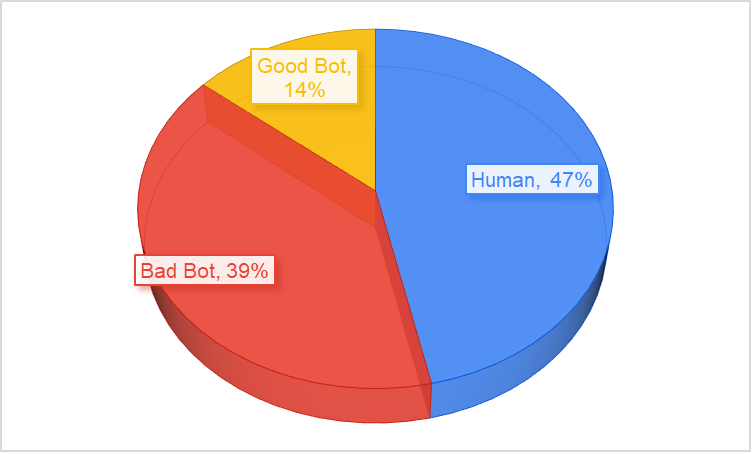
Large-scale bot attacks thrive in seasonal retail: high traffic, elevated checkout volume, heavy promotional activity, and a short window for disruptions. It’s precisely when your monitoring may be stretched. According to the 2025 Thales Bad Bot Report, Retail was the second most attacked industry in 2024 (15% of all bot attacks). 33% of web traffic to retail sites was driven by bad bots. But the most recent data shows that now an astounding 53% of web traffic to retail sites is bots!
Key Findings relevant for eCommerce and Online Retail
53% – the percentage of bot traffic (good and bad) to retail websites in 2025.
39% – the percentage of bad bot traffic to online retail in 2025
64% – the percentage of bot attacks on retail sites targeting business logic.
283% – The increase in Account Takeover attacks (ATO) on Black Friday 2024
18,813 – The number of hours of downtime prevented by Thales in November and December 2024
71 Million – The number of requests per day from AI tools in 2025
Chart based on data from November 2024 to November 2025
Retailers going into peak retail season without strong bot- and account-abuse defences are exposing a key part of their business to automated fraud and exploitation.
How bad bots target Online Retailers
Retailers often focus on obvious fraud vectors (payment fraud, card testing), but bots bring subtler, higher-volume risks that can erode margins, trust, and availability:
Account Takeover (ATO). Attackers leverage stolen credentials or credential-stuffing campaigns to hijack customer accounts — often right before a major shopping event when accounts have stored payment details, loyalty points, or wish-lists. According to the 2025 Thales Bad Bot Report Account takeover (ATO) attacks increased by around 40% in 2024, a surge attributed to improved automation and AI-driven tools.
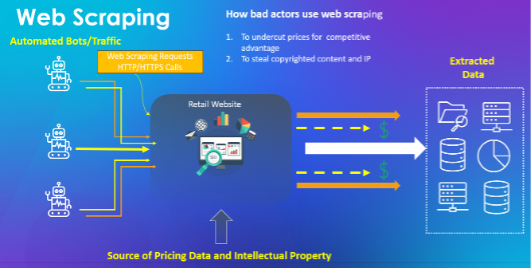
Price Scraping. Bots scrape pricing, and product data at scale (often just before or during promotions), enabling grey-market resale, and competitive undercutting.
Automated Checkout Abuse / Scalper Bots. Limited-release items (sneakers, consoles, luxury goods) are bought by bots in seconds, creating inventory hoarding or resale markets.
API & Business Logic Attacks. As retailers expose more APIs (for checkout, loyalty, account management), bots attack those endpoints rather than just classic web pages. In 2024 API attacks shifted: 44 % of advanced bot traffic targeted APIs while in 2025, 64% of all bot attacks on the retail sector targeted API business logic.
These are not threats to be taken lightly. Modern bots imitate human behaviour (headless browsers, residential proxies, AI/cloud-driven automation) and can bypass many legacy defences.
Why holiday shopping season means a high return for cybercriminals
There are a few compounding factors that intensify the risk for retailers during peak season, making it easier for attackers to exploit traffic spikes and harder for security teams to keep up:
Timing & value. As account histories build up (wish-lists, stored cards, loyalty points), the value of each account rises. Attackers know that e-commerce traffic surges around major events like Black Friday, Cyber Monday, and year-end deals.
Promotion & checkout complexity. Retailers often deploy lots of new scripts or micro-services for promotions giving more surface area for bot abuse or skimming.
Availability expectations. Customers expect 24/7 performance during peak season; disruptions (even small) risk damaging brand trust and revenue. A bot-driven DDoS or checkout-flow abuse during these days can have outsized impact.
Compliance & customer data. With peak volumes, stored-card payments, cross-border activity and new flows, the risk of data breach or regulation (e.g., PCI-DSS, GDPR) becomes more acute.
What online retail security teams should prioritise now
Gain visibility into automated traffic
You cannot protect what you cannot see. Modern bot behaviour includes leveraging headless browsers, residential proxy networks to mimic normal web traffic behaviors and AI has only served to increase the effectiveness of automated abuse making it easier for cyber criminals to repeat their abuse until they infiltrate their target. Ensure you have full visibility of your entire application and API infrastructure.
Ensure your bot protection covers more than just the homepage. High-value targets such as Login pages and account flows, checkout APIs, and loyalty endpoints are prime targets for attack.
Protect customer accounts proactively
Credential-stuffing and Account Takeover attacks will increase during peak shopping season. Traditional security measures such as good password hygiene and MFA are effective, but they are not enough for today’s AI-empowered attackers. True Account Takeover protection will immediately and accurately detect and block attacks at the edge. Always-on Account Takeover Protection will deter attackers by lowering their return on investment.
Secure APIs and microservices
Retail platforms increasingly rely on APIs which is why an Advanced Bot Protection and Advanced API Security solution is recommended to offer full visibility of all your APIs and to ensure your most risky APIs are protected.
Peak-season eCommerce is a double-edged sword: while it presents huge revenue upside, the risk of bot-driven fraud, ATO and automation abuse is also at its highest. If you treat bot threats as an afterthought, you’re leaving the door wide open for attackers who already know your calendar, traffic patterns and the weakest links in your stack.
By integrating our full application security stack from Advanced Bot Protection and API security to Client-Side Protection and WAAP visibility, retailers shift from reactive detection to proactive prevention, turning the holiday surge into a secure growth opportunity instead of a season of risk.
Our application security suite delivers best-of-breed protection in a single platform, offering superior performance with lower latency, unified visibility through Attack Analytics to uncover coordinated campaigns, and with the backing of our world-class Threat Research team.
Every Android application has a “manifest.xml” file located in the root directory of the APK. (Remember APKs are just zip files.) The manifest file is like a guide to the application.

 Login
Login


 Smaller blast radius = lower breach liability