Reading view

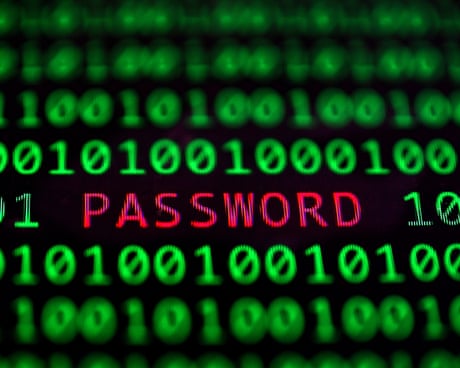
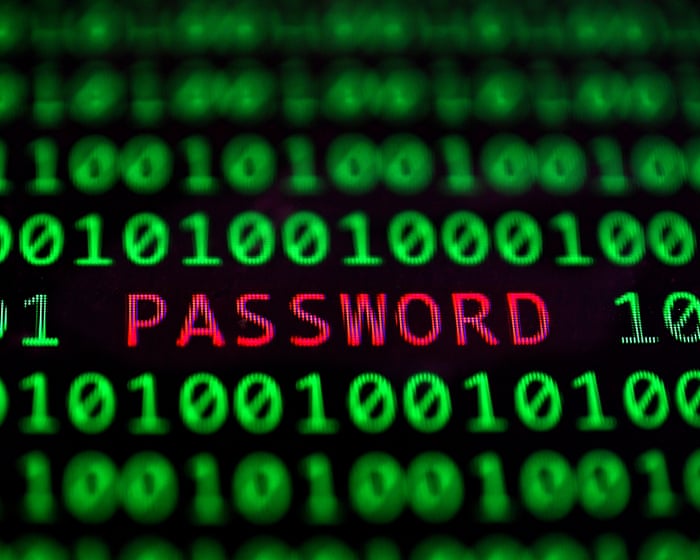
Readers reply: Experts say we should use passkeys, but can a smartphone pin really be safer than a password?

The long-running series in which readers answer other readers’ questions on subjects ranging from trivial flights of fancy to profound scientific and philosophical concepts

I’ve been struggling to get my head around the idea that a passkey, which can be a pin on your phone, or facial recognition, can be safer than using a complicated password and two-factor authentication.

I get that having something unique to your device, not stored on a company’s server, is unphishable and less hackable by cybercrims, but what if your phone is nicked and someone guesses the password? And what if you lose your phone?

Continue reading...

© Photograph: Posed by model; d3sign/Getty Images

© Photograph: Posed by model; d3sign/Getty Images

© Photograph: Posed by model; d3sign/Getty Images

  •  

Spyware firm targeted WhatsApp users in defiance of US court order, Meta says

Tech company says it ‘caught and disrupted’ NSO Group’s attempts to access accounts in Jordan and Lebanon

A spyware firm has been targeting WhatsApp users with malicious links in contravention of a US court order forbidding it from doing so, Meta has said.

In a post, Meta said WhatsApp had “caught and disrupted spear phishing attempts” by NSO Group, which a spokesperson said targeted a handful of users in Jordan and Lebanon. It had also caught the group creating “test accounts and groups” on WhatsApp.

Continue reading...

© Photograph: Martin Meissner/AP

© Photograph: Martin Meissner/AP

© Photograph: Martin Meissner/AP

  •  

Report ‘phone hack’ to police or I will do it for you, Labour chair tells Farage

Anna Turley gives Reform leader 24 hours to report Russian hacking claim in ‘public and national interest’

The Labour chair has given Nigel Farage 24 hours to report to security services the claim that his phone was hacked by Russia-linked actors or the party will do it for him.

In a letter to the Reform UK leader, Anna Turley said it was “in the public and national interest” to ensure that a suspected overseas hack of a senior politician’s phone by a hostile state was properly investigated.

Continue reading...

© Photograph: Ryan Jenkinson/Getty Images

© Photograph: Ryan Jenkinson/Getty Images

© Photograph: Ryan Jenkinson/Getty Images

  •  

Nigel Farage’s Russian hack claim ‘without any merit’, former NCSC chief says

Ciaran Martin says Reform UK leader’s allegation over Guardian report on £5m gift ‘entirely unsubstantiated’

Nigel Farage’s claim that a Russian hack was behind a Guardian report on the £5m gift he received from a crypto billionaire has been described as “without any merit” by a former head of the National Cyber Security Centre.

Ciaran Martin, founding chief executive of the agency, which is part of GCHQ, said Farage’s allegation, if true, would have major implications for UK policy towards Russia but that the Reform UK leader had yet to provide “a shred of evidence”.

Continue reading...

© Photograph: Jack Taylor/Reuters

© Photograph: Jack Taylor/Reuters

© Photograph: Jack Taylor/Reuters

  •  

Canvas hack: is it ever a good idea to pay a ransom, and what happens to the data?

Businesses are advised against paying – but many are prepared to deal to protect users’ privacy

After a week of outages, hundreds of millions of students’ data stolen, delayed assignment due dates and school login pages being defaced by hackers, the US tech firm Instructure – which operates the education platform Canvas, used by education providers worldwide – announced it had “reached an agreement with the unauthorised actor” behind the ransomware attack.

Experts read the careful language as a sign that a ransom has been paid. The company has not confirmed this.

Continue reading...

© Photograph: Boonchai Wedmakawand/Getty Images

© Photograph: Boonchai Wedmakawand/Getty Images

© Photograph: Boonchai Wedmakawand/Getty Images

  •  

Developer withdraws plans for Perth datacentre after fierce community opposition

Three-storey GreenSquare datacentre in Hazelmere was to power cloud computing and the acceleration of AI

A 15,000 sq metre datacentre near Perth will no longer go ahead after the developer withdrew plans amid community opposition over its impact on culturally significant sites.

The three-storey, 120-megawatt GreenSquare datacentre in the town of Hazelmere had been intended to power cloud computing and the acceleration of artificial intelligence, but faced fierce community backlash – as is increasingly common with such developments.

Continue reading...

© Photograph: Trillion Trees

© Photograph: Trillion Trees

© Photograph: Trillion Trees

  •  

Palantir’s access to identifiable NHS England patient data is ‘dangerous’, MPs say

Health service has given US tech firm ‘unlimited access’ to certain data to build integrated platform, according to reports

MPs have warned that an NHS decision to grant Palantir access to identifiable patient information in its plan to use AI to improve the health service is “dangerous” and will fuel public fears that data privacy is not being prioritised.

NHS England has allowed staff from the US tech firm and other contractors to access patient data before it has been pseudonymised, despite internal fears of a “risk of loss of public confidence”, the Financial Times reported.

Continue reading...

© Photograph: David Levene/The Guardian

© Photograph: David Levene/The Guardian

© Photograph: David Levene/The Guardian

  •  

How a simple consumer data breach spiralled into a national security crisis in US-South Korea relations

Washington’s focus on online retailer Coupang has led to accusations that the Trump administration is tying issues of national security to domestic corporate matters

When South Korea’s biggest online retailer revealed last year that a data breach had compromised tens of millions of customer accounts, it appeared to be a corporate crisis. But five months later the issue has grown into a diplomatic storm, threatening to further degrade relations between Seoul and the Trump administration.

Coupang, often described as South Korea’s answer to Amazon, is a US-incorporated company whose business is overwhelmingly based in South Korea. Headquartered in Seattle and listed on the New York Stock Exchange, it is run by Korean-American billionaire Bom Kim. In November last year the company disclosed that a former employee had stolen an internal security key, enabling unauthorised access to data from 33.7 million users.

Continue reading...

© Photograph: Anthony Wallace/AFP/Getty Images

© Photograph: Anthony Wallace/AFP/Getty Images

© Photograph: Anthony Wallace/AFP/Getty Images

  •  

Private health records of half a million Britons offered for sale on Chinese website

Technology minister tells Commons ‘de-identified’ information from UK Biobank advertised for sale on Alibaba

The confidential health records of half a million British volunteers have been offered for sale on Chinese website Alibaba, the UK government has confirmed.

The “de-identified” data, belonging to participants in the UK Biobank project, was found for sale on three separate listings last week. Ian Murray, the technology minister, told the Commons on Thursday that, after working with the Chinese government and Alibaba, the records had now been removed. It is not believed any sales were made.

Continue reading...

© Photograph: Dave Guttridge/UK Biobank/PA

© Photograph: Dave Guttridge/UK Biobank/PA

© Photograph: Dave Guttridge/UK Biobank/PA

  •  

Rental platform unnecessarily collected the data of millions of Australians, privacy commissioner finds

2Apply’s over-collection of personal information adds to the power of the real estate industry in the competitive rental market, Carly Kind says

An online rental platform has been urged to stop collecting users’ personal information after the Australian privacy commissioner found the gathering of “excessive” data compounded the vulnerability of tenants amid the housing crisis.

RentTech platforms are increasingly used by real estate agents in Australia for people applying for rental properties to submit applications and supporting documentation. The Australian Housing and Urban Research Institute has identified 57 different rent platforms operating in Australia.

Continue reading...

© Photograph: Cavan Images/Alamy

© Photograph: Cavan Images/Alamy

© Photograph: Cavan Images/Alamy

  •  

Booking.com warns customers of hack that exposed their data

Undisclosed number of names and contact and reservation details accessed in latest cybercrime attempt

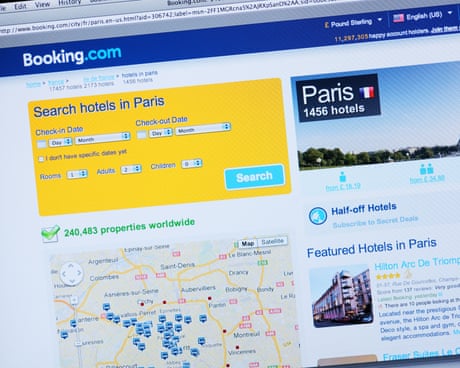
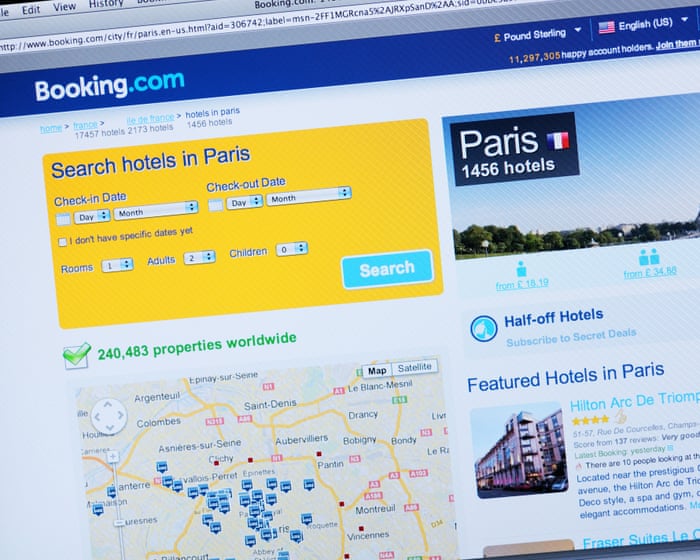
The accommodation reservation website Booking.com has suffered a data breach with “unauthorised parties” gaining access to customers’ details.

The platform said it “noticed some suspicious activity involving unauthorised third parties being able to access some of our guests’ booking information”.

Continue reading...

© Photograph: CrocusPhotography/Alamy

© Photograph: CrocusPhotography/Alamy

© Photograph: CrocusPhotography/Alamy

  •  

Almost half a million Lloyds customers had personal data exposed in IT glitch

Letter from group published by MPs blames 12 March glitch on software update to its mobile banking apps

Lloyds Banking Group exposed the personal data of nearly 500,000 customers in an IT glitch that left people’s payments, account details and national insurance numbers visible to other users, a committee of MPs has revealed.

A letter from Lloyds, published by MPs on the Treasury select committee on Friday, blamed the glitch on a software defect introduced during an IT update to its Lloyds, Halifax and Bank of Scotland mobile banking apps overnight into 12 March.

Continue reading...

© Photograph: David Burton/Alamy

© Photograph: David Burton/Alamy

© Photograph: David Burton/Alamy

  •  

Google warns quantum computers could hack encrypted systems by 2029

Banks, governments and tech providers urged to upgrade security because current systems will soon be obsolete

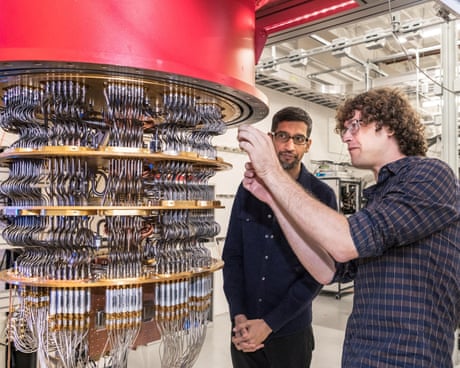
Banks, governments and technology providers need to be prepared for quantum computer hackers capable of breaking most existing encryption systems by 2029, Google has warned.

The tech company said in a blogpost that quantum computers would pose a “significant threat to current cryptographic standards” before the end of the decade and urged other companies to follow its lead.

Continue reading...

© Photograph: Reuters

© Photograph: Reuters

© Photograph: Reuters

  •  

Crossbench MPs pressure Labor over gas export tax – as it happened

This blog is now closed

The pollies have been asked this morning whether people should consider working from home to save fuel, as conflict escalates in the Middle East.

Tehran has said it will “irreversibly destroy” essential infrastructure across the Middle East, including vital water systems, if the US follows through on Donald Trump’s threat to “obliterate” Iran’s power plants unless the strait of Hormuz is fully opened within two days.

This is like Covid style restrictions I think that are potentially being floated. I would not support that in any way, and I don’t think businesses would do so either …

If people can work from home and they want to and it works for their employers, fine, I think that’s terrific, but it doesn’t help small businesses. It certainly doesn’t help the truckers and the fishers and the farmers and the manufacturers and the miners that are relying on fuel supply.

Continue reading...

© Photograph: Mick Tsikas/AAP

© Photograph: Mick Tsikas/AAP

© Photograph: Mick Tsikas/AAP

  •  

‘Exploit every vulnerability’: rogue AI agents published passwords and overrode anti-virus software

Exclusive: Lab tests discover ‘new form of insider risk’ with artificial intelligence agents engaging in autonomous, even ‘aggressive’ behaviours

Robert Booth UK technology editor

Rogue artificial intelligence agents have worked together to smuggle sensitive information out of supposedly secure systems, in the latest sign cyber-defences may be overwhelmed by unforeseen scheming by AIs.

With companies increasingly asking AI agents to carry out complex tasks in internal systems, the behaviour has sparked concerns that supposedly helpful technology could pose a serious inside threat.

Continue reading...

© Photograph: Andrey Kryuchkov/Alamy

© Photograph: Andrey Kryuchkov/Alamy

© Photograph: Andrey Kryuchkov/Alamy

  •  

Stone, parchment or laser-written glass? Scientists find new way to preserve data

Hard disks and magnetic tape have a limited lifespan, but glass storage developed by Microsoft could last millennia

Some cultures used stone, others used parchment. Some even, for a time, used floppy disks. Now scientists have come up with a new way to keep archived data safe that, they say, could endure for millennia: laser-writing in glass.

From personal photos that are kept for a lifetime to business documents, medical information, data for scientific research, national records and heritage data, there is no shortage of information that needs to be preserved for very long periods of time.

Continue reading...

© Photograph: Tetra Images/Erik Isakson/Getty Images

© Photograph: Tetra Images/Erik Isakson/Getty Images

© Photograph: Tetra Images/Erik Isakson/Getty Images

  •  

A Victorian schoolteacher was applying for ‘heaps of rentals’ online – then someone accessed his bank account

Michael suspects personal information he submitted to rent application platforms was leaked online. And analysis shows millions of documents may also be at risk

Michael* has spent the past two months trying to get his digital identity back.

The 47-year-old Victorian schoolteacher was in the process of moving to a new town and applying for rental properties online. Around this time – and unbeknown to him – his mobile phone number was transferred to someone else.

Continue reading...

© Composite: Getty Images

© Composite: Getty Images

© Composite: Getty Images

  •  

Why should renters like me have to trade away our privacy just to get a roof over our heads? | Samantha Floreani

The rise in real estate tech means renters often hand over huge amounts of revealing information to digital third parties – at great risk

Would you trade your data privacy and security for housing? Thanks to the rise in real estate technologies, renters often have no choice but to hand over huge amounts of revealing information to digital third parties just to have somewhere to live. All the while we are told: trust us, we take your privacy seriously.

But recent Guardian reporting has revealed that seven popular “rent-tech” platforms have serious security vulnerabilities, leaving millions of documents containing personal information of renters exposed on the open web for years. When they were alerted to the risk, only two of the seven companies responded to say they would put additional security measures in place. Is this what taking renter privacy seriously looks like?

Continue reading...

© Photograph: Jacob Wackerhausen/Getty Images

© Photograph: Jacob Wackerhausen/Getty Images

© Photograph: Jacob Wackerhausen/Getty Images

  •  

Real estate agents in Australia using apps that leave millions of lease documents at risk, digital researcher says

Exclusive: ‘This is a blatant and disturbing disregard for the law and for people’s security,’ digital rights advocate says

Australian platforms used by real estate agents to upload documentation for renters and landlords are leaving people’s personal information exposed in hyperlinks accessible online.

An analysis of seven rent platforms provided to Guardian Australia by a researcher, who wished to remain anonymous, revealed millions of leasing documents could be accessed by threat actors.

Continue reading...

© Photograph: Carly Earl/The Guardian

© Photograph: Carly Earl/The Guardian

© Photograph: Carly Earl/The Guardian

  •  

Burner phones and lead-lined bags: a history of UK security tactics in China

Starmer’s team is wary of spies but such fears are not new – with Theresa May once warned to get dressed under a duvet

When prime ministers travel to China, heightened security arrangements are a given – as is the quiet game of cat and mouse that takes place behind the scenes as each country tests out each other’s tradecraft and capabilities.

Keir Starmer’s team has been issued with burner phones and fresh sim cards, and is using temporary email addresses, to prevent devices being loaded with spyware or UK government servers being hacked into.

Continue reading...

© Photograph: Simon Dawson/Simon Dawson/10 Downing Street

© Photograph: Simon Dawson/Simon Dawson/10 Downing Street

© Photograph: Simon Dawson/Simon Dawson/10 Downing Street

  •  
❌