Account theft usually ends with someone losing a password. This one ends with hackers walking off with the entire game.
Developers behind some of Roblox’s millions of games told 404 Media that attackers persuaded them to run a single file. Then they watched their group, their game, and their Robux (in-platform currency) balance vanish into someone else’s account within hours. In several cases, Roblox support didn’t help them get the games back until a reporter called the company for comment.
From beaming to hostile takeover
Roblox attacks used to be opportunistic. “Beamers” targeted individual players to steal rare hats, limited items, and accounts, then resold them. The pattern has shifted. The new targets are developer accounts, and the prize is the game itself.
Ioannis Matziaris told 404 Media that his two 20-year-old sons spent five years building a Roblox game called The Shadow Network. In April, attackers approached one of them with a job offer and convinced him to run a particular file. It was malware. The attackers stole control of the game, the group’s Roblox account, and their Robux balance.
Another developer, Jovan Rai, received the same project-manager job pitch. This time, the attackers were impersonating Cheesy Studios, the Matziaris brothers’ company, to lend the offer credibility. The 15-year-old was earning roughly 10,000 Robux (around $38) per day from his game. He spent more than 30 days trying to recover it through Roblox support before media attention helped move the case forward.
The malware behind the theft
Developer Mohamed Kaparoza described how the attack worked. Attackers contacted him on Discord, dangled a project-manager role, and asked him to install a Python package called “robase,” which they claimed was a database tool. Shortly after installing it, he was logged out of Roblox on both his PC and his phone. His Discord account went with it, and his two-step verification settings and passkey were changed.
This is a case of session-token theft, rather than credential theft. Once an infostealer steals an authenticated browser session, attackers can often bypass security measures such as two-factor authentication (2FA) because they are reusing a session that has already been authenticated.
The technique itself isn’t new. We reported on a similar campaign in January 2025 that targeted Roblox players with offers to beta test new games. The “installer” was actually an infostealer designed to steal data, including Discord and Steam sessions, and cryptocurrency wallet information.
What developers can do
If you build Roblox games, the defensive advice is unglamorous and mostly behavioral.
Treat unsolicited Discord job offers with caution. If a stranger asks you to install a “database tool,” a custom installer, or any file at all, do not run it.
Developers who need to test unfamiliar software should do so in an isolated environment, such as a virtual machine, rather than on a device where they are signed in to Roblox, Discord, GitHub, or other important accounts.
Review active Roblox sessions and signed-in devices regularly, and switch on Roblox’s Enhanced Protection features where available. They won’t stop session-stealer malware, but they can help protect against many other forms of account compromise.
If the worst happens, document everything as early as possible. Keep records of messages, screenshots, account changes, and support requests to help with any recovery process.
Use security software with real-time protection. Malwarebytes Premium can detect and block infostealers and other malware before they compromise your accounts.
We don’t just report on threats—we remove them
Cybersecurity risks should never spread beyond a headline. Keep threats off your devices by downloading Malwarebytes today.
Build something that doesn’t exist. Don’t collect any data while you do it. Get it wrong and the CEO could face criminal charges. That’s close to the ultimatum the UK government handed Apple and Google on June 8. The two companies have three months to introduce device-level protections blocking nudity across every smartphone and tablet sold in the UK. If they don’t, the government will legislate—including fines and, as a last resort, criminal liability for tech bosses.
Prime Minister Keir Starmer announced the move at London Tech Week, telling the firms:
“If they choose not to, then we will act and change the law.”
The policy reads cleanly. The execution doesn’t.
What’s already on your child’s phone, and what isn’t
Both companies already do something to prevent children interacting with nudes. Apple’s Communication Safety feature warns children with a Child Account when they send or receive images and videos containing nudity across Messages, AirDrop, FaceTime, and other apps. It updated the feature with new functionality at its Worldwide Developer Conference (WWDC) this week.
Google’s Sensitive Content Warnings blur sensitive imagery in Google Messages for supervised users and signed-in unsupervised teens—though the feature covers images only, not video.
Apple will soon require people to confirm that they are over 18 in the UK and some other countries to access certain features on their phones. That will involve age assurance through government ID, payment information, or other verification methods depending on region.
These measures aren’t enough, according to the UK government. It complains that existing nudity detection isn’t applied to the camera or other apps, third-party messaging services, or search functions. So in other words, the protections miss most of the phone. The camera, WhatsApp, Signal, Safari, and the photo library all sit outside the protective bubble parents may assume already exists.
Is privacy-respecting scanning possible?
The announcement also contains a line that’s hard to reconcile with the rest of it:
“Companies must introduce these measures without threatening privacy or collecting any data.”
Adults can opt out, but only by completing age verification.
That’s a tall order. Privacy advocates argue that age verification inevitably creates new data collection risks, even when companies try to minimize the information they store. Whatever Apple and Google build, some form of record-keeping seems likely. If executives can face personal liability for non-compliance, someone has to be able to demonstrate what the system did and when.
The government’s proof that any of this is achievable rests on a single product: SafeToNet’s HarmBlock, which the Home Office calls “a proven example” of safe-by-default device protection. HarmBlock’s source code (which isn’t public) analyzes images and live streams entirely on-device.
Digital privacy groups were not happy with the announcement. Big Brother Watch pointed out that children could easily access adult-registered devices, and warned that mandatory ID checks for adults would mean “the death of anonymity and internet privacy.”
Private messaging app Signal said promises the scanning would run only on-device were “cold comfort” because wherever the system runs, its reach would ultimately be determined by government, not technology:
“Its scope will be defined by the whims and proscriptions of the government to detect nudity today and political speech tomorrow.”
Apple has been here before. In 2021, it announced a separate plan to detect known child sexual abuse imagery on devices by matching image hashes against a database of known material, and quietly shelved it after sustained backlash from privacy advocates.
What families can do today
September will end in voluntary compliance or hurried legislation. Either way, none of that changes what’s on your child’s phone right now. Today, the messaging channels most heavily used by teenagers aren’t protected. Many grooming and sextortion cases begin on apps that operate outside the operating system’s built-in safety features. Parents and kids can take extra steps for protection:
Turn on Communication Safety on iPhones with a Child Account, and Sensitive Content Warnings on supervised Android Messages. They might only blunt the problem at one narrow point, but it’s better than nothing.
Talk to your kids about coerced sharing. The Internet Watch Foundation reported that 91% of reports it assessed in 2024 contained self-generated content submitted by children themselves. Children are often coerced into sending explicit material to abusers online. The Internet Watch Foundation has a list of resources for people who are being coerced into sending intimate images online.
Cover the basics that outlive any policy: put unique passwords on all accounts, and add multi-factor authentication.
Be careful when sharing images of children you know online. Increasingly, criminals can use non-explicit images to create sexual content using AI that can in turn be used for extortion.
“One of the best cybersecurity suites on the planet.”
A damaging new report from Ofcom, the UK’s communications regulator, has delivered a stark verdict: TikTok and YouTube’s content feeds are “not safe enough” for children. This isn’t just another regulatory slap on the wrist. Ofcom is putting out a wake-up call for anyone working in cybersecurity, threat intelligence, and online safety.
In its own words:
“Notably, TikTok and YouTube failed to commit to any significant changes to reduce harmful content being served to children, maintaining their feeds are already safe for children.”
On the positive side, Snap, Meta, and Roblox agreed to adopt further safety measures to protect children from online grooming and “stranger danger.”
The BBC reports that an Ofcom survey found 84% of children aged 8 to 12 were still using at least one major service with a minimum age of 13. We reported earlier about how easy it was to fool some of the age verification methods. Researchers using under-13 accounts also reported encountering sexual content and offensive language shortly after entering specific Roblox games.
Speaking of Roblox, The Guardian reports that US advocacy groups have formally requested the Federal Trade Commission (FTC) investigate Roblox for what they call “unfair and deceptive” practices. The complaint focuses on:
In-game purchases pressuring children to spend money
Chat functionality exposing children to strangers
Features designed to maximize engagement, which critics argue may be addictive
Drew Benvie, CEO of Battenhall and founder of youth safety nonprofit Raise, noted:
“Although Roblox is implementing new age-based safety measures, young players are adept at circumventing these protections.”
The cybersecurity point of view
What keeps cybersecurity researchers up at night is another angle to this problem. Many proposed age assurance solutions require users to hand over government IDs or biometric selfie data. We already talked about this in our blog, Age verification: Child protection or privacy risk?
Age verification systems create massive data collection opportunities that become prime targets for:
Data breaches exposing sensitive personally identifiable information (PII)
Identity theft facilitated by centralized ID databases
Biometric data theft, which cannot be changed like passwords
Malware and scams targeting users on less-secure platforms
When restrictions push young users toward smaller or less secure sites, they encounter:
No basic safety protections
Higher exposure to malware
Increased phishing and scam risks
Unmoderated harmful content
This is exactly what we see in threat intelligence: As defenders secure one vector, cybercriminals adapt and move elsewhere.
Safer systems beat stricter age gates
Protecting children should focus on building safer digital experiences overall. This is the only viable path forward because:
Stronger moderation actually removes harmful content rather than just blocking access
Safer recommendation systems prevent algorithmic amplification of harmful content
Better platform accountability means companies can’t prioritize engagement over safety
Avoiding invasive data collection prevents creating massive honeypots for attackers
As someone who analyzes malware and threats daily, I can tell you: security through obscurity (age gates) doesn’t work. Security through robust system design (moderation, safer algorithms, accountability) does.
Scammers don’t need to hack you. They just need you to click once.
Schools love a good photo, whether it’s from a trip to a castle, a science prize ceremony, or sports day shot from three angles. For two decades, celebratory images like these have gone straight onto school websites, captioned with a name and a grade. But those days are gone, because it’s the internet in 2026 and we can’t have nice things.
As first reported by the Guardian, experts are now urging schools to take those pictures down. According to the UK’s National Crime Agency, the Internet Watch Foundation, and an advisory body called the Early Warning Working Group (EWWG), blackmailers have been scraping ordinary school photos, feeding them through AI deepfake tools to manufacture child sexual abuse material (CSAM), and demanding payment to keep the images offline.
One school, 150 images
Late last year, cybercriminals contacted an unnamed UK secondary school with that demand. The IWF classified 150 of the resulting images as CSAM under UK law and generated digital fingerprints for each image so major platforms could block reuploads.
The IWF isn’t naming the school or the police force, and it doesn’t believe this was an isolated case. The EWWG says it’s “only a matter of time” before more schools face similar demands.
UK safeguarding minister Jess Phillips called it a “deeply worrying emerging threat.” In February 2025, the UK became the first country to ban AI tools designed specifically to generate CSAM.
How we got here
This threat didn’t appear overnight, and it isn’t limited to the UK. It’s an evolution of a long-time threat: sextortion, when someone uses intimate images to blackmail you. Traditionally, sextortion relied on real intimate images that were stolen or shared, but deepfake AI has changed everything.
The FBI’s Internet Crime Complaint Center (IC3) logged more than 16,000 sextortion complaints in the first half of 2021, with losses exceeding $8 million. By June 2023, the bureau warned the playbook had shifted: attackers were using ordinary social media photos to create fake explicit images and extort minors.
UK children’s counseling helpline Childline has seen similar shifts as deepfake tools become more accessible. It already logs many sextortion cases each year, many from kids who were manipulated into sharing intimate images of themselves. Now, the organization is getting calls from children who are being sent deepfake CSAM images of themselves without any prior contact.
One 15-year-old girl, for example, was sent a “really convincing” fake nude built from her Instagram photos.
By November 2025, IWF reports of AI-generated CSAM had more than doubled year over year, rising from 199 to 426. Girls accounted for 94% of the victims. Reported cases included children ranging from newborns to two-year-olds, according to the organization.
The ecosystem around these tools is industrial. In April 2025, a researcher found an exposed AWS S3 bucket belonging to South Korean “nudify” app GenNomis containing 93,485 AI-generated images alongside the prompts that produced them.
What the schools are being told
The EWWG’s advice is to replace close-up, identifiable photos with images taken from a distance, blurred images, or photos shot from behind. It also advises schools to remove full names from captions, audit existing images, and ask parents to re-sign consent forms.
In fact, it advises schools to rethink whether they need to publish children’s photos online at all.
Some schools have already acted. According to the Guardian, Loughborough Schools Foundation, a group of three private schools sharing a website, removed recognizable pupil images entirely last year.
The UK Information Commissioner’s Office (ICO) says that it “would still generally expect you to offer an opt-out to parents” when publishing an identifiable photo of a child, but says this isn’t legally the same as consent, which has a higher bar.
Things get murkier in the US, where states often have their own student privacy statutes. Broadly, though, under the Family Educational Rights and Privacy Act (FERPA), schools typically include identifiable photos of students under the category of directory information. This category also covers name, address, telephone listing, date and place of birth, participation in officially recognized activities and sports, and dates of attendance.
Under FERPA, schools can publish this type of information unless the child’s guardian specifically opts out. They have to notify a guardian when they want to publish it, but that process may not apply indefinitely after a student leaves the school.
That means student photos and information can remain online long after families assume they have disappeared.
What happens next
Back in the UK, Childline’s Report Remove service allows children to flag explicit images or videos of themselves that have been posted online. The service took 394 blackmail reports from under-18s last year, up by one-third compared to 2024.
Meanwhile, the UK government is amending the Crime and Policing Bill, forcing platforms to take flagged intimate images down within 48 hours or face fines of 10% of global revenue.
We anticipate a race between regulators and AI-enabled cybercriminals. Right now, attackers still have to manually find the photos themselves. The concern is that this process could soon become automated, allowing criminals to scrape names and photos from school websites and social media platforms at scale.
Attorney General (AG) of Texas Ken Paxton announced that he sued Netflix for spying on Texans, including children, and collecting users’ data without their knowledge or consent.
The suit alleges Netflix secretly tracks and monetizes detailed viewing behavior of users, including children, while misleading users about its data practices. The case could reshape how Netflix collects data, targets ads, and designs “addictive” features, especially for minors.
According to the complaint, Netflix allegedly ran what the AG’s office calls a “surveillance program,” turning every click, pause, and binge session into data that could be sold to advertisers and data brokers.
Netflix firmly denies the accusations, calling the lawsuit “inaccurate” and claiming it complies with privacy laws wherever it operates. Spokesperson Jamil Walker said:
“The suit lacks merit and is based on inaccurate and distorted information.”
But regardless of how this specific case plays out, the lawsuit raises a bigger question for all subscribers: Just how much does your streaming service really know about you, and what does it do with that information?
The Texas complaint paints a picture of Netflix as a data company first and a streaming service second. Paxton’s office even describes Netflix as:
“A logging company that records and monetizes billions of behavioral events—and occasionally streams movies.”
The complaint also references a 2024 ruling by the Dutch Data Protection Authority, which said Netflix does not disclose the true scale or granularity of this data collection. The lawsuit claims Netflix did not just use this data internally for recommendations but also sold it to commercial data brokers and ad tech companies, generating “billions of dollars” annually.
The AG wants to stop the unlawful collection and disclosure of user data, require Netflix to disable autoplay by default on kid’s profiles, and impose other injunctive relief and civil penalties.
For customers, the main consequences could include potential changes to data collection, targeted advertising, autoplay defaults, and clearer consent and privacy controls. For subscribers on Netflix’s ad‑supported plans, this could slightly change how “personal” ads feel, at least in jurisdictions where regulators clamp down.
Plus, the lawsuit serves as a reminder that streaming habits may be far more trackable than users assumed. Even if Netflix ultimately wins or settles without admitting wrongdoing, the lawsuit puts a spotlight on what the company collects and why.
Netflix privacy and account settings
It will probably take a while before this lawsuit leads to any changes. But there are a few things you can do to protect your privacy:
Where available, turn off non‑essential marketing emails or in‑app promotions that rely on behavioral profiling.
Use the parental controls Netflix offers you and turn off autoplay previews.
Basically, treat your Netflix account like any other online account: Review every profile, remove old ones, and take five minutes to walk through the privacy- and playback‑related options.
Scammers don’t need to hack you. They just need you to click once.
The Online Safety Act came into effect in July, 2025, and the report explores what has changed in the online lives of UK families since then.
We discussed in December 2025 whether the privacy risks of age verification outweighed the enhanced child protection. While the report shows some progress, it mostly provides “an early view of how the online landscape is changing, and crucially, where it is not.”
Around half of children say they now see more age-appropriate content, and roughly four in ten parents and children feel the online world has become somewhat safer.
The online world is as much a part of a child’s environment as the physical world is. And blocking the view to parts of that world is not taken lightly. Almost half of children think age checks are easy to bypass. About a third admit to doing so recently, using tactics from fake birthdates and borrowed logins to spoofed faces and, less commonly, VPNs.
“I did catch my son [12] using an eyebrow pencil to draw a moustache on his face, and it verified him as 15 years old.”
Yet 90% of children who noticed improved blocking and reporting saw this as a good thing. Their support for these safety features is pragmatic. They point to:
clearer rules
restricted contact with strangers
limits on high-risk functions
They also rate these features as helpful in reducing exposure to harmful content and interactions.
But the system is not perfect. In the month after the child protection codes came into force, almost half of children reported some online harm, including violent, hateful, and body image-related content that should be covered by the Act’s protections.
The survey also revealed that age checks are now commonplace. Over half of children said they were asked to verify their age within a recent two-month window, often on major platforms like TikTok, YouTube/Google, and Roblox, on both new and existing accounts.
The technology is improving. Platforms use facial age estimation, government ID, and third-party age assurance apps, and these are usually easy for children to complete.
However, gains in protection come with unresolved and, in some cases, growing concerns around privacy and data use, especially around age verification and AI.
Parents are worried not just about what data is collected for age checks, but whether it will be stored or reused by government or industry. This has fueled calls for central, privacy-protective solutions rather than fragmented data collection across platforms.
Because age assurance systems are both intrusive (in terms of data) and often ineffective (easy workarounds, weak enforcement), the report suggests they may not yet provide a good safety-to-privacy trade-off from a family perspective.
Obviously, the survey also didn’t capture input from adults pretending to be children to gain access to child-only spaces, a risk that parents link directly to predatory behavior.
The authors conclude that the Online Safety Act has started to reshape children’s online environments, making safety features more visible and enabling more age‑appropriate experiences in some areas.
However, the Act has not yet produced a “step change.” Harmful content remains widespread, age‑assurance is patchy and easy to circumvent, and key concerns such as time spent online, AI risks, and persuasive design remain under‑regulated.
Browse like no one’s watching.
Malwarebytes Privacy VPN encrypts your connection and never logs what you do, so the next story you read doesn’t have to feel personal. Try it free →
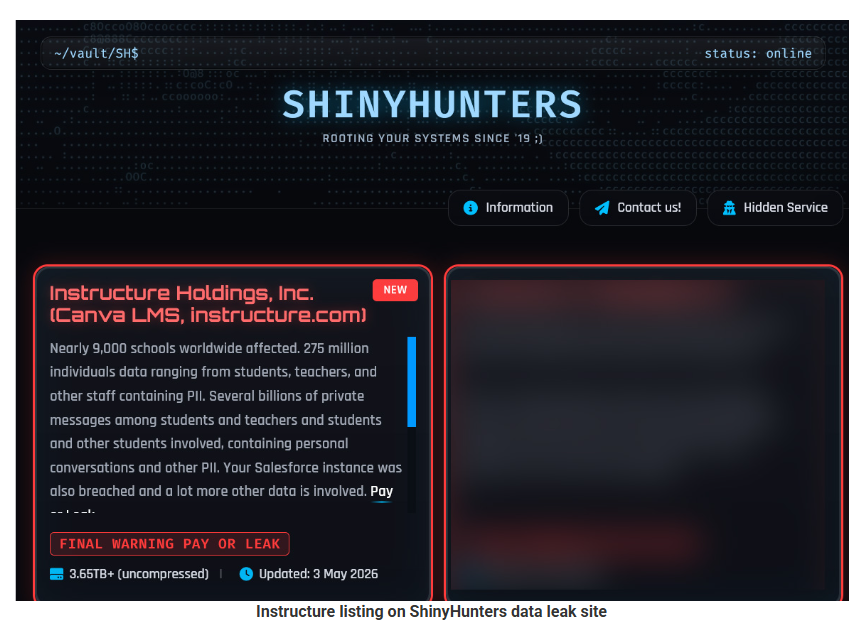
Instructure, the company behind the Canvas learning management system (LMS), confirmed a cyber incident and subsequent data breach affecting its cloud‑hosted environment.
The ShinyHunters ransomware group claims it is behind the attack and says it stole roughly 275 million records tied to students, teachers, and staff.
Image courtesy of BleepingComputer
The criminals shared a list of 8,809 school districts, universities, and online education platforms with BleepingComputer whose Canvas instances they claim were impacted, with per‑institution record counts ranging from tens of thousands to several million.
What to do if your child’s Instructure/Canvas data was exposed
If you’ve been told that your child was affected by the Instructure breach, you may be wondering what you can do to protect them. Here are some practical steps you can take right away.
1. Check what the school and Instructure are saying
Start with the notification from the school or district and Instructure’s own updates to understand what data about your child was involved (for example: name, email address, student ID, or course information). Follow any specific steps they recommend for student accounts and keep an eye on follow‑up messages in case new information comes to light.
Make sure the notification is real before anything else. If anything in the message looks suspicious, such as odd links, pressure to act immediately, or requests for extra data, check this first. Go to the district’s or Instructure’s site directly and use the contact details listed there to verify.
2. Lock down your child’s school and learning accounts
If your child has a Canvas or related account, change that password immediately, especially if your school lets students or parents log in with a username and password instead of single sign‑on. If your child tends to reuse passwords (for example, using the same one for Canvas, email, and gaming accounts), change those other passwords as well.
Give every account its own strong, unique password and consider using a family password manager so you can create and store these without relying on memory. For younger children, you may want to manage these credentials yourself and keep a list of which education platforms they use.
3. Turn on multi‑factor authentication where possible
Multi‑factor authentication (MFA) makes it much harder for someone to log into an account with just a password. If your school or district allows it on parent or student accounts (for example, a code sent by SMS, email, or generated in an authenticator app), turn it on and, ideally, have the codes go to a device or app you control.
Remind your child that security codes are like short‑term passwords. They should never share them with friends, teachers, or anyone claiming to be “IT support,” even if a message looks urgent or uses school branding.
4. Consider extra identity protection for minors
If the breach included very sensitive identifiers (such as national ID or Social Security numbers in some regions), ask both the school and the breached provider what protection is being offered for minors, such as credit monitoring or identity restoration services. In some countries, you can also place a credit freeze or similar block on a minor’s file to prevent new accounts being opened in their name.
Even if your child is too young to have a credit file today, it’s worth keeping a note of this incident so you remember to check their records once they are old enough.
5. Stay alert for follow‑on scams
Attackers like to reuse stolen data from education platforms to make phishing and scam messages more convincing, mentioning real school names, teachers, or courses. Be especially wary of emails and texts that claim to be from the school, district, or Instructure and that ask you to “confirm” login details, open unexpected attachments (like “new assignments”), or pay fees via unusual methods.
As a rule of thumb, avoid clicking links in unsolicited messages about the breach. Instead, open a new browser window and go to the official site or app as you normally would, then log in from there to check for messages.
What do cybercriminals know about you?
Use Malwarebytes’ free Digital Footprint scan to see whether your personal information has been exposed online.
On April 21, Alabama Attorney General Steve Marshall announced a $12.2 million settlement with the child-focused online gaming platform. The State of West Virginia also settled for $11 million the same day. Those came a week after Nevada Attorney General Aaron Ford got the company to hand over $12 million.
Their problem with Roblox is clear from the settlement documents: they believe it hasn’t been adequately protecting children from predators on its platform.
What Roblox has to change
As part of Alabama’s settlement, Roblox must now run age checks on everyone via facial age estimation or a government ID starting May 1. That applies to both new and existing accounts. The company must now also monitor account behavior to catch users who lied about their age.
Adults and under-16s won’t be able to talk with each other at all unless they’re on a “trusted friend” list, added via QR code or a phone-contact import, and users that don’t undergo age verification can’t chat to anyone.
Communication involving any minor cannot be encrypted, so law enforcement can read it during investigations. West Virginia’s settlement also insists that Roblox alert minors the first time they enter a private chat, so children understand how to communicate safely.
Roblox already stopped people from chatting without age verification as of January this year, but under new measures it will start restricting access to games for those that don’t undergo the process. Starting in June, the platform will split into three tiers: Roblox Kids for ages 5–8 will forbid any chats at all, and will only allow access to games labeled ‘minimal’ or ‘mild’ on its maturity scale. Those who don’t complete age verification will also have these restrictions. The other two account levels are Roblox Select for 9–15 year-olds, and standard accounts for those 16 and up.
Plenty more lawsuits to come
Three settlements in eight days totaling more than $35 million must hurt, but it’s just the beginning. Texas, Florida, Louisiana, Iowa, Nebraska, Kentucky, and Tennessee are all pursuing similar claims: that Roblox exposed children to risk and then misled parents about its safeguards.
In February, LA County sued Roblox, accusing the platform of choosing profit over safety and leaving kids exposed to grooming and explicit content.
Roblox is also separately dealing with nearly 80 federal lawsuits filed by families in California alone. And Australia’s eSafety Commissioner has also issued legally-enforceable transparency notices to Roblox and other tech companies. These force them to detail what they’re doing to protect children. Those notices are backed by fines of A$825,000 a day (that’s about US$590,783) for non-compliance.
Where the money will go
The $12.2 million from Alabama’s settlement funds school resource officers through the state’s Safe School Initiative. Nevada’s is earmarked for the Boys & Girls Club and “nondigital activities,” plus a law-enforcement liaison and an online-safety awareness campaign. West Virginia will invest $500,000 in safety education workshops for parents and children, create a $1.5 million three-year public safety campaign, and spend $2.4 million on a dedicated internet safety specialist for six years.
Stay alert
There’s a predictable rhythm to how big tech companies face down state attorneys general. First comes pushback, then rhetoric about shared values, and then they start handing over cash.
It is a step forward that Roblox is agreeing to new safeguards, but questions remain.
In its own lawsuit against Roblox launched last month, Nebraska complained that the company’s existing age-check technology was inadequate. From the complaint:
“Rather than meaningfully protecting children, the system has repeatedly misclassified users’ ages, placing adults in child chat groups and minors in adult categories, while age-verified accounts for young children have already been traded on third-party marketplaces, undermining any purported safety benefits.”
What happens when the age-estimation AI guesses wrong on a 14-year-old who looks 17, or when a “trusted friend” QR code gets passed around a group chat somewhere it shouldn’t?
The company’s Persona age-check tool has also turned out to do more than check ages: researchers say they found an exposed frontend showing the system was also running facial recognition against watchlists.
Settlements address past concerns, but they don’t guarantee future safety. Parents must still do the work to ensure that they know what their kids are signing up for and who else they might be playing with.
Meta is facing two trials over child safety allegations in California and New Mexico. The lawsuits are landmark cases, marking the first time that any such accusations have reached a jury. Although over 40 state attorneys general have filed suits about child safety issues with social media, none had gone to trial until now.
The New Mexico case, filed by Attorney General Raúl Torrez in December 2023, centers on child sexual exploitation. Torrez’s team built their evidence by posing as children online and documenting what happened next, in the form of sexual solicitations. The team brought the suit under New Mexico’s Unfair Trade Practices Act, a consumer protection statute that prosecutors argue sidesteps Section 230 protections.
The most damaging material in the trial, which is expected to run seven weeks, may be Meta’s own paperwork. Newly unsealed internal documents revealed that a company safety researcher had warned about the sheer scale of the problem, claiming that around half a million cases of child exploitation are happening daily. Torrez did not mince words about what he believes the platform has become, calling it an online marketplace for human trafficking. From the complaint:
“Meta’s platforms Facebook and Instagram are a breeding ground for predators who target children for human trafficking, the distribution of sexual images, grooming, and solicitation.”
The complaint’s emphasis on weak age verification touches on a broader issue regulators around the world are now grappling with: how platforms verify the age of their youngest users—and how easily those systems can be bypassed.
In our own research into children’s social media accounts, we found that creating underage profiles can be surprisingly straightforward. In some cases, minimal checks or self-declared birthdates were enough to access full accounts. We also identified loopholes that could allow children to encounter content they shouldn’t or make it easier for adults with bad intentions to find them.
The social media and VR giant has pushed back hard, calling the state’s investigation ethically compromised and accusing prosecutors of cherry-picking data. Defence attorney Kevin Huff argued that the company disclosed its risks rather than concealing them.
Yesterday, Stanford psychiatrist Dr. Anna Lembke told the court she believes Meta’s design features are addictive and that the company has been using the term “Problematic Internet Use” internally to avoid acknowledging addiction.
Meanwhile in Los Angeles, a separate bellwether case against Meta and Google opened on Monday. A 20-year-old woman identified only as KGM is at the center of the case. She alleges that YouTube and Instagram hooked her from childhood. She testified that she was watching YouTube at six, on Instagram by nine, and suffered from worsening depression and body dysmorphia. Her case, which TikTok and Snap settled before trial, is the first of more than 2,400 personal injury filings consolidated in the proceeding. Plaintiffs’ attorney Mark Lanier called it a case about:
“two of the richest corporations in history, who have engineered addiction in children’s brains.”
A litany of allegations
None of this appeared from nowhere. In 2021, whistleblower Frances Haugen leaked internal Facebook documents showing the company knew its platforms damaged teenage mental health. In 2023, Meta whistleblower Arturo Béjar testified before the Senate that the company ignored sexual endangerment of children.
Unredacted documents unsealed in the New Mexico case in early 2024 suggested something uglier still: that the company had actively marketed messaging platforms to children while suppressing safety features that weren’t considered profitable. Internal employees sounded alarms for years but executives reportedly chose growth, according to New Mexico AG Raúl Torrez. Last September, whistleblowers said that the company had ignored child sexual abuse in virtual reality environments.
Outside the courtroom, governments around the world are moving faster than the US Congress. Australia banned under 16s from social media in December 2025, becoming the first country to do so. France’s National Assembly followed, approving a ban on social media for under 15s in January by 130 votes to 21. Spain announced its own under 16 ban this month. By last count, at least 15 European governments were considering similar measures. Whether any of these bans will actually work is uncertain, particularly as young users openly discuss ways to bypass controls.
The United States, by contrast, has passed exactly one major federal child online safety law: the Children’s Online Privacy Protection Act (COPPA), in 1998. The Kids Online Safety Act (KOSA), introduced in 2022, passed the Senate 91-3 in mid-2024 then stalled in the House. It was reintroduced last May and has yet to reach a floor vote. States have tried to fill the gap, with 18 proposed similar legislation in 2025, but only one of those was enacted (in Nebraska). A comprehensive federal framework remains nowhere in sight.
On its most recent earnings call, Meta acknowledged it could face material financial losses this year. The pressure is no longer theoretical. The juries in Santa Fe and Los Angeles will now weigh whether the company’s design choices and safety measures crossed legal lines.
If you want to understand how social media platforms can expose children to harmful content—and what parents can realistically do about it—check out our research project on social media safety.
We don’t just report on threats – we help protect your social media
When researchers created an account for a child under 13 on Roblox, they expected heavy guardrails. Instead, they found that the platform’s search features still allowed kids to discover communities linked to fraud and other illicit activity.
The discoveries spotlight the question that lawmakers around the world are circling: how do you keep kids safe online?
Lawmakers have said these efforts are to keep kids safe online. But as the regulatory tide rises, we wanted to understand what digital safety for children actually looks like in practice.
So, we asked a specialist research team to explore how well a dozen mainstream tech providers are protecting children aged under 13 online.
We found that most services work well when kids use the accounts and settings designed for them. But when children are curious, use the wrong account type, or step outside those boundaries, things can go sideways quickly.
Over several weeks in December, the research team explored how platforms from Discord to YouTube handled children’s online use. They relied on standard user behavior rather than exploits or technical tricks to reflect what a child could realistically encounter.
The researchers focused on how platforms catered to kids through specific account types, how age restrictions were enforced in practice, and whether sensitive content was discoverable through normal browsing or search.
What emerged was a consistent pattern: curious kids who poke around a little, or who end up using the wrong account type, can run into inappropriate content with surprisingly little effort.
A detailed breakdown of the platforms tested, account types used, and where sensitive content was discovered appears in the research scope and methodology section at the end of this article.
When kids’ accounts are opt-in
One thing the team tried was to simply access the generic public version of a site rather than the kid-protected area.
This was a particular problem with YouTube. The company runs a kid-specific service called YouTube Kids, which the researchers said is effectively sanitized of inappropriate content (it sounds like things have changed since 2022).
The issue is that YouTube’s regular public site isn’t sanitized, and even though the company says you must be at least 13 to use the service unless ‘enabled’ by a parent, in reality anyone can access it. From the report:
“Some of the content will require signing in (for age verification) prior the viewing, but the minor can access the streaming service as a ‘Guest’ user without logging in, bypassing any filtering that would otherwise apply to a registered child account.”
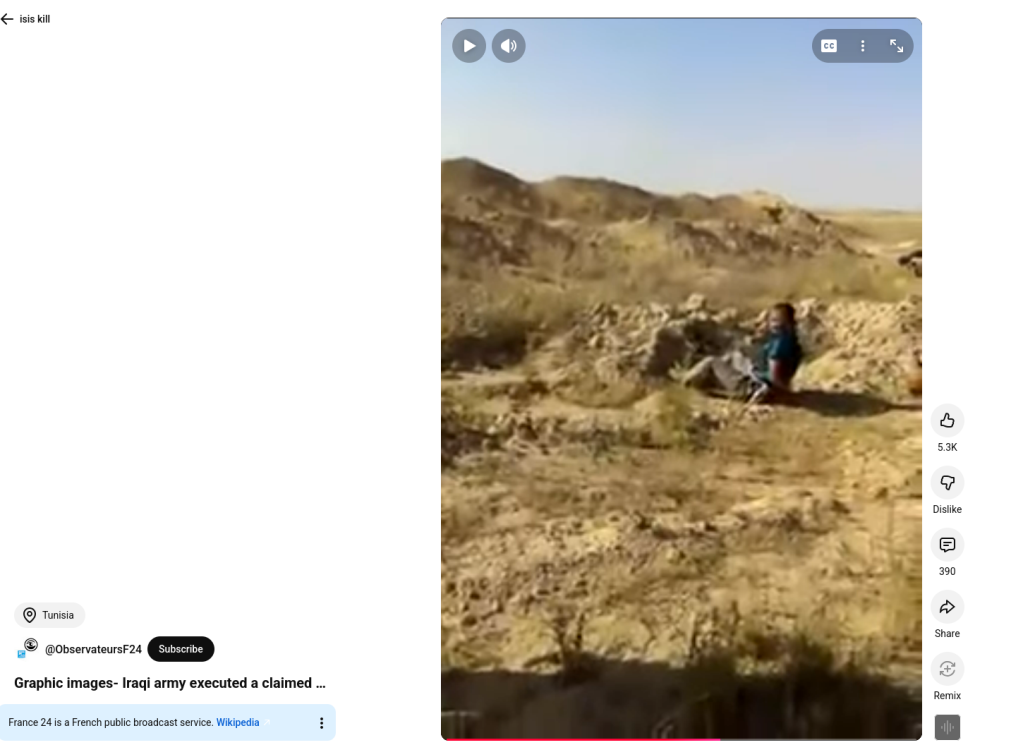
That opens up a range of inappropriate material, from “how-to” fraud channels through to scenes of semi-nudity and sexually suggestive material, the researchers said. Horrifically, they even found scenes of human execution on the public site. The researchers concluded:
“The absence of a registration barrier on the public platform renders the ‘YouTube Kids’ protection opt-in rather than mandatory.”
When adult accounts are easy to fake
Another worry is that even when accounts are age-gated, enterprising minors can easily get around them. While most platforms require users to be 13+, a self-declaration is often enough. All that remains is for the child to register an email address with a service that doesn’t require age verification.
This “double blind” vulnerability is a big problem. Kids are good at creating accounts. The tech industry has taught them to be, because they need them for most things they touch online, from streaming to school.
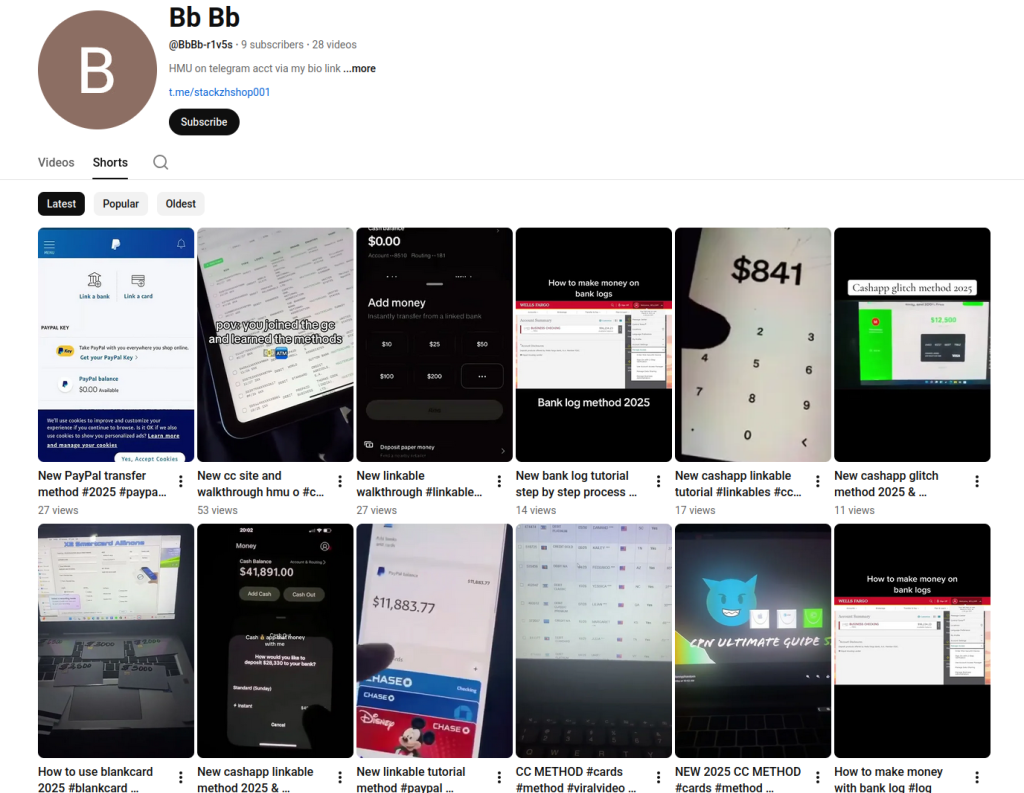
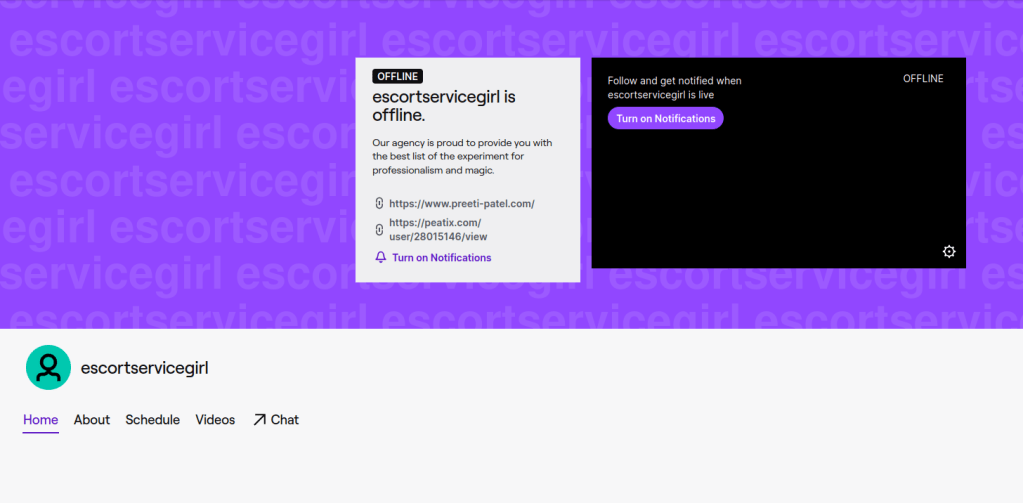
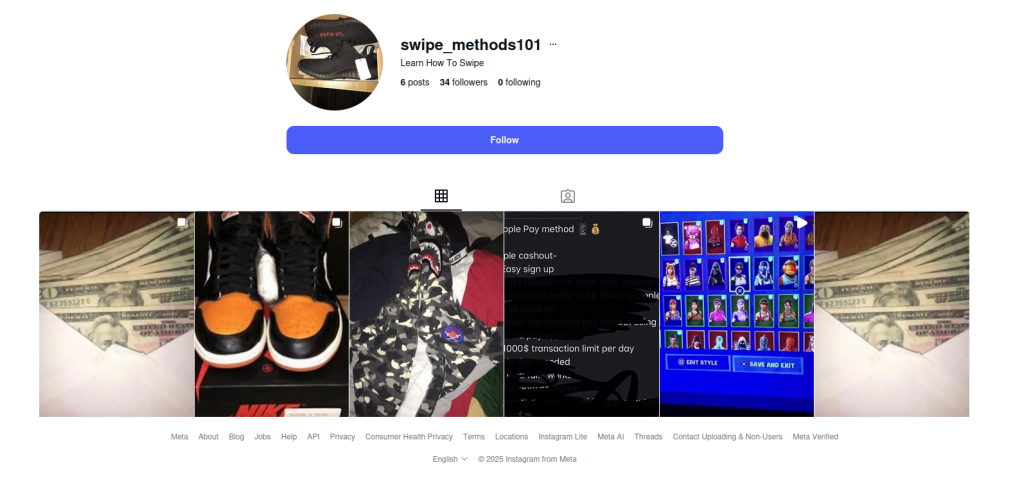
When they do get past the age gates, curious kids can quickly get to inappropriate material. Researchers found unmoderated nudity and explicit material on the social network Discord, along with TikTok content providing credit card fraud and identity theft tutorials. A little searching on the streaming site Twitch surfaced ads for escort services.
This points to a trade-off between privacy and age verification. While stricter age verification could close some of these gaps, it requires collecting more personal data, including IDs or biometric information. That creates privacy risks of its own, especially for children. That’s why most platforms rely on self-declared age, but the research shows how easily that can be bypassed.
When kids’ accounts let toxic content through
Cracks in the moderation foundations allow risky content: Roblox, the website and app where users build their own content, filters chats for child accounts. However, it also features “Communities,” which are groups designed for socializing and discovery.
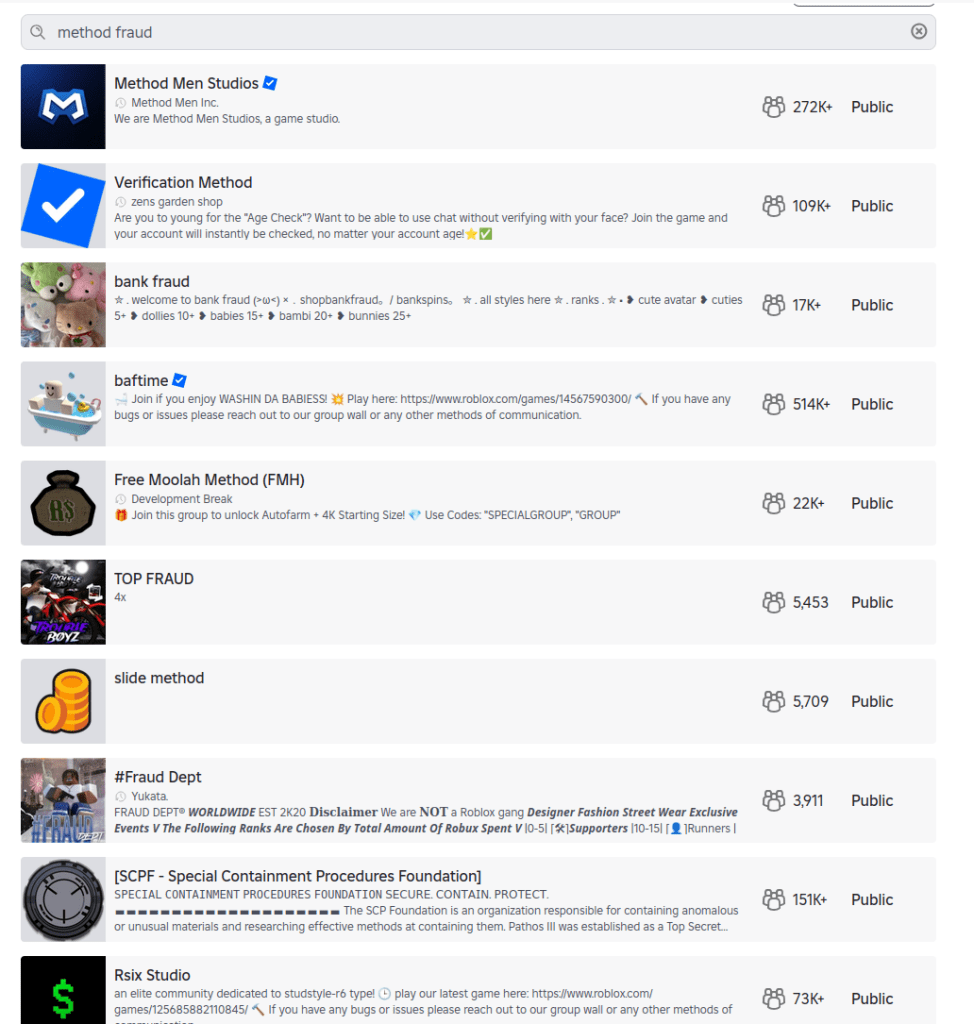
These groups are easily searchable, and some use names and terminology commonly linked to criminal activities, including fraud and identity theft. One, called “Fullz,” uses a term widely understood to refer to stolen personal information, and “new clothes” is often used to refer to a new batch of stolen payment card data. The visible community may serve as a gateway, while the actual coordination of illicit activity or data trading occurs via “inner chatter” between the community members.
This kind of search wasn’t just an issue for Roblox, warned the team. It found Instagram profiles promoting financial fraud and crypto schemes, even from a restricted teen account.
Some sites passed the team’s tests admirably, though. The researchers simulated underage users who’d bypassed age verification, but were unable to find any harmful content on Minecraft, Snapchat, Spotify, or Fortnite. Fortnite’s approach is especially strict, disabling chat and purchases on accounts for kids under 13 until a parent verifies via email. It also uses additional verification steps using a Social Security number or credit card. Kids can still play, but they’re muted.
What parents can do
There is no platform that can catch everything, especially when kids are curious. That makes parental involvement the most important layer of protection.
One reason this matters is a related risk worth acknowledging: adults attempting to reach children through social platforms. Even after Instagram took steps to limit contact between adult and child accounts, parents still discovered loopholes. This isn’t a failure of one platform so much as a reminder that no set of controls can replace awareness and involvement.
Mark Beare, GM of Consumer at Malwarebytes says:
“Parents are navigating a fast-moving digital world where offline consequences are quickly felt, be it spoofed accounts, deepfake content or lost funds. Safeguards exist and are encouraged, but children can still be exposed to harmful content.”
This doesn’t mean banning children from the internet. As the EFF points out, many minors use online services productively with the support and supervision of their parents. But it does mean being intentional about how accounts are set up, how children interact with others online, and how comfortable they feel asking for help.
Accounts and settings
Use child or teen accounts where available, and avoid defaulting to adult accounts.
Keep friends and followers lists set to private.
Avoid using real names, birthdays, or other identifying details unless they are strictly required.
Avoid facial recognition features for children’s accounts.
For teens, be aware of “spam” or secondary accounts they’ve set up that may have looser settings.
Social behavior
Talk to your child about who they interact with online and what kinds of conversations are appropriate.
Warn them about strangers in comments, group chats, and direct messages.
Encourage them to leave spaces that make them uncomfortable, even if they didn’t do anything wrong.
Remind them that not everyone online is who they claim to be.
Trust and communication
Keep conversations about online activity open and ongoing, not one-off warnings.
Make it clear that your child can come to you if something goes wrong without fear of punishment or blame.
Involve other trusted adults, such as parents, teachers, or caregivers, so kids aren’t navigating online spaces alone.
This kind of long-term involvement helps children make better decisions over time. It also reduces the risk that mistakes made today can follow them into the future, when personal information, images, or conversations could be reused in ways they never intended.
Research findings, scope and methodology
This research examined how children under the age of 13 may be exposed to sensitive content when browsing mainstream media and gaming services.
For this study, a “kid” was defined as an individual under 13, in line with the Children’s Online Privacy Protection Act (COPPA). Research was conducted between December 1 and December 17, 2025, using US-based accounts.
The research relied exclusively on standard user behavior and passive observation. No exploits, hacks, or manipulative techniques were used to force access to data or content.
Researchers tested a range of account types depending on what each platform offered, including dedicated child accounts, teen or restricted accounts, adult accounts created through age self-declaration, and, where applicable, public or guest access without registration.
The study assessed how platforms enforced age requirements, how easy it was to misrepresent age during onboarding, and whether sensitive or illicit content could be discovered through normal browsing, searching, or exploration.
Across all platforms tested, default algorithmic content and advertisements were initially benign and policy-compliant. Where sensitive content was found, it was accessed through intentional, curiosity-driven behavior rather than passive recommendations. No proactive outreach from other users was observed during the research period.
The table below summarizes the platforms tested, the account types used, and whether sensitive content was discoverable during testing.
Platform
Account type tested
Dedicated kid/teen account
Age gate easy to bypass
Illicit content discovered
Notes
YouTube (public)
No registration (guest)
Yes (YouTube Kids)
N/A
Yes
Public YouTube allowed access to scam/fraud content and violent footage without sign-in. Age-restricted videos required login, but much content did not.
YouTube Kids
Kid account
Yes
N/A
No
Separate app with its own algorithmic wall. No harmful content surfaced.
Roblox
All-age account (13+)
No
Not required
Yes
Child accounts could search for and find communities linked to cybercrime and fraud-related keywords.
Instagram
Teen account (13–17)
No
Not required
Yes
Restricted accounts still surfaced profiles promoting fraud and cryptocurrency schemes via search.
TikTok
Younger user account (13+)
Yes
Not required
No
View-only experience with no free search. No harmful content surfaced.
TikTok
Adult account
No
Yes
Yes
Search surfaced credit card fraud–related profiles and tutorials after age gate bypass.
Discord
Adult account
No
Yes
Yes
Public servers surfaced explicit adult content when searched directly. No proactive contact observed.
Twitch
Adult account
No
Yes
Yes
Discovered escort service promotions and adult content, some behind paywalls.
Fortnite
Cabined (restricted) account (13+)
Yes
Hard to bypass
No
Chat and purchases disabled until parent verification. No harmful content found.
Snapchat
Adult account
No
Yes
No
No sensitive content surfaced during testing.
Spotify
Adult account
Yes
Yes
No
Explicit lyrics labeled. No harmful content found.
Messenger Kids
Kid account
Yes
Not required
No
Fully parent-controlled environment. No search or external contacts.
Screenshots from the research
List of Roblox communities with cybercrime-oriented keywords
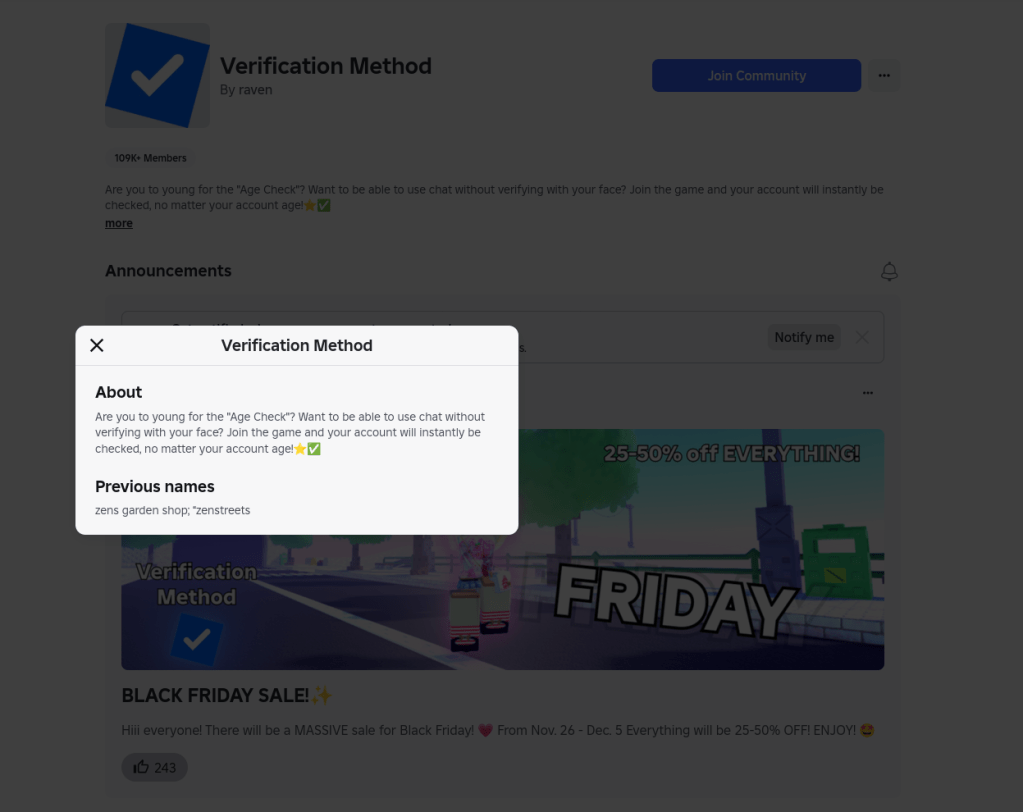
Roblox community that offers chat without verification
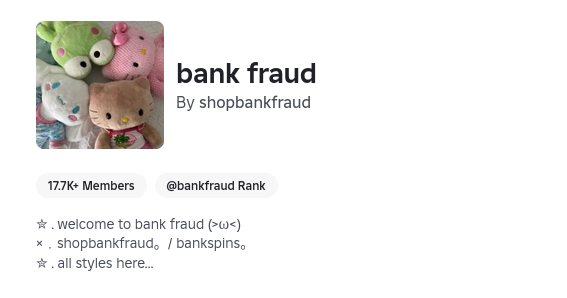
Roblox community with cybercrime-oriented keywords
Graphic content on publicly accessible YouTube
Credit card fraud content on publicly accessible YouTube
Active escort page on Twitch
Stolen credit cards for sale on an Instagram teen account
Crypto investment scheme on an Instagram teen account
Carding for beginners content on a TikTok adult account, accessed by kids with a fake date of birth.
We don’t just report on threats—we remove them
Cybersecurity risks should never spread beyond a headline. Keep threats off your devices by downloading Malwarebytes today.
Google has settled yet another class-action lawsuit accusing it of collecting children’s data and using it to target them with advertising. The tech giant will pay $8.25 million to address allegations that it tracked data on apps specifically designated for kids.
AdMob’s mobile data collection
This settlement stems from accusations that apps provided under Google’s “Designed for Families” programme, which was meant to help parents find safe apps, tracked children. Under the terms of this programme, developers were supposed to self-certify COPPA compliance and use advertising SDKs that disabled behavioural tracking. However, some did not, instead using software embedded in the apps that was created by a Google-owned mobile advertising company called AdMob.
When kids used these apps, which included games, AdMob collected data from these apps, according to the class action lawsuit. This included IP addresses, device identifiers, usage data, and the child’s location to within five meters, transmitting it to Google without parental consent. The AdMob software could then use that information to display targeted ads to users.
This kind of activity is exactly what the Children’s Online Privacy Protection Act (COPPA) was created to stop. The law requires operators of child-directed services to obtain verifiable parental consent before collecting personal information from children under 13. That includes cookies and other identifiers, which are the core tools advertisers use to track and target people.
The families filing the lawsuit alleged that Google knew this was going on:
“Google and AdMob knew at the time that their actions were resulting in the exfiltration data from millions of children under thirteen but engaged in this illicit conduct to earn billions of dollars in advertising revenue.”
Security researchers had alerted Google to the issue in 2018, according to the filing.
YouTube settlement approved
What’s most disappointing is that these privacy issues keep happening. This news arrives at the same time that a judge approved a settlement on another child privacy case involving Google’s use of children’s data on YouTube. This case dates back to October 2019, the same year that Google and YouTube paid a whopping $170m fine for violating COPPA.
Families in this class action suit alleged that YouTube used cookies and persistent identifiers on child-directed channels, collecting data including IP addresses, geolocation data, and device serial numbers. This is the same thing that it does for adults across the web, but COPPA protects kids under 13 from such activities, as do some state laws.
According to the complaint, YouTube collected this information between 2013 and 2020 and used it for behavioural advertising. This form of advertising infers people’s interests from their identifiers, and it is more lucrative than contextual advertising, which focuses only on a channel’s content.
The case said that various channel owners opted into behavioural advertising, prompting Google to collect this personal information. No parental consent was obtained, the plaintiffs alleged. Channel owners named in the suit included Cartoon Network, Hasbro, Mattel, and DreamWorks Animation.
Under the YouTube settlement (which was agreed in August and recently approved by a judge), families can file claims through YouTubePrivacySettlement.com, although the deadline is this Wednesday. Eligible families are likely to get $20–$30 after attorneys’ fees and administration costs, if 1–2% of eligible families submit claims.
COPPA is evolving
Last year, the FTC amended its COPPA Rule to introduce mandatory opt-in consent for targeted advertising to children, separate from general data-collection consent.
The amendments expand the definition of personal information to include biometric data and government-issued ID information. It also lets the FTC use a site operator’s marketing materials to determine whether a site targets children.
Site owners must also now tell parents who they’ll share information with, and the amendments stop operators from keeping children’s personal information forever. If these all sounds like measures that should have been included to protect children online from the get-go, we agree with you. In any case, companies have until this April to comply with the new rules.
Will the COPPA rules make a difference? It’s difficult to say, given the stream of privacy cases involving Google LLC (which owns YouTube and AdMob, among others). When viewed against Alphabet’s overall earnings, an $8.25m penalty risks being seen as a routine business expense rather than a meaningful deterrent.
We don’t just report on data privacy—we help you remove your personal information
Cybersecurity risks should never spread beyond a headline. With Malwarebytes Personal Data Remover, you can scan to find out which sites are exposing your personal information, and then delete that sensitive data from the internet.
Lego just made what it claims is its most important product release since it introduced minifigures in 1978. No, it’s not yet another brand franchise. It’s a computer in a brick.
Called the Smart Brick, it’s part of a broader system called Smart Play that Lego hopes will revolutionize your child’s interaction with Lego.
These aren’t your grandma’s Lego bricks. The 2×4 techno-brick houses a custom ASIC chip that Lego says is smaller than a single Lego stud, measuring about 4.1mm. Inside are accelerometers, light and sound sensors, an LED array, and a miniature speaker with an onboard synthesizer that generates sound effects in real time, rather than just playing pre-recorded clips.
How the pieces talk to each other
The bricks charge wirelessly on a dedicated pad and contain batteries that Lego says can last for years. They also communicate with each other to trigger actions, such as interactive sound effects.
This is where the other Smart Play components come in: Smart Tags and Smart Minifigures. The 2×2 stud-less Smart Tags contain unique digital IDs that tell bricks how to behave. A helicopter tag, for example, might trigger propeller sounds.
There’s also a Neighbor Position Measurement system that detects brick proximity and orientation. So a brick might do different things as it gets closer to a Smart Tag or Smart Minifigure, for example.
However, Lego says its proprietary Bluetooth-based protocol, called BrickNet, comes with encryption and built-in privacy controls.
One clear upside is that the system doesn’t need an internet connection for these devices to work, and there are no screens or companion apps involved either. For parents weary of reading about children’s apps quietly harvesting data, that alone will come as a relief.
Lego also makes specific privacy assurances. Yes, there’s a microphone in the Smart Brick, but no, it doesn’t record sound (it’s just a sensor), the company says. There are no cameras either.
Perhaps the biggest relief of all, though, is that there’s no AI in this brick.
At a time when “AI-powered” is being sprinkled over everything from washing machines to toilets, skipping AI may be the smartest design decision here. AI-driven toys come with their own risks, especially when children don’t get a meaningful choice about how that technology behaves once it’s out of the box.
Should it? The best response comes from my seven-year-old, scoffing,
“Kids can make enough annoying noises themselves.”
We won’t have long to wait to find out. Lego announced Lucasafilm as its first Smart Play partner when it unveiled the system at CES 2026 in Las Vegas this week, and pre-orders open on January 9. The initial lineup includes three kits: Tie Fighters, X-Wings, and A-Wings, complete with associated scenery.
Expect lots of engine, laser, and light sabre sounds from those rigs—and perhaps a lack of adorable sound effects from your kids when the blocks start doing the work. That makes us a little sad.
More optimistically, perhaps there are opportunities for creative play, such as devices that spin, flip, and light up based on their communications with other bricks. That could turn this into more of a experiment in basic circuitry and interaction than a simple noise-making device. One of the best things about watching kids play is how far outside the box they think.
Whatever your view on Lego’s latest development, it doesn’t seem like it’ll let people tailor advertising to your kids, whisper atrocities at them from afar, or hack your home network. That, at the very least, is a win.
We don’t just report on data privacy—we help you remove your personal information
Cybersecurity risks should never spread beyond a headline. With Malwarebytes Personal Data Remover, you can scan to find out which sites are exposing your personal information, and then delete that sensitive data from the internet.

 Login
Login