Login
Login
AI, Trust, and the Future of Threat Intelligence
Blog
AI, Trust, and the Future of Threat Intelligence
In this post, we explore how AI is reshaping cyber threat intelligence and why governance, transparency, and trust are becoming increasingly important as organizations rely more heavily on AI-generated insights and autonomous capabilities.


 Table Of Contents
Flashpoint Named A Challenger in 2026 Gartner MQ
Artificial intelligence has quickly become embedded across cyber threat intelligence workflows.
Throughout research and analysis, enrichment, prioritization, and operational response, AI is helping organizations process large volumes of information and move more quickly from collection to action. As these capabilities mature, the conversation is moving beyond what AI can do, toward how organizations can trust, validate, and govern AI-generated intelligence.
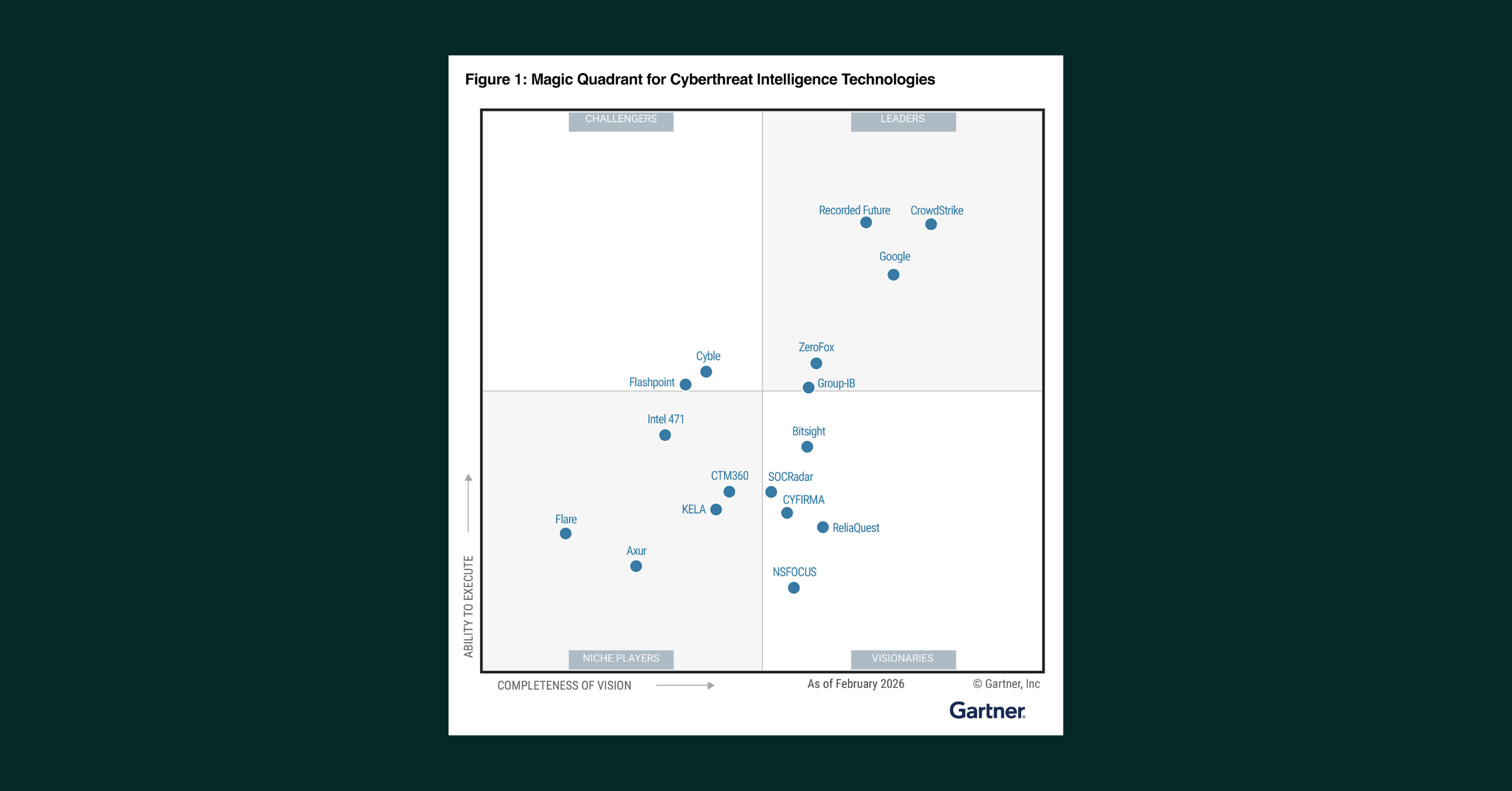
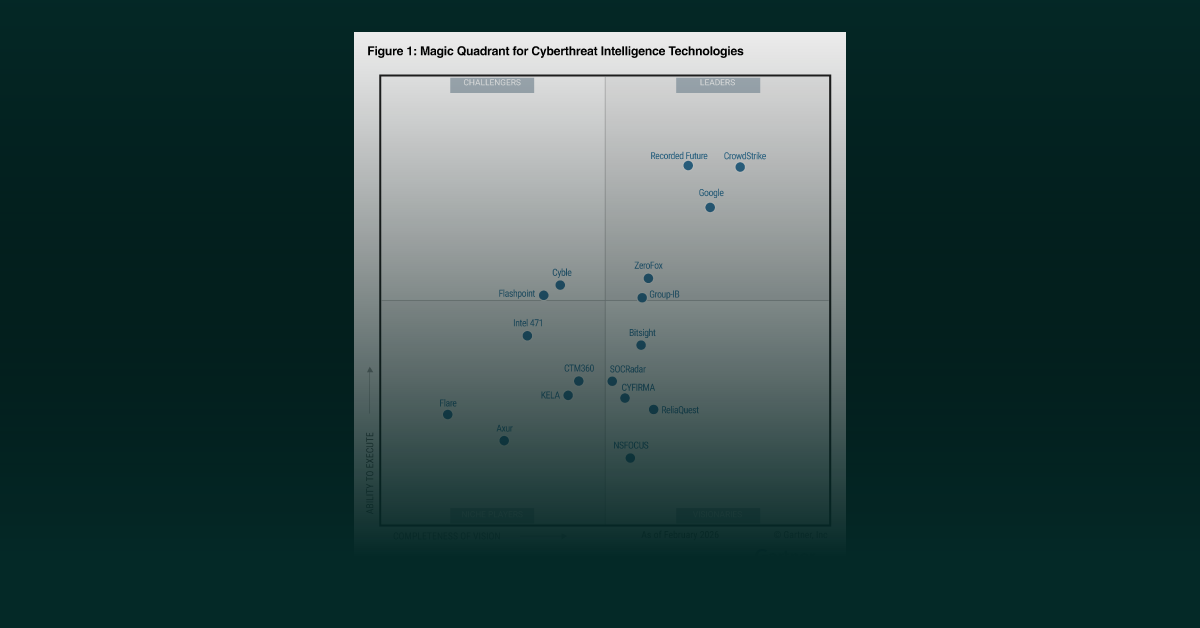
Flashpoint has been recognized in the 2026 Gartner® Top 5 Vendors for AI Capabilities in Cyberthreat Intelligence Technologies: Governance & Trust research. Flashpoint was also named a Challenger in the 2026 inaugural Gartner Magic Quadrant for Cyberthreat Intelligence Technologies. The report recognizes five top vendors, including Flashpoint, across AI foundational elements within CTI and examines the governance, oversight, and trust mechanisms that help organizations use AI responsibly within intelligence operations.
Gartner notes in the report that “as organizations increasingly depend on autonomous agents from CTI vendors, the need for robust governance and trust frameworks has become critical.”
Trust Has Always Been the Foundation of Threat Intelligence
For intelligence teams, trust is not a new concept.
Analysts regularly evaluate the credibility of sources, validate claims, assess confidence levels, and determine whether reporting is relevant to their organization’s mission. The quality of intelligence has never been determined solely by how much information is available. It depends on whether that information is precise, timely, and accurate enough to move the needle and safely drive an operational decision.
AI, however, introduces a new layer to that process.
Organizations are increasingly leveraging AI to assist with enrichment, summarization, prioritization, and analysis. Those capabilities can accelerate workflows significantly, but they also introduce new questions.
- How was a recommendation generated?
- What evidence informed it?
- How confident should an analyst be in the result?
- What safeguards exist when the output is used to drive operational decisions?
Ultimately, these are questions of operational risk and data integrity, not just technology features. Analysts must be able to interrogate a system’s reasoning just as they would any other source.
Governance Is Becoming a Core Requirement
Establishing analytical trust is essential, but it requires strict operational guardrails to function safely at scale. This is where governance moves from an item on a checklist to a core requirement.
Many of the conversations around AI in cybersecurity focus on capability.
- Can an AI system summarize faster?
- Can it identify relationships that would otherwise be missed?
- Can it reduce analyst workload?
While speed and scale are essential, they only tell half the story. As organizations move AI closer to daily operational workflows, a second, more critical set of questions is emerging centering around control.
As Gartner explains, “Agent governance and trust ensures that only authorized users and agents can access and manage sensitive threat data through role-based permissions and approval workflows.”
From our experience, by implementing these structural protections — alongside comprehensive audit logging — security leaders can ensure that AI-driven actions remain fully transparent, secure, and accountable. Governance isn’t about slowing down automation; it’s about establishing the administrative guardrails that dictate exactly who—and what—is allowed to execute a sensitive operation within the enterprise.
This oversight is becoming a foundational necessity as threat intelligence breaks out of traditional security silos. Because CTI increasingly informs vulnerability management, fraud investigations, executive protection, security operations, and enterprise risk programs, the downstream impact of an inaccurate recommendation can disrupt an entire enterprise. This underscores the importance of understanding not only what an AI system recommends but also how it arrived at that recommendation in the first place.
AI Changes the Scale (and Reaps the Context) of Intelligence Operations
One area where AI has a massive, immediate impact is scale.
Threat intelligence teams today are completely inundated with data. Malicious activity spans encrypted messaging platforms, illicit criminal marketplaces, forums, social media, vulnerability disclosures, and vast streams of infrastructure telemetry. Even the most mature, well-resourced teams struggle to manually ingest and process this sheer volume of information.
When applied appropriately, AI elegantly solves this bottleneck. Automation acts as an incredible force multiplier — accelerating time-consuming foundational tasks like research, cross-language translation, data enrichment, summarization, clustering, and correlation. Large language models can process information at scale, reducing the manual effort required to move from collection to analysis.
The critical challenge, however, is ensuring that this massive injection of speed does not come at the expense of context.
Threat intelligence is fundamentally a contextual discipline. A standalone indicator, isolated vulnerability, or single threat actor reference rarely carries meaning on its own. To act safely, analysts must understand exactly where information originated, who is discussing it, how widely it is being shared, and how it relates to broader activity across the threat landscape.
What AI cannot do independently is establish that context. While machines are exceptionally effective at identifying patterns across vast datasets, they inherently lack source validation, analytical rigor, and nuanced judgment. If an AI accelerates the data pipeline but strips away the underlying context, assessing confidence becomes impossible, making informed decision-making even harder.
This is why Flashpoint champions a “human-led, AI-scaled” model. True scalability isn’t about replacing analysts with autonomous bots; it’s about using machines to conquer the overwhelming noise of the threat landscape while keeping the resulting intelligence heavily grounded in expert-reviewed sources. As AI capabilities continue to mature, context becomes more important, not less. The organizations that derive the most value from automation will be those that pair machine-scale processing with human-in-the-loop review to ensure every output can be validated, contextualized, and confidently acted upon.
What Security Leaders Should Be Evaluating
As AI becomes a larger component of cyber threat intelligence platforms, security leaders have an opportunity to evaluate these capabilities through a broader lens than automation alone.
The Gartner report provides a useful framework for thinking about these questions, particularly around governance and trust. Rather than focusing exclusively on what an AI system can do, Flashpoint recommends that organizations rigorously evaluate how those capabilities are managed, validated, and controlled.
Some of the most important areas to evaluate include:
Explainability
Question to ask: Can analysts trace how an AI-generated recommendation or conclusion was produced?
The ability to review supporting evidence, understand contributing factors, and see outputs back to underlying intelligence sources is becoming increasingly important as AI is used to support operational decisions.
Confidence and Validation
Question to ask: How does the platform communicate confidence in AI-generated outputs?
Threat intelligence has always relied on confidence assessments. As AI-generated insights become more common, organizations should look for configurable confidence thresholds that allow them to tailor automated actions to their corporate risk tolerance.
Governance and Oversight
Question to ask: What controls exist around the use of AI?
Capabilities such as role-based permissions, approval workflows, and audit logging are critical governance mechanisms for organizations seeking to maintain accountability and trust in AI-driven processes.
Operational Impact
Question to ask: How does AI improve intelligence workflows in practice?
The most valuable AI capabilities are often those that help analysts spend less time on repetitive tasks and more time on investigation, analysis, and decision-making. Understanding where AI fits into the intelligence lifecycle can help organizations distinguish between meaningful operational improvements and isolated feature enhancements.
Looking Ahead
The conversation around AI in threat intelligence is still evolving, but the direction of travel is becoming increasingly clear. Organizations are looking beyond standalone AI features and placing greater emphasis on governance, transparency, and accountability.
Taken together with broader industry trends, this points to a threat intelligence market that is becoming increasingly sophisticated. Organizations are evaluating not only the quality and uniqueness of intelligence itself, but also how that intelligence is operationalized, how AI is applied, and how trust is maintained throughout the process.
We believe that shift reflects the realities of modern intelligence work. Speed and scale remain important, but neither replaces the need for context, validation, and informed decision-making.
For security leaders evaluating AI capabilities within cyber threat intelligence platforms, Gartner’s research offers valuable insight into how the market is evolving and what requirements are likely to become increasingly important in the years ahead.
Gartner subscribers can read the full report to explore the governance, trust, and AI capability trends shaping the future of cyber threat intelligence.
Gartner Disclaimer
Gartner does not endorse any company, vendor, product or service depicted in its publications, and does not advise technology users to select only those vendors with the highest ratings or other designation. Gartner publications consist of the opinions of Gartner’s business and technology insights organization and should not be construed as statements of fact. Gartner disclaims all warranties, expressed or implied, with respect to this publication, including any warranties of merchantability or fitness for a particular purpose.
Gartner, Top 5 Vendors for AI Capabilities in Cyberthreat Intelligence Technologies: Governance & Trust, Jonathan Nunez, Jaime Anderson, June 15, 2026.
Gartner, Magic Quadrant for Cyber Threat Intelligence Technologies, Jonathan Nunez, Carlos De Sola Caraballo, Jaime Anderson, May 4, 2026.
Gartner and Magic Quadrant are trademarks of Gartner, Inc., and/or its affiliates.
The post AI, Trust, and the Future of Threat Intelligence appeared first on Flashpoint.
 for Cyber Threat Intelligence: Key Takeaways for Security Leaders