Reading view

Identity Is the New Attack Surface: How Infostealers Are Reshaping Enterprise Risk

Blogs

Blog

Identity Is the New Attack Surface: How Infostealers Are Reshaping Enterprise Risk

Our new guide explores how infostealers are fueling modern identity-based attacks and how organizations can build a proactive defense before stolen access is weaponized.

SHARE THIS:
Default Author Image
June 10, 2026

The New Reality of Identity-Based Threats

A publicly exposed database surfaced in early 2026 containing more than 149 million stolen login credentials. The records were not tied to a single breach or organization. Instead, they had been quietly collected over time from devices infected with information-stealing malware, with each record containing usernames, passwords, session data, and the context needed to use them.

Unlike traditional breach dumps, this data was structured, searchable, and immediately actionable. Credentials were mapped to specific services, session artifacts reflected active logins, and much of the information was recent enough to enable direct access without triggering traditional security controls.

This incident reflects a broader shift in the threat landscape.

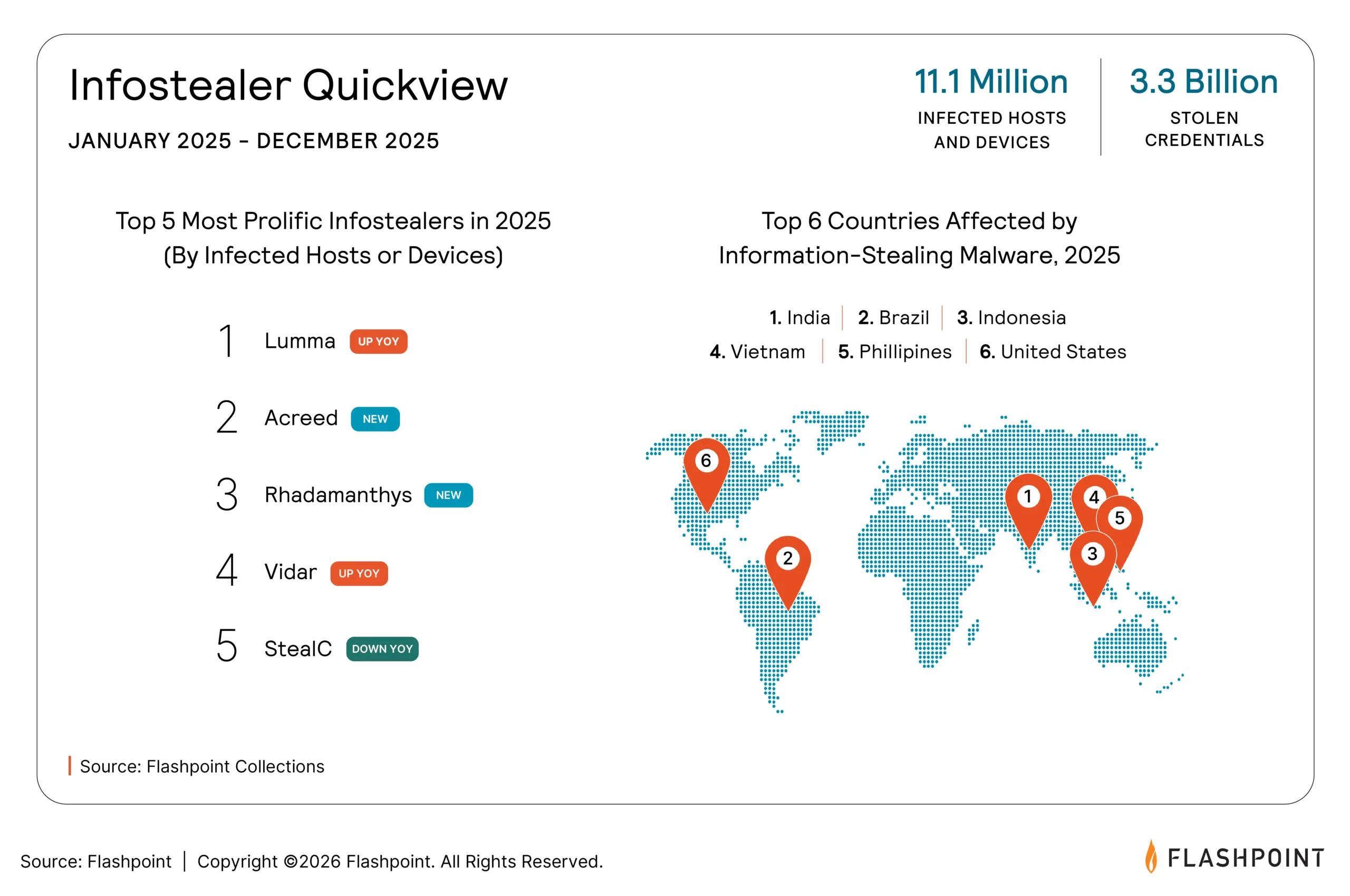
More than 11.1 million devices were infected with infostealers last year, fueling a supply of over 3.3 billion stolen credentials, session cookies, cloud tokens, and other forms of identity data now circulating across illicit markets.

11.1 million infected hosts and devices
3.3 billion stolen credentials
Top 5 most prolific infostealers in 2025 (by infected hosts or devices):
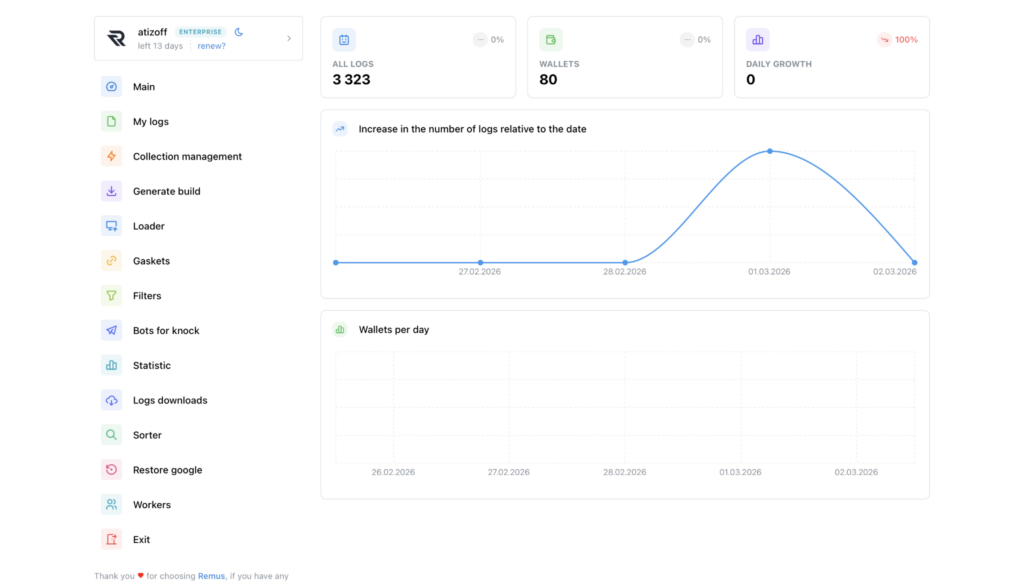
Lumma
Acreed
Rhadamanthys
Vidar
StealC
Top 6 countries affected by information-stealing malware, 2025:
India
Brazil
Indonesia
Vietnam
Phillipines
United States

For security teams, the challenge is no longer simply detecting a breach after it occurs. It is understanding when access may already exist — where compromised credentials are circulating, how they are being used, and how quickly they can be weaponized.

That’s why Flashpoint created Identity Is the New Attack Surface: A Guide to Infostealers and Proactive Defense.

Drawing on Flashpoint’s Primary Source Collection (PSC) and analyst-driven intelligence, this guide helps IT, Threat Intelligence, Fraud, and HUNT teams understand how infostealers operate, how stolen identity data fuels real-world attacks, and how organizations can move from reactive response to proactive defense.

The guide explores:

  • How today’s most active infostealers power modern attack chains
  • How threat actors weaponize stolen credentials, cookies, and session data
  • How organizations can operationalize infostealer intelligence for proactive defense
  • How to evaluate infostealer intelligence providers and detection capabilities

Why Identity Has Become the Preferred Attack Surface

For years, security teams focused on vulnerabilities, malware delivery, and network intrusion as the primary paths to compromise. Increasingly, however, threat actors are taking a different

Modern infostealers such as Lumma, StealC, Vidar, Acreed, and Rhadamanthys provide attackers with something more valuable than initial access: usable identity. These malware families collect credentials, browser artifacts, session cookies, application data, and host metadata that help threat actors understand how a victim authenticates and what systems they can access.

A single infected device can expose credentials, browser artifacts, session cookies, application data, host metadata, and access to enterprise SaaS platforms. Together, these artifacts create a detailed profile of how a user authenticates, what systems they access, and how those systems trust that identity.

This is what makes infostealer data so valuable.

For years, organizations have invested heavily in detecting malware, blocking exploits, and hardening infrastructure. Meanwhile, attackers have increasingly shifted to a simpler strategy: logging in with valid identities.

Infostealers have fundamentally changed the economics of access. Threat actors no longer need to compromise a network directly when billions of credentials, session cookies, and authentication artifacts are already circulating in underground ecosystems. The challenge for defenders has risen from preventing compromise to identifying where access already exists and how quickly it can be weaponized.

Ian Gray, Vice President of Intelligence at Flashpoint

Identity data is inherently reusable. A stolen credential can be tested across multiple services. A session cookie can potentially allow attackers to hijack authenticated sessions. Browser and host metadata can help threat actors recreate a victim’s environment and bypass security controls designed to detect suspicious logins.

What begins as a single infection can quickly evolve into access across multiple systems, applications, and organizations.

What Is an Identity-Based Attack?

Identity-based attacks occur when threat actors use legitimate credentials, session cookies, authentication tokens, or other identity artifacts to gain access to systems and applications. Rather than exploiting a vulnerability or deploying malware inside a target environment, attackers authenticate as trusted users using stolen identity data.

This shift is one of the primary reasons infostealers have become so valuable. Modern infostealer logs often contain far more than usernames and passwords. They may also include browser cookies, session information, host metadata, application data, and other artifacts that help attackers understand how a user authenticates and what systems they can access. When combined, this information enables account takeover, fraud, lateral movement, and other forms of identity-based abuse.

From Credential Theft to Identity Exploitation

The way threat actors operationalize stolen data is evolving just as rapidly as the data itself.

Historically, attackers often had to manually review stolen credentials and determine which accounts were worth pursuing. Today, that process is increasingly automated.

Infostealer logs can be aggregated, tested, and prioritized at scale, allowing threat actors to rapidly identify valid access across enterprise systems, SaaS platforms, VPNs, and cloud environments.

Flashpoint identifies this as a hybrid threat: the convergence of large-scale identity compromise and automated exploitation.

Once valid access is identified, attackers can move quickly. Credentials may be reused across services. Session data can be leveraged for account takeover. Access can be sold to ransomware operators, fraud actors, or other criminal groups. In many cases, exposure itself becomes part of the attack lifecycle rather than merely a precursor to it.

The result is a threat landscape where stolen identity data is not simply stored and sold. It is continuously tested, validated, reused, and operationalized.

Turning Exposure Into Actionable Intelligence

For defenders, prevention remains important. But prevention alone is no longer enough.

Organizations must also be able to identify when credentials, session cookies, and other identity artifacts have already been exposed and are circulating within underground ecosystems.

The earliest opportunity to intervene is often after data has been exfiltrated but before attackers have successfully operationalized it.

Achieving that visibility requires more than traditional breach feeds or aggregated datasets.

Flashpoint’s Primary Source Collection approach provides direct visibility into the forums, marketplaces, Telegram channels, malware repositories, and illicit communities where infostealer activity originates. Rather than relying solely on recycled breach data, Flashpoint continuously collects from the environments where stolen identity data is first shared, sold, and operationalized.

However, collection alone is not enough.

Raw infostealer logs are noisy, fragmented, and difficult to operationalize at scale. Flashpoint transforms these logs into structured intelligence through a multi-stage workflow that includes:

  • Source ingestion from underground ecosystems
  • Normalization and de-duplication of collected data
  • Automated parsing and enrichment of credentials, cookies, host metadata, and malware attribution
  • Structured output that supports alerts, investigations, and integrations across existing security workflows

This process helps defenders understand not only what was exposed, but who may be affected, how exposure occurred, what systems may be at risk, and how quickly action is required.

Building a Proactive Defense Across the Identity Layer

The rise of infostealers has fundamentally changed how organizations should think about attack surface management.

The attack surface is no longer limited to infrastructure, endpoints, or internet-facing applications. It now includes the digital identities of employees, partners, vendors, and customers.

Security teams need visibility into the identity layer itself — understanding where exposure exists, how attackers are leveraging stolen data, and what actions should be taken before access is exploited.

By combining direct visibility into underground ecosystems with structured, actionable intelligence, organizations can identify compromised accounts earlier, uncover infection trends, prioritize response efforts, and reduce the likelihood of downstream compromise.

Download Identity Is the New Attack Surface: A Guide to Infostealers and Proactive Defense to learn how your organization can build a proactive defense program across the identity layer.

Key Infostealer Statistics

According to Flashpoint research:

  • More than 11.1 million devices were infected with infostealers in the last year.
  • Over 3.3 billion credentials, session cookies, cloud tokens, and identity artifacts are circulating across illicit markets.
  • Flashpoint analysts identified 30+ active infostealer strains being sold across underground ecosystems.
  • Flashpoint’s credential database contains 48+ billion credentials, including more than 1 billion tied to infostealer activity.
  • More than 4.2% of infostealer-exposed credentials include browser cookies that may support session hijacking.
  • Flashpoint can collect and parse some infostealer logs within one to two days of infection.

Frequently Asked Questions (FAQ)

FAQ: Infostealers and Identity-Based Threats

What is an infostealer?

An infostealer is a type of malware designed to collect sensitive information from an infected device. Depending on the strain, this can include usernames and passwords, browser cookies, session tokens, saved payment information, cryptocurrency wallets, system metadata, and other identity-related artifacts.

How do infostealers work?

Infostealers infect a victim’s device and collect information such as credentials, browser data, session cookies, autofill information, cryptocurrency wallet data, and system metadata. The stolen information is packaged into files known as infostealer logs, which can then be sold, shared, or operationalized by threat actors.

What information can infostealers steal?

Depending on the malware family, infostealers can collect usernames and passwords, session cookies, authentication tokens, browser history, saved payment information, cryptocurrency wallet data, system information, installed applications, and other identity-related artifacts. The goal is to provide attackers with enough information to access accounts and impersonate legitimate users.

What are the most common infostealers?

The infostealer ecosystem changes rapidly, but Flashpoint analysts currently track strains such as Lumma (also known as LummaC2/Remus), StealC, Vidar, Acreed, and Rhadamanthys among the most prominent malware families driving credential theft and identity-based attacks.

Why are infostealers so dangerous?

Infostealers provide attackers with more than credentials. Modern infostealer logs often contain the context needed to use stolen data, including session information, browser artifacts, and device metadata. This allows threat actors to perform account takeovers, move laterally within environments, and gain access to business-critical systems. According to Flashpoint’s 2026 Global Threat Intelligence Report, more than 11.1 million devices were infected with infostealers last year, contributing to a pool of over 3.3 billion stolen credentials, session cookies, cloud tokens, and other identity artifacts.

What is an infostealer log?

An infostealer log is a package of data collected from an infected device. Logs may contain credentials, cookies, browser data, application information, host metadata, and other artifacts that help attackers understand how a victim authenticates and what systems they can access.

Can infostealers bypass multi-factor authentication (MFA)?

In some cases, yes. While multifactor authentication remains a critical security control, stolen session cookies and authenticated session data can sometimes allow threat actors to hijack existing sessions without needing to complete the MFA process themselves. Flashpoint found that more than 4.2% of infostealer-exposed credentials in its dataset were associated with browser cookies, highlighting the growing importance of session-based risk.

How do threat actors obtain infostealer logs?

Infostealer logs are frequently bought and sold across illicit marketplaces, forums, Telegram channels, and other underground communities. Many are distributed through Malware-as-a-Service (MaaS) offerings that make infostealer capabilities accessible to a wide range of threat actors. Flashpoint analysts identified more than 30 unique infostealer strains actively offered for sale across underground ecosystems.

How can organizations detect credential exposure from infostealers?

Organizations can monitor underground sources where stolen data is shared and sold, identify exposed credentials associated with their domains, and investigate related artifacts such as cookies, host metadata, and malware attribution. The earlier exposure is identified, the greater the opportunity to remediate before attackers operationalize access. Flashpoint collects and parses some infostealer logs within one to two days of infection, helping organizations detect exposure closer to the point of compromise.

What should organizations do if employee credentials appear in an infostealer log?

Organizations should immediately assess the scope of exposure, reset affected credentials, invalidate active sessions, review authentication activity, investigate the infected device, and determine whether additional accounts or systems may have been impacted.

How is Flashpoint’s approach to infostealer intelligence different from traditional breach monitoring?

Many organizations rely on aggregated breach feeds or credential dumps that may be weeks or months old by the time they are discovered. Flashpoint’s Primary Source Collection (PSC) approach provides direct visibility into the forums, marketplaces, Telegram channels, and underground communities where stolen identity data is first shared, sold, and operationalized.

In addition to collecting raw infostealer logs, Flashpoint parses and enriches the data with context such as malware attribution, session cookies, host metadata, browser artifacts, and affected identities. Today, Flashpoint’s credential database contains more than 48 billion credentials, including over 1 billion tied to infostealer activity, providing organizations with actionable intelligence rather than raw exposure data.

Request a demo today.

The post Identity Is the New Attack Surface: How Infostealers Are Reshaping Enterprise Risk appeared first on Flashpoint.

  •  

Understanding Illicit Ecosystems: Weaponizing Mainstream Apps and Social Infrastructure

Blogs

Blog

Understanding Illicit Ecosystems: Weaponizing Mainstream Apps and Social Infrastructure

As part of our ongoing series, we focus on the shared infrastructure that fuels threat actors; the intersection of mainstream social media, open-source messaging platforms, and gaming communities.

SHARE THIS:

Threat actors and their illicit communities do not exist in a vacuum. To scale their operations, coordinate financial fraud, deploy malware, and recruit new talent, threat actors must interface with the broader digital world. This means leveraging everyday, public digital spaces to facilitate illicit activity, effectively hiding in plain sight.

The Clearnet Threat Landscape: Hiding in Plain Sight

When conceptualizing the cybercriminal underground, it is easy to focus exclusively on Tor-based onion sites or restricted-access dark web forums and marketplaces. However, a massive portion of modern illicit activity thrives on the clearnet. Threat actors heavily utilize commercial social media and public messaging networks to coordinate fraud, deploy malware, and run public relations campaigns for their operations.

At first glance, conducting illicit operations on highly monitored, mainstream platforms seems counterintuitive. However, the massive, continuous volume of legitimate traffic on the clearnet provides a form of operational security. By blending into the noise, threat actors can maintain a highly accessible digital presence. This visibility is crucial for their business models: it allows them to maintain a low barrier to entry for potential recruits and targets who know exactly what markers to look for, or who are systematically funneled into these spaces.

How Threat Actors Weaponize Consumer Platforms

The misuse of mainstream communication tools has changed how threat actors interact. Rather than waiting for users to seek out the dark web, cybercriminals are actively meeting their targets or co-conspirators on platforms designed for daily socialization.

Discord

Originally built to connect gaming communities, Discord’s rapid growth and robust infrastructure have inadvertently made it a target for malicious activity. Cybercriminals treat the platform as a multi-functional tool for both technical infrastructure, social engineering, and radicalization.

On a technical level, advanced persistent threats (APTs) and other threat actors exploit Discord’s content delivery network (CDN) to host and distribute malware. Because traffic to Discord domains is generally trusted by corporate networks, threat actors can potentially use it to deliver payloads—such as infostealers and remote access trojans (RATs)—bypassing standard security perimeters.

Beyond hosting malware, extremist groups across various ideological spectrums often target the platform’s demographic, which skews heavily towards younger tech-savvy users. This group provides an impressionable pool of adolescents who may be susceptible to grooming, indoctrination, and recruitment into illicit operations.

Case Study: The Targeting and Recruitment Mechanics of “The Com”

While monitoring The Com, Flashpoint analysts have observed the systematic use of platforms like Discord, Roblox, and Minecraft to run predatory extortion pipelines. The mechanics of this ecosystem takes place through a multi-phase methodology:

  1. Platform Scouting: Recruiters patrol servers on popular youth-centric gaming platforms, such as Discord, Roblox, and Minecraft. They look for minors showing signs of social isolation, depression, disordered eating, or a desire to belong.
  2. Building Trust and “Love Bombing”: Initial engagements are seemingly harmless. However, trust is built quickly to establish a sense of indebtedness. Recruiters offer gifts such as in-game perks/currency, premium subscriptions, or other digital items. In some cases, a romantic facade is used to establish a connection. In either scenario, “love bombing” creates an immediate feeling of psychological obligation in the target.
  3. Platform Migration: Once rapport is established, the recruiter moves the target away from the game and into an encrypted app or private Discord server, following a public-to-private strategy. By moving the interaction away from the original platform’s safety controls, the recruiter can isolate the target in a more controlled environment.

Once isolated, perpetrators coerce victims into sending sensitive imagery or CSAM. This material is immediately compiled and weaponized as leverage for blackmail via doxxing. This creates a severe psychological trap in which the victim feels compelled to partake in escalating illegal activity to keep their previous actions hidden. This drives the victim to transition from a victim into an aggressor to escape their own abuse.

Telegram

While many social media and messaging platforms can serve as an initial funnel for engagement, Telegram has been known to be used from time to time as an operational hub for the broader illicit ecosystem. Since the arrest of Pavel Durov, Telegram has begun working more closely with law enforcement, leading to several key arrests and major disruptions due to their cooperation. 

The platform occupies a unique space in threat intelligence and open source intelligence (OSINT). While the vast majority of its user base is entirely benign, its minimal moderation policy and robust channel architecture have made it vital to public and private intelligence gathering.

Telegram functions as an open marketplace and real-time coordination center for a vast spectrum of threat actors. Flashpoint has observed it being used by:

  1. State-sponsored APT groups and hacktivists
  2. Geopolitical actors and mercenary groups distributing battlefield intelligence and propaganda
  3. Cybercriminal syndicates coordinating financial fraud schemes, check fraud, and the sale of compromised data.

Furthermore, threat actors routinely use other public-facing platforms like X (formerly Twitter) alongside Telegram to amplify their impact. They leverage the broad reach of social media to broadcast proof of their compromises, hype up ransomware leaks, and exert public pressure on corporate victims during extortion cycles. Concurrently, Telegram often acts as the backend repository where the stolen data is hosted, discussed, and monetized.

Monitor the Clearnet Using Flashpoint

The evolution of illicit ecosystems demonstrates that the lines between the dark web and the clearnet have intersected. Whether analyzing the activities of extremist and threat actor groups or tracking the predatory pipelines of The Com, defenders must look beyond traditional intelligence sources.

Because malicious actors rely heavily on consumer messaging apps and social platforms to coordinate attacks, leak data, and target people, monitoring these public-to-private pipelines is an essential component of threat intelligence. Uncovering these physical and cyber threats requires best-in-class threat intelligence and OSINT investigations capable of parsing the massive noise of the clearnet to find the signals of illicit coordination.

Request a demo to see how Flashpoint empowers security teams to monitor these decentralized threat landscapes to proactively protect their critical assets.

Check out the rest of our “Understanding Illicit Ecosystems” series:
Understanding Illicit Ecosystems: The Hybrid Threat of “The Com”
Understanding Illicit Ecosystems: XSS and the Current State of the Russian-Speaking Underground

See Flashpoint in Action

The post Understanding Illicit Ecosystems: Weaponizing Mainstream Apps and Social Infrastructure appeared first on Flashpoint.

  •  

Understanding Illicit Ecosystems: XSS and the Current State of the Russian-Speaking Underground

Blogs

Blog

Understanding Illicit Ecosystems: XSS and the Current State of the Russian-Speaking Underground

In this post, we explore XSS’ shift from a unified forum to a scattered community spread across several competing factions.

SHARE THIS:

What is XSS?

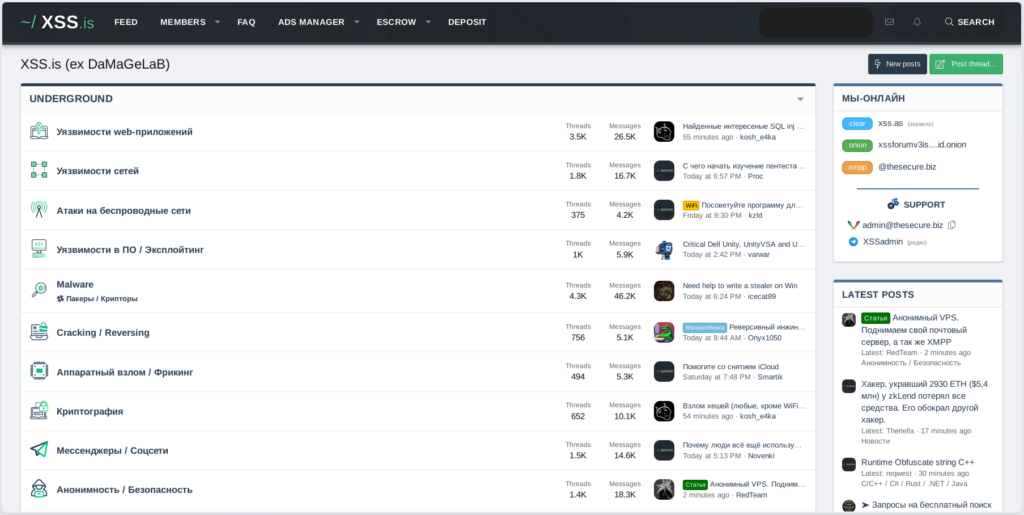
For more than two decades, XSS was the gathering ground for the Russian-speaking cybercriminal underground. Evolving from its former name, DaMaGeLaB, XSS evolved from a mid-tier message board into a top-tier hacking forum.

XSS is home to vendors of various crime types, including loaders, phishing, scamming, carding, malware development, distributed denial-of-service (DDoS) bots, and related services. It also facilitates the trade of illicit goods and services, while simultaneously serving as a networking and recruitment hub for threat actors.

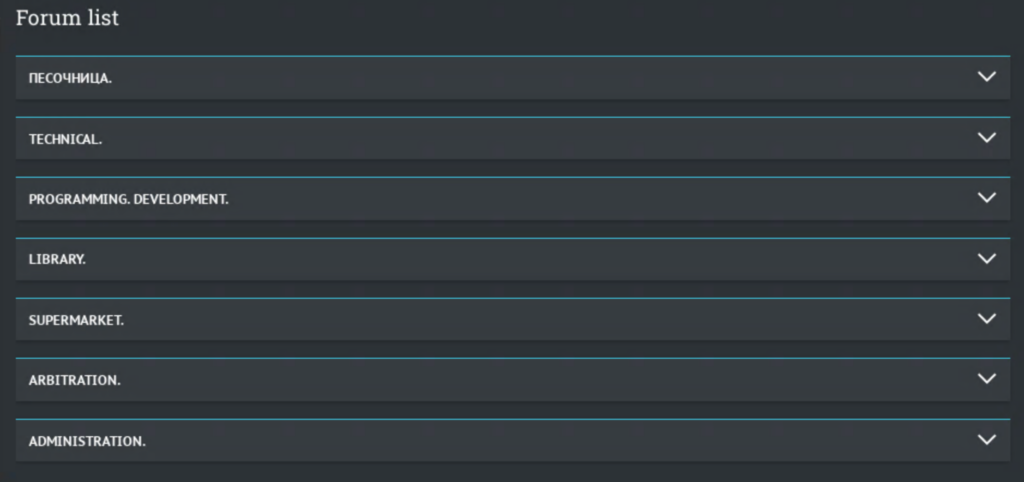
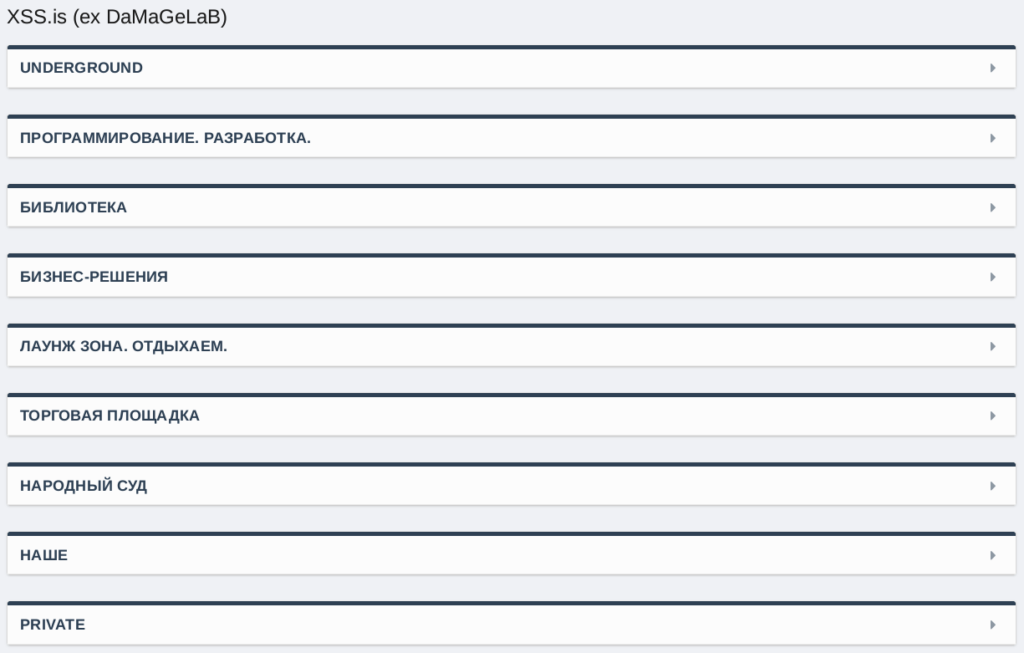
XSS forum content falls within the following main sections:

  • “Underground”: Includes most noncommercial content, such as sharing information on malware, vulnerabilities, and exploits, phishing, fraud, open source intelligence, artificial intelligence, and machine learning.
  • “Programming, Development”: Includes posts and articles about programming languages and administration.
  • “Library”: Includes news articles, databases, and discussions around software and tools. Users also post about vulnerabilities and exploits.
  • “Business Decisions”: Users discuss different investments, the sale of digital goods, trading, start-ups of fraudulent businesses, and news about cryptocurrencies.
  • “Lounge Zone, Resting”: Content involves lifestyle discussions, hobbies, and cybercriminal community rumors and scandals.
  • “Trading Platform”: Users sell and look to buy network access, malware, counterfeit documents, and advertise their services. This is where users hire and look for work or partners.
  • “People’s Court”: Used for complaints and arbitration and contains lists of phishing forums and scammers.
  • “Ours”: Contains information about the XSS project, discussions on issues, suggestions, and initiatives for forum improvement.
  • “Private: Underground”: Closed section for only forum members.
XSS forum main sections (Source: XSS)

XSS Disruption: July 2025 Takedown

On July 23, 2025, law enforcement organizations reportedly seized XSS as part of a multinational operation with Ukrainian authorities, French police, and Europol. Alongside the domain seizure, French authorities reported the arrest of XSS’s longtime administrator in Ukraine.

This arrest triggered an immediate chain reaction that has had lasting effects on the Russian-speaking underground—with the XSS ecosystem splintering into several competing factions.

The Current State of the Russian-Speaking Underground

While the original XSS architecture was severely disrupted, the surrounding Russian-speaking cybercriminal ecosystem remains intensely active. However, instead of a centralized hub, the XSS ecosystem is spread out through competing environments that emerged directly from the fallout of the takedown.

DamageLib

Launched by the legacy moderators of XSS, DamageLib represents a structural pivot away from standard illicit forums. Concluding that the old XSS site was compromised by law enforcement, the moderators launched a new model that completely abandons commerce—shutting down all buying, selling, and auctions entirely—-to eliminate user tracking and surveillance. Instead, it focuses strictly on technical materials and tutorials.

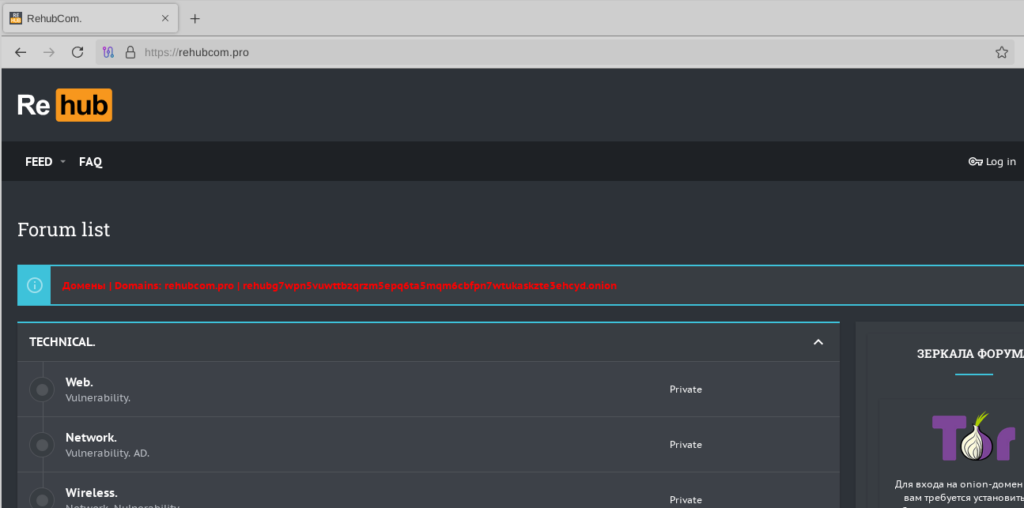
Rehub

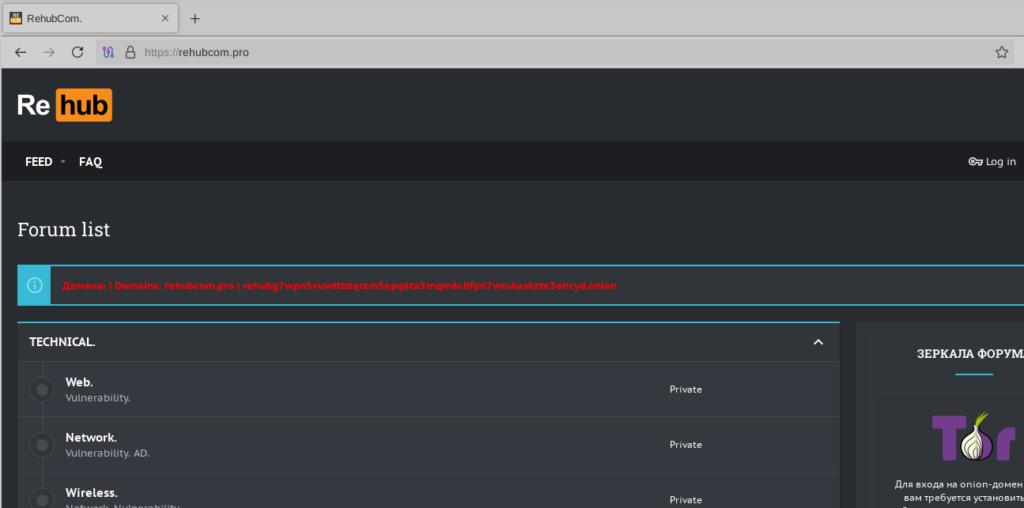
Recognizing that displaced cybercriminals still required a commercial venue to trade, a former XSS moderator launched Rehub quickly after the emergence of DamageLib. Rehub immediately integrated a commercial platform, successfully recruiting prominent threat actors into its moderation team to establish underground credibility.

The forum is still in its development stage, with its content being populated, and an active member base being built.

XSS[.pro]

In early August 2025, an unknown entity launched an alleged resurrection of the forum on a new domain [.pro], utilizing old backups that preserved legacy user data, threads, and forum deposits. However, this new version has been met with significant distrust from Exploit and DamageLib, believing the [.pro] domain to be a honeypot controlled by law enforcement.

XSSF Forum

Started by a pro-Russian Telegram hacking group, this community actively targets EU and Ukrainian digital infrastructure. According to user discussions on DamageLib, this forum is not related to XSS. In addition, Flashpoint analysts note that targeting Ukrainian infrastructure directly contradicts its original community rules. The authenticity of this forum and its ownership has not been verified.

Monitor a Fractured Underground Using Flashpoint

While law enforcement achieved a significant victory over XSS, they did not eliminate the Russian-speaking cybercriminal underground. Instead, they broke the foundational trust mechanics that had kept it centralized for twenty years.

This has left the Russian-speaking underground in a deeply fractured state that is still intensely active and highly adaptive. For defenders and analysts, this threat has not diminished—it has diversified. Tracking this ecosystem no longer means watching a single centralized community, but rather actively mapping out the live migrations, shifting rules, and behavioral patterns across these splintered groups.

Request a demo to learn how Flashpoint helps security teams aggregate intelligence from these scattered factions into a single source of truth, empowering your organization to proactively monitor and intercept emerging threats.

Request a demo today.

The post Understanding Illicit Ecosystems: XSS and the Current State of the Russian-Speaking Underground appeared first on Flashpoint.

  •  

The Mini Shai-Hulud Worm and the New Era of CI/CD Exploitation

Blogs

Blog

The Mini Shai-Hulud Worm and the New Era of CI/CD Exploitation

In this post we break down the technical mechanics of TeamPCP’s recent campaign, the impact on the developer ecosystem, and the urgent steps needed to secure software supply chains.

SHARE THIS:
Default Author Image
May 28, 2026

The developer ecosystem recently faced one of its most significant architectural threats to date, with the threat actor group TeamPCP unleashing Mini Shai-Hulud—a self propagating worm and multi-ecosystem threat. Potentially affecting millions of developers and thousands of companies, Mini Shai-Hulud has fundamentally compromised the trust layer of modern CI/CD pipelines.

The operational tempo of Mini Shai-Hulud has accelerated with every campaign. What began as opportunistic credential theft has now evolved into a high-speed, automated operation that can compromise hundreds of packages in under thirty minutes. From the exfiltration of approximately 3,800 internal GitHub repositories to the poisoning of critical libraries like TanStack and AntV, TeamPCP’s campaign has been incredibly effective in exploiting developer tooling and identity infrastructure.

What is Mini Shai-Hulud?

Mini Shai-Hulud is deployed as a 498 KB obfuscated script executed using the Bun JavaScript runtime. The deliberate choice of Bun, rather than Node.js, is a tactical evasion technique as most endpoint detection and response (EDR) platforms and security information and event management (SIEM) solutions have behavioral rules tuned to Node.js execution patterns.

How Mini Shai-Hulud Works

The worm propagates by stealing npm and GitHub authentication (OIDC) tokens from developer environments, then using those credentials to publish malicious versions of packages the compromised user maintains. To accomplish this, the worm scrapes runner process memory to extract short-lived identity tokens, which it then exchanges for per-package npm trusted-publisher tokens without requiring any long-lived npm secrets.

Credential Exfiltration and Command-and-Control

Mini Shai-Hulud targets credentials across 130 file paths, including npm tokens, GitHub personal access tokens, AWS, GCP, and Azure configuration files, Kubernetes kubeconfig files, Docker credentials, HashiCorp Vault tokens, 1Password and Bitwarden CLI vaults, SSH private keys, and Bitcoin wallet files. 

Exfiltration occurs across multiple channels: the Session Protocol network, the GitHub Git Data API using dynamically created Dune-themed repositories on victim accounts, HTTPS to the threat actor-controlled domain, and an api for GitHub Actions workflow exfiltration.

The worm uses a dead-drop command-and-control (C2) architecture via GitHub’s public commit search API. An installed daemon (kitty-monitor, deployed as a systemd service on Linux or a LaunchAgent on macOS) polls GitHub for commits containing the string “firedalazer,” parses RSA-PSS-signed command payloads from matching commits, and executes them. This technique leverages GitHub as a trusted relay, making C2 traffic difficult to block without disrupting legitimate GitHub usage.

The worm then uses a persistence mechanism as a dead-man’s switch: a GitHub personal access token named “IfYouRevokeThisTokenItWillWipeTheComputerOfTheOwner” is created on compromised developer machines. If an operator revokes this token without first disabling the persistence mechanism, the worm destroys all home directory data on the compromised device.

AI Agent Hijacking

Beyond standard persistence mechanisms, Mini Shai-Hulud targets AI coding agents. The SafeDep analysis documents that the worm modifies Claude Code’s settings .json to insert a SessionStart hook, enabling the worm to be reinstated with full LLM API privileges even if the infected npm packages are later removed, or the npm cache is cleared. A similar technique targets Visual Studio Code’s tasks.json file using the “runOn”: “folderOpen” trigger, and Codex configuration files are also targeted.

These AI agent hijacking techniques represent a novel attack surface: by persisting within trusted AI tool configurations, the malware can exfiltrate all code and secrets processed by those tools during future development sessions.

Four Waves of Supply Chain Attacks

Flashpoint has observed at least four documented waves of TeamPCP npm and PyPI supply chain attacks in 2026, leveraging Mini Shai-Hulud to compromise developer tooling ecosystems and steal credentials, cloud keys, and source code across tens of thousands of organizations. 

The following timeline tracks the escalation of TeamPCP and the Mini Shai-Hulud waves throughout 2026:

Wave 1: Initial SAP Packages (April 2026)

The first documented wave of Mini Shai-Hulud attacks targeted a small number of SAP-ecosystem npm packages in April 2026. While TeamPCP had already proven their CI/CD attack capabilities in March 2026 by compromising Aqua Security’s Trivy scanner and Checkmarx KICS via GitHub Actions, this initial wave served primarily as a proof-of-concept for the self-propagation mechanism and a reconnaissance phase for TeamPCP’s access broker network. Further, these attacks demonstrated the group’s ability to compromise widely used security tooling—a development that significantly undermines defenders’ ability to trust automated CI/CD pipeline scanning results.

Wave 2: TanStack, Mistral AI, and Guardrails AI (May 2026)

Leveraging a GitHub Actions cache-poisoning technique, TeamPCP published malicious versions of 42 TanStack packages across 84 releases, impacting a project with over 518 million cumulative downloads. 

The attack also compromised Mistral AI and Guardrails AI, extending the attack surface to the AI developer tools ecosystem. Forged commit authorship was used to blend the attacker’s commits into AI-assisted development environments where Claude Code is commonly deployed.

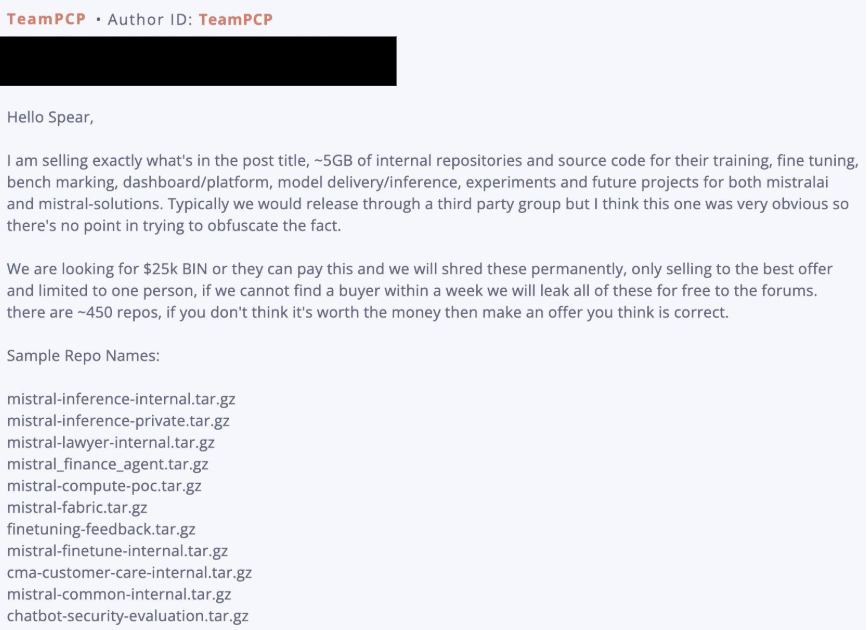
TeamPCP simultaneously listed Mistral AI source code for sale on BreachForums, claiming possession of approximately 5 GB of data across 450 internal Mistral repositories.

TeamPCP BreachForums posts advertising Mistral AI internal source code and repositories for sale, May 2026. (Source: Flashpoint)

Wave 3: AntV Ecosystem (May 2026)

Targeting AntV enterprise data visualization ecosystem, TeamPCP compromised the atool npm account, which held publishing rights across a broad catalog of AntV packages. In 22 minutes, 637 malicious versions were published across 323 packages—a scale and speed that overwhelmed standard security monitoring pipelines.

Each infected package contained the Mini Shai-Hulud worm, which, upon execution, created up to 2,500 compromised repositories on victim accounts within hours.

Wave 4: Co-Ownership of BreachForums and GitHub Breach

In the most recent wave, TeamPCP announced its assumption of co-ownership of BreachForums, the largest English-language cybercriminal forum currently active. This development significantly elevates TeamPCP’s standing and operational reach. As co-owners, the group stated it would manage platform operations, handle dispute resolution, staff and vet moderation personnel, and host monetary contests for the community. The announcement positions TeamPCP as both an active threat actor and a platform-level infrastructure operator, with the ability to shape forum policies, curate the availability of criminal tooling, and influence the broader access broker and ransomware ecosystem.

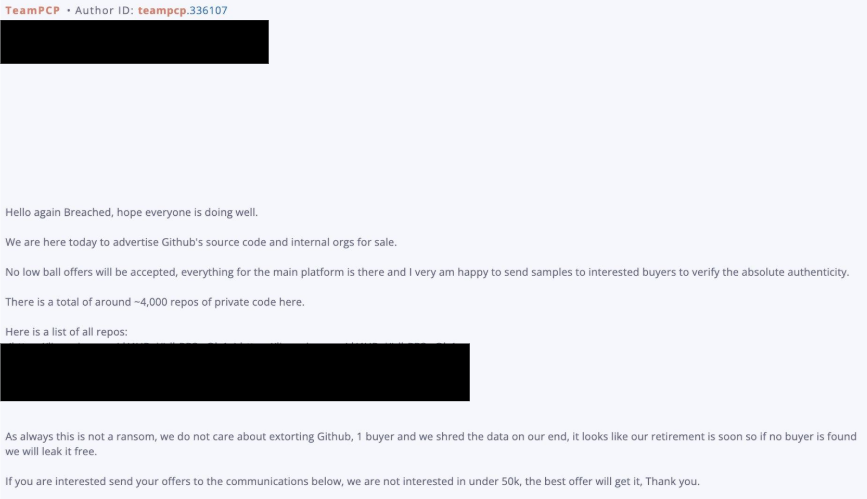
Additionally, by poisoning a GitHub employee’s development environment, TeamPCP exfiltrated approximately 3,800 internal GitHub repositories. Within the stolen data were highly sensitive codebases such as:

  • copilot-api and copilot-token-service
  • actions-runtime
  • billing-platform
  • enterprise-crypto
  • authentication
  • codeql-core
  • detection-engineering
  • csirt
  • azure-config
TeamPCP BreachForums posts advertising GitHub internal source code for sale. (Source: Flashpoint)

Recommended Immediate Actions

Critically, the theft of internal source code from one of the world’s most widely used code hosting platforms creates incredible downstream risk for organizations that depend on GitHub Copilot and GitHub Actions for their own software development pipelines. Organizations running AI coding agents such as Claude Code and VS Code with extensions in their CI/CD pipelines face heightened exposure. Security teams should treat AI agent configuration files as sensitive assets subject to integrity monitoring and change-control policies.

If your organization uses npm, PyPi, or AI-assisted development tools, Flashpoint recommends the following immediate steps:

  1. Audit and remove: Immediately audit CI/CD environments and remove all infected versions of AntV, TanStack, Mistral AI, and Bitwarden CLI packages.
  2. Rotate credentials: Rotate all cloud credentials (AWS, GCP, Azure) and npm tokens.
  3. Disable persistence first: Before revoking suspicious GitHub tokens, ensure the kitty-monitor daemon is disabled to avoid triggering the “dead-man’s switch” wiper.
  4. Lock down IDEs: Restrict the installation of VS Code extensions to an approved allow-list and monitor for unauthorized changes to settings.json or tasks.json.
  5. Block C2 infrastructure: Block all traffic to identified TeamPCP C2 domains.

Track TeamPCP and Defend against Mini Shai-Hulud Using Flashpoint

Flashpoint assesses with high confidence that TeamPCP will continue to scale its supply-chain attacks against npm, PyPI, and developer tooling ecosystems. The group’s shift from direct execution to orchestrating a broader ecosystem via BreachForums signals a maturation into a platform-layer criminal operation. While TeamPCP has hinted that the group may be approaching “retirement” due to law enforcement pressure, this should be treated with caution. Whether a misdirection or a genuine exit plan, the open-sourcing of Shai-Hulud means the tradecraft is available to the wider cybercriminal community.

Organizations should reference the OpenSSF npm Best Practices guidance for a practical baseline in hardening their package consumption posture. Flashpoint customers can gain access to known Indicators of Compromise (IOCs) and MITRE ATT&CK Mapping for Mini Shai-Hulud by logging into Flashpoint Ignite. To learn more about how Flashpoint tracks threat actor groups like TeamPCP and protects the software supply chain, request a demo.

Request a demo today.

The post The Mini Shai-Hulud Worm and the New Era of CI/CD Exploitation appeared first on Flashpoint.

  •  

2026 Gartner® Magic Quadrant™ for Cyber Threat Intelligence: Key Takeaways for Security Leaders

Blogs

Blog

2026 Gartner® Magic Quadrant™ for Cyber Threat Intelligence: Key Takeaways for Security Leaders

SHARE THIS:
Default Author Image
May 6, 2026

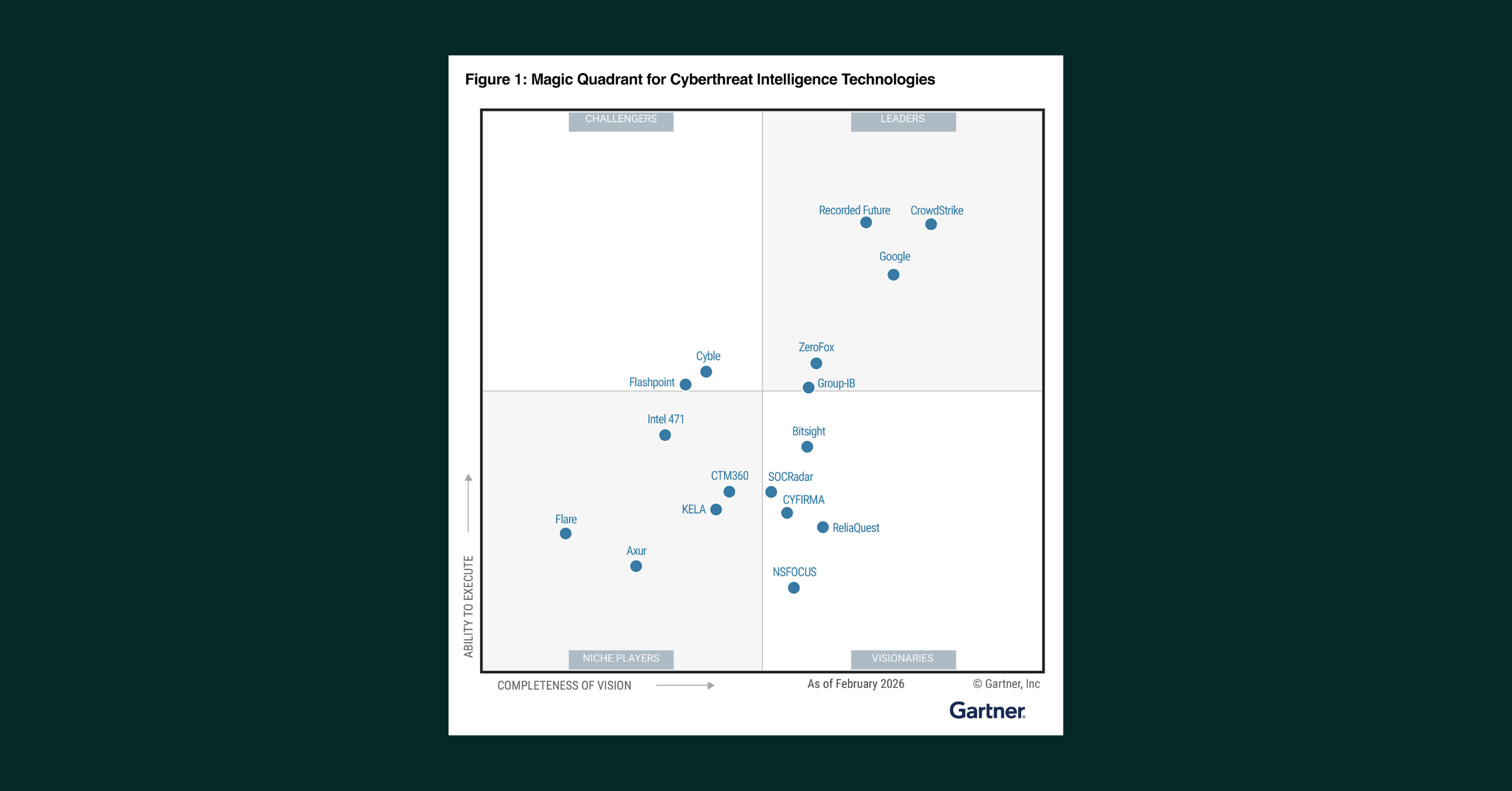
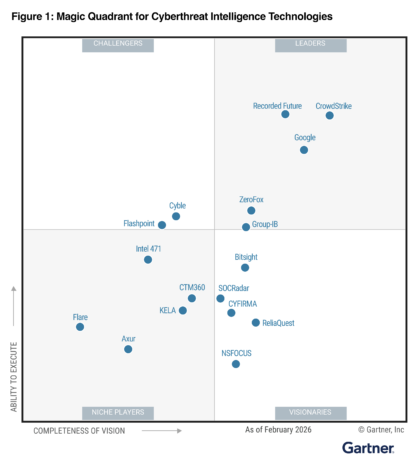
We are proud to share that Flashpoint has been named a Challenger in the inaugural 2026 Gartner® Magic Quadrant™ for Cyber Threat Intelligence Technologies. 

“We see this recognition as a testament to Flashpoint’s ability to execute at the highest levels for the world’s most discerning threat intelligence customers, with our unique combination of primary source collection and human analysis at the core,” — Josh Lefkowitz, CEO at Flashpoint.

The Gartner Magic Quadrant provides organizations with a wide-angle view of vendors in the cyber threat intelligence market. By applying a graphical treatment and a uniform set of evaluation criteria, the Magic Quadrant helps organizations assess how well technology providers are executing their stated visions and performing against Gartner’s market view. Vendors are evaluated based on their Ability to Execute and Completeness of Vision:

  • Ability to Execute reflects the Gartner assessment of the vendor’s product and/or service, overall viability, sales execution and pricing, market responsiveness and record, marketing execution, customer experience, as well as operations.
  • Completeness of Vision comprises the Gartner view of the vendor’s overall market understanding, marketing strategy, sales strategy, offering (product) strategy, business model, vertical/industry strategy, innovation, and geographic strategy.

“We believe, and our customers consistently validate, that the future of threat intelligence lies at the critical intersection of intelligence depth and application,” says Lefkowitz. “That’s why Flashpoint pairs unmatched access to primary-source environments with the ability to operationalize that intelligence across security workflows, enabling organizations to make faster, more informed decisions.”

A complimentary copy of the Gartner® Magic Quadrant™ for Cyber Threat Intelligence Technologies is available to download here.

Market Dynamics and Growth of the Threat Intelligence Market

The threat intelligence market has expanded in both scope and strategic importance as organizations contend with a broader and more complex threat environment. What was once a supporting function within security operations is now expected to inform decisions across vulnerability management, fraud prevention, and enterprise risk. This shift has raised the bar for how intelligence is collected, analyzed, and applied.

Gartner describes this evolution as a move toward unified cyber risk intelligence (UCRI) — an approach that brings together diverse internal and external data sources with advanced analytical capabilities to improve decision-making. As noted in The Evolution of Threat Intelligence Is Unified Cyber Risk Intelligence, “the future of threat intelligence is unified cyber risk intelligence (UCRI)… defined by the convergence of multisignal collection and advanced analytical capabilities.” In our opinion, this model reflects the reality that no single source provides sufficient visibility, and that intelligence must be corroborated across environments to be actionable. 

At the same time, the scale of available data continues to increase, introducing new challenges around prioritization and context. Gartner notes that organizations “receive vast amounts of threat data, and filtering out false positives, redundant information and irrelevant alerts to extract actionable intelligence remains a significant challenge. This “noise” can overwhelm security teams and lead to important threats being missed.” This is where AI plays a growing role. Techniques such as machine learning and natural language processing are increasingly used to correlate signals, identify patterns, and surface relevant risks faster. As intelligence becomes more integrated across the enterprise, the ability to combine multisource collection with AI-driven analysis is shaping how organizations evaluate platforms and build modern threat intelligence programs.

How Security Teams Are Evaluating Threat Intelligence

From Flashpoint’s experience working with the most discerning security and intelligence teams, the value of a threat intelligence platform is measured in how it performs in practice — how quickly it surfaces relevant activity, how much context it provides, and how easily it supports decision-making across workflows.

We see three areas consistently shape how intelligence is evaluated, supported by a combination of human expertise and AI-driven analysis:

  • Access to high-signal environments: Intelligence is most useful when it reflects activity at its source. Access to closed forums, encrypted messaging platforms, and illicit marketplaces provides the context needed to understand how threats develop and move.
  • Context that supports prioritization: Vulnerability and threat data require context to be actionable. Understanding how activity is discussed and operationalized in real environments allows teams to focus on what requires attention.
  • Integration into operational workflows: Intelligence must fit into the systems and processes teams already rely on. Integration across SIEM, SOAR, and internal workflows allows intelligence to be applied consistently at scale.

These areas are closely tied to how Flashpoint has built its platform and how it supports organizations operating in complex threat environments.

Where Intelligence Comes From Matters

A large part of how intelligence performs in practice comes back to the source of the data itself.

We believe, and our customers continue to validate, that Flashpoint’s approach is centered on primary-source collection. That means accessing environments where threat activity is actively discussed, coordinated, and developed, including closed forums, encrypted messaging platforms, and illicit marketplaces. These environments require sustained access and ongoing validation, but they provide a level of visibility that is difficult to achieve through surface-level collection alone.

From our experience, working from these sources changes how intelligence is used. Activity can be observed earlier and understood with more context, with discussions, relationships, and intent preserved.

In practice, this allows teams to:

  • Identify emerging activity before it becomes widely visible
  • Maintain context across conversations, actors, and environments
  • Reduce time spent investigating low-value or unverified signals

Intelligence Has to Fit Into How Teams Actually Operate

Collection alone doesn’t determine whether intelligence is useful. We believe it also has to be delivered in a way that aligns with how teams work.

In our experience, most security teams already have established workflows tied to SIEMs, SOAR platforms, and internal processes. Intelligence that integrates into those workflows can be applied consistently across investigation and response.

In practice, we see this support:

  • Delivery of intelligence directly into existing systems
  • Consistent application across automated and analyst-driven workflows
  • Reduced friction between intelligence, investigation, and response

Over time, this consistency allows teams to build repeatable processes around intelligence rather than treating it as a separate function.

Context Drives Prioritization

The same dynamics apply to vulnerability intelligence.

From our experience, understanding which vulnerabilities exist is only one part of the problem. Determining which ones require attention in a given environment depends on context — how those vulnerabilities are being discussed, shared, or used in active threat activity.

We have seen first-hand that when vulnerability data is connected to real-world activity, teams can:

  • Prioritize remediation based on active threat relevance
  • Align vulnerability management with observed adversary behavior
  • Reduce reliance on static scoring as the sole decision driver

Applying This in Practice

For organizations evaluating providers, challenge intelligence sources, challenge collection agility, challenge exploit prioritization and above all ask yourself is this a partner with a long-term track record of navigating the world’s most complex threat environments?

To see how Flashpoint, the world’s largest private provider of threat intelligence can help you make better decisions, faster and with confidence, schedule a demo.

Gartner Disclaimer

Gartner does not endorse any company, vendor, product or service depicted in its publications, and does not advise technology users to select only those vendors with the highest ratings or other designation. Gartner publications consist of the opinions of Gartner’s business and technology insights organization and should not be construed as statements of fact. Gartner disclaims all warranties, expressed or implied, with respect to this publication, including any warranties of merchantability or fitness for a particular purpose. 

This graphic was published by Gartner, Inc. as part of a larger research document and should be evaluated in the context of the entire document. The Gartner document is available upon request from Flashpoint.

Gartner, Magic Quadrant for Cyber Threat Intelligence Technologies, Jonathan Nunez, Carlos De Sola Caraballo, Jaime Anderson, May 4, 2026.

Gartner, The Evolution of Threat Intelligence Is Unified Cyber Risk Intelligence, By Jonathan Nunez, 15 September 2025.

Gartner and Magic Quadrant are trademarks of Gartner, Inc., and/or its affiliates.

Begin your free trial today.

The post 2026 Gartner® Magic Quadrant™ for Cyber Threat Intelligence: Key Takeaways for Security Leaders appeared first on Flashpoint.

  •  

Connecting Threat Intelligence to Decision-Making: How Flashpoint Is Operationalizing Intelligence in 2026

Blogs

Blog

Connecting Threat Intelligence to Decision-Making: How Flashpoint Is Operationalizing Intelligence in 2026

At RSA Conference 2026, Flashpoint introduces new capabilities that enable security teams to move from visibility to defensible action by connecting adversary activity to business priorities, assets, and investigations.

SHARE THIS:
Default Author Image
March 23, 2026

Most organizations are not lacking visibility, but they are drowning in large volumes of information that are difficult to prioritize and even harder to tie back to clear action. In practice, this creates a familiar problem.

They can see what vulnerabilities exist.
They can track threat activity.
They can monitor alerts across their environment.

But the questions they struggle to answer are more important:

Which of these exposures actually matter?
What do we fix first — and why?
How does this activity translate to risk for the business?

As a result, teams fall back on patching cycles, compliance requirements, or best-effort prioritization and are left making decisions based on incomplete context.

This gap between data and decision-making has become one of the most persistent challenges in modern security operations.

At RSA Conference 2026, Flashpoint is sharing how we are addressing this gap directly — connecting adversary activity to assets, investigations, and defined business priorities so teams can make more consistent, defensible decisions.

“The industry has reached a tipping point where security teams are drowning in data that fails to align with their most important business requirements and decisions. Visibility alone is no longer a victory; it’s a baseline. By connecting underground adversary activity to an organization’s specific attack surface and strategic requirements, Flashpoint is raising the bar beyond passive observation. We are enabling defenders to stop asking ‘what do we own’ and start answering ‘what do we fix first, and why,’ turning raw data into an engine for risk reduction at speed.”

Josh Lefkowitz

What Flashpoint is Showcasing at RSA Conference 2026

Flashpoint is introducing a set of capabilities designed to connect threat intelligence directly to business risk, assets, and investigations:

  • Threat-informed External Attack Surface Management (EASM)
  • Business-Aligned Priority Intelligence Requirements (PIRs)
  • Managed Attribution browser for anonymous investigations

Together, these capabilities enable organizations to move beyond passive monitoring and toward intelligence-driven action.

What Is Threat-Informed External Attack Surface Management (EASM)

Most organizations maintain an inventory of their external assets, but prioritizing them is a persistent challenge. Traditional EASM tools identify what you own but often fail to answer the critical “so what?”. Without contextual risk, prioritization is often driven by static severity scores, patch cycles, or compliance requirements rather than real-world attacker behavior. As a result, teams are left managing stale data through manual CSV uploads and struggling to determine which exposures actually matter.

Flashpoint’s EASM module transforms this stream of exposure data into a prioritized action plan. It continuously discovers a customer’s external attack surface, including domains, subdomains, and IP addresses, and automatically maps this live inventory directly to Flashpoint’s industry-leading vulnerability intelligence.

This allows security teams to:

  • Maintain a Dynamic Inventory: Eliminate manual uploads and stale CMDB exports with an always-current map of internet-facing assets.
  • Contextualize Risk Immediately: Go beyond simple asset discovery by mapping the specific software running on each asset to known vulnerabilities, including pre-NVD findings.
  • Prioritize with Precision: Connect the asset to the actual risk, showing teams not just their external exposure, but where they are truly vulnerable and what needs to be fixed first.

By layering deep vulnerability intelligence onto live asset discovery, Flashpoint enables defenders to move from reactive analysis to proactive, intelligence-driven risk reduction.

Why Priority Intelligence Requirements (PIRs) Are Foundational

Many intelligence teams operate without a formal structure that defines what their work is intended to support.

In day-to-day operations, this results in:

  • Reactive investigation of incoming alerts
  • Reporting driven by the availability of information rather than the need
  • Difficulty demonstrating how intelligence outputs influence decisions

Priority Intelligence Requirements (PIRs) are designed to address this, but in many organizations, they are not integrated into operational workflows.

In May, Flashpoint is introducing in-platform Intelligence Requirements to formalize this structure and embed it directly into the way teams work.

Alerts, investigations, and reporting can be tied to defined requirements, allowing teams to:

  • Focus on activities that directly align with defined business risk priorities
  • Maintain consistency in what is tracked and reported
  • Provide a clearer justification for the intelligence work being done

This creates a more structured intelligence program. Instead of producing outputs based on what is observed, teams can align their work to defined objectives and decision-making needs.

Enabling Safe, Scalable Investigations with Managed Attribution

Accessing adversary-controlled environments such as forums, marketplaces, and encrypted platforms is a core part of many intelligence workflows.

However, doing so safely requires careful setup. Analysts typically need to:

  • Use isolated infrastructure
  • Manage attribution and identity exposure
  • Avoid introducing risk to internal systems

This creates operational overhead and can slow down or limit investigation.

The new anonymous browser capability within Flashpoint Managed Attribution is designed to address this by providing a non-persistent, isolated environment for research and immediate triage. This removes setup friction and allows analysts to move immediately from detection, to investigation, to deeper analysis in the same environment.

Analysts can:

  • Access underground communities
  • Open suspicious links or files
  • Engage with threat actors

Without exposing their identity or internal infrastructure.

By removing the need for manual setup, this allows analysts to move directly into investigation while maintaining operational security. 

See it at RSA Conference 2026

Security teams are being asked to do more than identify threats. They are expected to prioritize, act decisively, and justify those decisions.

That becomes difficult when the inputs — vulnerabilities, alerts, threat reporting — are not clearly connected to each other or to the business.

​​Intelligence needs to be tied to assets, aligned to defined priorities, and usable in day-to-day workflows. That’s the focus of Flashpoint’s updates this year.

At RSA Conference 2026, we’ll be walking through how this works in practice—how teams are connecting adversary activity to what they own, what matters, and what they do next. Flashpoint will be sharing more on these new innovations, including threat-informed EASM, in-platform Intelligence Requirements, and the Managed Attribution browser.If you’re attending, stop by Booth S-3341 to see how teams are moving from visibility to action. For a personalized demo, schedule a meeting with us.

Frequently Asked Questions

What is Flashpoint showcasing at RSA 2026? 

Flashpoint is showcasing how its primary-source threat data connects directly to business assets and priorities. At the booth, attendees can get a sneak peek of the upcoming in-platform Priority Intelligence Requirements (PIRs), which formalize how security teams tie investigations to business risk. Flashpoint will also be discussing the upcoming general availability of threat-informed EASM for asset discovery and risk prioritization, alongside the Flashpoint Managed Attribution browser, designed for secure underground research.

What is Flashpoint Threat-Informed EASM? 

Flashpoint External Attack Surface Management (EASM) goes beyond simple asset discovery by automatically mapping your external footprint to our industry-leading vulnerability intelligence. This allows teams to prioritize remediation by identifying which software versions are actually running on key assets, flagging critical risks often missed by public databases.

How do Flashpoint Priority Intelligence Requirements (PIRs) help security teams? 

Flashpoint PIRs provide a formal in-platform structure that ties security alerts and investigations to specific business risks. This helps teams move away from reactive “activity-based” work and toward “decision-based” intelligence that is defensible to executive stakeholders.

What are the benefits of the Flashpoint Managed Attribution browser? 

The Flashpoint Managed Attribution browser allows threat analysts to safely research the web using a disposable, anonymous environment. This prevents the analyst’s identity from being exposed and protects the corporate network from malware while conducting underground research.

How does Flashpoint’s new offering support a Continuous Threat Exposure Management (CTEM) framework?

Flashpoint facilitates the CTEM lifecycle by providing the primary source data necessary to move beyond traditional point-in-time scanning. EASM enables organizations to start focusing on the specific vulnerable software and high-risk exposures that threat actors are actively targeting.

Begin your free trial today.

The post Connecting Threat Intelligence to Decision-Making: How Flashpoint Is Operationalizing Intelligence in 2026 appeared first on Flashpoint.

  •  

Escalation in the Middle East: Tracking “Operation Epic Fury” Across Military and Cyber Domains

Blogs

Blog

Escalation in the Middle East: Tracking “Operation Epic Fury” Across Military and Cyber Domains

This post tracks the convergence of kinetic warfare, psychological operations, and cyber activity as the conflict expands across the Middle East and beyond.

SHARE THIS:

On February 28, the United States and Israel launched coordinated strikes across Iran under Operation Epic Fury (also referenced in reporting as Operation Lion’s Roar). The opening phase focused on decapitating senior Iranian leadership while degrading missile infrastructure, launch systems, and air defenses. In the hours that followed, Iran initiated large-scale retaliation — expanding the conflict beyond Iranian territory and into a region-wide exchange that touched multiple Gulf states and allied military assets.

Since those initial strikes, the conflict has rapidly widened and accelerated. What began as a concentrated campaign against leadership and missile capabilities has developed into a sustained regional war with an expanding set of targets, including economic and logistical infrastructure. Simultaneously, cyber operations and psychological messaging have been used alongside kinetic action, creating a hybrid operating environment in which disruption is shaped as much by information control and infrastructure compromise as it is by missiles and airstrikes.

Flashpoint analysts are tracking the conflict across physical, cyber, and geopolitical domains. The timeline and sections below summarize key developments and risk indicators observed from February 28 through May 4.

Latest Update: Escalation Across Maritime, Cyber, and Economic Domains (Last 24–48 Hours)

The conflict has entered a phase of direct maritime and economic confrontation, with both kinetic and cyber activity intensifying in parallel.

Following the collapse of diplomatic efforts, the United States has formally initiated a naval blockade of Iranian ports, while Iran has responded by deploying midget submarines and reportedly mining key transit routes in the Strait of Hormuz. These developments signal a shift from pressure on infrastructure to direct control over regional shipping and energy flows.

At the same time, cyber operations have escalated beyond disruption into claims of large-scale destructive activity targeting industrial and government systems across the Gulf. While some of these claims remain unverified, the volume and nature of activity indicate a sustained effort to degrade both public-sector and commercial infrastructure.

Timeline of Key Developments

May 4
~06:00 UTC
CENTCOM announces the commencement of “Project Freedom” to secure maritime transit through the Strait of Hormuz.
~08:30 UTC
The IRGC Navy declares a new operational control sector in the Strait, warning that vessels failing to coordinate transit will be “stopped with force”.
10:15 UTC
Iran launches a barrage of four cruise missiles toward the UAE; three are intercepted by UAE air defenses while one falls into the sea.
11:00 UTC
A drone strike targets an ADNOC oil tanker in the Gulf.
13:45 UTC
The South Korean Ministry of Foreign Affairs confirms a South Korean vessel was struck in its engine room while transiting the Strait.
15:30 UTC
Handala Hack announces “Operation Premature Death,” releasing the names and ranks of 400 US Navy officers.
17:00 UTC
IRGC releases footage purportedly showing strikes on US vessels; CENTCOM dismisses these claims as false.

What This Means

This phase of the conflict reflects a shift toward combined economic and operational pressure:

  • Maritime control is now central: The blockade and countermeasures in the Strait of Hormuz introduce sustained risk to global shipping, energy transport, and supply chains.
  • Cyber operations are aligning with physical objectives: Activity targeting industrial systems and government infrastructure suggests an intent to create downstream operational disruption, not just visibility or signaling.
  • Private-sector exposure continues to expand: Western-linked infrastructure—particularly in energy, logistics, and cloud environments—remains within scope of both kinetic and cyber targeting.

Immediate Outlook (Next 48–72 Hours)

Further escalation is highly likely.

Iranian retaliatory activity may target US or Israeli assets in the near term, while continued pressure on maritime routes is expected to sustain volatility in global energy markets. At the same time, divergence among Western partners may create additional operational uncertainty, particularly for organizations relying on regional stability for logistics, infrastructure, or personnel movement.

How the Conflict Evolved

Since the opening strikes on February 28, the conflict has progressed through a series of rapid shifts—each expanding both the scope of targeting and the systems under pressure. What began as a tightly scoped military operation has developed into a sustained, multi-domain conflict affecting regional infrastructure, global markets, and private-sector operations.

This evolution is best understood not as a linear escalation, but as a sequence of overlapping phases that introduced new targets, new tactics, and new forms of risk.

Phase 1: Decapitation and Immediate Regional Spillover

(February 28)

The conflict began with a coordinated US–Israeli campaign targeting senior Iranian leadership and missile infrastructure. The objective was clear: degrade Iran’s ability to project force through its ballistic and air defense systems.

That containment window was brief.

Within hours, Iran launched retaliatory strikes across the Gulf, targeting US and allied military installations in Kuwait, Qatar, and Bahrain. Civilian and commercial systems were immediately affected, including flight disruptions in Dubai and early instability in maritime routes near the Strait of Hormuz.

From the outset, the conflict was regional—not bilateral—and it unfolded across military, commercial, and civilian environments simultaneously.

Phase 2: Regional Expansion and Civilian Exposure

(March 1–3)

Within the first 72 hours, the battlespace widened significantly.

Air operations extended directly over Tehran, signaling degradation of Iranian defensive capabilities. At the same time, new fronts emerged, including Hezbollah activity along Israel’s northern border. Targeting patterns began to shift, with incidents affecting civilian-adjacent infrastructure such as hotels, diplomatic sites, and transit hubs.

This period also marked the early alignment of cyber and information activity with kinetic operations. While still limited in impact, these efforts reflected a broader strategy: shaping disruption beyond the battlefield.

Phase 3: Infrastructure and System-Level Targeting

(March 5–10)

By early March, the conflict moved beyond military objectives and into the systems that sustain state and economic activity.

Energy infrastructure, power grids, logistics hubs, and financial systems became consistent points of pressure. Strikes on refineries and industrial complexes—combined with increasing instability in the Strait of Hormuz—introduced immediate consequences for global energy markets and supply chains.

This phase marked a structural shift. The conflict was no longer defined by territorial or military outcomes alone. It began to affect availability, access, and continuity across critical systems.

Phase 4: Commercial and Private-Sector Targeting

(March 11–13)

The targeting set expanded again—this time explicitly incorporating the private sector.

Iranian-aligned channels began publicly identifying Western technology, cloud, and financial firms as operational targets. In parallel, cyber activity moved deeper into enterprise environments, with disruptions affecting global companies and financial institutions.

At the same time, physical operations reinforced this shift:

  • Commercial shipping was targeted near the Strait of Hormuz
  • Banking operations were disrupted or preemptively shut down
  • Industrial facilities and refineries were forced offline

At this stage, economic pressure was no longer a byproduct of conflict—it had become a deliberate objective.

Phase 5: Hybrid Operations and Distributed Pressure

(Mid–Late March)

As kinetic operations continued, the conflict took on a more distributed and persistent character.

Cyber operations evolved in both scale and intent, expanding from disruption into data destruction, extortion, and psychological operations. Activity linked to groups such as Handala and broader proxy ecosystems demonstrated increasing coordination and willingness to target both regional and international entities.

At the same time, physical targeting patterns shifted toward long-term degradation:

  • Industrial production sites were struck
  • Ports and logistics corridors faced sustained pressure
  • Aviation hubs and transit infrastructure became recurring targets

This phase blurred traditional boundaries. Military, cyber, economic, and information operations were no longer distinct lines of effort—they were operating in parallel against overlapping targets.

A Conflict Without a Single Center of Gravity

By the end of March, the conflict had stabilized into a sustained, multi-domain environment defined by persistence rather than decisive escalation.

Military exchanges continue across multiple fronts, but the broader impact is shaped by pressure on:

  • Energy production and transport
  • Maritime and aviation corridors
  • Financial systems and commercial operations
  • Digital infrastructure and enterprise environments

Rather than converging toward resolution, the conflict has distributed risk across systems that extend well beyond the immediate region.

Phase 6: Economic Warfare Formalized and Maritime Escalation

(Late March – Early April)

By late March and into early April, economic pressure became formalized as a central objective of the conflict.

Maritime activity in and around the Strait of Hormuz shifted from disruption to active enforcement. Threats to commercial shipping intensified, while both state and proxy actors signaled a willingness to restrict or halt transit entirely. At the same time, targeting patterns expanded further into energy infrastructure, including gas production and refining capacity across the Gulf.

These developments introduced a new level of systemic risk. With a significant portion of global seaborne crude tied to the region, even partial disruption began to influence global pricing, supply planning, and downstream operations far beyond the Middle East.

Phase 7: Ceasefire Fracture and Persistent Hybrid Operations

(Early–Mid April)

Attempts at de-escalation introduced a new layer of complexity rather than stability.

While diplomatic efforts produced temporary pauses in kinetic activity, underlying objectives remained unresolved. In some cases, these pauses created space for continued operations in other domains. Cyber activity, in particular, showed no meaningful reduction, with Iranian-aligned groups continuing campaigns targeting infrastructure, government systems, and private-sector entities.

At the same time, friction points, especially in Lebanon, remained active. The exclusion of key actors from ceasefire terms contributed to continued localized escalation, reinforcing the decentralized nature of the conflict.

This period demonstrated that pauses in military activity do not equate to reduced risk across the broader threat landscape.

Phase 8: Direct Economic Targeting and Globalization of Risk

(Mid April and Beyond)

Following the breakdown of ceasefire dynamics, the conflict moved into a phase defined by direct economic targeting and broader international involvement.

US and allied actions began to focus more explicitly on constraining Iran’s financial and energy systems, while Iranian responses expanded to include threats against Western-affiliated commercial entities, academic institutions, and infrastructure beyond the immediate region.

At the same time, indicators of internationalization became more pronounced:

  • External actors providing military and technical support across sides
  • Cyber operations extending into Western and allied networks
  • Increased risk to global supply chains, energy markets, and financial systems

By this stage, the conflict was no longer confined to regional dynamics. It had evolved into a sustained pressure campaign with global economic and operational implications.

The Escalating Cyber and Information Front

From the earliest hours of the conflict, cyber operations have moved in parallel with kinetic activity—sometimes reinforcing it, and at other times extending its reach beyond the physical battlespace.

What has changed over time is not just the volume of activity, but the role cyber operations play within the broader campaign.

Early Phase: Disruption and Narrative Control

In the opening days, cyber activity focused primarily on disruption and influence.

Coordinated campaigns linked to pro-IRGC and pro-Russian-aligned groups targeted government websites, defense contractors, and public-facing services with distributed denial-of-service (DDoS) attacks and defacements. At the same time, information operations began to take shape, including the manipulation of widely used platforms such as the BadeSaba prayer app, where push notifications were leveraged to deliver messaging at scale.

These efforts were designed to create confusion, shape perception, and amplify the impact of concurrent military operations rather than cause lasting operational damage.

Expansion: Coordinated Campaigns and Infrastructure Access

As the conflict expanded regionally, cyber operations became more coordinated and more ambitious in scope.

Campaigns operating under banners such as #OpIsrael brought together loosely affiliated actors targeting infrastructure across Israel, the Gulf, and allied states. Claims during this period included access to industrial control systems, water infrastructure, and surveillance networks. While not all claims were independently verified, the consistency of targeting pointed to a broader intent: probing critical systems while signaling capability.

At the same time, verified activity—particularly from groups such as MuddyWater—demonstrated continued intrusion into aerospace, defense, and financial networks, reinforcing that espionage objectives remained active alongside disruption efforts.

Escalation: Enterprise Targeting and Data Destruction

By mid-March, cyber activity shifted again—this time toward enterprise environments and private-sector targets.

Incidents linked to groups such as Handala reflected a move beyond disruption into destructive operations. Reported activity included large-scale data wiping, exfiltration, and coordinated doxxing campaigns targeting individuals and organizations tied to Israeli or Western interests.

Equally significant was the reported use of “living-off-the-land” techniques, where attackers leveraged legitimate administrative tools within cloud environments to execute destructive actions. This approach reduces reliance on traditional malware and complicates detection, particularly for organizations dependent on signature-based defenses.

At this stage, cyber operations were no longer operating at the edges of the conflict. They were directly targeting the systems organizations rely on to operate.

Persistence Through Ceasefire: Cyber as a Continuous Pressure Mechanism

Subsequent developments demonstrated that cyber activity is not tied to the tempo of kinetic operations.

During periods of diplomatic pause, Iranian-aligned groups continued to operate with little observable reduction in activity. Public statements from groups such as Handala explicitly reinforced this posture, framing cyber operations as independent from military timelines.

At the same time, targeting patterns shifted rather than paused. Activity expanded to include:

  • Western and allied government systems
  • Critical infrastructure, including water and energy sectors
  • Commercial platforms and authentication systems

This reflects a broader strategic advantage: cyber operations allow actors to maintain pressure, test defenses, and shape outcomes without requiring direct military engagement.

Current State: Distributed, Adaptive, and Blended Operations

At present, cyber activity reflects a blend of objectives:

  • Espionage, particularly against defense and government networks
  • Disruption, including DDoS and service degradation
  • Destruction, through data wiping and system compromise
  • Psychological operations, leveraging public platforms and data exposure

These activities are carried out by a mix of state-linked groups, proxy actors, and loosely affiliated hacktivist networks, often operating with overlapping targets and messaging.

The result is a distributed and adaptive threat environment in which attribution is complex, timelines are compressed, and the boundary between state and non-state activity is increasingly blurred.

What This Signals

Cyber operations in this conflict are not a supporting element—they are a persistent layer of pressure that operates alongside and, at times, independently from physical conflict.

For organizations, this introduces a different type of risk:

  • Activity may continue even when kinetic conditions stabilize
  • Targeting may shift quickly across sectors and geographies
  • Detection becomes more difficult as attackers rely on legitimate tools and blended tradecraft

While cyber operations extend the reach of the conflict, the most immediate systemic pressure is emerging through physical and economic chokepoints—particularly in energy production and maritime transit.

Strategic Chokepoints and Systemic Risk

As the conflict expanded, physical targeting patterns converged around a small number of systems that carry disproportionate global impact: energy production, maritime transit, and regional mobility infrastructure.

Energy Infrastructure as a Primary Lever

Energy systems have emerged as one of the most consistently targeted elements of the conflict.

Strikes on refineries, gas facilities, and industrial complexes—combined with explicit threats against major Gulf energy assets—reflect a deliberate effort to constrain production and introduce volatility into global markets. Incidents affecting facilities in Saudi Arabia and the UAE, along with threats tied to Iran’s own production infrastructure, indicate that both sides view energy disruption as a means of exerting strategic pressure.

The scale of exposure is significant. A substantial portion of global seaborne crude transits through the region, and even partial disruption has immediate downstream effects on pricing, supply planning, and industrial operations.

This dynamic introduces a level of sensitivity that extends well beyond the region. Energy is a transmission mechanism for global economic impact.

Maritime Transit and the Strait of Hormuz

The Strait of Hormuz has remained the central chokepoint throughout the conflict.

From the earliest days, threats to shipping were used to signal escalation. Over time, those threats evolved into direct action, including strikes on commercial vessels, increased naval activity, and the positioning of maritime assets capable of restricting transit.

In later stages, this pressure became more formalized, with both state and proxy actors signaling a willingness to enforce constraints on shipping aligned with opposing interests. The result has been sustained disruption to maritime traffic, increased insurance and routing costs, and reduced throughput across one of the world’s most critical energy corridors.

For organizations dependent on global supply chains, the implications are immediate:

  • Longer transit times
  • Higher costs
  • Reduced predictability in delivery schedules

Even without a complete shutdown, sustained pressure on the Strait introduces ongoing friction into global trade flows.

Aviation and Regional Mobility

Airspace and aviation infrastructure have also been repeatedly affected.

Early in the conflict, flight suspensions and airport disruptions were driven by proximity to kinetic activity. As the conflict progressed, aviation hubs themselves became targets. Incidents near major transit centers—particularly in the Gulf—demonstrate both the vulnerability and strategic importance of these nodes.

Aviation serves as a critical connector for personnel movement, logistics, and high-value cargo. Disruption at major hubs does not remain localized; it cascades across international routes, affecting scheduling, capacity, and access.

In combination with maritime constraints, this creates a compounding effect: fewer viable routes, increased congestion elsewhere, and limited flexibility for organizations attempting to move people or goods.

Expansion to Commercial and Financial Systems

Over time, economic pressure extended beyond physical infrastructure into commercial and financial environments.

Public warnings and targeting signals began to include:

  • Banking institutions and financial districts
  • Commercial office locations tied to Western firms
  • Technology and cloud infrastructure hubs

In parallel, operational impacts became visible. Banking services were disrupted or preemptively suspended in parts of the Gulf, while threats against commercial centers introduced new considerations for business continuity and personnel safety.

This expansion reflects a shift in how the conflict defines “infrastructure.” It is no longer limited to energy or transport, as it also includes the systems that enable economic activity itself.

Business and Security Implications

As the conflict has expanded into energy systems, maritime corridors, aviation hubs, and commercial infrastructure, enterprise exposure is no longer limited to organizations with a direct regional footprint.

The targeting patterns observed throughout this conflict indicate that the systems underpinning global operations—logistics, cloud infrastructure, financial services, and workforce mobility—are all within scope.

For organizations, this introduces sustained operational friction rather than isolated disruption. Planning assumptions should shift accordingly.

Personnel and Physical Security

Exposure to physical risk has expanded beyond military installations into commercial environments.

Incidents affecting transit hubs, diplomatic facilities, and Western-linked commercial districts, combined with public warning lists identifying specific office locations in Jordan and the UAE, indicate that personnel operating in previously low-profile environments may now fall within the threat envelope.

This shift requires a more dynamic approach to workforce security.

Organizations should:

  • Reassess travel posture across the UAE, Qatar, Bahrain, Kuwait, and Saudi Arabia
  • Elevate security protocols at offices, hotels, and logistics sites
  • Reinforce operational security practices, including routine variation and reduced visibility of affiliation
  • Monitor diplomatic advisories and local threat reporting in near real time
  • Reevaluate occupancy and travel policies for personnel in named commercial and financial districts

Supply Chain, Energy, and Commercial Operations

Disruption is not limited to physical logistics. It now extends into the broader commercial operating environment.

Pressure on maritime transit through the Strait of Hormuz, combined with strikes on energy infrastructure and disruptions to financial services, creates a layered risk model: goods may not move, payments may not process, and operations may not continue as planned.

Organizations should plan for sustained instability rather than short-term interruption.

Priorities should include:

  • Modeling extended disruption to Gulf shipping routes
  • Identifying alternative logistics pathways, including overland options
  • Stress-testing supplier dependencies tied to energy inputs and regional ports
  • Preparing for price volatility and delivery delays
  • Assessing exposure to regional banking, payment processing, and financial services continuity

Cloud and Technology Infrastructure

The conflict has demonstrated that commercial technology infrastructure is not insulated from physical or cyber spillover.

The reported impact to cloud environments in the Gulf, combined with targeting signals directed at major technology providers, indicates that infrastructure supporting global applications may be exposed to localized disruption.

At the same time, strikes on regional communication and defense systems introduce additional risk to connectivity and resilience.

Organizations should:

  • Validate geographic redundancy for critical workloads
  • Confirm recovery timelines for regionally hosted environments
  • Review third-party dependencies tied to Gulf-based infrastructure
  • Ensure leadership understands cascading risks from localized outages
  • Evaluate exposure tied to physical proximity of offices, data centers, and regional tech hubs

ICS / OT Environments

Operational technology environments face elevated risk due to the convergence of cyber and physical targeting.

Claims involving industrial control systems—paired with demonstrated attacks on energy and logistics infrastructure—suggest that disruption may extend beyond IT systems into physical operations.

Organizations operating ICS/SCADA environments should prioritize resilience over detection alone.

Key actions include:

  • Auditing and restricting remote access pathways
  • Enforcing phishing-resistant MFA for privileged users
  • Segmenting industrial networks from corporate IT environments
  • Validating response plans for destructive or manipulative scenarios
  • Conducting exercises that assume loss of visibility or control

Ongoing Updates

Flashpoint will continue monitoring developments across physical, cyber, and geopolitical domains. Bookmark this page for updates as the situation evolves.

For organizations seeking deeper visibility into emerging threats, proxy activity, infrastructure targeting, and cross-domain escalation indicators, schedule a demo to see Flashpoint’s intelligence platform deliver timely, decision-ready intelligence.

See Flashpoint in Action

The post Escalation in the Middle East: Tracking “Operation Epic Fury” Across Military and Cyber Domains appeared first on Flashpoint.

  •  

Navigating 2026’s Converged Threats: Insights from Flashpoint’s Global Threat Intelligence Report

Blogs

Blog

Navigating 2026’s Converged Threats: Insights from Flashpoint’s Global Threat Intelligence Report

In this post, we preview the critical findings of the 2026 Global Threat Intelligence Report, highlighting how the collapse of traditional security silos and the rise of autonomous, machine-speed attacks are forcing a total reimagining of modern defense.

SHARE THIS:
Default Author Image
March 11, 2026

The cybersecurity landscape has reached a point of total convergence, where the silos that once separated malware, identity, and infrastructure have collapsed into a single, high-velocity threat engine. Simultaneously, the threat landscape is shifting from human-led attacks to machine-speed operations as a result of agentic AI, which acts as a force multiplier for the modern adversary.

Flashpoint’s 2026 Global Threat Intelligence Report

Flashpoint’s 2026 Global Threat Intelligence Report (GTIR) was developed to anchor security leaders — from threat intelligence and vulnerability management teams to physical security professionals and the CISO’s office — with the data required to navigate this year’s greatest threats, rife with infostealers, vulnerabilities, ransomware, and malicious insiders.

Our report uncovers several staggering metrics that illustrate the industrialization of modern cybercrime:

  • AI-related illicit activity skyrocketed by 1,500% in a single month at the end of 2025.
  • 3.3 billion compromised credentials and cloud tokens have turned identity into the primary exploit vector.
  • From January 2025 to December 2025, ransomware incidents rose by 53%, as attackers pivot from technical encryption to “pure-play” identity extortion.
  • Vulnerability disclosures surged by 12% from January 2025 to December 2025, with the window between discovery and mass exploitation effectively vanishing.

These findings are derived from Flashpoint’s Primary Source Collection (PSC), a specialized operating model that collects intelligence directly from original sources, driven by an organization’s unique Priority Intelligence Requirements (PIR). The 2026 Global Threat Intelligence Report leverages this ground-truth data to provide a strategic framework for the year ahead. Download to gain:

  1. A Clear Understanding of the New Convergence Between Identity and AI
    Discover how threat actors are preparing to transition from generative tools to sophisticated agentic frameworks. Learn how 3.3 billion compromised credentials are being weaponized via automated orchestration to bypass legacy defenses and exploit the connective tissue of modern corporate APIs.
  2. Intelligence on the “Franchise Model” of Global Extortion
    Gain deep insight into the professionalized operations of today’s most prolific threat actors. From the industrial efficiency of RaaS groups like RansomHub and Clop to the market dominance of the next generation of infostealer malware, we break down the economics driving today’s cybercrime ecosystem.
  3. A Blueprint for Proactive Defense and Risk Mitigation
    Leverage the latest trends, in-depth analysis, and data-driven insights driven by Primary Source Collection to bolster your security posture by identifying and proactively defending against rising attack vectors.

As attackers automate exploitation of identity, vulnerabilities, and ransomware, defenders who rely on fragmented visibility will fall behind. To keep pace, organizations must ground their decisions in primary-source intelligence that is drawn from adversarial environments, so that decision-makers can get ahead of this accelerating threat cycle.”

Josh Lefkowitz, CEO & Co-Founder at Flashpoint

The Top Threats at a Glance

Our latest report identifies four driving themes shaping the 2026 threat landscape:

2026 Is the Era of Agentic-Based Cyberattacks

Flashpoint identified a 1,500% rise in AI-related illicit discussions between November and December 2025, signaling a rapid transition from criminal curiosity to the active development of malicious frameworks. Built on data pulled from criminal environments and shaped by fraud use cases, these systems scrape data, adjust messaging for specific targets, rotate infrastructure, and learn from failed attempts without the need for constant human involvement.

2026 is the era of agentic-based cyberattacks. We’ve seen a 1,500% increase in AI-related illicit discussions in a single month, signaling increased interest in developing malicious frameworks. The discussions evolve into vibe-coded, AI-supported phishing lures, malware, and cybercrime venues. When iteration becomes cheap through automation, attackers can afford to fail repeatedly until they find a successful foothold.

Ian Gray, Vice President of Cyber Threat Intelligence Operations at Flashpoint

Identity Is the New Exploit

Flashpoint observed over 11.1 million machines infected with infostealers in 2025, fueling a massive inventory of 3.3 billion stolen credentials and cloud tokens. The fundamental mechanics of cybercrime have shifted from breaking in to logging in, as attackers leverage stolen session cookies to behave like legitimate users.

The Patching Window Is Rapidly Closing

Vulnerability disclosures surged by 12% in 2025, with 1 in 3 (33%) vulnerabilities having publicly available exploit code. The strategic gap between discovery and weaponization is increasingly vanishing, as evidenced by mass exploitation of zero-day vulnerabilities in as little as 24 hours after discovery.

Ransomware Is Hacking the Person, Not the Code

As technical defenses against encryption harden, ransomware groups are pivoting to the path of least resistance: human trust. This approach has led to a 53% increase in ransomware, with RaaS groups being responsible for over 87% of all ransomware attacks.

Build Resilience in a Converged Landscape

The findings in the 2026 Global Threat Intelligence Report make one thing clear: incremental improvements to legacy security models are no longer sufficient. As adversaries transition to machine-speed operations, the strategic advantage shifts to organizations that can maintain visibility into the adversarial environments where these attacks are born.

Protecting organizations and communities requires an intelligence-first approach. Download Flashpoint’s 2026 Global Threat Intelligence Report to gain clarity and the data-driven insights needed to safeguard critical assets.

Get Your Copy

The post Navigating 2026’s Converged Threats: Insights from Flashpoint’s Global Threat Intelligence Report appeared first on Flashpoint.

  •  

The Human Element: Turning Threat Actor OPSEC Fails into Investigative Breakthroughs

Blogs

Blog

The Human Element: Turning Threat Actor OPSEC Fails into Investigative Breakthroughs

In this post, we explore how the psychological traps of operational security can unmask even the most sophisticated actors.

SHARE THIS:
Default Author Image
February 13, 2026
Table Of Contents
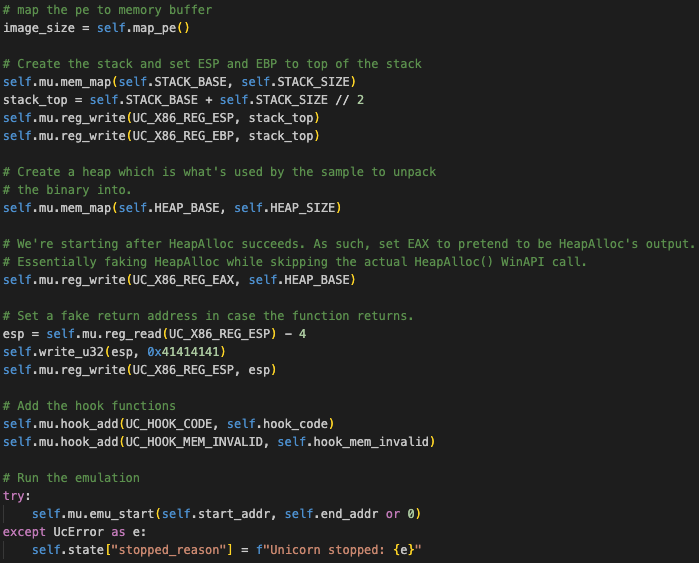
The threat intelligence landscape is often dominated with talks of sophisticated TTPs (tactics, tools, and procedures), zero-day vulnerabilities, and ransomware. While these technical threats are formidable, they are still managed by human beings, and it is the human element that often provides the most critical breakthroughs in attributing these attacks and de-anonymizing the threat actors behind them.

In our latest webinar, “OPSEC Fails: The Secret Weapon for People-Centric OSINT”,  Flashpoint was joined by Joshua Richards, founder of OSINT Praxis. Josh shared an intriguing case study where an attacker’s digital breadcrumbs led to a life-saving intervention. 

Here is how OSINT techniques, leveraged by Flashpoint’s expansive data capabilities, can dismantle illegal threat actor campaigns by turning a technical investigation into a human one.

Leveraging OPSEC as a Mindset

In a technical context, OPSEC is a risk management process that identifies seemingly innocuous pieces of information that, when gathered by an adversary, could be pieced together to reveal a larger, sensitive picture.

In the webinar, we break down the OPSEC mindset into three core pillars that every practitioner, and threat actor, must navigate. When these pillars fail, the investigation begins.

  • Analyzing the Signature: Every human has a digital signature, such as the way they type (stylometry), the times they are active, and the tools they prefer.
  • Identity Masking & Persona Management: This involves ensuring that your investigative identity has zero overlap with your real life. A common failure includes using the same browser for personal use and investigative research, which allows cookies to bridge the two identities.
  • Traffic Obfuscation: Even with a VPN, certain behaviors such as posting on a dark web forum and then using that same connection to check personal banking can expose an IP address, linking it to a practitioner or threat actor.

“Effective OPSEC isn’t about the tools you use; it’s about what breadcrumbs you are leaving behind that hackers, investigation subjects, or literally anyone could find about you.”

Joshua Richards, founder of Osint Praxis

Leveraging the Mindset for CTI

Understanding the OPSEC mindset allows security teams to think like the target. When we know the psychological traps attackers fall in, we know exactly where to look for their mistakes.

AssumptionThe Mindset TrapThe Investigative Reality
Insignificant“I’m not a high-value target; no one is looking for me.”Automated Aggression: Hackers use scripts to scan millions of accounts. You aren’t “chosen”; you are “discovered” via automation.
Invisible“I don’t have a LinkedIn or X account, so I don’t have a footprint.”Shadow Data: Public birth records, property taxes, and historical data breaches create a footprint you didn’t even build yourself.
Invincible“I have 2FA and complex passwords; I’m unhackable.”Session Hijacking: Infostealer malware steals “session tokens” (cookies). This allows an actor to be you in a browser without ever needing your 2FA code.

During the webinar, Joshua shares a masterclass in how leveraging these concepts can turn a vague dark web threat into a real-world arrest. Check out the on-demand webinar to see exactly how the investigation started on Torum, a dark web forum, and ended with an arrest that saved the lives of two individuals.

Turn the Tables Using Flashpoint

The insights shared in this session powerfully illustrate that even the most dangerous threat actors are rarely as anonymous as they believe. Their downfall isn’t usually a failure of their technical prowess, but a failure of their mindset. By understanding these OSINT techniques, intelligence practitioners can transform a sea of digital noise into a clear path toward attribution.

The most effective way to dismantle threats is to bridge the gap between technical indicators and human behavior. Whether your teams are conducting high-stakes OSINT or protecting your own organization’s digital footprint, every breadcrumb counts. By leveraging Flashpoint’s expansive threat intelligence collections and real-time data, you can stay one step ahead of adversaries. Request a demo to learn more.

Request a demo today.

The post The Human Element: Turning Threat Actor OPSEC Fails into Investigative Breakthroughs appeared first on Flashpoint.

  •  

N-Day Vulnerability Trends: The Shrinking Window of Exposure and the Rise of “Turn-Key” Exploitation

Blogs

Blog

N-Day Vulnerability Trends: The Shrinking Window of Exposure and the Rise of “Turn-Key” Exploitation

In this post we explore the data-driven shrinkage of the Time to Exploit (TTE) window from 745 days to just 44, and examine why N-day vulnerabilities have become the “turn-key” weapon of choice for modern threat actors.

SHARE THIS:
Default Author Image
February 11, 2026

The race between defenders and threat actors has entered a new, more volatile phase: the rapidly accelerating exploitation of N-day vulnerabilities. Different from zero-days, N-day vulnerabilities are known security flaws that have been publicly disclosed but remain unpatched or unmitigated on an organization’s systems.

Historically, enterprises operated under the assumption of a “patching grace period,” the designated window of time allowed for a vendor to test and deploy a fix before a system is considered non-compliant or at high risk. However, this window is effectively collapsing, with Flashpoint finding that N-days now represent over 80% of all Known Exploited Vulnerabilities (KEVs) tracked over the past four years.

The Collapse of the Time to Exploit (TTE) Window

The most sobering trend for security operations (SecOps) and exposure management teams is the dramatic reduction in Time to Exploit (TTE). In 2020, the average TTE, the time between a vulnerability’s disclosure and its first observed exploitation, was 745 days. By 2025, Flashpoint found that this window has now plummeted to an average of just 44 days.

202520242023202220212020
Average TTE44115296405518745

This contraction represents a strategic shift in adversary tempo. Attackers are no longer waiting for complex, bespoke exploits; they are moving at breakneck speeds to weaponize public disclosures.

N-Days Provide a “Turn-Key” Exploit Advantage

Adversaries have gained a significant advantage through the rapid weaponization of researcher-published Proof-of-Concept (PoC) code. When a fully functional exploit is released alongside a vulnerability disclosure, it becomes a “turn-key” solution for attackers. By combining these ready-made exploits with internet-wide scanning tools like Shodan or FOFA, even unsophisticated threat actors can conduct mass exploitation across large segments of the internet in hours.

A prime example of this path of least resistance approach was observed in the leaked internal chat logs of the BlackBasta ransomware group. Analysis revealed that of the 65 CVEs discussed by the group, 54 were already known KEVs. Rather than spending resources on original zero-day research, threat actors are simply leveraging known, yet unpatched and exploitable vulnerabilities for their campaigns.

Defensive Software is a Primary Target for N-Days

The very software designed to protect enterprise firewalls, VPN gateways, and edge networking devices is consistently the most targeted category for both N-day and zero-day exploitation.

Because cybersecurity devices must be internet-facing to function, they provide a constant, unauthenticated attack surface. In 2025 alone, Flashpoint observed 37 N-days and 52 zero-days specifically targeting security and perimeter software. The requirement for these systems to remain open to external traffic means they will continue to be disproportionately targeted by advanced persistent threat (APT) groups and cybercriminals alike.

Attributing N-Day Attacks

While tracking the “how” of an attack is critical, tracking who is responsible remains a fragmented challenge for the industry. Attribution is often hampered by naming fatigue, where different vendors assign their own designated unique monikers to the same actor. For instance, the widely known threat actor group Lazarus has over 40 distinct designations across the industry, including “Diamond Sleet,” “NICKEL ACADEMY,” and “Guardians of Peace”.

Despite these naming complexities, global activity patterns remain clear. China remains the most active nation-state actor in the vulnerability exploitation space, consistently outpacing Russia, Iran, and North Korea in both the volume and scope of their campaigns.

Obstacles for Enterprise Security: Asset Blindness and the CVE Dependency Trap

Why are organizations struggling to keep pace? The primary factor isn’t a lack of effort, but a lack of visibility.

1. The Asset Inventory Gap

The single greatest breakthrough an enterprise can achieve is not a new AI tool, but a complete asset inventory. Most large organizations are lucky to have an accurate inventory of even 25% of their total assets. Without knowing what you own, vulnerability scans can take days or weeks to return results that the adversary is already using to probe your network.

2. The CVE Blindspot

Most traditional security tools are CVE-dependent. However, thousands of vulnerabilities are disclosed every year that never receive an official CVE ID. These “missing” vulnerabilities represent a massive blindspot for standard scanners. Intelligence-led exposure management requires looking beyond the CVE ecosystem into proprietary databases like Flashpoint’s VulnDB™, which tracks over 105,000 vulnerabilities that public sources miss.

Move Towards Intelligence-Led Exposure Management Using Flashpoint

To survive in an era where weaponization can happen in under 24 hours, organizations must shift from reactive patching to a threat-informed and proactive security approach. This means:

  • Prioritizing by Exploitability and Threat Actor Activity: Focus on vulnerabilities that are remotely exploitable and have known public exploits, rather than just high CVSS scores.
  • Adopting an Asset-Inventory Approach: Moving away from slow, periodic scans in favor of continuous asset mapping that allows for immediate triage.
  • Operationalizing Intelligence: Embedding real-time threat data directly into SOC and IR workflows to reduce the “mean time to action”.

The goal of exposure management is to look at your organization through the adversary’s lens. By understanding which N-days threat actors are actually discussing and weaponizing in the wild, defenders can finally start to close the window of exposure before a potential compromise can occur.

Flashpoint’s vulnerability threat intelligence can help your organization go from reactive to proactive. Request a demo today and gain access to quality vulnerability intelligence that enables intelligence-led exposure management.

Request a demo today.

The post N-Day Vulnerability Trends: The Shrinking Window of Exposure and the Rise of “Turn-Key” Exploitation appeared first on Flashpoint.

  •  

Flashpoint’s Threat Intelligence Capability Assessment

Blogs

Blog

Flashpoint’s Threat Intelligence Capability Assessment

In this post we introduce a new free assessment designed to pinpoint intelligence gaps, top strategic priorities for progress, and prioritized practical actions to drive real impact.

SHARE THIS:
Default Author Image
February 5, 2026

Many organizations today have some form of threat intelligence. Far fewer have a threat intelligence function that is structured, measurable, and trusted across the business. Experienced security professionals know that volume does not equal value—having more feeds, more alerts, or more dashboards doesn’t automatically translate into better intelligence. In reality, teams need clear visibility into the source of their intelligence data, how it aligns to their most important risks, and whether it’s actually influencing decisions.

Without this baseline, organizations struggle to answer fundamental questions: 

  • Are we collecting intelligence that reflects our real risk exposure?
  • Are we missing upstream threats—or over-prioritizing noise?
  • Is our intelligence tailored to our environment, or largely generic?
  • Is it reaching the right teams at the right moment to drive action?

These blind spots create friction across security operations—and make it difficult to improve with confidence.

How is Your Intelligence Working Across Your Environment?

That’s why Flashpoint created the Threat Intelligence Capability Assessment out of a simple observation: the most successful intelligence functions aren’t defined by the size of their budget or the number of feeds they ingest. They are defined by how intelligence flows across the full threat intelligence lifecycle:

  1. Requirements & Tasking: How clear are your intelligence priorities, and how directly are they tied to real business risk?
  2. Collection & Discovery: Is your visibility broad, deep, and flexible enough to keep pace with changing threats?
  3. Analysis & Prioritization: How effectively are signals, context, and impact being connected to inform decisions?
  4. Dissemination & Action: Is intelligence reaching the teams and leaders who need it, when they need it?
  5. Feedback & Retasking: How consistently are priorities reviewed, refined, and adjusted based on outcomes?

By examining each stage independently, our assessment reveals where intelligence accelerates decisions and where it quietly breaks down.

Why This Assessment is Different

Most maturity assessments focus on inputs: tooling, headcount, or abstract maturity labels.

Flashpoint’s Threat Intelligence Capability Assessment takes a different approach. It evaluates how intelligence actually functions across the full intelligence lifecycle— from requirements and tasking through feedback and retasking—and what that means in practice for day-to-day operations.

Rather than stopping at a score, the assessment helps organizations:

  1. Understand what their stage means in real operational terms
  2. Identify constraints and patterns that may be limiting impact
  3. Focus on top strategic priorities for progress
  4. Take immediate, practical actions to strengthen intelligence workflows
  5. Apply a 90-day planning framework to turn insight into execution

Critically, The Threat Intelligence Capability Assessment is grounded in operational reality, not vendor theory, and is designed to be applied by function, recognizing that intelligence maturity is rarely uniform across an organization.

“As cyber threats grow in scale, complexity, and impact, organizations need a clear understanding of how effectively intelligence supports their ability to detect high-priority risks and respond with speed. This assessment helps teams move beyond a score to understand what’s holding them back, where to focus next, and how to turn intelligence into action.”

Josh Lefkowitz, CEO and co-founder of Flashpoint

Where Do You Stand?

This assessment isn’t about simply measuring where you are today—it’s about identifying holding you back, and where targeted improvements can deliver the greatest return.  

After taking Flashpoint’s quick 5 minute assessment, security leaders can evaluate each component of their intelligence program—such as SOCs (Security Operations Center), vulnerability teams, fraud teams, and physical security—and benchmark them to surface potential gaps and needed improvements.
Whether your program is at the developing, maturing, advanced, or leader stage, the goal is the same: to move from intelligence as a supporting activity to intelligence as a driver of proactive operations.

  • Developing: The early stages of building a dedicated intelligence function. Work is largely reactive—driven primarily by escalations or stakeholder questions—and may be reliant on open sources, vendor feeds, internal alerts, or ad-hoc investigations.
  • Maturing: Processes have moved beyond reactive workflows and are beginning to operate with a consistent structure. There are documented priority intelligence requirements and teams are intentionally building depth across sources, workflows, and reporting.
  • Advanced: In this stage, intelligence functions shape how your organization understands, prioritizes, and responds to threats. Requirements are well-defined, visibility spans multiple layers of the threat ecosystem, and analysts apply structured tradecraft that produces actionable intelligence.
  • Leader: Intelligence functions are a core component of organizational risk strategy. Outputs are trusted and used across the business to inform high-stakes decisions, shape long-range planning, and provide early warning across cyber, fraud, physical, brand, and geopolitical domains.

A Practical Roadmap, Not a Judgment

No matter which stage you are currently in, advancing an intelligence function requires deeper visibility into relevant ecosystems, stronger analytic rigor, and the ability to act on intelligence at the moment it matters. To move the needle, organizations need clear requirements, direct visibility into where threats originate, structured tradecraft, and intelligence that drives decisions.

Flashpoint helps teams accelerate progress with the data, expertise, and workflows that strengthen intelligence programs at every stage—without requiring a new operational model. Take the assessment now to see where your intelligence program stands. Or, learn more about how Flashpoint helps intelligence teams progress faster, reduce fragmentation, and sustain momentum toward intelligence-led operations, delivered through the Flashpoint Ignite Platform.

Request a demo today.

The post Flashpoint’s Threat Intelligence Capability Assessment appeared first on Flashpoint.

  •  

Protecting the Big Game: A Threat Assessment for Super Bowl LX

Blogs

Blog

Protecting the Big Game: A Threat Assessment for Super Bowl LX

This threat assessment analyzes potential physical and cyber threats to Super Bowl LX.

SHARE THIS:
Default Author Image
February 4, 2026
Superbowl LIX Threat Assessment | Flashpoint Blog
Table Of Contents
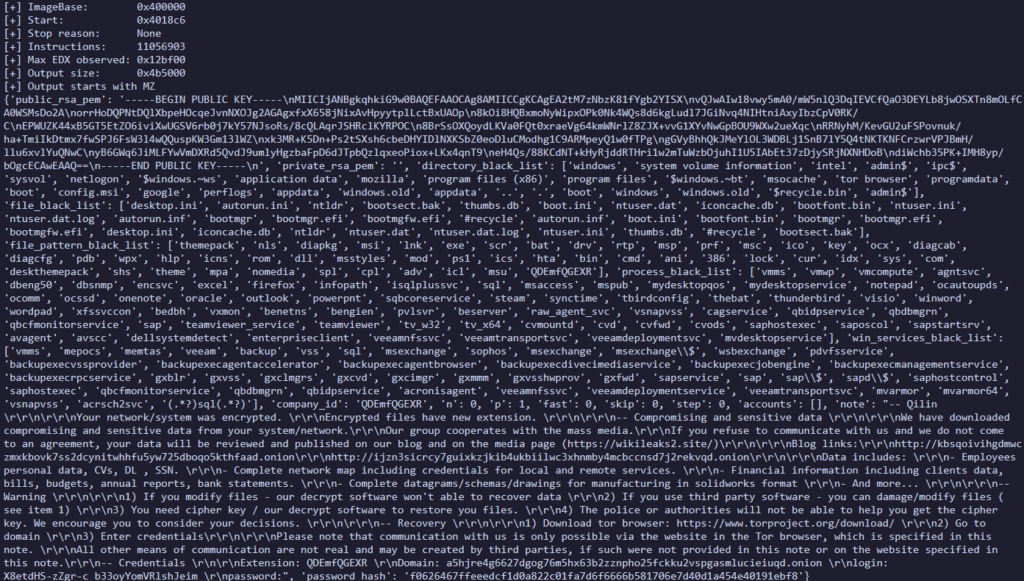
Each year, the Super Bowl draws one of the largest live audiences of any global sporting event, with tens of thousands of spectators attending in person and more than 100 million viewers expected to watch worldwide. Super Bowl LX, taking place on February 8, 2026 at Levi’s Stadium, will feature the Seattle Seahawks and the New England Patriots, with Bad Bunny headlining the halftime show and Green Day performing during the opening ceremony.

Beyond the game itself, the Super Bowl represents one of the most influential commercial and media stages in the world, with major brands investing in some of the most expensive advertising time of the year. The scale, visibility, and economic significance of the event make it an attractive target for threat actors seeking attention, disruption, or financial gain, underscoring the need for heightened security awareness.

Cybersecurity Considerations

At this time, Flashpoint has not observed any specific cyber threats targeting Super Bowl LX. Despite the absence of overt threats, it remains possible that threat actors may attempt to obtain personal information—including financial and credit card details—through scams, malware, phishing campaigns, or other opportunistic cyber activity.

High-profile events such as the Super Bowl have historically been leveraged as bait for cyber campaigns targeting fans and attendees rather than league infrastructure. In October 2024, the online store of the Green Bay Packers was hacked, exposing customers’ financial details. Previous incidents also include the February 2022 “BlackByte” ransomware attack that targeted the San Francisco 49ers in the lead-up to Super Bowl LVI.

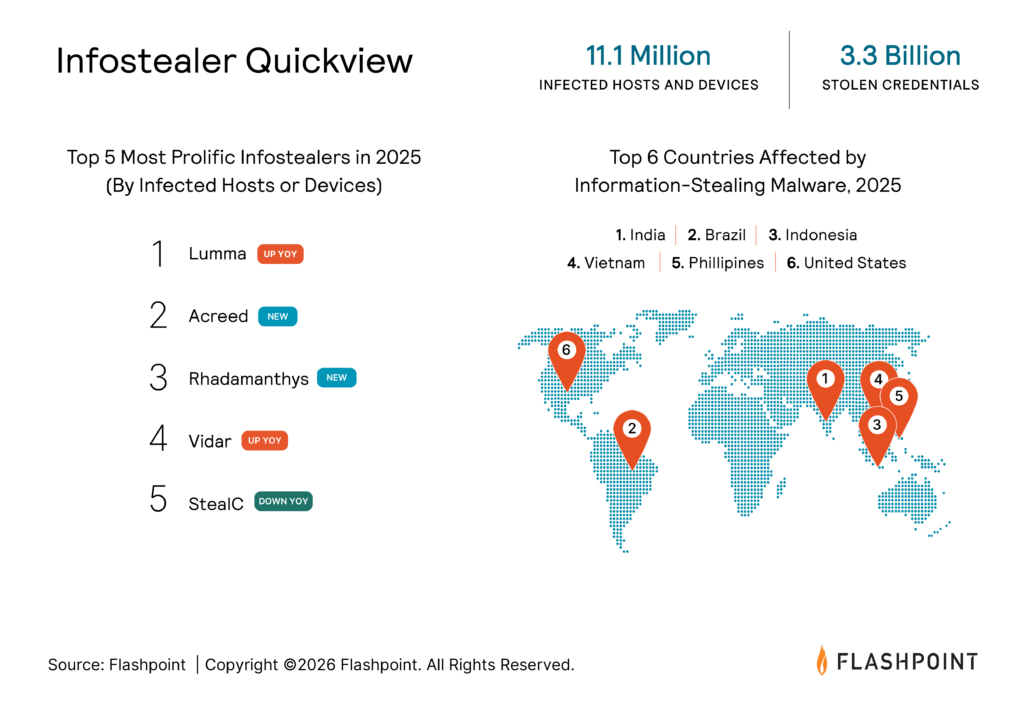
Although Flashpoint has not identified any credible calls for large-scale cyber campaigns against Super Bowl LX at this time, analysts assess that cyber activity—if it occurs—is more likely to focus on fraud, impersonation, and social engineering directed at ticket holders, travelers, and high-profile attendees.

Online Sentiment

Flashpoint is currently monitoring online sentiment ahead of Super Bowl LX. At the time of publishing, analysts have identified pockets of increasingly negative online chatter related primarily to allegations of federal immigration enforcement activity in and around the event, as well as broader political and social tensions surrounding the Super Bowl.

Online discussions include calls for protests and boycotts tied to perceived Immigration and Customs Enforcement (ICE) involvement, as well as controversy surrounding halftime and opening ceremony performers. While sentiment toward the game itself and associated events remains largely positive, Flashpoint continues to monitor for escalation in rhetoric that could translate into real-world activity.

Potential Physical Threats

Protests and Boycotts

Flashpoint analysts have identified online chatter promoting protests in the Bay Area in response to allegations that Immigration and Customs Enforcement (ICE) agents will conduct enforcement operations in and around Super Bowl LX. A planned protest is scheduled to take place near Levi’s Stadium on February 8, 2026, during game-day hours.

At this time, Flashpoint has not identified any calls for violence or physical confrontation associated with these actions. However, analysts cannot rule out the possibility that demonstrations could expand or relocate, potentially causing localized disruptions near the venue or surrounding infrastructure if protesters gain access to restricted areas.

In addition, Flashpoint has identified online calls to boycott the Super Bowl tied to both the alleged ICE presence and controversy surrounding the event’s halftime and opening ceremony performers. Flashpoint has not identified any chatter indicating that players, NFL personnel, or affiliated organizations plan to boycott or disrupt the game or related events.

Terrorist and Extremist Threats

Flashpoint has not identified any direct or credible threats to Super Bowl LX or its attendees from violent extremists or terrorist groups at this time. However, as with any high-profile sporting event, lone actors inspired by international terrorist organizations or domestic violent extremist ideologies remain a persistent risk due to the scale of attendance and global media attention.

Super Bowl LX is designated as a SEAR-1 event, necessitating extensive interagency coordination and heightened security measures. Law enforcement presence is expected to be significant, with layered security protocols, strict access control points, and comprehensive screening procedures in place throughout Levi’s Stadium and surrounding areas. Contingency planning for crowd management, emergency response, and evacuation scenarios is ongoing.

Mitigation Strategies and Executive Protection

Given the absence of specific, identified threats, mitigation strategies for key personnel attending Super Bowl LX focus on general best practices. Security teams tasked with executive protection should remove sensitive personal information from online sources, monitor open-source and social media channels, and establish targeted alerts for potential threats or emerging protest activity.

Physical security teams and protected individuals should also familiarize themselves with venue layouts, emergency exits, nearby medical facilities, and law enforcement presence, and remain alert to changes in crowd dynamics or protest activity in the vicinity of the event.

The nearest medical facilities are:

  • O’Connor Hospital (Santa Clara Valley Healthcare)
  • Kaiser Permanente Santa Clara Medical Center
  • Santa Clara Valley Medical Center
  • Valley Health Center Sunnyvale

Several of these facilities offer 24/7 emergency services and are located within a short driving distance of the stadium.

The primary law enforcement facility near the venue is:

  • Santa Clara Police Department

As a SEAR-1 event, extensive coordination is expected among local, state, and federal law enforcement agencies throughout the Bay Area.

    Stay Safe Using Flashpoint

    Although there are no indications of any credible, immediate threats to Super Bowl LX or attendees at this time, it is imperative to be vigilant and prepared. Protecting key personnel in today’s threat environment requires a multi-faceted approach. To effectively bridge the gap between online and offline threats, organizations must adopt a comprehensive strategy that incorporates open source intelligence (OSINT) and physical security measures. Download Flashpoint’s Physical Safety Event Checklist to learn more.

    Request a demo today.

    •  

    How China’s “Walled Garden” is Redefining the Cyber Threat Landscape

    Blogs

    Blog

    How China’s “Walled Garden” is Redefining the Cyber Threat Landscape

    In our latest webinar, Flashpoint unpacks the architecture of the Chinese threat actor cyber ecosystem—a parallel offensive stack fueled by government mandates and commercialized hacker-for-hire industry.

    SHARE THIS:
    Default Author Image
    January 30, 2026

    For years, the global cybersecurity community has operated under the assumption that technical information was a matter of public record. Security research has always been openly discussed and shared through a culture of global transparency. Today, that reality has fundamentally shifted. Flashpoint is witnessing a growing opacity—a “Walled Garden”—around Chinese data. As a result, the competence of Chinese threat actors and APTs has reached an industrialized scale.

    In Flashpoint’s recent on-demand webinar, “Mapping the Adversary: Inside the Chinese Pentesting Ecosystem,” our analysts explain how China’s state policies surrounding zero-day vulnerability research have effectively shut out the cyber communities that once provided a window into Chinese tradecraft. However, they haven’t disappeared. Rather, they have been absorbed by the state to develop a mature, self-sustaining offensive stack capable of targeting global infrastructure.

    Understanding the Walled Garden: The Shift from Disclosure to Nationalization

    The “Walled Garden” is a direct result of a Chinese regulatory turning point in 2021: the Regulations on the Management of Security Vulnerabilities (RMSV). While the gradual walling off of China’s data is the cumulative result of years of implementing regulatory and policy strategies, the 2021 RMSV marks a critical turning point that effectively nationalized China’s vulnerability research capabilities. Under the RMSV, any individual or organization in China that discovers a new flaw must report it to the Ministry of Industry and Information Technology (MIIT) within 48 hours. Crucially, researchers are prohibited from sharing technical details with third parties—especially foreign entities—or selling them before a patch is issued.

    It is important to note that this mandate is not limited to Chinese-based software or hardware; it applies to any vulnerability discovered, as long as the discoverer is a Chinese-based organization or national. This effectively treats software vulnerabilities as a national strategic resource for China. By centralizing this data, the Chinese government ensures it has an early window into zero-day exploits before the global defensive community. 

    For defenders, this means that by the time a vulnerability is public, there is a high probability it has already been analyzed and potentially weaponized within China’s state-aligned apparatus.

    The Indigenous Kill Chain: Reconnaissance Beyond Shodan

    Flashpoint analysts have observed that within this Walled Garden, traditional Western reconnaissance tools are losing their effectiveness. Chinese threat actors are utilizing an indigenous suite of cyberspace search engines that create a dangerous information asymmetry, allowing them to peer at defender infrastructure while shielding their own domestic base from Western scrutiny.

    While Shodan remains the go-to resource for security teams, Flashpoint has seen Chinese threat actors favor three IoT search engines that offer them a massive home-field advantage:

    • FOFA: Specializes in deep fingerprinting for middleware and Chinese-specific signatures, often indexing dorks for new vulnerabilities weeks before they appear in the West.
    • Zoomai: Built for high-speed automation, offering APIs that integrate with AI systems to move from discovery to verified target in minutes.
    • 360 Quake: Provides granular, real-time mapping through a CLI with an AI engine for complex asset portraits.

    In the full session, we demonstrate exactly how Chinese operators use these tools to fuse reconnaissance and exploitation into a single, automated step—a capability most Western EDRs aren’t yet tuned to detect.

    Building a State-Aligned Offensive Stack

    Leveraging their knowledge of vulnerabilities and zero-day exploits, the illicit Chinese ecosystem is building tools designed to dismantle the specific technologies that power global corporate data centers and business hubs.

    In the webinar, our analysts explain purpose-built cyber weapons designed to hunt VMware vCenter servers that support one-click shell uploads via vulnerabilities like Log4Shell. Beyond the initial exploit, Flashpoint highlights the rising use of Behinder (Ice Scorpion)—a sophisticated web shell management tool. Behinder has become a staple for Chinese operators because it encrypts command-and-control (C2) traffic, allowing attackers to evade conventional inspection and deep packet analytics.

    Strengthen Your Defenses Against the Chinese Offensive Stack with Flashpoint

    By understanding this “Walled Garden” architecture, defenders can move beyond generic signatures and begin to hunt for the specific TTPs—such as high-entropy C2 traffic and proprietary Chinese scanning patterns—that define the modern Chinese threat actor.

    How can Flashpoint help? Flashpoint’s cyber threat intelligence platform cuts through the generic feed overload and delivers unrivaled primary-source data, AI-powered analysis, and expert human context.

    Watch the on-demand webinar to learn more, or request a demo today.

    Request a demo today.

    The post How China’s “Walled Garden” is Redefining the Cyber Threat Landscape appeared first on Flashpoint.

    •  

    Why Effective CTEM Must be an Intelligence-Led Program

    Blogs

    Blog

    Why Effective CTEM Must be an Intelligence-Led Program

    Continuous Threat Exposure Management (CTEM) is a continuous program and operational framework, not a single pre-boxed platform. Flashpoint believes that effective CTEM must be intelligence-led, using curated threat intelligence as the operational core to prioritize risk and turn exposure data into defensible decisions.

    SHARE THIS:
    Default Author Image
    January 6, 2026

    Continuous Threat Exposure Management (CTEM) is Not a Product

    Since Gartner’s introduction of CTEM as a framework in 2022, cybersecurity vendors have engaged in a rapid “productization” race. This has led to inconsistent market definitions, with a variety of vendors from vulnerability scanners to Attack Surface Management (ASM) providers now claiming to be an “exposure management” solution.

    The current approach to productizing CTEM is flawed. There is no such thing as a single “exposure management platform.” The enterprise reality is that most enterprises buy three or more products just to approximate what CTEM promises in theory. Even with these technologies, organizations still require heavy lifting with people, process, and custom integrations to actually make it work.

    The Exposure Stack: When One Platform Becomes Three (or More)

    A functional CTEM approach typically requires multiple platforms or tools, including: 

    • Continuous Penetration/Exploitation Testing & Attack Path Analysis for continuous pentesting, attack path validation, and hands-on exposure validation.
    • Vulnerability and Exposure Management for vulnerability scanning, exposure scoring, and asset risk views.
    • Intelligence for deep, curated vulnerability, compromised credentials, card fraud, and other forms of intelligence that goes far beyond the scope of technology-based “management platforms”.

    In some cases, organizations may also use an ASM vendor for shadow IT discovery, a CMDB for asset context, and ticketing integrations to drive remediation. This multi-platform model is the rule, not the exception. And that raises a hard truth: if you need three or more products, plus a dedicated team to implement CTEM, you need an intelligence-led CTEM program.

    CTEM is an Operational Discipline, Not a Single Product

    The narrative that CTEM can be packaged into a single product breaks down for three critical reasons:

    1. CTEM is a Program, Not a Platform

    You cannot buy a capability that requires full-stack asset visibility, contextualized threat actor data, real-world validation, and remediation orchestration from one tool. Each component spans a different domain of expertise and data. A vulnerability scanner, alone, cannot validate exploitability, a pentest service has a tough time scaling to daily monitoring, and generic threat intelligence feeds cannot provide critical business context.

    However, CTEM requires orchestration of all these components in one operational loop. No single product delivers this comprehensively out of the box; this is why CTEM must be viewed as a continuous program, not a one-size-fits-all product.

    2. Human Expertise is Irreplaceable

    Vendors often advertise automation, however, key intelligence functions are still powered by and reliant on human analysis. Even with best-in-class AI tools in place, security teams are depending on human insights for:

    • Triaging noisy CVE lists
    • Cross-referencing exposure data with asset inventories
    • Manually validating if risks are real
    • Prioritizing based on threat intelligence and internal context
    • Writing custom logic and integrations to bridge platforms together

    In other words, exposure management today still relies on human insights and expertise. So while vendors advertise “automation and intelligence,” what they’re really delivering is a starting point. Ultimately, AI is a force multiplier for threat analysts, not a replacement.

    3. Risk Without Intelligence Is Just Data

    Most platforms treat exposure like a math problem. But real risk isn’t just CVSS (Common Vulnerability Scoring System) scores or asset counts, it requires answering critical, intelligence-based questions:

    1. How likely is this vulnerability to be exploited, and what’s the impact if it is?
    2. How likely is this misconfiguration to be exploited, and what is its impact?
    3. How likely is this compromised credential to be used by a threat actor, and what is the potential impact?

    These answers require intelligence, not just data. Best-in-class intelligence provides security teams with confirmed exploit activity in the wild, context around attacker usage in APT (Advanced Persistent Threat) campaigns, and detailed metadata for prioritization where CVSS fails. That is why Flashpoint intelligence is leveraged by over 800 organizations as the operational core of exposure management, turning exposure data into defensible decisions.

    CTEM Productization vs. CTEM Reality

    If your risk strategy requires continuous penetration and exploit testing, vulnerability management, threat intelligence, and manual prioritization and validation, you’re not buying CTEM; you’re building it. At Flashpoint, we’re helping organizations build CTEM the right way: driven by intelligence, and powered by integrations and AI.

    The Intelligence-Led Future of Exposure Management

    Flashpoint treats CTEM for what it really is, as a program that must be constructed intelligently, iteratively, and contextually.

    That means:

    • Using threat and vulnerability intelligence to drive what actually gets prioritized
    • Treating scanners, ASM platforms, and pentesting as inputs, not outcomes
    • Building processes where intelligence, context, and validation inform exposure decisions, not just ticket creation
    • Investing in platform interconnectivity, not just feature checklists

    Using Flashpoint’s intelligence collections, organizations can achieve intelligence-led exposure management, with threat and vulnerability intelligence working together to provide context and actionable insights in a continuous, prioritized loop. This empowers security teams to build and scale their own CTEM programs, which is the only realistic approach in a cybersecurity landscape where no single platform can do it all.

    Achieve Elite Operation Control Over Your CTEM Program Using Flashpoint

    If you’re evaluating exposure management tools, ask yourself:

    • What happens when we find a critical vulnerability and how do we know it matters?
    • Can this platform correlate attacker behavior with our asset landscape?
    • Does it validate risk or just report it?
    • How many other tools will we need to buy just to complete the picture?

    The answers may surprise you. At Flashpoint, we’re helping organizations build CTEM the right way, driven by intelligence, powered by integration, and grounded in reality. Request a demo today and see how best-in-class intelligence is the key to achieving an effective CTEM program.

    Request a demo today.

    The post Why Effective CTEM Must be an Intelligence-Led Program appeared first on Flashpoint.

    •  

    Surfacing Threats Before They Scale: Why Primary Source Collection Changes Intelligence

    Blogs

    Blog

    Surfacing Threats Before They Scale: Why Primary Source Collection Changes Intelligence

    This blog explores how Primary Source Collection (PSC) enables intelligence teams to surface emerging fraud and threat activity before it reaches scale.

    SHARE THIS:
    Default Author Image
    December 19, 2025

    Spend enough time investigating fraud and threat activity, and a familiar pattern emerges. Before a tactic shows up at scale—before credential stuffing floods login pages or counterfeit checks hit customers—there is almost always a quieter formation phase. Threat actors test ideas, trade techniques, and refine playbooks in small, often closed communities before launching coordinated campaigns.

    The signals are there. The challenge is that most organizations never see them.

    For years, intelligence programs have leaned heavily on static feeds: prepackaged streams of indicators, alerts, and reports delivered on a fixed cadence. These feeds validate what is already known, but they rarely surface what is still taking shape. They are designed to summarize activity after it has matured, not to discover it while it is still evolving.

    Meanwhile, the real innovation in fraud and threat ecosystems happens elsewhere in invite-only Telegram channels, dark web marketplaces, and regional-language forums that update in real time. By the time a static feed flags a new technique, it is often already widespread.

    This disconnect has consequences. When intelligence arrives too late, teams are left responding to impact rather than shaping outcomes.

    How Threats Actually Evolve

    Fraudsters and threat actors do not work in isolation, they collaborate. In closed forums and encrypted channels, one actor experiments with a new login bypass, another tests two-factor authentication evasion, and a third packages those ideas into a tool or service. What begins as a handful of screenshots or code snippets quickly becomes a repeatable process.

    These shared processes often take the form of playbooks that act as step-by-step guides that document how to execute a fraud scheme or exploit a weakness. Once a playbook begins circulating, scale is inevitable. Techniques that started as limited tests turn into thousands of coordinated attempts almost overnight.

    Every intelligence or fraud analyst has experienced the moment when an unfamiliar tactic suddenly overwhelms detection systems. The frustrating reality is that the warning signs were often visible weeks earlier, they simply never made it into the static feeds teams were relying on.

    Why Static Collection Falls Short

    Static collection creates a sense of coverage, but that coverage is often shallow. Sources are fixed. Cadence is slow. Context is stripped away.

    A feed might tell you that a domain, handle, or email address is associated with a known tactic, but not how that tactic was developed, who is promoting it, or whether it has any relevance to your organization’s specific exposure. You are seeing the exhaust, not the engine.

    This lag matters. The window between a tactic being tested in a small community and being deployed at scale is often the most valuable moment for intervention. Miss that window, and response becomes exponentially more expensive.

    As threats accelerate and collaboration among adversaries increases, intelligence programs that depend solely on static inputs struggle to keep pace.

    A Different Model: Primary Source Collection

    Primary Source Collection (PSC) changes how intelligence is gathered by starting with the questions that matter most and collecting directly from the original environments where those answers exist.

    Rather than relying on a predefined list of sources or vendor-determined priorities, PSC begins with a defined intelligence requirement. Collection is then shaped around that requirement, directing analysts to the forums, marketplaces, and channels where relevant activity is actively unfolding.

    This means monitoring closed communities advertising check alteration services. It means observing invite-only groups trading identity fraud tutorials. It means collecting original posts, screenshots, files, and discussions while they are still part of an active conversation instead of weeks later in summarized form. When actors begin discussing a new bypass technique or sharing proof-of-concept screenshots, that is the moment to act, not weeks later when the same method is being resold across marketplaces.

    Primary Source Collection provides that window. It surfaces the conversations, artifacts, and early indicators that reveal what is coming next and gives teams the time they need to intervene before campaigns scale.

    This does not replace analytics, automation, or baseline monitoring. It strengthens them by feeding earlier, richer insight into downstream systems. It ensures that detection and response are informed by how threats are actually developing, not just how they appear after the fact.

    In one case, a financial institution using this approach identified counterfeit checks featuring its brand being advertised in underground marketplaces weeks before customers began reporting losses. By collecting directly from those spaces, analysts flagged the images, traced sellers, and alerted internal teams early enough to prevent further exploitation.

    That is what early warning looks like when collection is aligned with purpose.

    Making Intelligence Taskable

    One of the most important shifts enabled by Primary Source Collection is tasking.

    Traditional intelligence programs operate like autopilot. They deliver a steady stream of data, but that stream reflects the provider’s priorities rather than the organization’s evolving needs. Analysts spend valuable time triaging irrelevant information while emerging risks go unnoticed.

    In classified intelligence environments, this problem has long been addressed through tasking. Every collection effort begins with a clearly defined requirement and priorities drive collection, not the other way around.

    PSC applies that same discipline to open-source and commercial intelligence. Teams define Priority Intelligence Requirements (PIRs), such as identifying actors testing bypass methods for specific login flows, and immediately direct collection toward those needs. As priorities change, tasking changes with them.

    This transforms intelligence from a passive stream into an operational capability. Analysts are no longer waiting for someone else’s update cycle. They are shaping visibility in real time, testing hypotheses, validating concerns, and uncovering tactics before they mature.

    For leadership, this provides something more valuable than indicators: confidence that critical developments are not happening just out of sight.

    How Taskable Collection Works in Practice

    A taskable Primary Source Collection framework is dynamic by design. As stakeholder priorities shift due to a new campaign, incident, or geopolitical development, collection pivots immediately.

    In practice, this approach includes:

    • Source discovery: Identifying new, relevant sources as they emerge, using a combination of analyst expertise and automated tooling.
    • Secure access: Entering closed or restricted spaces safely and ethically through controlled environments and vetted identities.
    • Direct collection: Capturing original content directly from threat actor environments, including posts, images, and files.
    • Processing and enrichment: Applying techniques such as optical character recognition, entity extraction, and metadata tagging to transform raw material into usable intelligence.
    • Delivery and collaboration: Routing outputs into investigative workflows or directly to stakeholders to accelerate response.

    Intelligence can then mirror the agility of modern threats instead of lagging behind them.

    Why This Shift Matters Now

    Threat and fraud operations are moving faster than ever. Barriers to entry are lower. Tooling is more accessible. Collaboration rivals legitimate software development cycles.

    Defenders cannot afford to move slower than the adversaries they are trying to stop.

    Primary Source Collection is how intelligence teams keep pace. It aligns collection with mission needs, enables real-time tasking, and delivers insight early enough to change outcomes instead of just documenting them.

    The signals have always been there. What has changed is the ability to surface them while they still matter.

    See Primary Source Collection in Action

    Flashpoint supports intelligence teams across fraud, cyber, and executive protection with taskable, primary source intelligence. Request a walkthrough to see how PSC enables earlier, more confident decision-making.

    Request a demo today.

    The post Surfacing Threats Before They Scale: Why Primary Source Collection Changes Intelligence appeared first on Flashpoint.

    •  

    Beyond the Malware: Inside the Digital Empire of a North Korean Threat Actor

    Blogs

    Blog

    Beyond the Malware: Inside the Digital Empire of a North Korean Threat Actor

    In this post Flashpoint reveals how an infostealer infection on a North Korean threat actor’s machine exposed their digital operational security failures and reliance on AI. Leveraging Flashpoint intelligence, we pivot from a single persona to a network of fake identities and companies targeting the Web3 and crypto industry.

    SHARE THIS:
    Default Author Image
    December 10, 2025

    Last week, Hudson Rock published a blog on “Trevor Greer,” a persona tied to a North Korean IT Worker. Flashpoint shared additional insights with our clients back in July, and we’re now making those findings public.

    Trevor Greer, a North Korean operative, was identified via an infostealer infection on their own machine. Information-stealing malware, also known as Infostealers or stealers, are malware designed to scrape passwords and cookies from unsuspecting victims. Stealers (like LummaC2 or RedLine) are typically used by cybercriminals to steal login credentials from everyday users to sell on the Dark Web. It is rare to see them infect the machines of a state-sponsored advanced persistent threat group (APT).

    However, when adversaries unknowingly infect themselves, they can expose valuable insights into the inner workings of their campaigns. Leveraging Flashpoint intelligence sourced from the leaked logs of “Trevor Greer,” our analysts uncovered a myriad of fake identities and companies used by DPRK APTs.

    Finding Trevor Greer

    Flashpoint analysts have been tracking the Trevor Greer email address since December 2024 in relation to the “Contagious Interview” campaign, in which threat actors operated as LinkedIn recruiters to target Web3 developers, resulting in the deployment of multiple stealers compromising developer Web3 wallets. Flashpoint also identified the specific persona’s involvement in a campaign in which North Korean threat actors posed as IT freelance workers and applied for jobs at legitimate companies before compromising the organizations internally.

    ByBit Compromise

    The ByBit compromise in late February 2025 further fueled Flashpoint’s investigations into the Trevor Greer email address. Bybit, a cryptocurrency exchange, suffered a critical incident resulting in North Korean actors extorting US $1.5 billion worth of cryptocurrency. In the aftermath, Silent Push researchers identified the persona “Trevor Greer” associated with the email address trevorgreer9312@gmail[.]com, which registered the domain “Bybit-assessment[.]com” prior to the Bybit compromise.

    A later report claimed that the domain “getstockprice[.]com” was involved in the compromise. Despite these domain discrepancies, both investigations attributed the attack to North Korean advanced persistent threat (APT) nexus groups.

    Tracing the Infection

    Using Flashpoint’s vast intelligence collections, we performed a full investigation of compromised virtual private servers (VPS), revealing the actor’s potential involvement in several other operations, including remote IT work, several self-made blockchain and cryptocurrency exchange companies, and a potential crypto scam dating back to 2022.

    Flashpoint analysts also discovered that the Trevor Greer email address was linked to domains infected with information-stealing malware.

    What the Logs Revealed

    Analysts extracted information about the associated infected host from Trevor Greer, revealing possible tradecraft and tools used. Analysts further identified specific indicators of compromise (IOCs) used in the campaigns mentioned above, as well as email addresses used by the actor for remote work.

    The data painted a vivid picture of how these threat actors operate:

    Preparation for “Contagious Interviews”

    The browser history revealed the actor logging into Willo, a legitimate video interview platform. This suggests the actor was conducting reconnaissance to clone the site for the “Contagious Interview” campaign, where they lured Web3 developers into fake job interviews to deploy malware.

    Reliance on AI Tools

    The logs exposed the actor’s reliance on AI to bridge the language gap. The operator frequently accessed ChatGPT and Quillbot, likely using them to write convincing emails, build resumes, and generate code for their malware.

    Pivoting: One Node to a Network

    By analyzing the “Trevor Greer” logs, we were able to pivot to other personas and campaigns involved in the operation.

    • Fake Employment: The logs contained credentials for freelance platforms, such as Upwork and Freelancer, associated with other aliases, including “Kenneth Debolt” and “Fabian Klein.” This confirmed the actor was part of a broader scheme to infiltrate Western companies as remote IT workers.
    • Fake Companies: The data linked the actor to fake corporate entities, such as Block Bounce (blockbounce[.]xyz), a sham crypto trading firm set up to appear legitimate to potential victims. 
    • Developer Personas: The infection data linked the actor to the GitHub account svillalobosdev, which had been active in open source projects to build credibility before the attack.
    • Legitimate Platforms & Tools: Analysts observed the actor using job boards such as Dice and HRapply[.]com, freelance platforms such as Upwork and Freelancer, and direct applications through company Workday sites. To improve their resume, the actor used resumeworded[.]com or cakeresume[.]com. For conversing, the threat actor likely relies on a mix of both GPT and Quilbot, as found in infected host logins, to ensure they sound human. During interviews, analysts determined that they potentially used Speechify. 
    • Deep & Dark Web Resources: The actor also likely purchased Social Security numbers (SSNs) from SSNDOB24[.]com, a site for acquiring Social Security data.

    Disrupt Threat Actors Using Flashpoint

    The “Trevor Greer” case study illustrates a critical shift in modern threat intelligence. We are no longer limited to analyzing the malware adversaries deploy; sometimes, we can analyze the adversaries themselves.

    Using their own tools against them, Flashpoint transformed a faceless state-sponsored entity into a tangible user with bad habits, sloppy OPSEC, and a trail of digital breadcrumbs. Behind every sophisticated APT campaign is a human operator, and sometimes, they click the wrong link too. 

    Request a demo today to delve deeper into the tactics, techniques, and procedures of advanced persistent threats and learn how Flashpoint’s intelligence strengthens your defenses.

    Request a demo today.

    The post Beyond the Malware: Inside the Digital Empire of a North Korean Threat Actor appeared first on Flashpoint.

    •  

    Digital Supply Chain Risk: Critical Vulnerability Affecting React Allows for Unauthorized Remote Code Execution

    Blogs

    Blog

    Digital Supply Chain Risk: Critical Vulnerability Affecting React Allows for Unauthorized Remote Code Execution

    CVE-2025-55182 (VulnDB ID: 428930), is a severe, unauthenticated RCE impacting a major component of React and its ecosystem, putting global applications at immediate, high-fidelity risk.

    SHARE THIS:
    Default Author Image
    December 4, 2025

    The React team disclosed a critical vulnerability impacting three products in the React Server Components (RSC) that allows for unauthenticated remote code execution. 

    Flashpoint’s vulnerability research team assesses significant enterprise and supply chain risk given React’s ubiquity: the impacted JavaScript library underpins modern UIs, with 168,640 dependents and more than 51 million weekly downloads.

    How CVE-2025-55182 Works

    CVE-2025-55182 (VulnDB ID: 428930) impacts all React versions since 19.0.0, meaning that this issue has been potentially exploitable since November 14, 2024. This vulnerability stems from how React handles payloads sent to React Server Function endpoints and deserializes them.

    Flashpoint’s VulnDB entry for CVE-2025-55182

    Depending on the implementation of this library, a remote, unauthenticated threat actor could send a crafted payload that would be deserialized in a way that causes remote code execution. This would lead to a total compromise of the system hosting the application, allowing for malware such as infostealers, ransomware, or cryptojackers (cryptocurrency mining) to be downloaded.

    A working exploit for CVE-2025-55182 has already been published that is effective against some installations. In addition, Amazon has reported that two threat actors, attributed to Chinese Advanced Persistent Threat Groups (APTs), have begun to exploit this vulnerability. Those groups are:

    • Earth Lamia (STAC6451, REF0657, CL-STA-0048)
    • Jackpot Panda (iSoon, DRAGNET PANDA, Anxun Information, deepclif, Poison Carp, Houndstooth Typhoon)

    Understanding the Impact and Scope of CVE-2025-55182

    It is critical that security teams fully understand the potential downstream scope and impact so that they can fully focus on mitigation, rather than time-consuming research. While the vendor has provided a full disclosure, there are several important caveats to understand about CVE-2025-55182:

    1. Applications not implementing any React Server Function endpoints may still be vulnerable as long as it supports React Server Components.
    2. If an application’s React code does not use a server, it is not affected by this vulnerability.
    3. Applications that do not use a framework, bundler, or bundler plugins that support React Server Components are unaffected by this vulnerability.

    Additionally, several React frameworks and bundlers have been discovered to leverage vulnerable React packages in various ways. The following frameworks and bundlers are known to be affected:

    • next
    • react-router
    • waku
    • @parcel/rsc
    • @vitejs/plugin-rsc
    • rwsdk

    NPMJS.com currently shows that the react-dom package, which is effectively part of React, has 168,640 dependents. This means that an incredible number of enterprise applications are likely to be affected. Nearly every commercial application is built on hundreds, sometimes thousands of components and dependencies. Furthermore, applications coded via Vibe and similar technology are also likely to leverage React: potentially amplifying the downstream risk this vulnerability poses.

    How to Mitigate CVE-2025-55182

    For mitigation, the React library has released versions 19.0.1, 19.1.2, and 19.2.1 that resolve the issue. Flashpoint advises organizations to upgrade their respective libraries urgently. Security teams leveraging dynamic SBOMs (Software Bill of Materials) can drastically increase risk mapping and triage for deployed React versions.

    CloudFlare has upgraded their web-application firewall (WAF) to protect against CVE-2025-55182. It is available for both free and paid plans but requires that React application traffic is proxied through the CloudFlare WAF.

    To avoid confusion, security teams should ignore CVE-2025-66478. It has been rejected for being a duplicate of the preferred CVE-2025-55182.

    Mitigate Critical Vulnerabilities Using Flashpoint

    Flashpoint strongly recommends security teams treat this vulnerability with utmost urgency. Our vulnerability research team will continue to monitor this vulnerability and its downstream impacts. All updates will be provided via Flashpoint’s VulnDB

    Request a demo today and gain access to quality vulnerability intelligence that helps address critical threats in a timely manner.

    Request a demo today.

    The post Digital Supply Chain Risk: Critical Vulnerability Affecting React Allows for Unauthorized Remote Code Execution appeared first on Flashpoint.

    •  

    Flashpoint’s Top 5 Predictions for the 2026 Threat Landscape

    Blogs

    Blog

    Flashpoint’s Top 5 Predictions for the 2026 Threat Landscape

    Flashpoint’s forward-looking threat insights for security and executive teams, provides the strategic foresight needed to prepare for the convergence of AI, identity, and physical security threats in 2026.

    SHARE THIS:
    Default Author Image
    December 2, 2025

    As the global threat landscape accelerates its transformation, 2026 marks an inflection point requiring defensive strategies to fundamentally shift. The volatility observed in 2025 has paved the way for an era soon to be defined by AI-weaponized autonomy, information-stealing malware, systemic instability of public vulnerability systems, and the complete convergence of digital and physical risk.

    Flashpoint offers a unique window into these complexities, providing organizations with the foresight needed to navigate what lies ahead. Drawing from Flashpoint’s leading intelligence and primary source collections, we highlight five key trends shaping the 2026 threat landscape. These insights aim to help organizations not only understand what’s next but also build the resilience needed to withstand and adapt to emerging challenges.

    Prediction 1: Agentic AI Threats Will Weaponize Autonomy, Forcing a New Defensive Standard

    2026 will see continued evolution of AI threats, with future attacks centering on autonomy and integration. Across the deep and dark web, Flashpoint is observing threat actors move past experimentation and into operational use of illegal AI. 

    As attackers train custom fraud-tuned LLMs (Large Language Models) and multilingual phishing tools directly on illicit data, these AI models will become more capable. The criminal intent shaping their misuse will also become more sophisticated. Additionally, 2026 will see a greater marketplace for paid jailbreaking communities and synthetic media kits for KYC (Know Your Customer) bypass.

    These advancements are enabling criminals to move beyond simple tools and engage in scaled, autonomous fraud operations, leading to two major shifts:

    1. Agentic AI is becoming the true flashpoint: Threat actors will be using agentic systems to automate reconnaissance, generate synthetic identities, and iterate on fraud playbooks in near real-time. In this SaaS ecosystem, AI will help attackers leverage subscription tiers and customer feedback loops at scale.
    2. The attack surface will shift to focus on AI Integrations: Organizations are increasingly plugging LLMs into live data streams, internal tools, identity systems, and autonomous agents. This practice often lacks the same security vetting, access controls, and monitoring applied to other enterprise systems. As such, attackers will heavily target these integrations, such as APIs, plugins, and system connections, rather than the models themselves.

    The ubiquity of automation has dramatically increased attack tempo, leaving many security teams behind the curve. While automation can replace repetitive tasks across the enterprise, organizations must not make the critical mistake of substituting human judgement for AI at the intelligence level.

    This is paramount because a critical threat in 2026 is Agentic AI autonomy weaponized against soft targets—API integrations and identity systems. The only winning defense will be human-led and AI-scaled, prioritizing purposeful use to keep organizations ahead of this exponential risk.

    Josh Lefkowitz, CEO at Flashpoint

    These evolving AI threats will force a fundamental shift in defensive strategies. Defenders will have to shift to deploying systems around AI rather than trust them on their own.

    Prediction 2: Identity Compromise via Infostealers Will Become the Foundation of Every Attack

    Infostealers will become the entry point, the data broker, the reconnaissance layer, and the fuel for everything that comes after a cyberattack. This shift is already in motion and is accelerating rapidly: in just the first half of 2025, infostealers were responsible for 1.8 billion stolen credentials, an 800% spike from the start of the year. However, 2026 will redefine the malware’s role, making its most valuable output being access, rather than disruption.

    Infostealers will become the upstream event that powers the rest of the attack chain. Identity and session data will be increasingly targeted, since it gives attackers immediate access into victim environments. Ransomware, fraud, data theft, and extortion will simply be downstream ways to monetize.

    This upstream approach defines the new reality of the attack chain, which is already operational. Nearly every major stealer strain Flashpoint observes now exfiltrates the following:

    • Autofill PII (personable identifiable information)
    • Saved addresses
    • Phone numbers
    • Internal URLs
    • Browsing history
    • Cloud app tokens

    An organization’s attack surface is no longer just composed of their own networks. It is the entire digital identity of their employees and partners. This new reality requires security teams to take a new approach. Instead of attempting to block attacks, they must proactively detect compromised credentials before they are weaponized. This will be the difference between reacting to a data breach and preventing one.

    The infostealer economy has fully industrialized the attack chain, making initial compromise a low-cost commodity. Multiple security incidents in 2025 tie back to credentials found in infostealer logs. This reality has underscored the critical importance of digital trust—specifically, verifying who can access what resources. For 2026, identity is the perimeter to watch, and security teams must proactively hunt for compromised credentials before they’re weaponized.

    Ian Gray, Vice President of Intelligence at Flashpoint

    Prediction 3: CVE Volatility Will Force Redundancy in Vulnerability Intelligence

    The temporary funding crisis at CVE in April 2025 and the subsequent CISA stopgap extension through March 2026 exposed the systemic fragility of a centralized vulnerability intelligence model. With the future of the CVE/NVD system hanging in the balance, 2026 will be defined by the urgent need for redundancy and diversification in vulnerability intelligence.

    In today’s vulnerability intelligence ecosystem, nearly every organization’s vulnerability management framework relies on CVE and NVD—including its “alternatives” such as the EUVD (European Union Vulnerability Database). The CVE system has grown into a critical global cybersecurity utility, relied upon by nearly all vulnerability scanners, SIEM platforms, patch management tools, threat intelligence feeds, and compliance reports. A complete shutdown of CVE would result in a widespread loss of institutional infrastructure.

    The next generation of security needs to be built on practices that are resilient, diversified, and intelligence-driven. It should be focused on providing insights that can be used to take action such as threat actor behavior, likelihood of exploitation in the wild, relevance to ransomware campaigns, and business context. Security teams will need to leverage a comprehensive source of vulnerability intelligence such as Flashpoint’s VulnDB that provides full coverage for CVE, while also cataloging more than 100,000 vulnerabilities missed by CVE and NVD.

    Prediction 4: Executive Protection Will Remain a Critical Challenge as Cyber-Physical Threats Converge

    The continued blurring of lines between cyber, physical, and geopolitical threats will elevate the risk to organizational leadership, turning executive protection into a holistic intelligence function in 2026. The rise of information warfare combined with physical world convergence means the threat to key personnel is no longer purely digital.

    In the aftermath of the tragic December 2024 assassination of United Healthcare’s CEO, Flashpoint has seen the continued circulation and glorification of “wanted-style posters” of executives in extremist communities. Additionally, Flashpoint has seen nation-state actors participate, using espionage and influence to target high-value individuals.
    Organizations must adopt an integrated approach that connects insights from threat actor chatter and a wealth of other OSINT sources. This fusion of intelligence is essential for applying frameworks to ensure the safety of leadership and key personnel.

    Prediction 5: Extortion Shifts to Identity-Based Supply Chain Risk

    2025 was marked by several large-scale extortion campaigns, demonstrating how the threat landscape is rapidly evolving. Ransomware operations have shifted into a straight extortion play. Flashpoint has observed a surge in new entrants to the ransomware market, accompanied by a decline in the quality and decorum of ransomware groups.

    Furthermore, vishing campaigns attributed to “Scattered Spider” have highlighted weaknesses in identity, trust, and verification. Campaigns from “Scattered LAPSUS$ Hunters” have also exposed vulnerabilities in third-party integrations. These attacks culminated in extortion, showcasing that modern attacks will target trusted users and trusted applications for initial access, and will forgo ransomware in place of data access.

    As this shift continues into 2026, threat actors will increasingly focus their efforts on exploiting human behavior and identity systems. Instead of attempting to spend resources on breaking network perimeters, attackers will instead socially engineer employees to gain access to corporate systems at scale. This change in TTPs will undoubtedly greatly increase supply chain risk, especially for third parties.

    Charting a Path Through an Evolving Threat Landscape with Flashpoint Intelligence

    These five predictions highlight the transformative trends shaping the future of cybersecurity and threat intelligence. Staying ahead of these challenges demands more than just reactive measures—it requires actionable intelligence, strategic foresight, and cross-sector collaboration. By embracing these principles and investing in proactive security strategies, organizations can not only mitigate risks but also seize opportunities to enhance their resilience.

    As the threat landscape continues to rapidly evolve, staying informed and prepared are critical components of risk mitigation. With the right tools, insights, and partnerships, security teams can navigate the complexities ahead and safeguard what matters most.

    Request a demo.

    The post Flashpoint’s Top 5 Predictions for the 2026 Threat Landscape appeared first on Flashpoint.

    •  
    ❌