Undisclosed number of names and contact and reservation details accessed in latest cybercrime attempt
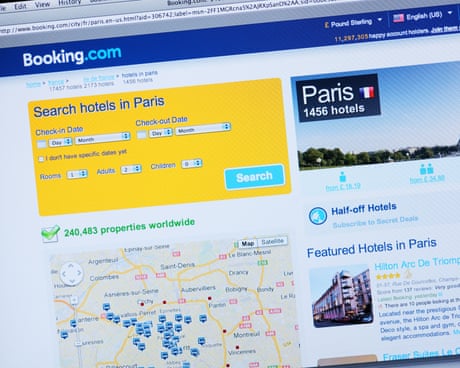
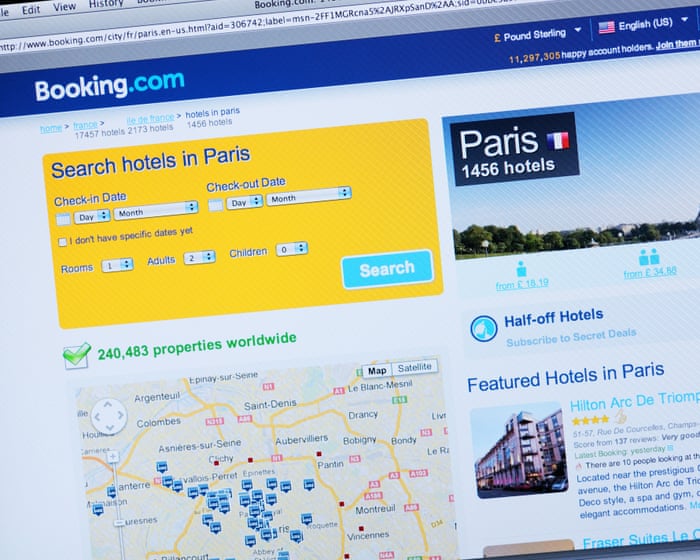
The accommodation reservation website Booking.com has suffered a data breach with “unauthorised parties” gaining access to customers’ details.
The platform said it “noticed some suspicious activity involving unauthorised third parties being able to access some of our guests’ booking information”.
Russian state has tolerated parallel probiv market for its convenience but now Ukrainian spies are exploiting it
Russia is scrambling to rein in the country’s sprawling illicit market for leaked personal data, a shadowy ecosystem long exploited by investigative journalists, police and criminal groups.
For more than a decade, Russia’s so-called probiv market – a term derived from the verb “to pierce” or “to punch into a search bar” – has operated as a parallel information economy built on a network of corrupt officials, traffic police, bank employees and low-level security staff willing to sell access to restricted government or corporate databases.
Kensington and Westminster councils investigating whether data has been compromised as Hammersmith and Fulham also reports hack
Three London councils have reported a cyber-attack, prompting the rollout of emergency plans and the involvement of the National Crime Agency (NCA) as they investigate whether any data has been compromised.
The Royal Borough of Kensington and Chelsea (RBKC), and Westminster city council, which share some IT infrastructure, said a number of systems had been affected across both authorities, including phone lines. The councils shut down several computerised systems as a precaution to limit further possible damage.
It’s become the playbook for big Australian companies that have customer data stolen in a cyber-attack: call in the lawyers and get a court to block anyone from accessing it.
CSRI finds China and Russia may be coordinating ‘grey zone’ tactics against vulnerable western infrastructure
China and Russia are stepping up sabotage operations targeting undersea cables and the UK is unprepared to meet the mounting threat, according to new analysis.
A report by the China Strategic Risks Institute (CSRI) analysed 12 incidents in which national authorities had investigated alleged undersea cable sabotage between January 2021 and April 2025. Of the 10 cases in which a suspect vessel was identified, eight were directly linked to China or Russia through flag-state registration or company ownership.
Arrest warrants issued for ringleaders after investigation by police in Europe and North America
European and North American cybercrime investigators say they have dismantled the heart of a malware operation directed by Russian criminals after a global operation involving British, Canadian, Danish, Dutch, French, German and US police.
International arrest warrants have been issued for 20 suspects, most of them living in Russia, by European investigators while indictments were unsealed in the US against 16 individuals.
Your Facebook or Instagram account can be your link to friends, a profile for your work or a key to other services, so losing access can be very worrying. Here’s what to do if the worst happens.
If you have access to the phone number or email account associated with your Facebook or Instagram account, try to reset your password by clicking on the “Forgot password?” link on the main Facebook or Instagram login screen. Follow the instructions in the email or text message you receive.
If you no longer have access to the email account linked to your Facebook account, use a device with which you have previously logged into Facebook and go to facebook.com/login/identify. Enter any email address or phone number you might have associated with your account, or find your username which is the string of characters after Facebook.com/ on your page. Click on “No longer have access to these?”, “Forgotten account?” or “Recover” and follow the instructions to prove your identity and reset your password.
If your account was hacked, visit facebook.com/hacked or instagram.com/hacked/ on a device you have previously used to log in and follow the instructions. Visit the help with a hacked accountpage for Facebook or Instagram.
Turn on two-step verification in the “password and security” section of the Accounts Centre. Use an authentication app or security key for this, not SMS codes. Save your recovery codes somewhere safe in case you lose access to your two-step authentication method.
Turn on “unrecognised login” alerts in the “password and security” section of the Accounts Centre, which will alert you to any suspicious login activity.
Remove any suspicious “friends” from your account – these could be fake accounts or scammers.
If you are eligible, turn on “advanced protection for Facebook” in the “password and security” section of the Accounts Centre.
British defence firms have reportedly warned staff not to connect their phones to Chinese-made EVs
Mobile phones and desktop computers are longstanding targets for cyber spies – but how vulnerable are electric cars?
On Monday the i newspaper claimed that British defence firms working for the UK government have warned staff against connecting or pairing their phones with Chinese-made electric cars, due to fears that Beijing could extract sensitive data from the devices.

 Login
Login