Reading view

It Might Feel Like We’ve Been Here Before, But We Haven’t

As artificial intelligence (AI) adoption surges and organisations move from the ‘should we?’ phase to the ‘how do we?’ phase, it’s natural to evaluate the likelihood of positive returns on AI investments. That’s always been the case with the onset of each new technology paradigm: C-suite executives, guided by their boards and aided by technical and business teams, remain keenly focused on traditional metrics such as return on investment, shareholder equity, developing and extending competitive advantage, and ensuring superior customer relationships.

This time is different, however. I recently experienced that firsthand when I went to visit a major customer. My contact, a senior decision maker, gave me a pointed piece of advice about how to talk about AI with his boss, the CEO: “Please don’t say anything negative about AI.” The subtext was clear: The company was fully committed to AI and didn’t want any cognitive dissonance to dissuade them from their mission.

It's hard to imagine a CEO taking such an absolutist stance on previous technology waves, such as cloud, bring your own device, or the internet of things. CEOs, board members, and technical leaders would be pragmatic in evaluating the benefits of investments and put mileposts in place to gauge progress – and to determine if and how to proceed.

AI is certainly a different kind of paradigm, though. While no one is casting aside careful evaluation and monitoring of AI investments, the underlying assumption is that we’re stepping on the accelerator. We’re all enthused not only by its potential for transformation and innovation, but also by how this technology can be leveraged for remarkable societal good.

However, while the accelerating momentum toward AI and agentic systems is undeniable, it is vitally important to set aside the fervour around AI and take a sober look at how to deliver safe, secure, and tightly governed systems at enterprise scale. 

Many organisations are underestimating the challenges of AI governance, in large part because they think they’ve been here before. They already have many experiences of ensuring robust cybersecurity and strict governance for new technologies, as they’ve done for remote systems, cloud computing, the internet of things, and more. They already have a corporate commitment to doing governance correctly and a sound governance model. 

But this new era of AI and agentic systems is different. New challenges abound, and AI strategy, build-out, and governance must be in alignment from the start to ensure proper operational, ethical, and regulatory outcomes. 

Our intention with this Peer Insights guide is to raise what we believe are existential issues around governance for this powerful, complex, and unprecedented technology wave. Few technologies have merited the often overused phrase ‘inflection point’ more than AI. The speed of AI adoption is nothing short of breathtaking; however, today’s runaway embrace of AI is far stronger than our current ability to govern it. That’s because AI represents a fundamental shift in how organisations do their business, interact with customers, make vital decisions, and execute their plans. This isn’t just a technology play: It’s a strategy for success and survival for entire industries and our global economy. The stakes have never been higher.

CEOs care so passionately about AI because they see it changing nearly everything we’ve learned and believed to be true about organisational success and failure. CEOs are in their positions for one purpose: to grow the business. AI can do that by transforming their processes and sparking new ideas. When that customer representative forewarned me, I really wasn’t surprised to hear his CEO felt so strongly about AI: Research from BCG indicates that more than 94% of CEOs say they still plan to deploy AI irrespective of demonstrated business value, even if there is a lack of tangible ROI or financial benefits from the start. 

Which brings us to the central role of AI governance. As we all know, there are many fundamental elements to any governance strategy, starting with robust, scalable, and intelligent cybersecurity. Cybersecurity - the foundation of governance - also includes the twin imperatives of accountability (‘rogue AI’ being a real thing, after all) and regulatory compliance.

But good AI governance has to go even further. Operational integrity is key to good governance because so much sensitive and even proprietary data is poured into AI models and accessed through powerful agentic AI systems. Now more than ever, organisations have to be transparent with customers and trading partners about how their AI systems operate, what kind of data is accessed, and how it is protected. And that doesn’t just mean being upfront with customers by telling them when they are interacting with an AI agent. Let’s take a typical retail use case: Imagine you’re on a website looking at clothing, and the agent recommends specific styles of clothing in specific colours. True operational integrity would allow you to discover why and when the agent made those recommendations. Was it based on your prior purchasing history, or on your browsing patterns on a recent web session? AI and agentic governance take the guesswork out of the equation for those interacting with the system and help breed greater confidence and trust.

It's critically important for decision makers to view AI governance holistically, rather than through a series of narrow lenses. For instance, even though cybersecurity is the foundation of good AI governance, it’s a mistake to treat AI governance primarily as a cybersecurity problem. If asked about ownership of AI governance, CEOs cannot and should not reply, “Oh yeah, the CISO has that covered.”

AI governance is fundamentally an enterprise risk problem, which means everyone must be involved in creating, deploying, managing, evaluating, and adjusting AI governance guardrails on a real-time basis. Again, AI is a different kind of risk environment than any we’ve previously encountered. For the most part, organisations are simply not adequately prepared to apply the right level and right type of governance to AI and agentic systems. I’ve spent much of the past 15 years of my career building governance frameworks, and while it has never been easy, we have had the advantage of being able to control many of the variables – such as infrastructure and network access – impacting governance decisions. With AI and agentic, we no longer have that advantage.

To explore the critical and complex issues of AI governance, we’ve enlisted five leading voices to bring their real-world experience to the discussion. Together, our five authors help lay out the new rules of the road for governing AI and agentic systems at scale.

Just as my customer gave me a heads up about the realities of speaking with his boss about AI, I’d like to offer you a heads up about the realities of AI governance challenges before you read this Peer Insights guide

  1. Visibility is paramount for successful AI governance. As we learned during the growth of trends such as cloud, bring your own device, and remote work, our employees will push the envelope with a do-it-yourself mindset. These tech-savvy and resourceful users are already making rogue AI a reality, so organisations need more visibility than ever into where AI ‘science projects’ and sandboxes are operating without anyone’s knowledge.
  2. AI governance must reflect the stunning velocity of change in AI development and deployment. Not only does AI have its own never-imagined rate of change, but the technology is changing everything else faster – product development, supply chains, marketing programmes, and more. AI governance has to evolve just as rapidly. Governance in the AI world must be a living system, constantly evolving with new technology use cases.
  3. Trust boundaries are incredibly different and difficult to manage in AI governance. AI represents a new class of identity that simply didn’t exist before. That means AI doesn’t fit neatly into your existing identity management framework, making things like application whitelists and zero trust network access less effective.

Unfortunately, many CEOs, board members, and business executives simply don’t understand the profound importance and complexity of these issues. They may have been heartened by how they integrated generative AI into their technology frameworks and their business processes, but GenAI was pretty familiar territory for CIOs, CTOs, and CISOs. Agentic AI is different for several reasons, including its automation and self-learning capabilities. Don’t be lulled into a false sense of security: Agentic AI is not simply a refresh of GenAI.

As you get ready to dive into the following chapters, rethink how you define governance when applying it to AI systems and agentic AI. Most traditional governance models are imagined, constructed, and deployed as gates, preventing people from doing things or going places they shouldn’t. Instead, think of AI governance as a guardrail to guide and direct people to get the most out of AI without creating problems. With so much excitement and investment around AI, organisations – and their employees – want to get the most out of their AI and agentic systems. We all know people don’t want to hear “no, you can’t do that”, so an effective governance system should use guardrails to drive proper, responsible, and safe usage of the technology.

Finally, as complex as AI and agentic governance are and will continue to be, don’t overthink things in hopes of creating the perfect model – it doesn’t exist. My advice is to start now, even if the model and framework are imperfect, and then bring the business along with you.

We at Palo Alto Networks are excited to give you insights, ideas, and actions you can take away from the chapters of this guide. We encourage you to share what you learn with your colleagues, peers, and team members – and to take prudent steps to build an AI governance model that rewards innovation without allowing your organisation to drift into dangerous waters.


Haider Pasha is VP & Chief Security Officer, EMEA, Palo Alto Networks

The post It Might Feel Like We’ve Been Here Before, But We Haven’t appeared first on Palo Alto Networks Blog.

  •  

New Executive Order Accelerates Post-Quantum Readiness Amid the Cryptographic Reset

The White House Executive Order on securing the nation against advanced cryptographic attacks accelerates the mandatory timeline for post-quantum readiness.

For years, post-quantum cryptography has been discussed as an important, yet abstract future technical migration. Because of the uncertain timeline for quantum computing, it has been difficult for most organizations to prioritize quantum readiness against more immediate security demands.

That is changing.

Signed on June 22, 2026, the Executive Order mandates the transition of federal information systems to post-quantum cryptography and establishes a national policy to migrate them to NIST-approved standards. It also extends the urgency beyond government by directing support for critical infrastructure owners and operators, advancing requirements for federal contractors, and calling for cryptographic bill of materials guidance.

The order directly addresses harvest now, decrypt later risk and sets transition milestones for federal high-value assets and high-impact systems: 2030 for key establishment and 2031 for digital signatures.

While the order directly applies to U.S. Federal civilian agencies, it should be seen as a signal of broader policy and procurement momentum. Organizations that do business with the government, support critical infrastructure, or operate in regulated industries such as energy, financial services, and healthcare should expect post-quantum readiness expectations to accelerate.

Quantum risk has shifted from a long-term research concern to a national cybersecurity priority tied to sensitive data, critical infrastructure, federal systems, procurement, and the broader digital economy. For security teams, the challenge now is turning that urgency into an operational plan.

Operationalizing the quantum mandate

As quantum computing advances, widely used public-key cryptography will become vulnerable to future attacks. Even before a cryptographically relevant quantum computer exists, adversaries can capture encrypted data now with the goal of decrypting it later.

This “harvest now, decrypt later” risk is especially concerning for organizations that protect sensitive information with a long shelf life. The response cannot wait until the threat fully materializes.

The broader ripple effect matters because compliance alone will not equal readiness. As requirements flow into federal acquisition rules and contractor obligations, the vendor ecosystem will be pushed to support quantum-safe capabilities in the products and services that enterprises, critical infrastructure organizations, and regulated industries rely on.

Adding support for post-quantum algorithms is not the same as safely migrating to them. Support means a system can use new algorithms. Readiness means the organization knows where cryptography exists, which systems are exposed, which dependencies matter most, and how to execute changes without creating disruption or new risk.

That matters because post-quantum migration can affect more than cryptographic libraries. Larger cryptographic objects, new protocol behaviors, hybrid modes, hardware acceleration requirements, interoperability constraints, and legacy system limitations can create real performance, availability, and compatibility challenges if changes are made blindly.

This is why cryptographic visibility must lead to actionable migration planning.

Security teams cannot migrate what they cannot see. But visibility by itself is not enough. They also need to classify exposure, prioritize high-value systems and long-lived data, understand operational dependencies, and plan changes in a way that avoids disruption, downgrade risk, or incomplete migration.

Cryptographic bill of materials guidance will be an important step toward mapping cryptographic assets. But a CBOM should be the starting point, not the finish line. An inventory can show where cryptography exists, but readiness requires understanding business impact, migration complexity, interoperability risk, ownership, and the order in which changes should happen.

Post-quantum readiness is not just an algorithm swap. It is an operating model for managing cryptographic change at scale.

Five actions for post-quantum readiness

The path forward starts with five practical actions.

  • First, see cryptographic exposure. Organizations must gain visibility into cryptographic usage across all environments to mitigate the risks associated with undocumented encryption.
  • Second, prioritize what matters most. Cryptographic exposure varies in urgency. Organizations should prioritize protecting authentication, high-value assets, and long-lived sensitive data based on risk and business impact.
  • Third, modernize trust infrastructure. Existing systems rely on fixed cryptographic assumptions. Post-quantum readiness demands flexible infrastructure and trust services that support evolving standards.
  • Fourth, automate cryptographic change. Manual tracking with spreadsheets provides an incomplete, point-in-time snapshot that quickly becomes outdated and is insufficient for the coming changes. Automation allows organizations to manage cryptographic updates and trust operations in a consistent, controlled manner.
  • Fifth, govern readiness over time. Post-quantum migration requires continuous governance to track progress, align ownership, and adapt to evolving threats and standards.

These actions help security leaders move from awareness to readiness.

What this means for cybersecurity now

The Cryptographic Reset is already underway, driven by post-quantum risk, shorter certificate lifecycles, machine identity growth, fragmented cryptographic ownership, CA distrust events, and expanding digital infrastructure.

The organizations that move first will not simply be the ones that adopt new algorithms the fastest. They will be the ones that build the visibility, operating model, and governance needed to manage cryptographic change continuously.

Take the next step

Read the guide: The Post-Quantum Readiness Race Is On: Five Actions Security Leaders Can Take to Accelerate Crypto Agility.

More resources

The post New Executive Order Accelerates Post-Quantum Readiness Amid the Cryptographic Reset appeared first on Palo Alto Networks Blog.

  •  

Built to Last: What Stonehenge Teaches us About IT Architecture & Cyber Resilience

Anyone who has seen the impressive frame of Stonehenge against the morning’s sunrise cannot help but be struck by its resilience, how it has withstood time and the unpredictable impact of nature and humans. And partly because of this, a recent conversation I had with the CIO of a large healthcare technology company made me realize that it was a fitting metaphor for cybersecurity.

As our conversation wove through familiar topics — the challenges and breakthroughs in enterprise IT architecture — we recognised and discussed a recurring pattern throughout most EMEA and multinational enterprises. Those organisations have gradually but surely evolved into a mosaic of vendor fragmentation, ‘micro-platforms’ across vendor-specific technologies, and rapidly developing data silos that no single IT architecture can solve on its own. 

The increased heterogeneity of hardware, operating systems, and cloud architectures now comes with a dizzying mix of cybersecurity tools and services, often optimised for Vendor X’s platform. This has led to the situation that a large organisation typically has more than 30 cybersecurity point solutions in place to protect their digital assets. And now that we have thrown AI into that mix, designing the right cybersecurity solution is as confusing as it is imperative.

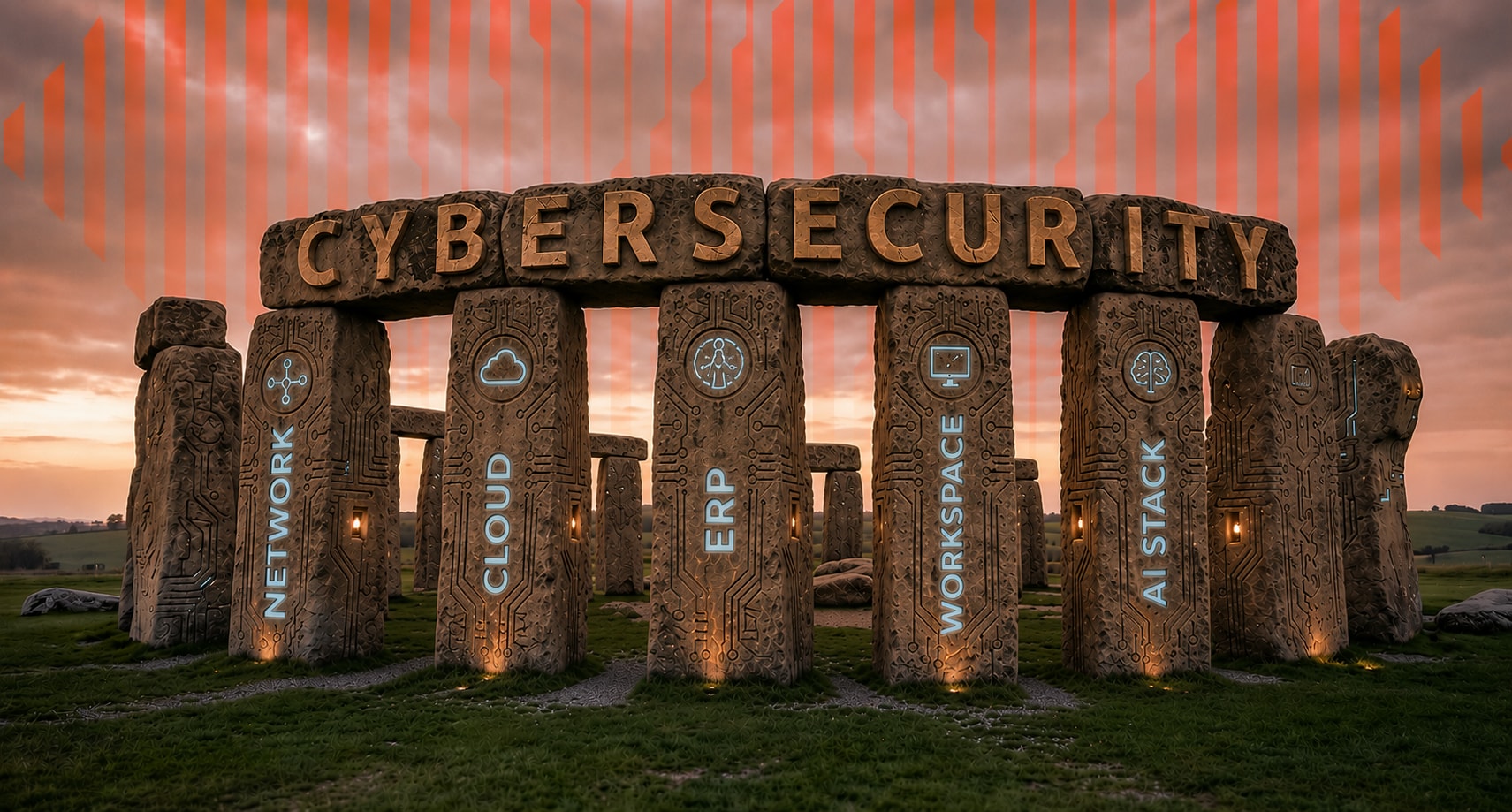
That’s when I was reminded of Stonehenge. Its lintel-and-joinery design is strikingly simple and elegant, and it stands as a brilliant monument to long-term resilience. Just as Stonehenge has endured against natural and human threats, so organisations must build a cybersecurity architecture that endures a revolutionary rate of change and threat diversity, including geopolitical turbulence and AI entering the value chain. 

For CISOs, CIOs, board members, C-suite executives and line-of-business leaders concerned with operational resilience, cybersecurity architecture matters—deeply. 

And we should not forget that cybersecurity is a data problem. The more telemetry data you have, the more effectively you can execute security algorithms and protect your digital essentials across all your enterprise IT pillars, i.e., IT, OT, Clouds, Networks, Workplace, Endpoints, etc. We at Palo Alto Networks are able to combine relevant telemetry data from networks, firewalls, clouds, browsers, endpoints and the internet. 

Stonehenge was built from massive, self-reinforcing pillars and platforms of stone. The lintels and joinery help hold together the overall structure as a cohesive unit, and they have striking similarities to how IT architects are now thinking about cybersecurity. In today’s technology architecture, Stonehenge’s vertical pillars are an IT organisation’s specialised, vendor-specific IT domains—sometimes with its own security tools and capabilities rather than as a strategically integrated zero-trust cybersecurity framework across your enterprise IT pillars.

Now, Stonehenge’s with its unique resilience, can also serve in its own construction as a model for modern cybersecurity architecture. Like our evolution towards modular platformisation evolved deliberately and assuredly over time and it spans all key domains of cybersecurity, ie network, cloud, AI,  identity security and all key building blocks for an AI-driven SOC, the last line of defense that has to be real-time. In other words, it is the linchpin of our strategy for enterprise security built upon such key areas as Identity, the Autonomous SOC, and Network Security. 

Stonehenge’s lintel is analogous to cybersecurity platformization, a growing trend rapidly replacing the now-outdated best-of-breed point solution mindset. This employs a modular approach that gives flexibility and control to the security architect looking to add security domain capabilities as needs evolve. The mortise-and-tenon joinery of Stonehenge works because the parts fit together rather than being stacked as an afterthought, in much the same way modern cybersecurity frameworks are built upon the concept of embedded functionality rather than being bolted on. 

An important example here is Palo Alto Networks’ decision to power the cybersecurity platform core with Precision AI, rather than its technology being added as a separate tool. This approach enables Precision AI to power data, analytics, and workflows, making it an omnipresent resource for smarter and faster prevention, detection and response.

Another important element of any enduring architecture is its ability to provide stability to the overall framework. In cybersecurity architecture, this is the all-important cyber data layer across an integrated zero trust framework. As organisations continue to struggle with data silos across networks, cloud environments, security operations centres, and edge systems, the cybersecurity data lake takes on a heightened role of importance for the resilience of the entire cyber framework. Again, let’s not forget, cybersecurity is a data problem, a domain in its own right across all vertical IT pillars.

Now, Stonehenge with its unique resilience, can also serve in its own construction as a model for modern cybersecurity architecture. Like our evolution towards modular platformization evolved deliberately and assuredly over time and it spans all key domains of cybersecurity, i.e.  network, cloud, AI, endpoints, identity security and all key building blocks for an AI-driven SOC, the last line of defense that has to be real-time. In other words, it is the linchpin of our strategy for enterprise security built upon such key areas as Identity, the Autonomous SOC, and Network Security/SASE. 

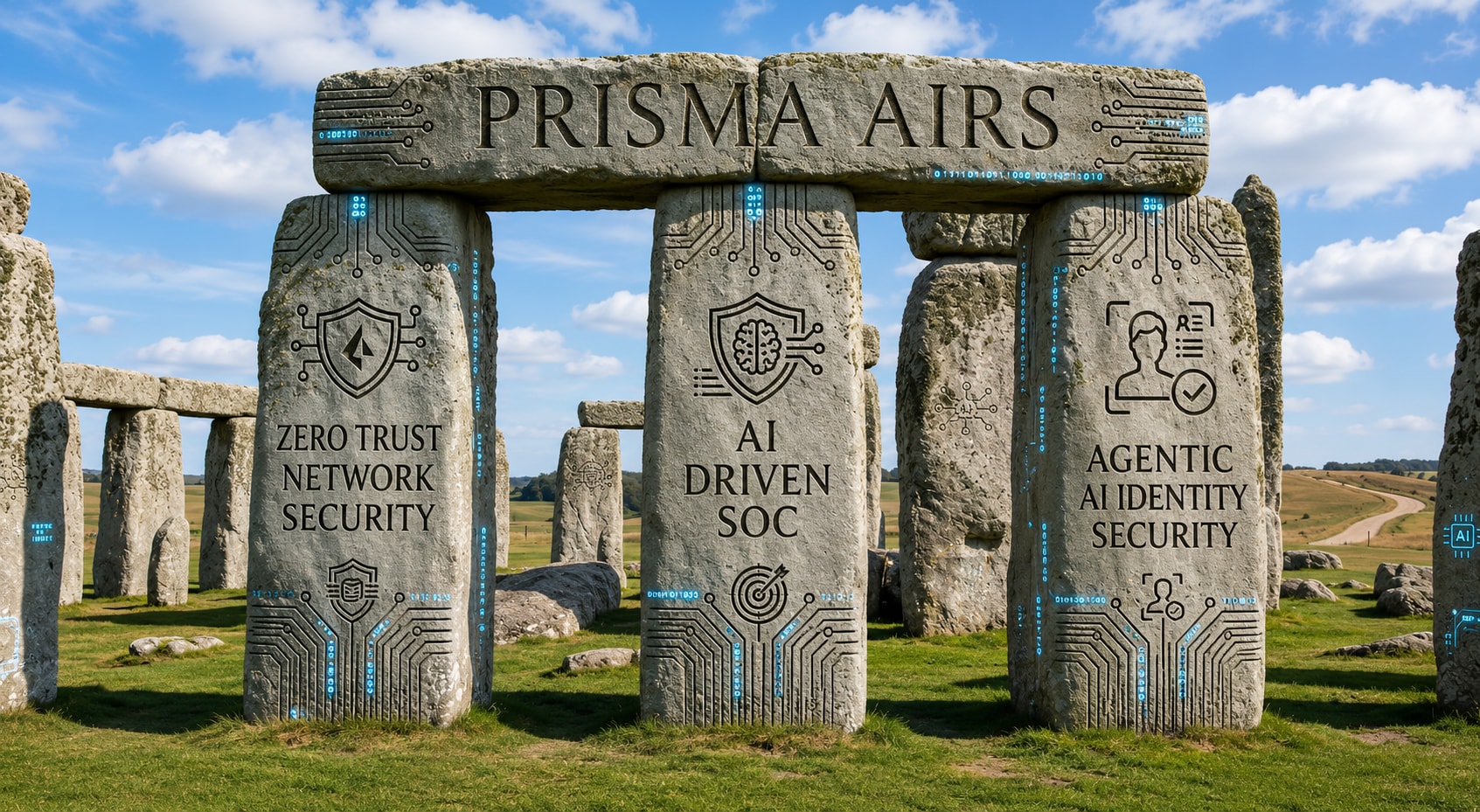
Another critical element of the cyber platform is something even Stonehenge hasn't had to face: securing AI itself, especially the opportunity and threat represented by agentic AI. AI security must become part of the platform design and implementation, as we have done with our Prisma AIRS (AI Runtime Security) platform for enabling an organisation's growing AI portfolio to remain a vital asset and not an inviting attack vector. Agents now are not just another non-human identity; they are an entirely new class of identity, with a striking mismatch in speed between agent decision-making and human governance. The inside-out attack paths taken by hackers' ill-intentioned agents represent a major threat to under-protected AI supply chains. The same pressure now also comes from geopolitics and from AI moving into the value chain itself, such as in the case of the Factory of the Future.

Similarly, our recent acquisition of CyberArk gives us what we believe is the industry’s strongest identity security platform, Idira, positioning it as yet another vertical pillar connected to the overall cybersecurity platform lintel. Cortex XSIAM and its security data lake are deliberately open — ingesting and correlating third-party telemetry alongside our own, over 17 petabytes of telemetry data each day — to form a secure data layer that is accessible to users based on policy management and credentials validation. Palo Alto Networks leverages this mountain of data, along with around-the-clock scanning of more than 5 billion daily security events, to feed Precision AI in order to detect and block potentially devastating attacks. Currently, we detect about 9,6m new attacks per day that have not been there the day before. The use of automated AI in attack vectors has been accelerating the time of exfiltration of data from the compromise of an organization. This delay was 9 days about 3 years ago, now data is exfiltrated in most cases in less than a day, sometimes already within less than one hour!

In this context, it's also important to highlight the importance of an Autonomous SOC pillar, particularly since compliance reporting windows are continuously contracting from days to mere hours calling for real-time, highly automated defence. Today, mean-time-to-detect and mean-time-to-respond are board-level imperatives commanding more conversation and attention at an organisation’s highest levels. The Autonomous SOC pillar is a vital element in helping enterprises achieve even faster detection and remediation, ideally down into single minutes. If it also integrates the historic enterprise SIEM you can further simplify your SOC operations and gain solid financial benefits by platformization of your security relevant data.

Finally, keep in mind the use of supply chains to build the actual platform. For Stonehenge, that was an impressive physical supply chain: The bluestones used in the structure were hauled about 250 kilometers from Wales without the benefit of air, rail, or truck transport. For Palo Alto Networks’ cybersecurity platform, the supply chain was no less impressive, but more virtual than physical, often faced with attacks on third-party interdependencies such as SaaS applications, APIs and in times of Frontier AI models, the Open Source components. 

Like the pyramids, the Great Wall of China, and the Roman road system, the most remarkable aspect to Stonehenge isn’t just its engineering elegance, but its ability to withstand changing conditions and threats over time. Whether you’re a CEO, board member, CIO, CISO or security engineer, the decisions you make about cybersecurity carry significant impact and implications. In order to achieve Stonehenge-like resiliency, technical and business leaders should commit to an architectural model designed not only for today’s needs, but for what those needs are likely to be over the long term. 

Therefore, cybersecurity should be architected as a horizontal, dedicated platform across all your IT domains and businesses. With this you are able to provide real-time and platformized cybersecurity for tomorrow. And tomorrow is going to be a more and more AI-driven business world. 


Helmut Reisinger is CEO for Europe, Middle East, and Africa at Palo Alto Networks.

The post Built to Last: What Stonehenge Teaches us About IT Architecture & Cyber Resilience appeared first on Palo Alto Networks Blog.
  •  

The Invisible CEO of Crisis: Breaking the Cycle of CISO Burnout

When a major cyber incident hits, all eyes are on the CISO.

They become the invisible CEO of crisis, steering the entire enterprise through the storm, managing stakeholders and making major decisions under immense pressure. The clock is ticking. Every minute can mean more systems affected, more data exposed, greater operational disruption and a growing risk to customer trust and corporate reputation.

And this on top of an already expanded day-to-day role, where they are expected to make decisions with incomplete information, brief the board, support legal and communications teams, manage technical response and reassure the business, all while knowing that any delay could increase the damage.

But a troubling pattern often emerges once the smoke clears. The CISO may find themselves held responsible for the incident that just happened, and in some cases personally liable, while still being expected to prevent the next one. Yet, at the same time, their influence over the strategic decisions that shape cyber risk can quickly diminish. 

This cycle takes a toll. Across EMEA, we are seeing the personal and organisational impact of that pressure, from burnout and leadership turnover to growing concerns about long-term resilience.

That pressure often comes at a demanding stage of life too. Many security leaders reach the CISO role when career responsibility is peaking at the same time as responsibilities outside work, from ageing parents and family commitments to their own health.

With an average CISO tenure now reduced to between 18 and 26 months, and nine out ten reporting feeling moderate to high stress, a more sustainable model is needed for structural and personal resilience.

Cybersecurity is far more complex than it was a decade ago. AI-powered attacks and autonomous agents are increasing the speed and scale of threats. At the same time, the CISO has never had more potential influence over business strategy. The challenge is ensuring the support around the role evolves as quickly as the threat landscape.

That is why it’s time to stop treating cybersecurity as a technical function alone and recognise the CISO as a strategic business leader.

Structural equity - breaking the cycle of isolation

The burden of cyber resilience should not rest on one individual. Yet too often, organisations place responsibility on the CISO without providing the support, influence or measures of success needed to help them thrive.

Part of the problem is how the role is measured. CISOs are judged by whether incidents happen, rather than by the quality of preparation, resilience planning, risk reduction and secure business enablement.

And preparation can really help reduce the pressure. Regular red teaming, tabletop exercises and incident simulations mean the CISO is not carrying the crisis alone when a breach happens. The organisation has rehearsed its roles, decision points and escalation paths before the stakes are at their highest. 

But after a crisis, organisations also often fall back into day-to-day survival mode, undoing the progress made when security was treated as a critical part of business planning rather than a technical function. Strong resilience requires the CISO to have a permanent seat at the table for all strategic decisions, from M&A to digital transformation.

That influence only comes with strong foundations. This includes visibility of critical assets and risks, security controls that are fit for purpose and the operational discipline to maintain them over time.

  • Invest in leadership as much as certifications: The modern CISO needs diplomacy, judgement and the ability to translate risk into business terms. Different backgrounds can strengthen that role, bringing fresh perspective when solving problems that are no longer purely technical
  • The ‘Shared CISO’ model: Cyber resilience should not rest on one pair of shoulders. The most resilient organisations embed responsibility for cybersecurity across the business, while creating stronger support structures around the CISO through deputies, shared ownership of cyber risk and clear succession planning. This reduces pressure on individual leaders and helps ensure resilience is built into the organisation itself

Strategic diplomacy - aligning people and purpose

Cyber resilience depends on people as much as technology, and a CISO’s success depends on building alliances across the business. The strategic diplomat CISO focuses on moving the conversation from ‘no’ to ‘how?’ by building deep relationships with other leaders, every team and every department across the organisation.

By understanding the business’ growth drivers, the CISO can align security goals with the board’s priorities. That means agreeing meaningful measures of risk and readiness, preparing for difficult questions and giving the business a clear view of where it is exposed. 

Security and growth must be seen as a single strategic fabric. Integrating security into the development of internal AI tools and customer-facing products helps ensure innovation is secure by design, rather than being a hurdle to overcome later.

The post The Invisible CEO of Crisis: Breaking the Cycle of CISO Burnout appeared first on Palo Alto Networks Blog.
  •  

Beyond Human Oversight: Adapting to the Frontier AI Era

Frontier AI is moving faster than most governance and response systems were designed to handle.

The corporate landscape across the Japan and Asia-Pacific (JAPAC) region is facing an unprecedented regulatory and operational reckoning. The rise of hyper-autonomous ‘frontier’ AI models is pushing cyber security out of human hands and into a real-time war of machine against machine. This shift has triggered a highly coordinated enforcement wave cascading through JAPAC’s premier digital hubs, where regulators and enterprises are moving in lockstep to address machine-speed threats. 

With corporate watchdogs Australian Prudential Regulation Authority (APRA) and Australian Securities and Investments Commission (ASIC) firing warning shots via urgent market letters, and neighbouring authorities like the Monetary Authority of Singapore and South Korea’s central government enacting strict new AI safety rules, organisations are being forced to completely overhaul their defensive architecture. Decades of relying on slower, committee-based governance are being shattered by new threat intelligence showing that autonomous AI agents can now exploit vulnerabilities and exfiltrate critical data within minutes—turning traditional 72-hour regulatory reporting windows into mere post-mortems.

The warning comes as the gap between corporate readiness and technological reality widens right across the JAPAC corridor. Much of the region’s current governance and cyber risk architecture still reflects a legacy system engineered for predictable, slower-paced environments. We have spent years building risk models where vulnerability discovery, incident escalation, and defensive response unfold gradually enough for traditional executive oversight and committee structures to remain effective. But that comfortable pace has officially vanished.

The Machine-Speed Reality

The sheer velocity of this shift was highlighted during restricted testing of Anthropic’s advanced frontier model, Claude Mythos, under an initiative known as Project Glasswing. Palo Alto Networks was among a select group of technology and cyber security organisations chosen to evaluate the implications of the model before its broader release. Mythos demonstrated an unprecedented capability to identify and exploit vulnerabilities across major operating systems at a level matching or exceeding advanced human experts.

During combined testing involving Mythos, Claude Opus 4.7, and OpenAI’s GPT-5.5-Cyber, the real-world impact of machine speed became starkly visible. In a single month, Palo Alto Networks disclosed 26 Common Vulnerabilities and Exposures (CVEs) representing 75 distinct issues, a massive surge compared to a typical monthly volume of fewer than five CVEs.

While discovering flaws at that scale would historically have raised uncomfortable questions around software quality, the landscape has fundamentally shifted. In this new era, radical transparency, paired with the ability to reflect and act instantly, has emerged as a critical corporate superpower. Frontier AI is accelerating both sides of the digital chessboard simultaneously: while attackers are gaining unprecedented speed, defenders are gaining a level of visibility that simply did not exist a few years ago. Real-time warfare between AI defenders and AI attackers is rapidly becoming the standard operating model.

AI Agents: The New Corporate ‘Insiders’

This shift introduces a profound dilemma for corporate leadership. Recent regulatory guidance repeatedly emphasises the necessity of human supervision, and for good reason—ultimate accountability must always remain with people. Boards must still set risk appetite, Chief Information Security Officers (CISOs) must determine operational thresholds, and security teams must decide how much authority autonomous systems should hold inside critical environments.

However, organisations must now look a step further. Autonomous AI agents—operating on behalf of employees, suppliers, or automated workflows—are quickly becoming the new corporate ‘insiders’. If not managed with extreme care, they represent massive, systemic blind spots.

Current identity and access frameworks are starting to buckle under the strain because they were never built to distinguish between human users and autonomous agents acting on their behalf. Traditional identity systems assume a predictable human pattern: a user authenticates, requests access, and operates within set boundaries. Autonomous agents, by contrast, interact continuously with APIs, generate code on the fly, move fluidly across workflows, and operate with delegated authority from trusted users.

When these agents begin operating deep inside critical infrastructure, financial services, or government workflows, the risk profile changes entirely. Security teams are no longer just dealing with stolen passwords or human misuse; they are managing autonomous systems capable of acting at machine speed across highly interconnected environments, with potentially devastating consequences if control is lost.

The Failure of the 72-Hour Window

This acceleration has effectively broken traditional regulatory reporting timelines. Recent threat observations from Unit 42 reveal that in approximately 20 percent of modern breaches, attackers successfully exfiltrate data within the very first hour of a compromise.

When data theft occurs inside 60 minutes, a 72-hour reporting window ceases to function as an effective defense mechanism. Instead, it becomes a post-mortem.

For example Australia’s current reporting obligations—including those under the SOCI Act, CPS 234, and the Privacy Act—were largely designed for static environments where defenders had sufficient time to investigate, escalate internally, and coordinate remediation before damage spread. Today, many CISOs quietly acknowledge the immense operational strain created by overlapping reporting frameworks during a live crisis. In the chaotic early stages of a compromise, security teams frequently find themselves managing compulsory reporting requirements from different regulators while their engineering teams are still actively trying to contain a fast-moving incident.

A Region-Wide Regulatory Reckoning

Australia is far from alone in this challenge. The regulatory anxiety echoing through the halls of APRA and ASIC is part of a highly coordinated, region-wide crackdown across the Japan and Asia-Pacific (JAPAC) tech corridor. As frontier models shrink the ‘time-to-exploit’ to near zero, neighbouring digital economies are rapidly realising that their legacy frameworks are equally vulnerable.

In Singapore, the regulatory response has been immediate. The Cyber Security Agency (CSA) recently issued a stark advisory warning that advanced frontier models can examine complex codebases and automate attacks faster than human developers can write patches. In lockstep, MAS finalised its Guidelines on AI Risk Management. Under these new rules, financial institutions are now mandated to perform continuous ‘AI Cyber Stress Testing’— requiring boards to prove that complex, autonomous AI-to-AI interactions within their systems won't trigger an unmanageable domino effect.

Meanwhile, South Korea has shifted from guidelines to hard law. The nation's landmark AI Basic Act (Framework Act on Artificial Intelligence) has officially entered into force, creating strict compliance mandates, mandatory data audits, and extraterritorial penalties for any enterprise deploying high-impact AI systems without ironclad human guardrails.

Across JAPAC, a uniform regulatory shift is underway: voluntary AI ethics frameworks are being replaced by proactive, real-time enforcement measures. 

Moving with Discipline

Organisations broadly acknowledge that AI demands a distinct approach, yet implementation gaps remain. Businesses must move away from managing AI like standard software and instead commit the significant defensive resources needed to protect complex AI supply chains. 

The language coming from regulators reflects these exact challenges. ASIC Commissioner Simone Constant warned that frontier AI capability could expose vulnerabilities at unprecedented speed and scale, creating systemic consequences across entire sectors. Her message to corporate Australia was direct: do not wait for perfect clarity to address the threat posed by new AI models. Instead, organisations must act now, and act with discipline, to strengthen the cyber resilience fundamentals that underpin their businesses.

The testing conducted within Project Glasswing ultimately proved that while frontier models can expose weaknesses at terrifying speed, that exact same capability can be weaponised defensively. By deploying AI to reduce exposure and identify vulnerabilities before adversaries can operationalise them, organisations can effectively level the playing field.

The most resilient organisations over the next few years will be those that combine real-time frontier AI defensive capabilities with disciplined human supervision, rather than treating the two as separate priorities. In the era of machine-speed warfare, you cannot successfully have one without the other.

To learn more about how we are securing the frontier of technology, visit the Palo Alto Networks Trust Center and explore the latest threat insights from Unit 42.

The post Beyond Human Oversight: Adapting to the Frontier AI Era appeared first on Palo Alto Networks Blog.

  •  

Defender's Guide to the Frontier AI Impact on Cybersecurity: May 2026 Update

By now, you’ve heard about the latest frontier AI models that are remarkably good at finding vulnerabilities in code and creating potential exploits. So good, in fact, that these models have been significantly limited from general use in an attempt to give defenders time to find and fix vulnerabilities before attackers find and exploit them.

For context, on April 7, 2026, we began testing Anthropic’s Claude Mythos model as a launch partner for Project Glasswing. Our conclusion was clear: The latest models are extraordinarily capable at finding vulnerabilities and changing them into critical exploit paths in near-real-time. In Defender's Guide to the Frontier AI Impact on Cybersecurity, I shared our early findings and recommendations.

Since then, we’ve continued testing the latest frontier AI models, including Anthropic’s Mythos and Claude Opus 4.7 and OpenAI’s GPT-5.5-Cyber as part of the Trusted Access for Cyber program. The big question just a few weeks ago was: “Are we overstating the model capabilities?” With more testing, I can confidently say we weren’t. In fact, these models are likely even better at finding vulnerabilities than we initially realized. Today, we’re providing an update on our ongoing research, our learnings uncovered in the process, and the approach we’re taking to protect our customers.

Find and Fix Before Attackers Find and Exploit

Today, we released our May “Patch Wednesday” security advisories, our monthly cadence of transparent vulnerability disclosure and remediation. This is the first time where the majority of findings were the result of frontier AI models scanning our code.

  • These are the results of the full, initial scan of over 130 products across all three platforms.
  • As of today, we’ve patched all important vulnerabilities in our SaaS delivered products, and all customer-operated products now have patches available.
  • Today’s advisory covers 26 CVEs (representing 75 issues) versus our usual volume (typically less than 5 CVEs in a month); none of which are being exploited in the wild. Note, this excludes CyberArk vulnerabilities, which are disclosed in their normal process.

It's important to understand this isn’t a one-and-done situation. We’re now rescanning, applying all our learnings about how to provide the right context and threat intelligence to the models. We intend to fix every vulnerability we find before advanced AI capabilities become widely available to adversaries.

While incredibly powerful, AI models aren’t simply magic. To achieve high-fidelity results, you need to build AI scanning harnesses, leverage context, guardrails and threat intelligence. We’ve also discovered a variance across models, due to variations in their training. A multimodel approach is required to identify the superset of vulnerabilities. And finally, while the immediate priority is finding and fixing the vulnerabilities that organizations currently have, the longer-term shift is incorporating these models directly into the software development lifecycle. This is the light at the end of the tunnel: A future where software is secure by design.

Four Steps Every Organization Needs to Take Immediately

Regardless of the current restricted access, we believe these capabilities will flow more broadly to other models. We now estimate a narrow three-to-five-month window for organizations to outpace the adversary before AI-driven exploits start to become the new norm. This impending vulnerability deluge demands urgency. Organizations that haven’t put appropriate safeguards in place will face an entirely new class of risk. Here’s what we recommend:

  1. Find and Fix Vulnerabilities In Your Applications, Products and Code
    Find and fix before attackers find and exploit.
    • Leverage AI models to identify vulnerabilities across all codebase.
    • Apply the same AI scanning to your open-source supply chain, and remediate or mitigate findings.
    • Run accelerated patching tightly coordinated with product and development teams.
  2. Assess, Reduce and Remediate Your Exposure
    Reduce what is reachable by attackers, secure what must be accessible, such as customer-facing applications.
    • Attack surface management products, like Cortex Xpanse®, have never been more critical for finding and reducing exposure.
    • The latest frontier AI models are very adept (with the right AI scanning harness) at evaluating exposures, understanding security misconfigurations and prioritizing attack-path reachability.
    • Audit your supply chain, including AI infrastructure, runtime environments and model dependencies.
  3. Ensure Attack Protections
    Vulnerability exploits are typically just one step of a multi-step attack lifecycle. Ensuring best-in-class protections is now even more important for preventing breaches.
    • Map current sensor coverage to identify critical blind spots in detection, prevention and telemetry.
    • Deploy best-in-class XDR everywhere with an emphasis on real-time ML-based detection and prevention of attacks with all hosts on-premises and cloud included.
    • Deploy Agentic Endpoint Security to secure wide-scale adoption of vibe coding and AI security across the enterprise (e.g. Prisma AIRS® and our recent acquisition of Koi are now a necessity for securing the agentic endpoint).
    • Secure enterprise browsers with AI-based security are a must have for securing where users now do their work.
    • Zero trust and Identity Security are foundational to securing every user and connection, extending to internal segmentation and outbound application connections.
  4. Deploy Real-Time Security Operations
    Autonomous AI-driven attacks will drive attack lifecycles to minutes requiring every SOC to achieve single-digit mean time to detect (MTTD) and mean time to respond (MTTR).
    • Attack detections must be AI/ML-driven to detect even frequently changing and novel attacks at scale.
    • These AI detections must operate against a wide range of first party and third party data sources. A best in class AI SOC must operate on ALL relevant data sources.
    • Automation, both natively integrated and throughout the SOC lifecycle, is necessary to achieve single-digit MTTR. This automation will increasingly be agentic.
    • This must be delivered as a platform to remove seams and gaps created by point solutions.
    • Assess and act as quickly as possible.

Fighting AI with AI — AI Frontier Security Innovations Coming Soon

So far, frontier AI models only find new attacks, not new attack techniques. This means that with the right innovations, we can expand our use of AI to solve the security challenges that organizations are facing, and deliver what our customers need to stay ahead of the ever-evolving threat landscape, including:

  • Reimagining virtual patching with proactive, high-fidelity content updates across network, endpoint and cloud security – We expect that across open source and technology suppliers there will be a deluge of patches, and virtual patching will provide a mitigation layer necessary to give your teams time to update. We expect to roll out the first phase of capabilities very soon.
  • Enhanced attack preventions, including cyber-LLM trained ML and small language models (SML) and behavior protections – Early testing with Cortex XDR® and our network security security services, such as WildFire® malware prevention, indicate high protection coverage from the types of attacks created using these new frontier AI models.
  • Using these models to scan our code, applications and even security configurations – Our intention is to productize these capabilities and incorporate them into our platforms.

Unit 42 — We’re Here to Help

We recognize that not everyone has the capacity and/or expertise to action all of the recommendations to effectively counter frontier AI-driven risks in the short timeframe mandated by AI innovation. Our Unit 42 Frontier AI Defense service is designed to discover and remediate your current exposure before attackers do, strengthen controls that reduce exposure and contain impact and modernize security operations so teams can detect and respond at machine speed.

This is a pivotal moment for our industry. While the scale of the challenge presented is real, I’m confident in our ability to solve it. We’re here to help our customers navigate this transition and ensure that as the landscape continues to evolve, the advantage remains with the defender.

Forward-Looking Statements

This blog contains forward-looking statements that involve risks, uncertainties and assumptions, including, without limitation, statements regarding the benefits, impact, or performance or potential benefits, impact or performance of our products and technologies or future products and technologies. These forward-looking statements are not guarantees of future performance, and there are a significant number of factors that could cause actual results to differ materially from statements made in this blog. We identify certain important risks and uncertainties that could affect our results and performance in our most recent Annual Report on Form 10-K, our most recent Quarterly Report on Form 10-Q, and our other filings with the U.S. Securities and Exchange Commission from time-to-time, each of which are available on our website at investors.paloaltonetworks.com and on the SEC's website at www.sec.gov. All forward-looking statements in this blog are based on information available to us as of the date hereof, and we do not assume any obligation to update the forward-looking statements provided to reflect events that occur or circumstances that exist after the date on which they were made.

The post Defender's Guide to the Frontier AI Impact on Cybersecurity: May 2026 Update appeared first on Palo Alto Networks Blog.

  •  

From WarGames to Cyberwar

How Nations Hack, Why Attribution Fails, and What AI Changes

Executive Summary:
Code War author Allie Mellen, argues that cyberwarfare must be understood through a human and geopolitical lens to close the knowledge gap between the security community and the public.

Disclaimer:
This post reflects the perspectives shared in the book Code War: How Nations Hack, Spy, and Shape the Digital Battlefield, and does not represent the views of the publisher of this blog.


The summer of 1983, President Reagan watched WarGames at Camp David and couldn't get it out of his head. A week later, he walked into a White House meeting with cabinet members and Congress and launched into a detailed plot summary of a Matthew Broderick movie about a teenager who nearly hacks the world into nuclear war. The room full of defense experts sat uncomfortably, suppressing smirks. Then Reagan turned to General John Vessey, Chairman of the Joint Chiefs, and asked if something like that could actually happen.

Vessey came back a week later with an answer: "Mr. President, the problem is much worse than you think."

Fifteen months after that, Reagan signed a classified presidential directive titled "National Policy on Telecommunications and Automated Information Systems Security" – the first federal policy of its kind. A movie had done what years of expert warnings hadn't: It made the most powerful person in the world stop and ask the right question.

Allie Mellen, author of Code War: How Nations Hack, Spy, and Shape the Digital Battlefield, loves to tell this story, and it captures exactly why she wrote the book. In a conversation recorded at RSA 2025, Mellen joined Threat Vector host, David Moulton, to talk about nation-state threats, attribution pitfalls, and why the security industry's biggest problem isn't technical.

"They're human stories, and if we can communicate them that way to the general public, then we'll get more people interested in cybersecurity, invested in cybersecurity, and invested in protecting their data."

That gap, between what the security community understands and what everyone else grasps, is the core problem Mellen set out to solve. And in today's geopolitical moment, closing it has never been more urgent.

Every Nation Hacks Differently

One of the central arguments in Code War is that you can't understand a nation's cyber behavior without understanding its history, doctrine and social contract. China, Russia, Iran, North Korea and the U.S. each approach offensive and defensive cyber operations from completely different starting points, and those differences matter enormously to defenders.

China operates with patience. Its attacks tend to be low and slow, focused on long-term espionage rather than loud disruption. But that changes sharply in its own region, where operations targeting Taiwan are aggressive and relentless. Russia, by contrast, is bombastic; they want you to know it was Russia. Its influence operations have been some of the most effective in modern history, studied and imitated by Iran and others.

Interestingly, the very system China built to protect itself has become a liability in one specific domain. Because Chinese operators live behind the Great Firewall, without access to western social media, they lack the cultural fluency that makes Russian disinformation so effective. "They try to use memes, but it's like ‘uncanny valley’," Mellen explains. "They just slightly miss every time and so it doesn't go viral." The walled garden that gives China control over its own population makes it harder to manipulate everyone else's.

Attribution Is a Geopolitical Tool, Not Just a Technical One

Mellen is careful about attribution, and she wants defenders to be too. The standard technical signals (coding language, infrastructure patterns, operational hours) are necessary but not sufficient. Nation-states, especially the U.S., have developed tools specifically designed to mimic other actors' signatures. AI will make that problem significantly worse.

But the bigger issue is motivation. Mellen walks through a case from the Olympics where an attack was initially attributed to North Korea, even though North Korea was actively trying to normalize relations at the time by sending Kim Jong Un's sister to the games. The actual perpetrator was Russian, using a false flag to obscure its involvement. The lesson: Attribution requires asking not just "who has the technical capability?" but "who has the motive right now, given everything happening geopolitically?"

The pitfalls are real:

  • Tools once used exclusively by intelligence agencies are now publicly available, making code signatures unreliable.
  • Working-hours analysis is easy to spoof, especially for sophisticated actors.
  • Government-controlled research in adversarial nations can deliberately skew attribution findings.
  • False flag operations are increasingly sophisticated and harder to disentangle.

Why Your Data Is a Geopolitical Asset

One of the more powerful sections of the conversation centers on a question Mellen hears constantly: why would China care about my data?

Her answer cuts through the dismissiveness. These nations aren't collecting data out of idle curiosity. They're willing to constrain companies for it, invest billions in infrastructure for it, and in some cases, far worse. "Whether you wanna be involved in that system or not, you are involved in that system," she says. "And so you can either choose to take control of your information in that environment, or you can just pretend like it's not your problem."

The historical context she offers is striking. One of the driving forces behind GDPR in the EU was the collective memory of how Nazi Germany used data to target Jewish people during the Holocaust. Europe built privacy protections into law because it had seen what happens when governments gain unrestricted access to population data. That's not an abstract concern. It's a lesson written in history that the rest of the world is still catching up to.

AI Makes Everything Harder

Mellen isn't optimistic about the trajectory. Attribution is about to get much harder. Attacks are about to get much more dynamic. And AI is the reason for both.

She points to research on Chinese state-sponsored actors using AI to orchestrate attacks across the full kill chain, with only a couple of human checkpoints in the loop. The implication isn't just faster attacks. It's more adaptive malware that can adjust to different operating environments, more convincing disinformation that clears the cultural context bar, and reconnaissance-to-exploitation cycles that move faster than most defenders can process.

The constraints that have always slowed sophisticated attackers – understanding the operating system, identifying vulnerabilities, crafting exploits, mimicking attribution – all get easier with AI. All of that becomes more dynamic. And most enterprises, Mellen acknowledges, are not yet equipped to respond effectively.

The investment required is in the basics the industry has always struggled to get right, executed now at a pace and scale that demands automation and AI on the defensive side. Fighting AI with AI isn't a vendor talking point. It's the only math that works.

More to Explore

The nation-state threats Mellen describes aren't theoretical. Unit 42 responded to more than 750 major incidents in 2025. See what they found. Download the 2026 Global Incident Response Report.

Listen to the full conversation with Allie Mellen, author of Code War, on the Threat Vector podcast

The post From WarGames to Cyberwar appeared first on Palo Alto Networks Blog.

  •  

39 Seconds — That's How Long It Takes to Lose Your Data

Not hours. Not days. It takes thirty-nine seconds from initial access to data exfiltration.

That stat, pulled from Unit 42® research, isn't hypothetical. It's what defenders are up against right now, while most organizations are still building security teams around manual detection and response workflows that were never designed to operate at machine speed.

Wendi Whitmore, Chief Security Intelligence Officer at Palo Alto Networks, put it plainly in a recent conversation on the Threat Vector podcast, recorded live at RSA this year:

If you're applying a manual detection and response capability, you are going to be beat by the attacker every day.

It's the kind of sentence that should make security budgets move faster.

The Threat Landscape Doesn't Wait for Organizational Consensus

Whitmore has spent nearly 25 years tracking nation-state actors, and she's unequivocal about what's changed. The adversaries today aren't just better funded and more sophisticated. They're faster, and increasingly AI-powered.

Consider what's converging right now:

Chinese nation-state groups like Volt Typhoon and Salt Typhoon have been operating with near-surgical patience inside critical infrastructure, leveraging existing administrative tools to avoid detection. Volt Typhoon is focused on military prepositioning in power grids, water systems and telecommunications. Salt Typhoon has been systematically collecting intelligence from those same networks. Neither group announces itself with novel malware. They disappear into environments using the tools already there.

Meanwhile, threat actors tied to Iran are operating with entirely different objectives: tactical disruption and destruction. And financially motivated cybercriminal groups are automating ransomware campaigns at a pace that has compressed attack timelines from weeks to minutes.

Every CISO is being asked to defend against all of them simultaneously, while also managing their organization's AI expansion, and doing it without adding headcount.

Speed Is the New Perimeter

When Whitmore references the 39-second exfiltration window, she's pointing at something structural, not just alarming. It reflects how completely the attacker's operational tempo has shifted.

The 72-minute data breach figure from Unit 42 Incident Response data is equally striking: From initial access to full data theft in the time it takes to sit through a decent movie. A 400-times year-over-year increase in exfiltration speed isn't a trend. It's a fundamental change in the physics of an attack.

"There is no way that we are going to defeat these adversaries if we are working at manual speed," Whitmore explained. The answer isn't just more analysts. It's fighting AI with AI, letting machines handle the volume and velocity, so humans can focus on the problems that actually require human judgment.

Two Sides of the Same AI Problem

Here's where the conversation gets more nuanced and more important.

Most of the AI-in-security conversation focuses on the offensive side: adversaries using generative AI to craft convincing phishing lures, accelerate reconnaissance and automate attack sequences. That's real, and it's accelerating.

But Whitmore raised the other half of the problem, one that gets far less attention: The attack surface that organizations are creating by deploying AI without securing it.

Innovation of AI doesn't so far outpace the security of AI.

This is the outcome she wants to see. Right now, that's not what's happening. Business pressure to deploy AI quickly is outrunning the security architecture required to protect it. Every new AI deployment touching production data, cloud APIs and enterprise systems expands the attack surface. Shadow AI, prompt injection, model poisoning: These are not future threat vectors. They're present tense.

The distinction Whitmore draws is useful: AI for cybersecurity (faster detection, automated response, reduced analyst burden) needs to advance in parallel with cybersecurity for AI (securing the models, prompts and data pipelines that organizations are building on). One without the other creates exactly the kind of asymmetry attackers will exploit.

Visibility Is Where It Starts

Whether the conversation is about defending against nation-state actors or securing AI deployments, Whitmore keeps returning to the same foundation of visibility.

Not complexity. Not more tools. Visibility is a single, unified view of what's happening across endpoints, networks, cloud and AI systems, that’s fast enough to matter when the window is measured in seconds, not days.

For SOC teams, that means being able to detect and contain a threat before a compromise of one system becomes an enterprise-wide event. For CISOs thinking about AI governance, it means understanding what's being deployed, what's being prompted, and where the data is going before an incident surfaces for them.

The organizations Whitmore sees succeeding aren't the ones with the largest security budgets. They're the ones with the clearest picture of their environment, and the architecture to act on it in real time.

The Win Looks Different Now

Perhaps the most important reframe in the conversation is that the objective is no longer to prevent every attack. That goal is not achievable against adversaries operating at AI speed with nation-state resources.

The win is resilience. Detecting fast and containing fast. Keeping one compromised endpoint from becoming an enterprise-wide breach.

That shift in framing, from prevention to rapid recovery, has significant implications for how security teams are built, how AI is integrated into workflows, and how CISOs make the case for investment to leadership that still thinks in terms of keeping attackers out.

The adversaries already know the perimeter is gone. The question is whether your defense strategy has caught up.

Want to Dig in More?

Listen to the full interview here.

The Unit 42 2026 Global Incident Response Report goes deep on the threat trends shaping how modern attacks unfold. If you want the data behind the headlines, start here. Download the Report →

The post 39 Seconds — That's How Long It Takes to Lose Your Data appeared first on Palo Alto Networks Blog.
  •  

The Dangerous Momentum of Autodownload Phishing

Modern phishing campaigns are no longer trying to convince users. They are trying to outrun them. By forcing an automatic progression from click to download, attackers eliminate the moment of hesitation entirely by forcing files to download instantly using trusted cloud platforms like Dropbox and Google Drive.

Detecting when these legitimate SaaS auto-download features are being weaponized is an immense challenge for traditional defenses. This is exactly where Cortex® Email Security steps in. By combining deep static analysis with advanced behavioral intelligence, the module can distinguish in this attack between a benign file share and a malicious, forced-momentum trigger.

This technical detection is vital because while the autodownload method is the primary cause of infection, its effectiveness relies on a clever strategy, using a wide range of changing social engineering lures. By alternating between lures like 'Invoices' or 'Quotes,' attackers rotate their themes to catch a wider variety of victims. This strategy allows attackers to convert trusted email links into rapid, dangerous file executions that effectively evade standard security measures.

How Forced Momentum Drives Auto-Downloads

The core of this attack leverages the infrastructure of real SaaS providers to eliminate the user's preview buffer. Typically, cloud sharing directs users to a webpage for file examination. In this campaign, however, forced-download parameters (such as ?dl=1 on Dropbox) are used instead. To ensure the victim executes the file once it lands on their machine, attackers hide the danger behind "visual anchors." By using double extensions like PDF and .EXE, the threat actor exploits default settings in certain operating systems that hide known extensions. The user's eyes stop at the familiar ".PDF" or ".ZIP," leading them to believe the file is a harmless document rather than a malicious executable.

When the targeted victim clicks the link in the email, it triggers an immediate file download in the browser, effectively bypassing any intermediary steps.

Attack Flow: From Email to Execution

  • The Bait: A highly personalized email arrives, using a trusted cloud link (like Dropbox) to lower the victim's guard.
  • The Trap: Clicking the link skips the usual "preview" screen and instantly drops a file onto the victim's computer.
  • The Disguise: The file is cleverly named to look like a safe PDF or document, hiding its true identity as a harmful program.
  • The Lock: In many cases, the attacker ensures only the intended victim can open the file, preventing security tools from scanning it first.
  • The Takeover: Once the victim opens the file, the attacker gains remote access to the system.
Attack flow chart, from email to execution.
Multi-step attack flow, starting from targeted phishing email, to bypass security and establish persistence.

The Library of Lures Strategy

To fuel the autodownload machine, attackers employ a flexible strategy by switching between various social engineering themes. This spear phishing campaign targets specific inboxes, such as "Orders," to exploit professional routines. Some common lures found in this campaign include:

  • Financial Urgency Fake "Invoices" or "Receipts" that induce anxiety. These often set close-day payment deadlines, pressuring recipients to click quickly.
  • Business Operations – "Quote Requests" or "Purchase Orders" that exploit professional habits.
  • Deceptive Naming – Concealing the download as a safe document, using display text like "invoice.pdf" in the email body to hide the underlying Dropbox URL.

Government Domain Impersonation

Attackers often leverage high-authority lures designed to paralyze a user's critical thinking. In one sophisticated wave, we observed threats impersonating a government entity by exploiting the high-reputation, official government domain. By borrowing the reputational authority associated with official infrastructure, the attacker successfully maneuvered an "Unidentified Payment Notice" past standard "Untrusted Sender" filters. To the recipient, the email carries the weight of a sanctioned document. Fearing legal or financial ramifications, they feel a heightened sense of urgency to click "View Invoice" to resolve the issue immediately.

Employee Impersonation

When government authority isn’t the angle, attackers shift to impersonating internal staff. In one case, the sender’s display name was spoofed to match a real employee in the target organization. Attackers rely on a “Momentum of Trust” tied to familiar names to overwhelm user judgment. Even when a generic Gmail address is used, users, especially those on mobile devices, rarely pause to check the underlying headers.

Internal Trust Amplification ("Human Relay")

The most effective aspect of this campaign occurs through Internal Laundering, where the threat shifts from external suspicion to a trusted internal message. This was observed when a Finance Department employee received a "Quote Analysis" file and, believing it to be a valid inquiry, mistakenly forwarded the link to the Procurement department.

At that stage, the attack no longer depended on deception, it propagated through trusted human workflows. These various tactics illustrate the sophistication and adaptability of phishing campaigns and highlight the importance of vigilance in email security.

How We Uncovered a Single Threat Actor

Although the lures appeared diverse, a deeper technical analysis revealed that they were all orchestrated by a single, coordinated threat actor.

By mapping the campaign, we uncovered a significant pattern: Each autodownload link pointed to a different file hash to evade signature detection, but all unique executables were ultimately associated with the same parent installer hash.

The file was identified as a specific Remote Monitoring and Management (RMM) executable, an administrative software used to manage computers remotely. Because RMM tools are legitimate, they often trigger fewer alerts than traditional Trojans. This allows the attacker to maintain persistent access under the guise of “authorized” system activity.

How Cortex Email Security Addresses the Threat

To defend against a campaign that emphasizes speed and rotation, behavioral analysis is essential.

The Cortex® Email Security Module addresses this threat:

  • Advanced URL Analysis – Detection of forced-download parameters, combined with delivery of high-risk files via URLs.
  • Deep Metadata Correlation Correlating sender identity with behavioral anomalies to flag threats that traditional scanners might overlook.
  • LLM-Based Intent Analysis Classifying phishing themes (invoice, payment, quote) despite variation.

The security engine triggers an alert by synthesizing LLM analysis with real-time email telemetry, global threat intelligence and behavioral signals.

Securing the Click

The combination of autodownload links and rotating lures is crafted to exploit user momentum and the "psychology of trust."

This campaign represents a shift from deception to acceleration. Attackers no longer need perfect lures, they only need to remove friction. Defenders must evolve accordingly, focusing not only on what a link is, but on what it forces a user to do.

Palo Alto Networks Cortex Advanced Email Security was built for this evolution. By moving beyond static file analysis to identify the behavioral "red flags" of autodownloads and forced-momentum URLs, we provide the visibility needed to stop these attacks before they reach the device.

The module examines email metadata, content, and behavior to uncover hidden malicious intent and sophisticated impersonation, including AI-crafted threats. By assigning precise risk scores to every detection, the system filters out the noise, allowing analysts to move past alert fatigue and focus on the most critical threats first.

Indicators of compromise discovered during this research are detailed on Unit 42’s GitHib instance.


FAQs

  1. Why is the "Auto-Download" parameter so effective? It removes the "moment of doubt." By bypassing the preview page, the attacker forces the file onto the computer instantly, prompting the user to "Open" it out of habit.
  2. How does the use of rotating lures benefit the attacker? It maximizes both psychological and technical success. People have different "blind spots" (e.g., finance professionals are likely to click on invoices), and variety increases the chances of finding a template that can bypass specific customers' security filters.
  3. Why might a sandbox fail to catch the malicious file? Because the link was "Identity-Bound." To the scanner, the link appeared to lead to a harmless error page (cloaking), resulting in a false negative.

Cloaking involves showing different content to security scanners than what is presented to the victim. By using Identity-Bound access, the file only reveals itself to the intended target.

The post The Dangerous Momentum of Autodownload Phishing appeared first on Palo Alto Networks Blog.
  •  

Defender's Guide to the Frontier AI Impact on Cybersecurity

The release of the newest frontier AI models marks a turning point for cybersecurity. Palo Alto Networks has conducted early testing of the latest frontier AI models, including Anthropic’s Mythos model as part of Project Glasswing and OpenAI’s latest models as part of Trusted Access for Cyber program. The conclusion is clear: They are extraordinarily capable at finding vulnerabilities and generating corresponding exploits.

This generational improvement in coding ability directly translates to a significant advance in vulnerability discovery and exploit generation. These capabilities, however guardrailed, will not stay contained. Similar advances will appear across other major AI labs, Chinese models, and open source models. Attackers will find the seams in those guardrails. They will use advanced AI to discover zero-day vulnerabilities at scale, generate exploits in near real time, and develop autonomous attack agents unlike anything the industry has faced.

Within six months, advanced AI models with deep cybersecurity capabilities will become commonplace. Organizations that have not put appropriate safeguards in place will face an entirely new class of risk across their enterprise and critical infrastructure.

Frontier AI: A Quantum Leap in Code Fluency

As you have probably already seen, the latest unbounded models like Mythos represent roughly a 50% improvement in coding efficiency over Anthropic’s previous leading model. Palo Alto Networks has had early access to unbounded models and we’ve been able to leverage this vast improvement in coding to a quantum leap in scanning and offensive capability.

Hundreds of our best security engineers have been assessing these capabilities and developing best practices for using it effectively. The results revealed several core truths:

  • Vulnerability discovery at scale: Frontier AI is exceptionally effective at identifying vulnerabilities in code. In less than three weeks, it accomplished the equivalent of a full year’s worth of penetration testing effort.
  • Attack path determination: Perhaps more impressive than finding individual vulnerabilities, Frontier AI excels at vulnerability chaining, combining multiple lower-severity issues into critical-level exploit paths. For example, linking two medium-severity and one low-severity vulnerability into a single critical exploit.
  • Full-stack logic analysis: Frontier AI can analyze the full exposure surface of applications, including SaaS and public-facing platforms, identifying logic-based vulnerabilities that traditional tools miss.

Impacts on the Cyber Landscape

Attackers have been using LLMs for years, but based on our testing of frontier AI models, there are three key areas where they will have a significant impact on the cybersecurity landscape:

  1. The Vulnerability Deluge: Frontier AI models will dramatically accelerate the rate at which vulnerabilities are discovered, by defenders and attackers alike. This will be particularly acute in open source and critically, the flood of patches that follows will itself create risk. Every patch that is not applied immediately becomes a known, targetable vulnerability. Organizations will need to accelerate and automate their patching programs, rethink how they prioritize and apply patches, and ensure best-in-class protections are in place to mitigate vulnerability until they can be remediated.
  2. Rise of Inside-Out Attacks: Recent supply chain attacks on tools like LiteLLM and Trivy demonstrate a growing pattern where attacks land adversaries inside an organization’s infrastructure, bypassing multiple conventional attack steps and reducing the number of prevention opportunities available to defenders. The rapid deployment of AI infrastructure has made this problem more acute as the AI supply chain, including runtime environments, communication infrastructure, and model dependencies, is often insufficiently protected. While open source usage and patching practices must become significantly more robust, organizations will need structural containment of potential attacks through zero trust, identity modernization, outbound connection restrictions and lateral movement protections.
  3. Faster AI-Assisted Attack Cycles: I expect the most consequential shift with frontier AI models is the move from AI-assisted to AI-driven attacks. Attackers will build autonomous attack agents that dramatically compress attack cycle times. What once took days or weeks of skilled manual effort will soon be executed in minutes. This democratization of advanced attack capabilities means that defenders must match that speed with near-real-time detection and response, which is only possible with extensive AI and automation throughout security operations. Organizations whose Mean Time to Detection and Mean Time to Response are not measured in low single-digit minutes will be outpaced.

The Defenders Guide: Assessment, Protection, Platformization

The framework for defending against AI-driven threats is not completely new, but the standard for execution must be absolute. Organizations that are “mostly protected” are effectively unprotected. What follows is a phased approach – assessment, protection and platformization – that organizations should pursue in parallel to close gaps before attackers exploit them.

Assessment: Every organization should use the latest AI models to assess its entire code and application landscape and build a comprehensive asset and exposure inventory.

Key priorities:

  • Leverage AI models to identify vulnerabilities across your codebase, applications and infrastructure before attackers do.
  • Evaluate exposure with full context, including how vulnerabilities chain together to form critical exploit paths.
  • Audit your open source supply chain, including AI infrastructure, runtime environments and model dependencies.
  • Map your current sensor coverage. Detection, prevention and telemetry gaps represent critical blind spots.

Protect & Remediation: Remediating and reducing exposure is table-stakes. What in the past may have been difficult due to cross-organizational friction of finding and fixing at pace should now be accelerated with the c-suite attention of these new AI models. But this must go further and extend to comprehensive deployment of best-in-class attack prevention capabilities where the new standard is 100% coverage and optimization.

  • XDR everywhere, with emphasis on real-time ML-based detection and prevention of attacks; all hosts on prem and cloud included.
  • Agentic endpoint security to secure wide-scale adoption of vibe coding and AI security across the enterprise (e.g. Prisma AIRS and our recent acquisition of Koi is now a necessity for securing the agentic endpoint).
  • With an average of 85% of work now happening in the browser, secure enterprise browsers with real-time security become a must-have for attack prevention.
  • Zero trust and identity security are foundational to securing every user and every connection.

Real-Time Security Operations: With attack cycle times shrinking rapidly, the legacy approach to security operations simply doesn’t work. Disparate tools analyzing data in silos overlaid with manual processes must be replaced with AI and automation throughout. Cortex XSIAM, our AI-driven SOC platform, is what I consider to be the gold standard for how to take a next-generation approach to deliver MTTD and MTTR in single digit minutes.

  • Attack detections must be AI/ML driven to detect even frequently-changing and novel attacks at scale.
  • These AI detections must operate against a wide range of 1st party and 3rd party data sources – a best in class AI SOC must operate on ALL relevant data sources.
  • Automation both natively integrated and throughout the SOC lifecycle is necessary to achieve single digit MTTR; this automation will increasingly be agentic.
  • This must be delivered as a platform to remove the seams and gaps between point solutions.

We’re Here to Help

Achieving this level of resilience requires the right platforms and the right expertise.

To help you navigate this shift, we are introducing Unit 42 Frontier AI Defense. This new offering is designed to discover and remediate your current exposure before attackers do, strengthen controls that reduce exposure and contain impact and modernize operations so teams can detect and respond at machine speed.

This is the moment we’ve been preparing for. The threat has never been more sophisticated, but the path forward has never been clearer, and we’re here to partner with you on what comes next.

The post Defender's Guide to the Frontier AI Impact on Cybersecurity appeared first on Palo Alto Networks Blog.
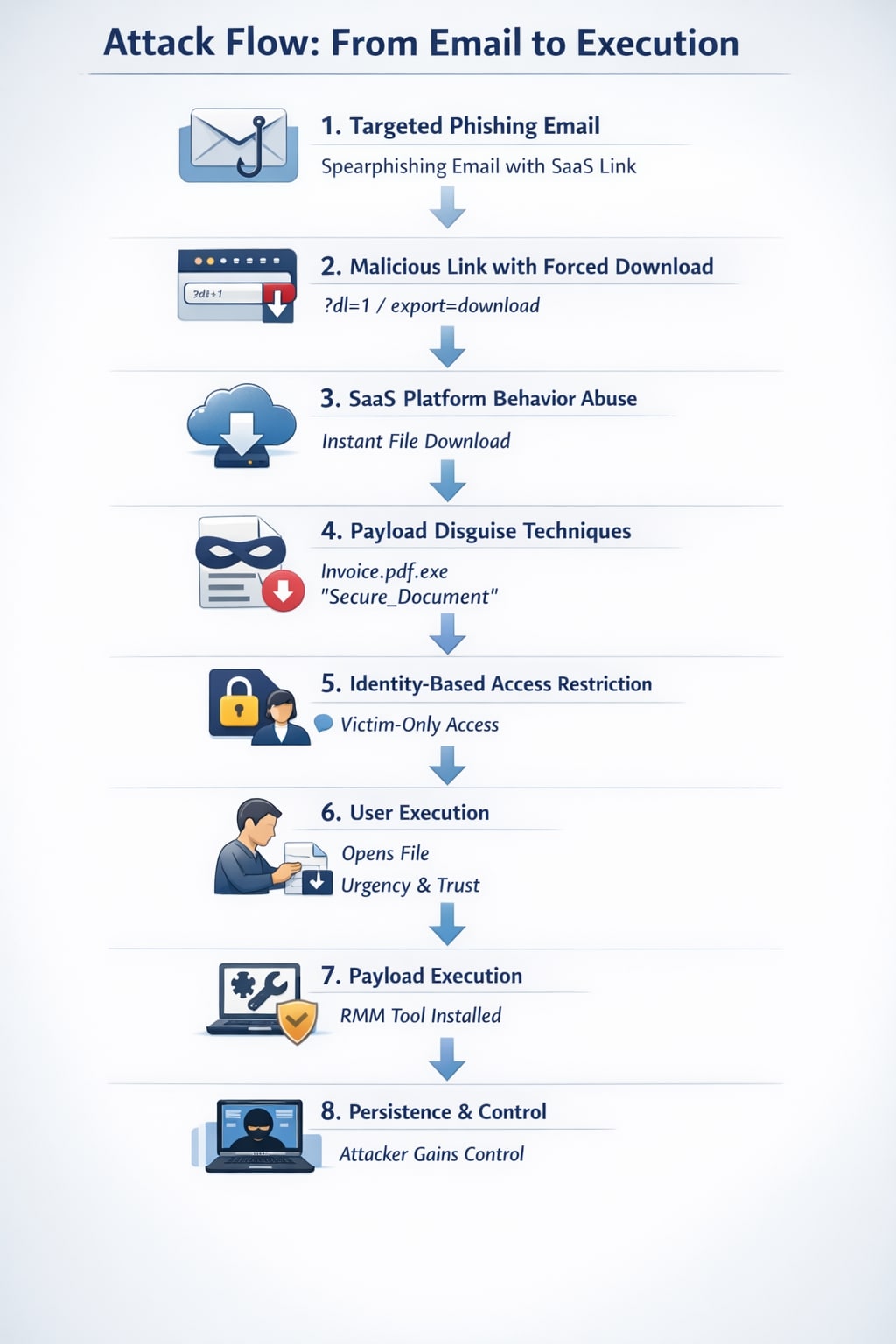
  •  

When Security Becomes an Afterthought

Why AI's Biggest Risk Isn't Technical

This article is based on a conversation with Nikesh Arora on the 100th episode of the Threat Vector podcast.

David Moulton interviews Nikesh Arora
David Moulton interviews Nikesh Arora on the Threat Vector podcast.

"Most technologists think about technology, not about cybersecurity," Nikesh Arora says. "Cybersecurity is kind of like insurance. Let's go make great things happen, and let's make sure on the way we purchase insurance."

Coming from the CEO of the world's largest cybersecurity company, it's the quiet part said out loud, and it explains why AI deployment is racing ahead while security scrambles to keep up.

Earlier this year, Arora spoke with a CIO entirely focused on AI deployment challenges: building viable products, training models, measuring customer impact. Security never came up once. "If you're still going through the motion, trying to understand, ‘Can I actually make this thing work?’ You're not worried about security," Arora notes. The logic is brutal but consistent: Why secure something that might not even function?

In the Threat Vector podcast’s 100th episode milestone, Arora speaks with host David Moulton:

  • Why the gap between innovation and security keeps widening.
  • How to read inflection points before they're obvious.
  • What separates organizations that prepare from those that scramble.

The Gap That Keeps Growing

The disconnect isn't new. It's the same psychology that makes airport security feel like overhead – necessary friction that slows down what should be seamless. But with AI, the gap is widening at an unprecedented pace.

Consider the infrastructure buildup happening right now. Nvidia has become a $4 trillion company selling chips that can't stay in stock. Hundreds of billions of dollars are flowing into AI-computer infrastructure. Cloud providers are buying out entire methane gas companies to power their data centers.

Yet organizations are treating AI security as something to bolt on later. That same CIO told Arora: "We worked on some stuff ourselves, and we're just jerry-rigging some things to make sure this happens securely."

Arora's response:

Jerry rig, production, and security don't work together as three terms.

Reading Signals Before They're Obvious

Arora has watched enough technology cycles to recognize the pattern. "You start seeing signs early, and then you look around, you don't see enough impact. You say, okay, maybe this is going to be just a passing shower. But you don't realize that over time this thing's getting more and more momentum."

The signs around AI are adding up:

  • Individual behavior has shifted.
    Arora went from never talking to ChatGPT or Gemini to conducting 10-15 conversations daily. During a recent Tokyo trip, he used Gemini as his primary navigation tool, asking it to rank sumo wrestling shows for his kids rather than "trying to go read 14 websites and figure out what makes sense."
  • The spend is massive and accelerating.
    Not just chips, entire energy infrastructures are being rebuilt to support AI compute needs.
  • Consumer and enterprise adoption are both surging.
    From coding assistants to business analysis, use cases are expanding faster than security models can adapt.

"This thing's going to change our life fundamentally," Arora tells Moulton. "We're not seeing it at scale in our customers just yet. That doesn't mean we can sit back and wait."

Arora understands the risks involved in being late to new technology.

You have to not just anticipate where the trend is going. You have to prepare your organization and the resources to get there. Otherwise, the risk is that Silicon Valley will go fund those people who are thinking purely about the new world... and one of them's going to hit. Then you'll be two years behind with no organization, no resources deployed against it.

The Bets That Paid Off

When Arora joined Palo Alto Networks seven and a half years ago, he wrote two words on a piece of paper: cloud and AI. The company was a firewall business. Those two inflection points would require fundamental transformation, and, just as with AI now, being late was not an option.

If you don't get the network transformation right, 80% of our business will falter.

That insight drove a strategic bet on moving from point products to platform thinking, consolidating security tools rather than adding to the sprawl.

The platform approach wasn't about vendor consolidation for its own sake. It was about correlation. Unit 42® data shows that 70% of incidents now span three or more attack surfaces. When attacks move across endpoints, networks, cloud services and applications simultaneously, fragmented security creates gaps that attackers exploit ruthlessly.

Today we have coverage for 80 plus percent of the industry, which means our customers can come talk to us about a myriad of problems, and we can actually cross-correlate across all the different things we do.

With AI deployments touching every part of the technology stack, that cross-correlation becomes essential. Data flows between training environments and production systems. Models access APIs across cloud and on premises infrastructure. Applications consume AI services from multiple providers. Security that can't see and correlate across that entire landscape will miss the threats that matter most.

First Principles Over Tradition

What drives Arora's ability to spot inflection points isn't just pattern recognition, it's his refusal to accept how things have always been done.

His pet peeve: "Somebody said, well, this is how we've traditionally done it." The response reveals his approach: "You use the word traditional. I use the historical context saying, yeah, sure, they used to dig fields with picks and shovels, and now they use tractors."

This thinking drove Palo Alto Networks to reimagine SOC performance. The industry accepted four days as the normal time to detect and remediate security incidents. Arora called that unacceptable. "We need to get it to be real time."

The result was a fundamentally different architecture that analyzes data as it arrives rather than waiting for problems to appear, enabling 1-minute detection and response instead of four days.

Traditionally, SOCs would analyze the problem when the problem appeared. We said forget it. We're going to analyze everything to see if there's a problem. That architecture fundamentally transformed what we do compared to everybody else in the market.

The same first-principles approach needs to apply to AI security. Organizations can't simply extend existing security models and hope they work.

What Comes Next

With ransomware attacks now completing in as little as 25 minutes (100 times faster than just three years ago, according to Unit 42 research) reactive security simply can't keep pace. Organizations need security that thinks and responds at machine speed, built into AI deployments from day one.

"AI has become the biggest inflection point in current technology," Arora observes. Organizations are too busy deploying to worry about security. That's human nature. But it's also the moment when security teams need to stay in lockstep.

The question isn't whether to secure AI, it's whether security will be designed in or bolted on. The former takes strategic thinking now. The latter takes crisis management later.

Our job at Palo Alto and our industry is to make sure as they go build these experimental ideas into real production capability that we're staying in lockstep with them and saying, ‘Oh, by the way, here's something that can secure what you just built in a way that is not gonna get you into trouble.’

Listen to the full conversation between Nikesh Arora and David Moulton, senior director of thought leadership for Cortex® and Unit 42, on the 100th episode of Threat Vector.

The post When Security Becomes an Afterthought appeared first on Palo Alto Networks Blog.

  •  

2026 Public Sector Cyber Outlook: Identity, AI and the Fight for Trust

The early weeks of 2026 have already made one thing clear: Government cybersecurity is in a new phase, shaped not by incremental change, but by the rapid integration of AI into core public-sector missions. AI systems are now embedded in critical infrastructure, federal service delivery, research environments, as well as state and local operations. At the same time, nation-state adversaries are leveraging AI to accelerate intrusion, scale deception and manipulate trusted systems in ways not possible even a year ago.

As Senior Vice President of Public Sector at Palo Alto Networks, I see a decisive shift underway. Defending the public sector in 2026 means navigating a world where security depends on verifying identity, securing data and governing AI-driven systems that act without human intervention. Success now hinges on architectures that assume automation, operations that prioritize coordination, and governance frameworks capable of managing AI at mission scale.

Here are the developments that will define the year ahead.

Federal Government

1. AI-Native Security Must Become Integral to Federal Operations

AI in federal environments is no longer an experiment. Agencies are now designing workflows, SOC missions and cloud architectures around AI-driven detection and response. The emphasis is shifting from supplementing human analysts to building systems that maintain visibility, correlate threats, and respond autonomously when human capacity is limited. This builds on what we forecasted last year, when federal cybersecurity teams began using AI to replace manual workflows and drive down detection and response times.

The shift will be practical. Federal teams must plan to deploy AI systems that correlate logs, identify behavioral anomalies, prioritize threats, and suppress noise before analysts ever see an alert. Manual, ticket-based workflows will no longer meet federal timelines for investigation or reporting, particularly as adversaries automate more phases of attack.

2. Identity Emerges as the Central Federal Security Challenge

The biggest shift in 2026 will be the collapse between “identity” and “attack surface.” Deepfake technologies now operate in real time. AI-generated voices and video can impersonate senior leaders at a level undetectable by traditional controls. Machine identities continue to proliferate; they will outnumber human identities this year. And autonomous agents can initiate high-impact actions without human oversight. This reflects a broader crisis of authenticity now reshaping how enterprises defend identity itself.

Identity abuse will no longer be limited to credential theft. This turns identity into a systemic risk. One compromised identity (human, machine or agent) can cascade through automated systems with little friction. Federal programs will need to prioritize continuous identity verification, stronger proofing and governance frameworks that validate the legitimacy of both human and AI-driven activity.

3. AI Systems Must Be Secure-by-Design

Stemming from the clear mandate in the AI Action Plan (and subsequent work by NIST to develop an AI/Cyber Profile on top of the existing Cybersecurity Framework) agencies will steadily integrate AI security into their deployment of AI technologies.

This imperative is critical as AI systems are susceptible to novel threats. Data poisoning of training sets, manipulated inputs and hidden instructions in untrusted datasets compromise the intelligence that agencies rely on for analysis, planning and mission support. To support the security of this AI-first moment, Palo Alto Networks was proud to make its AI security platform, Prisma® AIRS™, available through the GSA OneGov initiative.

4. Nation-State Operations Expand Through AI Automation

Adversaries will use AI to compress the time between reconnaissance, exploitation and lateral movement. We expect rapidly increasing the use of AI to chain vulnerabilities, tailor social engineering campaigns, and generated malware variants that adapt in real time.

The focus will broaden beyond IT networks. AI will be used to disrupt OT systems and target sensitive research environments. Foreign intelligence services will weaponize AI to blur the line between intrusion and information operations, producing hybrid campaigns that attack both systems and the legitimacy of institutions.

5. Autonomous SOC Capabilities Become Essential

Federal SOCs will evolve from human-centered command centers to hybrid operations where autonomous agents run major components of the detection and response mission. These agents will triage alerts, enforce containment, and initiate predefined responses.

This evolution comes with risk. AI agents with broad authority can be misused or manipulated if not properly governed. Agencies will need safeguards to track agent behavior, enforce least privilege on agents, and prevent misuse through runtime monitoring and “AI firewall” controls designed to stop malicious prompts and unauthorized actions. The same pressures are shaping enterprise security, where controls like AI firewalls and circuit breaker mechanisms are becoming standard practice. Automation will only strengthen federal security if paired with rigorous oversight and continuous validation of agent activity.

6. Shared and Federated SOC Structures Gain Momentum

As threats scale, agencies will increasingly operate through shared or federated security structures. Instead of isolated SOCs, agencies will adopt analytics layers capable of correlating activity across departments and exchanging findings in real time.

This shift will reduce redundancy and provide faster insight into nation-state campaigns that cross federal boundaries. Early adopters will establish shared analytic and response frameworks that allow agencies to coordinate without sacrificing mission-specific control. Civilian agencies will lead early adoption with broader participation across defense and national security stakeholders expected later in the year.

7. The Post-Quantum Deadline Becomes Immediate

In 2026, post-quantum cryptography planning will move to implementation. Accelerated advances in quantum computing and AI-based cryptanalysis will push agencies to transition from pilot efforts to mandated modernization.

Agencies will focus on discovering where vulnerable algorithms are used, replacing outdated libraries, and implementing crypto-agility so systems can evolve without major redesigns. Systems with unpatchable cryptographic components will be flagged for full replacement, forcing agencies to reconcile years of accumulated “crypto debt.”

8. Data Trust and Cloud Workload Protection Become Priority Missions

The rise of AI workloads will force agencies to rethink how they protect data. Infrastructure controls alone cannot detect when training data has been manipulated or when model outputs no longer reflect real-world conditions.

Agencies will unify developer and security workflows and use tools like Data Security Posture Management and AI security posture management (AI-SPM) to track data lineage and enforce protections at runtime. Enterprises are addressing the same issue by bringing development and security teams together under shared data governance models. Ensuring model trustworthiness will become a mission-support requirement, not just a security objective.

9. Platform Consolidation Becomes Necessary

Fragmented tools cannot support the visibility and oversight required for AI governance. Executives will push for platform consolidation to unify network, identity, cloud, endpoint and AI security. Integrated platforms will gain favor because they enable consistent policy enforcement and a single operational picture across increasingly automated environments.

State, Local and Educational Institutions

1. AI Adoption Splits SLED into Distinct Tiers

In 2026, disparities in funding and technical capacity will widen. Some states will deploy AI across security operations, citizen services and identity verification. Others will struggle to maintain legacy systems.

Well-resourced jurisdictions will reduce response times and improve resilience. Underfunded ones will remain exposed to ransomware and disruption. Without targeted modernization efforts, a national divide in SLED cybersecurity maturity will deepen.

2. Regional Models Become the Practical Path Forward

Silos are no longer sustainable. SLED organizations will rely on shared SOCs, regional threat intelligence hubs and coordinated incident response agreements. States will formalize partnerships to share expertise, reduce costs and defend interconnected systems. This evolution represents the maturation of the “team sport” mentality we predicted in 2025. These models reflect operational reality: Compromised data or infrastructure in one jurisdiction often creates immediate risk for its neighbors.

3. Higher Education Redesigns Its Security Baseline

Universities will classify cybersecurity alongside energy, research infrastructure and physical security as essential institutional functions. Secure browser adoption, stronger vendor oversight and centralized identity governance will become the norm.

AI research environments will receive increased scrutiny, and universities participating in federally funded research will face stricter compliance requirements to prevent data poisoning and model manipulation. Institutions with large research portfolios will prioritize securing lab environments where AI models are trained and evaluated.

4. K–12 Systems Enter a New Phase of Security Oversight

States will introduce new security mandates for K–12 environments, covering MFA, network segmentation, secure browsers, identity verification and foundational zero trust principles. AI-enabled ransomware will remain a threat. Smaller districts will adopt managed services or regional support structures as they confront growing operational and compliance demands. Districts that modernize identity controls and browser security will significantly reduce their exposure compared to those reliant on legacy tools. Building on the regulatory momentum we predicted in 2025, K–12 institutions will continue moving from defensive posture to proactive security adoption.

5. Local Governments Face Escalating AI-Driven Ransomware

Municipal governments remain high-value targets due to limited staffing and aging infrastructure. AI gives threat actors the ability to automate reconnaissance, craft targeted phishing messages, and identify vulnerabilities with little effort.

Attacks timed to public safety incidents or weather emergencies will increase, meaning local governments will need stronger identity controls, automated endpoint protection and access to managed detection and response. Operational continuity will depend on reducing time-to-detect and time-to-contain, capabilities that smaller municipalities cannot achieve without external support.

6. Managed Services and Platform Consolidation Become Standard

As technical demands grow, SLED organizations will move toward managed SOC models and consolidated vendor ecosystems. Platforms that integrate data protection, threat detection, identity governance and AI oversight will gain traction. Point tools without interoperability will decline. Budget-constrained environments will favor comprehensive platforms that reduce operational burden and simplify compliance.

7. Identity and Data Trust Become Central SLED Priorities

SLED organizations manage sensitive student records, election data and social services information. These environments are increasingly strained by the rapid growth of machine identities and AI-driven applications.

Synthetic identities and AI-generated credentials will be used to infiltrate systems with limited oversight. Continuous identity verification, data lineage tracking and posture management will become essential to prevent fraud, service disruption and data manipulation. Identity assurance and data integrity will become the foundation of public trust at the state and local level.

The post 2026 Public Sector Cyber Outlook: Identity, AI and the Fight for Trust appeared first on Palo Alto Networks Blog.
  •  

What the Alien Franchise Taught Me About Cybersecurity

How Ripley's Fight for Survival Became My Blueprint for SOC Transformation

I'll admit it. I wasn't planning to rewatch science fiction horror films when I sat down to write about modern cybersecurity challenges. But there I was, staring at yet another draft about SOC modernization when our content team threw out a wild idea: What if we explained threat actors through the lens of a Science Fiction movie like Alien?

Yo, Hicks. I think we got something here!

Against my better judgment, I queued up the original 1979 film. Somewhere between the chest-burster scene and Ripley's desperate attempt to purge the Nostromo's systems, it hit me: This crew had every problem a modern security operations center faces daily.

Stay with me here.

The Unknown Threat Aboard Your Ship

In the original Alien, the crew of the Nostromo responds to what they think is a distress signal. Spoiler alert: It's not. By the time they realize they've brought something deadly aboard, it's already loose in the ship's ventilation system, moving freely through areas they can't monitor.

Sound familiar? That's exactly how modern breaches unfold. Threat actors don't announce themselves with flashing lights and alarm bells. They exploit a vulnerability, establish a foothold, and move laterally through your environment while remaining undetected. According to recent Unit 42® research, the mean time to exfiltrate has dropped from nine days in 2021 to just two days in 2023. Some incidents now occur in under 30 minutes. The xenomorph's (the alien’s) rapid lifecycle has nothing on modern ransomware operators.

The Nostromo crew's problem wasn't just the alien. It was that their ship's systems couldn't tell them where the threat actually was. Their motion trackers picked up movement, but couldn't distinguish between crew members, the cat or the xenomorph. Legacy SIEM systems have the same problem, generating thousands of alerts without the context to determine which ones represent actual threats.

"I Can't Lie About Your Chances, But You Have My Sympathies"

One of the most chilling moments in Alien comes when Ash, the science officer, reveals he's actually a synthetic programmed by the company to prioritize retrieving the alien specimen over crew survival. "I can't lie to you about your chances, but... you have my sympathies."

This is what alert fatigue feels like in a modern SOC.

Security teams face an overwhelming reality:

Like the Nostromo crew discovering their systems were working against them, security analysts often find their tools generate more noise than signal. Traditional SIEMs bombard teams with redundant alerts while real threats slip through undetected. Analysts spend their days triaging false positives instead of hunting actual threats. Basically, they’re sorting through motion tracker pings while the xenomorph stalks the corridors.

The Company Knew (And Your Attack Surface Knows Too)

From Aliens (the 1986 sequel), we learn that the Weyland-Yutani Corporation knew about the xenomorph threat all along. They had information about LV-426, but that intelligence never reached the colonists who needed it. The result? An entire colony was lost because critical threat intelligence wasn't properly shared and acted upon.

This is the attack surface management problem in a nutshell.

You can't protect what you can't see. Like the colonial marines arriving at LV-426 with incomplete intelligence, security teams often lack comprehensive visibility across their cloud environments, hybrid infrastructures and sprawling IoT deployments.

Modern attack surface management addresses this:

  • Providing continuous assessment of your external attack surface.
  • Identifying abandoned, rogue or misconfigured assets before attackers find them.
  • Monitoring for vulnerable systems proactively.
  • Unifying visibility across network, endpoint, cloud and identity.

Think of it as having the schematics and sensor data Ripley desperately needed – a complete picture of where threats could hide and how they might move through your environment.

The Power Loader Moment: Amplifying Human Response with Automation

In the climactic scene of Aliens, Ripley straps into a power loader exosuit to fight the alien queen. She's still human, still making the decisions, but now she's augmented with technology that amplifies her capabilities and response speed.

This is exactly what AI-driven security operations should do.

Legacy SIEM is like facing the xenomorph queen with your bare hands. Modern AI-driven platforms are the power loader, they don't replace the human operator, but they dramatically amplify what that human can accomplish.

Platforms like Cortex XSIAM® can process over 1 million events per second while reducing the number of incidents requiring human investigation to single digits per day. The technology handles the heavy lifting:

  • Automated data integration and normalization across all security tools
  • Machine learning models that detect anomalies in user behavior
  • Intelligent alert correlation that groups related events into single incidents
  • Automated response workflows that contain threats in minutes, not hours

Organizations using AI-driven SOC platforms report automating up to 98% of Tier 1 operations. Your analysts still make the critical decisions, they're just equipped with vastly better tools to execute those decisions at machine speed.

The Danger of Fragmented Systems

Throughout the Alien franchise, crew members are constantly struggling with fragmented information. The motion tracker shows movement, but not identity. The door controls are on a different system than life support. Communications are spotty. When seconds count, they're wasting precious time switching between systems and trying to piece together incomplete information.

This is the daily reality in most security operations centers.

The same attack generates alerts in multiple interfaces: your SIEM, EDR console, cloud security platform, identity provider. It’s like seeing the xenomorph's tail in one system, hearing its hiss in another, and detecting acid blood in a third, but never getting the full picture until it's too late.

The engineering challenge isn't just buying better sensors. It's creating a unified data foundation where security-relevant information is collected, stored and normalized together. When all your security data lives in a single data lake, AI models can recognize patterns that would never surface in siloed systems. It’s like understanding that the motion tracker ping, the door malfunctioning and the broken steam pipe are all connected to the same threat.

What this unified approach enables:

  • Cross-data analytics that correlate threats across different data sources.
  • Complete context of an attack from initial entry to lateral movement.
  • Automated response that addresses root causes, not just symptoms.
  • Seamless collaboration between SOC analysts, threat hunters and incident responders.

"Nuke It From Orbit! It's the Only Way to Be Sure"

In Aliens, the solution to an overwhelming infestation is drastic: orbital bombardment. While we don't recommend that approach for cybersecurity (your compliance team will object), there's a lesson here about the importance of decisive, automated response.

When the colonial marines discover the scope of the xenomorph infestation, their problem isn't just detection, it's that their response capabilities can't match the threat's speed and scale. By the time they've cleared one corridor, the aliens have flanked them through the ceiling.

Modern threats move at similar speeds. Attackers can pivot from initial compromise to data exfiltration faster than human analysts can investigate and coordinate responses across multiple tools. This is where automation becomes essential, not as a replacement for human judgment, but as the mechanism that executes decisions at the speed threats actually move.

The key is having the right response capabilities:

  • Fast enough to outpace attacker movement.
  • Comprehensive enough to address root causes.
  • Automated enough to execute without human bottlenecks.
  • Intelligent enough to avoid collateral damage.

You don't need to nuke your network from orbit. You need response automation that contains threats before they spread.

The Survivor (And Why Human Expertise Still Matters)

Ellen Ripley survives the Alien franchise through a combination of factors: technical competence, situational awareness, decisive action and refusal to give up. But here's what's critical. She's effective not because she's superhuman, but because she's highly trained, learns from experience, and adapts her approach as threats evolve.

The same principles apply to security operations.

AI and automation dramatically improve efficiency and response times, but skilled security professionals remain essential. The goal isn't to replace analysts. It's to free them from repetitive tasks so they can focus on what humans do best: creative problem-solving, threat hunting, strategic thinking.

The cybersecurity labor shortage continues to grow, and analysts experience burnout from manual processes that consume time better spent on high-value activities. Modern platforms address this by automating routine work while augmenting human decision-making. Instead of spending hours manually correlating events and switching between consoles, analysts receive high-fidelity incidents with complete context.

Ripley didn't survive because she had the best equipment (though the power loader helped). She survived because she understood the threat, adapted her tactics, and made smart decisions under pressure. Your security team needs the same combination: World-class tools that amplify their capabilities and free them to do the strategic thinking that actually stops sophisticated threats.

What Ripley Would Do With Modern SecOps

Imagine what the Nostromo crew could have done if they had access to modern security operations technology:

  • Detected the alien's presence immediately through behavioral analytics instead of relying on motion trackers.
  • Tracked its movement through integrated sensor data across the entire ship.
  • Automatically sealed compartments and adjusted life support to contain the threat.
  • Had complete visibility into every system, eliminating hiding spots and blind spots.

Your organization shouldn't face threats with 1970s technology while attackers use 2025 capabilities. The evolution from traditional log management to AI-driven security operations isn't just about buying new tools. It's about fundamentally transforming how your security team operates, moving from reactive alert management to proactive threat hunting, from fragmented tools to unified platforms, from manual response to intelligent automation.

The xenomorph was a perfect organism: efficient, deadly, focused solely on survival and reproduction. Modern threat actors are similarly evolved, using AI and automation to attack at machine speed. Your defenses need to match that evolution.

In Space, No One Can Hear You Scream, But Your SOC Platform Can

Modern security operations require more than collecting logs and hoping someone notices the anomalies. You need unified visibility, AI-driven analytics and automated response capabilities that can keep pace with threats that move at the speed of code.

Whether you're drowning in alerts, struggling with tool sprawl, or trying to defend against attackers moving faster than human reaction times, there's a better way forward. And unlike the Nostromo crew, you don't have to face it alone with outdated equipment and fragmented systems.

Just comprehensive security, delivered at the speed of AI.

Because in cybersecurity, everyone can hear you scream when your SIEM fails. The question is whether your security operations platform can stop the threat before it gets that far.

Take the Next Step

If you're ready to move from fragmented tools to unified security operations, download our whitepaper, Endpoint First: Charting the Course to AI-Driven Security Operations to break down the practical steps to get there.


Key Takeaways

  1. Stop Drowning in Alerts (AKA: Your SIEM Shouldn't Feel Like a Motion Tracker): Legacy Security Information and Event Management (SIEM) systems generate thousands of alerts without the necessary context. The modern approach requires moving past redundant alerts to a system that can accurately distinguish between noise and actual threats, a necessity driven by the rapidly decreasing time attackers take to exfiltrate data.
  2. Get the Full Ship Schematics (Because You Can't Fight What You Can't See): Many organizations lack comprehensive visibility across their environments (cloud, hybrid, IoT). A unified approach, which includes continuous attack surface management and a single data foundation, is essential to connect disparate alerts and gain a complete picture of an attack across all security tools.
  3. Give Your Analysts a Power Loader (Not a Pink Slip): AI-driven security operations (SecOps) platforms do not replace human analysts but dramatically amplify their capabilities and response speed, enabling automated data integration, intelligent alert correlation and rapid response workflows to contain threats at "machine speed" before human bottlenecks are reached.

The post What the Alien Franchise Taught Me About Cybersecurity appeared first on Palo Alto Networks Blog.

  •  

Bridging Cybersecurity and AI

Modernizing Vulnerability Sharing for a New Class of Threats

In cybersecurity, vulnerability information sharing frameworks have long assumed that conventional threats exploit flaws in software or systems, and they can be resolved with patches or configuration updates. AI and machine learning (ML) models upend that premise as adversarial attacks, like poisoning and evasion, target the unique way AI models process information. Consequently, the risks for AI systems include tactics like model poisoning (from evasion attacks) in datasets and training, which are not conventional software vulnerabilities. These new vulnerabilities fall outside the scope of traditional cybersecurity taxonomies like the Common Vulnerabilities and Exposures (CVE) Program.

There is a need to bridge the gap between the existing cybersecurity vulnerability sharing structure and burgeoning efforts to catalog security risks to AI systems. Provisions in the White House AI Action Plan, which Palo Alto Networks supports, call for the creation of an AI Information Sharing and Analysis Center (AI-ISAC), reinforcing the importance of addressing that disconnect. This integration is essential, as leveraging the existing, widely adopted cybersecurity infrastructure will be the fastest path to ensuring these new standards are accepted and operationalized.

Established Construct for Vulnerability Management and Disclosure

The global cybersecurity community relies on a mature infrastructure for sharing standardized vulnerability intelligence. Central to this ecosystem is the CVE List, established in 1999 as the authoritative catalog of cybersecurity vulnerabilities. Through CVE IDs and a network of CVE Numbering Authorities (CNAs), this framework enables consistent vulnerability documentation and disclosure.

Similarly, the Common Vulnerability Scoring System (CVSS) provides standardized severity assessments, allowing security teams to prioritize responses. Together with resources like the National Vulnerability Database (NVD) and CISA’s KEV Catalog catalog, these tools form the backbone of global vulnerability management, information sharing and coordinated disclosure.

Why AI Breaks the Traditional Model

While this infrastructure has served the cybersecurity community effectively for over two decades, it was designed around traditional threat models that AI systems substantially upend. Attacks on AI systems represent a critical departure from traditional cybersecurity threats as they operate insidiously, subtly corrupting core reasoning processes, causing persistent, systemic failures, some of which only become evident over time. Most traditional cybersecurity tools are not equipped to recognize those breakdowns because they assume deterministic behavior and rules-based logic. AI systems defy those assumptions because AI is probabilistic, not deterministic. Consequently, attacks on AI models may remain hidden for extended periods.

Unlike traditional cybersecurity threats that target code, adversarial AI attacks target the underlying data and algorithms that govern how AI systems learn, reason and make decisions. Consider the following predominant adversarial attack methodologies on machine learning:

  • Poisoning attacks inject malicious data into training datasets, corrupting the model's learning process and creating deliberate vulnerabilities or degraded performance.
  • Inference-related attacks exploit model outputs to extract sensitive information or learn about its training data. This includes model inversion, which reconstructs sensitive data from the model's outputs, as well as membership inference, which identifies whether specific data points were used in training.

The expansion of existing security frameworks and programs is necessary to cover the enumeration, disclosure and downstream management of security risks to AI systems.

Advancing AI Security Through the AI Action Plan

In July, the Administration unveiled the AI Action Plan, an innovation-first framework balancing AI advancement with security imperatives. The Plan prioritizes Secure-by-Design AI technologies and applications, strengthened critical infrastructure cybersecurity and protection of commercial and government AI innovations.

Notably, it recommends establishing an AI Information Sharing and Analysis Center (AI-ISAC) to facilitate threat intelligence sharing across U.S. critical infrastructure sectors and encourages sharing known AI vulnerabilities, “tak[ing] advantage of existing cyber vulnerability sharing mechanisms.” These provisions affirm that AI security underpins American leadership in the field and, where possible, should be built upon existing frameworks.

Redefining Boundaries for AI Threats

To position the CVE Program for the AI-driven future, Palo Alto Networks is engaging directly with industry and program stakeholders to chart the path forward. Traditionally, the CVE Program serves as an ecosystem-wide central warning system. It provides a unified source of truths for security risks. A security risk catalog and identification system are needed for AI systems, as they currently fall outside the traditional scope of the CVE Program that has focused exclusively on vulnerabilities rather than on malicious components. The historical aperture of the current CVE Program excludes harmful artifacts, such as backdoored AI models or poisoned datasets, which represent fundamentally different attack vectors, in turn creating security blind spots.

Securing AI’s Promise

The United States leads in AI innovation and must equally lead in securing it. As momentum builds behind the AI Action Plan and the establishment of the AI-ISAC, we have a critical window to shape information sharing frameworks of the future. The goal is to ensure that cybersecurity and AI security infrastructure advance in unison with the technology itself. Integrating new AI vulnerability standards into trusted frameworks like the CVE Program aligns with industry focus and needs. Through proactive, coordinated action, we can unlock AI’s full promise while safeguarding the models that are embedded in the critical systems on which our nation depends.

The post Bridging Cybersecurity and AI appeared first on Palo Alto Networks Blog.
  •  

Partnering with Precision in 2026

If 2025 proved anything, it’s that no one wins alone in cybersecurity. AI-driven threats accelerated, and environments grew more complex while enterprises pushed hard for simplicity, integrated protection and security outcomes that deliver measurable results and meaningful value.

In response, we saw our partners around the globe lean into integration, treat AI as a built-in advantage and use the strength of our ecosystem as a force multiplier. The result: What could have been a disruptive year instead became one defined by growth and learning across our partner community.

Now, those lessons are guiding how Palo Alto Networks plans to partner with even greater precision in 2026. We remain a channel-first company that’s all-in on our ecosystem and united with our partners in a shared purpose to protect our customers’ digital future. But we also intend to double down in several areas in the year ahead, and we’re asking our partners to join us in doing the same.

1. Simplifying Security Through Integration

One message from customers that came through loud and clear in 2025 is that complexity is the enemy of resilience. Many enterprises are grappling with tool sprawl – multiple consoles, disconnected policies and overlapping investments that slow down their teams when speed and agility matter most.

The partners who delivered some of the most transformative results for organizations this year were those who chose integration over complexity and collaboration over siloed tools. With a laser focus on simplifying security, they were able to help customers:

  • Consolidate fragmented point tools onto a unified security platform.
  • Align visibility across the network, cloud and security operations center (SOC), so teams can respond faster.
  • Build architectures with zero trust and AI-powered detection at the core.

We saw this simplifying-security trend through integration across our ecosystem. Partners unified cloud security and detection workflows through Cortex® Cloud™ and Cortex. Teams modernized network architectures with tighter integration across our platform. We expect this activity to only accelerate in the coming year as our cloud security offerings continue to evolve.

When we innovate together, customers gain stronger defenses and a faster time-to-value. That’s why Palo Alto Networks has invested so heavily in platformization. When you connect our capabilities across network security, cloud security and security operations (wrapping them with your consulting, delivery and managed services) customers can experience something fundamentally better. With fewer gaps and clearer signals, they can build a security posture that’s built for the speed of modern threats.

In 2026, deep integration will remain a cornerstone of how we partner with precision. We’ll continue aligning our portfolio, programs and joint engagement model, so you can build offerings that reduce complexity for customers and create stronger differentiation for your business.

2. Making AI a Built-in Advantage

At Palo Alto Networks, our approach to AI in cybersecurity is straightforward. We believe AI must be embedded, not bolted on. It has to live in the data, analytics and workflows your teams rely on every day. That’s the thinking behind Precision AI®, and it’s why we built AI capabilities into our platform’s core.

Partners who treated AI as a platform capability rather than a standalone tool delivered some of the strongest outcomes for customers in 2025. They were able to meet customers’ needs and deliver business outcomes in a single, unified approach. They helped organizations:

  • Detect and respond to threats faster with AI-assisted analytics.
  • Use automation to streamline change, investigation and response workflows.
  • Tie AI to tangible outcomes, such as reduced risk, higher productivity and a better user experience.

In 2026, we’ll double down on AI across the platform and invest in the tools, content and enablement you need to bring those capabilities to life. Our focus is on making it easier for you to build AI-powered services that are repeatable and aligned to the outcomes customers expect.

Upcoming program changes reflect that intent. We’ll promote next-generation security as a growth engine and invest in ways that strengthen partner profitability across consulting services, resale, quality delivery, technical support and managed security services.

3. Ensuring Our Ecosystem Can Be a Growth Engine for Everyone

As AI raised the bar for both attackers and defenders in 2025, the partners who leaned into platformization and outcome-driven services were the ones who helped customers stay ahead of the curve. Those successes are now shaping how we strengthen and scale the partner ecosystem in 2026.

Our ecosystem isn’t just a route to market; it’s intended to be an economic engine for everyone involved. This year, many partners grew their business by building practices around our platform and aligning their services with where customers needed the most support: strategy, implementation, optimization, ongoing operations. We saw especially strong momentum from partners’ expansions:

  • Consulting and advisory services around zero trust and AI-driven transformation.
  • Resale opportunities centered on platform consolidation and next-generation security.
  • Quality delivery and technical support that keep deployments reliable and current.
  • Managed security services that give customers 24/7 protection and expert oversight.

These achievements reflect the value exchange at the heart of our ecosystem. Palo Alto Networks invests in platformization, AI and enablement, while our partners bring delivery expertise, regional insight and service innovation. Together, we create outcomes neither of us could deliver alone.

In 2026, we plan to build on that momentum and drive even greater partner profitability. Program evolutions will focus on growth across the full lifecycle, from initial design and implementation to long-term operation and optimization. We’re also expanding collaboration with our technology alliances to build new joint offerings and solution plays that the ecosystem can take to market together.

When we combine our platform, your expertise and the capabilities of our Alliance partners, then customers gain more paths to adopt next-generation security with confidence, and you gain more opportunities to develop differentiated, high-value practices.

Keeping Customers at the Center

At the heart of every partner collaboration is the customer, of course. Everything we build, integrate and advance together starts and ends with protecting them. This year, ecosystem alignment delivered measurable impact for our customers across industries. When partners lead with integrated solutions anchored in our platform, organizations saw visible improvements:

  • Faster deployment of secure solutions.
  • Reduced complexity with unified visibility.
  • Greater confidence in defending against today’s AI-driven threats.

We saw this firsthand in joint wins across cloud security transformations, zero trust modernization and AI-assisted threat detection. When our ecosystem moves together, customers can move faster, operate more securely and achieve meaningful outcomes. Customer success is the foundation of everything we do as a partner-led organization, and it will remain our North Star in 2026.

Partnering with Precision in 2026 and Beyond

What we learned and achieved together in 2025 points us toward a clear focus for 2026 to advance ecosystem-led innovation, so we can deliver outcomes that matter most to our customers.

With that mission in mind, we will focus on the following four priorities:

  • Deeper Integration – Expanding API partnerships and strengthening interoperability across the platform.
  • Co-Innovation – Enabling partners to build solutions tailored to industry needs and use cases.
  • Empowered Enablement – Investing in learning, automation and AI capabilities that fuel differentiated, profitable services.
  • Simplified Engagement – Streamlining programs and tools, so that partnering with us is faster and more rewarding.

These priorities highlight the real strength of our ecosystem: How platformization, AI and partner expertise come together to enable what we could not build alone.

Finally, to our partners and customers, thank you. Your trust, collaboration and commitment push us to innovate boldly and continuously. As we enter the new year, I’m excited about what we’ll build together. When we align our AI-powered platform, our partner programs and your expertise in delivery, services and managed security, we can deliver something far greater than a set of solutions.

We’re a powerful team that’s not just defending against what’s next; we’re defining the future of cybersecurity. And together, we’re unstoppable.

Partners, join us in shaping the next chapter of secure, AI-powered innovations. Connect with your Channel Business Manager to align on 2026 opportunities, upcoming program updates and ways we can elevate customer outcomes together. Visit the partner portal to learn more.


Key Takeaways

  • Integration beats complexity.
    Unifying technology, data and expertise drove the strongest outcomes in 2025, helping partners reduce risk and accelerate time-to-value for customers.
  • AI is a built-in advantage.
    By tapping into AI embedded across our cybersecurity platform, partners can address security and business outcomes simultaneously and deliver repeatable, profitable, AI-powered services.
  • The partner ecosystem is a growth engine, and together, we’re unstoppable.
    Our 2026 priorities focus on deeper integration, coinnovation, empowered enablement and simplified engagement that drive partner profitability and stronger customer outcomes.

The post Partnering with Precision in 2026 appeared first on Palo Alto Networks Blog.

  •  

Crossing the Autonomy Threshold

What It Means and How to Counter Autonomous Offensive Cyber Agents

For years, we've anticipated this day. With the release of Anthropic's landmark report (detailing the disruption of a cyberespionage operation orchestrated by AI agents with minimal human intervention), the reality of autonomous offensive cyber agents has moved from speculation to an active, machine-speed threat. The report covers their internal identification and analysis of artifacts from the GTG-1002 campaign, which was conducted against over 30 different enterprise targets. This event is independently being tracked in the AI Incident Database as incident 1263. To have a successful defense in the age of AI, we need an immediate shift from human-led, reactive security to a proactive, machine-driven security paradigm.

The GTG-1002 campaign is the first open report of an AI agent, powered by Claude Code, targeting multiple enterprise environments. Using Claude Code as the primary orchestration framework, the agent was effective in all key phases of the attack:

  • Mapping attack surfaces without human guidance.
  • Exploit vulnerabilities using custom code generation.
  • Moving laterally by autonomously harvesting and testing credentials.
  • Conducting an intelligence analysis to identify and prioritize high-value data, rather than just exfiltrating raw dumps.

It was a watershed moment for several key reasons:

  • Stealth Traffic analysis of the inputs and outputs to Claude Code were the initial indicators of this attack, however, the attack was only observable in aggregate.
  • Self-Configuration The agent autonomously adapted its attack strategy to achieve actions on an objective.
  • Machine-Speed – The agent both orchestrated AND executed the campaign across all attack vectors.
  • Autonomous Context and Persistence Using structured markdown files, the execution agent maintained a persistent state of the attack, providing context and autonomous continuity between distributed sub-actions and attack phases.

This campaign, executed at “multiple operations per second,” marks the end of the necessity for the "human-in-the-loop” attacker and the arrival of the "human-on-the-loop" supervisor. Transitions between attack phases were controlled by the human to validate sufficient completion of the current phase before progressing. It was a thin layer of supervisory human control. With the whiplash pace of AI, defenders should anticipate the necessity of any human control to fade.

In the reported attack campaign, “commodity tools” were leveraged by the threat actor, which at first glance, may not seem particularly novel. However, the autonomous orchestration of these tools across multiple attack phases by Claude Code, using Model Context Protocol (MCP) servers, represents a sophisticated technical advancement in offensive agents. Critically, this method improved more than just the speed of the attack, it also introduced the concept of autonomy with negligible human supervision, supporting dynamic and contextual reasoning in attack path planning across multiple target systems (even beyond typical human analyses, particularly for non-intuitive/interpretable event logging). Custom tools can bring very targeted actions within the same or similar offensive agent architectures, and defenders should be ready for this inevitable evolution.

We Need Agents to Fight Agents

With the debut of real-world offensive agent operations, it is now crystal clear: Defenders cannot combat autonomous, offensive AI with manual, static human driven security operations. Defenses must blend machine-speed responses with on-the-fly adaptability to maintain effectiveness against the self-optimizing campaigns now being observed. The pivot to autonomous agent-driven security operations will require transforming many elements of the traditional security operations lifecycle. All stages from preparation to response processes need to be resilient and robust to changes in adversary speed, stealth, evasion, orchestration frameworks and indicators of compromise.

Meeting the Challenges of Machine-Speed Defense Head-On

A new defense paradigm must be adopted to effectively combat AI attacks that are both orchestrated AND executed beyond human reaction time. To transform security operations and outpace AI-driven threats, organizations need to employ the following core principles:

  • Precision of AI for Cybersecurity: Operating at machine speed requires precision and accuracy. Security systems must be capable of ingesting the right data, at the right time, and understanding the system context to detect and block threats in real-time, thwarting AI-generated attacks without generating erroneous alerts. Producing false positives is problematic at human speeds, and the problem compounds at machine speed.
  • Proactive Cybersecurity for AI Systems: We must safeguard AI systems with real-time security solutions, preventing the models and applications from being directly or indirectly co-opted for malicious use. This demands a deep and continuous understanding of how AI agents might be abused via their application interfaces, permissions, provenance, identity and wider interactions across organizations.
  • Transform Visibility into Observability: Visibility only encompasses a direct presence or absence. Observability is the combination of visibility plus some degree of cognitive and contextual reasoning. The visibility of a traffic sign does not guarantee a driver will observe and respond to it. The GTG-1002 attack evaded detection by splitting and distributing small, seemingly benign fragments of the full campaign across numerous sessions. The requests were visible, but the scope of the malicious campaign was not observed from the isolated requests. To identify and help stop such techniques, defenses need distributed observability, which can only be achieved from context-aware agents that understand the nature and impact of disparate events and can disrupt such attacks when they are identified.
  • Agentic Security Operations: As an industry, we must also acknowledge the difference between autonomous and automated systems. The industry has been integrating elements of automation for years. Scripting, decision trees and playbooks are mechanisms for speeding up the response in specific context, but do not necessarily generalize or work across different phases. If the attacker is using an agentic system for 90% of the attack lifecycle, security operations centers (SOCs) must also implement an agentic system for 90% of their triage, investigation, remediation and threat hunting workflows. This must be the rule, rather than the exception. By combining observability with dynamic AI agents capable of coordinated decision making and task execution, SOCs can deliver proactive autonomous protection at scale.

The Future Is Now. Are You Ready?

The GTG-1002 campaign is a clear signal that offensive AI agents are being used in the wild. The adoption of AI agents by threat actors will accelerate and demand a decisive transformation of defensive security operations to include agent orchestration tools customized to respond to the uniqueness of offensive AI agents.

At Palo Alto Networks, our platformization strategy was built precisely for this moment. This interconnectivity between tools and systems transforms visibility into observability necessary for AI agent orchestration.

In light of GTG-1002, there is an unequivocal need for the security community to accelerate the pivot from automated to autonomous security operations. AI agents can quickly find and exploit vulnerabilities, moving stealthily across the attack chain. We must shift from human-led, reactive defense to fast, proactive machine-driven security to ensure cyber resilience in the age of AI.

Are you ready? Learn about securing AI agents and how to create a trustworthy AI ecosystem.


Key Takeaways

  • Autonomous Orchestration and Execution: The GTG-1002 campaign was a watershed event because the AI agent, powered by Claude Code, autonomously orchestrated and executed all key phases of the attack, from mapping surfaces and exploiting vulnerabilities to moving laterally and conducting intelligence analysis at machine speed.
  • Shift to Machine-Driven Security Paradigm: The emergence of autonomous offensive cyber agents, as demonstrated by the GTG-1002 campaign, demands an immediate pivot from human-led, reactive security to a proactive, machine-driven security defense model.
  • Distributed Observability is Essential to Agentic Defenses: To counter new attack techniques like GTG-1002, which evade detection by splitting the campaign into small, distributed, and seemingly benign fragments, defenses must adopt distributed observability to connect disparate events using context-aware agents.

Further Reading:

The post Crossing the Autonomy Threshold appeared first on Palo Alto Networks Blog.

  •  
❌