❌

Normal view

What Is Phishing? Recognizing and Preventing Attacks

By: Sucuri
27 October 2026 at 17:52
What Is Phishing? Recognizing and Preventing Attacks

Phishing is an attack in which someone impersonates a person or organization you trust, like your host, registrar, bank, or colleague, in order to steal information, redirect a payment, or talk you into an action that helps them. The message is the delivery vehicle, and the goal is always the next action you take.

If you run a website, you’re on both sides of this problem. Your hosting panel, domain registrar, WordPress admin, email, and payment accounts are all valuable targets, and if an attacker gets in through any of them, your site can quietly end up hosting phishing pages aimed at someone else’s customers.

Continue reading What Is Phishing? Recognizing and Preventing Attacks at Sucuri Blog.

Critical PHP Security Update: Two RCE Flaws (CVE-2026-109618, CVE-2026-109619)

21 October 2026 at 23:12
Critical PHP Security Update: Two RCE Flaws (CVE-2026-109618, CVE-2026-109619)

Two critical PHP vulnerabilities (CVE-2026-109618 and CVE-2026-109619) can allow unauthenticated attackers to execute code on affected web servers. Both carry a CVSS v4.0 score of 9.2, and exploitation attempts are already being observed in the wild.

PHP has released the following fixed versions:

PHP branch
Fixed version

PHP 8.5
8.5.12

PHP 8.4
8.4.27

PHP 8.3
8.3.36

PHP 8.2
8.2.35

If you manage your own server or VPS, install the appropriate update immediately.

Continue reading Critical PHP Security Update: Two RCE Flaws (CVE-2026-109618, CVE-2026-109619) at Sucuri Blog.

HTTP 401 Unauthorized: What It Means and How to Fix It

By: Sucuri
20 October 2026 at 20:00
HTTP 401 Unauthorized: What It Means and How to Fix It

You load your site, or visit an API endpoint your app relies upon, and instead of a page you find a brief, unhelpful message: 401 Unauthorized. Sometimes a browser password box appears. Other times, a blank white page presents only that number. In either case, visitors are shut out, and if the error strikes your admin area, even you are left at the threshold.

The good news is that a 401 is one of the more honest HTTP responses.

Continue reading HTTP 401 Unauthorized: What It Means and How to Fix It at Sucuri Blog.

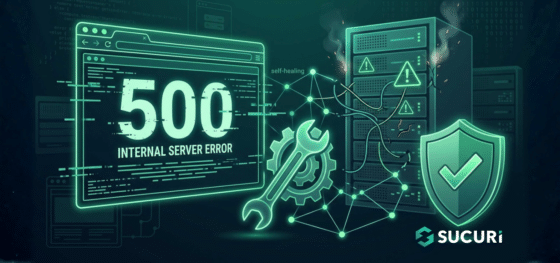
500 Internal Server Error: What It Means and How to Fix It

By: Sucuri
14 October 2026 at 20:00
500 Internal Server Error: What It Means and How to Fix It

You load your own site, and instead of your homepage you get a blank page with a line of text reading 500 Internal Server Error. No explanation, no stack trace, nothing to act on. For visitors, it looks like the site is simply gone, and for you it usually means the admin area is down too, so the one tool you’d normally reach for is unavailable.

The frustrating part is that a 500 is deliberately vague.

Continue reading 500 Internal Server Error: What It Means and How to Fix It at Sucuri Blog.

What Is Encryption? How It Protects Your Website and Its Data

By: Sucuri
12 October 2026 at 20:00
What Is Encryption? How It Protects Your Website and Its Data

If you run a website, you’ve already met encryption even if you’ve never used the word. It’s the πŸ”’ padlockΒ in the browser bar, the reason your host told you to stop using plain FTP, and the checkbox on your backup settings that says β€œencrypt archive.”

Encryption is one of the few security controls that works quietly and almost never needs your attention, which is exactly why it’s easy to misunderstand. Plenty of site owners install an SSL certificate, see the padlock appear, and assume the site is now β€œsecure.” That’s the gap we want to close here.

Continue reading What Is Encryption? How It Protects Your Website and Its Data at Sucuri Blog.

❌