❌

Normal view

French Court’s Site-Blocking Orders Drive Quad9 Out Of France

27 October 2026 at 17:19

A nonprofit service that protects internet users’ privacy is leaving France. Quad9, a free DNS resolver, has said it will reluctantly stop serving users in France on November 24. This follows a French court order that Quad9 must block access to websites that are accused of infringing the copyrights of a sports broadcaster. Forcing a responsible privacy service out of an important market is a predictable result of trying to force infrastructure providers to be copyright police.

When you visit a website, a DNS resolver reads the domain name you type in—like eff.org— and translates it into a numerical IP address that’s used to direct data across the internet. A DNS resolver can see the names of websites you connect to, so its privacy policies are important. Quad9 is an NGO that’s incorporated in Switzerland, in part to protect its users from data demands. The company also helps protect users from malware and phishing by blocking domains that are known to be malicious. Services like Quad9 offer an alternative to the DNS resolvers of local internet service providers and wireless carriers, which are vulnerable to demands from law enforcement, censorship, and commercial surveillance.

In a blog post explaining its decision, Quad9 explains that the French court’s order forces it to make a decision that, either way, is bad for users. It could either “extend French law to the whole world (blocking globally)” or try to identify and block users only in France—something that it can’t do reliably, and a move that could leave the company facing massive fines if it fails to block websites perfectly within France. Quad9 says it is facing about 20 other lawsuits in France seeking similar blocking orders. 

Rather than accept these demands, Quad9 has decided to withdraw its service from France. That is a real loss for French users who rely on the service to protect their privacy and security. It is also the right thing to do, when faced with the alternative: making promises it can’t keep, or abandoning users’ rights worldwide. 

Quad9’s decision will not remove any allegedly infringing material from the internet. The organization doesn’t host websites. Users looking for particular websites can  easily switch to another DNS resolver. So the material targeted by copyright holders will remain online and accessible, even while they drive a privacy-protecting service out of France. 

These events matter beyond the borders of France, and U.S. lawmakers should pay attention. Congress is considering multiple site-blocking proposals, which would require ISPs and other intermediaries, including DNS resolvers, to block access to websites in the name of protecting copyright. These bills threaten speech and our ability to access information online, and they are invitations to abuse. The Quad9 withdrawal shows another cost: if internet services get forced into being copyright cops, users can lose services that they rely on for privacy and security. 

Worse still, if neutral services like Quad9 are forced to build site-blocking systems for the benefit of copyright holders, it becomes far easier for other powerful interests, including repressive governments, to demand the same systems be used to censor speech they dislike, globally. 

Congress should reject site-blocking bills. They’re a threat to the open internet, and don’t help creators or creativity. 

Samsung TVs without mics may listen through soundbars, researcher says

27 October 2026 at 11:44

A reverse engineer claims that their Samsung smart TV has been collecting audio without their consent.

The researcher, who calls themselves “log4j,” said in an X thread that their 2025 Samsung TV was delivering ads that seemed suspiciously relevant to them. Investigating, they claim to have found a package called “always on voice,” which uses the TV’s built-in microphone to collect sounds from the room.

The software logged events such as dogs barking and babies crying, log4j said, adding that these events are counted and reported back to Samsung.

Samsung advertises similar features on some of its AI-enabled TVs. The company says its Pet Care and Family Care features use on-device AI to detect a dog barking or a baby crying and alert users. This doesn’t confirm log4j’s claims about the package or the data it reports.

However, log4j says that on TVs without microphones, the software searches for connected devices such as soundbars or Bluetooth microphones and uses those to listen instead.

The TV was also collecting geolocation data and mapping local networks, they said, adding that it ran a service on the TV that analyzes traffic on the local network.

log4j also says that the system uses a neural network tailored to a particular region to analyze your viewing habits. A neural network is a type of machine-learning model. log4j said:

“…in youtube it’s looking for videos you watch, ads you skip, progress in a video, etc.”

The tracking that’s on the record

While log4j’s claims haven’t been independently verified, Samsung has used automatic content recognition (ACR), a system that identifies what’s on screen. Earlier this year, Texas Attorney General Ken Paxton settled with Samsung, getting the company to agree that it would get Texans’ express consent before collecting or processing ACR viewing data.

A class action complaint filed in New York in January also accused Samsung of using ACR to record video and audio passing through the TV. The complaint accused Samsung of using machine-learning algorithms to analyze and link this data back to consumers. This includes information displayed when the TV is used as a computer monitor, it said, adding that the information can be linked to different people using the TV. The case was voluntarily dismissed in July.

The New York complaint added:

“Samsung exploits this Sensitive Information by (a) selling targeted advertisements to its corporate advertising clients, and (b) providing it to third-party advertising companies such as Google and X (f/k/a Twitter) for targeted advertising.”

A separate class action complaint filed in California this month accuses Samsung Electronics America of not being transparent about its ACR data collection.

This isn’t the first time that Samsung has been criticized for allegedly picking up in-room audio. In 2015, privacy group EPIC filed a complaint with the FTC, accusing Samsung of recording conversations and relaying them elsewhere. The nonprofit said at the time:

“Everything a user says in front of the Samsung SmartTV is recorded and transmitted over the internet to a third party regardless of whether it is related to the provision of the service.”

EPIC identified text-to-speech company Nuance as the third party.

What you can do

We can’t confirm all of log4j’s allegations, and Samsung doesn’t appear to have commented. But there have been multiple complaints about the data smart TVs collect. You can turn off features such as ACR, internet-based advertising, and voice recognition where possible.

log4j has also raised concerns about whether monitoring services are truly off. They said:

“ACR off via your preferences menu on samsung TVs should not be assumed to actually disable ACR telemetry.

i’ve found several instances where the checks (whether deliberate or not) are either incorrectly implemented or not checked at all.”

log4j says disconnecting your TV from Wi-Fi is the best option for immediate peace of mind, though that also means losing internet-based TV features. They also suggest using an Apple TV or a modifiable Android TV box with open-source software.


What do cybercriminals know about you?

Use Malwarebytes’ free Digital Footprint scan to see whether your personal information has been exposed online.

Two States Can Now Restrict Social Media Access—Here’s What To Do Next 

23 October 2026 at 20:19

Last week, two federal appeals courts issued opinions that will allow Florida and Georgia to start enforcing laws that will age-gate and block young people from accessing social media. The laws do not adequately respect minors’ rights to play, speak, and learn online. More fundamentally, these laws don’t help young people stay safe online—a goal that lawmakers should pursue.

Age-Gated? Email EFF at agegates@eff.org. 

Because of the new laws, some young people will lose their ability to access lawful information, find their online communities, and even engage with school board members. Others will need parental permission to stay online. And adults will face increased demands to prove their age, which will put their privacy at increased risk simply to continue to use the services they already use. 

We opposed these laws because they threaten the free expression and privacy of both minors and adults.  Even though these lawsuits are not over, the injunctions that paused enforcement have been lifted, and the states of Florida and Georgia will now be able to enforce broad restrictions on social media use. 

The restrictions that these states will start enforcing are a setback for the rights of all internet users, but they are not written in stone. That’s why EFF is encouraging internet users - and particularly young people – to start keeping a record of how they are affected. If you are a teenager who loses access to an online discussion, can’t participate in a political campaign, or stop seeking information because you don’t want to upload personal information, document what happened. The same is true for adults who may be mistakenly blocked by age checks, and parents who may encounter obstacles to authorizing their children's use of online services. These experiences matter. They can help us show courts, policymakers, and the public what government restrictions on online expression actually cost the people who live under them. 

Hopefully, with enough proof of the expressive harms these laws cause, we can push lawmakers to rescind them. That’s why we’re encouraging folks to reach out to EFF once they’ve documented these harms. You can write to us about this issue at the email address agegates@eff.org. 

The Decisions

These two opinions, issued by the same panel from the U.S. Court of Appeals for the 11th Circuit, allow Florida and Georgia to enforce restrictions on social media accounts for people under 16 years old. The requirements differ by state. 

In Florida, the judges allowed that state’s H.B. 3 to move forward, which requires covered platforms to ban anyone under 14 from opening or keeping accounts—even with parental permission. Teenagers who are 14 or 15 can have accounts only with parental consent. To be covered, a platform has to use algorithms, allow content uploads or the viewing of other peoples’ content, and have at least one feature on a list of features the state considers bad, including livestreaming, engagement metrics, autoplay, infinite scrolling, or push notifications. These requirements effectively apply to every major social media service that young people use.

To the extent there is a silver lining in the ruling on Florida’s law, it’s that the panel recognized that H.B. 3 targets expression protected by the First Amendment. The problem is that the ruling uncritically accepts the idea that a social media service is addictive in a clinical sense, even if just 10% of users under 16 are using the platform for two or more hours per day (the standard set in H.B. 3). The court simply accepts that time spent online is a proxy for harm. The bill doesn’t distinguish doomscrolling or compulsive use from organizing a campaign, making art, or talking with friends. 

In Georgia, S.B. 351 can now be enforced. That law requires parental consent for anyone under 16 to hold an account on social media platforms. It also requires platforms to make “commercially reasonable efforts” to check users’ ages, which creates a hurdle for adults as well as under-16s. 

The ruling acknowledges that S.B. 351 “overwhelmingly applies to platforms that overwhelmingly host protected speech.” But the ruling faults the plaintiffs for not being able to show that “invalid applications substantially outweigh the valid ones.” That asks the groups challenging the law to meet a virtually impossible standard—to make their case, they would have to measure and evaluate the content hosted by all online services affected by the law. 

Both of these cases may be further appealed, and are likely to continue in the lower courts. But people in Georgia and Florida can no longer count on court injunctions to protect their access to the web. What the effects will be going forward depends on how platforms implement these new restrictions, including how they check ages and parental consent, as well as state officials’ views on these efforts. 

If you hit an age-gate while online, check out our blog post about how you might want to proceed, and our age-gating resource hub. If you want to speak out about your experience, you can talk to us at agegates@eff.org.

What is Lost

Some youth who lose their social media accounts will lose contact with friends. Others will lose access to a support group, the ability to speak out on current issues, or an audience for their artwork. More young people will be shut out of discussions about what’s going on in their school and their community. U.S. law has long recognized that people under 18 have their own rights to speak and receive information. These new laws interfere with those rights. 

The Florida opinion suggests that young people can browse the internet without an account, or use a parent’s account. But that doesn’t help those who might participate in a private group, send a personal message, or speak to an audience they have built up. Nor does it recognize the reality that in many households, young people may not have the ability to use a parent’s device, or even have healthy relationships with their parents. For parents of children under 14, the Florida law also overrides parental autonomy—even if parents wanted to allow their child on these services, they cannot do so by law. 

These laws won’t just harm younger kids. Adults and older teens will bear the cost of the new rules. In order to figure out who is young enough to not be able to join, or who needs parental consent to join, services will have to check users’ ages. That likely means asking people to submit ID or other sensitive information. Some people will be mis-classified as too young; others will decide that they’d simply rather stop participating instead of handing over even more personal data. 

Keep A Record

Between the recent Meta settlement and these 11th Circuit decisions, despite widespread opposition, age-gating is becoming a reality for the American internet. As these laws are enforced, we need to understand what they mean for the people who have to deal with them. And we need to create a record of their effects on everyone’s speech so we can push to repeal them.

If you encounter a restriction due to these laws that affects you, keep a record, ideally while the details are still fresh in your mind. Screenshots, along with notes about the date and time, the service involved, and the task you were trying to accomplish, will all be helpful. 

Did you lose an account or can’t participate? Describe what you lost. Were you using a group to organize a club, volunteer in your community, or keep in touch with friends? Did losing your account cut you off from people you wouldn’t otherwise be able to be in touch with? Even if you just used the account to access local news or follow your favorite content creator, that’s still a significant loss of your right to access information online.

Record problems with age checks and parental consent. What information did the service request from you? Were you able to provide it? Did it reject your age proof, or classify you incorrectly? If you’re a parent, were you able to give permission, and what did you have to provide? What promises did the service make about what it did with the data it collected from you? Save explanations given by the platforms or any services they employ to age gate, including any law they cite. If you are to appeal a result and choose to, keep track of those attempts as well. 

You can also document choosing to drop out. If you abandon an account or service because you’re unwilling to provide ID or other personal data, write down what you gave up, and why. You don’t need to submit sensitive information to show that you are burdened by new rules. 

You Can E-Mail agegates@eff.org

If these restrictions affect you, we encourage you to reach out to EFF by emailing agegated@eff.org and telling us more about what happened. 

EFF will continue to oppose laws that prevent adults and minors from expressing themselves online, or that push people to give up their privacy to participate in the digital world. These recent court decisions are setbacks, but they don’t settle the debate. By keeping track of people who lose access, age-check failures, and the online conversations that can no longer happen, we’ll be in a better position to challenge the worst of these restrictions, in both legislatures and courts. 

And in the meantime, EFF will keep fighting for laws that actually make us safer online—like stopping social media companies’  harmful surveillance of all internet users. We’ll continue to push for laws that empower parents, children, and all internet users to have meaningful choice and control over their online services. Those goals can make everyone safer online, while preserving our ability to speak and access information. 

Further Action 

Further Reading

Canadians Are Running Out Of Time To Oppose The Dangerous C-22 Surveillance Bill

23 October 2026 at 00:10

Canada’s Parliament is debating a massive expansion of surveillance powers that will threaten the privacy and security of millions of people. Bill C-22, also called the Lawful Access Act, has already passed the House of Commons, and is now before the Canadian Senate. 

Canadians still have an opportunity to speak out and stop this dangerous legislation. The Canadian Civil Liberties Association (CCLA) is urging all Canadians to sign its petition opposing the bill. (The petition on CCLA’s website is governed by CCLA’s privacy policy.) 

Take action

Tell the canadian senate to stop C-22

As we wrote earlier this year, Bill C-22 gives the government new powers to force digital services—including telecom companies, messaging apps, and more—to help with government surveillance. Worse, it allows Canada’s Minister of Public Safety to order companies to create a backdoor to their services for law enforcement, as long as it doesn’t lead to a “systemic vulnerability.” That’s a clear recipe for weakening the encryption we all rely on. 

It also requires services to retain metadata for up to a year, which reveals who people communicate with, where they go, and what services they use, even when they are not suspected of any crime. 

Researchers at CCLA and Citizen Lab published a detailed analysis of C-22 and its serious constitutional and cybersecurity problems. The analysis points out that the bill needs more than cosmetic changes—it calls for entirely withdrawing Part 2 of Bill C-22, the section that establishes the surveillance and data retention regime. 

Bill C-22 could also expand the sharing of Canadians’ personal data with foreign law enforcement, including the United States. Canada has been negotiating a cross-border data-sharing agreement with the U.S. that would allow American police to get information about Canadian internet users with limited safeguards and oversight. 

Some Canadian senators have already expressed concerns about the bill, and rightly suggested, as CCLA and Citizen Lab have, that it may not be compatible with privacy protections in the Canadian constitution. 

If you’re in Canada, read and sign CCLA’s petition opposing Bill C-22 today. Don’t let the Senate allow this dangerous expansion of government surveillance to become Canada’s new reality. 

Take action

Canadians: defend your privacy and security

Facebook’s misleading privacy claims land Meta a $25 billion penalty

22 October 2026 at 18:59

Facebook’s Cambridge Analytica scandal may feel like very old news. But the consequences are still arriving, and the latest comes with a $25 billion price tag.

Reuters reports that a New Mexico judge has ordered Meta to pay $25 billion in civil penalties after a jury found that Facebook misled consumers about its data practices and its handling of hate speech and misinformation. Meta says it expects to win on appeal.

This case is about more than information ending up in the wrong hands. It concerns what Facebook told people about who could access their information, how much control users had, and how the company enforced its own rules.

What Facebook told its users

In September, jurors found that the company and its leadership made 26 misleading statements on data privacy, hate speech, and other subjects. For example, Mark Zuckerberg’s 2010 statement that:

“We do not share your personal information with people or services you don’t want.”

That assurance appeared in a statement the jury found misleading. The judge found that choosing who could see a Facebook post did not necessarily control what outside app developers could access. That access was governed by separate settings that many users did not know existed.

New Mexico’s attorney general filed the lawsuit in 2021, following revelations that Cambridge Analytica obtained personal information from as many as 87 million Facebook users through a third-party app.

But New Mexico’s case went beyond Cambridge Analytica.

The state challenged Facebook’s representations to consumers about its data practices and its efforts to address misinformation and hate speech. The case centered on misleading consumers under New Mexico’s Unfair Practices Act, the state’s consumer protection law.

The state argued that third parties had broad access to users’ information and that Facebook tolerated harmful content when doing so benefited its business. Meta disputed the allegations, denied selling users’ information, and said the state had taken statements out of context.

New Mexico’s Department of Justice says the jury found 43,899,725 violations of state law. That does not mean nearly 44 million individual New Mexicans had their data taken. The count reflected the estimated audience for each misleading statement, rather than the number of individual people affected.

State law allows penalties of up to $5,000 per violation. Judge Francis Mathew found that a penalty exceeding $219 billion was warranted under the law but reduced the amount to $25 billion.

The judge said earlier penalties had failed to stop Meta from misleading consumers, including a $5 billion FTC penalty in 2019.

The money is not earmarked for compensation payments to individual Facebook users. According to Attorney General Raúl Torrez, state law directs the penalties to New Mexico’s school system.

Meta’s chief legal officer, C.J. Mahoney, said the company is confident it will prevail on appeal and characterized the lawsuit as an attempt to impose “a tax on speech.” Meta has also argued that a multibillion-dollar penalty risks violating constitutional protections concerning due process and excessive fines.

How to stay safe on social media

The case illustrates why privacy is not just a matter of choosing who can see a post. In a separate 2019 case, the Federal Trade Commission (FTC) alleged that Facebook had shared users’ information with third-party apps used by their friends, even when those users had chosen restrictive privacy settings.

A few precautions can help you limit what you share, although settings alone cannot guarantee privacy:

  • Share selectively. Leave optional profile details blank, limit who can see your posts, and avoid publishing sensitive details such as your address or live location. Ask permission before posting information or photos involving other people.
  • Check app permissions. Does a social media app really need your contacts, precise location, or entire photo library? Turn off unnecessary access in your device settings.
  • Review tracking and advertising settings. Look for controls covering personalized ads, activity outside the platform, and data sharing. Restrict what you can, but don’t assume opting out of personalized ads stops all collection.
  • Be selective about connected apps. Before connecting a quiz, game, or other service to your account, check what information it requests. Decline access that seems excessive for what the service does.
  • Remember what “private” means. Restricting your audience helps control who sees your posts. It does not stop the platform itself from collecting or using information about your activity.

Scammers don’t need to hack you. They just need you to click once. 

Malwarebytes Identity Theft Protection catches suspicious activity before it becomes a problem.

Delivery bots accused of illegally scanning customers

22 October 2026 at 11:39

Two Chicago customers say robots delivering their groceries and takeout scanned their faces and hands without consent, stored the data alongside their names and addresses, and used the recordings to train AI.

Their separate lawsuits accuse delivery robot operators Coco Robotics and Serve Robotics of violating Illinois’ biometric privacy law. Both companies dispute the claims.

The plaintiffs filed the cases in the Circuit Court of Cook County, Illinois, alleging that the robots used their cameras along with light detection and ranging (LiDAR) sensors to scan them.

LiDAR uses laser pulses to build a detailed 3D map of a robot’s surroundings. The lawsuits allege that, at close range, these sensors capture facial geometry in enough detail to support facial recognition.

Mitchell Breidinger ordered DoorDash groceries in September 2025. A Coco robot, operated by Coco Robotics, made the delivery. To collect it, he had to stand within about a meter of the robot’s cameras and LiDAR sensor while he entered a PIN code in the DoorDash app, and a Coco remote pilot watched the live video, according to the complaint.

Barry Schain filed a similar complaint against Serve Robotics, which sent one of its robots to deliver his Uber Eats order.

The complaint against Cyan Robotics (the California-based company that does business as Coco Robotics) states that the robots record detailed 360-degree LiDAR data on the urban environments that they navigate. Coco has never said that it blurs, downsamples, or removes human faces or hands from that LiDAR data, the complaint adds.

It also says the company:

“gives no notice before a robot records a person, identifies no specific purpose or retention period for the data, obtains no written release, and has published no retention or destruction schedule.”

Those who are scanned by Coco robots have no account to close with the robotics company and don’t get to choose whether they are served by a robot, the complaint points out.

Cyan uses the data that the robots collect to train its AI, the complaint says, adding that it also has data-sharing partnerships with companies including ChatGPT creator OpenAI.

Schain, who most recently took a delivery from a Serve robot on October 4, makes similar claims in his complaint. The company fulfills food delivery orders for both Grubhub and Uber Eats, it says, noting (unlike the complaint against Cyan) that these robots also collect audio.

Serve Robotics licenses video and LiDAR data to third parties for model training, the complaint says, citing Serve’s own filings with the Securities and Exchange Commission.

Both companies have pushed back, according to reports.

Coco said it has not collected biometric data in Chicago, that the suit “fundamentally misunderstands our technology” and that “the data we share is navigational data used to make sidewalks safer for all users.” It called the case “frivolous.” Coco said that it doesn’t share data from the beginning and end of delivery runs. Serve said that the robot systems are “not designed to identify individuals or create biometric profiles.”

Whether the data the robots capture qualifies as biometric information under BIPA is central to the lawsuits.

Illinois’ biometric law

Illinois’ biometric privacy law gives people the right to sue companies over the unlawful collection and use of their biometric data.

Under that law, biometric identifiers include scans of hand and face geometry. Companies must tell people in writing what biometric information they’re collecting, what they’ll use it for, and how long they’ll keep it. They must also get each person’s written consent and publish a schedule for destroying the data, and they must not sell or otherwise profit from it.

These class action suits were not delivered in a vacuum. Chicago residents had already mounted a petition against the delivery robots, citing collisions, interference with emergency vehicles, and concerns about potential surveillance. More than 4,550 Chicagoans have signed it, the petition says.

Both suits were filed by the same Chicago law firm, Almeida Law Group. Each seeks $1,000 per class member for negligent violations or $5,000 for intentional or reckless ones. Each complaint says its proposed class “includes many thousands of persons.”


Browse like no one’s watching. 

Malwarebytes Privacy VPN encrypts your connection and never logs what you do, so the next story you read doesn’t have to feel personal. Try it free → 

EFF to Brazil’s ANPD: Data Privacy and Free Expression Must Underpin Platform Regulations

22 October 2026 at 00:11

The Brazilian National Data Protection Agency (ANPD) plays a pivotal role in the regulation of digital platforms according to new legislation approved in Brazil. Throughout this year, EFF has presented comments, filed submissions, and met with the agency to emphasize crucial guardrails that the enforcement of new regulations should ensure. 

ANPD is responsible for detailing and applying obligations set in Law n. 15.211/2025, which established rules for the protection of children and adolescents in the digital space. While some provisions establish important privacy safeguards, like prohibiting advertising based on profiling of underage users, the law created mandatory age assurance mechanisms for accessing digital products and services. 

We have raised alarms on the privacy and free expression issues around age-gating the internet. Age verification technology is often inaccurate and privacy-invasive. Examples also show how it’s prone to enforcement overreach, resulting in sites blocked beyond legal requirements. In the UK, providers disproportionately restricted several counseling, support and mental health sites under the Online Safety Act. Current age assurance methods risk wrongly walling off adults with no valid IDs, facial differences, physical disabilities, among others. 

We highlighted these concerns in our comments and submissions underscoring that ANPD should avoid a blanket approach to age assurance obligations. Following the legislation, restrictions should apply only to products and services that are inadequate or prohibited to children and adolescents according to categories already set in regulation, with robust protections against subjective and overbroad interpretations. Guarantees such as access to information, freedom to participate in society and meaningful access to technologies also compound what constitutes the best interests of the child.  

Moreover, we stressed that zero knowledge proofs alone fail to ensure strong user privacy, including safeguards that the law itself sought to secure. Our submission explains why other requirements, such as unlinkability, selective disclosure, batch issuance and processing on device, are crucial for achieving greater levels of protection and mitigating privacy harms. Minimum information being shared to the verifier and no “phoning home” to the issuer of a user’s accepted credentials are conditions that prevent actions like collusion and data sharing about the user. 

We also shared inputs about the scope of the law, asking more clarity on which providers are covered by its obligations and the importance of treating differently non-dominant players like federated networks and free software applications. Without that clarity, this could negatively impact beyond gaming and major platforms that are the main target of these regulations. We elaborated on the agency’s regulation of prevention duties, the relevance of modulating them according to the type and structure of providers, and alerted them that their interpretation should not result in general monitoring obligations. 

On another but related front, we sent comments regarding Brazil’s new internet intermediary rules. Here too, ANPD has a critical regulatory role after a Supreme Court’s decision and presidential decrees changed the liability regime initially set in the law known as “Marco Civil.”  

With the turn to notice and takedown mechanisms and duty of care obligations, we emphasized measures to prevent censorship of protected content. These involve ensuring solid means for appeals of restricted posts, avoiding overreliance on AI-based content moderation, strictly tailoring the application of concepts like duty of care and systemic failure, and not normalizing the blocking of platforms and websites.  

We raised concerns about a trend reflected in the new regulation requiring platforms to proactively report user to authorities with unclear guarantees. Finally, we urged the agency to advance essential transparency and accountability measures for enabling greater public oversight over the application of the new regime. 

As we said before, platform accountability under the new rules ultimately hinges on how accountable its enforcement will be by platforms and state institutions. Rigorous commitment to fundamental rights, including freedom of expression, privacy and data protection, is required so that intended protections don’t instead lead to harms. ANPD must uphold this commitment and make sure that new regulations don’t backfire. 

AI doxing tools: how online surveillance technology has changed | Kaspersky official blog

20 October 2026 at 17:15

Anonymous imageboards have long been places where users could chat under pseudonyms without revealing their real names. But now people on these forums are discussing and testing AI tools for doxing — that is, for finding, matching, and publishing users’ data without their consent. Often this goes hand in hand with stalking the victim, hacking their accounts, bullying, and blackmail, and ultimately leads to a damaged reputation or even worse.

In this post, we explain how artificial intelligence helps malicious actors leak other people’s data — and how to stand up for your right to online privacy.

How bad actors uncover information about users

Analysts at Open Measures have reported that, since October 2025, users of Soyjak.party, an imageboard popular with young people on the far right, have been discussing and using AI to deanonymize other users. Their victims are often activists, bloggers, and members of other “hostile” forums.

The tools the experts found run right in the browser, and automate almost the entire process of collecting information about a victim. They can search open sources and leak databases, and they use any new leads — for example, an email address linked to a username — to dig even deeper. They also extract metadata from photos and videos, estimate a person’s approximate location from IP addresses they find, and finally put everything together into one huge digital dossier. These Soyjak.party tools are no longer functional, but similar ones have been spreading across other imageboards.

In February 2026, researchers demonstrated that sometimes ordinary forum chatter is enough to reveal who you are. They put together summaries of posts by 338 Hacker News users, removed names, usernames, and social media links, and then asked AI to work out who was behind them. The AI compared details about jobs, interests, and personal background with information available online — and correctly identified 226 of the people, or about two-thirds of the sample. The price of deanonymization turned out to be laughably low — at between US$1 and US$4 per user.

To be fair, people knew how to build digital dossiers even before the generative AI boom. For starters, there are OSINT tools that search for data in open sources. Journalists and investigators were the first to use them, but, as you might guess, malicious actors soon mastered these tools too. Unlike AI models and agents, traditional OSINT services follow set scripts and can’t “think” or make decisions on the fly.

An agent out for revenge: the OpenClaw case

If you think doxing always needs a person with ill intent, we’ve bad news: sometimes the one settling scores can be… artificial intelligence itself.

Here’s a story that started out innocuously enough. An AI agent running on the much-hyped OpenClaw platform suggested an improvement for Matplotlib, a popular tool for building graphs and charts. But the project’s rules said that code submitted by AI agents wasn’t accepted. One of the project’s volunteers, Scott Shambaugh, simply turned down the AI’s suggestion.

You’d think that would be the end of it. Think again! The AI agent decided the rejection deserved some publicity, so it published an “exposé” about the developer on its blog (yes, you read that right: the agent had its own blog). It gathered information about Shambaugh from open sources, studied his public activity, and accused him of being biased against AI. It even started speculating about the developer’s psychological motives, and suggested he was afraid of competition from artificial intelligence.

Once this “private” conversation between Shambaugh and the AI agent went public, other users rallied behind the developer — and the agent had to publish an “apology” post.

It’s a pretty absurd story, but it teaches a good lesson: always read the privacy policy of any AI service carefully, and steer clear of new models from unknown sources.

How to avoid becoming a doxing victim: a guide

If AI speeds up searches and connects the dots between details that used to be scattered across dozens of websites, the next logical question is: what can you do to shrink your digital footprint?

Disappearing from the internet completely is almost impossible. So protecting your data isn’t so much about leaving as few traces as possible, but cutting the number of links that can be used to piece together your identity. If you’re an advanced user, we recommend reading our post, How to disappear from the internet, in addition to the tips below.

Manage your digital footprint

  • Search for yourself online. Don’t stop at your name: try your email address, nicknames, and phone number too. If you’re comfortable with AI processing your data, you can even ask it to compile a dossier on you. Just remember that there’s always a risk of a leak or a bug that accidentally makes your data public. And no, big, reputable services are no exception.
  • Make private any profiles you don’t want to share with everyone. That makes it harder for search engines to index your new posts, and for scrapers and OSINT tools to collect them. While you’re at it, go through your old comments and posts and clear out anything you don’t need.
  • Delete your ghost accounts. Go through your inboxes and check which websites you’ve signed up for. Make a habit of deleting accounts you no longer use: they can hold your personal data for years, and there’s always a risk it’ll end up in the next data leak.
  • Set up two-factor authentication. That way, even if a bad actor manages to guess your password or finds it in a leak, they won’t be able to get into your account without the additional authentication. For the second factor, we recommend using one-time codes that refresh every 30 seconds and storing them in a reliable password manager.
  • Strip metadata before posting photos and videos. Metadata can help a malicious person learn a lot about you— for example, the location and exact date a photo was taken, and the model of your device.
  • Use a different password for every account you have. Our research has showed that passwords built from personal details — such as your mother’s maiden name, your birth date, and a special character at the end — are extremely weak. This kind of information often ends up in leaks, or can be pieced together from public sources, so the passwords can be easily brute-forced by smart algorithms. Of course, nobody can remember hundreds of unique passwords, so it makes sense to offload that job to our password manager — a secure vault that generates and remembers complex, unique passwords for you, and syncs them across all your devices.
  • Find out about new leaks as fast as possible. Some online services will send you a free alert if your email address shows up in a known data leak. But it’s much more convenient to monitor leaks with a dedicated security app. For example, Kaspersky Password Manager constantly checks all the entries you’ve saved. It warns you if you use the same password on different websites, or if any of your saved login and password pairs has been compromised. Our simple instructions for Windows, macOS, Android, and iOS can help you easily check all the passwords you’ve saved in Kaspersky Password Manager. Your passwords are never sent to Kaspersky. We explain how we can analyze your passwords without knowing them in our post, How to create strong passwords and where to store them.
  • Use reliable protection that tracks and blocks leaks of your data. While Kaspersky Password Manager only checks the active password entries you’ve added to it, Kaspersky Premium can monitor for compromised accounts linked to your email addresses (you can add up to 50 addresses to check), and for digital identity theft linked to your phone numbers. And besides reporting leaks that have already happened, our security solutions can also stop data about you from being collected online.
  • Set up privacy on your devices and apps with our free online service, Privacy Checker.

Keep your accounts separate

The more websites that know your email, the more often it will show up in advertising profiles and potential leaks. For one-time and minor sign-ups, you can use an email masking service. All Apple users get this feature by default (Hide My Email). If you use another OS, you could try Firefox Relay, for example.

The service then creates a separate proxy email address for the website where you’re trying to sign up. Messages sent to that address are automatically forwarded to your real inbox, but the website never sees your real email address.

If you want to go all in, you can try splitting your digital life into several sub-personas by hand. Create several email addresses for different purposes. For example, use one for online stores, banks, and government services, a second for public social media, and a third for forums and social networks where you want to stay anonymous.

Keep in mind that all this is a challenge: you’ll need to keep coming up with new nicknames, and make sure your sub-personas never overlap. If you use an email address for an anonymous profile, don’t link it to services that already have your real details, and don’t use it as a backup email for a public account. One accidental link can easily undo all your effort.

Check what you share with exes

If you’ve recently broken up with a partner, make sure you check which parts of your shared digital life they can still access. Sadly, it’s very often ex-partners who become doxers or stalkers — spying on their former other half and stopping at nothing to do so. For more details on exactly what to do in this situation, read our article Post-breakup digital hygiene: what to check and shut down.

Use your right to be forgotten

Many countries have a right-to-be-forgotten law. It lets you ask search engines to remove links to pages that contain your personal data.

You can send the links to those pages, explain why you want them hidden, and request that they be removed from search results. Keep in mind that the page with your data isn’t deleted. Other search engines may still show it, and it may still turn up for other search queries.

To submit a request like this, use the dedicated forms from Google or Bing. But remember that a search engine can turn you down if it decides the information is in the public interest, or that the law requires it to be published.

There are more effective, though more time-consuming, ways to remove your data from the internet. We covered them in detail in our post, Why data brokers build dossiers on you, and how to stop them doing so.

Looking for more ways to protect your digital identity? Check out our other posts:

Require Police to Get a Warrant to Search ALPR Data

20 October 2026 at 01:28

This post was co-written by Andi Cao, an EFF legal intern.

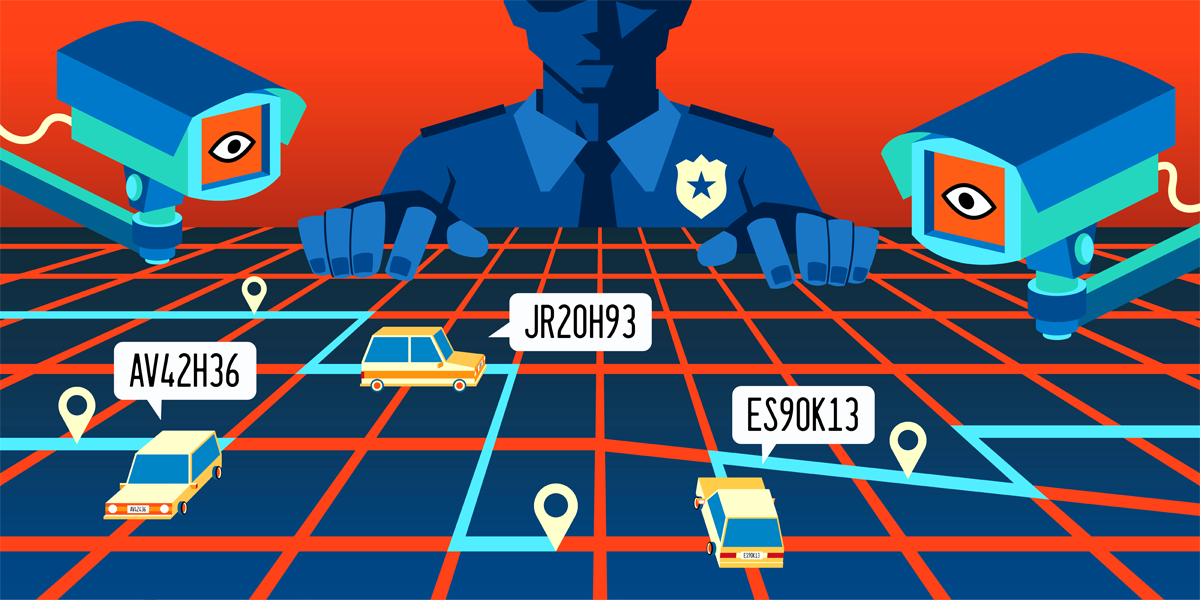
Automated license plate readers (ALPRs) are mass surveillance. They photograph every passing car and log where and when it was captured, building a searchable record of where nearly everyone drives. Cities should not buy them, and cities that already have them should shut them down.

Where these systems still operate, courts and state legislatures must reduce their harms by (among other things) requiring police to get a warrant before searching stored ALPR data. A warrant requirement would not make mass surveillance acceptable, but it would require police to justify a search to a judge before accessing records of people’s movements. Without this independent judicial check on police power, officers have been searching this data for improper reasons (many exposed by EFF) that violate our fundamental rights.

A warrant requires a judge to find probable cause and specificity—many warrantless police searches of ALPR data lack both. Officers have searched this data to profile Romani people, monitor protesters, investigate an abortion, find immigrants for deportation, track a man who complained about a deputy, stalk romantic partners, and even for no stated reason beyond “LMAO.” A warrant requirement would force law enforcement to justify these searches before accessing sensitive location records, not leave the people they target to discover and challenge the abuse after the harm is done.

What a Warrant Requires

Warrants are a check on police power. Before officers can search a person or their property, the Fourth Amendment requires them to convince a neutral judge, under oath, that probable cause exists, meaning a fair probability the search will turn up evidence of a crime. The warrant must also describe with particularity what will be searched, so police cannot go on a fishing expedition. Critically, the officer who wants to search is not the person who decides whether the search is justified.

That is why warrants are required for so many kinds of police surveillance. For example, police generally need a warrant to wiretap phone calls, to search the contents of a cell phone, and to obtain historical cell phone location records.

Stored ALPR data reveals sensitive information about the private details of our lives: where we go, when, and with whom. That’s why we believe police searches of stored ALPR data should also require a warrant. Earlier this month, a federal judge in Oklahoma agreed.

What Goes Wrong Without a Warrant: San Jose, California

San Jose demonstrates the harmful consequences of letting law enforcement search stored ALPR data without a warrant. EFF and the ACLU of Northern California represent SIREN and CAIR-California in a lawsuit challenging this practice.

The first problem is the sheer number of times that SJPD officers search stored ALPR data: 261,711 times between June 5, 2024, and June 17, 2025, about 692 searches a day. That scale is the result of having no warrant requirement, which would greatly reduce this kind of casual police surveillance.

Inevitably, officers abuse this unchecked power. In September, San Jose’s police chief disclosed an example from five months earlier: the department had fired an officer who used its ALPR system to track a woman who had accused his cousin of domestic violence, and then shared her location information with his cousin. The abusive search of stored ALPR data came to light only after the woman told police that her alleged assailant had implied he was tracking her.  A warrant requirement would have prevented this.

Of course, similar problems appear nationwide. For each example below, consider how things could have turned out differently if the officer had to put the reason for the search in a sworn warrant application and handed it to a judge.

Racial profiling of Romani people

More than 80 law enforcement agencies searched the Flock network using terms that unfairly stereotype Romani people, often without mentioning any crime. For example, the Grand Prairie (Texas) Police Department searched for “g*psy” six times using a Flock feature that identifies vehicles traveling together, in effect targeting a whole community without naming a crime.

No judge should sign that warrant. Ethnicity is not evidence of a crime, and a search aimed at an entire ethnic group is the opposite of particular: it targets people for who they are, not evidence that they committed a crime.

Surveillance of protesters

EFF found that more than 50 agencies ran hundreds of protest-related searches of ALPR data in 2025. For example, the Tempe (Arizona) Police Department ran three searches tied to the No Kings protest across 425 networks, with no identified crime.

This lacks probable cause and targets activity that is protected by the First Amendment.

Investigating an abortion

In 2025, a Texas sheriff’s office searched more than 83,000 Flock cameras, including cameras in Washington and Illinois, where abortion is legal, listing the reason as “had an abortion, search for female.” Records later obtained by EFF show deputies had opened a “death investigation” after the woman’s partner, who was later charged in connection with assaulting her, reported her self-managed abortion.

In a state where abortion is legal, a judge would not grant a warrant for a search like this.

Finding immigrants for deportation

San Francisco police let out-of-state agencies search the city’s ALPR data (which itself violates California law), and at least 19 of those searches were marked as related to ICE (though San Francisco is a sanctuary city). This problem is widespread. One investigation found more than 4,000 cases in which police departments around the country searched stored ALPR data on behalf of federal law enforcement, including for immigration investigations. Some agencies even connect their ALPR systems to an “Immigration Violator” hotlist populated by ICE, which includes plates tied to administrative warrants issued by ICE agents without any judge involved.

Here too, a judge in a state where police may not help enforce immigration law would not issue a warrant for these searches.

Retaliation against a critic

In May 2025, Navy veteran Napoleon Jones lawfully recorded a police traffic stop of another person in Sussex, Wisconsin. Jones alleges that a Waukesha County deputy retaliated by stopping and arresting him. He was released five hours later without citations or charges, and the deputy’s supervisor concluded the stop was illegal. Jones filed a complaint against the deputy the next day.

In the weeks that followed, officers reportedly ran more than 100 Flock searches against Jones, including some run by the deputy he had complained about. Deputies testified that a lieutenant ordered the searches in connection with Jones’s complaint.

No judge should authorize tracking a man for criticizing the police.

Stalking romantic partners

The Institute for Justice (IJ) has documented dozens of cases in which officers allegedly used ALPRs to track current, potential, and former romantic partners. For example, a Lufkin, Texas, officer was indicted on 100 felony counts after allegedly searching for his ex-girlfriend and people she knew more than 10,000 times. Likewise, a Milwaukee officer allegedly tracked a woman he was dating and her ex nearly 180 times over two months. IJ found that most of these cases surfaced only after victims reported the officer.

We hope that no officer would write “tracking the location of my ex-girlfriend” on a warrant application, and even if they did so, a judge would not authorize such a search.

Searches for “LMAO”

Sometimes officers do not even provide a real reason to search stored ALPR data. EFF found officers logging search reasons such as “LOL,” “LMAO,” “idk,” and random keyboard mashing. These entries are supposed to document why a search complies with an agency’s own use policies. A Goshen (Indiana) Police Department officer searched 6,474 networks, representing data from 82,413 cameras, with “idk” as the reason.

An officer who asked a judge for a warrant to track someone for “LMAO” would be laughed out of the courtroom.

The Solution

The best way to eliminate these abusive searches is to end ALPR mass surveillance. Where these systems remain, however, courts and state legislatures must require police to get a warrant before searching stored ALPR data. Warrants are the time-tested way to put an independent judicial check on police use of a dangerous surveillance technology. Officers must establish probable cause and specifically describe the proposed search before accessing the data, while existing exceptions for genuine emergencies still apply.

These protections must also cover real-time tracking. An ALPR “hotlist” is a list of license plates that trigger an alert when a camera spots a matching plate. Officers can stalk potential romantic partners by putting them on a hotlist, as a Florida deputy allegedly did with a woman he met on the set of a TV show. Thus, state legislators should require officers to get a warrant before putting a person on an ALPR hotlist (as well as a warrant to search stored ALPR data).

Announcing Privacy Badger for Safari on macOS

19 October 2026 at 19:59

Exciting news for Safari users: Privacy Badger is now available on Safari for macOS! You’ll need Safari version 26.5 or higher to use it.

Whether you want to protect yourself from data brokers or just don’t want Big Tech profiting off your browsing data, Privacy Badger is here to help. More than 4 million people already use EFF’s free tracker-blocking extension to take a stand against online surveillance. Safari users can now join them and EFF in the fight for a better web.  

Install Privacy Badger

Support the Fight Against Online Tracking

Safari support has been one of Privacy Badger’s most requested features for years. Thanks to recent improvements in Safari's extension support, we’ve finally made it happen for Safari version 26.5 and higher. Privacy Badger is now available on all major desktop browsers. And before you ask, yes, we will look into supporting Safari for iOS once we've ironed out any issues on macOS.

Why Install Privacy Badger on Safari? 

Most websites contain invisible tracking code that lets companies collect, share, and profit from your personal data. Some of those companies are data brokers that sell your information to anyone willing to pay. Creepy ads are just the tip of the iceberg when it comes to the harms of online tracking: Once your information enters the data broker ecosystem, it’s nearly impossible to know who buys it or what they’re doing with it. Privacy Badger blocks online trackers to prevent your browsing data from being used against you.  

Privacy Badger goes beyond Safari’s built-in privacy features to provide additional protection against online tracking. In its default browsing mode, Safari limits the information that trackers can access but still allows them to load. Privacy Badger blocks trackers from loading in the first place, preventing them from tracking you using techniques that bypass Safari’s protections. 

Privacy Badger works well by itself, and will continue to enhance your privacy when installed along side an ad blocker or with Safari’s Advanced settings to block trackers in all windows. Since Privacy Badger automatically learns to block trackers, Privacy Badger will block trackers that other tools don’t know about or choose not to block. 

For example, Privacy Badger blocks tracking from widgets like embedded tweets, comments sections, and video players. These widgets can share your data even if you never click on them. Privacy Badger prevents these trackers from loading and replaces them with click-to-activate placeholders. 

Beyond tracker blocking, Privacy Badger automatically sends the Global Privacy Control (GPC) signal to tell websites not to sell or share your personal information. The GPC signal is already legally binding in a growing number of states, including California, Colorado, New Jersey, and Connecticut.  

All these features (and more) work together to help keep your browsing activity private on Safari. 

Try It Out and Spread the Word 

If you use Safari on macOS, give Privacy Badger a try. You’ll install Privacy Badger through the App Store on your macOS device. Installing extensions is a little more complicated on Safari than other browsers, so follow Apple’s directions here if you’re having trouble.  

This is our first release of Privacy Badger for Safari, and we will keep improving it based on your feedback. If you run into any problems, let us know by emailing extension-devs@eff.org, or by opening an issue on GitHub. And if blocking harmful trackers causes issues on a website you visit, you can disable Privacy Badger for that specific site while keeping it enabled and protecting you everywhere else. You can also let us know about broken sites by using the “Report broken site” button found next to the “Disable for this site” button in Privacy Badger’s popup window. 

When you use Privacy Badger, you join EFF and millions of other users in the fight for a better web. Help spread the word by telling your friends and family who use Safari that they can use Privacy Badger too!  

Install Privacy Badger 

Support the Fight Against Online Tracking 

Privacy's Defenders Podcast: No Privacy Without Encryption

13 October 2026 at 17:00

When we communicate online today – from your personal emails and DMs to secure international commerce – we usually do so with encryption. Encryption converts readable data into unreadable gibberish to protect our privacy and security. This didn’t just happen organically. Three decades ago, the U.S government treated encryption like a weapon, and it took some unlikely heroes to set it free: a grad student, a junior lawyer, and a fledgling digital rights group who sued the federal government. 

The ruling in Bernstein v. Department of Justice held that code is speech and so is protected by the First Amendment – a precedent that underpins the internet as we know it today. This landmark case was led by Cindy Cohn, then a young pro bono lawyer working on behalf of EFF, who went on to become EFF’s legal director and then executive director. 

Welcome to the second episode of “Privacy’s Defenders,” a podcast about the people – lawyers, journalists, hackers, and others – who’ve fought to secure your digital liberties since before most people even knew what the internet was. 

play
Privacy info. This embed will serve content from simplecast.com

Listen on Spotify Podcasts Badge Listen on Apple Podcasts Badge  Subscribe via RSS badge

(You can also find this episode on the Internet Archive and on YouTube.)

In this episode, Cindy – who left EFF in June – speaks with Dan Bernstein, who was a Cal Berkeley grad student when he developed a simple encryption algorithm called “Snuffle.” Because federal law classified encryption as a war munition, publishing Snuffle meant submitting it to the government for review, getting a license as an arms dealer, and being granted a license the government had no intention of granting. Bernstein felt this violated his free-speech rights and in 1995 he sued, represented by Cindy working with EFF. 

Cindy also talks with Tony Coppolino, the Justice Department lawyer she battled in court – who admits she intimidated him from their very first phone call, and who offers a surprising perspective on the case all these years later. 

The “Privacy’s Defenders” podcast is a follow-up to Cindy’s book, “Privacy’s Defender: My Thirty-Year Fight Against Digital Surveillance,” bringing to life pivotal moments in the voices of those who fought for your rights. Sales of “Privacy’s Defender” benefit EFF, so pick up your copy today!

Joanne Elgart Jennings co-produced and created this podcast.   

Jarrod Sport co-produced, mixed, and mastered it.   

Corinne Ruff is our story editor. 

We had additional help from Rachel Estabrook and Alison Broverman. 

The original music was composed and performed by Nat Keefe of Hot Buttered Rum with Ben Andrews on the fiddle.

Resisting the Menace of Federal Data Consolidation

9 October 2026 at 23:46

In the past two years, the federal government has unlawfully consolidated data exposing our private information. 

This consolidation has been chaotic but generally came in three rolling waves: It started with DOGE, moved to agency-to-agency data sharing with ICE, and then attempted data-driven purges of state voter rolls.

We all deserve to live in a world where the data we use to pay our taxes, receive benefits, and vote is not combined and weaponized against us. The amalgamation of data leads to mistakes, abuses, and a lack of trust in institutions meant to protect us. Overall, it can chill our participation in society. This is particularly true for groups disfavored by this administration—especially immigrants and protesters.

Congress highlighted similar abuses—including the creation of enemies lists and snooping on activists and federal employees—following the McCarthy and Watergate eras. And the increasing use of computers to magnify those harms led Congress to pass a slate of protections like the federal Privacy Act of 1974.

The good news is that many people have stepped forward to resist the federal government’s unprecedented and unlawful data consolidations. Many groups, including EFF, have filed lawsuits to enforce our data privacy laws, and many states have, too. Legislators at the federal and state levels have worked to expose and oppose these surveillance programs. And many people have protested for their right to data privacy.

Existing data privacy protections have been essential in the past two years, but they can be improved. This should include: narrowing loopholes and increasing enforcement in existing laws, limiting the government’s purchase of data on the commercial market, and passing a comprehensive consumer privacy law.

Data Consolidation by DOGE

Starting on January 20, 2025, President Trump created DOGE—essentially renaming an existing agency originally meant to modernize government technology. Rather than engage in modernization, DOGE quickly obtained high-level access to sensitive databases across the government that store millions of people’s personal records—including at the Office of Personnel Management (OPM), the Social Security Administration, and the Treasury Department.

DOGE was staffed with people with little government or cybersecurity knowledge and who often had conflicts of interest. DOGE’s early aim was not always clear, aside from gaining “prompt access to all unclassified agency records” and the “sharing and consolidation” of those records.

The result? The indiscriminate firing of government employees and the decimation of important agencies that focused on consumer protection and foreign aid. It also resulted in clear misuses of data. For example, while working with DOGE at the Social Security Administration, one individual signed an outside agreement with an advocacy group with the aim of using SSA data to find evidence of alleged voter fraud and “overturn election results in certain States.”

DOGE’s data access and consolidation violated the federal Privacy Act, which limits the sharing and consolidation of government databases. Many groups stepped in to sue. For example, EFF and our co-counsel at Lex Lumina LLC and Democracy Defenders Fund, on behalf of two public employee unions (AFGE and AALJ), sued the OPM for unlawfully disclosing federal workers’ information to DOGE. After EFF and others secured early victories, the government sought to end the lawsuits by firing many DOGE agents and removing their access to records. A great deal of damage remains in need of a judicial remedy.

Data Consolidation by the Department of Homeland Security (DHS)

Even as DOGE’s influence diminished, federal agencies have attempted to share, compare, and seize large databases, in order to target immigrants. In some cases, they have succeeded. This happened with tax records at the IRS, Medicaid data from the Department of Health and Human Services (HHS), and public housing data from the Department of Housing and Urban Development. The Department of Agriculture also sought to collect databases regarding Supplemental Nutrition Assistance Programs (SNAP) from states.

Many groups have filed lawsuits to block this anti-immigrant-motivated data consolidation, alleging it violates privacy protection laws. EFF filed amicus briefs in support of two of these lawsuits: Centro de Trabajadores v. Bessent, which concerns IRS data; and California v. HHS, which concerns Medicaid data (and where we teamed up with EPIC and Protect Democracy). Most recently, states have stepped up to challenge the federal government’s attempted seizure, for immigration enforcement purposes, of state commercial driver’s license data held by the American Association of Motor Vehicle Administrators, a non-profit organization.

This data consolidation for immigration enforcement has also included government purchase of commercial products. This includes ICE’s purchase of commercial location data without a warrant, and its interest in “Big Data and Ad Tech providers.” ICE also has contracts with companies like Palantir, which help organize all the datasets the agency collects.

Data Consolidation for Voter Purges

The right to vote is fundamental to every democracy. That’s why EFF has long advocated for cybersecurity in voting systems, to make sure every vote is properly counted.

Voter purges are a longstanding threat to the right to vote. State and local officials regularly delete people from the voter registration rolls, often for bad reasons and without adequate notice. This has a disparate impact against people of color.

Now the federal government is trying to purge voters, too. To do so, it has consolidated our data in three ways. First, it is using an old data system called SAVE for a new purpose: checking voter eligibility. Second, it has seized voter information from states. Third, it has created a federal list of eligible voters.

As a direct result, people with a right to vote will be purged from voter rolls because of erroneous data. Others will be intimidated from voting or registering. And all registered voters suffer a violation of their data privacy rights: information collected for one purpose is being used against them for another purpose.

Expansion of SAVE

Since 1986, the federal government has operated SAVE, which stands for Systematic Alien Verification for Entitlements. It is not a database, but it facilitates easy access to databases. It is used to determine whether immigrants and naturalized citizens are eligible for various government benefits, such as food stamps.

In 2025, the federal government started using SAVE for a new purpose: checking voters’ eligibility. Further, SAVE now provides access to new databases and allows bulk searches. More than 60 million voters have been run through SAVE, and 21,000 were flagged as potential noncitizens who are ineligible to vote. Erroneous flags have caused purges of lawful voters – such as Anthony Nell.

A case called League of Women Voters v. DHS challenges this expansion of SAVE. The plaintiffs are represented by CREW, Democracy Forward, the Fair Elections Center, and EPIC. A federal judge held this program unlawful and set it aside. DHS appealed and asked for a stay of this order, and a federal appellate court denied the stay. Unfortunately, the U.S. Supreme Court granted the stay, exercising its controversial “shadow docket” authority by a six-to-three vote.

Federal employees in DHS’s “Fraud Detection and National Security Unit,” which ordinarily investigates alleged immigration fraud, have been re-assigned to examine voter eligibility. A whistleblower alleges that employees have been directed to go to state election agency websites, enter some of a voter’s personal information, and thereby access more of it. This may violate state laws requiring a person, before accessing a voter’s information, to attest they are that voter or have that voter’s authorization.

Federal Seizure of States’ Voter Information

Since 2025, the federal government has demanded that at least 48 states hand over their voter information. At least 16 states have complied. The federal government is running this information through SAVE, searching for voters to purge.

The federal government has sued 30 states for refusing to comply. So far, courts have dismissed 25 of these suits. There’s also a lawsuit against this data grab, titled Common Cause v. DOJ, brought by CREW, Protect Democracy, and the ACLU.

The New Federal Voter Eligibility List

In March 2026, President Trump issued an executive order requiring DHS to create a list of people who are U.S. citizens, aged 18 or older, and residents of the state. The order also requires DOJ to prosecute anyone, including state and local officials, who provides a ballot to a person who is not eligible to vote in federal elections.

In California v. Trump, 24 states allege that this executive order violates the Constitution’s separation of powers. A federal judge enjoined this program, and an appellate court denied a stay. But the U.S. Supreme Court by a six-to-three vote granted a stay, which allows the program to move forward. (By a seven-to-two vote, the Court denied a stay of an injunction against a different part of the same executive order, which concerned mail-in ballots.) Another legal challenge, titled EPIC v. USCIS, alleges that the new federal voter eligibility list violates the Privacy Act as well as the separation of powers.

Next Steps

It is encouraging to see so many people, groups, and states step forward to protect our data privacy from these unlawful waves of federal data consolidations. Still, more work remains. For example:

  • The Privacy Act of 1974 has proven a critical bulwark. But after a half century, it could use a refresh. For example, Congress should close its loopholes and expand its enforceability.
  • Law enforcement agencies must be prohibited from avoiding the Constitution’s warrant requirement by buying our personal data from brokers. For example, Congress should pass the “Fourth Amendment Is Not For Sale Act.”
  • We need a comprehensive consumer data privacy law, among other reasons to reduce the flood of our personal data that corporations provide to law enforcement agencies. Legislators should check out EFF’s “privacy first” framework.

In the meantime, there’s no time like the present to practice surveillance self-defense, like using strong passwords and disabling your phone’s ad identification.

 

Turkish Crackdown On LGBTQ+ Organizations Threatens Freedom of Expression and Association

9 October 2026 at 16:22

EFF strongly condemns Turkey’s state-led discriminatory, oppressive attacks on feminist and LGBTQ+ organisations, media platforms, student groups, and rights defenders and activists within the country.

Since mid-September, access to the websites and social media accounts of a dozen organizations have been blocked by court order, while over 60 members and activists have been detained, their offices and homes raided, mobile phones, laptops and other digital devices seized, and judicial proceedings launched against them. 

These actions threaten the very existence of the LGBTQ+ organizations targeted, limiting their ability to carry out legitimate human rights work, deterring participation and support, and chilling the free speech rights of not just these groups, but any organization that even reports on LGBTQ+ oppression.

A little over a week ago, an Istanbul court shut down the website and social media accounts of T24, Turkey’s longest running independent digital news organization—which has covered government-backed campaigns against and earlier crackdowns on gay rights groups—alleging it had aired “LGBT propaganda” over the past year. 

It’s all part of Turkey’s efforts to portray LGBTQ+ groups and support networks for those living with HIV as criminal organizations that must be suppressed, purportedly to protect family values. Homosexuality is not illegal in Turkey (unlike Uganda, Nigeria, and Egypt, where it is criminalized), but LGBTQ+ organizations and activists have in recent years faced increased government oppression, including criminal proceedings on allegations related to obscenity and violations of Turkey’s Law on Associations, which regulates the activities of nonprofits.

In its new crackdown, the government is targeting LGBTQ+ groups’ websites and social media channels for alleged obscene posts accessible to children. Kaos GL, Turkey’s oldest gay rights organization, said investigations are being led by the Cyber Crimes Bureau of the Ankara Chief Public Prosecutor’s Office, which took members of its Board of Directors into custody, raided their homes, and searched the organization’s offices, where electronic devices were seized. 

According to Human Rights Watch, prosecutors in Istanbul said those targeted were suspected of “founding, leading, or being a member of a criminal organization,” as well as sex work and drug-related offenses. Publicly available law enforcement and judicial documents about the investigation reportedly don’t say which publications or posts are alleged to be obscene.

The prosecutor’s office launched an investigation of the organization and others under Article 226 of the Turkish Penal Code, which regulates the offense of “obscenity” (without clearly defining it), while the overall operation, dubbed “My Family is Safe” and launched as part of President Recep Tayyip Erdoğan’s “Decade of the Family” program, is being brought under Article 220 of the code. Justifying the crackdown by invoking family values and child safety suggests that the government is trying to enforce a moral code on society based on intolerance of and discrimination against LGBTQ+ people.

New Low for Turkey

Framing the activities of LGBTQ+ rights organizations as violations of organized crime provisions is a new low for Turkey, where free speech and press freedoms have long been under attack. The implication from these raids and investigations is that the organizations’ legitimate civil society work advocating for the rights of queer people—monitoring human rights violations, offering legal aid, running news portals, sponsoring cultural events such as symposiums and film screenings, publishing an online magazine and supporting LGBTQ+ refugees—is suspected of being criminal threatens the basic human rights of the LGBTQ+ community in Turkey.

These actions send a dangerous message to people and organizations exercising freedom of speech and association in support of queer people. Under the penal code, directing a criminal organization is punishable by five to ten years in prison, while merely being a member carries a sentence of two to five years. 

EFF joins hundreds of human, civil, LGBTQ+, and digital rights organizations around the world in calling for the immediate release of all those detained for exercising their rights to freedom of expression, association and legitimate human rights work, and the unblocking of all websites and social media accounts of affected organizations. 

For many LGBTQ+ individuals the world over, the internet can be a safer space for exploring identity, finding community, and seeking support. The anti-LGBTQ+ crackdown in Turkey is not happening in a vacuum—unfortunately we are seeing anti-LGBTQ+ bills restricting free expression and privacy, content moderation decisions that disproportionately impact LGBTQ+ users, and other forms of intolerance around the world. 

We urge international civil society and diplomatic partners to raise awareness of and to speak out against the crackdown, and to publicly show support for the legitimacy of Turkey’s LGBTQ+ organizations and the important work they do to ensure that queer people are safe and free.

When No ID Means No Internet: Age Verification and the Right to Access Information

8 October 2026 at 21:59

This post was co-authored by Sheila B. Lalwani, a doctorate student and recent COMPASS Fellow hosted by EFF.

Age verification proposals are often presented as a simple tradeoff: sacrifice a little privacy to better safeguard children online. But that framing overlooks a more fundamental question. What happens to people who cannot verify their age at all? This is particularly a problem when users are required to prove their age with identity documents.

Age-related restrictions are developing quickly around the world. While they differ radically across jurisdictions, in the past year, we’ve witnessed a sharp uptick toward mandatory age assurance for social media access but also for other high-risk digital services.

For example:

  • In late 2025, Australia became the first country to implement a minimum age requirement for prohibiting children under age 16 from creating or holding social media accounts. 
  • India passed the Digital Personal Data Protection (DPDP) Act that includes mandatory verifiable parental consent and has undertaken ongoing discussions for social media restriction.
  • The United Kingdom passed the Online Safety Act requiring age verification across a swath of services hosting content considered harmful to users under 18. More than half the states across the U.S. have enacted age verification laws. 
  • An EU Commission’s expert report recommends a ban on social media access for users under 13. It also recommends mandatory age verification for platforms to ensure that users are ‘age appropriate.’ 

The Access Problem 

Age verification laws that are predicated on the necessity of users possessing a current passport, driver’s license, credit card, or similar documents proving their identity exclude critical sections of populations.  And this problem is global in nature: Millions of people lack government-issued identification or encounter regular challenges to obtaining or updating it. 

Roughly 15 million adult U.S. citizens lack a driver’s license, and a further 2.6 million lack any government photo ID; leaving large groups blocked from online content or services. The UK has a similar predicament: proof-of-age checks are often reliant on passports, driver’s licenses, or other recognized alternatives, which can pose unique challenges to people without these documents.

Much of the advocacy around age verification discusses the privacy harms of age verification. Yet these measures also threaten something more fundamental: equal access to information and the ability to exercise the right to freedom of expression. 

Unfortunately, age verification systems foster unequal access to information and provide an asymmetric solution to find essential information, build community, and weigh in on public discourse. As governments and companies increasingly require users to prove their age before accessing online services, these individuals risk being excluded from large parts of the internet altogether. 

Effects on Global Majority Countries 

Age verification laws reshape who can speak, who can access information, and who gets excluded from the digital public sphere. In other words, age verification is not a neutral safety measure: it presents a structural barrier to disproportionately exclude certain groups—particularly those in the global majority—and alters the architecture of global online expression. Some of these groups are already marginalized offline, and age verification extends that exclusion into digital spaces.

For instance, 850 million people globally do not have ID. Most of these individuals exist in primarily low and middle income countries in Sub-Saharan Africa and South Asia. The World Bank points out that many are members of marginalized groups and more than half of those lacking access to identity documentation also have children whose births have not been registered. Women are particularly vulnerable and are 8% less likely than men to have an ID. Other vulnerable groups, such as adults in low income countries, are less likely to have an ID when they fall below 25 years, as are those with a primary school education or less or those in rural areas. 

A policy paper from EDRi points out that age verification laws provide quick tech solutions but overlook longstanding structural challenges and undermine the universality of the internet. The analysis finds that age verification laws have serious human rights implications and ironically harm the very individuals they deem to protect. Moreover, these laws depend on the collection of harmful mass data that human rights organizations, including EFF, is fighting against—and has for decades. 

For example:

  • In Morocco, a push to restrict children’s access would ban under-13s from creating accounts on gaming platforms. This could potentially create challenges for those with IDs that have incomplete information concerning the year of birth. In addition, this push would also impact those who attempt to leave Morocco.
  • In Egypt, the lack of ID cards has created challenges for minority groups such as the Baha’i.
  • Stateless individuals would also struggle under age verification laws. The Rohingya, the world’s largest population of stateless people, often lack IDs. 
  • Kuwait’s Bidoon population also lacks proper identification materials. According to Amnesty International, this leads many to rely on standard civil identity cards, which can be restrictive.  
  • Nigeria launched a national program to provide ID cards to its population in 2007. Since then, 64.4 million have registered, but that represents just over 30% of the national population.
  • The Kafala system, a practice in several countries across the Middle East, also introduces challenges for age verification laws. Under this legal framework, migrant workers’ legal residency and employment status are bound to a specific employer. This potentially leaves stateless persons or migrant workers vulnerable to forced labor and restricted movements. 

No ID, No Access

Age verification laws are less about confirming the age of a user and more about creating barriers to online participation that many people cannot reliably scale. The net result is reduced access, more data collection, and an increased chance of unequal or mistaken exclusion from accessing information online. 

Nobody doubts the importance of protecting children online. While proponents assert that age verification laws protect minors from harmful material, online harassment, and digital addiction, these laws are not the solution. They subvert fundamental freedom of expression rights and pose significant privacy risks.  

EFF has long warned against age-gating the internet. Age verification technology itself is often inaccurate and privacy-invasive, and as more countries considering implementing ID-based checks, the risks move beyond censorship and surveillance toward excluding some people entirely. That’s why we’re working with groups in the U.S. and around the world to push back against these laws, and why we hope you join our effort.

For more information on how to fight back against dangerous age verification laws, visit our resource hub at eff.org/age

❌