❌

Normal view

Unidentified Flock Cameras in Florida

2 October 2026 at 16:52

St. Lucie County in Florida discovered (alt link) a dozen Flock cameras whose ownership it can’t identify, and that the county government had not permitted.

I am reminded of the decade-old story of StingRay cell phone surveillance devices in Washington, DC, whose operators were also unknown.

My guess is that in the StingRay case, the devices were operated by foreign actors. This Flock case is more likely some local government entity that didn’t bother getting approval. Were I a foreign actor, I would rather hack the existing Flock network—like Israel did with Tehran’s surveillance cameras—than risk installing my own.

Regardless, once we normalize a surveillance infrastructure, both friends and foes will take advantage of it.

Ola Bini Ordered to Leave Ecuador Under Obscure Accusations

2 October 2026 at 15:34

In a new blow to Ola Bini’s legal guarantees, Ecuadorean authorities retained the free software developer and security expert yesterday in Quito and ordered his immediate deportation from the country. He is barred from returning to Ecuador for 10 years. 

According to information released by his lawyer, Bini was intercepted by a car with four people who identified themselves as immigration agents. He was then taken to an immigration office without further information or a formal order from a competent authority. There, officials told Bini that his visa had been revoked but didn’t show any supporting document.  

Bini's defense filed a habeas corpus to safeguard his freedom and prevent his deportation. Yet, Ecuadorian authorities affirmed that the developer represents a threat or risk to public security and the state structure, and must leave the country. The ground for deportation is a secret report which allegedly asserts that Bini committed acts against the security of Ecuador. The defense could not access its contents.  

The deportation hearing started yesterday at 5pm Quito time. Human rights organizations tried to attend the hearing but were denied entry. The hearing was suspended but later reconvened establishing his immediate deportation. Ola Bini was relocated to Quito's airport and must stay there until he flies back to Sweden. 

The case that led to Bini's unfounded criminal conviction has expired (the statute of limitations ran out) and the court had already formally lifted all precautionary measures against him. Yesterday's events open a new chapter in the nefarious persecution of Ola Bini by Ecuadorean authorities.  

Since Bini’s arbitrary arrest in 2019, EFF has reported about his criminal prosecution fraught with misconceptions and rights violations. The script of what happened yesterday follows the same patterns we saw in the entire case, from its outset with unjustified allegations that Bini was a national security risk. The Observation Mission of Ola Bini’s case, joined by EFF and other digital and human rights organizations, has published reports and raised international awarenness about the perils of this case to the protection of rights online and the beneficial work of security experts.  

In a case surrounded by political interests, Ola Bini’s unanimous acquittal by the lower court in 2023 was overturned after the prosecution’s appeal. The majority of the appeals court convicted Bini for attempted unauthorized access of a telecommunications system without actual evidence to corroborate the accusation claims.  

Now, once again we must sound the alarm. Ecuadorean authorities must explain the accusations against the security expert. We will remain vigilant and ensure that at least this time his rights are respected.  

Court Agrees with EFF: Utah’s VPN Law Demands a Technical Impossibility

1 October 2026 at 21:57

When state lawmakers attempt to rewrite how the internet works, users rely on courts to recognize that laws can’t make technical impossibilities a reality. That’s why we were happy to see that a court has blocked Utah’s attempt to outlaw the privacy protections of Virtual Private Networks (VPNs). 

In a win for digital rights, a federal judge has issued a preliminary injunction blocking Utah’s SB 73, the state’s draconian anti-VPN age verification law. The decision comes as EFF submitted our comments to the Utah Department of Commerce, detailing how forcing platforms to detect and block privacy-preserving tools undermines user privacy and security worldwide while demanding the impossible.  

What SB 73 Does 

Signed into law earlier this year, SB 73 attempted to regulate adult websites by requiring them to block VPN users or to identify the physical location of visitors using them or similar tools that mask their network traffic. It even went so far as to prohibit websites from offering instructions on how to use a VPN to bypass these checks. This made Utah, to EFF’s knowledge, the first state in the nation to target the use of VPNs to avoid legally mandated age-verification gates. 

The Utah federal court halted enforcement of the law's VPN provisions last week, ruling that the law likely violates the U.S. Constitution’s prohibition on passing laws that significantly burden businesses and people outside Utah’s borders.  

SB 73 burdens the rights of all internet users outside of Utah because it requires adult websites to either know every visiting user’s physical location, and then block those in Utah, or to verify every visitor’s age just in case they might be in Utah. The law’s “actual-location provision in practice requires an entity to perform age verification services for every user visiting its site from any location because the entity would violate the law if even one of those users happened to be obfuscating,” the court wrote. The court essentially ruled that Utah has less-burdensome ways to prevent Utah minors from accessing adult websites than requiring all users in the world to comply with SB 73. 

Aylo’s lawsuit does not challenge SB 73’s provision prohibiting the websites covered by the law from sharing information about VPNs. 

The Legal Challenge 

This court order follows months of legal maneuvering.  

Initially set to go into effect in May 2026, SB 73 sparked an immediate constitutional challenge from Aylo, the parent company of major online adult platforms like Pornhub. In response to the lawsuit, Utah and Aylo initially agreed that the state would pause enforcement while the court considered the preliminary injunction request or until administrative rules setting specific compliance terms were finalized. Those proposed compliance rules (R152-78B, see Utah State Bulletin, page 6) were published by the Utah Department of Commerce’s Division of Consumer Protection on September 1st, and EFF submitted formal comments to the Department in opposition. According to the notice, the proposed rules could be effective as soon as October 8, 2026. However, Judge Barlow’s decision means that it cannot be enforced pending further action by the court. 

The Ruling 

EFF welcomes Judge Barlow’s ruling, which recognizes the fundamental disconnect between state legislation of the internet and how technology works. In his ruling, Judge Barlow noted that the statute requires a technical impossibility on pain of legal liability. “Aylo is correct that the statute, as amended, now essentially imposes strict liability for entities like it when it comes to determining the location of its websites’ users.” 

The court recognized that the problem is that SB 73 “requires entities like Aylo to geolocate its website users with perfection to avoid liability.” But, at the same time, the court acknowledged “that geolocation perfection is not presently possible.” 

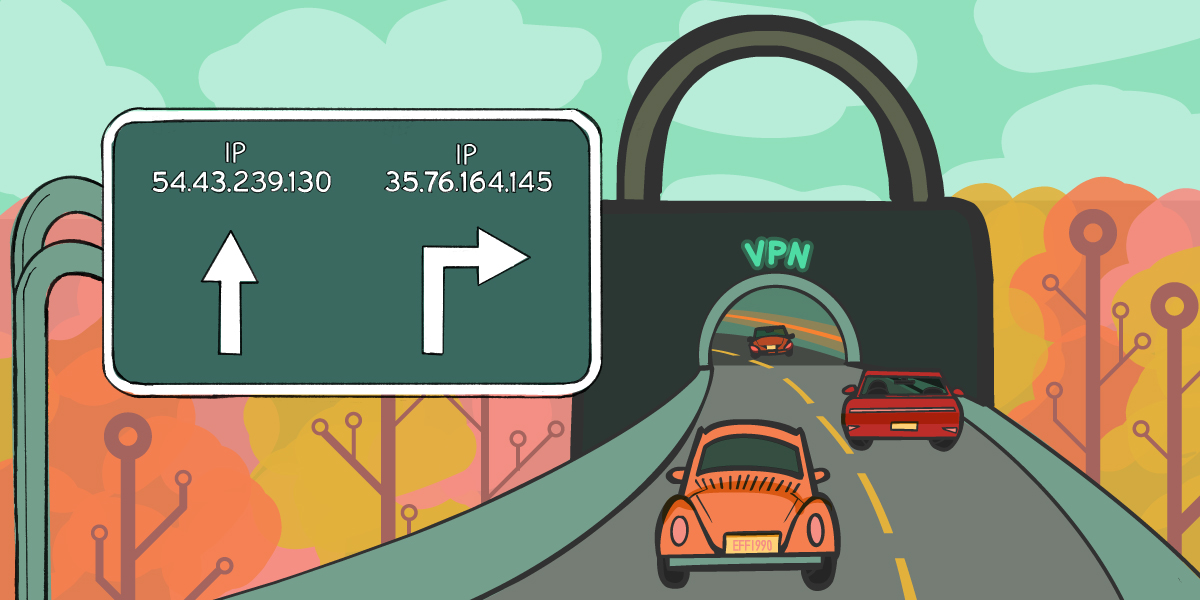
EFF explained this technical impossibility in our comment to the Department of Commerce. VPNs protect user privacy by routing web traffic through intermediary servers. Because destination websites only see the IP address of the VPN server, they have no reliable mechanism to tell whether a connection originates from Salt Lake City, Seattle, or Shanghai. So, under Utah's current statutory framework, platforms are left with an impossible choice: completely block all VPN traffic nationwide or withdraw access from Utah entirely. Judge Barlow agreed, asserting:  

Because the law requires perfection in the absence of perfect geolocation tools, Aylo would need to verify those 28 million users—whether located in Salt Lake City, Boston, New Orleans, Anchorage, or Honolulu—to ensure compliance and avoid liability.

The Rulemaking 

The administrative rules drafted by the state compelled commercial entities to implement "commercially reasonable geolocation obfuscation detection systems", which is a directive, we argue, that demands a technical impossibility.  

In our submission to the Utah Department of Commerce, EFF also detailed how these rules force an invasive data collection regime onto internet users everywhere. So, in response to internet users trying to avoid invasive data collection required by age-verification requirements, SB 73 requires even greater surveillance of internet users’ online activities. The Department’s suggested detection heuristics (like monitoring connection latency or device time zones) are notoriously unreliable and easily skewed by normal network conditions. This active surveillance inevitably leads to widespread misclassification, unwarranted access blocks, and severe impacts on users’ privacy far beyond Utah's borders.  

You can read EFF’s full comments to the Department of Commerce here. 

What Now? 

As we’ve said time and time again: the internet will always route around censorship. 

Mandating invasive tracking and punishing the use of essential security tools turns genuine privacy concerns into mere compliance theater and requires more state-mandated surveillance of internet users who rely on VPNs. As is the case in heavily censored regions, VPN services and obfuscation tools will simply adapt, making this framework fundamentally unsustainable.  

As we’ve said time and time again: the internet will always route around censorship. 

While Utah legislators have indicated they may attempt to revise the law during the next legislative session, the court's preliminary injunction sets an important precedent: state lawmakers should not weaponize age verification to force dragnet tracking or undermine essential security tools.  

As other states consider similar anti-VPN proposals, EFF will continue pushing back against these technically impossible mandates and defending users’ privacy and anonymity. Thus, we urge legislators and regulators to reject anti-privacy rules, prioritize real user security, and safeguard constitutional protections for all users. 

Happy Opt Out October! Let’s Find Real Alternatives to the Tech Giants

1 October 2026 at 21:27

Over the years, the major tech companies have found all sorts of ways to embed themselves into our lives. We often use their software, their AI tools, their social media, and their operating systems by default without even thinking about potential alternatives. It’s time to rethink that relationship. 

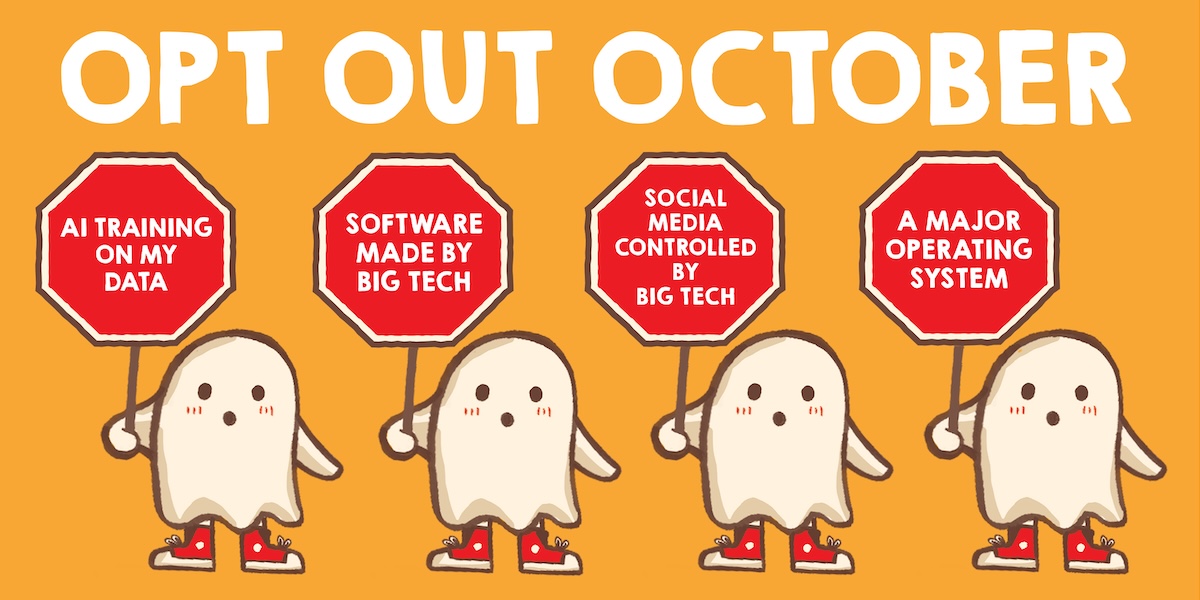
Last year, we created Opt Out October to help remind ourselves of the variety of ways we can take back control of our data through small steps inside apps, operating systems, and other various forms. This year, we highlight the idea that sometimes the best way to control your data is to leave a platform, app, or operating system altogether. 

To do so, we’ve created a hub of resources sharing ways to find new software that isn’t made by the tech giants, take advantage of the growing universe of new social media options, install a whole new operating system, and better control how various popular tools and software use your data for AI training. 

As an incentive, we’ve made merit badges like the one below to help you track your own wins and share them with others. Complete any of these tasks and let the world know by sharing that accomplishment on social media or changing your profile image! Better, more privacy-respecting, and less-enshittified tools are out there. We just have to find and use them.

image of a ghost holding a sign that says "i opted out of social media"

Head over to our Opt Out October landing page and start taking the first steps to regaining control of the tools and software you use.

Connected Cars Are a Surveillance Platform

1 October 2026 at 13:06

Researchers at Northeastern University, in collaboration with Consumer Reports, evaluated how much modern cars spy in their drivers:

The new Northeastern study shows, for the first time, data flowing among the vehicles, the vehicle apps you download when you buy your car, and third-party companies, documenting exactly what kind of data gets siphoned from our vehicles and which companies are receiving that information.

Basically, your car’s manufacturer has you under constant surveillance, and they use that data against you.

The companies on the receiving end of your data, our investigation has found, include car insurers and lenders that are partners in “telematics data exchanges,” which compile driving data on millions of drivers, thousands of data brokers that create personalized risk scores, companies selling infotainment and WiFi hotspot products, and even local and state government agencies working on planning, traffic, and safety initiatives.

Nearly every automaker sent data to outside companies.

Even more troubling, almost a quarter of the vehicle apps were found to be sending out personally identifiable information, including vehicle owners’ names, vehicle identification numbers (VINs), and precise geographic locations. That information can make it easy for companies to link driving behavior to personal data profiles created by data brokers and marketers. Such profiles are routinely sold to banks, insurers, pharmaceutical companies, lenders, and retailers, who can use it for personalized loan terms and filtered bank and insurance offers, a CR and CalMatters investigation found.

Remember the adage “If you’re not the customer, then you’re the product”? (The sentiment is older than you think.) Turns out that with modern internet-connected everything, you’re the product even if you are the customer.

Pentagon breach exposes Social Security numbers and military records of millions

1 October 2026 at 12:48

The US government is alerting millions of people that their personal information was stolen during a breach of the Pentagon’s personnel records at the Defense Manpower Data Center (DMDC).

The DMDC is a central US Department of Defense (DoD) organization that manages personnel records, ID credentials, and benefit entitlements for military and civilian staff, veterans, and their families. It maintains over 60 million records for US military and civilian staff and their family members to help determine benefits and entitlements, such as healthcare and retirement.

Reportedly, cybercriminals had access from October 2025 to July 2026. CNN reports that the Pentagon confirmed the breach affects 2.76 million living individuals, potentially including current and former defense personnel or their dependents, and 294,000 deceased individuals.

A notification shared on Reddit states:

“A small number of unauthorized users accessed files on a server containing unencrypted PII.”

PII means personally identifiable information. The attackers gained access by exploiting a security vulnerability in an unspecified file-sharing system. The Pentagon says it has “no indication” of misuse. It hasn’t explained how it reached that conclusion or what it considers misuse, and it doesn’t rule out future misuse of the exposed information.

The exposed data is said to include Social Security numbers, names, dates of birth, sex, race, and service details. Some records also include contact information and occupational specialty.

Besides the risk that this data could help foreign intelligence services track US personnel, affected people face a lasting risk of identity theft. Birth dates cannot be changed, and Social Security numbers can only be changed in limited circumstances.


Breaches happen every day. Don’t be the last to know.


What to do if you’re affected

The Pentagon is offering 12 months of credit monitoring through IDX. If you receive a notification letter, take up the offer and consider a credit freeze with all three major credit bureaus: Equifax, Experian, and TransUnion. A freeze is free and restricts access to your credit report, helping prevent someone from opening new credit accounts in your name.

Other recommendations are:

  • Get an IRS Identity Protection PIN to prevent someone else from filing a federal tax return using your Social Security number.
  • Be suspicious of unexpected calls, emails, and texts, especially ones that mention your unit, rank, or job. Attackers can use the stolen details to make phishing attempts more convincing.
  • Verify requests through official channels you look up yourself, rather than through contact details in the message.
  • Use unique passwords and multi-factor authentication on email, banking, and benefits accounts.
  • Limit location sharing and review privacy settings on phones and apps, since military leaders have raised concerns about commercial location data being used to target personnel.
  • Follow instructions in the breach letter and further official communications and report any suspicious approach to your security officer.

Let’s face it, an incognito window can only do so much. 
 
Breaches, dark web trading, credit fraud. Malwarebytes Identity Theft Protection monitors for all of it, alerts you fast, and comes with identity theft insurance. 

Pentagon breach exposes Social Security numbers and military records of millions

1 October 2026 at 12:48

The US government is alerting millions of people that their personal information was stolen during a breach of the Pentagon’s personnel records at the Defense Manpower Data Center (DMDC).

The DMDC is a central US Department of Defense (DoD) organization that manages personnel records, ID credentials, and benefit entitlements for military and civilian staff, veterans, and their families. It maintains over 60 million records for US military and civilian staff and their family members to help determine benefits and entitlements, such as healthcare and retirement.

Reportedly, cybercriminals had access from October 2025 to July 2026. CNN reports that the Pentagon confirmed the breach affects 2.76 million living individuals, potentially including current and former defense personnel or their dependents, and 294,000 deceased individuals.

A notification shared on Reddit states:

“A small number of unauthorized users accessed files on a server containing unencrypted PII.”

PII means personally identifiable information. The attackers gained access by exploiting a security vulnerability in an unspecified file-sharing system. The Pentagon says it has “no indication” of misuse. It hasn’t explained how it reached that conclusion or what it considers misuse, and it doesn’t rule out future misuse of the exposed information.

The exposed data is said to include Social Security numbers, names, dates of birth, sex, race, and service details. Some records also include contact information and occupational specialty.

Besides the risk that this data could help foreign intelligence services track US personnel, affected people face a lasting risk of identity theft. Birth dates cannot be changed, and Social Security numbers can only be changed in limited circumstances.


Breaches happen every day. Don’t be the last to know.


What to do if you’re affected

The Pentagon is offering 12 months of credit monitoring through IDX. If you receive a notification letter, take up the offer and consider a credit freeze with all three major credit bureaus: Equifax, Experian, and TransUnion. A freeze is free and restricts access to your credit report, helping prevent someone from opening new credit accounts in your name.

Other recommendations are:

  • Get an IRS Identity Protection PIN to prevent someone else from filing a federal tax return using your Social Security number.
  • Be suspicious of unexpected calls, emails, and texts, especially ones that mention your unit, rank, or job. Attackers can use the stolen details to make phishing attempts more convincing.
  • Verify requests through official channels you look up yourself, rather than through contact details in the message.
  • Use unique passwords and multi-factor authentication on email, banking, and benefits accounts.
  • Limit location sharing and review privacy settings on phones and apps, since military leaders have raised concerns about commercial location data being used to target personnel.
  • Follow instructions in the breach letter and further official communications and report any suspicious approach to your security officer.

Let’s face it, an incognito window can only do so much. 
 
Breaches, dark web trading, credit fraud. Malwarebytes Identity Theft Protection monitors for all of it, alerts you fast, and comes with identity theft insurance. 

Your car’s app could be telling Big Tech who you are and where you go

30 September 2026 at 13:28

A study testing 21 cars from 19 brands and 30 companion apps found connections to advertising and tracking companies, and evidence that some apps shared sensitive personal data.

Modern cars can unlock remotely, route around traffic, stream entertainment, summon roadside help, and cool or heat the cabin before you get in. But those conveniences come with a privacy cost that drivers may struggle to see and are unable to refuse.

We’ve covered cars and privacy a few times before, especially after Mozilla researchers described cars as a “privacy nightmare.”

Texas Attorney General Ken Paxton investigated car manufacturers seeking details of their data collection and sharing practices, and sued General Motors over allegations that it sold customer driving data to third parties.

Researchers from Northeastern University, working with Consumer Reports, tested vehicles from model years 2022 through 2025 and companion apps, observing network traffic while cars were stationary, driven, and used through their apps. The results reinforce an uncomfortable reality: connected vehicles are data-collection platforms on wheels.

The results in a nutshell:

  • Both vehicles and companion apps contacted third-party domains, including those associated with advertising and tracking.
  • 19 of 21 vehicles contacted at least one third party over Wi-Fi.
  • 7 of 30 apps transmitted sensitive identifiers to third parties associated with advertising and tracking.

The troubling part is not that a car talks to its manufacturer. After all, a connected vehicle needs some network access for safety alerts, navigation, account functions, and maintenance. The bigger issue is the potential combination of identifiers. A vehicle identification number (VIN) can link a particular vehicle to its owner, while precise location can reveal highly sensitive patterns: where someone sleeps, works, worships, seeks medical care, spends time with friends, or travels. Add an email address or a name, and that information can be easier to connect to the detailed consumer profiles held by advertisers and data brokers.

And that’s before considering the privacy concerns around cameras that monitor drivers’ faces for signs of distraction or impairment.

Consent with strings attached

Consent is a weak safeguard when drivers have to accept extensive terms to use functions advertised as part of the vehicle. Several manufacturers said their connected services were opt-in, but declining can mean losing useful functionality. For example, Consumer Reports noted a Tesla warning that refusing its agreement may result in:

“reduced functionality, serious damage, or inoperability.”

That hardly sounds like freely given, informed consent.

There was one sign that scrutiny can matter: after researchers presented their findings, Honda told Consumer Reports it had directed vendor Amplitude to delete location data it received and stopped sending it going forward. But consumers should not need an academic study to discover who their car or its app is sharing data with.

Especially when Amazon, Google, Meta, and Microsoft—companies that already know plenty about us—were among the leading recipients of the driver data.

Until automakers collect less data and provide clear privacy settings, meaningful opt-outs, and deletion controls, drivers should treat a connected car, and especially its companion app, as another privacy-sensitive device. Review app permissions, turn off optional data-sharing settings, avoid linking unnecessary accounts, and ask manufacturers what data they retain, share, and delete.


Browse like no one’s watching. 

Malwarebytes Privacy VPN encrypts your connection and never logs what you do, so the next story you read doesn’t have to feel personal. Try it free → 

Your car’s app could be telling Big Tech who you are and where you go

30 September 2026 at 13:28

A study testing 21 cars from 19 brands and 30 companion apps found connections to advertising and tracking companies, and evidence that some apps shared sensitive personal data.

Modern cars can unlock remotely, route around traffic, stream entertainment, summon roadside help, and cool or heat the cabin before you get in. But those conveniences come with a privacy cost that drivers may struggle to see and are unable to refuse.

We’ve covered cars and privacy a few times before, especially after Mozilla researchers described cars as a “privacy nightmare.”

Texas Attorney General Ken Paxton investigated car manufacturers seeking details of their data collection and sharing practices, and sued General Motors over allegations that it sold customer driving data to third parties.

Researchers from Northeastern University, working with Consumer Reports, tested vehicles from model years 2022 through 2025 and companion apps, observing network traffic while cars were stationary, driven, and used through their apps. The results reinforce an uncomfortable reality: connected vehicles are data-collection platforms on wheels.

The results in a nutshell:

  • Both vehicles and companion apps contacted third-party domains, including those associated with advertising and tracking.
  • 19 of 21 vehicles contacted at least one third party over Wi-Fi.
  • 7 of 30 apps transmitted sensitive identifiers to third parties associated with advertising and tracking.

The troubling part is not that a car talks to its manufacturer. After all, a connected vehicle needs some network access for safety alerts, navigation, account functions, and maintenance. The bigger issue is the potential combination of identifiers. A vehicle identification number (VIN) can link a particular vehicle to its owner, while precise location can reveal highly sensitive patterns: where someone sleeps, works, worships, seeks medical care, spends time with friends, or travels. Add an email address or a name, and that information can be easier to connect to the detailed consumer profiles held by advertisers and data brokers.

And that’s before considering the privacy concerns around cameras that monitor drivers’ faces for signs of distraction or impairment.

Consent with strings attached

Consent is a weak safeguard when drivers have to accept extensive terms to use functions advertised as part of the vehicle. Several manufacturers said their connected services were opt-in, but declining can mean losing useful functionality. For example, Consumer Reports noted a Tesla warning that refusing its agreement may result in:

“reduced functionality, serious damage, or inoperability.”

That hardly sounds like freely given, informed consent.

There was one sign that scrutiny can matter: after researchers presented their findings, Honda told Consumer Reports it had directed vendor Amplitude to delete location data it received and stopped sending it going forward. But consumers should not need an academic study to discover who their car or its app is sharing data with.

Especially when Amazon, Google, Meta, and Microsoft—companies that already know plenty about us—were among the leading recipients of the driver data.

Until automakers collect less data and provide clear privacy settings, meaningful opt-outs, and deletion controls, drivers should treat a connected car, and especially its companion app, as another privacy-sensitive device. Review app permissions, turn off optional data-sharing settings, avoid linking unnecessary accounts, and ask manufacturers what data they retain, share, and delete.


Browse like no one’s watching. 

Malwarebytes Privacy VPN encrypts your connection and never logs what you do, so the next story you read doesn’t have to feel personal. Try it free → 

❌