Normal view

The NO FAKES Act Could Silence Satire, Commentary, And News

17 June 2026 at 22:33

The NO FAKES Act is supposed to target harmful AI-generated impersonations. But in reality, it will make it easier to suppress commentary, satire, and other lawful speech. That's why EFF has signed a letter urging the Senate Judiciary Committee not to advance the bill in its current form.

Take action

Tell Congress to Say No to NO FAKES

In the letter, EFF joins a coalition of civil society groups in pointing out that the bill would import many of the worst features of the DMCA notice-and-takedown system into an even broader range of online expression. Faced with a “heckler’s veto” over legal speech, platforms will have incentives to remove content first and ask questions later. 

The bill offers no protection for a platform’s judgment about an often difficult question—whether a particular piece of content is satire, parody, commentary, or news. Any platform that guesses wrong faces penalties of up to $750,000 per work. 

NO FAKES could also undermine the rights of the people it is supposed to protect. The new federal “likeness” right could be licensed or transferred to others, so individuals will lose control over the use of their own face and voice. That’s not theoretical—workers in the entertainment industry are routinely asked to sign broad contracts about the future use of their likenesses.

As the letter notes: 

A background actor who signs a release on set or an ordinary person who clicks through a platform's terms of service could end up with the right to their own face and voice in someone else's hands, for years, with federal enforcement behind it. 

EFF and the other signatories urge Congress to examine existing legal remedies and pursue narrowly tailored solutions to genuine harms. The last thing we need is a sweeping new intellectual property right that threatens free expression. 

In addition to EFF, the letter is signed by the Center for Democracy & Technology, the American Civil Liberties Union, Fight for the Future, Foundation for Individual Rights and Expression, the Organization for Transformative Works, Public Knowledge, the R Street Institute, The Future of Free Speech, and the Woodhull Freedom Foundation. Read the full letter here. 

Take action

Tell Congress to Say No to NO FAKES

Congress Just Rushed Through a Disastrous Copyright Office Overhaul

11 June 2026 at 00:54

In a voice vote earlier this week, the House of Representatives passed H.R. 6028, the “Legislative Branch Agencies Clarification Act.” The legislation is presented as a technical reorganization of some government agencies, but it’s much more than that. 

H.R. 6028 would fundamentally change the U.S. Copyright Office, and not in a good way. The bill removes the Library of Congress’ current supervisory role over the Copyright Office, transfers several powers directly to the Register of Copyrights, and makes the Register a presidential appointee, confirmed by the Senate. 

These changes would make an office that’s already hugely influential in copyright and tech policy much more political. EFF first explained why that’s a terrible idea when it came up nearly a decade ago. This bill, like the older one, weakens the few public-interest checks and balances that do exist.  We hope the Senate promptly rejects this bill. 

The Copyright Office Doesn’t Need More Politics—Or More Power

The Copyright Office's main responsibilities are administrative and advisory. It registers copyrights, maintains records, grows the Library of Congress’s collections, and provides expertise to Congress on copyright law. But over the past two decades, the Office has also become increasingly influential in copyright policy debates that affect free expression, libraries, educators, competition—and everyday internet users. Unfortunately, it has not been a neutral advocate. The office’s recent report on the role of AI severely bungled the issue of fair use, prioritizing private licensing market “solutions” over user rights. 

Going further back, the Copyright Office supported one of the most infamous anti-internet proposals of all time—the Stop Online Piracy Act (SOPA), a disastrous internet censorship proposal that sparked one of the largest online protests in history. The Office has repeatedly advanced positions that favored large entertainment-industry interests over the public interest.

The Office also plays a major role in the Digital Millennium Copyright Act (DMCA) Section 1201 rulemaking process, which determines when the public may lawfully bypass digital locks for activities such as security research, repair, preservation, or accessibility. EFF has used this process repeatedly to mitigate some of the worst harms of the DMCA. H.R. 6028 would move rulemaking authority over 1201 from the Librarian of Congress to the Register of Copyrights, further consolidating power within the Copyright Office itself.

The bill also makes the Register of Copyrights a presidential appointee confirmed by the Senate. Each administration will be pressured to pick nominees aligned with their own policy preferences, and the powerful copyright owning industries will invest even more heavily in lobbying to get their way, and influence the selection. This position should be focused on administrative ability and actual expertise, not lobbying and politics. 

The Copyright Office Should Stay Connected To The Library of Congress

H.R. 6028 would do more than change who appoints the Register of Copyrights. It would sever the Copyright Office from Library of Congress supervision and transfer many Librarian powers directly to the Register. 

The supervisory relationship exists for good reason, as the nation’s libraries have pointed out for years. The Library, while far from perfect, at least has the mission of preserving and providing access to knowledge. That should be an important public-interest counterweight in copyright debates. Congress has not explained how weakening the ties between the Library and the Copyright Office would serve the public better, or even seriously inquired about it. 

This Bill Was Rushed Through

Back in March, EFF joined Public Knowledge, the Center for Democracy and Technology, library organizations and tech groups, urging Congress not to fast-track this legislation. We told them changes to the Copyright Office will have major consequences for the “speech rights, educational opportunities, and creative freedoms of all Americans.” 

Yet Congress moved forward without any hearings on the bill, and without meaningful examination. H.R. 6028 creates a years-long separation of the Copyright Office from the Library of Congress, transfers significant legal authority, and restructures the appointment process for the nation’s top copyright official. Changes like that deserve hearings, debate, and public scrutiny. H.R. 6028 got none of that. 

The Senate Should Stop This Bill

Copyright law exists to serve the public and “promote the progress” of science and learning. The institutions that administer copyright law should do the same. 

H.R. 6028 would move the Copyright Office further away from that goal. Congress should be strengthening public-interest oversight of copyright policymaking, not looking for ways to concentrate more authority in a single presidentially appointed official. 

The Senate should reject H.R. 6028. The Copyright Office should serve the public—not presidential administrations, and not industry lobbyists. 

Cheers to the Winners of EFF’s 18th Annual Cyberlaw Trivia Night! 

8 June 2026 at 21:12

On a warm June evening in San Francisco, attorneys and other legally-minded friends of EFF gathered for our 18th Annual Cyberlaw Trivia Night, an annual test of tech-related legal knowledge, and the ability to remember some deeply obscure facts under pressure. 

Returning Quizmaster Kurt Opsahl once again guided competitors through six rounds of trivia covering everything from intellectual property and free speech to privacy, security, and artificial intelligence. Teams wrestled with questions about geofence warrants, AI copyright disputes, the SOPA/PIPA internet blackout, Section 230, and even a Senate hearing featuring a contestant who was herself present at cyberlaw trivia. 

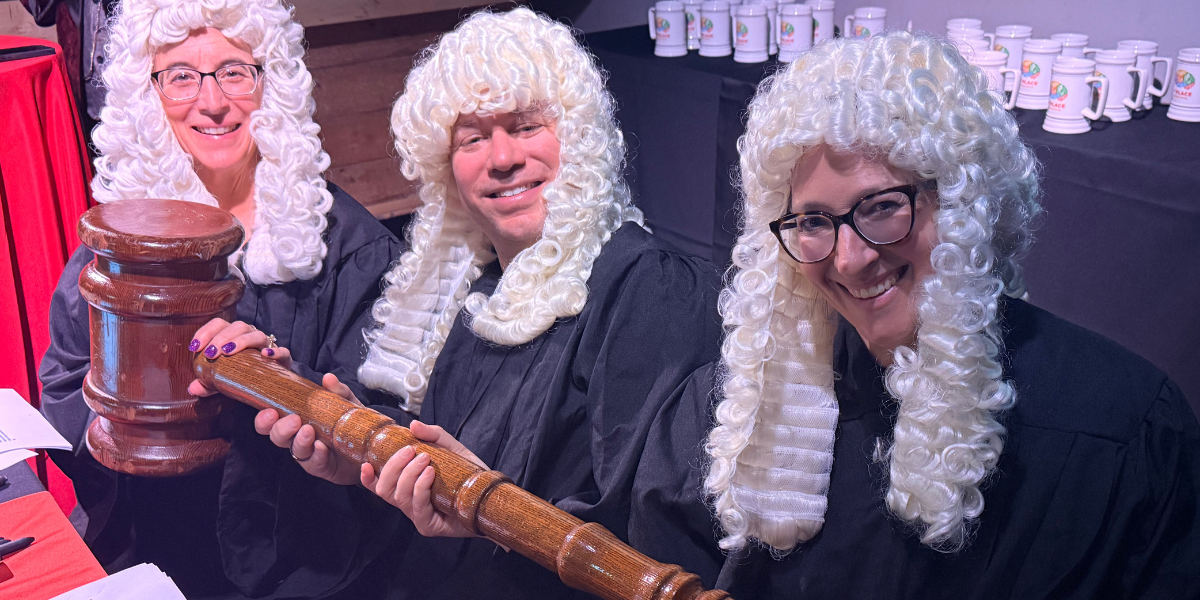
The judges’ table made it obvious that 2026 was a notable year. Weighing in on the toughest close calls were three folks with a deep history at our org: outgoing EFF Executive Director Cindy Cohn and new Executive Director Nicole Ozer both sat at as judges, joined by new cyberlaw judge Mike Masnick, founder of Techdirt and a recipient of an EFF Award in 2020

The food was hot, the drinks were cold, and the competition was fierce. Teams including Shady Docket, Byte Club, Flock U, This Is Why We Can't Have Nice Precedent, Nicky's Angels, and Betamaxxers battled through six rounds of challenging questions. 

When a question about Afroman's successful legal battle against Ohio sheriff's deputies came up, members of Byte Club offered to do more than name his most popular album: they offered to perform a rendition of “Lemon Pound Cake” (also the album name—tricky!) for the judges. This won no sway with the 3-judge Cyberlaw Judiciary, and the offer was politely declined. 

The teams racked their collective law-noggins about some of the details of recent legal battles over digital rights, and a round entitled “You Can Call Me AI.” After the IP round, which rewarded folks in the audience who could answer details about the server test, the trivia moved onto newsier questions, with questions about ICE apps, anti-ICE apps, recent defamation cases involving our sitting president, and the slogan of a mineral company that you might've heard on terrestrial radio anytime between the early aughts and this week. 

You don't have to wear a morning coat to win Supreme Court arguments, but knowing who did for 4 years might have helped you win the IP round. 

By the end of regulation play, the cyberlaw trivia competition was closer than we could have imagined. For the first time in Cyberlaw Trivia history, three teams finished tied for first place, sending the contest to two tiebreaker questions. 

The final question noted that Google had received more than 287,000 government information requests in the first half of 2025, and asked teams to estimate how many were received by OpenAI during the same period. Every team guessed over, but it was the victors, Shady Docket, who guessed the lowest: 260. (The real answer is 146.)

As Shady Docket team member Erin Simon explained after the win: "As much as we love EFF, what we love even more is crushing other trivia teams."

In second place were Nicky’s Angels. Rounding out the virtual podium in 3rd were the Betamaxxers, who jumped ahead early with a home-run run in the Free Speech round, getting every question correct. 

Each summer, EFF's Cyberlaw Trivia Night brings together the legal community that helps defend privacy, free expression, innovation, and digital rights. We want to especially thank this year Morrison Foerster, Fenwick, Wilson Sonsini, and Public Resource for supporting EFF's legal intern program.

Are you an attorney interested in defending civil liberties in the digital world? Consider joining EFF's Cooperating Attorneys list. This network helps EFF connect people to legal assistance when EFF is unable to provide direct assistance. 

Fighting for first place at EFF’s Cyberlaw Trivia Night helps us fight for your rights online! Sponsor one of our annual events and join the movement for digital privacy, free speech, and innovation. Please visit eff.org/thanks or contact tierney@eff.org for more information.

❌