
❌

Normal view

ICYMI: June 2026 @AWS Security

15 July 2026 at 02:37

Read all about the latest AWS security features, compliance updates, and hands-on resources in our new, monthly digest posts. You’ll find expert blog posts, new service capabilities, code samples, and workshops.

AWS Security Blog posts

This month’s AWS Security Blog posts covered identity and access management, threat intelligence, network security, AI-powered security tooling, and multi-account governance. Read on for guidance on restricting console access to expected networks, securing multi-tenant AI agents, preventing data exfiltration, and managing organization-scale migrations.

Identity

Secure multi-tenant AI agents with Amazon Bedrock AgentCore resource-based policies
Authors: Satyen Verma, Satveer Khurpa, Prajit Pabbati, Vijay Kumar Samanthapudi, Zohreh Norouzi | Published: June 2, 2026
Learn to use resource-based policies on Amazon Bedrock AgentCore to grant cross-account access for one tenant while restricting another to VPC-only traffic in a shared multi-tenant AI platform.

Customize federated sign-in with new Amazon Cognito Lambda trigger
Authors: Abrom Douglas | Published: June 4, 2026
Learn to use the new inbound federation AWS Lambda trigger for Amazon Cognito to transform, filter, and enrich user attributes from external identity providers before profile creation in your user pool.

Amazon Cognito unlocks advanced capabilities with next-generation infrastructure
Authors: Howie Li, Georgi Baghdasaryan | Published: June 4, 2026
Amazon Cognito introduced high-throughput performance, customer-managed keys for data encryption at rest, and multi-Region replication for business continuity, built on a new storage infrastructure migrated with zero downtime.

Building secure B2C applications with fine-grained access control using Amazon Cognito and Amazon Verified Permissions
Authors: Sowmya Vemuri | Published: June 5, 2026
Learn to build fine-grained access controls for a Streamlit application using Amazon Cognito for authentication and Amazon Verified Permissions with Cedar policies for authorization.

Restrict AWS Management Console access to expected networks with sign-in resource-based policies and RCPs
Authors: Swara Gandhi, Rishi Tripathy | Published: June 24, 2026
Learn to use sign-in resource-based policies and resource control policies to restrict AWS Management Console sign-in to requests from expected networks, such as corporate VPNs and Amazon VPC endpoints.

Infrastructure security

Gain visibility into DDoS attacks with flow logs in AWS Shield Advanced
Authors: Ken Kitts | Published: June 4, 2026
Learn to configure AWS Shield Advanced attack flow logs to capture traffic metadata during DDoS events, pinpoint sources, verify mitigations, and feed your existing analysis pipelines.

Threat tactic spotlight: Subdomain takeover
Authors: Matt Gurr, Ariam Michael, Geoff Sweet, Luis Pastor | Published: June 16, 2026
Learn to detect and prevent subdomain takeover using AWS Config custom rules to identify dangling DNS CNAME records pointing to deleted resources in globally shared namespaces

Prevent data exfiltration: AWS egress controls for cloud workloads
Authors: Meriem Smache, Maxim Raya | Published: June 22, 2026
Learn to implement layered egress detection and protection using AWS Network Firewall, Amazon Route 53 Resolver DNS Firewall, and data perimeters to help reduce unauthorized data transfer risk.

Detection and incident response

Operationalizing AWS security: A maturity roadmap
Authors: Joseph Sadler | Published: June 8, 2026
A six-phase maturity roadmap for organizations that have already enabled AWS Security Hub and Amazon GuardDuty, covering tuning, notifications, automated remediation, and operational cadence.

Introducing AWS Continuum: Security at machine speed
Authors: Chet Kapoor | Published: June 17, 2026
AWS Continuum for code vulnerabilities is an AI-native platform that addresses the full lifecycle of a code vulnerability at machine speedβ€”from discovery and prioritization through validation and remediation.

Accelerate security investigations with Kiro CLI
Authors: Sibasankar Behera, Marshall Jones | Published: June 18, 2026
Learn to use Kiro CLI to conduct security investigations following the AWS Security Incident Response Guide framework, from triaging Amazon GuardDuty findings through containment and evidence preservation.

What the June 2026 Threat Technique Catalog update means for your AWS environment
Authors: Shannon Brazil, Cydney Stude, Javier Teitelbaum | Published: June 29, 2026
Learn about five new entries and three updates to the Threat Technique Catalog for AWS, covering container security, organization-level trust, and compute hijacking patterns observed by AWS CIRT.

Data protection

Identify unused AWS KMS keys and prevent accidental key deletions
Authors: Andrea Rossi, Poojil Tripathi | Published: June 2, 2026
Learn to use the new AWS KMS GetKeyLastUsage API to audit key activity, identify unused keys, and apply policy controls that prevent accidental deletion of recently used keys.

Governance and compliance

From Monolith to Multi-Account: Pinterest’s AWS Organization Transformation Journey
Authors: Sid Vantair, James Fogel, Jeremy Talis | Published: June 4, 2026
Learn how Pinterest migrated from a single monolithic AWS account to a multi-account architecture, including management account separation, automated account provisioning, and centralized networking.

Build a Multi Account Patch Compliance Dashboard with Kiro Specs
Authors: Justin Thomas | Published: June 9, 2026
Learn to use Kiro’s spec-driven development approach to build a serverless multi-account patch compliance dashboard with AWS Systems Manager Patch Manager and private access via AWS Systems Manager Session Manager.

Transfer AWS accounts between AWS Organizations while preserving AWS Lake Formation permissions
Authors: Alex Torres, Aarthi Srinivasan, Ryan McNamee | Published: June 12, 2026
Learn to migrate member accounts between AWS Organizations without disrupting AWS Lake Formation cross-account permissions by using temporary bridge shares with the new AWS RAM retention parameter.

June Security Bulletins

Investigations of reported security vulnerabilities affecting Amazon and AWS services, software, and products.

AWS Samples

This month brings 10 new AWS samples spanning AI security, identity, infrastructure security, governance, and observability. From securing Amazon Bedrock AgentCore agents with AWS WAF to building graph-based CMDBs for dependency analysis, these repositories help you implement security and governance best practices across your AWS environment.

AI Security

Securing Amazon Bedrock AgentCore Runtime with AWS WAF
Learn to place AWS WAF in front of Amazon Bedrock AgentCore Runtime using two architecture patterns with an Application Load Balancer and VPC endpoints for defense-in-depth protection.

AI Security Posture Management (AI SPM) on AWS
Learn to discover, assess, and protect AI agents running in your environment using AWS-native services across three pillars: observe, govern, and defend, with rules mapped to OWASP LLM Top 10, NIST AI RMF, and MITRE ATLAS.

Identity

Implement On-Behalf-Of (OBO) token exchange for Amazon Bedrock AgentCore agents
Learn to implement secure identity propagation from user context through agent chains using Amazon Bedrock AgentCore Identity OBO token exchange without credential sharing.

Infrastructure Security

Monetizing AI traffic with Amazon CloudFront and AWS WAF (x402)
Learn to monetize AI traffic at the edge using AWS WAF native x402 protocol support with Amazon CloudFront, settling payments in a single round-trip with no Lambda@Edge required.

Governance

Turn repeatable processes into SOPs your AI agent works through one auditable step at a time
Learn to use this MCP server to hand standard operating procedures to your AI agent one step at a time, with gated execution and auditable progress tracking.

Bedrock Ops Lens
Learn to deploy an Amazon Bedrock observability dashboard in your own account for per-account, per-model, and per-tag cost attribution, quota tracking, latency monitoring, and model lifecycle management, with an MCP server for IDE access.

AWS Agent Registry sample demo application
Learn to use AWS Agent Registry to publish, review, approve, and discover AI agents, MCP servers, and agent skills through a centralized catalog with governance workflows.

Graph CMDB β€” an AWS resource relationship graph
Learn to build a graph-based CMDB from AWS Config, AWS IAM, Amazon EKS, AWS CloudTrail, and VPC Flow Logs to visualize resource dependencies, investigate scope of impact, and surface governance findings.

OpenAI Codex through Amazon Bedrock β€” Usage governance with LiteLLM
Learn to centrally govern, administer, and monitor OpenAI Codex access for engineering teams using Amazon Bedrock as the inference backend with per-user budgets, rate limits, and audit trails via LiteLLM.

Agentic Data Governance β€” the context ladder
Learn to measure how governance context layers β€” data dictionaries, semantic metrics, and execution skills β€” improve data agent accuracy through a four-level ablation ladder on the BIRD benchmark.

Conclusion

June 2026 provides guidance and examples for operationalizing security at organizational scale; from maturity roadmaps and console access restrictions to AI agent registries and posture management platforms. The posts and samples provide patterns for DDoS visibility with flow logs, multi-tenant agent isolation with resource-based policies, egress controls for data exfiltration prevention, and governance frameworks for AI coding assistants. Each resource includes deployment steps or runnable code so you can validate in your own environment before adopting. Subscribe to the AWS Security Blog RSS feed to receive updates as they publish, and revisit this digest monthly for a consolidated view of what changed and what to act on.

If you have feedback about this post, submit comments in the Comments section below.


Rodolfo Brenes

Rodolfo Brenes

Rodolfo is a Principal Solutions Architect focused on Cloud Governance and Compliance. With over 18 years of experience, he currently leads a technical field community in AWS helping customers scale and improve their security and governance frameworks. Besides work, Rodolfo enjoys video games, playing with his four cats, and won’t say no to a good outdoor adventure.

Anna Brinkmann

Anna has 18 years of experience in the technical content space and has spent the last 6 years managing the AWS Security Blog. Outside of work, she enjoys spending time with her family.

New compliance guidance available: HITRUST i1 on AWS

13 July 2026 at 15:19

We are pleased to announce the publication of a new AWS compliance implementation guidance: HITRUST i1 Compliance on AWS: Customer Implementation Guidance with an Illustrative Healthcare Platform.

Healthcare organizations seeking HITRUST i1 certification increasingly rely on Amazon Web Services (AWS) as their cloud foundation. The HITRUST i1 assessment covers 182 curated controls at the Implemented level and is the most widely required HITRUST certification tier in healthcare vendor contracts and Business Associate Agreements required by health plans, hospital systems, and business associates as a condition of working with them.

This guide is designed to close the gap between understanding what HITRUST i1 requires and knowing how to implement it on AWS. It walks cloud architects, security engineers, compliance leads, and assessment preparation teams through the full lifecycle of an i1 engagement from defining the assessment boundary to implementing controls across each technical domain.

What the guide covers

The guide addresses 11 HITRUST i1 technical control domains, with supporting AWS implementation components relative to these domains. The domains include access control, endpoint protection, configuration management, vulnerability management, network protection, transmission protection, incident management, data protection and privacy, audit logging and monitoring, password management, and business continuity and disaster recovery.

The guidance is grounded in a fictional but realistic connected healthcare platform deployed on AWS Landing Zone Accelerator. The scenario is used to make abstract HITRUST concepts concrete, not to suggest that the same architecture or control choices apply universally. HITRUST i1 scoping is inherently organization-specific. The assessment boundary, applicable controls, and evidence requirements are determined by each organization’s system scope and delivered through the HITRUST MyCSF portal. Readers should treat the guidance as a starting point and work with a HITRUST Authorized External Assessor to validate what applies to their specific environment. This guide doesn’t constitute a compliance certification advisory.

Getting started

You can download the guide here: HITRUST i1 Compliance on AWS: A Customer Implementation Guidance with an Illustrative Healthcare Platform.

AWS HITRUST assurance documentation and the Customer Responsibility Matrix are available through AWS Artifact. For assessment readiness support, visit AWS Security Assurance Services.

If you have feedback about this post, submit comments in the Comments section below.


Abdul Javid

Abdul is a Senior Security Assurance Consultant at AWS Security Assurance Services. He holds HITRUST certifications and has led HITRUST r2 and i1 engagements across multiple healthcare technology companies. Abdul holds multiple security and auditing certifications and supports customers building responsible AI governance programs on AWS. He has over 25 years of experience and holds certifications across AWS, CMMC, PCI DSS, PMI, ISC2, and ISACA.

Shreya Singh

Shreya Singh

Shreya is a Security Assurance Consultant at AWS with more than eight years of experience in governance, risk, compliance, and cloud security. She holds the CISA and HITRUST Certified CSF Practitioner (CCSFP) certifications and supports healthcare and technology organizations with HITRUST, HIPAA, SOC 2, risk management, and audit readiness initiatives. She holds a Master of Engineering in Cybersecurity from the University of Maryland, College Park.

AWS designated as a critical third party to the UK financial sector

10 July 2026 at 18:15

Amazon Web Services EMEA Sarl (AWS) has been designated as a critical third party (CTP) to the UK financial sector by HM Treasury.

The CTP regime came into force on January 1, 2025, and establishes a framework through which the Bank of England, PRA, and FCA (collectively the UK regulators) can set requirements on and have direct oversight of designated CTPs.

AWS supports the objectives of the UK regulators to ensure a robust financial system.

AWS obligations under the regime

The CTP regime is an outcomes-focused framework. Under the regime, AWS will be subject to requirements in relation to its designated Systemic Third-Party Services (STPS). The first step will be a self-assessment of these STPSs against the CTP regime criteria, which AWS will now carry out in line with regulators’ expected timelines.

AWS has actively engaged with the UK authorities as they’ve developed the CTP regime, and we will continue this constructive approach as we work to meet our obligations under it.

Impact on customers

The UK regulators have clarified that the requirements under the regime don’t eliminate, reduce, or replace the accountability of firms, their boards, and senior management for remaining operationally resilient, including when they rely on services provided by third parties.

The regime doesn’t change obligations on financial services customers of designated CTPs. As we manage our obligations, we expect to publish materials that customers can use to inform their own operational resilience planning and third-party risk management.

The AWS commitment to operational resilience

We’re focused on supporting financial services customers in enhancing their operational resilience and providing a range of services and guidanceβ€”including the AWS Well-Architected Framework and resources for cloud incident managementβ€”to help organizations deliver effective resilience outcomes.

AWS has a team of regulatory and technology experts with expertise in financial services ready to support customers with questions about this regime or operational resilience more broadly. Customers can contact their AWS account team for further information.


Michael Jefferson

Michael Jefferson

Michael is Head of Financial Services Public Policy for EMEA. He leads on policy and engagement for issues relating to adoption and use of cloud and technology across the finance sector. Before joining AWS, he led on capital markets policy at the Investment Association and prior to that at UK Finance. He previously was head of Public Policy EMEA at Nomura and spent the early part of his career as a UK civil servant working on international trade and business issues.

Spring 2026 SOC 1 and 2 reports are now available in OSCAL format

18 June 2026 at 18:50

Amazon Web Services (AWS) is excited to release the Spring 2026 System and Organization Controls (SOC) 1 and 2 reports in machine-readable OSCAL format alongside the PDF version of the reports. The reports cover 188 services over the 12-month period from April 1, 2025 to March 31, 2026, giving customers a full year of assurance. These reports demonstrate our continuous commitment to adhering to the heightened expectations of cloud service providers.

AWS is the first major cloud provider to offer key compliance reports to customers in the National Institute of Standards and Technology’s (NIST) Open Security Controls Assessment Language (OSCAL), as of June 2026. OSCAL is an open source, machine-readable (JSON) format for security information. The SOC 1 and SOC 2 report package in OSCAL format is now available as a distinct package in AWS Artifact, marking a milestone toward open, standards-based compliance automation. This machine-readable version of the SOC report package enables workflow automation to reduce manual processing time and modernize security and compliance processes. Your use cases for this content are innovative, and we want to hear about them through the contact information found in the OSCAL report package.

You can download the Spring 2026 SOC 1 and 2 reports in OSCAL format through AWS Artifact, a self-service portal for on-demand access to AWS compliance reports. Sign in to AWS Artifact in the AWS Management Console, or learn more at Getting Started with AWS Artifact. The SOC 3 report can be found on the AWS SOC Compliance page and in AWS Artifact.

AWS strives to continuously bring services into the scope of its compliance programs to help customers meet their architectural and regulatory needs. You can view the current list of services in scope on our Services in Scope page. As an AWS customer, you can reach out to your AWS account team if you have any questions or feedback about SOC compliance.

To learn more about AWS compliance and security programs, see AWS Compliance Programs.

Thomas Fischer

Thomas Fischer

Thomas is a Principal at AWS, focused on scaling product delivery and applications to transform security, risk, and compliance. He has over 20 years of experience in enterprise IT transformation and worked for different consulting companies managing large teams and programs across multiple regulated industries and sectors. Thomas holds CISSP, CCSP, CGEIT, and PMP certifications.

Tushar-Jain

Tushar Jain

Tushar is a Compliance Program Manager at AWS where he leads multiple security and privacy initiatives. Tushar holds a Master of Business Administration from Indian Institute of Management Shillong, India and a Bachelor of Technology in electronics and telecommunication engineering from Marathwada University, India. He has over 14 years of experience in information security and holds CISM, CCSK and CSXF certifications.

Fritz Kunstler

Fritz is a Principal Security Engineer at AWS, currently focused on AI applications to transform security governance, risk, and compliance. Fritz has been an AWS customer since 2008 and an Amazonian since 2016.

Baj Bajwa

Baj Bajwa

Baj is a Security Assurance Manager at AWS, where he leads the Global Third-Party Assurance product portfolio within the Compliance and Security Assurance (CSA) organization. He has over 15 years of experience in information security, compliance, and risk management, and holds a master’s degree in cybersecurity. Baj maintains CISSP, CISA, PMP, CCSK, GISF, and ICAgile certifications.

Introducing AWS Continuum: Security at machine speed

17 June 2026 at 17:34

What we believe

We’ve been thinking deeply about enterprise security. The operating model that served us for the past decade (collect telemetry, store it, query it, build dashboards to watch it) is no longer keeping pace. We need to shift to the new world: telemetry, context, reasoning, and actions. An approach that produces outcomes. The latest cybersecurity frontier models further made this shift urgent. Models like Claude Mythos can now find software vulnerabilities and reason through complex attack paths at machine-speed, leading to an exponentially increasing backlog of vulnerabilities.

Introducing AWS Continuum for code vulnerabilities

Today, we’re announcing AWS Continuum for code vulnerabilities, now available in gated preview. Continuum for code vulnerabilities addresses the full lifecycle of a code vulnerability at machine speed: from discovery through actions. It reasons over your environment, confirms what is real, and drives toward resolution. It’s model agnostic, using multiple frontier models where each performs best, and is built to incorporate the latest and most capable models as they emerge.

Continuum is built on lessons learned from running security across AWS and Amazon.com. Securing businesses that operate in different industries required a system that understands business context rather than applying generic rules uniformly.

How it works

Continuum for code vulnerabilities reasons over your full environment. This context includes structured data already living in Amazon Web Service (AWS) (your infrastructure, permissions, network topology, code) and the unstructured data that captures how your organization operates and your risk profile (your documents, communications, business priorities).

Continuum for code vulnerabilities operates in four continuous phases.

  1. Discovery: Security teams tackle a backlog of vulnerabilities, and many are already using frontier models to find more. Continuum starts by ingesting that existing backlog and performing its own vulnerability scan of your environment. This creates a more comprehensive view of vulnerabilities and the associated attack paths.
  2. Prioritization: Continuum uses context to evaluate, enrich, and prioritize every finding. Is the affected component deployed, is it reachable, is it in a production path, and what would the business impact be if exploited? The result is an evidence-backed list of priorities, allowing Continuum and your team to focus on what’s most important.
  3. Validation: Continuum validates findings to surface false positives before they waste your team’s time. It contextualizes vulnerabilities against your environment. It then constructs working exploit examples in a sandboxed environment that provide concrete, reproducible evidence of the issue.
  4. Mitigation and remediation: Continuum assesses existing defenses around a validated issue, including blocking and compensating controls along with detection mechanisms. It then draws on its understanding of the codebase, context, and findings to recommend mitigation or remediation of the vulnerability with a network change, policy change, or code patch. The patch recommendation is validated using the same system that confirmed the vulnerability. It also provides blast radius visibility and rollback paths where feasible.

This is just the beginning. We’re starting with code (1st and 3rd party) and then expanding to other aspects of security.

Trust is graduated

Continuum starts in learn mode with a human in the loop. Every recommendation includes the reasoning behind it. As you gain confidence, you can graduate Continuum to enforce mode, enabling remediation that can be increasingly automated based on categories and risk profiles you define.

Continuum capabilities

In addition to Continuum for code vulnerabilities, Continuum includes capabilities you might already know. The AWS Security Agent penetration testing and code scanning functionality is now part of Continuum as Continuum pen testing and Continuum code scanning (Preview). We’re also launching Continuum threat modeling in preview, which automatically generates comprehensive threat models from design documents or source code and outputs results in STRIDE format. These capabilities serve as detection and analysis sources that feed into the broader Continuum loop of discovery, prioritization, validation, and remediation.

Getting started

We’re working with customers across financial services, automotive, and technology to shape AWS Continuum. Customer feedback confirms the direction: security teams want tools that earn trust and take action.

AWS Continuum for code vulnerabilities is available in gated preview. Sign up to request access at AWS Continuum.

If you have feedback about this post, submit comments in the Comments section below.


Chet Kapoor

Chet Kapoor

Chet is Vice President of Search, Security, and Observability at Amazon Web Services. With more than two decades in enterprise technology, he has led companies through some of the industry’s most consequential platform shifts β€” from APIs and open source to cloud and AI β€” building and scaling businesses through periods of rapid growth, transformation, acquisition, and IPO. He brings a builder’s mindset, deep operational experience, and a strong customer orientation to helping organizations adopt emerging technologies securely and at scale.

ICYMI: May 2026 @AWS Security

8 June 2026 at 23:00

Read all about the latest AWS security features, compliance updates, and hands-on resources in our new, monthly digest posts. You’ll find expert blog posts, new service capabilities, code samples, and workshops.

AWS Security Blog posts

This month’s AWS Security Blog posts covered AI security, network protection, identity management, compliance frameworks, and supply chain security. Read on for practical guidance on securing agentic AI workflows, filtering network traffic by category, defending against supply chain attacks, and more.

AI Security

Security posture improvement in the AI era
Author: Celeste Bishop | Published: May 1, 2026
Learn to use the Security Health Improvement Program (SHIP) to strengthen security fundamentals across 10 core use cases for confident AI adoption.

Enabling AI sovereignty on AWS
Author: StΓ©phane IsraΓ«l | Published: May 12, 2026
Learn how AWS delivers control and choice across the AI stack to help customers meet digital and AI sovereignty requirements.

The AWS AI Security Framework: Securing AI with the right controls, at the right layers, at the right phases
Authors: Riggs Goodman III, Christopher Rae | May 15, 2026
A structured framework that helps security leaders align the right security controls to the right AI use case, at the right layer, at the right deployment phase.

Why Policy in Amazon Bedrock AgentCore chose Cedar for securing agentic workflows
Authors: Liana Hadarean, Jean-Baptiste Tristan | May 20, 2026
Learn how Cedar’s deterministic authorization, automated reasoning, and formal verification capabilities secure agentic AI tool invocations through Amazon Bedrock AgentCore Gateway.

Infrastructure security

Securing open proxies in your AWS environment
Author: Dodd Mitchell | Published: May 4, 2026
Learn to identify and secure open proxies in your AWS environment to prevent abuse, protect your IP reputation, and control costs.

Introducing AI traffic analysis dashboards for AWS WAF
Authors: Christopher Jen, Eitav Arditti, Kaustubh Phatak | Published: May 5, 2026
A new dashboard providing visibility into AI bot and agent activity including bot identification, intent classification, and access pattern analysis.

Simplifying policy management with URL and Domain Category filtering on AWS Network Firewall
Authors: Lawton Pittenger, SofΓ­a Aluma-Santos, Eric Fortenbery, Mostafa Elkhouly | May 28, 2026
Learn to use AWS Network Firewall’s URL and domain category filtering to control access to website categories like AI services, manage exceptions for approved domains, and monitor traffic patterns with Amazon CloudWatch Logs Insights.

    Why and how to migrate to a Transit Gateway-attached AWS Network Firewall
    Authors: Frank Phillis, Lawton Pittenger | May 28, 2026
    Learn to migrate your centralized AWS Network Firewall deployment to a AWS Transit Gateway-attached model, eliminating the inspection Amazon VPC and enabling flexible cost allocation.

    Identity

    Regional routing for AWS access portals: Implementing custom vanity domains for IAM Identity Center
    Authors: Georgi Baghdasaryan, Laura Reith, Sowjanya Rajavaram | May 14, 2026
    Learn to build a custom vanity domain with latency-based routing and automated failover for IAM Identity Center multi-Region access portals.

    Automating identity lifecycle and security with AWS Directory Service APIs
    Authors: Ali Alzand, Kevin Sookhan | May 21, 2026
    Learn to use the new AWS Directory Service Data APIs with Amazon GuardDuty and AWS Step Functions to automate identity lifecycle management and respond to security threats.

    Governance and compliance

    Announcing the ISO 31000:2018 Risk Management on AWS compliance guide
    Authors: Jesse McMahan, Akanksha Chaturvedi, Mayur Jadhav, Juan Rodriguez, Sana Rahman | Published: May 1, 2026
    A compliance guide providing practical guidance for establishing a risk management program using ISO 31000:2018 principles in AWS environments.

    New compliance guide available: ISO/IEC 42001:2023 on AWS
    Authors: Abdul Javid, Amber Welch, Muhammad Sharief, Jonathan Jenkyn, Satish Uppalapati | Published: May 6, 2026
    A compliance guide providing practical guidance for designing and operating an Artificial Intelligence Management System (AIMS) using AWS services.

    Introducing the updated AWS User Guide to Governance, Risk, and Compliance for Responsible AI Adoption
    Authors: Krish De, Stephen James Martin, Brenda Fong, Kelvin Leung | May 13, 2026
    An updated guide providing FSI customers practical considerations for responsible AI adoption across governance, risk management, compliance, data management, and AI agent management.

    Governing infrastructure as code using pattern-based policy as code
    Authors: Guptaji Teegela, Paul Keastead | May 19, 2026
    Learn to use Open Policy Agent (OPA) in CI/CD pipelines to validate AWS infrastructure changes before deployment using recurring control patterns.

    Import historical data from AWS CloudTrail Lake to Amazon CloudWatch
    Authors: Isaiah Salinas, Erik Weber|Published: May 6, 2026
    Learn to import historical data from AWS CloudTrail Lake into Amazon CloudWatch for centralized log analysis.

    Data protection

    Automating post-quantum cryptography readiness using AWS Config
    Author: Pravin Nair | May 14, 2026
    Learn to use the PQC Readiness Scanner to inventory your ALB, NLB, and Amazon API Gateway endpoints and continuously monitor their TLS configurations for post-quantum cryptography readiness.

    Threat detection and response

    Detecting and preventing crypto mining in your AWS environment
    Authors: Jason Palmer, Nadia Mahmood | May 13, 2026
    Learn to use Amazon GuardDuty to identify and mitigate cryptocurrency mining threats in your AWS environment with a multi-layered defense strategy.

    Well-architected best practices for software supply chain security
    Authors: Trevor Schiavone, Desiree Brunner | May 26, 2026
    Learn to apply AWS Well-Architected Framework security best practices to defend against software supply chain attacks like Shai-Hulud using temporary credentials, centralized dependency management, artifact signing, and continuous scanning.

    AWS Security Hub Extended: Why enterprise security products should sell themselves
    Author: Michael Fuller | May 20, 2026
    A thought leadership piece on how AWS Security Hub Extended enables frictionless, pay-as-you-go adoption of curated partner security solutions alongside AWS-native services.

    Application Security

    Five ways to use Kiro and Amazon Q to strengthen your security posture
    Author: Roger Nem | Published: May 5, 2026
    Learn to use Kiro and Amazon Q Developer for security finding triage, infrastructure remediation, security reviews, and service control policies (SCP) development.

    AWS Security Agent full repository code scanning feature now available in preview
    Authors: Ayush Singh, Daniele Bonadiman | May 12, 2026
    Learn to use AWS Security Agent’s full repository code review to perform deep, context-aware security analysis of your entire code base.

    Training and enablement

    Complimentary virtual training: Get hands-on with AWS Security services
    Author: Ashley Nelson | Published: May 11, 2026
    Security Activation Days are free 3–6 hour virtual workshops providing hands-on practice with AWS security services guided by specialists.

    May Security Bulletins

    Investigations of reported security vulnerabilities affecting Amazon and AWS services, software, and products.

    AWS Samples

    This month brings 8 new AWS samples spanning application security, data protection, infrastructure security, governance, and AI security. From AI-powered security agents on Amazon Bedrock AgentCore to centralized AWS Config monitoring at scale, these repositories help you implement security best practices across your AWS environment.

    Application Security

    Schedule AWS Security Agent penetration test
    Learn to deploy a AWS CloudFormation template that uses Amazon EventBridge and AWS Step Functions to schedule recurring AWS Security Agent penetration tests with Amazon Simple Notification Service
    (SNS) notifications on completion.

    Security review assistant
    Learn to deploy a multi-agent system on Amazon Bedrock AgentCore that automates Deliverable Security Reviews by combining architecture analysis, IaC code review, ASH vulnerability scanning, and compliance assessment into a single pipeline.

    AWS Security Agent Recorder
    Learn to use a cross-browser extension that records the unique domains your web app contacts and auto-fills them into the AWS Security Agent penetration test configuration.

    Data Protection

    KMS access audit
    Learn to resolve and report who can use your AWS Key Management Service (KMS) keys across IAM policies, key policies, and grants, with IAM Identity Center resolution to identify the humans behind SSO roles.

    Infrastructure security

    Building a conversational AI agent for AWS WAF analysis with AgentCore
    Learn to deploy an AI-powered agent using Amazon Bedrock AgentCore and Strands SDK that investigates AWS WAF security incidents, detects bypasses, and generates security reports through natural language.

    Governance

    Centralized AWS Config CI monitoring with Amazon CloudWatch
    Learn to centrally monitor AWS Config Configuration Item recording across all accounts in an AWS Organization using CloudWatch Cross-Account Observability, with dashboards showing top resource types, per-account volume, and conformance pack compliance.

    CloudFormation Guard security analyzer
    Learn to deploy an AI agent powered by Amazon Bedrock AgentCore that scans CloudFormation resource documentation, identifies security-critical properties with risk levels, and generates ready-to-use cfn-guard 3.x rules for your CI/CD pipeline.

    AI Security

    Guarded user-controlled attested runtime deployment (Guardian Platform)
    Learn to deploy LLM models securely in consumer AWS accounts while protecting model weights using AWS Nitro TPM attestation, KMS envelope encryption, and Zero Operator Access with immutable AMIs.

    AWS Labs

    This month brings 1 new AWS Labs repository focused on governance, helping research institutions deploy secure, tagged infrastructure with self-service access and multi-account controls.

    ResearchStack on AWS
    Learn to deploy research computing infrastructure on AWS in minutes β€” Amazon EC2, S3, EFS, Amazon SageMaker AI, and ParallelCluster β€” with built-in security, cost tracking, and governance using CloudFormation templates and optional AWS Service Catalog.

    Conclusion

    May 2026 shows AI security maturing from model-level controls to full-stack protection of agentic workflows. The posts and samples provide patterns for policy-based authorization with Cedar, network traffic filtering by category, and cross-account compliance monitoring. The security bulletins address vulnerabilities in SDKs, drivers, and developer tooling. Each resource includes deployment steps or runnable code so you can validate in your own environment before adopting. Subscribe to the AWS Security Blog RSS feed to receive updates as they publish, and revisit this digest monthly for a consolidated view of what changed and what to act on.

    If you have feedback about this post, submit comments in the Comments section below.


    Rodolfo Brenes

    Rodolfo is a Principal Solutions Architect focused on Cloud Governance and Compliance. With over 18 years of experience, he currently leads a technical field community in AWS helping customers scale and improve their security and governance frameworks. Besides work, Rodolfo enjoys video games, playing with his four cats, and won’t say no to a good outdoor adventure.

    Anna Brinkmann

    Anna has 18 years of experience in the technical content space and has spent the last 6 years managing the AWS Security Blog. Outside of work, she enjoys spending time with her family.

    Spring 2026 SOC 1, 2, and 3 reports are now available with 188 services in scope

    1 June 2026 at 18:07

    Amazon Web Services (AWS) is pleased to announce that the Spring 2026 System and Organization Controls (SOC) 1, 2, and 3 reports are now available. The reports cover 188 services over the 12-month period from April 1, 2025–March 31, 2026, giving customers a full year of assurance. These reports demonstrate our continuous commitment to adhering to the heightened expectations of cloud service providers.

    Customers can download the Spring 2026 SOC 1 and 2 reports through AWS Artifact, a self-service portal for on-demand access to AWS compliance reports. Sign in to AWS Artifact in the AWS Management Console, or learn more at Getting Started with AWS Artifact. The SOC 3 report can be found on the AWS SOC Compliance Page and AWS Artifact.

    AWS strives to continuously bring services into the scope of its compliance programs to help customers meet their architectural and regulatory needs. You can view the current list of services in scope on our Services in Scope page. As an AWS customer, you can reach out to your AWS account team if you have any questions or feedback about SOC compliance.

    To learn more about AWS compliance and security programs, see AWS Compliance Programs.

    If you have feedback about this post, submit comments in the Comments section below.


    Baj Bajwa

    Baj Bajwa

    Baj is a Security Assurance Manager at AWS, where he leads the Global Third-Party Assurance product portfolio within the Compliance and Security Assurance (CSA) organization. He has over 15 years of experience in information security, compliance, and risk management, and holds a master’s degree in cybersecurity. Baj maintains CISSP, CISA, PMP, CCSK, GISF, and ICAgile certifications.

    Tushar-Jain

    Tushar Jain

    Tushar is a Compliance Program Manager at AWS where he leads multiple security and privacy initiatives Tushar holds a Master of Business Administration from Indian Institute of Management Shillong, India and a Bachelor of Technology in electronics and telecommunication engineering from Marathwada University, India. He has over 14 years of experience in information security and holds CISM, CCSK and CSXF certifications.

    Michael Murphy

    Michael is a Compliance Program Manager at AWS where he leads multiple security and privacy initiatives. Michael has over 14 years of experience in information security and holds a master’s degree and a bachelor’s degree in computer engineering from Stevens Institute of Technology. He also holds CISSP, CRISC, CISA, and CISM certifications.

    Atulsing Patil

    Atulsing is a Compliance Program Manager at AWS and has over 28 years of consulting experience in information technology and information security management. Atulsing holds a Master of Science in Electronics degree and professional certifications such as CCSP, CISSP, CISM, CDPSE, ISO 42001 Lead Auditor, ISO 27001 Lead Auditor, HITRUST CSF, Archer Certified Consultant, and AWS CCP.

    Jeff Cheung

    Jeff is a Compliance Program Manager at AWS where he leads multiple security and privacy initiatives across business lines. Jeff has Bachelors degrees in Information Systems, and Economics from SUNY Stony Brook, and has over 20 years of experience in information security and assurance. Jeff has held professional certifications such as CISA, CISM, and PCI-QSA.

    Noah Miller

    Noah is a Compliance Program Manager at AWS and leads multiple security and privacy initiatives. Noah has 7 years of experience in information security. He has a master’s degree in Cybersecurity Risk Management and a bachelor’s degree in Informatics from Indiana University.

    Will Black

    Will is a Compliance Program Manager at AWS where he leads multiple security and compliance initiatives. Will has 10 years of experience in compliance and security assurance and holds a degree in Management Information Systems from Temple University. Additionally, he is a PCI Internal Security Assessor (ISA) for AWS and holds the CCSK and ISO 27001 Lead Implementer certifications.

    Allen Beam

    Allen is a Compliance Program Manager at AWS supporting third-party security and privacy compliance initiatives. He has over 10 years of experience in external IT security audits, security control design and implementation, and audit readiness and control deficiency remediation. He has a Bachelor’s Degree in Economics and Finance from James Madison University.

    Ziv Wand

    Ziv is a Compliance Program Manager at AWS and leads multiple security and privacy initiatives. Ziv has over 6 years of experience in information security assurance, external IT security audits, security control design and implementation, and audit readiness. He holds a Bachelor of Science in Management Information Systems from Binghamton University.

    Shalini Mishra

    Shalini is a Compliance Program Manager at AWS. She has over 10 years of experience leading end-to-end compliance programs across ISO, SOC, and cloud security frameworks, with deep expertise in third-party risk management and enterprise governance. Shalini holds a Master of Science degree in Information Systems and CRISC certification.

    Welcoming the AWS Customer Incident Response Team

    26 May 2026 at 21:04

    May 26, 2026: This post was originally published in July 2022. It has been updated to reflect current engagement options, new threat intelligence resources such as the Threat Technique Catalog for AWS (TTC), additional open-source tools, and the distinction between AWS CIRT support and the AWS Security Incident Response managed service.


    Welcome back, or welcome for the first time. Either way, we’re glad you’re here. We’re the AWS Customer Incident Response Team (CIRT), and we want to share who we are and how we can help when it matters most.

    The AWS CIRT is a specialized 24/7 global team within Amazon Web Services (AWS) that provides support to customers during active security events on the customer side of the AWS Shared Responsibility Model. Our team is made up of security engineers who respond to cloud security events and build the tools and resources we use to do it.

    Important: If you’re experiencing an active security event in your AWS environmentβ€”such as unauthorized access, data exfiltration, or ransomwareβ€”open an AWS support case and request assistance.

    To request assistance from AWS:

    1. Open a support case from the impacted AWS account through the AWS Support Center Console.
    2. Select the service most closely related to the security event (for example, Amazon Elastic Compute Cloud (Amazon EC2), AWS Identity and Access Management (IAM), Amazon Simple Storage Service (Amazon S3)).
    3. Mention that you have an urgent security incident in the case description.

    Opening a support case from the affected account allows AWS to confirm account ownership and gives you a case number to track the engagement. If you have an account team (TAM, Account Manager, or Solutions Architect), you can also alert them to initiate an escalation.

    If you’ve lost access to your account, you can still submit a request for assistance.

    When the AWS CIRT supports you, we focus on investigating security events as they appear in AWS service logs and the AWS control plane. For our analysis, we draw on sources such as AWS CloudTrail, Amazon VPC Flow Logs, and Amazon GuardDuty findings. We assist with triage, analysis, and containment, alongside providing recommendations and best practices to help you avoid security events in the future.

    The AWS CIRT works alongside AWS threat intelligence and security operations teams. During an engagement, we use current threat intelligence and AWS infrastructure knowledge to inform our analysis and recommendations.

    For investigations that extend into host-level or application-level analysisβ€”such as operating system forensics, memory analysis, or application code reviewβ€”we recommend complementing our support with a specialized AWS Partner for digital forensics and incident response (DFIR) capabilities.

    Figure 1 shows the two different sides of the shared responsibility model, in which AWS is responsible for security OF the cloud, while customers are responsible for security IN the cloud.

    Figure 1: The customer and AWS Shared Responsibility Model

    Figure 1: The customer and AWS Shared Responsibility Model

    Threat intelligence: The Threat Technique Catalog for AWS

    The AWS CIRT regularly encounters patterns that repeat across our engagements. The TTC started as an internal referenceβ€”a way for our team to track and share what we were seeing across engagements, so we weren’t solving the same problems in isolation. Over time, it became clear that the knowledge we were building for ourselves was exactly what customers needed to get ahead of the same threats. So, we made it public. When we see techniques repeating across customers, an effective way to help them is to document those techniques and make that knowledge available so they can act on it before they’re in the middle of an incident.

    To that end, we developed the Threat Technique Catalog for AWS (TTC)β€”a publicly available catalog, based on MITRE ATT&CK Cloud Matrix, that documents threat actor tactics, techniques, and procedures (TTPs) specific to AWS as observed by the AWS CIRT. Each entry includes detection guidance and mitigations specific to AWS environments. You can filter for the AWS services in your account to focus on what’s most relevant to you.

    Findings from the TTC also inform detection logic in AWS services like Amazon GuardDuty, helping customers strengthen automated protections in their environments.

    Figure 2: The Threat Technique Catalog for AWS, based on MITRE ATT&CK Cloud Matrix

    Figure 2: The Threat Technique Catalog for AWS, based on MITRE ATT&CK Cloud Matrix

    Open source tools

    We’ve open-sourced several tools based on patterns we see in engagements. These complement rather than replace your existing security tooling. For a comprehensive framework for building your incident response program, see the AWS Security Incident Response Guide.

    The tools below started as internal solutions we built to solve problems we kept running into.

    Workshops

    We maintain five publicly available workshops, regularly updated to simulate current security events to help you learn tools and procedures that we use daily. The workshops cover unauthorized IAM credential use, ransomware on Amazon S3, cryptomining, SSRF on IMDSv1, and incident response preparedness tooling. All you need is an AWS account, an internet connection, and the desire to learn more about incident response in the AWS Cloud. These workshops are built using the same scenarios our team trains on internallyβ€”we wanted to make that accessible to everyone.

    How to contact us

    Any AWS customer can engage the AWS CIRT through an AWS support case, regardless of support plan level. For those customers who have an account team, you can start an escalation to the AWS CIRT with the account team. Customers with Enterprise Support or Unified Operations can also onboard to AWS Security Incident Response, a managed service for security event triage and response.

    Thank you for reading. This post is where we share what we’re learningβ€”security trends, new resources, and threat intelligenceβ€”so you can stay prepared. If you’ve worked with us and have thoughts on how we can do better, reach out through your AWS account team, the comments below, or aws-cirt@amazon.com.

    Until next time: logs on, credentials rotated, and alerts reviewed.

    We also recommend subscribing to AWS Security Bulletins for notifications about security events for AWS services. You can subscribe through RSS feed to stay informed.


    Jason Hurst

    Jason Hurst

    Jason is a Security Engineer on the AWS Customer Incident Response Team (CIRT), specializing in network analysis and cloud security investigations. He is passionate about developing others, teaching part-time at a local technical college. Jason has three dogs that entertain him in his spare time.

    Shannon Brazil

    Shannon is a Security Engineer on the AWS Customer Incident Response Team (CIRT), specializing in digital forensics and cloud security investigations. Known in the community as 4n6lady, she is passionate about security education and mentoring the next generation of defenders.

    AWS KY3P report now available for third-party supplier due diligence

    21 May 2026 at 21:58

    We’re excited to announce that Amazon Web Services (AWS) has completed the S&P Global Know Your Third Party (KY3P) assessment of its security posture. This assessment demonstrates our continued commitment to meet the heightened expectations of cloud service providers. Customers can now use the AWS KY3P assessment to reduce their supplier due diligence burden.

    KY3P, also known as the S&P Global Comprehensive Assessment (formerly TruSight), is a validated, evidence-based assessment designed to support regulatory compliance and efficient, standardized risk data exchange between AWS and our clients. KY3P’s globally recognized methodology provides organizations with enhanced visibility into supply chain risks by validating the actual implementation and operation of controls – not just policies or attestations.

    As cloud adoption accelerates across industries, AWS has become a critical component of customers’ third-party environments. Regulated customers, such as those in the financial services sector, are held to high standards by regulators and auditors when it comes to exercising effective due diligence on third parties.

    To better manage risks from their evolving third-party environments and drive operational efficiencies, many customers rely on third-party risk management services such as KY3P. In support of these efforts, AWS has completed its annual KY3P security posture assessment, conducted by KY3P security assessors.

    KY3P’s risk assessment methodology includes over 200 controls across 26 control categories and nine risk domains. These topics include Privacy, Network Management, Logical Access Management, and Physical and Environmental Security. The assessment criteria were developed by a consortium of leading financial institutions.

    Customers can use the KY3P results to map AWS against commonly used industry frameworks and standards, such as NIST CSF v2, PCI DSS 4.0, and ISO 27001:2022 to instantly gain visibility into controls coverage.

    For details on how to access the report, see our AWS KY3P assessment page.

    If you have feedback about this post, submit comments in the Comments section below. To learn more about our other compliance and security programs, see AWS Compliance Programs.

    Michael Murphy

    Michael is a Compliance Program Manager at AWS where he leads multiple security and privacy initiatives. Michael has over 14 years of experience in information security and holds a master’s degree and a bachelor’s degree in computer engineering from Stevens Institute of Technology. He also holds CISSP, CRISC, CISA, and CISM certifications.

    Introducing the updated AWS User Guide to Governance, Risk, and Compliance for Responsible AI Adoption

    13 May 2026 at 21:07

    The financial services industry (FSI) is using AI to transform how financial institutions serve their customers. AI solutions can help proactively manage portfolios, automatically refinance mortgages when rates decrease, and negotiate insurance premiums for customers.

    However, this adoption brings new governance, risk, and compliance (GRC) considerations that organizations need to address. To help FSI customers navigate these challenges, AWS is excited to announce an updated AWS User Guide to Governance, Risk, and Compliance for Responsible AI Adoption within Financial Services Industries.

    This comprehensive guide provides FSI customers practical considerations for responsible AI adoption across key dimensions including governance, risk management, compliance, data management, model management and AI agent management. It includes detailed AWS service capabilities that customers can use to address these considerations, such as Amazon Bedrock AgentCore, Amazon Bedrock Guardrails, Amazon Bedrock Agents, Amazon SageMaker Autopilot, and Amazon SageMaker Model Monitor.

    The guide is available at the AWS Whitepaper portal and is complementary to other AWS resources such as the AWS Responsible Use of AI Guide, AWS Cloud Adoption Framework for AI, AWS Well-Architected Framework – Responsible AI Lens, AWS Well-Architected Framework – Generative AI Lens, and AWS Well-Architected Framework – Machine Learning Lens.

    As the regulatory environment and leading practices continue to evolve, we will provide further updates on the AWS Security Blog and AWS Compliance Center. You can also reach out to your AWS account team for help finding the resources you need.

    Resources

    If you have feedback about this post, submit comments in the Comments section below. If you have questions about this post, contact AWS Support.

    Krish De

    Krish De

    Krish is a Principal FSI Governance, Risk, and Compliance (GRC) specialist. He works with AWS customers, their regulators, and AWS teams to safely accelerate customers’ AI and cloud adoption by providing prescriptive guidance on GRC. Krish has over 20 years of experience working in governance, risk, and technology across the financial services industry in Australia, New Zealand, and the United States.

    Brenda Fong

    Brenda Fong

    Brenda is a senior FSI risk and compliance specialist. She works with AWS customers in banking, insurance, and capital markets within the ASEAN region to help them meet regulatory, governance, risk, and compliance expectations. Brenda has over 20 years of experience working in governance, risk, and technology across the financial services industry within Asia Pacific.

    Stephen Martin

    Steve is the Head of Financial Services Compliance and Security for EMEA and APAC. Steve Joined AWS after working for over 20 years in financial service in senior leadership roles with responsibility across ASIA, the Middle East, and Europe. At AWS, he supports customers as they use the scale, security, and agility of AWS to transform the industry.

    Kelvin Leung

    Kelvin Leung

    Kelvin is the AWS FSI Security and Compliance Lead based in Hong Kong. He has 20 years of experience specializing in AI Governance, risk management and regulatory compliance within the financial services sector. Prior to joining AWS, Kelvin worked for a financial regulator where he was responsible for technology risk policy-making and IT regulatory examinations, with a particular focus on AI risk assessment and control frameworks.

    PCI PIN and P2PE compliance packages for AWS Payment Cryptography are now available

    13 May 2026 at 18:16

    Amazon Web Services (AWS) is pleased to announce the successful completion of Payment Card Industry Personal Identification Number (PCI PIN) and PCI Point-to-Point Encryption (PCI P2PE) assessments for the AWS Payment Cryptography service. This assessment expands the AWS Payment Cryptography compliance portfolio, with AWS now validated as a component provider for Key Management (KMCP) and Key Loading (KLCP) in addition to the existing Decryption Management (DMCP) attestation, and extends PCI PIN and P2PE coverage to the South America (SΓ£o Paulo) and Asia Pacific (Sydney) AWS Regions.

    With Payment Cryptography, your payment processing applications can use payment hardware security modules (HSMs) that are PCI PIN Transaction Security (PTS) HSM certified and fully managed by AWS, with PCI PIN and P2PE-compliant key management. These attestations give you the flexibility to deploy your regulated workloads with reduced compliance overhead.

    The PCI P2PE Decryption Component enables payment applications to use AWS to decrypt credit card transactions from payment terminals, and PCI PIN attestation is required for applications that process PIN-based debit transactions. The PCI P2PE Key Management and Key Loading Component attestations enable applications to use AWS for physical key exchange and to support key management use cases including key injection. To learn more about the new Physical Key Exchange feature, see the AWS What’s New announcement. With these capabilities, AWS Payment Cryptography enables customers to manage cryptographic keys in accordance with PCI standards and industry best practices, reducing the operational burden of maintaining compliant key management infrastructure.

    The PCI PIN and PCI P2PE compliance packages for AWS Payment Cryptography includes the following reports:

    • PCI PIN Attestation of Compliance (AOC) – Demonstrates that AWS Payment Cryptography was successfully validated against the PCI PIN standard with zero findings
    • PCI PIN Responsibility Summary – Provides guidance to help AWS customers understand their responsibilities in developing and operating a highly secure environment for handling PIN-based transactions
    • PCI P2PE DMCP Attestation of Validation (AOV) – Demonstrates that AWS Payment Cryptography was successfully validated against the requirements for a PCI P2PE Decryption Management System with zero findings
    • PCI P2PE KMCP Attestation of Validation (AOV) – Demonstrates that AWS Payment Cryptography was successfully validated against the requirements for a PCI P2PE Key Management Component Provider with zero findings
    • PCI P2PE KLCP Attestation of Validation (AOV) – Demonstrates that AWS Payment Cryptography was successfully validated against the requirements for a PCI P2PE Key Loading Component Provider with zero findings
    • P2PE Component User’s Guide and Annual Component Report – Describes the AWS Payment Cryptography service assessment scope as a PCI P2PE Decryption Component, Key Loading Component, and Key Management Component and illustrates PCI P2PE compliance responsibilities for both the service and customers using the service for point-to-point encryption processing

    AWS was evaluated by Coalfire, a third-party Qualified Security Assessor (QSA). Customers can access the PCI PIN Attestation of Compliance (AOC) report, the PCI PIN Shared Responsibility Summary, the PCI P2PE Attestation of Validation, and P2PE Decryption Component User’s Guide and Annual Decryption Component Report through AWS Artifact.

    To learn more about our PCI programs and other compliance and security programs, visit the AWS Compliance Programs page. As always, we value your feedback and questions; reach out to the AWS Compliance team through the Compliance Support page.

    If you have feedback about this post, submit comments in the Comments section below. If you have questions about this post, contact AWS Support.

    Will Black

    Will is a Compliance Program Manager at Amazon Web Services where he leads multiple security and compliance initiatives. Will has 10 years of experience in compliance and security assurance and holds a degree in Management Information Systems from Temple University. Additionally, he is a PCI Internal Security Assessor (ISA) for AWS and holds the CCSK and ISO 27001 Lead Implementer certifications.

    Tushar-Jain

    Tushar Jain

    Tushar is a Compliance Program Manager at AWS where he leads multiple security and privacy initiatives Tushar holds a Master of Business Administration from Indian Institute of Management Shillong, India and a Bachelor of Technology in electronics and telecommunication engineering from Marathwada University, India. He has over 13 years of experience in information security and holds CISM, CCSK and CSXF certifications.

    Jeff Cheung

    Jeff is a Compliance Program Manager at AWS where he leads multiple security and privacy initiatives across business lines. Jeff has Bachelors degrees in Information Systems and Economics from SUNY Stony Brook, and has over 20 years of experience in information security and assurance. Jeff has held professional certifications such as CISA, CISM, and PCI-QSA.

    Balaji Palanisamy

    Balaji is the Industry Engagement Lead for AWS Payment Cryptography, helping financial institutions and payment companies modernize their cryptographic infrastructure. He combines pragmatic security strategy with hands-on solution architecture expertise, believing the best solutions balance technical and business needs. Always curious about security challenges, he stays current by reviewing emerging payment security standards.

    AWS Security Agent full repository code scanning feature now available in preview

    12 May 2026 at 23:34

    Today, we’re excited to announce the preview release of full repository code review, a new capability in AWS Security Agent that performs deep, context-aware security analysis of your entire code base. AI-driven cybersecurity capabilities are advancing rapidly. AWS Security Agent can now find vulnerabilities and build working exploits across your entire code base at a scale and speed we haven’t seen before, reasoning like a human security researcher, but operating at machine velocity. Unlike traditional static analysis tools that match code against known vulnerability patterns, full repository code review reasons about your application’s architecture, trust boundaries, and data flows the way a human security researcher would and then produces developer-ready findings with transparent evidence and concrete remediation.

    AWS is prioritizing free early access for customers, giving defenders the opportunity to strengthen their code bases and share what they learn so the whole industry can benefit.

    The challenge: Security analysis that scales with your code

    Development teams today face persistent tension. Traditional static application security testing (SAST) tools are fast and reliable at catching known patterns such as a SQL injection sink, an unescaped output, or a hard-coded credential. But modern applications are complex systems of services, APIs, trust boundaries, and authorization logic. The most dangerous vulnerabilities often aren’t single-line pattern violations, rather they’re systemic gaps where a validation function covers four of five cases, one endpoint is missing the authorization annotation its neighbors have, or encoding is applied in one context but not another.

    Manual security reviews catch these issues, but they’re expensive, slow, and don’t scale to the pace of modern development. As code bases grow, teams are forced to choose between breadth and depth.

    Full repository code review is built to close this gap. It gives your team an automated security researcher that reads and reasons about your entire repository, not just individual lines or file, and surfaces findings that pattern-matching tools miss.

    How it works: Profile, search, triage, validate

    Full repository code review operates in four stages that mirror how an experienced security engineer conducts an engagement.

    1. Profile the application: The scanner begins by reading the entire repository and building a security model of the application including entry points, trust boundaries, data flows, authorization invariants, and the defenses already in place. This profiling step accounts for every source file, so coverage decisions are explicit rather than implicit. The result is a structured understanding of what the application does and where its attack surface lies.

    2. Search for vulnerabilities: An orchestrator reads the security profile, reasons about the attack surface, and dispatches specialized agents to the highest-risk components. Each agent receives a scoped assignment with specific modules, threat context, and adversarial questions. Agents are free to follow imports and callers beyond their starting scope when a lead takes them there.

    3. Triage and deduplicate: Candidate findings are deduplicated (same sink, same root cause) and low-confidence noise is filtered out before the validation phase.

    4. Validate independently: For every candidate, an independent validator re-reads the source code and traces the full attack chain. The validator argues both sides: it looks for reasons the finding might not be a vulnerability (compensating controls, intentional design), and it looks for reasons it is one (alternative attack paths, edge cases). A finding is only rejected when the evidence against it is as strong as the evidence that promoted it. This process produces findings with structured Verified and Could not verify sections, so your team knows exactly what the scanner confirmed in the code and what depends on your deployment environment.

    What makes this different

    Full repository code review differs from traditional static analysis in two fundamental ways. It reasons about your application’s actual behavior rather than matching against known vulnerability patterns, and it presents findings with structured evidence that makes uncertainty explicit rather than hidden.

    Context-aware reasoning, not pattern matching

    Because the scanner builds a security model before searching for vulnerabilities, it reasons about the application’s actual behavior, not only surface-level code patterns.

    Consider a real example: A stored procedure had a SQL injection vulnerability. A traditional SAST tool would flag the specific EXECUTE IMMEDIATE call. The scanner went deeper and it identified that the central validation function doesn’t block single quotes in any of its five regex profiles, listed all five profiles by name, explained why single quotes matter for the specific database engine, and noted that another stored procedure skips the validation function entirely. Instead of a point fix on one call site, the finding led to a comprehensive remediation of the systemic gap.

    In another case, the scanner found an XSS vulnerability where a value was added to a field without HTML encoding. The same value was properly encoded with Encode.forHtml() in a different context within the same file. Pattern-matching tools miss this because the encoding function is present, but the vulnerability is the inconsistency, which requires understanding the application’s behavior across code paths.

    Validated findings with transparent uncertainty

    Every finding is structured for efficient developer triage:

    • Problem: What the code does wrong, with specific file and line references.
    • Impact: What an attacker gains, with details about deployment context.
    • Verified and could not verify: What the scanner confirmed directly in code versus what depends on your environment (network segmentation, runtime behavior).
    • Remediation: Concrete fix suggestions with specific code changes, not generic guidance.
    • Severity and confidence: Calibrated independently. Severity reflects the impact if the vulnerability is exploitable; confidence reflects how much of the attack chain was verified in code.

    How full repository code review fits into your workflow

    Full repository code review is designed to complement, not replace, your existing security tooling. Here’s how it fits into a modern development workflow:

    • Before security reviews: Run a full repository code review before scheduling a penetration test or security review. The review surfaces the obvious and semi-obvious issues so your security team can focus their limited time on the subtle, design-level questions that require human judgment.
    • When onboarding acquired or open source code: Full repository code review is especially valuable when your team inherits code through acquisitions or vendor dependencies, or from open source components you’re integrating. The scanner builds a security model from scratch, so it doesn’t need institutional knowledge of the codebase.
    • During architecture reviews: Because the scanner reasons about trust boundaries, data flows, and authorization invariants, its findings often surface architectural issues, not only implementation bugs. Review the scan results alongside your threat models to validate assumptions about how components interact.

    Follow our Quickstart guide to set up and execute a full repo code review with AWS Security Agent.

    Preview availability and pricing

    Full repository code review is available today in preview at no additional charge for AWS Security Agent customers. During the preview, we welcome your feedback as we refine the experience. Use the built-in feedback mechanism in the Security Agent web application or reach out to your AWS account team.

    Get started today

    Visit the AWS Security Agent console to enable full repository code review and run your first scan. For more information, see the AWS Security Agent documentation.

    Ayush Singh

    Ayush Singh

    Ayush is a Senior Product Manager at AWS, where he leads the development of AWS Security Agent. Ayush has a proven record of scaling enterprise-grade, open source, and agentic AI products. He is dedicated to building tools that empower organizations to effectively scale their security practices. Ayush holds an MBA from the University of Rochester and a B.Tech in Computer Science from KIIT University.

    Daniele Bonadiman

    Daniele is a Senior Applied Scientist at AWS, where he works on AWS Security Agent. Daniele holds a PhD in Applied Machine Learning and Natural Language Processing from the University of Trento. During his time at AWS, Daniele has contributed to several AI initiatives focusing on conversational AI, multi-agent systems orchestration and code interpretation for AI agents.

    Enabling AI sovereignty on AWS

    12 May 2026 at 17:18

    Cloud and AI are transforming industries and societies at unprecedented speed, from accelerating research and enhancing customer experiences to optimizing business processes and enriching public services. At Amazon Web Services (AWS), we believe that for the cloud and AI to reach their full potential, customers need control over their data and choices for how and where they run their workloads. In 2022, we formalized our commitment to control and choiceβ€”offering all AWS customers the most advanced set of sovereignty controls and features available in the cloud with the AWS Digital Sovereignty Pledge. As AI adoption accelerated, we’ve been working with customers to help them embrace AI innovation while meeting sovereignty requirements. We’re committed to ensuring customers can continue to harness AI’s transformative capabilities without compromising on the capabilities, performance, innovation, security, and scale of the AWS Cloud to meet their sovereignty needs, including AI sovereignty. Our approach to AI sovereignty is grounded in a deep understanding of these needs and the real-world implementation challenges that come with them.

    Through discussions with customers, partners, analysts, and regulators, we’ve learned that digital sovereigntyβ€”and AI sovereigntyβ€”means different things to different stakeholders. Each country and region has unique, evolving sovereignty requirements, with no uniform guidance on which workloads or sectors must comply. Despite this variation, we’ve identified consistent themes: data sovereignty (including data residency and operator access restrictions) and operational sovereignty (including resilience, survivability, and independence). AI sovereignty builds on these foundations, adding emerging considerations such as preserving cultural norms, values, and local languages in AI outputs. Ultimately, meeting digital and AI sovereignty requirements comes down to providing customers with more control and choice.

    Enabling customer control and choice across the AI stack

    AI sovereignty requires control and choice across the AI stackβ€”comprehensive cloud infrastructure that combines compute, networking, data management, security controls, specialized application services, and talent. This includes the ability to make deliberate choices across the stack such as location, dependencies, services, and partners that align with customers’ unique needs, regulatory requirements, and innovation objectives. With AWS, customers can develop AI on a trusted foundation where their data remains secure and under their control. Customers have the freedom to choose from a comprehensive range of AI optimized chipsβ€”including purpose-built AWS silicon and chips from NVIDIA, AMD, and Intelβ€”so they can select the right chip for the right workload. AWS applies two decades of learned expertise to our comprehensive AI stack, enabling organizations to maintain complete control over their data and operations while accessing cutting-edge capabilities to solve local challenges.

    AWS provides customers with the infrastructure and tools to embed AI across the full value chainβ€”not just in isolated use cases, but as a foundational capability enabling them to train and deploy models and build sophisticated AI and generative AI applications with exceptional performance. This enables customers to focus on innovation instead of their infrastructure, bringing the cloud to where they need it most with a range of options including AWS AI Factories, AWS Outposts, AWS Local Zones, AWS Dedicated Local Zones, and AWS Regions including the AWS European Sovereign Cloud. For example, customers who require dedicated deployments to meet their sovereignty requirements for their mission-critical AI workloads can use AWS AI Factories. These physically isolated, dedicated deployments built exclusively for the customer combine the latest AI infrastructure, including AWS Trainium accelerators, NVIDIA GPUs, dedicated networking, and storage. AWS AI Factories address AI sovereignty needs by delivering on-premises AI capabilities to securely perform training, fine tuning and real-time inference.

    The AWS AI portfolio offers a comprehensive range of servicesβ€”from foundation models (FMs) through Amazon Bedrock, to machine learning offerings like Amazon SageMaker, application services like Amazon Q, and developer tools like Kiroβ€”designed to give customers control over their data and choice in how they deploy AI. With Amazon Bedrock, customers can choose from hundreds of models from leading providers like AI21 Labs, Anthropic, Amazon, Cohere, Mistral AI, and OpenAI. Customers can evaluate and select the most suitable FMs for their specific needs and choose where they deploy them, and fine-tune models privately with their own data. Customers are always in control of their data. Critically, no customer inputs to or outputs from Amazon Bedrock are used to train Amazon Nova or any third-party models.

    Supporting national AI strategies

    Successful AI strategies require building a holistic environment nurturing local talent, supporting startups, developing industry-specific applications, and fostering public-private partnerships. The cloud has transformed AI from an exclusive technology requiring massive investment into an accessible tool for innovation across all sectors and organization sizes. While technical infrastructure gets much of the attention when considering AI sovereignty, the cultural and strategic dimensions of national FMs are equally critical. These FMs aren’t merely computational tools, they can encode elements of cultural knowledge, linguistic nuance, and societal context, making local relevance a design consideration rather than an afterthought. These FMs serve purposes that extend beyond technical capabilities. Locally trained FMs can reflect national educational curricula and cultural values while understanding local legal systems, business practices, and regulatory frameworks. Models trained on local languages, dialects, and cultural contexts support linguistic diversity and help underrepresented languages gain representation in AI products and services.

    AWS supports vital national priorities and customers’ missions, such as the preservation of culture norms, values, and local languages development of regional and local language model capabilities. To customize models, customers can use Amazon SageMaker AI for voice, domain specialization, and to evaluate models for accuracy. For example, the first Greek LLM made available in March 2024 was Meltemiβ€”built on top of Mistral-7B, running on AWS infrastructure, and continually pretrained to extend its proficiency in the Greek language using a dataset of 28.5 billion Greek tokens. Meltemi is available on HuggingFace. SEA-LIONβ€”a family of open source, multilingual LLMs for Southeast Asiaβ€”was trained entirely on AWS with managed GPU clusters. Their team completed a 3B-parameter model in only 3 monthsβ€”a 60% faster timeline than comparable on-premises projects.

    Verifiable control over data access

    Sovereignty isn’t only about where data residesβ€”it’s about who can access it and under what conditions. In the AI context, access restriction extends beyond infrastructure to cover model inputs, outputs, training processes, and the operational environments in which AI runs. Unlike traditional infrastructure, AI workloads introduce new access surfaces: the model itself, the data used to train it, and the inference pipeline through which sensitive inputs flow. This furthers the need for verifiable governance and identity propagation in IT systems.

    To help ensure the confidentiality and integrity of customer data, all modern Amazon Elastic Compute Cloud (Amazon EC2) instances including those that offer AI accelerators, such as AWS Inferentia and AWS Trainium, are backed by the industry-leading security capabilities of the AWS Nitro System. By design, there is no mechanism for anyone at AWS to access customer data on Nitro EC2 instances that customers use to run their workloads. AWS servicesβ€”including those with AI capabilities built on Amazon EC2β€”inherit these same protections. These protections apply to AI data running in the AWS Nitro System so that they’re protected at every stageβ€”from model training to inference. The NCC Group, an independent cybersecurity firm, has validated the design of the Nitro System. We believe providing this level of transparency is critical in building and sustaining trust.

    As AI agents increasingly take actions across systems on behalf of users, controlling who and what can access resourcesβ€”and ensuring appropriate human oversightβ€”becomes critical. AWS Identity and Access Management (IAM) helps ensure that only authorized users and applications can access AI resources through fine-grained permissions and comprehensive audit trails. For AI agents and automated workloads, Amazon Bedrock AgentCore Identity provides identity and credential management, so agents operate with the right permissions and nothing more.

    Transparency and assurance

    Transparency is at the core of our digital sovereignty commitment. We provide comprehensive industry-leading technical measures, operational controls, and contract protections that give customers control over where they locate their data, who can access it, and how it’s used. To give greater assurance on how AWS services are designed and operated, we continue to seek out and secure third-party attestations, accreditations, and certifications that help our customers meet their compliance needs.

    We continue to deepen our assurances and transparency to customersβ€”such as updating our AWS Service Terms to reflect our technical protections commitments (e.g. AWS Nitro System), providing detailed commitments as to our handling of third-party requests for customer data in our agreements, and providing supplemental explanations and resources (e.g. CLOUD Act blog) to empower customers to make informed choices on sovereignty matters. These efforts extend into our commitment to responsible AI, providing customers the confidence to build and operate AI applications responsibly using AWS Services. ISO/IEC 42001 is an international management system standard that outlines requirements and controls for organizations to promote the responsible development and use of AI systems. AWS is the first major cloud service provider to achieve ISO/IEC 42001 accredited certification for AI services, covering Amazon Bedrock, Amazon Q Business, Amazon Textract, and Amazon Transcribe. In November 2025, AWS successfully completed its first surveillance audit for ISO 42001:2023 with no findings, reiterating the continual commitment of AWS to responsible AI practices.

    Innovative technology requires a secure and trustworthy foundation. AWS supports more than 140 security standards and compliance certifications that our customers and partners can inherit to help comply with local laws and regulations. For two decades, we’ve deeply engaged with regulators and cybersecurity authorities to align our offerings with national priorities and ensure our solutions support both innovation and control. We actively contribute to frameworks that respond to new developments without stifling progress.

    Sustained commitment to helping customers achieve their sovereignty goals

    AWS is committed to giving customers the same control and choice over their AI systems as they have over their data. We help customers harness AI’s transformative power while maintaining the capabilities, performance, innovation, security, and scale of AWS Cloud. As cloud and AI evolve, AWS will continue offering the most advanced sovereignty controls and features available.

    If you have feedback about this post, submit comments in the Comments section below.

    Stephane Israel

    StΓ©phane IsraΓ«l

    StΓ©phane is the leader and Managing Director of the AWS European Sovereign Cloud. He is responsible for the management and operations of the AWS European Sovereign Cloud, including infrastructure, technology, and services, in addition to broader digital sovereignty efforts at AWS. Prior to AWS, he was the CEO of Arianespace, where he oversaw numerous successful space missions, including the launch of the James Webb Space Telescope.

    Complimentary virtual training: Get hands-on with AWS Security Services

    11 May 2026 at 19:58

    If you’re looking to strengthen your organization’s security posture on Amazon Web Services (AWS) but aren’t sure where to start, then we’re here to help. Security Activation Days are complimentary, virtual, hands-on workshops designed to help you get practical experience with AWS security services in a single session.

    What to expect

    Each Security Activation Day is a 3–6 hour virtual workshop where you work directly with AWS security services in real-world scenarios. Through a combination of presentations, demos, and workshops, you will get hands-on practice guided by AWS security specialists either in your own environment or in an AWS-provided sandbox.

    Topics rotate across the full spectrum of AWS security, identity, and governance services, including threat detection and response, identity and access management, network and application protection, data protection, and governance and compliance. You will leave with actionable knowledge you can apply to your workloads immediatelyβ€”not a to-do list of things to research later.

    Who should attend

    Security Activation Days are made for buildersβ€”security engineers, cloud architects, and DevOps teams who want to go deeper on specific AWS security capabilities. Whether you’re evaluating a service for the first time or looking to operationalize something you’ve already deployed, these sessions meet you where you are.

    What attendees are saying

    With over 6,400 attendees across 90 events so far in 2026, Security Activation Days consistently earn a 4.8 out of 5 satisfaction rating. Participants tell us the hands-on format is what makes the difference: there’s no substitute for actually configuring a service and seeing the results in real time.

    How to register

    We run Security Activation Days year-round across all time zones, with new sessions added regularly. Find a session, show up ready to learn, and start building today.

    If you have feedback about this post, submit comments in the Comments section below.

    Ashley Nelson

    Ashley Nelson

    Ashley is a Sr. WW Security Specialist at AWS, where she leads worldwide customer enablement programs for Security, Identity, and Governance services.

    ICYMI: April 2026 @AWS Security

    7 May 2026 at 20:52

    Read all about the latest AWS security features, compliance updates, and hands-on resources in our new, monthly digest posts. You’ll find expert blog posts, new service capabilities, code samples, and workshops.

    AWS Security Blog posts

    This month’s AWS Security Blog posts covered AI security, identity and access management, threat intelligence, data protection, and multicloud operations. Whether you’re securing agentic AI systems, upgrading to post-quantum cryptography, or streamlining forensic collection, these posts offer practical guidance across the security landscape.

    Identity

      Access control with IAM Identity Center session tags
      Author: Rashmi Iyer | Published: April 28, 2026
      Learn to combine AWS IAM Identity Center permission sets with session tags from Microsoft Entra ID to implement fine-grained attribute-based access control (ABAC) across multiple AWS accounts.

      Can I do that with policy? Understanding the AWS Service Authorization Reference
      Authors: Anshu Bathla, Prafful Gupta | Published: April 27, 2026
      Learn to use the AWS Service Authorization Reference to determine what’s achievable with IAM policies, recognize scenarios needing alternative solutions, and build more effective security controls.

      AI Security

      Secure AI agent access patterns to AWS resources using Model Context Protocol
      Author: Riggs Goodman III | Published: April 14, 2026
      Learn to secure AI agent access to AWS resources via MCP using three principles: least privilege, organizational role governance, and differentiating AI-driven from human-initiated actions.

      Four security principles for agentic AI systems
      Authors: Mark Ryland, Riggs Goodman III, Todd MacDermid | Published: April 2, 2026
      Learn four security principles from AWS’s NIST response for securing agentic AI: secure development lifecycle, traditional controls, deterministic external enforcement, and earned autonomy through evaluation.

      Designing trust and safety into Amazon Bedrock powered applications
      Author: Victor Lungu | Published: April 29, 2026
      Learn to integrate responsible AI concepts into Amazon Bedrock applications, including abuse detection, Amazon CloudWatch monitoring, Bedrock Guardrails configuration, and the abuse response process.

      Building AI defenses at scale: before the threats emerge
      Author: Amy Herzog | Published: April 7, 2026
      AWS CISO announces Project Glasswing with Anthropic, introducing Claude Mythos Preview for vulnerability research, plus the general availability of AWS Security Agent for autonomous penetration testing.

      Governance and compliance

        Shift-Left Tag Compliance using AWS Organizations and Terraform
        Authors: Welly Siauw, Sourav Kundu, Manu Chandrasekhar | Published: April 27, 2026
        Learn to validate tag compliance during development using AWS Organizations tag policies, a reusable Terraform tagging module, and a test-driven approach that dynamically validates against live organizational policies.

        Detection and incident response

        What the March 2026 Threat Technique Catalog update means for your AWS environment
        Authors: Shannon Brazil, Cydney Stude | Published: April 28, 2026
        The AWS CIRT’s latest Threat Technique Catalog update covers Amazon Cognito refresh token abuse, AMI image deletion targeting recovery, and trust policy modifications for persistence and privilege escalation.

        A framework for securely collecting forensic artifacts into S3 buckets
        Authors: Jason Garman, Vaishnav Murthy | Published: April 8, 2026
        Learn to securely collect forensic artifacts into Amazon S3 using time-limited, least-privilege credentials with AWS STS session policies and automated AWS Step Functions workflows.

        Transform security logs into OCSF format using a configuration-driven ETL solution
        Authors: Vivek Gautam, Arpit Gupta, Ryan Gomes | Published: April 17, 2026
        Learn to transform custom security logs into OCSF format using an AWS ProServe configuration-driven ETL solution with AWS Step Functions, AWS Glue or Amazon EMR Serverless, and Amazon Security Lake integration.

        A technical walkthrough of multicloud full-stack security using AWS Security Hub Extended
        Authors: Matt Meck, Michael Fuller | Published: April 22, 2026
        Learn how AWS Security Hub Extended simplifies multicloud security procurement and operations through curated partner solutions, unified billing, and OCSF-based findings consolidation.

        Data protection

          Protecting your secrets from tomorrow’s quantum risks
          Authors: StΓ©phanie Mbappe, Tobias Nickl | Published: April 24, 2026
          Learn to upgrade AWS Secrets Manager clients to use hybrid post-quantum TLS with ML-KEM, protecting secrets against harvest-now-decrypt-later attacks, and verify connections via AWS CloudTrail.

          How AWS KMS and AWS Encryption SDK overcome symmetric encryption bounds
          Authors: Panos Kampanakis, Matthew Campagna, Patrick Palmer | Published: April 3, 2026
          Learn how AWS Key Management Service and the AWS Encryption SDK use derived key methods to automatically handle AES-GCM encryption limits, eliminating the need to manually track bounds or rotate keys.

          How to clone an AWS CloudHSM cluster across Regions
          Authors: Desiree Brunner, Rickard LΓΆfstrΓΆm | Published: April 20, 2026
          Learn to clone an AWS CloudHSM cluster to another Region using CopyBackupToRegion, then synchronize keysβ€”including non-exportable keysβ€”across cloned clusters for disaster recovery.

          April Security Bulletins

          Investigations of reported security vulnerabilities affecting Amazon and AWS services, software, and products.

          AWS Samples

          This month brings 16 new AWS samples spanning identity, governance, compliance, detection and incident response, AI Security, data protection, and infrastructure security. From beginner-friendly AI agent development on Amazon Bedrock to automated Control Tower re-registration at scale, these ready-to-deploy repositories help you implement security best practices across your AWS environment.

          Identity

            Amazon Cognito OAuth2 Token Proxy with Caching
            Learn to deploy an Amazon API Gateway proxy for Cognito’s OAuth2 token endpoint with intelligent caching and AWS WAF protection, reducing M2M authentication costs by over 90%.

            Cognito API Gateway Authorization Demo
            Learn to implement user-specific data protection using Amazon Cognito, API Gateway, and an AWS Lambda authorizer that enforces JWT sub claim matching to prevent cross-user data access.

            Securely Connecting On-Premises Data Systems to Amazon Redshift with IAM Roles Anywhere
            Learn to deploy a fully private environment connecting on-premises workloads to Amazon Redshift using X.509 certificate authentication via IAM Roles Anywhere for short-lived credentials.

            AWS IAM Access Key Lifecycle Management with Human Approval
            Learn to automate organization-wide detection, disabling, and deletion of unused IAM access keys using Step Functions, IAM Access Analyzer, and a secure human-in-the-loop approval workflow.

            Secrets Manager Audit
            Learn to resolve and report who can access your AWS Secrets Manager secretsβ€”across accounts, through Identity Center, and down to the human behind the IAM roleβ€”in a single command.

            Governance

            Control Tower Organization Re-Registration Automation
            Learn to automate AWS Control Tower OU re-registration and account updates at scale using lifecycle events, Amazon EventBridge, and AWS Lambda to resolve mixed governance after landing zone changes.

            Sample Agent Skills for Builders
            A curated collection of installable agent skills that extend AI coding agents (Claude Code, Cursor, Copilot) with production-ready AWS, CDK, security scanning, and engineering workflows.

            How to Stop AI Agent Hallucinations: 5 Techniques + Production on Amazon Bedrock AgentCore
            Learn to detect, prevent, and self-correct AI agent hallucinations using Graph-RAG, semantic tool selection, multi-agent validation, neurosymbolic guardrails, and agent steering with Strands Agents.

            Compliance

            Compliance Lens
            Learn to deploy a serverless solution that analyzes AWS Config snapshots across an AWS Organization, compares them against conformance pack rule sets, and visualizes compliance posture via Amazon QuickSight dashboards.

            AWS Security Agent Terraform Configuration
            Learn to provision AWS Security Agent resources using the AWSCC Terraform provider, automating agent space creation, IAM roles, target domain registration, and penetration test setup.

            Detection and incident response

            AWS Security Agent Demo Suite
            Learn to use AWS Security Agent across three scenarios: automated design reviews, AI-generated infrastructure code review via GitHub, and penetration testing against intentionally vulnerable applications.

            Agentic SOC Workshop β€” CDK Infrastructure
            Learn to build an AI-powered Security Operations Center agent that investigates Amazon GuardDuty findings, queries CloudTrail logs, and takes automated containment actions using Amazon Bedrock AgentCore.

            Data Protection

            Implementing Kerberos Authentication for Apache Spark Jobs on Amazon EMR on EKS to Access a Kerberos-Enabled Hive Metastore
            Learn to configure Kerberos authentication for Spark jobs on Amazon EMR on Amazon Elastic Kubernetes Service, connecting to a Kerberos-enabled Hive Metastore using Microsoft Active Directory as the KDC.

            AWS Nitro Enclaves with Kubernetes – Hello World Example
            Learn to deploy a Hello World application inside an AWS Nitro Enclave on Amazon EKS, covering cluster creation, device plugin setup, and enclave image building.

            Infrastructure security

              Multi-Tenant OpenClaw on Firecracker
              Learn to deploy isolated, multi-tenant OpenClaw AI agents on AWS using Firecracker microVMs with per-tenant kernel/network isolation, auto-scaling, backup/restore, and a web management console.

              AI Security

              Amazon Bedrock for Beginners – From First Prompt to AI Agent
              Learn to build AI applications on Amazon Bedrock, from basic API calls to a full agent with RAG, guardrails, tool use, and the Strands Agents SDK.

              Conclusion

              April 2026 reinforces that securing AI workloads now requires the same rigor applied to traditional infrastructure. The posts and samples in this edition provide concrete patterns for enforcing least privilege on agentic systems, automating governance at organizational scale, and preparing cryptographic implementations for post-quantum requirements. The security bulletins address vulnerabilities across compute, networking, and developer tooling, reinforcing the need to apply patches consistently. Each resource includes deployment steps or runnable code so you can validate the approach in your own environment before adopting it. Subscribe to the AWS Security Blog RSS feed to receive updates as they publish, and revisit this digest monthly for a consolidated view of what changed and what to act on.


              If you have feedback about this post, submit comments in the Comments section below. If you have questions about this post, contact AWS Support.

              Rodolfo Brenes

              Rodolfo Brenes

              Rodolfo is a Principal Solutions Architect focused on Cloud Governance and Compliance. With over 18 years of experience, he currently leads a technical field community in AWS helping customers scale and improve their security and governance frameworks. Besides work, Rodolfo enjoys video games, playing with his four cats, and won’t say no to a good outdoor adventure.

              Anna Brinkmann

              Anna Brinkmann

              Anna is a project manager and editor with more than 18 years of experience with content management in the technology space. For the past 6 years, she has run the AWS Security Blog. In her free time, Anna gardens, spends time with family and friends, and learns new slang words from her kids.

              AWS achieves SNI 27017, SNI 27018, and SNI 9001 certifications for the AWS Asia Pacific (Jakarta) Region

              7 May 2026 at 18:03

              Amazon Web Services (AWS) achieved three Standar Nasional Indonesia (SNI) certifications for the AWS Asia Pacific (Jakarta) Region: SNI ISO/IEC 27017:2015, SNI ISO/IEC 27018:2019, and SNI ISO 9001:2015. SNI represents Indonesia’s national standards framework, comprising standards that are broadly applicable across industries within the country. These certifications further demonstrate that AWS services meet nationally recognized requirements.

              The certifications were assessed by an independent third-party auditor accredited by the Komite Akreditasi Nasional (KAN), Indonesia’s National Accreditation Committee, in accordance with applicable local regulatory requirements, helping customers rely on trusted, locally recognized validation for their compliance needs.

              All three certifications are based on international ISO standards adapted for Indonesia:

              • SNI 27017 adds cloud-specific security controls that complement ISO/IEC 27001, helping you run workloads securely while reducing security assessment overhead.
              • SNI 27018 focuses on protecting personally identifiable information (PII) in public clouds. This certification confirms that AWS handles your data according to international privacy standards.
              • SNI 9001 establishes quality management systems that ensure consistent service delivery and continuous improvement across AWS operations.

              Together with the existing SNI 27001 certification achieved in 2023, AWS is now the first cloud service provider (CSP) to hold all four SNI certificationsβ€”SNI 27001, SNI 27017, SNI 27018, and SNI 9001β€”demonstrating comprehensive alignment with Indonesia’s national standards for information security, cloud security, privacy, and quality management, and helping customers address a broad range of regulatory and risk management requirements.

              Customers can access the corresponding certificates through AWS Artifact, a self-service portal that provides on-demand access to AWS compliance documentation. For a full list of AWS services covered under the SNI certification, see the Services in Scope compliance page

              AWS continues to expand the scope of its compliance programs to help customers meet their architectural, business, and regulatory requirements. For more information regarding these certifications, contact your AWS Accounts team.

              Ignatius Lee

              Ignatius Lee

              Ignatius is a Security Assurance professional based in Singapore, responsible for third-party audits in Indonesia. He joined Security Assurance in early 2025 and has delivered and contributed to key audit programs across Hong Kong, Singapore, and Australia.

              New compliance guide available: ISO/IEC 42001:2023 on AWS

              6 May 2026 at 21:39

              We have released our latest compliance guide, ISO/IEC 42001:2023 on AWS, which provides practical guidance for organizations designing and operating an Artificial Intelligence Management System (AIMS) using AWS services.

              As organizations deploy AI and generative AI workloads in the cloud, aligning with globally recognized standards such as ISO/IEC 42001:2023 becomes an important step toward strengthening AI governance, risk management, and responsible AI practices. This guide helps cloud architects, AI/ML engineers, security teams, compliance leaders, and DevOps practitioners understand how to implement and operate ISO 42001-aligned controls using AWS services while applying the AWS Shared Responsibility Model for AI.

              The guide explains how organizations can integrate AWS services into their AIMS to support the requirements defined in ISO 42001:2023 clauses 4–10 and the Annex A control specific to AI systems. It also highlights how AWS AI services, security capabilities, monitoring, and automation can help customers maintain visibility over AI systems, improve operational consistency, and prepare audit-ready evidence.

              While AWS provides a secure and compliant cloud infrastructure with built-in responsible AI capabilities, customers remain responsible for defining their AIMS scope, implementing controls, and demonstrating conformity during certification audits.

              Inside the guide:

              • Overview of the ISO/IEC 42001:2023 framework, including understanding ISO 42001 and its Annexes, and how it relates to the broader ISO AI standards family
              • Guidance for integrating with AWS security architecture and applying the AWS Shared Responsibility Model for AI workloads
              • Context and scoping considerations for establishing an AIMS on AWS, including defining AI system boundaries within your environment
              • Mapping of ISO 42001:2023 clauses 4–10 to AWS services and architectural capabilities, covering organizational context, leadership, planning, support, operation, performance evaluation, and improvement
              • Implementation guidance for specific Annex A controls (A.2–A.10), including AI policies, internal organization, resources for AI systems, impact assessments, AI system life cycle management, data governance, transparency for interested parties, use of AI systems, and third-party and customer relationships
              • Recommendations for evidence collection, documentation, and audit readiness using AWS native tooling
              • Best practices for operationalizing AI compliance activities through automation and infrastructure-as-code

              Use this guide to map ISO 42001 clauses and Annex A controls to your AWS environment, automate evidence collection, and reduce the effort involved in preparing for a certification audit.

              Download: ISO/IEC 42001:2023 on AWS Compliance Guide

              For further assistance, contact AWS Security Assurance Services

              If you have feedback about this post, please submit comments in the Comments section below.

              Abdul Javid

              Abdul Javid

              Abdul is a Senior Security Assurance Consultant and a PECB ISO 42001 Lead Auditor, IAPP Certified AI Governance Professional and ISACA Advanced in AI Security Management. He draws on his extensive experience of over 25 years to guide AWS customers on compliance matters. He holds an M.S. in Computer Science from IIT Chicago and numerous certifications from IAPP, AWS, ISO, HITRUST, ISACA, CMMC, PMI, PCI DSS, and ISC2.

              Satish Uppalapati

              Satish is an Associate Assurance Consultant with AWS Security Assurance Services and has more than 8 years of experience in IT risk, governance, and regulatory assurance. He works with AWS customers to help align cloud environments with frameworks such as ISO 27001, SOC 2, and FFIEC. Satish also focuses on advancing governance for AI systems, including emerging standards such as ISO/IEC 42001.

              Amber Welch

              Amber Welch

              Amber is an AWS Security Assurance Services Senior Privacy Consultant, advising AWS customers on their AI and privacy risk management and compliance. She has an M.A. in English and ISO 42001 Lead Auditor, IAPP CIPM, and IAPP CIPP/E certifications. Amber has spoken and written extensively on AI and privacy topics, and is an AWS Privacy Reference Architecture primary author.

              Jonathan-Jenkyn

              Jonathan Jenkyn

              Jonathan (β€œJJ”) is a Sr Security Assurance Solution Architect with AWS Security Assurance Services. With over 30 years of experience, he is a proven security leader who delivers robust cloud security outcomes. JJ is also an active member of the AWS People with Disabilities affinity group and enjoys running, cycling, and spending time with his family.

              Muhammad Sharief

              Muhammad Sharief

              Muhammad is a Security Assurance Consultant with AWS Security Assurance Services (SAS) and a PECB-certified ISO/IEC 42001 Lead Auditor. He helps enterprise customers across AWS GovCloud (US) and commercial environments achieve and maintain compliance with FedRAMP, CMMC, ISO 27001, ISO 42001, and NIST 800-53. Muhammad works closely with customers, partners, and AWS service teams to design automated evidence collection architectures, advance AI governance, and align cloud security and compliance requirements with business objectives.

              Introducing AI traffic analysis dashboards for AWS WAF

              5 May 2026 at 20:56

              As AI agents, bots, and programmatic access become an increasingly significant portion of web traffic, organizations need better tools to understand, analyze, and manage this activity. Today, we’re excited to announce AI Traffic Analysis dashboards for AWS WAF protection packsβ€”also known as web access control lists (web ACLs)β€”providing comprehensive visibility into AI bot and agent behavior across your applications.

              The challenge: Understanding AI bot traffic

              The rapid proliferation of AI botsβ€”from search engine crawlers to research agentsβ€”has fundamentally changed the nature of web traffic. Organizations across industries are discovering that AI agents now represent 30–60% of their total traffic, driving significant infrastructure costs without always generating business value.

              Traditional bot management tools weren’t designed for the nuances of AI traffic. Teams need to answer critical questions such as: Which AI organizations are accessing our content? What are they trying to accomplish? Which endpoints are most frequently targeted? How has this activity changed over time? Most importantly, how can we turn this visibility into actionable business decisions?

              Introducing the AI Traffic Analysis dashboard

              The new AI Traffic Analysis dashboard provides specialized visibility into AI bot and agent activity, available directly within your AWS WAF protection pack (web ACL) console. With this launch, AWS WAF Bot Control expands its detection coverage to track more than 650 unique bots and agents, offering one of the most comprehensive AI bot detection catalogs available. A detection catalog that will keep growing and be updated to align with the pace of the industry’s changes.

              This dashboard goes beyond standard security metrics to deliver AI-specific insights that help you understand and manage this critical traffic segment.

              Key capabilities

              • Bot identification and verification: See which AI bots are accessing your applications, including bot names, owning organizations, and verification status. Quickly distinguish between legitimate AI agents from known organizations and potentially suspicious activity.
              • Intent classification: Understand the purpose behind AI bot requests. The dashboard categorizes bot behavior patternsβ€”whether crawling for search indexing, conducting research, gathering training data, or other activitiesβ€”helping you align access policies with business objectives.
              • Access pattern analysis: Identify your most frequently accessed URLs and endpoints by AI agents. This visibility helps you understand which content is most valuable to AI organizations and optimize your infrastructure accordingly.
              • Temporal trends and historical analysis: Track AI bot activity patterns by time of day and analyze historical trends over the past 14 days. Detect anomalies, understand peak usage periods, and identify emerging patterns in AI traffic.
              • Organization breakdown: View traffic volume segmented by bot owner organization, giving you clear visibility into which AI companies are accessing your content and at what scale.

              How it works

              AI Traffic Analysis dashboards integrate seamlessly with AWS WAF Bot Control for common bots using the same traffic evaluation engine while providing specialized analytics for AI-specific patterns. The dashboards display near real-time summaries based on Amazon CloudWatch metrics collected as AWS WAF evaluates your web traffic.

              To access the AI Traffic Analysis dashboard:

              1. Navigate to your protection pack (web ACL) in the AWS Management Console for AWS WAF.
              2. Select the AI Traffic Analysis tab.
              3. Apply filters for bot organization, intent type, or verification status as needed.
              4. Analyze the comprehensive visualizations across bot identity, intent classification, access patterns, and temporal trends.

              The dashboard populates automatically once your protection pack begins receiving AI bot traffic, so you have visibility exactly when you need it.

              From visibility to action

              This new capability addresses a critical need as organizations navigate the evolving landscape of AI-driven web traffic. With detailed insights into AI bot behavior, you can:

              • Make informed access decisions: Understand bot intent before implementing allow or block rules.
              • Optimize infrastructure investment: Identify high-traffic endpoints and plan capacity accordingly. Know whether your infrastructure costs are supporting business value or used without programmatic compensation mechanism.
              • Implement tiered access strategies: Serve different content or pricing based on AI agent verification and intent.
              • Detect anomalies and emerging patterns: Spot unusual patterns that might indicate emerging threats or opportunities. Real-time visibility helps you respond quickly to changes in AI bot behavior.
              • Support cross-organizational strategy: Provide data to stakeholders across security, product, and business teams for informed decisions about AI bot access policies and monetization opportunities.
              • Customize as needed: AI Traffic analyses are emitted as CloudWatch metrics that an organization can use to customize CloudWatch or another supported observability product as needed. Moreover, by using CloudWatch metrics, an organization can build proactive measures such as alerts or business actions such as rate or limit changes.
              • Monetize AI traffic at the edge: For a reference architecture that combines WAF Bot Control AI visibility, traffic control, and content monetization using the x402 payment protocol, see the sample-x402-content-monetization-with-cloudfront-and-waf project on GitHub. It demonstrates how to classify AI bot traffic, enforce per-path pricing policies, and settle payments at the edge using Amazon CloudFront and Lambda@Edge – with zero changes to your existing origins.

                Note: This AWS Samples solution is not a supported product in their own right, but educational examples to help our customers use our products for their applications. As our customer, any applications you integrate this example into should be thoroughly tested, secured, and optimized according to your business’s security standards & policies before deploying to production or handling production workloads. Deploying it will provision resources that incur additional AWS charges, so review costs before deploying and delete the stack when no longer needed.

              Programmatic access: Automate your AI traffic insights

              In addition to the console dashboard, you can programmatically query AI bot traffic data using the GetTopPathStatisticsByTraffic action, available through the AWS WAF API, AWS SDKs, and AWS CLI. This action returns the top URI paths by bot traffic volume for a given web ACL and time window. Each path in the response includes request counts, traffic percentages, and the top bots accessing it. You can filter results by bot category (for example, ai), organization, or specific bot name, and use a URI path prefix (for example, /api/) to drill down into specific areas of your application. The following AWS CLI example shows how to query the top paths accessed by AI bots for a specific web ACL.

              The following AWS CLI example shows how to query the top paths accessed by AI bots for a specific web ACL:

              aws wafv2 get-top-path-statistics-by-traffic \
                --web-acl-arn "arn:aws:wafv2:us-east-1:123456789012:global/webacl/ExampleWebACL/a1b2c3d4-5678-90ab-cdef-EXAMPLE11111" \
                --scope "CLOUDFRONT" \
                --time-window StartTime=2026-02-25T00:00:00Z,EndTime=2026-02-26T00:00:00Z \
                --bot-category "ai" \
                --uri-path-prefix "/api/" \
                --limit 5 \
                --number-of-top-traffic-bots-per-path 3

              A sample response:

              {
                "TopPathStatistics": [
                  {
                    "Path": "/api/v1/products",
                    "RequestCount": 145320,
                    "TrafficPercentage": 32.4,
                    "TopBots": [
                      { "BotName": "ExampleBotA", "Organization": "ExampleOrgA", "RequestCount": 98210 },
                      { "BotName": "ExampleBotB", "Organization": "ExampleOrgB", "RequestCount": 47110 },
                      { "BotName": "ExampleBotC", "Organization": "ExampleOrgC", "RequestCount": 0 }
                    ]
                  },
                  {
                    "Path": "/api/v2/search",
                    "RequestCount": 87650,
                    "TrafficPercentage": 19.5,
                    "TopBots": [
                      { "BotName": "ExampleBotA", "Organization": "ExampleOrgA", "RequestCount": 52300 },
                      { "BotName": "ExampleBotC", "Organization": "ExampleOrgC", "RequestCount": 35350 },
                      { "BotName": "ExampleBotB", "Organization": "ExampleOrgB", "RequestCount": 0 }
                    ]
                  }
                ],
                "TimeWindow": {
                  "StartTime": "2026-02-25T00:00:00Z",
                  "EndTime": "2026-02-26T00:00:00Z"
                }
              }

              Programmatic access enables you to:

              • Build custom dashboards or integrate AI traffic data into existing observability platforms.
              • Automate alerting when specific paths see unusual bot traffic spikes.
              • Feed traffic data into business intelligence pipelines for content monetization decisions.
              • Investigate and debug AI bot activity within a specific timeframe to identify the root cause of traffic anomalies or incidents.

              For detailed usage information, see the GetTopPathStatisticsByTraffic API reference and the AWS CLI command reference. This API pairs naturally with the CloudWatch metrics approach described above, giving you both real-time metric streams and on-demand path-level analytics for comprehensive AI traffic management.

              Availability

              For customers on flat-rate pricing plans, the AI Traffic Analysis dashboard is included with all paid plans. Read more about CloudFront flat-rate pricing in the launch blog post. For AWS WAF customers not subscribed to flat-rate plans, the AI traffic analysis dashboard is available at no additional cost. See AWS WAF pricing for details.

              Get started today

              The AI Traffic Analysis dashboard represents a significant step forward in managing the intersection of AI and web security. As AI agents continue to grow as a percentage of overall web traffic, having the right visibility tools becomes essential for both security and business success.

              To learn more about AWS WAF Bot Control and AI Traffic Analysis dashboards, visit the AWS WAF Developer Guide or explore the feature directly in your AWS WAF console.

              If you have feedback about this post, submit comments in the Comments section below.

              Christopher Jen

              Christopher Jen

              Christopher is a go-to-market leader at Amazon Web Services (AWS), specializing in Edge Services, Cyber Security, AI Security, and Agentic Identification. Based in London, he’s a seasoned business development and partnerships executive with a track record of driving growth across cloud, security, and emerging technology domains.

              Eitav Arditti

              Eitav Arditti

              Eitav is an AWS Senior Solutions Architect with over 15 years of experience in the AdTech industry. He specializes in Edge computing, Serverless, Containers, and Platform Engineering. Eitav helps organizations design cost-efficient, large-scale AWS architectures that integrate cloud-focused and Edge services such as CloudFront and WAF to deliver secure, performant, and globally scalable solutions that accelerate business growth.

              Author

              Kaustubh Phatak

              Kaustubh is a product leader specializing in AI/ML systems and enterprise security solutions. He has led cross-functional teams in deploying AI-powered products at scale, working closely with security architects and CISOs to address the intersection of AI innovation and cybersecurity risk. His work focuses on translating complex technical capabilities into business value, particularly in emerging technology domains where traditional frameworks don’t apply.

              Announcing the ISO 31000:2018 Risk Management on AWS Compliance Guide

              1 May 2026 at 22:01

              AWS Security Assurance Services is announcing the release of our latest compliance guide, ISO 31000:2018 Risk Management on AWS, which provides practical guidance for organizations establishing and operating a risk management program in AWS environments using ISO 31000:2018 principles.

              The guide explains how organizations can integrate AWS services into their risk management processes to support the core components of ISO 31000:2018, including establishing context and criteria, conducting risk assessments, implementing risk treatments, and enabling continuous monitoring and review. It also highlights how AWS security, automation, and monitoring capabilities can help customers identify areas for improvement and help enforce controls at large. The guide includes:

              • An overview of the ISO 31000:2018 risk management framework, including context and criteria, risk assessment, risk treatment, and monitoring and review. You will learn how to apply ISO 31000’s core principles within AWS environments and use AWS services for risk identification, detection, treatment, and monitoring.
              • Governance and risk treatment considerations aligned with the AWS Shared Responsibility Model. This includes strategies for risk avoidance, mitigation, transfer, and acceptance.

              By combining ISO 31000 risk management principles with AWS security services, organizations can build scalable, automated environments that help support continuous risk identification, proactive treatment, operational visibility, and ongoing compliance readiness.

              Download Available: ISO 31000:2018 Risk Management on AWS Compliance Guide

              For further assistance, contact AWS Security Assurance Services

              If you have feedback about this post, submit comments in the Comments section below.
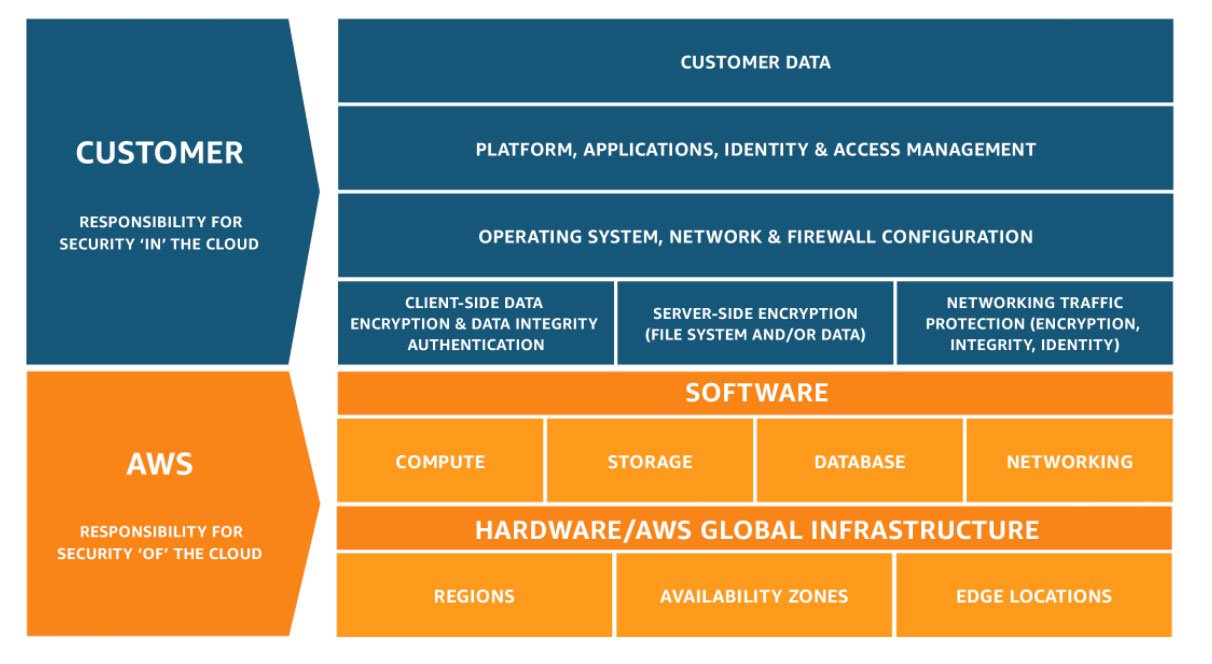
              Jesse McMahan

              Jesse McMahan

              Jesse is a Sr. Security Assurance Consultant at AWS with over a decade of experience in information security, risk management, and compliance. He holds multiple industry and AWS certifications and leads security assessment and advisory engagements covering standards such as PCI DSS, NIST, SOC 2, HIPAA, and ISO 27001. A United States Marine Corps veteran, Jesse brings a disciplined, mission-focused approach to helping organizations align their security posture with regulatory and business objectives.

              Juan Rodriguez

              Juan Rodriguez

              Juan is a Security Assurance Consultant at AWS, where he works with Strategic Services and customers to assess and secure cloud environments against frameworks including CMMC, FedRAMP, GovRAMP, and NIST based practices. He holds his CMMC Certified Professional and AWS Certified Security – Specialty certifications. Juan pairs technical expertise with a research-driven mindset to help organizations strengthen and architect their security posture and align with federal and industry standards.

              Akanksha Chaturvedi

              Akanksha Chaturvedi

              Akanksha is a Senior Security Assurance Consultant with over 10 years of specialized experience in risk-based security assessments and regulatory compliance across highly regulated industries. Expert practitioner in HIPAA, PCI-DSS, GDPR, FedRAMP, and IRAP frameworks, with demonstrated success in architecting and deploying enterprise security programs from conception through full implementation. Known for delivering innovative, scalable solutions that strengthen security posture while streamlining operational processes aimed at reducing compliance overhead.

              Sana Rahman

              Sana Rahman

              Sana is a Senior Assurance Consultant with AWS Security Assurance Services, and has been a PCI DSS Qualified Security Assessor (QSA) for over a decade. She has extensive knowledge and experience in information security and governance, and deep compliance knowledge in both cloud and hybrid environments. She uses all of this to remove compliance roadblocks for AWS customers and provide guidance in their cloud journey.

              Mayur Jadhav

              Mayur Jadhav

              Mayur is a Senior Assurance Consultant at AWS with over a decade of experience in cloud security, governance, risk management, and compliance. He holds AWS Certified Solutions Architect and Zero Trust Certified Architect (ZTCA) certifications. His career spans leadership roles across organizations including Amazon, AWS, EY-Parthenon, and PwC, where he has advised senior executives on cybersecurity and compliance initiatives across healthcare, financial services, and technology sectors.

              Winter 2025 SOC 1 report is now available with 184 services in scope

              22 April 2026 at 02:12

              Amazon Web Services (AWS) is pleased to announce that the Winter 2025 System and Organization Controls (SOC) 1 report is now available. The report covers 184 services over the 12-month period from January 1, 2025 – December 31, 2025, giving customers a full year of assurance. This report demonstrates our continuous commitment to adhering to the heightened expectations of cloud service providers.

              Customers can download the Winter 2025 SOC 1 report through AWS Artifact, a self-service portal for on-demand access to AWS compliance reports. Sign in to AWS Artifact in the AWS Management Console, or learn more at Getting Started with AWS Artifact.

              AWS strives to continuously bring services into the scope of its compliance programs to help customers meet their architectural and regulatory needs. You can view the current list of services in scope on our Services in Scope page. As an AWS customer, you can reach out to your AWS account team if you have any questions or feedback about SOC compliance.

              To learn more about AWS compliance and security programs, see AWS Compliance Programs. As always, we value feedback and questions; reach out to the AWS Compliance team through the Contact Us page.

              If you have feedback about this post, submit comments in the Comments section below.

              Tushar Jain

              Tushar Jain
              Tushar is a Compliance Program Manager at AWS where he leads multiple security and privacy initiatives Tushar holds a Master of Business Administration from Indian Institute of Management Shillong, India and a Bachelor of Technology in electronics and telecommunication engineering from Marathwada University, India. He has over 14 years of experience in information security and holds CISM, CCSK and CSXF certifications.

              Michael Murphy

              Michael Murphy
              Michael is a Compliance Program Manager at AWS where he leads multiple security and privacy initiatives. Michael has over 14 years of experience in information security and holds a master’s degree and a bachelor’s degree in computer engineering from Stevens Institute of Technology. He also holds CISSP, CRISC, CISA, and CISM certifications.

              Atulsing Patil

              Atulsing Patil
              Atulsing is a Compliance Program Manager at AWS and has over 28 years of consulting experience in information technology and information security management. Atulsing holds a Master of Science in Electronics degree and professional certifications such as CCSP, CISSP, CISM, CDPSE, ISO 42001 Lead Auditor, ISO 27001 Lead Auditor, HITRUST CSF, Archer Certified Consultant, and AWS CCP.

              Nathan Samuel

              Nathan Samuel
              Nathan is a Compliance Program Manager at AWS where he leads multiple security and privacy initiatives. Nathan has a Bachelor of Commerce degree from the University of the Witwatersrand, South Africa, and has over 21 years of experience in security assurance. He holds the CISA, CRISC, CGEIT, CISM, CDPSE, and Certified Internal Auditor certifications.

              Jeff Cheung

              Jeff Cheung
              Jeff is a Compliance Program Manager at AWS where he leads multiple security and privacy initiatives across business lines. Jeff has Bachelors degrees in Information Systems, and Economics from SUNY Stony Brook, and has over 20 years of experience in information security and assurance. Jeff has held professional certifications such as CISA, CISM, and PCI-QSA.

              Noah Miller

              Noah Miller
              Noah is a Compliance Program Manager at AWS and leads multiple security and privacy initiatives. Noah has 7 years of experience in information security. He has a master’s degree in Cybersecurity Risk Management and a bachelor’s degree in Informatics from Indiana University.

              Will Black Will Black
              Will is a Compliance Program Manager at Amazon Web Services where he leads multiple security and compliance initiatives. Will has 10 years of experience in compliance and security assurance and holds a degree in Management Information Systems from Temple University. Additionally, he is a PCI Internal Security Assessor (ISA) for AWS and holds the CCSK and ISO 27001 Lead Implementer certifications.
              Allen Beam Allen Beam
              Allen is a Compliance Program Manager at Amazon Web Services supporting third-party security and privacy compliance initiatives. He has over 10 years of experience in external IT security audits, security control design and implementation, and audit readiness and control deficiency remediation. He has a Bachelor’s Degree in Economics and Finance from James Madison University.
              Ziv Wand Ziv Wand
              Ziv is a Compliance Program Manager at AWS and leads multiple security and privacy initiatives. Ziv has over 6 years of experience in information security assurance, external IT security audits, security control design and implementation, and audit readiness. He holds a Bachelor of Science in Management Information Systems from Binghamton University.
              Shalini Mishra Shalini Mishra
              Shalini is a Compliance Program Manager at AWS. She has over 5 years of experience leading end-to-end compliance programs across ISO, SOC, and cloud security frameworks, with deep expertise in third-party risk management and enterprise governance. Shalini holds a Master of Science degree in Information Systems and a CRISC certification.
              ❌