❌

Normal view

Banks are blocking AI agents from customer accounts

28 October 2026 at 14:38

This week, Axios reported that major US banks were detecting third-party AI agents operating inside customer accounts. In many cases, customers have given the agents their usernames and passwords so they could act on their behalf. This kind of access can violate a bank’s rules.

Bianco Research president Jim Bianco raised the question during Unchained’s Bits + Bips livestream on October 26:

β€œAre you protecting me, or are you protecting your own profits?”

Bianco described traditional finance’s business model as β€œbased on laziness.” Customers may leave idle cash in low- or no-interest bank accounts rather than move it into a money market fund. An AI agent could make that move for them. β€œNow that you’re able to do it, the banks are afraid they’re gonna lose that revenue stream,” he said.

The banks offer a different explanation. JPMorgan Chase CEO Jamie Dimon said the bank wouldn’t allow just any outside agent into its systems because doing so was β€œtoo risky for clients and for JPMorgan.”

Both explanations can be true: banks can want to retain deposits while also facing real security problems when software acts through customers’ accounts.

Handing over your banking login introduces another service into the security chain. A vulnerability in that service could expose your credentials or allow your account to be misused. And as Bank of America reportedly pointed out:

Β β€œIf you do share your credentials, keep in mind that you’re responsible for activity resulting from that access.”

That’s the bank’s stated position, not a universal ruling on consumers’ legal rights. Still, it’s a warning worth taking seriously.

Pros and cons

An AI agent with permission to make purchases might find and buy an item at a lower price. But giving an agent access to your bank account also means sharing sensitive banking information with a third party. We’ve seen shared AI chats become searchable online too.

Axios reported that many banks allow, or are moving toward allowing, read-only access. This can let a tool analyze transactions without giving it permission to move money.

That’s an important boundary, but it doesn’t make the information harmless. An agent that can read bank statements may still disclose them if it’s compromised or manipulated. Preventing transactions and protecting confidentiality are separate security goals.

How to keep control of your money

For consumers, the practical question is not whether banks have perfectly selfless motives. It’s what access you’re giving away, and what could happen if the agent makes a mistake.

  • Don’t paste banking passwords or security codes into a general-purpose AI assistant. Major banks have explicitly warned customers against sharing their credentials.
  • Use your bank’s approved connection methods rather than giving an agent your login. Where supported, choose read-only access if all you need is analysis or budgeting help.
  • Give agents access to as little sensitive information as possible. An assistant comparing publicly advertised savings rates doesn’t need your bank statements. OpenAI recommends limiting agents to the data and credentials they need for the task.
  • Review consequential actions yourself. If an agent asks for confirmation, check exactly what it intends to do and what information it will share. Don’t treat a confirmation prompt as a formality.

AI can make it easier to compare financial products and spot opportunities you might otherwise miss. But an assistant that finds a better rate and an agent that can act inside your account are different propositions.

Let it help with the homework, but be cautious about handing it the keys.


Let’sΒ face it, an incognito window can only do so much.Β 
Β 
Breaches, dark web trading, credit fraud. Malwarebytes Identity Theft ProtectionΒ monitors for all of it, alerts you fast, and comes with identity theft insurance.Β 

Banks are blocking AI agents from customer accounts

28 October 2026 at 14:38

This week, Axios reported that major US banks were detecting third-party AI agents operating inside customer accounts. In many cases, customers have given the agents their usernames and passwords so they could act on their behalf. This kind of access can violate a bank’s rules.

Bianco Research president Jim Bianco raised the question during Unchained’s Bits + Bips livestream on October 26:

β€œAre you protecting me, or are you protecting your own profits?”

Bianco described traditional finance’s business model as β€œbased on laziness.” Customers may leave idle cash in low- or no-interest bank accounts rather than move it into a money market fund. An AI agent could make that move for them. β€œNow that you’re able to do it, the banks are afraid they’re gonna lose that revenue stream,” he said.

The banks offer a different explanation. JPMorgan Chase CEO Jamie Dimon said the bank wouldn’t allow just any outside agent into its systems because doing so was β€œtoo risky for clients and for JPMorgan.”

Both explanations can be true: banks can want to retain deposits while also facing real security problems when software acts through customers’ accounts.

Handing over your banking login introduces another service into the security chain. A vulnerability in that service could expose your credentials or allow your account to be misused. And as Bank of America reportedly pointed out:

Β β€œIf you do share your credentials, keep in mind that you’re responsible for activity resulting from that access.”

That’s the bank’s stated position, not a universal ruling on consumers’ legal rights. Still, it’s a warning worth taking seriously.

Pros and cons

An AI agent with permission to make purchases might find and buy an item at a lower price. But giving an agent access to your bank account also means sharing sensitive banking information with a third party. We’ve seen shared AI chats become searchable online too.

Axios reported that many banks allow, or are moving toward allowing, read-only access. This can let a tool analyze transactions without giving it permission to move money.

That’s an important boundary, but it doesn’t make the information harmless. An agent that can read bank statements may still disclose them if it’s compromised or manipulated. Preventing transactions and protecting confidentiality are separate security goals.

How to keep control of your money

For consumers, the practical question is not whether banks have perfectly selfless motives. It’s what access you’re giving away, and what could happen if the agent makes a mistake.

  • Don’t paste banking passwords or security codes into a general-purpose AI assistant. Major banks have explicitly warned customers against sharing their credentials.
  • Use your bank’s approved connection methods rather than giving an agent your login. Where supported, choose read-only access if all you need is analysis or budgeting help.
  • Give agents access to as little sensitive information as possible. An assistant comparing publicly advertised savings rates doesn’t need your bank statements. OpenAI recommends limiting agents to the data and credentials they need for the task.
  • Review consequential actions yourself. If an agent asks for confirmation, check exactly what it intends to do and what information it will share. Don’t treat a confirmation prompt as a formality.

AI can make it easier to compare financial products and spot opportunities you might otherwise miss. But an assistant that finds a better rate and an agent that can act inside your account are different propositions.

Let it help with the homework, but be cautious about handing it the keys.


Let’sΒ face it, an incognito window can only do so much.Β 
Β 
Breaches, dark web trading, credit fraud. Malwarebytes Identity Theft ProtectionΒ monitors for all of it, alerts you fast, and comes with identity theft insurance.Β 

What to do if you find someone else’s bank card | Kaspersky official blog

27 August 2026 at 18:17

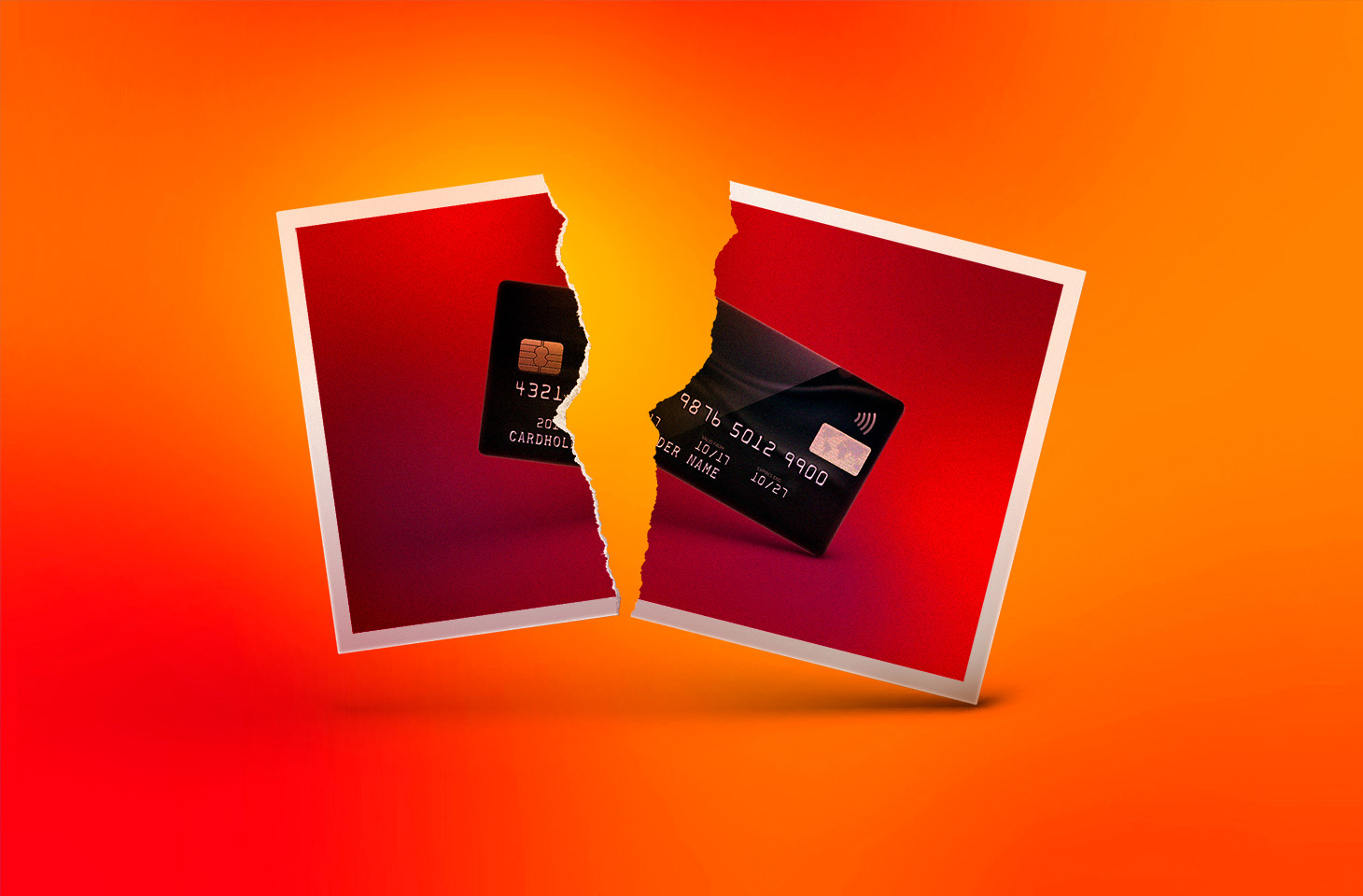
Neighborhood chats regularly light up with posts about lost bank cards being found. People mean well and want to help a neighbor out, so they post a photo of the card with the number and other details fully visible. Others mention in the chat that they’ve left the card with, say, a security guard, cashier, or manager at whatever store or business it was found, or which happens to be the closest. Today we’re going to explain why none of that is a good idea, and what you should really do if you find someone else’s bank card.

What NOT to do if you find a lost card, and why

Let’s start with why you shouldn’t post a photo of the card with its details visible in a group chat, keep the card, or hand it to a stranger. The first reason is the most obvious, but worth spelling out anyway: card details are private information that shouldn’t be shared with people who have no business seeing them. A photo posted in a group chat can end up in the hands of criminals, who may try to use those details to make fraudulent purchases online. The worst-case scenario is a photo showing both sides of the card that also exposes the three-digit security code (known as the CVC, CVV, or CVP) on the back.

Now to a less obvious point: why you shouldn’t post about finding a card, even with a photo of it with the number blurred out, and then hold on to it, planning to return it once the owner turns up. Since there’s no guarantee you were the first person to have the card in your hands, doing this puts you at risk of coming under suspicion if money disappears from that account. Even if you had absolutely nothing to do with any theft, the mere fact that the card was in your possession for a while could still land you in an uncomfortable conversation with its owner or the police.

The same logic applies to handing the card over to a third party. A security guard, cashier, or manager is just as much a stranger as anyone else, and none of them have any special authority to take charge of a found bank card. Handing it to them gives them the opportunity to use someone else’s money themselves, and if that happens, you could end up as a person of interest.

An β€œout of sight β€” out of mind” approach, that is, leaving the card where you found it, or moving it somewhere more visible, is safer for you personally, but it’s still not really the right call. If you do that, someone else will find it, and there’s no guarantee that they’ll be a decent person. They might try to drain money from the rightful owner’s account. So this isn’t a good option either.

What you SHOULD do with a found bank card

Now let’s talk about what you should do instead. The right approach might surprise you: call the bank that issued the card, report that you’ve found it, and then… destroy the card. It’s entirely possible the owner hasn’t even noticed it’s missing yet: with contactless payments now so widespread, a physical card can sit untouched in a wallet for quite a while. The bank will block the card, notify the owner that it’s gone, and issue a new one.

That last step β€” destroying the card β€” may come as a surprise and even attract some push-back among readers, but we stand by it: a found card really should be destroyed. That way, no one can possibly use it, and you won’t have to hold onto someone else’s property or risk coming under suspicion if money goes missing from the account. The simplest and most reliable way to destroy a card is to carefully cut it into small pieces with kitchen scissors and throw it in the trash or recycle it.

Here’s something worth keeping in mind: these days, a physical card isn’t actually worth all that much to its rightful owner. For one thing, banks reissue cards quickly and easily. With most banks, you won’t even need to visit a branch since the new card gets delivered straight to your door.

For another, getting a new card issued usually doesn’t leave the owner unable to pay for things in the meantime: in many cases, they can just switch to a virtual card or another payment method. So a destroyed card is a much smaller headache for its owner than the risk of its ending up in the wrong hands and being used to drain their account.

And if the card’s disgruntled owner does somehow track you down with questions, just show them this article so they can appreciate the trouble they avoided, thanks to you.

When you shouldn’t destroy a found card

Beyond bank cards, there are also multi-purpose cards, such as ones issued to schoolchildren and students that combine a few functions, like a school or university access pass and a public transit pass. Kids, especially younger ones, lose these kinds of cards fairly often. Restoring full functionality on cards like these can take much longer than reissuing a bank card, and the amounts stored on them are usually small, so if you find one, your best move is to take it to the school or university named on the card and hand it to security or reception / front office.

In short: what to do if you find someone else’s card

To sum it up, if a lost bank card ends up in your hands:

  1. Look for the bank’s phone number on the card. It’s usually printed there; if not, you can easily find it on the bank’s official website. Then give them a call. Let them know you’ve found someone else’s card.
  2. After the call, destroy the card: cut it into small pieces with scissors and throw it away.

And one more reminder of what not to do: don’t post photos of the card or its details in chats or on social media, don’t hold on to the card hoping to track down the owner, and don’t hand it over to strangers.

We’d also recommend following our blogΒ to stay on top of the latest online threats. And feel free to share this article in that neighborhood chat so your neighbors know exactly what to do if they ever find someone else’s bank card.

As for protecting your own money, it’s worth using a robust, multi-layered security solutionΒ that safeguards your money, cards, wallets, and payments. Read more in Five Kaspersky technologies to protect your finances.

What other hidden risks do bank cards carry? Find out in our other posts:

Everyone’s Selling AI That Kills Pentesting. We Built One That Doesn’t.

What we built, Fusion AI, runs at about a third the cost of a traditional external pentest, a human tester still signs off on every finding, and it is not here to replace anybody.
We have been hearing that one a lot. So when Melisa from our Business Capture team sat down with Brian Fehrman and me for this episode of AI Security Ops, she started with, β€œWhat is this thing you built, and is it the same hype everyone else is selling?”

The post Everyone’s Selling AI That Kills Pentesting. We Built One That Doesn’t. appeared first on Black Hills Information Security, Inc..

Let’s Talk About TikTok

Derek Banks // I recently heard something on the news that caught my attention.Β  I suppose that isn’t abnormal these days, but this in particular was the first time I […]

The post Let’s Talk About TikTok appeared first on Black Hills Information Security, Inc..

A Toast to Kerberoast

Derek Banks // This post will walk through a technique to remotely run a Kerberoast attack over an established Meterpreter session to an Internet-based Ubuntu 16.04 C2 server and crack […]

The post A Toast to Kerberoast appeared first on Black Hills Information Security, Inc..

More on Threat Intelligence Feeds

Derek Banks // John’s hating on threat intelligence feeds postΒ got me thinking. Β As a former blue team member that is now solidly purple team, I do not hate threat intelligence […]

The post More on Threat Intelligence Feeds appeared first on Black Hills Information Security, Inc..

Developing Hacking Kung Fu (or How To Get Into Information Security)

By: BHIS
21 December 2015 at 22:45

Derek Banks // Β  More than occasionally I am asked how to get into Information Security as a profession. Β  AsΒ attacks and breaches continue to escalate in frequency the demand […]

The post Developing Hacking Kung Fu (or How To Get Into Information Security) appeared first on Black Hills Information Security, Inc..

❌