Normal view

The CHATBOT Act Forces One Parenting Model On Every Family

31 July 2026 at 21:06

Artificial intelligence is rapidly changing education, and the way people search for information. Parents, teenagers, teachers, and schools are struggling with tough questions about when AI should, and should not, be used. It makes sense for Congress to hold hearings and examine how AI should be used by minors. But the recently introduced CHATBOT Act answers those questions with a one-size-fits-all mandate governing how teenagers access AI through federally prescribed parental monitoring systems. 

The Bill Requires AI Companies To Build Family Monitoring Systems 

Parents are approaching AI in different ways. Some closely supervise how their children use chatbots, while others might set more general rules about technology. Many families are still figuring out what role AI should play in schoolwork and everyday life. 

The CHATBOT Act would take that decision away from families and AI providers. Instead of letting families and AI providers decide what parental controls should look like, Congress would require every covered AI chatbot to build the same federally prescribed “family account” system. 

As part of the required parental-consent process for teens, AI companies must offer parents a "family account" that provides access to a "full record of the conversations and activity" of teen users and tools to "monitor, analyze, and understand, at scale" those conversations. They must also send alerts if a teen attempts to bypass or disable parental controls. 

This isn’t simply an optional parental-control feature. The bill requires every covered AI provider to build this monitoring infrastructure, and present it as part of the parental consent process. Congress is prescribing a single, highly invasive model of how families should supervise teenagers’ use of AI. 

The CHATBOT Act Creates New Privacy Risks For Families 

Parents and families have different ideas about how much independence teenagers should have. Understandably, they also have very different expectations for 8-year olds, 13-year-olds, and 17-year-olds. The CHATBOT Act effectively requires AI providers to build the same monitoring architecture for users of very different ages. 

And this mandated data collection will create new privacy and security risks. Once Congress requires AI companies to create a permanent, centralized record of teen AI conversations for parental review, that will be a valuable vault of extremely personal information. That raises serious questions about what would happen in cases where someone else gains access to it through account compromise, family disputes, or other security failures. 

The vast archives of conversations created by the government-mandated family accounts won't be interesting only to parents. They will become valuable targets for hackers, identity thieves, civil litigants, and anyone else seeking access to the deeply personal information of others. The CHATBOT Act requires the records to exist, but addresses none of those risks. 

Families are still figuring out what role AI should play in schoolwork and everyday life. Congress shouldn’t freeze one answer into federal law by requiring every AI company to build the same prescribed monitoring system. 

The CHATBOT Act Applies A Children’s Law To Teenagers 

The CHATBOT Act takes the basic structure of COPPA, a nearly 30-year-old law that applies to children aged 12 and under, and applies the same “verifiable parental consent” to older teenagers. 

That’s a dramatic expansion of the law. Congress enacted COPPA to prevent kids from handing over detailed personal information to online services without making sure parents approved. For nearly three decades, Congress has required parental consent before websites collect personal information from any user under 13. COPPA is not simple to comply with, which is why so many internet companies, large and small, simply bar kids under 13 from having accounts. That includes major social media sites and AI. Facebook, Instagram, TikTok, X, YouTube, Snapchat, Discord, Spotify, and blogging platforms like WordPress all keep out users under 13. Children under 13 are also not allowed to use Microsoft Co-Pilot, Google Gemini, or ChatGPT. Anthropic does not allow users under 18 to use its AI model, Claude. In cases where younger kids maintain social media accounts despite the rules, studies show the vast majority of them are creating those accounts with parental consent.  

In short, COPPA’s protections against collecting personal information from minors without parental consent already apply to the AI services CHATBOT Act seeks to regulate. Worse, the CHATBOT Act takes COPPA’s privacy protections and inverts them—it will result in AI services likely collecting more information about young users. 

But the CHATBOT Act extends that model to high school students using AI assistants that are rapidly becoming tools for learning, research, writing, coding, and creative work. It then mandates specific, invasive surveillance tools that go well beyond anything COPPA requires. 

The bill requires providers to offer these “family accounts,” with these specific features, as a default for teenagers. By doing so, CHATBOT effectively treats a high school senior the same way it treats an elementary school student. 

Supporters may argue that parents of teens don’t have to create a family account. But every family with a teenager will still have to go through the bill’s parental-consent process before a teenager can use a covered AI system. Providers will need practical ways to verify that an adult is, in fact, the teenager’s parent. And parents of kids under 13 have no option to consent to their kids’ use of an AI systemthe bill’s only option is to create a family account.

Congress should not extend the COPPA parental-permission model to millions of older teenagers, and it would be harmful to do so. The government does not require COPPA-style parental permission before a 17-year-old checks out a library book, uses Wikipedia, types search terms into Google, or reads a newspaper online. It shouldn’t require parental permission simply because the same question gets asked of an AI assistant. 

The CHATBOT Act Will Pressure AI Companies To Check Users’ Ages 

The bill says it doesn’t require age verification. But like many recent “kids online safety” bills, it imposes obligations that depend on a company knowing whether a user is under 18. 

Specifically, the bill requires AI systems to either disable access to young kids, get parental consent, or the creation of a family account if a service has reason to believe a user is a minor. The standard means that services don’t need to have actual knowledge of a user’s age to be later held liable for improperly letting them use their AI tools. That creates a practical problem. Given the potential liability of getting something wrong, AI companies will likely require stricter forms of age verification to figure out who is under 13, a teenager, and who is a parent. Some providers might ask for government-issued identification.  Other companies may rely on age estimation systems that use facial scans or other signals to guess a user’s age. Neither of these approaches is good for users’ privacy or security. One collects more information than is necessary, and the other inevitably makes mistakes. 

Congress shouldn’t force companies into that choice, or families into this position. In the name of protecting children, the CHATBOT Act will result in online services collecting even more information from kids and families, creating privacy and security risks. Parents who want family accounts like those described in the bill should be free to choose AI services that offer them. But Congress shouldn’t pressure every provider to collect more information about everyone’s age simply to comply with the law. 

A Better Way Forward

Congress doesn't have to choose between doing nothing and creating a sweeping new federal parental-monitoring mandate. Existing law allows regulators to police deceptive AI products, protect children's privacy under COPPA, and hold companies accountable when they market unsafe or misleading products to families. 

Lawmakers have urged the FTC to crack down on AI-enabled toys that make unsubstantiated educational claims or illegally collect children's data. Those are regulatory actions that can be taken right now. 

Finally, the FTC is currently investigating how AI companies test their products, protect children and teens, comply with COPPA, and enforce age restrictions. The results of that inquiry could be useful guidance to Congress, and to the public debate around these issues. 

Cracking down on bad actors, while learning more about how families are already making decisions about AI use, is a much better path forward than building one, federally-prescribed model of parenting or product design.

EFF Guide to Recording Law Enforcement

31 July 2026 at 16:11

This post is available as a printable one page handout in English and Spanish.

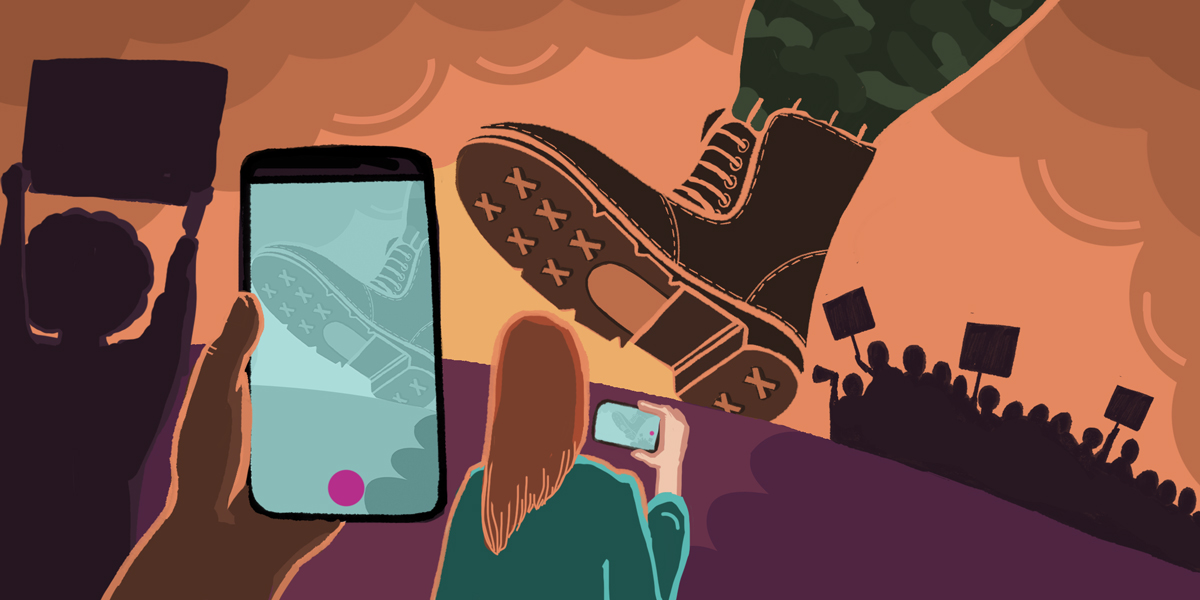
Recordings of law enforcement, whether by bystanders or by those directly encountering officers, can be powerful tools of government accountability and can support movements for social change. But recording officers can come with risks. Below are important legal and practical considerations related to recording the police and other law enforcement officers.

Can I legally record the police or immigration officers?

Yes. All Americans have a First Amendment right to record law enforcement. This includes local police and federal officers such as those from Immigration and Customs Enforcement (ICE) and Customs and Border Protection (CBP). Although the Supreme Court has not squarely ruled on the issue, nine different federal appellate courts have recognized and affirmed this right, relying on decades of Supreme Court precedent.

Courts typically frame the right to record law enforcement as the right to record officers exercising their official duties in public. This right extends to bystanders as well as people recording their own interactions with law enforcement, such as livestreaming their own traffic stops. The right also applies to private places where the recorder has a legal right to be, such as in their own home.

You may take photos, or record video and audio. Courts have held that wiretap laws, which generally protect private conversations, do not prohibit civilians from audio recording law enforcement. That’s because officers exercising their official duties, particularly in public, do not have a reasonable expectation of privacy. Neither do civilians in public places who speak to law enforcement in a manner audible to passersby.

What are some limitations on the right to record law enforcement?

Courts have been clear that behavior that obstructs or interferes with effective law enforcement or the protection of public safety is not protected. Officers can't order you to move because you are recording, but they may order you to move for public safety reasons even if you are recording.

If the law enforcement officer is off-duty or is in a private space that you don’t also have a right to be in, your right to record the officer may be limited. For example, a Los Angeles jury in 2026 found two women guilty of felony stalking after they followed an ICE agent to his home and livestreamed the pursuit.

What are some other considerations when recording officers?

Even if you believe you are appropriately exercising your First Amendment right to record law enforcement, officers may nevertheless escalate the situation and/or retaliate against you. Below are some things to keep in mind.

  • Stay calm and courteous.
  • If you are a bystander, stand at a safe distance from the scene that you are recording. But note that officers may approach and confront you, closing that distance in an effort to accuse you of interfering with and possibly also assaulting a federal officer.
  • Be alert and mindful of the possibility that officers may illegally retaliate against you in a number of ways, including arrest, destruction of your device, and bodily harm. They may also try to retaliate by harming the person being arrested. 
  • Consider the sensitive nature of recording in the context of an arrest. For example, the person being arrested or their loved ones may be concerned about exposing their immigration status, so think about obtaining consent or blurring out faces in any version you publish to focus on ICE/CBP conduct (while still retaining the original video). 
  • Law enforcement may not search your cell phone or other device without a warrant based on probable cause from a judge, even if you are under arrest. Thus, you may refuse a request from an officer to review or delete what you recorded. You also may refuse to unlock your phone or provide your passcode.

What can I do to protect my footage?

How well protected your photos or video footage are depends on both the device and the way you’re recording. If you’re uploading video to a livestreaming service, it can save that video to the cloud if you enable that setting. But what if you want to protect your recordings  stored locally?

Modern smartphones generally protect data, including videos, using encryption. This means if your phone is locked and protected by a strong passphrase, it is more difficult for an officer to delete what you’ve stored on the device. Removing biometrics such as face and fingerprint unlock can protect your device contents further. You can check your settings by following the steps in our Surveillance Self-Defense guides (see below) to ensure device encryption is turned on.

Want more information?

  • Read more about your right to record law enforcement: https://www.eff.org/issues/right-record
  • Read EFF’s Surveillance Self-Defense technical guide: https://ssd.eff.org

New EU Court of Justice Ruling on Platform Liability Could Cause Collateral Damage to Freedom of Expression

22 July 2026 at 10:34

Intermediary liability laws around the world recognize that social media platforms, search engines, and other online service providers have become an integral part of our lives: they shape how we access information, communicate with others and participate in public debate, and foster innovation online. These laws generally shield platforms, to varying degrees, from legal liability for user content: the responsibility for unlawful speech should rest primarily with the speaker, not with those who merely host it.  

These liability protections are not a gift for platforms. They exist so that platforms are not encouraged to proactively monitor and filter what we say online, or to remove even lawful speech simply to avoid legal risk. 

This is why a recent judgment by the EU Court of Justice, Coyote System (Joined Cases C-188/24 and C-190/24), is concerning: it could deprive online platforms of liability protection because of how they organize and disseminate user content. The consequences for freedom of expression could be significant. 

Liability Protections in the EU 

The European Union has long embraced a system of limited liability for online service providers. Under the e-Commerce Directive and now the Digital Services Act (DSA), platforms benefit from liability exemptions for user content. To discourage censorship, they also cannot be required to generally monitor user content or actively search for illegal activity. But that liability protection comes with qualifications: Platforms lose this benefit if they play an "active role" such that they have knowledge of, or control over, user-provided information (Recital 42 ECD, Recital 18 DSA, and case law, for example para. 113 in L’Oréal v eBay)For hosting services, providers must remove or disable content they know to be illegal. The DSA has introduced extensive due diligence obligations for platforms but left these foundational immunities intact. The message is clear: platforms bear responsibility for proper systems and processes, but generally not for users' speech. 

Coyote System, however, could undermine this balance. Confronted with a case about restrictions on navigation systems that transmit information to drivers about roadside checks, the Court formulated a general test for when an intermediary ceases to be a "neutral" host and therefore loses the hosting liability exemption. In essence, the Court held that where an intermediary's algorithm goes beyond merely categorizing and indexing user information to determine, "under what conditions, how and in which order of priority" (para. 122) information is disseminated, the intermediary "controls" that information and is deprived of protection under the e-Commerce Directive. 

Let's be clear: the case is not about a service that ranked or recommended user-generated content in the way social media platforms do. It is about the collection and real-time relay of user alerts about roadside checks. However, the Court's reasoning is not confined to navigation services. Recommendation algorithms determine how and in what order user content is disseminated across virtually every major online platform. Should such platforms now cease to qualify as neutral intermediaries and lose the protection of the hosting liability exemption? The answer should be no. 

The Meaning of Control 

Control has never been understood this broadly. Nor should it be. Every hosting service provider, think of Facebook, Amazon or Bluesky, will have some control over users’ content. If that ability alone ruled the analysis, the liability exemption would become largely meaningless. Instead, the disqualifying “active role” must relate to the actual content itself, not merely the technical means by which that content is organised or disseminated. 

The Court’s own case law reinforces this conclusion: In YouTube and Cyando, it examined a platform that categorises, ranks and recommends user content through algorithms, yet still proceeded on the basis that it could generally benefit from the hosting liability exemption. To be sure, the Court was mainly addressing specific knowledge of illegal content rather than the separate category of control. Even so, the underlying premise is clear: those features do not, by themselves, place a platform outside of protection. Advocate General therefore explained that what matters is the provider's "intellectual control of that content" (para 152). The relevant question is who controls the information itself, makes it their own, not who determines how it appears. 

That is precisely where Coyote System breaks new ground and offers a dangerous change of emphasis. By equating algorithmic organisation with content control, the ruling risks excluding social networks and other platforms from the liability exemption and encouraging proactive monitoring of what users say online and removal of lawful content. 

That outcome would have terrible consequences for freedom of expression in the EU. It’s also difficult to reconcile with the structure of the DSA, which certainly does not treat recommendation algorithms as incompatible with intermediary immunity. On the contrary, it accepts them as a defining feature of modern platforms, regulates them extensively through dedicated due diligence obligations, and still leaves the hosting liability regime untouched (it even integrated the YouTube ruling in its preamble!).  

This was no accident: During the DSA negotiations, proposals to deprive platforms of the hosting liability exemption if they optimize, classify, organize or otherwise promote online content were rejected, following successful advocacy by EFF and allies. Would the Court have decided this case differently under the DSA? Probably not. It’s more plausible that the EU judges were influenced by the specific nature of the service, which could explain why the judgment says remarkably, and sadly, little about why intermediary liability exists in the first place and the fundamental rights it serves. Coyote System did not merely transmit user reports but aggregated them into what the Advocate General described as a new "information layer," a distinction omitted by the Court. 

Chipping Away at Intermediary Liability Protections 

The danger is that the Court's broad language on algorithmic curation reaches well beyond that narrow category and, unintentionally or not, chips away at one of the most important safeguards for freedom of expression online.  

Unfortunately, Coyote System does not stand alone. It is the latest in a line of judgments that have gradually narrowed intermediary liability protections. Recently, in Russmedia, the Court privileged preventive content control in the name of data protection, paying little regard to the possibility of reconciling both regimes and the privacy costs of increased monitoring of user content. And in AGCOM, concerning Google's liability for YouTube videos uploaded by creators participating in its Partner Programme, the Court appears to leap from eligibility reviews to specific knowledge of illegal content. 

There is a political risk too. While the top court’s reasoning will be applied by national courts and further refined over time, the European Commission has shown little hesitation in incorporating landmark rulings into legislation. Just recently, in its digital omnibus proposal, it selectively restated part of a recent Court of Justice judgment to justify narrowing privacy rights of users. 

If these trends continue, freedom of expression online will become collateral damage in the EU. 

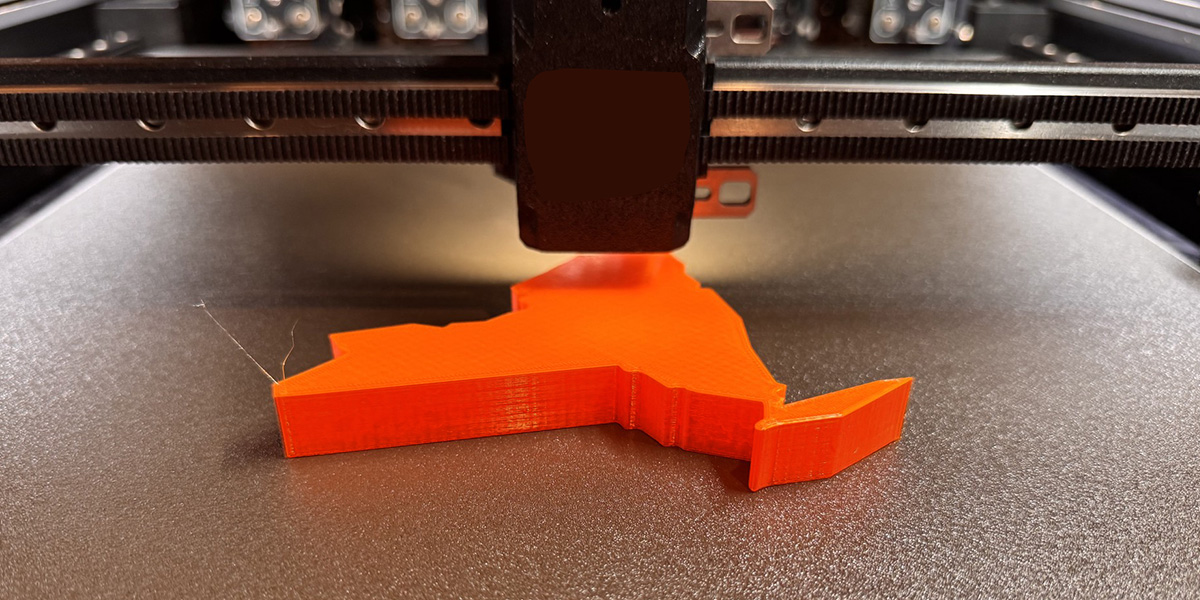
Don’t Repeat NY’s 3D Printing Blunder

14 July 2026 at 21:52

This year the state of New York had the dubious honor of being the first to pass a controversial provision to mandate all 3D printers come with surveillance and censorship. That means not only is there a ticking clock to protect every artist, researcher, engineer, and hobbyist in the state, but there is a real risk of other states thoughtlessly following suit—prior to the New York rules even taking effect.

We, along with many other experts, already warned about this bill buried in the state’s crowded budget process. Hundreds of our supporters and 3D printing enthusiasts in New York reached out to their representatives hoping to kill this farcical bill. While there were some welcome amendments in response to the outcry, Albany passed it anyway.

It might be well-intentioned, but bills like these sell a fantasy that can only have an untold negative impact on the privacy, free expression, and consumer rights of anyone using these general purpose devices. Behind the banner of reducing gun violence, which is nearly always committed with commercial firearms, New York lawmakers have passed draconian legislation that will let manufacturers lock in users and collect their data.

Now that the bill has passed and been signed by Governor Hochul, let’s look at two important ways the final legislation changed since we last wrote about it, and why states like California shouldn’t make the same mistake.

Reduced Risk for Lawful File Sharing 

The New York bill includes language that criminalizes access to firearm print files, a proposal correctly dropped by states like Colorado due to First Amendment concerns. While this made it through to the passed legislation, a few wins were still gained.

Originally the legislation threatened felony charges for the storing and sharing of files, potentially impacting researchers, artists, and journalists with no intention of printing a firearm component. These charges were downgraded to a Class A misdemeanor.

Two provisions criminalized file sharing. The first of the two provisions criminalizing this file sharing, which pertains to the sale or distribution of files in the state, gained an important exception for when a sender has a reasonable belief that the recipient won’t illegally print these components. However the second provision, pertaining to criminalizing file possession, complicates this. Under 2.12 of the subpart, people who possess the file with intent to share the files do not clearly get this same reasonable belief exception.

In other words, if you share one of these files the actual sharing is covered by the exception, but the law makes it ambiguous whether possessing those same files is covered when you intend to share them.

While this exception could have created some breathing room for researchers and journalists operating in good faith, this slapdash bill language leaves plenty of ambiguity and potential speech-chilling effects. However, these changes do offer a modicum of harm reduction in this unconstitutional law.

Saving Face by Preserving Online Sale

Originally the bill had a strange requirement for all 3D printers and Computer Numerical Control, or CNC, machines to be sold and delivered face-to-face, with no exception. That would have meant a major barrier to access, particularly for people in agricultural and rural areas of the state who uniquely benefit from in-home fabrication and repair. It also would have meant a major inconvenience for businesses using these devices. For everyone though, it meant fewer retailers to choose from and facing more stigma for using these devices. 

Fortunately this was dropped from the bill entirely. 

Next Step: We Find Out What Was Actually Passed

In addition to being buried in the complicated legislative process of the NY budget and avoiding proper scrutiny, this bill also kicked the can down the road in determining what exactly is being mandated. In many respects, legislators passed a vibe. We’ll see how the actual law be developed over the next year by a working group with no mandated transparency to the public. Further, they have no obligation to ensure consumer safeguards in developing this state-mandated censorware.

We are still concerned by the possibility of a biased working group acting in the interest of manufacturers or facing pressure to accept consumer harms in the standards they produce. Our remaining hope is this working group convened by the Department of State and the state university system is composed of actual experts who are aware of how unfeasible and harmful this mandate is, and prevent it from being realized.

The Fight Continues

New York is the first to go down this path of state-mandated censorship and surveillance software on 3D printers, but it’s far from the only one to entertain it. It is now more urgent that we fiercely oppose this trend in other states, like California,  as they attempt to join the bandwagon—before even seeing the real-world impacts. 

Take action

Don’t Let California Repeat NY’s Mistake

We cannot allow this to be the foundation for future restrictions on speech and design, or serve as a playbook for the state and corporations to wrest control over our tools.

Automated Moderation Is Here to Stay—Accountability Must Keep Pace

10 July 2026 at 15:19

This post is part 2 in a series about automated content moderation. Read the first post here.

When whistleblower Frances Haugen leaked a set of documents from Meta in 2020, among the revelations was a jarring statistic: The company’s algorithms designed to detect terrorist content incorrectly deleted nonviolent Arabic-language content 77 percent of the time, while failing to detect hate speech under the company’s own policies in many instances. Meta’s own transparency report released later that year demonstrated similar findings. Five years later, researchers in the region report that overzealous moderation remains a problem, while paths to remedy have all but collapsed.

Where these systems are faltering in Arabic, they’re positively failing in less-resourced languages. As a 2025 report from the Center for Democracy and Technology found, labeled datasets in certain languages and dialects such as Maghrebi Arabic and Kiswahili contain inconsistencies, bias, and inaccuracies due to the limited hiring of annotators who actually speak the languages as well as shifts in the languages themselves. An investigation into ChatGPT’s outputs in several low-resource languages demonstrates the depth of problem.

But language disparities are just one of several concerns as automated moderation becomes more widespread. From the systemic suppression of content from Palestine to the repeated misclassification of LGBTQ+ content as adult or explicit material, these varied examples demonstrate the risks of overreliance on automated moderation—and the need for stronger safeguards.

Transparency, Cultural Competence, Appeals

As we discussed in Part 1 of this series, automated systems can process content at a scale that humans never could, potentially enabling better moderation at scale and alleviating the psychological load on ill-paid moderators whose jobs require them to view incredibly disturbing content. But automated systems also reproduce existing biases, struggle to understand context, and often make mistakes that disproportionately affect journalists, activists, artists, and other vulnerable and marginalized communities.

As Rachel Griffin wrote in 2023, “Perfectly accurate moderation is not only technically out of reach but intrinsically impossible.” Despite those intrinsic flaws, there is a great deal companies, policymakers, and civil society can do to help ensure that highly-automated systems operate in ways that respect human rights, minimize predictable harms, and provide meaningful accountability when they fail. If companies are going to continue relying on automation to moderate users’ speech—and there is little reason to believe they won’t—then accountability must evolve alongside these technologies.

That evolution can start with committing to the Santa Clara Principles 2.0. These principles, first outlined in 2020 and re-launched in 2021 after substantial international input, reflect the needs and expectations of the global community and specifically address automation. The first Foundational Principle states:

Companies should ensure that human rights and due process considerations are integrated at all stages of the content moderation process, and should publish information outlining how this integration is made. Companies should only use automated processes to identify or remove content or suspend accounts, whether supplemented by human review or not, when there is sufficiently high confidence in the quality and accuracy of those processes. Companies should also provide users with clear and accessible methods of obtaining support in the event of content and account action. 

Drawing on the Santa Clara Principles 2.0, international human rights standards, and years of research documenting the shortcomings of automated moderation, we propose eight recommendations for policymakers thinking about regulation and companies deploying AI-assisted content moderation systems.

  1. Automated technologies should help, not replace, human moderators. For example, automated systems can help flag and prioritize content for review, while humans can interpret context, handle sensitive cases, and refine system performance.
  2. Companies must be transparent about when and how automation is used in content decisions.
  3. Companies must regularly audit their automated systems for bias, with particular attention to low-resource languages, vulnerable and marginalized communities, and conflict zones.
  4. Users must have the ability to appeal, and to provide context when they believe human or automated moderation decisions have wrongfully removed their content. Appeals should be promptly evaluated and decided by human moderators.
  5. Companies should regularly assess the human rights impact of their moderation decisions, and issue public statements of the results
  6. If they rely on third-party vendors, companies should carefully (and regularly) audit those vendors for compliance with these same principles
  7. Lawmakers should avoid promoting and passing legislation that effectively or explicitly mandates automated moderation systems
  8. Policymakers should also refrain from attempting to dictate platforms technical and design choices to favor or disfavor particular expression.

These recommendations understand that automated content moderation isn’t just a technical problem for clever engineers and product teams to solve. Because content moderation shapes public discourse and fundamental rights, its design and oversight must respond to the concerns of policymakers, civil society, independent researchers, and the communities most affected by these systems.

This is the second post in a 2-part series on automated content moderation. Read the first post here.

The House Passed The KIDS Act—The Senate Should Reject It 

9 July 2026 at 22:58

Last week, the House voted on the KIDS Act, a disjointed package of legislation that seeks to control Americans’ web browsing and private messaging. The package combines a revised version of the Kids Online Safety Act (KOSA), with several other internet bills, study bills, reporting requirements, and new regulations. Different parts of the bill pressure online services to impose different age-gating schemes, using different standards. EFF opposed this bill, along with many of our members and supporters.

Take action

Tell Congress: no internet age-gates

The bill passed the House, 267-117. It now heads to the Senate, where its fate remains uncertain. But this fight is not over. Even if you took our earlier action to contact the House, we need you to reach out to your Senators today. 

The KIDS Act Will Lead to Mandatory Age Checks 

Many of the bills in the KIDS Act share the same premise: that children and teenagers should have different experiences online than adults. In practice, that requires websites and apps to determine who is under 18—and who isn’t. That’s where the problems with the KIDS Act start. 

EFF certainly supports giving all users better privacy and safety tools online. But those protections should not, and do not need to, come at the expense of privacy or free expression. Unfortunately, that’s exactly the tradeoff the KIDS Act makes.

There is no way to determine a user’s age online that is both privacy protective and accurate. Some age verification processes may rely on collecting government-issued ID, while others may use biometric scans. Others will use algorithms to guess a user’s age based on facial images or online behavior. But no matter the method, every system demands users hand over sensitive personal information that links their offline identity to their online activity. And then, once that valuable data is collected, it can be leaked, hacked, or misused. In fact, we’ve already seen several breaches of age verification providers.

The Bill Still Regulates Online Speech

The revised KOSA language within the KIDS Act still pressures companies to police lawful speech online. Platforms must “establish, implement, maintain, and enforce” policies that address content like gambling or the use of alcohol or cannabis. This encourages platforms to broadly restrict speech on these topics, which could include a teen seeking advice on a parent’s gambling problem or searching for substance abuse recovery resources. When platforms are required to create and enforce content moderation policies that regulators can sue them over, they will often err on the side of deleting speech. 

Protect Privacy For Everyone

There is a better way to protect young people online. Instead of encouraging a complicated system of age checks, more monitoring, and more restrictions on access to information, Congress could finally pass a strong, comprehensive privacy law that benefits all users. A great place to start would be to ban behavioral advertising that tracks us across the web—again, for users of all ages. 

We urge the Senate to oppose the KIDS Act and instead focus on a strong, bipartisan privacy package for all users. 

Take action

Tell the senate to reject the kids act

Automated Moderation Is Here to Stay

7 July 2026 at 18:21

This blog post is part 1 of a 2-part series. The second part sets out recommendations for companies and policymakers.

Six years ago—one month into a global pandemic—we argued that the automated moderation processes many platforms were rapidly adopting should be highly transparent, easily appealable, and temporary. We warned that "protocols adopted in times of crisis often persist when the crisis is over."

That warning proved prescient. The use of automation and artificial intelligence (AI) to identify, flag, and moderate content has become the new norm—a permanent feature of how platforms govern speech online. In this two part series, we’re take stock of this new norm, and considering what platforms can and should do to ensure that AI serves online expression rather than stifling it.

A brief history of automated content moderation

From spam filtering and keyword blacklists to the hash-matching technologies used to identify child sexual abuse material and terrorist content, automated technologies have been used in commercial content moderation for many years. While these tools have long posed risks to freedom of expression, their use was, for quite some time, relatively limited in scope.

Then, in 2017, a blog post published by Facebook (now Meta) described the company's "fairly recent" use of artificial intelligence to identify, classify, and remove violent extremist content. At the same time, Facebook emphasized caution, noting that it did not want to suggest there was "any easy technical fix."

Just one year later, Mark Zuckerberg appeared before the U.S. Senate's Commerce and Judiciary Committees and disclosed that "99 percent of the ISIS and Al Qaida content" removed by Facebook was flagged by AI "before any human sees it." He also stated that Facebook was "developing A.I. tools that can identify certain classes of bad activity proactively and flag it for our team at Facebook." At the time, we raised concerns about the ethical implications of using AI in this manner.

Then came 2020. The sudden reduction of the human moderation workforce, combined with a dramatic increase in social media use—and with it, a surge in misinformation—created the perfect conditions for platforms to expand their reliance on AI-driven moderation. It quickly became apparent that companies'—and particularly Meta's—approach to moderation during the pandemic represented a backslide in transparency, freedom of expression, and access to remedy. The increased reliance on automation was a significant factor.

The costs and benefits of AI content moderation

We knew in 2020 that the use of AI to moderate content would present problems for online freedom of expression. Today, those problems are well-documented. A 2025 joint declaration by special rapporteurs and representatives of the United Nations (UN), Organization for Security and Co-operation in Europe (OSCE), Organization of American States (OAS), and African Commission on Human and Peoples’ Rights (ACHPR) states:

“The use of AI content moderation can lead to over-removal, discrimination and censorship. Reliance on inherently biased datasets and opaque training processes can amplify pre-existing inequalities, risking homogenisation of expression, and erasure of linguistic and cultural diversity.”

EFF and many of our allies have documented these impacts. For example, our 2019 paper co-authored with Witness and Syrian Archive examined the impact of extremist content regulations—and their implementation through automation and AI—on human rights documentation. A 2020 report from Human Rights Watch highlighted the consequences of these removals, noting: "There is no way of knowing how much potential evidence of serious crimes is disappearing without anyone's knowledge."

The Center for Democracy and Technology's recent series on content moderation in the Global South demonstrates persistent inequities in content moderation of four “low-resource” languages—so-called because the relative scarcity of training data makes it more difficult to develop equitable and accurate AI models for them. 

Content moderation often disproportionately impacts vulnerable and historically marginalized groups, and AI content moderation is no different. GLAAD recognizes the role AI plays in scaling content moderation but notes that “when moderation systems lack nuance, transparency, and human oversight, they can fail to curb harassment and wrongly suppress legitimate LGBTQ content.”

These failures are not incidental. They are a predictable consequence of deploying automated systems to make complex judgments about language, culture, context, and identity at scale.

All of that said, automated content moderation can offer important benefits. The primary one: helping to spare human content moderators who must review content that varies from whimsical to horrific, often for little pay and with devastating mental health consequences. Outsourcing this work to the bots can offer some relief—though it’s worth noting that the humans hired to train the AI models face a similar dynamic.

In addition, AI models could potentially be trained over time to be more precise, accurate, and dynamic, helping to mitigate over-censorship and disinformation. The jury is still out on whether this potential will be realized; what we do know is that new approaches to the persistent problem of over and under-enforcement are desperately needed.

Automated moderation is no longer an experiment

Getting the balance between real costs and potential benefits depends a lot on the details: how automated systems are designed, trained, implemented, and audited.  

Despite advances in the sophistication and scale of automated moderation systems, many of the transparency, accountability, and due process safeguards advocated by civil society, researchers, and human rights experts have yet to be fully realized. At the same time, automated systems have become increasingly central to how platforms enforce their rules and govern online speech.

The question today is not whether companies will use AI to moderate content, but under what conditions they should do so. And now as ever, the answer is not that the public should just trust that platforms’ deployment of increasingly powerful systems will serve, rather than inhibit online expression. In fact, as automated systems become more sophisticated and more deeply embedded in platform governance, the need for transparency and accountability becomes more urgent. 

This is part 1 of a 2-part series. You can read the second part here.

EFF to Gov. Pritzker: Veto Illinois’ HB 5511

29 June 2026 at 20:23

The Illinois legislature recently passed House Bill 5511, which imposes a sweeping, device-level age-gating framework across nearly all internet-enabled hardware, operating systems, and online services. This well-intentioned but deeply flawed piece of legislation will harm young people who rely on the internet to access essential information and find community. That’s why we’re urging the Illinois governor to veto the measure. 

Under this new regime, digital platforms are forced to collect and share users' ages to platforms and websites. It also strips away basic, everyday features like personalized content feeds and overnight notifications for young people unless they can secure "verifiable parental consent."

H.B. 5511 is a massive privacy and free speech nightmare. That’s why we sent a letter to formally urge Governor J.B. Pritzker to veto the bill.

Much of H.B. 5511 is modeled after controversial legislation passed in California (A.B. 1043) and New York’s Stop Addictive Feeds Exploitation (SAFE) for Kids Act, both of which have already drawn immense blowback from open-source communities, privacy advocates, and tech stakeholders. For Illinois to copy this suspect age-bracketing regime before either law has even gone into effect, been tested in court, or proven functional is premature, economically risky, and legally wasteful.

H.B. 5511 is a massive privacy and free speech nightmare. That’s why we sent a letter to formally urge Governor J.B. Pritzker to veto the bill. Far from protecting children, the bill will effectively dismantle online anonymity, jeopardize data security, and severely restrict access to constitutionally protected speech for young people and adults alike. Finally, these schemes cut off vital lifelines for vulnerable youth in non-traditional families and pose an existential threat to the open-source ecosystem that underpins the modern internet.

For a deeper look at the constitutional, policy, and technological concerns with H.B. 5511, you can read our full letter here

The UK’s New Under-16 Social Media Ban Will Cause More Harm Than It Prevents

19 June 2026 at 11:45

This week, politicians in the UK pushed forward with plans to eviscerate privacy and free speech on the internet by announcing a ban on social media for users under 16 that is set to take effect in Spring 2027. 

The UK government continues to falsely characterize this policy as a necessary response to growing concerns about online harms for young people. In reality, much like the Online Safety Act, it will cause more harm than it will prevent. 

Users of all ages are burdened with proving their age before accessing content, with social media platforms such as Snapchat, TikTok, YouTube, Instagram, Facebook, and X included in the ban. There remains no reliable, privacy-preserving method of verifying the age of every internet user and methods vary from one platform to the next.

Young people will not simply be protected from being contacted by adults or endlessly scrolling—they’ll also lose access to educational videos on YouTube, local events on Facebook, and potentially cut off from distant friends and family. 

Public policy must be effective, proportionate and respectful of fundamental rights. Young people deserve better than a policy built on panic, and all internet users deserve a safe and free internet. A social media ban generates headlines, but it will not solve the problem. 

A Brief History of Age-Gating in the UK

Age restriction proposals in the UK date back to a decade ago, when the proposed Digital Economy Bill was put forth to (among other things) restrict young people from accessing pornographic websites. While the Digital Economy Act of 2017 passed without age-based restrictions, it laid the groundwork for later age verification measures.

Over the next few years, age checks for porn websites were announced then delayed several times. But it wasn’t until a consultation under the 2016-2019 May government and the 2020 publication of the Online Harms Whitepaper that age verification became a broader idea.

In 2023, the UK passed the controversial Online Safety Act, establishing powers that could weaken privacy protections and freedom of expression for internet users worldwide. In July 2025, the government implemented age assurance measures on sites hosting “harmful” content. 

And despite politicians affirming repeatedly that the Online Safety Act would solve all of the problems with online safety, this year they decided it in fact did not go far enough. American social psychologist and The Anxious Generation author Jonathan Haidt—who has called for age-related social media bans around the world, despite significant scientific doubt about his research—met with the UK Health Secretary in February to push for the ban.

In March, politicians introduced plans for a social media ban into the Children’s Wellbeing and Schools Bill to “prevent children under the age of 16 from becoming or being users” of “all regulated user-to-user services,” to be implemented by “highly-effective age assurance measures”—effectively banning under-16s from social media. 

When this proposal came before the House of Commons, MPs defeated and proposed their own amendment: enabling the Secretary of State to introduce provisions “requiring providers of specified internet services” to prevent access by children, under age 18 rather than 16, to specified internet services or to specified features; and to restrict access by children to specified internet services which ministers provide. 

But the social media ban does not stop there. The provision also requires internet service providers to limit the time kids spend online, and has rules about who can contact them online. These extreme rules will take decisions about using technology away from families and put them in the hands of government regulators. 

The history of this proposal shows that the UK government has repeatedly returned to the same flawed idea: restricting access to online services by requiring age checks for everyone. But the fundamental problems have not changed. There is still no widely available way to verify age online without compromising privacy—but even if there were, broad restrictions on social media will inevitably limit access to lawful speech, and valuable online communities, and arts and culture.

LGBT Q&A: We’re Back With Season 2! 

11 June 2026 at 13:20

Last June during Pride, we launched a new initiative—LGBT Q&A—where we answered your most pressing queer-related digital rights questions on EFF’s Instagram and TikTok accounts. No question was too big or too small! You asked us things like what pictures to use on dating apps; how to remove your name from internet searches; why homophobic content doesn't get removed after you report it; and how to stay safe at Pride marches.

And this year, we’re doing it all again. 

Both online and offline, LGBTQ+ individuals and the fight for queer liberation are under threat; and the need for guidance and protection from prying eyes and oppressive structures is increasingly pertinent. This is particularly true for those of us who face consequences when intimate details around gender or sexual identities are revealed without consent. 

But we know that it can feel overwhelming to even start thinking about how you can protect yourself online in the face of these issues. That's why this Pride, we’re answering all your digital rights questions. 

How to submit your questions?

  • If you would like to remain anonymous and away from social platforms, you can submit questions via this secure link
  • Head to EFF’s Reddit or the r/LGBTQ subreddit and submit your questions underneath the posts. 
  • Your questions can also be submitted under the linked posts on EFF’s Instagram and TikTok, as well as on our stories where you can submit questions directly. 
  • If you prefer Mastodon and Bluesky, comment your questions under the linked posts. 

As always, we will not engage with comments that discriminate against marginalized groups, including the LGBTQ+ community.

We’re here to help build an online space where you get to decide what aspects of yourself you share with others, how you present to the world, and what things you keep private. Join us to make the internet private, safe, and full of pride.

LGBT Q&A Season 1 Recap: Staying Safer Online

5 June 2026 at 19:01

Last year during LGBTQ+ Pride month, we launched an LGBT Q&A where we answered your most pressing digital rights questions on EFF’s Instagram and TikTok  accounts. 

Ahead of LGBT Q&A Season 2 launching next week, we’re posting a recap with some of the questions we answered. Check them out below.

  1. You wanted to know: How to stay safe when dating online.
  2. You asked: I'm a 17 year old trans woman and my address is public on the Internet. What steps can I take to mitigate this risk? 
  3. You wondered about: Tips for staying safe at Budapest Pride.
  4. You questioned: Why does homophobic content I report on social media not get removed?  
  5. You asked: What pictures are safe to use on dating apps?
  6. You wanted to know: Is it safe to have gay, trans, and Palestinian flags in my bio? 

We’re here to help build an online space where you get to decide what aspects of yourself you share with others, how you present to the world, and what things you keep private. Join us to make the internet private, safe, and full of pride.

EFF Launches New Offline Campaign for Saudi Wikipedian Osama Khalid

12 May 2026 at 18:41

Osama Khalid was just twelve years old when he began contributing to Wikipedia Arabic. In the height of the blogging era, he became a prolific blogger, publishing writings on his home country of Saudi Arabia, meetups he attended, and his opinions and observations about open source technology and freedom of expression. He advocated for internet freedom, contributed time and translations to various projects—including EFF’s HTTPS Everywhere—and was a thoughtful presence at the conferences he attended around the world…all while training to become a pediatrician.

In July of 2020, he was detained amid a wave of arbitrary arrests carried out by the Saudi authorities during the Covid-19 lockdown and initially given a five-year prison sentence. That sentence was later increased on appeal to 32 years, then reduced in 2023 to 25 years, and again to 14 years this past September. In a joint letter that we signed on to in April, the Saudi human rights organization ALQST, which has been leading the campaign for Osama’s release, wrote: “The huge discrepancy between sentences handed down at different stages in the case underscores the arbitrary manner in which sentencing is carried out in the Saudi judicial system.”

So, what was his “crime”? Sharing information online that conflicted with official narratives. Osama’s Wikipedia contributions included pages on critical human rights issues in Saudi Arabia, including the treatment of women’s rights activist Loujain al-Hathloul (herself an EFF client) and Saudi Arabia’s infamous al-Ha’ir prison. His blog, which has since been taken offline, included articles such as one criticizing government plans for the surveillance of encrypted platforms.

Over the years, we’ve campaigned for the release of a number of individuals imprisoned for their speech. Our contributions to the campaigns of Ola Bini, the Swedish software developer who has been targeted by the government of Ecuador for the past seven years, and Alaa Abd El Fattah, have had real impact. These cases are reminders that attacks on free expression are rarely confined to borders: governments around the world continue to use vague cybercrime laws, national security claims, and politically motivated prosecutions to silence critics, technologists, journalists, and activists.

Supporting these two—and others we’ve highlighted in our Offline project—has never been about defending only individuals. It has also been about defending the principle that writing code, sharing ideas, criticizing governments, and organizing online should not be treated as crimes. Public pressure, international solidarity, legal advocacy, and sustained campaigning can shift the political cost of repression—and, in some cases, help secure meaningful protections for those targeted.

That’s why we’re highlighting Osama’s case and will continue to work with partners including ALQST to advocate for his release. Osama Khalid, like so many human rights defenders, journalists, and internet users detained by the Saudi government, deserves to be free.

A Hackers Guide to Circumventing Internet Shutdowns 

12 May 2026 at 17:45

Internet shutdowns are devastating for human rights. When people are disconnected from the internet and digital services, it impacts all aspects of their life—from accessing essential information, to seeking medical care, or communicating with loved ones, both in that country and externally. But on January 8th, 2026, the government of Iran shut down internet communications for the entire country as a rebellion threatened to topple the authoritarian government. The government then proceeded to execute as many as 656 dissidents over the next 3 months, though the actual number could be much higher. Which is part of the point: shutdowns often precede government acts of violence. 

Iran’s shutdown was hardly an isolated incident. Earlier this month, the U.S. military invaded Venezuela and kidnapped the Venezuelan president shortly after US cyber forces shut down all internet access and power grids for the capital city of Caracas. India routinely shuts off internet access in the Kashmir region, and Syria shut down internet communications as many as 73 times, most recently in 2025. Even the UK recently had a localized temporary internet shutdown. At the time of this writing there are 14 ongoing internet shutdowns worldwide.  

Government shutdowns aren’t the only reason an entire region or country might lose internet access. Hurricanes, earthquakes, and wildfires can take out internet connections in many regions of the world, and will only increase as climate change ramps up. They can completely disable the communications infrastructure relied upon by victims, their families, first responders, and disaster relief efforts. Having an alternate way to communicate in such times can save lives.  


One way to limit the impact of such shutdowns is to prepare in advance by setting up systems and structure for circumvention and resiliency. 

To keep people connected during internet shutdowns and blackouts, communication networks must be operational before and after the disaster or shutdown. To be effective, they must be widespread so that people can get access to them reliably, and they must be usable by a majority of the community. And any viable solution must be accessible and sustainable on a community level, not just to people with vast financial resources or technical knowledge. You shouldn’t have to be a tech wizard to be able to communicate with your neighbors!

Radios

There are many ways for a community to build their own disaster resilient communications. Radios, for example, are cheap, decentralized, and resilient. Many people with moderate technical skill have set up Meshtastic repeaters. Meshtastic is a way to use a common unlicensed radio spectrum and a technology called LoRA to have peer-to-peer decentralized communications with people in your neighborhood or city. When you buy a Meshtastic device (cheap ones cost around $20) you can link it to your phone and send text messages to people in your area without ever touching the telephone network or the internet. Messages are delivered directly from person to person over public radio waves.

There is also amateur radio, also known as ham radio, which has been used in disaster communications for decades. Ham radio requires a license, but allows you to communicate farther than Meshtastic, using repeaters or even bouncing signals off the stratosphere to talk to people on the other side of the planet or even on the International Space Station. It is even possible to access the internet over ham radio. 

Peer-to-peer messaging apps 

Another option for internet communication during a shutdown is peer-to-peer messaging apps. One such project,called Briar, uses the Bluetooth functionality on phones to route messages from device to device until they reach their destination, even in instances where there is no internet. However, Briar faces the same problems many mesh projects do: almost nobody has the app installed and it’s difficult to use. If a mesh chat app isn’t already widely installed before an internet shutdown, it’s going to be even harder to get people to install it en masse once the shutdown starts. 

A similar effort called bitchat has recently gained some attention. Bitchat is a peer-to-peer chat system that routes over Nostr, Tor, and Bluetooth. It is unfortunately tainted in many people’s eyes by being a project by former Twitter CEO Jack Dorsey, but it is open source and runs on both Android and iOS. It was used with some success in Iran during the latest internet shutdown

Another option is Delta Chat, which uses PGP for encryption and email for routing, while still being much simpler to use than either technology. Delta Chat is highly regarded in Iran for its ability to route a message through even the tiniest sliver of email access.

Satellite internet 

Satellite internet is an internet connection that uses a connection to a satellite dish to reach the internet, such as Starlink. Since there are no wires and no physical connection to infrastructure, satellite internet is harder to shut down. Satellite internet has therefore been used in many cases to circumvent internet shutdowns, with people sharing bandwidth with their neighbors. Satellites are harder for governments to shut down unilaterally.  Unfortunately when the satellites are owned by tech oligarchs, such as Starlink (owned by Elon Musk), or by allied governments, the owners of those satellites may willingly shut down the network anyway. 

Dreaming of a better future

Ultimately an app that is already widely being used would be the best option for shutdown resistant communication. Imagine if WhatsApp or Signal could fall back to mesh networking over bluetooth or wifi. Even better, imagine if our phones all had LoRA built in so we could have more effective mesh networks! What if our phones all had a connection to a satellite constellation run by an international coalition of hackers? We can dream of a better world and we can build it. 

We can’t rely on tech oligarchs to save us, especially when these same companies and governments are the ones to sever our access to the internet and telecommunications. This is why it's important to set up communication mechanisms before a disaster happens. 

As hackers, it's important for us to build these tools and infrastructure of decentralized communication, to help people learn how to use them, and to set up networks before disaster strikes. Get together with others in your city and start setting up resilient off-grid networks and building community now. 

Before you download or use any of the tools mentioned in this guide check with a lawyer in your jurisdiction or country and make sure you understand what legal risks you might be taking on. 

A previous version of this article appeared in the Spring 2026 issue of 2600 magazine

EFF Stands in Solidarity With RightsCon and the Global Digital Rights Community

11 May 2026 at 19:37

When governments shut down spaces for dialogue, dissent, and collective organizing, the damage extends far beyond a single event. The abrupt cancellation of RightsCon 2026—the world’s largest annual global digital rights conference—is not just a logistical disruption for thousands of researchers, journalists, technologists, and activists—it is part of a growing global pattern of shrinking civic space and increasing hostility toward free expression and independent civil society.

Just days before the conference was set to begin and as participants had begun to arrive in Lusaka, organizers announced that RightsCon would no longer proceed in Zambia or online after mounting political pressure and demands that would have excluded vulnerable communities and constrained discussion. The U.N.’s World Press Freedom Day, which was set to take place just prior to the conference, was scaled down in light of the events, and its press freedom prize ceremony postponed to a later date.

RightsCon has long served as one of the few truly global convenings where civil society groups, grassroots organizers, technologists, and policymakers can meet on equal footing to confront some of the most urgent human rights challenges of the digital age—from censorship and surveillance to internet shutdowns, platform accountability, and the safety of marginalized communities online. EFF has had a presence at RightsCon since its inception in 2011, and had planned to meet with and learn from international partners and present our work during several sessions in Lusaka.

The cancellation is especially devastating because of what RightsCon represents. For many advocates—particularly those from the global majority—it is not merely another conference. It is a rare opportunity to build solidarity across borders, form lasting partnerships, learn from other regions’ experiences, secure funding and support for local work, and ensure that the people most impacted by digital repression have a seat at the table. Holding the event in southern Africa carried particular significance, promising to elevate regional voices and strengthen local digital rights networks.

What happened in Zambia sends a chilling message. According to organizers and multiple reports, the pressure surrounding the event included Chinese government demands to exclude Taiwanese participants and moderate discussions around politically sensitive topics. At a moment when governments around the world are increasingly restricting protest, targeting journalists, cutting funds for human rights work, banning young people from online communities, censoring speech, and criminalizing civil society activity, the cancellation of RightsCon reflects the broader erosion of democratic space online and offline.

Organizations from the digital rights community have spoken out forcefully against the government’s cancellation of the conference, making clear that these attacks on civic participation will not pass unnoticed. Access Now described the decision as evidence of “the far reach of transnational repression targeting civil society.” Index on Censorship’s response warned that the move represents a dangerous escalation in attempts to suppress open dialogue, while IFEX rightly described the cancellation as a blow not just to one conference, but to freedom of expression and assembly everywhere.

We are also heartened to see statements from members of the international community—including Tabani Moyo, who spoke about the impact on the southern African community, and Taiwanese participant Shin Yang, who emphasized the importance of preserving spaces where marginalized communities can safely organize and speak—underscoring that attempts to silence civil society only reinforce the importance of defending open, global spaces for organizing and debate.

Even as this cancellation represents a serious setback, it is important to remember that the digital rights community has always adapted under pressure. Around the world, advocates continue to organize in increasingly difficult environments, finding new ways to connect, collaborate, and resist censorship and repression. Upcoming events like the Global Gathering and FIFAfrica—both of which EFF plans to attend—will bring together members of the community to tackle tough issues. And in the meantime, groups from all over the world are working together to incorporate global perspectives into platform regulations, oppose age verification laws, protect against surveillance, and fight internet shutdowns, among many other efforts.

RightsCon itself emerged from a recognition that defending human rights in the digital age requires international solidarity—and that need has not disappeared.

The conversations that were supposed to happen in Lusaka will continue elsewhere: in community spaces, online gatherings, encrypted chats, and future convenings yet to come. Governments may close venues, restrict participation, or attempt to narrow the boundaries of acceptable speech, but they cannot erase the global movement working to defend a free and open internet.

RightsCon will not go on in Zambia, but we remain heartened and inspired by the strength of the global digital rights community, stand with them in solidarity, and look forward to seeing our allies at the next RightsCon and other upcoming events.

EFF and 18 Organizations Urge UK Policymakers to Prioritize Addressing the Roots of Online Harm

5 May 2026 at 12:41

EFF joins 18 organizations in writing a letter to UK policymakers urging them to address the root causes of online harm—rather than undermining the open web through blunt restrictions.

The coalition, which includes Mozilla, Tor Project, and Open Rights Group, warns that proposed measures following the passage of the Children’s Wellbeing and Schools Bill risk fundamentally reshaping the internet in harmful ways. Chief among these proposals are sweeping age-gating requirements and access restrictions that would apply not only to young people, but effectively to all users.

While framed as efforts to protect children online, these policies rely heavily on age assurance technologies that are either inaccurate, privacy-invasive, or both. As the letter notes, mandating such systems across a wide range of services—from social media and video games to VPNs and even basic websites—would force users to verify their identity simply to access the web. This creates serious risks, including expanded surveillance, data breaches, and the erosion of anonymity.

Beyond privacy concerns, the signatories argue that these measures threaten the core architecture of the open internet. Age-gating at scale could fragment the web into a patchwork of restricted jurisdictions, limit access to information, and entrench the dominance of powerful gatekeepers like app stores and platform ecosystems. In doing so, policymakers risk weakening the very qualities—interoperability, accessibility, and openness—that have made the internet a global public resource.

The letter also emphasizes what’s missing from the current policy approach: meaningful efforts to address the underlying drivers of online harm. Many digital platforms are designed to maximize engagement and profit through pervasive data collection and targeted advertising, often at the expense of user safety and autonomy. Rather than imposing access bans, the coalition calls on UK policymakers to hold companies accountable for these systemic practices and to prioritize user rights by design.

Importantly, the signatories highlight that the internet remains a vital space for young people: offering access to information, support networks, and opportunities for expression that may not exist offline. Policies that restrict access risk cutting off these lifelines without meaningfully reducing harm.

The message is clear: protecting users online requires more than heavy-handed restrictions. It demands thoughtful, rights-respecting policies that tackle the business models and design choices driving harm, while preserving the open, global nature of the web.

Digital Hopes, Real Power: From Connection to Collective Action

30 April 2026 at 09:56

This is the fifth and final installment of a blog series reflecting on the global digital legacy of the 2011 Arab uprisings. You can read the rest of the series here.

If the Arab Spring was defined by optimism about what the internet could do, the years since have been marked by a more sober understanding of what it takes to defend it. 

Back in 2011, the term “digital rights” was still fairly new. While in the decades prior, open source and hacker communities—as well as a handful of organizations including EFF—had advocated for digital freedoms, it was through the merging of disparate communities from around the world in the 2000s that digital rights came to be more clearly understood as an extension of fundamental human rights.

In 2011, we observed that there were only a few organizations focused on digital rights in the region. Groups like Nawaat, which emerged from the Tunisian diaspora under the Ben Ali regime; the Arab Digital Expression Foundation, formed to promote the creative use of technology; and SMEX, which was initially created to teach journalists and others about social media but has grown to become a powerful force in the region, led the way. Since that time, dozens of organizations have emerged throughout the region to promote freedom of expression, innovation, privacy, and digital security.

Understanding how the digital rights movement evolved in the Middle East and North Africa requires a closer look at the communities that shaped it, and the organizations that are carrying on the fight today. Perspectives from people and organizations that were key to these efforts offer critical insight into how the movement has grown and what challenges lie ahead.

Reem Almasri, a senior researcher and digital sovereignty consultant, says that:

‘Digital rights’ emerged as a term around the Arab Spring, when the internet was still a fairly unregulated space, we were still trying to figure out the tech companies’ policies, and force governments to look at the internet as a fundamental right like water and electricity.

But then the need to converge digital rights to everyday rights—economic, political, social rights—and to connect it to geopolitics has started to be thought about, and to be in discussion as well. And to not look at digital rights as a separate field from everything else that’s affecting it, from the geopolitical context.

Mohamad Najem, who co-founded SMEX in 2008 and has led it to become the largest organization in the region, told me that, at the time, “Nobody gave [social media] a lot of attention in our region.” Their work was “a positive approach to social media, how we can democratize sharing information, how we can share more from civil society, change people’s minds, et cetera.”

“After that phase,” he continues, “we can think about 2012-2013—after the Arab Spring, as an organization we started looking at the infrastructure of the internet, and how freedom of expression and privacy are affected. That’s when we started looking more at what we call digital rights.”

Towards Tech Accountability

In the aftermath of the Arab Spring, social media companies moved from a largely hands-off approach to governance toward more formalized—and often opaque—content moderation systems. Platforms expanded their trust and safety teams and began working more closely with civil society through trusted partnerships in the region and globally. But, Mohamad Najem says:

After the expansion of tech accountability itself and the adaptation of tech companies, we’ve noticed that it’s not taking us anywhere. Gradually we’ve come to a new phase where it feels like tech accountability is an economy by itself that is not leading to real results. So the next phase for us at least and maybe for others in global majority communities is how we can focus on digital public good, how we can push more governments, private and public institutions to adopt more open source software, to look at the ecosystem and understand the US threats happening now, et cetera.

Another group that has played a key role in the fight for digital rights and tech accountability in the region is 7amleh, a Palestinian organization that was founded in 2013. At the time, says Jalal Abukhater:

[I]t was unique and interesting in Palestinian society to have a human rights organization dedicated fully to the topic of digital rights, you know, human rights in a digital format. However, with the years, we saw various milestones, we saw progress of policy decisions and movements through the Israeli government to influence content moderation in Big Tech companies. We saw problems there as an organization.

7amleh took a leading stance in fighting to preserve the digital rights of Palestinians during a period where there was a very strong influence through the Israeli government. There was actually quite important reporting coming through 7amleh on the situation of online content moderation at a time when it wasn’t really a topic being discussed but it was very clearly a situation where there was major influence by government and political suppression happening as a result.

An Ever-Expanding Ecosystem

While in the early days, the digital rights movement attracted specialists, today, people from other fields have recognized how digital rights intersect with their work, and the digital rights community has embraced them.

Almasri says:

Because the digital rights movement has been decentralizing and has stopped being a speciality, it stopped being an exclusive thing for digital rights specialists, since of course the internet not only in the Arab region but all over the world has become a fundamental infrastructure for running any kind of sensitive operations, or operations in general…all types of organizations, and companies, and initiatives are thinking about their digital security, about how internet laws are affecting the use of the internet, or putting them at risk, and how surveillance technologies are affecting their operations.

Abukhater credits the collaborative work that emerged within the region over the years in building the movement’s strength:

[Today], civil society and digital civil society have many forums, many coalitions and networks, but it’s always important to remember that this is work that builds over many years of experience, and relationships, and networks—that it’s different parties coming to support each other at different phases to ensure that this kind of work succeeds and that this ecosystem is sustained globally with support from partner organizations which were very crucial in ensuring that this ecosystem is sustained, especially in Palestine.

Growing Collaborations

Conferences like Bread and Net, first held in Beirut in 2018, and the Palestine Digital Activism Forum (PDAF), first held in Ramallah in 2017, bring activists, academics, journalists, and other practitioners together to network and learn about each other’s work. The pandemic, conflict, and other barriers haven’t stopped either conference from carrying on: PDAF has become an annual virtual event that draws big-name speakers, while Bread & Net has spaced out its meetings but continues to draw bigger crowds each time. 

Almasri credits these meetings with expanding the movement beyond the traditional techies and activists who first got involved. “You see a wide spectrum of different fields. You see artists, archivists, journalists joining these conversations, which is definitely on the brighter side of things when it comes to this field, or this scene.”

She also credits the emergence of alliances such as the Middle East Alliance for Digital Rights (MADR, of which EFF is a member), founded in 2020 by individuals and organizations who had been working together for many years to formalize those collaborations.

“Other than the collaborations at the advocacy level, [MADR] creates a sort of pressure point on Big Tech, on content moderation policies, allows for certain coordination at the level of the UN, et cetera, which I see as really positive because it brings some of the redundant efforts together and helps decide on priorities.”

Looking Forward

In thinking about the future of the movement, Almasri and Najem agree that digital rights are no longer a niche. In Najem’s words, “It’s about everything else…it’s about everything.” 

Almasri adds:

[W]hen it comes to priorities, things that this scene has been working on, I feel that October 7 [2023] was a big turning point in the way that digital rights activists, researchers, and academics—this field—is looking at digital rights in general. Of course, there is the major question of the need to revise tactics to fight Israel’s tech-enabled genocide that is also empowered by the global economy, big tech, and governments of the world?  What alliances should we start building on a regional and global level?

She sees ‘digital sovereignty,’ the ability of people and communities to choose, control, and use technology that serves their needs and values, as one of the next big topics for the movement to tackle, as debates over who owns and hosts our data have sharpened amid revelations that U.S. companies have played a role in regional conflicts.

There have been pockets of debates on how to achieve digital sovereignty, especially from human rights organizations documenting war crimes … There’s an awareness of how the dependence on US-based providers, cloud storage, even hosting infrastructure is a risk, especially after how using these services has been weaponized against the digital existence of certain organizations in the region that have been deplatformed or had their content removed on platforms like Meta and YouTube because their content doesn’t align with the foreign policy of the United States…so it raises a big question about how we look at digital independence, what is the spectrum of independence that civil society in the region can achieve, and in relation to what’s available as well.

Almasri also points to the role of researchers in the region:

There has been a lot more research on the political economy of surveillance technologies, so not only looking at how governments are using them, but their supply chain, who’s investing in these technologies, and how geopolitical networks empowered their proliferation in the hands of governments.

This is where studies looking at the political economy of AI and the military become important, trying to understand how this field of weapons, the military, and AI grew together as part of this global capitalist system rather than looking at these technologies in silos, that is. Looking at the proliferation of these technologies from a geopolitical point of view, looking at the bigger ecosystem rather than zooming in to the specifics of it. I think this has been a big development in the way that we look at digital rights, and the way that digital rights have been converged and integrated into the geopolitical scene.

As the global digital rights community continues to expand, it’s clear that the questions at its core are no longer just about access or expression, but about power—who holds it, how it is exercised, and who is left out of its protections. What began as a fight to keep the internet open has become a broader effort to reimagine it—an effort that is grappling with questions of infrastructure, ownership, and the global inequalities embedded in both.

And yet, despite the scale of these challenges, the movement’s strength lies in the solidarity, the ecosystems, and the networks it has spent more than a decade building. From the early days of the blogging and techie communities to the increasingly powerful digital rights community, advocates in the region have gone up against dictators, endured war and repression, yet remain determined to push forward.

EFF Submission to UN Report on the Role of Media in the Context of Israel’s Policies Toward Palestinians

29 April 2026 at 23:22

The UN Special Rapporteur on the situation of human rights in the Palestinian territories occupied since 1967 recently announced a study addressing the killings and attacks against Palestinian journalists and media workers, the destruction of media infrastructure in Gaza, and the production and dissemination of narratives that may enable, justify, or incite international crimes. 

As part of this consultation, EFF contributed a submission that identifies a significant deterioration of press freedom and free expression in the period since October 2023, including an increase in censorship and wave of killings of journalists; adding to an already pervasive censorship and surveillance regime for Palestinians. 

In particular, concerns raised in our submission relate to:

  1. Government takedown requests 
  2. Disinformation and content moderation
  3. Attacks on internet infrastructure

The concerns about censorship in Palestine are ever increasing, and include multiple international forums. Ending the deliberate digital isolation of the Palestinian people is critical to protecting fundamental human rights.

Read the briefing in full here.

Former EFF Activism Director's New Book, Transaction Denied, Explores What Happens When Financial Companies Act like Censors

29 April 2026 at 21:26

A U.S. citizen who teaches Persian poetry classes online is suddenly unable to receive payments or access funds when his account is flagged and frozen by Paypal and its subsidiary Venmo. A Muslim city councilwoman in New York City has a Venmo payment blocked because she uses the name of a Bangladeshi restaurant in the transaction. Online hubs for erotic storytelling repeatedly lose their payment accounts. Others active in drug legalization fights struggle to keep their bank accounts.

These may sound like one-off issues, but they are not. They occur with frightening regularity, as former EFF Activism Director and Chief Program Officer, Rainey Reitman, who left EFF in 2022, describes in her new book, Transaction DeniedThe book sheds new light on a serious problem that often hides in the shadows, and pushes us to ask an increasingly important question: Is it ever OK for financial intermediaries to act as the arbiters of online expression?"  

Both a storyteller and an advocate, Rainey exposes hidden systems of power that shape our choices, our speech, and, ultimately, our society. - Cindy Cohn

Reitman makes her case about the impact of financial institutions and payment intermediaries shutting down accounts and inhibiting transactions through compelling individual stories, some of which have not been shared before. The people impacted are diverse: authors, teachers, journalists, elected politicians, and more are suddenly unable to retrieve or receive funds, with little explanation, transparency, or recourse. Reitman shows the reasons are frequently speech-related, resulting often from arbitrary corporate policy, a broad (mis)interpretation of the law, or in response to pressure from anti-speech advocates. 

In the example of the Persian poetry teacher, the blocking is due to the highly risk averse interpretation of U.S. sanctions on Iran—sanctions aimed at deterring weapons development or terrorism instead snared a poetry professor and a New York city councilwoman. Reitman demonstrates how these sanctions, and others, have an outsized impact on Muslims.

But Transaction Denied is also a guide for those interested in fighting for free speech. The book covers over a decade of successful campaigns and shows that advocacy can win the day—and is sometimes necessary to counter pro-censorship campaigns. Reitman offers a behind-the-scenes view of the campaign to help restore the Stripe account of the Nifty Archive Alliance, a nonprofit which supports the Nifty Archive, a hub of erotic storytelling for the queer community since 1992. She covers EFF's successful coalition and campaign to restore the PayPal account of Smashwords, a hub for self-published fiction. And in what has become a critical moment for free speech and free press, she describes how several EFF staff members and two EFF board members became the seed for a new nonprofit, the Freedom of the Press Foundation, which continues to partner with EFF today in advancing the rights of journalists.

Transaction Denied bookcover

It’s a banner time for books by EFF staff members and friends. If you're concerned about how online privacy has changed over the last three decades, read EFF Executive Director Cindy Cohn's book, Privacy Defender, released in May. (All proceeds from the sale of hard copies of Privacy’s Defender are being donated to EFF, so your book order will help EFF continue fighting for the principles Cindy holds dear.) If you are worried about the individuals trapped in a system where massive financial companies can shut down their individual accounts, effectively locking up their access to money, based entirely on their speech, grab Transaction Denied, released earlier this month, at Beacon Press, Amazon, and Bookshop.org. (Half of the author proceeds go to Freedom of the Press Foundation.) 

More likely—you'll want both books on your shelf. Happy reading! 

EFF Calls on Kuwait to Release Journalist Ahmed Shihab-Eldin

15 April 2026 at 17:04

EFF calls on the Kuwaiti government to immediately release journalist Ahmed Shihab-Eldin. An award-winning journalist and television host who worked for Al Jazeera for many years, Shihab-Eldin—a dual American-Kuwaiti citizen—was arrested in Kuwait on March 3 while visiting family. The Committee to Protect Journalists (CPJ) reported yesterday that it is believed he has been charged with spreading false information, harming national security, and misusing his mobile phone.

According to the Guardian, Shihab-Eldin published footage of a U.S. Air Force F-15 E Strike Eagle crash, and posted to his Substack about the incident, noting that video circulating online showed local residents assisting the crash survivors. 

Kuwait is one of several countries that has recently cracked down on reporting amidst the ongoing war. Kuwait’s Ministry of Interior posted on X on March 3—the same day Shihab-Eldin was arrested—warning people in the country “not to photograph or publish any clips or information related to missiles or relevant locations.” Earlier this month, the UN Office of the High Commissioner for Human Rights (OHCHR) highlighted a new decree in Kuwait banning the circulation of reports that seek to “undermine the prestige of the military” or erode public trust in it. 

As reported by local media, the decree states that “those who intentionally publish statements or news or circulate false reports and rumors about military authorities resulting in weakening the trust in them and their morale, in addition to undermining their prestige, are punishable by three to 10 years in jail and a fine between KD 5,000 and 10,000.” The decree also imposes a penalty ranging from seven years to life imprisonment for “authorized people who cause financial loss or damage to the military authorities while carrying out a transaction, operation, project or case or obtaining any profit from such deals.”

In contrast to neighboring Gulf states, Kuwait has historically allowed the press to operate with relative freedom, and even introduced a law in 2020 protecting the right to access information. In practice, however, the government exercises considerable control over the media. Furthermore, there are several laws, including cybercrime legislation introduced in 2016, that restrict freedom of expression.

EFF is deeply concerned that Ahmed has not been seen nor heard from in nearly six weeks. We call on the government of Kuwait to immediately release Ahmed Shihab-Eldin. 


Digital Hopes, Real Power: The Rise of Network Shutdowns

15 April 2026 at 13:38

This is the fourth installment of a blog series reflecting on the global digital legacy of the 2011 Arab uprisings. You can read the rest of the series here.

Iran’s internet has been intermittently disrupted for months. After years of bombardment, Gaza’s telecommunications infrastructure remains fragile. In India, recurring shutdowns and throttling have become a routine response to protests and unrest, cutting millions off from news, work, and basic services. Across dozens of other countries, governments increasingly treat connectivity itself as something that can be weaponized—cut, slowed, or selectively restored to shape what people can see, say, and share. In 2024 alone, authorities imposed 304 internet shutdowns across 54 countries—the highest number ever recorded.

In 2011, when protesters in Tunisia, Egypt, and beyond used social media to broadcast their uprisings to the world, many observers heralded a new era of networked freedom. Governments, however, responded quickly by developing and refining systems of control that have only grown more sophisticated over time. Today’s landscape of regulation, blackouts, and degraded networks reflects that trajectory, as early experiments in censorship and disruption have hardened into a durable system of control—what began as an emergency measure has become a normalized infrastructure of control.

A Brief History of Internet Shutdowns

Egypt’s 2011 internet shutdown wasn’t the first. Although the government’s heavy-handed response after just two days of protests caught the world’s attention, Guinea, Nepal, Myanmar, and a handful of other countries had previously enacted shutdowns. But Egypt marked a turning point. In the years that followed, shutdowns increased sharply worldwide, suggesting that governments had taken note—adopting network disruptions as a tactic for suppressing dissent and limiting the flow of information within and beyond their borders.

On January 28, 2011, at 12:34 a.m. local time, five of Egypt’s internet service providers (ISPs) shut down their networks. At least one provider—Noor, which also hosted the Egyptian stock exchange—remained online, leaving only about 7% of the country connected. 

In the aftermath of President Hosni Mubarak’s resignation, rights groups sought to understand how such a sweeping shutdown had been possible—and how future incidents might be prevented. There was no centralized “kill switch.” Instead, authorities leveraged the country’s highly consolidated telecommunications sector, which all operate by government license. With only a handful of ISPs, a small number of directives was enough to bring most of the network offline.

In the years following Egypt’s 2011 shutdown, telecommunications companies—many of which had been directly implicated in enabling state-ordered disruptions—began to organize around a shared set of human rights challenges. Beginning that same year, a group of operators and vendors quietly convened to examine how the UN Guiding Principles on Business and Human Rights applied to their sector, particularly in contexts where government demands could translate into sweeping restrictions on access. By 2013, this effort had formalized into the Telecommunications Industry Dialogue, bringing together major global firms to develop common principles on freedom of expression and privacy and, through a partnership with the Global Network Initiative, engage more directly with civil society. The initiative reflected a growing recognition that telecom companies—unlike platforms—operate at a critical chokepoint in the network. But it also underscored the limits of voluntary approaches: while the Dialogue helped establish shared norms, it did little to constrain the legal and political pressures that continue to drive shutdowns—or to prevent companies from complying with them.

From Emergency Measure to Legal Authority

If the early aughts were defined by improvised shutdowns, the years since have seen governments formalize their power to control networks. What was once exceptional is now often embedded in law.

In India, the 2017 Temporary Suspension of Telecom Services Rules—issued under the Telegraph Act—provided a clear legal pathway for cutting connectivity. The Telecommunications Act, 2023, further entrenched the government’s ability to enact shutdowns, granting the central and state governments, or “authorised officers” the power to suspend telecommunications services in the interest of public safety or sovereignty, or during emergencies. The government has used these measures repeatedly, particularly in Jammu and Kashmir. India’s Software Freedom Law Centre’s Shutdown Tracker shows India as instigating more than 900 shutdowns, 447 of which were in Jammu and Kashmir.

In Kazakhstan, shutdowns have also become common. Over the years, the government has passed legislation that allows state agencies to shut down the internet. The 2012 law on national security enabled the government to disrupt communications channels during anti-terrorist operations and to contain riots. In 2014 and 2016, laws were further amended to expand the number of actors able to shut down the internet without a court decision, and a government decree in 2018 enabled shutdowns in the event of a “social emergency.” 

Elsewhere, governments have built or expanded legal and technical frameworks that enable similar control over information flows. Ethiopia’s state-dominated telecom sector has facilitated sweeping shutdowns during periods of conflict, including the war in Tigray, where the internet was disconnected for more than two years. In Iran, authorities have developed regulatory and infrastructural capacity to isolate domestic networks from the global internet, allowing them to restrict external visibility while maintaining limited internal connectivity. This year alone, Iranians have spent one third of the year offline. And amidst the ongoing war, Iranian officials have made it clear that the internet is a privilege for those who toe the government’s official line.

Even where laws do not explicitly authorize shutdowns, broadly worded provisions around national security or public order are routinely used to justify them. The result is a growing legal architecture that treats network disruptions not as extraordinary measures, but as standard tools for managing populations.

When that authority is exercised over a population beyond a state’s own citizens, the consequences can be even more severe. Israel’s Ministry of Communications controls the flow of communications in and out of Palestine and has used that power to shut down internet access during periods of conflict. Over the past two and a half years, Gaza has experienced repeated outages, and experts now estimate that roughly 75% of its telecommunications infrastructure has been damaged—leaving essential services severely disrupted.

Elections and the Expansion of Control

Historically, most blackouts have occurred during moments of intense political tension. But authorities are increasingly using them as a tool to preempt dissent.

In 2024, as more than half the world’s population headed to the polls, shutdowns followed. That year alone, authorities imposed 304 internet shutdowns across 54 countries—the highest number ever recorded, surpassing the previous record set just a year earlier. The geographic spread also widened significantly, with shutdowns affecting more countries than ever before. The Comoros imposed a shutdown for the first time, while other countries, such as Mauritius, instituted broad bans on social media platforms during elections.

At least 24 countries holding elections in 2024 had a prior history of shutdowns, putting billions of people at risk of disruptions during critical democratic moments.

What stands out is not just the scale, but the normalization. Notably, the number of shutdowns in 2025 broke the record set the year prior. Whereas network disruptions were once a rare occurrence, they are now a routine measure, increasingly treated by authorities as a standard response to periods of heightened political sensitivity. 

Civil Society Fights Back

Governments use all sorts of justifications—national security, curbing the spread of disinformation, and even preventing students from cheating on exams—for internet shutdowns. But civil society is watching, and documenting, network disruptions and their impact on citizens.

In 2016, as shutdowns became an increasingly common tool of state control, Access Now launched the #KeepItOn campaign to coordinate global advocacy against network disruptions. The campaign includes a coalition composed of 345 advocacy groups (including EFF), research centers, detection networks, and others who work together to report on, and fight back against, internet shutdowns. Anyone can get involved by signing on to campaign action alerts, sharing their story, or reporting a shutdown in their jurisdiction.

Ending this harmful practice remains the goal. In 2016, the UN passed a landmark resolution supporting human rights online and condemning internet shutdowns, and UN agencies have continued to warn against the practice. But the fight to change government practices remains an uphill battle, leading civil society—and even companies—to get creative. 

During repeated shutdowns in Gaza, grassroots efforts mobilised to distribute eSIMs so Palestinians could stay connected. In 2024, EFF recognized Connecting Humanity, a Cairo-based non-profit providing eSIM access in Gaza, with its annual award for its vital work. Satellite internet such as Starlink has been supplied to people in Ukraine and Iran, though it, too, is not immune to state control. Alongside these efforts, civil society continues to share practical guidance on circumventing shutdowns and maintaining access to information.

EFF’s mission is to ensure that technology supports freedom, justice, and innovation for all people of the world—and we’ll continue to fight back against internet shutdowns wherever they occur.

This is the fourth installment of a blog series reflecting on the global digital legacy of the 2011 Arab uprisings. Read the rest of the series here.

❌