โŒ

Normal view

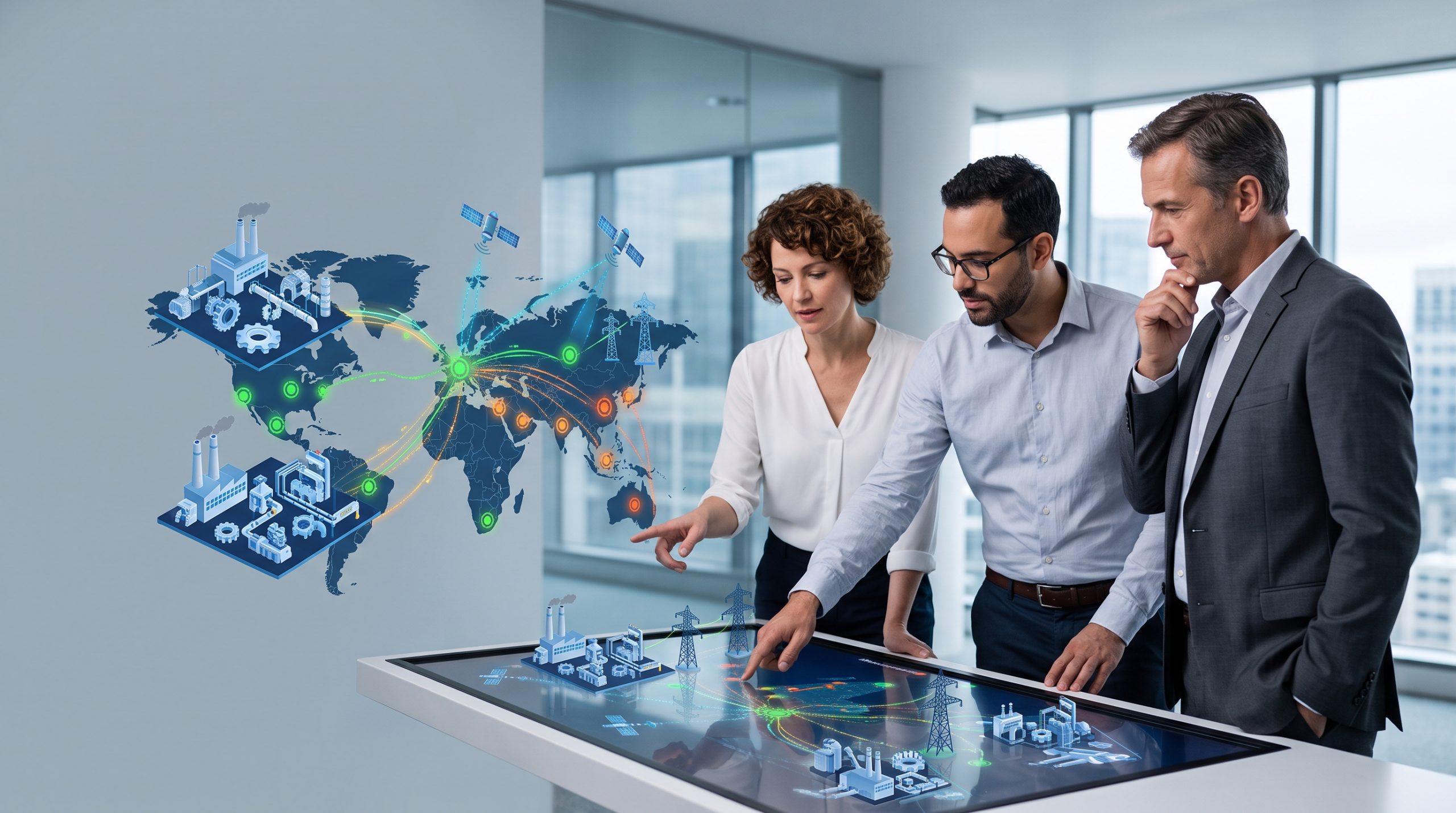
Why OT Resilience Is Now a Boardroom Imperative

29 September 2026 at 09:05

For decades, industrial cybersecurity rested on a comfortable assumption: operational technology (OT) was protected by physical isolation. The "air gap" guaranteed that power grids, manufacturing lines, and water systems remained safely disconnected from the chaos of the public internet.

That assumption is no longer just outdated - it is a strategic liability.

Driven by the imperative for real-time efficiency, predictive maintenance, and AI-led automation, industrial operations are integrating with enterprise IT and cloud environments at an unprecedented scale. Telemetry from Palo Alto Networks reveals a 332% surge in unique internet-exposed OT devices and services, bringing nearly 20 million OT-related assets onto the public internet.

Digital transformation has fundamentally redrawn the perimeter. What was once an engineering challenge managed on the plant floor has transformed into an existential risk that demands board-level oversight.

Every Industrial Asset Is Now a Digital Asset

Modernizing critical infrastructure is rarely framed as a security initiative; it is an operational mandate. Heavy machinery engineered to last thirty years is now instrumented with IoT sensors, managed through cloud-native platforms, and remotely monitored.

This connectivity creates tight dependencies between core business IT and physical operations. Modern industrial facilities rely on enterprise identity management, cloud telemetry, and continuous software updating to function day to day.

Consequently, a threat actor does not need to breach the factory floor to stop production.

When an enterprise IT network suffers an incident, executive leadership often initiates a manual shutdown of operational lines out of caution or because shared authentication mechanisms become unavailable. The business processes linking enterprise IT and OT have become functionally inseparable.

The Anatomy of Modern Industrial Threats

Attackers no longer require sophisticated, state-sponsored zero-day exploits to disrupt physical infrastructure. As seen in recent cyber incidents targeting municipal water systems in the US and the breach of a Polish power plant, threat actors continuously exploitย basic internet exposure, unpatched vulnerabilities, weak default credentials, and unsegmented remote connections.

Threat dynamics across critical infrastructure have shifted toward two major vectors:

  • Low-Friction Initial Access: Basic internet discovery tools allow threat actors to identify exposed control systems and programmable logic controllers (PLCs) in minutes. Weak factory default passwords or unsegmented cellular modems provide direct entry points into physical operations.
  • Operational Blindness: Modern attacks deliberately target the reporting layer - such as HMI and SCADA interfaces - to suppress alarms and present "normal" operational telemetry to engineers, even while underlying physical processes operate dangerously out of specification.

Operational Realities and the Zero Trust Imperative

The integration of artificial intelligence and automated workflows into industrial environments accelerates this challenge. Beyond human engineers logging into control networks, automated software pipelines, third-party monitoring platforms, and autonomous AI agents are executing commands within OT environments.

Data from recent identity landscape research reveals that machine identities outnumber human identities by 109 to 1 across EMEA organizations.

In an environment populated by millions of interconnected human, machine and AI actors, implicit trust based on network location is dangerous. Applying Zero Trust to OT requires moving away from traditional perimeter defense toward continuous, explicit verification:

  • Verify Explicitly: Authenticate and authorize every access request - human or machine - regardless of where the request originates.
  • Enforce Least-Privilege Access: Limit access strictly to the assets and commands necessary for a specific operational role or process.
  • Assume Breach: Design networks under the assumption that enterprise systems are compromised, preventing lateral movement into physical control layers.

The Industrial "Red Button": Engineering for Containment

While IT security prioritizes data confidentiality, OT security prioritizes human safety, system availability, and operational continuity. Halting a processing facility or energy grid carries immediate financial, environmental, and regulatory consequences. Security controls designed for corporate office networks cannot simply be retrofitted onto plant floors.

Cyber resilience is measured not merely by prevention, but by limiting the blast radius when a breach occurs.

Leading industrial organizations are establishing a programmable "Red Button" capability - a combination of architectural micro-segmentation and automated playbooks. This architecture allows security teams to rapidly isolate critical physical operations from compromised IT networks or cloud dependencies without bringing production to a complete halt.

Five Strategic Actions for Executive Boards

With regulatory frameworks like NIS2 increasing direct accountability for senior leadership, OT cybersecurity requires strategic governance centered on comprehensive visibility, robust micro-segmentation, operational risk scoring, and virtual patching:

  • Establish Complete Asset Visibility: Eliminate dark corners across physical environments. Organizations must maintain a continuous, real-time inventory of every connected industrial asset, controller, and external dependency.
  • Embed Security by Design and Virtual Patching: Integrate cybersecurity requirements directly into industrial modernization programs from initiation. Deploy virtual patching mechanisms - such as Frontier Virtual Patching - to shield unpatchable legacy systems against rapidly evolving AI-driven threats.
  • Architect for Degraded Mode: Design critical infrastructure to maintain safe, baseline operations even if cloud access, enterprise IT, or external network connections are severed.
  • Practice Operational Recovery: Develop and stress-test incident response playbooks specifically designed for physical environments, including offline configuration backups and manual operational overrides.
  • Unify Risk Governance: Align executive leadership, security operations, and plant engineering around operational-based risk scoring and shared business metrics: physical safety, system uptime, and operational continuity.

Accelerating digital transformation should not mean compromising physical safety or operational stability. Palo Alto Networks provides an integrated platform built to address the unique constraints of operational environments. By combining AI-driven asset discovery, granular micro-segmentation, continuous risk assessment, and virtual patching across both enterprise IT and physical control networks, Palo Alto Networks empowers industrial organizations to modernize with confidence - securing operations, protecting revenue, and safeguarding national infrastructure.

Further interesting reading:

The post Why OT Resilience Is Now a Boardroom Imperative appeared first on Palo Alto Networks Blog.


Received โ€” 23 April 2026 โญ Palo Alto Networks Blog

Palo Alto Networks and Google Cloud

22 April 2026 at 18:00

Expand Strategic Collaboration to Secure the AI Enterprise

The transition from generative AI to agentic AI represents one of the most significant shifts in the history of enterprise technology. As organizations move from simple chatbots to autonomous agents that can execute business processes, the attack surface isn't just changing, it's exploding.

At Google Cloud Next 2026 in Las Vegas, Palo Alto Networks is proud to announce a series of groundbreaking integrations with Google Cloud. These innovations are designed to do more than just monitor the new AI-driven landscape; they are built to secure it by design. AI deployment is currently outpacing AI governance. By embedding our security platform into Google Cloudโ€™s infrastructure, we are giving todayโ€™s enterprises the foundation to become the autonomous organizations of tomorrow.

Here is a look at the four major milestones of our partnership being unveiled this week.

Secure AI Agents with Google Cloud + Prisma AIRS

As autonomous AI agents become the new enterprise standard, security can no longer be an afterthought; it must be architectural. By integrating Prisma AIRSโ„ข natively with Google Cloud Gemini Enterprise Agent Platform, we provide the proactive defenses required to govern complex agentic workflows. This integration ensures that as you scale your autonomous workforce, your security scales with it, providing comprehensive operational integrity without hindering the speed of innovation.

We are delivering capabilities across three critical pillars:

  • Protecting Agent-Specific Runtime Risks: In an agentic ecosystem, the primary risk is unauthorized or a destructive action taken by the AI agents themselves. Prisma AIRS secures the "agent-to-tool" interface, preventing poisoned context from triggering malicious scripts or destructive actions. The solution monitors agent execution in real-time, so agents cannot leak sensitive credentials or tool schemas, maintaining the boundary between agents and their access to enterprise data.
  • Securing the GenAI Application Surface: Modern AI applications and agents require a secure-by-design approach. Prisma AIRS AI Runtime Securityโ„ข provides prevention of more than 30 adversarial prompt injection and jailbreak techniques, as well as malicious code and URLs within LLM outputs. Prisma AIRS utilizes over 1,000 predefined patterns out of the box and ML-powered Enterprise DLP to stop sensitive data leakage.
  • Enforcing Enterprise AI Safety and Grounding: Trust in AI is built on the consistency and safety of its output. Prisma AIRS allows organizations to define safety policies in natural language and filter toxic content across eight distinct categories to protect brand reputation. Using contextual grounding, Prisma AIRS can prevent misleading outputs that contradict internal RAG data, keeping agents tied to real facts.

This integration ensures that as you scale your autonomous workforce, your security posture scales with it, providing operational integrity without hindering the speed of innovation.

Security-as-Code for Prisma AIRS Integration with Application Design Center (ADC)

The traditional bolt-on approach to security is no longer viable in a cloud-first world. Google Cloudโ€™s Application Design Center (ADC) is revolutionizing how applications are built, using an intuitive canvas and natural language via Gemini Code Assist.

Palo Alto Networks is announcing that it will be published as a template within the Application Design Center, providing more capabilities to engineering teams:

  • Drag-and-Drop Security โ€“ Visually "snap" VM-Series firewalls and Prisma AIRS AI protections directly into network flows.
  • AI-Driven Architecture โ€“ Use natural language prompts to generate secure-by-default, multiregion architectures.
  • Simultaneous Deployment โ€“ Deploy entire application stacks and security services in a single, unified workflow, ensuring protection is present from the very first minute of deployment.

Zero-Day Protection at Scale with Advanced Malware Sandboxing for Google Cloud NGFW Enterprise

The battle against malware has shifted to the cloud. Modern attacks are faster, more evasive and capable of bypassing traditional defenses.

That is why we are excited to announce Advanced WildFireยฎ, powered by Palo Alto Networks, natively integrated into Google Cloud NGFW Enterprise, delivering AI-driven malware prevention directly within Google Cloud environments.

This integration embeds inline sandboxing and real-time threat intelligence directly into Google Cloudโ€™s distributed firewall to stop advanced and unknown threats before they impact workloads, enabling:

  • Secure Detonation โ€“ Suspicious files are safely executed in a controlled sandbox environment to uncover hidden and unknown threats.
  • Inline Traffic Inspection โ€“ Inbound and outbound traffic is analyzed in real time to prevent lateral movement of malicious payloads across cloud environments.
  • AI-Driven Threat Prevention โ€“ Leverages global threat intelligence by Palo Alto Networks to block zero-day threats before they compromise workloads.

With Advanced WildFire embedded directly into Google Cloud NGFW Enterprise, organizations can extend consistent protection across their cloud infrastructure while maintaining operational simplicity.

Cloud NGFW Enterprise Advanced Malware Sandboxing will be available in Public Preview soon.

Defining the Future with the Google Cloud Marketplace

Palo Alto Networks has joined the Google Cloud Marketplace Agent-as-a-Service as a launch partner to introduce the Prisma AIRS Model Security agent. Operating as an Agent-as-a-Service, this solution scans AI models for vulnerabilities and policy noncompliance before they reach production.

Available in the Agent Gallery inside Gemini Enterprise, this marketplace offering runs entirely within the customerโ€™s own Google Cloud environment, providing both new and existing Prisma AIRS users a seamless and simple deployment experience inside Gemini Enterprise.

Securing AI Innovation at Scale

The collaboration between Palo Alto Networks and Google Cloud is built on a shared vision: Security should be an accelerator for innovation, not a bottleneck. As we look toward the future of the AI-powered enterprise, our commitment remains to provide the most robust, platform-driven security for every workload, every agent and every interaction.

Want to see these integrations in action? Contact your Palo Alto Networks representative to learn more about how we are securing the future of the cloud together. If youโ€™re attending Google Cloud Next 2026, join us at these sponsored sessions:

The post Palo Alto Networks and Google Cloud appeared first on Palo Alto Networks Blog.

Scaling AI Agents with Confidence

22 April 2026 at 17:59

The Google Cloud and Palo Alto Networks Partnership

As AI agents move into business-critical environments, they are transforming everything from security operations to internal workflows. However, scaling these AI applications introduces unprecedented hurdles for security executives, from detecting "shadow AI" and unsanctioned usage to governing complex nonhuman identities across multimodel environments.

To overcome these challenges, organizations need more than just tools; they need a layered architecture built on a foundation of platformization. The long-standing partnership between Palo Alto Networks and Google Cloud provides this essential framework, offering customers:

  • Integrated Security Ecosystems: Seamlessly manage the full agent lifecycle with visibility and observability across your entire AI infrastructure.
  • Jointly Engineered Solutions: Leverage over 80 co-engineered integrations designed to eliminate the tradeoff between a cloud-native experience and best-in-class security.
  • Proven Scale and Performance: Benefit from a partnership that has already delivered impactful, AI-driven solutions to protect joint customers from evolving threats.

Google Cloud Marketplace enables customers to discover, try, buy and use industry-leading applications that have been validated to run on Google Cloud. Palo Alto Networks has closed $2.4 billion in GCP bookings, helping address evolving customer needs, such as simplified procurement and seamless deployment.

Kevin Ichhpurani, President, Global Partner Ecosystem at Google Cloud:

Weโ€™re pleased to celebrate Palo Alto Networks as our Global Technology Partner of the Yearโ€ฆ Palo Alto Networks has consistently delivered impactful, AI-driven security solutions that help Google Cloud customers better protect their organizations from evolving threats.

The extensive, long-standing collaboration between Palo Alto Networks and Google Cloud includes jointly engineered offerings, built on 80 solution integrations that help customers build, run and secure AI-enhanced cloud infrastructure and applications with end-to-end protection.

Palo Alto Networks Wins 2026 Global Technology Google Cloud Partner of the Year Award

At Google Cloud Next, Palo Alto Networks has been recognized with four 2026 Google Cloud Partner of the Year awards. By partnering with Google Cloud, we help customers securely leverage the power of the cloud and AI-driven growth with comprehensive cloud-native security offerings. Wins included the following:

  • Global Technology
  • Marketplace: Technology
  • Marketplace: Security
  • Security: Artificial Intelligence

These Partner of the Year Awards underscore our expanding partnership with Google Cloud. We share a mutual dedication to improve cloud, network security and AI observability, as well as the progress weโ€™ve made in protecting our joint customers from todayโ€™s and tomorrowโ€™s cyberthreats.

By combining our industry-leading security engineering with Google Cloudโ€™s industry-leading cloud infrastructure and services, weโ€™re providing advanced protection for every stage of a customerโ€™s digital journey. We want customers to feel secure from the formative steps of lifting workloads into the cloud, to expanding digital innovation across platforms, to reaching new levels of business scale and velocity.

Protecting these journeys requires alignment and modernization of infrastructure (lift and shift), applications (refactoring) and user access models (zero trust). It requires an advanced AI drive security operations transformation across all IT domains, leveraging machine learning and sophisticated models to minimize human interventions and unguarded sides.

Our relationship with Google Cloud is based on a deep engineering relationship, yielding integrated solutions that help customers achieve better digital outcomes. Our partnership can help your organization eliminate tradeoffs between a cloud-native experience and best-in-class security. We have more than 80 co-engineered integrations, helping to improve and protect hybrid workers, cloud migrations and application modernization efforts.

We remain committed to our goals of outpacing cyberthreats, helping customers at every stage of their cloud journey, and creating a world where tomorrow is more secure than today.

Whether youโ€™re just beginning your cloud journey or managing complex transformational projects, our jointly engineered, AI-driven solutions are designed to deliver seamless, scalable security. Explore the dynamic partnership between Palo Alto Networks and Google Cloud. Join us at Google Cloud Next '26 in Las Vegas from April 22-24 to discover how to secure your development lifecycle from code to cloud.

The post Scaling AI Agents with Confidence appeared first on Palo Alto Networks Blog.

Announcing ADEM Universal Agent

Delivering Exceptional Branch Experience for Modern Distributed Enterprises

In modern enterprises, the "network perimeter" is a relic of the past. As organizations scale globally to support home offices, satellite branches and third-party clouds, the challenge has shifted. Now the onus is on optimizing the end-to-end digital experience. And to maintain that edge, enterprises must operate at machine speed, supported by agentic autonomous operations. They must make sure that every user, regardless of their location or underlying hardware, experiences uninterrupted performance, seamless security and peak user experience from โ€œDay 0โ€ to keep pace with the speed of business.

To meet this demand, we are proud to announce the general availability of the Autonomous Digital Experience Management Universal Agent, or ADEM Universal Agent, for Prismaยฎ Access customers. This breakthrough marks a significant milestone in our mission to automate deployment and operations by unifying fragmented infrastructure and providing the flexibility to deploy, using infrastructure hardware of your choice.

Continued Data Gap Is a Roadblock for Agentic Operations

Organizations are shifting toward "best-of-breed" architectures to operate at machine speed, but they often lack the unified telemetry required for automated operations. Any tool built on top of this architecture to enhance the digital experience is only as effective as the data it consumes. Traditional monitoring tools often lack the precise data and contextual correlation needed to drive agentic resolution. In this siloed landscape, three critical gaps have emerged:

  • Data Entropy: Fragmented data is inconsistent and leads to unreliable automation. Without unified data, automated workflows become unreliable and risky to execute at scale.
  • Hardware Dependency: Traditional monitoring agents often require specific hardware platforms, which can severely limit deployment speed and the ability to adapt to diverse customer infrastructures.
  • Blind Spots: Data entropy and hardware dependency have resulted in data gaps, and therefore visibility gaps at the edge, and as a result, automated systems cannot pinpoint root causes, leaving IT teams trapped in manual troubleshooting.

To operate at machine speed, enterprises need more than visibility. They need a unified, high-fidelity data engine to create the foundation of fail-safe autonomous operations for a stellar digital experience.

The Universal Agent Contributes to a Unified Data Engine for Agentic Autonomy

The ADEM Universal Agent is a hardware-agnostic solution that can be deployed on any branch site connecting to Prisma Access. It can be hosted on virtual machines or Docker containers, regardless of the underlying infrastructure. ADEM Universal Agent transforms branch experiences by providing a unified data engine for agentic operations:

  • Deploy Anywhere and Monitor Everywhere
    The Universal Agent can be deployed at any branch site connected to Prisma Access, enabling IT teams to run synthetic tests from the branch regardless of underlying infrastructure hardware.
  • Bridge the Gap Between Vendor-Locked Silos and Machine-Speed Operations
    The Universal Agent aggregates disparate environment data into key metrics geared toward agentic operations, enabling IT teams to move beyond fragmented troubleshooting, toward unified, proactive governance of their entire IT footprint.
  • Accelerate Troubleshooting with Granular Path Analysis
    When a user in a remote branch reports a slowdown, IT teams need more than a "red/green" status light. The Universal Agent provides a granular path analysis, delivering a hop-by-hop visualization with both overlay and underlay tunnel metrics, enabling them to quickly pinpoint bottlenecks.

Thus, by mapping the entire path from the Universal Agent to the target application, IT teams can pinpoint exactly where the friction lies.

  • Is it a local network issue?
  • An ISP (internet service provider) bottleneck?
  • A bottleneck at a handoff between providers?
  • Is the application's own network at fault?
Universal Agent example.
ADEM Universal Agent at a glance.

The Universal Agent Offers Inherent Security and Operational Simplicity

To help ensure that organizations can maintain peak performance and security amidst a constant stream of changes, the Universal Agent is built on a foundation of robust features:

  • Native Integration with Prisma Access for Accelerated Troubleshooting
    The Universal Agent is natively integrated with Prisma Access and automatically discovers the POP (Point of Presence) location and IP infrastructure where the branch site is connected to monitor overlay and underlay, hop-by-hop, ISP health, all the way to the application to deliver precise root-cause analysis.
From the Universal Agent to the network node.
Native integration with Prisma Access.
  • Simplified Deployment at Scale
    IT teams can deploy and manage multiple agents at scale with just a few clicks from the Strataโ„ข Cloud Manager Platform. Through our autonomous AI operations platform, we leverage enriched telemetry to watch the network and proactively manage it all from a unified platform.
Dashboard of Access Experience Management
Bulk deployment of Universal Agent with just a few clicks.
  • Comprehensive Full-Stack Visibility
    We utilize a single agent per branch site to deliver deep visibility into both overlay and underlay tunnel metrics. This granular path analysis allows IT teams to pinpoint network bottlenecks using hop-by-hop visualizations from the Universal Agent all the way to the target application.
Application Performance Metrics
Hop-by-hop visualization with overlay and underlay tunnel metrics.

The Universal Agent Optimizes End-to-End Digital Experience with Unified Operations

The launch of the ADEM Universal Agent represents a fundamental shift in how we architect the distributed enterprise, from moving beyond managing data gaps into agentic, machine-speed orchestration. Natively integrated with Prisma Access, the Universal Agent synthesizes disparate network data across multiple branch sites into a unified, vendor-agnostic ecosystem. By eliminating the 'noise' of traditional monitoring, it provides the deterministic precision and real-time context required to fuel agentic autonomous operations, enabling every automated action to be accurate, impactful and optimized for a flawless digital experience.

Ready to gain complete application experience from all branch sites and remote users? Watch our announcement video below to see the Universal Agent in action. Visit the ADEM webpage for more information or request a demo.

The post Announcing ADEM Universal Agent appeared first on Palo Alto Networks Blog.

โŒ