Reading view

EFF Launches New Offline Campaign for Saudi Wikipedian Osama Khalid

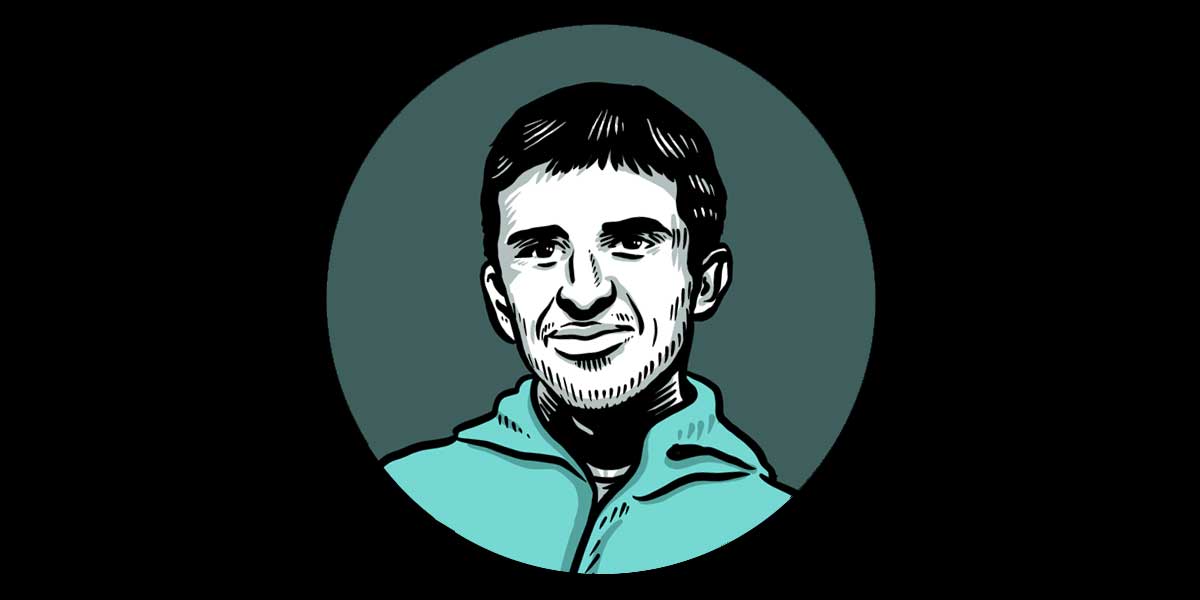
Osama Khalid was just twelve years old when he began contributing to Wikipedia Arabic. In the height of the blogging era, he became a prolific blogger, publishing writings on his home country of Saudi Arabia, meetups he attended, and his opinions and observations about open source technology and freedom of expression. He advocated for internet freedom, contributed time and translations to various projects—including EFF’s HTTPS Everywhere—and was a thoughtful presence at the conferences he attended around the world…all while training to become a pediatrician.

In July of 2020, he was detained amid a wave of arbitrary arrests carried out by the Saudi authorities during the Covid-19 lockdown and initially given a five-year prison sentence. That sentence was later increased on appeal to 32 years, then reduced in 2023 to 25 years, and again to 14 years this past September. In a joint letter that we signed on to in April, the Saudi human rights organization ALQST, which has been leading the campaign for Osama’s release, wrote: “The huge discrepancy between sentences handed down at different stages in the case underscores the arbitrary manner in which sentencing is carried out in the Saudi judicial system.”

So, what was his “crime”? Sharing information online that conflicted with official narratives. Osama’s Wikipedia contributions included pages on critical human rights issues in Saudi Arabia, including the treatment of women’s rights activist Loujain al-Hathloul (herself an EFF client) and Saudi Arabia’s infamous al-Ha’ir prison. His blog, which has since been taken offline, included articles such as one criticizing government plans for the surveillance of encrypted platforms.

Over the years, we’ve campaigned for the release of a number of individuals imprisoned for their speech. Our contributions to the campaigns of Ola Bini, the Swedish software developer who has been targeted by the government of Ecuador for the past seven years, and Alaa Abd El Fattah, have had real impact. These cases are reminders that attacks on free expression are rarely confined to borders: governments around the world continue to use vague cybercrime laws, national security claims, and politically motivated prosecutions to silence critics, technologists, journalists, and activists.

Supporting these two—and others we’ve highlighted in our Offline project—has never been about defending only individuals. It has also been about defending the principle that writing code, sharing ideas, criticizing governments, and organizing online should not be treated as crimes. Public pressure, international solidarity, legal advocacy, and sustained campaigning can shift the political cost of repression—and, in some cases, help secure meaningful protections for those targeted.

That’s why we’re highlighting Osama’s case and will continue to work with partners including ALQST to advocate for his release. Osama Khalid, like so many human rights defenders, journalists, and internet users detained by the Saudi government, deserves to be free.

  •  

A Hackers Guide to Circumventing Internet Shutdowns 

Internet shutdowns are devastating for human rights. When people are disconnected from the internet and digital services, it impacts all aspects of their life—from accessing essential information, to seeking medical care, or communicating with loved ones, both in that country and externally. But on January 8th, 2026, the government of Iran shut down internet communications for the entire country as a rebellion threatened to topple the authoritarian government. The government then proceeded to execute as many as 656 dissidents over the next 3 months, though the actual number could be much higher. Which is part of the point: shutdowns often precede government acts of violence. 

Iran’s shutdown was hardly an isolated incident. Earlier this month, the U.S. military invaded Venezuela and kidnapped the Venezuelan president shortly after US cyber forces shut down all internet access and power grids for the capital city of Caracas. India routinely shuts off internet access in the Kashmir region, and Syria shut down internet communications as many as 73 times, most recently in 2025. Even the UK recently had a localized temporary internet shutdown. At the time of this writing there are 14 ongoing internet shutdowns worldwide.  

Government shutdowns aren’t the only reason an entire region or country might lose internet access. Hurricanes, earthquakes, and wildfires can take out internet connections in many regions of the world, and will only increase as climate change ramps up. They can completely disable the communications infrastructure relied upon by victims, their families, first responders, and disaster relief efforts. Having an alternate way to communicate in such times can save lives.  


One way to limit the impact of such shutdowns is to prepare in advance by setting up systems and structure for circumvention and resiliency. 

To keep people connected during internet shutdowns and blackouts, communication networks must be operational before and after the disaster or shutdown. To be effective, they must be widespread so that people can get access to them reliably, and they must be usable by a majority of the community. And any viable solution must be accessible and sustainable on a community level, not just to people with vast financial resources or technical knowledge. You shouldn’t have to be a tech wizard to be able to communicate with your neighbors!

Radios

There are many ways for a community to build their own disaster resilient communications. Radios, for example, are cheap, decentralized, and resilient. Many people with moderate technical skill have set up Meshtastic repeaters. Meshtastic is a way to use a common unlicensed radio spectrum and a technology called LoRA to have peer-to-peer decentralized communications with people in your neighborhood or city. When you buy a Meshtastic device (cheap ones cost around $20) you can link it to your phone and send text messages to people in your area without ever touching the telephone network or the internet. Messages are delivered directly from person to person over public radio waves.

There is also amateur radio, also known as ham radio, which has been used in disaster communications for decades. Ham radio requires a license, but allows you to communicate farther than Meshtastic, using repeaters or even bouncing signals off the stratosphere to talk to people on the other side of the planet or even on the International Space Station. It is even possible to access the internet over ham radio. 

Peer-to-peer messaging apps 

Another option for internet communication during a shutdown is peer-to-peer messaging apps. One such project,called Briar, uses the Bluetooth functionality on phones to route messages from device to device until they reach their destination, even in instances where there is no internet. However, Briar faces the same problems many mesh projects do: almost nobody has the app installed and it’s difficult to use. If a mesh chat app isn’t already widely installed before an internet shutdown, it’s going to be even harder to get people to install it en masse once the shutdown starts. 

A similar effort called bitchat has recently gained some attention. Bitchat is a peer-to-peer chat system that routes over Nostr, Tor, and Bluetooth. It is unfortunately tainted in many people’s eyes by being a project by former Twitter CEO Jack Dorsey, but it is open source and runs on both Android and iOS. It was used with some success in Iran during the latest internet shutdown

Another option is Delta Chat, which uses PGP for encryption and email for routing, while still being much simpler to use than either technology. Delta Chat is highly regarded in Iran for its ability to route a message through even the tiniest sliver of email access.

Satellite internet 

Satellite internet is an internet connection that uses a connection to a satellite dish to reach the internet, such as Starlink. Since there are no wires and no physical connection to infrastructure, satellite internet is harder to shut down. Satellite internet has therefore been used in many cases to circumvent internet shutdowns, with people sharing bandwidth with their neighbors. Satellites are harder for governments to shut down unilaterally.  Unfortunately when the satellites are owned by tech oligarchs, such as Starlink (owned by Elon Musk), or by allied governments, the owners of those satellites may willingly shut down the network anyway. 

Dreaming of a better future

Ultimately an app that is already widely being used would be the best option for shutdown resistant communication. Imagine if WhatsApp or Signal could fall back to mesh networking over bluetooth or wifi. Even better, imagine if our phones all had LoRA built in so we could have more effective mesh networks! What if our phones all had a connection to a satellite constellation run by an international coalition of hackers? We can dream of a better world and we can build it. 

We can’t rely on tech oligarchs to save us, especially when these same companies and governments are the ones to sever our access to the internet and telecommunications. This is why it's important to set up communication mechanisms before a disaster happens. 

As hackers, it's important for us to build these tools and infrastructure of decentralized communication, to help people learn how to use them, and to set up networks before disaster strikes. Get together with others in your city and start setting up resilient off-grid networks and building community now. 

Before you download or use any of the tools mentioned in this guide check with a lawyer in your jurisdiction or country and make sure you understand what legal risks you might be taking on. 

A previous version of this article appeared in the Spring 2026 issue of 2600 magazine

  •  

EFF Stands in Solidarity With RightsCon and the Global Digital Rights Community

When governments shut down spaces for dialogue, dissent, and collective organizing, the damage extends far beyond a single event. The abrupt cancellation of RightsCon 2026—the world’s largest annual global digital rights conference—is not just a logistical disruption for thousands of researchers, journalists, technologists, and activists—it is part of a growing global pattern of shrinking civic space and increasing hostility toward free expression and independent civil society.

Just days before the conference was set to begin and as participants had begun to arrive in Lusaka, organizers announced that RightsCon would no longer proceed in Zambia or online after mounting political pressure and demands that would have excluded vulnerable communities and constrained discussion. The U.N.’s World Press Freedom Day, which was set to take place just prior to the conference, was scaled down in light of the events, and its press freedom prize ceremony postponed to a later date.

RightsCon has long served as one of the few truly global convenings where civil society groups, grassroots organizers, technologists, and policymakers can meet on equal footing to confront some of the most urgent human rights challenges of the digital age—from censorship and surveillance to internet shutdowns, platform accountability, and the safety of marginalized communities online. EFF has had a presence at RightsCon since its inception in 2011, and had planned to meet with and learn from international partners and present our work during several sessions in Lusaka.

The cancellation is especially devastating because of what RightsCon represents. For many advocates—particularly those from the global majority—it is not merely another conference. It is a rare opportunity to build solidarity across borders, form lasting partnerships, learn from other regions’ experiences, secure funding and support for local work, and ensure that the people most impacted by digital repression have a seat at the table. Holding the event in southern Africa carried particular significance, promising to elevate regional voices and strengthen local digital rights networks.

What happened in Zambia sends a chilling message. According to organizers and multiple reports, the pressure surrounding the event included Chinese government demands to exclude Taiwanese participants and moderate discussions around politically sensitive topics. At a moment when governments around the world are increasingly restricting protest, targeting journalists, cutting funds for human rights work, banning young people from online communities, censoring speech, and criminalizing civil society activity, the cancellation of RightsCon reflects the broader erosion of democratic space online and offline.

Organizations from the digital rights community have spoken out forcefully against the government’s cancellation of the conference, making clear that these attacks on civic participation will not pass unnoticed. Access Now described the decision as evidence of “the far reach of transnational repression targeting civil society.” Index on Censorship’s response warned that the move represents a dangerous escalation in attempts to suppress open dialogue, while IFEX rightly described the cancellation as a blow not just to one conference, but to freedom of expression and assembly everywhere.

We are also heartened to see statements from members of the international community—including Tabani Moyo, who spoke about the impact on the southern African community, and Taiwanese participant Shin Yang, who emphasized the importance of preserving spaces where marginalized communities can safely organize and speak—underscoring that attempts to silence civil society only reinforce the importance of defending open, global spaces for organizing and debate.

Even as this cancellation represents a serious setback, it is important to remember that the digital rights community has always adapted under pressure. Around the world, advocates continue to organize in increasingly difficult environments, finding new ways to connect, collaborate, and resist censorship and repression. Upcoming events like the Global Gathering and FIFAfrica—both of which EFF plans to attend—will bring together members of the community to tackle tough issues. And in the meantime, groups from all over the world are working together to incorporate global perspectives into platform regulations, oppose age verification laws, protect against surveillance, and fight internet shutdowns, among many other efforts.

RightsCon itself emerged from a recognition that defending human rights in the digital age requires international solidarity—and that need has not disappeared.

The conversations that were supposed to happen in Lusaka will continue elsewhere: in community spaces, online gatherings, encrypted chats, and future convenings yet to come. Governments may close venues, restrict participation, or attempt to narrow the boundaries of acceptable speech, but they cannot erase the global movement working to defend a free and open internet.

RightsCon will not go on in Zambia, but we remain heartened and inspired by the strength of the global digital rights community, stand with them in solidarity, and look forward to seeing our allies at the next RightsCon and other upcoming events.

  •  
❌